Gold Black Molly (Poecilia sphenops gold black molly)
21–28°C · pH 7.5–8 · 81L
£5.99
Gold Molly Lyra (Poecilia sphenops) is a gold lyretail molly for a mature, planted aquarium with hard, mineral-rich water. Sold as one live fish; plan peaceful companions and a vegetable-rich diet.
Poecilia sphenops
Shoaling fish: kept in a group they feel safer, stay calmer and show their best colour.
Gold Molly Lyra (Poecilia sphenops) is a gold lyretail molly for a mature, planted aquarium with hard, mineral-rich water. Sold as one live fish; plan peaceful companions and a vegetable-rich diet.
Maintain these water conditions for optimal health and vibrant colors
Gold Molly Lyra (Poecilia sphenops) brings warm gold colour and a distinctive lyretail outline to a well-planned hard-water aquarium. It is a molly with a preference for mineral-rich water, plant cover and a diet containing plenty of vegetable material. Its generally peaceful nature is appealing, but the first question when choosing it is whether your aquarium meets those needs. Water chemistry, swimming room and the behaviour of its companions matter more than a general community-fish label.
Each purchase quantity supplies one live Gold Molly Lyra. The recurring supply grade is 3–4 cm; this describes the size at supply, not the adult length. This listing is for one gold lyretail form. Plan the number of fish and the space they will need as adults before choosing your quantity, rather than using the small supply size to judge how many can fit.
Sex is guaranteed only when the selected option explicitly states male or female. This Gold Molly Lyra listing has no sex-guaranteed option. If you are planning a particular balance of males and females, discuss that requirement before ordering. A quantity of fish on its own cannot give you a selected social composition. The care advice about female-biased groups describes how to plan an aquarium, rather than a promised combination in the order.
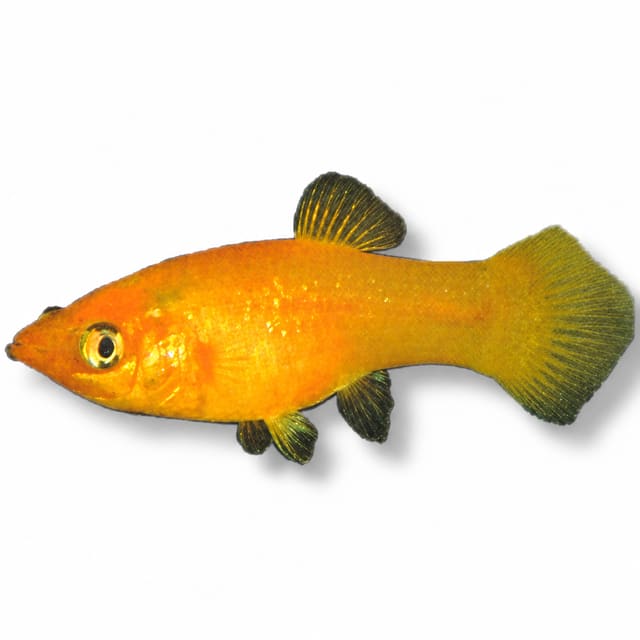
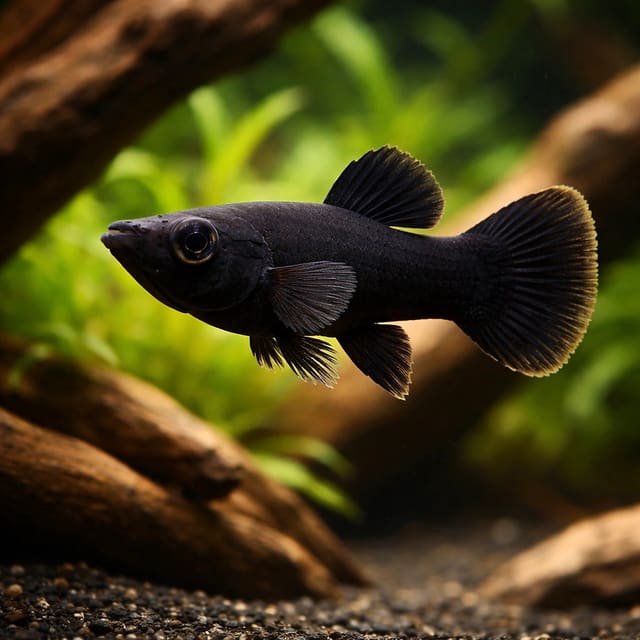
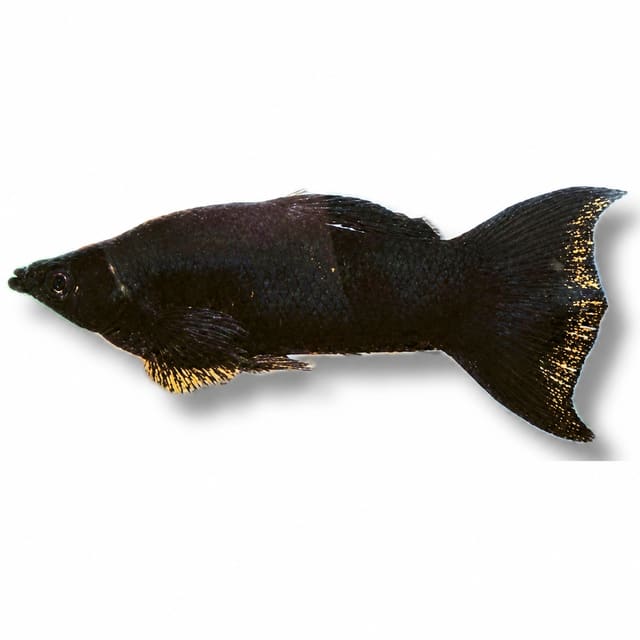
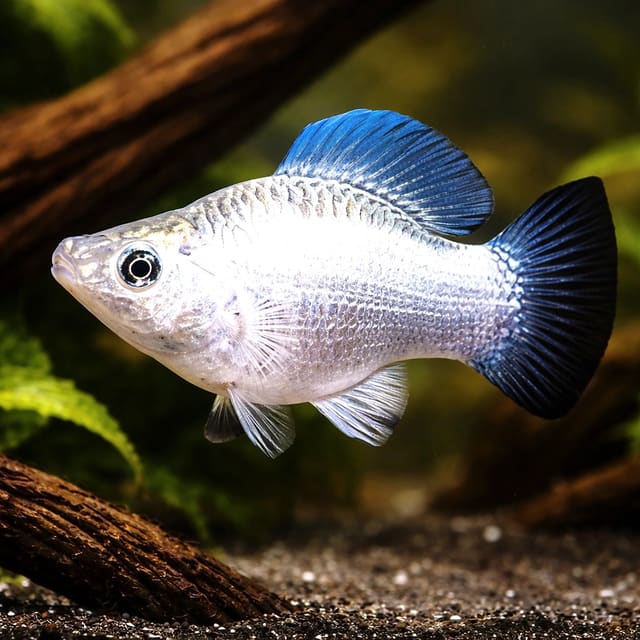
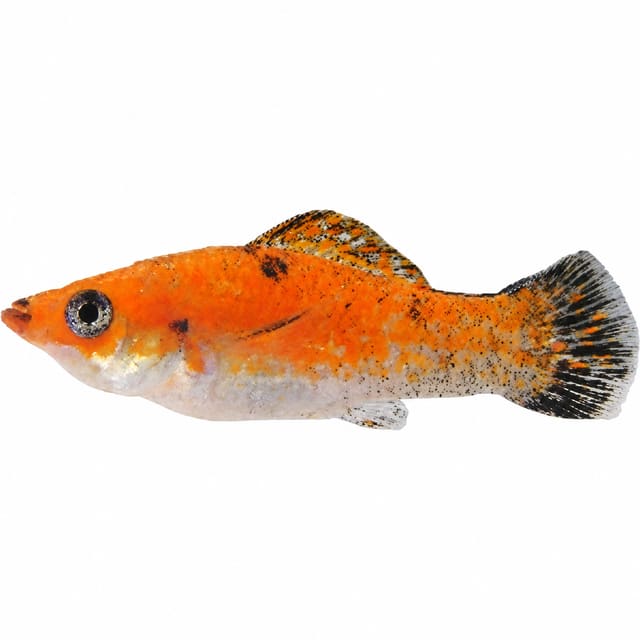
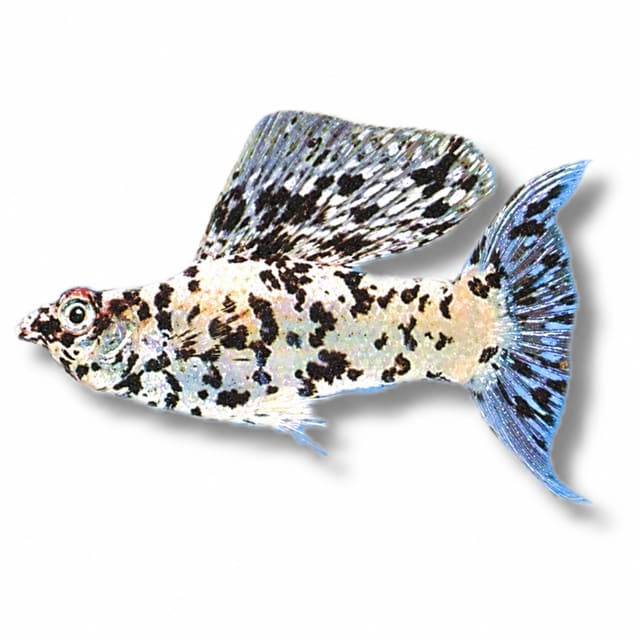
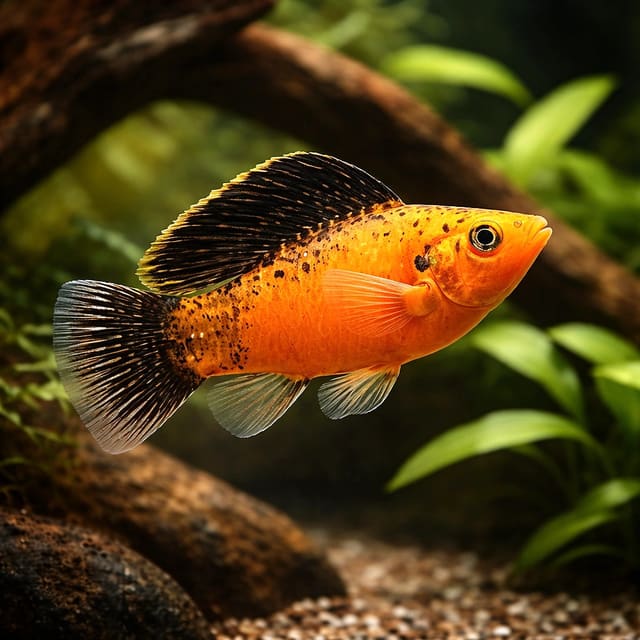
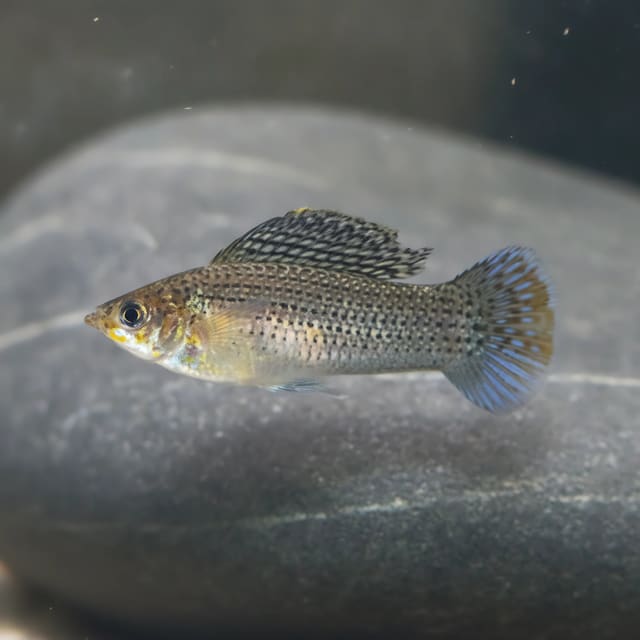
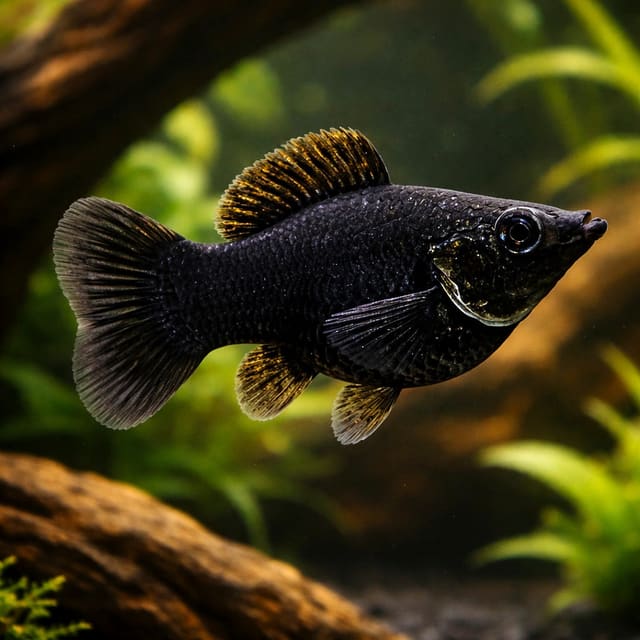
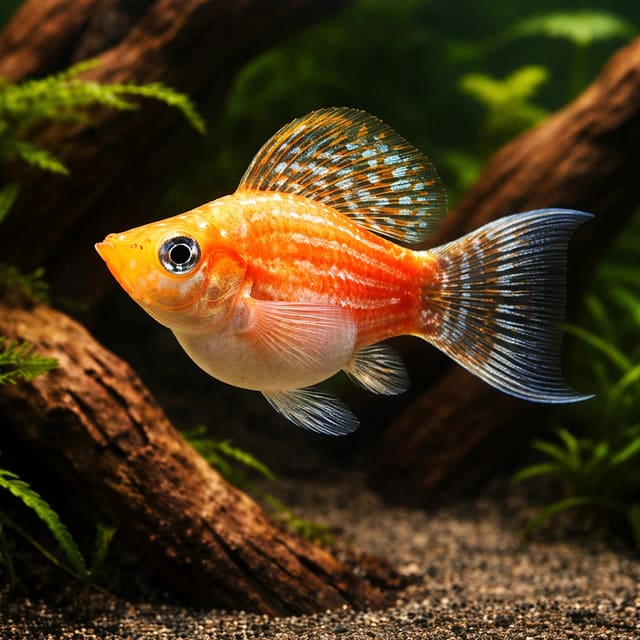
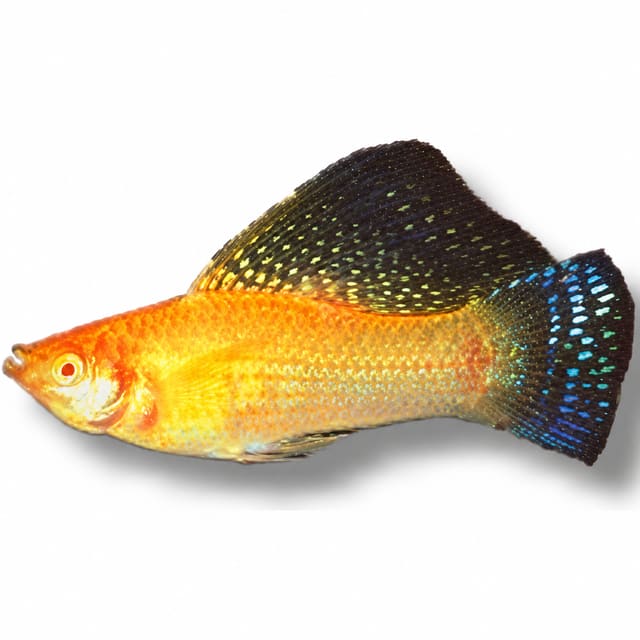
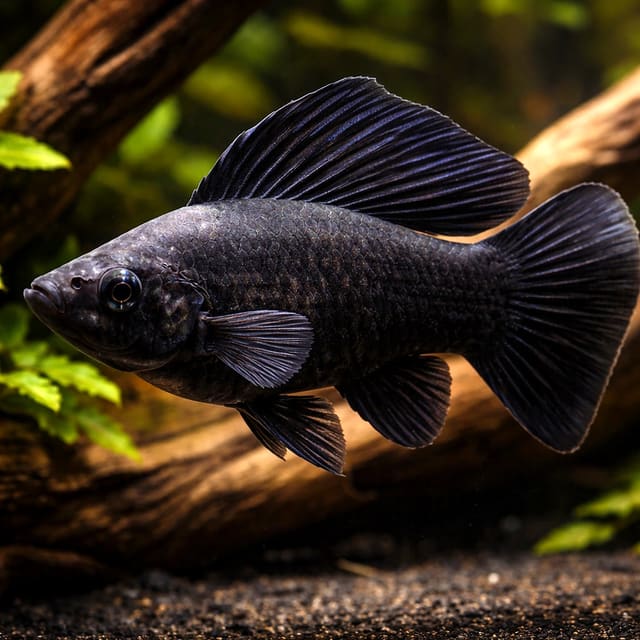
The gallery images are representative of this type of animal rather than photographs of the exact animal supplied, so colours can look slightly different from the live animal. The images show gold fish with dark flecks or patches, and long upper and lower tail tips on the individual views. Those details are useful when comparing the form. The two-fish picture shows two animals together, without establishing their sex or relationship.
The scientific name used for this listing is Poecilia sphenops; Gold Molly Lyra describes the traded colour and fin form. FishBase records the species' natural range from Mexico to Colombia. That range provides background to the species, while the listed animal's suitability for your aquarium depends on its actual care requirements. The important day-to-day point is a stable, well-filtered environment with appropriately hard water.
A planted aquarium gives the fish places to move out of view while leaving space for swimming and feeding. Plan both elements together. A completely open layout provides little respite from attention, while a tank filled edge to edge with ornaments can restrict movement and make it difficult to see whether every fish receives food. Smooth, aquarium-safe decoration is particularly useful around extended fins.
These mollies suit a keeper who can measure hardness and pH, maintain a mature filter and pay attention to the way the group behaves. They can fit a carefully chosen peaceful community where the other fish share the water conditions. They are a less straightforward choice for an established soft-water aquarium whose inhabitants would be compromised by changing it to suit mollies.
The molly collection lets you compare the available forms while keeping the central care requirements in mind. Consider whether the gold colour and lyretail outline are what you want to build around, then check the adult footprint, food and companions. A successful choice fits the aquarium you can reliably maintain, including ordinary water changes and a practical plan for social changes as the fish mature.
FishBase records 7.5 cm standard length for male or unsexed Poecilia sphenops. Seriously Fish lists 80 mm standard length, equivalent to 8 cm. Standard length excludes the tail, so neither number should be read as a whole-fish measurement including the long lyretail tips. Use the larger standard-length reference for planning body size and allow comfortable room for the complete fish to turn and move around decoration.
The supply grade describes a much smaller fish than the adult planning reference. Growth changes the amount of room occupied and the way fish interact. Look beyond the space a young molly takes on arrival: will it still be able to feed without crowding, pass between plants without catching its fins and withdraw from another fish as it develops? Those questions help make the adult aquarium a practical plan.
Seriously Fish recommends an aquarium base of 90 × 30 cm for this species. The profile's approximately 81-litre illustration assumes a 90 × 30 × 30 cm tank; that geometric volume is not the usable water remaining after substrate, decoration and space above the waterline. Choose the footprint first, then assess the full stocking and equipment. Extra fish require additional capacity and room, not just a larger number on a water-volume label.
The species aquarium guidance is 21–28°C, pH 7.0–8.5 and general hardness of 15–30°dGH. Seriously Fish emphasises moderately hard or harder water with an alkaline character. Use those requirements to assess your aquarium before ordering. A tank that is warm enough may still be unsuitable if its water is soft, so a temperature check on its own is not sufficient preparation.
| Care point | Species aquarium guidance |
|---|---|
| Temperature | 21–28°C |
| pH | 7.0–8.5, with hard, alkaline conditions emphasised |
| General hardness | 15–30°dGH |
| Aquarium base | 90 × 30 cm starting footprint |
| Layout | Plant cover and unobstructed swimming space |
Test both the tap water you intend to use and the aquarium. The water chemistry guide explains the difference between pH, hardness and waste-related measurements. Record the values with their units. This is much more useful than relying on how hard the water is thought to be in your town, particularly if the water passes through treatment equipment before reaching the aquarium.
Stable conditions start with a repeatable replacement-water routine. If your source water already fits, keeping it consistent is simpler than making continual adjustments. If it needs alteration, discuss an appropriate method before the tank is stocked and make sure you can repeat it accurately. Plan for ordinary water changes and occasional larger maintenance needs, rather than preparing one suitable batch without knowing how you will maintain it.
Mollies are often associated with brackish water, but salt is not a requirement for this freshwater aquarium plan. Seriously Fish specifically identifies the hard minerals, including calcium and magnesium, as important to long-term maintenance. Adding salt is not the same action as establishing the required general hardness. Check the water's actual mineral conditions instead of treating the word molly as an instruction to salt the tank.
Keep any water adjustment compatible with the complete aquarium, including plants and other animals. A community should share a suitable environment without one inhabitant needing repeated exceptions. If the mollies would require a major change from the conditions the existing fish need, consider a separate setup or a different choice of fish. Establishing the right home before purchase is easier than correcting a mismatch around an occupied aquarium.
The species' ability to occur in different environments is background biology, not a transfer procedure for a fish that has just arrived. Follow the supplier's arrival guidance and acclimatise to the intended aquarium carefully. Avoid sudden experimental changes in salinity or hardness. When there is uncertainty about the water the fish are arriving from, ask for practical advice before opening the bag and improvising.
Every aquarium needs an established, maintained filter. As the RSPCA explains, fish release ammonia, and biological filtration supports bacteria that process it first into nitrite and then into nitrate. Both ammonia and nitrite are harmful. Clear water and a running pump do not tell you whether the bacterial population is ready for fish, so establish the tank and use water tests to assess its progress.
Our first aquarium setup guide is useful when preparing a new system. Allow the filter to mature before the mollies are added. Increase the stock gradually so that additional fish and food do not suddenly exceed the filter's capacity. Keep a record of the tank's preparation and tests; a mature appearance is not a substitute for knowing how the aquarium has been established.
Choose filtration for the whole intended aquarium and maintain the flow as directed for the equipment. Place the outlet so water circulates while sheltered areas remain usable. Check the intake regularly, especially if plants or loose debris collect around it. A fish should have comfortable space to swim and rest rather than being forced to spend all of its time pushing against a direct jet.
Fit a thermometer and check it rather than relying only on the heater dial. Observe the temperature during normal operation and after maintenance. Leave equipment accessible when you place plants and decoration, so checking a heater or clearing an intake does not require a disruptive dismantling of the aquarium. Good equipment placement makes the everyday routine easier to keep consistent.
Planting is useful for this species because it provides places to retreat from attention and divides the view through the tank. Keep open swimming routes between planted areas. A mix of cover and accessible space allows you to watch feeding while giving fish a choice about how exposed they are. Dense planting can help females break contact with persistent males, but the layout still needs to leave enough room for all occupants.
Use aquarium-safe sand or gravel and inspect ornaments for rough edges. OATA cautions against sharp decoration around long fins, which is a helpful consideration for a lyretail form. Imagine the path of the tail when the fish turns or moves through a gap. If an ornament has a narrow opening or abrasive projection, it may be more sensible to leave it out than to rely on the fish always avoiding it.
Choose plants that suit the hard water and your lighting, and keep access to the substrate for cleaning. Live plants still require care, and their presence does not replace filtration or testing. If you use artificial cover, choose smooth items suitable for aquarium use and check them during maintenance. The useful feature is safe shelter and separation, not the number of decorative objects fitted into the tank.
Gold Molly Lyra is an omnivore, and vegetable material should be a substantial part of its diet. A quality flake or granule with a high algae content is a practical staple under OATA's guppy and molly guidance. Seriously Fish also discusses vegetable flake and suitable blanched greens. Choose food with a size and texture the fish can readily take rather than assuming any large mixed-community pellet will work.
Small live or frozen foods can add variety. OATA gives examples such as daphnia, small bloodworm and tubifex for guppies and mollies. These are additions to a balanced feeding plan, not a reason to leave out the vegetable component. Follow the food's handling instructions, give an appropriate small amount and watch what is eaten. Remove uneaten material rather than allowing it to decay among the plants.
Under OATA's general guppy and molly feeding advice, offer only what the fish can eat within a few minutes once a day. Start modestly and assess appetite and body condition. Feeding should be an observation period: check that each fish gets food and is swallowing it normally. A fish hanging back may need its social circumstances reviewed rather than a larger meal dropped into the same contested spot.
Mollies may graze on algae, but grazing does not replace a suitable supplied diet or turn the fish into a tank-cleaning tool. Keep feeding deliberate, and use ordinary maintenance to manage waste and the appearance of the aquarium. An aquarium can contain visible algae and still offer an uneven or inadequate diet. Watch the individual fish and the complete feeding routine, not just the surfaces it investigates.
If someone else feeds the fish while you are away, show them the food and the portion you normally use. A simple measured routine helps prevent repeated extra feeds from several people. Explain which fish to look for, where they usually eat and what a change in appetite looks like. Food instructions are more useful when paired with a clear observation habit and a contact if something seems wrong.
OATA recommends a 25% partial water change at least once every week for guppies and mollies, together with regular testing at least weekly. It gives zero mg/l for ammonia and nitrite, and advises keeping nitrate no more than 20 mg/l above the normal tap-water level. Treat this as group maintenance guidance and use your results, stocking and feeding to judge when additional attention is needed.
Prepare replacement tap water with conditioner to remove chlorine or chloramine and check that it fits the aquarium's temperature and chemistry. Siphon accessible waste from the substrate and inspect feeding areas for trapped debris. Work around the planting in a way that keeps cover useful. A practical cleaning route helps you maintain the aquarium without disturbing every sheltered area each time.
Inspect the filter for obstruction. When biological media needs cleaning, OATA advises a light rinse in aquarium water removed during a water change, rather than running it under the tap. This protects the bacterial population while removing excess debris. Follow the equipment's maintenance requirements and avoid treating all media as disposable dirt that needs replacing at once.
Keep a short record of water tests, maintenance and any changes you notice. It can be as simple as a dated note with the actual values and whether every fish ate. This helps you see a developing trend and gives useful context when seeking help. Compare results before and after a meaningful change, rather than making several adjustments together and losing track of which one affected the aquarium.
OATA recommends watching for altered swimming, hiding, aggression, breathing, colour, body condition and appetite, along with visible changes such as spots or growths. With a lyretail form, look at the fin edges during ordinary observation as well. If damage appears, consider interactions with other fish and contact with decoration alongside the water tests. The appearance of a damaged fin alone does not identify its cause.
Seriously Fish describes shimmying and clamped fins among the signs associated with unsuitable soft or acidic water in mollies. Treat unusual movement as a reason to investigate the aquarium and seek advice, rather than diagnosing every movement as a particular illness. Test temperature, pH, hardness, ammonia and nitrite, and provide the results when you ask for help. Do not use salt as an automatic substitute for finding the cause.
Have suitable separate accommodation planned if a fish needs observation away from the display or if chasing becomes persistent. A container without mature filtration is not a complete quarantine setup. Discuss the practical arrangements before adding new animals, including how you will maintain their normal water conditions and feed them. Planning makes it easier to act calmly if an individual needs attention.
Check the delivery and Live Arrival Guarantee policy and arrange for someone to receive the fish on the confirmed date. Tropical Fish Co uses oxygen-filled bags, insulated boxes and heat packs when needed, with a licensed live-animal courier. The tracking and confirmed delivery date are sent by email. Have the aquarium ready before the parcel arrives.
A Live Arrival Guarantee claim requires a continuous unboxing video showing the parcel sealed, its opening and the fish still in the sealed bag. Inspect the parcel and fish on the day of arrival and contact the team the same day with your order number if there is a problem. The recording supports a claim; it is a separate matter from the biological care needed to settle a fish after transport.
Follow the arrival guidance: float the bag for 20–30 minutes for temperature adjustment, acclimatise slowly and keep transport water out of the aquarium. Prepare a calm transfer with the destination already established. After release, observe swimming and breathing and make sure the fish can reach cover without being pursued. Give any concern prompt attention rather than assuming every change is simply a normal part of settling in.
Gold Molly Lyra can live in a peaceful community whose members share its hard-water requirements. Seriously Fish names other Poecilia, some rainbowfish and hard-water-tolerant barbs and tetras as possible companions. Those are categories to investigate, not blanket recommendations for every fish with one of those names. Check the adult size, water needs, activity and feeding behaviour of the actual species before deciding.
Two peaceful species can still be a poor combination if one needs soft water and the other needs substantial mineral hardness. Use the water parameter matcher to compare your measured conditions with the guidance, then examine the rest of the stocking plan. A comfortable aquarium should not require a permanent compromise that leaves one of its inhabitants outside suitable conditions.
Consider fin nipping as a separate issue from general aggression. A lyretail has extended tips that should remain free to move and undamaged. Watch prospective companions' normal behaviour and avoid fish known to harass or nip the mollies. A broadly compatible family name does not remove this check. If an individual repeatedly targets another fish, respond to the behaviour in front of you rather than relying on a label of peaceful.
OATA's broad guppy and molly guidance suggests companionship in groups of at least three, with two females for each male. Seriously Fish recommends several females per male for this species because persistent pursuit can put pressure on females. Use female-biased group planning with enough space and planted cover, and recognise that this unsexed offer cannot itself guarantee the balance you intend.
Observe how attention is distributed after introduction and as the fish mature. A female that spends much of its time hiding, repeatedly misses food or cannot cross the aquarium without pursuit needs the situation reviewed. More plants can help break visual contact, but they do not create unlimited capacity. Have a suitable way to separate fish if a social arrangement remains unsuitable.
Mollies are livebearers, so mixed-sex keeping also needs a plan for possible young and the additional demand on space and filtration. Plant cover can provide hiding places, but adult fish may eat fry. Decide how you would manage additional fish before they appear, including whether suitable separate accommodation is available. Avoid allowing an unplanned increase in numbers to become overcrowding.
If you are deciding which colour to feature in the aquarium, compare the Black Molly with this gold lyretail form. The contrast is useful when choosing the look of a molly display. Read the other listing's own offer and care details; this is a form comparison rather than a claim that buying both automatically produces a suitable group.
Leave room in the plan for growth and observation. A lightly stocked aquarium in which every fish can feed and move comfortably is easier to assess than a busy display where an excluded individual disappears among the plants. Count the demands on the aquarium as a whole, including adult fish and possible young. A good community develops from a suitable environment and responsive care, not from matching colours alone.
FishBase records 7.5 cm standard length for male or unsexed fish, while Seriously Fish gives 80 mm standard length. Standard length excludes the tail, including the extended lyretail tips, so allow room for the complete adult fish.
Use the Seriously Fish species recommendation of a 90 × 30 cm base as the starting footprint. Allow further capacity for the complete group and other occupants, with plant cover and space for swimming.
OATA's general guppy and molly advice suggests at least three, with two females per male. Species guidance recommends several females per male to reduce persistent attention; plan suitable space and a way to separate incompatible individuals.
It can suit a prepared keeper with a mature filter, hard water and a carefully planned community. Measure pH and hardness before purchase, and establish the aquarium before adding fish.
Use a quality algae-rich flake or granule with a substantial vegetable component, plus suitable small live or frozen foods for variety. OATA's guppy and molly guidance is a modest portion eaten within a few minutes once daily.
The species aquarium guidance is 21–28°C, pH 7.0–8.5 and general hardness of 15–30°dGH. Hard, mineral-rich water matters; routine salt addition is not required for this freshwater plan.
It is generally peaceful, but males can persistently pursue females. Watch for missed meals, excessive hiding or repeated chasing, and manage the group and planted cover accordingly.
Consider other Poecilia, some rainbowfish and hard-water-tolerant barbs or tetras only after checking the actual species' water, space and behaviour needs. Assess fin-nipping risk around the extended tail.
Tropical Fish Co uses oxygen-filled bags, insulated packaging, heat packs when needed and a licensed live-animal courier. Be present on the confirmed delivery date. Any Live Arrival Guarantee claim needs same-day contact and continuous video showing the sealed parcel being opened and fish still in the sealed bag.
FishBase: Poecilia sphenops provides species identity, range and the labelled standard-length record. Seriously Fish: Poecilia sphenops care supplies the aquarium footprint, water conditions, dietary emphasis and conditional community guidance.
OATA: guppy and molly care provides the explicitly scoped group advice on feeding, maintenance, cover and companionship. RSPCA: aquarium environment explains the need for mature biological filtration and a maintained aquatic environment.
No reviews for this item yet. Bought one? Honest reviews only, good or bad.
What customers say about ordering from us
Easy website plenty of info on fish your buying great to pick a time slot
TRACEY DURRANT · 7 Oct 2026
Got some lovely fish thank you
Kevin Mackie · 7 Oct 2026
Reviews of our shop, collected by Judge.me, an independent third-party review collector. Newest first.