Easy
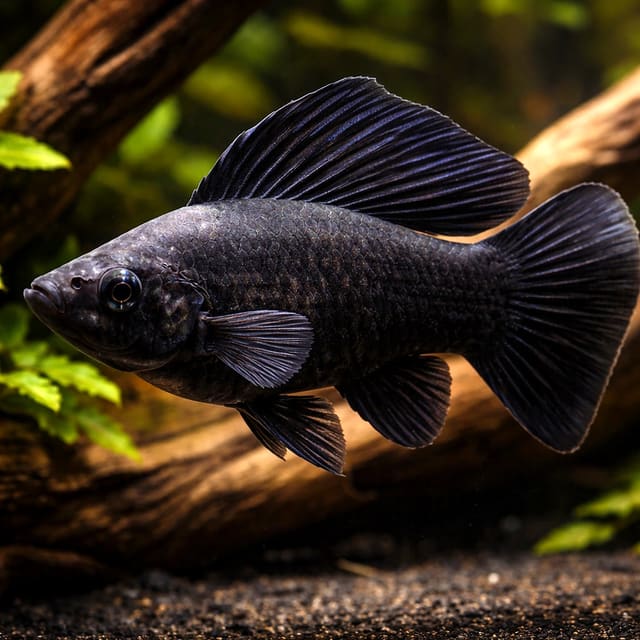
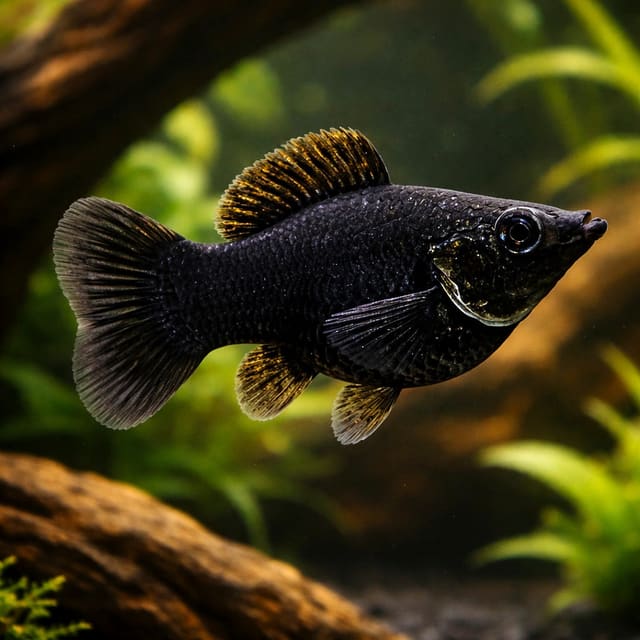
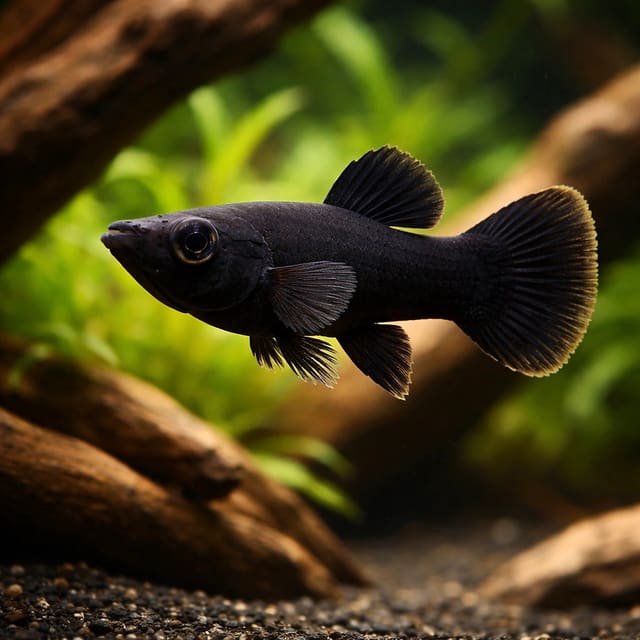
Black Molly (Poecilia sphenops black molly)
21–28°C · pH 7–8.5 · 81L
£3.99

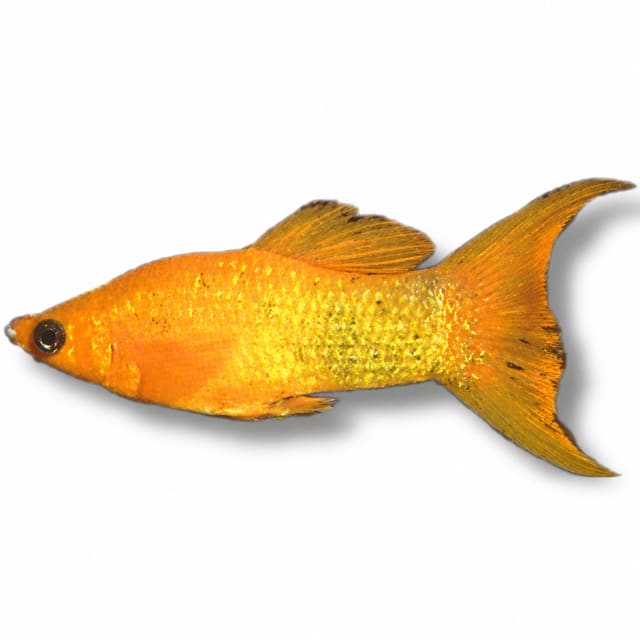
The Gold Sailfin Molly (Poecilia velifera) is a poeciliid livebearer from Mexico’s Yucatán-Quintana Roo and lower Usumacinta-Laguna de Términos systems that reaches 15 cm. It suits intermediate keepers; OATA’s guppy-and-molly guidance suggests at least three, while the FishBase, Seriously Fish and OATA overlap is 25–28°C, pH 8.0 and 15–18 dGH. Sold individually in sizes from 4–5 cm to 6–7 cm.
Adult size is the maximum length this species reaches at full maturity (scientific sources). The livestock you receive will be younger and smaller — pick a size above for the actual shipping size. Product-photo provenance and any image-specific limitations are stated on the listing.
Poecilia velifera
Save when buying multiple fish. Each quantity is one fish; sex and pair formation are not guaranteed unless the selected variant explicitly states them.
The Gold Sailfin Molly (Poecilia velifera) is a poeciliid livebearer from Mexico’s Yucatán-Quintana Roo and lower Usumacinta-Laguna de Términos systems that reaches 15 cm. It suits intermediate keepers; OATA’s guppy-and-molly guidance suggests at least three, while the FishBase, Seriously Fish and OATA overlap is 25–28°C, pH 8.0 and 15–18 dGH. Sold individually in sizes from 4–5 cm to 6–7 cm.
Adult size is the maximum length this species reaches at full maturity (scientific sources). The livestock you receive will be younger and smaller — pick a size above for the actual shipping size. Product-photo provenance and any image-specific limitations are stated on the listing.
Maintain these water conditions for optimal health and vibrant colors
The Gold Sailfin Molly (Poecilia velifera) is a poeciliid livebearer from Mexico’s Yucatán-Quintana Roo and lower Usumacinta-Laguna de Términos systems. FishBase records a maximum length of 15 cm. Its adult size, need for hard basic water and sensitivity to poor water quality make it an intermediate choice for a keeper prepared to test the aquarium and maintain it consistently.
Start with an aquarium of at least 104 litres and a base measuring at least 91 × 38 cm. Those species-level aquarium dimensions come from the Seriously Fish profile. Keep routine water at 25–28°C, pH 8.0 and 15–18 dGH. This is the overlap of FishBase’s environmental range, Seriously Fish husbandry and OATA’s group-level guidance; use it as a stable operating target, not a species-specific optimum.
OATA suggests keeping at least three guppies or mollies for companionship. That is a group-care recommendation rather than the sale quantity: each purchase here provides one fish. Plan the final group and every companion around the adult fish, the full aquarium footprint and the same hard-water requirements.
| Suits | Not suited to |
|---|---|
| Intermediate keepers who test and maintain hard, basic water | Soft or acidic aquariums |
| Aquariums of at least 104 litres with a 91 × 38 cm base | Smaller permanent accommodation |
| A social plan for at least three compatible guppies or mollies | Keeping a single fish without companionship |
| Communities made up of fish that tolerate hard water | Timid fish or species requiring different water |
One purchase provides one Gold Sailfin Molly. Use the live size selector to choose the labelled dispatch size: 4–5 cm, 5–6 cm or 6–7 cm. The size you select is the size supplied, not the adult size. Every choice therefore needs the same long-term plan for a fish that can reach 15 cm.
Sex is guaranteed only when the selected option explicitly states male or female. This Gold Sailfin Molly listing has no sex-guaranteed option. Treat the chosen fish as one individual within your wider social plan rather than assuming that its dispatch size, colour or pictured fin shape identifies its sex.
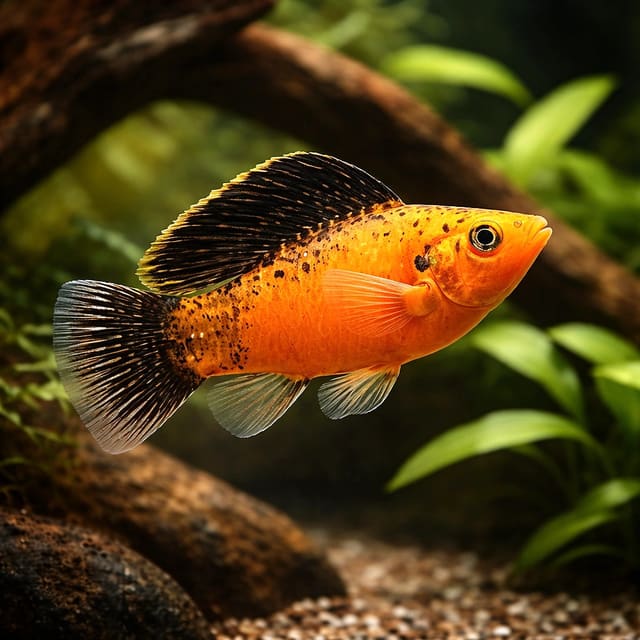
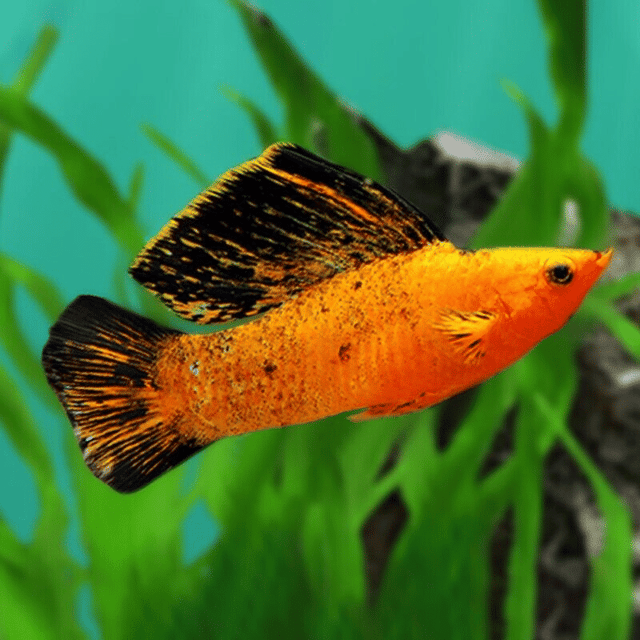
The word Gold identifies the aquarium colour variety attached to this offer, while Poecilia velifera identifies the species. Seriously Fish notes that this molly has been selectively bred into several varieties and that some aquarium forms have resulted from crossing with Poecilia latipinna. Keep the scientific identity and the Gold trade description together when comparing care requirements.
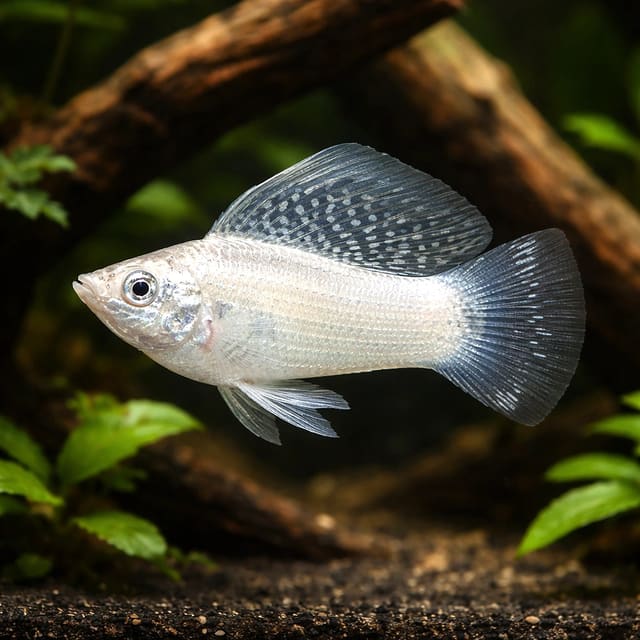
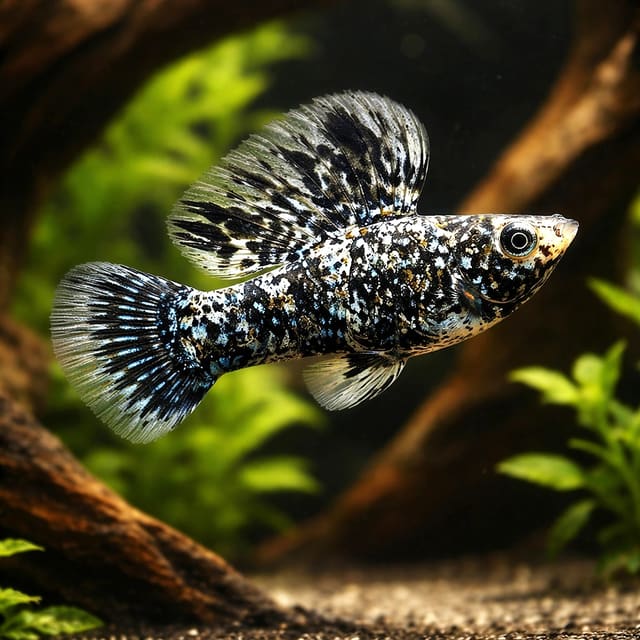
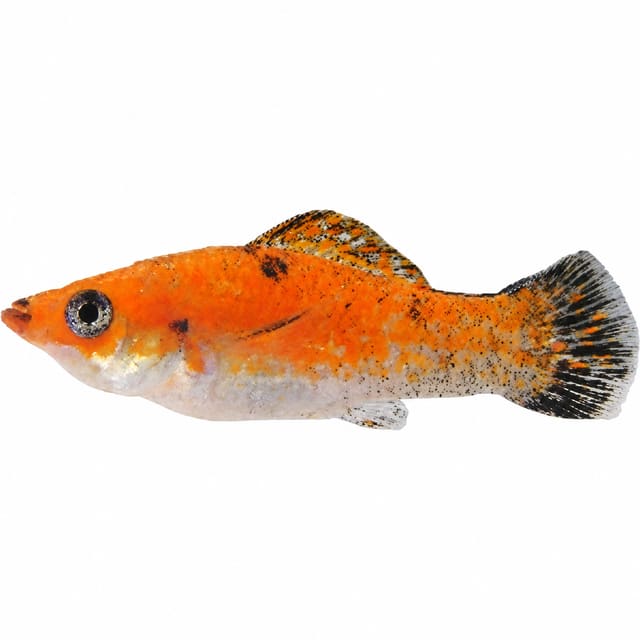
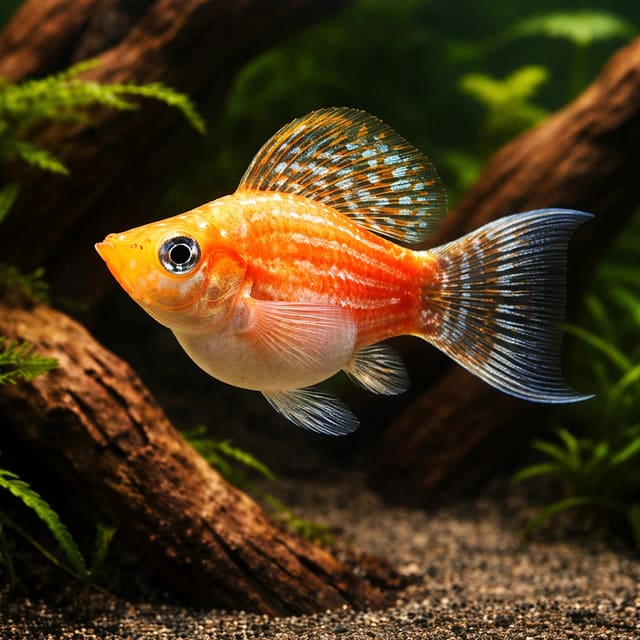
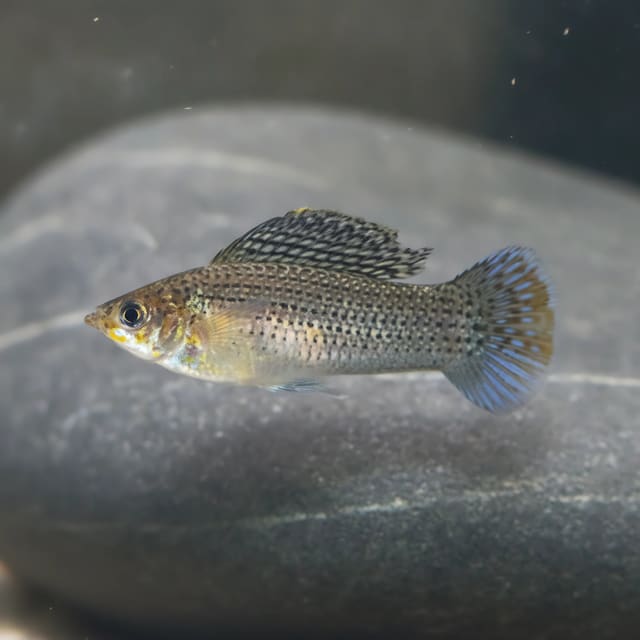
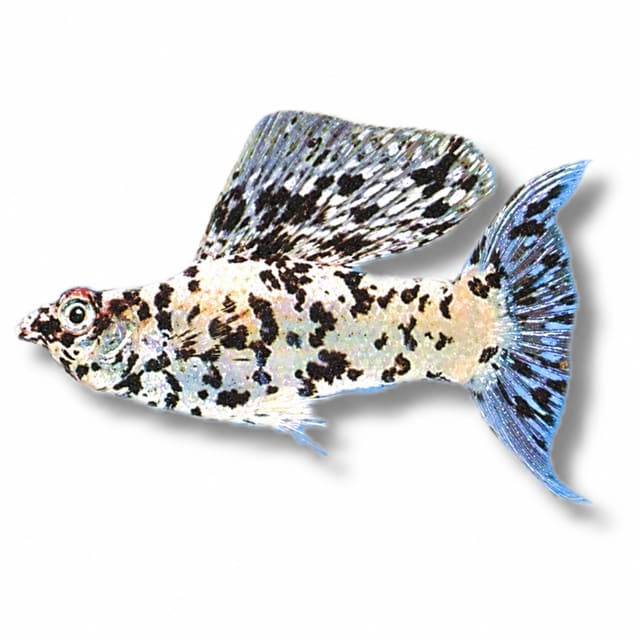
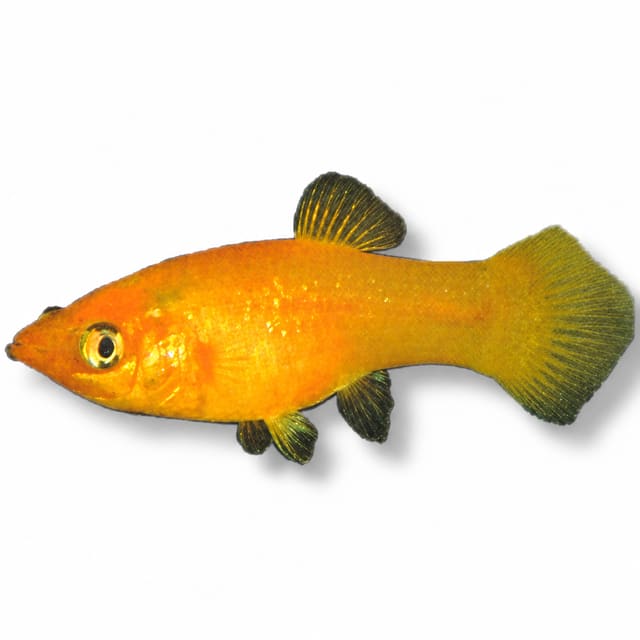
Some gallery images have been digitally enhanced to improve image quality. They show the listed type of animal rather than guaranteeing the exact markings of the individual supplied, so natural colour and pattern can vary. Use the gallery to understand the illustrated body shape and sail-like dorsal profile, not to select an exact pattern, sex or individual fish.
Plan for a 15 cm adult from the outset. The smallest aquarium recommendation is not permission to fill every part of the tank with décor or additional fish: the fish still needs open water in which to turn and swim, while the biological filter must cope with the combined waste from the whole community.
Seriously Fish recommends making the aquarium as large as possible. It reports that a small aquarium or overcrowded conditions may impair development of a male’s dorsal fin, and it advises sensible stocking. This makes usable swimming space and stocking restraint part of long-term body and fin care rather than optional presentation details.
Build a heavily planted layout with some floating cover while retaining areas of open water. Place plants around the open swimming area rather than filling the entire footprint. Aquarium gravel or sand can be used as the substrate, and plants or suitable ornaments should provide shelter. Check the remaining open area from the perspective of a 15 cm fish, not the fish’s dispatch length.
The species occurs in freshwater and brackish environments, but salt is not necessary for routine care. Seriously Fish identifies the hard minerals calcium and magnesium as crucial to long-term health. A stable hard freshwater aquarium is therefore a sound plan when it remains within the stated pH, hardness and temperature targets.
Adult planning also prevents an avoidable second move. Prepare and mature the permanent aquarium first, establish its filter, measure the water and then add livestock gradually. A larger stable system gives more margin against abrupt temperature and water-quality changes, but it still needs regular testing and maintenance.
Keep the aquarium at 25–28°C, pH 8.0 and 15–18 dGH. These routine values sit within FishBase’s recorded environment, the Seriously Fish aquarium range and OATA’s guppy-and-molly range. The overlap is deliberately narrower than any one broad range and keeps the aquarium inside all three.
Measure the aquarium rather than relying on a general description such as “hard water”. GH measures the dissolved minerals relevant to this fish, while pH confirms that the water remains basic. The water chemistry guide explains the main aquarium values, and the water matcher lets you compare measured values with this target.
| Reading | Action |
|---|---|
| 25–28°C | Keep the temperature steady within this range. |
| pH 8.0 | Use water that remains basic and stable. |
| 15–18 dGH | Maintain the moderately hard or harder mineral content this species needs. |
| Ammonia 0 mg/l | Stop adding fish and check filtration if ammonia appears. |
| Nitrite 0 mg/l | Respond to any reading by checking the mature biological filter. |
Seriously Fish warns that this species weakens fairly rapidly in soft or acidic water, with shimmying, fungus or clamped fins among the possible signs. If any of these changes appear, test temperature, pH, GH, ammonia and nitrite promptly and compare the readings with the normal values for that aquarium.
Do not use aquarium salt as a substitute for hardness. Salt is unnecessary when the fish is maintained in suitable hard, basic water. Focus routine care on stable minerals, a mature filter and clean conditions.
Use an aquarium of at least 104 litres with a base of at least 91 × 38 cm. The footprint matters because litres alone do not show how much horizontal swimming and turning room the fish receives. Keep those minimum dimensions intact after allowing for substrate, plants, ornaments and the space occupied by every other fish.
Seriously Fish recommends a heavily planted setup with floating cover and open water. A useful layout has clear functions: planted margins provide retreat, floating growth provides overhead cover, and the central or front area remains open for swimming. This gives the fish shelter without turning the aquarium into a dense obstacle course.
OATA recommends aquarium gravel or sand and ideally live plants. Plastic plants and suitable ornaments may provide shelter where live planting is not used. Whatever the material, stock the aquarium sensibly; Seriously Fish links overcrowding with impaired dorsal-fin development in males.
Prepare the full permanent setup before adding livestock. The first tropical tank guide can help organise aquarium preparation and filter maturation. Add the planned community slowly because OATA warns that the beneficial bacterial population must increase as fish numbers and feeding increase.
A worked planning check is simple: a 104-litre aquarium with a 91 × 38 cm base meets the stated starting dimensions, but it still needs open water and restrained stocking. A taller aquarium with the same volume but a shorter base does not meet the footprint recommendation.
Use a well-established biological filter continuously. The RSPCA explains that a working biological filter supports bacteria that convert toxic ammonia into nitrite and then into the safer nitrate. OATA likewise requires a filter for every guppy or molly aquarium.
For the Seriously Fish example of an aquarium around 104 litres, use turnover of four to five times the tank volume each hour. That calculation produces a filter rating of about 415–520 litres per hour. Treat this as the worked figure for that aquarium size; a different volume needs its own calculation, and the filter must still suit the aquarium’s actual stocking and layout.
OATA warns that stocking too quickly can cause new tank syndrome when there are too few nitrifying bacteria to process the extra waste. Ammonia and nitrite may then rise to levels that make fish ill or kill them. A new fish should therefore be added only after the established aquarium tests at 0 mg/l ammonia and 0 mg/l nitrite.
Seriously Fish gives a heater guide of roughly 100–150 W for an aquarium around 104 litres when the room is around 20°C. Choose equipment capable of holding the required 25–28°C in the actual room and aquarium, then confirm the result with a thermometer.
Filtration capacity is not a reason to overcrowd. Water movement, bacterial processing and physical swimming space solve different problems, so all three must suit the adult community.
Feed once a day, offering only what the fish can eat within a few minutes. OATA’s guppy-and-molly guidance provides that portion and schedule. Remove the assumption that an eager response means another meal is needed: uneaten food breaks down and adds toxic waste to the water.
Build the diet around both plant and animal foods. FishBase records adults eating worms, crustaceans, insects and plant matter. Seriously Fish describes the species as omnivorous, feeding naturally on zoobenthos and detritus, and says that live, frozen and dried foods are accepted while vegetable matter should be included.
| Food role | Supported choices |
|---|---|
| Regular dried food | A good-quality flake or granule with a high algae content |
| Vegetable variety | Vegetable flake, blanched spinach or cucumber |
| Small animal foods | Daphnia, small bloodworm or tubifex |
| Format variety | Suitable live, frozen and dried foods |
Spread a small portion so each fish in the social group can reach food. Watch the entire group for the few minutes after feeding rather than following only the first fish to respond. Reduced intake or lack of interest is one of OATA’s warning signs and should prompt a water-quality check.
Use variety to cover the species’ recorded omnivorous diet, not to increase the total daily amount. Vegetable food does not replace the worms, crustaceans and insects represented by suitable animal foods, while animal food alone omits the plant component. Rotate compatible choices within the single daily ration.
Check for uneaten fragments after the feeding window. Persistent leftovers indicate that the next portion should be smaller. This adjustment protects water quality while preserving the once-daily schedule and varied diet.
Plan for companionship rather than keeping this fish alone. OATA suggests at least three guppies or mollies, with two females to each male, to reduce stress on females and other inhabitants. Seriously Fish also recommends trios of two females to one male because males can be vigorous in their pursuit of mates.
The social recommendation does not change the retail unit: purchases provide individual fish. Build the group deliberately and remember that this offer carries no promised sex. Do not infer a fish’s sex from dispatch size, colour or a gallery illustration.
Provide planted margins, floating cover and open swimming water so the fish can use different parts of the aquarium. Do not respond to pursuit simply by adding more fish: first check aquarium capacity, water quality and whether the proposed group can follow the recommended ratio.
This is a livebearing fish. A mixed-sex group may produce live young, and Seriously Fish reports a gestation period of four to eight weeks. Treat additional young as an increase in stocking and feeding rather than assuming that the established filter can absorb the change immediately. OATA warns that rapid population increases can exceed the beneficial bacteria’s capacity and lead to unhealthy ammonia or nitrite.
Use the normal weekly checks to compare behaviour over time. Changes in aggression, hiding, swimming, breathing or feeding can be early signs that the social plan or water quality needs attention.
At least once every week, change 25% of the aquarium water. OATA recommends this regular partial-water-change schedule. A siphon can remove solid waste from the substrate during the change.
Treat replacement tap water with conditioner to remove chlorine or chloramine before adding it. Check that the new water will keep the aquarium within 25–28°C, pH 8.0 and 15–18 dGH. Consistent replacement water helps preserve the hard, basic conditions required by the species.
Healthy fish should show clear bright eyes, undamaged fins, intact scales and appropriate swimming and feeding. OATA advises watching for hanging at the surface, sitting on the bottom, erratic swimming, darker or paler colour, changed aggression, increased hiding, altered gill movement, white spots, fluffy growths, loss of fins or scales, changing body condition and reduced appetite.
If a change appears, test the water first and compare the fish with its normal behaviour. Shimmying or clamped fins deserves particular attention because Seriously Fish links these signs with unsuitable soft or acidic water. Keep observations concrete: note what changed, which fish is affected and what the test results show.
Weekly consistency matters more than waiting for the aquarium to look dirty. Clear water can still contain ammonia or nitrite, while a filter can continue moving water even when its biological capacity has been disrupted.
Prepare the mature aquarium before arrival. OATA advises confirming that ammonia and nitrite are 0 mg/l before adding fish. Also check that temperature, pH and hardness match the routine values for this species and that the aquarium has enough space for the resulting total stock.
These steps follow the Tropical Fish Co delivery and Live Arrival Guarantee policy. The fish is hand-bagged in pure oxygen and placed in an insulated poly box, with a heat pack when the weather calls for it. Keep the order number and continuous unboxing video if a Live Arrival Guarantee claim is needed, and send them on the day the fish arrives.
Observe breathing, swimming posture and fin position, then confirm that the fish begins to use both cover and open water. At the first scheduled feed, offer only the normal small ration and check whether the new fish can reach it. Do not compensate for a missed response by adding a large amount of food.
During the first week, test ammonia and nitrite at least weekly and sooner if behaviour changes. A new fish and its food increase the load on the filter. OATA advises increasing fish numbers slowly because the beneficial bacterial population must expand as waste production rises.
Keep the same permanent 104-litre and 91 × 38 cm minimum plan regardless of the dispatch length. Arrival accommodation should already support the adult fish rather than depend on a later upgrade.
Only keep this fish with species that tolerate hard water. Seriously Fish describes Poecilia velifera as peaceful in a community aquarium but makes shared water requirements the first compatibility rule. A calm temperament does not overcome incompatible pH, hardness or temperature needs.
| Decision | Fish covered by the guidance |
|---|---|
| Potentially suitable | Swordtails or platies that share the same hard-water conditions |
| Screen individually | Some gouramis, hardy corydoras or loricariids, and some barbs or tetras |
| Brackish setup only | Chromides or gobies suited to the same brackish conditions |
| Avoid | Other mollies because they may crossbreed |
| Avoid | Timid fish species |
| Avoid | Species that cannot tolerate hard water |
The words “some” and “hardy” matter. They require a species-by-species check rather than turning every gourami, corydoras, loricariid, barb or tetra into an automatic companion. Compare the candidate’s adult requirements with 25–28°C, pH 8.0 and 15–18 dGH, then confirm that the aquarium still meets its own volume and footprint needs after all fish are counted.
Sailfin mollies should not be kept with timid fish species, according to OATA. Keep that exclusion unconditional. Likewise, Seriously Fish advises against other mollies because they may crossbreed; a shared family name or similar water preference does not remove that issue.
Use the Molly Fish collection to compare identities and care requirements, not as a tank-mate list. Other mollies remain in the avoid category for this community plan.
Screen a proposed community in a fixed order: water first, explicit exclusions second, adult space third and observed behaviour after introduction. Reject the match as soon as it fails an unconditional rule rather than trying to solve incompatible care through extra décor.
A swordtail or platy passes only when its own requirements overlap these conditions and the aquarium has capacity for both adult fish. A barb or tetra needs the same check and remains only a possible match because Seriously Fish qualifies those groups as “some”. A timid fish fails before introduction because OATA places it in the group sailfin mollies should not be kept with.
Keep freshwater and brackish plans distinct. Seriously Fish allows this species in a brackish setup with chromides or gobies, but that permission applies to a deliberately matched brackish community. It does not turn those fish into companions for the hard freshwater plan described here without checking their own requirements.
After adding a screened companion, watch swimming, hiding, aggression and feeding. If one fish cannot reach food or its behaviour changes, test the water and review stocking, cover and the companion choice. Do not add another animal as the first response to a social problem.
It reaches 15 cm. FishBase records 15 cm total length, so plan its permanent aquarium and community around that adult figure rather than its dispatch length.
Use at least 104 litres with a base measuring at least 91 × 38 cm. Seriously Fish gives these species aquarium dimensions and recommends a heavily planted layout with floating cover and open swimming water.
OATA’s guppy-and-molly guidance suggests at least three, ideally two females to each male, for companionship and reduced stress. Purchases here provide individual fish, and the offer carries no promised sex.
Treat this fish as an intermediate choice. OATA describes most guppies and mollies as easy, but Seriously Fish says this species is more difficult than others in its genus and requires rigorous water-quality maintenance.
Feed once daily with only what it can finish within a few minutes. Use quality algae-rich flake or granules, vegetable foods and small live or frozen foods; FishBase records worms, crustaceans, insects and plant matter in the adult diet.
Keep it at 25–28°C, pH 8.0 and 15–18 dGH. These values are the overlap of FishBase’s environmental range, Seriously Fish husbandry and OATA’s guppy-and-molly guidance.
Seriously Fish describes it as peaceful in a community aquarium, although males can be vigorous when pursuing mates. Provide open swimming room, planted cover and monitor whether every fish can feed and move away.
Consider swordtails or platies, some gouramis, hardy corydoras or loricariids, and some barbs or tetras only when they tolerate the same hard water. Avoid other mollies because they may crossbreed, as well as timid fish and species that cannot tolerate hard water.
Start filming while the parcel is sealed, then open it in one continuous take and show the fish inside the sealed bag before floating it for 20–30 minutes. Tropical Fish Co hand-bags the fish in pure oxygen and uses an insulated poly box, with a heat pack when the weather calls for it.
No reviews for this item yet. Bought one? Honest reviews only, good or bad.
What customers say about ordering from us
I have a small group of long finned mountain minnows. So was delighted to be able to order ten of this variety to increase the genetics in my tank . The ones I recieved are healthy but it’s to early to give a verdict on wether they are of a long finned type since they are small currently.
Gordon Walker · 23 Sept 2026
100% success travel and "installation". Pleased with quality of purchase. The Siamese fighter a bit "shy" so have not yet seen him at his best yet but looking good. Happy customer. GG
George E Garratt · 21 Sept 2026
Reviews of our shop, collected by Judge.me, an independent third-party review collector. Newest first.