Chocolate Cherry Shrimp (Neocaridina davidi)
18–26°C · pH 6.5–8 · 30L

Add an elegant Green Sail-Fin Molly pair (Poecilia velifera) to your tropical tank. A hardy, peaceful sailfin livebearer with a striking tall dorsal fin, easy to keep in hard water. Buy tropical fish online with UK delivery today.
Adult size is the maximum length this species reaches at full maturity (scientific sources). The livestock you receive will be younger and smaller — pick a size variant above for the actual shipping size. Photos are AI-enhanced, so the animal may show subtle colour or marking differences.
Poecilia velifera green
Green Sail-Fin Molly Pair bond and breed in male/female pairs — buying a pair gives them the social structure they need.
Add an elegant Green Sail-Fin Molly pair (Poecilia velifera) to your tropical tank. A hardy, peaceful sailfin livebearer with a striking tall dorsal fin, easy to keep in hard water. Buy tropical fish online with UK delivery today.
Adult size is the maximum length this species reaches at full maturity (scientific sources). The livestock you receive will be younger and smaller — pick a size variant above for the actual shipping size. Photos are AI-enhanced, so the animal may show subtle colour or marking differences.

Cichlids are one of the most diverse fish families in the hobby. From tiny apistogrammas to massive oscars, this guide covers the basics of keeping them well.
Maintain these water conditions for optimal health and vibrant colors
The Green Sail-Fin Molly, Poecilia velifera, is one of the largest and most graceful livebearers in the freshwater hobby. Sold here as a settled pair, this Yucatan sailfin molly is prized for its tall, fan-like dorsal fin and shimmering green-silver body. If you are searching for tropical fish for sale UK aquarists can keep in a peaceful community, this hardy sailfin molly is an outstanding choice: active, easy to feed, and happy in the bright, hard, slightly alkaline water that comes out of most UK taps. It is a classic livebearer that breeds readily, making it a rewarding fish for both newcomers and experienced keepers who want movement and natural colour near the top of the tank.
Often listed in the trade as Green Sailfin Molly, Yucatan Molly, or simply Poecilia velifera, this is the true giant sailfin molly rather than the smaller Poecilia latipinna. Mature males reach around 15 cm and display the spectacular raised dorsal sail during courtship and rivalry, while females are a little smaller and fuller-bodied. Customers looking to buy fish online, buy tropical fish UK, or find a reliable tropical fish store rather than a general tropical fish shop near me often choose mollies because they combine elegance, hardiness, and constant activity. Browse our wider Poecilia velifera sailfin molly range to pair colours and varieties in the same display.
The Green Sail-Fin Molly belongs to the livebearer family Poeciliidae, alongside guppies, platies, and swordtails. As a member of Poecilia velifera, it is the giant sailfin species native to brackish and freshwater habitats of the Yucatán Peninsula in south-eastern Mexico. This natural range explains its tolerance of hard, alkaline, and even mildly brackish water, and its appetite for algae and vegetable matter.
The Green Sail-Fin Molly originates from the coastal lowlands of the Yucatán Peninsula in Mexico, where it lives in warm lagoons, brackish estuaries, ditches, and slow freshwater streams close to the sea. Poecilia velifera is well adapted to mineral-rich water with a stable, slightly alkaline chemistry. In the wild it grazes on algae, biofilm, plant matter, and small invertebrates, which is exactly why a varied, vegetable-led diet keeps aquarium fish in peak condition and colour.
Because this species comes from hard, sun-warmed water, the best Green Sail-Fin Molly water conditions are warm, well-oxygenated, and clean, with a higher mineral content than soft-water species enjoy. Think bright lighting, gentle flow, and water on the alkaline side. Most British tap water is naturally suited to mollies, which makes them one of the easier larger livebearers to keep without specialist chemistry. The fish are tank-bred for the trade, so the stock we supply is already aquarium-adapted rather than wild-imported.
The species is often listed as Yucatan Molly, Green Sailfin Molly, or giant sailfin molly, and is widely sought by UK keepers comparing a specialist livebearers for sale UK source with a local fish shop. If you are weighing up where to buy, ask about size, sex ratio, and how long the fish have been settled before sale.
A small amount of aquarium salt or marine mineral salt is optional, not essential, for freshwater-kept mollies. Stable, hard, slightly alkaline water with strong filtration and good surface movement matters far more than chasing brackish conditions.
Sailfin mollies are larger and more active than common short-fin mollies, so they need room to swim and display. The Green Sail-Fin Molly minimum tank size is around 90 litres for a pair or small group, though 110 litres or more is better if you plan to keep several females per male or grow on the inevitable fry. A longer footprint suits the fish better than a tall, narrow tank, because males perform their sail-raising displays across open water.
Aim for at least 80 cm of tank length for a comfortable group. Because Poecilia velifera is a prolific livebearer, a slightly larger aquarium also gives you flexibility as the population grows. This is a forgiving fish, but cramped, undersized tanks lead to aggression between males and poorer finnage development.
The ideal tropical fish temperature for this species is 25-28°C, with 26°C a comfortable everyday target. Mollies prefer hard, alkaline water, so a Green Sail-Fin Molly pH level of 7.5-8.5 is ideal and helps maintain the immune resilience the species is known for. Avoid soft, acidic conditions, which can lead to stress and shimmying.
The recommended Green Sail-Fin Molly water parameters are pH 7.5-8.5 and moderately hard to hard water at 15-30 dGH. These suit most untreated UK tap water once dechlorinated. Stable, mineral-rich water keeps colour strong and the dorsal sail well developed.
Use reliable filtration with good biological capacity and gentle to moderate flow. Mollies graze and produce a steady bioload, so an external or internal power filter rated above the tank volume keeps water clear. Aim for around 4-6 times tank turnover per hour, and carry out weekly water changes of 25-30% to keep nitrate low.
Fine gravel or sand both work well. A natural substrate suits the fish and shows off the silvery green body. Mollies spend much of their time grazing surfaces, so leave some open glass and décor where algae and biofilm can develop for natural foraging.
Hardy plants thrive in molly tanks and give fry somewhere to hide. Use robust species such as Java fern, Vallisneria, Anubias, and floating plants, all of which tolerate hard, alkaline water. Dense planting at the back and sides with open swimming space at the front is ideal. Floating cover also encourages confident surface activity and improves fry survival.
If you want to build a complete livebearer community, you can pair this molly with other peaceful Poeciliidae. Explore our guppies, platies, and swordtails for compatible hard-water companions that enjoy the same conditions.
Moderate to bright lighting for 8-10 hours a day is ideal. Good light encourages the algae and biofilm growth that mollies graze on, supports plant health, and brings out the fish's natural green-silver sheen.
Always cycle the aquarium for 4-6 weeks before adding mollies. A mature filter handles the steady waste a feeding, breeding group produces and prevents the ammonia spikes that cause shimmying and fin clamping.
The Green Sail-Fin Molly diet is omnivorous with a strong herbivorous lean. In the wild these fish graze constantly on algae, biofilm, and plant matter, so a vegetable-rich routine keeps them healthy, colourful, and active. Good feeding supports the strong finnage and steady growth that make this one of the most attractive livebearers to buy live fish online UK keepers can enjoy in a community tank.
Feed a quality flake or small pellet formulated for omnivores or livebearers, ideally one with added spirulina or algae content. This is the foundation of practical molly care. Mollies feed readily at the surface and mid-water, so floating and slow-sinking foods both work well.
Offer vegetable matter several times a week: blanched courgette, spinach, peas, or spirulina-based foods. Supplement with occasional frozen or live foods such as brine shrimp, daphnia, and bloodworm for protein and natural foraging behaviour. Variety keeps the fish in top condition and encourages breeding.
Spirulina and natural carotenoid sources help maintain the green-silver sheen and healthy fins. Algae wafers are useful for a fish that loves to graze. As always, colour and condition depend on clean water and a balanced diet rather than a single supplement.
| Time | Food | Amount |
|---|---|---|
| Morning | Omnivore/livebearer flake or pellet | What is eaten in 1-2 minutes |
| Evening | Vegetable matter or frozen food rotation | Small second portion |
Feed small amounts once or twice a day, only what the group clears in a couple of minutes. Mollies graze between meals, so they rarely need large portions. Overfeeding pollutes the water and causes digestive issues, so keep feeds modest and let the fish forage naturally.
Avoid an all-protein diet, which can cause bloating and constipation in this herbivore-leaning species. Do not rely on a single rich food every day, and never assume foods sold for predatory or cold-water species are suitable for a warm-water livebearer.
Too much high-protein food and not enough vegetable matter is the most common cause of molly bloating and shimmying. Keep the diet plant-led, the water clean, and portions small.
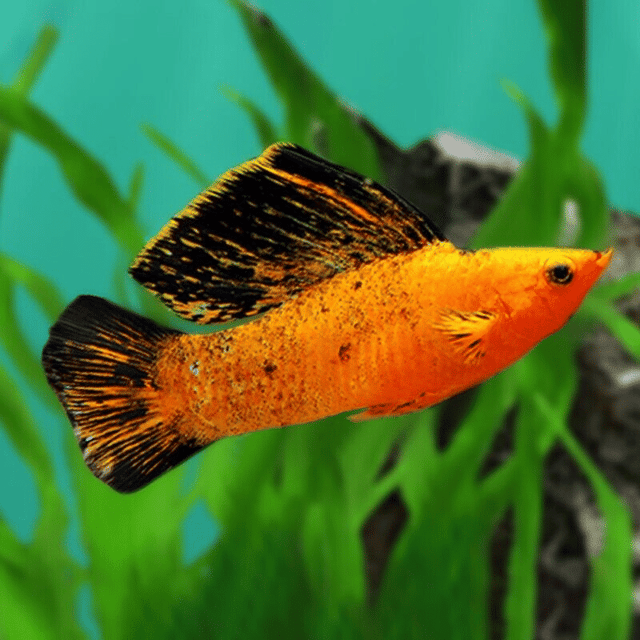
The Green Sail-Fin Molly is one of the most elegant livebearers thanks to the male's tall, fan-shaped dorsal fin. The body is a shimmering green-silver, often with rows of fine speckling and a metallic sheen that catches the light beautifully under good lighting. This is the giant sailfin species, so adults are noticeably larger than common short-fin mollies.
Sexing is straightforward. Males develop the spectacular raised sail and a modified anal fin called a gonopodium, used in breeding. Females are fuller-bodied, a little larger around the belly, and have a normal fan-shaped anal fin. Males reach around 15 cm including finnage, while females are slightly smaller. Sold as a pair, this listing gives you one male and one female so you can enjoy natural display behaviour and, in time, livebearing.
Colour and fin development improve with age, stable hard water, and a vegetable-rich diet. A settled adult male in good condition, sail raised during display, is one of the most striking sights in a freshwater community aquarium.
The Green Sail-Fin Molly is a peaceful, sociable fish that suits a hard-water tropical fish tank community. The key is to match tank mates that enjoy the same warm, hard, alkaline conditions. Mollies are generally calm, though males can squabble mildly, so keeping more females than males reduces any chasing.
Excellent companions include other peaceful livebearers and hard-water community fish. Pair them with our guppies, platies, and swordtails, which share the same water preferences and gentle temperament. Peaceful catfish such as corydoras and bristlenose plecos also make good clean-up companions in a larger tank.
Avoid fin-nipping species and soft-water specialists that need very different chemistry. Long, flowing sails can tempt nippy barbs, so choose calm tank mates. Avoid keeping mollies with large, aggressive cichlids or fish that require soft, acidic water, as the conditions and temperament are a poor match.
A bright, planted hard-water community of sailfin mollies, guppies, platies, and a few corydoras is a classic, reliable setup. Keep at least two females per male to spread courtship attention, and provide floating plants so fry have somewhere to shelter. For a livebearer-only display, mixing several molly varieties from our Poecilia velifera range produces constant movement and colour.
| Species | Compatible? | Notes |
|---|---|---|
| Guppies | ✅ Yes | Same hard-water preferences and peaceful temperament. |
| Platies & swordtails | ✅ Yes | Ideal livebearer companions for a community tank. |
| Large aggressive cichlids, soft-water specialists | ❌ Avoid | Wrong temperament or incompatible water chemistry. |
Quarantine new arrivals for 2-4 weeks before adding them to an established community. This protects your existing fish and lets you confirm feeding response and health first.
The Green Sail-Fin Molly is a livebearer, which makes it one of the easiest tropical fish to breed. Given a healthy pair, warm hard water, and good food, breeding usually happens with no special intervention. Females give birth to free-swimming fry rather than laying eggs, and a single mature female can produce regular broods.
A well-planted tank with stable, hard, alkaline water at 26-28°C provides ideal breeding conditions. Floating plants and dense cover give fry the best chance of survival, as adult mollies may eat their own young. Conditioning the pair on a varied, vegetable-rich diet encourages strong, regular broods.
Gestation lasts roughly 4-6 weeks, after which the female releases a brood of fully formed, free-swimming fry. The fry are large enough to take crushed flake, powdered fry food, and newly hatched brine shrimp straight away. Plenty of cover and frequent small feeds give the best survival rate. Grow-on space matters, as sailfin mollies grow steadily.
The main challenge is managing the population, since mollies breed prolifically. Provide plenty of cover for fry, or move gravid females to a breeding tank if you want to raise larger numbers. Keep water quality high during fry rearing, as young fish are more sensitive than robust adults.
If you want to maximise fry survival, a heavily planted or dedicated breeding tank works far better than relying on a busy community aquarium where fry are quickly eaten.
A healthy Green Sail-Fin Molly is active, feeds eagerly, and holds its fins open with a clear, shimmering body. Mollies are hardy when kept in the right water, but most problems trace back to soft or acidic conditions, poor water quality, or an unbalanced diet rather than to species fragility.
Watch for the shimmies (a swaying, rocking motion), white spot, fin damage, and bloating. The shimmies in particular is strongly linked to soft, cold, or unstable water, so maintaining hard, warm, alkaline conditions is the single best preventative measure. Clamped fins and hiding usually point to water quality or stress.
The best prevention is stable, hard, alkaline water, a vegetable-led diet, and regular water changes. Quarantine new fish before adding them to the display. If symptoms appear, test ammonia, nitrite, nitrate, temperature, and pH first; many issues resolve with cleaner, warmer, harder water and reduced stress before any medication is needed.
Never medicate a display tank casually. Mollies often show stress from soft or poor-quality water in ways that look like disease. Correct the water chemistry first, then treat a confirmed problem.
Mollies are constantly busy, sociable fish that spend the day grazing surfaces and patrolling open water. Males display their tall sails to females and rival males, raising the dorsal fin in a striking show that is one of the species' best features. This active, peaceful nature makes the Green Sail-Fin Molly a rewarding centrepiece for a hard-water community.
Keep mollies in a small group with more females than males to spread courtship attention and reduce any chasing. They feel most secure with planted cover and open swimming space, and they reward good conditions with bright colour, strong finnage, and steady breeding behaviour.
For a full, in-depth reference on keeping this species and its relatives, see our authoritative Molly Fish Care Guide. It covers water chemistry, diet, breeding, and tank-mate selection in detail and is a useful companion to this product page when planning your setup.
When buying livebearers, condition matters as much as colour. A good Green Sail-Fin Molly should arrive active, feeding, and properly settled into aquarium life. We select healthy pairs with strong finnage and good colour potential, conditioned on a varied, vegetable-rich diet so they are ready for your hard-water community tank.
Each fish is held, observed, and checked for feeding response before sale. We focus on practical UK success: stable acclimation, strong appetite, and suitability for the hard, alkaline water common in British homes. For customers comparing tropical fish for sale UK, buy live fish online UK, or livebearers for sale UK, that means a fish prepared for real home aquarium conditions.
For delivery, fish are packed in insulated boxes with professional bagging methods and seasonal heat protection when needed. Tracked dispatch helps reduce transit stress, and clear acclimation guidance is provided on arrival. Order your Green Sail-Fin Molly pair today if you want an elegant, active, easy-to-keep livebearer that brings constant movement and natural colour to a planted freshwater aquarium.
If you enjoy elegant livebearers, explore more from our Poecilia velifera sailfin molly range, or build a complete hard-water community with our guppies, platies, and swordtails. For full husbandry detail, our Molly Fish Care Guide is the best place to start.

18–26°C · pH 6.5–8 · 30L

23–27°C · pH 7.4–8.4 · 500L

20–27°C · pH 6–7 · 54L

23–27°C · pH 7.4–8.4 · 150L

24–28°C · pH 6.5–7.8 · 300L

20–24°C · pH 7–8 · 45L

24–28°C · pH 6.5–7.5 · 2000L

24–28°C · pH 7.5–8.5 · 200L

24–28°C · pH 5.5–7 · 60L

18–25°C · pH 6–8 · 100L

24–28°C · pH 7–8 · 120L

18–28°C · pH 6.5–8 · 20L

24–27°C · pH 7.5–8.8 · 150L

22–26°C · pH 6–7.5 · 60L

24–28°C · pH 7.5–8.5 · 40L

24–28°C · pH 7.5–8.5 · 500L