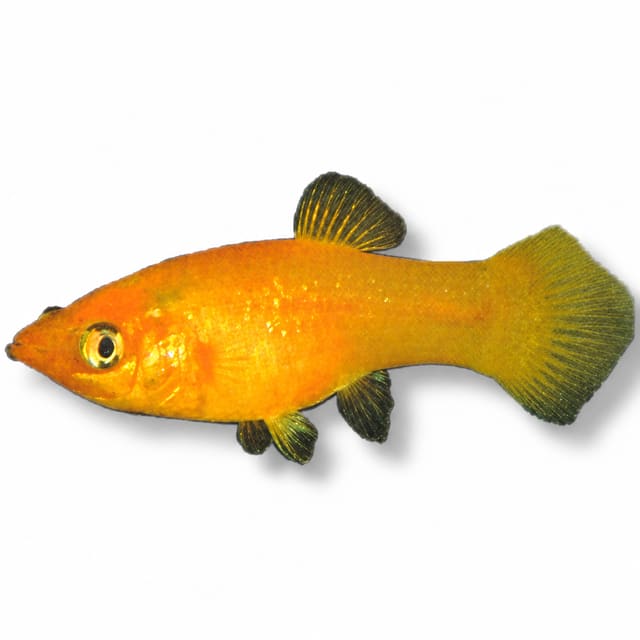
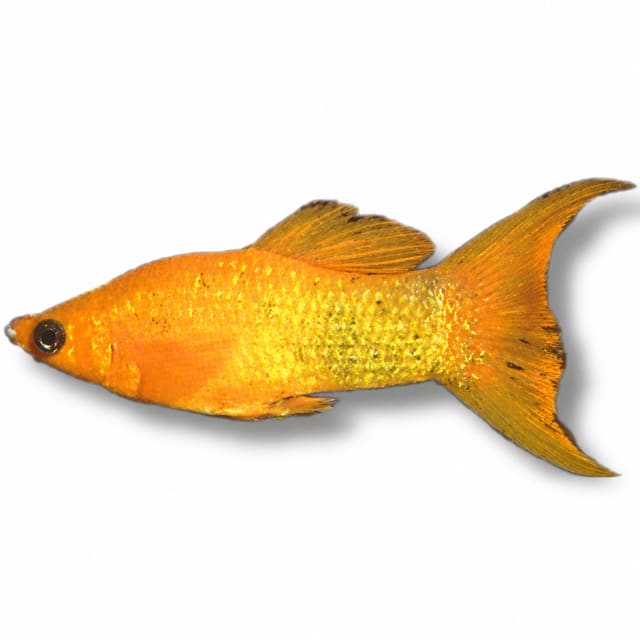
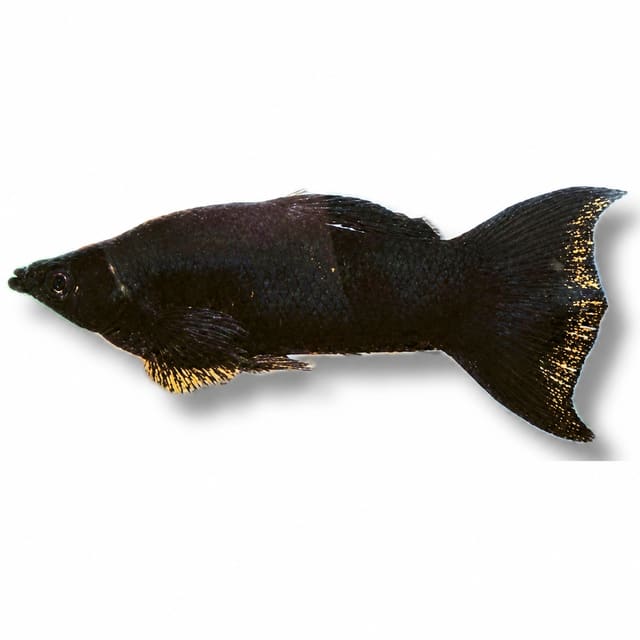
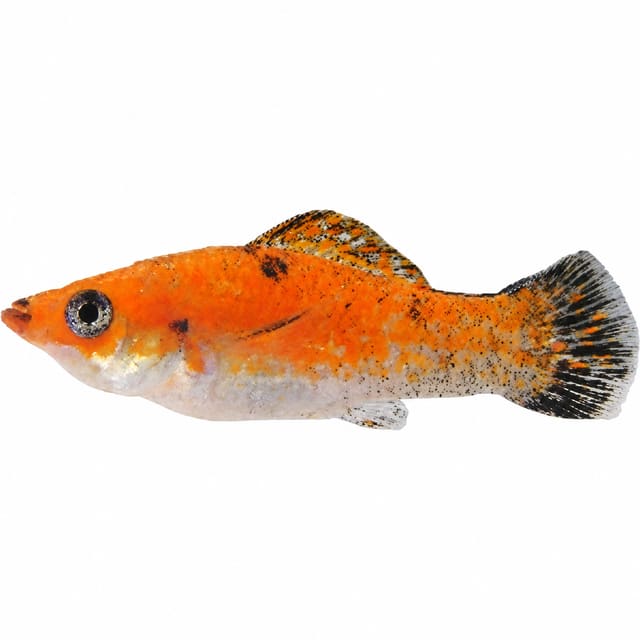
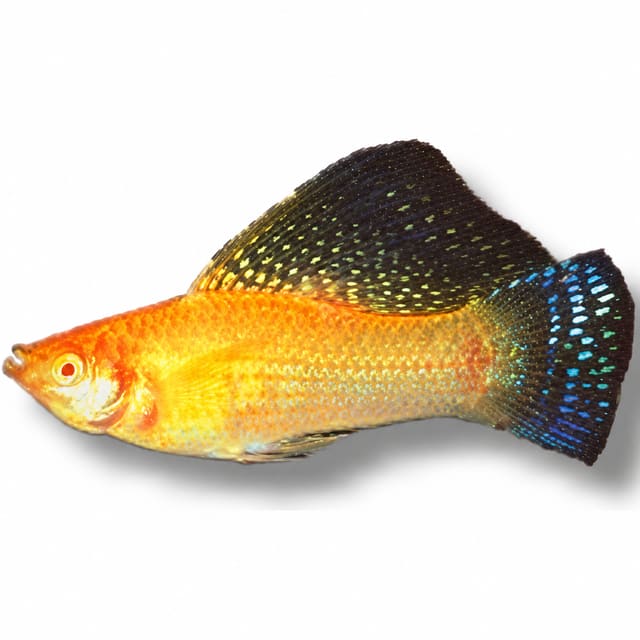
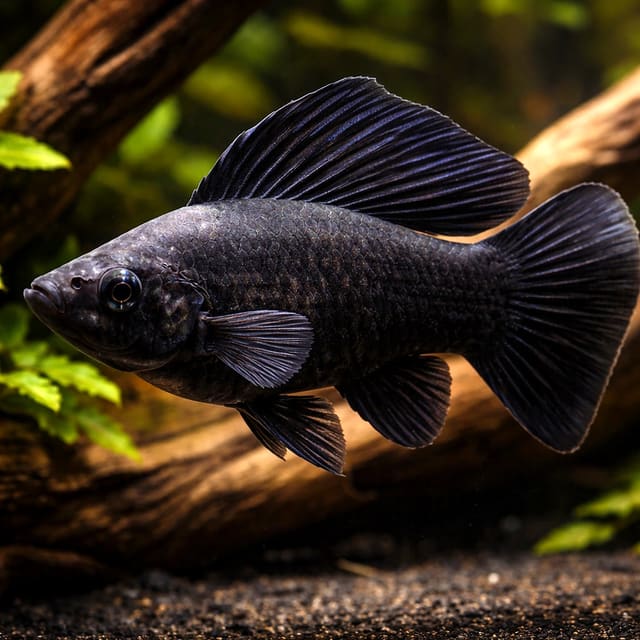
Gold Black Molly (Poecilia sphenops gold black molly)
21–28°C · pH 7.5–8 · 81L
£5.99
The Black Molly (Poecilia sphenops) is a poeciliid livebearer from Mexico to Colombia that reaches 7.5 cm SL. It suits keepers with hard, basic water; Seriously Fish gives 21–28°C, pH 7.0–8.5 and 15–30 dGH, while OATA suggests keeping at least three mollies. Sold individually in 2.5–3.5 cm, 3.5–5 cm and XL dispatch sizes.
Adult size is the maximum length this species reaches at full maturity (scientific sources). The livestock you receive will be younger and smaller — pick a size above for the actual shipping size. Product-photo provenance and any image-specific limitations are stated on the listing.
Poecilia sphenops
Shoaling fish: kept in a group they feel safer, stay calmer and show their best colour.
Minimum of 2 per order.
The Black Molly (Poecilia sphenops) is a poeciliid livebearer from Mexico to Colombia that reaches 7.5 cm SL. It suits keepers with hard, basic water; Seriously Fish gives 21–28°C, pH 7.0–8.5 and 15–30 dGH, while OATA suggests keeping at least three mollies. Sold individually in 2.5–3.5 cm, 3.5–5 cm and XL dispatch sizes.
Adult size is the maximum length this species reaches at full maturity (scientific sources). The livestock you receive will be younger and smaller — pick a size above for the actual shipping size. Product-photo provenance and any image-specific limitations are stated on the listing.
Maintain these water conditions for optimal health and vibrant colors
The Black Molly is the familiar black aquarium colour form of Poecilia sphenops, a livebearer in the family Poeciliidae. FishBase records its native distribution from Mexico to Colombia and a maximum length of 7.5 cm standard length. The black form is an aquarium colour morph rather than a separate species, as described in the Poecilia sphenops husbandry account. This peaceful fish suits a mature aquarium planned around hard, basic water rather than a general community assembled by temperament alone.
| Suits | Not suited to |
|---|---|
| Hard, basic water within the stated aquarium ranges | Soft or acidic aquarium conditions |
| A mature, biologically filtered aquarium | An unfiltered or immature setup |
| A planned group of at least three mollies | Space calculated for one small dispatch-sized fish |
| Peaceful companions sharing the same water conditions | A general community whose water requirements conflict |
| Size label | What it means |
|---|---|
| 2.5–3.5 cm | One animal within this dispatch-size band |
| 3.5–5 cm | One animal within this dispatch-size band |
| XL | One animal in the non-numeric XL dispatch size |
One purchase supplies one animal in the size selected. The size you select is the size supplied, not the adult size. Use the live size selector to choose the dispatch size, then use the adult planning figures in the next section to judge the aquarium.
Sex is guaranteed only when the selected option explicitly states male or female. This Black Molly listing has no sex-guaranteed option.
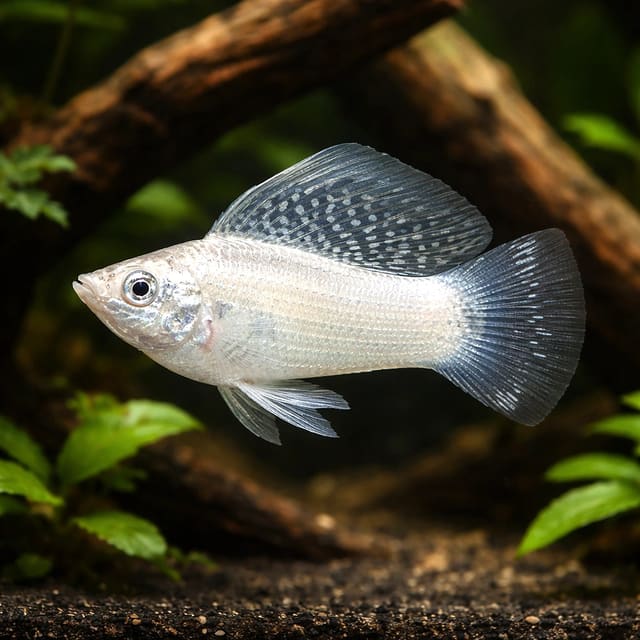
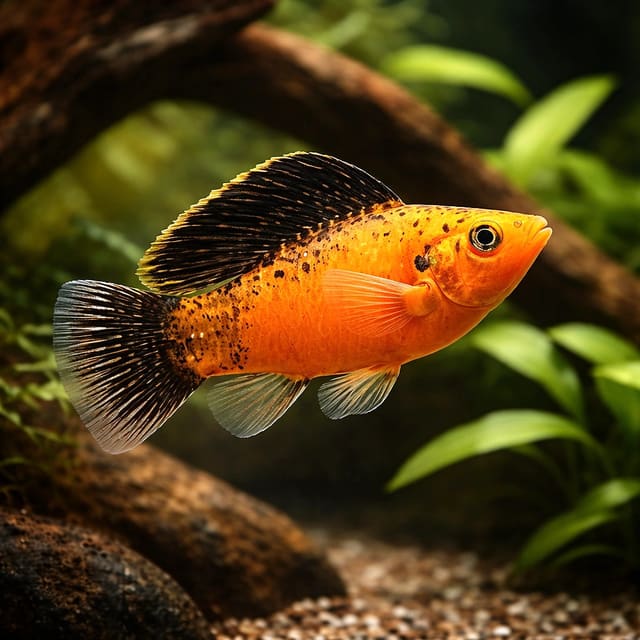
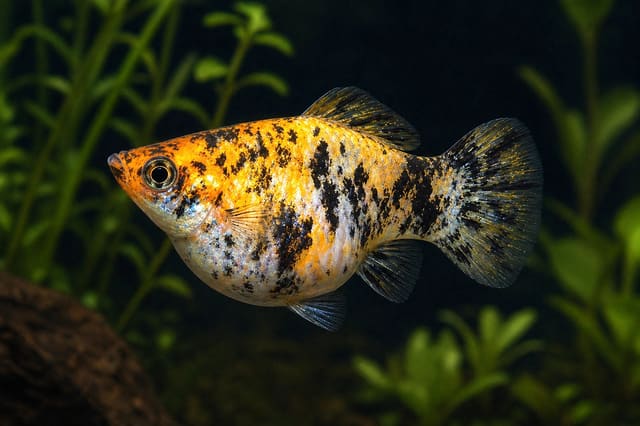
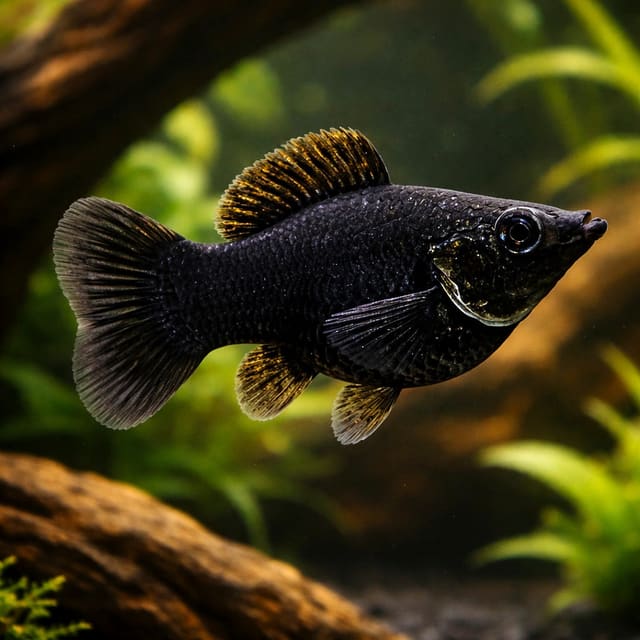
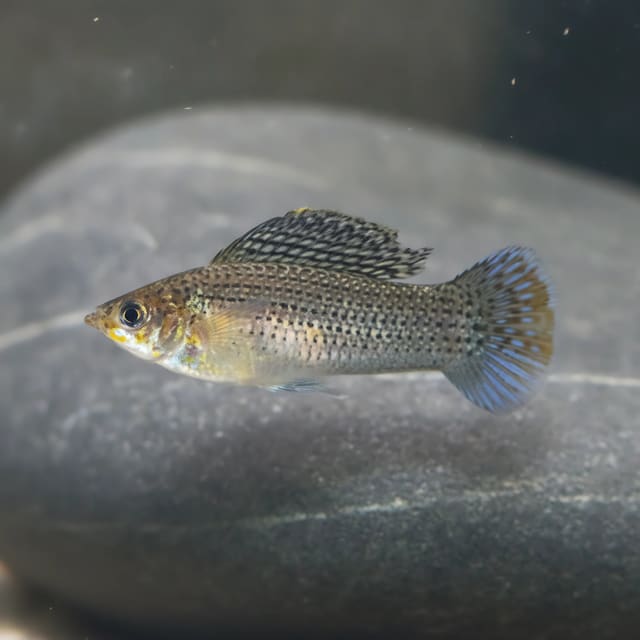
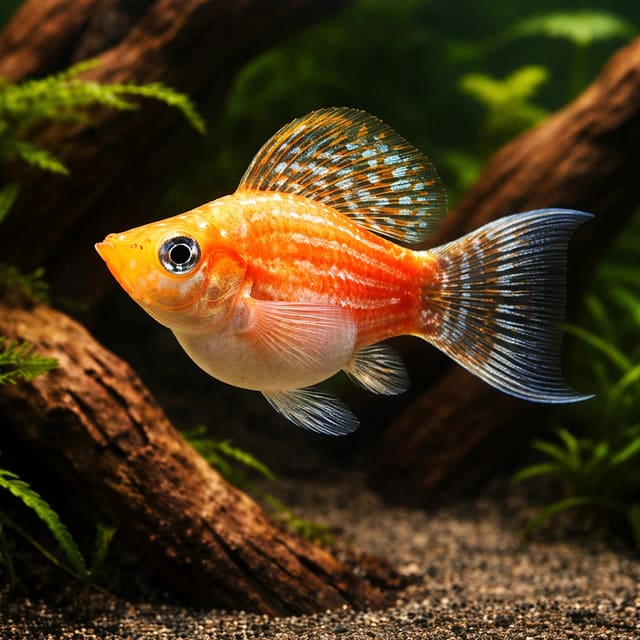
The gallery images are representative, based on reference photographs of this species, so colours can look slightly different from the live animal.
You can compare this form with the wider molly fish collection. Read our current delivery and Live Arrival Guarantee policy before the delivery date.
Plan around an adult size of 7.5 cm standard length. FishBase records this as the maximum length for Poecilia sphenops. Seriously Fish gives 80 mm standard length as a separate aquarium-planning reference. These figures are close; use 7.5 cm SL for adult planning.
| Planning check | Figure |
|---|---|
| Adult size | 7.5 cm SL |
| Aquarium base | 90 × 30 cm |
| Reference volume | About 81 litres |
| Temperature | 21–28°C |
| pH | 7.0–8.5 |
| General hardness | 15–30 dGH |
The 90 × 30 cm base is as important as the approximate volume because it describes the usable aquarium footprint. A nominally similar volume in a shorter or unusually shaped tank is not the same layout. Compare the actual base dimensions before treating an aquarium as a match.
About 81 litres is the reference for a 90 × 30 × 30 cm aquarium. A larger aquarium can make temperature and water quality more stable, but extra litres do not compensate for unsuitable chemistry, an immature filter or incompatible companions.
A 3 cm animal still requires a plan for the 7.5 cm adult size. Choosing a smaller dispatch size changes the fish’s length on arrival; it does not reduce its eventual footprint, water or social requirements.
Keep Black Mollies at 21–28°C, pH 7.0–8.5 and 15–30 dGH. These aquarium ranges come from the Seriously Fish species profile. Choose a stable point inside each range and make sure every tank mate can live there long term.
| Reading | Decision |
|---|---|
| pH below 7.0 | Do not introduce the fish while the aquarium remains acidic |
| Hardness below 15 dGH | Resolve the mineral mismatch before stocking |
| 21–28°C | Select a stable temperature shared by the full community |
| Values moving sharply | Find and correct the cause before adding livestock |
Hardness is not an optional extra for this fish. The species account warns that mollies kept in soft or acidic water can weaken rapidly, with shimmying, clamped fins or fungal growth among the possible warning signs. If these changes appear, test pH, hardness, ammonia and nitrite rather than assuming temperature alone is responsible.
Salt is not required as a routine substitute for suitable mineral content. Calcium and magnesium are identified as the important hard-water minerals, so the useful decision is whether the aquarium genuinely provides moderately hard or harder water. Adding salt does not turn soft, acidic conditions into an appropriate long-term setup.
Descriptions such as “hard water” or “community water” are too vague on their own. Record the numerical pH and dGH from the aquarium. Our water chemistry guide explains what the readings mean, while the water matcher lets you compare measured values with the target ranges.
For a worked example, water at 25°C, pH 7.6 and 18 dGH sits within all three ranges. Water at 25°C and pH 7.4 still fails the full check if hardness is only 6 dGH. Passing one or two values does not cancel a mismatch in the third.
If your tap water naturally falls within the range and remains stable after conditioning, build the routine around that consistency. If it falls outside the range, resolve how the aquarium will maintain appropriate chemistry before selecting livestock.
A mature biological filter is essential because fish release ammonia, which is toxic. The RSPCA aquarium filtration guidance explains that beneficial bacteria convert ammonia to nitrite and then to the safer end product nitrate. A running filter is therefore not enough by itself; the bacterial population must be established and able to process the aquarium’s waste.
OATA’s group-level guppy and molly guidance sets ammonia at zero mg/l, nitrite at zero mg/l and nitrate at no more than 20 mg/l above the normal tap-water level. Test these values before introduction and continue testing after livestock is added.
For an aquarium of about 81 litres, the Poecilia sphenops profile recommends turnover of four to five times the aquarium volume each hour. That gives a filter rating of approximately 325–405 litres per hour for the reference setup.
| Calculation | Result |
|---|---|
| 81 litres × 4 per hour | 324 litres per hour, rounded to about 325 lph |
| 81 litres × 5 per hour | 405 litres per hour |
Use the manufacturer’s rated flow as a starting point, then keep the filter clear of blockages so it can perform as intended. The filter also needs enough biological capacity for the complete group and any companions, not just one small animal on introduction day.
Increase the aquarium population slowly. Every extra fish and every increase in feeding adds waste, while the beneficial bacterial population needs time to respond. Adding too many animals at the same time can produce new tank syndrome, with ammonia or nitrite rising to harmful levels.
Before arranging delivery, complete the preparation steps in our first tropical aquarium guide. The practical readiness test is a mature aquarium with established filtration, zero ammonia, zero nitrite and chemistry already inside the Black Molly range.
After an addition, test the water rather than judging filter capacity from clarity alone. Clear water can still contain ammonia or nitrite, while a measured zero for both gives a useful check that biological processing is keeping pace.
A planted aquarium is preferable for Poecilia sphenops. Plants and other shelter give the fish places to move around or withdraw within the 90 × 30 cm footprint, while the larger aquarium layout helps keep environmental conditions more stable.
Choose the layout before the fish arrives so the aquarium does not need major rearrangement during the introduction period. Shelter should be distributed through the footprint rather than concentrated into one inaccessible corner.
Dense planting can be especially useful where social pursuit occurs because it breaks continuous routes through the aquarium. It also gives a pursued fish places to move away. Planting does not replace the need for an appropriate group, enough space or compatible water requirements.
| Question | Passing result |
|---|---|
| Is the base large enough? | At least the 90 × 30 cm reference |
| Is shelter present? | Live plants or suitable artificial cover and ornaments |
| Can equipment operate? | Filter flow and maintenance access remain clear |
| Is the aquarium settled? | Layout, filtration and water values are stable before introduction |
A visually full aquarium is not automatically a well-planned one. Judge each object by whether it provides useful cover without compromising the working footprint or filter. Likewise, a bare aquarium may meet the litre figure but misses the preference for planting and shelter.
Complete planting and equipment adjustments before the final water checks. Once the layout is settled, confirm temperature, pH, hardness, ammonia and nitrite again so the physical setup and chemistry are ready at the same time.
OATA’s guppy and molly guidance suggests keeping at least three together because these fish require companionship. It also recommends two females to each male where a sexed group can be planned, reducing stress caused by persistent male attention. Several females per male and dense planting are also recommended in the Poecilia sphenops account.
For this offer, calculate quantity separately from size. One purchased fish means one animal, while a planned group of three requires three animals. All members still need to fit the adult-size, footprint, water and filtration plan; smaller dispatch sizes do not create extra adult capacity.
| Planned group | Ratio example |
|---|---|
| Three sexed mollies | One male and two females |
| Six sexed mollies | Two males and four females |
| Sex composition unknown | Provide space and cover, then observe social pressure closely |
Each example shows how the two-females-to-one-male ratio scales. The purchase quantity controls how many individual animals are ordered, while the size selector controls the dispatch size.
Do not respond to persistent pursuit by adding fish without checking capacity. Another animal also adds waste and requires adult space. Confirm the aquarium can support the larger group, then increase stocking slowly so the biological filter can adjust.
Where the eventual sex composition does not fit the preferred ratio, observation becomes especially important. Use planting and adequate footprint to create separation, but treat continuing pursuit, reduced appetite or abnormal swimming as reasons to reassess the group rather than normalising chronic stress.
Black Mollies are omnivorous. FishBase records adults eating worms, crustaceans, insects and plant matter, while Seriously Fish also describes zoobenthos and detritus in the natural diet. In the aquarium, provide a quality dried food, an algae-based food and a good proportion of vegetable matter.
| Food type | How it fits |
|---|---|
| Quality flake or granule | Regular dried foundation |
| Algae-based flake or food | Maintains the vegetable-rich share |
| Blanched spinach | Supported vegetable option |
| Daphnia, small bloodworm or tubifex | Small live or frozen variety |
Feed once a day and offer only what the fish can consume within a few minutes. This gives every animal a chance to feed while limiting uneaten food that would otherwise break down and add toxic waste to the water.
A growing group does not justify leaving food in the aquarium for longer. Increase the portion carefully only when the complete amount is being consumed within the same short window and water tests remain healthy.
Variety means rotating supported foods, not serving every item at each meal. For example, use an algae-rich flake as the normal foundation, offer blanched spinach on another day and use a small live or frozen item for variety. Keep vegetable matter as a substantial part of the overall routine.
If one fish repeatedly misses food, first check whether companions are monopolising the feeding area. Distribute a small portion where each animal can reach it without extending feeding beyond a few minutes. Reduced appetite can also be an early health or water-quality warning, so compare it with swimming, breathing and appearance.
Overfeeding affects more than body condition. Uneaten food increases the load on the biological filter and can contribute to rising ammonia or nitrite. Portion control therefore links feeding directly to the water-quality plan.
Complete the readiness checks before adding a Black Molly. The aquarium should have a mature filter, an established layout and measured water within 21–28°C, pH 7.0–8.5 and 15–30 dGH. Ammonia and nitrite must both read zero mg/l.
Add to the aquarium population slowly. A filter that supports the existing residents may need time to increase its beneficial bacterial population after another animal is introduced. The need for gradual stocking is greater when several mollies are being added to create a social group.
| Checkpoint | What to do |
|---|---|
| Swimming | Look for surface hanging, bottom sitting or erratic movement |
| Breathing | Compare gill movement with the fish’s normal pattern |
| Appearance | Watch for white spots, fluffy growths, damaged fins, lost scales, bumps or ulcers |
| Colour and behaviour | Notice unusual darkening, paling, hiding or aggression |
| Feeding | Confirm interest in the daily small portion |
A change in behaviour or appearance is a prompt to test water quality, not a diagnosis by itself. Check ammonia, nitrite, temperature, pH and hardness, then compare the results with the target ranges and the fish’s recent behaviour.
Continue the normal once-daily feeding rule during observation: only offer what can be eaten within a few minutes. A fish that does not feed gives you useful information, while adding more food creates waste without addressing the cause.
Judge introduction success across water readings, feeding and behaviour together. Normal swimming with zero ammonia and nitrite is more meaningful than water clarity alone. If several fish show the same change at the same time, prioritise an immediate water test because they share the same environment.
Carry out a partial water change of 25% at least once each week. Use a siphon to remove solid waste from the substrate, and treat replacement tap water with conditioner to remove chlorine or chloramine before it enters the aquarium.
For the 81-litre reference aquarium, 25% is about 20.25 litres. Treat that as a worked planning figure: the actual amount should be based on the aquarium’s real operating volume, while retaining the 25% at least once-a-week recommendation.
Do not rinse filter media under the tap. Chlorine or chloramine can kill beneficial bacteria. When cleaning is needed, rinse the media lightly in aquarium water removed during the partial water change, which reduces bacterial loss.
Regular testing should show ammonia at zero mg/l and nitrite at zero mg/l. Nitrate should remain no more than 20 mg/l above the normal tap-water level. If ammonia or nitrite appears, treat it as a water-quality problem requiring immediate attention rather than waiting for the next weekly change.
Watch for surface hanging, bottom sitting, erratic swimming, unusual colour change, increased hiding or aggression, altered breathing, white spots, fluffy growths, damaged fins or scales, bumps, ulcers, changing body condition and reduced feeding.
If any of these changes appears, test the water first and record which fish are affected. Compare temperature, pH and hardness with 21–28°C, pH 7.0–8.5 and 15–30 dGH, then check ammonia and nitrite are zero. Contact us for further health guidance after completing those checks.
Do not select a treatment from appearance alone. Similar outward signs can accompany water-quality, social or health problems, so the useful first response is to measure the shared environment and document the change clearly.
Poecilia sphenops is peaceful, but it is not a universal community fish. Keep it only with fish that tolerate the same hard, basic water, which is why temperament alone cannot decide compatibility.
A candidate that fails the water check is not a match even if both species are described as peaceful. Keeping the aquarium soft or acidic for one resident conflicts directly with the Black Molly’s need for moderately hard or harder water and a basic pH.
| Candidate group | Decision rule |
|---|---|
| Other Poecilia | Potentially suitable when their water needs match; check interbreeding risk |
| Some rainbowfish | Consider only species whose full water range and space needs match |
| Hard-water-tolerant barbs | Consider only after checking the exact species and temperament |
| Hard-water-tolerant tetras | Consider only after checking the exact species and adult requirements |
| Soft- or acidic-water fish | Avoid because one shared setup cannot meet both sets of needs |
Screen each rainbowfish, barb or tetra species individually for water, space and temperament before treating it as a match.
Avoid keeping Poecilia sphenops with Poecilia latipinna when preventing interbreeding. These species can interbreed readily in an aquarium, and the husbandry recommendation is to keep only one of them per tank for that purpose.
Reassess compatibility after introduction as well as before it. Persistent pursuit, hiding, missed meals or changed swimming requires a water test and a fresh look at social pressure, space and access to food.
Start with measured aquarium conditions rather than a wish list of fish. For example, an established aquarium at 25°C, pH 7.6 and 18 dGH falls within the Black Molly ranges. A proposed companion must accept all three figures, the aquarium’s adult stocking level and its feeding routine.
| Finding | Outcome |
|---|---|
| Water, space and temperament all match | Proceed to a gradual introduction plan |
| Temperament matches but water does not | Choose a different companion |
| Requirements are too broad to compare | Pause the decision until the exact species is assessed |
Suppose a peaceful candidate requires soft water below 15 dGH. Raising the Black Molly’s suitability through harder water would move the aquarium away from that candidate’s requirement. There is no useful compromise merely because the temperature ranges overlap.
Now consider a hard-water-tolerant tetra whose temperature, pH and hardness all overlap. That overlap allows the assessment to continue, but it is not the final answer. Check adult size, aquarium footprint, temperament, group needs and whether the complete stocking level fits the mature filter.
For another Poecilia, add an interbreeding check. Poecilia latipinna can cross with Poecilia sphenops, so keeping one species per aquarium is the practical choice when crosses are not wanted. Other Poecilia still need their individual water, social and space requirements checked.
Compatibility remains conditional because individual behaviour and the complete aquarium population matter. For a stocking and compatibility assessment, contact us with the tank dimensions, operating volume, temperature, pH, dGH, current livestock and proposed additions.
A Black Molly reaches 7.5 cm standard length according to FishBase. Plan its aquarium around that adult size rather than its dispatch size.
Plan a Black Molly aquarium around the Seriously Fish reference of a 90 × 30 cm base and about 81 litres, with mature biological filtration and plants or other suitable shelter.
OATA’s guppy and molly guidance suggests keeping at least three mollies together. Allow adult space and filter capacity for the whole group, and add fish gradually.
OATA describes most guppies and mollies as easy to keep, but a Black Molly suits a beginner only when the aquarium provides mature filtration and the required hard, basic water.
Feed a Black Molly once daily with only what it can eat within a few minutes. Use quality dried and algae-based foods, include vegetable matter such as blanched spinach, and offer small live or frozen foods for variety.
Seriously Fish gives 21–28°C, pH 7.0–8.5 and 15–30 dGH for this species. Keep ammonia and nitrite at zero mg/l.
This fish is described as peaceful. Monitor repeated pursuit, hiding and missed meals, and keep it only with peaceful companions that tolerate the same hard, basic water.
Conditional companions include other Poecilia, some rainbowfish and hard-water-tolerant barbs or tetras after exact-species screening. Avoid soft- or acidic-water fish, and avoid Poecilia latipinna when preventing interbreeding.
Start filming every delivery with the parcel still sealed before floating the bag. Have someone present to receive it, film continuously as the parcel is opened with the fish still in the bag, float the bag for 20–30 minutes, and never pour the bag water into the aquarium.
No reviews for this item yet. Bought one? Honest reviews only, good or bad.
What customers say about ordering from us
Easy website plenty of info on fish your buying great to pick a time slot
TRACEY DURRANT · 7 Oct 2026
Got some lovely fish thank you
Kevin Mackie · 7 Oct 2026
Reviews of our shop, collected by Judge.me, an independent third-party review collector. Newest first.