Easy
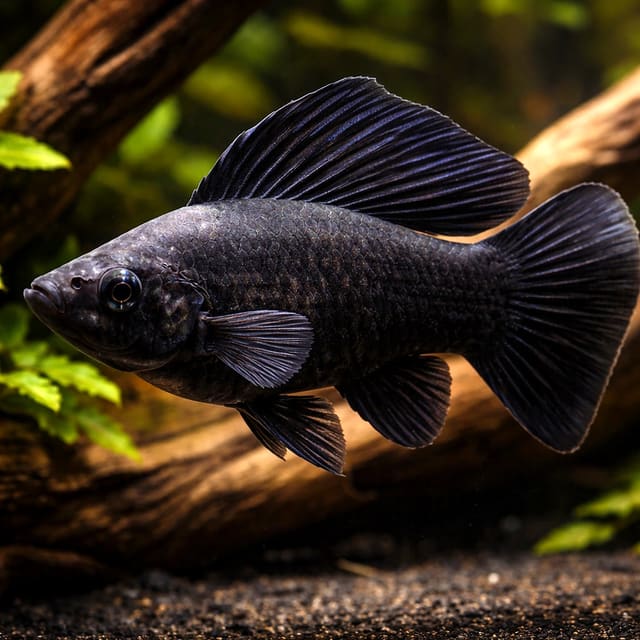
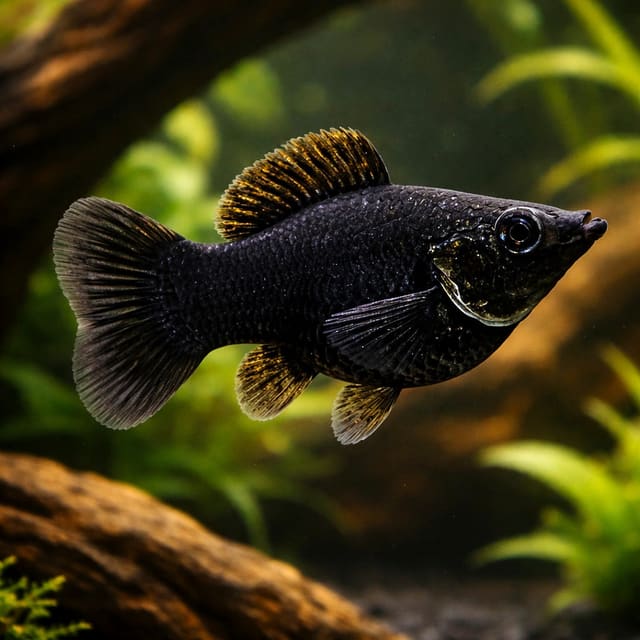
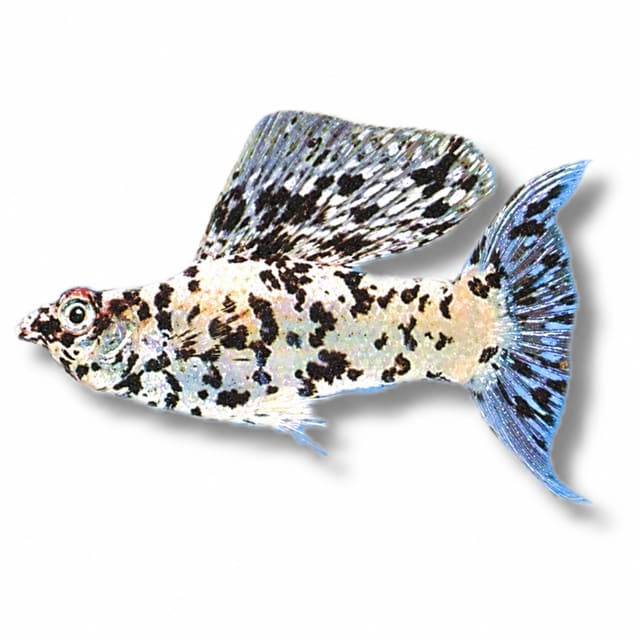
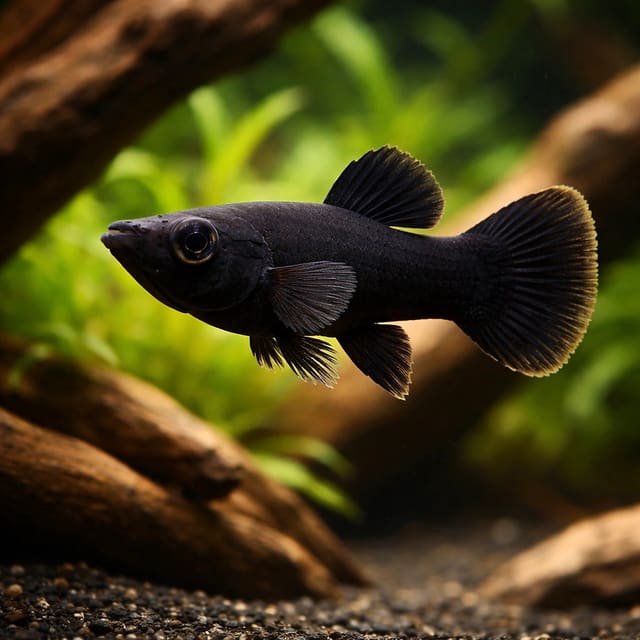
Black Molly (Poecilia sphenops black molly)
21–28°C · pH 7–8.5 · 81L
£3.99
Sailfin silver molly (Poecilia latipinna) is a large, active livebearer for a mature, well-filtered hard-water aquarium. Plan around a 15 cm adult, a group of at least three and peaceful but confident companions that share its mineral-rich water needs. One purchase supplies one fish in the selected 3 cm or 4 cm dispatch grade; sex is not selectable on this listing.
Adult size is the maximum length this species reaches at full maturity (scientific sources). The livestock you receive will be younger and smaller — pick a size above for the actual shipping size. Product-photo provenance and any image-specific limitations are stated on the listing.
Poecilia latipinna
Minimum of 2 per order.
Sailfin silver molly (Poecilia latipinna) is a large, active livebearer for a mature, well-filtered hard-water aquarium. Plan around a 15 cm adult, a group of at least three and peaceful but confident companions that share its mineral-rich water needs. One purchase supplies one fish in the selected 3 cm or 4 cm dispatch grade; sex is not selectable on this listing.
Adult size is the maximum length this species reaches at full maturity (scientific sources). The livestock you receive will be younger and smaller — pick a size above for the actual shipping size. Product-photo provenance and any image-specific limitations are stated on the listing.
Maintain these water conditions for optimal health and vibrant colors
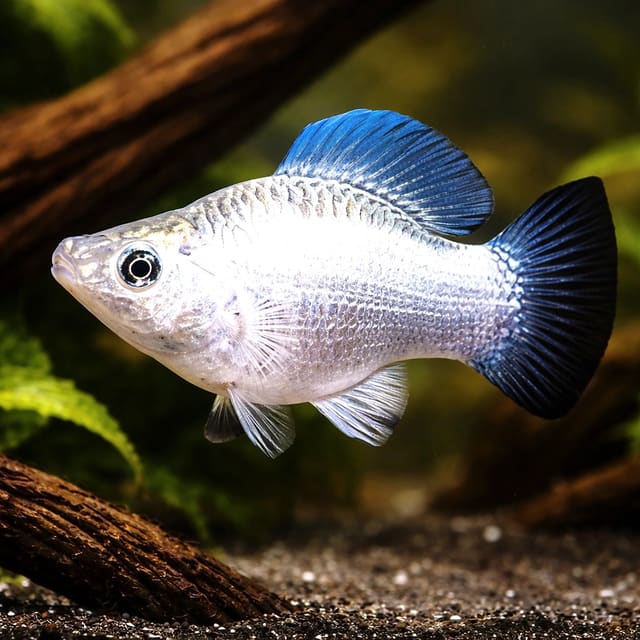
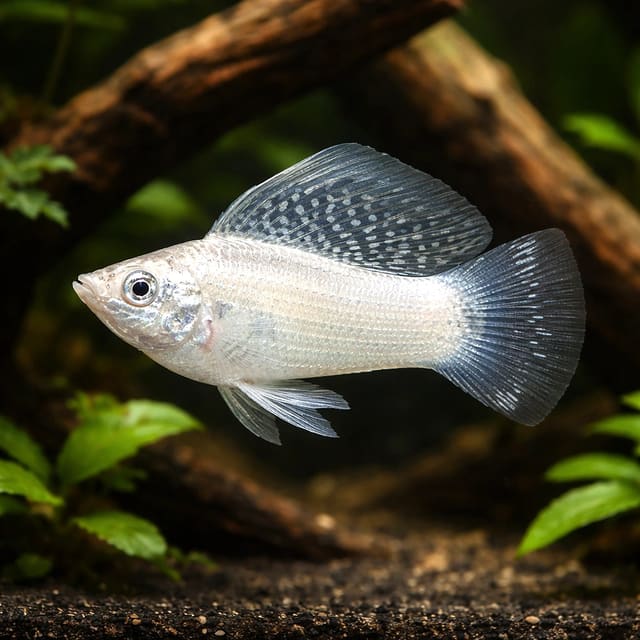
The Sailfin silver molly is the pale silver form of Poecilia latipinna, a substantial livebearer with a broad body and the high dorsal fin that gives the group its familiar name. It is a lively, conspicuous fish rather than a tiny background species. The best home is a mature, well-filtered aquarium with plenty of swimming room, mineral-rich water and companions robust enough to share space without being intimidated. A keeper who can provide stable hard, alkaline water will find its everyday care straightforward; the real planning work lies in allowing for its adult size, sociable nature and appetite for plant-rich food.
This listing supplies one live fish per purchase. The recurring dispatch grades are 3 cm and 4 cm, and the product controls show which grade can be ordered. The size you select is the size supplied, not the adult size. Both grades are juveniles, so the aquarium should be chosen for a fish that can reach 15 cm total length, not for the dimensions of the animal on arrival. The molly collection is useful if you want to compare other forms before deciding, but a different colour or species should be treated as an alternative purchase rather than an automatic tank mate.
One practical starting point is a tank with a base around 76 × 38 cm and a volume of about 87 litres, the species-level minimum described by Seriously Fish. More room is sensible for a larger group or a mixed community. Keep at least three mollies together under the broad OATA group guidance, while remembering that sex balance affects social pressure. This product does not promise a particular sex, so do not build a plan that depends on receiving a male or female. Sex is guaranteed only when the selected option explicitly states male or female. This Sailfin silver molly listing has no sex-guaranteed option.
| Suits | Keepers with a mature hard-water aquarium, strong filtration and room for a 15 cm livebearer |
|---|---|
| Supplied | One juvenile fish in the selected 3 cm or 4 cm dispatch grade |
| Adult planning size | Up to 15 cm total length |
| Routine aquarium range | 21–26 °C, pH 7.0–8.5 and 15–35 dGH |
| Social plan | At least three under broad molly guidance; allow for sex-related chasing |
| Experience | Intermediate, mainly because hard mineral-rich water and adult space matter |
Poecilia latipinna belongs to the family Poeciliidae. FishBase records it from North America, from the Cape Fear drainage in North Carolina south and west to Veracruz in Mexico, and describes adults in still or gently flowing warm water, ponds, lakes, sloughs, quiet backwaters, tidal ditches and brackish canals. That varied natural setting explains two useful points without turning wild records into a captive recipe: the fish is adaptable across fresh and brackish habitats, and it commonly uses calm or gently moving areas with vegetation. It does not mean salt must be added to every aquarium. The specialist aquarium profile states that freshwater is entirely suitable when it is not soft or acidic.
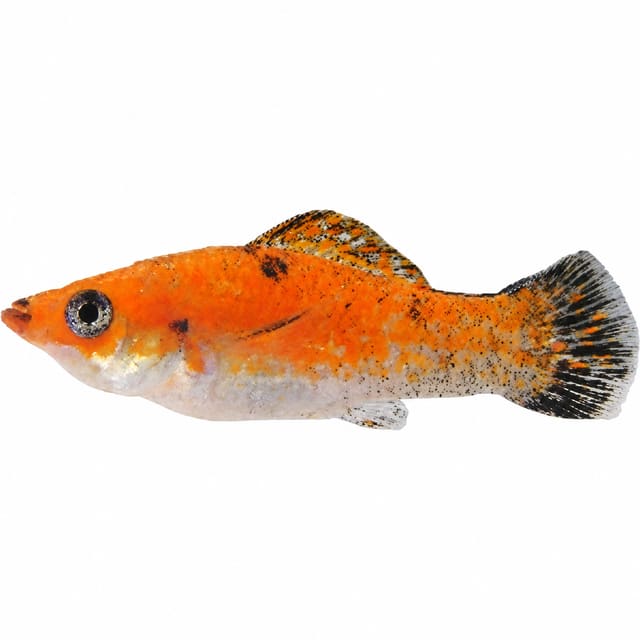
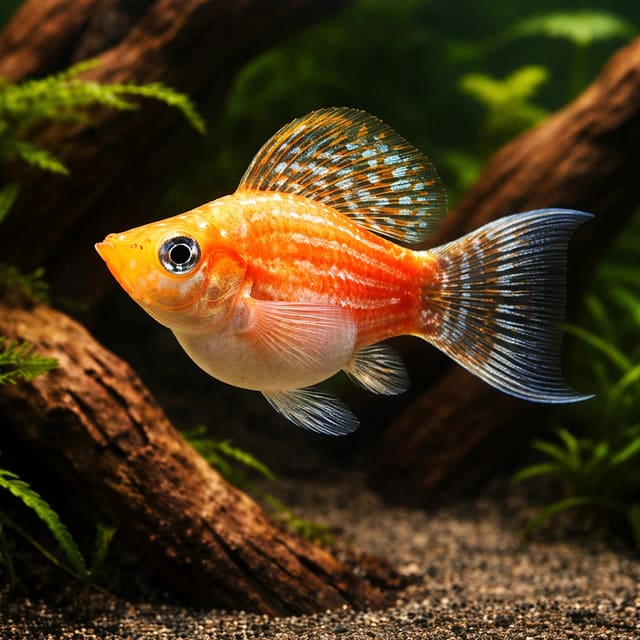
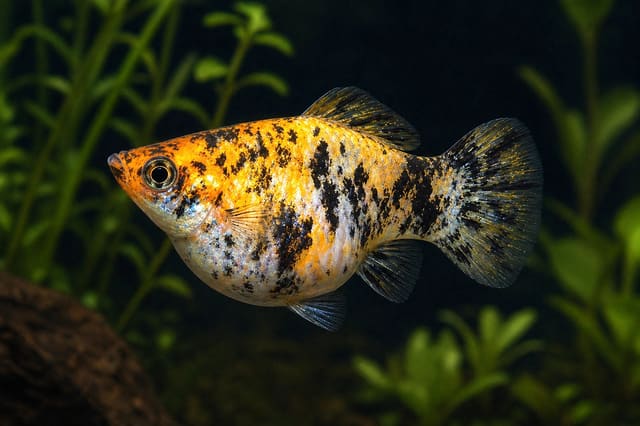
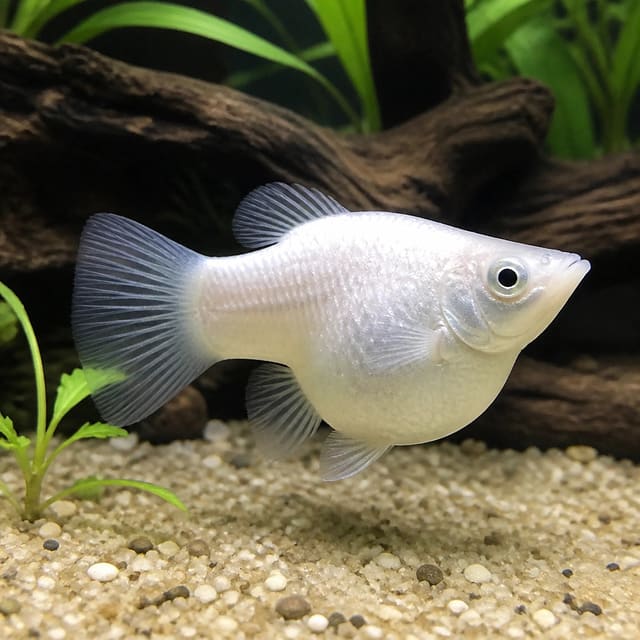
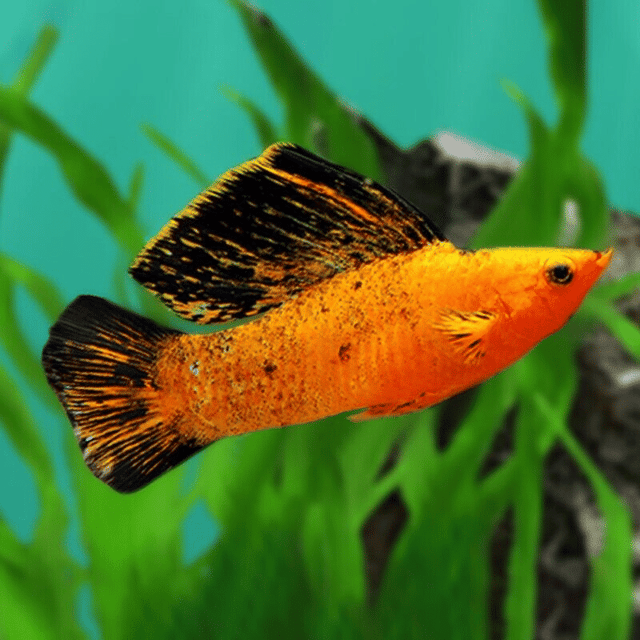
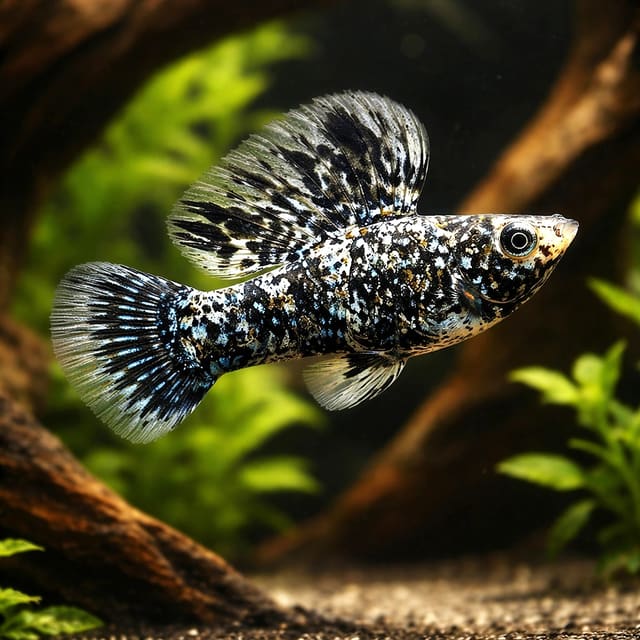
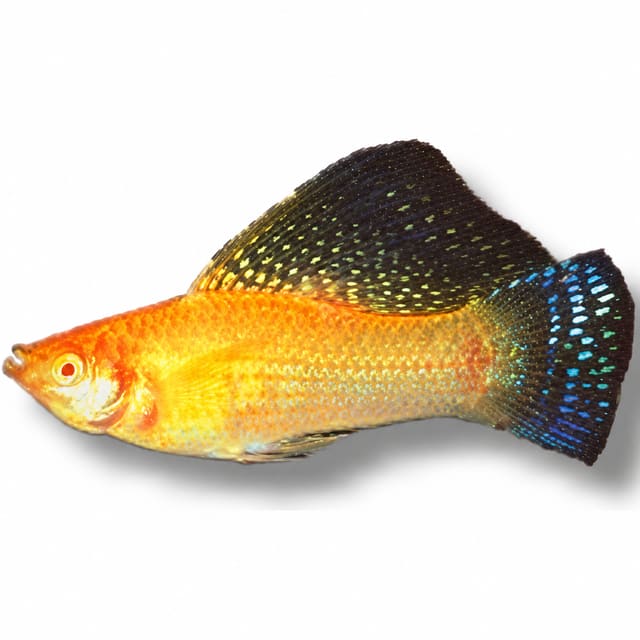
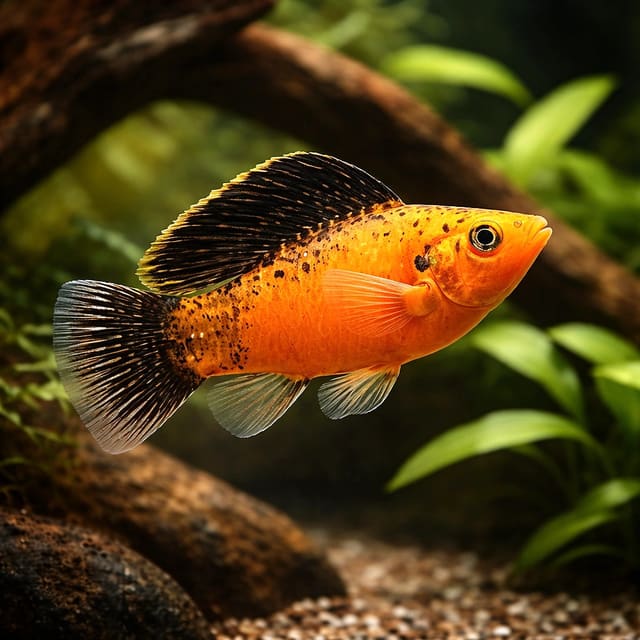
The silver trade form changes appearance, not the animal's basic welfare needs. It still needs the minerals, swimming space and plant-rich diet expected for this species. Colour can also vary with age, lighting and individual development. Gallery images have been digitally enhanced to improve image quality. Natural colour, pattern, size and maturity can vary between live animals.
FishBase records a maximum of 15 cm total length, while the specialist aquarium profile gives 12.5 cm standard length. The records use TL and SL respectively and should not be treated as identical values. For practical aquarium planning, 15 cm is the safer maximum because it is the larger recorded figure and includes the whole fish. Dispatch size is deliberately kept separate from that adult measure throughout this page.
Sailfin mollies are livebearers and have a strong association with hard, alkaline water. They are active feeders and benefit from vegetable matter as a regular part of the diet. It can suit a hard-water community, but mature fish may pick on smaller companions, males can be forceful with one another, and the larger sailfin form can unsettle timid species. Think of this as a confident hard-water community fish, not a universal addition to any tropical tank.
The routine aquarium target for this species is 21–26 °C, pH 7.0–8.5 and 15–35 dGH. These values come from the species-level aquarium profile rather than from the broader guppy-and-molly sheet. FishBase records 20–28 °C in the wild, and OATA gives 20–28 °C, pH 7.0–8.0 and 8–18 dGH for guppies and mollies as a group. Those wider figures are useful context, but they are not substituted for the more specific captive range. Aim for the species range and keep the aquarium stable rather than deliberately moving through every value an animal has been recorded around.
Hardness is not a decorative detail. The species profile warns that sailfin mollies weaken in soft or acidic water and may show shimmying, clamped fins or fungal problems. Calcium and magnesium are the important part of that advice. Salt is not required simply because wild fish also occur in brackish canals. If your tap water is naturally soft, test it before buying and make a stable mineral plan rather than adding an arbitrary spoonful of aquarium salt. The aquarium water-chemistry guide explains what pH, general hardness and carbonate hardness measure, while the water parameter matcher can help compare actual test results with the target range.
Test the water rather than judging it by clarity. Clear water can still contain ammonia, nitrite or unsuitable mineral levels. Record the aquarium's normal readings so changes become obvious. Correct problems gradually and address the cause—overfeeding, too many fish added at once, inadequate filter capacity or missed maintenance—instead of repeatedly chasing numbers with abrupt chemical changes.
Seriously Fish gives a base of 76 × 38 cm and about 87 litres for Poecilia latipinna. Treat that as a species-level starting point, not a stocking allowance for unlimited fish. Adult sailfins are deep-bodied, active and capable of reaching 15 cm total length. A longer or larger aquarium gives a group more ways to move past one another and provides more dilution when feeding and livebearing increase the biological load. Add space when combining them with other fish, and be conservative if the tank has bulky decor that reduces the open swimming area.
Use dense planting or planted zones alongside clear swimming space. The species profile notes that soft-leaved plants may be eaten because the fish is strongly vegetarian. That is normal foraging, not bad behaviour. Tougher planting, floating cover and some green algae can provide structure without expecting every delicate leaf to remain untouched. Gravel or sand can both work; what matters more is a cleanable substrate, safe ornaments and enough open water. Check artificial plants and hardscape for rough edges that could catch the taller dorsal fin.
A filter is essential. RSPCA guidance explains that fish release toxic ammonia, which a mature biological filter converts first to nitrite and then to the less dangerous nitrate. The species profile illustrates a turnover of roughly four to five times an 87-litre aquarium's volume each hour, corresponding to a filter rating around 350–435 litres per hour. Manufacturer ratings are only a starting point because media, head height and debris reduce real flow. Arrange the outlet so that oxygenation and circulation are good while the fish still has calmer areas. Wild habitat records include still and gently flowing water; there is no need to turn the whole tank into a torrent.
If this is your first aquarium, complete the nitrogen-cycle preparation before livestock is added. The first tropical tank guide sets out the sequence for maturing a filter and checking water. Adding a juvenile to a newly filled tank and hoping the filter catches up places the fish at risk. A stable, cycled aquarium should be ready before the courier box arrives.
In a room around 20 °C, the species profile estimates roughly 50–75 W of heating for an aquarium near 87 litres. Choose equipment for the actual tank volume and room conditions, protect the heater from damage and verify the result with a separate thermometer. Warm water holds less dissolved oxygen than cool water, so surface movement and sensible stocking are important. Watch the fish rather than relying only on equipment lights: persistent surface hanging, rapid gill movement or unusual stillness deserves an immediate water test and equipment check.
OATA's broad guidance for guppies and mollies recommends at least three, normally with two females for each male, to reduce pressure on females and other inhabitants. That ratio is sound when the fish are deliberately sexed, but this listing does not offer a sex choice. Plan for a group while accepting that the individuals supplied cannot be promised to create a particular ratio. Observe interactions as the fish mature and be prepared to adjust the group or provide more room if persistent pursuit develops.
Males can be aggressive towards one another, especially around breeding activity. They can also pursue females vigorously. A brief display or short chase is different from one animal being denied access to food, resting space or the open aquarium. Warning signs include a fish remaining hidden, clamped fins, repeated flight to the corners, damaged fins or loss of body condition. More swimming room and well-placed planting can reduce constant contact, but they do not make an unsuitable population automatically safe.
These fish give birth to live young, so mixed-sex groups can expand without a separate breeding project. The care plan should therefore account for potential fry and future biological load. Avoid assuming that every juvenile will be retained or that the main aquarium can absorb repeated broods. If maintaining the silver form without crosses matters to you, the species profile advises keeping only one molly species because different mollies can interbreed readily in aquaria.
The specialised anal fin called the gonopodium is used to distinguish mature males, and males develop the larger sail-like dorsal fin described for the species. These are biological distinctions, not a promise about the fish supplied at 3 cm or 4 cm. Juveniles may not be straightforward to sex, and photographs cannot create a guarantee that the product does not offer.
Wild Poecilia latipinna feed mainly on algae and also take animal material including rotifers, small crustaceans and aquatic insects. Tank-bred mollies accept a wide range of prepared foods, yet the specialist profile is clear that vegetable matter should remain an important part of the aquarium diet. Use a good-quality dried food with an algae-based component as the regular foundation. Blanched spinach or another suitable vegetable food can add variety, and the group care sheet also allows small live or frozen foods such as daphnia, bloodworm or tubifex as supplementary items.
Offer only what the fish can finish within a few minutes once a day, following the OATA group sheet. Scatter or distribute food so every animal has access, then watch rather than automatically adding more. An active molly can look hungry soon after eating; appetite alone is not a reliable measure of the correct portion. Excess food decays, adds to the filter's workload and can lift ammonia, nitrite or nitrate. Body condition, steady growth and clean water provide better feedback than begging at the glass.
Some green algae in the aquarium can be useful grazing. It is not a substitute for planned feeding, nor does a molly replace normal algae management. Equally, seeing the fish nibble leaves does not prove that it receives enough plant matter. The species profile links inadequate green food with poorer male dorsal-fin development, which is another reason to provide a consistent vegetable component.
| Regular foods | Quality dried food with a substantial algae or vegetable component |
|---|---|
| Useful variety | Suitable blanched greens and small live or frozen foods such as daphnia |
| Natural behaviour | Grazing algae and plant material between meals |
| Avoid | Large portions, repeated top-ups and an animal-protein-only diet |
Check that timid companions are not being outcompeted. Sailfin mollies are assertive at feeding time, and a fish that shares the same water chemistry may still lose condition if it cannot reach food. Feed placement can help, but chronic competition means the stocking plan needs reconsideration.
OATA strongly recommends a partial water change of 25% at least once every week for guppies and mollies. Use a siphon to remove settled waste from accessible areas of gravel or sand. Treat replacement tap water with a suitable conditioner to neutralise chlorine or chloramine before it enters the aquarium, and keep its temperature reasonably close to the tank so the fish is not subjected to an abrupt change.
Test ammonia and nitrite at least weekly and whenever the fish behaves differently. Both should read zero. Track nitrate against the normal tap-water starting point, because the group sheet advises keeping it within 20 mg/l above that baseline. A sudden result that differs from the established pattern deserves confirmation and investigation. Check feeding, dead plant matter, stocking, filter flow and recent changes rather than treating the test result as an isolated number.
Inspect the filter for blockages and reduced flow. When media needs cleaning, rinse it lightly in water removed from the aquarium during maintenance; do not run it under the tap, because chlorine or chloramine may damage the beneficial bacterial population. Keep enough mature biological media working to process the animals' waste. If the flow declines, restore it promptly without turning routine cleaning into an aggressive sterilisation of the system.
Daily observation catches problems between test days. Healthy fish should show clear eyes, intact scales and fins, steady breathing, balanced swimming and an interest in food. Changes such as hanging at the surface, sitting on the bottom, erratic movement, unusual hiding, darker or paler colour, rapid gill movement, white spots, fluffy growths or reduced feeding justify immediate water tests and closer inspection. These signs do not identify one particular disease by themselves, so avoid guessing a treatment before the environment has been checked.
Have the mature aquarium, test results and chosen space ready in advance. Someone must be at the delivery address to receive live fish. Tropical Fish Co sends tracking and a confirmed Thursday or Friday delivery date by email, and uses a licensed live-animal courier. The current delivery and Live Arrival Guarantee policy is the authority for the terms that apply to the order.
Temperature matching is only one part of a safe introduction. The destination tank should already sit within the hard, alkaline species range, because a slow float cannot correct fundamentally unsuitable chemistry. Avoid using arrival day to make major aquascape, filter or water-parameter changes. The aim is a prepared stable home, not a series of last-minute adjustments around a stressed traveller.
If a concern arises, follow the current store policy rather than improvising a claim procedure. The continuous sealed-parcel video and same-day contact protect a genuine claim, while careful transfer protects the aquarium from transport water. Keep arrival guidance separate from ordinary weekly husbandry: floating a bag is a one-off temperature step, not a maintenance method.
The Sailfin silver molly is generally suitable for a hard-water community, but compatibility starts with chemistry. A companion that needs soft, acidic water cannot share the correct long-term conditions simply because both fish are described as peaceful. Begin with species that thrive at 21–26 °C in hard, neutral-to-alkaline water, then compare adult size, feeding style and confidence.
Seriously Fish names other livebearers and some catfish as possible tank mates. Those are categories, not blanket approval for every species. Each candidate still needs to suit the same hardness, pH, temperature and available floor or swimming space. Robust livebearers can be a reasonable match, while suitable catfish may use a different part of the aquarium. Do not treat related-product suggestions as a compatibility list.
Avoid timid fish. OATA specifically advises that sailfin mollies should not be kept with timid species, and the specialist profile notes that adults may pick on smaller fish as they mature. Very small companions may be pressured even when they are not viewed as prey. Watch feeding sessions: a fish that repeatedly hangs back can lose condition without obvious fighting.
Use caution with multiple males because spawning behaviour can intensify aggression. Other molly species are also a poor choice when you want to avoid interbreeding; the species profile recommends keeping only one molly species per aquarium for that reason. This is a biological consideration, not a claim that different colour forms have different temperaments.
| Potentially suitable | Robust livebearers and some catfish with matching hard-water requirements and enough space |
|---|---|
| Needs caution | Smaller fish, multiple male sailfins and any companion easily outcompeted at meals |
| Avoid | Timid species, soft-water specialists and other molly species where crosses are not wanted |
A successful community lets every fish feed, rest and move through its preferred area. Check the tank at quiet times as well as during meals. Persistent chasing, one individual staying behind equipment, repeated fin damage or a companion losing weight all indicate that the arrangement needs attention. Short displays can occur among livebearers, but continual displacement is not a normal price of keeping them together.
Juvenile size can be misleading. A 3 cm or 4 cm sailfin may initially look compatible with small neighbours, yet its adult planning size is 15 cm total length. Reassess the community as it grows. Provide enough open water for the molly while retaining planted areas and shelter for other fish. More decor is useful only when it leaves adequate swimming room and does not introduce sharp surfaces.
Feeding style matters as much as temperament. Sailfins are active and readily accept prepared food. Place food where intended companions can obtain their share, and confirm that bottom-dwelling species receive appropriate food rather than living on leftovers. If feeding has to be excessive before every fish gets access, the answer is a better stocking plan, not more waste.
Keep the aquarium within one coherent water regime. Avoid alternating between a molly's hard-water needs and a soft-water companion's preference. Stability within a shared range is kinder than a compromise that suits neither. When adding any new animal, compare adult size, pH, hardness, temperature, diet and behaviour before purchase; then continue observing after introduction because individuals can differ.
FishBase records Poecilia latipinna at up to 15 cm total length, while the specialist aquarium profile gives 12.5 cm standard length. Because those measurements use different conventions, plan for the larger 15 cm figure. The 3 cm and 4 cm labels on this listing describe dispatch grade, not final size.
The species profile gives a base around 76 × 38 cm and a volume of about 87 litres. Use that as a starting point for the fish rather than a universal stocking allowance. A group, additional companions or bulky decor may justify a larger aquarium, and the filter must be mature before fish are introduced.
Broad OATA guidance recommends at least three guppies or mollies, normally with two females for each male to reduce pressure. This listing does not guarantee sex, so do not assume one purchase or several purchases will produce that ratio. Provide enough adult space and monitor chasing as the group matures.
It can suit a well-prepared newer keeper, but this store rates it intermediate because water hardness and adult space must be right. The aquarium needs mature filtration, 21–26 °C, pH 7.0–8.5 and 15–35 dGH. Testing the tap water before purchase is particularly important in a soft-water area.
Wild fish feed mainly on algae, with some small crustaceans, rotifers and aquatic insects. In an aquarium, use quality dried food with an algae or vegetable component, plus suitable greens and occasional small live or frozen foods. Offer only what the fish finish within a few minutes once a day.
Use the species-level captive range of 21–26 °C and pH 7.0–8.5, together with hard water at 15–35 dGH. FishBase's 20–28 °C record describes wild environmental occurrence, while broader OATA values cover guppies and mollies as a group; neither should widen the routine aquarium target.
It is generally a community fish, but mature individuals may pick on smaller fish and males can be aggressive towards one another, especially around breeding. It is also too confident for timid companions. Judge the group by whether every fish can feed and use the aquarium without continual pursuit.
Seriously Fish suggests other livebearers and some catfish, provided each species shares the same hard, alkaline water and there is enough space. Avoid timid fish and soft-water specialists. Do not mix molly species when you want to prevent interbreeding, because they can cross readily in aquaria.
Tropical Fish Co hand-packs live fish in oxygenated bags inside an insulated box, adding a heat pack when conditions call for it, and uses a licensed live-animal courier. Be present on the confirmed delivery day and film a continuous unboxing from the sealed parcel; for a Live Arrival Guarantee claim, inspect and contact the store the same day.
The biological identity, natural range and maximum recorded total length are taken from FishBase: Poecilia latipinna. Species-level aquarium dimensions, routine water values, feeding and behaviour are drawn from the Seriously Fish sailfin molly profile. Broader social, maintenance and feeding advice comes from the OATA guppy and molly care sheet. General filtration welfare is supported by the RSPCA aquarium environment guidance. Packing, receipt, acclimatisation and claim steps follow Tropical Fish Co's current delivery policy linked in the care section.
Wild environmental records are presented as natural-history context, not as instructions to keep the aquarium at the extremes. The captive range and species-specific space guidance are kept distinct from the wider group sheet so the advice remains clear.
No reviews for this item yet. Bought one? Honest reviews only, good or bad.
What customers say about ordering from us
Easy website plenty of info on fish your buying great to pick a time slot
TRACEY DURRANT · 7 Oct 2026
Got some lovely fish thank you
Kevin Mackie · 7 Oct 2026
Reviews of our shop, collected by Judge.me, an independent third-party review collector. Newest first.