Easy
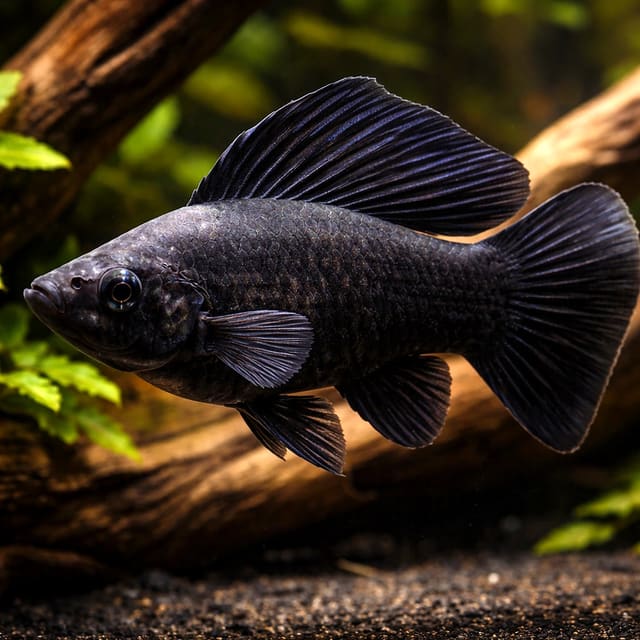
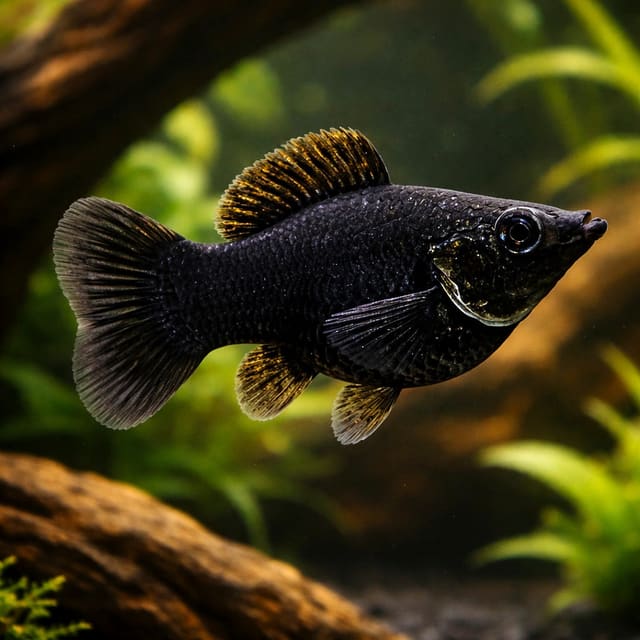
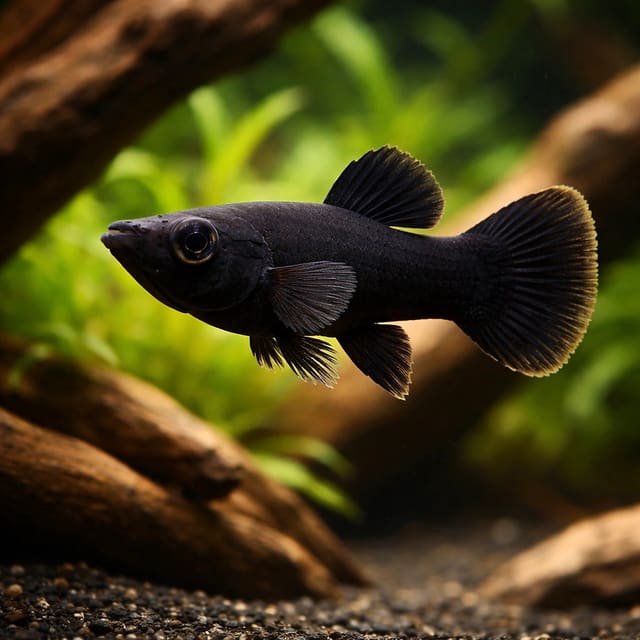
Black Molly (Poecilia sphenops black molly)
21–28°C · pH 7–8.5 · 81L
£3.99

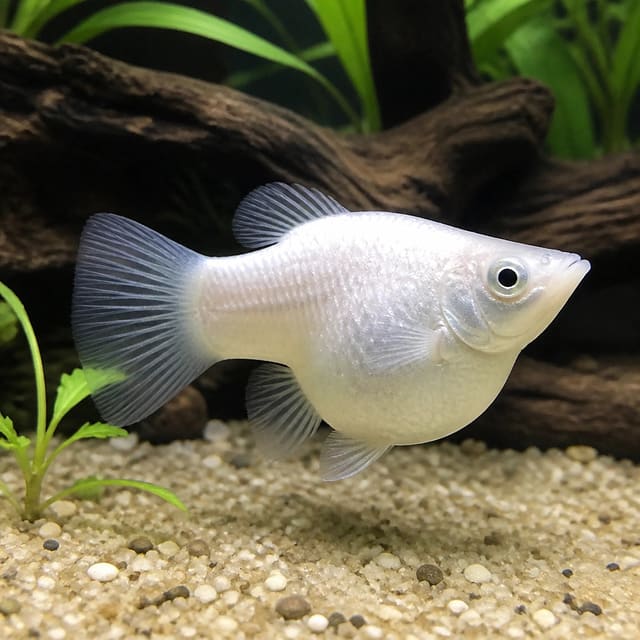
The Assorted Balloon Molly (Poecilia cf. latipinna) is a Poeciliidae livebearer from a genus native to fresh, brackish and salt water in the Americas. It suits keepers with a mature filtered aquarium for at least three mollies; OATA’s group guidance gives 20–28°C, pH 7.0–8.0 and 8–18°dH. Sold individually in 2.5–3 cm, 5–6c m and XL dispatch sizes.
Poecilia cf. latipinna
Save when buying multiple fish. Each quantity is one fish; sex and pair formation are not guaranteed unless the selected variant explicitly states them.
The Assorted Balloon Molly (Poecilia cf. latipinna) is a Poeciliidae livebearer from a genus native to fresh, brackish and salt water in the Americas. It suits keepers with a mature filtered aquarium for at least three mollies; OATA’s group guidance gives 20–28°C, pH 7.0–8.0 and 8–18°dH. Sold individually in 2.5–3 cm, 5–6c m and XL dispatch sizes.
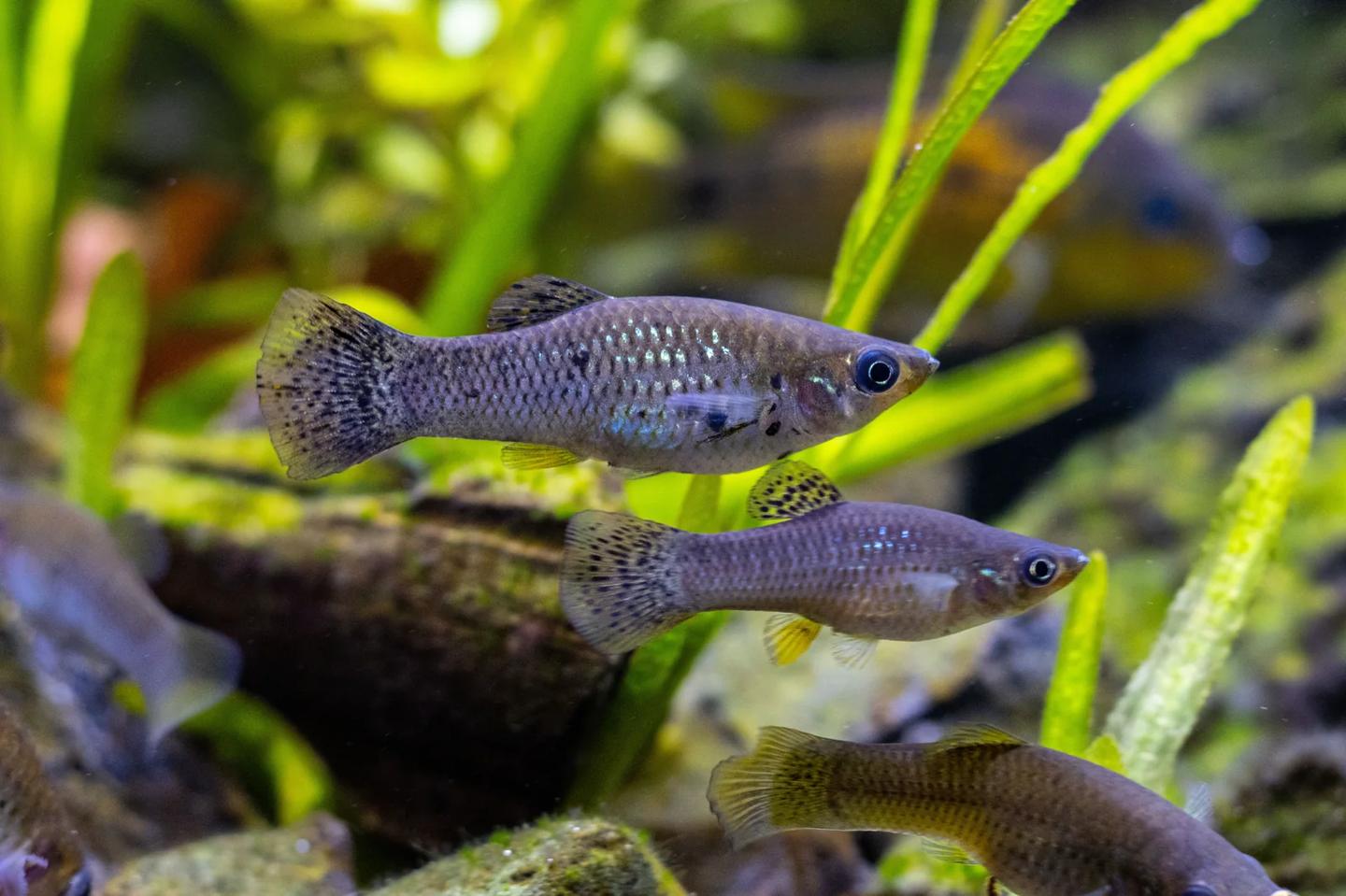
Mollies are social livebearers sold under a broad trade name. Identify the species or domestic form first; plan at least 45 litres for a small group of smaller mollies or 80 litres for sailfins, then verify adult size, water, sex ratio and the complete community.
Maintain these water conditions for optimal health and vibrant colors
The Assorted Balloon Molly (Poecilia cf. latipinna) is a Poeciliidae livebearer from a genus native to fresh, brackish and salt water in the Americas. It suits a keeper prepared to maintain medium-hard water, provide companionship, test the aquarium every week and run a mature biological filter. The World Register of Marine Species places Poecilia in the family Poeciliidae and order Cyprinodontiformes.
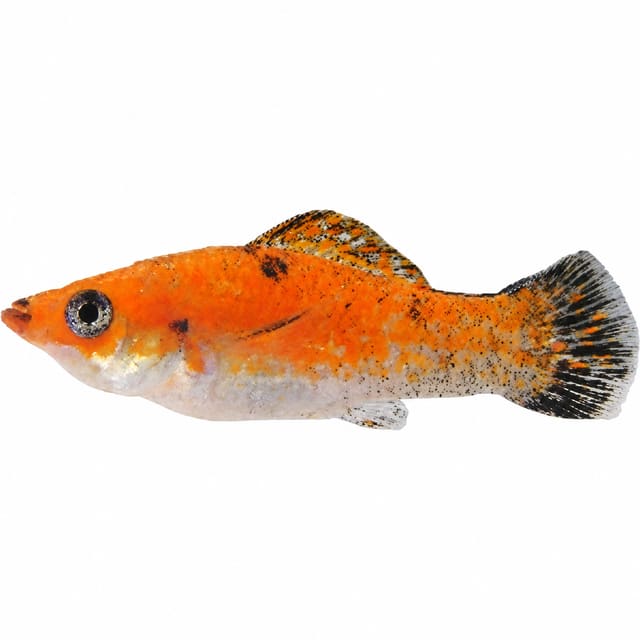
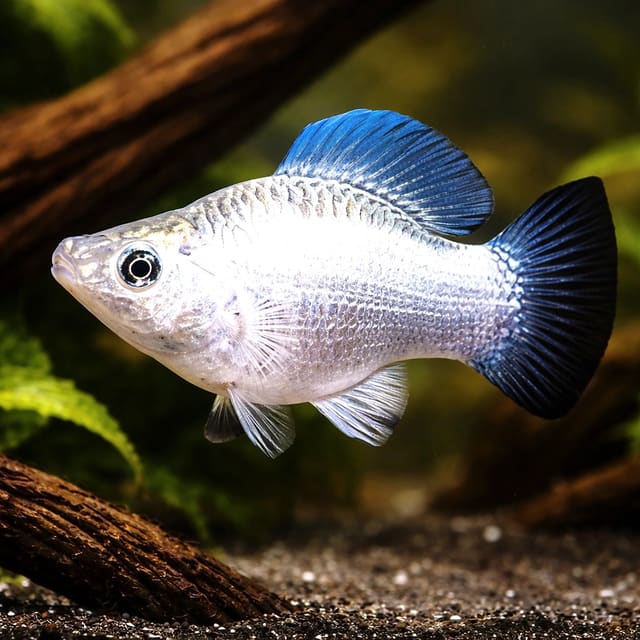
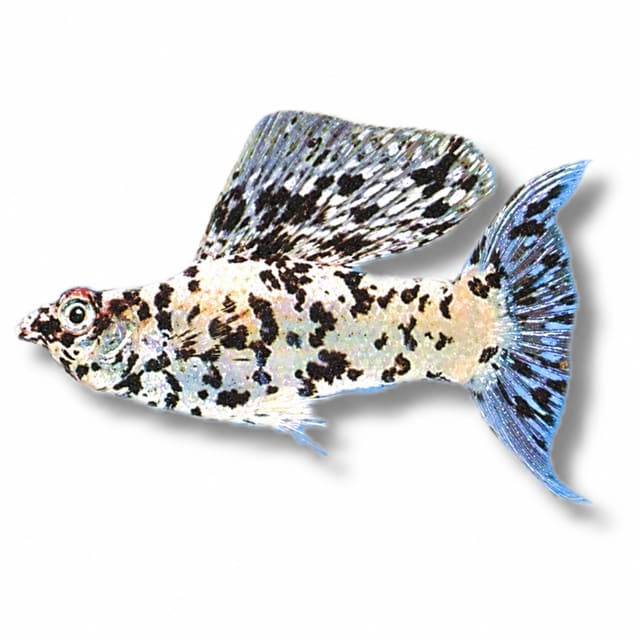
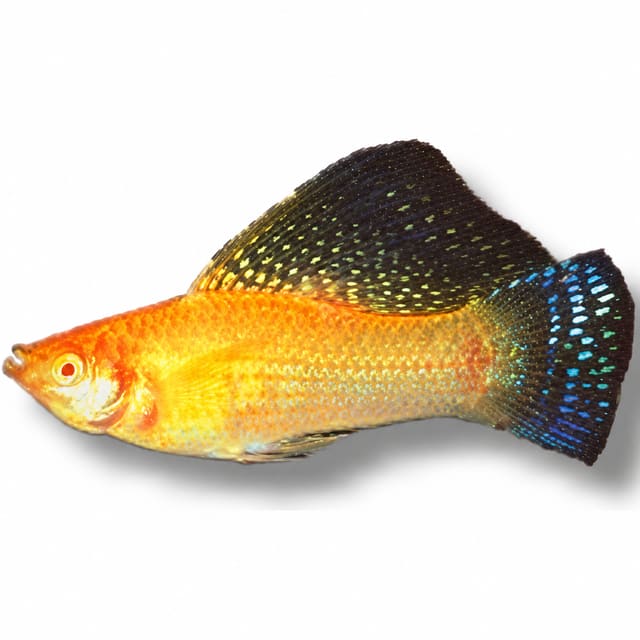
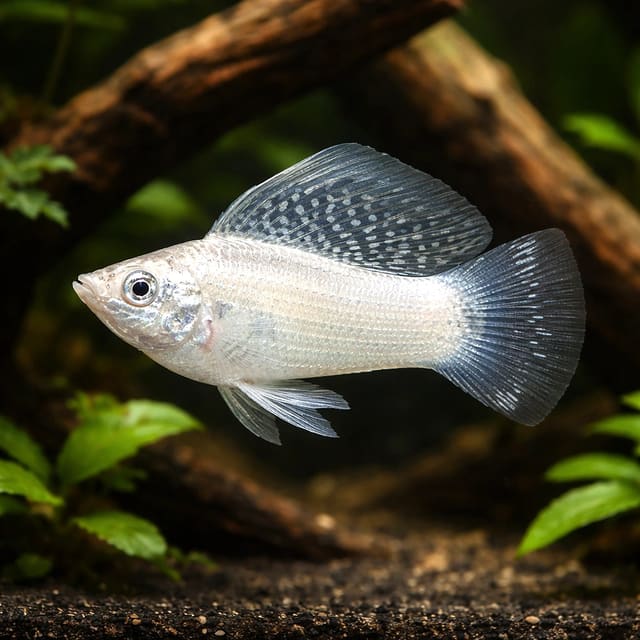
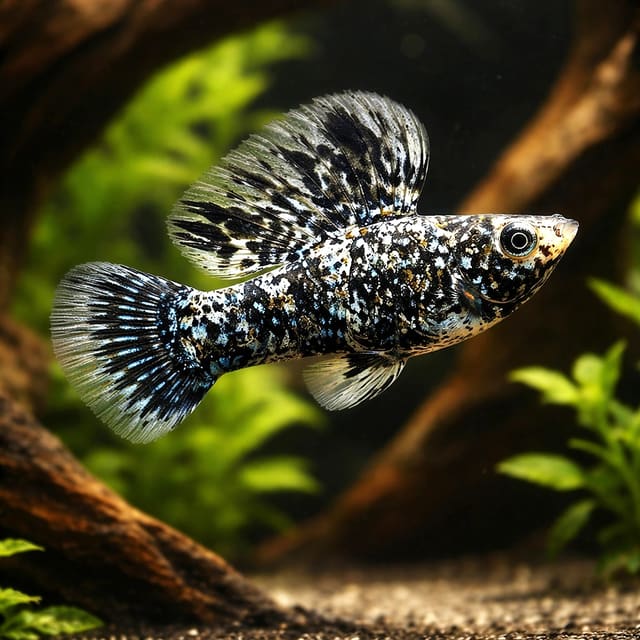
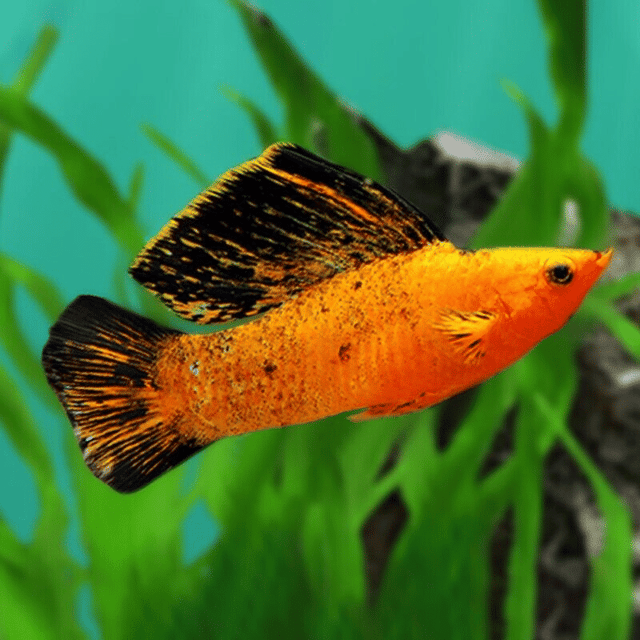
Assorted Balloon Molly is the trade identity for this mixed balloon-form molly. “Assorted” means colour and pattern should be treated as variable rather than chosen from the gallery. “Balloon” distinguishes the named body form, while “Molly” places the fish within the familiar Poecilia livebearer group. Select the animal by its exact title and live size label, then use the broader molly requirements for water, social care and feeding.
Wikipedia’s overview of the genus describes Poecilia as livebearers native to fresh, brackish and salt water in the Americas, with some members able to tolerate differing salinities. That diversity describes the genus in nature; it is not a reason to add salt or move this fish between salinities. Maintain the freshwater aquarium conditions set out below and judge every companion against the same measured range.
The exact species has not been identified, so the care advice here follows the genus Poecilia and its care group. Keep the scientific label Poecilia cf. latipinna attached to this animal rather than treating it as a confirmed example of one species. Its colourful trade identity does not reduce the need for a mature biological filter, controlled feeding and enough room for a small social group.
One purchase supplies one animal. Use the live size selector to choose between the labels 2.5-3 cm, 5-6c m and XL. The selector is the place to check which label can be chosen when you order; static copy should not be used to judge that.
The size you select is the size supplied, not the adult size. A numeric label describes the fish at dispatch, while XL is a dispatch grade rather than a guaranteed final measurement. Do not use either type of label to decide aquarium volume. Base the aquarium on the group, the larger molly planning reference and the waste that the mature fish will produce.
Sex is guaranteed only when the selected option explicitly states male or female. This Assorted Balloon Molly listing has no sex-guaranteed option.
That distinction affects group planning. OATA suggests keeping at least three guppies or mollies and, where sexes are known, using two females to each male. Treat that ratio as a stocking goal based on fish whose sex is known rather than as an outcome promised by a size choice. One selected animal also remains one purchase unit even when two fish are visible in a gallery scene.
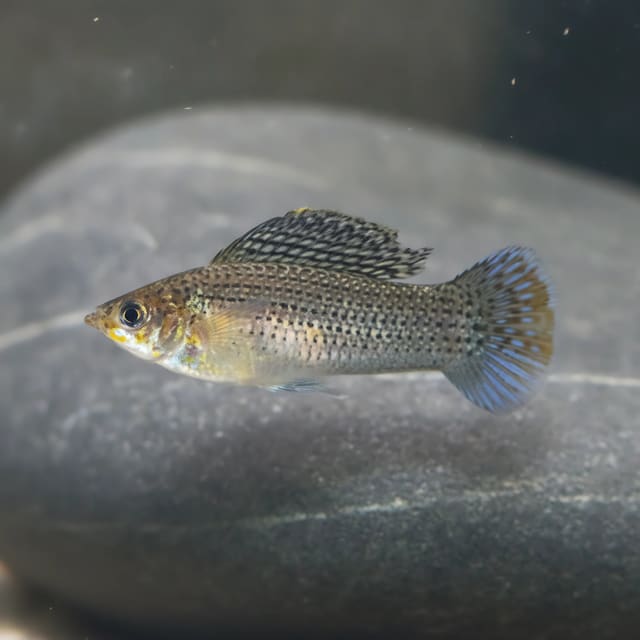
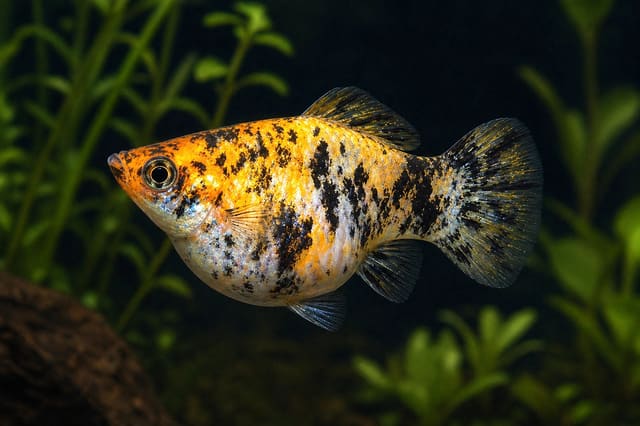
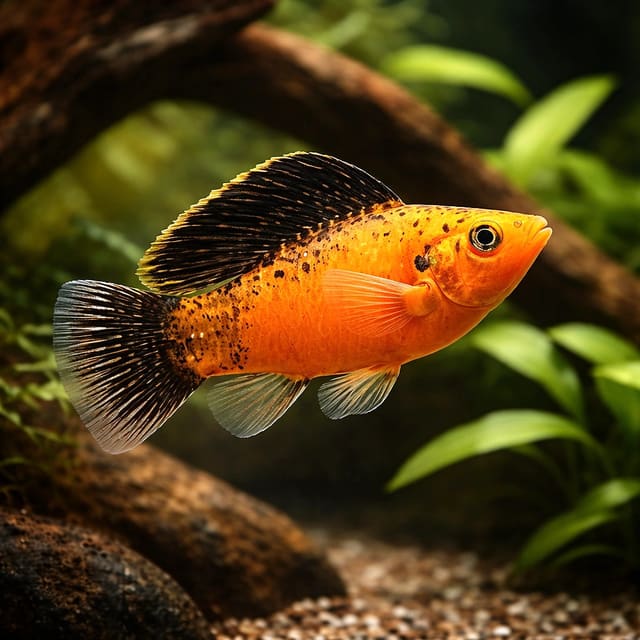
The gallery images are representative, based on reference photographs of this kind of animal, so colours can look slightly different from the live animal.
For other identities and colour forms, browse the molly fish collection. Keep each product’s scientific label and care limits separate when comparing them.
OATA’s guppy and molly guidance gives 20–28°C, pH 7.0–8.0, general hardness of 8–18°dH and carbonate hardness of 5–15°dKH for the group. Treat these figures as a practical planning range for this Poecilia rather than a narrow optimum.
OATA says mollies stay below 10 cm, while sailfin mollies can reach approximately 15 cm. Use the larger approximately 15 cm figure as a conservative space-planning reference until the adult form is clear; it is not a promised final size. The same sheet recommends at least 45 litres for a small group of smaller guppies or mollies and at least 80 litres for sailfin mollies. Begin this unidentified molly plan at at least 80 litres, then increase the volume when the group, other fish or aquarium layout requires more usable space.
| Suits | Not suited to |
|---|---|
| A mature, filtered aquarium of at least 80 litres | An unfiltered or biologically immature aquarium |
| A social plan for at least three mollies | Routine solitary keeping |
| 20–28°C, pH 7.0–8.0 and 8–18°dH | Water outside the stated molly range |
| A keeper who tests water every week | A setup without regular water testing and maintenance |
These decisions work together. An 80-litre aquarium does not justify rapid stocking, and suitable chemistry does not compensate for too small a group. Prepare the filter first, measure the water and reserve capacity for the fish as they grow.
A working biological filter is essential. RSPCA aquarium welfare guidance explains that fish release toxic ammonia, which filter bacteria convert first to toxic nitrite and then to safer nitrate. A filter therefore needs time and correct maintenance to establish the bacterial population that processes waste.
Prepare and mature the aquarium before the fish arrives. Our first tropical tank guide sets out that preparation in sequence. Test the finished aquarium and proceed only when ammonia and nitrite both read 0 mg/l. A clear tank is not automatically ready because ammonia and nitrite cannot be judged by sight.
Add fish slowly after maturation. OATA warns that stocking too quickly can create new tank syndrome because the filter bacteria have not expanded enough to process the added waste and feeding. If a community is being assembled, divide the plan into stages rather than filling every intended space at once.
Filter capacity and aquarium volume are related but not interchangeable. A strong filter cannot make a cramped aquarium suitable, while a large aquarium still needs biological filtration. The aim is enough physical room for the group and enough established bacterial activity for the waste it produces.
Use the first livestock addition as a checkpoint rather than permission to complete the whole stocking plan. Continue testing after feeding and through the following weekly maintenance cycle. If ammonia or nitrite is detected, make no further additions while the filter and water are brought back to 0 mg/l. When both remain at zero and the fish are feeding and swimming normally, continue the plan gradually instead of adding several intended groups together.
Set the aquarium to 20–28°C, pH 7.0–8.0, general hardness 8–18°dH and carbonate hardness 5–15°dKH. Ammonia and nitrite must remain at 0 mg/l. Nitrate should not exceed 20 mg/l above the normal tap-water level.
Measure the tap water as well as the aquarium. For example, if conditioned tap water contains 10 mg/l nitrate, the OATA ceiling becomes 30 mg/l in the aquarium. That calculation uses the local baseline instead of treating 20 mg/l as the same absolute ceiling in every home.
| Reading | Action |
|---|---|
| 19°C | Bring the aquarium into the 20–28°C range before adding the fish. |
| pH 7.6 | It sits within the 7.0–8.0 planning range. |
| 6°dH | Choose a better-matched aquarium or bring the setup into the 8–18°dH range before stocking. |
| Ammonia detected | Pause further stocking and check filter performance and water quality. |
| Nitrite detected | Treat the aquarium as biologically unstable and correct the water before adding fish. |
Use the aquarium water chemistry guide to understand what each test measures, then compare your readings with the stated range using the water matcher. Record the figures each week so that a gradual change is visible before it becomes a larger problem.
Stability still matters inside the range. Do not treat 20°C and 28°C as targets to alternate between, and do not use a single acceptable pH result to overlook ammonia or hardness. Choose a point your aquarium can hold consistently while keeping every measured value inside its limit.
Compare changes against the last recorded result as well as the permitted range. A reading can remain inside the range while moving steadily towards one boundary. Recheck the equipment, replacement water and recent stocking or feeding changes when that happens. This approach separates a one-off test variation from a developing pattern and gives you a clear reason to investigate before the value crosses its limit.
OATA describes guppies and mollies as omnivorous. Use a good-quality flake or granule with a high algae content as the routine food. Small live or frozen items such as daphnia, small bloodworm or tubifex can add variety, provided each piece is suitable for the fish to take.
Feed once a day and offer only what the fish can eat within a few minutes. This is both a nutrition decision and a water-quality decision: uneaten food breaks down and releases waste into the aquarium. A larger portion is not a shortcut to growth, and adding several foods at once makes it harder to see how much was actually eaten.
Make the algae-rich staple the dependable part of the routine rather than relying only on frozen treats. The live or frozen choices are beneficial additions, not a reason to exceed the once-daily amount. When several mollies share the aquarium, watch the whole group during the feeding window so that the portion can be eaten without a persistent layer reaching the substrate.
Weekly siphoning removes solid material from the gravel, but it should not be used to excuse daily overfeeding. Control what enters the aquarium first, then use the scheduled water change to remove accumulated waste. That combination protects the filter from an avoidable rise in biological load.
When establishing the portion for a new group, begin with an amount that can be observed clearly and watch until the few-minute feeding window ends. Note whether food remains, whether every fish approaches it and whether pieces are suitably sized. Adjust the next day’s portion from those observations rather than adding more food during the same feeding. This keeps the once-daily routine measurable and makes reduced appetite easier to recognise.
Use aquarium gravel or sand as the substrate. Add live plants where practical because they provide cover; plastic plants and suitable ornaments can serve the same shelter function when live planting is not used. Plant pots and model caves are examples of the kinds of structures OATA identifies as suitable cover.
Inspect every artificial plant and ornament before it goes into the aquarium. Long or broad fins can be damaged by rough points and narrow abrasive gaps, so choose smooth surfaces and remove any decoration that could catch a fin. A decorative object earns its place only when it provides shelter without reducing safe swimming room or making routine cleaning impractical.
| Furnishing | Reason to include it |
|---|---|
| Gravel or sand | Provides the aquarium substrate and can be siphoned during maintenance. |
| Live plants | Create cover for the group. |
| Plastic plants | Offer alternative cover when their edges are smooth. |
| Pots or caves | Add shelter when their entrances and surfaces are safe. |
| Removable ornaments | Allow access to the substrate and filter area during cleaning. |
Do not fill the aquarium simply because more decorations will fit. The practical test is whether all fish can use the cover, move around it and be observed clearly during feeding and health checks. In a small social group, more than one sheltered area also prevents a single object from becoming the only place to retreat.
Recheck the layout as the fish grow. A gap that admits a dispatch-sized fish may become restrictive later, while a plant that moves against the filter intake can obstruct flow. Keep the adult planning reference, filter access and weekly siphoning route in mind whenever the aquascape is changed.
Review the furnishing plan during the weekly water change. Confirm that ornaments remain stable, plants still provide cover and the filter intake is clear. Move or remove an item when waste collects where the siphon cannot reach or when it blocks observation of a fish that has changed its behaviour. A usable layout supports shelter, swimming, cleaning and daily checks at the same time.
Before the delivery window, confirm that someone can receive the parcel and that the aquarium is filtered, mature and within range. OATA’s guidance supports checking temperature, ammonia and nitrite before adding fish, with ammonia and nitrite both at 0 mg/l.
Follow our delivery and Live Arrival Guarantee policy when the parcel arrives. Float the bag for 20–30 minutes before releasing the fish, acclimatise slowly and never pour the bag water into the aquarium.
After release, compare swimming, breathing and position with the fish’s initial condition. If the fish hangs at the surface, sits on the bottom, swims erratically or breathes unusually, test the aquarium immediately. A new arrival does not make a detectable ammonia or nitrite reading acceptable.
The policy page explains the current claim procedure. Contact us the same day with the order number and continuous unboxing video if a Live Arrival Guarantee claim is required.
Prepare the route from parcel to aquarium before delivery rather than rearranging equipment while the bag is waiting. Keep the test kit ready, leave space for the bag to float and make sure the aquarium can be observed after release. Once the fish enters the tank, record its swimming, breathing and position so later changes can be compared with a clear first-day checkpoint.
Change 25% of the aquarium water at least once every week. Use a siphon to lift solid waste from the gravel, and treat replacement tap water with conditioner before it enters the aquarium so chlorine or chloramine does not harm the fish or filter bacteria.
Test ammonia and nitrite at least weekly and keep both at 0 mg/l. Check nitrate against the tap-water baseline, then confirm temperature, pH and hardness remain inside the working range. Writing the results down turns maintenance into a trend rather than a set of isolated readings.
Check the filter for blockages during the water change. If the media needs cleaning, rinse it lightly in the aquarium water removed during that change. Do not wash it under the tap because chlorine or chloramine may kill part of the established bacterial population.
| Weekly task | Successful result |
|---|---|
| Water change | 25% replaced at least once every week with conditioned water |
| Substrate siphon | Visible solid waste removed |
| Ammonia test | 0 mg/l |
| Nitrite test | 0 mg/l |
| Nitrate comparison | No more than 20 mg/l above tap level |
| Filter inspection | Flow clear and media handled in removed tank water |
During the first month after adding fish, repeat this complete cycle every week rather than waiting for the aquarium to look dirty. Feeding and fish waste increase the load on the filter, and a newly enlarged population of bacteria must keep pace. Pause any further additions if ammonia or nitrite appears.
Keep the maintenance method consistent. Large gaps between changes followed by heavy cleaning can disturb stability, while replacing the scheduled water without siphoning leaves solid waste behind. The 25% change, test set, substrate clean and filter check work as one routine.
Use the written weekly results to decide whether the aquarium is ready for the next planned addition. Four successive entries showing 0 mg/l ammonia and nitrite are more useful than a single clear-looking day, but every new addition still increases waste and feeding. Continue the same schedule afterwards and stop expanding the group whenever a test departs from the required result.
Learn the normal pattern for each fish by watching it during feeding and routine maintenance. OATA identifies clear, bright eyes, undamaged fins, intact scales and appropriate swimming as useful signs of a healthy fish. A change from the individual’s normal behaviour can reveal a problem before a severe decline becomes obvious.
| Change noticed | First response |
|---|---|
| Hanging at the surface | Test ammonia and nitrite and check filter flow. |
| Sitting on the bottom | Compare swimming, breathing and water readings with normal. |
| Erratic swimming | Check temperature and water quality promptly. |
| Darker or paler colour | Look for accompanying changes in behaviour, feeding or condition. |
| Faster or slower gill movement | Test the aquarium and observe whether other fish show the same change. |
| White spots or fluffy growth | Record the appearance and seek health guidance. |
| Fin or scale loss | Inspect the fish and aquarium furnishings for visible damage. |
| Reduced appetite | Test water and compare the daily portion with recent intake. |
Start with water because even small amounts of ammonia can stress guppies and mollies. Confirm ammonia and nitrite are 0 mg/l, check the filter for blockage and compare nitrate with the tap-water baseline. These checks identify husbandry problems that need immediate correction without guessing at a disease.
Do not begin a treatment from one vague sign. Several conditions can alter swimming, colour or appetite, and an unsuitable treatment can distract from a water-quality fault. If a change persists or the fish develops spots, growths, ulcers, damaged fins or marked weight loss, contact us for health guidance with the test results and observations ready.
Record when the change began, which fish are affected and whether it appeared before or after feeding, maintenance or a new addition. Compare the current temperature, ammonia, nitrite and nitrate results with the previous weekly entry. Specific observations make it easier to separate an individual injury from a wider aquarium problem and to see whether corrective husbandry produces an improvement.
Mollies are generally peaceful and can live with many other fish, but that description is not a universal tank-mate list. A successful pairing depends on overlapping water requirements, enough aquarium volume for the combined adult plan and behaviour that allows every fish to feed and use shelter.
Start with chemistry. A proposed companion should be suitable for 20–28°C, pH 7.0–8.0 and 8–18°dH rather than merely tolerating one value at the edge of its own range. Reject a pairing when its routine aquarium needs would require keeping either animal outside its intended conditions.
| Check | Decision rule |
|---|---|
| Water | All routine temperature, pH and hardness ranges must overlap. |
| Temperament | Choose peaceful companions and observe any change in hiding or aggression. |
| Space | Increase aquarium volume for every added group rather than relying on the 80-litre starting point. |
| Feeding | Ensure the molly group can take its algae-rich food within a few minutes. |
OATA advises that sailfin mollies should not be kept with timid fish. Apply that avoid only to a fish identified as a sailfin molly; the approximately 15 cm planning reference does not assign that identity to this animal. For other pairings, the outcome remains conditional on the individuals and the complete stocking plan.
Check the aquarium’s dimensions, filtration, existing inhabitants and measured chemistry together. If you want a stocking and compatibility assessment, ask us with those details rather than relying on a list of familiar common names.
Work through a proposed pairing in order. First find the shared part of both routine temperature ranges, then repeat the comparison for pH and hardness. Next allow space for both adult group plans and consider whether the filter can support the added feeding and waste. Finally, observe feeding and shelter use after introduction. A pairing passes only when all four decisions work together.
Plan for at least three mollies because OATA says guppies and mollies require companionship. Where the sexes are known, its suggested ratio is two females to each male to reduce stress on females and other aquarium inhabitants. More can be kept when the same ratio and the aquarium’s capacity are maintained.
A dispatch grade does not identify sex, so build the social plan from observed animals rather than reading sex into 2.5-3 cm, 5-6c m or XL. Treat the suggested ratio as a target for a group whose sexes are known. Until then, provide enough cover, watch interactions and retain capacity to respond if one fish persistently hides or behaviour becomes more aggressive.
These fish are livebearers and give birth to live young. Allow spare biological and physical capacity when keeping a known mixed-sex group rather than planning the aquarium at its limit. The point is not to assume that young will appear, but to avoid creating a setup with no room to manage a changing population.
Observe the group during feeding because that is when access to food and changes in temperament are easiest to compare. A fish that repeatedly misses food, hides more than normal or shows damaged fins needs a water, furnishing and social review rather than another addition to the group.
Use the first week after any group change as an observation period. Check whether every fish reaches food, whether shelter remains accessible and whether one individual repeatedly drives another away. Keep testing ammonia and nitrite because the larger group also increases the filter’s load. Delay the next addition until both behaviour and water readings remain steady.
Plan its space using OATA’s approximately 15 cm sailfin-molly reference because this Poecilia is identified only to genus level; the figure is a conservative planning reference rather than a promised adult size.
Begin with at least 80 litres for the small molly group; this is OATA’s larger sailfin-molly group threshold and should be increased for more fish or a mixed community.
OATA suggests at least three guppies or mollies and, where sexes are known, two females to each male; this is group guidance for mollies.
OATA describes most guppies and mollies as undemanding and easy to keep, but this fish still needs a mature filter, weekly testing and stable water at 20–28°C, pH 7.0–8.0 and 8–18°dH.
Feed a high-algae flake or granule once daily, with small daphnia, bloodworm or tubifex for variety, limiting the portion to what is eaten within a few minutes.
OATA’s guppy and molly guidance gives 20–28°C, pH 7.0–8.0, general hardness of 8–18°dH and carbonate hardness of 5–15°dKH for the group.
OATA describes mollies as generally peaceful; watch for changes in aggression, hiding, feeding access or fin condition and review the social plan if behaviour changes.
Choose peaceful fish whose routine requirements overlap 20–28°C, pH 7.0–8.0 and 8–18°dH, then allow enough aquarium space and filtration for every group; avoid timid fish only with a confirmed sailfin molly.
Film every delivery continuously from the sealed parcel as it is opened, showing the fish still inside the sealed bag before anything is disturbed. Someone must be present to receive it; float the bag for 20–30 minutes, then release the fish and never pour the bag water into the aquarium.
No reviews for this item yet. Bought one? Honest reviews only, good or bad.
What customers say about ordering from us
I have a small group of long finned mountain minnows. So was delighted to be able to order ten of this variety to increase the genetics in my tank . The ones I recieved are healthy but it’s to early to give a verdict on wether they are of a long finned type since they are small currently.
Gordon Walker · 23 Sept 2026
100% success travel and "installation". Pleased with quality of purchase. The Siamese fighter a bit "shy" so have not yet seen him at his best yet but looking good. Happy customer. GG
George E Garratt · 21 Sept 2026
Reviews of our shop, collected by Judge.me, an independent third-party review collector. Newest first.