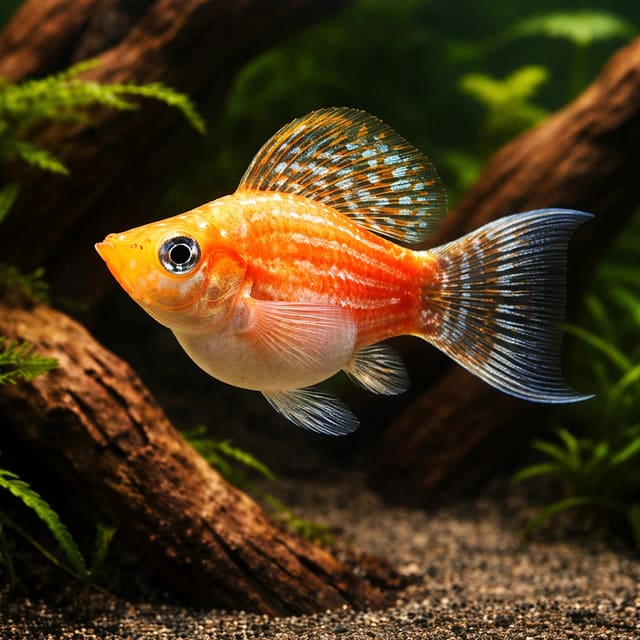

X Balloon Sailfin Molly (Poecilia latipinna) - UK
A striking Balloon Sailfin Molly with elegant finnage and standout shape, ideal for well-kept tropical aquariums. Order today with live arrival guarantee.
Premium Quality
Healthy, vibrant fish from trusted suppliers
Expert Care
Detailed care guides and support
Live Arrival Guarantee
Your fish arrives healthy or we'll replace it
Acclimated
Properly quarantined and ready for your tank
Why Choose This Fish?
A striking Balloon Sailfin Molly with elegant finnage and standout shape, ideal for well-kept tropical aquariums. Order today with live arrival guarantee.
The Poecilia latipinna Balloon Sailfin Molly is one of those fish that makes a community aquarium look instantly brighter and more alive. This rounded, sail-backed livebearer combines the classic charm of the sailfin molly with a compact balloon body, giving you a fish that is both eye-catching and full of personality. For aquarists searching for peaceful aquarium fish UK hobbyists can keep in hard, alkaline water, this is a smart choice. It is also one of the most popular colourful aquarium fish UK fishkeepers add to planted and mixed livebearer tanks. Adult Poecilia latipinna size usually reaches around 10-13 cm, with an assorted balloon sailfin mollies lifespan of roughly 3-5 years when kept in stable conditions.
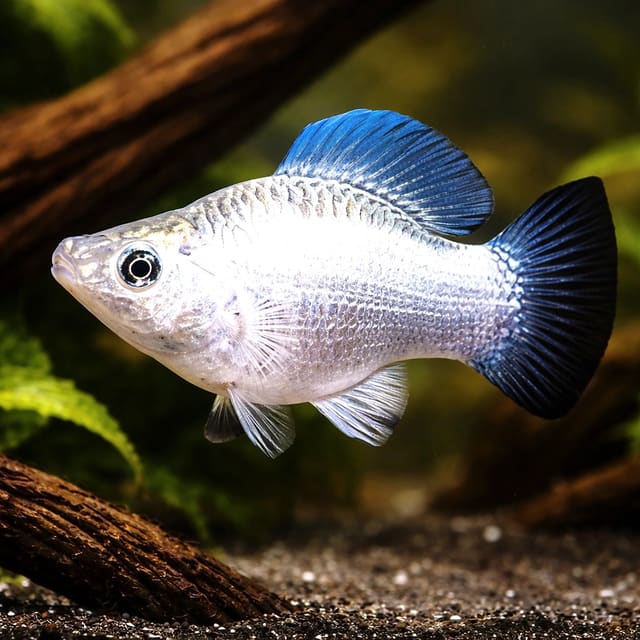
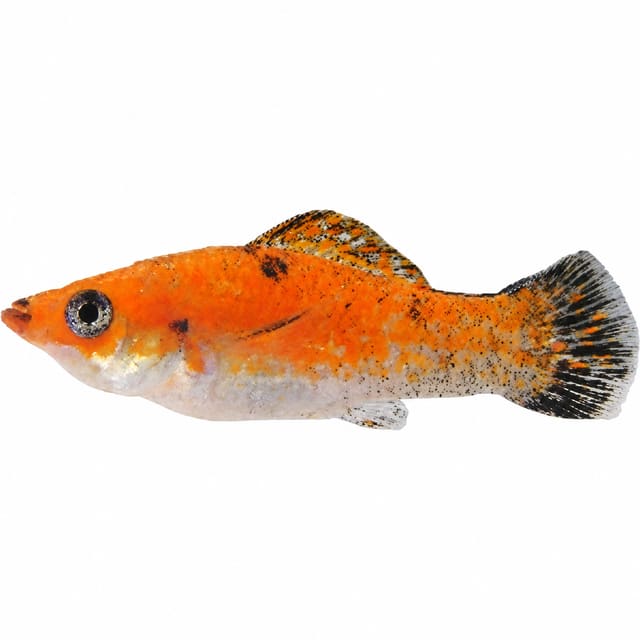
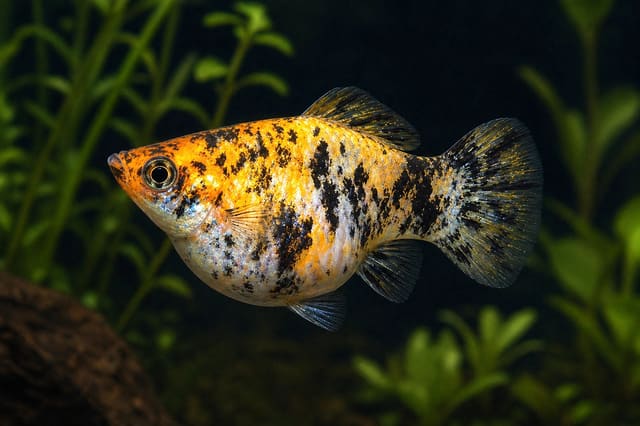
If you have been researching molly fish requirements, molly fish tank requirements, or the best molly fish tank setup for beginners, this variety is a strong candidate because it is active, adaptable, and easy to feed. The key is understanding its need for warm, mineral-rich water, swimming space, and a proper social group. Many keepers ask about molly fish ideal temperature, molly fish tank temperature, and what temperature do molly fish need; for this fish, the sweet spot is around 25°C. See our detailed photos showing the rounded body shape, broad dorsal fin, and mixed sailfin molly colors that make each fish slightly different. Whether you want a lively livebearer display, a hard-water community tank, or a hardy centrepiece for a family aquarium, the Balloon Sailfin Molly offers movement, colour, and constant interest.
🔹 Quick Facts
- Scientific Name: Poecilia latipinna
- Care Level: Beginner
- Min Tank Size: 115 litres (25 gallons)
- Temperature: 22-28°C (72-82°F)
- pH Range: 7.5-8.5
- Lifespan: Up to 5 years
- Temperament: Peaceful
- Diet: Omnivore
Classification
- Order: Cyprinodontiformes
- Family: Poeciliidae
- Genus: Poecilia
Poecilia latipinna belongs to the same livebearing family as guppies, platies, and swordtails. In the aquarium hobby it is valued for its broad dorsal fin, active mid-water behaviour, and ability to thrive in hard alkaline water where some tropical species struggle. The balloon form is a selectively bred body shape variant of the sailfin molly, while related species often compared by hobbyists include poecilia velifera, p. velifera, poecilia sphenops, poecilia reticulata, and poecilia mexicana.
Where Do Balloon Sailfin Mollies Come From? Natural Habitat Explained
To understand the best care for this fish, it helps to know the molly fish origin and the conditions its ancestors evolved in. The wild-type sailfin molly, Poecilia latipinna, comes from North America, especially the southeastern USA. When people ask where do molly fish come from or where do molly fish live, the answer includes coastal marshes, slow rivers, ditches, estuaries, and warm backwaters from parts of the Carolinas down through Florida and across the Gulf Coast. The balloon form sold in aquariums is a captive-bred colour and body variant rather than a naturally occurring wild population.
The natural molly fish habitat is usually shallow, warm, and rich in minerals. In the wild, molly fish in the wild often graze on algae films, tiny crustaceans, detritus, and plant matter. That is why a good aquarium setup includes vegetable matter in the diet and enough surface area for natural browsing. If you have searched poecilia latipinna wild, you will notice that wild fish are usually less exaggerated in shape than balloon strains and often display silver, olive, or spotted tones rather than the bold mixed colours seen in captive lines.
The molly fish native range includes waters that can vary from fresh to slightly brackish, but in the home aquarium these fish do very well in freshwater as long as it is hard and alkaline. Their molly fish natural habitat also explains why they appreciate open swimming room, bright lighting, and plant cover. Hobbyists sometimes ask about where do molly fish sleep; like many livebearers, they rest quietly among plants or near sheltered areas, especially after lights-out. Questions such as where do molly fish give birth, where do molly fish lay eggs, and when molly fish lay eggs come up often too, but mollies are livebearers, so they do not lay eggs at all.
Because of their hard-water preference, they are not the best molly fish for lotus pond unless the pond is warm, stable, and suitable year-round. In the UK, they are far better suited to heated indoor aquariums. Ignore unrelated search terms like fish molly (2025) sigma original; for practical fishkeeping, habitat, water chemistry, and social structure matter far more than internet trends.
💡 Expert Tip
Mimicking the natural habitat of Poecilia latipinna improves colour, grazing behaviour, and confidence. Use a hard-water setup with open swimming space, patches of plants, and algae-friendly surfaces rather than an over-decorated soft-water aquascape.
How Do You Set Up the Perfect Tank for Poecilia latipinna?
Getting the environment right is the biggest factor in long-term success. If you are researching molly fish tank size, molly fish tank setup, or assorted balloon sailfin mollies tank size minimum, start with the fact that these are not tiny nano fish. Although the balloon body is compact, the fish still grows to a respectable size and produces a moderate bioload. A 115-litre aquarium is the true minimum, while 150 litres is a better long-term choice for a mixed group. For keepers wondering about assorted balloon sailfin mollies in 60 litre tank, that volume is too small for adult sailfin balloon mollies as a permanent home.
Tank Size Requirements
The ideal group is one male with two or three females, or a larger mixed group in a spacious tank. If you are asking how many molly fish should be kept together, avoid keeping just 2 molly fish unless the pair is carefully chosen and the tank is temporary. Mollies are social and do better in groups where attention is spread out. A larger footprint also helps reduce chasing, especially when males display their dorsal fins.
Water Parameters
Many new keepers ask what temperature should molly fish be in, molly fish water temperature, molly fish temperature, and molly fish temperature range. The safe range is 22-28°C, with 25°C being the best all-round target. That means the correct poecilia latipinna temperature is warm but not extreme. The right assorted balloon sailfin mollies temperature and assorted balloon sailfin mollies ideal water temperature support digestion, immunity, and breeding condition. Their preferred pH is 7.5-8.5, so pay attention to assorted balloon sailfin mollies pH level requirements if your tap water is naturally soft or acidic.
Because they come from warm waters, people often ask do molly fish need a heater or does molly fish need heater. In most UK homes, yes. A reliable heater keeps the molly fish tropical tank temperature stable and prevents stress from overnight drops. This is especially important for balloon strains, which can be a little less hardy than standard-bodied sailfins.
Filtration
Use a filter that turns the tank over around 5-8 times per hour. Sponge filters work in breeding tanks, but for display aquariums a quality internal or external filter gives better mechanical and biological filtration. Mollies appreciate clean, oxygen-rich water even though people sometimes search can molly fish live without oxygen or can molly fish live without oxygen pump. They can survive in lower-flow water better than some fish, but they still need excellent gas exchange and stable filtration.
Substrate, Plants, and Decor
Sand or smooth fine gravel works well. Darker substrate often helps shy fish settle and makes the body colours stand out. If you are planning assorted balloon sailfin mollies for planted aquarium layouts, choose sturdy plants that tolerate hard water, such as Vallisneria, Anubias, Java fern, and floating species. Many aquarists ask about assorted balloon sailfin mollies aquarium plants compatible; the best choices are robust plants with enough leaf area to break lines of sight without overcrowding the swimming zone.
Decor should include open mid-water lanes, some rockwork or wood for structure, and plant thickets for females to rest in. If you enjoy colour morphs, you can combine this fish with related varieties such as X Calico Sailfin Balloon Mollies, X Black Sailfin Balloon Mollies, and X Gold Leopard Sailfin Mollies for a striking livebearer display.
Lighting Requirements
Moderate lighting for 7-9 hours per day is ideal. Bright light encourages algae films and shows off the dorsal fin, but too much without plant cover can make fish feel exposed. In mixed hard-water tanks, a balanced planted setup often works best.
🔹 Quick Setup Checklist
- Tank of at least 115 litres, ideally 150 litres
- Stable heater set close to 25°C
- Hard, alkaline water with pH 7.5-8.5
- Strong biological filtration and good surface movement
- Open swimming space plus dense plant patches
- Group structure with more females than males
💡 Pro Tip
Always cycle the aquarium for 4-6 weeks before adding mollies. Because they dislike unstable water chemistry, an uncycled tank is one of the fastest ways to trigger stress, clamped fins, and disease.
What Do Poecilia latipinna Eat? Complete Feeding Guide
The best molly fish diet is varied, plant-rich, and offered in small portions. If you have been asking what do molly fish eat, what does molly fish eat, or what molly fish eat, think of them as omnivores with a strong taste for algae, biofilm, and vegetable matter. A balanced poecilia latipinna diet includes quality flakes or granules, spirulina-based foods, blanched vegetables, and occasional protein treats such as daphnia or brine shrimp.
Staple Foods
A spirulina flake or omnivore livebearer pellet should form the base of the assorted balloon sailfin mollies diet. Because balloon mollies can be prone to digestive issues if overfed rich foods, plant content matters. Many keepers ask are molly fish algae eaters and do molly fish eat algae; yes, they do graze algae and biofilm, but they should not be expected to clean the tank by themselves.
Supplemental Foods
For variety, offer blanched spinach, shelled peas, cucumber, or zucchini. A common question is can molly fish eat zucchini; yes, they usually love thin slices that have been softened first. Frozen daphnia and brine shrimp are useful once or twice a week, especially when conditioning adults. If you are comparing with another tiny livebearer, the least killifish diet is much finer and more micro-predatory than the broader omnivorous feeding style of mollies.
Treats, Feeding Frequency, and Portion Control
If you are wondering when to feed molly fish, feed adults 1-2 small meals daily. The best assorted balloon sailfin mollies feeding guide is simple: only offer what they can finish in about 30-60 seconds. Balloon strains should not be stuffed with large meals because their compact body shape leaves less room for the digestive tract.
People also ask are molly fish bottom feeders; not really. They feed throughout the water column and graze surfaces, but they are not specialised bottom feeders. Questions like can molly fish eat betta food or can molly fish eat goldfish food come up often too. In an emergency they may nibble these foods, but neither is ideal as a staple because the formulation is not designed for a hard-water livebearer with a strong vegetable requirement.
Another frequent concern is do molly fish eat shrimp. Adult mollies may pick at very small shrimplets, especially if underfed, but they usually ignore larger shrimp. And yes, do molly fish eat their babies and did molly fish eat their babies are real questions because adults often will eat fry if given the chance.
| Time | Food | Amount |
|---|---|---|
| Morning | Spirulina flake or livebearer granules | Small pinch, eaten within 1 minute |
| Evening | Vegetable food or frozen daphnia/brine shrimp | Very small portion |
A mixed group benefits from a varied omnivore diet rich in plant matter to support growth, colour, and active breeding behaviour.
Useful if you want to build a larger social group and feed a consistent livebearer routine across several colour forms.
⚠️ Feeding Warning
Overfeeding is one of the most common causes of ammonia spikes, cloudy water, and bloating in balloon mollies. Small meals, vegetable matter, and strong filtration are much safer than heavy, protein-rich feeding.
What Does the Balloon Sailfin Molly Look Like? Colors, Patterns & Varieties
The Balloon Sailfin Molly stands out for two reasons: its shortened, rounded body and the enlarged sail-like dorsal fin, especially on males. Typical molly fish length is around 10-13 cm at maturity depending on sex, line, and conditions. If you are researching molly fish full size or assorted balloon sailfin mollies size, expect a fish that is much larger and more substantial than a guppy, even with the balloon body shape.
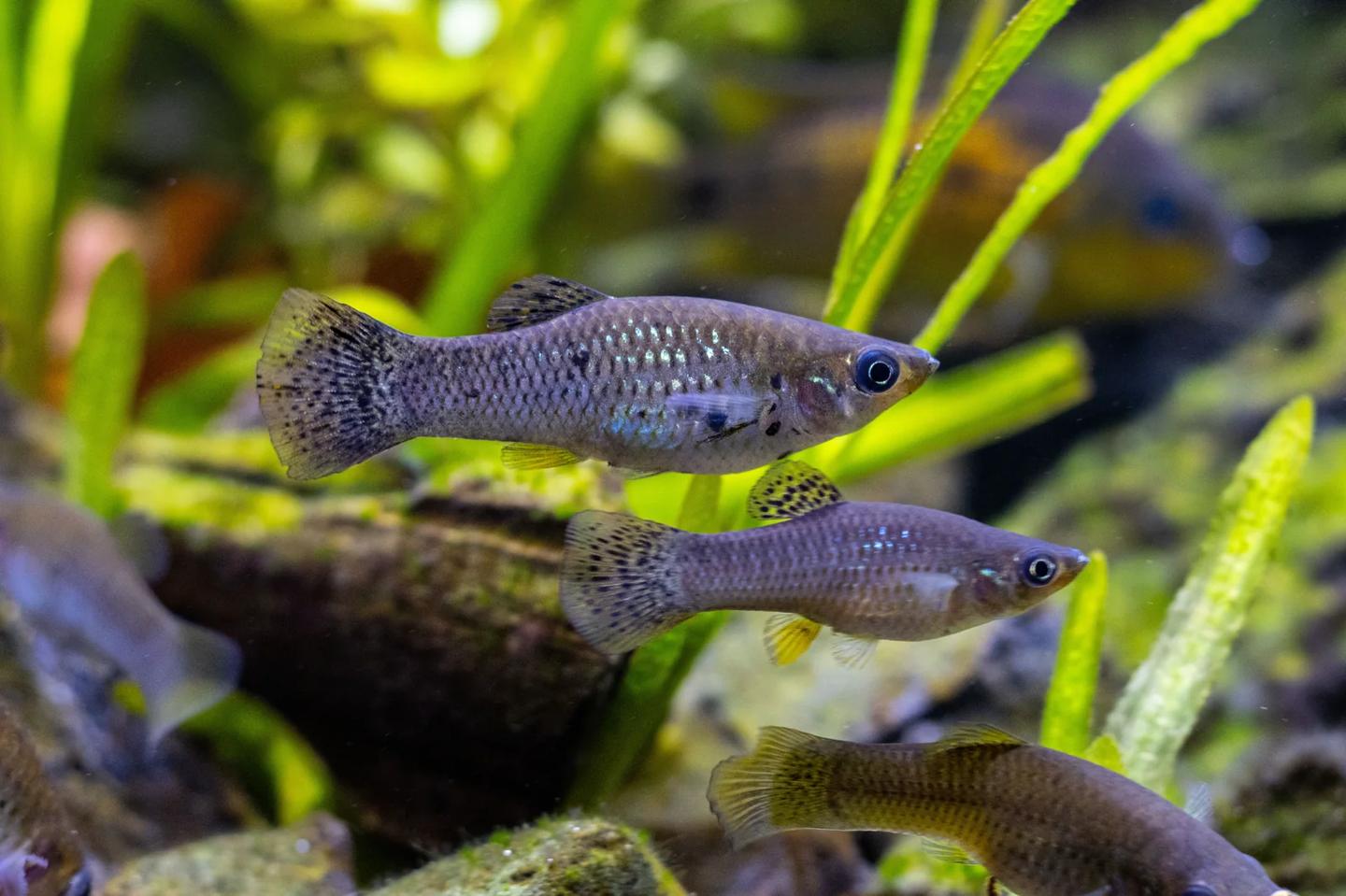
There is a huge range of molly fish colors in the hobby, and a mixed group can include silver, gold, orange, marbled, spotted, black, and patterned fish. Hobbyists searching molly fish colors chart, red sailfin molly, molly fish black, or molly fish black and white are really looking at the many domestic strains bred from sailfin and related molly species. Our photos show the variation you can expect in a mixed batch, from pale cream fish to darker speckled individuals with dramatic dorsal fins.
Sexing is usually straightforward. For anyone asking molly fish how to tell male from female or what does a female molly fish look like, males have a pointed gonopodium instead of a fan-shaped anal fin and usually display a larger sailfin. A sailfin molly female is rounder-bodied, especially when carrying fry. If a female is close to giving birth, you may notice a darker molly fish gravid spot near the vent.
Colour quality depends on genetics, diet, and environment. If your molly fish losing color, check water quality, social stress, and nutrition first. Some keepers panic when a molly fish disappeared from tank; in planted aquariums they often hide among decor, especially after transport or during social adjustment. The right molly fish group size helps confidence and encourages natural display behaviour.
What Fish Can Live With Poecilia latipinna? Compatibility Guide
One reason this species remains so popular is that it works well in many hard-water community tanks. If you are asking what fish are compatible with molly fish or searching for the best sailfin molly tank mates, start with other peaceful species that enjoy similar water chemistry. In general, are mollies community fish? Yes. Are mollies social fish? Also yes. They are active livebearers that do best with company, but they still need the right tank mates and enough room.
Many people ask are molly fish aggressive, is molly fish aggressive, molly fish aggressive, or are molly fish aggressive to other fish. The honest answer is that they are usually peaceful, but males can chase each other and pester females, especially in cramped tanks or poor sex ratios. If you have ever wondered why molly fish is aggressive, the cause is usually competition, stress, or overcrowding rather than true predatory aggression. A larger group with more females than males reduces tension.
Ideal Tank Mates
Excellent companions include platies, swordtails, rainbowfish, and other mollies. If you want a varied molly display, consider combining them with X Lyretail Balloon Sailfin Mollies, Black Ballon Molly Mix Male and, or X Poecilia Latipinna / Ballon Molly. These combinations suit keepers looking for assorted balloon sailfin mollies with other livebearers in a bright, active setup. This species is one of the best assorted balloon sailfin mollies peaceful community fish options for hard-water aquariums and fits well in a classic community fish UK display.
Questions like can molly fish live with guppies often come up. They can, but only if the water is hard and warm enough for mollies and the tank is large enough to manage constant livebearer activity. Can molly fish live with tetras? Sometimes, but many tetras prefer softer, more acidic water, so compatibility depends on the exact species. Can molly fish live with betta? Usually not ideal, because the betta may dislike the active movement and fin display of male sailfins. Can molly fish and goldfish live together or can molly fish live with goldfish? No, that pairing is poor because goldfish need cooler water and produce much heavier waste.
Compatibility With Invertebrates
Can mollies live with cherry shrimp? Large adult shrimp may be left alone in a planted tank, but tiny shrimplets can be eaten. Snails are generally safe. If you medicate a mixed setup, people often ask can i use bettafix in a community tank; always read the label carefully and avoid casual medication use, especially if invertebrates are present.
| Species | Compatible? | Notes |
|---|---|---|
| X Calico Sailfin Balloon Mollies | ✅ Yes | Same water needs and similar temperament |
| X Gold Leopard Sailfin Mollies | ✅ Yes | Great for mixed-colour livebearer groups |
| Goldfish | ❌ Avoid | Cool-water species with very different care needs |
For community planning, a 150-litre aquarium could hold one male and three females with a small group of platies or swordtails. This is why many hobbyists regard them as one of the best assorted balloon sailfin mollies for community tank setups. If you are asking which fish can stay with molly, which fish is good for fish molly, or even the awkward search phrase fish molly which fish, the answer is peaceful hard-water species with similar temperature and pH preferences.
💡 Community Tank Tip
Always quarantine new arrivals for 2-4 weeks before adding them to a display tank. Mollies are hardy once settled, but they can arrive stressed from transport and should not be mixed immediately with established fish.
How Do You Breed Poecilia latipinna? Complete Breeding Guide
Molly fish breeding is very easy, which is one reason these fish are so popular with beginners. If you are interested in assorted balloon sailfin mollies breeding, the first thing to know is that these are livebearers. In other words, do molly fish have live babies? Yes, they do. So if you are searching what do molly fish eggs look like or wondering when molly fish lay eggs, there are no eggs to collect in the usual aquarium sense.
Breeding Setup
A separate breeding tank of 45-60 litres works well, with a sponge filter, heater, and dense plants or floating cover. Keep the water around the upper end of the normal range, about 25-27°C, and feed a varied diet. If you are asking when do molly fish breed or when do molly fish start breeding, healthy adults often begin quickly once settled and mature.
Sexing and Behaviour
For molly fish how to tell male from female, look for the gonopodium on males. During molly fish breeding behavior, males display, flare the dorsal fin, and pursue females. A sailfin molly pregnant female becomes noticeably fuller and may isolate herself before dropping fry. If you are wondering what do molly fish babies look like, the fry are tiny, free-swimming versions of the adults, usually greyish or translucent at first.
Fry Care
Molly fish baby care is straightforward but requires planning. Adults may eat newborn fry, so use dense plants or move the female after birth. Feed fry crushed flake, powdered fry food, baby brine shrimp, or microworms. If you have ever asked why molly fish fry died, the most common causes are poor water quality, overfeeding, chilling, and lack of suitably small food.
Because these fish breed readily, avoid uncontrolled population growth. Questions about molly fish inbreeding are valid; repeated breeding within a small closed group can weaken vigour over time. Introduce unrelated stock periodically if you plan to maintain a line. Hobbyists also ask can molly fish breed with guppies; under normal aquarium conditions, no practical hybrid route should be expected between typical mollies and guppies kept as pets.
Advanced Breeding Tip
Condition breeding adults with a high-quality spirulina staple plus small live or frozen foods for 10-14 days before pairing. This often improves fry numbers and female recovery, especially in balloon strains that should never be pushed with heavy feeding or repeated back-to-back pregnancies.
Poecilia latipinna vs Similar Species: Which Should You Choose?
Not all mollies are the same, and comparison matters because body shape, size, and water preferences can change the best choice for your aquarium. Hobbyists often compare Poecilia latipinna with poecilia velifera and poecilia sphenops. The sailfin molly sits in the middle: larger and more dramatic than many common mollies, but usually easier to house than giant velifera types.
| Feature | Balloon Sailfin Molly | Poecilia velifera |
|---|---|---|
| Max Size | 10-13 cm | Up to 15 cm+ |
| Care Level | Beginner | Moderate |
| Temperature | 22-28°C | 24-28°C |
| Price | £36.77 | Varies |
| Best For | Colourful hard-water community tanks | Larger specialist livebearer setups |
| Feature | Balloon Sailfin Molly | Poecilia sphenops |
|---|---|---|
| Body Shape | Rounded balloon body, sailfin | More standard molly profile |
| Display Value | High due to dorsal fin and mixed colours | Good, but usually less dramatic |
| Water Needs | Hard, alkaline | Hard, alkaline |
| Best For | Feature livebearer groups | General mixed community tanks |
| Price | £36.77 | Varies |
Choose the Balloon Sailfin Molly if you want a showier fish than a standard molly but do not want the extra size and tank demand of true giant sailfins. It is also a good option if you like mixed colour strains such as X Black Sailfin Balloon Mollies or X Lyretail Balloon Sailfin Mollies. If your main goal is a classic guppy-style livebearer setup, you may instead look toward poecilia reticulata, but remember that guppies are smaller and not a direct replacement for the bolder sailfin look. For keepers asking which molly fish is best or which is the rarest molly fish, the best one is the form that suits your water chemistry and tank size, not simply the rarest colour morph.
What Are the Common Health Problems in Poecilia latipinna and How Can You Prevent Them?
Healthy Balloon Sailfin Mollies are active, alert, and constantly browsing. Their fins should be open, their body should look full but not bloated, and their colours should remain clear. Most molly fish diseases begin with stress from poor water quality, unsuitable chemistry, or social pressure. Because balloon strains have a modified body shape, they can be slightly more sensitive to poor husbandry than standard-bodied mollies.
Common Diseases and Symptoms
One of the most common issues is molly fish ich, seen as tiny white grains over the body and fins. Searches for molly fish white spots usually point to this. Fin clamping, flashing, loss of appetite, and hanging near the surface can also indicate stress or parasites. If your fish seems faded or withdrawn, check temperature, pH, hardness, and ammonia first.
Digestive problems are another concern, especially if the diet is too rich. Because of the rounded body shape, balloon mollies do best on smaller meals with a lot of vegetable content. Sudden deaths in new tanks are often linked to unstable cycling rather than mysterious disease. If a keeper says a fish vanished, the issue behind a molly fish disappeared from tank search may be jumping, hiding, or scavenging after a water-quality crash.
Treatment and Prevention
The first treatment step is always improved water quality: large partial water changes, stable heat, and reduced stress. Quarantine sick fish where possible. Use medications carefully and only after identifying the problem. Avoid random internet distractions such as molly yeh fish sandwich or molly yeh fish sandwich recipe; practical fish health depends on diagnosis, not unrelated search noise.
Predation stress can also matter. In nature, sailfin molly predators include larger fish and birds, so aquarium fish that chase or nip them can keep them under constant pressure. That is one reason mixed aggressive tanks are a bad fit. Good prevention includes stable parameters, a varied diet, regular maintenance, and a proper social group.
⚠️ Medication Warning
Never use copper-based medications in tanks containing shrimp or other sensitive invertebrates. Copper can be lethal even at low doses, and many community keepers do not realise a “general cure” may be unsafe for mixed setups.
🔹 Quarantine Protocol
- Use a separate heated tank for 2-4 weeks
- Observe appetite, fins, breathing, and faeces daily
- Test ammonia and nitrite frequently
- Do not medicate unless symptoms are clear
- Acclimate slowly before moving to the display aquarium
What Is Balloon Sailfin Molly Behaviour Like in the Aquarium?
The Balloon Sailfin Molly is active, curious, and almost always in view. It spends much of the day in the mid-water level, grazing surfaces, interacting with tank mates, and investigating food. This is one reason it is so popular as one of the more visible freshwater tropical fish uk keepers choose for family aquariums.
If you are wondering whether sailfin molly aggressive behaviour is normal, occasional chasing is expected, especially among males. The fish is not usually hostile in the way cichlids are, but it is energetic and socially pushy. That is why group structure matters. A proper molly fish group size spreads attention and reduces stress on individual females.
These fish also show interesting display behaviour. Males raise the dorsal fin, angle the body, and circle rivals or females. In planted tanks, they weave through leaves and browse algae from hard surfaces. They rest more quietly after lights-out, answering the common question of where do molly fish sleep. For many homes, they are ideal assorted balloon sailfin mollies for beginners, assorted balloon sailfin mollies tropical fish for kids, and even assorted balloon sailfin mollies low maintenance fish provided the water chemistry is correct from the start.
Why Buy Poecilia latipinna from Tropical Fish Co?
When buying livebearers online, the difference is not just the fish itself but how it has been raised, conditioned, and packed. Our Balloon Sailfin Mollies are selected for active behaviour, clean finnage, and strong feeding response before dispatch. Because balloon strains can be less forgiving of unstable conditions, we pay close attention to hard-water conditioning and gradual acclimation to typical UK aquarium parameters before they are listed as molly fish for sale uk.
If you are searching for poecilia latipinna for sale, molly fish for sale, molly fish online, or molly fish for sale online, it helps to buy from a source that understands livebearer-specific care rather than treating all tropical fish the same. Fish are packed in insulated boxes with professional bagging methods, and heat packs are used in colder weather when needed. That makes live tropical fish delivery UK safer and more consistent for temperature-sensitive species.
We also know buyers often compare molly fish for sale near me, molly fish for sale nearby, and specialist online stock. The advantage of careful molly fish online shopping is access to well-described varieties and clear care information before purchase. We provide realistic guidance on group size, compatibility, and feeding rather than vague promises. Questions about molly fish delivery time and molly fish 1 pair price are common, so product pages and order details should always be checked at the time of purchase for the most current stock and options. Search phrases such as molly fish for sale australia or molly fish for sale canada may appear online, but this listing is tailored to UK fishkeepers and UK delivery conditions.
Order your Balloon Sailfin Molly today with confidence if you want a lively, colourful livebearer that suits hard-water community aquariums and rewards good care with constant activity and regular breeding.
Why Choose Tropical Fish Co for Poecilia latipinna
- Selected for active feeding response and strong sailfin presentation before sale
- Conditioned with attention to hard, alkaline water needs that many general tropical sellers overlook
- Packed for UK transit with insulated materials and seasonal heat support where required
You Might Also Like
To build a more colourful livebearer display, consider adding X Calico Sailfin Balloon Mollies for marbled pattern contrast, or X Gold Leopard Sailfin Mollies for warmer spotted tones. If you prefer darker fish, X Black Sailfin Balloon Mollies create a bold contrast against green plants and pale substrate.
For a broader social group, Balloon Molly Mix Male and Female and Black Ballon Molly Mix Male and help you create a balanced livebearer colony with varied colour. If you enjoy more dramatic finnage, X Lyretail Balloon Sailfin Mollies are an excellent companion line for a feature molly aquarium.
You Might Also Like


Aulonocara sp. 'Firefish' - Tropical Fish for Sale UK

Best Food for Tropical Fish - White Worms (90 ML) | UK

Orange Venezuelan Cory (Corydoras venezuelanus var. 'Orange') - UK

Yellow Lepturus Cichlid - UK

Apistogramma agassizii “Super Red” - UK

X Neon Green Rasbora - UK

Rasbora Heteromorpha (Trigonostigma heteromorpha) - UK
Popular Right Now

Endler Gold Guppy Breeding (Poecilia wingei) - UK

Chindongo saulosi 'Coral Red' - UK
10x Assorted Swordtails – Xiphophorus Hellerii

Glass Catfish (Kryptopterus vitreolus) - UK

Blood Red Dwarf Gourami - UK

Striped Kribensis Dehane - Tropical Fish for Sale UK