Assorted Balloon Molly (Poecilia cf. latipinna)
20–28°C · pH 7–8
£6.99

A group of ten assorted balloon mollies (Poecilia cf. latipinna), supplied at about 2.5-3 cm in mixed colours and sexes. A line-bred, short-bodied molly for a hard, alkaline community tank with gentle flow, plenty of vegetable food and calm companions.
Poecilia cf. latipinna
A group of ten assorted balloon mollies (Poecilia cf. latipinna), supplied at about 2.5-3 cm in mixed colours and sexes. A line-bred, short-bodied molly for a hard, alkaline community tank with gentle flow, plenty of vegetable food and calm companions.
Maintain these water conditions for optimal health and vibrant colors
This listing is for ten balloon mollies, sent together as one mixed group. They are the same fish as our single Assorted Balloon Molly listing, simply put together as a ready-made ten so you can stock a tank in one go. At dispatch the fish are young, at around 2.5-3 cm, so they still have growing to do when they reach you.
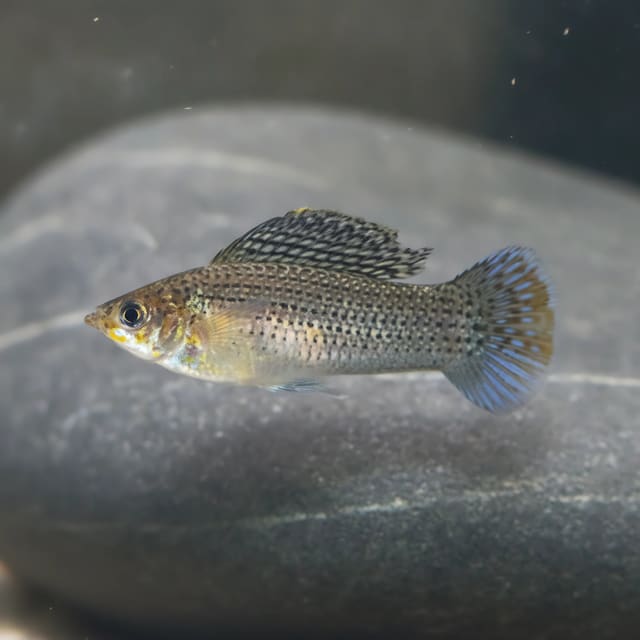
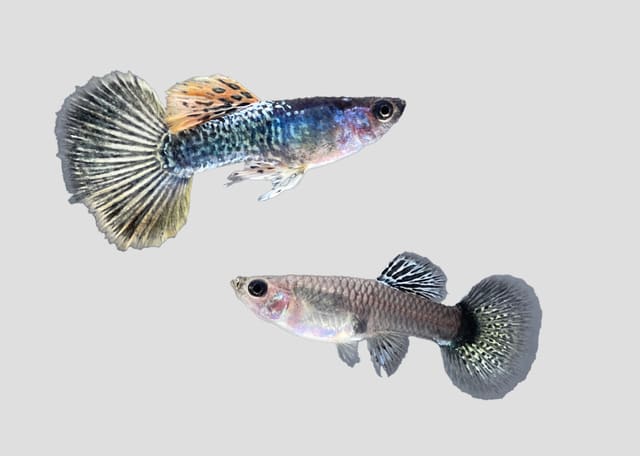
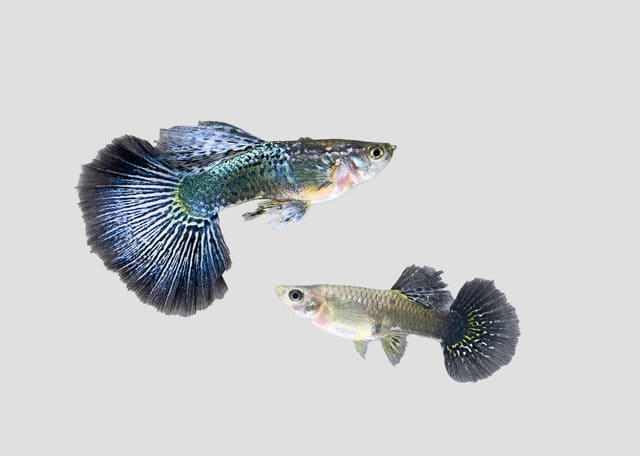
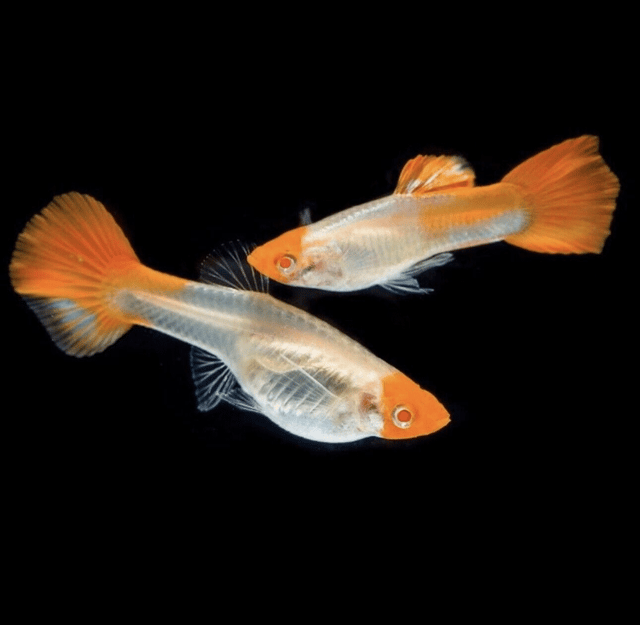
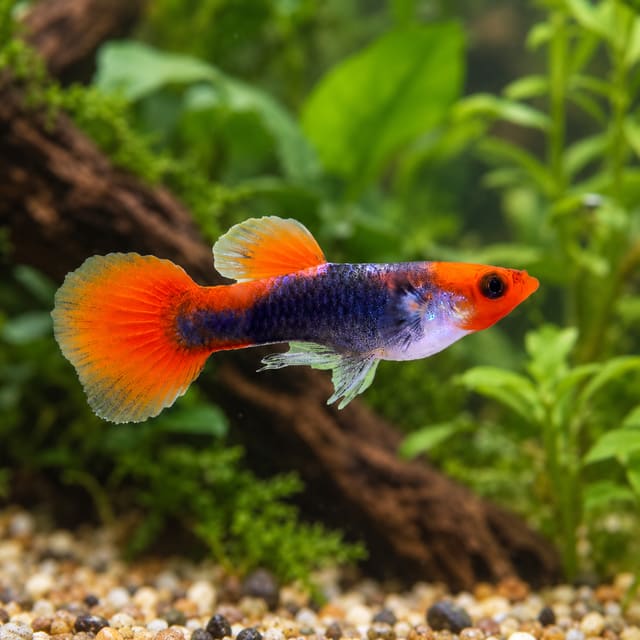
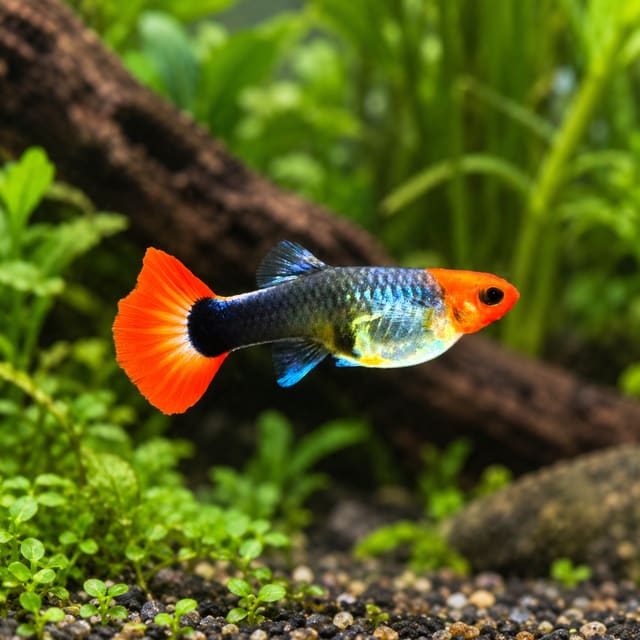
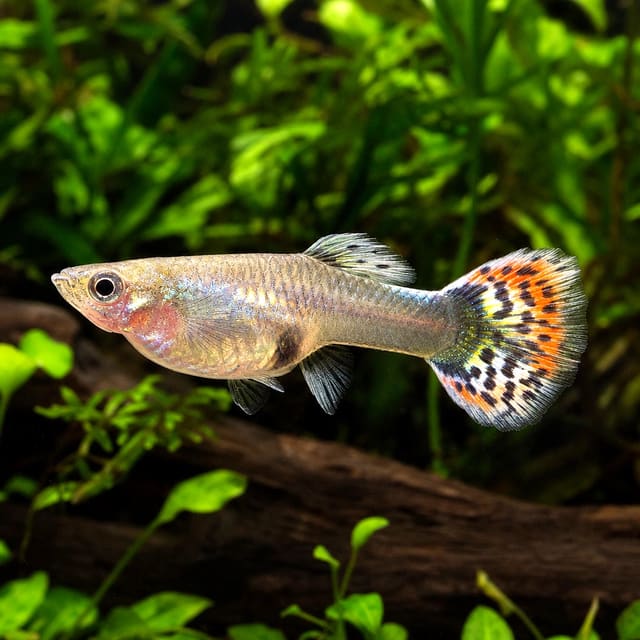
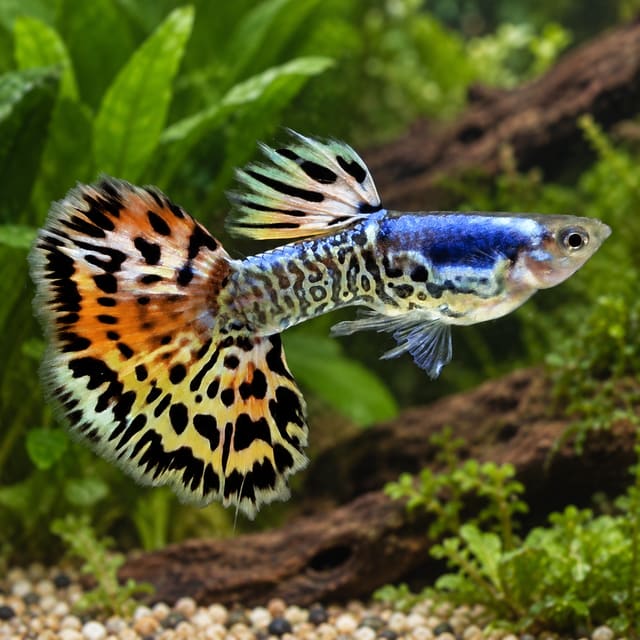
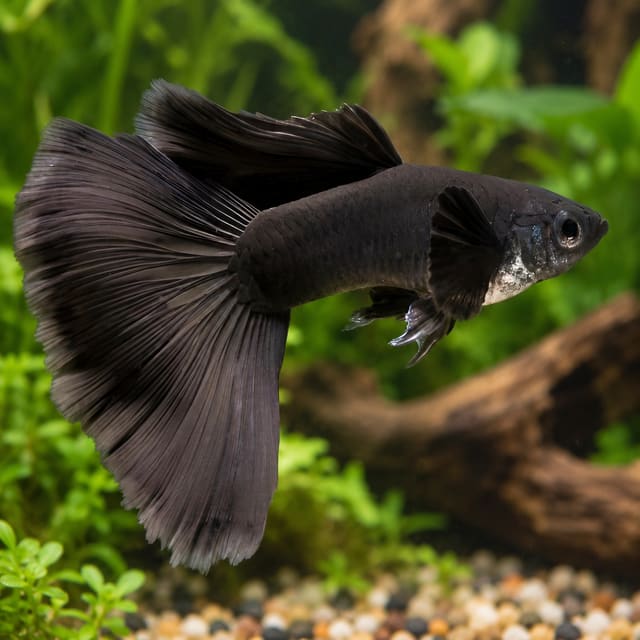
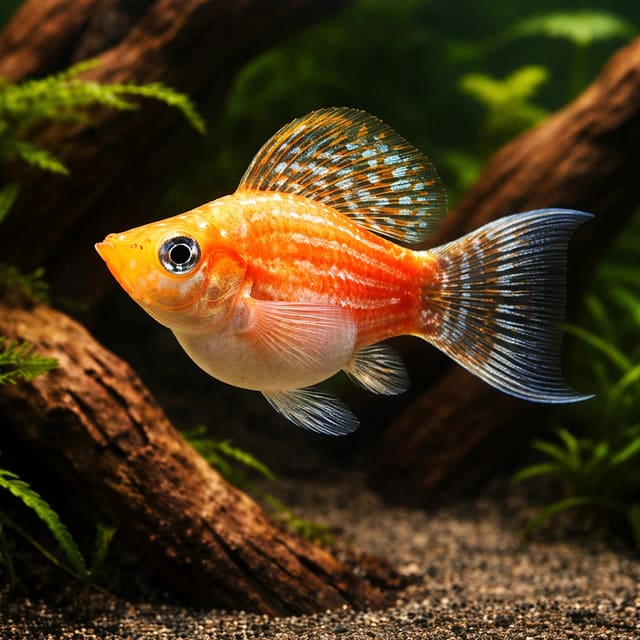
"Assorted" means exactly that. We do not pick colours and we do not pick sexes. Balloon mollies come in a range of colour forms, and the photo on this page shows the kind of mix you might see, with orange fish and silver fish heavily speckled in black, but your ten could be weighted towards one colour or include others entirely. The same goes for males and females: at this size many are hard to tell apart, and the group you receive will have whatever balance of sexes the batch gives. If you need a particular colour or a guaranteed ratio, this is not the right listing for you, and you are better off choosing single fish where the form is named.
What you can count on is ten young mollies of the balloon body type, which is the subject of most of this page. It is a body shape with real consequences for how the fish lives, and we would rather you knew about them before you buy than after.
| Point | Detail |
|---|---|
| What is sent | Ten balloon mollies, mixed colours, sexes not chosen |
| Size at dispatch | About 2.5-3 cm |
| Name used | Poecilia cf. latipinna, a domestic line-bred molly |
| Water | Hard and alkaline: 21-26 °C, pH 7.0-8.5, 15-35 dGH |
| Tank for ten | 100 litres or more, planted, with gentle flow |
| Diet | Mainly plant-based: vegetable flake, blanched greens, some algae, plus small frozen foods |
| Temperament | Peaceful with calm fish; males can squabble with each other |
| Care level | Moderate, because of the body shape rather than the water |
A balloon molly is a domestic molly bred for a short, deep, rounded body. You will not find it in any river. It exists only because fishkeepers and fish farms have selected for that shape over many generations, in the same way that fancy goldfish have been bred into forms that look nothing like their wild ancestors.
The scientific name on this listing is Poecilia cf. latipinna. The "cf." is short for the Latin confer, "compare with", and taxonomists use it when a fish resembles a named species but cannot be pinned to it with confidence. That is the honest position with balloon mollies. The scientific paper that studied the shape directly worked on dwarf, "balloon belly" forms of the white sailfin molly, Poecilia latipinna. Wikipedia, on the other hand, refers to the deformed balloon breeds of the short-finned molly, Poecilia sphenops, and describes the fancy mollies of the aquarium hobby generally as domestic hybrids of P. sphenops, P. latipinna and P. velifera. FishBase adds that aquarium populations sold as P. sphenops may be hybrids rather than pure fish, and that the species is often confused with P. mexicana. In short, the balloon molly is a line-bred aquarium fish of mixed molly ancestry, and "cf. latipinna" is a sensible label rather than a precise identification.
The sailfin molly is native to North America, from the Cape Fear drainage in North Carolina down to Veracruz in Mexico, according to FishBase. It lives in still or gently flowing warm water: small creeks and drains, ponds, lakes, vegetated backwaters and coastal waters. Seriously Fish describes it in heavily vegetated coastal streams, ponds, swamps, canals and ditches, and particularly in brackish places where algae is plentiful. Wikipedia calls it euryhaline and records wild fish tolerating salinities as high as 87 parts per thousand, more than twice the saltiness of sea water. That is an extreme of the wild species, not a target for a balloon molly in a living room.
The short-finned molly, P. sphenops, comes from further south. FishBase gives its native range as Central and South America from Mexico to Colombia, in fresh and brackish water.
Both species have been carried around the world by the aquarium trade, and both show why fish must never be released. FishBase notes that the sailfin molly has been introduced to many countries with documented harm in several of them, and Wikipedia reports it threatening the endangered desert pupfish in California. Any unwanted molly, or any of the young your group produces, should be rehomed through a fish shop or club, never put into a pond, stream or drain.
If you would prefer a molly with a normal body shape, we also keep the Sailfin silver molly and an Assorted Molly mix, both of which have the full-length body of a typical molly.
The round outline that gives these fish their name is a skeletal change, not a fat fish or a swollen belly. A 2019 study in the journal Genes by Shao and colleagues, working on white sailfin mollies from a commercial ornamental fish farm, set out exactly what that change is. They describe the dwarf sailfin molly, which they note is also called the balloon belly molly, as having a short body and a convexly arched back, where normal fish are slender and flat. The dwarf fish had short, dysplastic spines. The white sailfin molly has 27-29 vertebrae, and the count did not differ significantly between the two forms, so the fish are not missing bones; the vertebrae themselves have not grown properly in length. The authors suggest that this arrested lengthwise development of the vertebrae is likely to be the main cause of the dwarf trait.
The measurements make the difference plain. At five to six months old, the dwarf fish in the study had an average torso length of 2.18 cm against 3.61 cm for normal fish, while body height was almost identical at 1.57 cm against 1.63 cm. A balloon molly packs roughly the same depth of body into a much shorter length, which is why it looks round.
We think buyers should hear this plainly, so here it is from the sources:
Seriously Fish goes further and calls the balloon variety grotesque in its opinion. Not every keeper agrees, and balloon mollies remain popular, often with people who simply like their comical, bustling look. Our view is that if you keep them, you take on a fish that needs a bit more thought than a normal molly: calmer company, gentler flow, careful feeding and a watchful eye. Everything below is written with that in mind.
It is also worth knowing that the shape is not simply passed on in a predictable way. Shao and colleagues found candidate genes linked to the trait, and the earlier work they cite on dwarf swordtails suggested that this kind of dwarfism may be controlled by several genes acting together. If your group breeds, do not assume every youngster will be balloon-shaped.
Seriously Fish gives a minimum base of 76 by 38 cm, about 87 litres, for the sailfin molly. That figure is for the species as a whole, which in its normal form is a much bigger fish: FishBase records wild sailfin males up to 15 cm total length and females up to 10 cm. Balloon mollies stay far shorter, but ten of them are still ten mouths and ten lots of waste, and a mixed group will very likely produce young. We suggest 100 litres or more for this group, with more room if you are adding other fish.
Seriously Fish recommends a densely planted aquarium with some open space for swimming, and that suits balloon mollies well. Planting gives them places to rest out of the current and breaks up lines of sight between quarrelling males. The open area gives them a clear run to the food.
Set the tank up and let the filter mature before the fish arrive. Run it for several weeks, test until ammonia and nitrite read zero, and only then order. A batch of ten young fish going into a brand-new tank is one of the most common ways to lose fish in the first fortnight.
It is not elaborate, and it does not need to be. What makes it work is the soft flow, the plant cover, the steady temperature and room left for the young that will almost certainly follow.
If ten balloon mollies are the main fish in a 100-litre tank, that is a well-stocked aquarium already. Add companions sparingly, keep the filter cleaned and the water changes regular, and remember that a breeding group grows in number. Planning for the fry before they appear saves a crowded tank later.
Mollies are hard-water fish. Seriously Fish puts it simply: the sailfin molly can live perfectly well in freshwater provided the water is not soft or acidic, and it is the hardness minerals, calcium and magnesium, that matter rather than salt. If your tap water is already hard and alkaline, mollies are among the easier fish to match to it.
| Parameter | Seriously Fish (sailfin molly) | FishBase (sailfin molly) | FishBase (short-finned molly) | Our care range |
|---|---|---|---|---|
| Temperature | 21-26 °C | 20-28 °C | 18-28 °C | 21-26 °C |
| pH | 7.0-8.5 | not given | 7.5-8.2 | 7.0-8.5 |
| Hardness | 15-35 dGH | not given | 11-30 dH | 15-35 dGH |
We use the Seriously Fish aquarium figures because they are written for tank-kept fish, and they sit inside or close to the FishBase ranges for both parent species. A steady temperature in the mid-20s, inside the 21-26 °C range, suits a mixed tropical community well. Avoid letting the tank drift low in a cold room, because a sluggish fish with an already compromised body copes poorly with being chilled.
Mollies have a long-standing reputation as fish that need salt in the water. The wild sailfin molly certainly lives in brackish water, but Seriously Fish is clear that salt is unnecessary for aquarium fish kept in hard water. Adding salt to a mixed community can also stress plants and other fish. If your water is hard and alkaline, leave the salt out.
Soft, acidic water is the one thing to avoid. If your tap water tests soft, mollies are not the easiest choice, and it is better to talk to us before ordering than to try to keep them in water that does not suit them. Raising hardness with a suitable mineral product or a calcareous substrate can work, but it has to be done steadily and kept steady.
Test kits usually give two hardness figures. General hardness (GH) is the calcium and magnesium in the water, and it is the dGH figure in the table above. Carbonate hardness (KH) is the water's buffering capacity, the part that holds the pH up and stops it drifting down as waste builds between water changes. Mollies want both to be reasonably high. Water with a decent GH but very little KH can still slide towards acidity over a week, which is exactly what these fish dislike, so check KH as well as GH and pH when you test.
A small amount of crushed coral or other calcareous material in the filter or substrate is a common way to add buffering in softer areas. Add it gradually and test for a couple of weeks before the fish arrive, so you know where the numbers settle.
Ammonia and nitrite should always read zero, and nitrate should be kept low with regular partial water changes, a quarter to a third of the volume each week being a reasonable routine for a well-stocked tank. Treat new water with a dechlorinator and match its temperature to the tank. Mollies eat a lot of plant food and produce a fair amount of waste, so a good filter and a reliable water-change habit are more important than fine-tuning any single number.
Diet is where balloon mollies differ most from the average community fish. Seriously Fish describes wild sailfin mollies as almost exclusively herbivorous, feeding on algae and other plant material, and FishBase adds rotifers, small crustaceans such as copepods and ostracods, and aquatic insects to the menu. Wikipedia agrees that they feed mainly on algae and plant material while taking some invertebrates, including mosquito larvae. In the aquarium, Seriously Fish says today's tank-bred fish accept most foods, but they still need some vegetable matter such as blanched spinach or a vegetable flake.
Blanching softens vegetables so a small fish can graze them. Drop a few washed spinach leaves, or thin slices of courgette or cucumber, into boiling water for a minute or so, cool them in cold water, then weigh them down near the bottom or clip them to the glass. Take out what is left after a few hours so it does not foul the water. Unwashed or treated produce is best avoided; plain, rinsed vegetables are all you need.
Two of the points from the spine research matter directly here. Shao and colleagues note that dwarf mollies may find it harder to get food because of their deformed mouths and inflexible bodies, and Seriously Fish warns of digestive problems in the balloon form. Put together, that means a balloon molly is both slower to reach food and less able to cope with too much of it.
A fish that repeatedly misses meals, or one that swells and struggles to swim after feeding, needs attention. Both are covered in the health section below.
Balloon mollies are peaceful in the sense that matters for most community tanks: they are not predators and they do not go looking for trouble. Seriously Fish describes sailfin mollies as generally suitable for a hard-water community, although they may pick on smaller fish, and suggests other livebearers and some catfish as companions. The bigger question with balloon mollies is not what they will do to other fish, but what other fish will do to them.
Male mollies carry a gonopodium, a modified anal fin used for mating, which is the reliable way to sex them once they mature; Seriously Fish also notes the large, sail-like dorsal fin of male sailfin mollies, although in balloon forms the fins vary. Seriously Fish advises keeping sailfin mollies in trios of two females to one male, and notes that males can be aggressive towards each other, especially when breeding. The point of the ratio is to spread the males' attention so no single female is chased constantly.
Because this group is assorted, you will not know the ratio until the fish grow and the males show their gonopodium. It may be close to even, or it may lean one way. If it turns out male-heavy and you see one female being hounded, or two males constantly squaring up, the fix is to rebalance: add females, rehome a male or two through a shop or club, or give the tank more plants to break up the chasing. Ten fish in a planted tank of the right size usually spreads the tension well enough, but it is worth watching for in the first months.
None of the references we use describes mollies as a true schooling fish. They tend to spread around the tank and come together at feeding time, and they are kept in groups mainly for the social balance described above.
Mollies are livebearers, so if your ten include males and females, you should expect young. The sources differ on the details. FishBase gives a 28-day gestation and broods of 10 to 100 young for the sailfin molly; Wikipedia says about three to four weeks depending on temperature, with broods of 10 to 140 depending on the female's size and maturity; and Seriously Fish gives around two months and up to 50 young. The safest summary is that a mature female can produce a brood roughly every month or two, and that brood sizes vary a great deal.
Wikipedia also notes something that surprises many keepers: female sailfin mollies can store sperm and go on producing young long after their mates have gone. A female from a mixed group can keep giving birth even if you later separate the sexes.
Often, yes. Seriously Fish points out that wild-type fish are much less likely to eat their offspring than the domestic forms, and balloon mollies are about as domestic as a molly gets. If you want to raise some young, you will need either thick cover, such as fine-leaved and floating plants, or a separate rearing tank. Seriously Fish says the fry accept brine shrimp nauplii, microworm or powdered flake from birth, so they are easy to feed once they are safe.
A balloon molly group in a well-run tank can produce more young than one aquarium can hold. Decide early what you will do with them. A local fish shop or aquarium club may take healthy youngsters, and some keepers choose to keep only a single-sex group once they know how many fry to expect. As covered above, the young are not guaranteed to share their parents' body shape, and under no circumstances should any be released outdoors.
Gestation in balloon females also deserves a careful eye. A heavily pregnant fish with a compressed body is carrying her brood in less space than a normal molly. If a female looks distressed, gasps at the surface or stops eating late in pregnancy, give her quiet, clean water and somewhere sheltered to rest.
How long do balloon mollies live? We cannot give you an honest number, because none of the references we rely on publishes one for the balloon form. What they do agree on is the direction: Seriously Fish says the balloon condition may bring about premature death, and Wikipedia says the deformed balloon breeds have a decreased lifespan, more so than other hybrid mollies. For the wild sailfin molly, Wikipedia adds that males can live less than a year after reaching sexual maturity. Good water, gentle conditions and careful feeding give each fish its best chance, but a balloon molly should not be bought in the expectation of a long-lived fish.
In terms of water, mollies are robust fish that cope well with the hard, alkaline conditions they need. In terms of body, the balloon form is less robust than a normal molly, for the reasons set out in the spine section. That is why we rate this group as moderate care rather than easy.
Some balloon mollies, despite good care, reach a point where they can no longer swim to the surface or feed. Leaving a fish in that state to decline slowly is not kind. If a fish has stopped eating, cannot hold its position and has not improved after a few days of clean, quiet water, speak to a vet with fish experience about humane options. It is a hard conversation, but it is part of keeping a form of fish whose body works against it.
Count the fish at every feed and watch how each one swims. Do a partial water change weekly. Rinse filter media in old tank water rather than under the tap. Keep the temperature steady. If you add fish to an established tank, a few weeks in a separate quarantine tank protects both the newcomers and your existing stock. Most problems with balloon mollies show early as a change in swimming or appetite, and the keeper who notices those changes catches them in time.
Have the aquarium ready before you order: filter running and mature, water tested and the temperature set. Read our delivery and live-arrival information before ordering, and make sure someone will be at the delivery address to take the parcel in, because live fish cannot be left unattended.
Your balloon mollies travel in oxygen-filled bags in insulated packaging, with heat packs when the conditions call for them, carried by a tracked courier licensed to carry live animals. We email the confirmed delivery date and the tracking details.
Start a continuous video while the parcel is still sealed and open it in the same take, showing the fish in the still-sealed bag. If a fish arrives dead, dying or clearly compromised, email hello@tropicalfishco.co.uk on the day of delivery with your order number and that video. Photos alone do not meet the policy. The resolution is a replacement with your next order or a refund for the affected fish, subject to the guarantee terms.
Over the first week, watch breathing, appetite and swimming every day. Balloon mollies can take a little while to find their balance after a journey, so give them a quiet tank, feed lightly from the day after arrival, and make sure the slower fish are getting their share.
Young fish of 2.5-3 cm are still growing, so once they are eating well, move to two or three small feeds a day with plenty of vegetable food. Hold off on water chemistry adjustments in that first week unless a test shows a real problem; steady water matters more to a newly arrived group than anything you could add to it. By the end of the second week you should be able to see who the confident feeders are, which fish need a little help at mealtimes, and whether any males are starting to show themselves.
These are the sources used for this page, for anyone who wants to read further.
No reviews for this item yet. Bought one? Honest reviews only, good or bad.
What customers say about ordering from us
I have a small group of long finned mountain minnows. So was delighted to be able to order ten of this variety to increase the genetics in my tank . The ones I recieved are healthy but it’s to early to give a verdict on wether they are of a long finned type since they are small currently.
Gordon Walker · 23 Sept 2026
100% success travel and "installation". Pleased with quality of purchase. The Siamese fighter a bit "shy" so have not yet seen him at his best yet but looking good. Happy customer. GG
George E Garratt · 21 Sept 2026
Reviews of our shop, collected by Judge.me, an independent third-party review collector. Newest first.