Easy
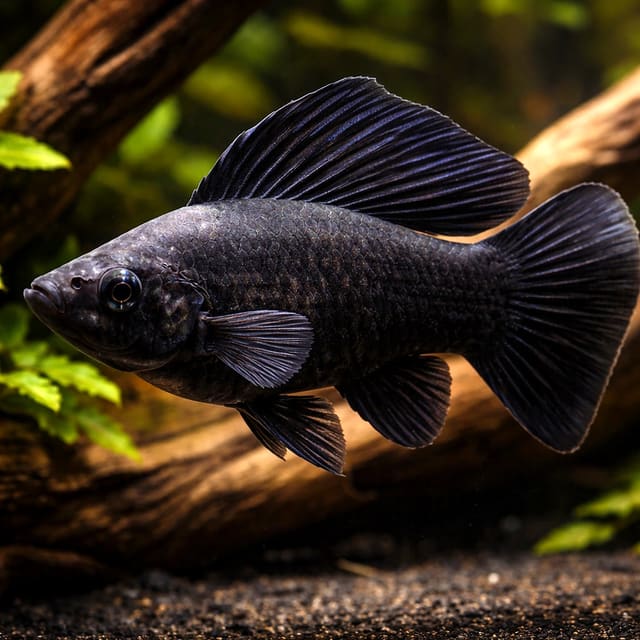
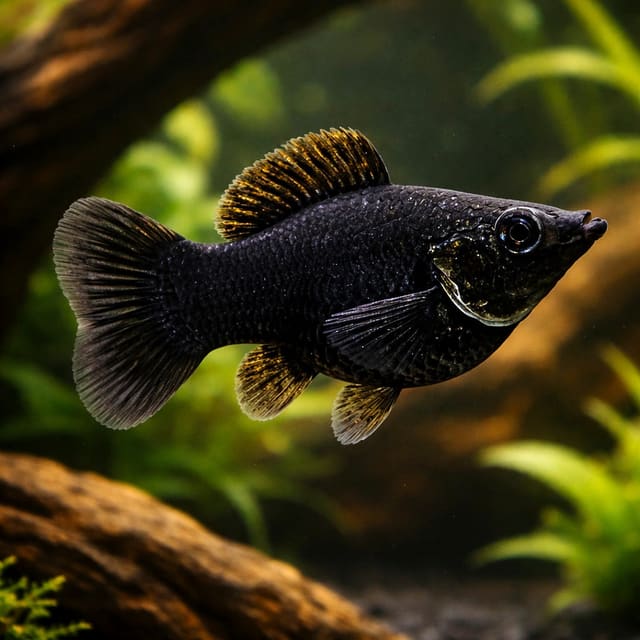
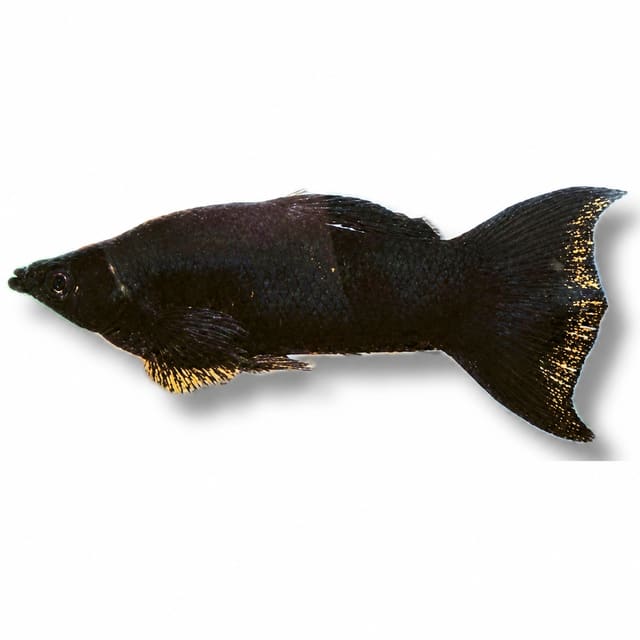
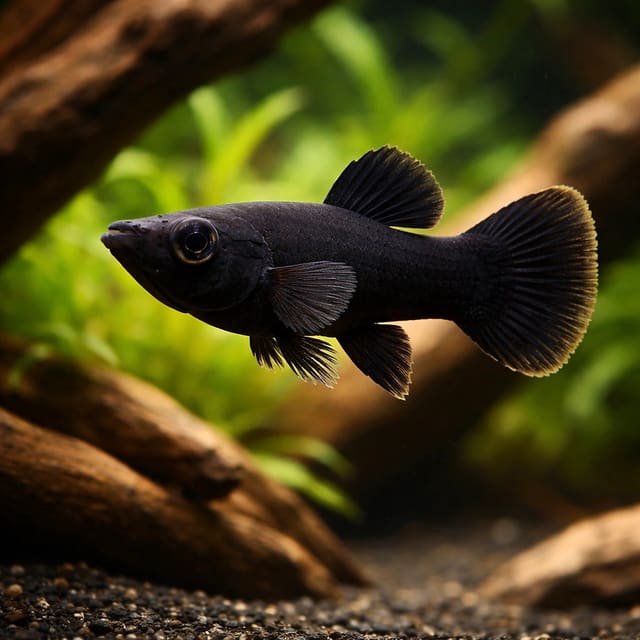
Black Molly (Poecilia sphenops black molly)
21–28°C · pH 7–8.5 · 81L
£3.99
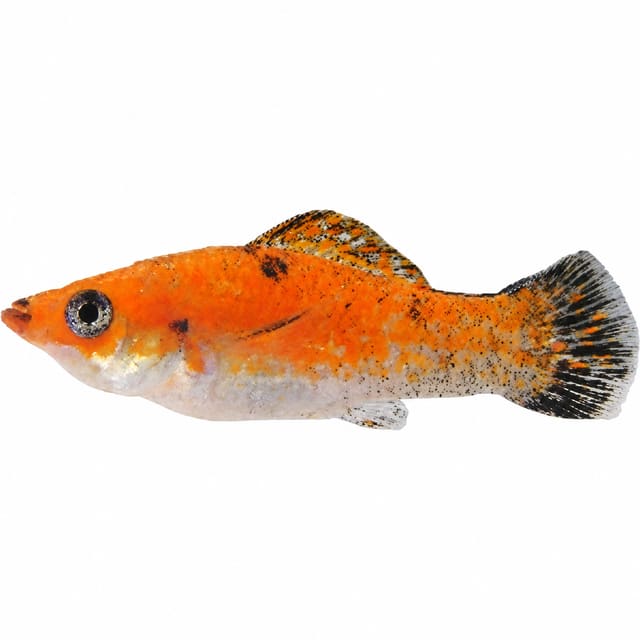
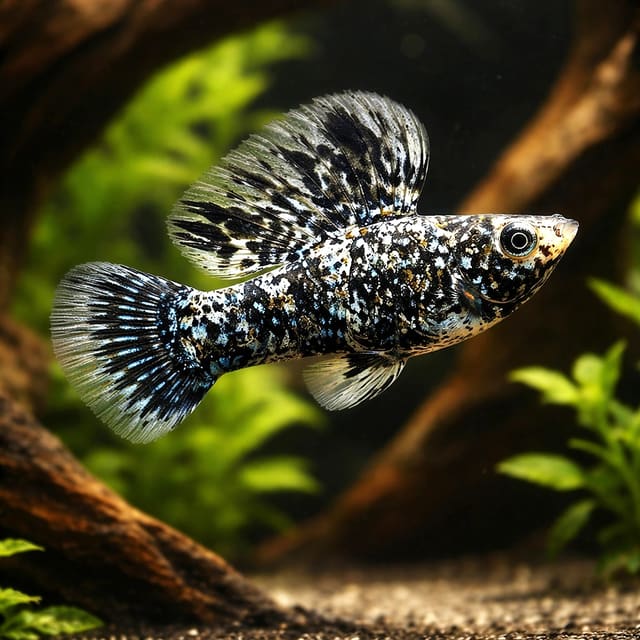
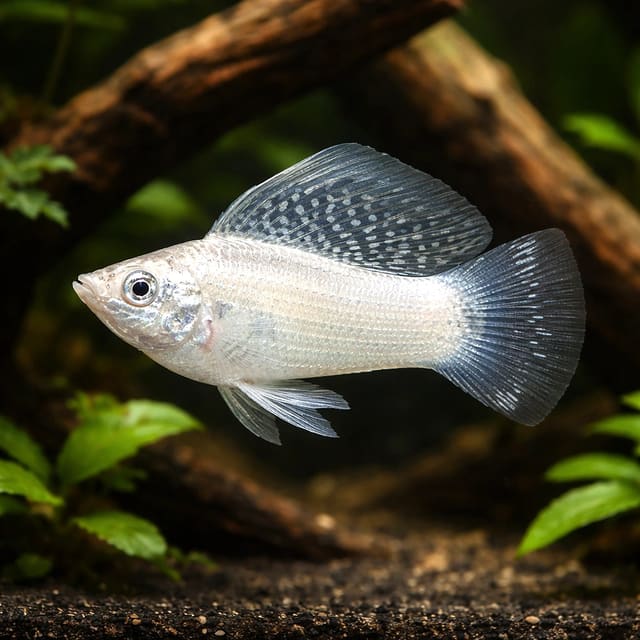
Poecilia latipinna silver marble is a colour form of the sailfin molly, a livebearer native from North Carolina to Veracruz in Mexico that reaches 15 cm. It suits hard-water community aquariums kept at 21–26 °C, pH 7.0–8.5 and 15–35 dGH, the species ranges Seriously Fish gives, with at least three fish at two females to each male. Sold as one live fish per purchase at 3–4 cm or 4–5 cm.
Adult size is the maximum length this species reaches at full maturity (scientific sources). The livestock you receive will be younger and smaller — pick a size above for the actual shipping size. Product-photo provenance and any image-specific limitations are stated on the listing.
Poecilia latipinna
Shoaling fish: kept in a group they feel safer, stay calmer and show their best colour.
Poecilia latipinna silver marble is a colour form of the sailfin molly, a livebearer native from North Carolina to Veracruz in Mexico that reaches 15 cm. It suits hard-water community aquariums kept at 21–26 °C, pH 7.0–8.5 and 15–35 dGH, the species ranges Seriously Fish gives, with at least three fish at two females to each male. Sold as one live fish per purchase at 3–4 cm or 4–5 cm.
Adult size is the maximum length this species reaches at full maturity (scientific sources). The livestock you receive will be younger and smaller — pick a size above for the actual shipping size. Product-photo provenance and any image-specific limitations are stated on the listing.
Maintain these water conditions for optimal health and vibrant colors
Poecilia latipinna silver marble is an aquarium colour form of the sailfin molly, a livebearing fish in the family Poeciliidae. The species is native to North America, from the Cape Fear drainage in North Carolina to Veracruz in Mexico, and FishBase records a maximum length of 15 cm total length. It suits keepers who can provide hard, alkaline water in a roomy, well-filtered community aquarium, and who are happy to plan for a fish several times larger than the one that arrives.
Wild sailfin mollies live in still or gently flowing warm water: small creeks and drains, ponds, lakes, sloughs and quiet, often vegetated backwaters, and also coastal waters, where they are abundant in tidal ditches and brackish canals. They feed mainly on algae and add rotifers, small crustaceans such as copepods and ostracods, and aquatic insects. That background explains the two things that matter most at home: mineral-rich water and a diet with plenty of plant matter.
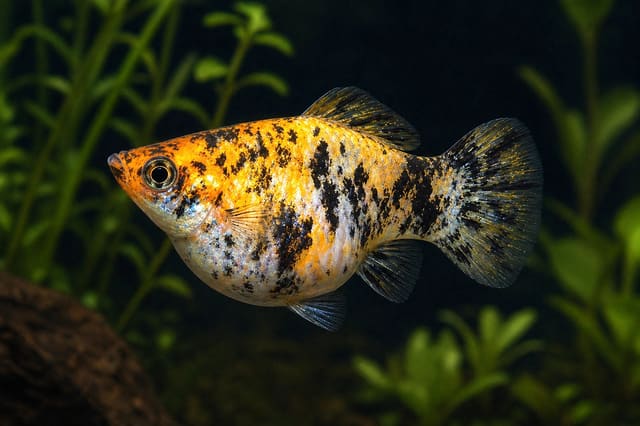
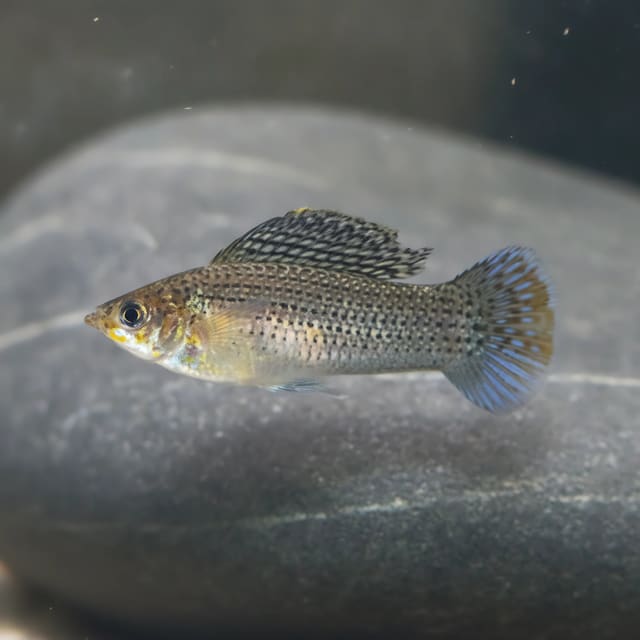
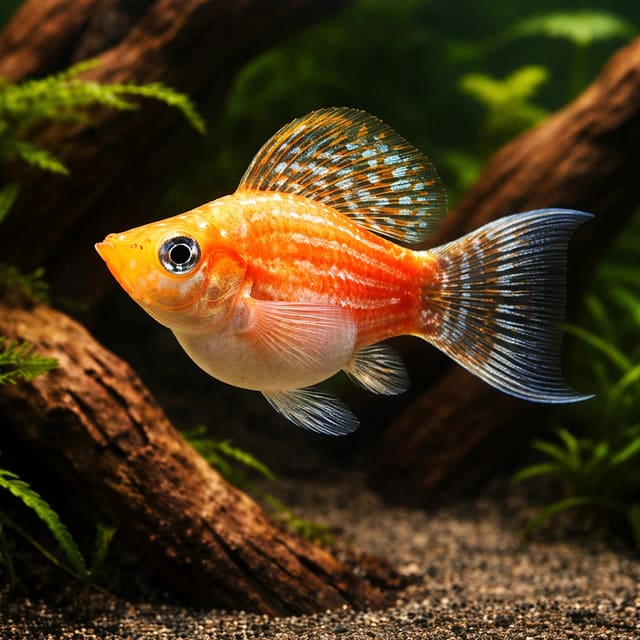
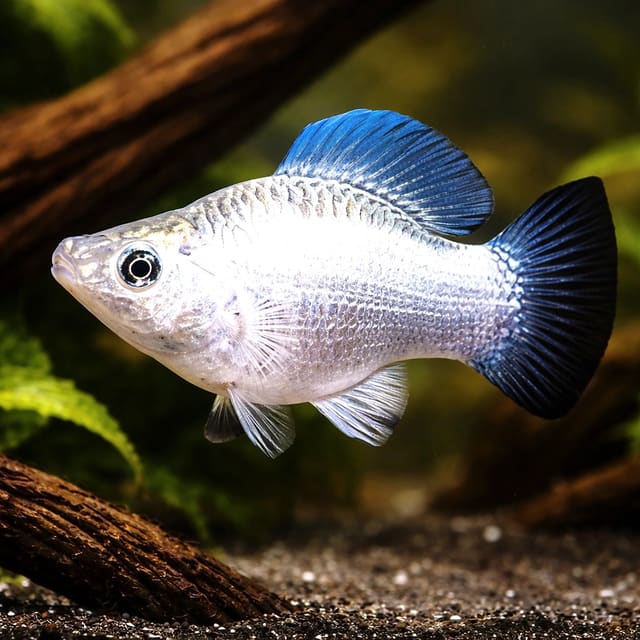
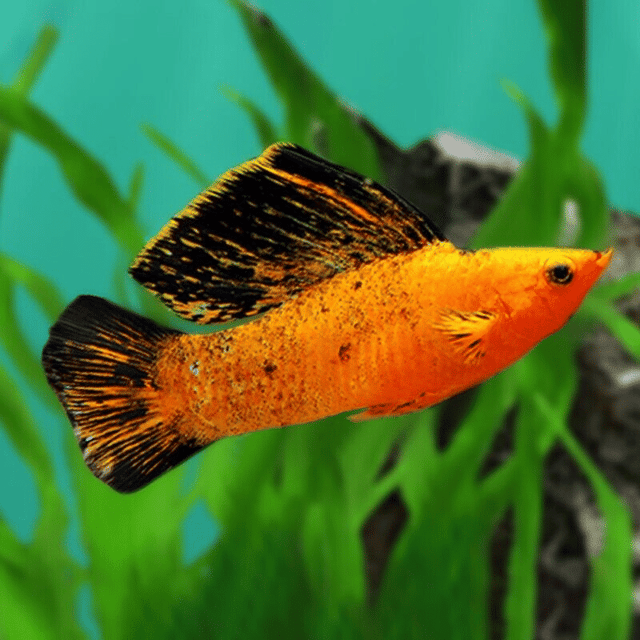
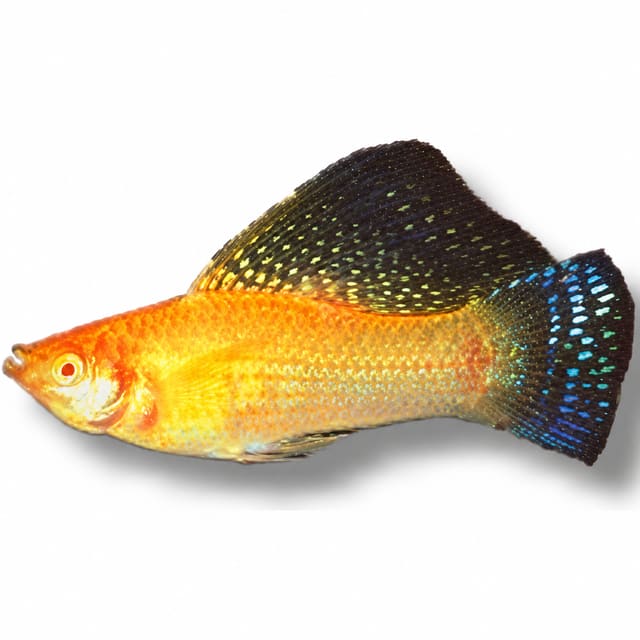
Aquarium strains have been selectively bred into many colour morphs, and Seriously Fish notes that the species has also been crossbred with other mollies, particularly Poecilia sphenops. Silver marble is the trade name of this colour form; expect individual fish to differ in the detail of their markings.
| Suits | Not suited to |
|---|---|
| Hard, alkaline water at pH 7.0–8.5 and 15–35 dGH | Soft or acidic water, where the fish weakens fairly rapidly |
| An aquarium with a base of about 76 × 38 cm or more | A small tank sized for a 3–5 cm fish |
| A trio or larger group, two females to each male | Aquariums housing timid fish species |
| A hard-water community of other livebearers and some catfish | A tank that already holds another molly species |
| Planting with open swimming space and some green algae | Displays built around soft-leaved plants |
Each purchase supplies one live fish of the size you choose on the live size selector, either 3–4 cm or 4–5 cm. To build a group, add the number of fish you want to the basket. The size you select is the size supplied, not the adult size. Both sizes are a fraction of the 15 cm the species can reach, so the aquarium, filter and companions all need planning for the adult fish rather than the one in the bag.
Seriously Fish gives 12.5 cm standard length for the species, a smaller figure than the FishBase maximum; the larger record is the safer basis for tank size and stocking.
Males and females can be told apart: Seriously Fish describes males as having a gonopodium and a large, long, sail-like dorsal fin. Sex is guaranteed only when the selected option explicitly states male or female. This Poecilia latipinna silver marble listing has no sex-guaranteed option. A group bought here may therefore not arrive in the two-females-to-one-male balance recommended further down, and it is worth watching how the fish develop before adding more.
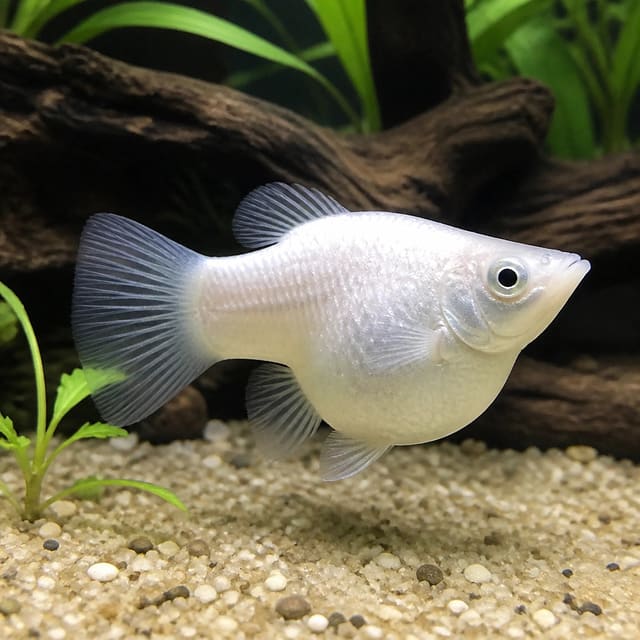
Use the photographs as a guide to the colour form. Gallery images have been digitally enhanced to improve image quality. Natural colour, pattern, size and maturity can vary between live animals.
If you would prefer a different molly, browse the molly fish collection, then settle on one molly species for the aquarium, for the reason explained under compatibility.
OATA describes two commonly traded kinds of molly: mollies that stay below 10 cm, sold in many colours and body shapes, and sailfin mollies, which can reach approximately 15 cm. The difference changes the aquarium you need. OATA's sheet sets at least 45 litres for a small group of the smaller guppy and molly species, but at least 80 litres for sailfin mollies.
Seriously Fish adds two points for anyone comparing forms. Wild sailfins show several different types of patterning, but these are rarely seen for sale, and the aquarium colour forms owe much to selective breeding. It also warns against the balloon variety, whose rounded, deformed body can cause swimbladder and digestive problems and may bring about premature death.
Start with the footprint. Seriously Fish gives an aquarium base of 76 × 38 cm for this species, which at 30 cm deep holds about 87 litres. The OATA guppy and molly care sheet asks for at least an 80 litre aquarium for sailfin mollies and adds that the more groups you keep, the larger the volume required. Treat those figures as the starting point for one small group, not a target to squeeze extra fish into.
A larger aquarium holds temperature and water quality more steadily, and that stability matters for a fish that reacts quickly to poor conditions. A trio of adults approaching 15 cm produces a lot of waste, so a generous volume gives the filter and your weekly routine more room for error.
A filter is essential. The RSPCA explains why: fish release ammonia, a working biological filter lets beneficial bacteria convert it to nitrite, which is also toxic, and then to the safer nitrate. For an 87 litre tank turned over four to five times an hour, Seriously Fish suggests a filter rated 350–435 litres per hour, and a heater of roughly 50–75 W to hold the water at 21–26 °C in a room around 20 °C.
Scale every line up if you plan more fish: a longer tank, a stronger filter and a proportionally larger water change. If this is your first aquarium, follow our guide to setting up and maturing a first tropical tank and let the filter mature fully before the fish are ordered.
Seriously Fish describes the ideal layout as a densely planted aquarium with some open space for swimming. The males carry a large, sail-like dorsal fin, so the open water matters as much as the planting.
These are highly vegetarian fish, and any soft-leaved plants may be destroyed. Choose planting you are happy to see nibbled and favour tougher leaves over delicate, soft ones.
Allowing some common green algae to grow gives the fish extra food. Leave a patch on rocks, wood or the back glass, and clean only the viewing panel, so the fish always have something to graze between meals.
Keep the layout simple enough to siphon the gravel during the weekly water change.
Keep this molly at 21–26 °C and pH 7.0–8.5, with a general hardness of 15–35 dGH. Those are the species ranges Seriously Fish gives, and hardness is the value to watch most closely. The profile is blunt: this species must be kept in moderately hard or harder water with a basic pH, and in soft or acidic water it weakens fairly rapidly, often showing shimmying, fungus or clamped fins.
| Value | Aim for |
|---|---|
| Temperature | 21–26 °C |
| pH | 7.0–8.5 |
| General hardness | 15–35 dGH |
| Ammonia and nitrite | Zero |
| Nitrate | No more than 20 mg per litre above your tap water |
OATA's sheet covers guppies and mollies together, so its numbers are group guidance rather than a species-specific optimum: 20–28 °C, pH 7.0–8.0, medium-hard water of 8–18 °dH general hardness and 5–15 °dKH carbonate hardness. Its ammonia, nitrite and nitrate limits apply directly and appear in the table above. Where the two differ, follow the species profile, because the lower end of the group hardness range is softer than this fish needs. FishBase's 20–28 °C is a wild environmental range rather than an aquarium target.
Seriously Fish singles out the hard minerals, calcium and magnesium, as crucial to the long-term health of this species. That is why general hardness sits at the centre of the table, and why a pH reading on its own does not tell you whether the water suits a sailfin molly.
Sailfin mollies are often sold as brackish fish, and the wild record explains why. FishBase lists the species from freshwater, brackish and marine environments, and it is abundant in tidal ditches and brackish canals along the coast. That range of habitats is a wild record of what the species tolerates, not a set of instructions for a home aquarium.
Seriously Fish is clear on the practical point: the species lives perfectly well in freshwater provided the water is not soft or acidic, and salt is not necessary. The hard minerals, calcium and magnesium, are what matter for long-term health.
This is also why the species belongs in a hard-water community rather than a soft, acidic planted aquarium: the chemistry that suits soft-water fish works against a sailfin molly.
Build the diet around plant matter. FishBase records that wild sailfin mollies feed mainly on algae, also taking rotifers, small crustaceans and aquatic insects, and Seriously Fish describes wild fish as almost exclusively herbivorous. Tank-bred fish are far removed from their wild ancestors and accept most foods, but some vegetable matter should always be included.
Seriously Fish notes that if too little greenstuff is provided, the development of the male's dorsal fin may be impaired. For a fish sold for its sail, a vegetable-rich diet is part of getting the look as well as the health.
OATA's guidance for guppies and mollies is to feed only what the fish can eat within a few minutes, once a day. Overfeeding leaves uneaten food to break down and release toxic waste, which is a real risk for a species that reacts badly to poor water. Feeding time is also the easiest daily health check, because reduced interest in food is one of the early warning signs listed further down.
Good husbandry matters with mollies because OATA notes they can be stressed by even small amounts of ammonia. A simple weekly routine keeps the water clean and, just as important for this species, keeps its hardness and pH from drifting.
Keep a simple log of test results. A slow downward trend in pH or hardness is much easier to spot on paper than by looking at the fish, and this is the change sailfin mollies tolerate least.
Before ordering, make sure the aquarium is ready: OATA's advice is to check that ammonia and nitrite read zero, and to add fish gradually, because stocking too many too quickly can cause new tank syndrome, when the filter bacteria cannot keep up with the extra waste.
Your order is hand-bagged in pure oxygen and packed in an insulated poly box, with a heat pack when the weather calls for it. It travels with a licensed live-animal courier, and you receive the tracking number and a confirmed Thursday or Friday delivery date by email. Someone needs to be at the address, because live fish cannot be left unattended.
If anything has gone wrong, contact us the same day, with WhatsApp the fastest route, including your order number and the unboxing video, and a replacement or refund will be arranged. The full terms of the Live Arrival Guarantee are on the delivery and Live Arrival Guarantee page.
OATA lists the signs of a healthy fish: clear, bright eyes, undamaged fins, intact scales and no ulcerations or bumps. Check each new molly against that list over the first week, alongside your ammonia and nitrite tests while the filter adjusts to the extra fish.
The same principle applies when the aquarium already holds fish. OATA explains that the filter's bacteria have to increase every time more fish are added and feeding increases, so bring in a trio rather than a large group at once, keep feeding modest while the new fish settle, and test before the next addition.
Every fish varies a little in behaviour and appearance, so learn what normal looks like for your group. OATA suggests watching for changes in these areas:
Shimmying, fungus and clamped fins are the signs Seriously Fish links to soft or acidic water in this species. If you see them, test general hardness and pH first, then ammonia and nitrite, before anything else. A slide into soft water can be gradual, which is why the weekly log above earns its place.
| If you see | Do this first |
|---|---|
| Shimmying or clamped fins | Test general hardness and pH |
| Fish hanging at the surface or fast gill movement | Test ammonia and nitrite |
| Fluffy growths or white spots | Test the water and seek advice if the signs persist |
| Males fighting one another | Review the male-to-female balance |
| Food left uneaten | Reduce the amount and remove leftovers |
If a change persists after the water checks out, ask us with your test results and a short description of what you are seeing, and we will help you work through it.
Mollies are livebearers, giving birth to live young rather than laying eggs, and Seriously Fish rates breeding this species as easy. If your fish include both sexes, fry are a likely result, so it is worth deciding in advance whether you want to raise them.
| Stage | What to expect |
|---|---|
| Gestation | Around two months, a little longer than some livebearers |
| Brood | Up to 50 young |
| Fry size | Relatively large |
| First foods | Brine shrimp nauplii, microworm or powdered flake from birth |
Adults and other fish will eat fry, so Seriously Fish suggests a heavily planted breeding tank if fry are to survive, and recommends moving gravid females to a separate tank until they give birth. The profile adds that wild-type fish are much less likely to eat their offspring than the domestic forms.
Also bear in mind the ratio: males pursue females vigorously, which is why two females to each male is recommended. If fry are not wanted, dense planting in the main aquarium still gives them cover, but plan where growing young fish will go before numbers build up.
Because the fry are relatively large, they can start on brine shrimp nauplii, microworm or powdered flake straight away. Keep a fry tank to the same standard as the main aquarium: the same hard, alkaline water and the same weekly testing apply to young sailfin mollies as to adults.
Seriously Fish describes the species as generally suitable for a hard-water community, although it may pick on smaller fish as it matures, and names other livebearers and some catfish as suggested tank mates. OATA adds that mollies are generally peaceful and compatible with many other fish, but that sailfin mollies should not be kept with timid fish species.
| Good match | Avoid |
|---|---|
| Other livebearers that are not mollies | Timid fish species |
| Some catfish that share hard, alkaline water | Any other molly species |
| Fish comfortable at pH 7.0–8.5 and 15–35 dGH | Soft, acidic-water communities |
A companion that fails any of the four is a poor match, however attractive it looks in the shop. Stock the mollies and their companions gradually, as the arrival section explains, so the filter keeps pace.
Keep only one molly species in the aquarium. Seriously Fish explains that mollies interbreed readily in the aquarium, and that Poecilia latipinna has already been crossbred with other molly species, particularly Poecilia sphenops. Mixing species leads to hybrid young, so choose one molly for the tank and build the group from that.
OATA notes that guppies and mollies are easy to sex because the male has a specialised anal fin called a gonopodium. In this species Seriously Fish adds the male's large, long, sail-like dorsal fin, which is the feature the fish is named for.
Because the fish on this page are sold without a sex guarantee, check the group as the fish develop their adult fins and gonopodium, and adjust future purchases to move towards the recommended balance.
If you would like a second opinion on a planned mix of fish and tank size, ask us with your tank volume, water test results and existing stock, and we will help you assess it.
Plan for 15 cm. FishBase records a maximum length of 15 cm total length for the sailfin molly, so build the aquarium, filtration and stocking around a fish of that size.
Give a small group a tank with a base of 76 × 38 cm or larger, about 87 litres, which is the footprint Seriously Fish gives for this species. OATA's guppy and molly sheet asks for at least an 80 litre aquarium for sailfin mollies, with more volume for every extra group.
Keep at least three, at two females to each male. OATA suggests that ratio to reduce stress on the females, Seriously Fish recommends trios because males pursue females vigorously, and a larger group works when fish are added in the same ratio.
It can be, provided your water suits it. OATA describes most guppies and mollies as undemanding and easy to keep, but this species needs hard, alkaline water and room for a 15 cm adult, and Seriously Fish warns that it weakens fairly rapidly in soft or acidic water. Test your tap water before you buy.
Mostly plant matter. In the wild Poecilia latipinna feeds mainly on algae with some small invertebrates, so offer a quality flake or granule with a high algae content, add vegetable matter such as blanched spinach or vegetable flake, and give small live or frozen foods such as daphnia as extras. Feed only what the fish eat within a few minutes, once a day.
Keep it at 21–26 °C and pH 7.0–8.5, with a general hardness of 15–35 dGH, the species ranges Seriously Fish gives. Calcium and magnesium hardness matters more than salt, and soft or acidic water should be avoided.
It is generally suitable for a hard-water community, but it may pick on smaller fish as it matures, and males can be aggressive to one another, particularly when spawning. Keeping two females to each male reduces stress on the females.
Seriously Fish suggests other livebearers and some catfish for a hard-water community. Avoid timid fish species and any other molly species, because mollies interbreed readily in the aquarium; keep one molly species per tank.
Start filming a continuous unboxing video with the parcel still sealed, open it in one take and inspect the fish the same day, then float the bag for 20–30 minutes before releasing. Fish travel hand-bagged in pure oxygen in an insulated poly box, with a heat pack when the weather calls for it, by a licensed live-animal courier on a confirmed Thursday or Friday, so someone must be in to receive the parcel. For a Live Arrival Guarantee claim, send the order number and the video the same day.
No reviews for this item yet. Bought one? Honest reviews only, good or bad.
What customers say about ordering from us
Easy website plenty of info on fish your buying great to pick a time slot
TRACEY DURRANT · 7 Oct 2026
Got some lovely fish thank you
Kevin Mackie · 7 Oct 2026
Reviews of our shop, collected by Judge.me, an independent third-party review collector. Newest first.