
 By Hannah Nielsen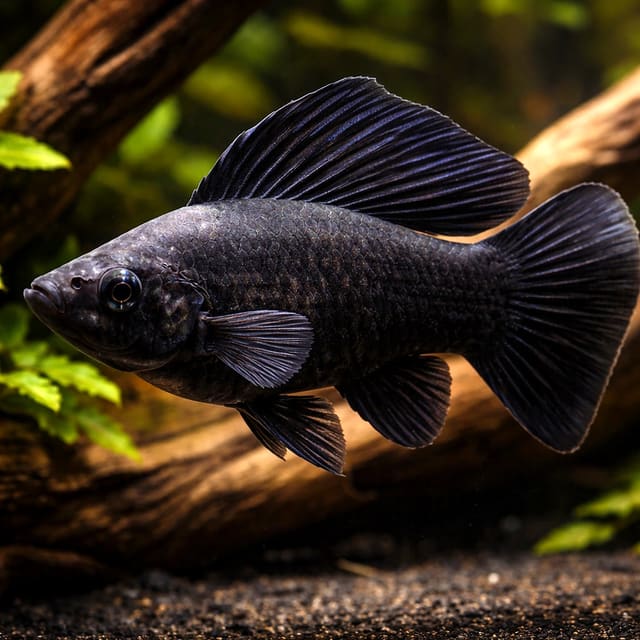
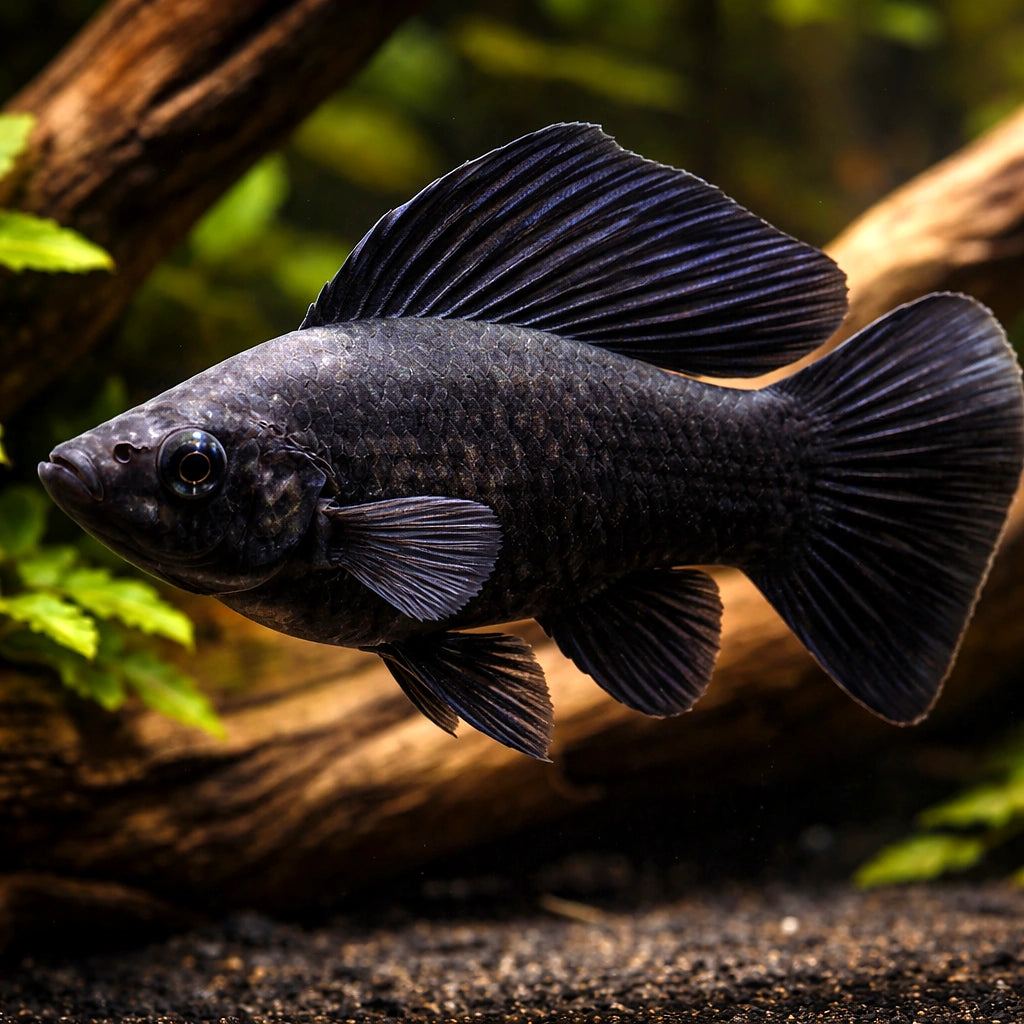
Poecilia latipinna black molly
21–26°C · pH 7–8.5
£5.99
Molly Fish · Buying Guide
UK molly fish guide — short-fin vs sailfin, the colour strains, why hard tap water is ideal, sexing, breeding & in-stock mollies. Read or listen.
11 products in stock today
Live prices and stock. Every fish covered by our Live Arrival Guarantee.
21–26°C · pH 7–8.5
21–28°C · pH 7.5–8 · 81L

21–28°C · pH 7.5–8 · 81L
21–28°C · pH 7.5–8 · 81L

21–28°C · pH 7–8.5 · 81L
21–28°C · pH 7–8.5
22–28°C · pH 7–8 · 104L
21–26°C · pH 7–8.5 · 87L
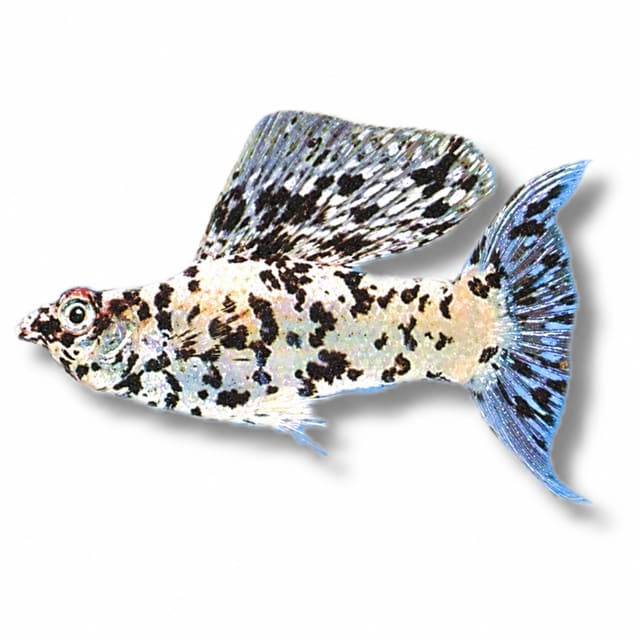
21–26°C · pH 7–8.5 · 87L
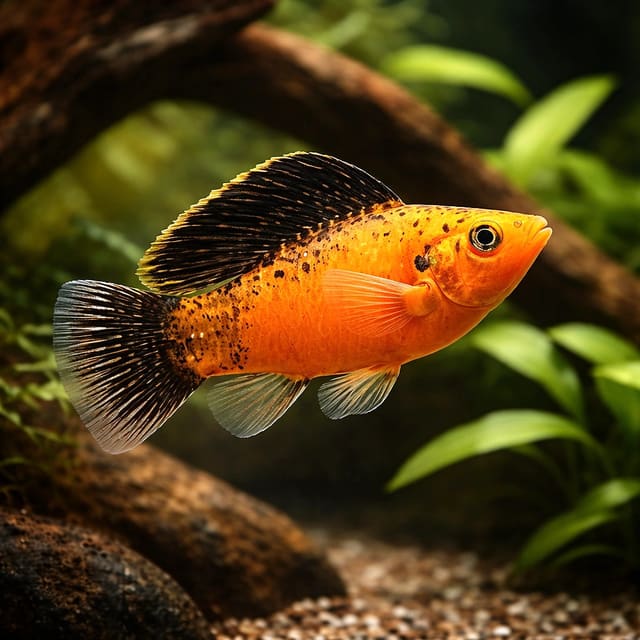
22–28°C · pH 7–8.5
The shaded band shows the range molly fish is comfortable in. Match it to your tap water before you buy.
Our trained assistant knows this molly fish page inside out. Ask it anything — water parameters, tank mates, how many to buy — or have it read the guide aloud while you set up your tank.
You searched "molly fish", and I'd bet money you've either lost mollies before or you're about to buy your first ones and every care sheet you've read says the same vague thing: "easy beginner fish, just keep the water clean." That advice gets mollies killed. The two things that actually decide whether your mollies thrive — your local water hardness and the salt myth — are the two things those pages gloss over.
I'm Hannah Nielsen. I photograph and write Tropical Fish Co's deep species guides from Cambridge, where my tap water is hard enough to fur up a kettle in a fortnight — and that hardness is precisely why mollies have always done well in my tanks while my soft-water friends struggle with them. This is the guide I'd hand someone who messaged me a photo of a molly rocking on the spot asking "what's wrong with it?" Nine times in ten, the answer is the water, not the fish.
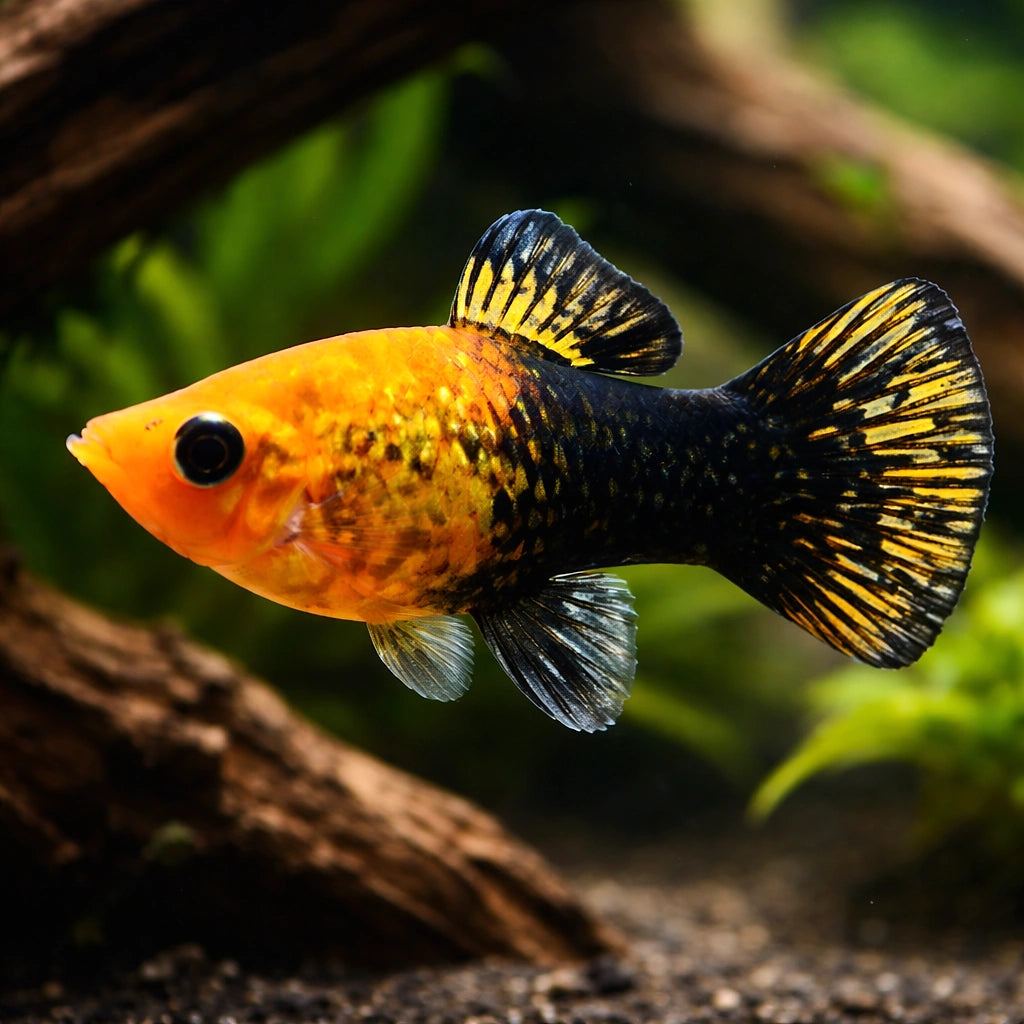
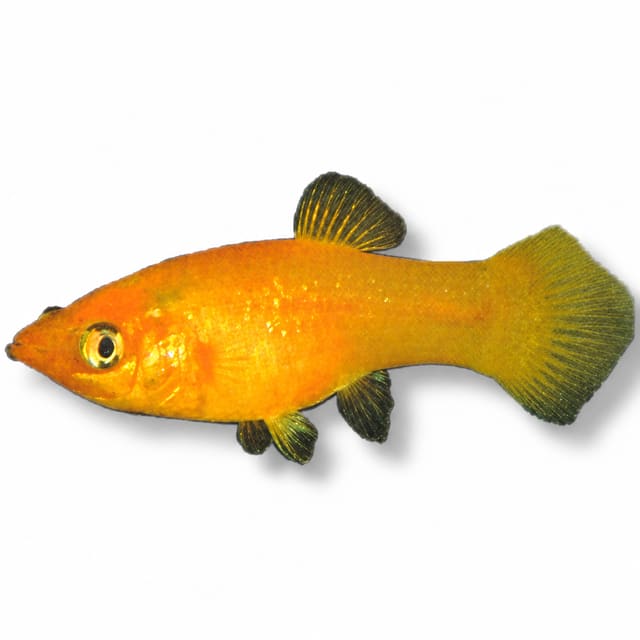
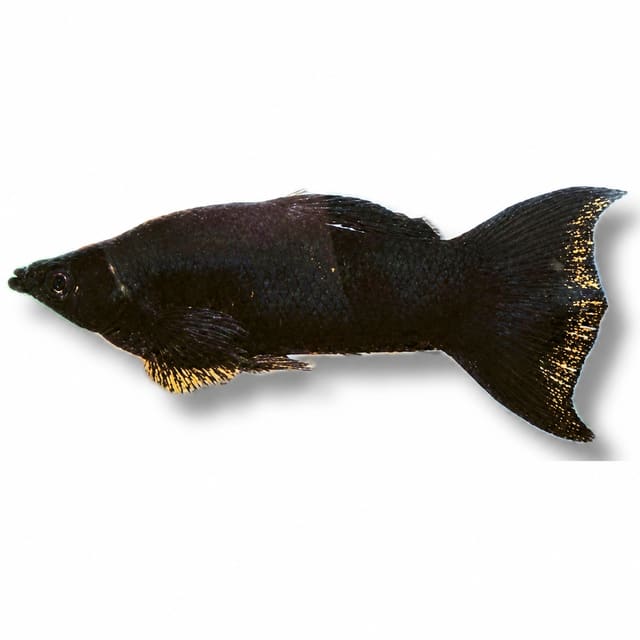
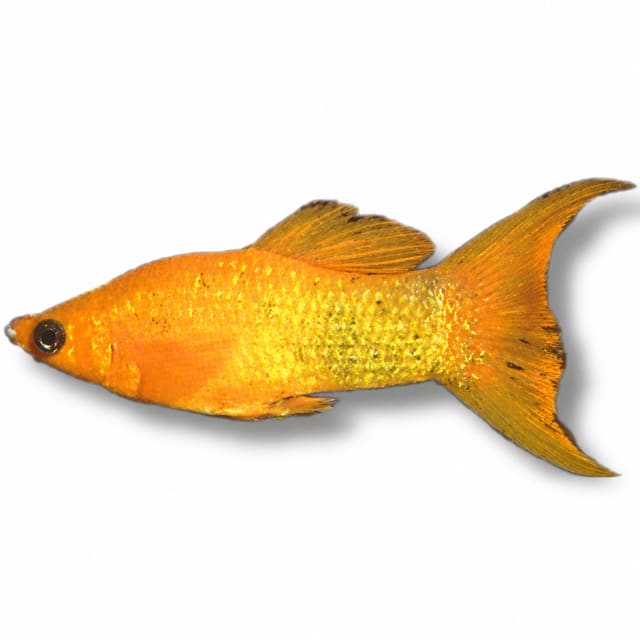
A gold-black short-fin molly. The gold-and-black split, like the solid black of the hero fish above, is a line-bred colour selection of the same short-fin molly (Poecilia sphenops) — not a separate species. You're choosing a look, not a harder fish. Product photo · our warehouse.
This is the first decision to make, because it sets your tank size. "Molly" covers two quite different fish in the trade, and a shop tank rarely tells you which you're looking at.
| What matters | Short-fin molly (P. sphenops) | Sailfin molly (P. latipinna / velifera) |
|---|---|---|
| Adult size | ~8–12 cm | Up to ~15 cm |
| Male's dorsal | Ordinary | Huge sail-shaped display fin |
| Tank length needed | 75 L+ | 110 L+, longer footprint |
| Price | Usually under a fiver | Often £10–£45 for premium strains |
| Best for | A first molly, smaller tanks | Keepers with a bigger tank wanting a showpiece |
| Care underneath | Identical hard-water needs | Identical hard-water needs |
If this is your first molly or your tank is on the smaller side, buy a short-fin. If you've got a long 110-litre-plus tank and want a centrepiece livebearer, the sailfin male is one of the most impressive fish in the hobby [2].
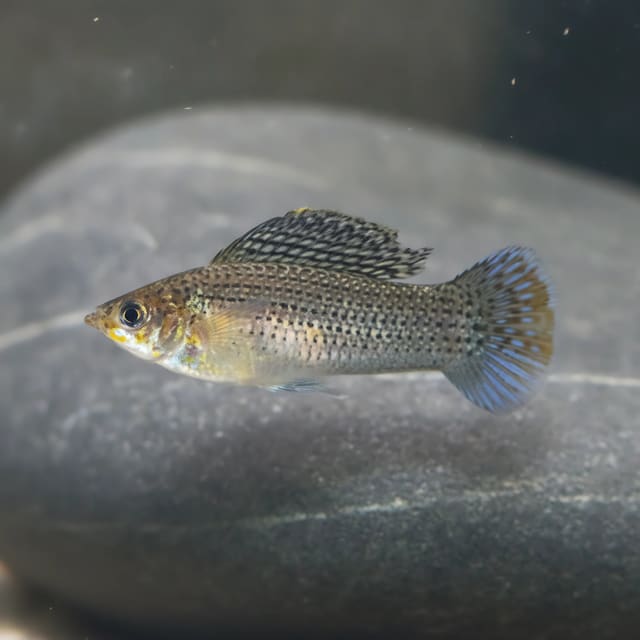
Molly colour names are trade strains, not scientific varieties — black, gold, gold-black, silver, marble and the lyretail (lyra) forms are all line-bred looks layered onto the same two or three species. They share identical care. Here's a spread of our current short-fin and lyretail mollies, from everyday to a little fancier:
The cheaper strains are no less hardy than the premium ones — you're paying for rarer colour genetics and, with the sailfins, a bigger fish. If this is your first molly, start with a short-fin above and you'll do fine.
You will be told, possibly by a shop, that mollies "need" aquarium salt. They do not. Mollies need hard, alkaline, mineral-rich water — calcium, magnesium and carbonate hardness — not sodium chloride [1]. Wild sailfins tolerate brackish and even marine water [3], but in a freshwater community — especially a planted one — adding salt does more harm than good (it stresses plants and most tank mates). Get the hardness right and skip the salt.
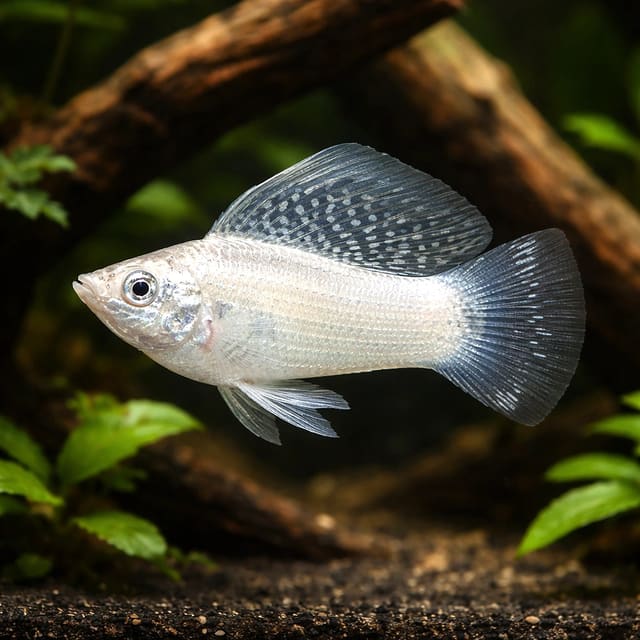
The lyretail ("lyra") forms trail an elegant, forked tail; the sailfins fly that flag of a dorsal. Same easy care, more drama in the tank:
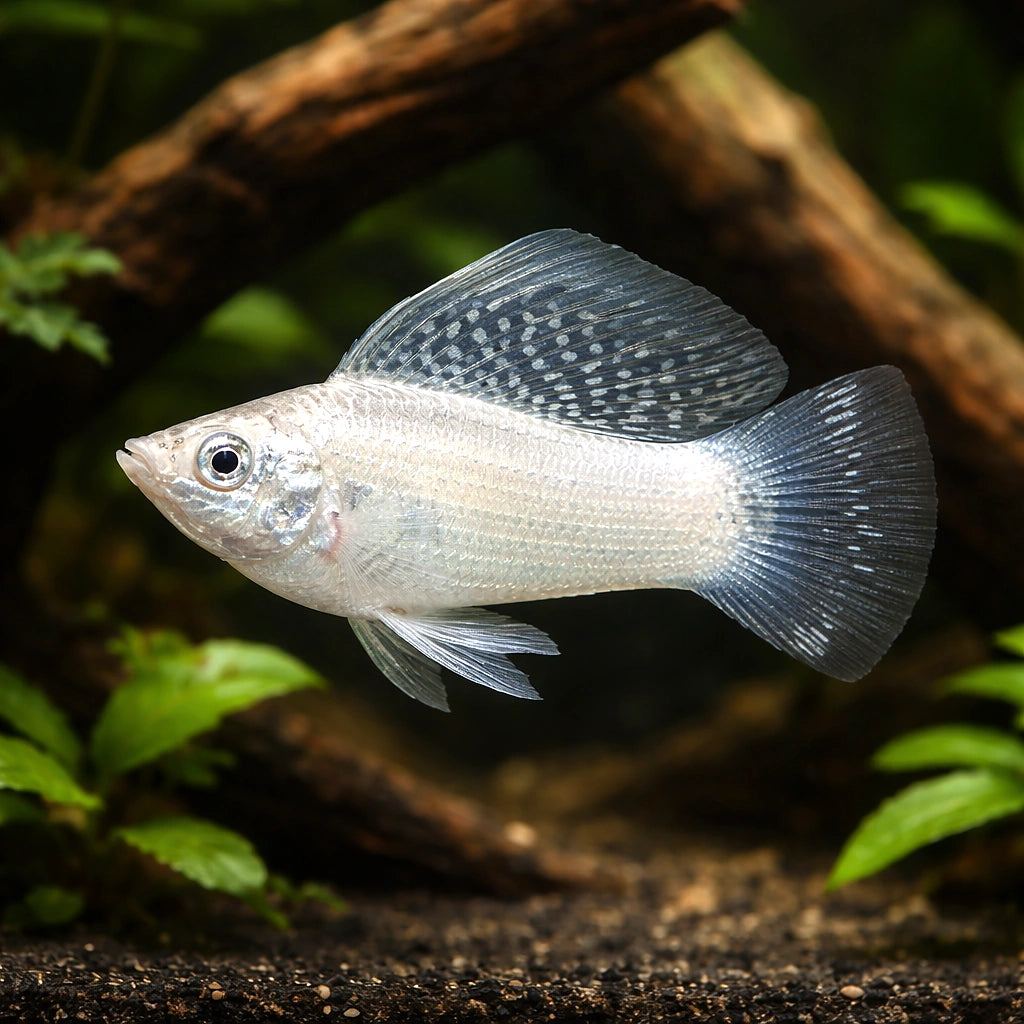
A silver sailfin molly. That tall dorsal is the sailfin's signature — and the reason this fish needs a longer tank than a short-fin: the male raises it fully when he displays, and he needs the open length to do it. Product photo · our warehouse.
Mollies are social, active livebearers — a lone pair looks lost and the single female gets pestered. Buy a group and skew it female: aim for one male to two or three females [4]. Males court constantly, and spreading that attention across several females keeps any one fish from being harassed to exhaustion [1].
A six-fish starter group — two males, four females — in a 75-litre tank is a balanced short-fin setup. Because mollies breed so readily [4], you almost never need to buy many; biology takes care of the rest. If you'd rather avoid a population explosion, keep an all-male group (all the colour, no fry).
Here's where mollies flip the usual UK fishkeeping headache. Most popular tropicals — tetras, rasboras, dwarf cichlids — want soft, acidic water, so keepers in hard-water areas are forever fighting their tap supply. Mollies are the exact opposite. They evolved in hard, mineral-rich, often coastal water and prefer it: pH 7.0–8.5 and 15–35 °dGH [1].
Thames Water — and most suppliers across the chalk-and-limestone belt of southern and eastern England — classify their supply as hard to very hard [5]. For a molly keeper, that tap is an asset, not an obstacle. Dechlorinate it and you've got near-perfect molly water for free.
Search your postcode on your water company's website (Thames Water, Severn Trent, Anglian, Affinity, etc.) for a hardness figure in mg/l CaCO₃ or °Clarke. If you're in a hard-water area, mollies are a brilliant choice straight from the tap. If you're in a soft-water area — much of Scotland, Wales, Cornwall, the Lake District — add crushed coral to your filter or use a remineraliser to bring hardness and pH up into the molly range before you stock.
Mollies are peaceful but boisterous, so the rule is: match the hard, alkaline water and pick tank mates that won't be bullied or out-compete them. These are companions I keep with mollies and trust:
Avoid: fin-nippers (barbs can shred a sailfin's dorsal), aggressive cichlids, and any species that needs soft, acidic water — you can't give both groups the right chemistry in one tank.
Transcript / what you're seeing (0:00–0:20): a planted aquarium with livebearers cruising the upper two-thirds of the tank, pausing to graze biofilm and algae off leaves and glass. Note how the fish stay out in the open and use the whole water column — that confident, busy behaviour is the tell-tale of healthy livebearers. Mollies that hang at the surface gasping, clamp their fins, or rock on the spot are almost always telling you the water is too soft, too acidic, or unstable for them.
Sexing mollies is easy once they mature. Males are slimmer, often more colourful, and have a gonopodium — the anal fin modified into a narrow, rod-shaped organ used to fertilise the female internally. Females are larger, rounder-bellied, and have a normal fan-shaped anal fin; a gravid (pregnant) female shows a swollen belly and often a darker gravid patch.
Breeding needs almost nothing from you. Mollies are prolific livebearers — a female drops a brood of free-swimming fry roughly every four to six weeks and can store sperm to produce several broods from one mating [4]. The fry are large enough to eat crushed flake and baby brine shrimp immediately. In a planted community some fry survive in the cover; to raise a whole brood, move the fry to a separate grow-out tank or a breeding box.
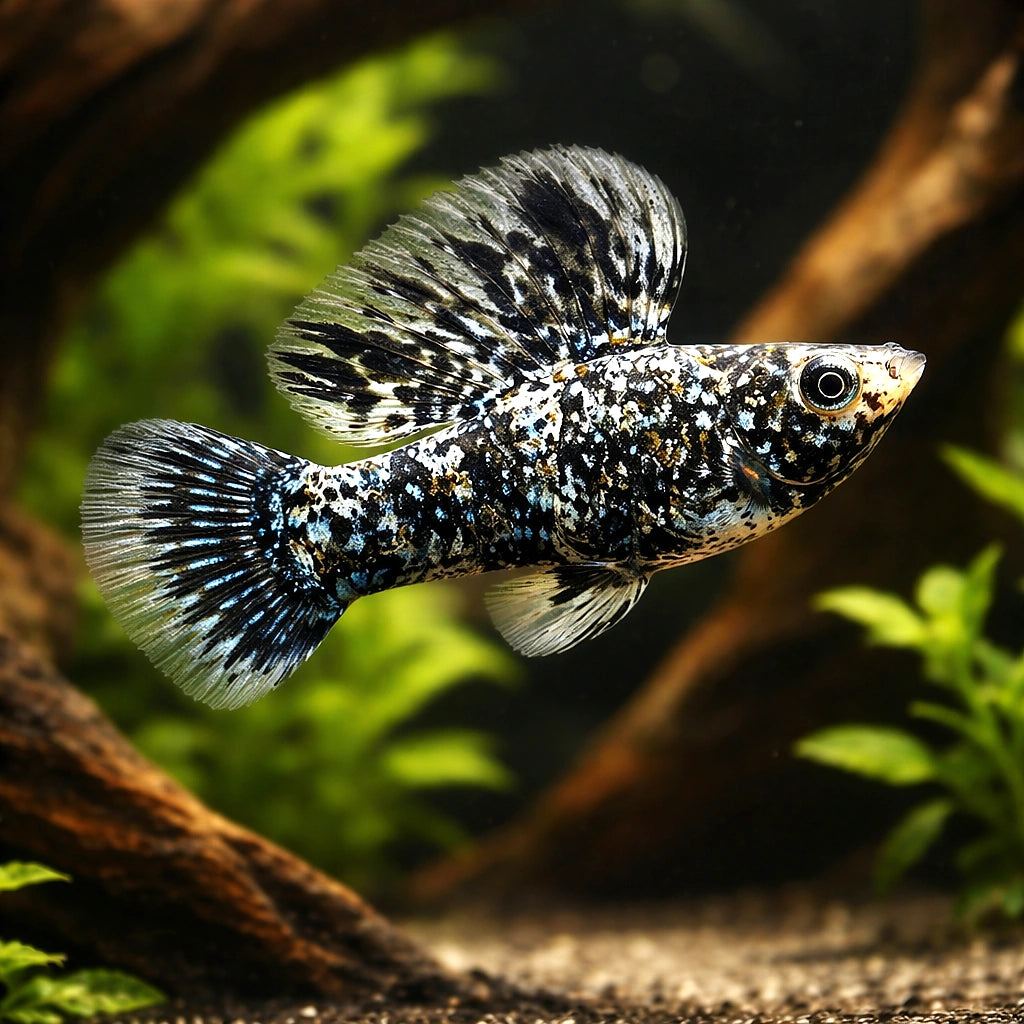
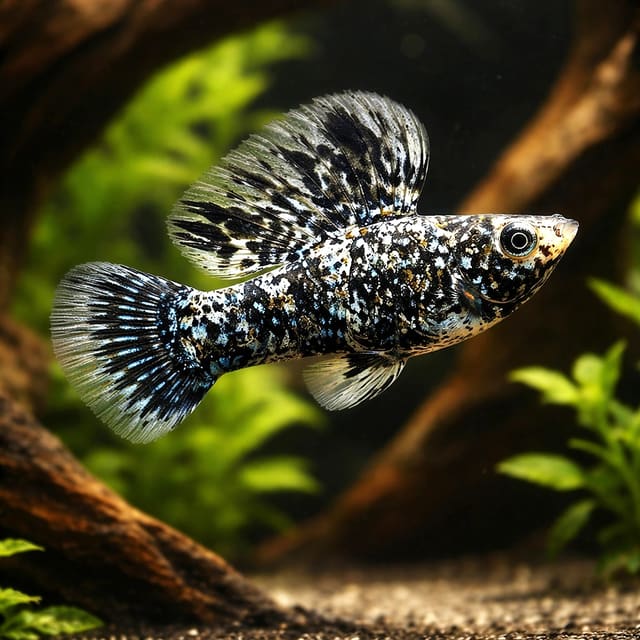
A marble sailfin (Poecilia velifera). The mottled "marble" pattern is a line-bred look; underneath it's the same large, hard-water-loving sailfin that needs a long tank and plenty of greens. Product photo · our warehouse.
The commonest slow-burn molly mistake is feeding them like a carnivore. Mollies are grazing omnivores with a strong vegetarian bias [1], so build the diet around plants:
Whether you buy from us or anyone else, these are the welfare markers that separate a healthy molly from a problem one:
Mollies sit at the heart of the UK livebearer hobby, and the best place to learn strain genetics and meet breeders is the hobby itself, not a shop shelf:
Mollies are hardy once settled, but the one parameter they're genuinely fussy about is hardness and pH — a sudden swing between soft and hard water is the main thing that shocks them, and moving into hard UK tap water [5] can be a big jump from a shop's softer holding water:
Visual route into the rest of our UK live-fish range.
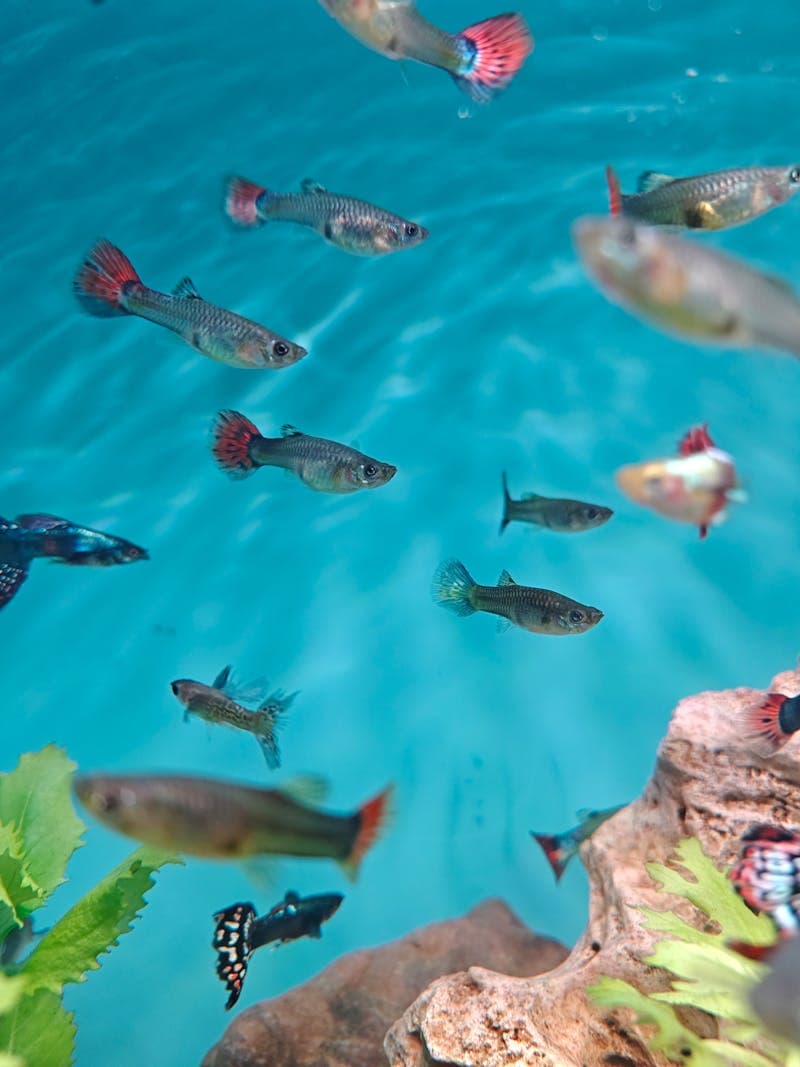
Black, gold, marble and sailfin mollies, plus balloon and lyretail forms: peaceful livebearers that prefer harder water. Price, size and sex on every listing.

Livebearer fish for sale UK — Guppies, Mollies, Platies, Swordtails, Endlers, Limias. Easy-breeding community favourites.
Material factual claims cite the sources below; store policy and cautious inference are labelled in the article. Sources are grouped by type so you can judge their weight at a glance.
Used for sailfin native range, salinity tolerance (fresh to marine) and the male's dorsal display.
Used for short-fin/black molly size, water parameters, hard-alkaline requirement and temperament.
Used for sailfin size (to ~15 cm), tank-size needs, brackish tolerance and sail-fin dimorphism.
Practical husbandry walk-through — hard water, vegetable diet, sex ratio and fry.
UK authority confirming much of southern and eastern England is hard (200–300 mg/l CaCO₃) to very hard (>300).
Fishkeeping moves fast and we want every guide spot-on. If you think something here is wrong, out of date, or could be clearer, tell us — our team reads every message and updates the page.
Suggest an editBlack, gold, marble and sailfin mollies, plus balloon and lyretail forms: peaceful livebearers that prefer harder water. Price, size and sex on every listing.
Livebearer fish for sale UK — Guppies, Mollies, Platies, Swordtails, Endlers, Limias. Easy-breeding community favourites.
Molly fish care for UK keepers: compare common and sailfin types, tank sizes, temperature, hard-water needs, groups, feeding and tank mates.
Platy fish care for UK keepers: compare platy types, tank size, temperature, water, lifespan, groups, male vs female, pregnancy and tank mates.
Evidence-checked guppy care for UK aquariums: tank size, social and sex planning, water, feeding, tank mates, health, breeding and buying.
Planted-Tank Photographer & Writer · 10+ years in the hobby
Hannah is a Cambridge-based aquarium photographer and writer whose planted-tank work has appeared in Practical Fishkeeping and the ADA Aqua Journal digital edition. She writes Tropical Fish Co's deep species guides on schooling tetras and planted-tank communities — always accompanied by her own photography, never stock imagery.