
 By Kevin
Moderate
Neon Tetra (Paracheirodon innesi)
21–25°C · pH 5–7
£2.99
Tropical Fish for Sale UK · Buying Guide
The UK guide to freshwater fish — the main groups, the most popular species, how to choose, and what to start with. Browse live in-stock fish today.
11 products in stock today
Live prices and stock. Every fish covered by our Live Arrival Guarantee.
21–25°C · pH 5–7

22–28°C · pH 7–8 · 41L
22–25°C · pH 6–7.4

20–26°C · pH 7–8.2 · 54L

23–27°C · pH 5.5–7 · 60L
20–28°C · pH 7–8

17–27°C · pH 6.5–8

22–27°C · pH 6–8

22–27°C · pH 6–7.5
22–27°C · pH 7–8 · 108L
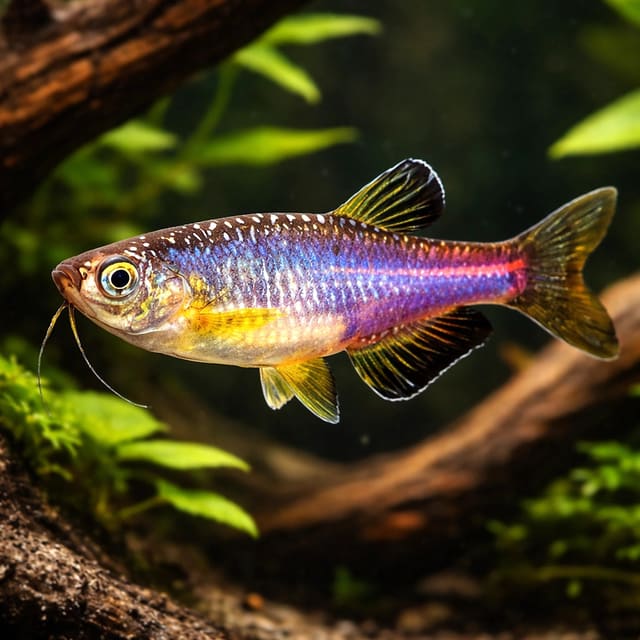
16–25°C · pH 6–8
Our trained assistant knows this freshwater fish page inside out. Ask it anything — water parameters, tank mates, how many to buy — or have it read the guide aloud while you set up your tank.
Every week we get the same email in a dozen forms: "I want to start a freshwater tank — what fish should I actually buy?" The honest answer is that "freshwater fish" is one of the broadest phrases in the hobby. It covers a 3 cm neon tetra and a 15 cm angelfish, a guppy that breeds in your tap water and a cardinal tetra that wants it soft and acidic. Most guides either dump a hundred species on you or quietly turn into a product list. This one does neither.
I'm Kevin, the editor here at Tropical Fish Co, and I've spent more years than I'll admit talking first-time buyers through their first community tank. This page is the version of that conversation I'd give in the shop: the five groups freshwater fish fall into, the most popular species in each, how to choose between them for a UK home, and what to put in the water first. By the end you'll know which fish suit your tank — and which to leave for later.
The single most useful fact for a UK beginner: nearly every freshwater fish sold in British shops is tropical, so it needs a heater holding the water at roughly 24–26 °C [1] and a cycled biological filter [8]. The famous exception is the goldfish — a coldwater fish that prefers it cooler and produces far more waste than its size suggests. Don't mix coldwater and tropical fish in one tank. When you read "freshwater fish" on this site, assume tropical unless a page says otherwise.
People use these words loosely, and shops aren't always clear, so here's the plain version. "Freshwater" and "marine" describe the water (no salt vs salt). "Tropical" and "coldwater" describe the temperature (warm vs cool). They cut across each other, which is why a fish can be both freshwater and tropical:
| Type | Water | Temperature | Heater? | Examples |
|---|---|---|---|---|
| Tropical freshwater | Fresh (no salt) | ~24–26 °C | Yes | Tetras, guppies, cories, angelfish |
| Coldwater freshwater | Fresh (no salt) | ~18–22 °C | No | Goldfish, white cloud minnows |
| Tropical marine | Salt | ~24–26 °C | Yes | Clownfish, tangs (reef tanks) |
Almost everything in a typical home aquarium — and everything featured on this page — is tropical freshwater: fresh water, kept warm with a heater [1]. Goldfish are the one common freshwater fish that's coldwater, not tropical, so they belong in their own cooler, larger setup. Marine (saltwater) fishkeeping is a separate, more advanced branch of the hobby.
If you walked our tanks and asked "what do people actually buy?", these are the species you'd point at. Each one is a different fish from a different group — together they show the range of the freshwater hobby, and every one is in stock. Sizes and temperaments below are from each species' real care data, cross-checked against FishBase and Seriously Fish.
| Species | Group | Adult size | Temperament | Beginner rating |
|---|---|---|---|---|
| Neon Tetra | Tetra (schooling) | ~4 cm | Peaceful | ★★★★☆ |
| Cardinal Tetra | Tetra (schooling) | ~5 cm | Peaceful | ★★★☆☆ |
| Pearl Danio | Danio (schooling) | ~5.5 cm | Peaceful | ★★★★★ |
| Female Guppy | Livebearer | ~6 cm | Peaceful | ★★★★★ |
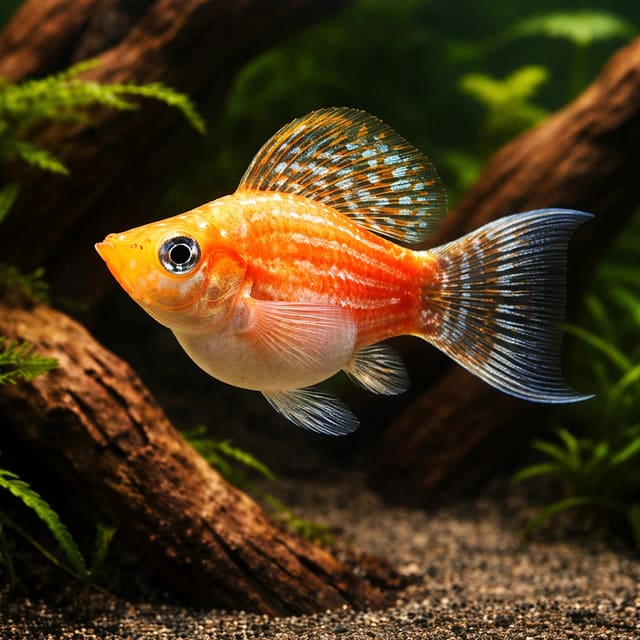
| Variatus Platy | Livebearer | ~5 cm | Peaceful | ★★★★★ |
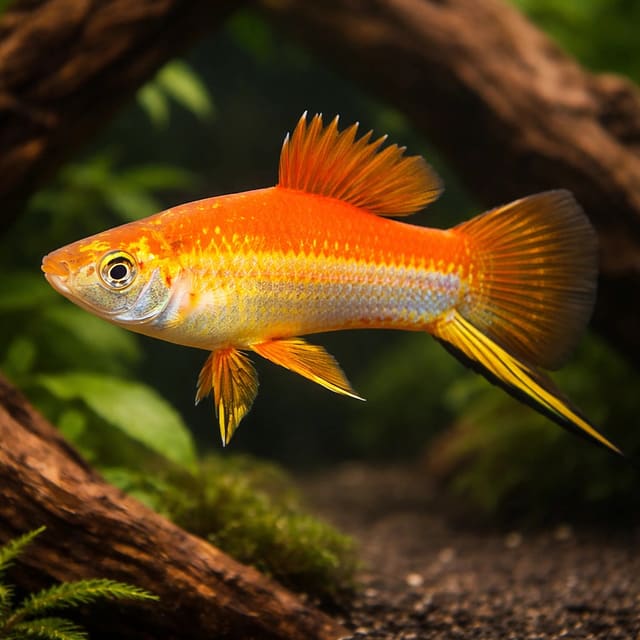
| Marigold Swordtail | Livebearer | ~5 cm | Semi-aggressive | ★★★★☆ |
| Balloon Molly | Livebearer | ~6 cm | Peaceful | ★★★★☆ |
| Female Dwarf Gourami | Gourami (labyrinth) | ~9 cm | Peaceful | ★★★★☆ |
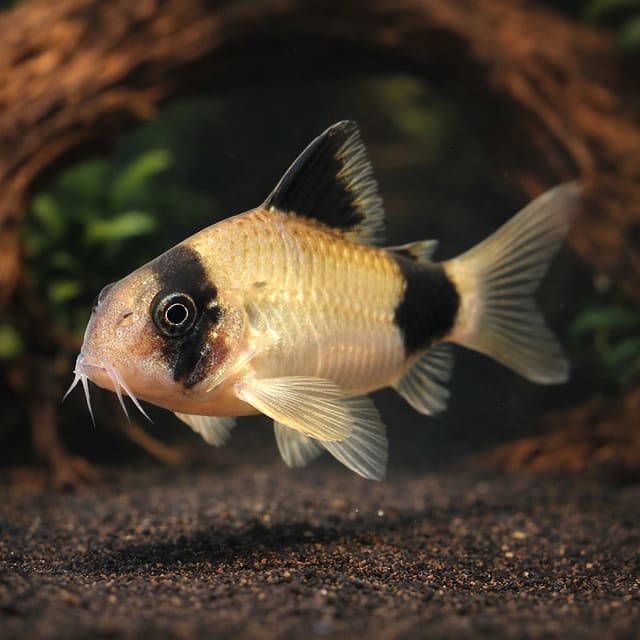
| Panda Cory | Catfish (bottom) | ~5 cm | Peaceful | ★★★★★ |
| Bristlenose Catfish | Catfish (algae) | ~15 cm | Peaceful | ★★★★☆ |
| Neocaridina Shrimp | Invertebrate | ~3 cm | Peaceful | ★★★★★ |
| Angelfish | Cichlid (feature) | up to 15 cm | Semi-aggressive | ★★★☆☆ |
Reading the table: the five-star fish are the safest places to start — livebearers, pearl danios, panda cories and shrimp all forgive a young tank. The three-star fish (cardinal tetra, angelfish) are rewarding but want softer water or more space, so add them once you've found your feet.
You don't need to memorise hundreds of species. Almost every freshwater fish you'll meet belongs to one of five buyer-friendly groups, and each group plays a different role in the tank.
Guppies, platies, mollies and swordtails give birth to live young instead of laying eggs, breed readily, and — crucially — love hard, alkaline water. That makes them the natural fit for most of the UK [7]. They're colourful, active across the whole tank, and forgive beginner mistakes better than almost anything. Part of that resilience is physiological: guppies can switch to "aquatic surface respiration" — skimming the oxygen-rich film at the very top of the water — when oxygen runs low, which lets them ride out conditions that would suffocate more delicate fish [3]. Our female guppies, variatus platies and balloon mollies are all livebearers. The one to watch is the swordtail, which our care data flags as semi-aggressive — give it space and outnumber males with females.
These are the small, gleaming fish that move as one through the middle of the tank. Most are easy, but soft-water species like the neon and especially the cardinal tetra prefer slightly acidic water and a mature tank, so they reward a little patience [4]. Pearl danios are a tougher schooling option that copes with a wider range. Keep any schooler in a group of 8–10+ or it'll hide and lose colour.
Corydoras patrol the substrate in sociable little gangs; our panda cory is one of the best beginner catfish there is, peaceful and hardy in groups of six or more [5]. The bristlenose catfish is the algae-grazer worth buying — it stays small (around 15 cm) where the misnamed "common pleco" does not. Give cories smooth sand or rounded gravel to protect their barbels, and give the bristlenose a piece of driftwood to rasp.
This is where freshwater fish get characterful — and where you need to read the label. The angelfish is a graceful, disc-shaped cichlid that's a beautiful centrepiece, but it reaches up to 15 cm tall, turns territorial when breeding, and will eventually eat fish small enough to fit its mouth [2][6]. Cichlids aren't a beginner's first fish, but a single angelfish in a larger, settled community is a realistic step up.
Neocaridina (cherry) shrimp graze biofilm and leftover food, breed without intervention, and bring colour to a planted tank. They're the easiest invertebrate to keep and a brilliant teaching animal — sensitive to water swings before fish are, so they tell you something's off early. Keep them with peaceful tank mates; anything big enough to eat them, will.
A tank that uses all its space looks twice as alive. Pick one mid-water school (tetras, rasboras, danios), a few livebearers that roam everywhere, a bottom group (cories), and a clean-up species (shrimp or a bristlenose). Six of the same fish in the middle leaves the top and bottom empty — variety across the column, not quantity in one band, is what makes a community tank watchable.
The five groups don't suit every setup equally. Use this to narrow the field before you fall for a particular fish:
| Group | Best water | Tank region | Minimum group | Best for |
|---|---|---|---|---|
| Livebearers | Hard, alkaline (most UK tap) | All levels | 3–5 (flexible) | First fish; hard-water homes |
| Tetras & rasboras | Soft–neutral; mature tank | Middle | 8–10 (schooling) | Movement, colour, planted tanks |
| Catfish & loaches | Soft–neutral, smooth substrate | Bottom | 6+ for cories | Clean-up, calm activity |
| Cichlids | Varies; angelfish soft–neutral | Middle (feature) | Pair, or solo angel | A centrepiece in a larger tank |
| Shrimp & snails | Stable; harder suits Neocaridina | Bottom / glass | 6+ shrimp | Algae control, nano tanks |
If your tap water is hard (true for most of England) [7], livebearers, Neocaridina shrimp and most catfish slot straight in. Soft-water tetras and angelfish are very doable too — they just reward a tank that's been running a few weeks rather than days.
Don't start from a fish you saw and like. Start from your tank size and your water, then choose fish that fit. Four questions settle almost every decision:
In hard UK water, livebearers are the path of least resistance [7]. If your heart's set on soft-water tetras, they'll do fine — just give the tank a few weeks to mature first [4]. Match temperature and pH ranges so a single set of water conditions suits every fish in the tank, and you've done the hard part.
For a full walk-through of getting the water right, see our water chemistry guide and our first tropical tank guide.
Every species on this page assumes a cycled tank — one that's run for 4–6 weeks until the filter grows enough bacteria to keep ammonia and nitrite at zero [8]. A clear-looking new tank is not a safe one. Stock in stages so the filter keeps pace with the rising waste:
A first community in a 90 L tank might be a school of pearl danios, a few platies, six panda cories and a handful of shrimp. That's a proper aquarium, and it gives you room to learn.
The fish themselves are often the cheapest part of the hobby. As a rough guide to the live stock for a 90 L community, based on our current pricing:
| Fish | Typical role | Rough price each |
|---|---|---|
| Neon Tetra | Mid-water school | from ~£2.40 |
| Pearl Danio | Hardy mid-water school | from ~£3.40 |
| Female Guppy | Livebearer colour | from ~£3.40 |
| Variatus Platy | Hardy livebearer | from ~£4.00 |
| Panda Cory | Bottom group | from ~£7.00 |
| Bristlenose Catfish | Algae grazer | from ~£11.00 |
| Neocaridina Shrimp | Clean-up crew | from ~£4.25 |
A first community of, say, ten danios, five platies, six panda cories and a handful of shrimp lands in the region of £80–£120 of live stock. The equipment — tank, heater, filter, light, substrate — is usually the bigger one-off outlay, and the running cost after that is mostly food, the odd filter media replacement, and a little electricity for the heater. Buying hardy species that suit your water from the start is the cheapest decision of all, because the most expensive fish is the one you have to replace.
A simple bare second tank — even a 30 L box with a sponge filter and heater — pays for itself the first time it stops a disease reaching your main community. New arrivals spend a week or two there before joining the display. It's the single habit that separates keepers who lose fish in waves from those who don't.
The point of a freshwater community is fish that coexist and use the whole tank. Peaceful schoolers in the mid-water, livebearers roaming throughout, cories working the substrate, and a clean-up crew below — that combination almost runs itself. The species below each have a full care guide if you want the detail before you buy:
It isn't choosing the "wrong" fish — it's overfeeding an uncycled tank. Beginners add fish before the filter is ready, then feed too much because the fish look hungry (they always look hungry). Uneaten food and an immature filter spike ammonia, and hardy or not, the fish suffer. Cycle for 4–6 weeks first [8], then feed only what's eaten in about a minute, twice a day. That single habit prevents most beginner losses.
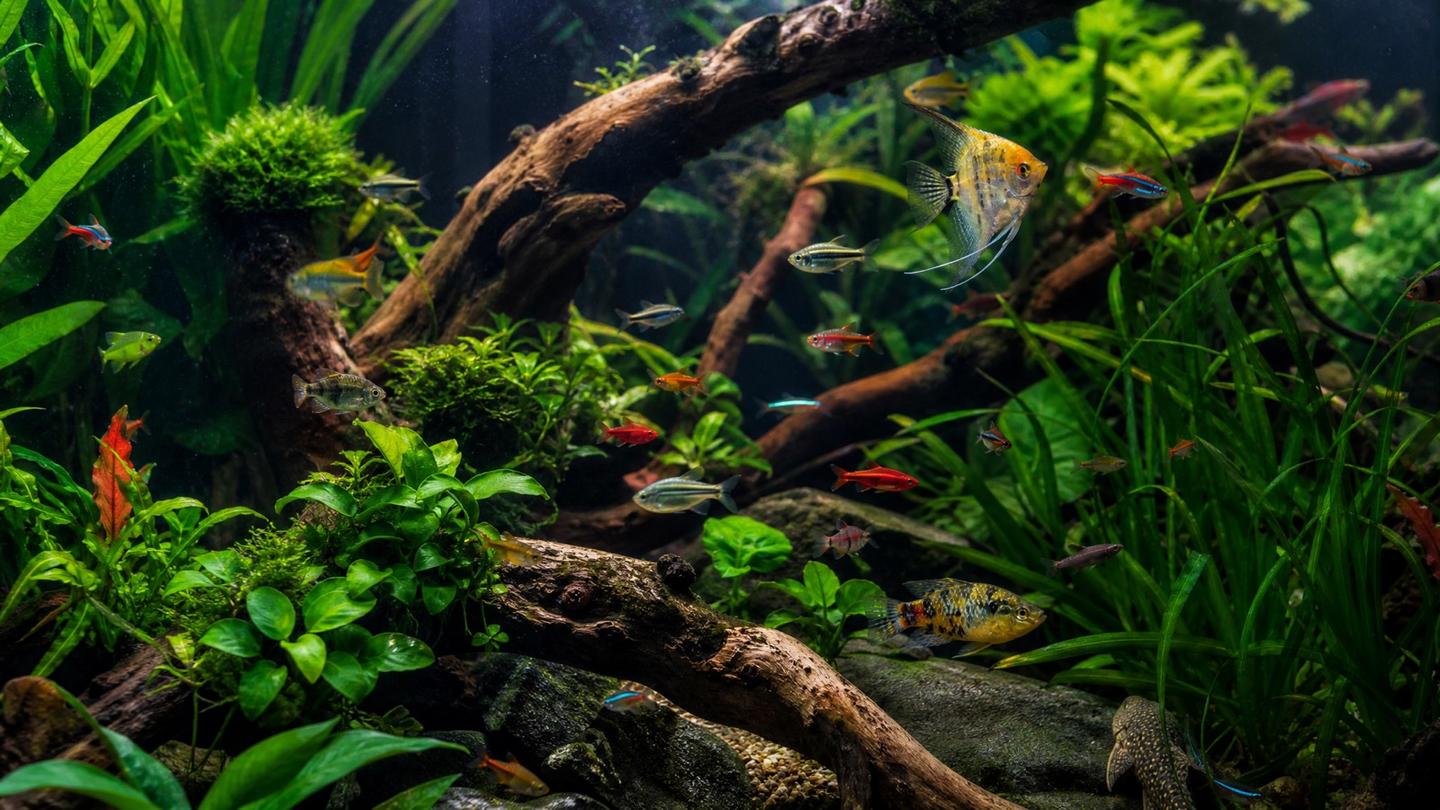
Before spending anything, it helps to see the target. This is one of our planted community displays — open swimming room at the front, planting and cover at the back, fish using every level of the water column.
Freshwater fish are shipped to your door in insulated, oxygen-packed bags. The first hour at home matters more than anything that comes later, so don't rush it [8]:
Quarantining new arrivals in a separate tank for a week or two before adding them to an established community is the gold-standard next step — it stops one stressed fish introducing disease to the whole tank.
Most freshwater fish problems trace back to water quality, stocking or feeding rather than bad luck. This is the quick-reference table we'd talk a customer through over the phone:
| What you see | Likely cause | What to do |
|---|---|---|
| New fish die within days | Uncycled tank — ammonia/nitrite | Test water; do partial changes; cycle properly before more fish [8] |
| Fish gasping at the surface | Low oxygen or high ammonia | Increase surface agitation; test water; partial change |
| Schooling fish hiding, pale | Group too small or tank too new | Increase the group to 8–10+; give the tank time to mature [4] |
| Cory "scratching"/damaged barbels | Sharp substrate | Switch to smooth sand or rounded gravel [5] |
| Feature fish bullying tank mates | Territorial cichlid (e.g. angelfish) | Rehome or rescape; don't keep with fish small enough to eat [6] |
| Algae taking over the glass | Too much light/food, too few grazers | Cut feeding and light hours; add a bristlenose or shrimp |
| Soft-water fish looking stressed | UK hard water mismatch | Choose hard-water species, or research remineralisation [7] |
When something looks wrong, reach for a test kit before a bottle of medication. The overwhelming majority of "sick fish" in new tanks are actually fish reacting to ammonia, nitrite or a swing in conditions — not a pathogen. Fixing the water fixes the fish far more often than dosing the tank does, and blind medicating can make a chemistry problem worse.
Fishkeeping is far easier when you're not doing it alone. Beyond our own care guides, the UK has a strong network of hobbyist clubs and societies worth knowing about — the Federation of British Aquatic Societies (FBAS) links local clubs across the country, the British Cichlid Association is the place to go before you commit to angelfish or other cichlids, and Practical Fishkeeping remains the long-running UK magazine of record [6]. For species identification, FishBase and Seriously Fish are the references we cross-check our own care data against [1][4]. These are communities and references, not shops — use them to learn, then come back when you're ready to buy.
Carry on planning your tank with the guides and shops below — and if you'd like a second opinion on your stocking plan, email us your tank size, water hardness and the fish you're considering before you order. We'd rather spend ten minutes on email now than ship fish into a tank that won't suit them.
Visual route into the rest of our UK live-fish range.
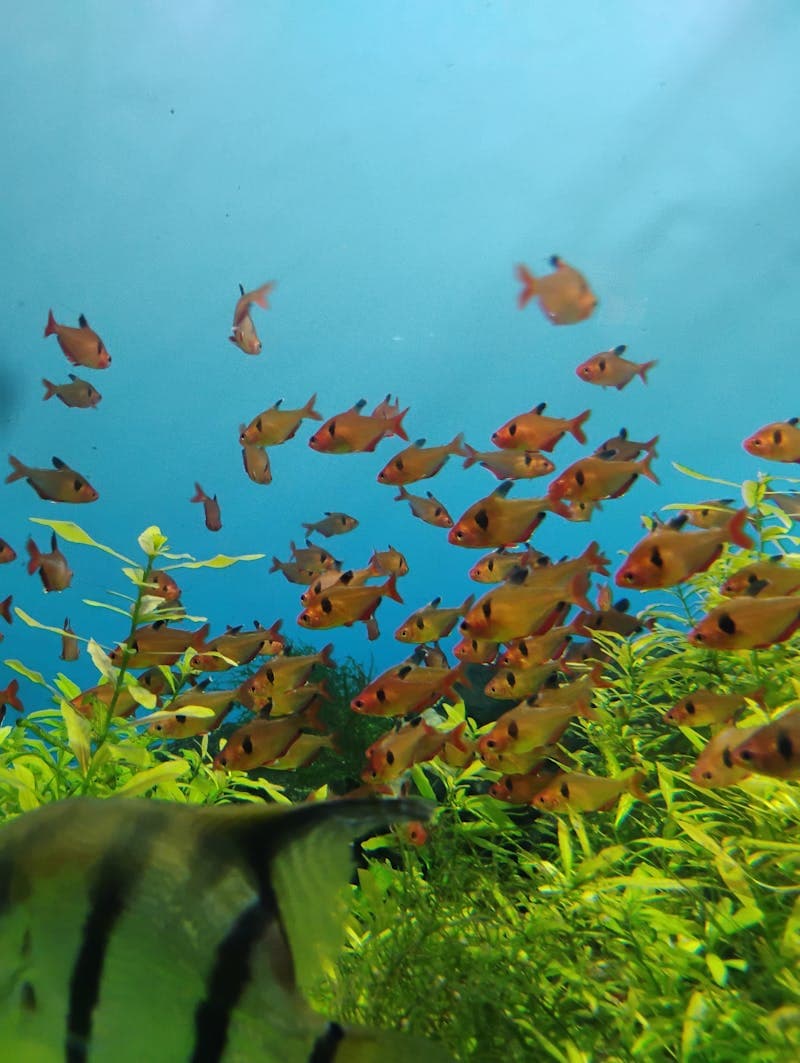
Tropical fish for sale UK — tetras, cichlids, bettas, guppies and corydoras. Specialist delivery backed by our Live Arrival Guarantee.
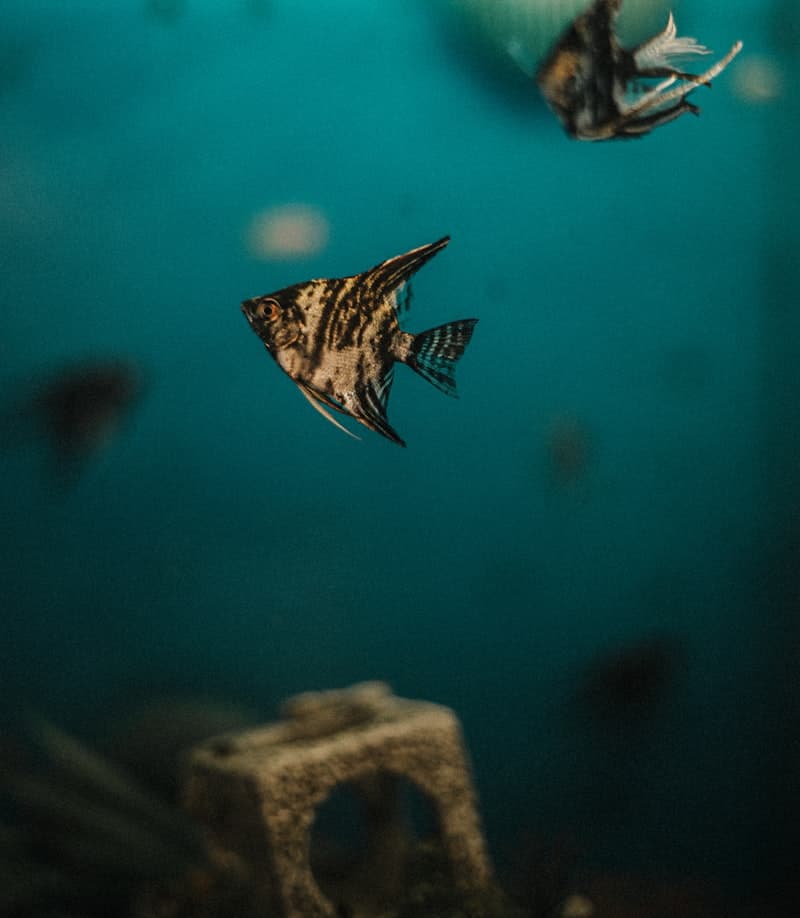
Peaceful tetras, rasboras, corydoras, platies and gouramis chosen to live together — temperament, adult size and water range per listing so the mix works.
Material factual claims cite the sources below; store policy and cautious inference are labelled in the article. Sources are grouped by type so you can judge their weight at a glance.
Peer-reviewed evidence that guppies survive low-oxygen water by breathing at the surface — cited for why livebearers are so resilient.
Species-level temperature, pH and size data for the neon tetra and a reference point for tropical community ranges.
Maximum size and habitat data for the freshwater angelfish — used for the cichlid-group and adult-size claims.
Independent hobbyist cross-check on neon tetra temperament, group size and aquarium maturity needs.
Care parameters and the 6+ group recommendation for panda corydoras.
UK hobbyist perspective on angelfish temperament and why they outgrow community tanks.
Beginner setup + cycling walk-through, cited in the starter-tank and acclimation sections.
UK tap-water hardness reference — used for the 'hard water suits livebearers' section.
Fishkeeping moves fast and we want every guide spot-on. If you think something here is wrong, out of date, or could be clearer, tell us — our team reads every message and updates the page.
Suggest an editTropical fish for sale UK — tetras, cichlids, bettas, guppies and corydoras. Specialist delivery backed by our Live Arrival Guarantee.
Peaceful tetras, rasboras, corydoras, platies and gouramis chosen to live together — temperament, adult size and water range per listing so the mix works.
Set up a tropical fish tank in 10 evidence-led steps: choose the tank, install filter and heater, cycle safely, test the water and add fish carefully.
Learn which freshwater aquarium water parameters to test, how to read ammonia, nitrite, nitrate, pH, GH and KH, and when a result needs action.
Editor & Site Owner · 15+ years in the hobby
Kevin is the editor and owner of Tropical Fish Co. He has kept freshwater tropical tanks for more than 15 years — starting with a single 60-litre planted tank and now running a rack of species tanks across his home and the shop. Every care guide on this site is written or reviewed by Kevin from first-hand experience, cross-checked against peer-reviewed sources, FishBase, and the hobby's most trusted references.