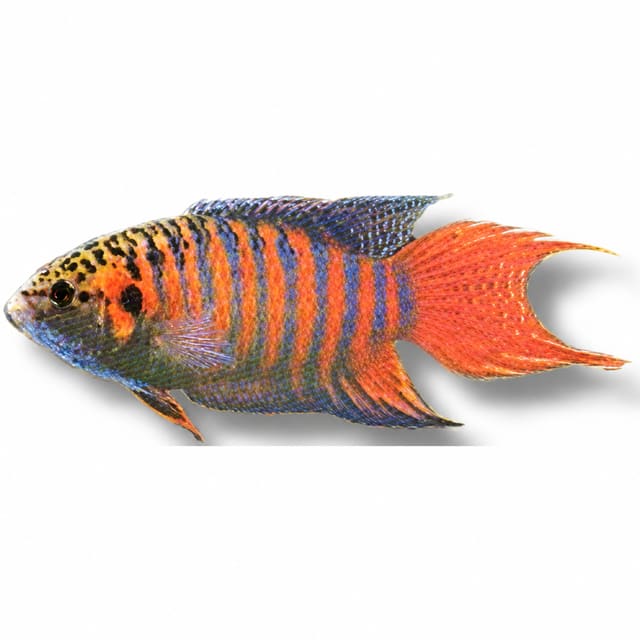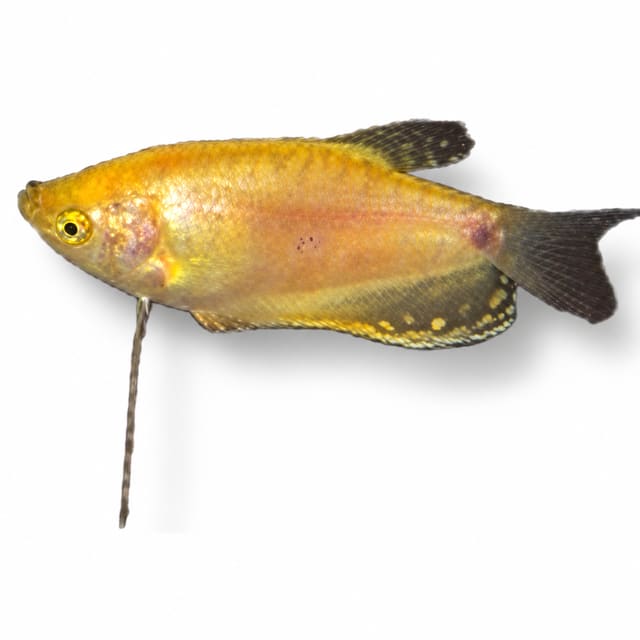
Moderate
Gold Gourami (Trichopodus trichopterus)
24–28°C · pH 6–8 · 81L
From £2.99Some sizes on sale
One female dwarf gourami for a mature freshwater aquarium with gentle flow, shaded plant cover and peaceful companions. Trichogaster lalius is also known by the older name Colisa lalia.
Trichogaster lalius
Save when buying multiple fish. Each quantity is one fish; sex and pair formation are not guaranteed unless the selected variant explicitly states them.
One female dwarf gourami for a mature freshwater aquarium with gentle flow, shaded plant cover and peaceful companions. Trichogaster lalius is also known by the older name Colisa lalia.
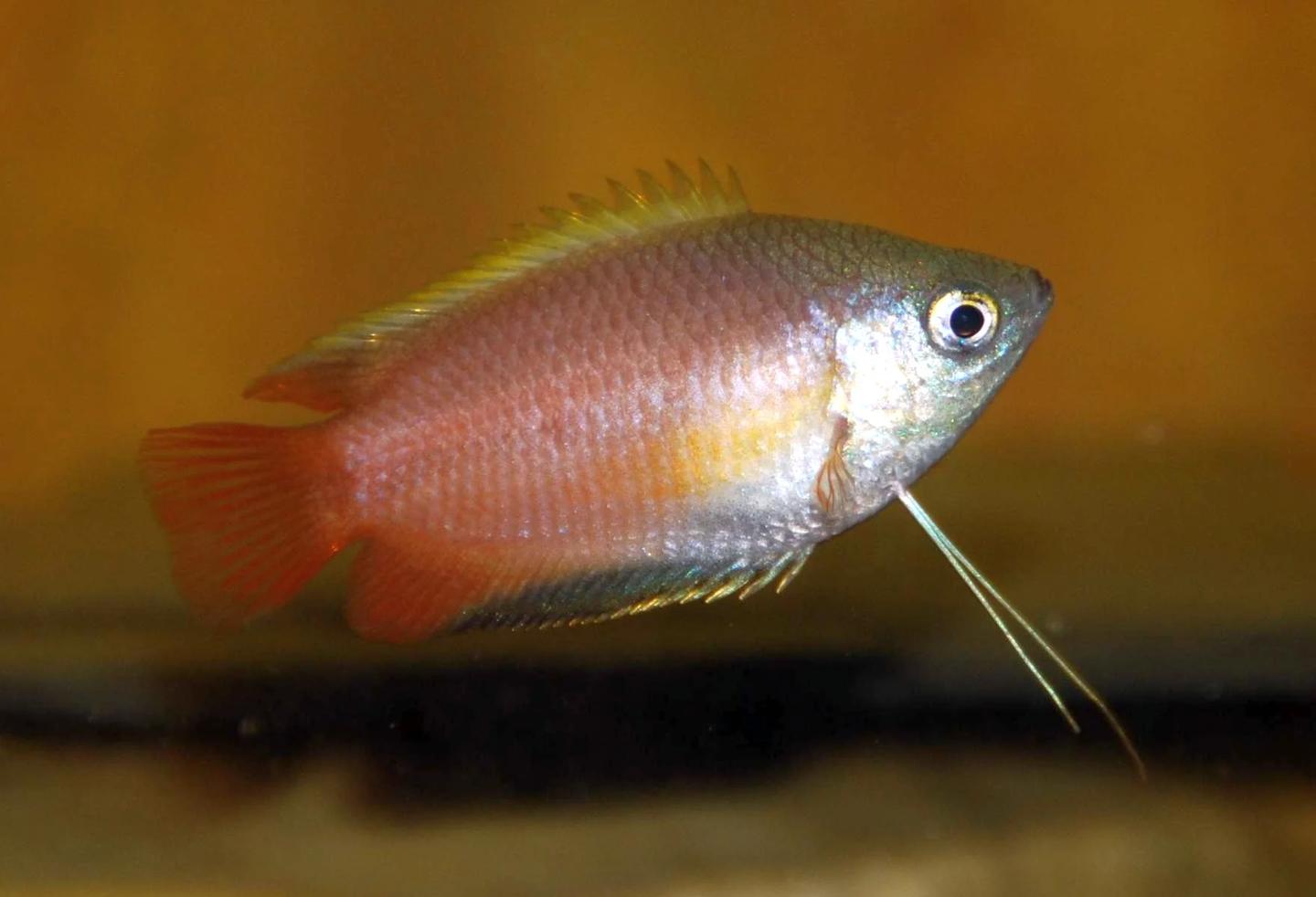
Start with a mature, filtered aquarium at least 60 cm long. Published size records disagree, and broad group guidance is not Honey-Gourami-specific, so verify Trichogaster chuna, the seller's adult-size advice and any claimed sexes before choosing one fish or a group.
Maintain these water conditions for optimal health and vibrant colors
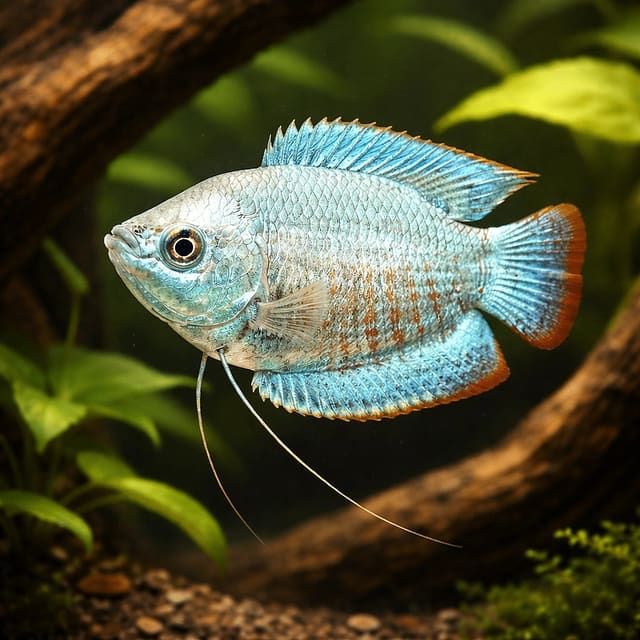
A female dwarf gourami brings quiet movement and close-up interest to a planted aquarium. She is often at her most engaging when she can move between leafy shelter and a comfortable feeding space without being swept along by the filter or crowded by faster fish. The appeal is as much in that unhurried behaviour as in colour: a well-planned aquarium gives you opportunities to watch her explore, pause beneath cover and use the long, threadlike pelvic fins that are characteristic of gouramis.
This is Trichogaster lalius, the dwarf gourami, also encountered under the older name Colisa lalia. It belongs to the gourami family Osphronemidae. The species occurs naturally in Pakistan, India and Bangladesh, where vegetated, slow-moving freshwater provides its habitat. That native range describes the species; it does not identify the breeding location of an individual aquarium fish. In practical terms, the habitat points towards sheltered water and planting, rather than a bare aquarium with a strong current.
One purchase supplies one live fish. The listed dispatch grade is 4–5 cm. Sex is guaranteed only when the exact product or selected option explicitly states male or female. This Female Dwarf Gourami listing is sold as female. Purchasing two fish does not establish a bonded pair, and a female should never be added to an existing male's aquarium without considering space, refuge and how you would separate them if necessary.
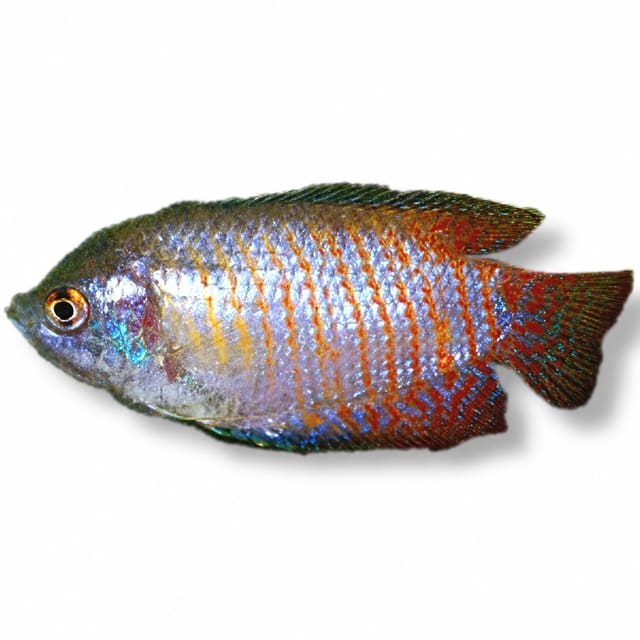
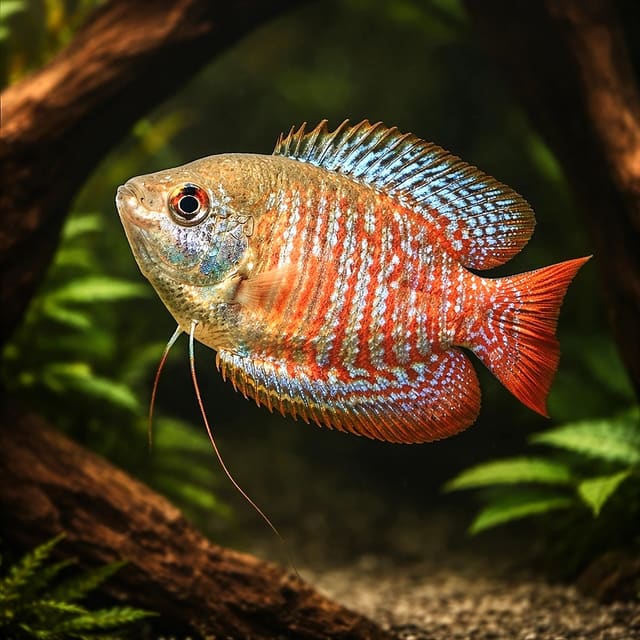
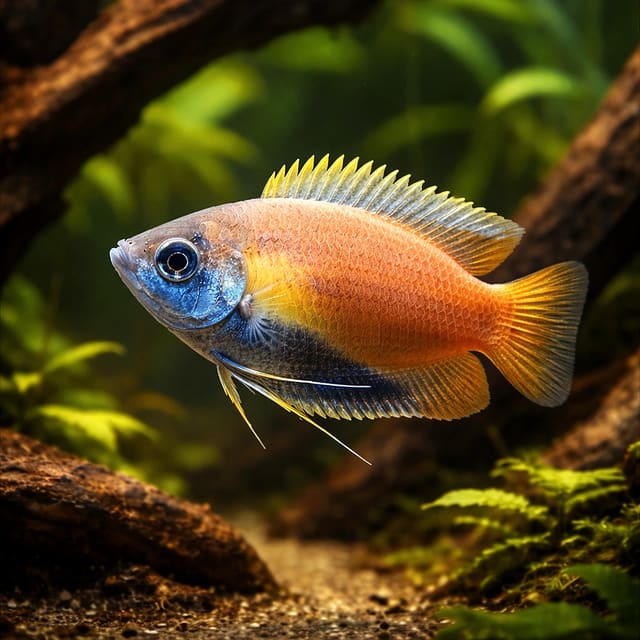
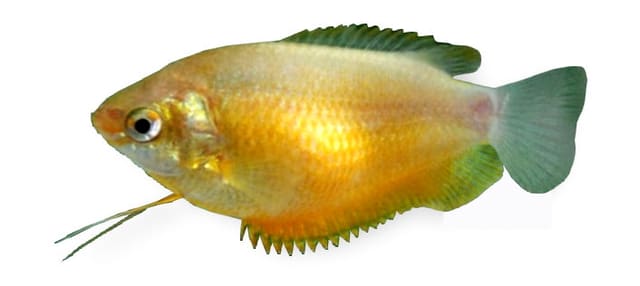
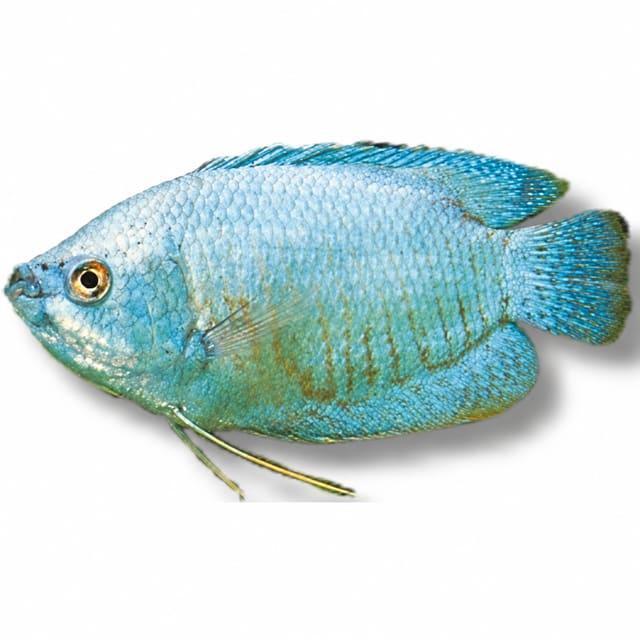
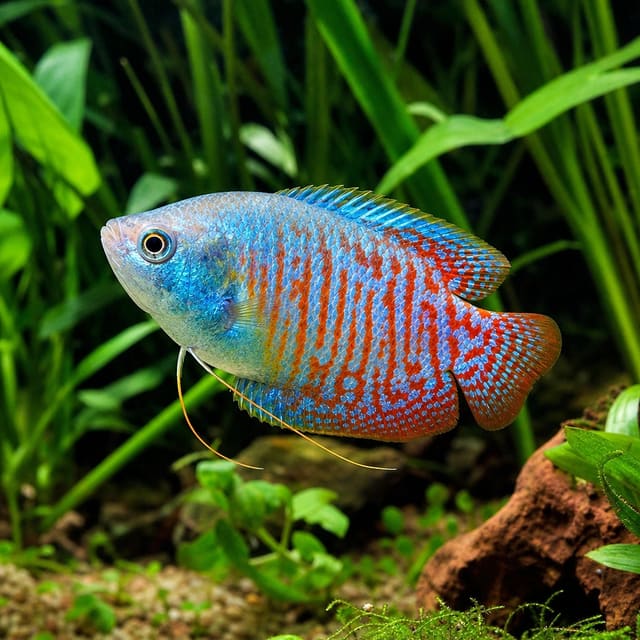
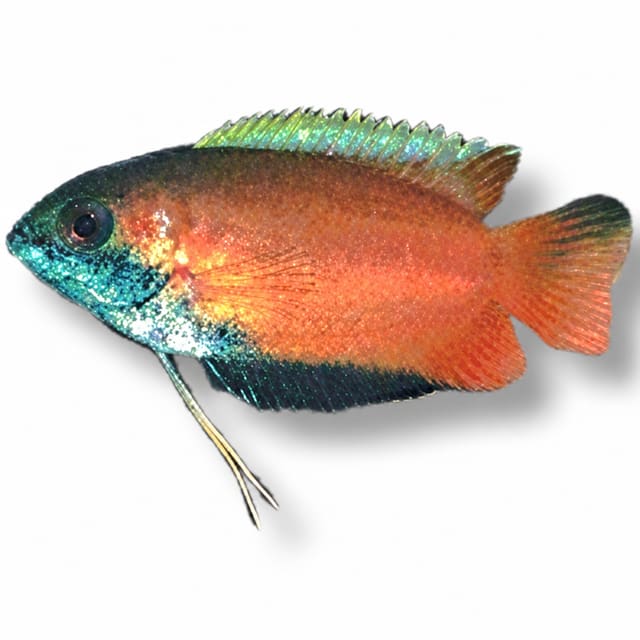
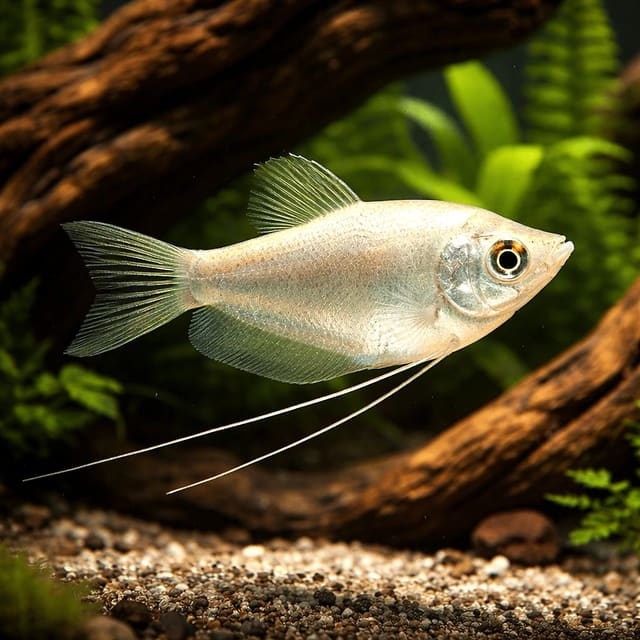
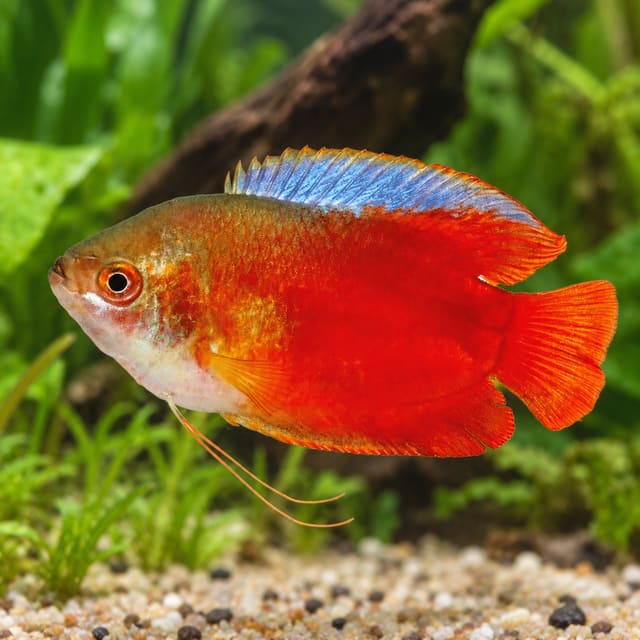
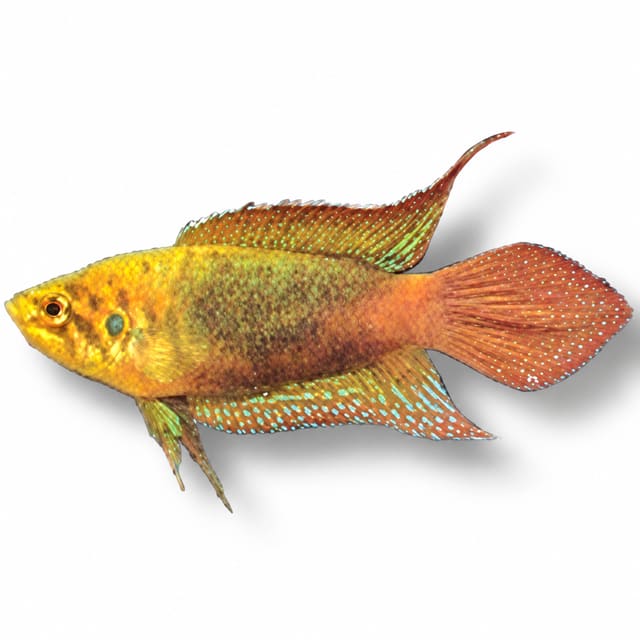
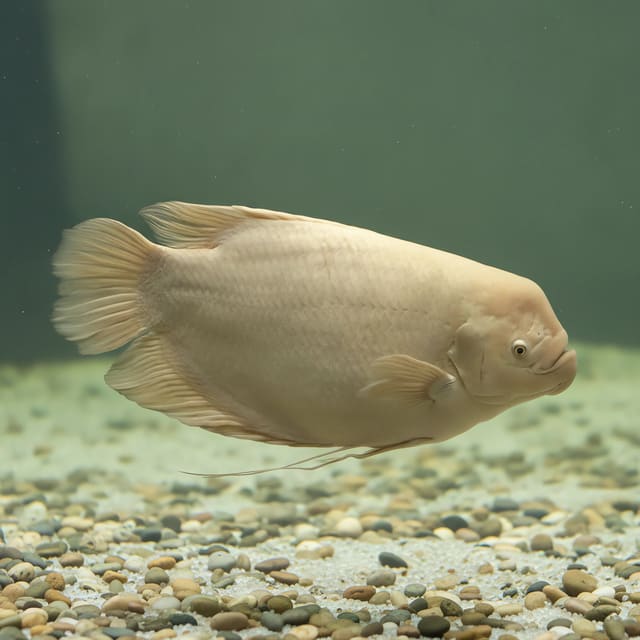
The gallery images are representative of this type of animal rather than photographs of the exact animal supplied, so colours can look slightly different from the live animal. Female dwarf gouramis are generally more subdued and silvery than males. Their quieter appearance is part of their character, so choose this fish because you want a female and can meet her needs, rather than expecting the intense pattern of a brightly coloured male.
Begin with the aquarium she will actually enter. It should already have a working biological filter, suitable water and enough plant cover to offer a choice of sheltered places. A fish that can hide comfortably and still reach food has more options than one that must remain exposed all day. Leave open routes to the surface as well: dwarf gouramis breathe air using a labyrinth organ, alongside their normal aquatic respiration.
Next consider the other inhabitants. A calm-looking female can still suffer when a male pursues her, when fin-nipping fish disturb her, or when feeding becomes a race she cannot win. A peaceful community can work, but compatibility involves more than matching a temperature range. You are choosing neighbours that allow her to behave and feed normally throughout the day.
If you are comparing small gouramis for the same planted-aquarium role, the Red Honey Gourami is a separate species to research alongside this one. Compare each species' own adult needs before deciding; this is a choice between fish, not a recommendation to combine them. The wider gouramis and labyrinth fish collection can help you see how varied this group is.
Choose the aquarium around shelter, footprint and the intended community before deciding how many animals it can hold. Allow room for adult behaviour, even when the fish arrives small. Make sure routine water testing and partial changes fit your week, and have a practical way to intervene if another inhabitant begins to bully her. Those preparations make the difference between simply fitting a fish into a tank and giving her a comfortable home.
The word dwarf does not mean this fish belongs in an unfiltered bowl or a tiny decorative container. Seriously Fish describes a tank around 60 × 30 × 30 cm, quoted as approximately 56 litres, as only just sufficient for a pair when arranged correctly. This is conditional guidance, not spare capacity for a busy community. A larger footprint gives you more ways to create shelter and distance, particularly when a male is present.
Use that advice carefully when comparing aquarium shapes. A tall narrow tank and a longer tank may hold similar amounts of water, but they offer different routes between hiding places. Think about where a fish can go if another blocks her path. Can she move behind planting, reach another sheltered corner and come back out without passing the same territory every time? The layout should make that possible.
Use substantial planting to create shaded areas and breaks in the view. Plants grouped only in one corner can leave most of the aquarium exposed; spreading cover more thoughtfully gives the fish a choice. Leave some open water between planted areas so that she can move freely and you can observe feeding. A balance of cover and access is more useful than filling every centimetre with decoration.
Floating vegetation can help create shade near the surface, while branches or aquarium-safe wood give additional structure lower down. Keep surface access open when plants grow, and check that maintenance has not allowed a thick mat to close every gap. The aim is an aquarium with sheltered routes and breathing space, not a sealed green ceiling.
A dark substrate is recommended in the species husbandry profile as part of a reassuring environment. Sand or aquarium gravel can support an attractive planted layout; choose a substrate you can keep clean and maintain around the plants. Avoid squeezing the entire layout around one ornamental object if doing so leaves no alternative refuge. The fish's routes matter more than a symmetrical display viewed from the sofa.
Dwarf gouramis do not appreciate turbulent water. Arrange the filter return so that it does not drive a hard jet through every place the fish might rest or feed. Watch the aquarium after you adjust the outlet: a fish repeatedly pushed sideways or forced to work hard just to remain in one place is telling you that the usable sheltered area needs attention.
Gentle flow does not mean turning the filter off or allowing waste to build up. Filtration remains essential. The practical task is to retain continuous filtration while distributing the return more gently and providing calm areas within the layout. Check the equipment instructions before restricting flow, and keep the intake clear of accumulated debris and loose plant material.
A secure cover and an accessible surface are sensible parts of the setup. Gouramis need to reach air, and their ability to do so does not compensate for poor water. Leave space above the water beneath the cover, maintain the aquarium normally and look at the fish's overall breathing pattern. An occasional surface visit is different from a sudden change accompanied by distress.
For routine aquarium keeping, the Seriously Fish profile gives 22–27°C, pH 6.0–7.5 and general hardness 2–18 dGH. These are species husbandry ranges. Pick conditions within them that suit the whole proposed aquarium and can be maintained consistently, rather than adjusting the water repeatedly to chase a single number. A stable routine is easier to manage when you understand both your tap water and the aquarium water.
| Check | Practical guidance |
|---|---|
| Temperature | 22–27°C as aquarium guidance; check with a thermometer. |
| pH | 6.0–7.5 for routine keeping. |
| General hardness | 2–18 dGH; measure rather than guessing from pH. |
| Ammonia and nitrite | Zero mg per litre under OATA aquarium guidance. |
Temperature, pH and hardness describe different aspects of water. A matching temperature alone cannot make a tank suitable, and pH does not tell you the general hardness. Record the actual test results before ordering. The water chemistry guide explains what the measurements mean, while the water matcher can help compare measured conditions with published guidance.
A filter needs an established population of bacteria to process the waste produced by fish and feeding. The RSPCA explains that fish release ammonia, which is toxic; biological filtration converts it to nitrite, which is also toxic, and then to the less harmful nitrate. Clear water alone does not demonstrate that this process is working. Testing supplies information that looking through the glass cannot.
If the aquarium is new, prepare and mature it before adding livestock. Use the first tropical tank guide to organise that preparation. A heater and filter running in an empty tank are equipment in operation; the important question is whether the aquarium can safely process the waste that its inhabitants will create. Do not use the gourami to test whether that has happened.
Increase stocking gradually and continue testing after an addition. More fish usually mean more feeding and more waste, so an aquarium that handled its previous inhabitants is not automatically ready for a large increase. When planning a community, spread decisions over time and observe the aquarium's response. This also makes it easier to recognise which change preceded a problem.
OATA's general gourami guidance recommends a partial water change of 25% at least once every week and water testing at least once a week. Use that as a starting routine and respond to the aquarium's results. The same guidance sets nitrate at no more than 20 mg per litre above the level in the normal tap-water supply. Comparing tank and source water gives that figure its proper context.
Treat replacement tap water with a suitable conditioner to address chlorine or chloramine before it enters the aquarium. Prepare it so that the change does not create an abrupt temperature difference. Work around the plants carefully, remove accumulated waste and check that the filter is running normally when you finish. A written maintenance note can be as simple as the date, water changed, test results and anything unusual you noticed.
When filter media needs cleaning, OATA advises a light rinse in water removed from the aquarium rather than tap water. The purpose is to remove obstruction while conserving the bacteria you depend on. Check the manufacturer's maintenance instructions too. Clean equipment should still be biologically useful equipment; replacing every part at once is not a sensible shortcut to a healthy mature system.
Dwarf gouramis are omnivorous. The species profile describes small invertebrates and material associated with algae among their natural foods, and recommends a good-quality dried aquarium food as a staple. Small live or frozen foods can provide variety. Choose pieces the fish can actually take, then watch whether she swallows them and returns for more rather than merely investigating them.
OATA's broad gourami advice is to offer only what the fish can consume within a few minutes, once daily. It lists suitable small live or frozen items such as daphnia and small bloodworm alongside prepared food. This is portion guidance, not an invitation to leave a large ration in the aquarium. Adjust the amount to what the fish consumes and remove leftovers instead of allowing them to settle into the planting.
A female may appear interested in feeding while still receiving very little. Watch individual fish, not just the commotion around the food. If faster inhabitants clear the surface before she approaches, putting in more food can increase waste without solving her access problem. Try feeding where she feels sheltered and observe whether the distribution of food allows every intended inhabitant to eat.
Different fish may feed in different places, so judge the complete meal. A gourami that comes out after the busiest fish have finished may still eat adequately if suitable food remains accessible. On the other hand, a fish that repeatedly retreats when approached by another inhabitant may need a change in layout or company. Appetite and confidence are linked in the practical business of getting enough food.
Use variety sensibly. The aim is a suitable staple supported by appropriate supplementary foods, with consistent attention to portion size. Colour is not a reason to overfeed, and a female need not look like a mature male to be in good condition. Assess her body condition, activity and feeding response together rather than using a particular shade as the target.
Get familiar with how this individual normally eats and moves. OATA recommends watching changes in swimming, breathing, colour, body condition, fins and appetite. Reduced interest in food, persistent hiding or damaged fins should prompt you to check the aquarium and seek appropriate advice. Describe what changed and when, and have current water results available when contacting the retailer.
A change in colour or a missed meal is not enough to diagnose a specific disease. The species has recognised health concerns in aquarium husbandry literature, so observation before and after introduction is important. Ask about the fish's condition and recent history if you have concerns, and seek qualified advice for a sick animal. Do not substitute an unsourced medication routine for testing and a proper assessment.
FishBase records a maximum of 9.5 cm total length for male or unsexed dwarf gouramis. Total length includes the tail. Seriously Fish gives 88 mm standard length, equivalent to 8.8 cm, which excludes the tail. These measurements use different methods and do not establish a precise maximum for a female. They are useful species context, not a prediction that the particular female supplied will reach either exact figure.
The supplied 4–5 cm grade describes the fish at dispatch. Plan the aquarium for growth and adult behaviour rather than treating that small arrival size as a permanent limit. Female dwarf gouramis are described as smaller than males in the species profile, but that comparison does not give a precise female-size number. Space for retreat and compatible company remains important throughout growth.
Tropical Fish Co's delivery and Live Arrival Guarantee policy explains packing, receipt and claims. Fish are hand-bagged with pure oxygen and packed in insulated boxes, with heat packs when conditions call for them. The confirmed delivery date and tracking are sent by email. Arrange for someone to receive the parcel: live fish cannot be left unattended.
For a Live Arrival Guarantee claim, keep a continuous unboxing video showing the parcel still sealed, the opening and the fish still in their sealed bag. Open and inspect the parcel on the day it arrives and contact the team that day if something is wrong, with your order number and the video. This is evidence for a claim, rather than a biological requirement for settling a fish.
Follow the supplied arrival instructions and acclimatise slowly. The store guidance includes floating the bag for 20–30 minutes and keeping transport water out of the aquarium. Have the prepared aquarium ready before opening the parcel so that you can give the process your attention. If a fish appears distressed or the arrival situation differs from the instructions, contact the team promptly for advice specific to what you are seeing.
After introduction, give the fish cover and observe without repeatedly disturbing her. Check that she can reach the surface and find a sheltered resting place, and that established inhabitants allow her to move around. Look again at feeding time and after the aquarium has quietened. The first impression during release is only one moment; the useful information is whether she settles into ordinary movement, breathing and feeding.
Think of compatibility as a set of everyday opportunities: the female can rest without being chased, breathe without being blocked and feed without losing every meal. Seriously Fish describes dwarf gouramis as both shy and territorial. That combination explains why a fish may seem withdrawn in one aquarium yet become involved in disputes in another. The surrounding animals and the layout make a real difference.
Small, peaceful schooling fish such as harlequin rasboras are named in the species profile as possible companions. Some other rasboras and suitably peaceful barbs can also be considered. Those are starting points for researching a community, not guarantees attached to an entire family. Check the exact species' water needs, adult space and feeding behaviour before bringing the animals together.
Avoid fish known to nip fins or intimidate quieter neighbours. A tankmate need not injure the gourami to cause trouble: persistent pursuit, repeated displacement from shelter and competition at every meal are practical reasons to reconsider the mix. Large or very vigorous companions can leave a dwarf gourami living around the edges of the aquarium instead of using it comfortably.
Look at the whole community rather than approving each fish separately against the gourami. A small schooling species still needs its own appropriate group and swimming room. A bottom-dwelling animal still contributes waste and needs food. If meeting another species' requirements would remove the quiet planted space that makes this aquarium suitable, the combination needs a different plan.
A female is not a guaranteed solution to a male's aggression. The species husbandry guidance discusses male-and-female keeping but also warns that a male can be hard on a female. Dense cover and enough room to break contact are essential considerations. Do not interpret two fish seen together peacefully for a few minutes as proof that the arrangement will remain comfortable.
Watch whether the female can leave the male's immediate area and remain out of view. An aquarium with several separate refuges offers more choices than one with a single cave. If she is continually trapped near the surface, behind equipment or in one corner, investigate promptly. Her ability to come out and eat matters as much as the fact that she can physically disappear into a hiding place.
Dwarf gouramis build bubble nests, and breeding behaviour can change how a male uses space. This natural history is a reason to monitor a mixed-sex aquarium carefully; it is not a promise that the purchase will produce offspring. A separate, prepared accommodation plan is sensible whenever you keep fish that may need separating. Additional fish should never be bought as a quick way of distracting an already aggressive individual.
Do not assume a group will behave like a shoal of rasboras. Seriously Fish advises against casually keeping groups of dwarf gouramis and particularly warns about multiple males in limited space. Other labyrinth fish, including bettas, can also complicate territorial relationships. The fact that two species breathe air or occupy the upper water does not establish that they belong together.
When considering a change to an established aquarium, write down the existing fish, the aquarium dimensions and your actual water results. Include any history of chasing or feeding competition. Those details are more useful for deciding on a female gourami than a general description such as community tank. Review the plan before purchase and remain ready to act if the fish's experience differs from the plan.
FishBase records 9.5 cm total length for male or unsexed dwarf gouramis, while Seriously Fish gives 88 mm standard length excluding the tail. Neither is a female-specific maximum. Plan for an adult fish and space for retreat, rather than using the dispatch size as a permanent guide.
Seriously Fish describes an aquarium around 60 × 30 × 30 cm, quoted as approximately 56 litres, as only just sufficient for a correctly arranged pair. A community or difficult territorial relationship needs more space and careful planning. Plant cover and usable footprint matter alongside water volume.
Do not assume dwarf gouramis need a shoal or that a group will be trouble-free. They can be shy and territorial, and the species guidance discourages casual group keeping. Assess the aquarium and intended fish individually, with room for retreat and a practical separation plan.
Preparation matters more than a simple beginner label. The aquarium needs a mature filter, suitable water, gentle current and carefully chosen companions. A keeper must be able to test water, maintain the tank and recognise feeding competition or harassment before adding this fish.
Use a good-quality dried aquarium food as the staple, with suitable small live or frozen foods for variety. Observe whether the fish actually eats. OATA's broad gourami guidance is to feed only what can be consumed within a few minutes once daily and avoid leaving excess food.
The species aquarium guidance is 22–27°C, pH 6.0–7.5 and general hardness 2–18 dGH. Keep conditions stable and suitable for every planned inhabitant. Ammonia and nitrite should be zero, so test water as well as checking the heater.
Small peaceful fish such as harlequin rasboras can be considered where their own needs match the aquarium. Avoid fin nippers, intimidating fish and excessive feeding competition. Male gouramis require particular care because a female may need substantial refuge from pursuit.
Tropical Fish Co hand-packs fish in oxygenated bags and insulated boxes, with heat packs when required, for a licensed live-animal courier. Be present for the confirmed delivery. A Live Arrival Guarantee claim requires same-day contact and continuous video showing the sealed parcel being opened and the fish still in the sealed bag.
FishBase dwarf gourami record provides species identity, native distribution and the labelled total-length record. Its synonym table connects the older name with Trichogaster lalius.
Seriously Fish: dwarf gourami provides aquarium guidance and the standard-length measurement. OATA's gourami care sheet covers general maintenance, and the RSPCA aquarium environment guidance explains why filtration is essential.
No reviews for this item yet. Bought one? Honest reviews only, good or bad.
What customers say about ordering from us
Easy website plenty of info on fish your buying great to pick a time slot
TRACEY DURRANT · 7 Oct 2026
Got some lovely fish thank you
Kevin Mackie · 7 Oct 2026
Reviews of our shop, collected by Judge.me, an independent third-party review collector. Newest first.