−14%
Moderate
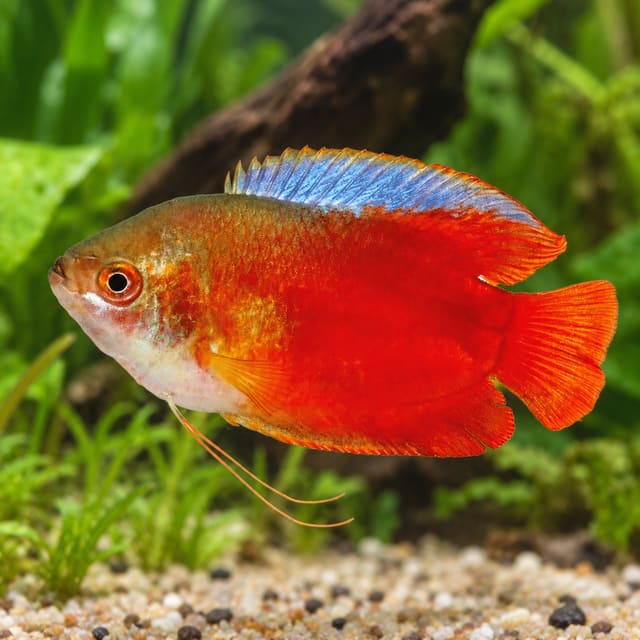
Gold Gourami (Trichopodus trichopterus)
24–28°C · pH 6–8 · 81L
£2.99£4.99

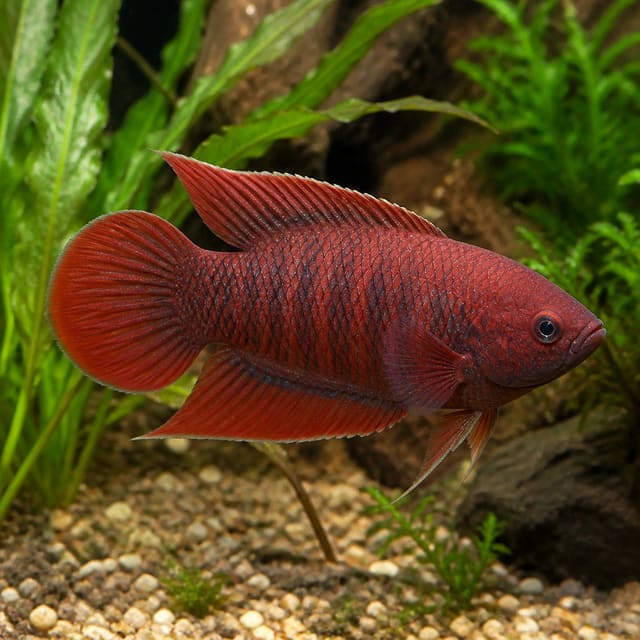
The Round-Tailed Paradise Fish (Macropodus ocellatus) is a freshwater labyrinth fish from China, Japan and Korea that reaches 8.6 cm. It suits observant keepers who can provide 10–22°C, pH 6.0–7.5 and 5–20 dGH; one can live alone, while groups need a suitably sized, well-decorated aquarium. Sold individually in 4-4.5 cm and 5-6 cm sizes.
Adult size is the maximum length this species reaches at full maturity (scientific sources). The livestock you receive will be younger and smaller — pick a size above for the actual shipping size. Product-photo provenance and any image-specific limitations are stated on the listing.
Save when buying multiple fish. Each quantity is one fish; sex and pair formation are not guaranteed unless the selected variant explicitly states them.
The Round-Tailed Paradise Fish (Macropodus ocellatus) is a freshwater labyrinth fish from China, Japan and Korea that reaches 8.6 cm. It suits observant keepers who can provide 10–22°C, pH 6.0–7.5 and 5–20 dGH; one can live alone, while groups need a suitably sized, well-decorated aquarium. Sold individually in 4-4.5 cm and 5-6 cm sizes.
Adult size is the maximum length this species reaches at full maturity (scientific sources). The livestock you receive will be younger and smaller — pick a size above for the actual shipping size. Product-photo provenance and any image-specific limitations are stated on the listing.
Maintain these water conditions for optimal health and vibrant colors
The Round-Tailed Paradise Fish is Macropodus ocellatus, a freshwater labyrinth fish in the gourami family, Osphronemidae. FishBase records the species from China, Japan and Korea and gives a maximum of 8.6 cm total length. It suits observant keepers who can provide cooler aquarium conditions, unobstructed surface access, mature filtration and a well-decorated footprint while responding promptly if territorial behaviour develops.
Older catalogues and aquarium literature may call this fish Chinese Paradise Fish or Macropodus chinensis. FishBase notes that many authors have used the latter name for this species. The clear identity for aquarium planning is Macropodus ocellatus, and the rounded caudal fin is one of the diagnostic characters described for it.
One purchase supplies one animal in the selected size. Use the live size selector to choose 4-4.5 cm or 5-6 cm. The size you select is the size supplied, not the adult size. These measurements describe the dispatch band, so plan the aquarium using the recorded adult maximum rather than treating either size as fully grown.
Sex is guaranteed only when the selected option explicitly states male or female. This Round-Tailed Paradise Fish listing has no sex-guaranteed option.
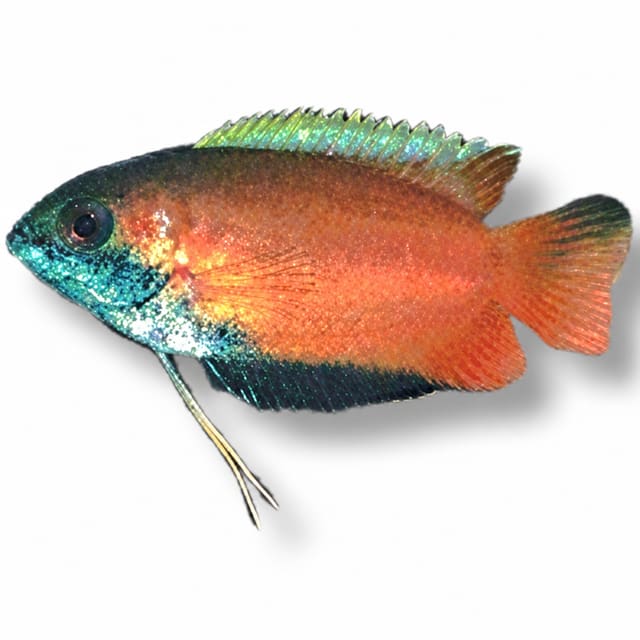
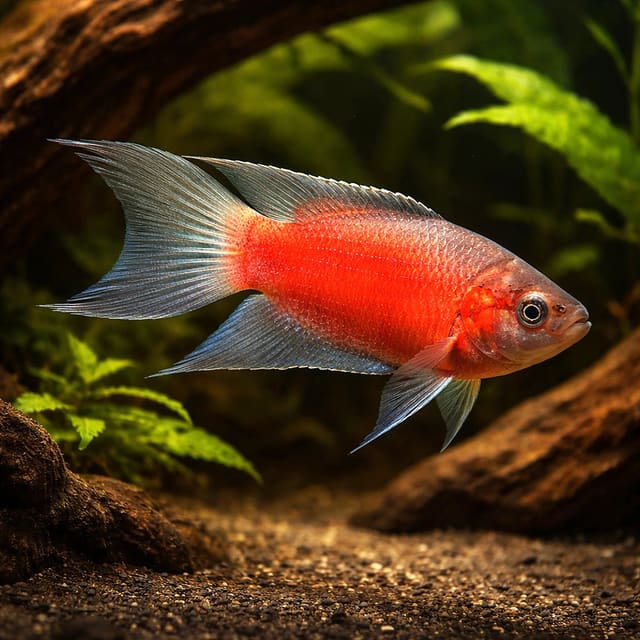
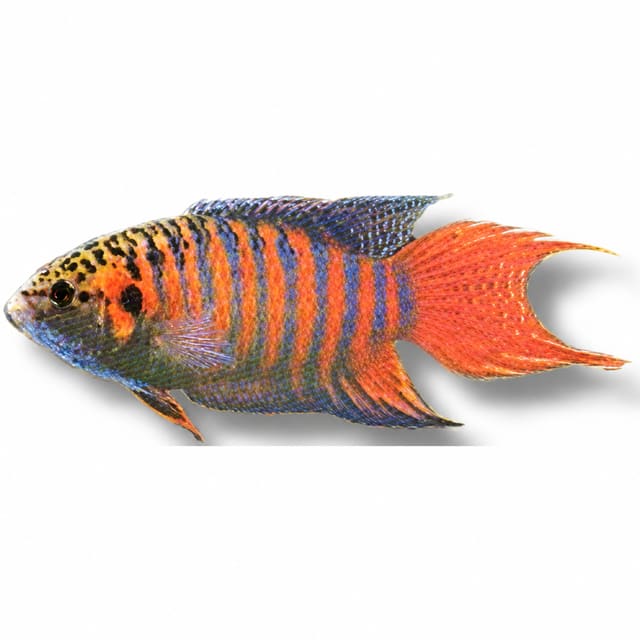
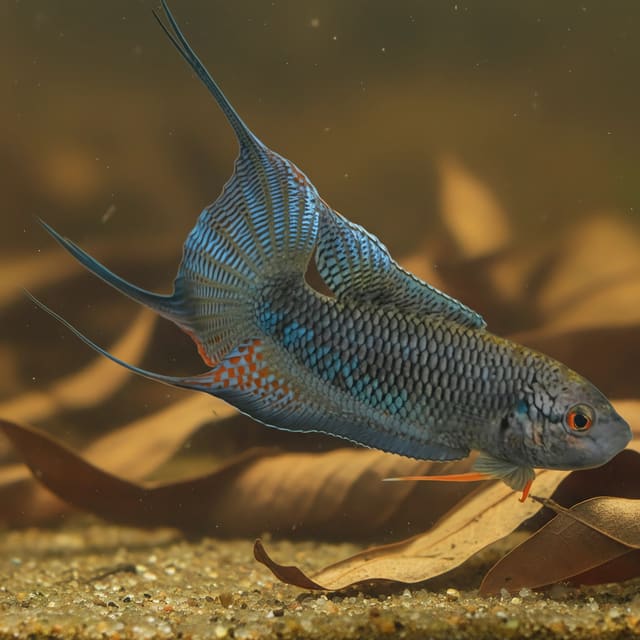
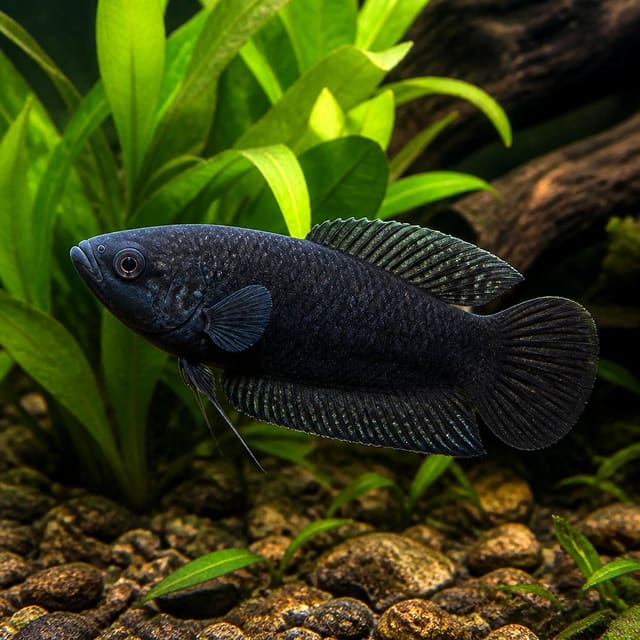
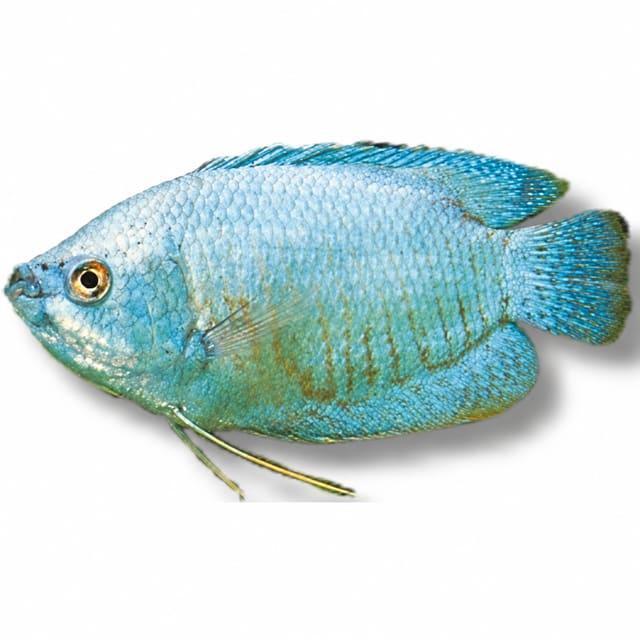
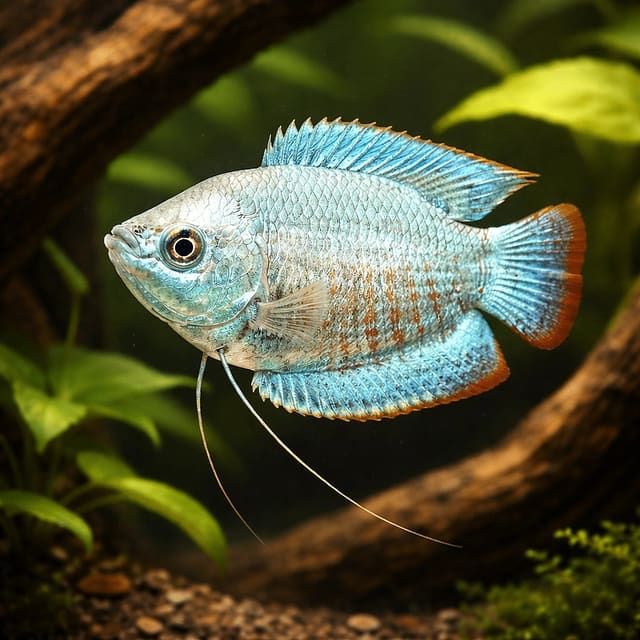
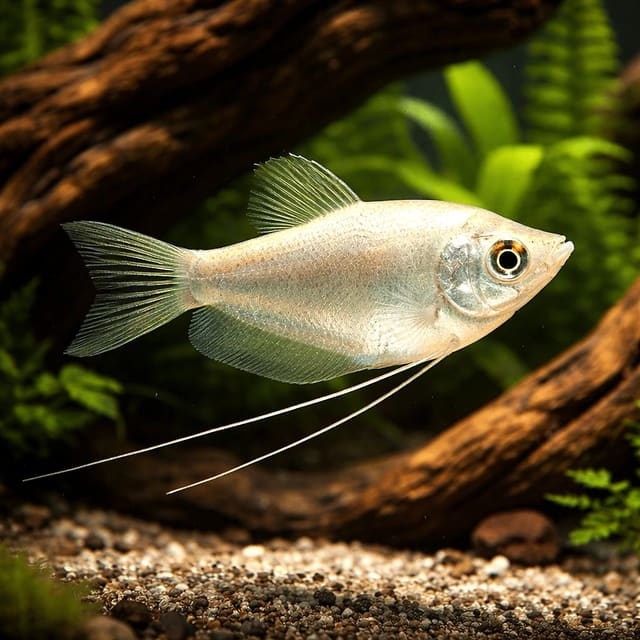
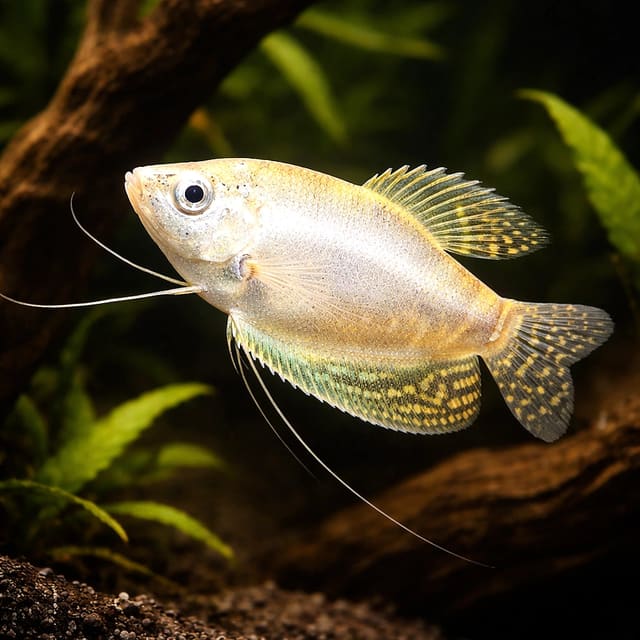
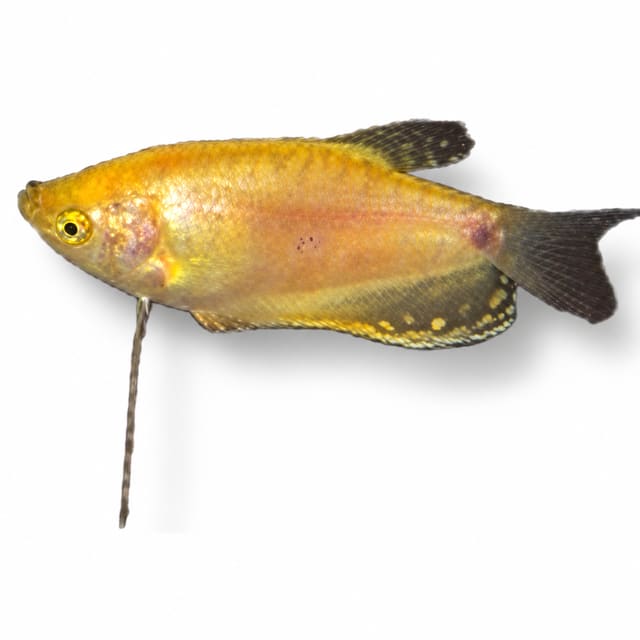
Some gallery images are representative, based on reference photographs of this species, and none shows the exact animal supplied, so colours can look slightly different from the live animal.
For dispatch days, receiving arrangements and the terms of the Live Arrival Guarantee, read our delivery information before placing a livestock order.
The 8.6 cm figure from FishBase is a recorded maximum total length, including the tail. It is a planning reference rather than a promised outcome for every individual. The selected dispatch size may therefore grow substantially, and territorial space matters in addition to body length.
Seriously Fish gives species-level aquarium guidance of an 80 × 30 cm base and approximately 72 litres as the minimum that should be considered for a single pair. Use the footprint as well as the nominal volume when judging a proposed aquarium. A long, decorated base offers more scope for separate retreats and broken sight lines than a narrow vessel with the same volume.
| Decision | Planning value |
|---|---|
| Recorded maximum | 8.6 cm total length |
| Pair aquarium | At least 80 × 30 cm base, approximately 72 litres |
| Aquarium temperature | 10–22°C |
| pH | 6.0–7.5 |
| General hardness | 5–20 dGH |
| Social behaviour | Reproductively active males become territorial |
A single fish can be considered where the aquarium gives it sufficient swimming room, surface access, cover and territory. A pair or group requires closer attention to footprint and retreat space. Seriously Fish says a group can be maintained in a suitably sized, well-decorated aquarium, but that statement should not be treated as a fixed stocking number for every layout.
Choose companions only after comparing adult size, temperature, water chemistry, feeding behaviour and temperament. Shared water values alone do not make two fish behaviourally compatible.
We classify this fish as intermediate because success depends on more than meeting a temperature range. The keeper must provide a mature filter, unobstructed surface access, a decorated footprint and a practical response if territorial chasing develops. These tasks are manageable, but they require observation and forward planning.
Like other anabantoids, it possesses a labyrinth organ that allows atmospheric air breathing to a degree. This adaptation does not replace filtration or make polluted water acceptable. Keep a clear route to the surface while maintaining zero ammonia and zero nitrite.
| Suits | Not suited to |
|---|---|
| Keepers who can maintain 10–22°C without abrupt changes | Aquariums that must remain above 22°C |
| Well-decorated aquariums with surface access | Layouts without cover or retreat routes |
| Keepers prepared to monitor territorial behaviour | Homes requiring a guaranteed sex or pre-matched pair |
| Plans using robust companions after careful screening | Communities centred on timid fish, edible small fish or fin nippers |
Browse the gouramis and labyrinth fish collection when comparing alternatives. Similar family placement does not make two species automatic tank mates, so assess each option by its own adult requirements.
Maintain this species at 10–22°C, pH 6.0–7.5 and 5–20 dGH, following the species aquarium values published by Seriously Fish. Keep changes gradual. When the room or tap water changes seasonally, measure the aquarium instead of assuming that its temperature and chemistry have remained constant.
FishBase records a broader environmental temperature range of 4–25°C and hardness up to 25 dH. Those figures describe the species across its wider environment; use the narrower aquarium values for routine husbandry. Do not move the fish abruptly between the ends of either range.
OATA’s gourami and paradise-fish sheet gives broad group guidance: ammonia and nitrite should be zero mg per litre, while nitrate should not exceed 20 mg per litre above the normal tap-water level. These waste values are daily welfare priorities even when pH and hardness sit comfortably inside the stated range.
| Test result | Action |
|---|---|
| Ammonia above 0 mg/l | Stop adding livestock, test again and correct the waste-control problem. |
| Nitrite above 0 mg/l | Reduce the immediate load on the filter and protect its bacterial media. |
| Rising nitrate | Review feeding, stocking and the water-change routine. |
| Temperature outside 10–22°C | Correct it gradually and identify the room or equipment change. |
| Unexpected pH movement | Check tap water, carbonate stability and aquarium materials before intervening. |
Our water chemistry guide explains what the main tests mean. Record your results, then use the water parameter matcher to compare measured values with the care range. A written weekly trend is more useful than one isolated result because it shows whether the aquarium is stable.
The RSPCA explains why a working biological filter is vital: fish release toxic ammonia, beneficial bacteria convert it to nitrite, and further bacteria convert nitrite to safer nitrate. Clear water does not demonstrate that this cycle is working, so test ammonia and nitrite rather than judging the aquarium by appearance.
Establish and mature the filter before adding the fish. Stock additions and extra feeding increase the amount of waste that the bacterial population must process. OATA advises increasing fish numbers slowly because rapid stocking can produce new tank syndrome when the filter cannot keep pace.
For an aquarium of approximately 72 litres, Seriously Fish gives a turnover of four to five times the aquarium volume per hour and a filter rating around 290–360 litres per hour. Treat that as a starting calculation for the whole system. Media condition, head height, clogged sponges and the aquarium layout can reduce real flow.
Create circulation without forcing the fish to remain in one strong jet. Driftwood, plants and outlet direction can form calmer areas while the filter continues to move water through its media. If the animal continually struggles against the outlet, redirect the flow and check that quieter swimming space remains accessible.
A filter rating is not permission to crowd the aquarium. Territorial space, adult size and compatible behaviour can limit stocking before the biological filter reaches its nominal capacity.
Use a fully decorated aquarium with driftwood roots or branches arranged to create shaded places and visual boundaries. Seriously Fish also recommends floating or surface vegetation when breeding is intended. The aim is to combine refuge with usable swimming routes rather than filling every part of the aquarium with rigid ornament.
Place taller plants and wood so one fish can move out of another’s direct view. A retreat should have more than one route of approach where possible; a single dead end may trap a pursued fish. Keep hardscape stable and leave enough open water for normal movement.
Dried leaf litter may strengthen the natural appearance, add cover and encourage microbial colonies that can become early food for fry. Use aquarium-safe material and retain a maintenance routine that prevents accumulated waste from being hidden indefinitely beneath the leaves.
The labyrinth organ permits atmospheric breathing to a degree, so the fish must be able to reach the surface. Thin floating plants when they form an unbroken mat. Leave both sheltered surface patches and open breathing points, and check that equipment or decor does not confine the fish below the surface.
A tight-fitting cover is particularly important in a breeding aquarium because developing fry require access to warm, humid air above the water. Seriously Fish warns that unsuitable air conditions can impair development of the labyrinth organ. Keep the cover secure while allowing the installed equipment to operate as designed.
This species can be maintained in an unheated aquarium in many cases, and a cool winter period may be beneficial. Measure the actual room and aquarium temperatures throughout the day before deciding whether a heater is required. Seriously Fish estimates roughly 25 W to hold its stated range in a 72-litre aquarium when the room is around 20°C, but the correct equipment depends on the real room, aquarium and heat loss.
Seriously Fish describes this species as likely to prey on insect larvae and similar food in nature. In the aquarium it recommends small live or frozen Daphnia, Artemia, white worm and grindal worm, while noting that some high-quality dried products may also be accepted.
Use foods that fit comfortably into the fish’s mouth. A combination of accepted dried food and varied live or frozen items gives a more practical routine than relying on one food alone. Watch the animal eat so food does not disappear into plants or substrate unnoticed.
OATA advises feeding gouramis and paradise fish once a day, offering only what they can eat within a few minutes. Begin with a small portion and stop when the fish loses interest. Remove persistent leftovers because uneaten food breaks down and adds toxic waste to the water.
| Food choice | How to use it |
|---|---|
| High-quality dried food | Offer only when the fish accepts it readily. |
| Frozen Daphnia or Artemia | Use appropriately sized portions as part of a varied ration. |
| Live Daphnia or Artemia | Use a dependable aquarium-food source and observe the feeding response. |
| White or grindal worms | Offer in controlled amounts rather than allowing excess to remain. |
| Uneaten food | Remove it and reduce the next portion. |
A fish that eats everything immediately may still be receiving too much if waste accumulates or body condition rises excessively. Conversely, repeated missed meals deserve a check of food size, temperature, water quality and aggression. In a community, confirm that slower fish also receive food rather than increasing the total ration solely for the most assertive feeder.
Reduced interest in food is one of OATA’s warning signs. Treat a sudden appetite change as a reason to inspect the aquarium and the fish, not as a reason to keep adding different foods that will decay.
Complete the aquarium preparation before the fish arrives. The filter should be mature, ammonia and nitrite should both test at zero mg per litre, and the temperature should sit within 10–22°C. Confirm that the selected layout gives the animal surface access and a retreat away from established residents.
Our first aquarium guide explains how to prepare and mature a system before livestock is added. A pump that has simply been switched on is not the same as an established biological filter capable of processing fish waste.
OATA recommends adding fish slowly because the bacterial population must increase when stocking and feeding rise. One new fish still changes the biological load. Test the aquarium before the introduction, then repeat ammonia and nitrite checks during the first week so a limited filter capacity is found early.
Compare the aquarium values with the 10–22°C, pH 6.0–7.5 and 5–20 dGH guidance. Avoid changing several parameters at once merely to reach a preferred point inside each range. Stability within the range is easier to manage than repeated chemical adjustment.
| Checkpoint | What to confirm |
|---|---|
| Before introduction | Zero ammonia and nitrite, suitable temperature and working filtration. |
| First observation | The fish can reach the surface and move away from other inhabitants. |
| First feeding | It recognises an appropriately sized food and can eat without harassment. |
| Following days | Breathing, colour, swimming, appetite and temperament remain consistent. |
| End of first week | Waste tests remain safe and the territorial layout still works. |
If chasing prevents another fish from feeding or resting, use the planned separation option rather than waiting for torn fins. A peaceful first hour does not guarantee that the relationship will remain unchanged as the new fish settles.
A single Round-Tailed Paradise Fish can be considered without imposing a shoaling requirement. The aquarium must still provide sufficient space, decoration, surface access and enrichment. Solitary housing is not a substitute for maintenance, varied feeding or daily observation.
Seriously Fish says this species can be maintained as a group in a suitably sized, well-decorated aquarium. It also states that males become territorially aggressive when reproductively active. These two facts make the layout and response plan more important than an arbitrary fish count.
Use at least the 80 × 30 cm base and approximately 72-litre minimum described by Seriously Fish for a single pair. Sex is not promised by this offer, and ordering two animals does not establish their sex or social relationship. Give both fish separate retreat routes and be ready to divide them if persistent aggression develops.
Increase the usable footprint and decoration beyond a pair plan. Watch whether one animal controls the surface, food or all preferred cover. A group is functioning poorly if a subordinate cannot feed, rest or leave another fish’s line of sight, even before physical damage appears.
Males are described as larger than females and as having extended soft rays in the dorsal, anal and caudal fins. These mature tendencies can help explain observed behaviour, but they do not create a sex guarantee for a selected dispatch-size animal.
This species is a bubble nester. Seriously Fish describes the male constructing a nest within floating vegetation and displaying with elongated dorsal, anal and caudal fins. A nest signals reproductive behaviour; it does not guarantee compatible adults, fertile eggs or successful fry development.
Floating or surface vegetation can support the nest and provide shelter. Keep part of the surface accessible for normal atmospheric breathing. A close-fitting cover helps retain the warm, humid air needed by developing fry, whose labyrinth organ may be impaired without it.
Reproductive activity can change the way a male uses the aquarium. A fish that previously tolerated companions may begin controlling a surface patch or chasing rivals. Increase observation as soon as nest building, repeated display or territory defence appears.
A pair does not necessarily need to be separated before spawning according to the profile, and females are usually tolerated while the nest is being built. Tolerance may change, so the aquarium still needs cover and a practical way to separate fish if pursuit becomes persistent.
Choose quantity according to the aquarium’s capacity for several possible social outcomes. Do not depend on breeding as the reason two animals will tolerate one another.
OATA strongly recommends a 25% partial water change at least once a week for gouramis and paradise fish. Treat replacement tap water with a conditioner that removes chlorine or chloramine before it enters the aquarium. Use the maintenance session to remove settled waste and check the filter for restricted flow.
Test water at least weekly. Record ammonia, nitrite and nitrate alongside temperature, then add pH and hardness checks when tap-water conditions change or aquarium materials may be influencing chemistry. A regular record helps distinguish a sudden problem from a gradual seasonal movement.
Atmospheric air breathing is part of labyrinth-fish biology, so an occasional visit to the surface is not automatically a problem. Judge it alongside swimming posture, gill movement, appetite, colour and the behaviour of other fish. Several changes occurring together deserve prompt investigation.
| Change you notice | First response |
|---|---|
| Faster or slower gill movement | Test temperature, ammonia and nitrite and check filter operation. |
| Hanging at the surface | Compare it with the fish’s normal air-breathing pattern and inspect water quality. |
| Sitting on the bottom | Check swimming ability, aggression, temperature and waste values. |
| Darker or paler colour | Look for linked changes in breathing, hiding, feeding or temperament. |
| White spots or fluffy growth | Separate observation from diagnosis and seek appropriate health advice. |
| Reduced food intake | Check water, food size, temperature and access to the feeding area. |
Also watch for damaged fins, missing scales, ulceration, bumps and changes in body condition. Test the water first when health or behaviour changes, then contact us for further guidance if the cause is unclear or the animal continues to decline.
Do not let routine maintenance itself destabilise the system. Match replacement water reasonably, keep established biological media wet, and avoid cleaning every part of the aquarium aggressively on the same day.
Compatibility begins with overlapping temperature, pH and hardness, but it does not end there. The Round-Tailed Paradise Fish may become territorial when reproductively active, particularly around the upper aquarium and a bubble nest. A proposed companion must be able to feed and rest without entering continual conflict.
OATA says paradise fish can be semi-aggressive and are usually best kept on their own. When they are mixed with other species, its guidance is to choose robust tank mates and avoid timid species, small fish that could be eaten and fish that may nip their fins.
A workable arrangement allows every animal to reach food, use cover and leave another fish’s direct view. Brief display can occur, but repeated chasing, blocked feeding, persistent hiding or fin damage means the plan needs intervention. Aquarium size alone cannot guarantee a peaceful outcome.
The honest screening rule is simple: match the water values first, reject timid, edible or fin-nipping companions, then observe the actual individuals with separation space ready. Where behaviour between a proposed combination remains uncertain, plan for the less peaceful outcome rather than relying on a species label.
Write down the adult size, temperature range, normal feeding position and temperament of every resident before adding this fish. Compare those needs with 10–22°C, pH 6.0–7.5 and 5–20 dGH. Remove any candidate that needs warmer long-term conditions or falls into OATA’s timid, edible or fin-nipping categories.
| Observation | Decision |
|---|---|
| All fish feed and rest normally | Continue close observation as the new fish settles. |
| Short display with easy retreat | Watch frequency and confirm that neither fish loses access to resources. |
| One fish controls all surface cover | Add effective visual separation or divide the fish. |
| Repeated pursuit or blocked feeding | Separate rather than waiting for injury. |
| Damaged fins or scales | End the combination and check water quality and health. |
A calm introduction does not settle compatibility permanently. Reproductive condition can alter male territorial behaviour, and rearranging decor can change established boundaries. Reassess the arrangement whenever chasing, surface control or feeding access changes.
FishBase records a maximum of 8.6 cm total length for the Round-Tailed Paradise Fish, so plan its permanent aquarium around that adult figure rather than the supplied size.
Seriously Fish gives an 80 × 30 cm base and approximately 72 litres as the minimum that should be considered for a single pair. Use a mature, filtered and well-decorated aquarium with open surface access.
One can be considered without a shoaling requirement. Seriously Fish says this species can be maintained as a group in a suitably sized, well-decorated aquarium, but reproductively active males become territorial, so size the group around the aquarium footprint, cover and separation capacity.
We rate this fish intermediate because the keeper must maintain mature filtration, cooler stable water, open surface access and a decorated footprint, then respond promptly if territorial chasing develops.
Offer appropriately sized live or frozen Daphnia, Artemia, white worm or grindal worm, with high-quality dried foods when accepted. OATA’s group guidance says to feed only what it eats within a few minutes once a day.
Keep the Round-Tailed Paradise Fish at 10–22°C, pH 6.0–7.5 and 5–20 dGH, following the species aquarium values from Seriously Fish. Keep changes gradual and maintain ammonia and nitrite at zero mg per litre.
Paradise fish can be semi-aggressive, and reproductively active males become territorial. OATA says to avoid timid species, small fish that could be eaten and fish that may nip its fins; monitor chasing and separate fish if one cannot feed or rest.
OATA advises choosing robust tank mates while avoiding timid species, small fish that could be eaten and fin nippers. Match temperature, chemistry and adult space, then keep separation accommodation ready because individual behaviour may change.
Film every delivery continuously from the sealed parcel before opening it, showing the parcel being opened and the fish still inside the sealed bag. Someone must be present to receive it; float the bag for 20–30 minutes before releasing the fish, and never pour the bag water into the aquarium.
Independently collected by Judge.me from customers who bought this item. All reviews are shown.
Fish missing and some fish being incorrect