Easy
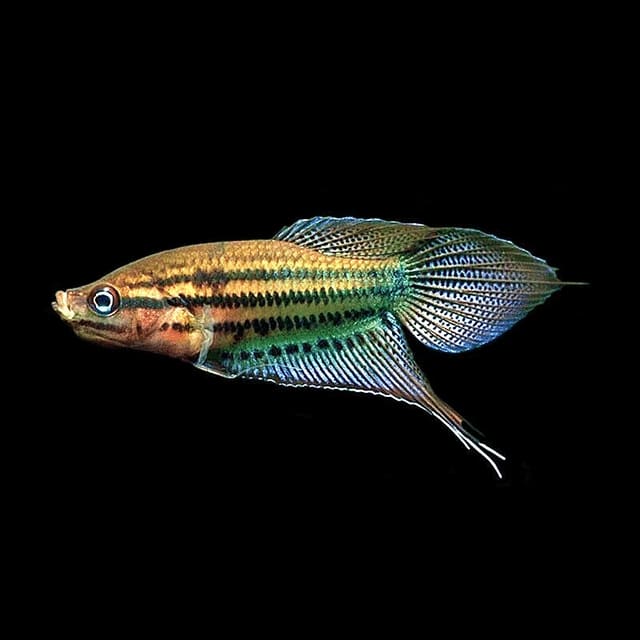
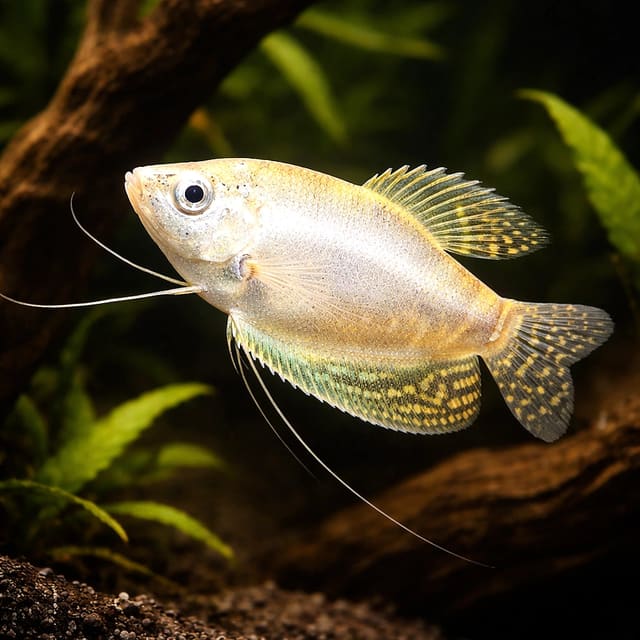
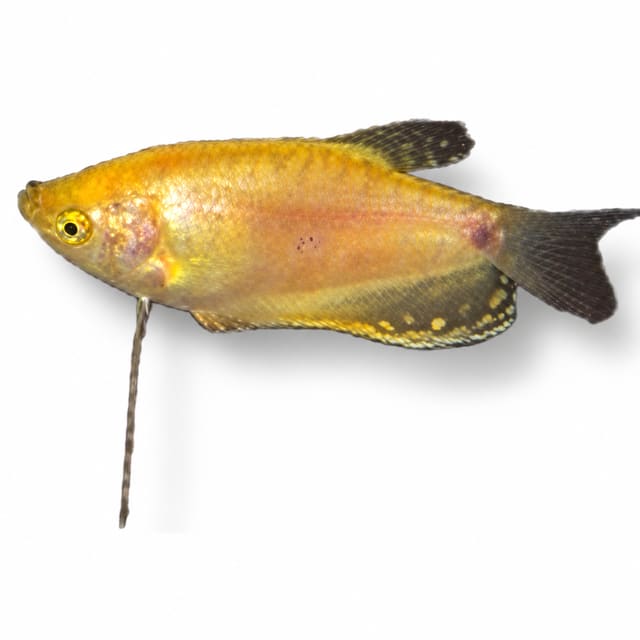
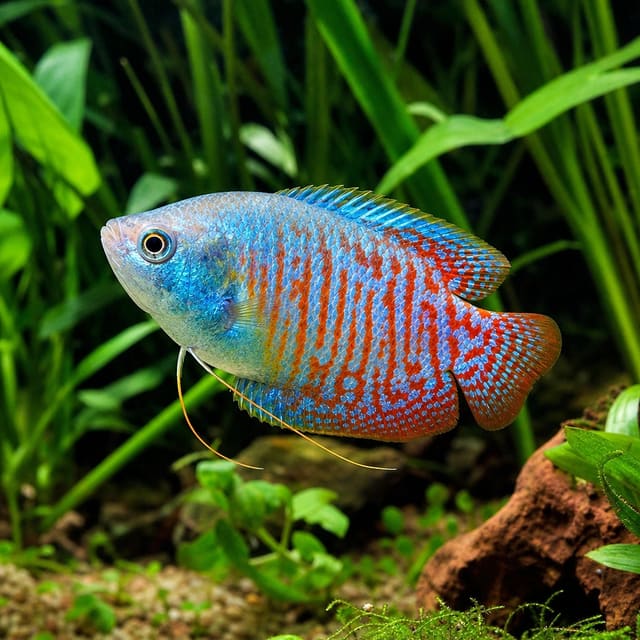
Red Honey Gourami (Trichogaster chuna)
22–28°C · pH 6–7.5 · 40L
£8.99

Striking Red Paradise Fish with bold colour and labyrinth breathing ability, ideal for standout tropical setups. Check the size selector for current options.
Adult size is the maximum length this species reaches at full maturity (scientific sources). The livestock you receive will be younger and smaller — pick a size above for the actual shipping size. Product-photo provenance and any image-specific limitations are stated on the listing.
Save when buying multiple fish. Each quantity is one fish; sex and pair formation are not guaranteed unless the selected variant explicitly states them.
Striking Red Paradise Fish with bold colour and labyrinth breathing ability, ideal for standout tropical setups. Check the size selector for current options.
Adult size is the maximum length this species reaches at full maturity (scientific sources). The livestock you receive will be younger and smaller — pick a size above for the actual shipping size. Product-photo provenance and any image-specific limitations are stated on the listing.
Maintain these water conditions for optimal health and vibrant colors
The Red Paradise Fish, Macropodus opercularis “Red”, is one of those rare species that feels both classic and strikingly modern. Long before many newer imports appeared in the hobby, paradise fish earned a reputation as hardy, intelligent labyrinth fish that could thrive in a well-run home aquarium. For aquarists, this red form stands out for its glowing body colour, flowing fins, air-breathing ability, and bold personality. Native to East Asia and reaching around 10 cm in adulthood, it is a semi-aggressive top-dwelling species with a potential red paradise lifespan of up to 8 years when given stable care. It suits fishkeepers who want colourful display fish with character rather than a passive background species.
It tolerates cooler water than many tropical aquarium fish, but its territorial behaviour calls for a carefully planned tank. The red colour form makes a lively centrepiece for a planted setup with a secure lid.
Paradise fish belong to the labyrinth fish group, meaning they possess a specialised organ that allows them to breathe atmospheric air. In aquarium history, they were among the earliest Asian anabantoids kept by hobbyists. That heritage still matters today: they are hardy, adaptable, and full of personality, but they are not as mild-mannered as many modern community gouramis. Compared with many dwarf gouramis, this species needs more care when choosing companions.
The natural red paradise habitat traces back to East Asia, especially regions of China, Vietnam, Korea, and Taiwan. In the wild, paradise fish are found in slow-moving ditches, rice paddies, ponds, marshes, canals, and vegetated backwaters. These are often shallow waters with dense plant cover, low oxygen, and fluctuating seasonal conditions. That is one reason this species became so well known: its labyrinth organ allows it to survive where many other fish struggle.
Paradise fish do not come from fast, crystal-clear streams. They come from still or gently flowing environments with roots, stems, floating cover, and leaf litter. In those habitats they patrol the upper water layers, hunt small aquatic invertebrates, pick at insect larvae, and defend chosen areas. Their natural diet includes tiny crustaceans, worms, insect life, and other protein-rich foods, which explains why a varied captive feeding plan produces the best colour and condition.
Outdoor keeping in the UK needs careful seasonal planning; do not treat the species' cooler-water tolerance as permission for a casual year-round pond. A planted indoor aquarium is easier to protect from sudden weather changes.
Paradise fish are not native British fish and must never be released outdoors.
Mimicking the natural habitat with floating plants, broken lines of sight, and calm surface areas improves colour, reduces stress, and encourages more natural patrol and bubble-nest behaviour.
A thoughtful red paradise tank setup is the difference between a fish that merely survives and one that shows full colour, confidence, and interesting behaviour. The species is hardy, but it still benefits from structure, stable water, and enough room to establish territory.
Plan at least 80 litres with a base around 80 × 30 cm for a single fish or carefully managed pair; a group needs more space and separate territories. In practice, the best red paradise tank size for long-term success is often 90-120 litres, especially if you want décor, plants, and compatible companions. Aquarists often ask what is a good size fish tank for a beginner; for this species, bigger is safer because extra swimming room and territory boundaries reduce conflict. If you are wondering how many red paradise in a tank, the safest answer is one male on his own or one male with multiple females in a larger, well-structured aquarium. Never keep multiple adult males together.
One reason paradise fish remain popular in the aquarium fish UK hobby is their broad tolerance. Ideal red paradise water temperature sits around 20-24°C, though the species can handle 16-26°C. Stable conditions matter more than chasing a single number. For most indoor homes, aim for 22°C as a balanced midpoint. pH should remain between 6.0 and 8.0, with hardness from 5-20 dGH. These are forgiving fish, but sudden swings are still stressful, so stability matters more than chasing an exact number.
Although labyrinth fish can breathe air, that does not mean can tropical fish live without a filter is a sensible stocking plan. The honest answer is no for a healthy display aquarium. A filter provides biological stability, oxygen movement, and waste processing. People also ask how long can tropical fish live without a filter; in emergency outages some fish may survive for a time, but long-term filterless keeping leads to poor water quality and stress. Choose a gentle internal or external filter with moderate flow, and avoid blasting the surface. Calm zones near floating plants help this species feel secure.
A dark sand or fine gravel substrate works very well in a red paradise aquarium setup. Darker bases make the red tones appear deeper and help shy females settle in. Use driftwood, branchy roots, smooth stones, and tall planting to create visual barriers. A red paradise in planted tank layout is one of the best ways to keep aggression manageable. Good choices include Vallisneria, Cryptocoryne, Hygrophila, floating Salvinia, and Amazon frogbit. Surface cover is especially useful because paradise fish like to patrol near the top.
Moderate lighting is ideal. Too much bright, bare light can make the fish edgy unless there is heavy planting. Run lights for 7-9 hours daily and include floating cover to soften glare. Most importantly, use a tight-fitting lid. Paradise fish are excellent jumpers, and the warm humid air above the water also helps protect the labyrinth organ.
Always cycle the aquarium for 4-6 weeks before adding fish. If you use an aquarium fish calculator UK to estimate stocking, treat it as a rough guide only; territorial species like paradise fish need floor space and sight breaks, not just litres.
The ideal red paradise diet is varied, protein-aware, and offered in modest portions. In nature, paradise fish eat insect larvae, tiny crustaceans, worms, and other small prey, while also sampling plant matter. In the aquarium, they do best on quality staple foods supported by frozen, live, and occasional vegetable-based extras. If you are building a practical red paradise feeding guide, think “small but varied” rather than “lots of one food.”
Use a good flake or small pellet as the daily base. Choose a fresh, complete food suitable for omnivorous fish, then vary the diet with appropriately sized frozen or live foods. Watch feeding response and avoid relying on one food alone.
For better colour and condition, add frozen bloodworm, daphnia, mosquito larvae, and brine shrimp several times per week. Live tropical fish food UK options can be excellent for conditioning adults before breeding. These foods stimulate natural hunting behaviour and often improve finnage and body depth. Paradise fish are not true algae eating tropical fish UK choices, so do not expect them to solve algae problems. They may pick at surfaces, but they are not a substitute for maintenance. They can, however, act as occasional snail eating tropical fish UK if very small pest snails are present, though this is inconsistent and should not be relied upon.
For adult paradise fish, feed once or twice daily in portions they finish within 30-60 seconds. Juveniles may need smaller meals more often. Another common question is how long can small tropical fish go without food; healthy adults can usually manage a short gap of a few days, but regular fasting should not replace proper routine care.
| Time | Food | Amount |
|---|---|---|
| Morning | Quality flake or mini pellet | Small pinch, fully eaten in under 1 minute |
| Evening | Frozen bloodworm, brine shrimp, or daphnia | Small portion, no leftovers |
If you use an automatic feeder while away, test it first with the chosen pellets; flakes can clump in humid rooms.
Overfeeding causes ammonia spikes, cloudy water, and fatty degeneration over time. Paradise fish are greedy and will often beg for more, so feed by body condition and water quality, not by enthusiasm.
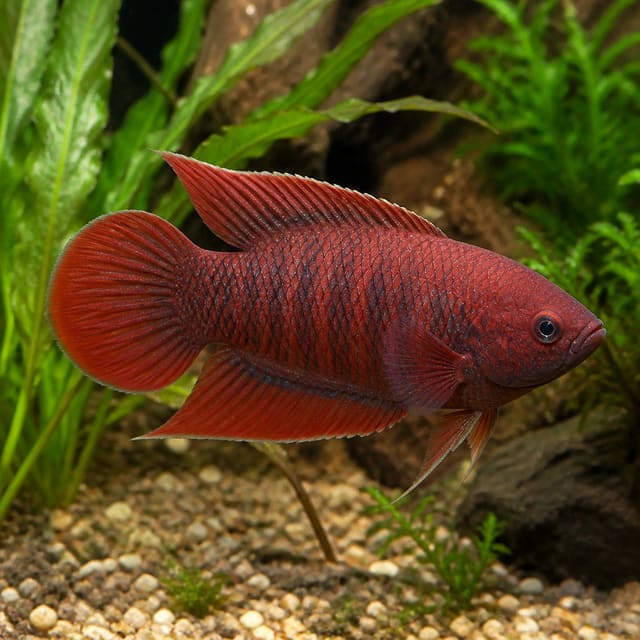
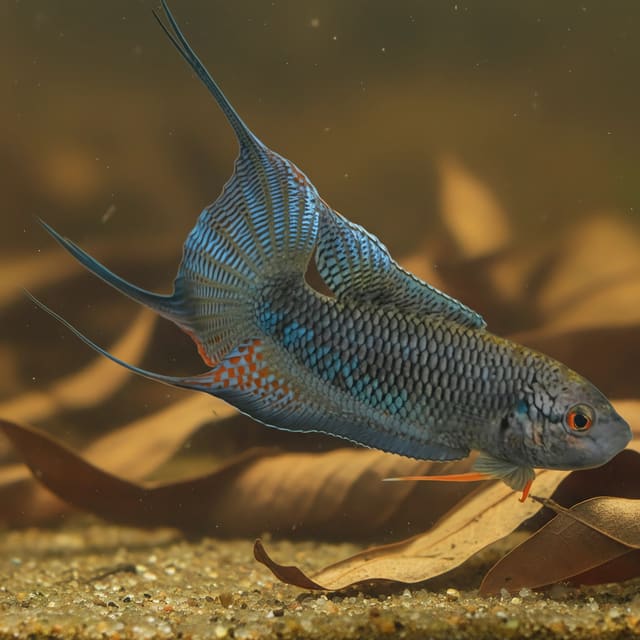
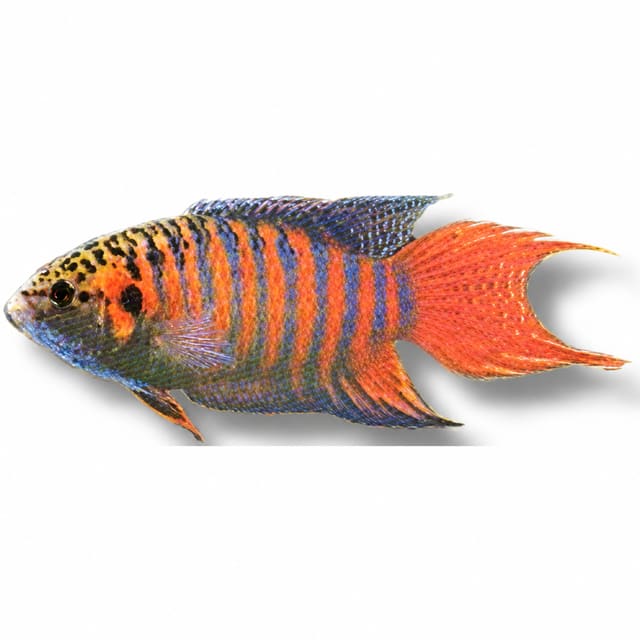
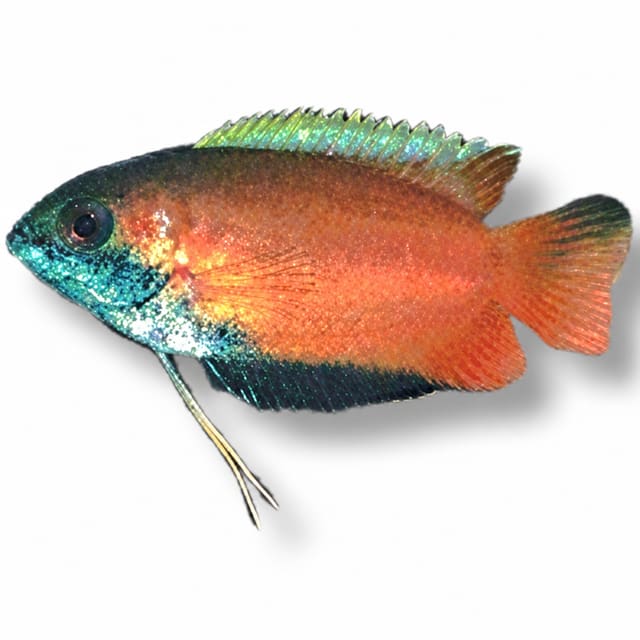
This strain is popular among keepers looking for colourful tropical fish UK aquariums because it combines classic paradise fish shape with warmer, richer red tones. Adults reach about 10 cm, with an elongated body, pointed head, and long flowing dorsal, anal, and caudal fins. Males are especially elegant, often showing extended finnage and stronger contrast along the body and tail.
The base colour can range from rusty red to orange-red with blue-green iridescent highlights, depending on mood, lighting, diet, and genetics. In a well-run tank with dark décor, the fish often appears among the most colourful tropical fish UK labyrinth species available at this size. Colour intensity varies with condition, lighting and the aquarium environment.
If you are reading a red paradise care guide to identify sex differences, red paradise male vs female is usually straightforward in adults. Males are larger, brighter, and more extended in the fins. Females are shorter-finned, deeper-bodied, and usually less intense in colour. This helps when planning breeding groups and also when deciding on stocking. In comparisons such as red paradise vs betta, paradise fish are usually larger, cooler-tolerant, and more robust, though they are also more active swimmers. If you are wondering how to care for red paradise for best colour, the answer is simple: stable water, a varied diet, low stress, and dark visual contrast.
The biggest mistake people make with paradise fish is assuming they behave like calm community gouramis. They do not. If you are asking what tropical fish are aggressive, paradise fish belong in the “semi-aggressive with territorial tendencies” group. That does not make them impossible in a mixed aquarium, but it does mean stocking must be deliberate.
Choose tank mates cautiously. Red Paradise Fish can be assertive, especially around other labyrinth fish, so provide space and cover and avoid slow, vulnerable companions.
Avoid other male paradise fish, slow fancy guppies, male bettas, delicate long-finned species, and very small fish. The classic question of red paradise with other fish depends on whether those fish can handle a bold top-zone patrol species. Red paradise tank mates should not invite fin-nipping contests or trigger territorial displays. Shrimp may be treated as food, and small snails may be pecked. If you want invertebrates, larger snails stand a better chance than dwarf shrimp.
In a 90-120 litre tank, one male paradise fish with a group of medium active companions can work if the aquarium is densely planted and line-of-sight is broken. In larger tanks, one male with two females is possible, but watch for courtship pressure. If you are asking what size fish should I get for companions, choose fish too large to be viewed as prey and active enough to avoid harassment. This is why paradise fish are not always ideal red paradise for beginners, despite their hardiness.
| Species | Compatible? | Notes |
|---|---|---|
| Croaking Gourami | ⚠️ Caution | Possible only in larger, structured tanks; both use upper zones and may spar. |
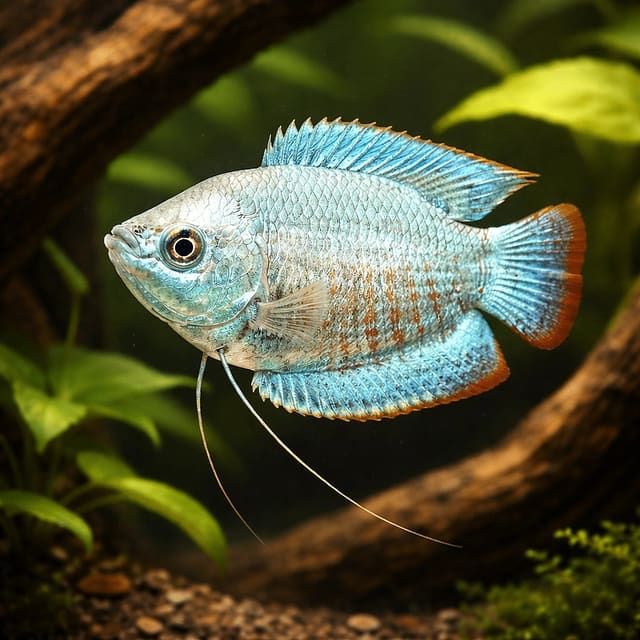
| Dwarf Gourami | ⚠️ Caution | Can be intimidated by a dominant paradise fish; monitor closely. |
| Fancy guppies / long-finned fish | ❌ Avoid | Trailing fins invite chasing and nipping. |
Quarantine and deliberate stocking matter more than the purchase channel when adding this territorial species to an established tank.
Always quarantine new arrivals for 2-4 weeks before adding them to a paradise fish aquarium. This reduces disease risk and lets you assess whether a potential tank mate is too timid, too aggressive, or too small.
Red paradise breeding is considered fairly easy compared with many ornamental fish, which is one reason the species has been established in the hobby for so long. Males build bubble nests at the surface, usually beneath floating plants or in calm corners. If you are comparing tropical fish breeds UK and looking at what species are realistic for home spawning projects, paradise fish are among the more approachable labyrinth fish.
Use a separate 40-60 litre breeding tank with shallow water, gentle filtration, floating cover, and a secure lid. Keep temperature around 24-26°C to encourage spawning. Condition the pair with frozen and live foods. This is where a focused red paradise diet rich in protein really helps. The red paradise male vs female difference becomes obvious during conditioning, with males intensifying in colour and females filling with eggs.
The male will construct a bubble nest and display beneath it. Courtship can be vigorous, so provide plant cover for the female. During spawning, eggs are released and gathered into the nest. After spawning, remove the female if the male becomes too defensive. If you are researching tropical fish breeders UK or UK tropical fish breeders, this species is often recommended as a first labyrinth breeding project because the behaviour is visible and rewarding to watch.
The male guards the nest and replaces fallen eggs. Eggs usually hatch in roughly 24-48 hours depending on temperature, and fry become free-swimming a few days later. At that point, remove the male. Start fry on infusoria or commercial fry food, then move to newly hatched brine shrimp. Clean warm air above the water is important because the labyrinth organ develops later.
Before breeding, prepare grow-out space: paradise fish can produce many fry, and young males may need separation as they mature.
For better fry survival, keep the breeding tank water shallow for the first week after free swimming and avoid strong surface agitation. This helps fry feed efficiently and supports healthy early labyrinth organ development.
Comparison matters because not every labyrinth fish suits the same tank. If you want a bold, classic species with cooler tolerance and stronger personality, paradise fish are excellent. If you want a softer-tempered community fish, a smaller gourami may be easier.
| Feature | Red Paradise Fish | Dwarf Gourami |
|---|---|---|
| Max Size | 10 cm | 7-8 cm |
| Care Level | Easy to moderate | Moderate |
| Temperature | 16-26°C | 24-28°C |
| Best For | Characterful species tanks and robust communities | Warmer peaceful planted aquariums |
| Feature | Red Paradise Fish | Three-Spot Gourami |
|---|---|---|
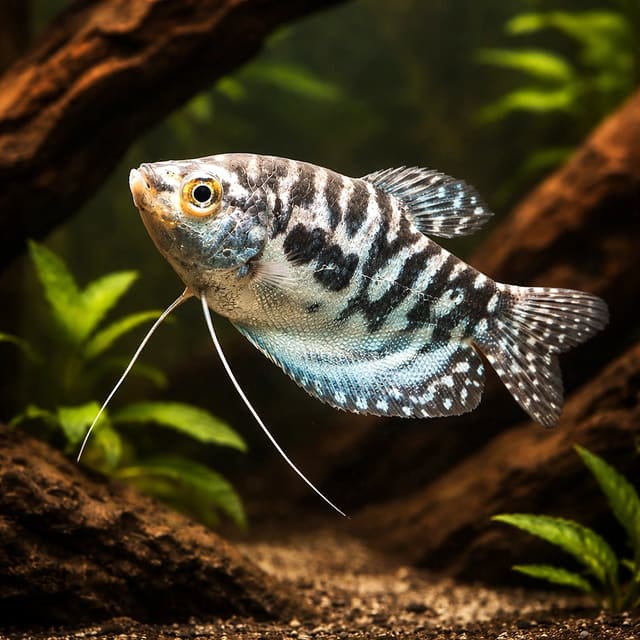
| Temperament | Semi-aggressive | Can be assertive |
| Water Style | Cooler, calm, planted | Warm, spacious, planted |
| Visual Appeal | Red tones and long fins | Larger body and metallic sheen |
| Best Choice If | You want a historic, hardy labyrinth fish | You want a larger gourami display |
| Compare With | Cobalt Dwarf Gourami | Red Three-Spot Gourami |
Good red paradise health starts with stable water, a secure lid, and low-stress stocking. A healthy fish is alert, responsive, brightly coloured, and active near the upper levels. Fins should be open, the body full but not bloated, and respiration steady. Appetite is usually strong.
Typical red paradise diseases are the same ones seen in many aquarium fish: white spot, bacterial fin damage after fights, fungal patches on injuries, and stress-related lethargy after transport or poor water quality. Because paradise fish can be territorial, physical damage from chasing is a real risk. Torn fins are not always disease, but they can become infected if water quality slips.
The first response should be testing water, improving maintenance, and isolating the cause of stress. Weekly water changes, varied feeding, and avoiding incompatible tank mates prevent most issues. If medication is needed, follow the product instructions carefully and use a separate hospital tank when possible. Match the fish to the aquarium and maintenance routine. Paradise fish reward consistency.
Never assume a labyrinth fish is “fine” just because it can gulp air. Surface breathing does not compensate for ammonia, nitrite, or chronic stress. Also, never use copper-based medications in tanks containing sensitive invertebrates.
Paradise fish are active, observant, and often surprisingly interactive with their keeper. They spend much of their time near the top, cruising along plant edges, checking the surface, and investigating movement outside the glass. That is part of what makes them so appealing compared with more passive fish.
Socially, they are not true schooling fish. A lone male often becomes the visual focus of the aquarium, while a male with females requires more space and careful observation. During breeding or territorial moments, they may flare fins, intensify colour, and patrol a chosen zone. This is normal behaviour, not automatically a sign of trouble.
To encourage natural behaviour, provide floating plants, structured décor, calm water movement, and a secure lid. In a sparse tank they can become edgy or overly dominant. In a well-designed setup, they display much more of the fascinating behaviour that made them famous among early aquarium keepers.
Each fish is checked before dispatch and held under observation so that feeding response, swimming posture, and general condition can be assessed. This is especially valuable for labyrinth fish, where stress can show first as clamped fins or withdrawn behaviour. Safe packing and species-aware care matter more than store size.
Independently collected by Judge.me from customers who bought this item. All reviews are shown.
Healthy and doing well
Reply from Tropical Fish Co
<p>Thank you Tracey. The red form is the one that really shows off when a male is displaying - fins spread, colour up, the lot. Worth keeping just the one male unless you've a big tank, as they'll square up to each other. Glad it's doing well. - Tropical Fish Co</p>