−14%
Moderate
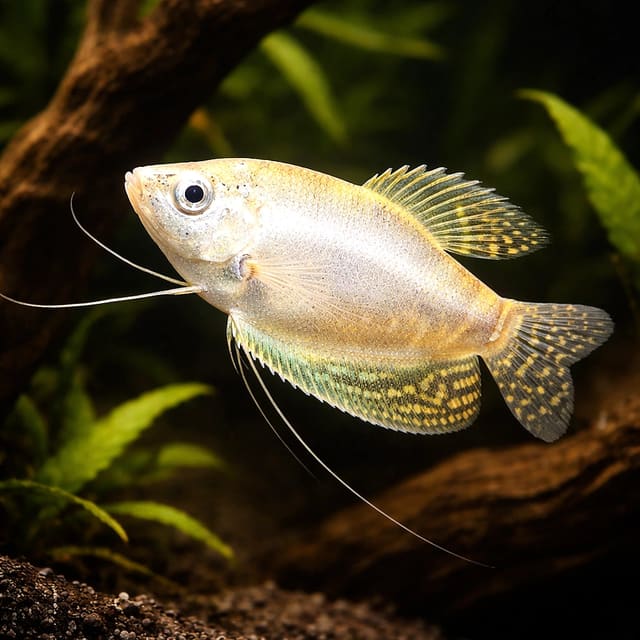
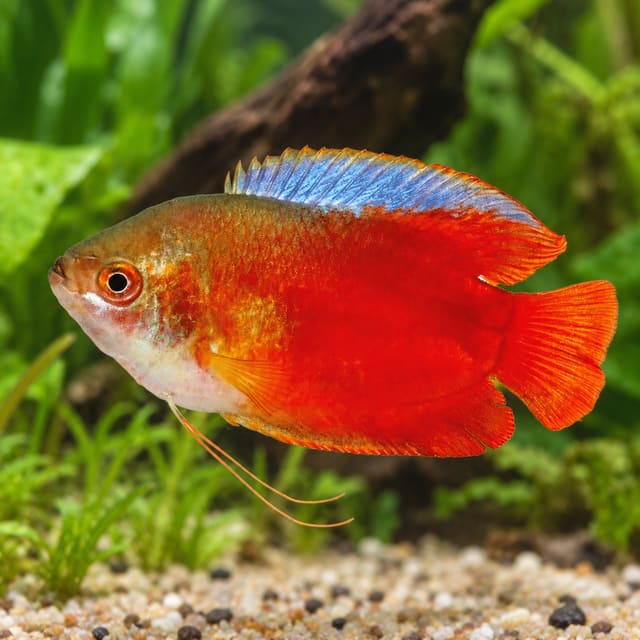
Gold Gourami (Trichopodus trichopterus)
24–28°C · pH 6–8 · 81L
£2.99£4.99

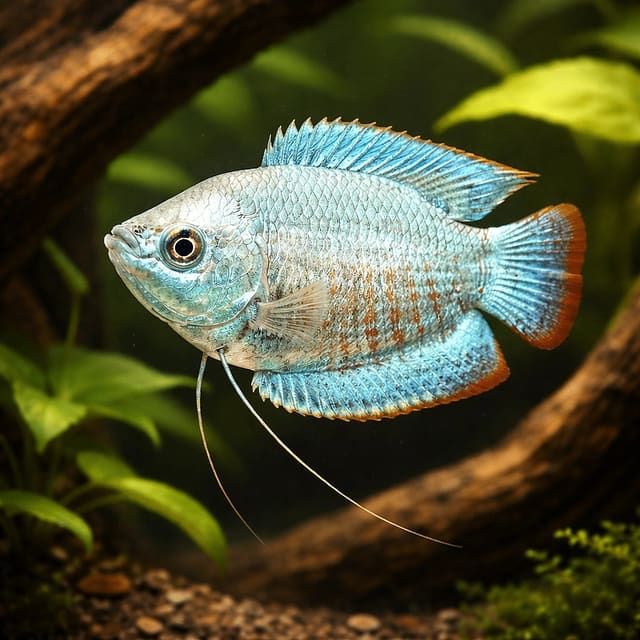
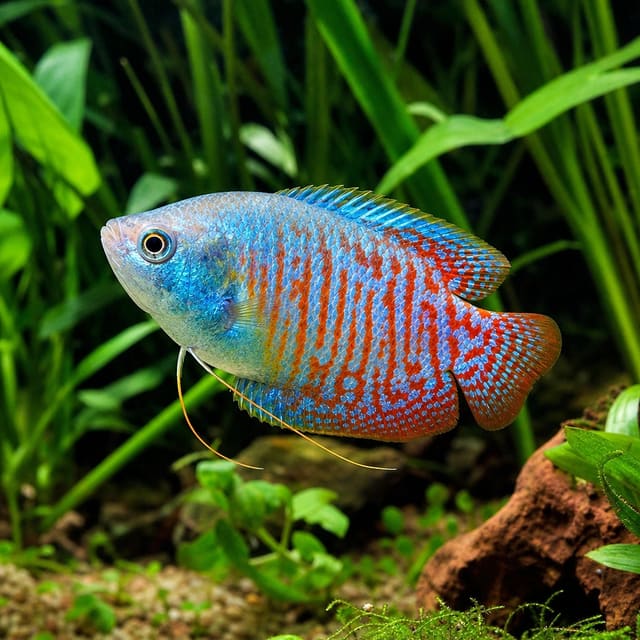
The Cosby / Opaline Three-Spot Gourami (Trichopodus trichopterus) is a gourami from Southeast Asia that reaches 15 cm standard length. It suits keepers prepared for territorial adult behaviour; keep it at 24–28°C, pH 6.0–8.0 and 5–19 dGH, the overlap of FishBase and Seriously Fish. Sold individually in 3–4 cm, 4–5 cm, 5–6 cm, 6–7 cm and XL sizes.
Adult size is the maximum length this species reaches at full maturity (scientific sources). The livestock you receive will be younger and smaller — pick a size above for the actual shipping size. Product-photo provenance and any image-specific limitations are stated on the listing.
Trichopodus trichopterus
Save when buying multiple fish. Each quantity is one fish; sex and pair formation are not guaranteed unless the selected variant explicitly states them.
Minimum of 2 per order.
The Cosby / Opaline Three-Spot Gourami (Trichopodus trichopterus) is a gourami from Southeast Asia that reaches 15 cm standard length. It suits keepers prepared for territorial adult behaviour; keep it at 24–28°C, pH 6.0–8.0 and 5–19 dGH, the overlap of FishBase and Seriously Fish. Sold individually in 3–4 cm, 4–5 cm, 5–6 cm, 6–7 cm and XL sizes.
Adult size is the maximum length this species reaches at full maturity (scientific sources). The livestock you receive will be younger and smaller — pick a size above for the actual shipping size. Product-photo provenance and any image-specific limitations are stated on the listing.
Maintain these water conditions for optimal health and vibrant colors
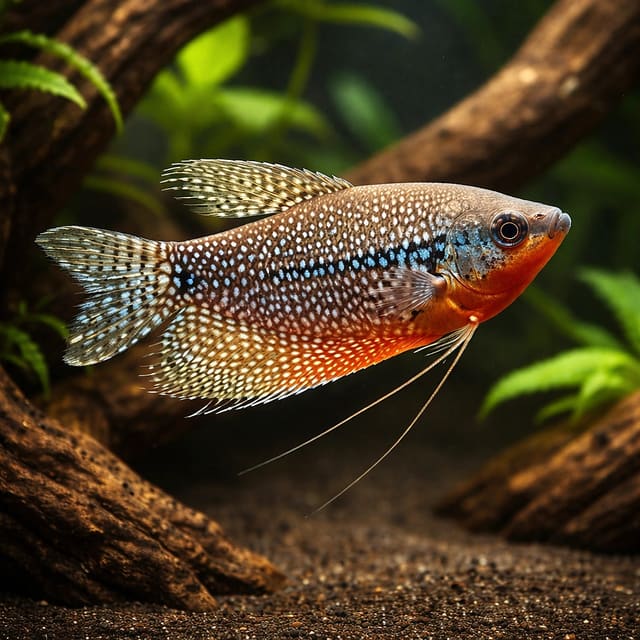
The Cosby / Opaline Three-Spot Gourami is a marbled domestic colour form of Trichopodus trichopterus, a gourami from Southeast Asia that reaches 15 cm standard length. Cosby and opaline describe the aquarium form rather than a separate species. It suits a keeper who can provide a planted aquarium and plan for territorial adult behaviour rather than assuming that every specimen will remain peaceful.
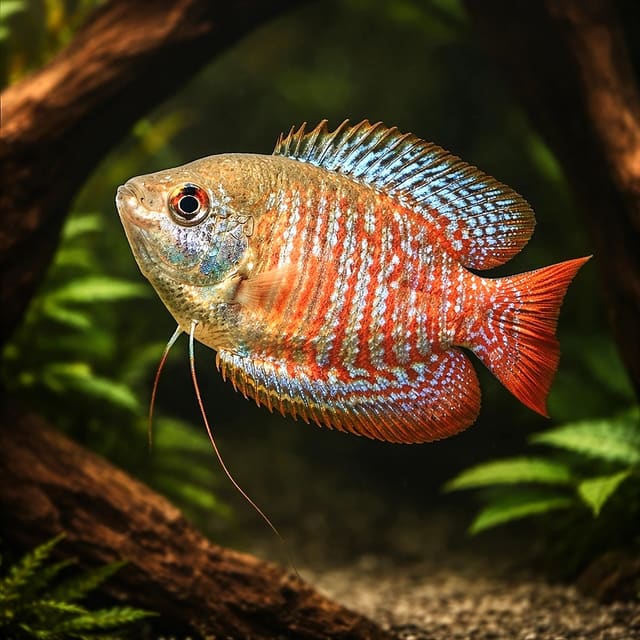
FishBase places Trichopodus trichopterus in the gourami family Osphronemidae and records it as a freshwater, benthopelagic fish from Southeast Asia, including the Mekong basin. It also records introduced populations elsewhere. The aquarium colour forms described for this species include opaline, Cosby, marbled, gold and silver forms.
Some adults remain settled in mixed aquariums, while others become forceful as they mature. Males are territorial and will squabble with one another, with aggression becoming stronger around breeding activity.
The characteristic elongated pelvic rays found in gouramis help them sense their surroundings. Gouramis also possess a labyrinth organ that enables atmospheric breathing, but they still need clean water, biological filtration and routine maintenance. Normal visits to the surface are therefore expected; a sudden change in breathing, balance, colour, appetite or swimming behaviour calls for immediate checks of water quality and equipment.
One purchase supplies one animal in the size selected on the page. The choices are 3–4 cm, 4–5 cm, 5–6 cm, 6–7 cm and XL; use the live size selector when ordering. XL is a relative size label and should not be treated as a centimetre measurement.
The size you select is the size supplied, not the adult size. The centimetre labels describe dispatch size, while the adult planning figure comes from the species identity. A fish dispatched at 3–4 cm still requires an aquarium designed around the maximum recorded adult length rather than around its first few weeks in the home.
Sex is guaranteed only when the selected option explicitly states male or female. This Cosby / Opaline Three-Spot Gourami listing has no sex-guaranteed option.
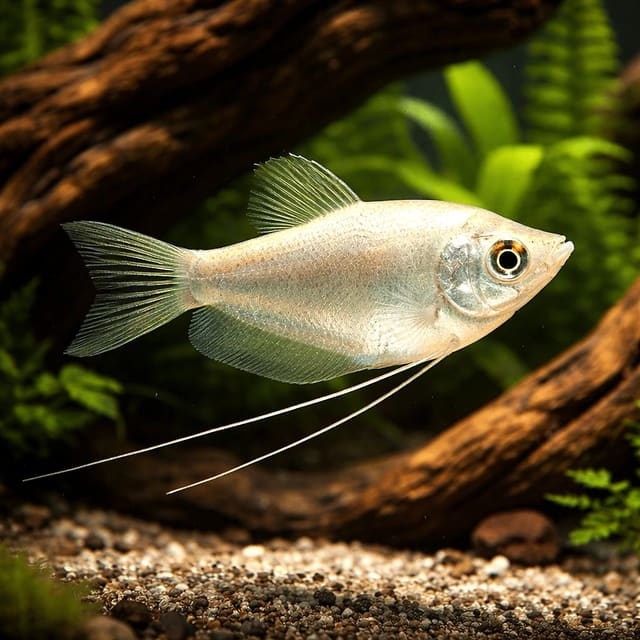
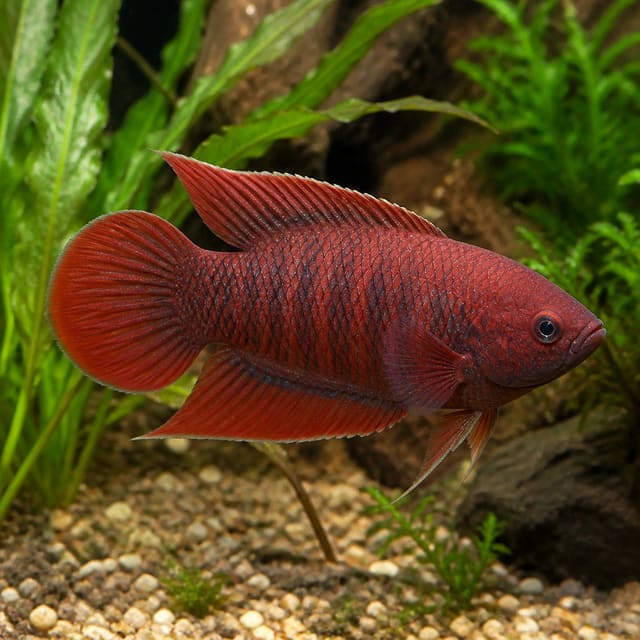
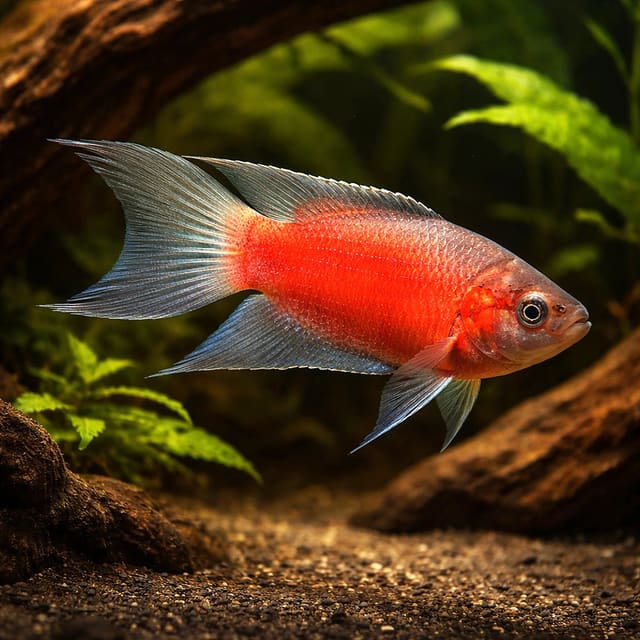
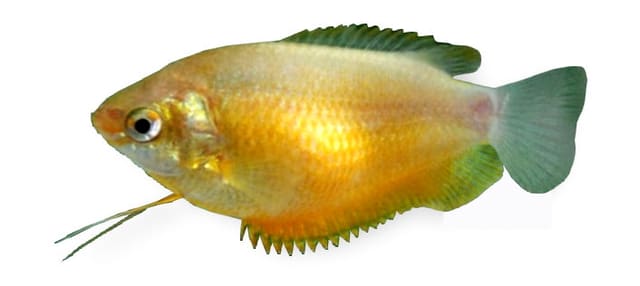
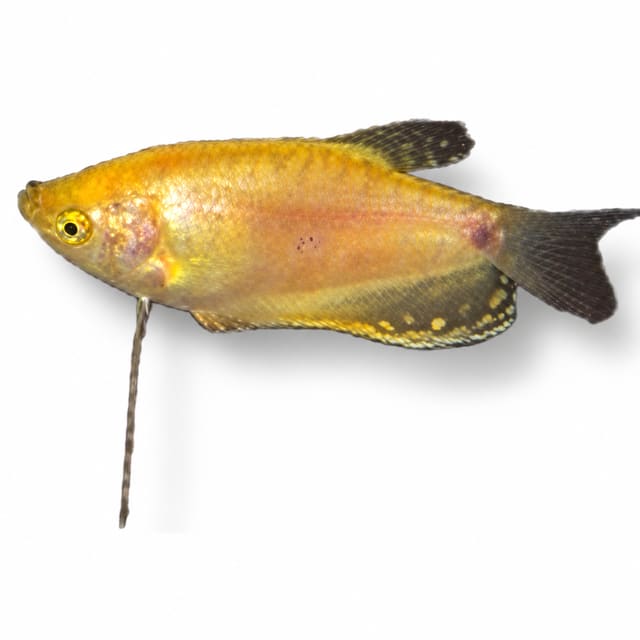
The gallery shows the type of fish, while the selector defines the order. An image containing more than one animal does not turn one purchase into a pair or pack. Likewise, plants, wood or other objects in a scene should not be used as a measuring scale for the chosen dispatch size.
The gallery images are representative, based on reference photographs of this species, so colours can look slightly different from the live animal.
| Decision | Use this information |
|---|---|
| Animal supplied | One animal per purchase |
| Dispatch size | The selected centimetre or XL size |
| Adult planning | Up to 15 cm standard length |
| Sex | Do not plan around a particular sex |
Keep this gourami at 24–28°C, pH 6.0–8.0 and 5–19 dGH. These routine values are the overlap of FishBase’s species range and Seriously Fish’s aquarium range for Trichopodus trichopterus. Choose a stable point that also suits every intended resident rather than moving the fish repeatedly between the limits.
Seriously Fish gives a 90 × 30 cm aquarium base and approximately 81 litres for this species. FishBase records a maximum of 15 cm standard length. Standard length ends at the base of the tail, so this planning measurement does not include the tail fin. A small dispatch size can develop into a substantial gourami, and the full adult footprint should be ready before growth makes the present arrangement restrictive.
| Planning point | Direction |
|---|---|
| Adult length | Up to 15 cm standard length |
| Aquarium base | 90 × 30 cm |
| Approximate volume | 81 litres for a 90 × 30 × 30 cm aquarium |
| Routine temperature | 24–28°C |
| Routine pH | 6.0–8.0 |
| Routine hardness | 5–19 dGH |
| Suits | Not suited to |
|---|---|
| Keepers prepared for variable adult temperament | Plans that assume every adult will remain peaceful |
| Planted aquariums with floating cover and open swimming areas | Aquariums below the stated species footprint |
| Carefully screened robust companions | Timid species, small fish that could be eaten or fish that may nip its fins |
| Stable water within the shared routine range | Communities without a shared temperature, pH and hardness |
A larger footprint becomes the more cautious direction when adding other gouramis, robust community fish or several territorial residents. Extra horizontal room only helps when the layout also supplies planted cover, open swimming routes and access to food and the surface.
A planted aquarium with floating cover and open swimming areas suits this fish. Divide the layout into sheltered and open zones rather than filling every part of the surface or leaving the entire tank exposed. The goal is to let the gourami move between cover, feeding space and the surface without being boxed into a single route.
A worked layout for a 90 × 30 cm base might place planted cover at each end while keeping a route through the centre and several open patches at the surface. The exact plant positions can change, but the fish should be able to move between shelter, open water and the surface.
Temperament varies between individuals. Some remain peaceful, while others become spiteful as they mature. Planting cannot guarantee harmony, so continue checking whether every resident reaches food, open water and shelter.
Do not use planting as a substitute for adequate dimensions. A heavily planted aquarium with a cramped base still restricts usable swimming space. Start with the recommended footprint, then use plants and floating cover to make that space function effectively.
Trace the fish’s routes through the aquarium before introduction. It should have open access from planted cover to the surface and feeding area without crossing a completely obstructed section. Thin floating plants if they form a continuous mat over the surface.
For routine aquarium care, keep the water at 24–28°C, pH 6.0–8.0 and 5–19 dGH. This is the overlap of FishBase’s species range of 22–28°C, pH 6.0–8.0 and 5–19 dGH with Seriously Fish’s aquarium range of 24–30°C, pH 5.5–8.5 and 3–35 dGH. Compare the shared values with the needs of every proposed companion before combining fish.
The breadth of these values should make matching easier, not encourage constant adjustment. Test the aquarium as it actually runs, select a shared point for the community and avoid abrupt swings. A reading near one edge of the routine range can still be suitable when it remains steady and all residents share that requirement.
| If the test shows | Action |
|---|---|
| Ammonia above zero | Pause further stocking, check filtration and address waste |
| Nitrite above zero | Pause further stocking and check biological filtration |
| Temperature outside 24–28°C | Restore the chosen routine temperature without an abrupt change |
| pH or hardness outside the plan | Compare every resident before making a gradual adjustment |
| Several values changing together | Check replacement water, equipment and recent maintenance |
Our aquarium water chemistry guide explains ammonia, nitrite, nitrate, pH and hardness. Once you have measured the tank, use the water matcher to compare those readings with the range above.
Never judge suitability from temperature alone. A companion that shares 26°C may still be a poor choice because of adult size, fin-nipping, feeding pressure or territorial overlap.
Record temperature, pH and hardness on several routine checks rather than reacting to one isolated result. Compare any shift with a water change, altered equipment or a different replacement-water source. When the readings remain inside the routine range and the fish behaves normally, stability is the decision; unnecessary adjustment would add change without improving the setup.
A working biological filter is essential. The RSPCA explains that beneficial filter bacteria convert toxic ammonia to nitrite and then to the safer end product nitrate. Atmospheric breathing does not protect a gourami from dissolved waste, so the labyrinth organ is never a reason to accept an immature or poorly maintained filter.
For the approximately 81-litre example, Seriously Fish gives a turnover of four to five times the aquarium volume each hour and a filter rating of 325–405 litres per hour. The calculation is straightforward: about 81 litres multiplied by four is 324 litres per hour, while multiplication by five gives 405 litres per hour. Manufacturer ratings are the practical selection point stated for this setup.
If this is your first setup, complete our first tropical aquarium guide before choosing the stocking order. Adding too many fish too quickly can leave the developing bacterial population unable to process the extra waste.
Inspect the filter for blockages during maintenance. If the media needs cleaning, do not run it under the tap. Instead, rinse it lightly in aquarium water removed during a partial water change; this reduces the number of beneficial bacteria lost from the media.
After planting and furnishing the aquarium, watch how water moves across the surface and back towards the intake. The filter must circulate waste while leaving some calmer upper-water space. If floating cover collects tightly in one corner or debris settles throughout the tank, adjust the outlet or planting and recheck circulation without turning the whole surface into fast current.
OATA’s gourami and paradise fish guidance gives group maintenance targets: ammonia and nitrite at zero, nitrate no more than 20 mg per litre above the normal tap-water level, testing at least once per week and a 25% partial water change at least once a week. Apply those targets while keeping this species within 24–28°C.
A weekly routine makes trends easier to recognise. For example, a nitrate rise after heavier feeding is a reason to review portion size and waste, while ammonia or nitrite after adding livestock is a reason to stop further additions and examine biological filtration.
Do not deep-clean every part of the aquarium at once. Preserve the bacterial population in the filter media and avoid turning routine maintenance into a complete reset. Gravel cleaning, plant work and filter inspection should remove accumulated waste while leaving the biological system functioning.
The first month after adding this gourami should contain at least four sets of weekly readings and four behaviour checks. Consistent results make a stronger husbandry plan than reacting to a single reading without considering the fish, filter and recent changes together.
Compare the four weekly records at the end of the month. Zero ammonia and nitrite on every check, controlled nitrate, reliable flow and normal feeding indicate that the routine is coping with the added load. A repeated rise or worsening behaviour calls for a review of feeding, stocking and filter operation before adding another fish.
This species is a generalised omnivore. Wild fish eat terrestrial and aquatic plant matter, algae, small invertebrates, zooplankton and detritus, while aquarium specimens accept most foods offered. Use a good-quality flake, granule or pellet as the regular prepared food and include an algae-based food within the rotation.
OATA’s group feeding direction is one meal each day, limited to what the fish can eat within a few minutes. That schedule gives a clear starting point and reduces the uneaten food that would otherwise break down and add toxic waste to the water.
| Food choice | How to use it |
|---|---|
| Quality flake, granule or pellet | Use as the regular prepared meal in a suitable particle size |
| Algae-based food | Include as part of the varied omnivorous diet |
| Small daphnia | Offer as occasional live or frozen variety |
| Small bloodworm or tubifex | Offer in a portion eaten within a few minutes |
Watch access as closely as appetite. A dominant upper-water fish may reach floating food first, while a nervous newcomer may wait behind plants. Spread the portion only enough to give intended residents access, then stop when the meal window has passed.
If food remains after a few minutes, reduce the next portion and remove persistent leftovers. If the gourami shows reduced interest in food, first compare its behaviour with water tests, breathing, colour and the actions of its tank mates. Increased appetite is not a reason to keep adding food after the planned portion has been consumed.
Food variety supports the omnivorous diet, but quantity remains controlled. Several different foods in one oversized meal still create the same waste problem as overfeeding a single product.
Use the meal window as the repeatable measure: the fish should obtain food, intended companions should not be excluded, and persistent leftovers should not remain. If one resident takes everything, change how the same controlled portion is distributed rather than increasing the total automatically. If waste repeatedly reaches the substrate, reduce the amount at the next meal.
Prepare the aquarium before the fish arrives. The filter should be established, ammonia and nitrite should both read zero, temperature should sit within 24–28°C, and the planted layout should already provide floating cover, open swimming room and clear access to the surface.
Increase the aquarium population slowly. Every added fish increases waste and feeding, and the beneficial bacterial population needs to respond to that extra load. Avoid adding several planned residents at the same time simply to complete the community quickly.
Read our delivery and Live Arrival Guarantee policy while planning receipt. Keep the continuous unboxing video and order number. They are needed for a Live Arrival Guarantee claim.
A calm trip to the surface fits labyrinth-fish biology. Hanging at the surface, sitting on the bottom, erratic swimming, unusually fast or slow gill movement, marked colour change or reduced feeding should trigger water and equipment checks rather than being dismissed as settling behaviour.
If concerning changes continue after water quality and equipment have been checked, contact us with the observed behaviour and test results. Specific readings and a clear description are more useful than a general statement that the fish looks different.
A cautious fish that still moves normally, reaches the surface and begins taking food can be observed with minimal disturbance. A fish that progressively loses balance, appetite or access to space needs action. Compare each day with the previous one, test the water when the direction worsens and deal with intimidation promptly rather than repeatedly changing several parts of the aquarium at once.
Temperament varies markedly within this species. Some individuals remain peaceful, while others become spiteful as they mature. Males are territorial, squabble among themselves and can become very aggressive during breeding, so adult behaviour must remain part of the long-term plan even when a smaller fish initially appears settled.
| What you see | What to do |
|---|---|
| Brief display with both fish returning to normal activity | Continue observing access to space and food |
| Repeated chasing through the same route | Prepare separation and reassess the combination |
| One fish confined behind plants or near the bottom | Separate before feeding access or condition declines |
| Damaged fins or missing scales | Separate the aggressor or injured fish and check water |
| Reduced appetite with hiding | Test water and assess intimidation at feeding time |
| Sudden aggression around a surface area | Treat that area as defended territory and separate if pursuit persists |
Do not wait for serious injury before acting. Persistent exclusion from food, the surface or shelter is already a failed social arrangement. More aquarium space may reduce encounters, but it does not remove the need for a practical separation option.
Breeding behaviour increases the risk because males can defend a bubble nest and become highly aggressive. A community aquarium should not be treated as a breeding project merely because a nest appears. Keep judging the situation by whether every fish can move, feed and rest without sustained pursuit.
Observation works best when it is consistent. Note changes in swimming, colour, aggression, breathing, physical condition and feeding rather than relying on a single snapshot of the aquarium.
Decide before combining fish that repeated exclusion from food, sustained pursuit or physical damage will trigger separation. This removes guesswork when behaviour changes quickly. Brief displays can be watched, but a fish that cannot resume normal swimming, feeding and shelter use should not be left in the arrangement while waiting for aggression to resolve itself.
This gourami is often recommended for community aquariums, but that description is conditional. Seriously Fish recommends robust companions and specifically lists barbs, larger characins, loricariids, loaches and other medium or large gouramis as examples. These examples still require screening for adult size, water needs, feeding behaviour and the space in the actual aquarium.
OATA advises avoiding timid species, small fish that could be eaten and fish that may nip gourami fins. Those exclusions provide a more reliable starting point than choosing companions from a broad community label.
| Question | Decision rule |
|---|---|
| Does it share 24–28°C, pH 6.0–8.0 and 5–19 dGH? | Proceed only when a stable shared point exists |
| Will it remain robust at adult size? | Avoid timid fish and small fish that could be eaten |
| Is it known to nip fins? | Avoid it |
| Does it use the same upper area? | Use caution and observe territorial behaviour |
| Can every resident reach food? | Reject combinations that create persistent feeding pressure |
| Can fish be separated? | Prepare a separation route before testing a cautious match |
Individual outcomes vary, so a category match is not a promise of harmony. Observe the actual fish after introduction and act when one resident is repeatedly chased, hidden, injured or excluded from food.
Browse the gouramis and labyrinth fish collection to compare identities and adult requirements, but do not assume that two fish from the same collection will share territory peacefully.
A robust fish that shares 26°C still needs further checks: it must not be small enough to be eaten, prone to fin-nipping or unable to obtain food. Passing the temperature check alone is therefore insufficient. Approve the combination only after adult size, feeding access, water chemistry and use of aquarium space all align.
Treat every additional Three-Spot Gourami as another potential territory rather than as a decorative duplicate. Males squabble among themselves and can become very aggressive when breeding. Fish selected by size also cannot be planned around a guaranteed sex ratio.
Keeping one removes direct conflict between members of this species, but the community still needs robust companions that share the water range. Keeping several requires more horizontal space, planted cover and close checks that every fish can reach the surface, food and shelter.
| Plan | Required decision |
|---|---|
| One Three-Spot Gourami | Screen all other residents for robustness, fin-nipping and shared water |
| Two or more | Allow for territorial conflict and prepare immediate separation |
| Several gouramis of different types | Assume upper-water territory may overlap until behaviour shows otherwise |
| Adding to a busy community | Check adult stocking load, filter capacity and feeding access first |
A 90 × 30 cm base and approximately 81 litres describe the species setup given for this fish, not a formula for adding repeated gouramis. More fish increase biological load and social pressure, so the direction should be towards a larger aquarium rather than trying to fit a group into the same footprint.
Have a separation plan before combining uncertain individuals. Rearranging plants should not be the only response when one fish persistently pursues another. Separation is the practical decision when an individual loses access to normal movement, food or shelter.
Assess swimming space and feeding access using the fish at their expected adult size rather than their dispatch sizes. Several small fish may appear to use little room at first, yet the social risk rises as they mature. If the aquarium cannot provide adequate routes and a practical separation option at adult scale, choose one gourami instead of relying on continued juvenile tolerance.
The Cosby / Opaline Three-Spot Gourami reaches a maximum recorded 15 cm standard length. Plan the aquarium around that adult figure even when the fish is supplied at a smaller size.
Plan around a 90 × 30 cm aquarium base and approximately 81 litres, the species setup given by Seriously Fish. Add live plants, some floating cover, open swimming areas and an established biological filter.
Keeping one avoids direct conflict between members of the species. Multiple gouramis need more horizontal room, close observation and a separation plan because males are territorial and will squabble; no fixed group number is required.
Seriously Fish recommends the Cosby / Opaline Three-Spot Gourami to beginners with reservations about temperament. It suits a prepared beginner who can maintain stable water, provide the full adult footprint and act if territorial aggression develops.
Feed a good-quality flake, granule or pellet once daily in an amount eaten within a few minutes. Include an algae-based food and occasional small live or frozen foods such as daphnia, bloodworm or tubifex.
Keep Trichopodus trichopterus at 24–28°C, pH 6.0–8.0 and 5–19 dGH, the overlap of FishBase and Seriously Fish. Keep ammonia and nitrite at zero and maintain a stable point shared by every resident.
Plan for territorial aggression because some individuals become spiteful as they mature, and males will squabble and can become very aggressive when breeding. Avoid fish that may nip its fins and separate residents if persistent chasing, exclusion or damage develops.
Seriously Fish lists robust barbs, larger characins, loricariids and loaches as companion examples, with other medium or large gouramis requiring caution. Avoid timid species, small fish that could be eaten and fish that may nip its fins, and screen every candidate for shared water and adult size.
Start filming every delivery with the parcel still sealed, then open it in one continuous take and show the fish still in the sealed bag. Someone must be present to receive it; inspect it that day, float the bag for 20–30 minutes, never pour the bag water into the aquarium, and retain the video and order number for a Live Arrival Guarantee claim.
Independently collected by Judge.me from customers who bought this item. All reviews are shown.
Healthy and doing well
Reply from Tropical Fish Co
<p>Thank you Tracey. Cosby gouramis are a calm, easygoing fish and the blue mottling deepens noticeably over the first few months once they're properly settled, so it should look better still by spring. Good to hear it's doing well. - Tropical Fish Co</p>