Easy
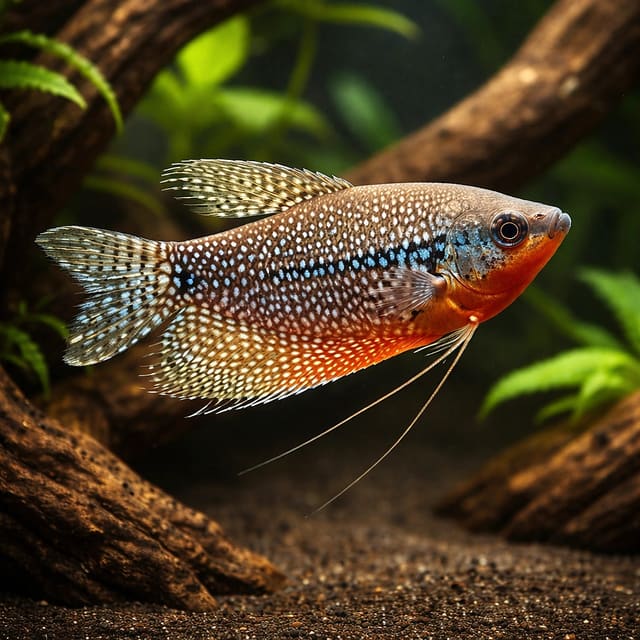
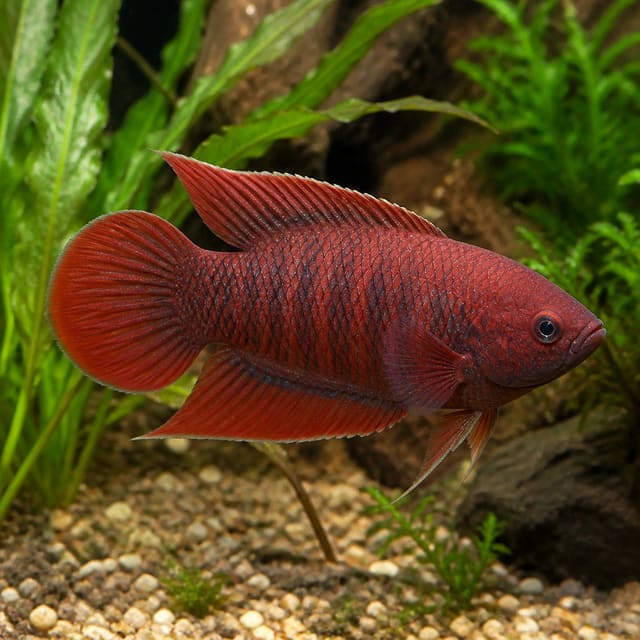
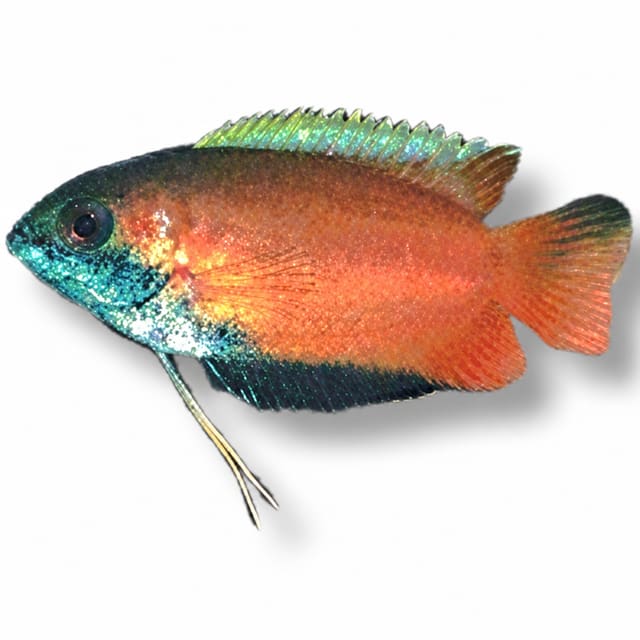
Red Honey Gourami (Trichogaster chuna)
22–28°C · pH 6–7.5 · 40L
£8.99

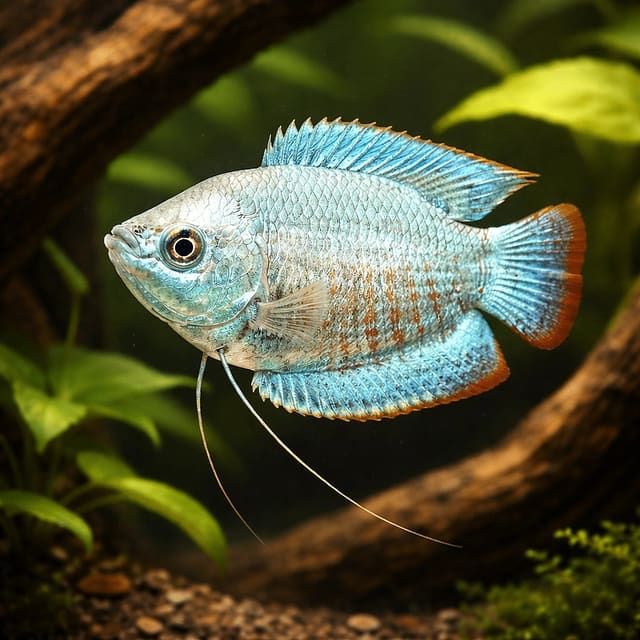
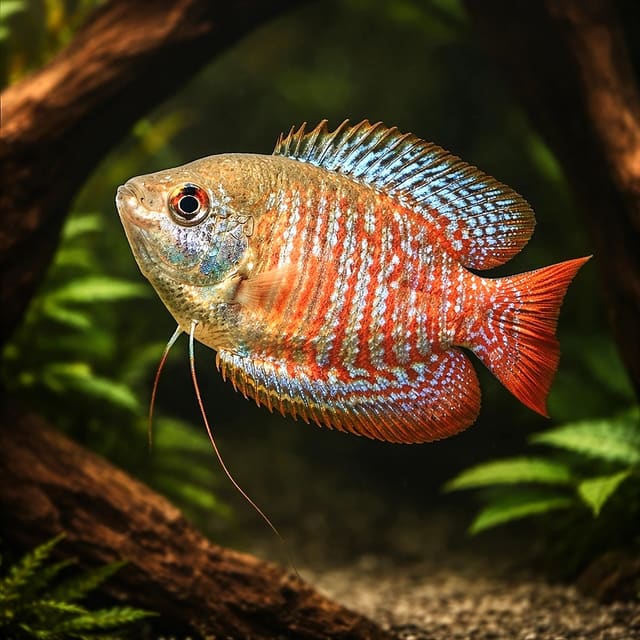
The Dwarf Gourami (Trichogaster lalius) is a freshwater labyrinth fish from Pakistan, India and Bangladesh that reaches 9.5cm. It suits a calm, heavily planted aquarium with gentle flow; Seriously Fish gives 22–27°C, pH 6.0–7.5 and 2–18 dGH. Sold individually in 3–4cm and 4–5cm sizes.
Adult size is the maximum length this species reaches at full maturity (scientific sources). The livestock you receive will be younger and smaller — pick a size above for the actual shipping size. Product-photo provenance and any image-specific limitations are stated on the listing.
Trichogaster lalius
Save when buying multiple fish. Each quantity is one fish; sex and pair formation are not guaranteed unless the selected variant explicitly states them.
The Dwarf Gourami (Trichogaster lalius) is a freshwater labyrinth fish from Pakistan, India and Bangladesh that reaches 9.5cm. It suits a calm, heavily planted aquarium with gentle flow; Seriously Fish gives 22–27°C, pH 6.0–7.5 and 2–18 dGH. Sold individually in 3–4cm and 4–5cm sizes.
Adult size is the maximum length this species reaches at full maturity (scientific sources). The livestock you receive will be younger and smaller — pick a size above for the actual shipping size. Product-photo provenance and any image-specific limitations are stated on the listing.
Start with a mature, filtered aquarium at least 60 cm long. Published size records disagree, and broad group guidance is not Honey-Gourami-specific, so verify Trichogaster chuna, the seller's adult-size advice and any claimed sexes before choosing one fish or a group.
Maintain these water conditions for optimal health and vibrant colors
Dwarf Gourami (Trichogaster lalius) is a freshwater labyrinth fish from the gourami family, Osphronemidae. The labyrinth organ allows gouramis to breathe atmospheric air, but they still depend on clean water and effective biological filtration. FishBase places the species in Pakistan, India and Bangladesh and records a maximum of 9.5cm total length for male or unsexed fish.
This is a thoughtful choice for a keeper who can provide a calm, planted aquarium rather than a busy display full of forceful competitors. The fish can be shy and territorial, particularly where there is little cover. Treat it as a principal inhabitant in a modest aquarium and arrange the rest of the stocking around its need for shade, retreats and unhurried feeding.
| Suits | Not suited to |
|---|---|
| A heavily planted aquarium with shade and hiding places | A sparse aquarium with little refuge |
| Gentle water movement and low turbulence | Fast-moving or turbulent water |
| Carefully screened, peaceful companions | Fin nippers, fish small enough to be eaten or forceful competitors |
| A keeper prepared to monitor shy and territorial behaviour | A community planned around colour alone |
Temperament varies with the individual and the setting. A settled fish may browse and feed confidently, while one exposed to strong flow, sparse decoration or intrusive companions may remain withdrawn. If you are comparing related fish before deciding, browse the gourami and labyrinth fish collection and compare adult dimensions, behaviour and water requirements rather than colour alone.
Use the live size selector to choose a 3–4cm or 4–5cm dispatch size. One purchase supplies one animal of the selected size. The size you select is the size supplied, not the adult size. Both sizes therefore need an aquarium planned around the adult fish, not a temporary arrangement based only on arrival size.
The larger dispatch size may be physically larger on arrival, but size does not identify sex, maturity, origin, temperament or future colour. Select the size that suits your receiving aquarium and introduction plan, then leave enough adult space from the outset. Do not use the difference between the two sizes as a shortcut for constructing a pair.
Sex is guaranteed only when the selected option explicitly states male or female. This Dwarf Gourami listing has no sex-guaranteed option.
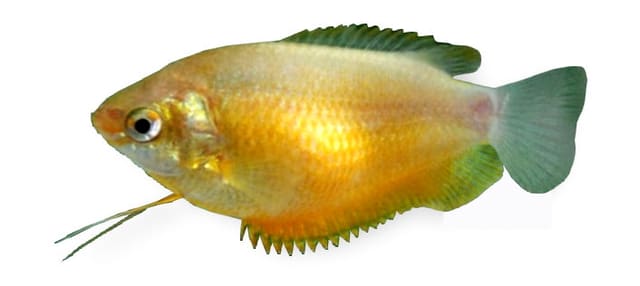
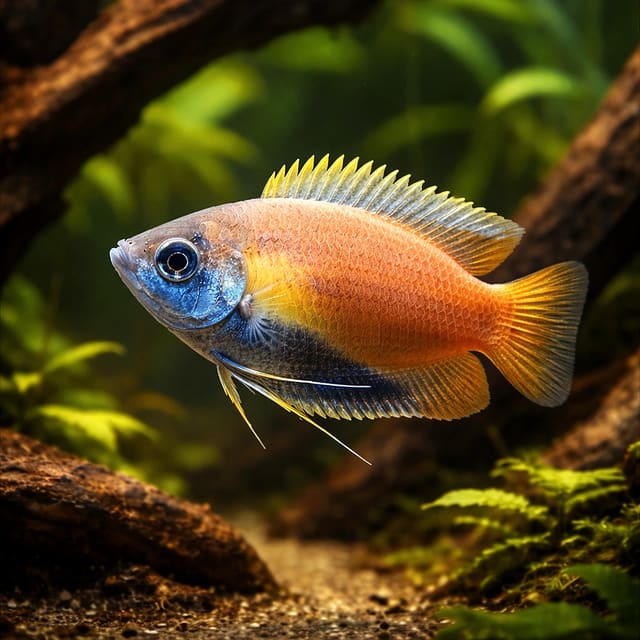
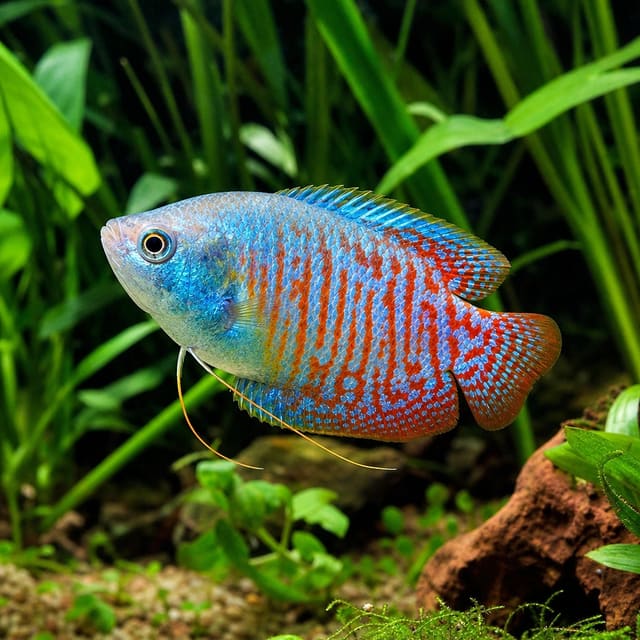
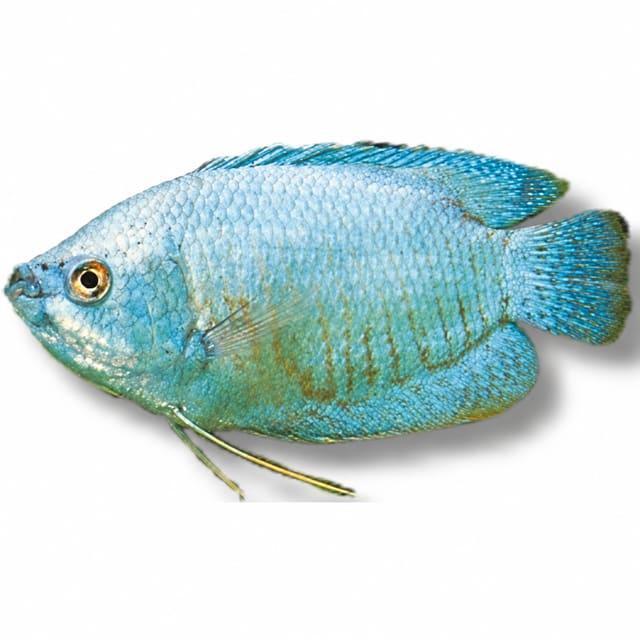
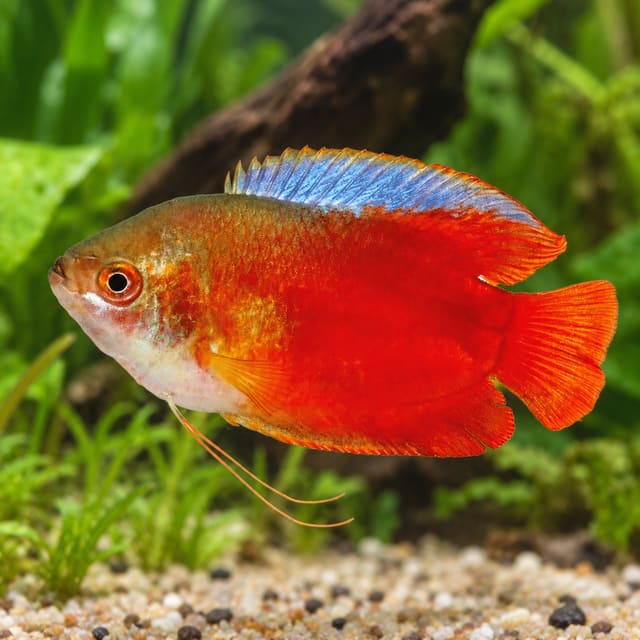
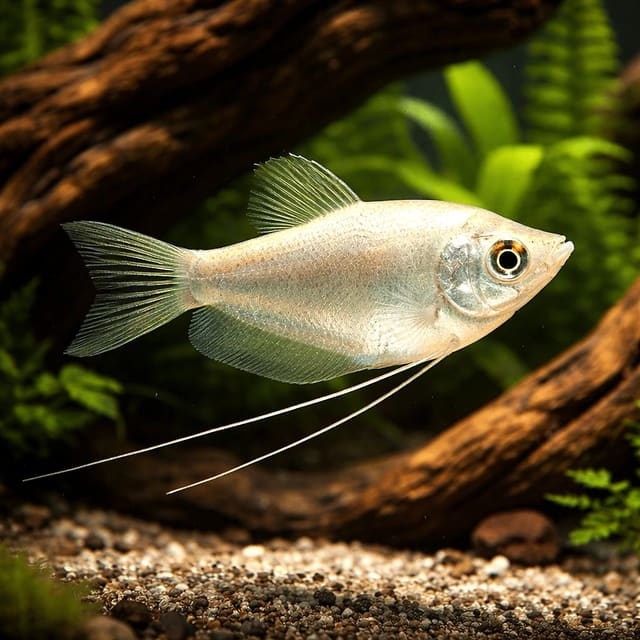
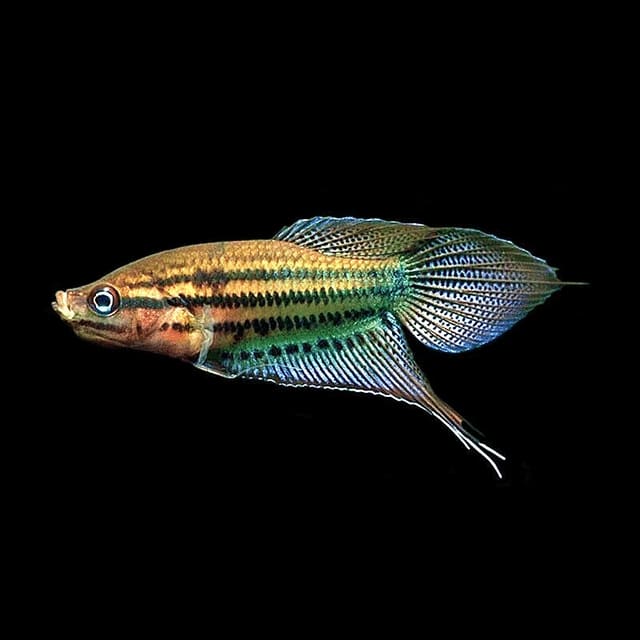
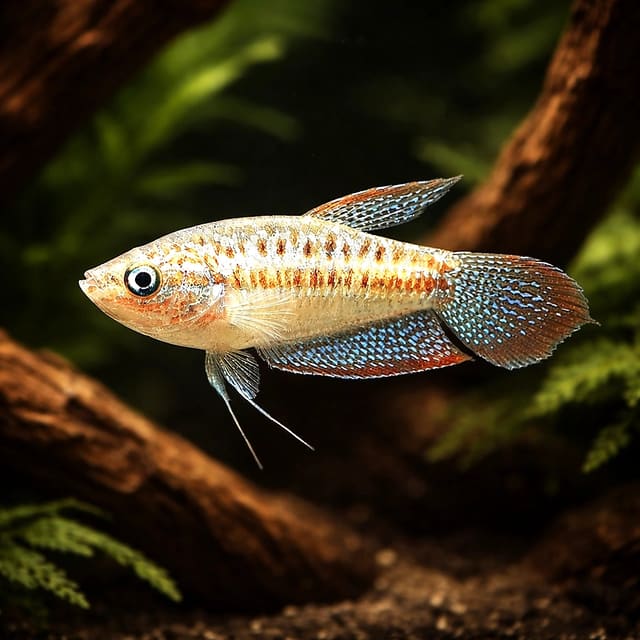
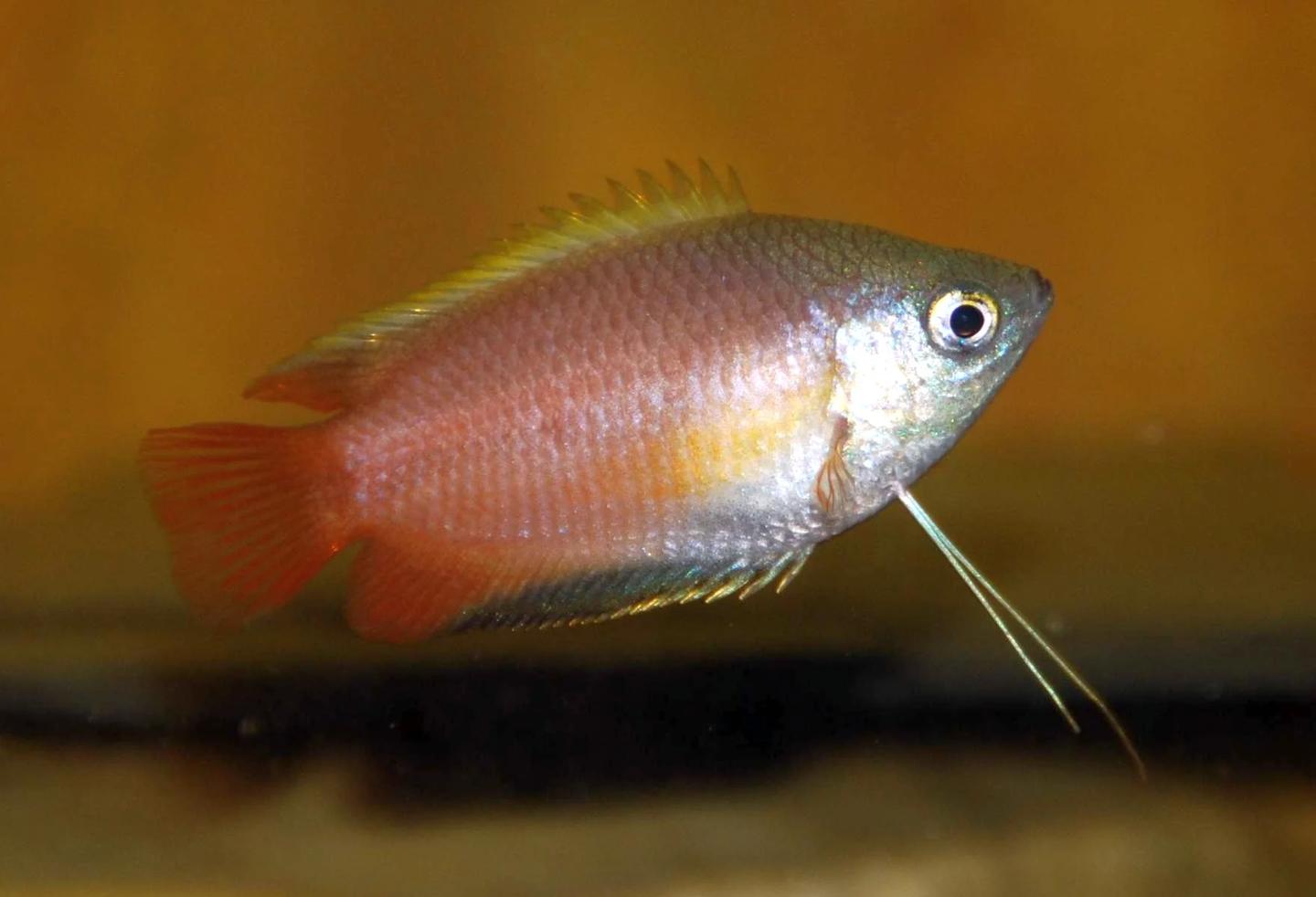
The gallery images are representative, based on reference photographs of this species, so colours can look slightly different from the live animal.
For dispatch days, guarantee terms and the claim process, read our delivery and Live Arrival Guarantee policy. The live selector remains the place to check the size choices when ordering.
Seriously Fish gives species-level aquarium guidance of 22–27°C, pH 6.0–7.5 and 2–18 dGH. It describes a 60 × 30 × 30cm aquarium of about 56 litres as just about large enough for a pair when arranged correctly. Use 56 litres as a conservative planning floor, retain those dimensions, and choose more space when adding other fish.
| Decision | Planning value |
|---|---|
| Maximum recorded length | Up to 9.5cm total length |
| Routine temperature | 22–27°C |
| Routine pH | 6.0–7.5 |
| General hardness | 2–18 dGH |
| Pair planning | 56 litres is just about enough when correctly arranged |
| Water movement | Keep flow gentle and turbulence low |
Use the 9.5cm maximum recorded by FishBase when allowing swimming and turning room. Seriously Fish also lists 8.8cm standard length. Neither adult measurement describes the dispatch sizes.
A correctly arranged aquarium does more than meet a volume figure. It combines gentle flow with heavy planting, shaded areas and several retreats. Floating vegetation, darker substrate, twigs, branches or leaf litter can create breaks in direct sight and reduce exposure. Keep enough open surface for the fish to reach atmospheric air easily.
A 56-litre aquarium containing a pair has little spare capacity for casual additions. For a community, move beyond that baseline and assess usable dimensions, filter maturity, territorial cover and the adult size of every resident. A larger volume also makes temperature and water quality easier to keep stable, but extra litres do not compensate for turbulent flow or unsuitable companions.
Arrange the aquarium around security rather than an unobstructed view. Dwarf Gouramis do best in a heavily planted tank with shade and hiding places, and they can become shy or withdrawn in sparse surroundings. Use plants and hardscape to break long sight lines while preserving clear routes to the surface and feeding area.
A dark substrate and floating vegetation are recommended for helping these essentially shy fish feel calmer. Twigs, branches and leaf litter can contribute to a natural-looking arrangement, provided they do not obstruct maintenance or create a powerful current around narrow gaps. Modern tank-bred fish can adapt to many well-maintained aquaria, but that flexibility does not remove their need for shade and refuge.
For a pair, the layout must give the less assertive fish somewhere to withdraw. Several separated retreats are more useful than one central cave that can be controlled by a territorial individual. Position cover at different heights, including the upper part of the aquarium.
Test the completed layout before introduction. Watch how food and small particles travel after the filter starts. If they race across the aquarium or floating plants are pushed continually into one corner, soften or redirect the return. If almost every surface opening is blocked, thin the floating cover. The target is sheltered water with gentle circulation, not stagnant areas or a sealed plant mat.
Keep the aquarium within 22–27°C, pH 6.0–7.5 and 2–18 dGH. Choose stable values inside those ranges rather than altering chemistry repeatedly to chase the centre. Measure the aquarium and tap water first; our water chemistry guide explains what the readings mean, while the water matcher helps compare measured values with this range.
OATA's gourami and paradise-fish sheet gives group guidance of zero ammonia, zero nitrite and nitrate no more than 20mg per litre above the normal tap-water level. These waste readings are operating limits: ammonia and nitrite are toxic, so do not introduce the fish while either is detectable.
The RSPCA explains why a working biological filter is vital: fish release ammonia, beneficial bacteria convert it to nitrite and then to the safer nitrate. The labyrinth organ does not replace this process. Atmospheric breathing helps define the fish's biology, not an exemption from filtration or water testing.
Use a thermometer and test kit as decision tools rather than decorations. If pH or hardness lies outside the range, make a water plan before ordering instead of making abrupt changes during introduction. If waste readings rise later, pause further stocking, reduce avoidable waste and restore safe water quality through testing, partial water changes and filter care.
Prepare and test the aquarium before the fish arrives. If this is your first setup, follow our first tropical aquarium guide to establish the filter and confirm the system can process waste. A newly filled tank is not ready merely because its temperature looks correct.
Immediately before introduction, confirm 22–27°C, zero ammonia and zero nitrite. Check that pH remains within 6.0–7.5, that the filter is operating gently and that several shaded retreats remain accessible. Complete disruptive planting or hardscape changes beforehand so the new fish enters a settled layout.
| Checkpoint | Action |
|---|---|
| Before transfer | Test temperature, ammonia, nitrite and pH |
| First exploration | Allow quiet access to shade, cover and the surface |
| First daily feed | Offer a modest portion and confirm the fish can reach it |
| Each observation | Compare breathing, colour, swimming and hiding with earlier behaviour |
| Before another addition | Retest water and confirm the filter has coped with the extra waste |
Add fish gradually because the beneficial bacterial population must increase as animal numbers and feeding rise. Adding several residents quickly can overload the filter and cause new tank syndrome, with ammonia or nitrite reaching harmful levels. The fact that this purchase supplies one animal makes it easier to introduce one measured increase, but the existing aquarium population still determines the total load.
Do not respond to normal initial caution by repeatedly moving decorations or adding more fish. Give the gourami calm access to its retreats and feeding area, then use consistent observations to judge progress. A fish that begins feeding and explores without being chased is giving a different signal from one that remains excluded from food, breathes differently or hides more each day.
Before any later stocking change, repeat the same readiness checks. The filter must handle the combined waste, and the new social arrangement must leave this shy, territorial fish with an uncontested route to food and cover.
Dwarf Gouramis are omnivorous. In aquaria they accept most foods, with a good-quality dried food serving as the staple. Choose a suitable flake, granule or pellet, then supplement it regularly with small live or frozen foods. Seriously Fish names bloodworm and algae-based food, while OATA also names small daphnia and tubifex for gouramis and paradise fish.
Feed once a day and offer only what the fish can eat within a few minutes. This timing is more useful than a fixed pinch because particle size, the number of animals and competition all change how much is consumed. Watch the food from the moment it enters the aquarium and reduce the next portion if pieces remain uneaten.
| Food role | Supported choice |
|---|---|
| Daily staple | Good-quality flake, granule, pellet or other suitable dried food |
| Small live or frozen addition | Bloodworm, daphnia or tubifex |
| Plant-based element | An algae-based aquarium food |
| Portion limit | Only what is eaten within a few minutes, once daily |
Spread the ration where the gourami can feed without entering the strongest current. In a community, observe whether faster fish take every particle first. If that happens, change the placement or reassess the stocking rather than simply adding more food; excess food can remain in the aquarium, decay and increase toxic waste.
Judge the portion by three outcomes. The fish should show interest, gain access without being harassed and finish within a few minutes. Food should not accumulate on the substrate or remain hidden among plants. Water tests should continue to show zero ammonia and zero nitrite. A failure in any one of these checks calls for a smaller ration or a change to feeding access.
Variation means rotating suitable aquarium foods, not offering an oversized mixture at every meal. Keep the dried staple dependable and use small supplementary foods regularly. This approach supports nutrition while keeping the daily quantity controlled and the biological filter's workload predictable.
At least once a week, carry out a partial water change of 25%. Siphon solid waste from accessible areas of the substrate, especially where gentle flow allows debris to settle. Treat replacement tap water with a conditioner that removes chlorine or chloramine before it enters the aquarium.
If the filter needs cleaning, rinse the media lightly in aquarium water removed during the water change. Do not run it under the tap because any chlorine or chloramine present may kill the beneficial bacterial population established in the media. Clean only as much as needed to restore function; aggressive cleaning can remove the population responsible for processing ammonia and nitrite.
Gentle flow must still mean working filtration. Reduced turbulence is achieved by choosing or adjusting the return, not by allowing the filter to clog. Compare the normal output from week to week. A sudden fall in flow, unusual noise or debris bypassing the media calls for an inspection.
| Reading or observation | Response |
|---|---|
| Ammonia above zero | Pause stocking and restore safe water through testing, water changes and filter checks |
| Nitrite above zero | Treat it as toxic and investigate biological filtration immediately |
| Nitrate rising quickly | Review feeding, waste removal, stocking and water-change consistency |
| Flow becoming turbulent | Redirect or soften the return while retaining effective filtration |
| Flow becoming weak | Check for blockages and rinse media gently in removed aquarium water if required |
Keep a simple written log of results and actions. A trend across several weeks is more useful than trying to remember whether a colour on the test chart looked different last time.
Learn the fish's normal swimming, breathing, colour, appetite and use of cover. Individual behaviour varies, so a change from its own established pattern is often more useful than comparing it with another aquarium. Observe during the daily feed, when access to food and reactions to tank mates are easiest to assess together.
| Change noticed | First response |
|---|---|
| Hanging at the surface or sitting on the bottom | Test water and compare breathing with normal behaviour |
| Erratic swimming | Check water quality, current strength and conflict |
| Darker or paler colour | Look for recent environmental or social changes |
| More aggression or hiding | Review cover, territory and tank-mate pressure |
| Faster or slower gill movement | Test ammonia and nitrite immediately |
| White spots, fluffy growths or damaged scales | Separate observation from diagnosis and seek informed health guidance |
| Reduced appetite | Check water, food access and other physical changes |
Dwarf Gouramis have a recognised association with Dwarf gourami iridovirus in the aquarium trade. Do not try to identify or treat a serious condition from colour change alone. The same outward change may accompany poor water, social stress, injury or disease, so begin with measured water results and a complete observation of the fish.
If ammonia or nitrite is detectable, improving water safety takes priority. Confirm that the filter is operating, stop further stocking and use partial water changes while monitoring the readings. If a vigorous companion blocks food or chases the gourami, increasing the ration will not solve the cause; change the social arrangement or provide effective separation.
If you are concerned about a health change, test the water and contact us with the readings, aquarium size, temperature, tank mates, feeding response and a clear description of what changed. Those details allow practical next steps without guessing at a treatment.
Prevention rests on stable water, gentle filtration, controlled feeding, suitable cover and careful companions. None of these replaces diagnosis, but together they remove several common causes of deterioration and make abnormal behaviour easier to recognise early.
Dwarf Gourami has a reserved recommendation for a community aquarium. It can live alongside many other fish, but its combination of shyness and territorial behaviour makes the choice of companions important. In a modest aquarium, treat it as the primary inhabitant rather than adding it to a community designed around faster or more assertive fish.
Seriously Fish identifies non-threatening shoals of small, peaceful cyprinids as useful candidates, including Harlequin Rasboras, many other rasboras and some barbs. It also names Pangio loaches and dwarf chain loaches as possible companions. These examples remain conditional: the aquarium must meet every species' adult space, water, group and feeding requirements.
| Candidate trait | Decision |
|---|---|
| Small, peaceful shoal with calm feeding | Consider after checking its full group and space needs |
| Fin-nipping behaviour | Avoid because elongated gourami fins may be targeted |
| Small enough to be eaten | Avoid under OATA's gourami compatibility guidance |
| Timid species | Avoid under OATA's gourami compatibility guidance |
| Larger or very vigorous | Use caution because it may intimidate the gourami |
| Other anabantoid, including a Betta | Use caution because territorial conflict may develop |
| Gaudy, active fish such as guppies | Use caution because some male gouramis may become aggressive |
Do not interpret “some barbs” as approval for every barb. Screen the actual species for adult size, shoal requirements and fin-nipping behaviour. Apply the same discipline to rasboras and loaches. A familiar group name does not remove differences between species.
Feeding access is part of compatibility. Watch whether the gourami can reach its daily ration without chasing or retreating. Also check whether it can use shaded cover and approach the surface without crossing another fish's territory. A mix that shares water values but prevents feeding or refuge is not a workable community.
A 60 × 30 × 30cm aquarium of about 56 litres is just about enough for a pair when set up correctly. Build heavy planting, shade, gentle flow and more than one refuge into that aquarium. More space is appropriate when it also contains a community.
Male harassment can place pressure on a female, particularly where the aquarium is sparsely decorated. Build several separated retreats so the less assertive fish can leave direct view. One dense plant clump is not equivalent to a layout with alternative routes and multiple sheltered areas.
If keeping one animal, design the aquarium around it as a primary inhabitant rather than treating unused social capacity as an invitation to fill every level. A single fish still needs the full water range, effective filter, gentle flow, plants and shaded cover described in the care sections.
If planning two, prepare a response before introduction. Identify where each fish can retreat, how feeding will be spread and how separation could be achieved if persistent chasing prevents rest or food access. Territorial display is not a reason to wait until injury occurs before changing the arrangement.
Other anabantoids require particular caution because they use similar areas and may trigger conflict. Guppies and other gaudy fish may also provoke aggression in some male Dwarf Gouramis. Larger or more vigorous fish can create the opposite problem by intimidating this reserved species. Individual outcomes remain uncertain, so judge the actual behaviour rather than relying on a label such as “community fish”.
Start with the aquarium rather than a favourite tank-mate name. Record its volume and dimensions, temperature, pH, hardness, ammonia and nitrite. Then list every resident with its adult size, normal group requirement, feeding style and preferred swimming area. This exposes conflicts that a simple compatibility chart can miss.
| Plan | Decision path |
|---|---|
| One gourami in 56 litres | Use heavy planting and gentle flow; treat it as the main inhabitant and add nothing without a full space assessment |
| A pair in 56 litres | This is just about enough when correctly arranged; prioritise separated refuges and do not assume two animals form a sexed pair |
| Gourami with an established shoal | Choose more space, confirm peaceful feeding and preserve shaded upper-water access |
| Tank with vigorous or nipping residents | Do not rely on extra plants to correct an unsuitable behavioural mix |
Next, apply the exclusion screen. Avoid known fin nippers, timid species and fish small enough to be eaten. Use caution with other anabantoids, gaudy fish such as guppies, and larger or more vigorous companions. Peaceful cyprinid shoals and Pangio loaches may be candidates, but each still needs its own assessment.
Finally, test the arrangement as a set of routes. The gourami needs to move between cover, food and the surface without being repeatedly intercepted. Other fish need their proper group size and adult swimming space without crowding those routes. If the plan works only while every animal remains at dispatch size, it is not an adult stocking plan.
Ask us for a stocking and compatibility assessment when you can provide the aquarium dimensions, measured water values, filter status and complete resident list. Include planned quantities and adult sizes rather than shop sizes. This gives a more useful answer than asking whether two names are generally compatible.
After introduction, compatibility remains an observation task. Feeding exclusion, repeated chasing, fin damage, altered breathing or increased hiding requires action even when the proposed combination looked reasonable. A calm first hour also does not replace continued checks through daily feeding and weekly maintenance.
FishBase records Dwarf Gourami (Trichogaster lalius) at up to 9.5cm total length. Plan the aquarium around that adult size rather than the 3–4cm or 4–5cm size supplied.
Seriously Fish says a correctly arranged 60 × 30 × 30cm aquarium of about 56 litres is just about enough for a pair of Dwarf Gouramis. Use heavy planting, shade, several hiding places and gentle flow, and choose more space for a community.
In a modest aquarium, treat it as the primary inhabitant. A pair can use a correctly arranged 56-litre aquarium, but provide separated refuges for territorial pressure and do not assume that two animals will form a male-and-female pair.
Dwarf Gourami care requires a mature filtered aquarium, zero ammonia and nitrite, gentle flow, planted cover and carefully screened companions. Use those requirements to judge whether you can maintain the aquarium consistently.
Feed it a good-quality dried flake, granule or pellet as the staple, supplemented regularly with small live or frozen bloodworm, daphnia or tubifex and a suitable algae-based food. OATA's group guidance says to feed only what it can eat within a few minutes once daily.
Keep Dwarf Gourami at 22–27°C, pH 6.0–7.5 and 2–18 dGH under the aquarium range from Seriously Fish. Keep ammonia and nitrite at zero; OATA's group guidance also keeps nitrate no more than 20mg per litre above the normal tap-water level.
Dwarf Gourami can be shy and territorial, and some males may become very aggressive around other anabantoids or gaudy fish such as guppies. Avoid fin-nipping companions, timid species and fish small enough to be eaten.
Consider non-threatening shoals of small peaceful cyprinids, including suitable Harlequin Rasboras and other rasboras, or suitable Pangio loaches after checking their full needs. Use caution with Bettas, other anabantoids and larger or more vigorous fish.
Start filming every delivery continuously while the parcel is still sealed, then record it being opened with the fish still inside the sealed bag. Be present to receive the parcel, float the bag for 20–30 minutes, never pour the bag water into the aquarium, and retain the video for the Live Arrival Guarantee process.
No reviews for this item yet. Bought one? Honest reviews only, good or bad.
What customers say about ordering from us
I have a small group of long finned mountain minnows. So was delighted to be able to order ten of this variety to increase the genetics in my tank . The ones I recieved are healthy but it’s to early to give a verdict on wether they are of a long finned type since they are small currently.
Gordon Walker · 23 Sept 2026
100% success travel and "installation". Pleased with quality of purchase. The Siamese fighter a bit "shy" so have not yet seen him at his best yet but looking good. Happy customer. GG
George E Garratt · 21 Sept 2026
Reviews of our shop, collected by Judge.me, an independent third-party review collector. Newest first.