Easy
Red Honey Gourami (Trichogaster chuna)
22–28°C · pH 6–7.5 · 40L
£8.99
Photo coming soon
The size, price and care details on this page are for this listing.
The Colisa sota gold dwarf (Colisa sota) is a freshwater gourami native to India and Bangladesh that reaches 13.7 cm. It suits keepers who can house 4–6 in a planted aquarium at the FishBase, Seriously Fish and OATA overlap of 22–27°C, pH 6.0–7.5 and 5–12 dGH. Sold individually at a 2–3 cm dispatch size.
Adult size is the maximum length this species reaches at full maturity (scientific sources). The livestock you receive will be younger and smaller. Product-photo provenance and any image-specific limitations are stated on the listing.
Colisa sota
Save when buying multiple fish. Each quantity is one fish; sex and pair formation are not guaranteed unless the selected variant explicitly states them.
Minimum of 2 per order.
The Colisa sota gold dwarf (Colisa sota) is a freshwater gourami native to India and Bangladesh that reaches 13.7 cm. It suits keepers who can house 4–6 in a planted aquarium at the FishBase, Seriously Fish and OATA overlap of 22–27°C, pH 6.0–7.5 and 5–12 dGH. Sold individually at a 2–3 cm dispatch size.
Adult size is the maximum length this species reaches at full maturity (scientific sources). The livestock you receive will be younger and smaller. Product-photo provenance and any image-specific limitations are stated on the listing.
Maintain these water conditions for optimal health and vibrant colors
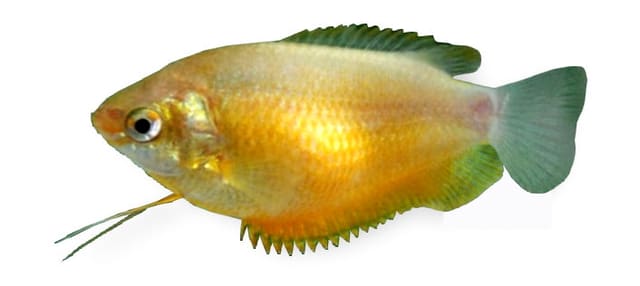
The Colisa sota gold dwarf (Colisa sota) is a golden ornamental form of a freshwater gourami in the family Osphronemidae. It comes from a species native to India and Bangladesh, and FishBase records a maximum length of 13.7 cm total length. This peaceful but socially interactive fish suits a keeper who can provide a planted aquarium, gentle water movement, carefully chosen companions and room for a group of 4–6.
FishBase now lists it as Trichogaster chuna, with Colisa sota treated as a synonym. This is the honey gourami species, so plan its care as a honey gourami whatever the trade name suggests. Gold Dwarf Gourami remains a useful trade name for this ornamental colour form, but its care should follow Trichogaster chuna.
Wild fish inhabit pools, ditches, inundated fields, ponds and beels, as well as vegetated rivers and lakes. Those habitats explain the aquarium priorities: plant cover, sheltered resting places, access to the surface and flow gentle enough for a slow-moving gourami. Its labyrinth organ permits atmospheric air breathing, so an occasional visit to the surface is part of its biology; it still needs a mature biological filter and clean water.
The gold form shares the natural form’s care requirements. Colour is therefore not a reason to change the temperature, aquarium dimensions, diet or compatibility plan. Build the aquarium around adult dimensions and behaviour first, then use plants, wood and a darker, sheltered layout to display the fish comfortably.
Choose this fish for a mature, gently filtered planted aquarium rather than a busy community built around fast or territorial feeders. Seriously Fish describes the species as peaceable and adaptable enough in water chemistry to suit people newer to fishkeeping, but it also warns that this slow-moving fish will easily be intimidated or outcompeted for food by larger or more vigorous tankmates. Its water chemistry needs are manageable, while group dynamics and feeding access need regular observation.
| Suits | Not suited to |
|---|---|
| A planted aquarium with surface cover | A bare aquarium with little shelter |
| A gently moving, filtered environment | Strong flow across the whole aquarium |
| A planned group of 4–6 | Keeping it without planning for interaction with its own kind |
| Peaceful pelagic cyprinids and less active loaches | Territorial, aggressive or highly competitive fish |
| The FishBase, Seriously Fish and OATA overlap of 22–27°C, pH 6.0–7.5 and 5–12 dGH | Water outside the stated routine range |
Start with an aquarium base of 60 × 30 cm, equivalent to about 54 litres, for a pair or small group. Plan around the recommended 4–6 fish, their eventual 13.7 cm maximum total length and any other residents. An aquarium that meets the minimum base but is already crowded with active fish is not an appropriate match.
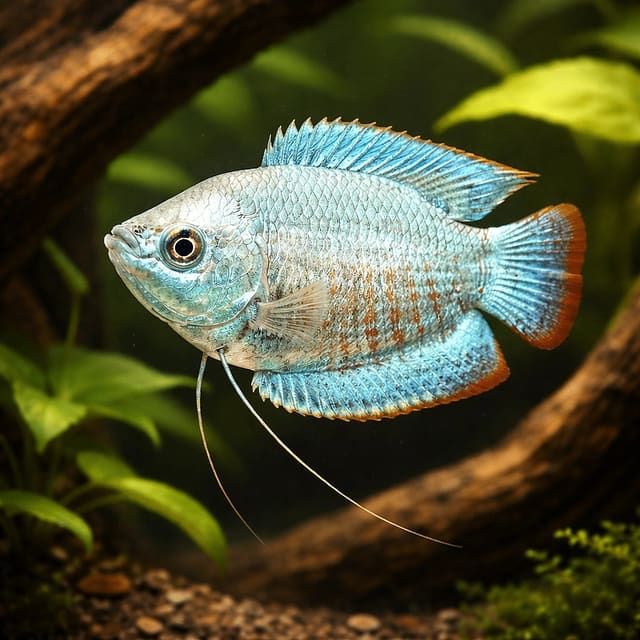
The elongated pelvic-fin rays help gouramis sense their surroundings. Preserve open routes between planted shelters so those delicate filaments are not continually forced through a congested layout. A shaded resting place, a calm feeding area and easy surface access matter more than a decorative theme.
One purchase supplies one live fish at a dispatch size of 2–3 cm. Dispatch size describes the fish when sent, not its adult dimensions, so prepare the permanent aquarium around the recorded 13.7 cm maximum total length rather than the arrival measurement.
Sex is guaranteed only when the selected option explicitly states male or female. This Colisa sota gold dwarf listing has no sex-guaranteed option.
Do not use the gold colour alone to assign sex. Males of ornamental strains do not develop the nuptial colour changes of the natural form. Make group and space decisions without relying on an assumed sex ratio.
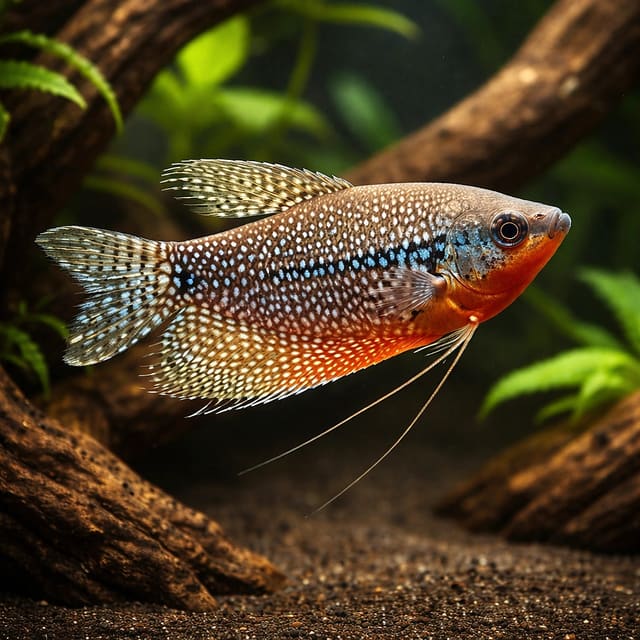
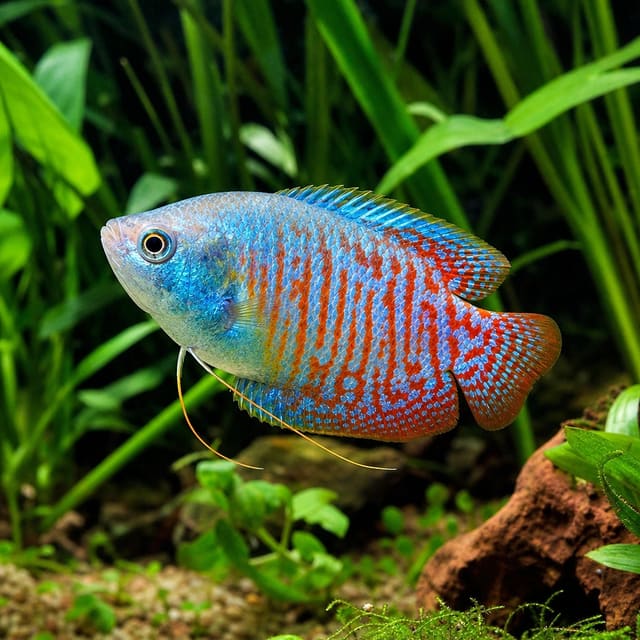
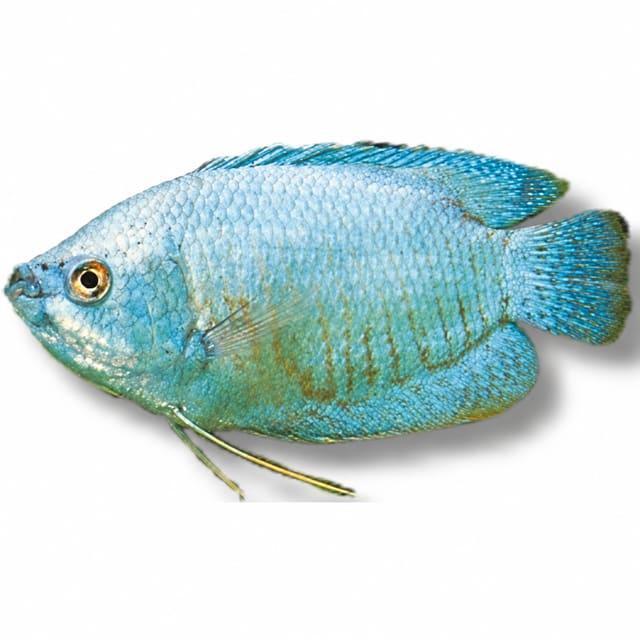
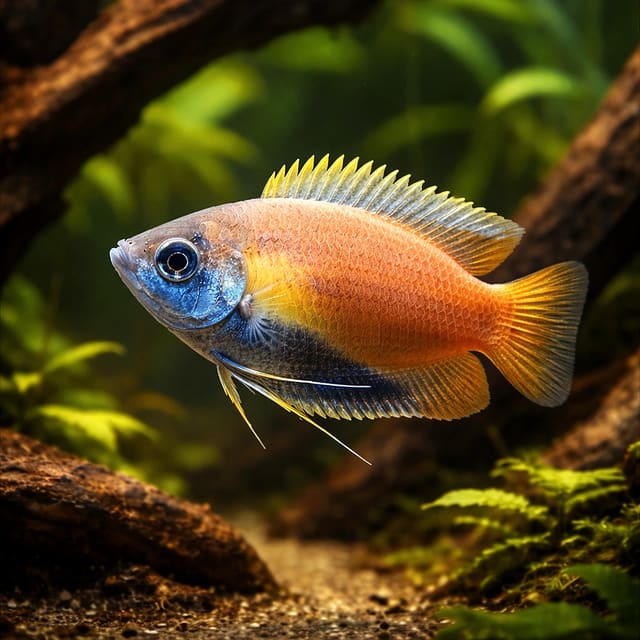
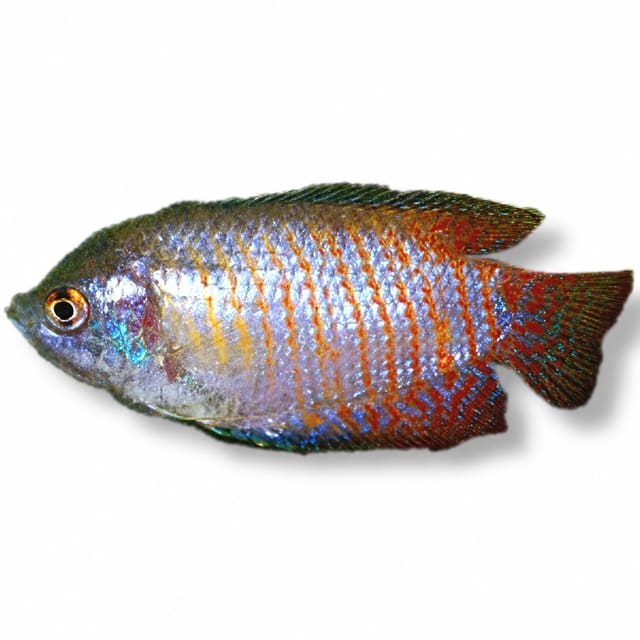
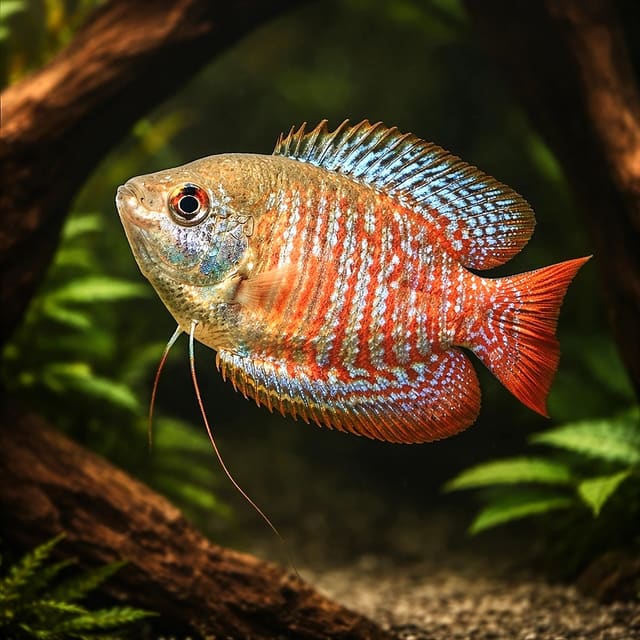
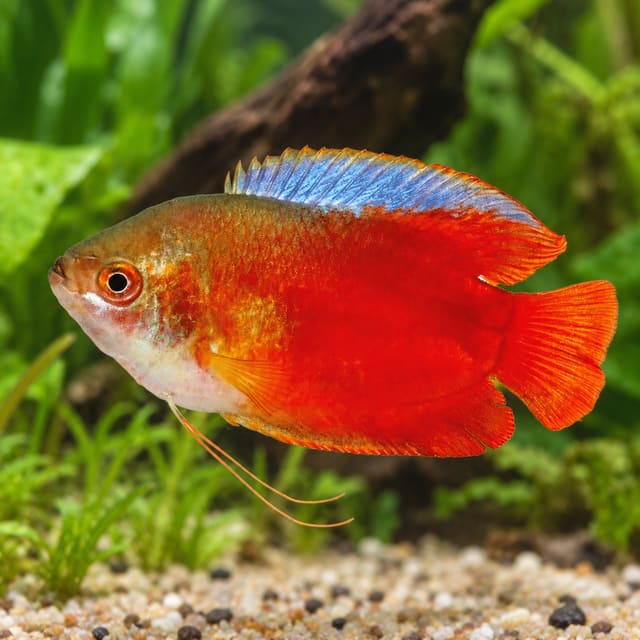
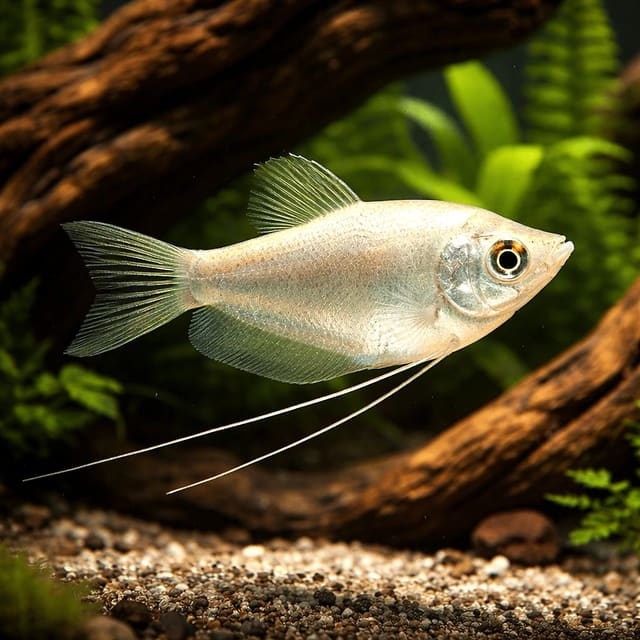
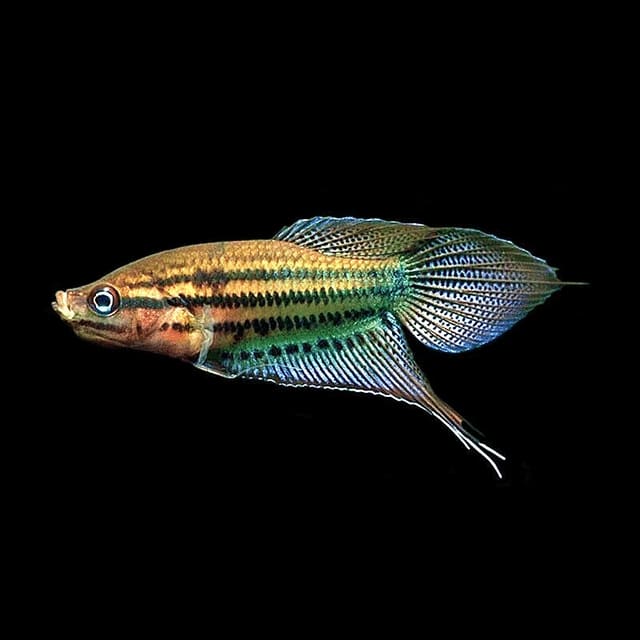
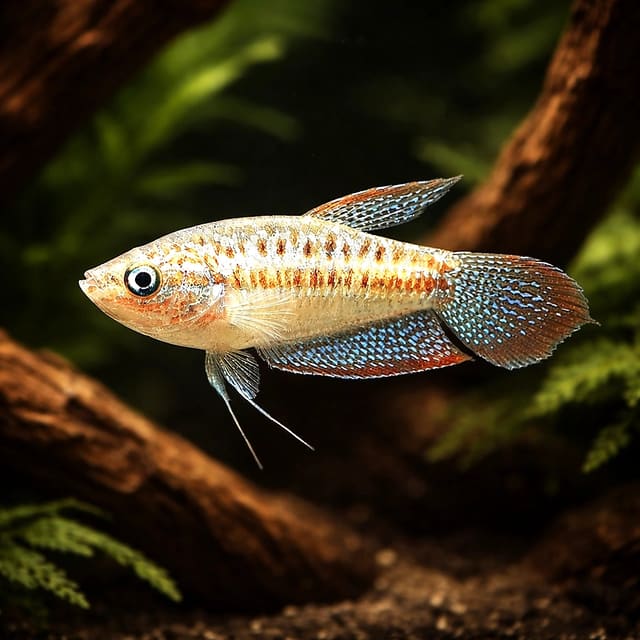
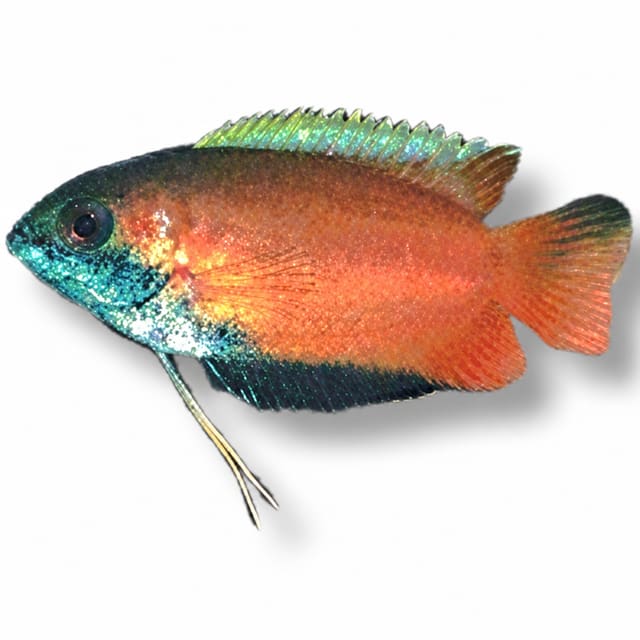
The gallery images are representative, based on reference photographs of this species, so colours can look slightly different from the live animal.
Browse the gourami and labyrinth fish collection when comparing body size, behaviour and aquarium needs across related fish. Compare each animal on its own requirements rather than treating all gouramis as interchangeable: members of the family vary substantially in adult size and temperament.
Plan for a maximum adult size of 13.7 cm total length. That is the FishBase maximum for male or unsexed fish and is the figure to use when checking long-term space, filtration capacity and the combined stocking load.
Provide a base measuring at least 60 × 30 cm, or an equivalent footprint, with a volume of about 54 litres for a pair or small group, as Seriously Fish advises. FishBase also gives 60 cm as the minimum aquarium length. Floor area and length matter because plants, wood and shelters must coexist with routes through the aquarium and access to the surface.
The stated footprint is not spare capacity for unrestricted additions. A group of 4–6 uses the aquarium differently from a single centrepiece fish: individuals establish preferred places, and dominant fish often chase rivals away at feeding time or from a favourite spot. Other residents also consume oxygen, produce waste and occupy feeding space.
Review the layout as the fish grow. If one individual cannot reach food, remains displaced from cover or is repeatedly chased across the aquarium, change the stocking or structure before injury or loss of condition follows.
Create a well-planted, shaded aquarium with surface cover and gentle circulation. Seriously Fish recommends tall stem plants or floating plants, driftwood and additional shelters; the species naturally occupies sluggish, vegetated water and should not have to fight a strong current continuously.
Place taller growth towards the back and sides, with floating cover or stems reaching the surface. Leave connected routes through the planting so the fish can travel between shelter, feeding areas and the surface. The aim is cover without sealing off movement.
Microsorum or Taxiphyllum can be attached to driftwood. Small clay pots or short lengths of suitable piping can add sheltered places where planting is still developing. Use aquarium gravel or sand as the substrate, and position every hard object securely.
Driftwood adds structure and further shelter around the planting. Add some dried leaf litter: beech, oak or Ketapang almond leaves all suit and give additional shelter. As leaves decompose, microbial colonies develop and may become a secondary food source for fry; remove or replace material as part of maintenance rather than allowing debris to obstruct the filter.
Use a gentle outlet direction and check the whole aquarium, not only the area beside the filter. A fish that is continually pushed from its chosen position, avoids a large part of the tank or struggles to hold position at feeding time needs a calmer flow pattern. Plants and wood can interrupt the current, but they must not create stagnant pockets filled with waste.
Keep the surface reachable because labyrinth fish breathe atmospheric air. Surface cover should create security while leaving open spaces for the fish to rise. This balance also lets you observe normal surface visits and distinguish them from prolonged hanging or unusually rapid breathing.
Keep the aquarium at 22–27°C, pH 6.0–7.5 and 5–12 dGH. These routine values are the overlap of FishBase’s and Seriously Fish’s species ranges with OATA’s broad gourami-group guidance.
Target stability within the range instead of repeatedly altering water to chase one central number. Test the tap water and aquarium before choosing a correction. Our water chemistry guide explains what each result means, while the water matcher helps compare measured values with these targets.
| Result | Action |
|---|---|
| Temperature below 22°C | Check heater operation and raise the setting gradually into range. |
| Temperature above 27°C | Check the heater, room temperature and recent changes before making a gradual correction. |
| pH outside 6.0–7.5 | Re-test the aquarium and source water, then correct the cause without a sudden swing. |
| Hardness outside 5–12 dGH | Compare source and aquarium water before planning a stable adjustment. |
| Ammonia or nitrite detected | Reduce the immediate waste load, perform an appropriate conditioned-water change and check biological filtration. |
Maintain ammonia and nitrite at 0 mg/l. OATA advises that nitrate should not exceed 20 mg/l above the normal tap-water level. Test at least weekly and whenever appetite, breathing, colour or swimming changes. Record results so a gradual trend is visible before it becomes an emergency.
Use tap-water conditioner on replacement water to remove chlorine or chloramine. Match replacement water closely enough to avoid abrupt temperature or chemistry changes, and add it in a controlled way that does not disturb the fish or substrate.
Use a mature biological filter in every aquarium, but deliver its circulation gently. For an aquarium of about 54 litres, Seriously Fish suggests looking for a filter rated around 110–160 litres per hour. An air-powered sponge filter suits the species’ preference for sluggish water, provided it has enough biological capacity for the stocking level.
The RSPCA explains that biological filtration supports bacteria which convert toxic ammonia to nitrite and then to safer nitrate. Atmospheric air breathing does not replace this process. A gourami can visit the surface and still be harmed by ammonia, nitrite or accumulated waste.
Mature the aquarium and establish biological filtration before introducing livestock. The first tropical aquarium guide sets out how to prepare the system. Add fish gradually so the bacterial population has time to respond to increased waste and feeding.
When filter media needs cleaning, rinse it lightly in aquarium water removed during the water change, never under the tap. Clean only as much as needed to restore flow rather than stripping every surface at once.
If flow becomes forceful after cleaning, redirect or diffuse the outlet. If flow remains weak, check for blockages before replacing media. The goal is steady waste processing with calm movement, not the strongest possible current.
Feed a quality dried food accepted by small gouramis and regularly add small live or frozen animal foods. Seriously Fish describes the natural diet as likely to include insects and other small invertebrates, and specifically names Daphnia, Artemia and bloodworm for aquarium fish. Offer plenty of these small live or frozen foods regularly for the best colour and condition.
Feed once a day and offer only what the fish consume within a few minutes. OATA uses that schedule for gouramis and paradise fish. Watch the food disappear rather than judging the portion by habit: leftovers break down, increase the waste load and make ammonia or nitrate control harder.
Begin with a small amount. If it is eaten promptly and every fish has fed, the portion is close to the right level. If food reaches the substrate untouched or remains trapped among plants, reduce the next serving and remove accessible leftovers.
Dominant individuals often chase rivals away at feeding time. Watch each fish rather than treating food disappearance as proof that the group was fed. Place small portions where less dominant fish can approach without crossing one individual’s favourite position.
Larger or more vigorous tankmates will easily outcompete this slow-moving gourami for food, so do not keep it with them; any other tankmate that consistently reaches every morsel first is also a compatibility problem, even if there is no direct aggression. Change the feeding arrangement or community before the gourami loses weight. Reduced interest in food can also be an early health warning, so check water quality when appetite changes rather than simply adding more food.
Have the aquarium mature, filtered and inside the stated water range before the fish arrives, and arrange for someone to be in to receive the parcel, because live fish cannot be left unattended. OATA advises confirming ammonia and nitrite at 0 mg/l and increasing livestock numbers slowly, because biological filtration must adjust whenever fish and feeding are added.
These steps come from the current Tropical Fish Co delivery and Live Arrival Guarantee policy. Open and inspect the parcel the same day it arrives, and raise any Live Arrival Guarantee claim that day with the order number and the unboxing video.
Observe swimming, breathing, colour, fins and interest in shelter. An occasional trip to the surface is expected in a labyrinth fish. Prolonged hanging, erratic swimming, unusually fast or slow gill movement, or remaining on the bottom requires an immediate water test and closer assessment.
A new fish may select one sheltered area while learning the layout. Judge progress through appetite, condition, breathing and movement rather than trying to force it into open water. If another resident continually drives it from cover or food, separate the conflict instead of waiting for visible injury.
Check the fish every day for changes in swimming, colour, breathing, appetite, body condition and use of shelter. OATA highlights these changes because they can reveal a problem before severe damage is obvious. Learn each individual’s normal pattern so a departure from it is easier to recognise.
| If you see | Do this first |
|---|---|
| Erratic swimming, bottom sitting or prolonged surface hanging | Test ammonia, nitrite, nitrate and temperature immediately. |
| Faster or slower gill movement | Check water quality, filter operation and recent changes. |
| Darker or paler colour than normal | Look for intimidation, unstable water or reduced feeding. |
| White spots, fluffy growths, ulcers, bumps or damaged scales | Assess the affected fish promptly and avoid adding an unselected treatment. |
| Reduced appetite or weight loss | Confirm that the fish can reach food, then test the water. |
Surface breathing has context in this species. A brief rise to take atmospheric air is normal labyrinth-fish behaviour. A fish that remains at the surface, breathes differently or stops using the rest of the aquarium should be treated as showing a change, particularly when other fish behave similarly.
Check the straightforward causes before altering several things at once: verify temperature, measure nitrogen waste, inspect filter flow and look for aggression or food exclusion. Multiple simultaneous changes make the cause harder to identify and may add further instability.
If you are concerned about a fish’s health, test the water quality straight away. Record the test results and the exact behaviour you observed; concrete details are more useful than a general description that the fish looks unwell.
Keep a group of at least 4–6 of the same species. Seriously Fish explains that they are not schooling fish in the usual sense, but they appear to require interaction with their own kind and show more interesting behaviour in numbers.
Expect a hierarchy rather than constant side-by-side swimming. Dominant fish often chase rivals away at feeding time or from a preferred place. Short displacement can be part of that hierarchy; continual pursuit, loss of condition, torn fins or one fish being denied food or shelter calls for intervention.
A nominal group does not work if the aquarium contains only one secure place. Structure should give a displaced fish another sheltered place without trapping it in a corner. Plants can divide the aquarium while preserving surface access and circulation.
Do not build the group around a presumed sex ratio. Males of ornamental colour strains do not develop the natural form’s nuptial colours, so plan the group without relying on colour to tell males from females. Use adult space, feeding access and observed interactions as the decision points.
Adding more fish is not an automatic cure for aggression. Every addition increases waste and competition, and the aquarium must still meet the 60 × 30 cm footprint guidance, water-quality targets and group’s need for distinct shelter. If repeated chasing concentrates on one fish, reassess the group and layout rather than allowing the weakest individual to decline.
Choose peaceful companions that will not intimidate this slow-moving gourami or consistently beat it to food. Seriously Fish names peaceful pelagic cyprinids and less active loaches such as Pangio species or certain nemacheilids as good choices. Compatibility still depends on adult size, water requirements, numbers, aquarium space and the temperament of the individuals involved.
Avoid territorial or otherwise aggressive species, and larger or more vigorous fish that will easily intimidate this slow-moving gourami or outcompete it for food. OATA also advises avoiding fish that may nip gourami fins. The long pelvic filaments and unhurried feeding style make persistent harassment especially important to detect early.
| Question | Pass condition |
|---|---|
| Does the animal share the water range? | Its routine needs fit the FishBase, Seriously Fish and OATA overlap of 22–27°C, pH 6.0–7.5 and 5–12 dGH. |
| Will it compete heavily for food? | The gouramis can still take their portion within a few minutes. |
| Is its behaviour calm enough? | It does not intimidate, attack or continually displace the group. |
| Is there enough adult space? | All residents fit after plants, wood and territories are considered. |
In nature it is likely to prey on insects and other small invertebrates, so add shrimp only where losing some would be acceptable. Assess the invertebrate’s adult size, the fish’s interest in small moving prey, shelter availability and whether losses would be acceptable. Do not treat a heavily planted aquarium as a guarantee of safety.
Watch the first shared feed closely. A companion can be peaceful yet unsuitable when it consumes every portion before the gouramis approach. Likewise, a fish that repeatedly drives them from the surface or planted shelter fails the screen even if no physical injury is visible.
If a planned companion is not one of the kinds named above, apply the same screening rule rather than assuming that a general community label makes it suitable. The safest match is calm, water-compatible, appropriately sized and slow enough to let every gourami feed.
The Colisa sota gold dwarf reaches a recorded maximum of 13.7 cm total length. Plan the permanent aquarium around that figure rather than its 2–3 cm dispatch size.
Use a base of at least 60 × 30 cm, equivalent to about 54 litres, for a pair or small group. Count the recommended group and every other adult resident when deciding whether more space is needed.
Keep a group of at least 4–6. Seriously Fish recommends no fewer than this because the species appears to require interaction with its own kind; groups form hierarchies, and dominant fish often chase rivals at feeding time or from a favourite spot.
Yes. Seriously Fish describes the species as a good subject for newer hobbyists because it is peaceable and relatively adaptable in water chemistry; give it gentle flow, a group of at least 4–6 and calm tankmates that let every fish feed.
Feed a quality dried food once daily, limited to what is eaten within a few minutes, and regularly offer small live or frozen Daphnia, Artemia or bloodworm. Watch that every member of the group receives food.
The FishBase, Seriously Fish and OATA overlap is 22–27°C, pH 6.0–7.5 and 5–12 dGH. Maintain ammonia and nitrite at 0 mg/l and avoid sudden changes in temperature or chemistry.
This fish is peaceable, although dominant individuals often chase rivals from food or favourite places. Avoid territorial or aggressive companions, larger or more vigorous fish that will easily intimidate or outcompete it, and fish that may nip its fins.
Suitable kinds include peaceful pelagic cyprinids and less active loaches such as Pangio species or certain nemacheilids. Screen every companion for shared water needs, calm behaviour, adult space and feeding pace.
Start filming the sealed parcel before opening it, then show the fish still inside the bag in one continuous take. The fish is hand-bagged in pure oxygen inside an insulated poly box, with a heat pack when the weather calls for it; someone must receive the parcel, float the bag for 20–30 minutes and avoid pouring bag water into the aquarium.
No reviews for this item yet. Bought one? Honest reviews only, good or bad.
What customers say about ordering from us
Easy website plenty of info on fish your buying great to pick a time slot
TRACEY DURRANT · 7 Oct 2026
Got some lovely fish thank you
Kevin Mackie · 7 Oct 2026
Reviews of our shop, collected by Judge.me, an independent third-party review collector. Newest first.