Easy
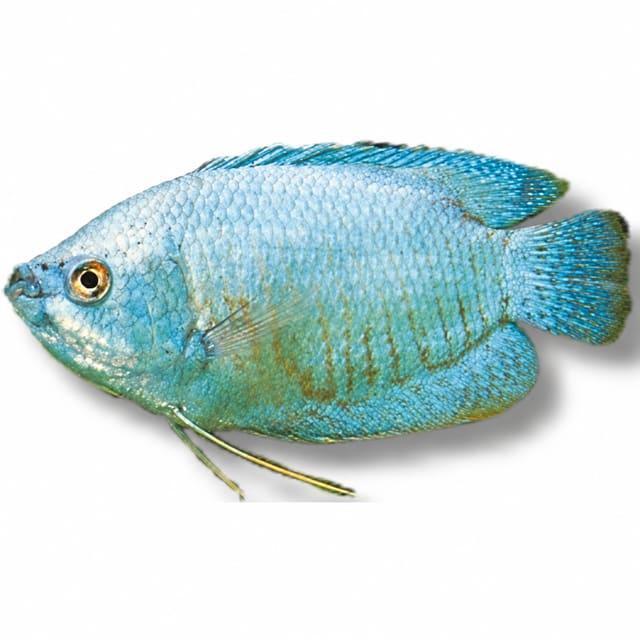
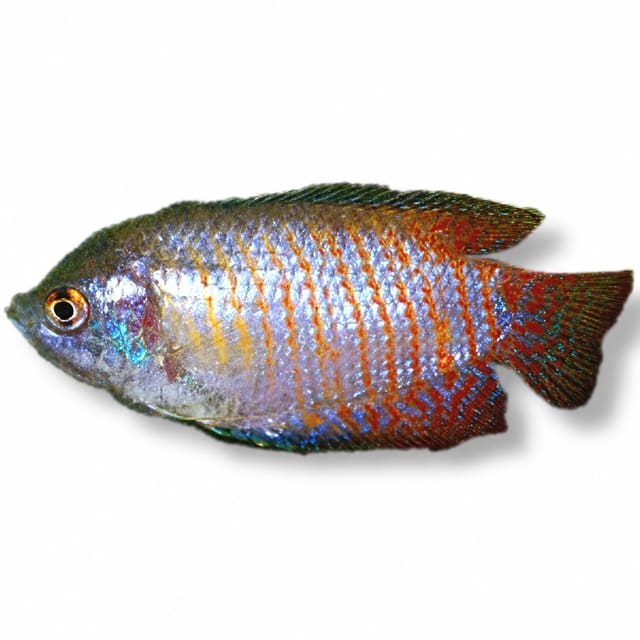
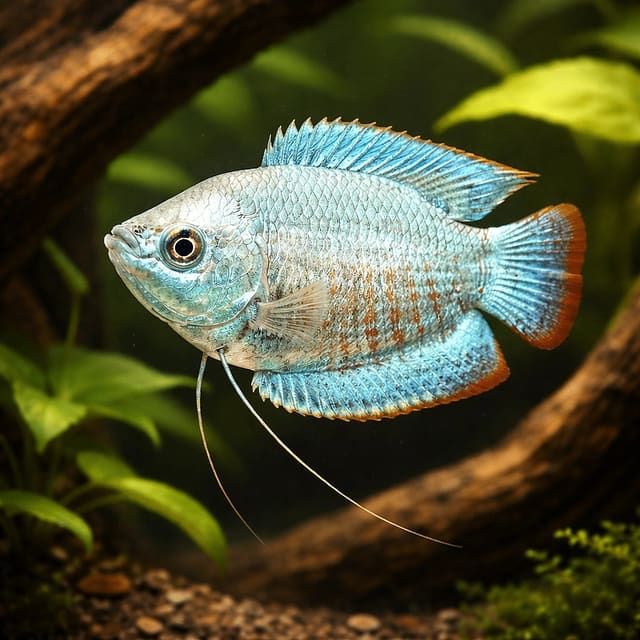
Cobalt Dwarf Gourami (Trichogaster lalius)
24–28°C · pH 6–7.5 · 40L
£10.99

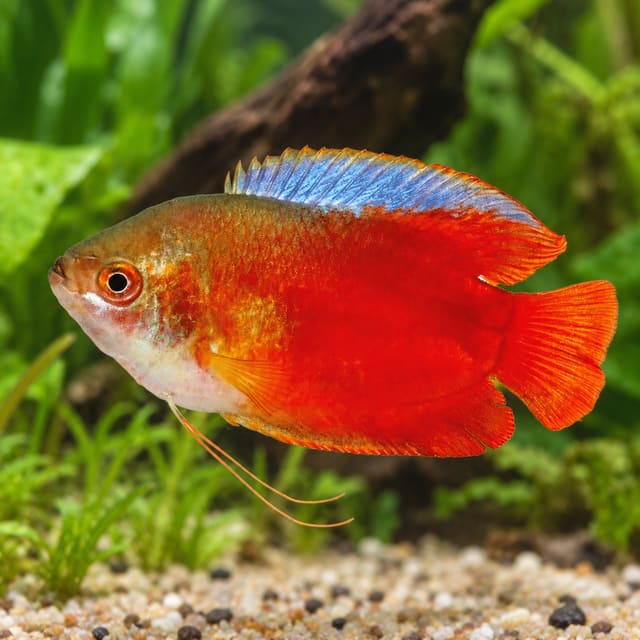
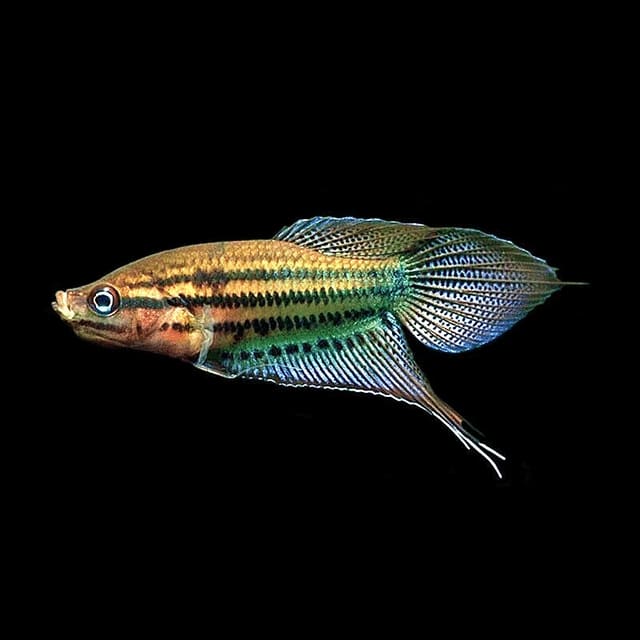
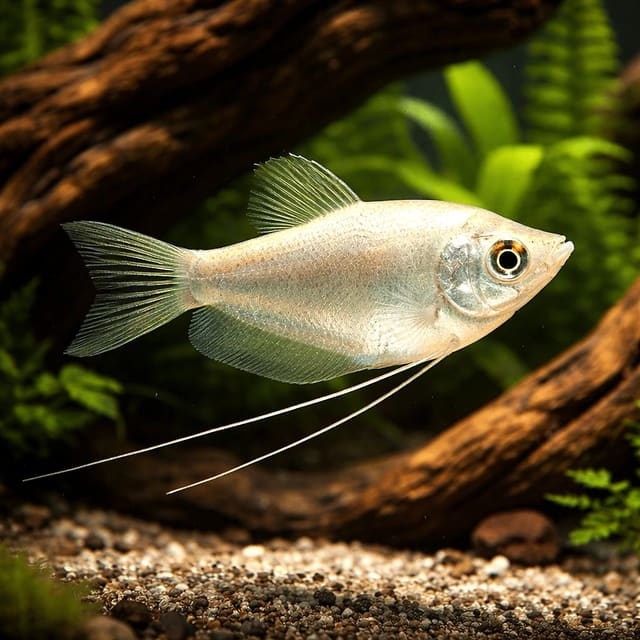
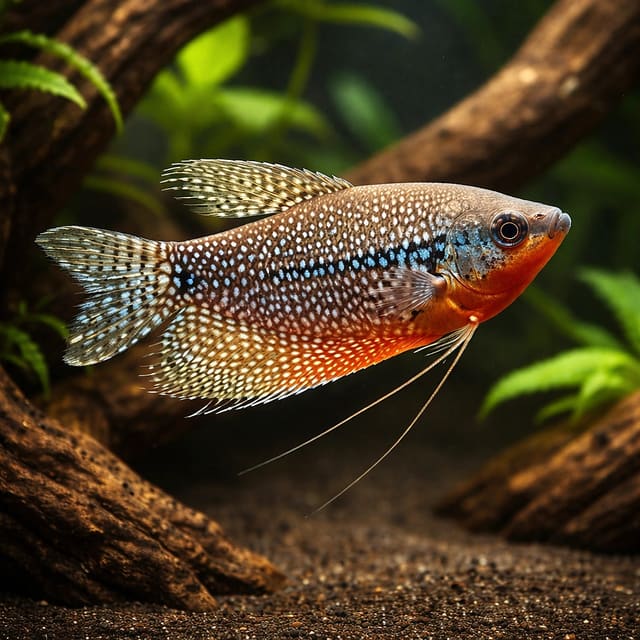
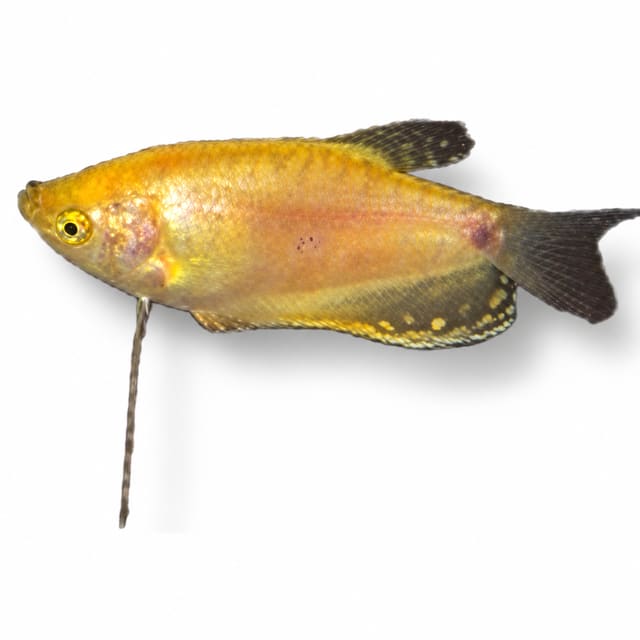
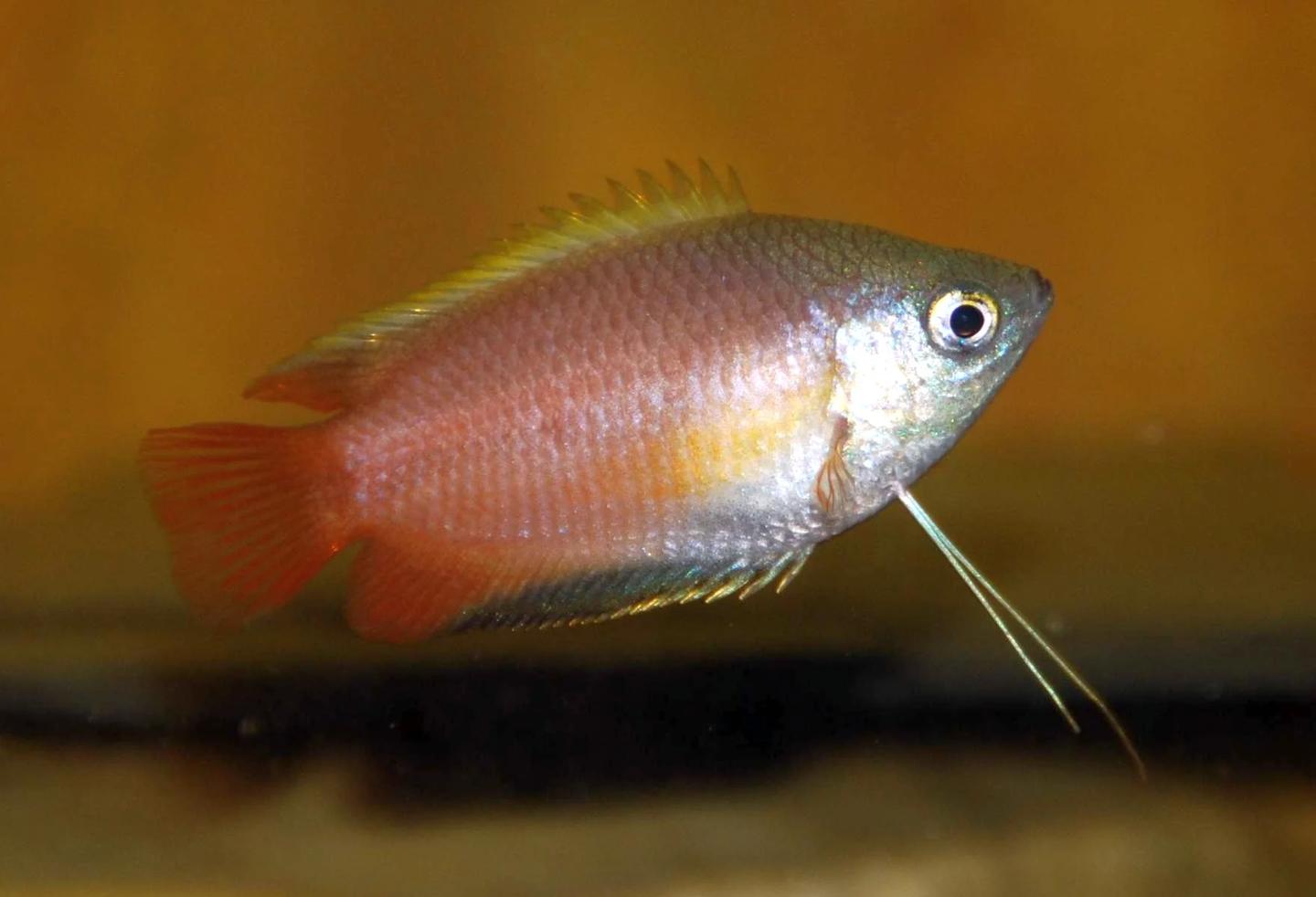
Red Honey Gourami (Trichogaster chuna), sold as one fish in the selected 3–3.5 cm, 3.5–4 cm or XL grade. A small labyrinth fish for a mature planted aquarium with gentle flow and surface access.
Adult size is the maximum length this species reaches at full maturity (scientific sources). The livestock you receive will be younger and smaller — pick a size above for the actual shipping size. Product-photo provenance and any image-specific limitations are stated on the listing.
Colisa chuna red
Save when buying multiple fish. Each quantity is one fish; sex and pair formation are not guaranteed unless the selected variant explicitly states them.
Red Honey Gourami (Trichogaster chuna), sold as one fish in the selected 3–3.5 cm, 3.5–4 cm or XL grade. A small labyrinth fish for a mature planted aquarium with gentle flow and surface access.
Adult size is the maximum length this species reaches at full maturity (scientific sources). The livestock you receive will be younger and smaller — pick a size above for the actual shipping size. Product-photo provenance and any image-specific limitations are stated on the listing.
Start with a mature, filtered aquarium at least 60 cm long. Published size records disagree, and broad group guidance is not Honey-Gourami-specific, so verify Trichogaster chuna, the seller's adult-size advice and any claimed sexes before choosing one fish or a group.
Maintain these water conditions for optimal health and vibrant colors
The Honey Dwarf Gourami Red is the deep red-orange colour form of Colisa chuna, the little labyrinth fish most keepers know simply as the honey gourami. This is still Colisa chuna — listed in current literature as Trichogaster chuna — a peaceful, surface-oriented anabantoid from the slow, plant-choked waters of India and Bangladesh that tops out at roughly 5 cm and lives for around five years in a settled tank. If you have kept a standard honey gourami before, everything you already know applies: the same 40-litre minimum, the same 22-28°C, the same gentle nature that makes it one of the few gouramis you can genuinely call a community fish. The only difference is what you see through the glass.
The sizes shown in the dropdown are the supplied sizes at dispatch, not adult size. Young fish colour up steadily over the first few months in your care.
Like every anabantoid, the red honey gourami carries a labyrinth organ — a folded, blood-rich chamber above the gills that lets it take oxygen straight from the air. That single adaptation explains most of its habits. It evolved in shallow, warm, oxygen-poor water where surface access mattered more than open swimming space, so it hangs in the top third of the tank, dislikes strong flow, and must always be able to reach the surface. A tightly sealed lid with no air gap is a genuine hazard for labyrinth fish; leave a warm, humid pocket of air between the water and the cover glass so the fish is not gulping cold room air.
Naming causes more confusion here than the fish deserves. Colisa chuna is the true honey gourami, and the red strain on this page is a colour form of that species. It should not be confused with the Red Honey Gourami sold as Trichogaster labiosa, the thick-lipped gourami, which is a separate and noticeably larger species reaching 7-9 cm and needing a bigger aquarium. If you are choosing between them, the deciding factor is adult size and tank volume, not colour.
The natural range of Colisa chuna covers the lowland floodplains of north-east India and Bangladesh — the Ganges and Brahmaputra systems, plus the ponds, ditches, paddy margins and seasonal marshes that fill and empty with the monsoon. These are not clear, fast rivers. They are shallow, tea-stained, heavily vegetated waters where sunlight barely reaches the bottom and the surface is broken up by floating weed, emergent stems and fallen leaves. Water movement is minimal for most of the year, temperatures sit comfortably in the low-to-mid twenties Celsius, and dissolved oxygen can drop to levels that would kill an open-water fish outright.
That habitat shaped every practical requirement in this care guide. Because the fish lives among stems rather than in open water, it feels exposed in a bare tank and will hug the back glass until you give it cover. Because the water is soft to moderately hard and slightly acidic to neutral, it settles happily anywhere between pH 6.0 and 7.5 and 4-15 dGH — a range most UK tap water falls into without adjustment. Because the surface is where it feeds, breathes and eventually breeds, the top of the aquarium matters more than the substrate. And because the wild population is a warm-water species with no meaningful seasonal cold period, a heater is not optional in a British home.
A tank that echoes the original habitat — subdued light, floating plants, leaf litter or wood, and gentle flow — provides cover while leaving access to the surface. Ask about the water conditions in which your fish are currently kept before changing them.
If your red honey gourami looks washed out on arrival, do not reach for food or medication. Dim the light, add a handful of floating plants, and leave the tank alone for a week. Colour in this species is a stress readout, and shade is the fastest lever you have.
Forty litres is the working minimum for a single fish or a settled pair, and that figure comes from behaviour rather than bioload — a 5 cm gourami produces very little waste, but it does need horizontal distance to retreat from a tank mate it would rather avoid. In practice a 60-litre aquarium is the sweet spot for a pair, and 75 litres upwards is what you want if you are keeping a trio, mixing colour forms, or building a community around them. Long, shallow tanks suit this species far better than tall ones: the fish uses the top few centimetres constantly and rarely explores deep water, so surface area is worth more to it than height. If you are stocking a nano tank under 40 litres, choose a smaller anabantoid such as a sparkling gourami instead of squeezing this one in.
Aim for 22-28°C and hold it steady; 24-26°C is the easy middle ground for a mixed community and gives you headroom in both directions. pH should sit between 6.0 and 7.5 and hardness between 4 and 15 dGH. Stability beats precision every time with Colisa chuna — a fish held at a rock-steady pH 7.4 will do better than one chased back and forth toward 6.8 with buffers. Ammonia and nitrite must read zero, and nitrate is best kept low with modest weekly water changes of around 20-25%. Match the temperature of replacement water reasonably closely; a cold refill dumped onto a surface-dwelling labyrinth fish is one of the more common causes of a sulking, colourless gourami the following morning.
Filtration should be effective but quiet. A sponge filter driven by a modest air pump is close to ideal, and a small internal or hang-on filter works well provided you baffle the outflow so the surface stays calm. If the water surface is rippling hard, the flow is too strong — this fish is trying to hold station and breathe up there. Use a dark, fine substrate: sand or smooth rounded gravel in brown or black tones will lift red pigmentation dramatically, while bright gravel makes the same fish look pale and washed out. Add branchy wood, a few smooth stones and, most importantly, plants at three levels: rooted background stems such as Vallisneria or Hygrophila, mid-ground Cryptocoryne, Anubias or Java fern tied to wood, and floating cover — Amazon frogbit, salvinia or duckweed kept in check. Lighting should be moderate and run for six to eight hours a day, with the floating plants doing the work of breaking it up.
| Aquarium element | What to aim for | What to avoid |
|---|---|---|
| Flow | Barely-moving surface, baffled outlet | Powerheads, strong spray bars, wavemakers |
| Substrate | Dark sand or fine rounded gravel | White or brightly coloured gravel |
| Planting | Dense background plus floating cover | Bare glass with a single ornament |
| Lid | Covered, with a warm air gap above the water | Open top, or a lid clamped to the waterline |
| Light | Moderate, 6-8 hours, partly shaded | Bright uninterrupted light all day |
Plant the tank a fortnight before the fish go in. Established roots and a settled biofilm give a newly introduced red honey gourami somewhere to graze and hide on day one, and that shortens the shy period from weeks to days.
Colisa chuna is an omnivore with a strong lean toward small live prey. In the wild it takes insect larvae, tiny crustaceans, zooplankton and whatever falls onto the surface film, supplemented by algae and plant matter. In the aquarium that translates into a varied, protein-forward diet built on small particle sizes — the mouth of an adult is barely two or three millimetres across, so anything bigger than a micro pellet simply gets mouthed and spat out.
Build the staple around a good quality micro pellet or a finely crushed tropical flake, and rotate frozen foods through the week: brine shrimp, daphnia, cyclops, chopped bloodworm and mosquito larvae are all taken enthusiastically. Live daphnia or newly hatched brine shrimp, offered once or twice a week, will do more for condition and colour than any single dry food. Feed small amounts twice a day rather than one large meal, and stop when the food is gone in a couple of minutes. Overfeeding is the usual cause of cloudy water in a lightly stocked gourami tank, and this species is small enough that its actual daily requirement looks alarmingly modest.
Colour is worth a separate note on a red strain. Carotenoid-rich foods — cyclops, high-quality colour-enhancing pellets, spirulina-supplemented flake — support the red pigment the fish already carries. They will not turn a plain honey gourami red, and no food should be sold to you on that promise, but a well-fed red strain fish in a dark, planted tank looks a different animal from the same fish kept on plain flake under bright light. One light fasting day a week helps digestion and does no harm.
Feeding at the surface is natural for this species, so slow-sinking or floating foods suit it best. If you keep bottom dwellers alongside, feed them separately with a sinking wafer so the gourami is not competing downward for food it will not chase. New arrivals often refuse food for the first day or two; that is normal, and the right response is patience and a dim tank rather than piling in more food.
| When | What to offer | How much |
|---|---|---|
| Morning | Micro pellets or finely crushed flake | A small pinch, cleared within two minutes |
| Evening | Frozen daphnia, cyclops or brine shrimp | A pea-sized portion for a pair, no leftovers |
| Twice weekly | Live daphnia or baby brine shrimp | In place of one dry feed |
| Weekly | Fasting day | No food at all |
Uneaten food is the single biggest water-quality risk in a small gourami tank. If flake is still drifting after two minutes, you have fed too much — siphon the excess out rather than leaving it to break down in the substrate.
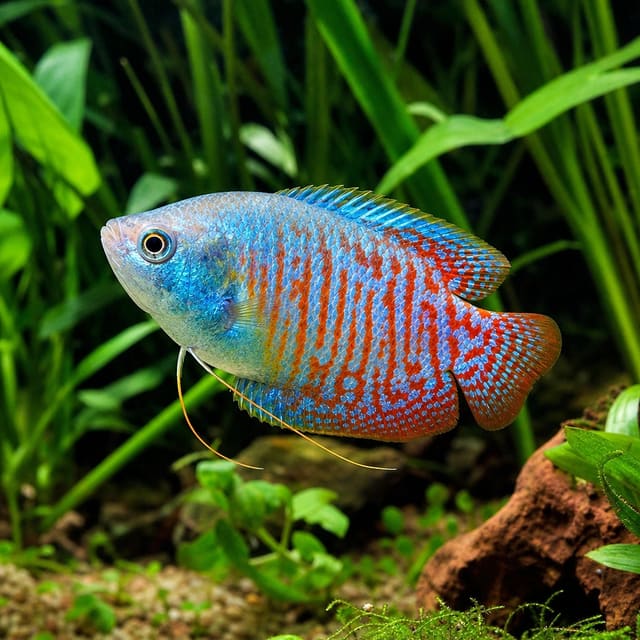
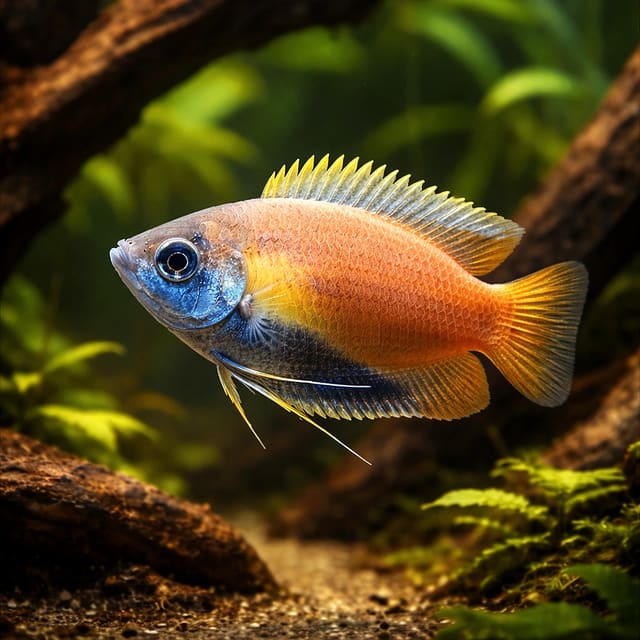
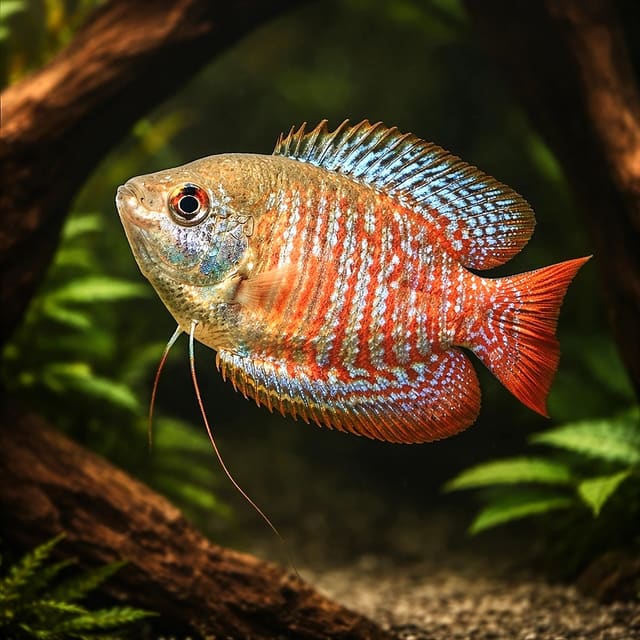
Adults reach about 5 cm — slim, laterally flattened, with an oval body, rounded fins and the long, filamentous pelvic rays that anabantoids use like feelers to touch and taste their surroundings. The red strain shows a warm orange-red base that darkens toward the dorsal surface and runs into the unpaired fins, often with a faint pale edge along the dorsal and anal fin margins. A mature male in condition is the more striking fish: his colour saturates to a genuine red, the throat and chest can darken to a deep brick or near-black, and the dorsal fin lengthens to a point. Females stay somewhat paler, sit rounder through the belly, keep a shorter, more rounded dorsal, and often show a faint horizontal line along the flank that males lose as they colour up.
Sexing juveniles is unreliable, and any honest retailer will tell you so. At the 3-4 cm sizes usually supplied, both sexes look similar and colour is still developing. If you specifically want a pair, the practical route is to buy a small group of young fish and let them sort themselves out over a few months rather than trying to pick a male and female from a tank of juveniles. Fully coloured adults are unmistakable, but a fish only reaches that point once it is settled, well fed and not being harassed.
Colour in Colisa chuna is a live readout of how the fish feels. A relaxed, established fish is bright and evenly coloured. Fading, blotchy patches, a sudden dark throat outside breeding, or a switch to a dull brown-grey are all worth investigating — check temperature, test the water, and watch for a tank mate pushing it around. Males also darken deliberately during display and nest building, which is a good sign rather than a bad one and passes within days. Colour and appearance vary with age and condition; a photograph does not guarantee the appearance of an individual fish.
This is one of the calmest gouramis in the hobby and a genuinely good community fish, which is not something you can say about most anabantoids. It will not chase, will not nip, and spends its day quietly patrolling the upper water. The risk runs the other way: a red honey gourami is far more likely to be bullied than to bully. Anything fast, boisterous or fin-nipping will keep it hiding in a corner, and long-finned tank mates with a reputation for territoriality are a poor match.
Good companions are small, peaceful and occupy the middle or lower levels — harlequin and chilli rasboras, ember and rummynose tetras, pygmy and bronze corydoras, otocinclus, kuhli loaches and small peaceful barbs such as cherry barbs. Dwarf shrimp can work, particularly in a mature, heavily planted tank with an established colony, though you should expect the occasional shrimplet to disappear; adult amano and cherry shrimp are generally safe with a fish this size. Snails are ignored. Avoid tiger barbs, serpae tetras, larger cichlids, and anything that needs cool water or heavy flow.
Other labyrinth fish need more thought. Two males of any dwarf gourami species in a small tank will eventually sort out a hierarchy, and in 40 litres there is nowhere for the loser to go. Bettas are a genuine gamble — both species claim the surface, and while some pairings coexist for years, others end badly within a week. Larger gouramis such as pearl or three-spot will simply out-compete a 5 cm fish at feeding time. If you want more than one gourami, either keep a single male with one or two females in 75 litres or more, or choose species that use different levels of the tank.
| Tank mate | Suitable? | Notes |
|---|---|---|
| Harlequin rasboras, ember tetras | ✅ Yes | Mid-water shoalers that leave the surface alone. The safest possible choice. |
| Pygmy or bronze corydoras | ✅ Yes | Bottom dwellers with no overlap at all; feed them sinking wafers separately. |
| Cherry and amano shrimp | ✅ Yes | Fine in a planted, established tank. Expect occasional losses among shrimplets. |
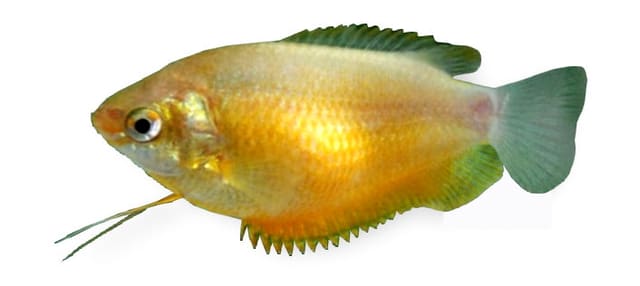
| Standard Honey Gourami | ⚠️ Caution | Same species, so fully compatible — but keep one male only unless the tank is 75 litres or more. |
| Betta splendens | ⚠️ Caution | Direct competition for the surface. Only with a spare tank ready and close daily observation. |
| Tiger barbs, serpae tetras | ❌ Avoid | Persistent nippers; the long pelvic filaments are an obvious target. |
| Cichlids over 8 cm | ❌ Avoid | Too territorial and too fast at feeding time for a shy 5 cm gourami. |
Two stocking plans that work well in practice: a 60-litre planted tank holding one red honey gourami, eight ember tetras and six pygmy corydoras; or a 90-litre community with a male and two female red honey gouramis, a group of harlequin rasboras, a small shoal of corydoras and a cherry shrimp colony in the plant thickets. In both cases the planting is what makes it work — broken sight lines let a shy fish move around the tank instead of picking one corner and staying in it.
Hold new fish in a separate 20-30 litre tank with a mature sponge filter and a heater for two to four weeks before they meet an established community. It is far easier to treat one bare quarantine tank than a fully planted display.
Breeding this species is rated moderate — not a beginner project, but well within reach of anyone prepared to set up a dedicated tank and be patient. Red honey gouramis are bubble nesters. The male builds a raft of mucus-bound bubbles at the surface, usually anchored under a floating plant, then displays beneath it until a ripe female accepts him. Because the strain breeds true, a pair of red fish will produce red fry, though colour takes months to develop and juveniles look unremarkable at first.
Set up a separate breeding tank of 30-40 litres with a water depth of only 15-20 centimetres, a bare or thinly sanded bottom, plenty of floating plants and an air-driven sponge filter turned down to a trickle. Raise the temperature to 26-28°C and lower the hardness a little if your tap water is at the harder end of the range. Condition the pair for a week or two beforehand on live and frozen foods; a well-fed female fills out visibly, and the male's colour deepens and his throat darkens as he comes into condition.
Spawning follows the classic anabantoid pattern. Once the nest is built the male displays with flared fins and body shivers, and when the female is ready he wraps around her beneath the nest. Eggs are released in batches, the male gathers them into the bubbles, and the sequence repeats over a couple of hours. Remove the female afterwards — the male will drive her off and can injure her in a small tank. He tends the nest alone, catching and replacing eggs that fall. Eggs hatch in around 24-48 hours, and the fry hang in the nest for another two to three days until they absorb their yolk sacs and become free-swimming. That is the point to remove the male as well.
Fry are tiny and need genuinely microscopic first foods: infusoria, liquid fry food or green water for the first week, moving on to vinegar eels, microworms and newly hatched brine shrimp as they grow. Keep the water shallow and warm, do small daily changes with matched-temperature water, and keep the tank covered — the labyrinth organ develops in the first few weeks, and a fry that gulps cold, dry air at that stage often does not recover. Growth is slow at first and then accelerates, with the red colouring emerging over the following two to three months.
A single Indian almond leaf floated on the surface gives the male something to anchor the nest against and releases tannins that help protect the eggs from fungus. It is a cheaper and more reliable spawning aid than most commercial products.
Three fish get shelved under similar names, and picking between them is easier once you separate colour from species. The red strain on this page and the standard honey gourami are the same animal — Colisa chuna — with identical care requirements and identical adult size, so the choice there is purely aesthetic. The thick-lipped gourami, Trichogaster labiosa, is often sold as "Red Honey Gourami" and is a genuinely different species: bigger, longer-lived in a larger tank, and a poor swap if you have already planned a 40-litre setup.
| Feature | Honey Dwarf Gourami Red | Standard Honey Gourami | Thick-Lipped Gourami |
|---|---|---|---|
| Species | Colisa chuna | Colisa chuna | Trichogaster labiosa |
| Adult size | About 5 cm | About 5 cm | About 7-9 cm |
| Minimum tank | 40 litres | 40 litres | 75 litres |
| Colour | Deep red-orange, saturated in males | Honey-gold to amber | Orange-bronze with heavier lips |
| Temperature | 22-28°C | 22-28°C | 22-28°C |
| Best for | Planted community tanks where colour is the point | Keepers who prefer the natural amber form | Larger communities with the volume to spare |
Choose the red strain if you want a warm focal colour in a small planted community and you like the idea of a centrepiece fish that never causes trouble. Choose the standard honey gourami if the softer amber tone suits your aquascape better, or the wild-type honey gourami if you are building a biotope and want the original colouring. Choose T. labiosa only if your tank is genuinely 75 litres or more. Whatever you pick, the care sheet is close enough that a keeper who succeeds with one will succeed with the others.
A healthy fish has clear, alert eyes, unclamped fins carried open, even colour, smooth steady breathing and regular trips to the surface for air. It should be interested in food, curious about movement outside the glass after the first week, and settled enough to swim in open water rather than pressing into the plants. Warning signs are usually behavioural before they are physical: hiding constantly, refusing food for more than a couple of days, clamped fins, flicking against décor, or resting on the substrate rather than the upper levels.
The two most common problems in this species are both preventable. The first is transport and settling stress, which shows up as fading colour and a poor appetite in the first week and resolves on its own in a dim, stable, well-planted tank. The second is bacterial or fungal infection following poor water quality — usually the consequence of overfeeding a small tank rather than any failing in the fish. Whitespot, velvet and fin rot all occur but are no more likely here than in any other tropical community. Because Colisa chuna breathes air, a fish that is gasping at the surface is not necessarily short of oxygen; check for gill irritation and test the water before assuming an aeration problem.
Treat only when you have a confirmed diagnosis. Raising the temperature by a couple of degrees within the safe range and improving water quality resolves a surprising number of early-stage problems without medication at all. Where treatment is needed, dose to the actual tank volume rather than the nominal one, and remove carbon from the filter for the duration.
Never use copper-based medications in a tank containing shrimp or snails — copper is lethal to invertebrates at treatment doses. Move affected fish to a bare hospital tank instead. Be cautious with strong dye-based treatments around labyrinth fish, and always keep the surface accessible during any course of medication.
Expect a quiet fish. A red honey gourami spends most of its day in the upper third of the tank, drifting between plant stems, hovering with its pelvic filaments trailing, and making regular unhurried trips to the surface for air. It is curious rather than bold, and it investigates new décor, new plants and new food with the filaments before committing. For the first week or two after introduction it will be shy and may hold station at the back of the tank; this is normal and passes as it learns the feeding routine.
Interactions between individuals are gentle by gourami standards. Males will display at each other with flared fins and a lot of posturing but very little contact, and in a properly planted 75-litre tank a small group can coexist without incident. In a bare 40-litre tank the same fish will fight, because posturing only works when the loser has somewhere to withdraw to. Females are almost entirely non-confrontational.
Two behaviours often surprise new keepers. The first is nest building outside any breeding attempt — a settled male will throw up a small bubble raft under a floating plant simply because conditions suit him, and it needs no intervention. The second is deliberate colour change: a displaying or nest-tending male darkens through the throat and chest, sometimes dramatically, and returns to normal within days. Neither is a problem. Persistent fading with clamped fins, on the other hand, always is.
Each order quantity supplies one fish in the selected size: 3–3.5 cm, 3.5–4 cm or XL. These are purchase grades, not adult-size promises. The options do not guarantee a sex or an established pair; check the selected size for current availability.
Orders travel with a licensed live-animal courier in insulated, oxygen-packed boxes, with heat packs added through the colder months to hold a stable temperature in transit. Every livestock order is covered by our Live Arrival Guarantee. We would rather hold an order back for a day than send a fish out into weather it should not be travelling in, and we will always tell you if that is the plan.
If you are unsure whether a red honey gourami suits your tank — the volume you have, the fish already in it, the flow from your filter — ask us before you order rather than after. We would far rather point you toward a species that will work than sell you one that will spend its life hiding behind the heater. Care notes on this page are written to be specific enough to act on, and our team can fill in the gaps for your particular setup.
To build the tank out around this fish, the obvious companions are its own relatives kept at sensible numbers: the standard Honey Gourami for a mix of amber and red in a larger aquarium, the Wild Honey Gourami for a biotope-style setup, or a Sparkling Gourami if you want a second anabantoid that uses a different part of the tank. If you have the volume for something larger, the Thick-Lipped Gourami is the natural step up.
For the rest of the community, small mid-water shoalers and quiet bottom dwellers are what turn a single gourami into a proper display — browse our freshwater fish range for rasboras, small tetras and corydoras that suit the same water parameters. On the equipment side, the things that make the most difference here are unglamorous: a reliable heater, a filter you can throttle back, floating plants, and a lid that leaves a warm air gap above the water.
The separate Cobalt Dwarf Gourami guide is a useful comparison when choosing between gouramis. Check each fish’s adult size, temperament and water needs rather than treating similar common names as a compatibility guarantee.
No reviews for this item yet. Bought one? Honest reviews only, good or bad.
What customers say about ordering from us
I have a small group of long finned mountain minnows. So was delighted to be able to order ten of this variety to increase the genetics in my tank . The ones I recieved are healthy but it’s to early to give a verdict on wether they are of a long finned type since they are small currently.
Gordon Walker · 23 Sept 2026
100% success travel and "installation". Pleased with quality of purchase. The Siamese fighter a bit "shy" so have not yet seen him at his best yet but looking good. Happy customer. GG
George E Garratt · 21 Sept 2026
Reviews of our shop, collected by Judge.me, an independent third-party review collector. Newest first.