−13%
Moderate
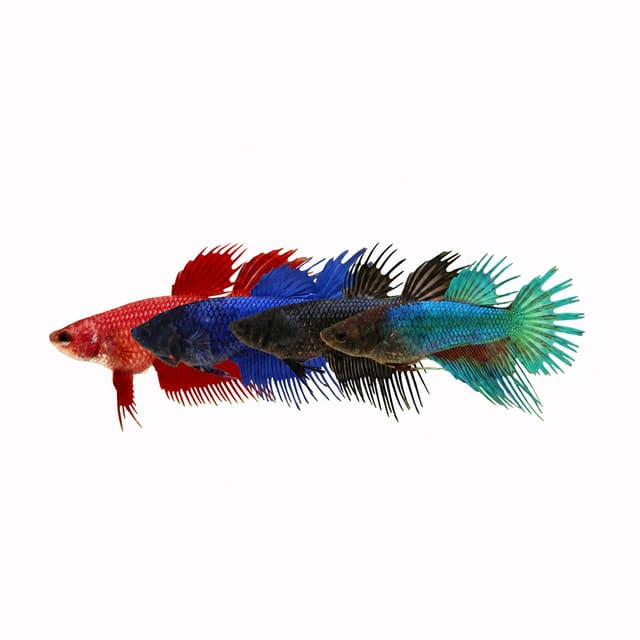
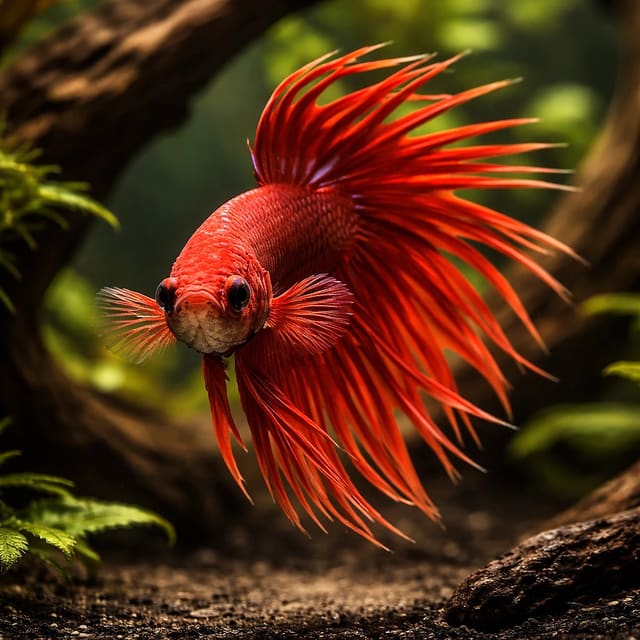
Crowntail Male Betta (Betta splendens)
26–28°C · pH 6–8 · 20L
£12.17£13.99

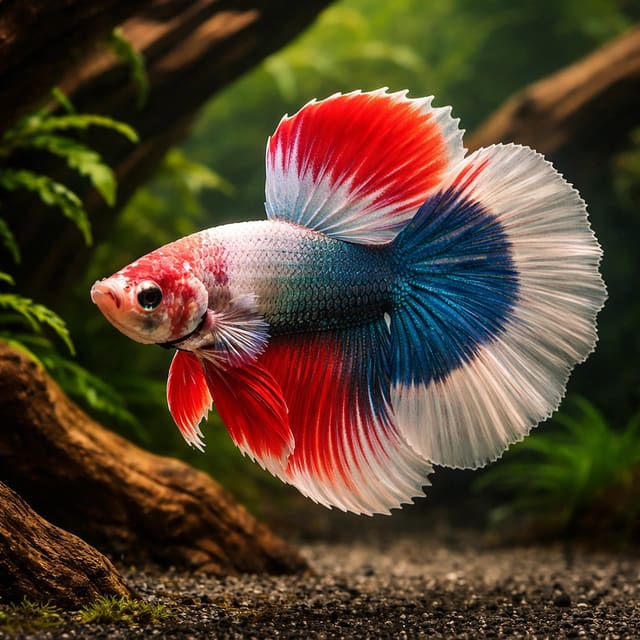
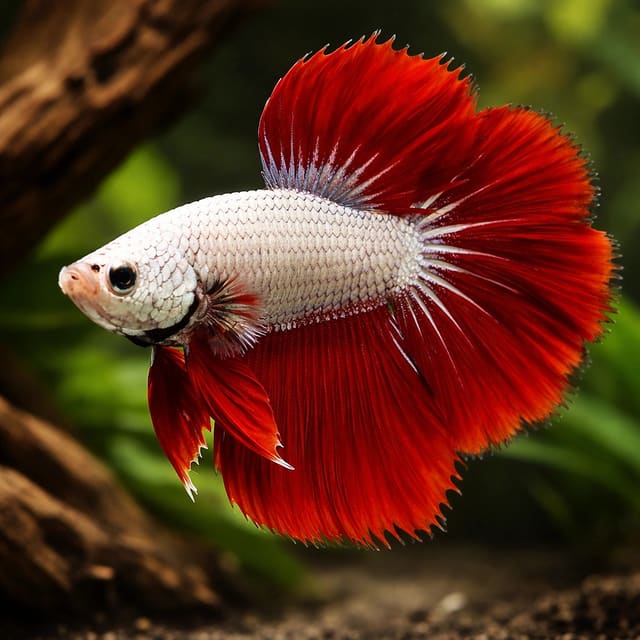
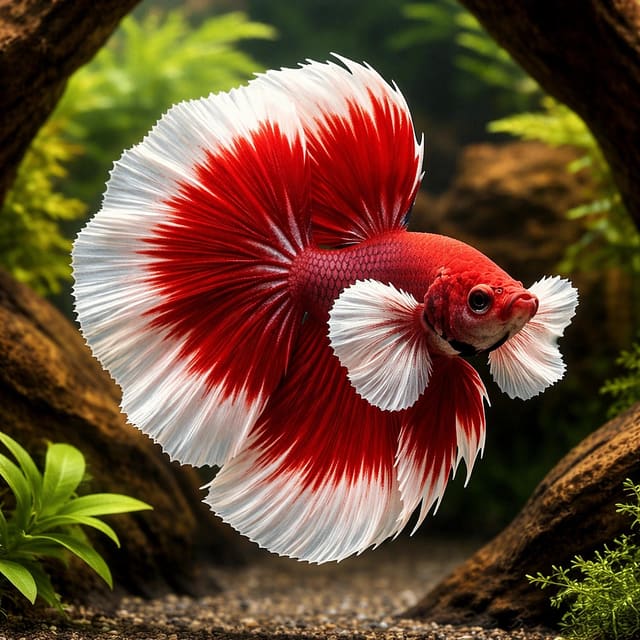
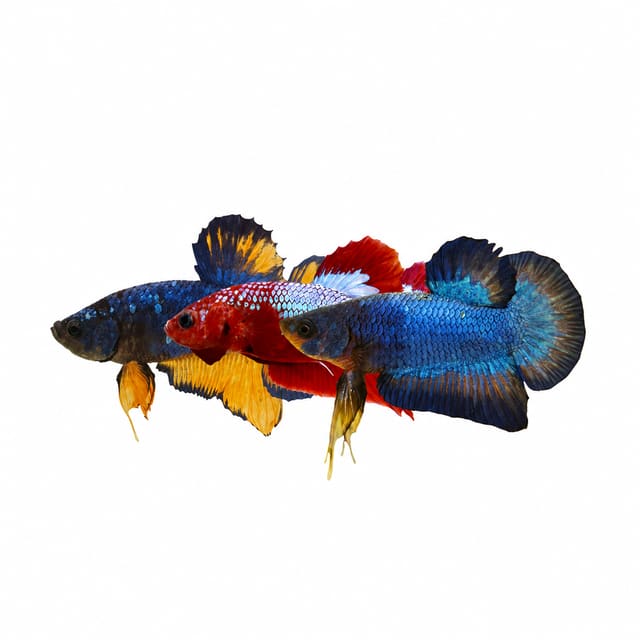
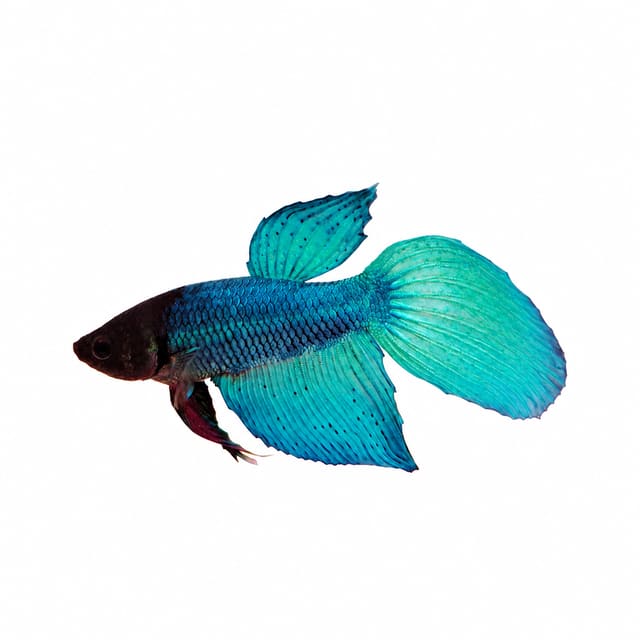
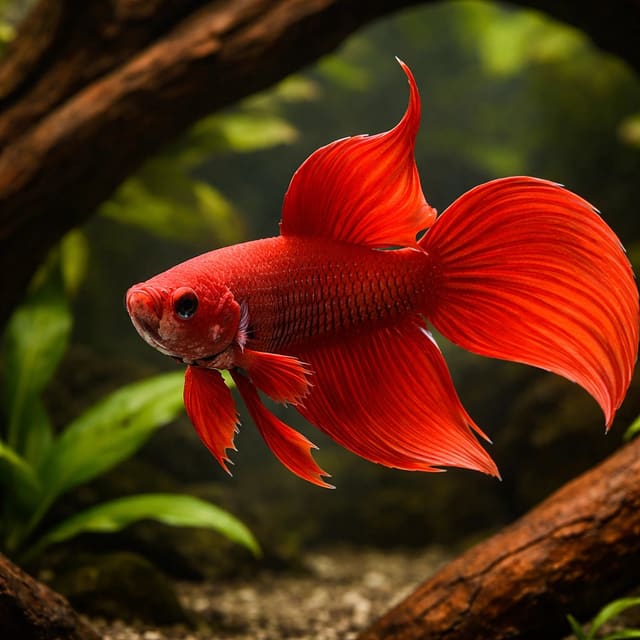
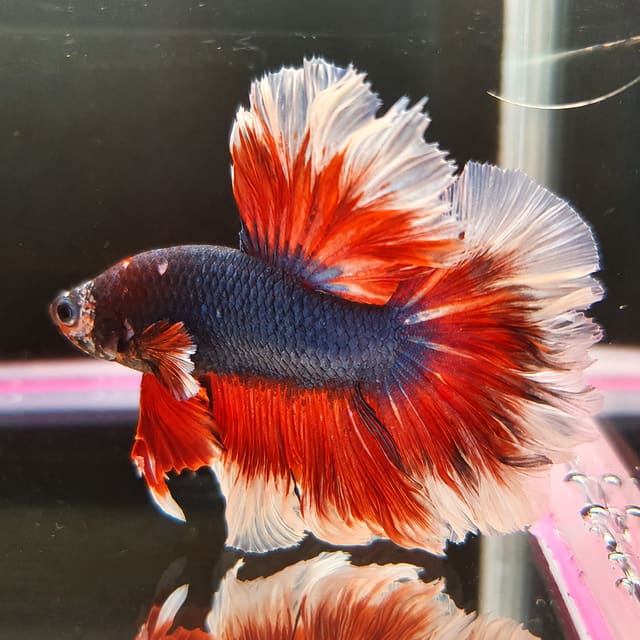
Male Libby Split-Tailed White XL Betta (Betta sp.) is one live male fish for a mature, heated and filtered aquarium. Keep one male alone as the simplest plan, use gentle flow and smooth cover, and treat 20–28 °C, pH 6.0–8.0 and 4–12 dGH as broad OATA Betta-group guidance rather than a species-specific optimum.
Betta sp.
Male Libby Split-Tailed White XL Betta (Betta sp.) is one live male fish for a mature, heated and filtered aquarium. Keep one male alone as the simplest plan, use gentle flow and smooth cover, and treat 20–28 °C, pH 6.0–8.0 and 4–12 dGH as broad OATA Betta-group guidance rather than a species-specific optimum.
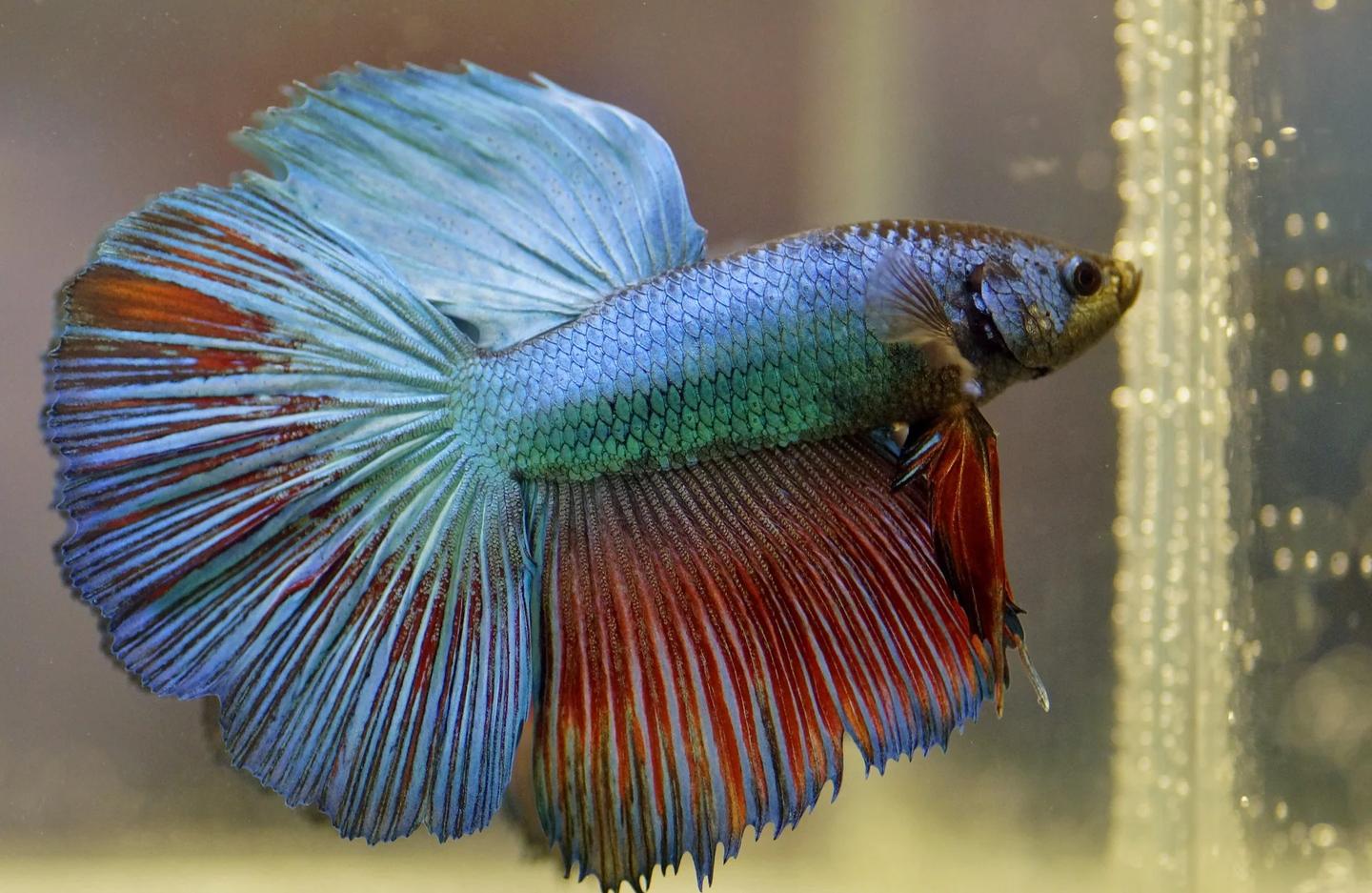
For one typical domestic Betta splendens, start with at least 20 litres, a mature filter, thermostatic heater, separate thermometer, gentle flow, a secure lid with surface access, and plants or refuges. Keep one male per aquarium.
Maintain these water conditions for optimal health and vibrant colors
Male Libby Split-Tailed White XL Betta (Betta sp.) is sold as one live male fish per purchase. The supplier describes the retail form as Libby Betta, Split-Tailed Betta WHITE - XL. XL is the dispatch grade for this offer; it is not a verified adult-length measurement. The exact species has not been identified, so the care advice here follows the genus Betta and its care group.
That identity boundary matters. Betta is a genus containing many species, and care details that are correct for one named species are not automatically proven for every Betta. This page therefore uses the accepted genus label Betta sp., keeps the male offer clear and gives OATA's UK Betta-group guidance with its scope. It makes no species-level adult-size, lifespan, origin or breeding claim.
Sex is guaranteed only when the exact product or selected option explicitly states male or female. This Libby Betta, Split-Tailed Betta WHITE - listing is sold as male.
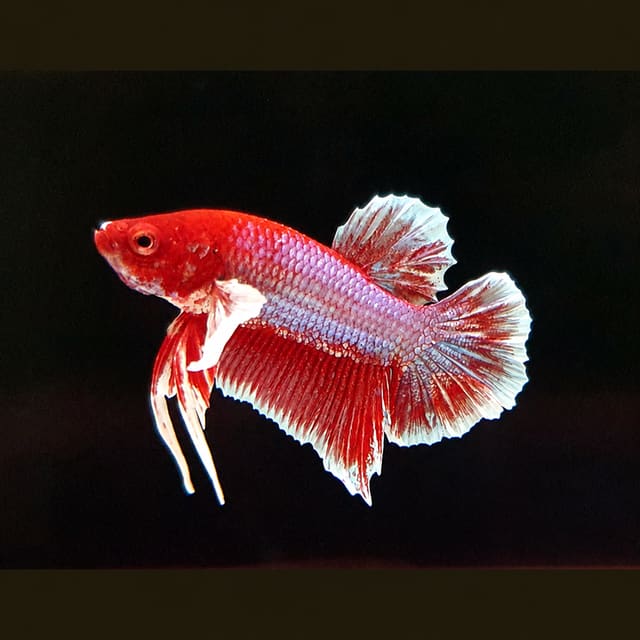
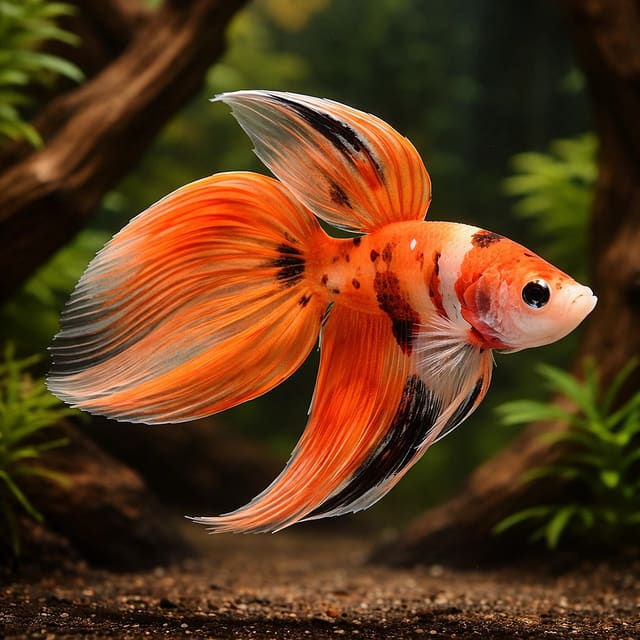
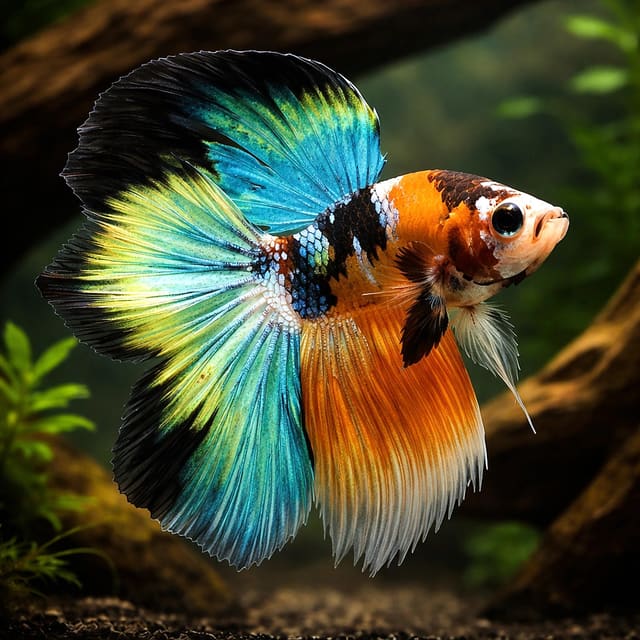
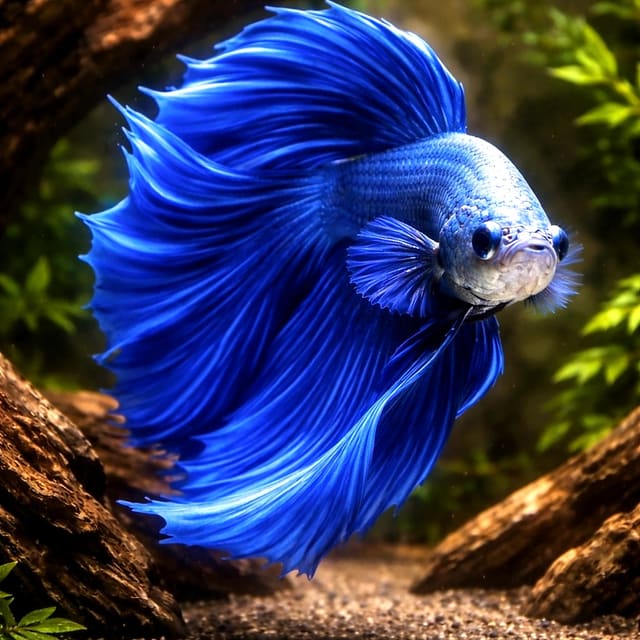
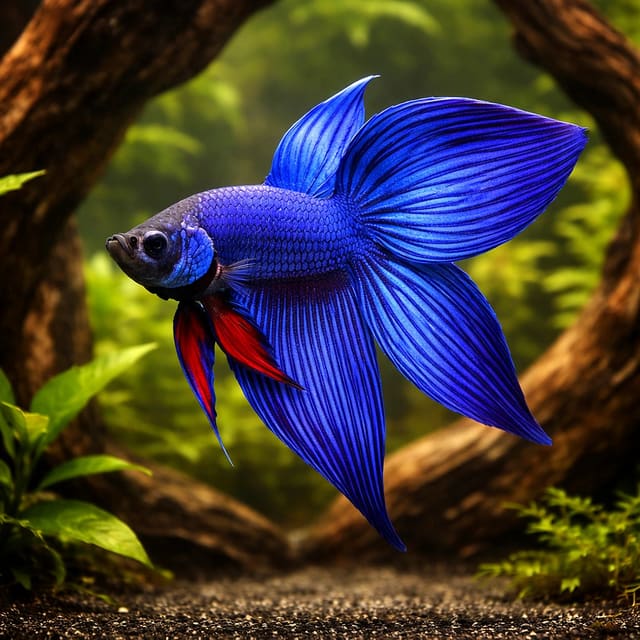
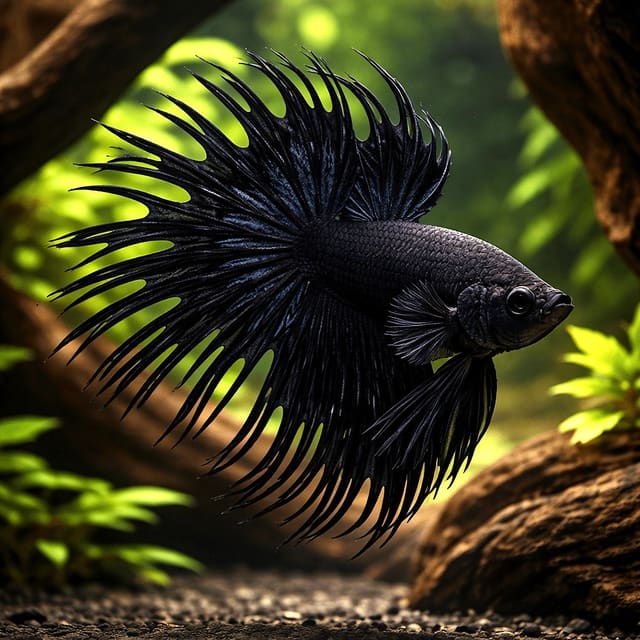
Gallery images have been digitally enhanced to improve image quality. Natural colour, pattern, size and maturity can vary between live animals.
This is an intermediate store choice, not because routine feeding is complicated, but because a male Betta demands sound judgement about territory, companions, water stability and furnishings. Keeping him alone is the simplest plan. Two males should never share an aquarium: OATA states that they will fight until one is severely injured or, more likely, killed. A community is not impossible by definition, but it needs substantially more thought than adding any fish labelled peaceful.
Plan a mature, filtered, heated aquarium with a secure lid, open access to the water surface, gentle circulation and smooth planting or décor. Long fins create drag and can catch on rough edges. Broad leaves and shaded retreats can give the fish places to pause without blocking surface access. Avoid a bare bowl, an unfiltered container or a powerful jet across the entire swimming space.
OATA's broad Betta-group sheet recommends at least 20 litres for a single male. Because this offer is identified only to genus, treat 20 litres as a group-level planning baseline rather than a bespoke species minimum. More water usually makes temperature and waste easier to stabilise, and additional volume is essential before considering companions. Aquarium shape and usable swimming space matter alongside the nominal litre figure.
| Decision | Starting guidance |
|---|---|
| Social plan | One male alone is the simplest and safest starting point |
| Water scope | Broad OATA Betta-group guidance, not a species-specific optimum |
| Temperature | 20–28 °C within that broad group scope |
| pH | 6.0–8.0 within that broad group scope |
| General hardness | 4–12 dGH within that broad group scope |
| Filtration | Mature biological filtration with gentle flow |
| Furnishing | Smooth cover, safe resting places and unobstructed surface access |
| Food | Quality flakes or pellets, with small suitable live or frozen foods for variety |
Ammonia and nitrite should both remain at zero. OATA's broad guidance keeps nitrate no more than 20 mg/l above the normal tap-water level. Test rather than guessing: a clear aquarium can still contain harmful dissolved waste, and the ability to breathe atmospheric air does not replace clean, oxygenated water or a mature filter.
To compare other Betta forms rather than assume they can live together, browse the Betta collection. Alternative listings are choices between offers, not automatic tank-mate recommendations.
Libby, Split-Tailed, White and XL describe the commercial offer. Betta sp. is the scientifically cautious label. The words tell you which listing and male form you are buying, but they do not establish a species-level adult size, native locality or narrow ecological optimum. Do not assume Betta splendens details simply because this is a male Betta trade form.
The family Osphronemidae contains labyrinth fishes. Bettas can use a specialised organ to take air at the surface, so surface access is part of the layout. It does not mean filtration is optional or that the fish belongs in stagnant water. Biological filtration still processes toxic ammonia into nitrite and then nitrate, and water movement still helps distribute heat and oxygen. The practical objective is filtered water without forcing a long-finned male to work against a strong current.
OATA's broad group recommendation of at least 20 litres for one male is a sensible lower planning reference, but it should not become an excuse to choose the smallest possible box. A larger aquarium dilutes waste, slows temperature change and creates room for cover, a heater and a filter without turning the whole interior into equipment. If a heater guard, filter body and dense décor leave little unobstructed space, the nominal volume overstates what the fish can actually use.
Prefer a rectangular aquarium with good surface area. Bettas regularly visit the surface, so a tall, narrow vessel is less convenient than a footprint that offers horizontal movement and several routes upward. Keep a small air gap beneath the cover. Close cable and pipe openings because a startled fish can jump through surprisingly modest gaps.
Use fine gravel or sand and add live plants where practical. Broad-leaved plants, floating cover kept under control and smooth wood can create shaded resting places. If artificial plants are used, select soft items made for long-finned fish. Avoid rough rock, sharp plastic, narrow holes and coarse ornaments that can snag a fin or trap the body.
Arrange several routes rather than one tunnel. A fish should be able to leave a resting area without crossing a high-flow outlet or dead end. Keep part of the surface open for air access and feeding. Floating plants can soften light, but a complete mat can obstruct the surface, reduce gas exchange and make observation difficult.
Place the aquarium away from direct sun, radiators, open windows, draughts, speakers and repeated vibration. Direct sun can overheat the water and encourage algae; a window or heat source can create daily temperature swings even when the average looks acceptable. Use a predictable day-night cycle and switch lights off overnight. The fish needs darkness as well as display lighting.
A sponge filter or adjustable internal filter can work when sized and maintained correctly. Baffle or redirect an outlet if the fish is continually swept sideways, avoids half the aquarium or cannot rest without being pushed. Do not reduce flow so far that debris accumulates everywhere or the filter stops exchanging water. The target is gentle circulation through the aquarium, with calm resting areas and no relentless jet.
Check flow again after maintenance. A cleaned impeller can restore a much stronger output, while a clogged sponge can make circulation too weak. Plants grow and change the pattern too. Observe whether the male can cruise, turn, feed and rest without struggling; that behaviour is more useful than relying only on a filter's marketing label.
OATA's broad Betta-group guidance gives 20–28 °C, pH 6.0–8.0, general hardness 4–12 dGH and carbonate hardness 3–10 dKH. These figures describe a care group, not a verified optimum for every species in the genus. OATA itself warns that some less common Betta species require specific conditions. For this Betta sp. offer, use the range as a cautious planning envelope, maintain a stable point inside it and avoid chasing day-to-day fluctuations with rapid chemical adjustment.
Before purchase, measure the aquarium and the source water. The water chemistry guide explains what the common tests mean, while the water matcher can help compare measured values with the broad guidance stated here. If the tap water and aquarium sit near an edge of the range, investigate consistency and the needs of any intended companions instead of forcing an exact midpoint.
| Test | Broad OATA Betta-group guidance |
|---|---|
| Temperature | 20–28 °C |
| pH | 6.0–8.0 |
| General hardness | 4–12 dGH |
| Carbonate hardness | 3–10 dKH |
| Ammonia | 0 mg/l |
| Nitrite | 0 mg/l |
| Nitrate | No more than 20 mg/l above the normal tap-water level |
Do not confuse tolerance with permission for neglect. A reading inside a numerical band does not cancel detectable ammonia, detectable nitrite, sudden temperature movement or persistent poor behaviour. Record weekly results so changes can be recognised before they become an emergency.
Fish release ammonia. In a mature aquarium, beneficial bacteria in the filter convert it first to nitrite and then to nitrate. Both ammonia and nitrite are toxic and should remain at zero. A new filter does not become biologically mature merely because it has been running for a few days, and bottled products do not remove the need to test.
Cycle the aquarium before the fish arrives. Confirm zero ammonia and nitrite under an appropriate waste load and establish a repeatable maintenance routine. After adding the fish, test more frequently while the filter adjusts. If either ammonia or nitrite appears, stop adding livestock, check that the filter is working, reduce excess food and take appropriate water-change action.
Never replace all biological media on a calendar unless there is a specific safety reason. Many cartridges are marketed as disposable, but throwing away established media can throw away much of the useful bacterial population. Preserve mature media, rinse it gently only when flow is restricted and use removed aquarium water rather than tap water. Clean the impeller and intake separately where the filter design allows.
Most UK homes cannot keep aquarium water stable throughout the year without a thermostat heater. Choose a reputable unit sized for the aquarium, position it where water circulates and use a separate thermometer to confirm the result. A heater setting is not a measurement. Check the displayed temperature daily and after water changes, cold nights or unusually hot weather.
Avoid pouring hot or cold water directly into the aquarium to correct a reading. Sudden change can be more stressful than a modest, stable value within the broad guidance. Prepare replacement water, dechlorinate it and bring it close to the aquarium temperature before adding it gradually. During hot weather, increase observation and maintain safe circulation; do not drop frozen objects into the tank or make abrupt corrections.
A Betta visiting the surface can be normal because of the labyrinth organ. Repeated gasping, rapid gill movement, loss of balance, inactivity or refusal of food still deserves investigation. Test ammonia, nitrite, nitrate, pH and temperature, confirm that the filter is running and review any recent change. Surface breathing should never be used to dismiss a water-quality problem.
Equally, do not prescribe medicine from one vague sign. Poor water, transport stress, heat, aggression and illness can produce overlapping behaviour. Start with accurate water tests and environmental checks, isolate a fish if aggression is causing harm, and seek suitable professional advice when symptoms persist or worsen.
OATA describes Bettas as omnivorous and recommends a good-quality flake or pellet, including specialised Betta pellets, with small live or frozen foods such as Daphnia, small bloodworm or tubifex for variety. That group-level advice avoids treating every animal in the genus as strictly carnivorous.
Choose a staple the fish can take easily and that does not disintegrate before it is eaten. Add suitable frozen or live items in modest rotation rather than treating rich foods as unlimited treats. Frozen food should be stored and handled correctly; live food should come from a trustworthy source. Avoid feeding wild-collected organisms from water that may carry pollutants, parasites or pesticides.
OATA advises offering only what the fish can eat within a few minutes once a day. Begin with a conservative portion, watch what is swallowed and remove obvious leftovers. Appetite varies with transport, temperature, age and individual behaviour, so use observation rather than a rigid pellet number copied from another product. A fish that begs is not necessarily hungry, and excess food becomes waste even when the aquarium still looks clear.
If the fish stops eating, first check temperature, ammonia, nitrite, recent maintenance and signs of intimidation. Consider whether the food is stale, too large or presented in a strong current. Do not keep adding alternatives until the bottom is littered with food. Remove leftovers and investigate the cause.
Persistent loss of appetite, abnormal swelling, weight loss, unusual waste, damaged fins or changed breathing requires closer attention. Avoid treating by guesswork from an online symptom list. Record water results and recent changes, take clear photographs where possible and contact an aquatic retailer or vet for case-specific advice.
A 25% weekly change is a useful routine, not a substitute for test results. Detectable ammonia or nitrite may require prompt additional action, while an established aquarium with rising nitrate may need a review of feeding, stocking, plant growth and maintenance. Change only one controllable factor at a time where welfare allows, then record the response.
Do not wash biological media under the tap: chlorine or chloramine can damage the bacteria the aquarium depends on. Do not clean every surface and replace every medium together. Stagger necessary work so useful biology remains, and keep filter media wet in aquarium water during brief maintenance.
When flow falls, look for a blocked intake, dirty sponge, trapped plant material or impeller debris. Restore function without sterilising the unit. After maintenance, confirm that the heater and filter have been switched back on, that the outlet is still gentle and that no airline or cable has created an escape gap.
The aquarium should already be mature, heated, filtered and tested. Ammonia and nitrite must be zero. Check that the lid is secure and the current is gentle. Arrange for someone to receive the parcel because live fish must not be left unattended.
Read the current delivery and Live Arrival Guarantee policy before delivery day. If a claim may be needed, the evidence sequence begins while the parcel is still sealed. Have a charged phone ready; searching for it after the box is open cannot recreate the sealed arrival condition.
Floating the bag deals primarily with temperature; it does not make two different water chemistries identical. Conversely, a lengthy open-bag process should not be improvised without purpose. Follow the bounded sequence, minimise handling, and complete the transfer without chasing the fish around a container.
Transport can temporarily reduce colour or appetite. Give the male access to smooth cover and avoid repeatedly moving ornaments to make him visible. Offer a modest amount of familiar food only once he is upright, moving normally and interested; remove anything ignored. Do not compensate for one missed meal by overfeeding later.
Watch the current. A long-finned fish that is continually pinned behind décor or swept away from the surface needs the outlet redirected or baffled. Check the heater with a thermometer and ensure the lid is closed after every inspection. Do not add companions during the settling period.
Test ammonia and nitrite more frequently than the ordinary weekly schedule because the aquarium's waste load has changed. Observe balance, breathing, fin position, skin, appetite and use of cover at consistent times. Note results rather than relying on memory. Early trends are easier to act on than a vague impression several days later.
Investigate persistent gasping, loss of balance, worsening fin damage, repeated rubbing, swelling, white spots, growths or prolonged refusal of food. Begin with water tests, temperature and equipment checks. If water is sound and the problem continues, seek suitable professional advice. Do not add several medicines at once or assume every pale patch on a white fish has the same cause.
This listing supplies a male. OATA is unequivocal that two males should never be kept together: they will fight until one is severely injured or, more likely, killed. A divider does not automatically make a small aquarium suitable if the fish remain in constant visual confrontation, and an untested partition can fail. Do not use the second held gallery scene as husbandry evidence; supplied media do not override the written social guidance.
A single-male display avoids the most serious same-sex conflict and makes feeding, observation and water planning simpler. Solitary does not mean deprived of structure. Provide plants, smooth retreats, open surface access and a predictable routine. Enrichment should let the fish explore and rest, not force repeated reflection flaring or permanent territorial display.
OATA says males may be kept alone or with very placid tank mates. It also warns that males can become the targets of intense fin nipping, with stress, disease and death as possible consequences. That makes the phrase peaceful community too vague. A candidate companion must be calm in practice, unlikely to nip fins, compatible with the same measured water and able to use the aquarium without crowding the Betta at the surface.
| Relationship | Decision rule |
|---|---|
| Avoid | Any other male Betta; boisterous or aggressive animals; persistent fin nippers |
| Use caution | Fast feeders, conspicuous long-finned fish, surface competitors and animals that may intimidate a slower long-finned male |
| Consider only after research | Very placid animals whose adult size, water needs, feeding pattern and swimming space genuinely fit the aquarium |
Research each intended animal at adult size. Compare temperature, pH, hardness, activity, group requirements, feeding access and the total space needed. A companion is not suitable merely because it occupies a different level, and no named species is universally safe with every male Betta. Individual behaviour matters, but it should be managed inside a conservative plan rather than used to excuse a risky starting combination.
Provide broken sight lines and more than one retreat, then watch every animal at feeding time and during quiet periods. Warning signs include repeated chasing, a fish hiding behind equipment, torn fins, one animal monopolising food or the Betta being prevented from reaching the surface. Rearranging décor may help when territory is the issue, but damaged or continually excluded animals should be separated promptly. Have a cycled alternative aquarium or dependable divider ready before testing a community.
OATA describes keeping a male with at least five females only in a densely planted aquarium and says the arrangement should not be attempted by inexperienced keepers. That is not a companion recommendation for this one-male listing. It requires verified sexes, substantially more space, several retreats, close observation and specialist breeding knowledge. Buying females casually to occupy a male can expose them to persistent attention and injury.
If breeding is a future objective, research the exact species and prepare dedicated facilities before bringing adults together. This page deliberately does not provide a partial breeding recipe for a genus-level offer. The welfare decision for this purchase remains straightforward: one male alone is the simplest plan, and any community requires cautious species-by-species work plus a separation route.
A single adult-length figure would be misleading because Betta sp. identifies a genus rather than one verified species. XL is the dispatch grade for this offer, not an adult-size measurement. Choose the aquarium from the broad group baseline, usable space and the fish's welfare needs rather than an unfounded centimetre claim.
OATA's broad Betta-group guidance recommends at least 20 litres for one male. Treat that as a group-level planning baseline rather than a species-specific minimum, and prefer more water where possible because temperature and waste are easier to stabilise. Use a covered rectangular aquarium with mature filtration, gentle flow, smooth cover and clear surface access.
Keep one male as the simplest plan. Never house two males together: OATA says they will fight until one is severely injured or more likely killed. A male-with-females arrangement is specialist, densely planted and unsuitable for inexperienced keepers, so it is not the routine plan for this one-male offer.
A prepared beginner can succeed, but Tropical Fish Co rates this offer intermediate. Male aggression, careful companion selection, gentle filtration, safe furnishings and the limits of genus-level care guidance all need active judgement. Mature the aquarium first, test water consistently and keep the social plan simple.
OATA's broad group guidance describes Bettas as omnivorous. Offer a quality flake or pellet as a dependable base and add small suitable live or frozen foods such as Daphnia, small bloodworm or tubifex for variety. Feed a controlled amount that is eaten within a few minutes once a day and remove leftovers.
Broad OATA Betta-group guidance is 20–28 °C and pH 6.0–8.0, with 4–12 dGH. These are not a species-specific optimum. Maintain stable, tested conditions inside the broad range, keep ammonia and nitrite at zero and avoid rapid chemical or temperature adjustments.
A male is highly aggressive towards another male, and the two must never be housed together. OATA says males are not generally aggressive towards other fish but can be subjected to intense fin nipping. Keeping him alone is safest; otherwise consider only very placid companions after full research and retain a separation plan.
There is no universal list. OATA permits only very placid tank mates for a male and warns against fin-nipping pressure. Check every candidate's adult size, behaviour, group needs, water requirements, feeding pattern and use of space; avoid boisterous, aggressive or nipping animals and any other male Betta.
Tropical Fish Co hand-packs live fish in an insulated box and uses a licensed live-animal courier. Someone must receive the parcel. For a Live Arrival Guarantee claim, make one continuous video from the still-sealed parcel to the fish inside the sealed bag, then contact the store on the day of arrival with the video and order number.
The trade-body care values are kept explicitly at Betta-group scope because the retail offer is identified to genus rather than species.
No reviews for this item yet. Bought one? Honest reviews only, good or bad.
What customers say about ordering from us
I have a small group of long finned mountain minnows. So was delighted to be able to order ten of this variety to increase the genetics in my tank . The ones I recieved are healthy but it’s to early to give a verdict on wether they are of a long finned type since they are small currently.
Gordon Walker · 23 Sept 2026
100% success travel and "installation". Pleased with quality of purchase. The Siamese fighter a bit "shy" so have not yet seen him at his best yet but looking good. Happy customer. GG
George E Garratt · 21 Sept 2026
Reviews of our shop, collected by Judge.me, an independent third-party review collector. Newest first.