Moderate
Plakat Koi Male Betta (Betta splendens)
26–28°C · pH 6–8 · 41L
£33.99

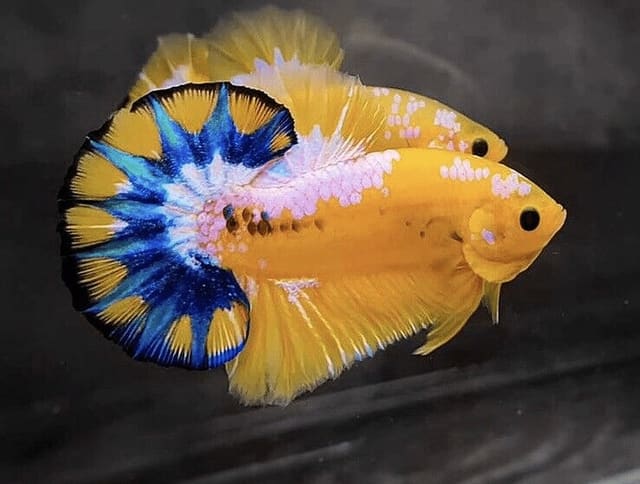
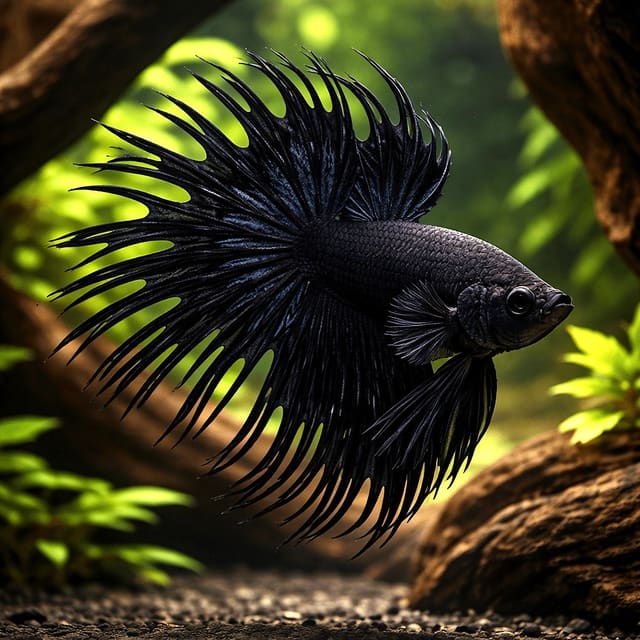
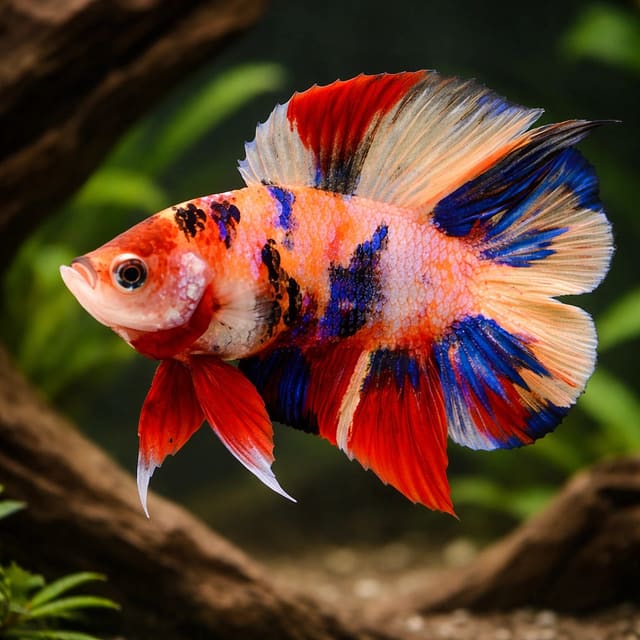
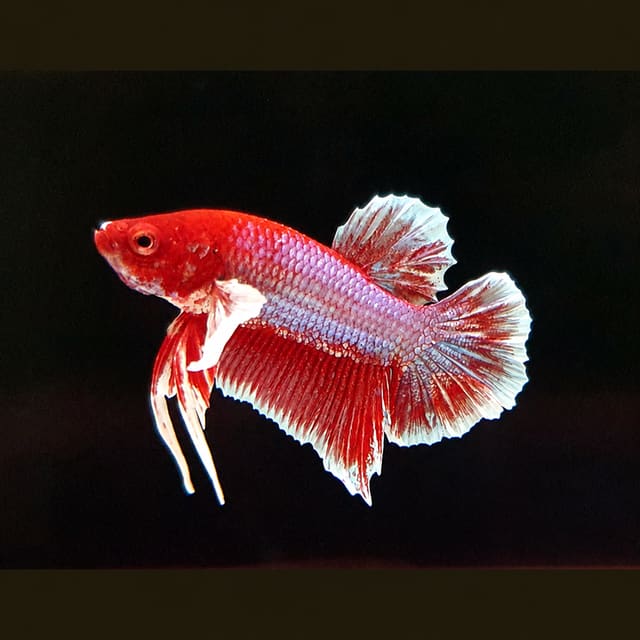
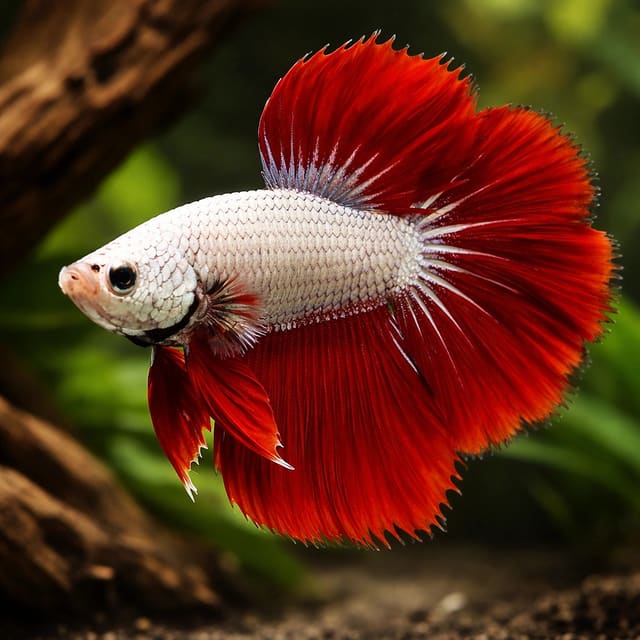
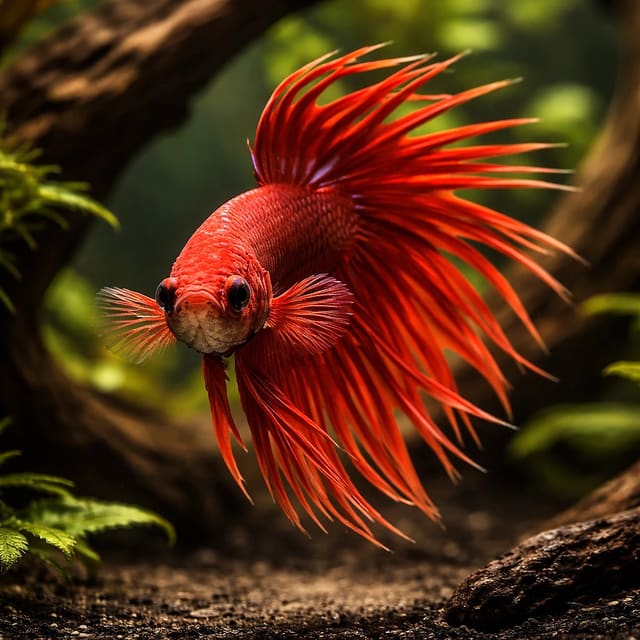
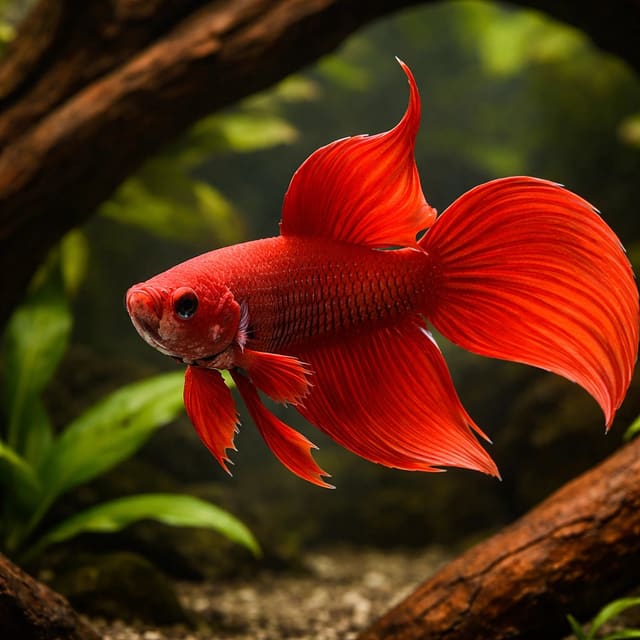
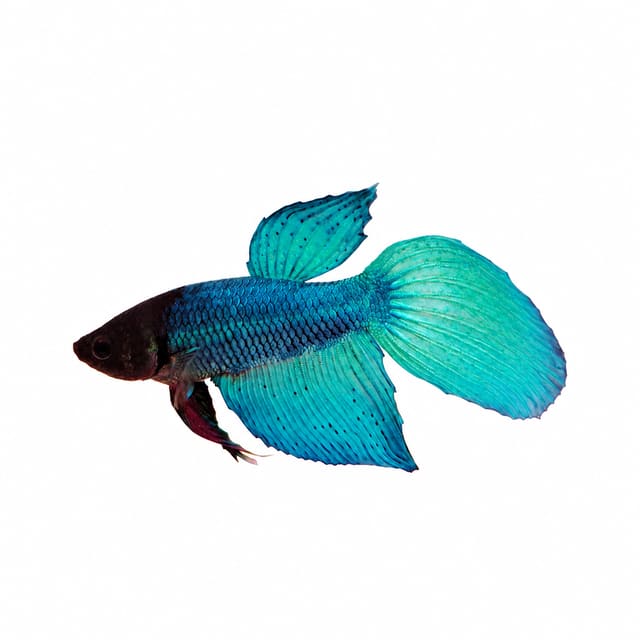
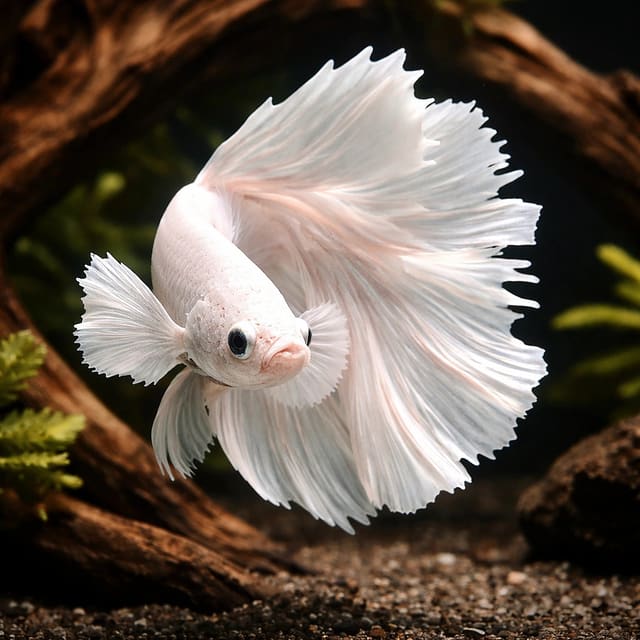
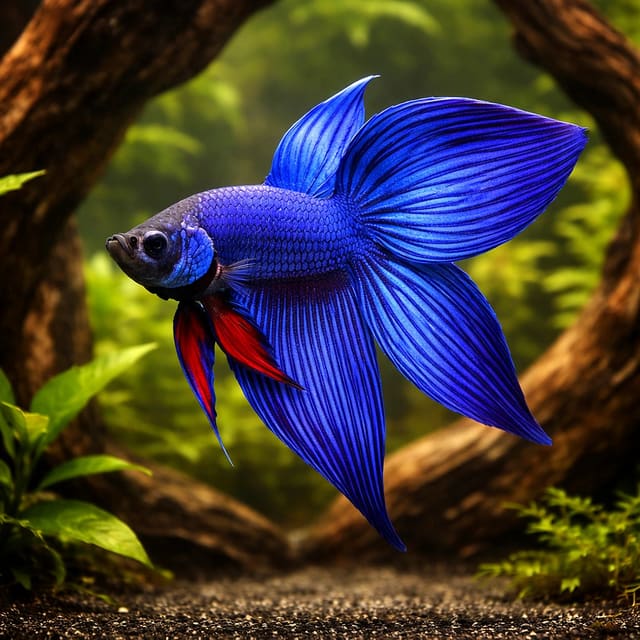
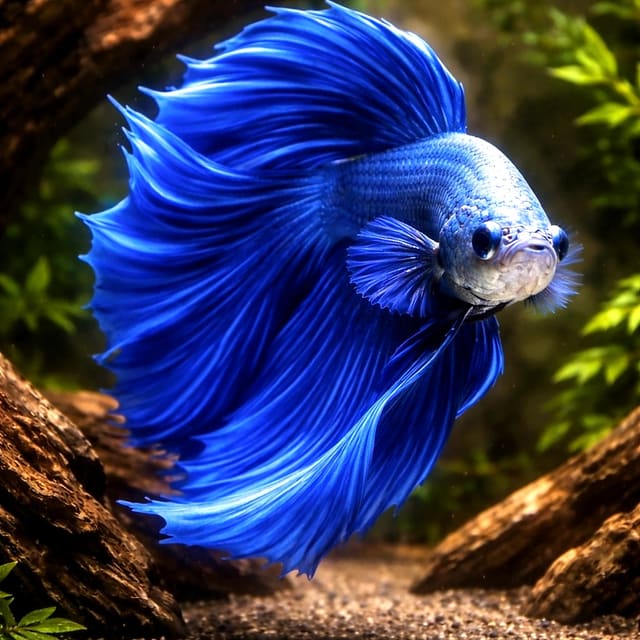
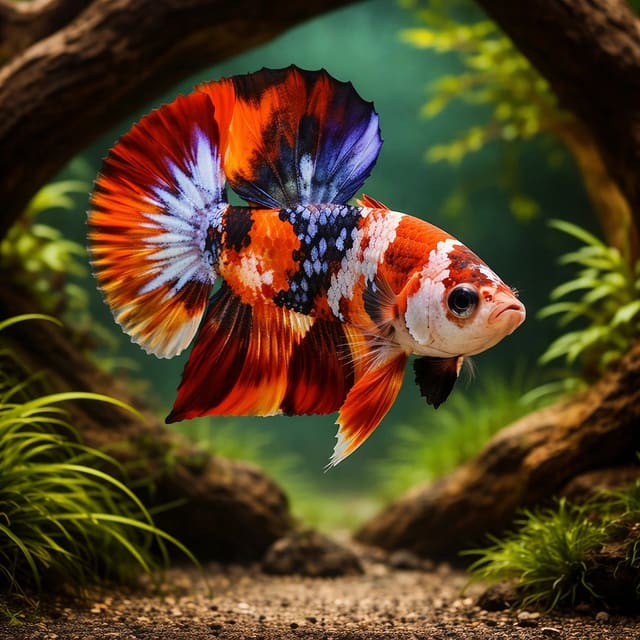
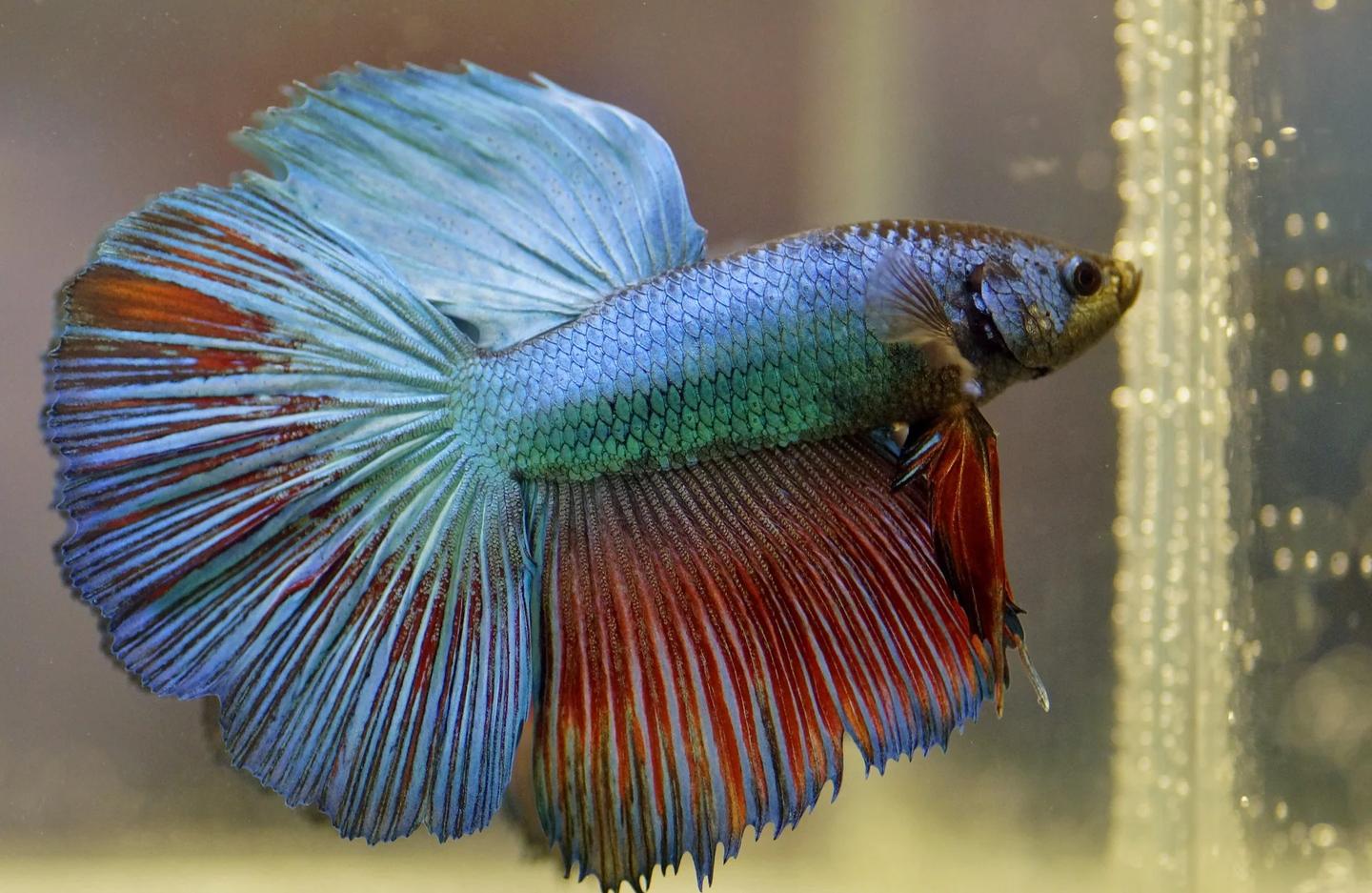
Nemo long-tail male Betta splendens with flowing fins and variable marbled markings. Keep males separately in a heated aquarium with gentle flow and surface access.
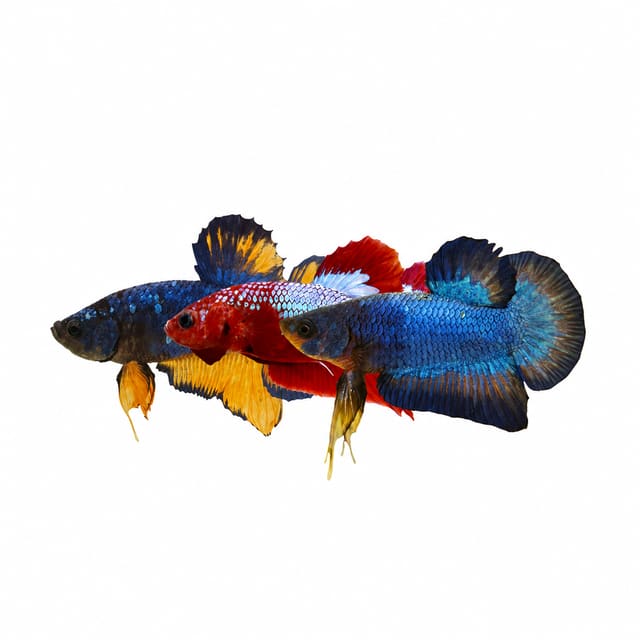
Adult size is the maximum length this species reaches at full maturity (scientific sources). The livestock you receive will be younger and smaller. Product-photo provenance and any image-specific limitations are stated on the listing.
Betta splendens
Nemo long-tail male Betta splendens with flowing fins and variable marbled markings. Keep males separately in a heated aquarium with gentle flow and surface access.
Adult size is the maximum length this species reaches at full maturity (scientific sources). The livestock you receive will be younger and smaller. Product-photo provenance and any image-specific limitations are stated on the listing.
For one typical domestic Betta splendens, start with at least 20 litres, a mature filter, thermostatic heater, separate thermometer, gentle flow, a secure lid with surface access, and plants or refuges. Keep one male per aquarium.
Maintain these water conditions for optimal health and vibrant colors
The Nemo Long-Tail Betta is one of the most eye-catching forms of Betta splendens, combining flowing fins with fiery orange, red, black and cream marbling that shifts as the fish matures. Stable warmth matters: rich colour, strong finnage and confident behaviour all show best when the water temperature stays in the correct range. Native to Thailand and wider Southeast Asia, this labyrinth fish grows to around 7 cm, lives roughly 3 years with proper care, and is best described as easy to moderate for keepers who understand male betta territorial behaviour. Its colour, flowing fins and pattern contrast make it a focal point in a planted aquarium; individual markings vary. This guide covers tank setup, space, temperature and daily care. For aquarists who want a living focal point with personality, the Nemo betta offers bold looks, intelligent behaviour and rewarding daily care in one compact fish.
Betta splendens is the best-known member of the labyrinth fish group, a family adapted to breathe atmospheric air from the surface. In the aquarium hobby, selective breeding has produced dramatic tail forms such as halfmoon, crowntail, double tail and plakat, as well as colour lines including koi, nemo and butterfly. This Nemo form sits at the crossroads of striking finnage and unstable marbled pigmentation, which is why no two specimens look exactly alike.
The domestic Nemo betta is descended from wild Betta splendens found across Thailand and parts of Southeast Asia. The natural habitat is very different from a bare bowl. In the wild, bettas inhabit warm, slow-moving or still waters such as rice paddies, floodplains, shallow canals, marshes and vegetated ditches. These environments are often tannin-stained, full of roots and leaf litter, and low in dissolved oxygen. That is why bettas evolved the labyrinth organ, allowing them to gulp air at the surface.
Bettas are unsuitable for unheated UK garden ponds. They come from shallow tropical wetlands, not unheated outdoor ponds. A Nemo betta kept outside in British weather would quickly suffer from low temperature stress. Good aquarium care advice always starts with warmth, surface access and gentle flow. If you want a more natural display, build a habitat with floating plants, wood, dimmer lighting and calm water rather than trying to recreate a fast river.
A healthy aquarium should mirror those calm conditions. Think soft planting, broken lines of sight and resting places near the surface. Bettas often perch on leaves, inspect every corner of the tank and patrol the upper level. A natural planted layout gives this fish useful cover. The fish feels secure, shows stronger colour and spends less energy fighting current.
Bettas eliminate waste through the vent near the anal fin area. Good filtration and regular maintenance matter because waste breaks down quickly in warm tanks. For long-term success, combine correct aquarium care with stable heat, clean water and a varied carnivorous diet. These habits form the foundation of daily care.
Mimicking the natural habitat improves colour, appetite and confidence. Male bettas kept with floating cover, dark substrate and gentle filtration flare less frantically and spend more time exploring, resting and feeding normally.
Allow at least 20 litres for a single male. A larger aquarium of 25-40 litres is even better because it gives more stable water quality, more swimming room and more options for planting and decor. A 5 gallon setup is a sensible starting point for one male.
A 0.5 gallon container is too small. That size is not suitable for long-term care. Tiny containers swing wildly in temperature, foul quickly and do not meet their space and water-quality needs. If you want a compact display, a complete nano aquarium can work well, but it still needs filtration, a heater and enough floor space for decor and resting zones. In other words, a nano tank should be small but complete, not cramped.
Allow 20 litres minimum for one male, 25 litres or more preferred. Long fins make strong current tiring, so extra space should be used for calm swimming lanes rather than heavy flow. If you are shopping for an aquarium kit, look for one that includes a lid, adjustable filter and heater.
Keep the water warm and stable. The safe water temperature is 24-30°C, with 25-27°C ideal for everyday maintenance. Around 26°C is a useful target. Use 25-27°C for routine care; conditioning may use slightly warmer water, but avoid sharp fluctuations. Your water temperature should remain steady day and night, especially during cold months.
Room temperature in many UK homes is too cool or too unstable. A reliable adjustable heater is essential. Set the heater carefully and verify it with a thermometer. If the water temperature drops suddenly, the fish can become lethargic, clamp fins and stop eating. That is classic temperature shock.
Overheating is dangerous too. Water at 90°F, around 32°C, is too hot for routine care and can reduce oxygen while speeding metabolism and stress. The safe upper care limit is 30°C, and even that should only be used intentionally and with aeration. If you notice gasping, frantic movement or sudden fading, check for overheating immediately.
Use a gentle sponge filter or low-flow internal filter. Bettas dislike being pushed around, and long-finned bettas can struggle in strong current. Dark sand or fine gravel helps the colours stand out. Add broad-leaved plants, floating plants and smooth wood. If you enjoy themed aquascapes, a simple planted layout often works best with black substrate, green plants and one statement piece of wood for contrast. Use smooth decor that leaves clear swimming lanes.
Good planting choices make a huge difference for a planted aquarium. The layout should include resting leaves near the surface, shaded corners and open front swimming space. Orange and black marbling can stand out against dark decor; each fish’s pattern varies.
Always cycle the tank for 4-6 weeks before adding your betta. Stable ammonia and nitrite at zero are just as important as the correct betta fish temperature, especially in small aquariums.
Bettas need a diet high in animal protein. Bettas are carnivores, so their digestive system is built for insect larvae, tiny crustaceans and other meaty foods rather than plant-heavy flakes. In captivity, the best staple is a high-quality pellet formulated for bettas, supported by frozen bloodworms, brine shrimp and daphnia. A varied menu supports finnage, energy and stronger health.
Female and male bettas have broadly similar feeding needs. Females and males both need protein-rich foods, though breeding females may need slightly heavier conditioning. For either sex, feed once or twice daily at consistent times.
Use 2-4 small betta pellets per feeding, depending on pellet size and the fish’s body condition. Bettas have small stomachs, roughly the size of their eye, so portion control matters. If your fish spits food, try soaking pellets briefly. These basic feeding needs apply across domestic betta forms.
Frozen bloodworms and brine shrimp are excellent 2-3 times per week. Daphnia helps with digestion. These foods are especially useful when conditioning fish for breeding. Keep treats measured; overfeeding causes bloating and poor water quality. Loss of appetite in either sex can result from cold water, stress, constipation, poor water quality or a recent move.
| Time | Food | Amount |
|---|---|---|
| Morning | Betta pellets | 2-3 small pellets |
| Evening | Pellets or frozen food | 2-3 pellets or a small pinch |
Algae growth, brown deposits or green water are often linked to excess light and excess food. Bettas do not control algae. Choose any algae-eating companion carefully because not all algae eaters suit a betta setup.
Overfeeding causes constipation, obesity, ammonia spikes and cloudy water. Remove uneaten food promptly and give one fasting day per week if your betta is prone to bloating.
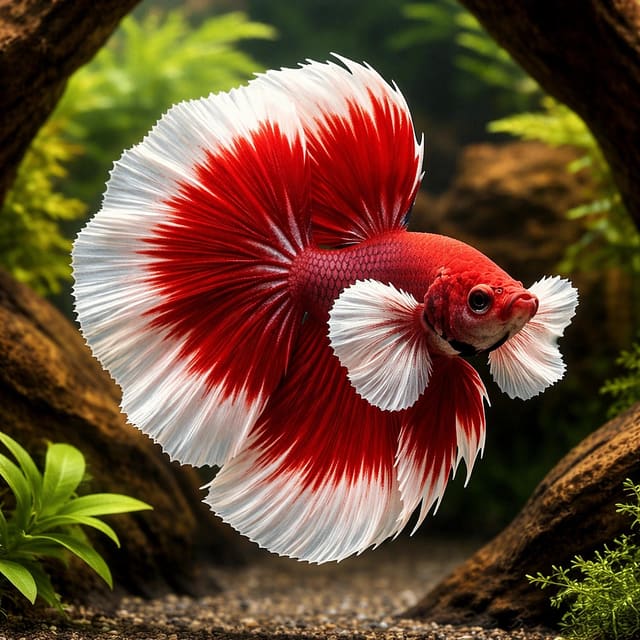
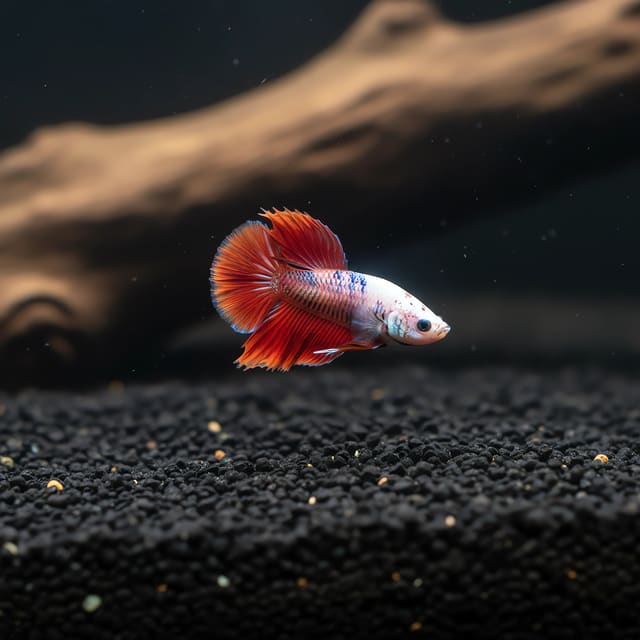
This male reaches around 7 cm and has flowing long fins; an exact halfmoon spread is not guaranteed. The body is compact, the dorsal and anal fins are extended, and the tail adds to the flowing outline. This finnage is elegant, but it also means the fish benefits from calm water and careful decor without sharp edges.
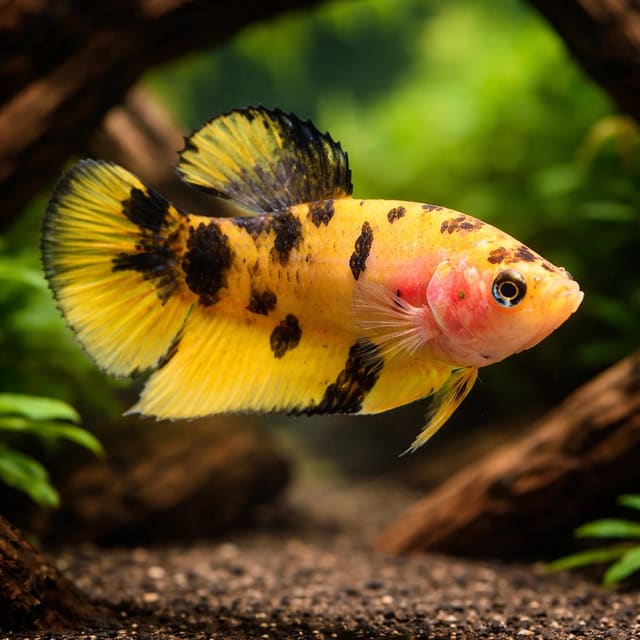
The real attraction is colour. Nemo bettas usually show a mix of orange, red, yellow, black and flesh-toned patches, often with marbling that shifts over time. That unstable patterning is linked to colour genetics, especially marble genes that can change distribution as the fish matures. A young fish may deepen in orange, gain black edging or lose pale patches over several months. That is part of the appeal.
Nemo strains can appeal to keepers who enjoy varied colours because the colour blend can look almost multicoloured under strong aquarium lighting. Warm, clean water and dark substrate help the pattern contrast stand out. For a different tail silhouette, compare the Double Tail Male Betta Mix as an alternative for a separate aquarium.
Sex differences can help when comparing forms. Females usually have shorter fins, a fuller body and often a visible ovipositor. Males like this Nemo betta display longer finnage, stronger flaring and more exaggerated form. Female finnage and body shape vary too; shorter fins alone do not establish sex.
A male Nemo betta is not a general community fish in the same way as tetras or rasboras. Remember that males are territorial and may react to bright colours, long fins or fish that invade the upper level. Possible companions include calm bottom dwellers, peaceful scavengers and some invertebrates, provided the tank is large enough and carefully arranged.
Possible companions in suitable aquariums include small Corydoras species, Kuhli loaches and snails. Shrimp can work with caution, but some bettas will hunt them. Bettas with elaborate finnage should never be mixed with fin nippers such as tiger barbs. Male guppies are also poor choices because their tails can trigger aggression.
Bottom-dwelling fish are usually the best option because they occupy a different level. In a larger, planted setup, a calm male betta may coexist with Corydoras or Kuhli loaches. Snails are often the easiest first invertebrate. Territorial instincts occur across male lines, so assess the individual fish rather than relying on its colour or tail form.
Avoid other male bettas completely. Avoid most flashy livebearers, aggressive dwarf cichlids and known fin nippers. Bettas can also become stressed by hyperactive schooling fish in small tanks. Space and layout affect compatibility: the larger and more planted the tank, the more carefully chosen companions you can attempt.
Female bettas can also be territorial. Females are often less aggressive than males, but they are not harmless. Group housing is an advanced setup requiring space, heavy planting and a ready separation plan; it is not a default recommendation. This product, however, is a male and should be kept singly.
| Species | Compatible? | Notes |
|---|---|---|
| Female betta | ❌ Avoid | Do not house a male with a female except for controlled breeding attempts. |
| Kuhli Loach | ⚠️ Assess individually | Good in larger planted tanks; occupies the bottom and avoids the betta's space. |
| Snails | ⚠️ Caution | Usually safe, but some bettas may nip antennae. |
Always quarantine new arrivals for 2-4 weeks before adding them to a betta aquarium. This reduces disease risk and gives you time to judge whether a new tank mate is too active or too nippy for a long-finned male.
Breeding is classed as moderate because the pair must be introduced carefully, the male can injure the female, and fry need specialised first foods. This product is a male, so breeding is only for keepers prepared with a separate spawning setup. Females are not livebearers: they lay eggs rather than giving birth.
Use a shallow 20-30 litre breeding tank with gentle heat around 27-28°C, a lid to keep humid air above the surface, and almost no current. Add a floating leaf or bubble-wrap strip so the male can anchor his bubble nest. Condition both fish on a rich diet first. Choose mature, well-conditioned adults rather than very young fish.
The male builds a bubble nest and displays intensely. A receptive female may show vertical bars often called breeding stripes. During spawning, females inspect the nest, respond to the male and eventually embrace beneath the nest. There is no fixed spawning timetable; timing depends on conditioning and pair compatibility.
After spawning, remove the female. The male collects fallen eggs and returns them to the nest. In poorly managed pairings, stressed fish may eat eggs, but in standard practice the female is removed and the male guards the nest. Eggs usually hatch in 24-36 hours, and fry become free-swimming a few days later.
Once fry are free-swimming, remove the male and begin feeding infusoria or commercial fry food, then move to baby brine shrimp as they grow. Female bettas belong to the same species. Hatching usually starts just over a day after spawning under warm conditions.
For better finnage development in long-finned lines, keep rearing tubs warm and shallow in the early weeks, perform frequent small water changes, and separate aggressive juveniles before fin damage becomes permanent.
Choosing between betta varieties is not only about colour. Tail type affects swimming effort, display style and even how the fish uses the tank. If you want a dramatic show fish with changing marbled pattern, the Nemo betta is a strong choice. If you prefer a cleaner pattern or different fin silhouette, another line may suit you better.
| Feature | Nemo Long-Tail Betta | Halfmoon Butterfly Betta |
|---|---|---|
| Max Size | 7 cm | 7 cm |
| Care Level | Easy to moderate | Easy to moderate |
| Temperature | 24-30°C | 24-30°C |
| Best For | Bold marbled colour lovers | Keepers wanting crisp fin edging |
| Feature | Nemo Long-Tail Betta | Crowntail Male Betta |
|---|---|---|
| Tail Shape | Flowing long fins; spread varies | Spiked ray extensions |
| Visual Impact | Colour and fin fullness | Texture and silhouette |
| Flow Tolerance | Low flow needed | Low flow needed |
| Pattern Style | Nemo marble | Mixed colours vary |
| Best For | Statement planted tanks | Collectors of unusual fin forms |
Nemo marbling can change over time. Compare pattern and fin shape when choosing a display fish, and prepare a separate aquarium for each male.
Strong health starts with heat, clean water and diet. A healthy male is alert, comes forward for food, holds fins open when relaxed, and shows clear eyes and intact scales. He should breathe normally at the surface, not gasp continuously. Signs of health are similar in females, though body shape and finnage differ.
The biggest preventable issue is unstable heat. Sudden temperature changes can cause stress. Symptoms include clamped fins, lethargy, loss of appetite, fading colour, sitting on the bottom and sudden stress after water changes. Prolonged cold exposure is harmful. Cold water weakens immunity and digestion. Winter heating is especially important in UK homes, where room temperatures can drop sharply overnight.
Restore warmth slowly with an adjustable heater, not by pouring in hot water. Room temperature is not a suitable target. Match new water closely to the tank and avoid swings greater than 1-2°C. If bottled spring water is used, test it first because mineral content varies and may not match your tank.
Fin rot, fungal infections, constipation and external parasites can all affect bettas under stress. Poor water quality often sits behind these problems. If your tank is cloudy, green or yellow, investigate lighting, feeding and maintenance. Yellow water may simply reflect tannins from wood, but sudden discoloration can also mean waste buildup.
A separate quarantine tank is useful for observation and treatment. This can be a simple heated bare-bottom setup with gentle filtration. An isolation tank serves a different purpose from the permanent aquarium. Add leaves, caves or floating plants for enrichment so the fish feels secure while recovering.
Never make sudden large temperature changes during water changes. Rapid shifts are one of the fastest ways to trigger temperature shock, suppress appetite and open the door to disease.
This fish is intelligent, observant and strongly territorial. Most males patrol the upper half of the tank, inspect movement outside the glass and quickly learn feeding routines. They often rest on leaves near the surface because their long fins make short pauses normal. That is not laziness; it is efficient behaviour for a fish built for display rather than speed.
In a well-designed aquarium, a male Nemo betta will alternate between cruising, flaring at reflections and investigating decor. He is solitary by nature, so beginners should keep one male per tank, provide warmth, and avoid overstocking. Some owners notice colour deepening after a few weeks in a settled planted setup. That is common when the fish feels secure and the care needs are met.
Enrichment matters too. Gentle current, floating cover and varied feeding spots encourage natural exploration. A bored fish in a bare tank may glass-surf or flare excessively. A settled fish in a planted aquarium shows calmer, more confident behaviour and often stronger appetite.
This Nemo long-tail male is a display fish for a prepared heated aquarium. Because marbled patterns can shift, each fish has individual markings. Check body shape, fin condition, alertness and feeding after it settles.
Temperature stability matters during the journey and acclimation. Have the heated aquarium ready before arrival and observe swimming balance, breathing and feeding as the fish settles.
Follow the arrival guidance for temperature equalisation and gradual acclimation. A prepared aquarium helps a new fish settle with less stress.
Choose this male when you can provide warm stable water, gentle flow and a solitary display setup.
For another Nemo-patterned long-finned form, compare the Veiltail Nemo Male Betta. Tail style and individual markings differ. These are alternative display choices for separate aquariums, not tank-mate recommendations.
Species reference: FishBase: Betta splendens.
No reviews for this item yet. Bought one? Honest reviews only, good or bad.
What customers say about ordering from us
I have a small group of long finned mountain minnows. So was delighted to be able to order ten of this variety to increase the genetics in my tank . The ones I recieved are healthy but it’s to early to give a verdict on wether they are of a long finned type since they are small currently.
Gordon Walker · 23 Sept 2026
100% success travel and "installation". Pleased with quality of purchase. The Siamese fighter a bit "shy" so have not yet seen him at his best yet but looking good. Happy customer. GG
George E Garratt · 21 Sept 2026
Reviews of our shop, collected by Judge.me, an independent third-party review collector. Newest first.