−13%
Moderate
Crowntail Male Betta (Betta splendens)
26–28°C · pH 6–8 · 20L
£12.17£13.99

The Koi Double Tail Plakat Male Betta (Betta splendens) is an ornamental gourami from a species native to central Thailand and the lower Mekong that reaches 7 cm standard length. It suits a careful beginner once the aquarium is mature: OATA’s Betta guidance sets at least 20 litres for one male and pH 6.0–8.0 with 4–12 dGH, while Tropical Fish Co targets 26–28°C. Sold individually as one male fish.
Adult size is the maximum length this species reaches at full maturity (scientific sources). The livestock you receive will be younger and smaller. Product-photo provenance and any image-specific limitations are stated on the listing.
Betta splendens
The Koi Double Tail Plakat Male Betta (Betta splendens) is an ornamental gourami from a species native to central Thailand and the lower Mekong that reaches 7 cm standard length. It suits a careful beginner once the aquarium is mature: OATA’s Betta guidance sets at least 20 litres for one male and pH 6.0–8.0 with 4–12 dGH, while Tropical Fish Co targets 26–28°C. Sold individually as one male fish.
Adult size is the maximum length this species reaches at full maturity (scientific sources). The livestock you receive will be younger and smaller. Product-photo provenance and any image-specific limitations are stated on the listing.
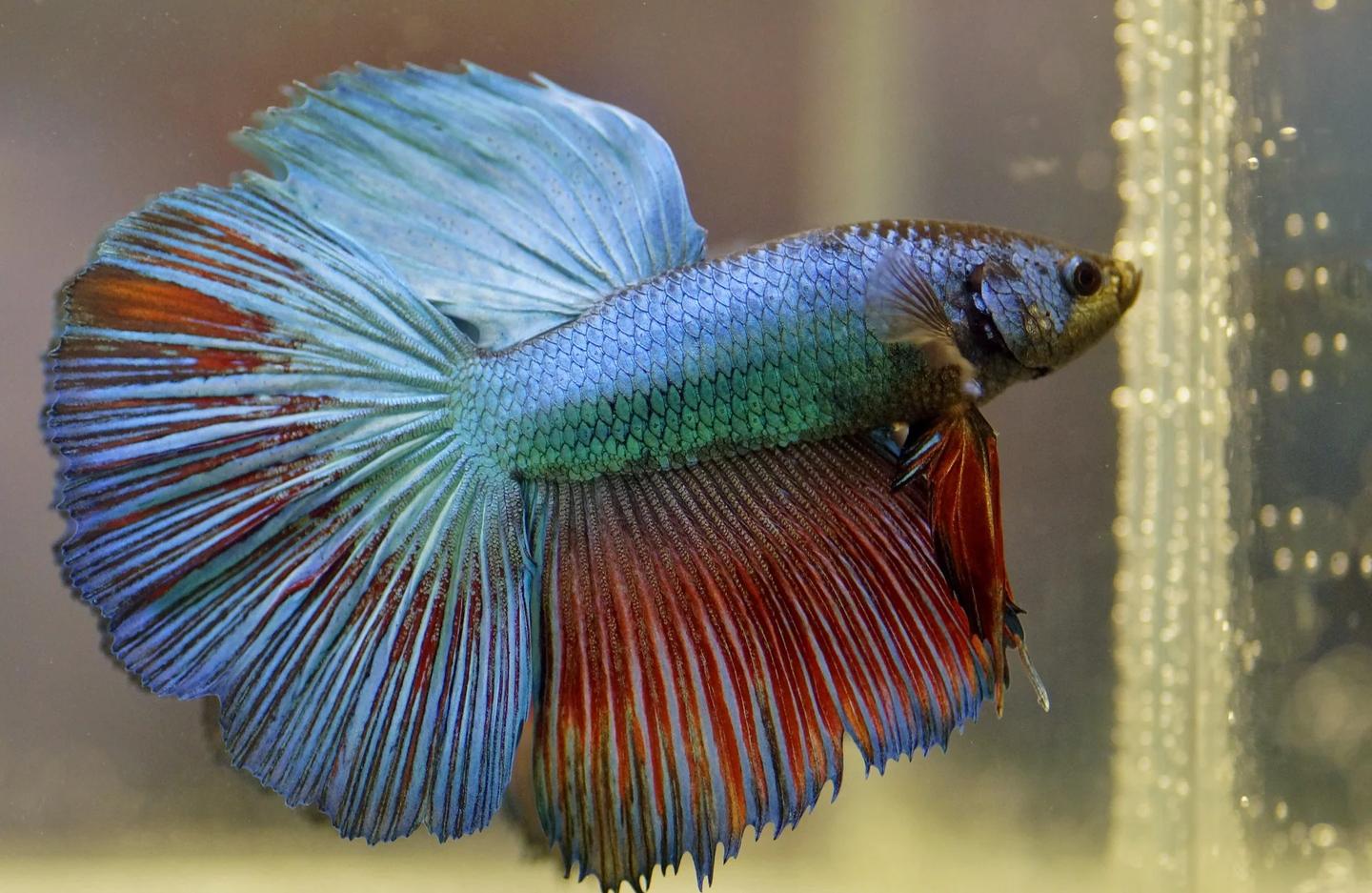
For one typical domestic Betta splendens, start with at least 20 litres, a mature filter, thermostatic heater, separate thermometer, gentle flow, a secure lid with surface access, and plants or refuges. Keep one male per aquarium.
Maintain these water conditions for optimal health and vibrant colors
Plan around the FishBase maximum of 6.5 cm total length for male or unsexed Betta splendens. Seriously Fish separately lists 70 mm standard length and describes a 45 × 30 cm base with about 41 litres as large enough for a single male or pair.
Our practical lower screen is at least 20 litres for one male. Choose more capacity where practical, and consider the usable volume after substrate, wood and other furnishings are added. The 45 × 30 cm footprint and roughly 41-litre reference give useful extra room for planting, refuges, equipment and normal movement.
| Decision | Starting point |
|---|---|
| Adult planning size | Plan around a maximum length of 6.5 cm. |
| Aquarium | At least 20 litres for one male; a 45 × 30 cm base or equivalent at about 41 litres is a stronger planning reference. |
| Routine temperature | Hold a stable 26–28°C and check it with a separate thermometer. |
| Water chemistry | Use pH 6.0–8.0 and 4–12 dGH as the starting range for this domestic fish. |
| Social plan | One male in the aquarium by default. |
OATA’s UK Betta guidance gives 20–28°C, pH 6.0–8.0 and 4–12 dGH for tank-reared Bettas as broad group guidance rather than a species-specific optimum. Tropical Fish Co narrows the normal temperature target to 26–28°C, within the 22–30°C aquarium range described by Seriously Fish. Ammonia and nitrite must remain at 0 mg/l.
| Suits | Not suited to |
|---|---|
| A careful beginner with a mature, heated and filtered aquarium | An unheated bowl, jar or newly filled aquarium |
| A furnished aquarium of at least 20 litres | Tiny or barren containers |
| Solitary housing for one male | Direct housing with another male Betta |
| Gentle flow, cover and clear surface access | Strong current or blocked surface access |
| A keeper prepared to test and maintain the water | A setup without an established biological filter |
A Betta can breathe atmospheric air through its labyrinth organ, but this does not replace filtration or good water quality. Build the aquarium around stable heat, a mature filter, calm water movement, a secure lid, clear surface access and sheltered resting places.
The Koi Double Tail Plakat Male Betta is an ornamental form of Betta splendens, also known as the Betta or Siamese fighting fish, in the family Osphronemidae. The wild species occurs in central Thailand and the lower Mekong, and FishBase records a maximum length of 6.5 cm for male or unsexed fish. It suits a careful beginner who can prepare a mature, heated and filtered aquarium, follow a measured maintenance routine and keep one male by himself.
Our complete Betta care guide rates the species as intermediate because success depends on controlling temperature, providing gentle flow, protecting the biological filter and managing its territorial behaviour. A bowl, unheated container or newly filled aquarium does not offer the required stability.
One purchase supplies one animal. Plan the aquarium around the adult measurements below. Sex is guaranteed only when the exact product or selected option explicitly states male or female. This Koi Double Tail Plakat Male Betta listing is sold as male.
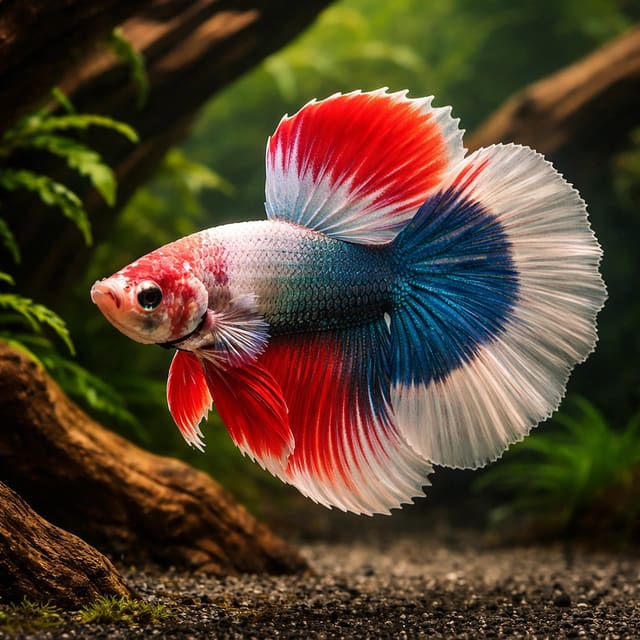
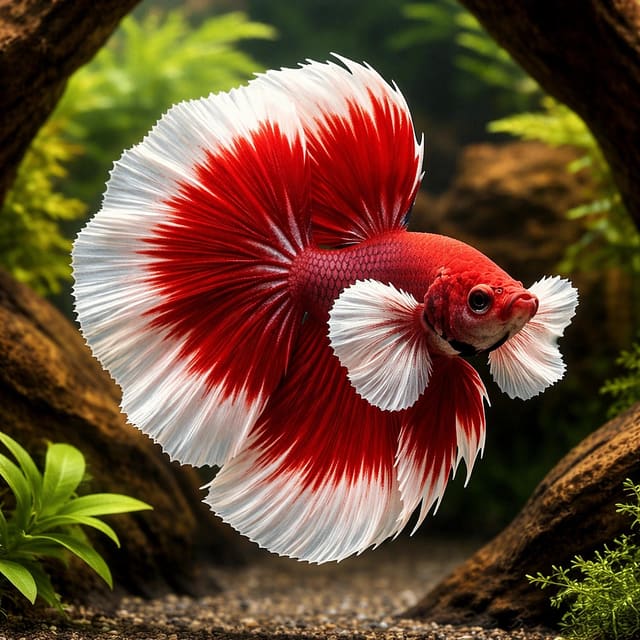
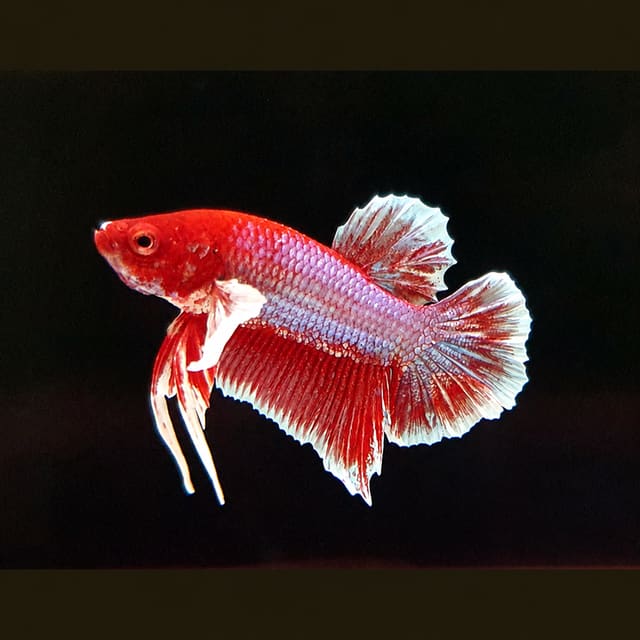
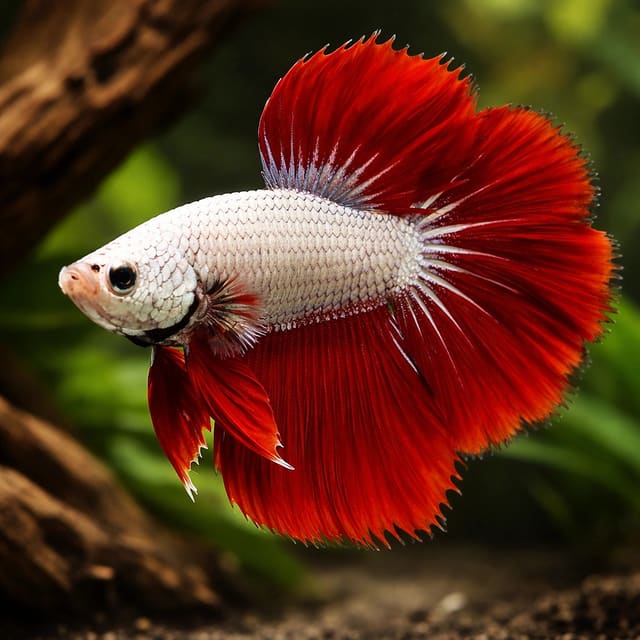
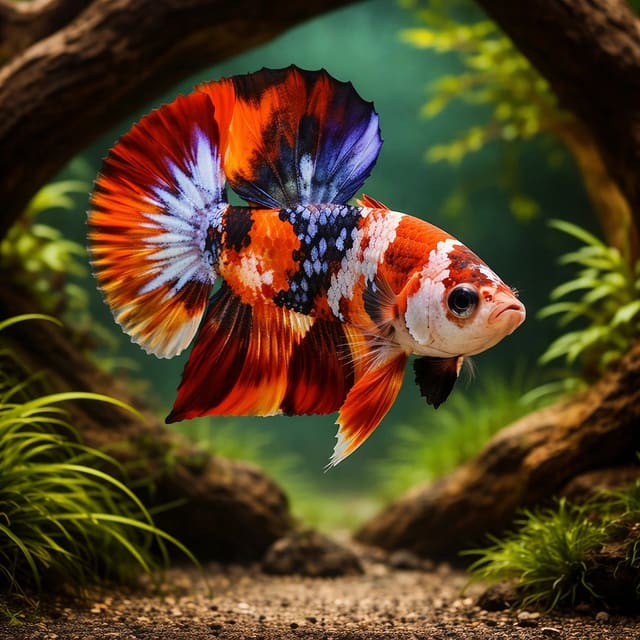
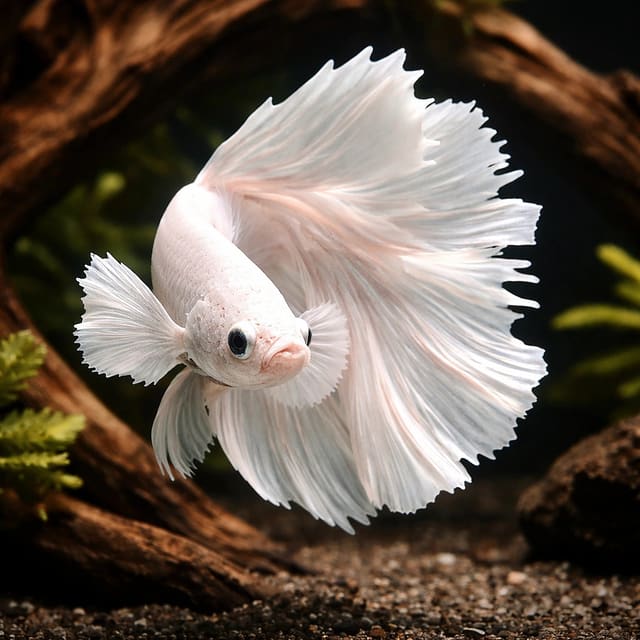
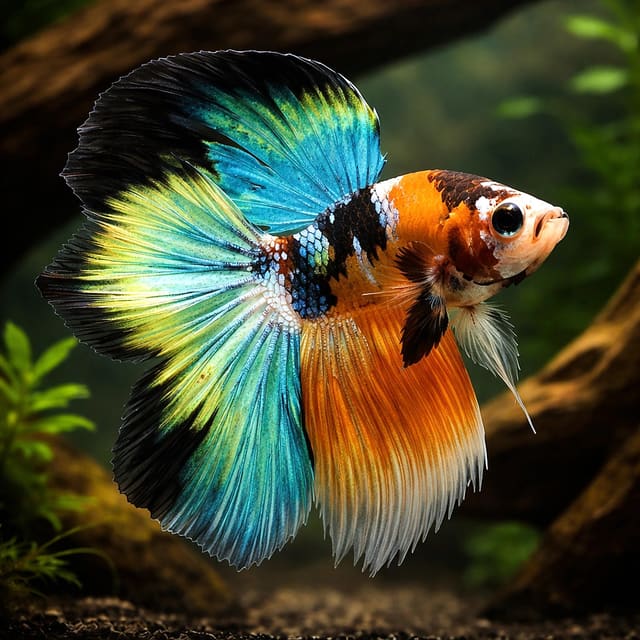
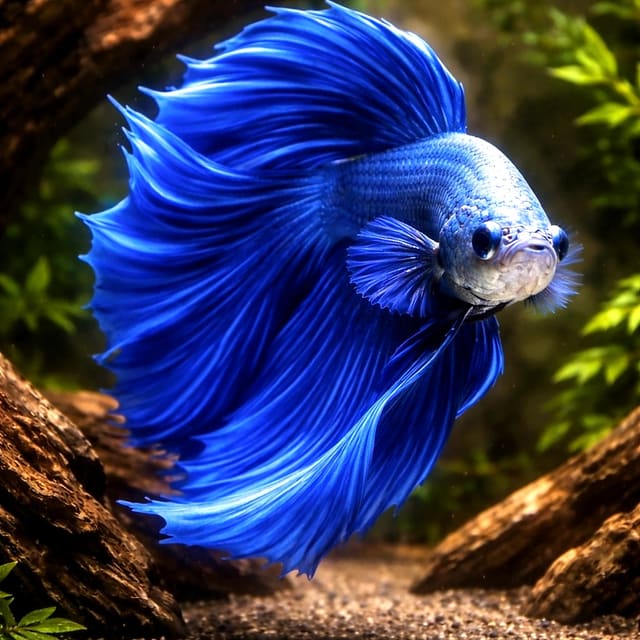
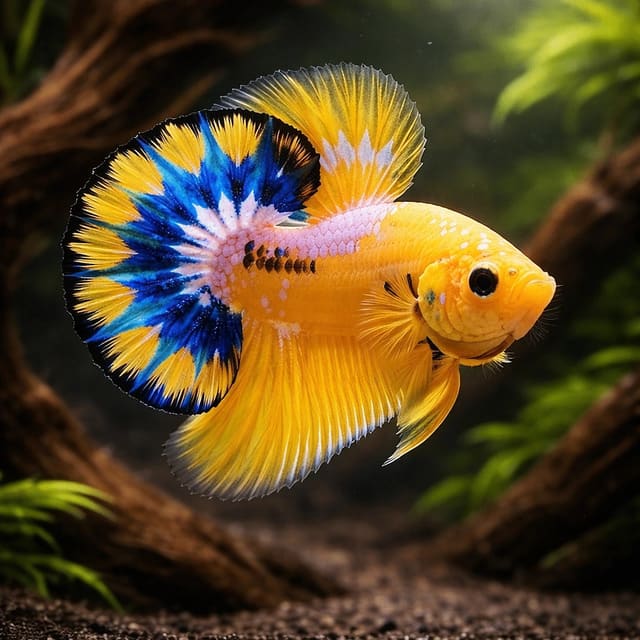
The commercial name describes its koi pattern, plakat form and divided tail. A genome-wide study of domestic Betta diversity found complex variation in colour, fins, body size and behaviour. Treat koi, plakat and double tail as descriptions of the domestic form rather than predictions of age, temperament, pedigree or future colour. The scientific identity is Betta splendens.
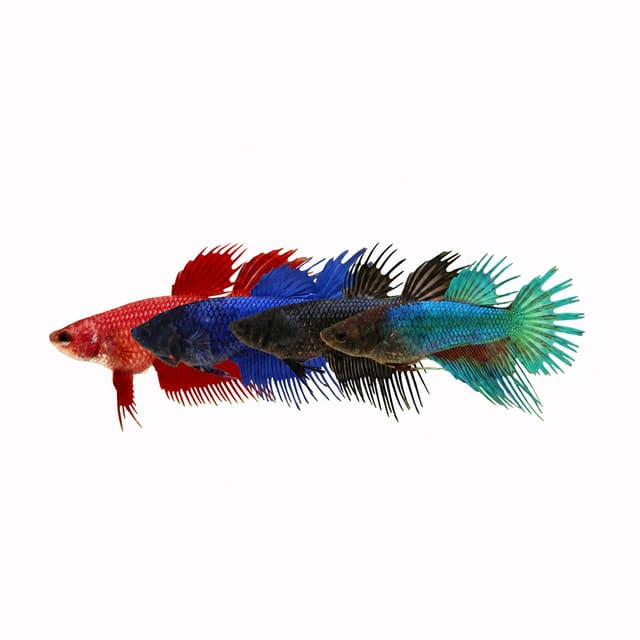
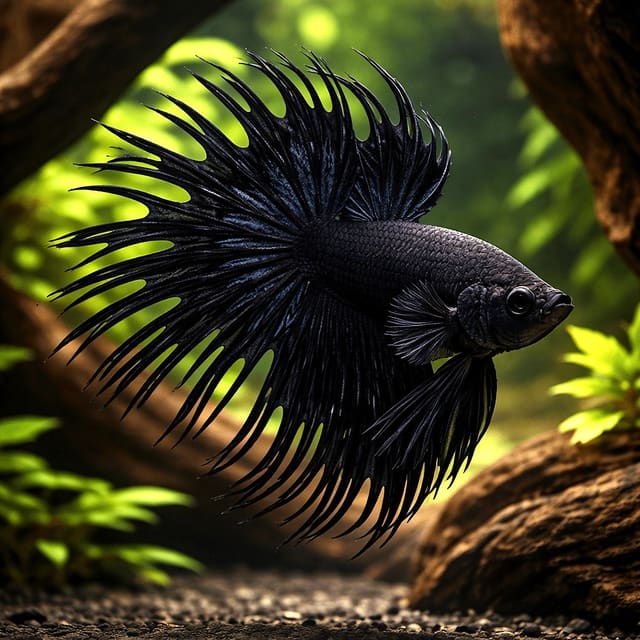
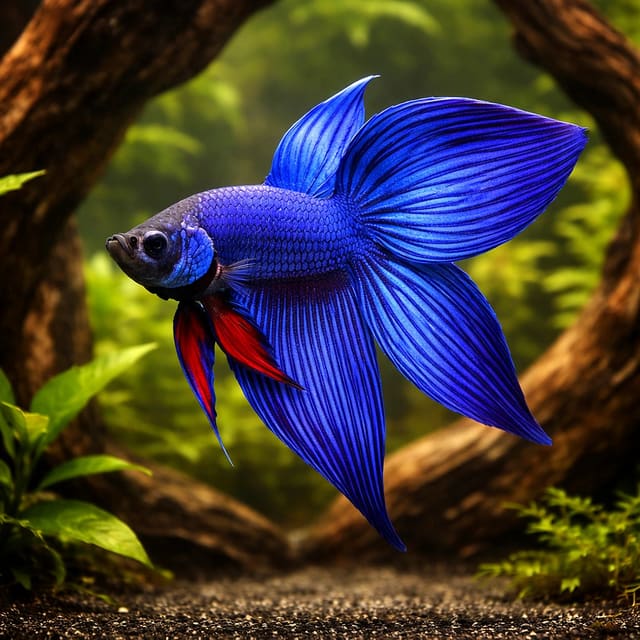
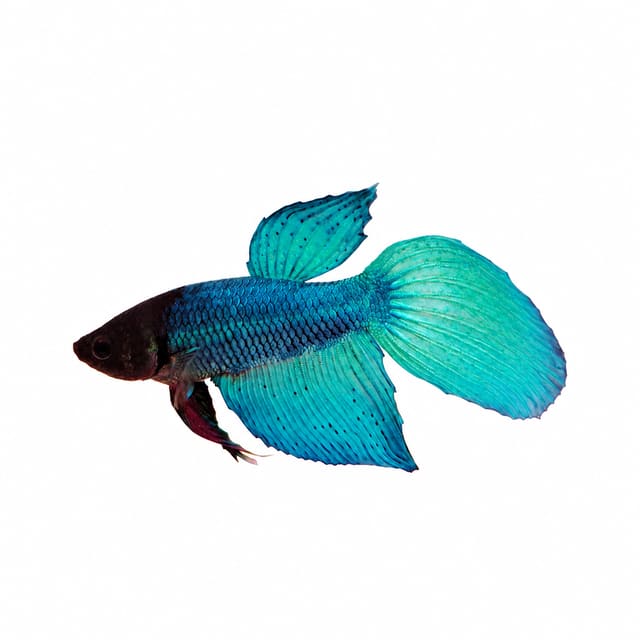
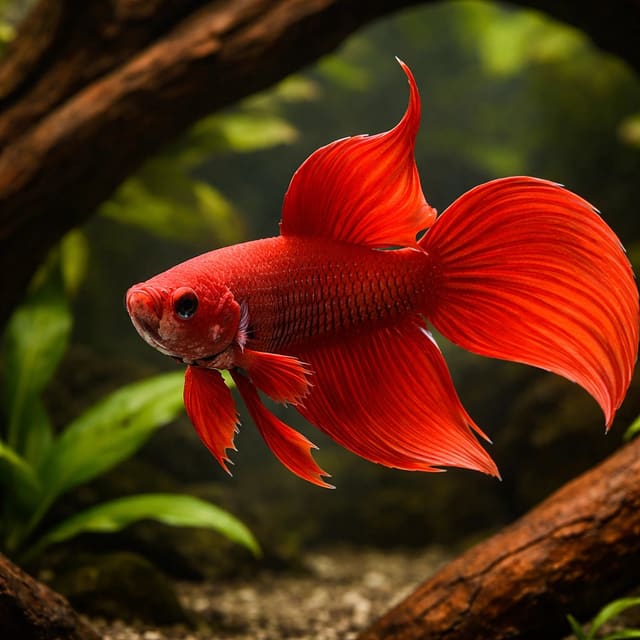
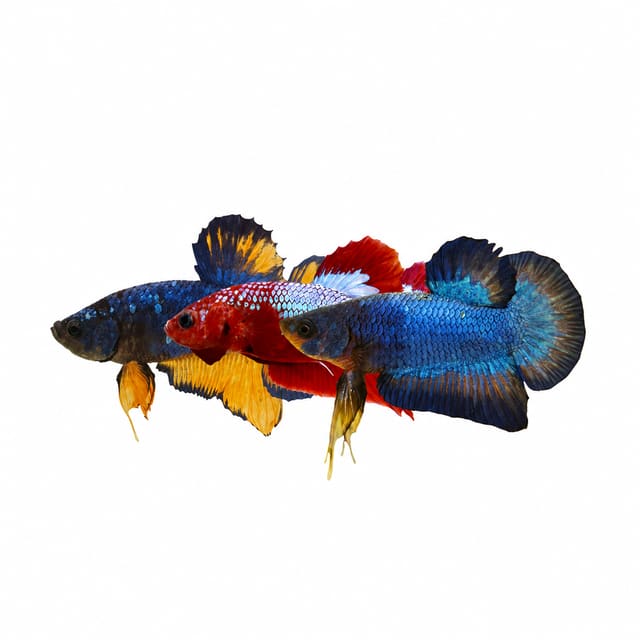
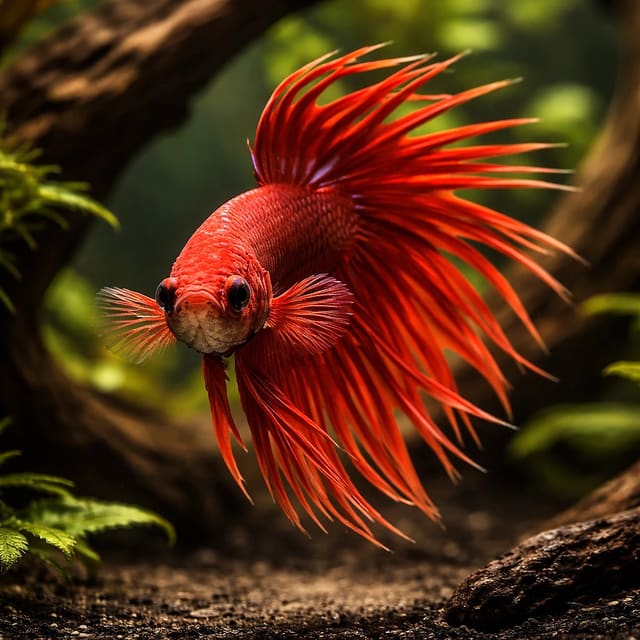
Some gallery images have been digitally enhanced to improve image quality. They show the listed type of animal rather than guaranteeing the exact markings of the individual supplied, so natural colour and pattern can vary. To compare other domestic forms without treating them as tank mates, browse our Betta collection.
Set up and mature the aquarium before choosing the dispatch date. Water that looks clear can still contain toxic ammonia or nitrite, so biological readiness must be demonstrated with tests rather than judged by appearance. If this is your first setup, follow our guide to preparing and maturing a first tropical aquarium before livestock arrives.
Check real filled volume rather than relying only on the tank’s nominal label. Substrate and decor displace water, while an internal filter occupies swimming space. A nominal 20-litre aquarium may therefore hold less than 20 litres once furnished. Selecting a larger aquarium gives more room to meet the minimum after displacement and generally makes gradual maintenance easier.
Place the aquarium away from draughts and situations that cause abrupt temperature change. Follow the heater manufacturer’s aquarium-volume, installation, minimum-depth and room-temperature instructions rather than using one universal watts-per-litre rule. Seriously Fish gives roughly 50–100 W for an aquarium of about 41 litres when the room is around 20°C, but the final choice must match the equipment instructions and the temperature measured in the water.
Run the completed layout before arrival and watch how plants, the lid and filter affect the surface. The fish must be able to rise without fighting the current or encountering a sealed barrier. Correct excessive flow, unstable heat or unsafe gaps while the aquarium is empty rather than making urgent structural changes after the fish has been introduced.
Use 26–28°C as the routine target for this domestic Betta splendens. Keep pH between 6.0 and 8.0 and general hardness between 4 and 12 dGH. These values sit inside the wider 22–30°C, pH 6.0–8.0 and 1–15 dGH aquarium ranges described by Seriously Fish, while the temperature target follows Tropical Fish Co’s more conservative house practice.
Stability does not mean ignoring a value outside the range. It means measuring first, finding the cause and correcting conditions without a sudden swing. A pH of 6.4 that remains steady is different from a pH that rapidly falls from 7.4 to 6.4. Record results with dates so that direction and rate of change are visible.
| Test | Action |
|---|---|
| Temperature | Confirm 26–28°C with a separate thermometer; inspect the heater if the reading drifts. |
| Ammonia | Keep at 0 mg/l; any detectable result needs prompt investigation and corrective maintenance. |
| Nitrite | Keep at 0 mg/l; a positive result shows that toxic waste is not being processed safely. |
| Nitrate | Track the trend and keep it no more than 20 mg/l above the normal tap-water level. |
| pH | Keep within 6.0–8.0 and avoid abrupt chemical adjustment. |
| General hardness | Use 4–12 dGH as the domestic starting range. |
UK tap water varies by location and may change with its source. Treat replacement water with an appropriate conditioner to remove chlorine or chloramine, then measure the aquarium rather than assuming the tap-water value remains unchanged after contact with substrate, wood and biological activity. Our aquarium water-chemistry guide explains what the main readings mean.
Use the water matcher to compare measured values with the stated ranges. If several readings differ, prioritise toxic ammonia or nitrite and equipment faults before trying to adjust pH or hardness. Never make multiple large changes at once, because that makes the cause and effect difficult to follow and can expose the fish to a rapid shift.
The RSPCA explains that a working biological filter supports bacteria that convert ammonia to nitrite and then to the safer nitrate. Ammonia and nitrite are toxic, so the filter must remain running and biologically active even though this fish can take air from the surface.
A filter can move water while failing biologically. A clear tank, audible motor and visible current therefore do not replace ammonia and nitrite tests. Conversely, a positive waste reading should not be addressed by repeatedly replacing all filter media, because that can remove the organisms needed to process the waste.
Respond to a detectable ammonia or nitrite result by checking for uneaten food, excess waste, a blocked or interrupted filter, recent media replacement, missed maintenance or a sudden increase in biological load. Carry out appropriate corrective husbandry and continue testing until both readings return to 0 mg/l. Avoid feeding extra food while the system is struggling to process waste.
Flow strength and biological filtration are separate decisions. Reduce or diffuse an outlet that pushes the fish across the aquarium, but keep essential filtration operating. A sponge filter set to a gentle rate can suit this requirement. Seriously Fish suggests a filter rated around 80–125 litres per hour for its roughly 41-litre setup; the actual current must still be judged by how the fish moves and rests.
Keep a simple log of tests, water changes and filter work. If ammonia appears after cleaning, the record can reveal whether too much media was disturbed. If temperature and waste readings remain stable but the fish’s behaviour changes, the same log helps rule out routine water and equipment causes before further action.
Betta splendens naturally occurs in standing and slow-moving waters such as floodplains, canals and rice paddies. Reproduce the useful features of those habitats by providing calm movement, shade and cover rather than trying to copy a wild locality exactly. Domestic ornamental fish have a complex breeding history and should not be assigned a wild origin from their colour.
Seriously Fish describes a shady, well-planted aquarium with surface cover, driftwood and additional shelters. Dried leaf litter may add cover and encourage microbe growth as it decomposes, but it must be aquarium-safe and included within the maintenance plan. Remove deteriorating material if it is contributing more waste than the filter and water-change routine can manage.
Watch the fish after introduction. Repeatedly being swept away, struggling to hold position or being unable to rest indicates that the flow needs adjustment. Reduce the force or redirect the outlet towards glass, decor or a suitable diffuser while preserving circulation and filtration. A short-finned label is not a reason to assume that every individual tolerates the same current.
Keep the surface reachable because the labyrinth organ allows the fish to breathe atmospheric air. Surface breathing is normal biology, but a sudden change in breathing rate or prolonged distress at the surface needs a water and equipment check. Make sure floating plants do not form an impenetrable mat and that the lid does not seal the water surface against air.
Use lighting that supports the chosen plants while retaining shaded retreats. Judge the result by whether the fish can move between cover and open water without scraping its body or fins. Colour may appear different under different lights, but lighting should be selected for a stable aquarium rather than to force a particular appearance.
FishBase describes wild Betta splendens feeding on zooplankton, mosquito larvae and other insect larvae. In the aquarium, use a suitably sized complete Betta pellet or quality aquarium flake as the nutritional base. Add small live or frozen foods such as daphnia, Artemia or bloodworm as variety rather than turning one treat into the entire diet.
OATA advises feeding once a day and offering only what the fish can eat within a few minutes. That practical limit connects nutrition to water quality: uneaten food breaks down, adds waste and increases the load on the biological filter.
Do not use the size of the fish’s eye as a universal portion formula or apply one fixed pellet count to every brand. Pellet dimensions and energy density differ, so four pieces of one product may not equal four pieces of another. The food instructions, consumption time and the fish’s changing body condition make a better combined guide.
Overfeeding is both a body-condition risk and a filtration problem. Seriously Fish notes that Bettas appear particularly prone to obesity. A swollen profile, falling appetite or increased waste should prompt a review of the measured portion, food type and water tests rather than an automatic medicine or compulsory fasting routine.
If more than one person feeds the aquarium, prepare labelled portions so the fish is not fed twice. During holidays, use a competent carer with pre-measured food and written equipment checks. Test an automatic feeder well before travel rather than relying on it for the first time after leaving.
A refusal to eat after arrival can accompany stress, but it is not a diagnosis. Confirm temperature, ammonia and nitrite, observe breathing and posture, and remove uneaten food. Persistent or severe changes belong in the health-response sequence below.
Carry out a 25% partial water change at least once every week. Use a siphon to remove solid waste from accessible areas of the substrate, condition replacement tap water for chlorine or chloramine and avoid a sudden temperature shift. A partial change preserves greater stability than repeatedly emptying and rebuilding the aquarium.
| Checkpoint | What to do |
|---|---|
| Every day | Check swimming, breathing, appetite, posture, fins, heater operation and filter flow. |
| At least weekly | Test ammonia, nitrite, nitrate and temperature; record pH and hardness often enough to identify change. |
| During the water change | Replace about 25%, siphon waste and condition new water before it enters the aquarium. |
| When flow falls | Check for blockages and lightly rinse media in removed aquarium water if cleaning is needed. |
| After any change | Retest and observe instead of assuming the adjustment worked. |
Do not clean every surface and all filter media on the same day. Some algae can be wiped from the viewing panes as needed, but routine maintenance should preserve the mature biological filter. Remove decaying food and plant material before it becomes a continuing source of waste.
Use the first week to establish the fish’s normal pattern. Note where it rests, how readily it feeds, its normal breathing rate and how it moves through the filter current. During the first month, compare those observations with the test log after each water change. This creates a useful baseline for recognising change without declaring every pause, colour shift or surface visit to be illness.
If nitrate rises quickly between weekly changes, review feeding, trapped debris, actual water volume and filter maintenance. Do not solve the trend by ignoring it until the next scheduled change. The timing of corrective maintenance should follow the measured water condition, while the weekly 25% change remains the normal minimum routine.
Stable care depends on repeatable actions. Use dedicated aquarium containers that have not held household cleaners, measure conditioner according to its instructions and keep the thermometer where it can be read easily. A written log is especially useful when several people share care, because it prevents duplicate feeding and shows when tests or maintenance were last completed.
Follow our delivery and Live Arrival Guarantee policy when the parcel arrives.
Individual fish differ in how quickly they explore, so one quiet period does not identify a health problem. Compare the fish across several observations and pay attention to direction: increasing interest in its surroundings differs from steadily worsening posture, breathing or balance.
Act when you see a meaningful change in swimming, colour, aggression, hiding, breathing, fins, scales, body condition or appetite. First confirm temperature and test ammonia, nitrite, nitrate and pH. Then inspect the heater, filter and recent maintenance, and review feeding or any recent additions. These checks can reveal an urgent environmental problem, but a single symptom does not identify a pathogen.
The MSD Veterinary Manual recommends using aquarium history, water analysis and appropriate diagnostic work when investigating fish illness. Avoid combining medicines or raising the temperature in response to an online symptom match. Different causes can produce a white mark, torn fin, swollen abdomen, rapid breathing or unusual swimming.
When signs are severe, persistent or unexplained, use OATA’s fish-vet directory to locate suitable health help. Take the water-test log, temperature record, feeding details and recent maintenance history with you. Those facts make a health assessment more useful than choosing a treatment from appearance alone.
The safest social plan is one male Betta in the aquarium. FishBase states that males fight each other, OATA warns that two males may fight until one is severely injured or killed, and RSPCA compatibility guidance recognises that male Bettas may fight their own kind. Do not house this male with another male or rely on a larger aquarium to make the pairing safe.
Keep neighbouring male Bettas without direct visual contact if repeated display at the other tank causes continuing agitation. A lid, divider or extra space does not make direct cohabitation acceptable. Visual barriers between separate aquariums can prevent the fish from spending long periods responding to a perceived rival.
Seriously Fish describes this species as poorly suited to the standard community aquarium and best maintained alone. Individual males may tolerate other species, but that is the exception rather than the expected outcome. The absence of aggression during a short introduction does not guarantee that the combination will remain safe as feeding, territory or condition changes.
A solitary aquarium is not an empty or barren one. Plants, shade, refuges and a suitable layout provide structure without adding social pressure. The male can use the full aquarium without competing for food or being exposed to fin nipping, while the keeper can interpret changes in appetite, waste and behaviour more clearly.
Bubble-nest building does not create a need to add a female. It is reproductive behaviour that may occur without one, and its presence does not certify excellent welfare. Judge the fish using stable water, feeding, breathing, posture, body condition and behaviour over time.
No named species is automatically safe with this male. A mixed aquarium must work for every adult animal, not merely fit the Betta’s minimum volume. Screen adult size, water overlap, swimming zone, activity, feeding competition, fin-nipping risk and the amount of usable space after furnishings. Keep a separate, heated and filtered housing option ready before attempting the introduction.
| Question | Decision |
|---|---|
| Does the candidate resemble a rival or have trailing finnage? | Avoid it; a male may treat that body shape or finnage as a rival. |
| Is the candidate boisterous, aggressive or known to nip fins? | Avoid it because the Betta may be stressed or injured. |
| Do adult water needs overlap with 26–28°C, pH 6.0–8.0 and 4–12 dGH? | Continue screening only if all animals can be kept well within their own ranges. |
| Is the aquarium only the 20-litre Betta minimum? | Use it for the single male rather than treating it as community capacity. |
| Can both animals feed without competition? | Plan separate feeding positions and observe every meal. |
| Can you separate them immediately? | Do not attempt the combination without a ready alternative. |
OATA recommends keeping males alone or only with very placid tank mates, while Seriously Fish says fish with rival-like body shapes or trailing fins should certainly be avoided. Those rules support a cautious screen, not a universal list of companions. Even a calm-looking candidate may use the same surface area, compete at feeding time or begin nipping after the introduction.
Watch both animals rather than monitoring only the Betta. Chasing, repeated display, torn fins, hiding, missed food, rapid breathing or displacement from a preferred area means the arrangement needs intervention. Separate promptly if either animal cannot use the aquarium, rest or feed normally.
Shrimp, snails and fry should not be added as cleaners or live food. A Betta may investigate or hunt smaller animals, while a defensive or larger invertebrate may introduce an injury risk. Refuge can reduce exposure but cannot guarantee the result.
For any community plan, assess the aquarium’s actual dimensions and usable volume alongside the needs of the complete adult stock. A larger tank can provide more space and sight breaks, but it does not remove the male’s individual temperament or make another male acceptable.
The Koi Double Tail Plakat Male Betta reaches a recorded maximum of 6.5 cm. FishBase gives this total length for male or unsexed Betta splendens, so plan the aquarium around that adult figure rather than the fish’s size on arrival.
OATA’s Betta guidance recommends at least 20 litres for one male. Use a mature, covered aquarium with a heater, separate thermometer, gentle biological filtration, plants or smooth refuges and clear surface access; Seriously Fish uses a 45 × 30 cm base and about 41 litres as a stronger planning reference.
Keep one Koi Double Tail Plakat Male Betta per aquarium. FishBase states that males fight, while OATA warns that two males may fight until one is severely injured or killed, so more space and furnishings do not make direct male cohabitation safe.
A Koi Double Tail Plakat Male Betta can suit a careful beginner once a proper aquarium is cycled and ready. Tropical Fish Co rates its care as intermediate because the heater, mature filter, test kits, secure lid, safe furnishings and maintenance routine must all be in place.
Feed a Koi Double Tail Plakat Male Betta a suitably sized complete pellet or quality aquarium flake once daily, offering only what it eats within a few minutes. OATA also supports small live or frozen foods such as daphnia or bloodworm as variety; remove leftovers promptly.
Tropical Fish Co uses a stable 26–28°C routine target for this domestic Betta splendens. OATA’s Betta guidance gives pH 6.0–8.0 and 4–12 dGH for tank-reared Bettas; keep ammonia and nitrite at 0 mg/l.
This male is territorial towards other male Bettas and fish that resemble rivals. Avoid other males and fish with trailing finnage or rival-like body shapes; OATA also warns that male Bettas can suffer intense fin nipping from other species, so avoid boisterous, aggressive or fin-nipping fish.
Solitary housing is the safest default. Seriously Fish says some small cyprinids and loaches from similar environments may sometimes be suitable, but tolerance is the exception; screen adult space, water overlap, activity, feeding competition and fin-nipping risk, and keep a separate housing option ready.
Start filming every delivery before opening the sealed parcel, then continue in one take as it is opened with the fish still inside the sealed bag. Have someone present to receive it, inspect it that day, float the bag for 20–30 minutes before release and never pour the bag water into the aquarium.
No reviews for this item yet. Bought one? Honest reviews only, good or bad.
What customers say about ordering from us
I have a small group of long finned mountain minnows. So was delighted to be able to order ten of this variety to increase the genetics in my tank . The ones I recieved are healthy but it’s to early to give a verdict on wether they are of a long finned type since they are small currently.
Gordon Walker · 23 Sept 2026
100% success travel and "installation". Pleased with quality of purchase. The Siamese fighter a bit "shy" so have not yet seen him at his best yet but looking good. Happy customer. GG
George E Garratt · 21 Sept 2026
Reviews of our shop, collected by Judge.me, an independent third-party review collector. Newest first.