−13%
Moderate
Crowntail Male Betta (Betta splendens)
26–28°C · pH 6–8 · 20L
£12.17£13.99

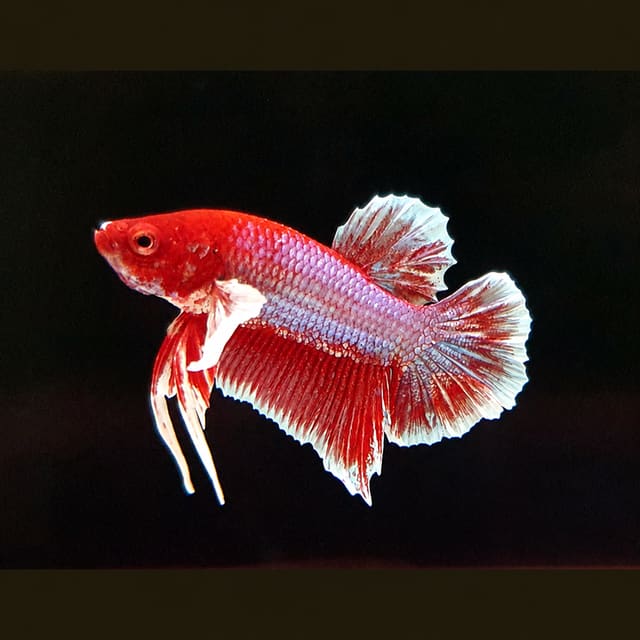
The Blue Rim Plakat Male Betta (Betta splendens) is an ornamental freshwater fish in the Osphronemidae family from the Mekong basin that reaches 7 cm standard length. It suits a careful beginner with a mature aquarium: keep one male in at least 20 litres at 26–28°C, pH 6.0–8.0 and 5–12 dGH; these water values are the overlap of FishBase, Seriously Fish and OATA, while 20 litres is OATA’s starting minimum. Sold individually as one XL male fish.
Adult size is the maximum length this species reaches at full maturity (scientific sources). The livestock you receive will be younger and smaller. Product-photo provenance and any image-specific limitations are stated on the listing.
Betta splendens
The Blue Rim Plakat Male Betta (Betta splendens) is an ornamental freshwater fish in the Osphronemidae family from the Mekong basin that reaches 7 cm standard length. It suits a careful beginner with a mature aquarium: keep one male in at least 20 litres at 26–28°C, pH 6.0–8.0 and 5–12 dGH; these water values are the overlap of FishBase, Seriously Fish and OATA, while 20 litres is OATA’s starting minimum. Sold individually as one XL male fish.
Adult size is the maximum length this species reaches at full maturity (scientific sources). The livestock you receive will be younger and smaller. Product-photo provenance and any image-specific limitations are stated on the listing.
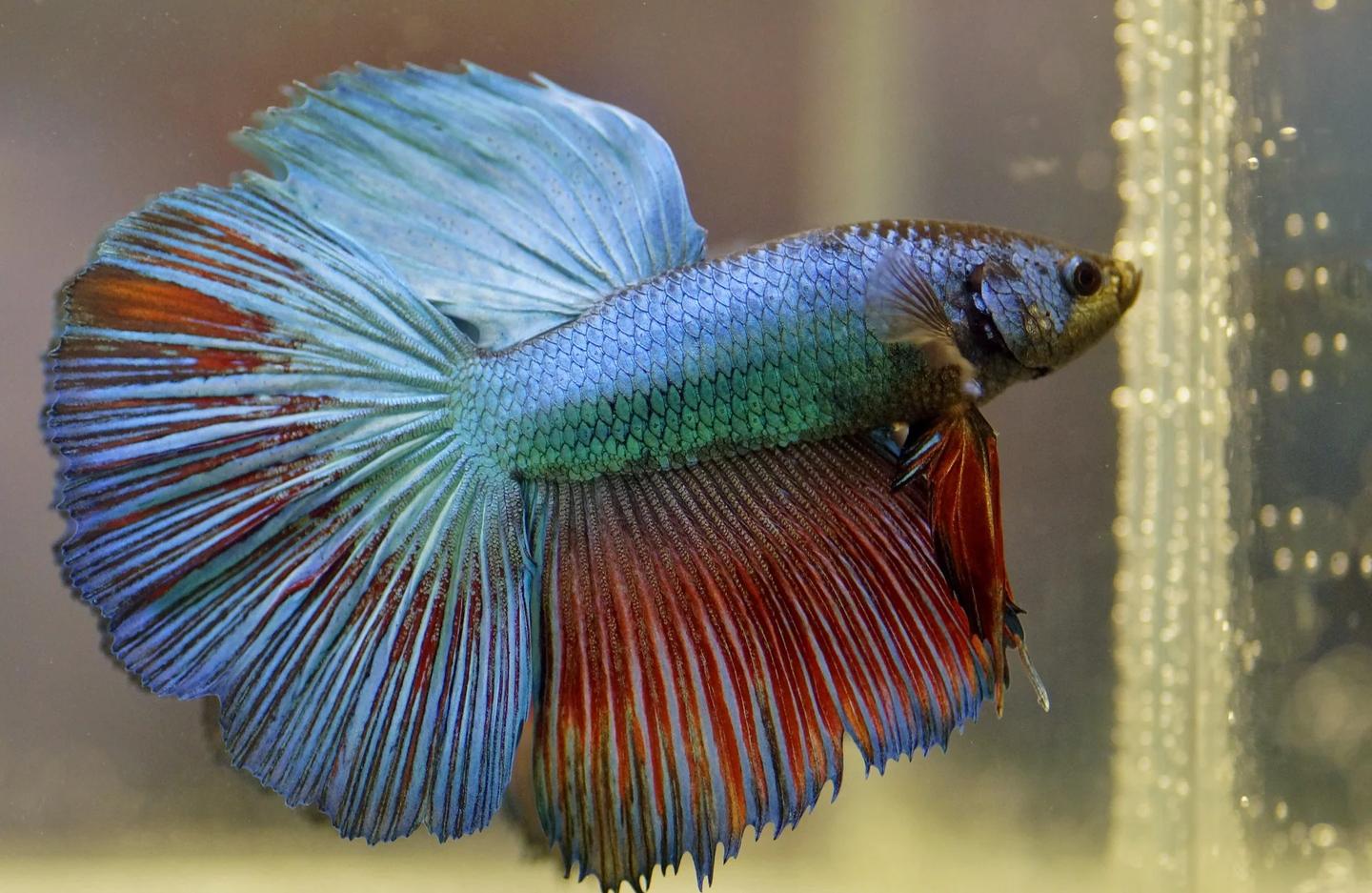
For one typical domestic Betta splendens, start with at least 20 litres, a mature filter, thermostatic heater, separate thermometer, gentle flow, a secure lid with surface access, and plants or refuges. Keep one male per aquarium.
Maintain these water conditions for optimal health and vibrant colors
The Blue Rim Plakat Male Betta (Betta splendens) is an ornamental freshwater fish in the Osphronemidae family from the Mekong basin. FishBase records a maximum of 6.5 cm total length for male or unsexed fish. This territorial, short-finned male suits a careful beginner who can prepare a mature, heated and gently filtered aquarium and house one male by himself.
Betta and Siamese fighting fish are established common names for the species. The Blue Rim name describes the ornamental colour style, while plakat identifies the short-finned form. Neither label changes the need for stable heat, tested water, surface access and a secure social plan.
| Suits | Not suited to |
|---|---|
| A careful beginner with a mature aquarium | An unfiltered bowl or tiny container |
| Solitary housing as one male per aquarium | Housing with another male Betta |
| A heated, covered aquarium with gentle flow | Strong water movement |
| A planted or furnished layout with surface access | A bare setup without cover or refuges |
One purchase supplies one XL male animal. XL is the dispatch grade rather than an adult-size measurement, so plan the aquarium around the recorded adult length and long-term care requirements.
Sex is guaranteed only when the exact product or selected option explicitly states male or female. This Blue Rim Plakat Male Betta listing is sold as male.
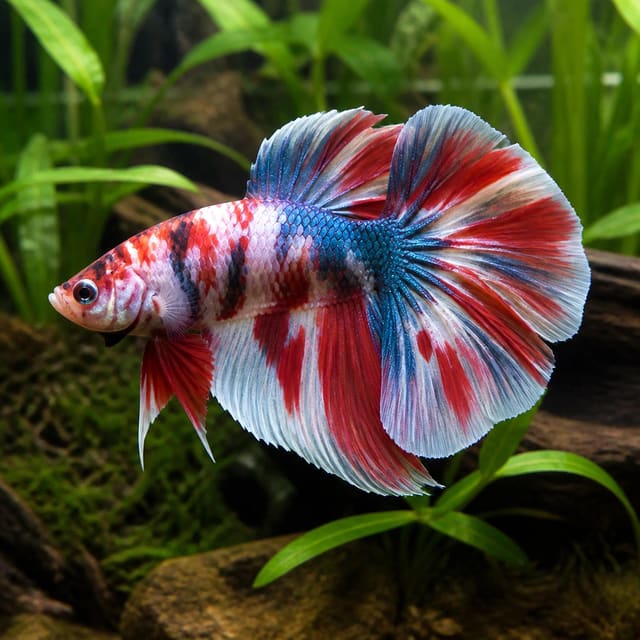
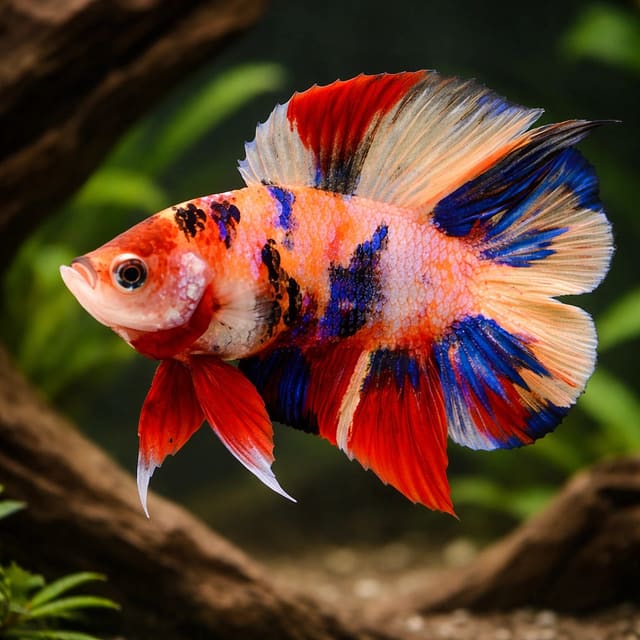
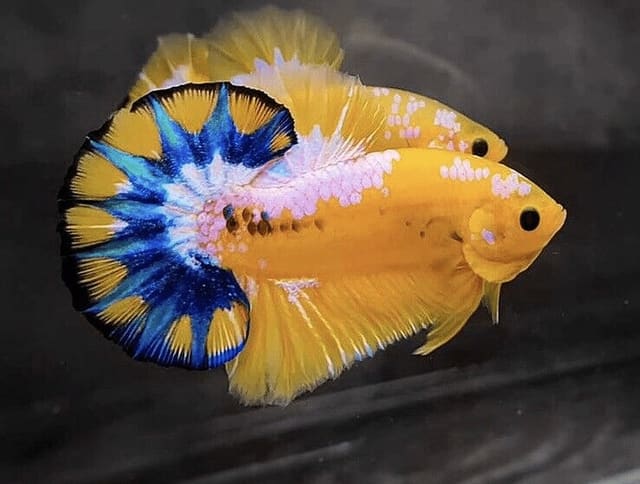
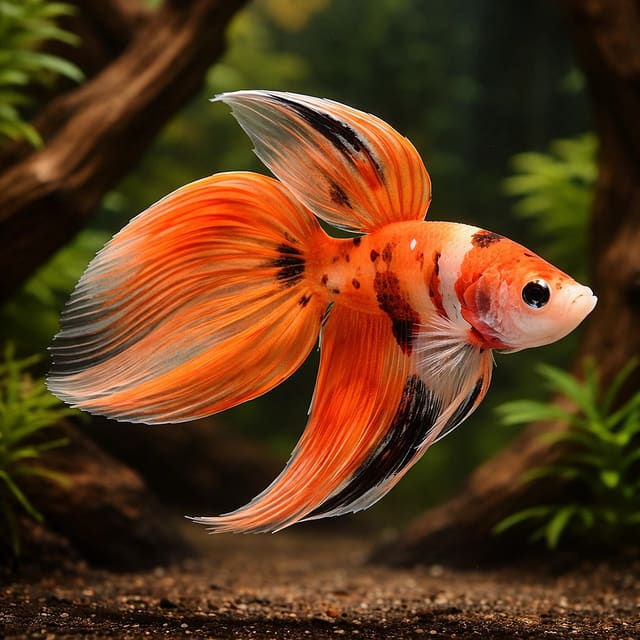
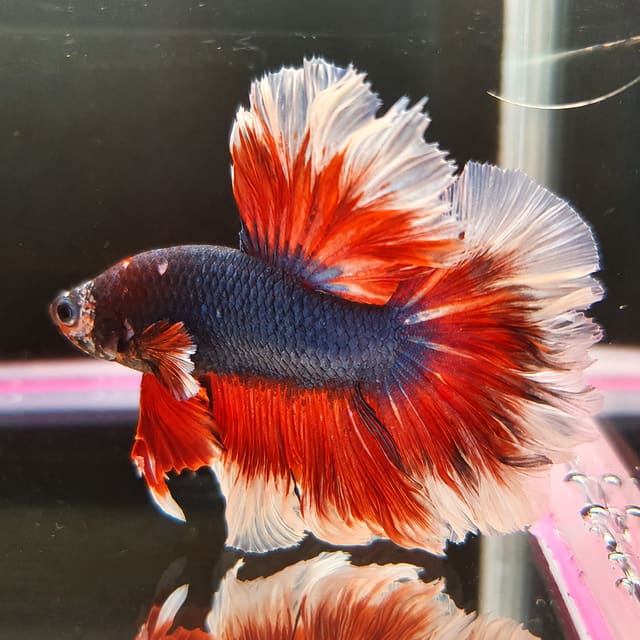
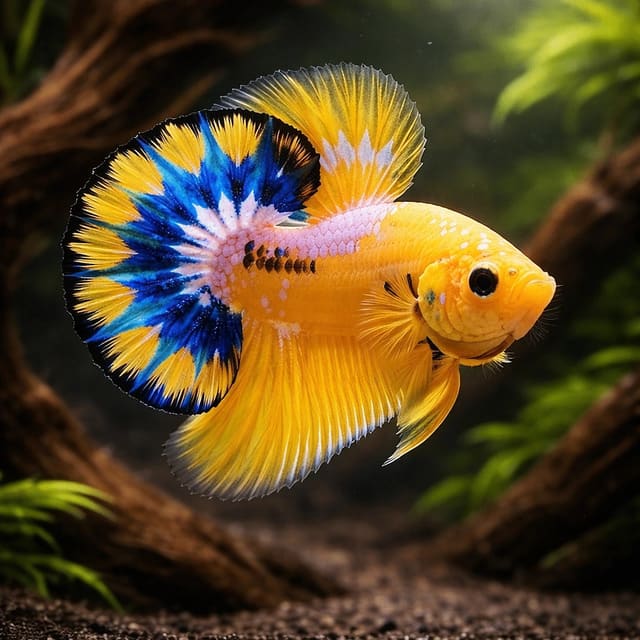
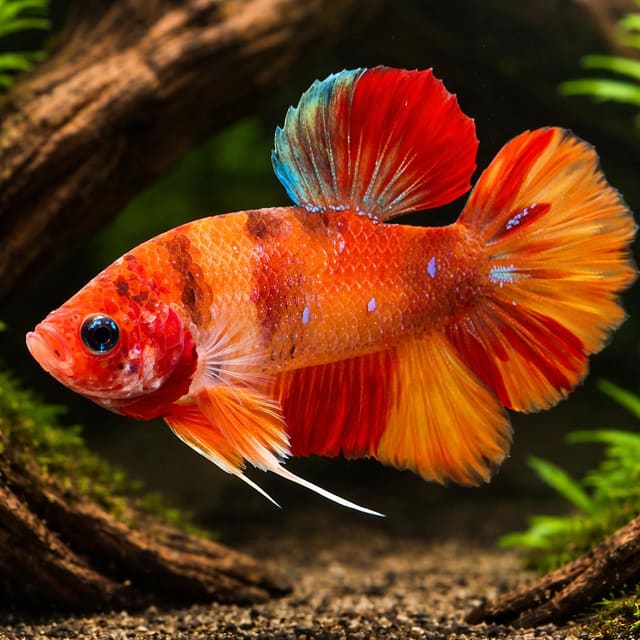
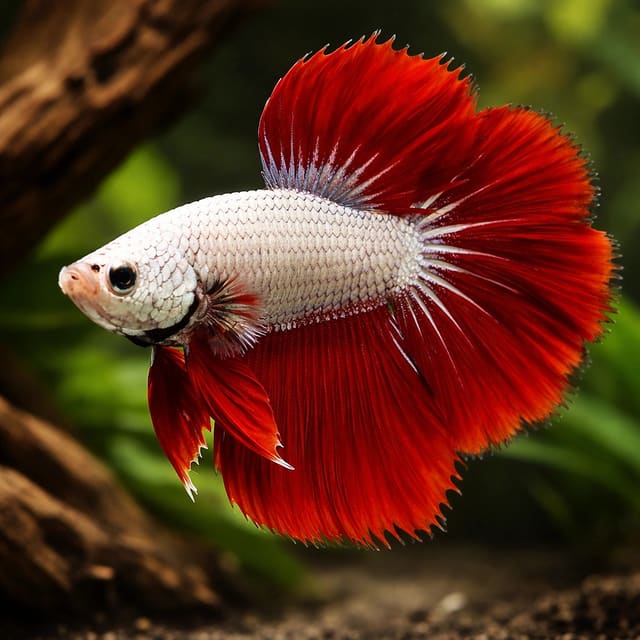
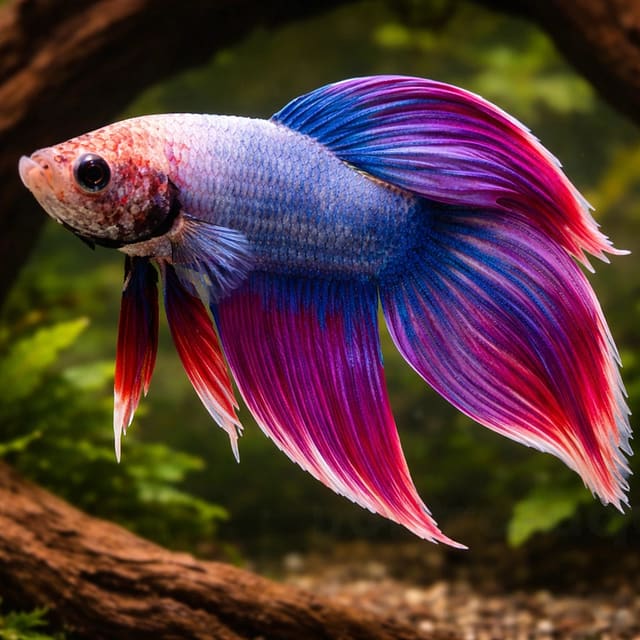
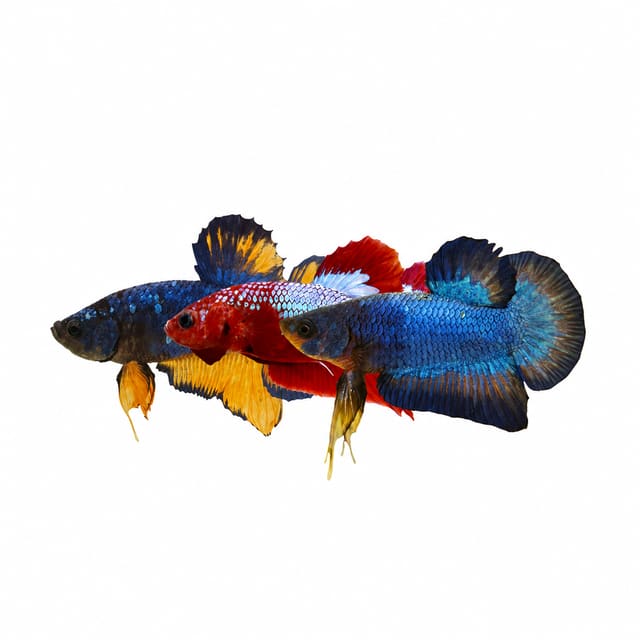
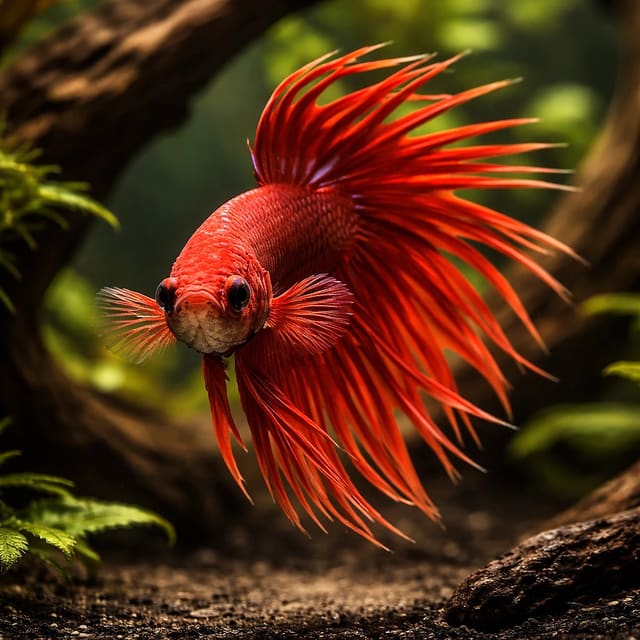
The gallery images are representative of this type of animal rather than photographs of the exact animal supplied, so colours can look slightly different from the live animal.
If you are comparing colour and fin forms before deciding, browse the Betta collection without treating appearance as a guide to temperament or care needs.
Reference: reviewed public source.
XL is the dispatch grade, not the eventual adult measurement. FishBase records a maximum of 6.5 cm total length for male or unsexed Betta splendens. OATA uses about 7 cm as a practical adult planning figure. Allow clear swimming and turning room around the adult fish rather than matching the aquarium to the size seen on arrival.
Start with at least 20 litres for one male, measured as real usable water after substrate and furnishings are installed. This is the UK OATA starting minimum adopted by Tropical Fish Co. More water is worthwhile where the footprint, filtration and furnishings remain suitable because temperature and waste concentrations tend to change less abruptly.
The Seriously Fish species profile describes a 45 × 30 cm base, or an equivalent aquarium of about 41 litres, as large enough for a single male or pair. For this male, that larger footprint is a useful planning target even though the social plan remains solitary housing.
A nominal 20-litre kit is only a starting screen. A mature, furnished aquarium with gentle flow is the practical goal.
OATA’s broad Betta guidance gives 20–28°C, pH 6.0–8.0 and 4–12 dGH for tank-reared Bettas; these are not a species-specific optimum. Use 26–28°C, pH 6.0–8.0 and 5–12 dGH as routine values because they are the overlap of FishBase, Seriously Fish and OATA. Tropical Fish Co uses the stable 26–28°C target for a typical domestic Betta splendens.
| Planning value | Routine decision |
|---|---|
| Temperature | Target 26–28°C |
| pH | 6.0–8.0 |
| General hardness | 5–12 dGH |
| Ammonia | 0 mg/L |
| Nitrite | 0 mg/L |
| Starting volume | At least 20 litres for one male |
Use a thermostatic heater and a separate thermometer; the thermostat controls the appliance, while the thermometer confirms what is happening in the aquarium. Keep the biological filter running continuously and diffuse strong flow rather than switching filtration off.
The complete Betta fish care guide explains our setup standard in one place: a mature filter, secure lid, clear surface access, gentle current, plants or refuges and one male per aquarium. This is an intermediate-care fish because stable heat, tested water and territorial housing need active management, even though the equipment itself can be straightforward.
Build the aquarium around biological filtration before adding the Betta. Clear water is not proof that a new filter can process waste. The RSPCA explains that a working biological filter supports bacteria that convert toxic ammonia into nitrite and then into the safer nitrate form.
Prepare and mature the aquarium with the help of our first tropical aquarium guide. Use suitable aquarium tests throughout the process. A planned introduction should wait until ammonia and nitrite have risen and returned to 0 mg/L and the equipment is holding steady.
| Check | Pass condition |
|---|---|
| Usable volume | At least 20 litres after furnishings |
| Ammonia | 0 mg/L |
| Nitrite | 0 mg/L |
| Temperature | Stable at 26–28°C |
| Filter | Running continuously with gentle output |
| Surface | Accessible beneath a secure lid |
| Social space | No other male Betta |
Test the complete running aquarium, not a bucket of fresh tap water. Heater placement, room temperature, lighting, evaporation and water movement can all affect the conditions the fish actually experiences.
If ammonia or nitrite is detectable during preparation, pause the livestock plan and continue maturing the filter. Adding a fish to make the cycle progress exposes the animal to toxic waste. Do not assume that a labyrinth organ protects a Betta from ammonia, nitrite or inadequate filtration; it permits atmospheric air breathing but does not replace normal water-quality care.
Keep a written baseline of temperature, pH, hardness, ammonia, nitrite and nitrate. Those figures make later changes easier to recognise and give you a useful comparison if the fish’s behaviour changes.
Operate the fully furnished aquarium before the planned introduction rather than judging each item of equipment separately. Confirm that the heater holds 26–28°C while the filter runs, that the lid closes securely around cables and that plants do not seal the breathing route. Test ammonia and nitrite again after the aquarium has been running in its finished form.
Use a simple stop-or-go decision. If the temperature drifts, either toxic waste reading rises above 0 mg/L, the outlet creates persistent turbulence or the surface cannot be reached easily, stop and correct that point. If the readings remain steady and every physical check passes, preserve the arrangement instead of making unnecessary last-minute changes. This rehearsal catches problems caused by the combined layout, such as a heater placed in a poorly circulated corner or floating cover gathering directly above the only calm resting area.
Betta splendens has a labyrinth organ and must be able to reach the surface to breathe atmospheric air. Keep the route open, but use a secure lid with a small air space beneath it. The correct solution is neither a sealed surface nor an uncovered aquarium.
Seriously Fish describes the species as favouring a well-planted, shady aquarium and warns against strong movement. Tall stems, floating plants, smooth wood and shaded refuges can divide the space without blocking access to food or air. Dried leaf litter may add cover, but it remains a furnishing choice rather than a substitute for filtration, testing or water changes.
| If you see | Do this |
|---|---|
| Repeatedly being pushed away | Diffuse or redirect the outlet |
| Difficulty resting near cover | Create a calmer sheltered zone |
| Debris collecting everywhere | Adjust circulation without creating a strong jet |
| Surface route blocked by plants | Open a clear breathing and feeding area |
| Filter output stopped | Restore filtration rather than accepting stagnant water |
Choose smooth aquarium-safe furnishings. Check holes, narrow gaps and rough edges before installation, then check them again as plants and roots grow. Place refuges so the fish can enter, turn and leave without brushing against sharp material.
A peer-reviewed study of domestic Betta diversity documents extensive variation in colour, fins, body form and behaviour. A plakat label therefore describes the short-finned form but does not justify assuming that every individual swims, rests or responds to current in exactly the same way. Observe this fish’s posture and effort after introduction, then tune the layout while preserving filtration.
Keep equipment cables, heater guards and filter intakes secure. The final layout should offer shade, a calm resting area and an unobstructed surface route without reducing the aquarium to a cramped central opening.
Use 26–28°C as the routine temperature target, pH 6.0–8.0 and general hardness of 5–12 dGH. These values are the overlap of FishBase, Seriously Fish and OATA, while the narrower temperature target follows Tropical Fish Co’s practical policy for a typical domestic Betta.
Stability does not mean ignoring an unsuitable result. It means measuring first, making a reasoned adjustment when necessary and avoiding rapid swings made only to reach the middle of a range. Use our aquarium water-chemistry guide to understand pH, hardness and nitrogen waste, then enter actual measurements into the water matcher.
| Result | Decision |
|---|---|
| 26–28°C and steady | Maintain the present heater setting and verify daily |
| Below 26°C | Check the thermometer, heater setting, installation and room conditions |
| Above 28°C | Check equipment and room heat before making gradual changes |
| Ammonia above 0 mg/L | Treat it as a water-quality problem requiring prompt investigation |
| Nitrite above 0 mg/L | Check biological filtration and reduce further loading |
| Unexpected pH shift | Retest and review replacement water, decor and recent maintenance |
Treat tap water with an aquarium conditioner that handles the disinfectant used in your supply. Test water after any domestic softener or filter rather than assuming its chemistry. Replacement water should be prepared for the aquarium and introduced without causing a sharp temperature or chemistry change.
OATA advises keeping nitrate no more than 20 mg/L above the normal tap-water level. A nitrate result should be read beside the source-water result, feeding level, stocking and maintenance record rather than as an isolated number.
Never turn a broad tolerated range into permission for abrupt change. A fish at pH 6.4 does not benefit from a hurried move to pH 7.0 simply because 7.0 looks central on a chart.
When a reading looks unusual, repeat the test before changing the aquarium. Check the test method, expiry information and sample container, then compare the result with the written baseline. One unexpected pH result calls for confirmation and a review of recent replacement water, furnishings and maintenance; it does not call for an immediate chemical correction.
Temperature needs the same disciplined response. If the thermometer shows 25°C against a 26–28°C target, check it again, inspect the heater position and consider the room conditions before adjusting the thermostat. After any necessary adjustment, allow the system to respond gradually and keep watching the separate thermometer. This approach addresses the cause while reducing the risk of replacing one modest deviation with a rapid swing.
FishBase describes wild Betta splendens feeding on zooplankton, mosquitoes and other insect larvae. In the aquarium, use a suitably sized complete Betta pellet or good-quality aquarium flake as the nutritional base. Offer small live or frozen foods such as daphnia, Artemia or bloodworm as variety rather than allowing one treat to replace a complete diet.
OATA advises feeding once a day and giving only what the fish consumes within a few minutes. Observe the portion instead of relying on a universal pellet count: pellet size, composition and energy density differ between products.
| Food | Role |
|---|---|
| Complete Betta pellet | Measured nutritional base |
| Quality aquarium flake | Complete base when appropriately sized |
| Daphnia | Small live or frozen variety |
| Artemia | Small live or frozen variety |
| Bloodworm | Measured live, frozen or freeze-dried variety |
Watch the fish eat. Remove uneaten material before it decomposes, and reduce the next portion if food repeatedly reaches the substrate. If more than one person feeds the aquarium, prepare labelled portions so enthusiasm does not become accidental double feeding.
Seriously Fish warns that Bettas can be prone to obesity. Review body condition over time rather than judging one enthusiastic feeding response. A fish continuing to approach the feeding area has not necessarily demonstrated a need for more food.
Do not use the size of the eye as a portion formula, impose a fixed pellet number across brands or add a compulsory fasting day without a reason. Start with the food maker’s guidance, observe how quickly the portion is consumed and adjust gradually while monitoring body condition and waste.
A reduced appetite is a reason to check temperature, water quality, breathing, posture and recent changes. It is not a reason to keep adding richer foods until something is accepted, because uneaten food adds further pressure to the aquarium.
Carry out a 25% partial water change at least once a week, following OATA’s routine. Use a siphon to remove settled waste where the layout allows, prepare replacement water with conditioner and keep the new water close enough in temperature and chemistry to avoid a sudden change.
Test ammonia and nitrite at least weekly and keep both at 0 mg/L. Record nitrate, pH and temperature at the same time. Regular records reveal a slow trend that may be missed when each result is considered alone.
Do not run biological filter media under the tap. Chlorine or chloramine may kill the beneficial bacterial population. When cleaning is necessary, rinse the media lightly in aquarium water removed during the water change. Avoid replacing every piece of mature media at once.
| Checkpoint | What it tells you |
|---|---|
| Week one | Whether temperature, appetite and waste readings remain stable after introduction |
| Week two | Whether feeding portions leave debris or affect nitrate |
| Week four | Whether the maintenance schedule and filter flow suit the aquarium |
| Every month | Whether plants, roots or decor are narrowing the surface route |
A larger change may be required when a water test indicates a problem, but routine over-cleaning can destabilise the biological filter. Clean what needs cleaning, preserve mature media and test afterwards.
During the first week, compare each day’s temperature with the 26–28°C target and watch whether the fish reaches food and the surface without fighting the current. At the first weekly service, test before changing water so the results describe the aquarium’s performance rather than the freshly refilled condition.
By week two, compare feeding with the waste you remove. Food repeatedly left on the substrate means the portion should be reduced, while a rising nitrate trend calls for a review of feeding and maintenance together. At week four, assess whether plants or roots have altered the flow or narrowed the surface opening. Adjust only the point that needs attention: trim obstructive growth, redirect an outlet or clean a blocked intake while leaving mature biological media intact.
The aim is a routine you can repeat without large corrections. Stable results, prompt feeding, normal surface access and a filter that runs continuously show that the aquarium and maintenance schedule are working together.
Use the delivery and Live Arrival Guarantee policy for the current terms. Follow these arrival steps in order:
After release, make sure the fish can reach the surface and is not being pushed continuously by the outlet. Compare behaviour with its own developing normal pattern rather than expecting constant display.
| Change | First response |
|---|---|
| Faster or slower gill movement | Check temperature, ammonia, nitrite and flow |
| Hanging at the surface | Check water quality and whether normal surface access is clear |
| Sitting on the bottom | Review temperature, water tests and recent changes |
| Reduced feeding | Remove leftovers and assess the complete system |
| Clamped or damaged fins | Check decor, flow, water quality and any companion interaction |
| White spots or fluffy growth | Record the signs and seek experienced help |
The MSD Veterinary Manual supports a water-quality-led investigation using aquarium history and appropriate diagnosis. A visible mark, swollen abdomen or swimming change can have several causes, so avoid combining medicines or raising temperature on the strength of a symptom label found online.
When a health change appears, test the water, review feeding and maintenance, note equipment changes and contact us with the readings and observations. Severe, persistent or unexplained signs need qualified help; OATA maintains a UK fish-vet directory.
Preserve a short written timeline. Dates, test results, photographs of changes and details of recent maintenance give a retailer or veterinary professional more useful context than a single symptom name.
Plan this Blue Rim Plakat as the only male Betta in the aquarium. FishBase states that males fight each other, OATA warns that mixing two males can lead to severe injury or death, and RSPCA compatibility guidance also recognises that male Bettas may fight their own kind.
More space, planting and visual barriers do not turn direct male cohabitation into a safe plan. Use separate aquariums and prevent persistent direct visual contact between neighbouring males if repeated display is causing agitation.
| Proposed arrangement | Decision |
|---|---|
| Two male Bettas together | Avoid |
| Male and female kept routinely together | Avoid as an everyday arrangement |
| One male alone | Preferred starting plan |
| Standard mixed community | Treat as an exception requiring careful screening |
Seriously Fish describes solitary housing as the expected arrangement because individual tolerance of other species is the exception. The fact that a companion has lived beside one male without conflict does not make the combination universal.
Do not interpret short fins as a guarantee of calm behaviour. Plakat identifies fin form, while domestic Bettas vary in behaviour as well as appearance. Likewise, a quiet first day does not settle long-term compatibility; territorial responses can change as the fish becomes established.
If the aquarium already contains livestock, assess the complete adult community before adding this male. The decision must account for usable space, water overlap, activity, feeding and a ready separation plan—not simply whether the animals appear peaceful at the time of purchase.
No companion species is automatically safe with this male. Seriously Fish advises avoiding fish with trailing finnage or body shapes that a male may interpret as a rival. OATA also highlights the danger of fin nipping and recommends either solitary housing or very placid companions.
| Question | Pass condition |
|---|---|
| Water overlap | The companion thrives at 26–28°C, pH 6.0–8.0 and 5–12 dGH |
| Adult space | The furnished aquarium accommodates every animal at adult size |
| Activity | The companion is not boisterous enough to keep the Betta under pressure |
| Fins and shape | It is neither a known fin nipper nor strongly rival-like |
| Feeding | Both animals can receive suitable portions without persistent competition |
| Backup | A mature, heated separation aquarium is ready before mixing |
Failing one screen is enough to reject the plan. Passing all six reduces obvious risk but does not guarantee that the individuals will tolerate one another.
Small fish or invertebrates may be investigated or hunted, while defensive animals may injure a curious Betta. Do not introduce a snail, shrimp or other animal as a cleaner or assume that a different swimming zone prevents interaction.
Observe feeding access, chasing, hiding, fin condition and breathing. Separate promptly if one animal repeatedly pursues another, guards food, blocks access to the surface, causes fin damage or forces another animal to remain hidden.
For a stocking and compatibility assessment, ask us with the aquarium’s internal dimensions, real volume, temperature, pH, hardness, full livestock list and a photograph of the layout. Solitary housing remains the appropriate choice when there is doubt or no mature backup aquarium.
Work through the screen using adult conditions, not the animals’ present size or a brief shop observation. For example, a companion that shares the water range but is known to nip fins fails the fins-and-shape check. A calm-looking animal that will not fit comfortably at adult size fails the space check. A combination that passes those points still fails if both animals must compete for the same food or if no mature heated aquarium is ready for separation.
Once animals are together, do not wait for serious injury before acting. Repeated chasing, persistent hiding, blocked surface access, missed meals or new fin damage are enough to end the attempt. Move the animals using the separation plan prepared in advance, then reassess the original aquarium rather than immediately trying another companion.
FishBase records a maximum of 6.5 cm total length for male or unsexed Betta splendens; XL is the dispatch grade rather than the adult measurement.
Start with at least 20 litres for one male under OATA’s Betta guidance; a mature, covered and gently filtered aquarium with plants or refuges and clear surface access is the practical setup.
Keep one male per aquarium. Avoid housing two males together because they may fight until one is severely injured or killed.
It can suit a careful beginner after a proper aquarium is mature and ready, with a heater, filter, test kits, secure lid, gentle flow and routine maintenance already in place.
Feed a measured complete Betta pellet or quality aquarium flake once daily, giving only what is eaten within a few minutes, with small live or frozen daphnia, Artemia or bloodworm as variety.
Use 26–28°C, pH 6.0–8.0 and 5–12 dGH; these routine values are the overlap of FishBase, Seriously Fish and OATA. Keep ammonia and nitrite at 0 mg/L.
This male is territorial and must not share an aquarium with another male Betta. Avoid fish with trailing finnage or rival-like body shapes, and reject known fin-nipping species because other fish may also damage the Betta’s fins.
Solitary housing is safest. Seriously Fish names some small cyprinids and loaches as potentially suitable, but each plan must pass checks for adult space, water overlap, activity, fin-nipping, feeding competition and a mature separation aquarium.
Film every delivery continuously from the sealed parcel as it is opened, keeping the fish visible inside the sealed bag; someone must be present to receive it. Float the bag for 20–30 minutes, then release the fish without pouring the bag water into the aquarium.
No reviews for this item yet. Bought one? Honest reviews only, good or bad.
What customers say about ordering from us
I have a small group of long finned mountain minnows. So was delighted to be able to order ten of this variety to increase the genetics in my tank . The ones I recieved are healthy but it’s to early to give a verdict on wether they are of a long finned type since they are small currently.
Gordon Walker · 23 Sept 2026
100% success travel and "installation". Pleased with quality of purchase. The Siamese fighter a bit "shy" so have not yet seen him at his best yet but looking good. Happy customer. GG
George E Garratt · 21 Sept 2026
Reviews of our shop, collected by Judge.me, an independent third-party review collector. Newest first.