Moderate
Big Ear Plakat Male Betta Mix (Betta splendens)
26–28°C · pH 6–8 · 20L
£19.99

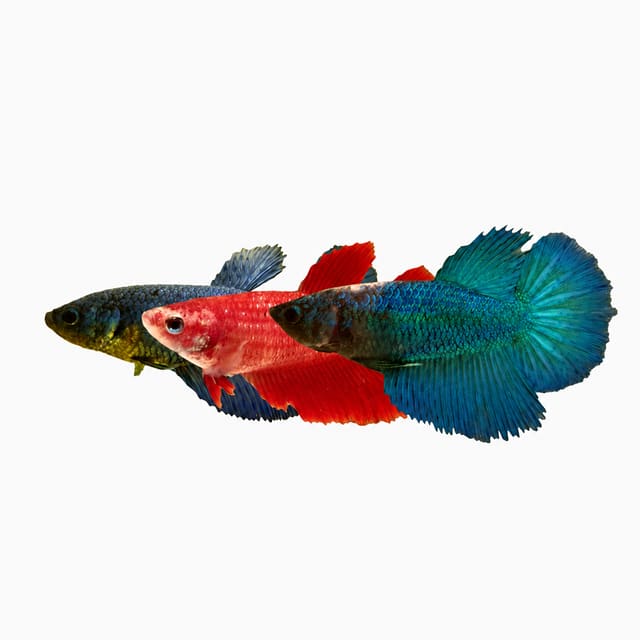
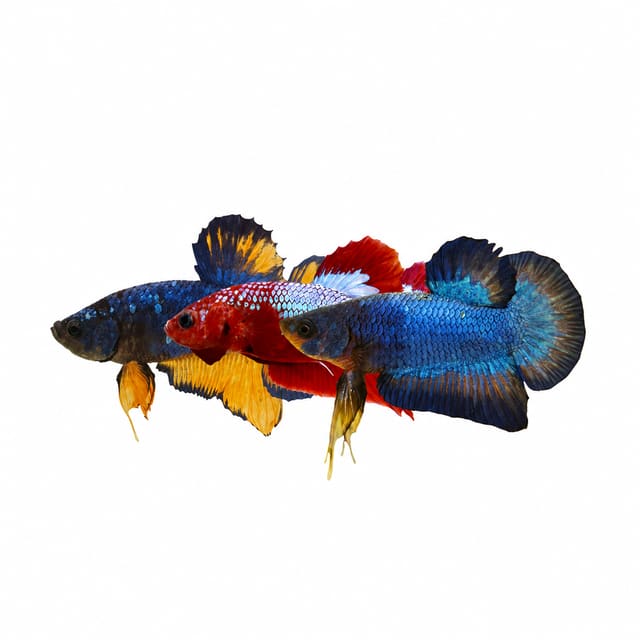
Comparison views only, not a shared-tank setup. Keep one male Betta per tank; never house two males together.
One male Delta Tail / Super Delta Betta (Betta splendens) from a mixed-colour line. Moderate care; provide a mature heated 20 L+ aquarium and keep one male per tank. UK live-fish delivery available.
Adult size is the maximum length this species reaches at full maturity (scientific sources). The livestock you receive will be younger and smaller. Product-photo provenance and any image-specific limitations are stated on the listing.
One male Delta Tail / Super Delta Betta (Betta splendens) from a mixed-colour line. Moderate care; provide a mature heated 20 L+ aquarium and keep one male per tank. UK live-fish delivery available.
Adult size is the maximum length this species reaches at full maturity (scientific sources). The livestock you receive will be younger and smaller. Product-photo provenance and any image-specific limitations are stated on the listing.
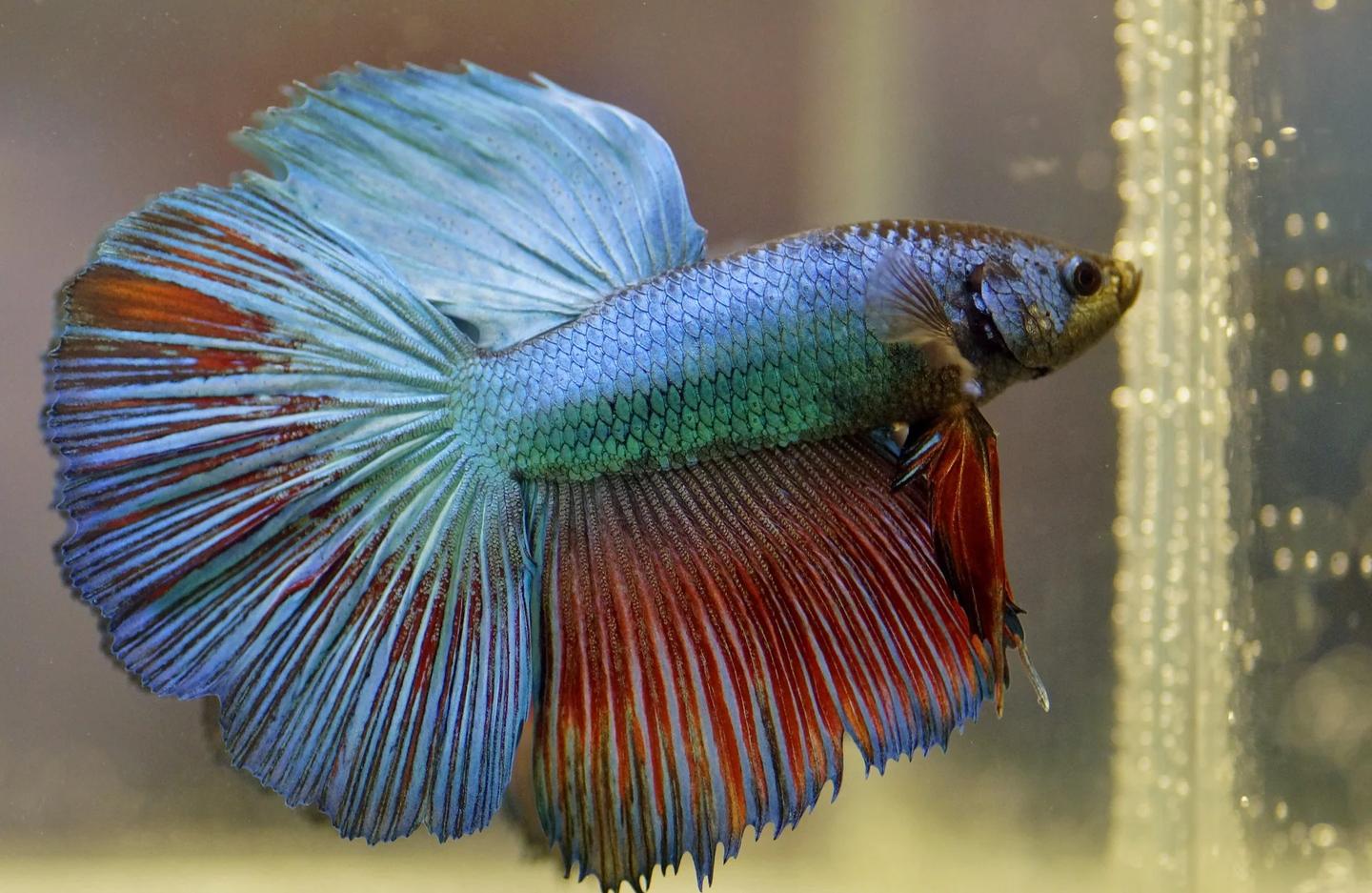
For one typical domestic Betta splendens, start with at least 20 litres, a mature filter, thermostatic heater, separate thermometer, gentle flow, a secure lid with surface access, and plants or refuges. Keep one male per aquarium.
Maintain these water conditions for optimal health and vibrant colors
The Delta Tail Male Betta is a domesticated Betta splendens supplied in a Super Delta mixed-colour line. It is sold as one male Betta fish, with the broad caudal fin, alert surface-oriented behaviour and individual personality for which ornamental Bettas are known. "Super Delta" is a trade and hobby description of fin form rather than a separate species, and the supplier describes this line as a mix. Colour, markings, fin spread and exact proportions can therefore vary from fish to fish.
This is a tropical labyrinth fish for a mature, heated and filtered aquarium. A single male is usually the safest starting point. Two male Betta splendens must not share an aquarium, and any community arrangement needs considerably more room, calm companions and a backup plan. The care information below separates practical recommendations from fixed promises so that you can prepare a stable home before ordering.
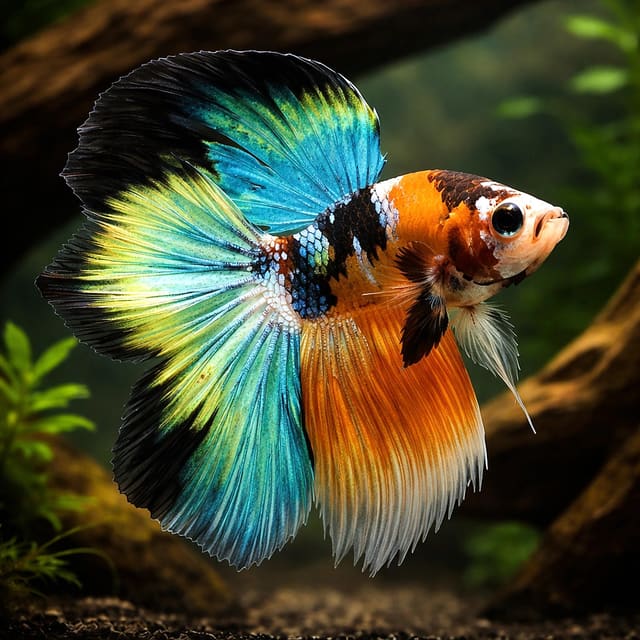
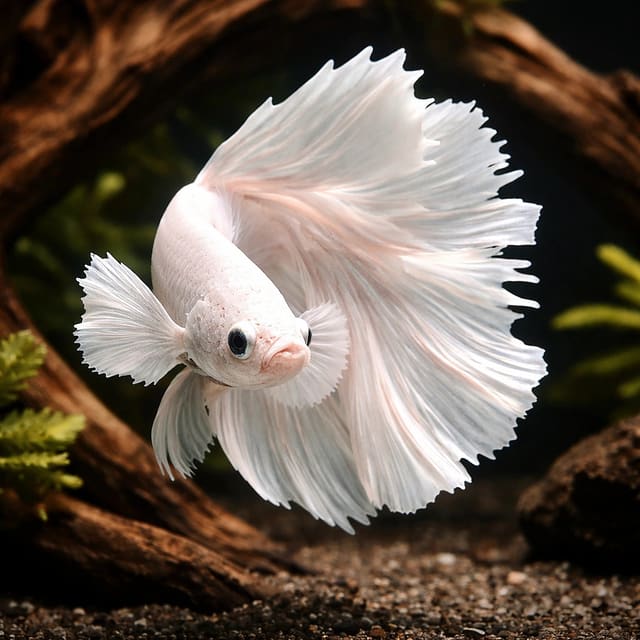
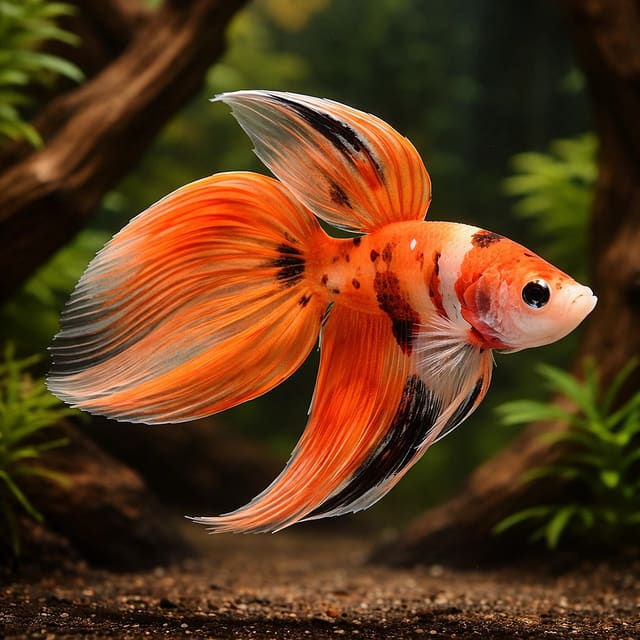
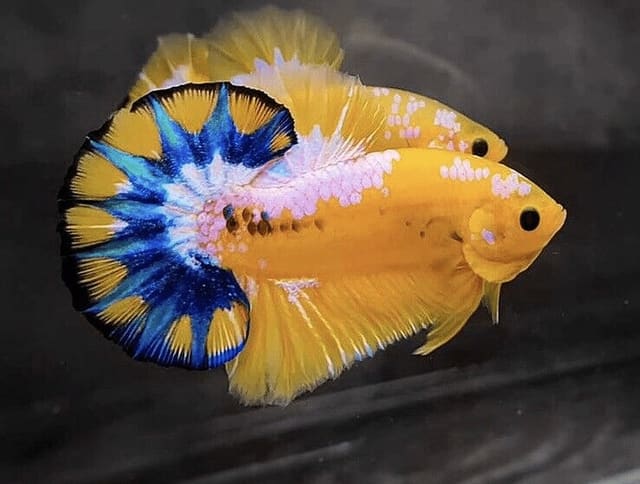
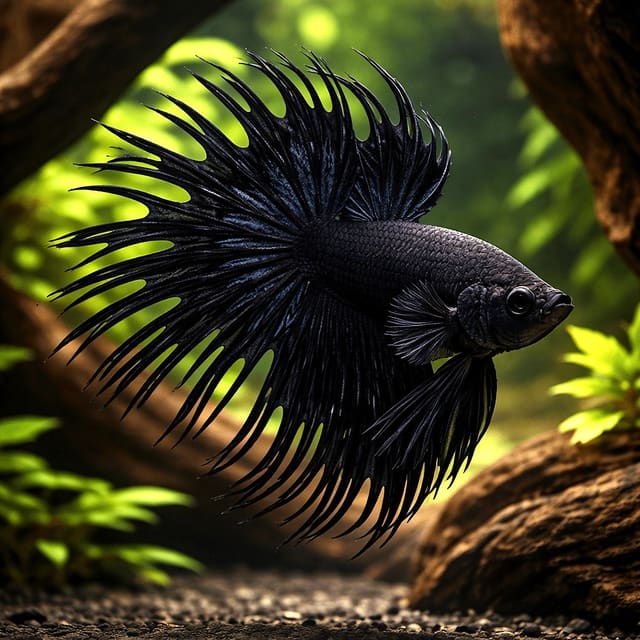
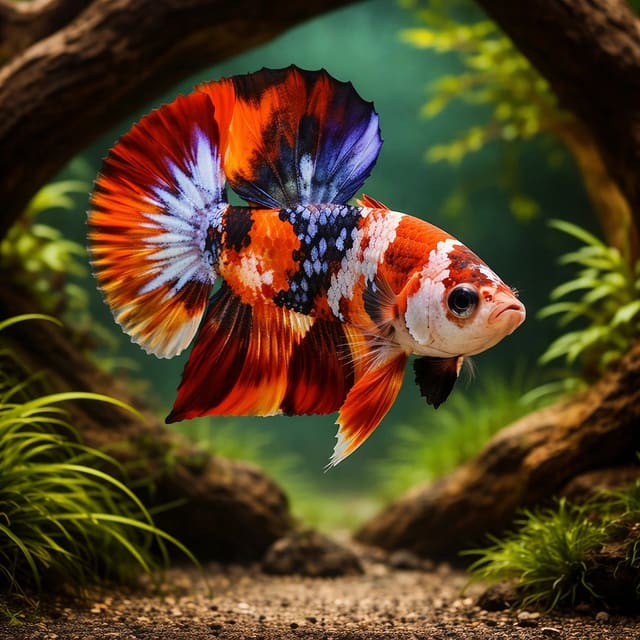
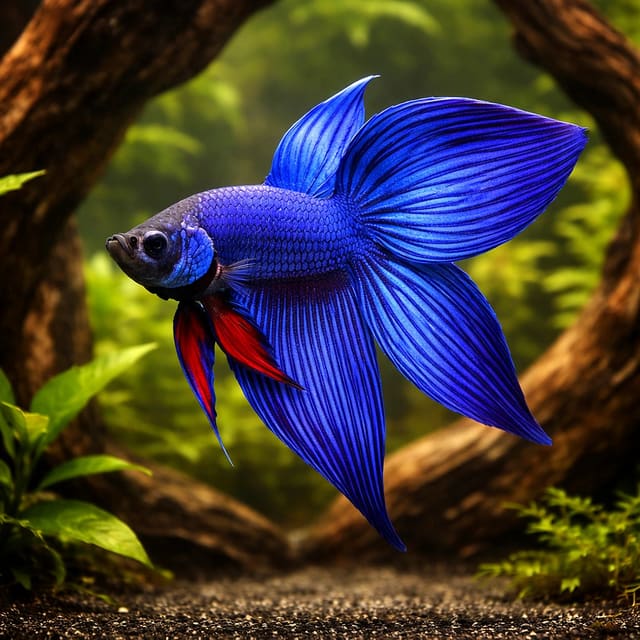
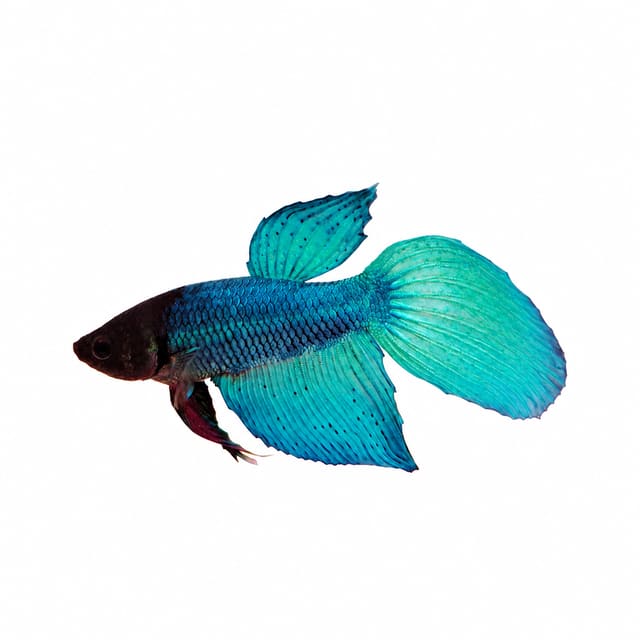
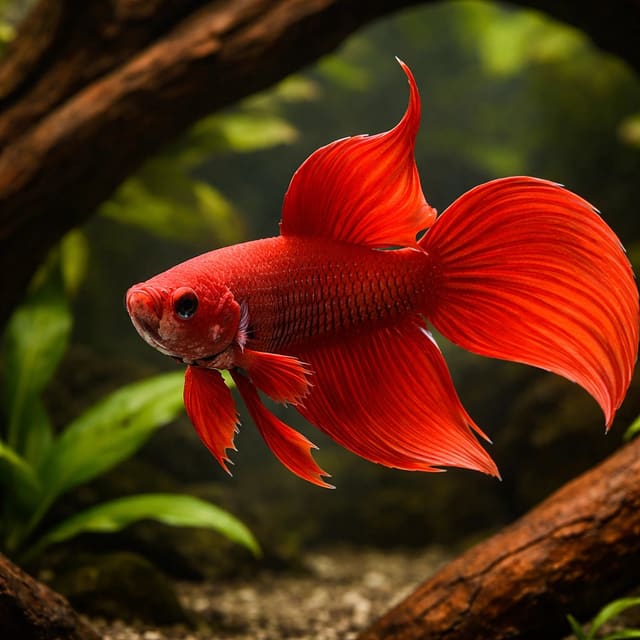
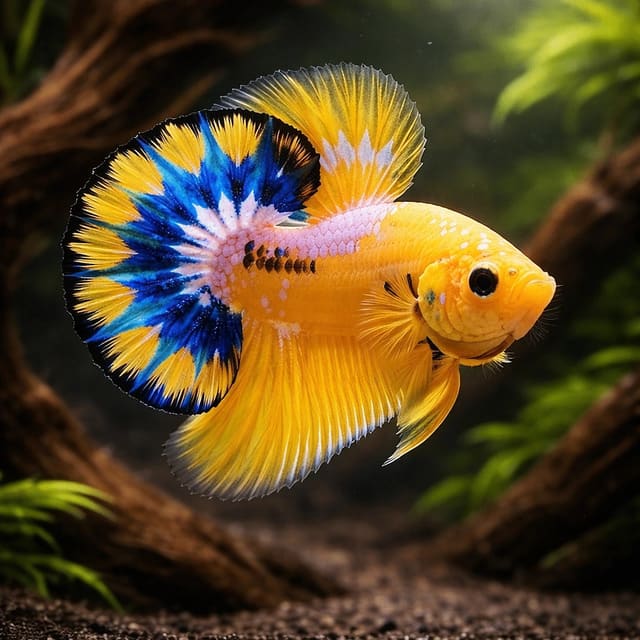
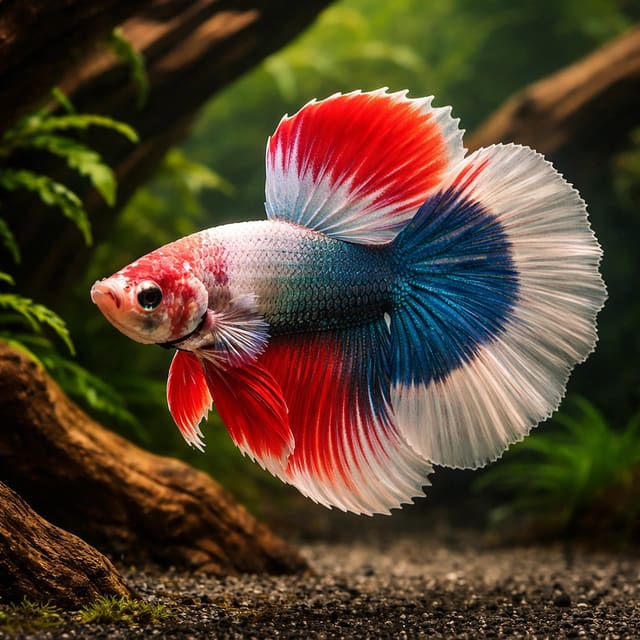
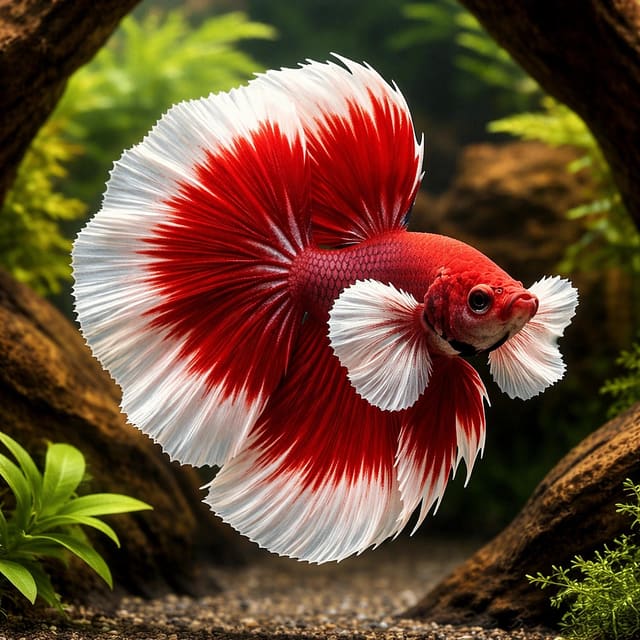
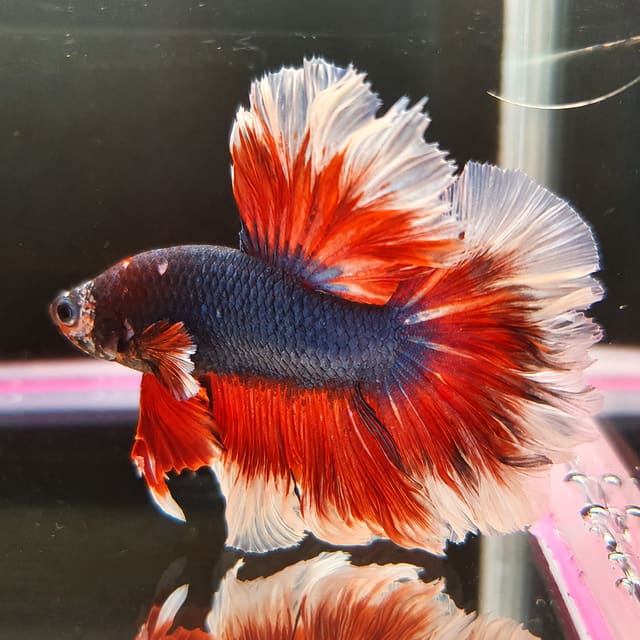
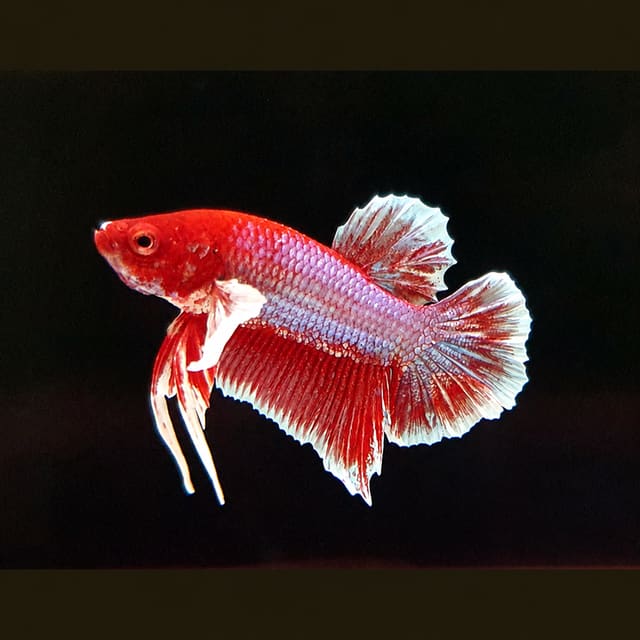
The four existing gallery images are illustrations of blue ornamental male Bettas. They are not photographs of the exact fish that will be delivered and they do not guarantee blue colouration or an exact tail angle. One illustration shows two males together for visual comparison only; never house two male Betta splendens together.
| Care point | Recommendation | Why it matters |
|---|---|---|
| Aquarium | 20 litres or more for one male; larger is easier to stabilise | More swimming room and slower changes in temperature and water quality |
| Water | 24-27°C as a practical target; pH 6.0-8.0; moderate hardness is suitable for most captive-bred fish | Stability is more useful than chasing a single "perfect" number |
| Filtration | Mature biological filter with a gentle outlet | Protects water quality without forcing a long-finned fish to fight strong current |
| Decor | Live or soft plants, open swimming space, refuge and near-surface resting places | Supports normal exploration, foraging, hiding and resting behaviour |
| Food | Quality Betta pellet or flake with small live or frozen foods in rotation | Provides a varied, animal-rich omnivorous diet |
| Company | Keep one male alone unless planning a larger, carefully observed community | Male Bettas are territorial; other fish may also nip their long fins |
Betta splendens is the species. Terms such as Delta, Super Delta, Halfmoon, Crowntail, Veiltail and Double Tail are ornamental trade descriptions developed around selectively bred fin shapes. They are not separate scientific species. In a Super Delta male, the caudal fin is expected to open broadly in a fan-like form, usually wider than a standard Delta but without requiring the full display associated with a Halfmoon label.
That distinction should be treated as a useful description, not as a millimetre-perfect guarantee. A fish may not fully flare during transport, acclimation or photography. Fin condition, age, mood and individual genetics also affect the visible outline. The responsible description for this product is therefore Delta Tail male / Super Delta mix, matching our stock records. We do not promise a competition-grade tail angle, a named bloodline or breeding-show quality.
Domesticated ornamental Bettas have a complicated breeding history. Genome research has found extensive selection for colour and fin traits, as well as genetic contributions from other members of the Betta splendens complex. That is one reason ornamental forms can differ so dramatically from wild fish and from one another. It is also why a mixed line should be described honestly rather than forcing every individual into an exact visual template.
This line can contain different colours and patterns. The blue fish shown in the gallery illustrates one possible ornamental look, but the listing images are not a pick-the-exact-fish service. The fish delivered may be blue, blue-green, red-toned, pale, dark, multicoloured or marked differently. Lighting, background, stress and the angle of iridescent scales can all change how colour appears.
Fins can also differ in breadth and edge shape while remaining within the supplier's Delta Tail / Super Delta description. Minor asymmetry is not unusual in living animals. If a specific colour, pattern or show-standard tail is essential to your plan, contact us before ordering so availability can be discussed rather than inferred from an illustration.
Choose this listing for a male Super Delta-type Betta from a mixed line, not for an exact replica of the blue illustrative fish.
Small cups and unfiltered bowls are display or transport shortcuts, not good long-term homes. For one male, use a heated, filtered aquarium of at least 20 litres as a practical home-care starting point. A 25-40 litre aquarium gives more water volume, more layout options and more room to separate resting areas from feeding and filtration. A larger aquarium is not maintenance-free, but changes happen more gradually and are easier to detect before they become emergencies.
Recent peer-reviewed welfare research compared male Bettas across furnished containers from 1.5 litres to 19.3 litres. Fish swam and foraged more in the largest furnished treatment and showed more potentially abnormal behaviour in smaller or barren environments. The authors recommended pet tanks larger than 5.6 litres and found the best behavioural results in the 19.3-litre furnished treatment. This supports 20 litres as a sensible practical floor while also showing that space and enrichment work together.
A rectangular aquarium with useful horizontal swimming length is preferable to a tall, narrow ornament. Bettas regularly visit the surface to breathe, so a very deep tank can make repeated surface trips harder for an older, weak or very long-finned fish. Fit a secure lid: Bettas can jump, and a lid also helps keep the air immediately above the water warm and humid.
A Betta's labyrinth organ allows it to take atmospheric air, but it does not protect the fish from ammonia, nitrite or unstable water chemistry. The aquarium needs a mature biological filter before livestock is added. In an established filter, beneficial microbes convert toxic ammonia first to nitrite and then to less toxic nitrate. A new aquarium does not instantly have enough of these microbes simply because the water looks clear.
Use a reliable liquid or strip test appropriate to the parameter and confirm that ammonia and nitrite remain at zero before ordering. Record pH, temperature and nitrate as well. The freshwater water-chemistry guide explains what the main readings mean, while the first tropical aquarium guide covers equipment and preparation in a practical order.
| Reading | Home-aquarium goal | Action if the result is wrong |
|---|---|---|
| Ammonia | 0 mg/L | Stop adding livestock, check the filter and feeding, and take prompt water-quality action |
| Nitrite | 0 mg/L | Treat as unsafe; protect the fish and investigate biological filtration |
| Nitrate | Keep controlled through stocking, plants and regular partial water changes | Review maintenance and compare with local tap-water nitrate |
| Temperature | Stable within the chosen care range | Adjust gradually and verify with a separate thermometer |
| pH | Stable within a suitable range | Avoid rapid chemical correction; understand the source water first |
For this captive-bred male, aim for a steady 24-27°C in routine home care. Our stock records give 23-27°C, OATA's Betta care sheet gives 20-28°C for tank-reared fish, and FishBase reports a broader species range. The narrow practical target used here sits comfortably inside those sources and avoids presenting the extremes as an everyday goal.
Use a thermostatically controlled heater sized for the aquarium and a separate thermometer that is easy to read. Do not rely only on the heater dial. Place the aquarium away from radiators, cold draughts and direct sunlight. During a water change, condition replacement tap water and bring it close to the aquarium temperature before adding it. Sudden change is more dangerous than a small, stable difference from an arbitrary target.
A pH around 6.0-8.0 and soft-to-medium water suit many captive-bred Bettas. OATA suggests 4-12°dH for general hardness, while the supplier gives a wider tolerance. Do not chase pH with repeated chemical doses if the fish is already adapted to stable, suitable source water. Stability, zero ammonia, zero nitrite and sensible nitrate control matter more than forcing the aquarium to one decimal place.
Provide biological filtration, but keep the outlet gentle. Long ornamental fins create drag, so a current that looks modest for a fast river fish can exhaust a Super Delta male. A sponge filter, baffled internal filter or adjustable outlet can work well. The surface should not be completely stagnant, yet the fish should be able to hover, turn and reach food without being swept across the aquarium.
Watch behaviour after changing the flow. Repeatedly being pushed away from the feeding area, hiding permanently behind the heater or struggling to rest are signs that the setup needs adjustment. A calm corner and a broad leaf or purpose-made smooth rest near the surface help a long-finned fish pause without sinking to the bottom.
Surface breathing is normal for a labyrinth fish. Continuous gasping, very rapid gill movement or an abrupt change in surface behaviour is not something to dismiss as "just being a Betta". Test the water, check temperature and oxygenation, and seek competent aquatic-health advice when behaviour remains abnormal.
A good layout combines cover with open swimming space. Use live plants such as Java fern, Anubias, Cryptocoryne or suitable floating plants, or choose soft artificial plants without sharp seams. Smooth wood and rounded refuges can create sheltered areas, but every opening must be large enough that the fish cannot become trapped.
Dense decoration across the whole tank is not automatically better. Leave a clear route to the surface and enough open water for turning and display. Place broad leaves or other safe resting surfaces at more than one height. The welfare study found that Bettas used a range of resting places and spent substantial rest time on or against furnishings, so the layout should offer choices rather than one decorative object.
Check plastic plants, rough rock and filter intakes with long fins in mind. A sharp edge that is harmless to a short-finned fish can split delicate finnage. Cover unsafe intake gaps with an appropriate guard or sponge, and remove any ornament that can pinch the body or fins.
Bettas are best described as omnivorous fish with a strong animal-food component. FishBase records zooplankton, mosquitoes and other insect larvae in the natural diet, while OATA recommends a good-quality flake or pellet supported by small live or frozen foods. A specialised Betta pellet is a convenient staple because the particle size and nutrient profile are designed for these fish.
Feed a small amount once daily to begin with, following the food manufacturer's guidance and adjusting to the fish, food size and water temperature. It is more reliable to watch what is eaten than to repeat a universal pellet number because pellet sizes differ. Remove uneaten food after a few minutes. Rotate in small portions of daphnia, suitable bloodworm, brine shrimp or another correctly stored aquatic food rather than using rich treats at every meal.
Overfeeding can cause both body-condition problems and a water-quality problem as waste decomposes. Underfeeding is not the answer either. Monitor the fish from above and from the side, record any sustained loss or gain in condition, and change the ration gradually. A sudden refusal to eat after delivery can reflect transport stress, but persistent appetite loss should prompt checks of temperature, ammonia, nitrite and the fish's appearance.
A settled male may patrol the aquarium, investigate movement outside the glass, rest on leaves, take air at the surface and build a bubble nest even when no female is present. Short periods of flaring at a reflection can occur, but constant display is tiring. If the fish spends much of the day attacking its own reflection, alter the lighting or background and add visual cover.
Bettas are individuals. One may be bold and food-focused while another is cautious after a move. Observe the fish's normal routine before interpreting a single behaviour as illness or aggression. The most useful warning is often a change: a normally active fish becoming withdrawn, a normally eager feeder refusing several meals, or a fish that suddenly holds its fins clamped.
Do not use mirrors or another male as permanent "enrichment". A brief controlled display is sometimes used by experienced keepers, but prolonged visual confrontation creates stress. Exploration, varied feeding, safe plants and a well-planned environment are more appropriate forms of day-to-day enrichment.
The safest answer is that a male Betta can live alone and does not need fish companions. A community is a separate project, not a feature of the 20-litre minimum. It requires a larger mature aquarium, compatible water needs, adequate group sizes for every companion species, visual breaks and a spare cycled setup in case the match fails.
Never keep two male Betta splendens together. Also avoid treating a female as a permanent companion for a male. Breeding introductions are specialist, closely supervised events in a dedicated setup. The gallery image showing two blue males is illustrative only and must not be copied as a housing arrangement.
| Potential arrangement | Risk level | Responsible guidance |
|---|---|---|
| One male Betta alone | Lowest social risk | Recommended starting point; enrich the aquarium rather than adding company |
| Another male Betta | Unacceptable | Do not combine; serious fighting and injury can occur |
| Female Betta with the male | High | Not a routine community pairing; breeding requires specialist preparation and separation |
| Calm fish species | Variable | Only in a larger aquarium that meets the companion species' group and space needs; observe both directions of aggression |
| Long-finned or nippy fish | High | Avoid; they can provoke display or damage the Betta's fins |
| Shrimp | Variable to high | Small shrimp may be hunted; do not assume they are safe companions |
| Snails | Variable | Some individuals ignore them and others peck exposed tissue; supervise and be ready to separate |
Browse the Betta and labyrinth fish category to compare forms, but do not buy multiple male Bettas for one shared aquarium. For visual comparison, see the male Halfmoon Blue Betta, male Crowntail Blue Betta, male Double Tail Blue Betta and male Super Delta White Betta. These are alternatives, not suggested tank mates.
Have the aquarium fully heated, filtered and tested before delivery day. Dim the light, keep the room calm and check the fish and transport water on arrival. Follow the instructions supplied with the order and use the live-fish acclimation timer to keep the process measured rather than improvised.
Acclimation needs to balance temperature adjustment with limiting the time a fish remains in opened transport water. Do not pour transport water into the aquarium. Use clean equipment, avoid chasing the fish and provide a quiet, sheltered area once released. It is normal for colour to look muted immediately after transit, and a newly arrived fish may hide while it learns the layout.
Observe breathing, balance, body condition and fin position during the first hours. Test water rather than guessing if anything looks wrong. Keep a written record and photograph concerns promptly if you may need support under the live-fish delivery and arrival policy.
Keep the routine simple during the first week. Avoid redecorating the aquarium, adding tank mates or repeatedly encouraging the fish to flare. Offer a small familiar meal after it has had time to settle and remove leftovers. Check temperature daily and test ammonia and nitrite frequently, especially if the aquarium is newly matured or the filter has recently been disturbed.
Look for a trend rather than demanding an instant display. Appetite and exploration often improve as the fish becomes familiar with the tank. Continued loss of balance, heavy breathing, visible lesions, worsening fin damage or persistent refusal to eat require attention. Start with water-quality and temperature checks, then contact an experienced aquatic professional or veterinarian when the cause is unclear.
OATA recommends regular testing and a weekly partial water change, commonly around 25%, adjusted to the aquarium's readings and stocking. Condition replacement water for chlorine or chloramine and match the temperature closely. Siphon visible waste without stripping every surface clean at once.
When filter media needs attention, rinse it gently in removed aquarium water rather than untreated tap water. Do not replace all mature media on a calendar unless the manufacturer and water readings show that replacement is necessary. The biological filter is living infrastructure, and sudden over-cleaning can remove the microbes the aquarium depends on.
Keep a simple log of temperature, ammonia, nitrite, nitrate, pH, water changes and any unusual behaviour. Trends are easier to spot on paper than from memory. Maintenance should respond to actual water quality, not to the myth that surface-breathing fish tolerate dirty water.
A healthy individual should be able to swim and turn without struggling, breathe without sustained distress and respond to its environment. Check both sides of the body, the eyes, gill covers, mouth and fin edges. Long fins can make damage easy to see, but not every uneven edge is active disease. Compare with an earlier photograph and consider whether sharp decor, strong flow or a tank mate could be responsible.
Potential warning signs include a sustained appetite change, clamped fins, unusual swelling, white spots, cotton-like growth, open sores, rapid breathing, loss of balance or a major change in activity. These signs are not a diagnosis. Test the water immediately and obtain competent advice rather than adding several treatments "just in case". Inappropriate medication can stress the fish and the filter while obscuring the original problem.
Quarantine is valuable when introducing any new livestock to an established community, but a quarantine container still needs appropriate heat, water quality, cover and observation. It should not be an unheated jar. Keep dedicated nets and tools where possible and avoid moving water between systems.
Betta splendens is a bubble-nesting species. A male may construct a nest without a female, and that behaviour does not mean the fish needs a mate. Breeding involves conditioning two fish, a dedicated setup, supervised introduction, a separation plan, suitable first foods and space for a large number of juveniles. Aggression can cause serious injury during courtship.
This listing does not promise proven fertility, a documented bloodline, a fixed colour outcome or show-grade offspring. The supplier's "mix" description makes colour and form outcomes especially unpredictable. Do not buy a female as a casual companion. Anyone considering breeding should first study the welfare, genetics, housing and rehoming implications and prepare separate heated systems.
| Trade form | Typical visual feature | Care implication |
|---|---|---|
| Delta / Super Delta | Broad fan-shaped caudal fin; Super Delta is used for a wider spread | Long fins benefit from gentle flow and smooth furnishings |
| Halfmoon | Very broad display tail associated with a near-semicircular outline | Large finnage can increase drag; exact display depends on the individual |
| Crowntail | Reduced webbing leaves prominent fin rays | Do not confuse the intentional ray shape with damage, but still monitor the edges |
| Double Tail | Caudal fin divided into two lobes | Body and fin proportions vary; protect from strong flow |
| Plakat / short-fin | Shorter, more compact finnage | Often more agile, but the same heating, filtration and male-separation rules apply |
Fin form should guide aquascape and flow choices, not become a reason to compromise water quality. You can also compare the darker Halfmoon Black Orchid male or the Plakat Blue Rim male. Each male needs its own appropriate aquarium.
Before adding this fish to your basket, confirm that the aquarium is cycled, heated, covered and ready for one territorial male. Review the complete Betta care guide, check your test results and make sure somebody can receive the delivery. The exact individual will vary because this is a living animal from a mixed-colour supplier line.
When comparing Betta fish for sale in the UK, check whether the retailer identifies the species, sex, colour certainty, image type and social requirements. This page states each limitation plainly: the product is one male, the colour line is mixed and the gallery images are illustrations rather than exact-specimen photographs.
Tropical Fish Co provides specialist UK live-fish delivery with terms explained on the delivery and live-arrival page. The offer does not replace the need to prepare the aquarium, and delivery availability or timing should always be checked at checkout.
No. The gallery contains blue Betta illustrations, not photographs of the exact animal. This supplier line is a Super Delta colour mix, so colour, markings and tail spread vary.
It includes one male. The image showing two males is an illustration only. Two male Betta splendens must not be housed together.
No. The species is Betta splendens. Super Delta is an ornamental trade description for a broad caudal-fin form.
Both labels describe a fan-shaped caudal fin. Super Delta is normally used when the spread is broader and approaches a Halfmoon outline, but it remains a trade description and the visible spread changes with the individual and its display.
Betta splendens reaches about 6.5-7 cm in total length. Exact adult size varies, and the long fins make an ornamental male look larger than its body length alone suggests.
A mature, filtered and heated 20-litre aquarium is the practical minimum recommended here for one male. A larger aquarium is usually easier to stabilise and provides more scope for plants, refuges and swimming room.
A bowl is not recommended for long-term care. Surface breathing does not prevent ammonia or nitrite poisoning, and small unfiltered volumes change rapidly.
Aim for a stable 24-27°C for routine care, using a thermostatically controlled heater and a separate thermometer. Change temperature gradually.
A stable pH of about 6.0-8.0 suits many captive-bred Bettas. Avoid repeatedly adjusting a suitable, stable source water to chase one exact figure.
Use a quality Betta pellet or suitable flake as the staple and rotate small live or frozen foods such as daphnia, bloodworm or brine shrimp. Feed a measured amount and remove leftovers.
Do not assume shrimp are safe. Many Bettas hunt small shrimp, and individual behaviour varies. A planted larger aquarium and a separation plan reduce risk but do not remove it.
Those species have their own group-size, footprint and husbandry needs, so they are not automatic companions for a 20-litre Betta setup. A community requires a much larger aquarium and case-by-case assessment.
Not as a routine companion. Male-female introductions are part of specialist breeding and can lead to injury. They need separate housing and close supervision.
Resting on or against safe furnishings can be normal. Provide several smooth resting options near the surface, but investigate any sudden increase in inactivity alongside water-quality or breathing changes.
No. A male may build a bubble nest without a female. It does not mean that a mate should be added.
Cycle and test the aquarium, set the heater, fit the lid, dim the light and arrange for somebody to receive the fish. Follow the supplied instructions and the acclimation timer rather than improvising.
This listing uses the current supplier identity plus independent welfare and species references. Care ranges are presented as practical targets, not absolute survival limits.
Independently collected by Judge.me from customers who bought this item. All reviews are shown.
As shown.