Moderate
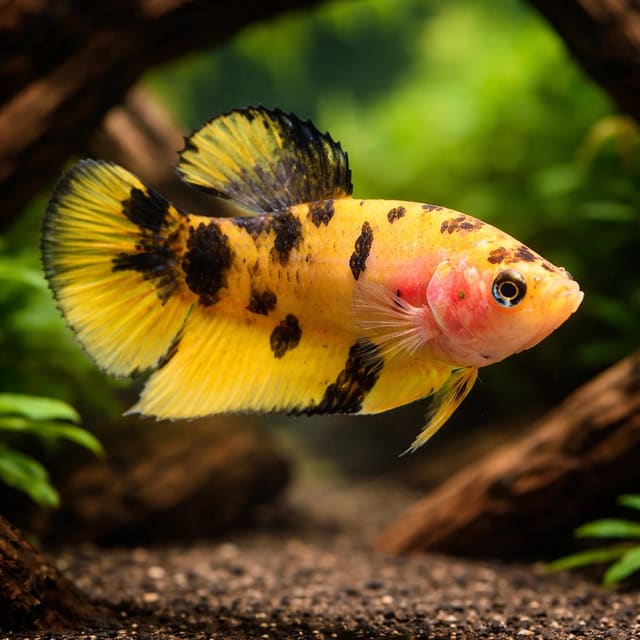
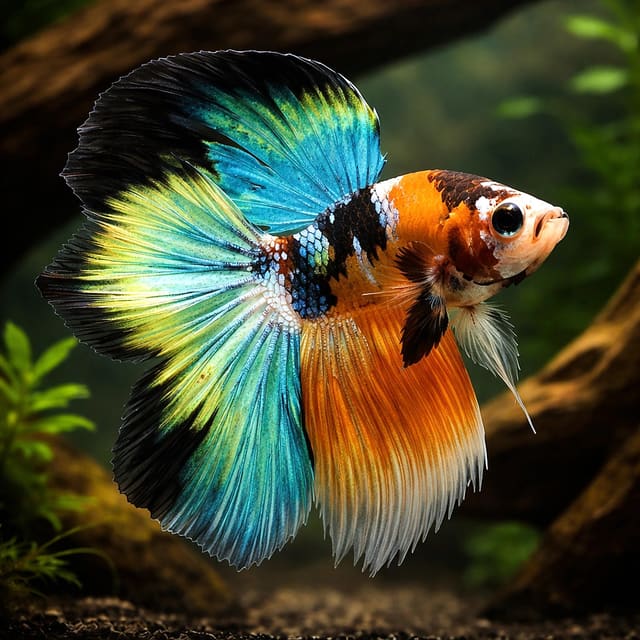
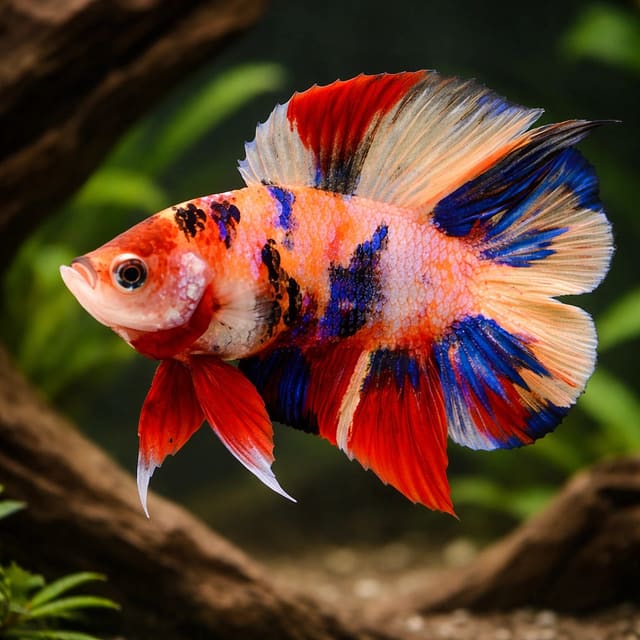
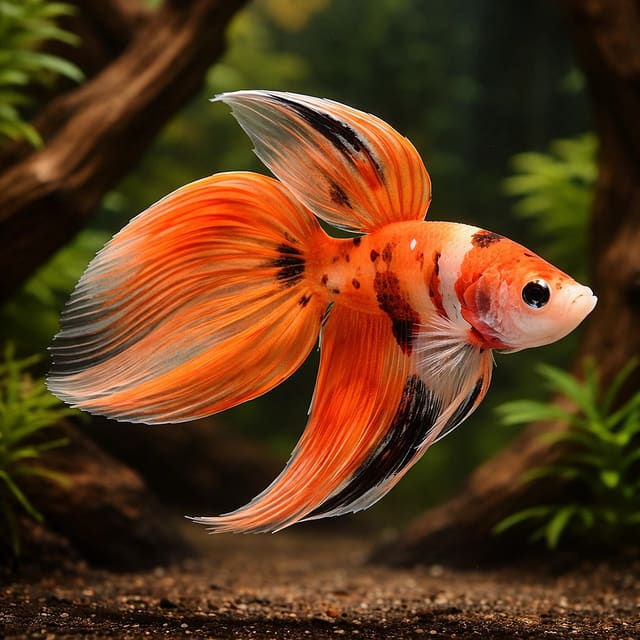
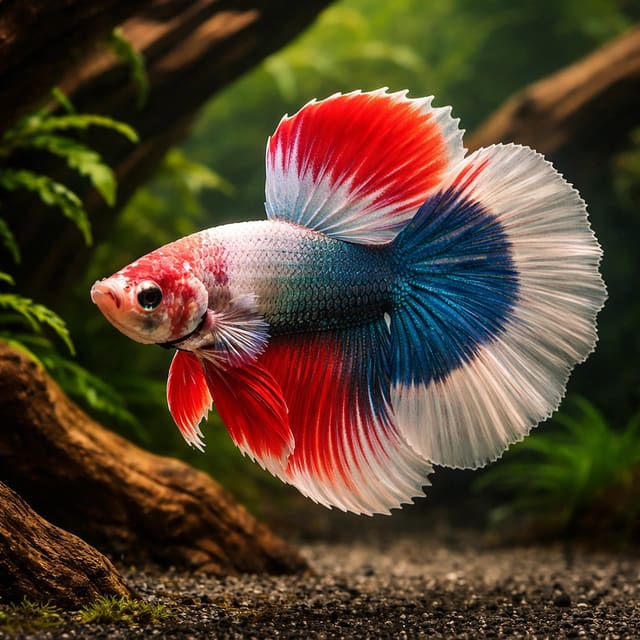
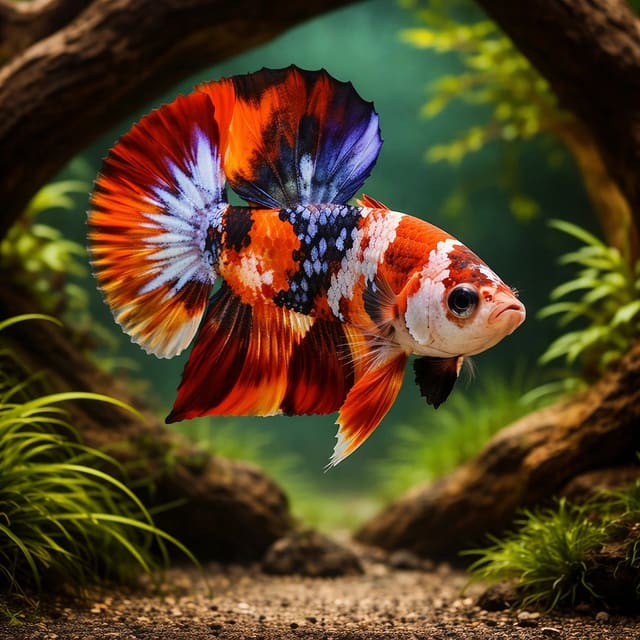
Plakat Koi Male Betta (Betta splendens)
26–28°C · pH 6–8 · 41L
£33.99

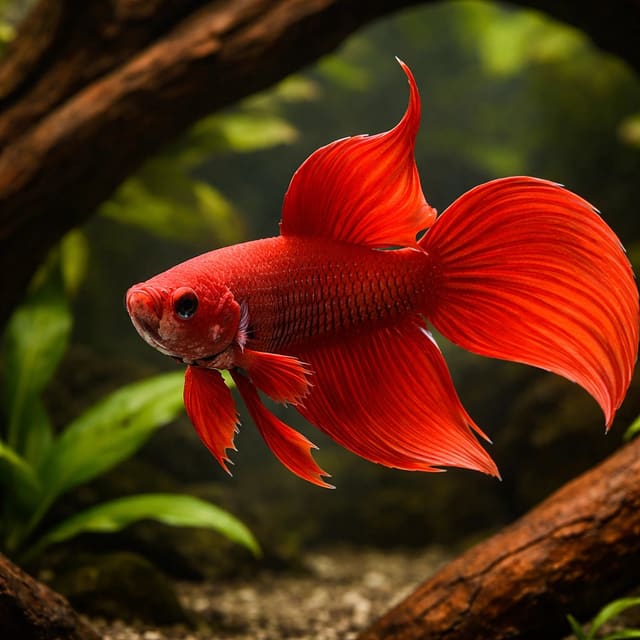
Black Crowntail Male Betta (Betta splendens) supplies one male per quantity. Keep him singly in a mature heated, gently filtered aquarium with safe cover and surface access; the store follows a 20-litre starting minimum.
Adult size is the maximum length this species reaches at full maturity (scientific sources). The livestock you receive will be younger and smaller. Product-photo provenance and any image-specific limitations are stated on the listing.
Betta splendens
Black Crowntail Male Betta (Betta splendens) supplies one male per quantity. Keep him singly in a mature heated, gently filtered aquarium with safe cover and surface access; the store follows a 20-litre starting minimum.
Adult size is the maximum length this species reaches at full maturity (scientific sources). The livestock you receive will be younger and smaller. Product-photo provenance and any image-specific limitations are stated on the listing.
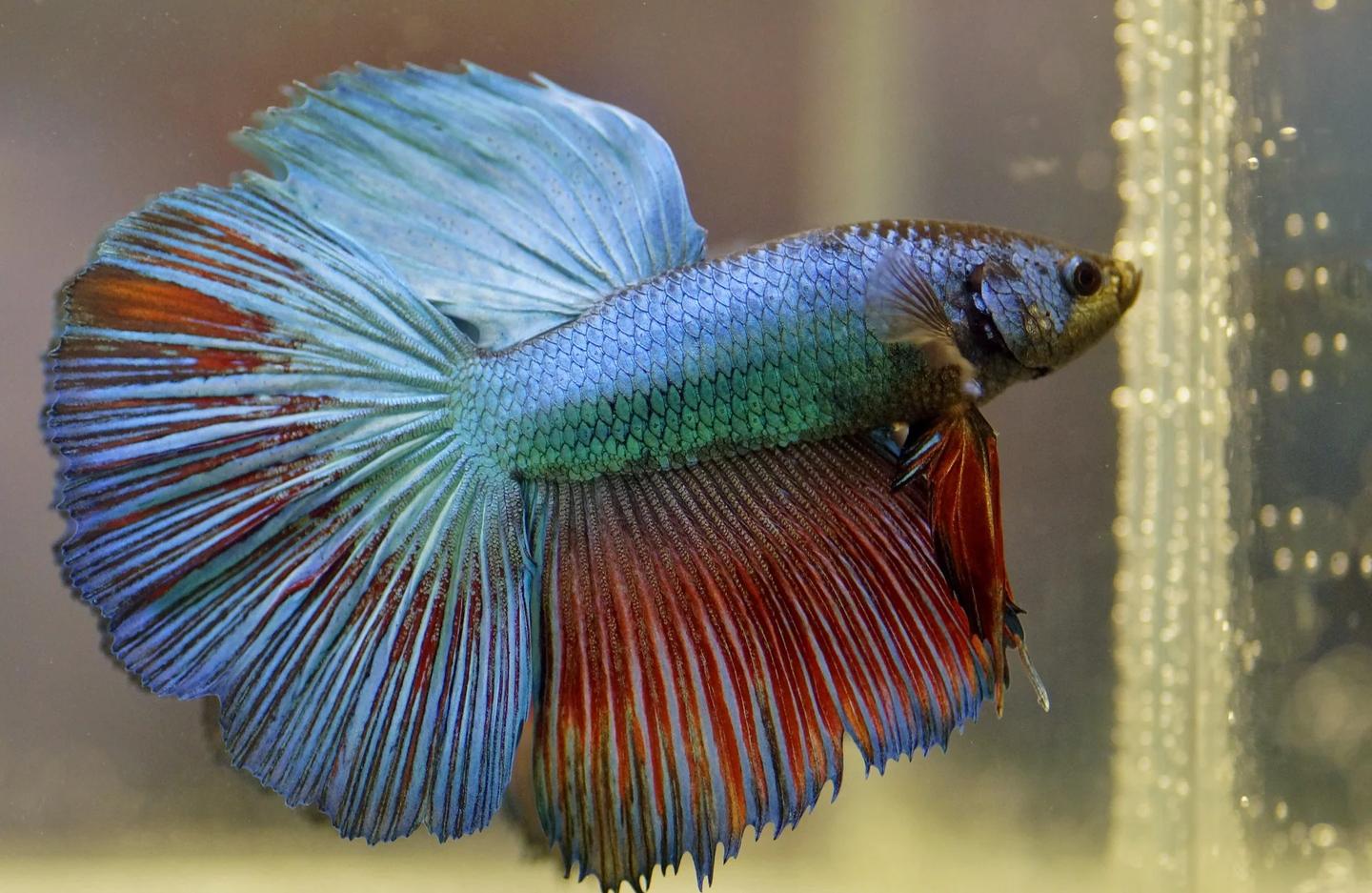
For one typical domestic Betta splendens, start with at least 20 litres, a mature filter, thermostatic heater, separate thermometer, gentle flow, a secure lid with surface access, and plants or refuges. Keep one male per aquarium.
Maintain these water conditions for optimal health and vibrant colors
The Black Crowntail Male Betta (Betta splendens) is a domestic ornamental labyrinth fish selected for dark colour and the reduced fin webbing that gives a crowntail its spiked outline. This listing supplies one male fish per purchase quantity. Its best home is a mature, heated and furnished aquarium where he has gentle filtration, shaded resting places and easy access to the surface. Plan for one male in his own aquarium rather than choosing him as a finishing touch for an existing community.
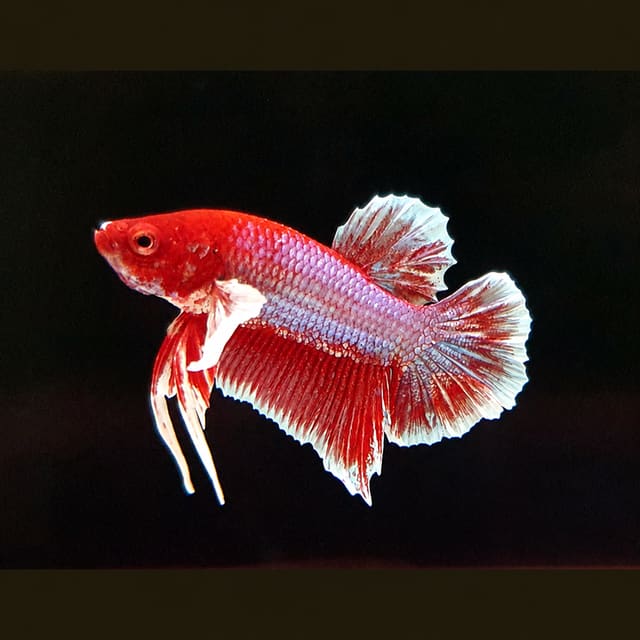
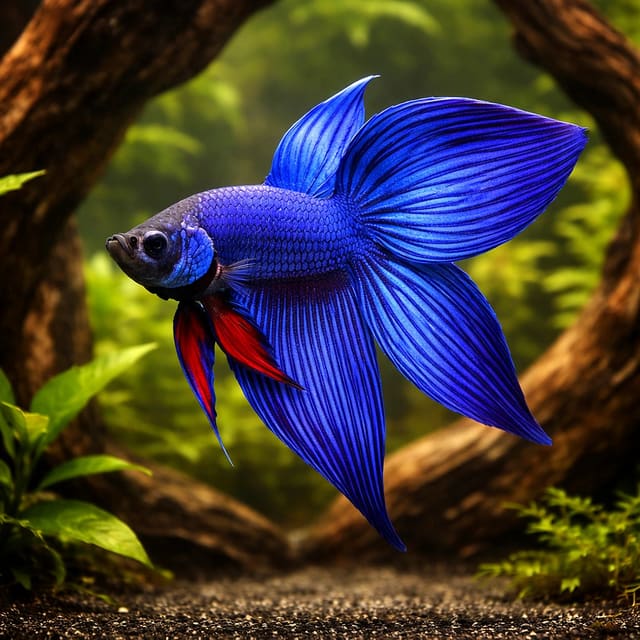
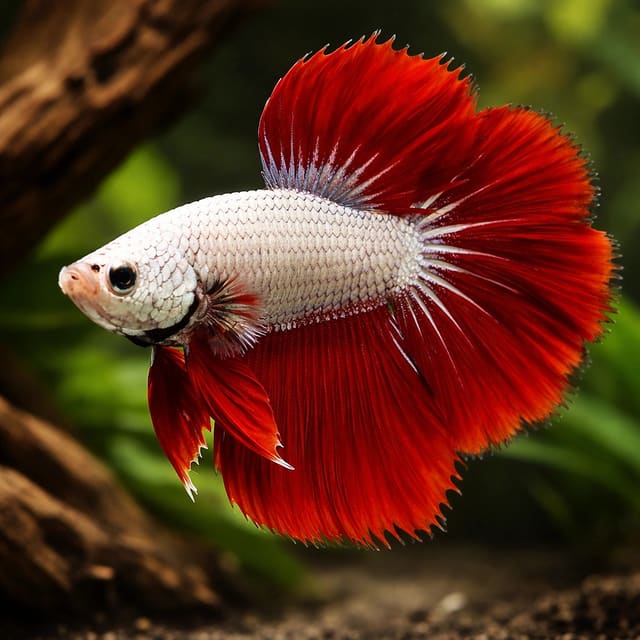
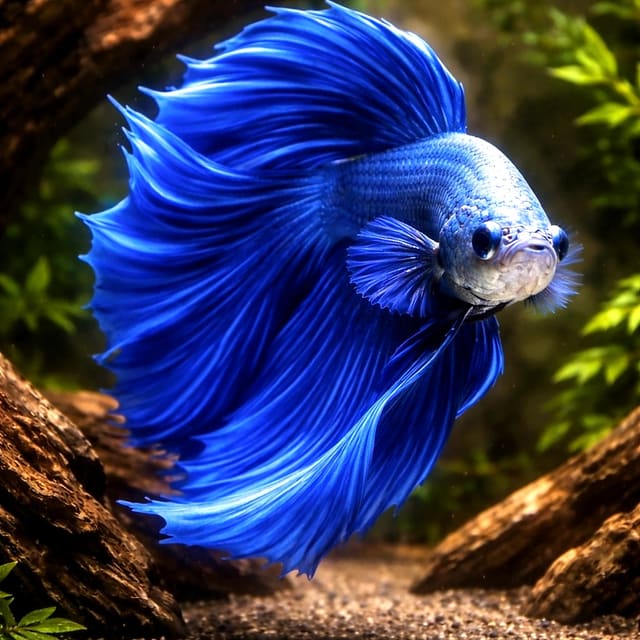
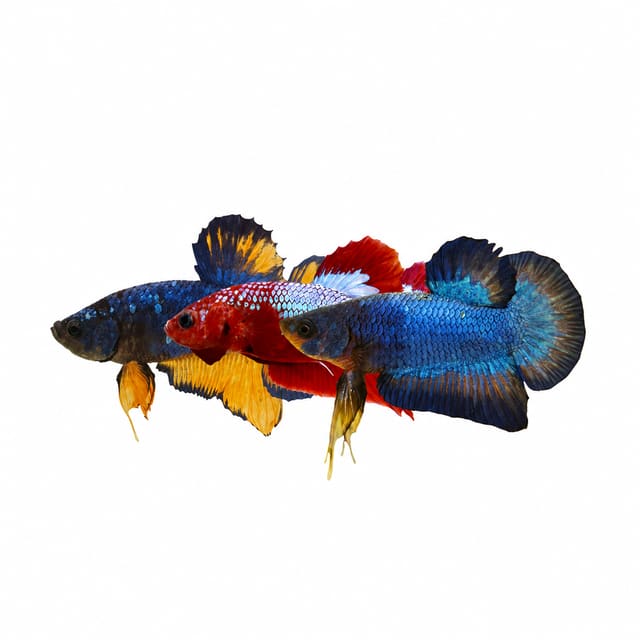
The Black Crowntail is a colour and fin form, not a separate species. Domestic Betta lines have a complex breeding history, and appearance varies among individuals. Dark colour can show subtle iridescence under different light; the exact shade and fin outline are not a promise of an identical specimen. Sex is explicit in this offer: the fish is sold as male. Use the adult-size guidance to plan a permanent aquarium, while checking the current offer before deciding on the purchase.
A Betta's ability to breathe air is fascinating, but it does not make a bowl, vase or unfiltered jar a suitable home. The labyrinth organ supplements breathing at the surface while the fish still depends on safe water and a functioning aquarium. In most UK homes the practical equipment includes a thermostatic heater, separate thermometer, mature biological filter and secure lid. The tank should be ready before the fish arrives, with enough safe cover to rest without becoming trapped or losing access to the surface.
Tropical Fish Co follows the OATA starting minimum of at least 20 litres for one domestic male and recommends choosing more space where practical. This is a UK care starting point, not a claim that every 20-litre container is equivalent. The aquarium needs usable swimming area, safe furnishings and stable filtration. The species profile from Seriously Fish gives a larger example: a base of 45 × 30 cm, approximately 41 litres, for a single male or pair. For this offer, keep the single-male plan; the pair example does not make mixed-sex cohabitation the routine recommendation.
FishBase records 6.5 cm total length for Betta splendens, while Seriously Fish lists 7 cm standard length. Total length includes the tail and standard length excludes it; the figures are differently sourced records, not a conversion between measurement systems. Domestic forms and extended fins vary. Keep the adult-size information in context and allow room for the whole fish to move and turn, rather than selecting a container only slightly longer than a quoted measurement.
The store's practical target for a typical domestic Betta is 26–28°C, held steadily and measured with a separate thermometer. OATA gives 20–28°C, pH 6.0–8.0 and hardness 4–12 dGH for tank-reared Bettas as broad care guidance. Seriously Fish gives 22–30°C, pH 6.0–8.0 and 1–15 dGH for ornamental strains. These ranges come from different care contexts, and neither means that all values are equally suitable for every fish.
The old habit of treating a published range as permission for a cold room or a sudden heater adjustment creates avoidable problems. Use the house target for routine planning, check the fish's established conditions and keep the aquarium stable. Water chemistry should be measured rather than inferred from a postcode or a bottle label. Clear water can contain harmful ammonia or nitrite, so appearance is not a substitute for testing.
| Suits | A keeper who wants one male feature fish and can maintain a heated, filtered, covered aquarium with safe plants and refuges. |
|---|---|
| Not suitable for | A decorative vase, an uncycled aquarium, a shared male-Betta tank or a community chosen without a separation plan. |
| Feeding | Measured complete Betta food with suitably sized live or frozen foods as variety. |
| Daily observation | Check movement, appetite, breathing, surface access and the equipment rather than judging welfare from colour alone. |
The Betta Fish Care Guide: Siamese Fighting Fish develops the overall setup and explains the store's care policy. Use this product guide to decide whether the exact single-male offer suits your aquarium. A striking tail shape is a reason to provide smooth, manageable surroundings, not a substitute for the same water-quality and welfare attention that every live fish needs.
Sex is guaranteed only when the exact product or selected option explicitly states male or female. This Black Crowntail Male Betta listing is sold as male.
The Betta range offers other fish to compare before choosing the individual aquarium you want to keep. An alternative male is an alternative purchase for his own suitable home, rather than a companion for this male.
Start by checking the usable volume and dimensions of the aquarium you intend to use. OATA's recommendation of at least 20 litres for one male is a starting minimum. Substrate and decoration reduce the water held by a nominal 20-litre kit, and awkward shapes can leave little usable swimming area. Choose a proper aquarium with room for equipment and cover, and favour greater capacity where you can maintain it well. Extra volume usually makes ordinary changes in temperature and waste less abrupt.
The Seriously Fish example has a 45 × 30 cm base and approximately 41 litres. That provides a useful species-level comparison alongside the store's smaller minimum screen. It does not mean a fish must be kept in one exact tank model, nor does the lower minimum mean that a bare, unstable container becomes adequate. Shape, furnishings, filter function and the keeper's maintenance routine belong in the same decision as litres.
The store's reviewed care guide describes behavioural studies in which small bowls restricted activity and larger furnished accommodation produced better outcomes than smaller or barren conditions. Those findings support space and meaningful structure. They do not establish an ideal ceiling or allow one behaviour to prove welfare. Give the fish room to explore and places to withdraw, then observe whether he uses the aquarium comfortably over time.
Position the aquarium where you can maintain it and check it daily. Leave access to the lid, filter and heater without having to move the tank. Keep a safe maintenance area for conditioned replacement water and equipment. An attractive arrangement that is difficult to reach makes routine care harder, and a crowded rim can compromise the lid or surface access. The practical home should remain manageable after the novelty of the new fish has passed.
Bettas produce ammonia like other fish. A biological filter supports the organisms that process ammonia through nitrite towards nitrate; ammonia and nitrite must both be zero for a planned introduction. The RSPCA's aquarium-environment guidance explains this basic function. Air breathing does not remove waste from water, and keeping only one fish does not make a filter unnecessary.
Complete the aquarium's maturation before buying livestock. The tropical aquarium setup guide explains preparation in a useful sequence. A filter that has been switched on for a few days is not automatically biologically ready. Test the aquarium and establish its waste-processing capacity, while confirming that the heater, lid and furnishings can function together. A calendar date or clear appearance cannot replace water results.
Keep filtration running as part of the aquarium's ordinary operation. A gentle outlet and a working biological filter are compatible goals; turning the filter off to obtain perfectly still water removes its function. A sponge filter or appropriately diffused outlet can provide manageable movement. Watch the fish near the outlet and in his resting places. He should not have to swim continually against a current merely to remain in one part of the tank.
Filter flow changes as media collect debris or an intake becomes obstructed. Inspect the real movement of water rather than relying only on the rating printed on equipment. Check for blockages and make cleaning part of the routine. Avoid replacing all established media or rinsing it under tap water, which can damage the biological population. Use removed aquarium water for a light rinse when cleaning is needed, with the manufacturer's instructions guiding equipment handling.
Tropical Fish Co uses 26–28°C as its practical routine target for a typical domestic Betta splendens. This is a house recommendation, not a controlled biological optimum for every ornamental line. OATA's broader 20–28°C tank-reared guidance and Seriously Fish's 22–30°C ornamental-strain range give context, while FishBase's 24–30°C species environmental record serves a different purpose. None is permission for repeated swings between endpoints.
Use a thermostatic aquarium heater and follow its installation instructions, including immersion depth, placement and the aquarium volume it is intended to serve. Check the water with a separate thermometer. A heater set to a number may not produce that number everywhere in the aquarium, and a room that feels warm to a person can still leave the water unsuitable for a tropical fish. Confirm the actual result before the Betta arrives.
Place equipment so that it remains safe and accessible when plants grow or décor shifts. Avoid making the only comfortable shelter sit against a heater or immediately in a strong outlet. Check temperature as part of the daily routine, and investigate a change before assuming the fish simply prefers another setting. If equipment fails, use a considered response based on measured water rather than an abrupt large correction or unsuitable household heating method.
For tank-reared Bettas, OATA reports pH 6.0–8.0 and hardness 4–12 dGH as general guidance. Seriously Fish gives pH 6.0–8.0 and 1–15 dGH for ornamental strains, and distinguishes these from the preferences of wild-collected fish. This domestic Black Crowntail offer is not a wild-locality animal. Do not borrow the lowest pH from a wild-fish account and turn it into a required target for this listing.
Test the aquarium and its supply water. UK tap-water chemistry varies, and domestic softeners or treatment devices can change what reaches the tank. Prepare water with an aquarium conditioner where chlorine or chloramine is present and verify the resulting chemistry. The aquarium water-parameters guide explains the measurements. The Water Parameter Matcher provides a comparison of measured water with care guidance; use it alongside the individual fish's established conditions and complete aquarium requirements. Stability and gradual matching matter more than repeatedly adjusting water towards the centre of a copied range.
OATA calls for zero ammonia and nitrite and regular monitoring of nitrate, pH and hardness. Its nitrate guidance is no more than 20 mg per litre above normal tap-water levels. This is why checking the supply as well as the tank is useful. A nitrate reading without context does not reveal where it started, and a water-change routine should respond to the measured aquarium rather than assuming every single-fish setup produces the same waste load.
Keep a simple record of readings, feeding and maintenance. If a change appears, a record helps distinguish a persistent trend from one unusual result or a test error. Check an unexpected measurement again and inspect equipment before changing several things at once. The aim is understandable, stable care rather than accumulating a shelf of additives whose effects become difficult to separate.
The fish must reach the surface to breathe atmospheric air. Keep clear routes between plants and shelters, and leave an air gap beneath a secure lid. Floating cover can provide shade, but it must not block the entire surface. A cover helps prevent escape; it should not seal the fish away from usable air. Check the arrangement from the fish's level, especially where plants meet the waterline.
Seriously Fish recommends a planted, shaded aquarium with surface cover and shelters. Smooth aquarium-safe furnishings are particularly useful around extended fins. Inspect openings and edges before putting them in the tank, and allow for the whole body to move through a shelter rather than considering only its apparent entrance width. A small decorative gap can become a trap or an abrasion point.
Give the Betta resting opportunities without forcing him to remain on one exposed shelf. Plants and refuges can create several sheltered areas at different levels. Keep some open swimming space and ensure that resting places are away from the strongest movement. Watch the individual: if he is repeatedly swept away, struggles to settle or avoids much of the tank, reassess flow and structure instead of accepting the behaviour as part of keeping a long-finned fish.
Shade and cover should remain clean and stable. Remove dead plant material and inspect décor during maintenance, while avoiding unnecessary daily rearrangement. The purpose of furnishing is to offer a predictable environment that the fish can use, not to produce a new display each week. A safe planted aquarium is judged by access, refuge and maintainability as well as appearance.
Use a suitably sized complete Betta pellet or quality aquarium food as the nutritional base. FishBase describes insect larvae and other small prey in the natural diet, while Seriously Fish supports small live or frozen foods alongside recognised dried products. OATA likewise recommends good-quality prepared food with small live or frozen items. These sources support variety without turning one favourite treat into the entire feeding plan.
Daphnia, Artemia and appropriately sized bloodworm are useful examples. Check the particle size and watch whether the fish actually eats it. A food described as suitable for Bettas can still have a size or texture that one individual takes differently. Avoid repeatedly adding more food when the original portion has been ignored; remove leftovers and consider the aquarium conditions and the fish's behaviour.
Measured portions help protect both the fish and water quality. OATA's general guidance is a modest daily feed consumed within a few minutes, and Seriously Fish warns about overfeeding. Do not use an eye-size rule or a fixed pellet count across every brand. Food size and composition differ. Follow the maker's guidance, observe body condition and appetite, and adjust responsibly rather than rewarding every approach to the front glass.
If several people care for the aquarium, pre-measure portions or keep a feeding record. A Betta that learns to approach people can receive several accidental meals unless everyone shares the routine. For a holiday, arrange a competent carer and explain the feeding amount, temperature check and filter inspection. There is no universal internet fasting number that safely replaces planning for the individual fish and its system.
Have the aquarium fully ready before delivery. Check temperature, zero ammonia and nitrite, filter operation, secure cover and the route to the surface. Tropical Fish Co packs live fish in oxygen-filled bags with insulation and weather-appropriate packing for a licensed live-animal courier. Arrange to receive the parcel in person and inspect it on the day it arrives. The delivery and Live Arrival Guarantee policy provides the current details.
For a Live Arrival Guarantee claim, retain the order number and make a continuous unboxing video that begins with the sealed parcel, shows it being opened and shows the fish still in its sealed bag. Contact Tropical Fish Co the same day about a problem. Recording this evidence is a separate task from introducing the fish. It should not encourage extra handling, prolonged photography or delay while an unprepared aquarium is hurried into service.
The store advises floating the bag for 20–30 minutes before release to bring temperature closer and acclimatising slowly. Transfer the Betta without adding transport water to the aquarium. Have the equipment for the transfer ready and make sure the lid can be replaced securely. After introduction, give him access to quiet cover and observe from outside the tank.
Assess settling against his own developing pattern. Hiding briefly, exploring slowly and changing display intensity do not each identify an illness. More useful observations include whether he can reach the surface, move without being carried by the outlet, rest safely and begin feeding appropriately. Check the water and equipment if behaviour changes or remains concerning, rather than repeatedly disturbing the aquarium to draw him into view.
OATA recommends at least a weekly 25% partial water change as broad Betta guidance, together with regular water testing. Remove accessible waste and leftovers, condition the replacement water and avoid sudden temperature or chemistry changes. The routine should reflect the aquarium's measurements and usable volume. Regular small maintenance is easier to manage than allowing waste to accumulate and then attempting one dramatic correction.
Observe appetite, breathing, swimming, posture, colour and fins. The condition of a crowntail should be assessed over time, not diagnosed from the outline of one fin in a single photograph. A change can reflect water quality, physical injury or other causes. The MSD Veterinary Manual emphasises aquarium history and water analysis in fish-health investigation. This supports gathering information before choosing treatment.
If there is an unexplained or persistent concern, record recent additions, feeding changes, cleaning and equipment problems. Test the water, compare the fish with his normal behaviour and seek experienced help. Avoid combining medicines or raising temperature because a symptom resembles an online image. A colour change, damaged fin or altered appetite is important information, but it is not itself the identity of a pathogen.
Keeping one male makes social management simpler, but it does not turn care into an occasional task. Stable heat, functioning filtration, prepared water and daily observation remain the basis of his aquarium. A competent routine is what lets the dark colour and crowntail outline become part of an enjoyable display rather than the sole focus of the purchase.
The safest default for this offer is a single male Betta in his own aquarium. Seriously Fish does not recommend Betta splendens for a standard community and says that keeping it alone is generally best. OATA warns that male Bettas can seriously injure or kill each other, while the RSPCA recognises male fighting fish as animals that may fight their own kind. Do not combine two males in the same open aquarium.
More space and more plants do not transform that male-cohabitation risk into a safe routine. The store care guide describes research in which additional space and enrichment affected some behaviours without making male cohabitation safe. Nor is a divider automatically a complete solution: direct visual exposure and the practical reliability of separation matter. Give each male a suitable independent home and prevent continuing confrontation with a neighbour.
This male is not sold as part of a breeding pair. Seriously Fish describes maintaining males and females separately in ordinary keeping, with breeding a separate undertaking. Adding a female to a display tank can create pursuit and injury rather than companionship. A keeper interested in breeding needs a dedicated plan and capacity for offspring; purchasing this single male does not provide the other animals, facilities or confirmed breeding history that such a project needs.
A bubble nest is reproductive behaviour, not a request for another fish. It may occur without a female, and its presence does not certify excellent welfare. Equally, a male that has not built one is not automatically unhealthy. Interpret it alongside appetite, movement, breathing and water results. There is no need to manufacture social company because one behaviour seems to resemble a breeding signal.
Some Bettas may tolerate other animals, but Seriously Fish describes that as an exception rather than the expected norm. It mentions some small cyprinids and loaches from similar environments, subject to proper research. This does not endorse every member of those groups, and the aquarium must meet the needs of all adults. A species name alone cannot settle temperament, feeding competition, space or water overlap.
Fish with similar body shapes or trailing fins can be perceived as rivals, and fin-nipping or boisterous companions can harm the Betta. Extended crowntail rays deserve the same caution as other ornamental fins. Assess the proposed animal's activity and behaviour rather than assuming that its small size makes it harmless. A fast, persistent fish can create stress without ever becoming large enough to threaten the Betta as prey.
Invertebrates are not guaranteed cleaning companions. The store guide treats shrimp, snails and fry as uncertain combinations, with individual hunting behaviour and possible injury risks to consider. A larger invertebrate is not automatically safe merely because it is unlikely to be swallowed. Avoid buying another animal as a maintenance shortcut; every addition has its own care needs and changes the waste the aquarium must process.
If a carefully researched combination is attempted in appropriately larger accommodation, prepare a functioning backup home before introduction. Each animal must be able to feed and rest normally. Watch for pursuit, persistent display, confinement to one area, food exclusion or fin damage. Repeatedly hiding because another fish controls access is different from choosing a refuge for a short rest.
A plan to remove an incompatible animal later is meaningful only if you have somewhere suitable to put it. A spare jar or a sales-style cup is not an adequate long-term replacement. If the necessary accommodation is unavailable, stay with the single-male setup. That is a positive way to keep this fish: it allows feeding, flow and furnishings to be tailored to the individual without testing an uncertain community.
FishBase records 6.5 cm total length for Betta splendens, while Seriously Fish gives 7 cm standard length. The measurements use different methods and sources; domestic bodies and extended fins vary. They describe adult records, not an exact supplied length.
Tropical Fish Co follows OATA's starting minimum of at least 20 litres for one male, with a mature filter, heater, safe furnishings and secure lid. Seriously Fish gives a larger 45 × 30 cm base example, approximately 41 litres. Choose more usable space where practical.
No. Keep one male Betta splendens in his own aquarium. Two males may fight and seriously injure each other; extra plants and volume do not make cohabitation a safe routine.
He can suit a careful beginner once a proper aquarium is cycled and ready. The store rates typical domestic Betta care as intermediate because heating, gentle filtration, measured feeding, water testing and safe social housing all need consistent attention.
Use suitably sized complete Betta food as the base, with small live or frozen items such as daphnia, Artemia or bloodworm as variety. Measure portions, observe what is eaten and remove leftovers; do not turn one treat into the whole diet.
Tropical Fish Co uses a stable 26–28°C as its practical target for a typical domestic Betta. OATA's broad tank-reared guidance gives pH 6.0–8.0 and hardness 4–12 dGH. Test the aquarium, respect the fish's established conditions and avoid abrupt changes.
Keeping him alone is the safest starting plan. Some individuals tolerate other species, but fin-nipping, rivals, water needs and feeding competition all matter. Research the complete combination and prepare suitable separate accommodation before any attempt; shrimp and snails are not guaranteed safe.
Tropical Fish Co uses oxygen-filled bags, insulated packing and a licensed live-animal courier. Be present for delivery and inspect the parcel the same day. For a Live Arrival Guarantee claim, retain the order number and continuous video showing the sealed parcel being opened and the fish still in its sealed bag, then contact the store the same day.
FishBase provides the species identity, family, native range and total-length record. Seriously Fish supplies species-level aquarium dimensions, ornamental-strain water guidance, diet and social precautions. OATA's Betta care sheet provides UK tank-reared guidance, minimum space and routine maintenance advice.
The store's reviewed care guide sets out the 26–28°C house target, discusses the housing studies and distinguishes domestic fish from wild conservation status. General filtration principles come from the RSPCA, with aquarium-history and water-analysis principles from the MSD Veterinary Manual. These sources inform a practical care plan without promising lifespan, identical colour, guaranteed companions or a diagnosis from appearance.
No reviews for this item yet. Bought one? Honest reviews only, good or bad.
What customers say about ordering from us
I have a small group of long finned mountain minnows. So was delighted to be able to order ten of this variety to increase the genetics in my tank . The ones I recieved are healthy but it’s to early to give a verdict on wether they are of a long finned type since they are small currently.
Gordon Walker · 23 Sept 2026
100% success travel and "installation". Pleased with quality of purchase. The Siamese fighter a bit "shy" so have not yet seen him at his best yet but looking good. Happy customer. GG
George E Garratt · 21 Sept 2026
Reviews of our shop, collected by Judge.me, an independent third-party review collector. Newest first.