Moderate
Female Betta Mix (Betta splendens)
26–28°C · pH 6–8
£5.99

A male Crowntail Betta sold as one fish, with two recurring size options. Provide at least 20 litres, stable 26–28°C, gentle filtration, cover and no other male Betta.
Adult size is the maximum length this species reaches at full maturity (scientific sources). The livestock you receive will be younger and smaller — pick a size above for the actual shipping size. Product-photo provenance and any image-specific limitations are stated on the listing.
Betta splendens
A male Crowntail Betta sold as one fish, with two recurring size options. Provide at least 20 litres, stable 26–28°C, gentle filtration, cover and no other male Betta.
Adult size is the maximum length this species reaches at full maturity (scientific sources). The livestock you receive will be younger and smaller — pick a size above for the actual shipping size. Product-photo provenance and any image-specific limitations are stated on the listing.
For one typical domestic Betta splendens, start with at least 20 litres, a mature filter, thermostatic heater, separate thermometer, gentle flow, a secure lid with surface access, and plants or refuges. Keep one male per aquarium.
Maintain these water conditions for optimal health and vibrant colors
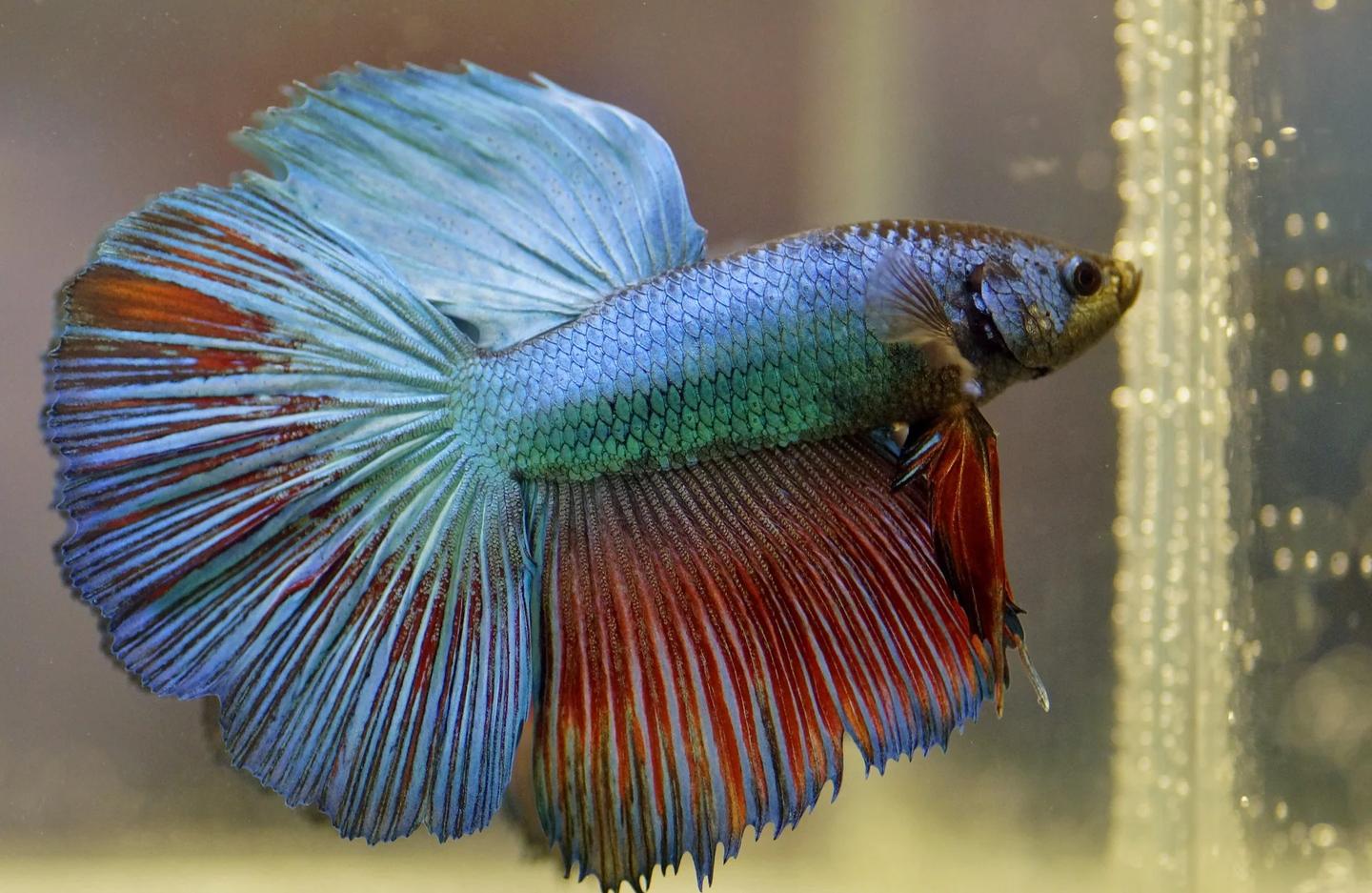
The Crowntail Male Betta is a domestic Betta splendens with extended, deeply rayed fins that create its characteristic spiky outline. He suits a keeper prepared to run a mature, heated, filtered and furnished aquarium rather than a bowl or vase.
NCBI Taxonomy records the accepted name as Betta splendens Regan, 1910, in the genus Betta. FishBase places the species in Osphronemidae, the gourami family, and lists assessed wild Betta splendens as Vulnerable; domestic Crowntails are aquarium lines rather than wild-locality fish. A genome-wide study of domestic Bettas found extensive variation in colour, body and fin traits, so the Crowntail label does not promise one exact colour pattern, intensity, pedigree or future appearance.
Across ornamental strains, males generally develop stronger colour and more extended fins than females, but appearance alone must not override the sex stated by the product.
OATA's UK sheet gives about 7 cm as an adult planning length, recommends at least 20 litres for one male and warns that two males can fight until severely injured or killed. Domestic forms vary in adult size, and extra space or furnishings do not make direct male cohabitation safe.
Seriously Fish's profile associates the species with sluggish, sheltered habitats and advises gentle movement, shade, plants and surface cover. Wild Betta splendens comes from central Thailand and the lower Mekong, while domestic forms have a complex breeding history. The fish has a labyrinth organ that allows atmospheric breathing, but it still needs proper biological filtration and unobstructed surface access.
It is also a bubble-nesting species; a nest may appear without a female and neither its presence nor absence proves the fish's welfare. Our complete Betta care guide sets the practical plan: at least 20 litres, a stable 26–28°C checked with a separate thermometer, a mature filter, gentle flow, a secure lid with air space, safe cover and one male per aquarium. The stated volume is a starting screen, so include the actual filled capacity, equipment, furnishings and swimming space in the decision. Betta splendens is also commonly called the Betta or Siamese fighting fish.
Sex is guaranteed only when the exact product or selected option explicitly states male or female. This Crowntail Male Betta listing is sold as male.
One purchase quantity supplies one animal of the selected option. Two recurring size options are configured for this product, and the live selector shows which can be chosen. These options are dispatch grades for the fish supplied rather than predictions of adult length. Select the required grade in the product controls before adding the fish to your basket.
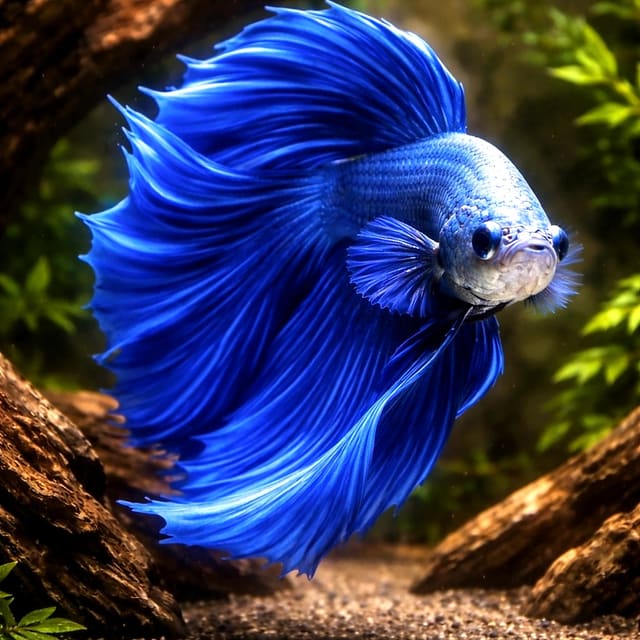
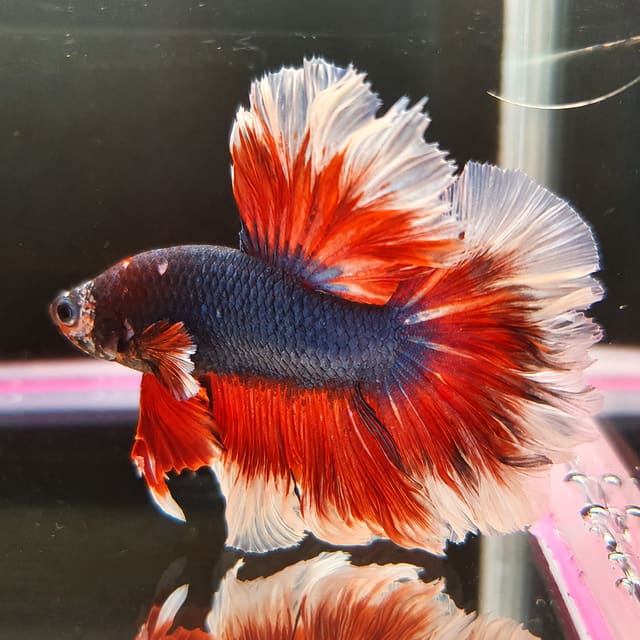
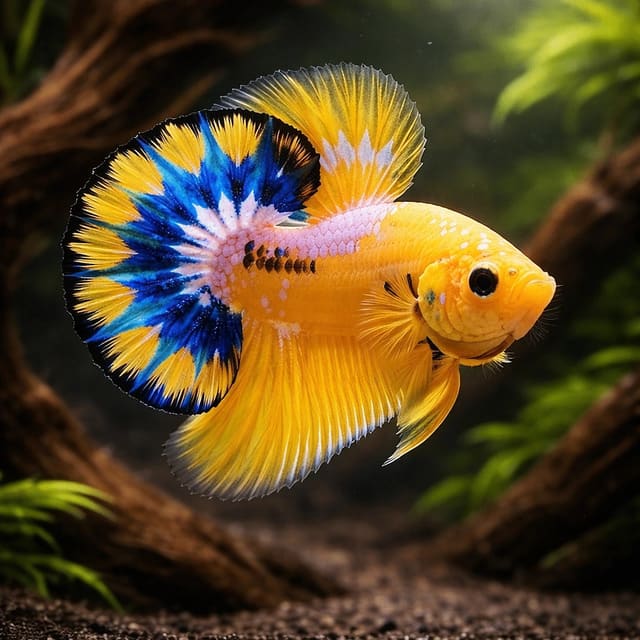
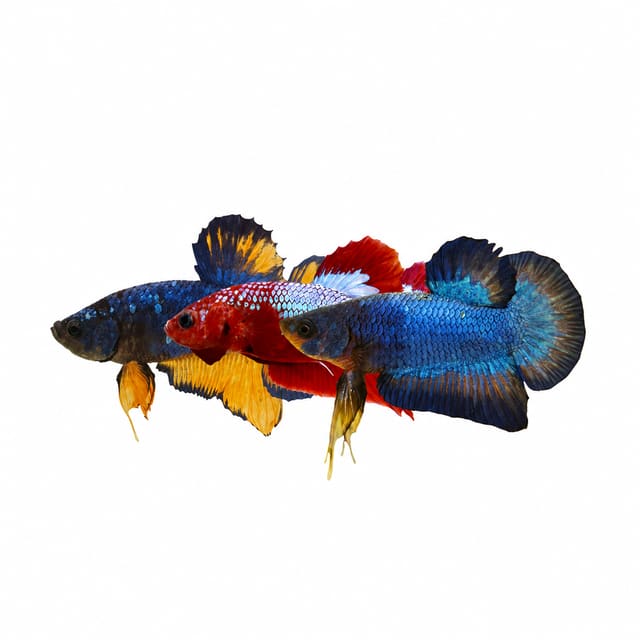
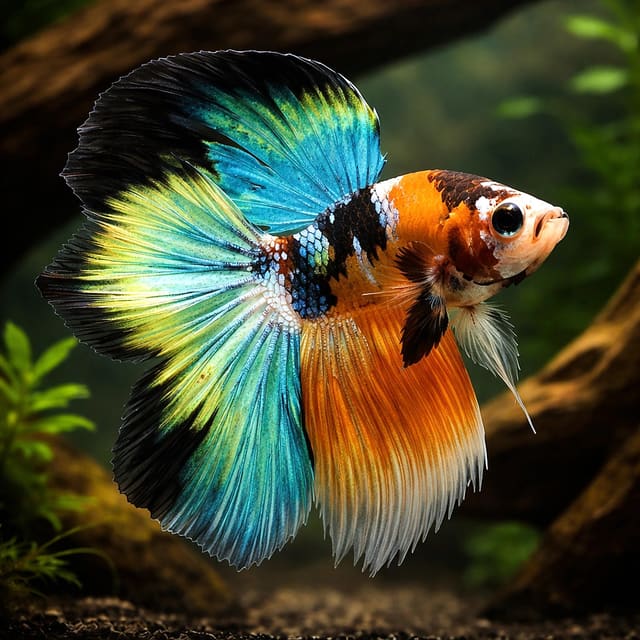
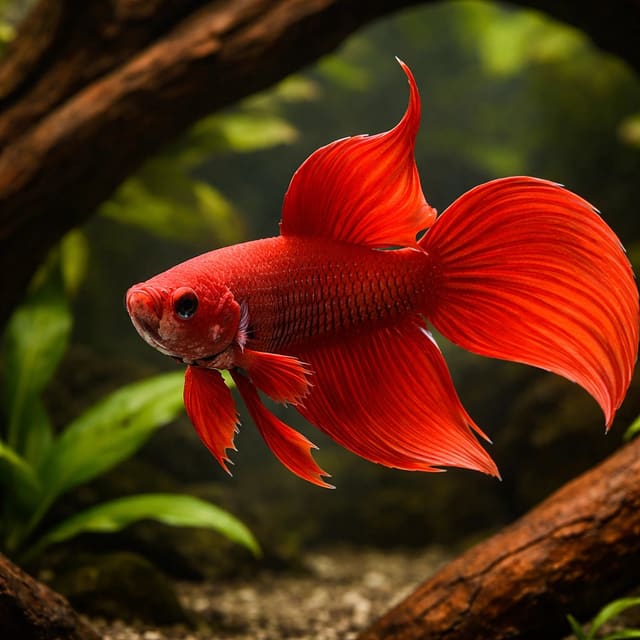
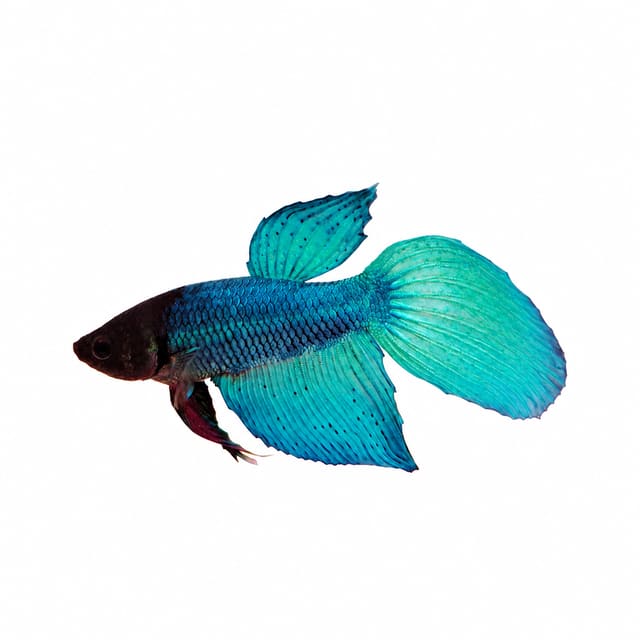
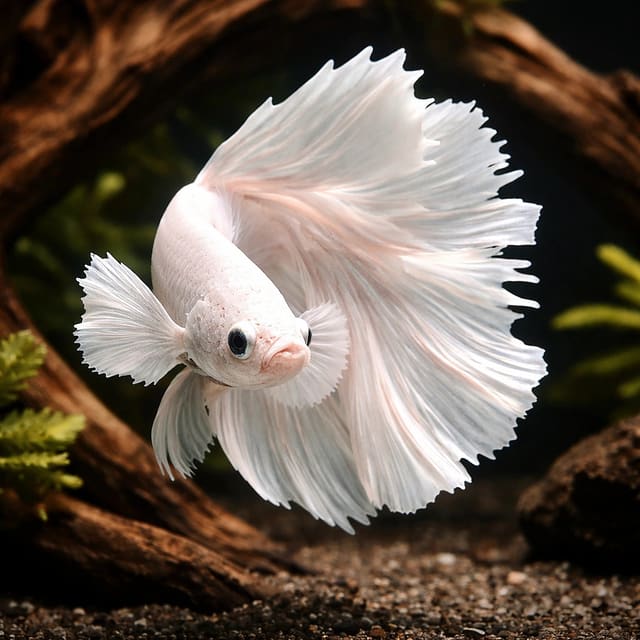
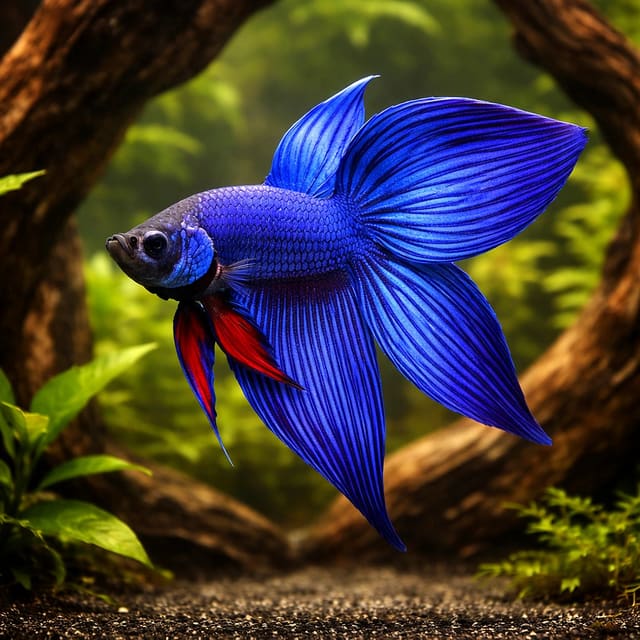
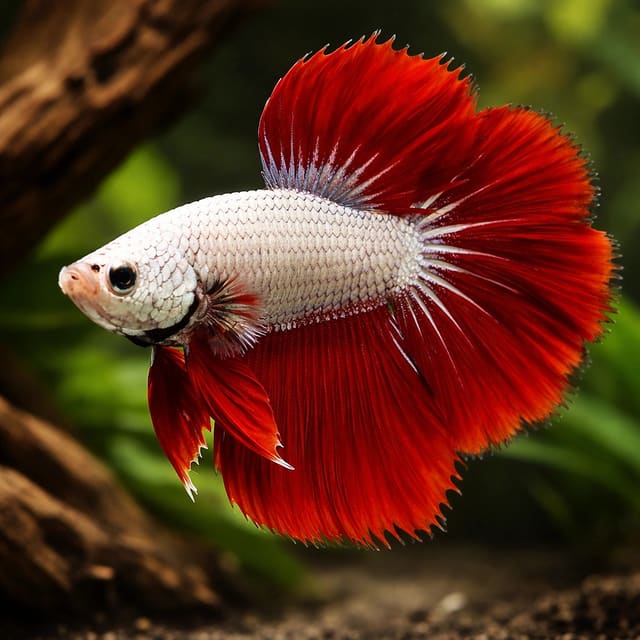
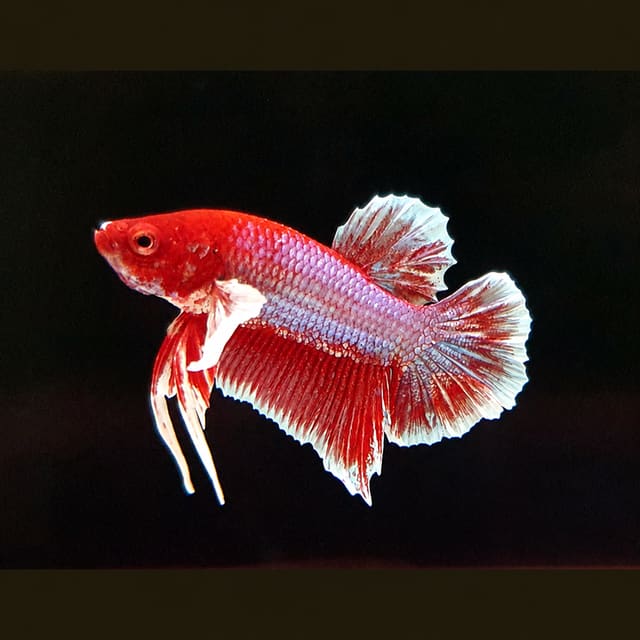
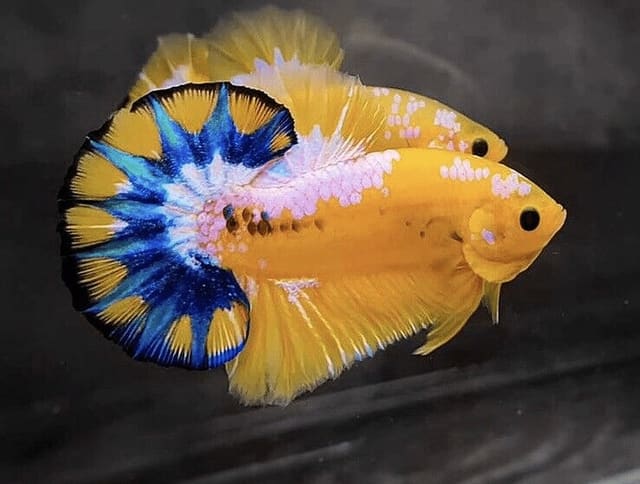
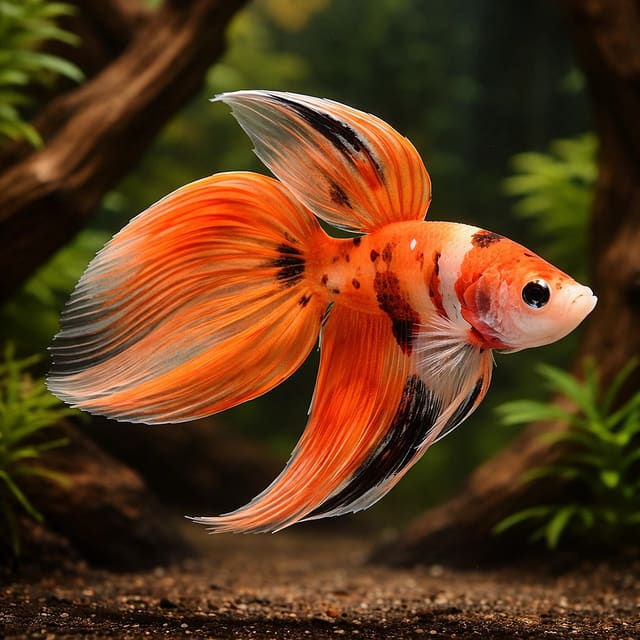
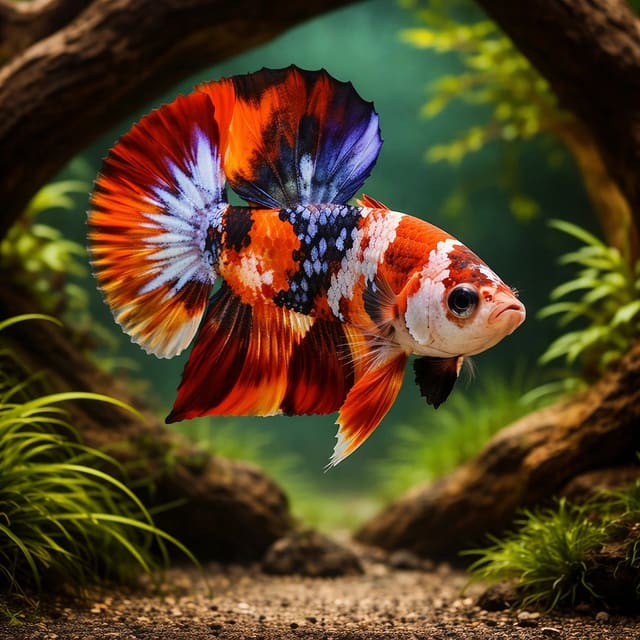
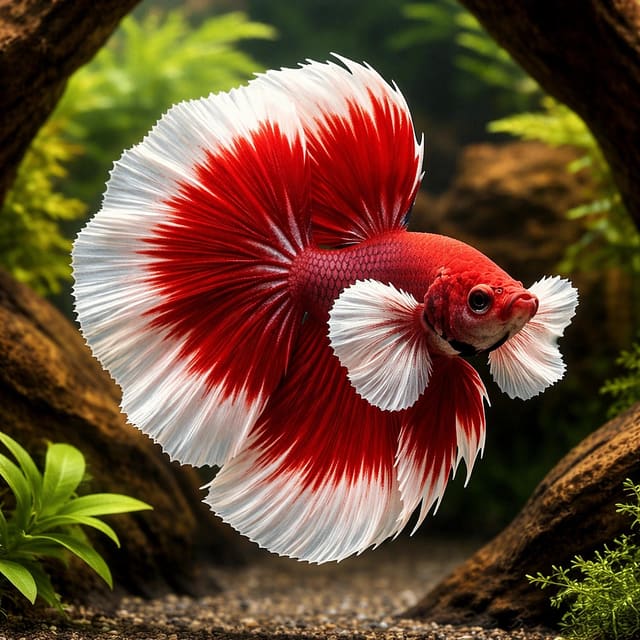
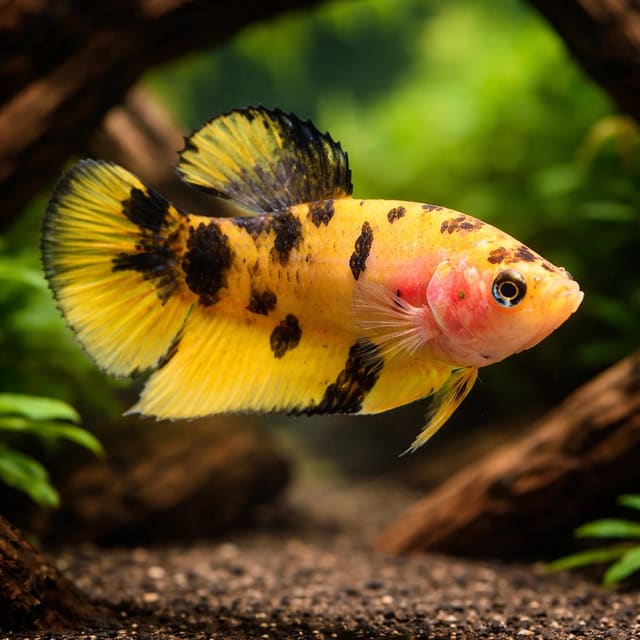
The gallery images are representative, based on reference photographs of this species, so colours can look slightly different from the live animal. The scenes show representative Crowntails with spread, deeply rayed fins, including red and white examples. Use the gallery to understand the fin form and general body shape rather than to select an exact colour pattern.
Order only after the aquarium is mature, heated, filtered, covered and tested. Safe furnishings, complete food, conditioner and a workable maintenance plan must also be ready. A Crowntail is a suitable centrepiece for a planted or well-covered aquarium, but the long fins require gentle flow and regular checks that the fish can swim and rest comfortably.
Fishless-cycle the biological filter before buying livestock. Readings and processing capacity show whether the aquarium is ready; elapsed time or clear-looking water does not. Follow our first tropical aquarium preparation guide if you need to establish the filter and interpret the readiness checks before choosing the fish.
Have a suitable aquarium test kit, water conditioner, separate thermometer and maintenance equipment ready. Check that the heater can hold the chosen temperature, the filter remains running reliably and the lid leaves access to the water surface. Test ammonia and nitrite before committing to the order.
Assess the fish as a multi-year responsibility rather than a short display purchase. The routine must remain manageable during holidays, changes in household schedule and periods when the aquarium needs closer observation. Arrange responsible care whenever you will be away.
For Wednesday dispatch, Thursday delivery and Live Arrival Guarantee details, read the delivery and live-arrival policy before ordering. After the aquarium passes every preparation check, use the live Betta collection to compare selectable fish and forms.
Use at least 20 litres for this male and choose more capacity where practical. The minimum is an initial purchasing screen rather than a complete setup specification. A nominal volume does not show how much water remains after substrate, wood, plants and equipment are installed, and it says nothing about flow, filtration or access for maintenance.
A compact aquarium still needs controlled heating, mature biological filtration, a gentle current, safe furnishings and a secure lid. Calling a setup “nano” does not reduce those requirements. Tiny containers change temperature and water chemistry quickly, leaving less time to notice and correct a problem.
Do not use a desktop bowl, planted vase or temporary shop-style container as permanent housing. Choose an adequately sized aquarium that can carry a thermostatic heater and filter while providing cover and comfortable movement. The fish must be able to reach the surface without squeezing through décor or fighting the filter output.
Set a thermostatic aquarium heater to maintain a stable 26–28°C for a typical domestic Betta splendens. Check the water with a separate aquarium thermometer instead of relying only on the heater's thermostat or display. Domestic fin form does not change the need for controlled tropical heating.
This fish is unsuitable for an unheated British garden pond. Provide year-round aquarium heating rather than relying on summer weather, central heating or room temperature. Choose a heater rated for the aquarium and room conditions, then follow its manufacturer instructions for capacity, placement, installation and minimum operating depth.
Keep the temperature steady rather than chasing one exact decimal. If a reading falls outside the planned range, check it with the separate thermometer before acting. Make any necessary adjustment gradually. Controlled heating and direct measurement are safer than adding hot or cold water in an attempt to force a rapid correction.
OATA reports 20–28°C, pH 6–8 and 4–12°dH for tank-reared Bettas, with ammonia and nitrite at zero. These figures are broad group-level guidance, not a species-specific optimum. Our 26–28°C recommendation is the practical target for a typical domestic Betta splendens.
Use our aquarium water-chemistry guide to understand the measurements, then enter your results in the water matcher to compare the aquarium with the stated guidance. Base decisions on measured aquarium water rather than assumptions about UK tap supplies.
Use a gently running sponge filter or an adjustable low-flow internal filter. Keep the flow gentle and watch how this long-finned individual swims after the equipment is running. If he is repeatedly swept away, struggles to hold position or cannot rest comfortably, diffuse or reduce the output without stopping the biological filtration.
The RSPCA's aquarium guidance explains that a working biological filter supports bacteria that convert toxic ammonia to nitrite and then to safer nitrate. Its filtration, maturation, testing and stability advice is broad aquarium-care guidance for fish as a group. The labyrinth organ allows surface breathing but does not replace waste processing.
Do not judge filter performance only by how clear the water looks. Record ammonia and nitrite results and investigate any detectable reading. Clear water can still contain dissolved waste, while a mature filter requires both suitable media and continued care.
Fit a secure lid to reduce escape risk while preserving a small air space above the water and clear access to the surface. Check that cables, filter outlets and cut-outs do not leave an obvious escape route. The cover must not seal off the fish's route to atmospheric air.
Build a shaded, structured aquarium rather than a bright, barren container. Plants, smooth driftwood and aquarium-safe refuges give the fish places to explore, shelter and rest. Keep enough open water for comfortable movement and preserve an unobstructed route from resting areas to the surface.
Run a finger carefully over artificial decorations before they enter the aquarium. Reject rough seams, sharp edges and narrow holes that could damage fins or trap the fish. Secure wood and rocks so routine maintenance cannot make them shift into the swimming route.
Substrate colour is an aesthetic choice rather than a welfare requirement. Choose a material that works with the plants and can be maintained effectively. The welfare priorities are safe surfaces, meaningful cover, gentle movement and enough open space.
Check the layout after plant growth and every substantial maintenance session. A route that was clear when the aquarium was first arranged can narrow as plants spread or equipment moves. Make small layout changes when the fish repeatedly struggles to reach a resting place or the surface.
Use a suitably sized complete Betta pellet or quality aquarium flake as the nutritional base. Offer small live or frozen invertebrate foods such as daphnia, Artemia or bloodworm as variety rather than turning one treat into the whole diet. A varied menu still needs a complete prepared food to supply balanced everyday nutrition.
Follow the food manufacturer's guidance because pellet size, density and energy content differ between products. Measure a portion the fish eats promptly, watch body condition and remove leftovers before they decay. Avoid universal pellet counts, eye-size formulas and compulsory fasting schedules.
Reduced appetite is a warning sign rather than a diagnosis. Compare it with the fish's usual behaviour and look for changes in breathing, swimming, posture or fins. A fish that refuses one unfamiliar product may still recognise another suitable food, but persistent appetite loss needs broader investigation.
If more than one person feeds the aquarium, pre-measure portions or keep a simple feeding record. This prevents accidental repeated meals and makes a genuine appetite change easier to recognise. Do not add fish, snails or shrimp as feeding or algae-control tools; each animal would create separate welfare and compatibility decisions.
At least once each week, change 25% of the water, siphon solid waste and test the aquarium. Treat replacement tap water for chlorine or chloramine and match its temperature sensibly before it enters the tank. Regular partial maintenance limits waste accumulation without dismantling the stable system.
Test ammonia and nitrite regularly, write down the results and investigate any detectable reading rather than waiting for the fish to look ill. A trend in recorded results can reveal a developing filtration or feeding problem before one isolated observation would.
Long-term success depends on stable heating, mature filtration, safe cover, measured feeding and a maintenance routine that can be followed consistently. Test results, equipment checks and observation should work together; one does not replace the others.
Inspect the lid, heater position, filter output and surface route while your hands are already in the aquarium. Remove trapped waste from accessible areas and check that growing plants have not blocked circulation or resting access. These quick equipment and layout checks add useful information without turning maintenance into a complete redesign.
Learn the fish's normal appetite, breathing, swimming, posture and fin carriage. During routine care and any quarantine period, compare these features with the individual's usual pattern. Some Bettas investigate a new aquarium quickly, while others use quiet cover and take longer to settle.
Lethargy, clamped fins, appetite loss, colour change, unusual breathing or poor balance are warning signs, not proof of temperature shock. Verify the water temperature with a separate thermometer and test water quality first. Then review recent additions, maintenance, feeding and equipment changes.
Torn fins, white marks, swelling or unusual swimming can have several causes. Check the complete aquarium before selecting any treatment. If signs are severe, persistent or unexplained, use OATA's fish-vet directory to find appropriate help.
The MSD Veterinary Manual covers aquarium-fish management generally. Its emphasis on water quality, aquarium history, diagnostic work and biosecurity is broad veterinary guidance for aquarium fish as a group. Use a biosecurity plan for new arrivals and introductions that accounts for the source aquarium, water conditions and disease risk.
When assessing a fish, look for clear eyes, intact fins and scales, steady breathing, appropriate swimming and a normal feeding response. Ask what is known about its age and history. These checks help establish a starting picture but do not guarantee future health.
Expect individual temperament. One fish may begin exploring soon after settling, while another may remain close to cover and expand its activity gradually. Judge progress against the individual's developing normal pattern instead of demanding one universal display style.
Give this territorial male visual shelter and block direct sight of neighbouring male Bettas. Persistent defensive behaviour calls for changes to sight lines, cover or the surrounding setup. Repositioning an external view or adding safe planting can reduce repeated exposure without crowding the swimming route.
A bubble nest is reproductive behaviour rather than a welfare score. Use water tests, feeding, breathing, posture and changes over time to assess the fish. Normal behaviour has context, so one isolated action should not override the condition of the aquarium or the broader pattern.
Long fins can alter how one individual copes with movement and furnishings. Observe actual swimming rather than assuming every Crowntail responds identically. Adjust flow or remove a hazardous object when the fish's behaviour gives a clear practical reason.
Seriously Fish identifies Betta splendens as a bubble-nesting species. A breeding male may construct the nest beneath a broad plant leaf, inside suitable shelter or among fine surface vegetation. Spawning normally takes place beneath the nest in the characteristic osphronemid embrace.
Prepare breeding only after routine heating, filtration, water testing, feeding and adult behaviour are reliably managed. A deliberate pairing brings two territorial fish into close proximity, so careful observation and the safety of both adults must guide every stage. Do not treat possession of a male and female as sufficient preparation.
During deliberate courtship, a female may show colour changes, but those signs are context rather than a general sex guarantee. Introduce a female only as part of a carefully supervised breeding plan with ample refuge. This male listing is not a pair or a shortcut to a female-group setup.
Keep the breeding aquarium tightly covered so developing fry can reach a layer of warm, humid air needed for normal labyrinth-organ development. Fry care requires planning beyond routine adult husbandry, so arrange the necessary time and facilities before initiating a spawning attempt.
OATA's UK guidance and Seriously Fish's species profile describe the male as territorial, with particularly serious aggression towards other male Bettas. Never keep two males together: fighting can cause severe injury or death, and extra space or furnishings do not make direct cohabitation safe. Around any other animal, assess temperament cautiously. This male listing is unsuitable for a female sorority plan; guidance about female groups does not make direct male cohabitation safe.
No companion species is automatically safe. Individual temperament can turn an apparently suitable plan into a poor match, while a peaceful individual does not create a guarantee for another Betta. Observe feeding access, pursuit, hiding, fin condition and normal movement after any introduction.
Snails are not guaranteed safe companions or cleaning tools. A Betta may investigate or peck smaller animals, while a defensive invertebrate can introduce its own injury risk. Treat shrimp as an uncertain combination because the fish may investigate or hunt them. Provide refuge appropriate to the invertebrate and be ready to separate rather than adding it as live food or an algae solution.
Do not add Corydoras, loaches or another named fish merely because it appears on a generic tank-mate list. Check adult space, social-group needs, water, feeding and behaviour for the exact species. Compatibility uncertainty does not prove every combination will fail, but it does require a cautious plan with a practical exit.
It is a domestic male form of Betta splendens, recognised by its extended, deeply rayed Crowntail fins.
One purchase quantity supplies one Crowntail Male Betta from the selected size option.
They are recurring dispatch grades for the Betta splendens supplied, not guaranteed adult lengths. Use the live selector to see which grade can be chosen.
Prepare at least 20 litres for the Crowntail Male Betta, with a mature filter, thermostatic heater, separate thermometer, gentle flow, secure lid, surface access and safe cover.
No. Keep this Betta splendens as the only male Betta in the aquarium because direct cohabitation can cause severe fighting.
Keep a typical Crowntail Male Betta at a stable 26–28°C. Test aquarium pH and hardness, condition tap water, and keep ammonia and nitrite at zero.
Feed Betta splendens a measured complete Betta pellet or quality aquarium flake, with suitably sized live or frozen invertebrate foods as variety.
For a Crowntail Male Betta, confirm the aquarium is heated, mature and testing safely before release, then prevent abrupt changes in temperature or water chemistry.
No companion is guaranteed safe with Betta splendens. Screen adult space, water overlap, fin-nipping, feeding competition and temperament, with separate housing ready.
Identity and taxonomy: FishBase species summary and NCBI Taxonomy record for Betta splendens.
Species husbandry: Seriously Fish, Betta splendens profile, covering aquarium dimensions, water, furnishing, diet, behaviour and breeding.
UK group care: OATA, How to look after Siamese fighting fish (Bettas). Its water and maintenance figures cover tank-reared Bettas as a group.
General aquarium welfare: RSPCA guidance on filtration and keeping fish together.
Domestic variation: Kwon and colleagues, The genetic architecture of phenotypic diversity in the Betta fish.
Health context: MSD Veterinary Manual, Management of aquarium fish, plus OATA's fish-vet directory for locating professional help.
No reviews for this item yet. Bought one? Honest reviews only, good or bad.
What customers say about ordering from us
I have a small group of long finned mountain minnows. So was delighted to be able to order ten of this variety to increase the genetics in my tank . The ones I recieved are healthy but it’s to early to give a verdict on wether they are of a long finned type since they are small currently.
Gordon Walker · 23 Sept 2026
100% success travel and "installation". Pleased with quality of purchase. The Siamese fighter a bit "shy" so have not yet seen him at his best yet but looking good. Happy customer. GG
George E Garratt · 21 Sept 2026
Reviews of our shop, collected by Judge.me, an independent third-party review collector. Newest first.