−13%
Moderate
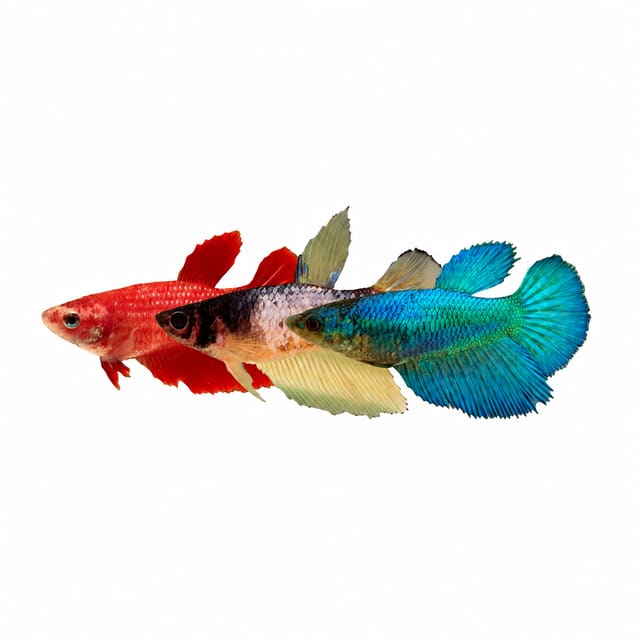
Crowntail Male Betta (Betta splendens)
26–28°C · pH 6–8 · 20L
£12.17£13.99

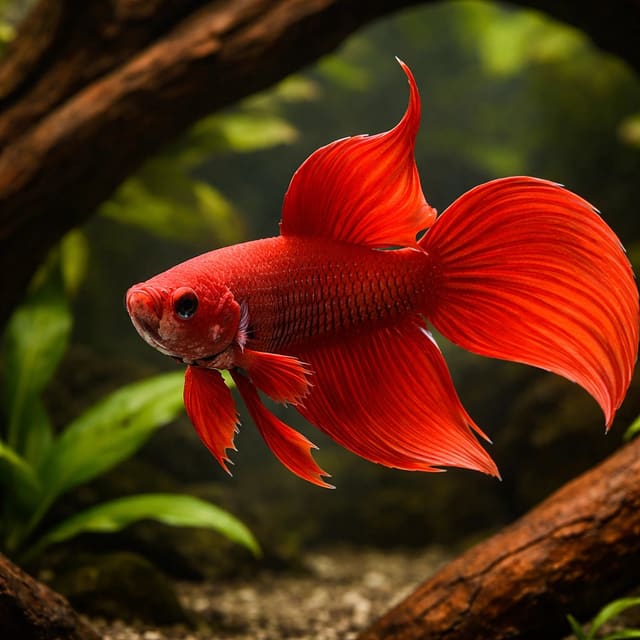
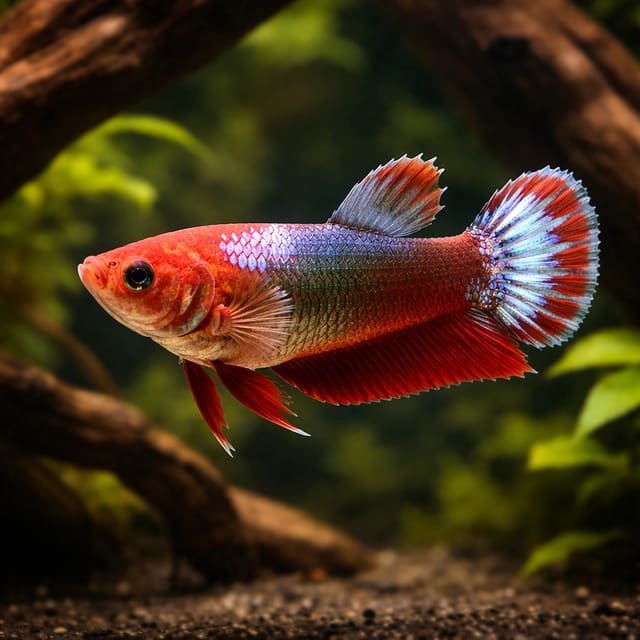
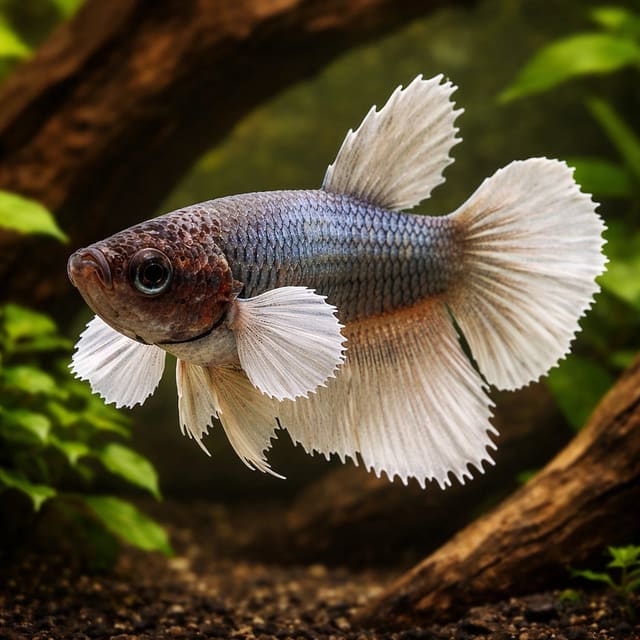
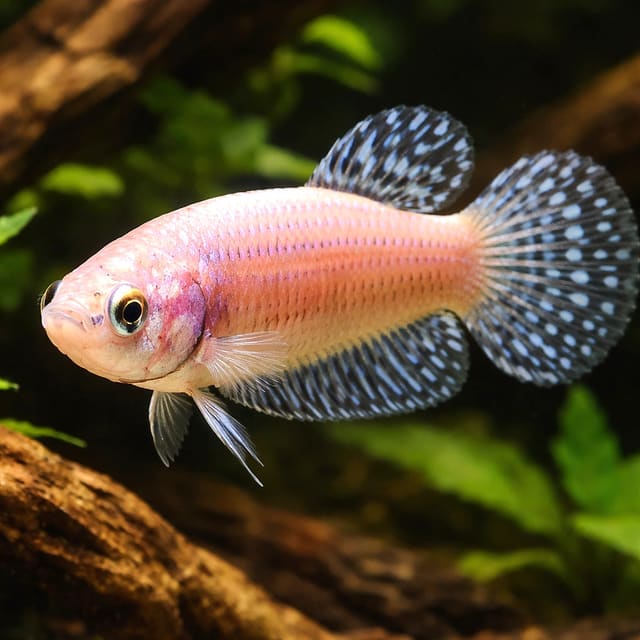
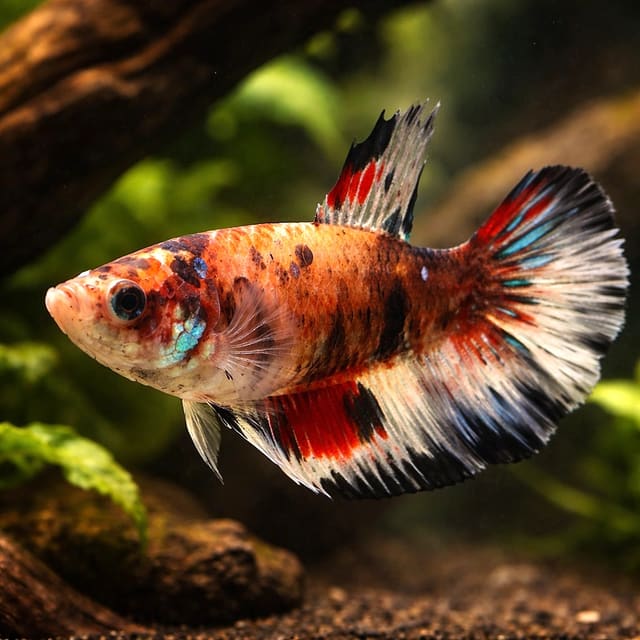
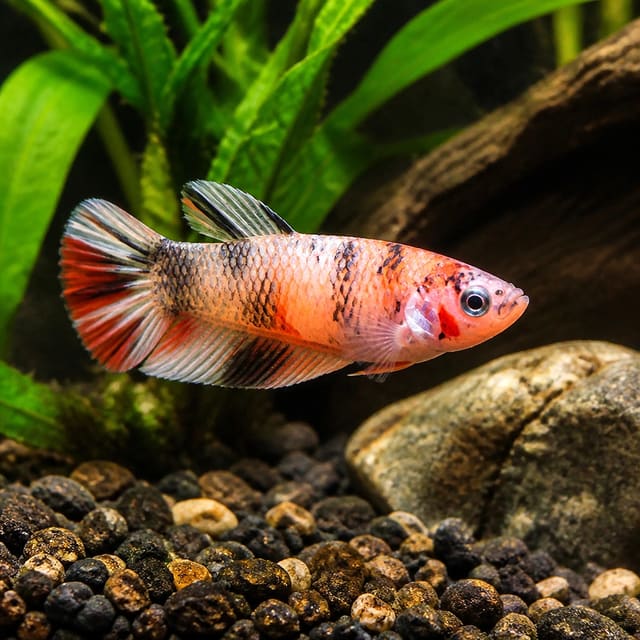
The Crowntail Female Betta (Betta splendens) is a domestic Osphronemidae fish whose wild species occurs in the Mekong basin and reaches 6.5 cm. It suits a prepared keeper using a shaded, planted aquarium with a 45 × 30 cm base of about 41 litres, gentle filtration and the Seriously Fish species range of 22–30°C and pH 6.0–8.0. Sold individually in 2–3 cm and 3–4 cm dispatch sizes.
Adult size is the maximum length this species reaches at full maturity (scientific sources). The livestock you receive will be younger and smaller — pick a size above for the actual shipping size. Product-photo provenance and any image-specific limitations are stated on the listing.
Betta splendens
The Crowntail Female Betta (Betta splendens) is a domestic Osphronemidae fish whose wild species occurs in the Mekong basin and reaches 6.5 cm. It suits a prepared keeper using a shaded, planted aquarium with a 45 × 30 cm base of about 41 litres, gentle filtration and the Seriously Fish species range of 22–30°C and pH 6.0–8.0. Sold individually in 2–3 cm and 3–4 cm dispatch sizes.
Adult size is the maximum length this species reaches at full maturity (scientific sources). The livestock you receive will be younger and smaller — pick a size above for the actual shipping size. Product-photo provenance and any image-specific limitations are stated on the listing.
For one typical domestic Betta splendens, start with at least 20 litres, a mature filter, thermostatic heater, separate thermometer, gentle flow, a secure lid with surface access, and plants or refuges. Keep one male per aquarium.
Maintain these water conditions for optimal health and vibrant colors
The Crowntail Female Betta (Betta splendens) is a domestic form of a freshwater fish in the family Osphronemidae. The wild species occurs in Asia’s Mekong basin, while this named Crowntail form belongs in a heated aquarium rather than being treated as a wild-locality fish. FishBase records a maximum length of 6.5 cm, so the aquarium must be planned around that adult size from the beginning.
This fish suits a prepared keeper who can provide a mature, filtered and covered aquarium with shade, plants, refuges, gentle water movement and clear access to the surface. Solitary housing is the safest default because ornamental Betta splendens are territorial and tolerance of community companions is the exception rather than the expected result. The setup and compatibility decisions make this an intermediate-care fish rather than a simple addition to any community aquarium.
One purchase supplies one Crowntail Female Betta in the size selected from the live size selector. The labels are 2–3 cm and 3–4 cm. The size you select is the size supplied, not the adult size. Both sizes need the full heated, filtered and furnished adult aquarium before arrival; neither belongs in a temporary bowl, jar or reduced setup.
Sex is guaranteed only when the exact product or selected option explicitly states male or female. This Crowntail Female Betta listing is sold as female. That designation does not promise a particular temperament or make routine housing with another Betta safe.
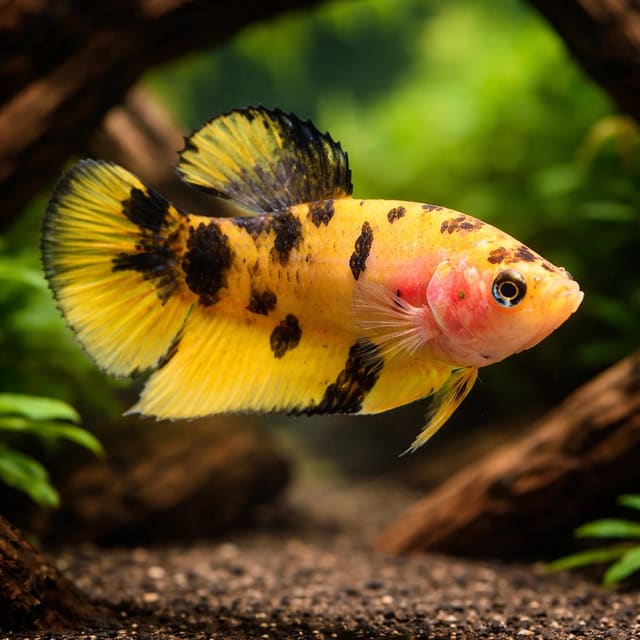
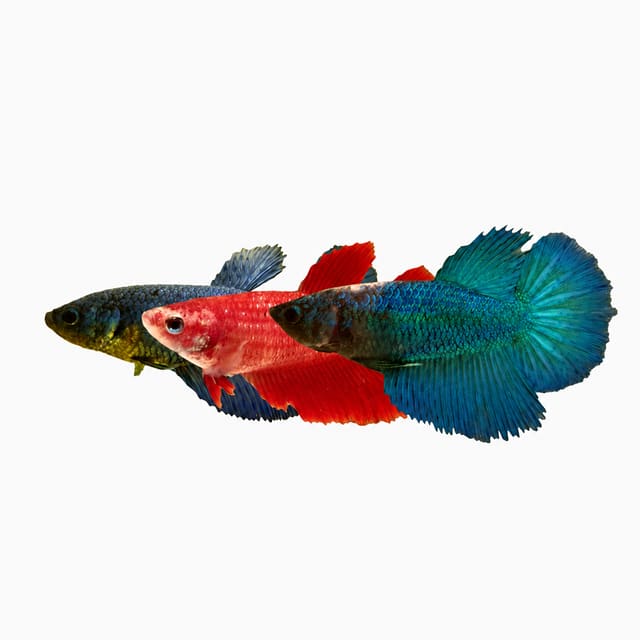
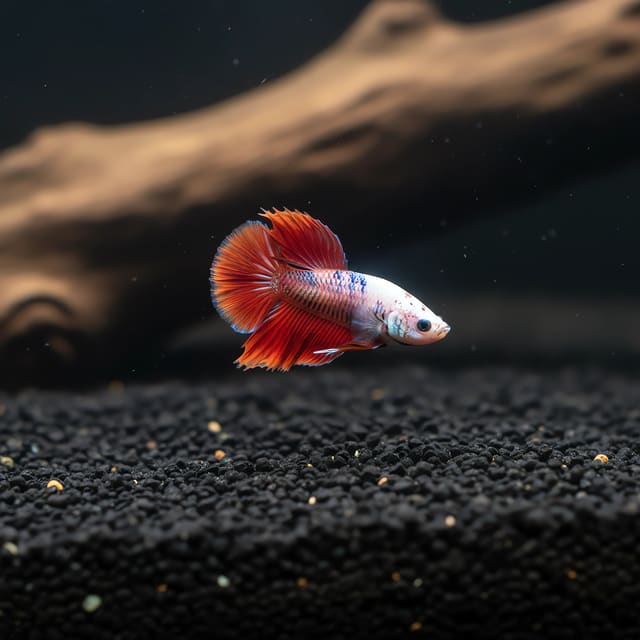
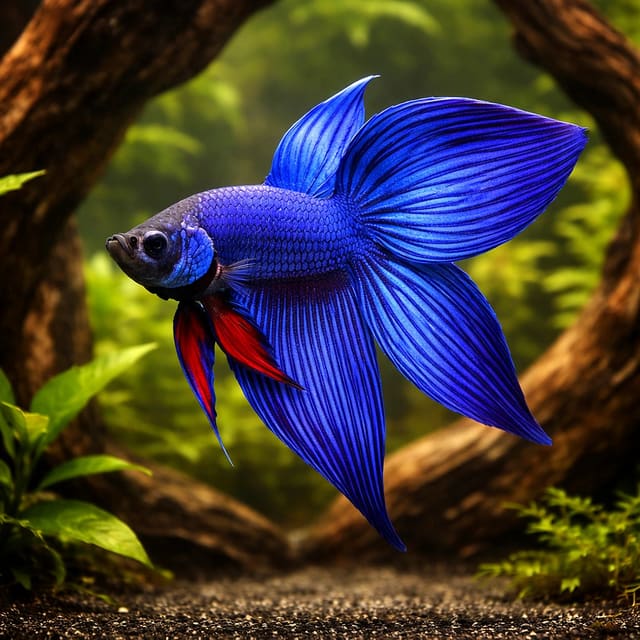
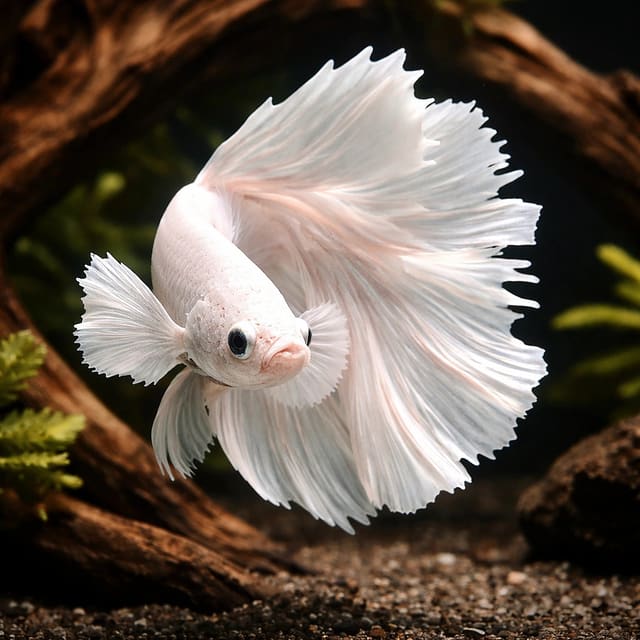
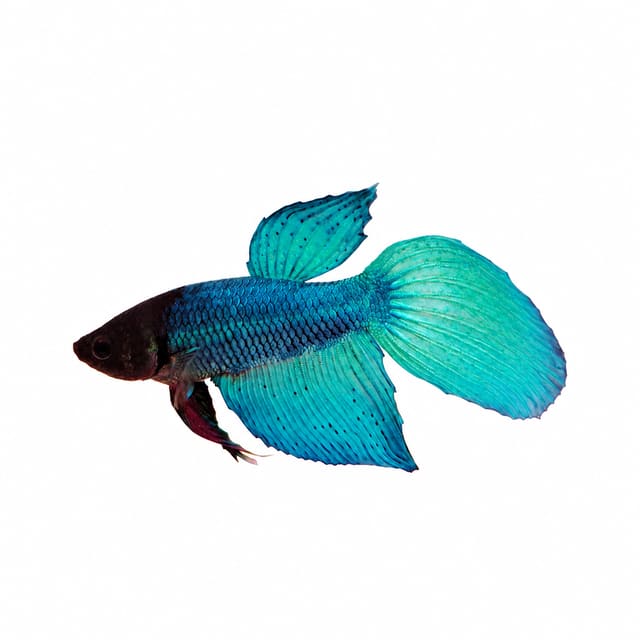
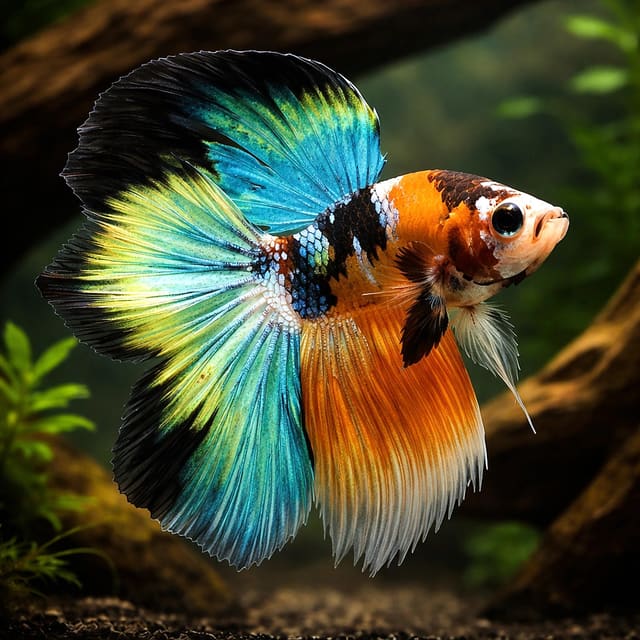
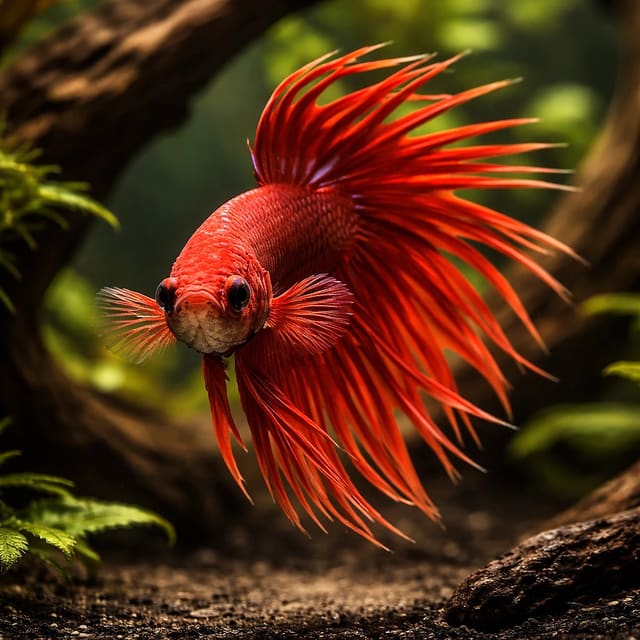
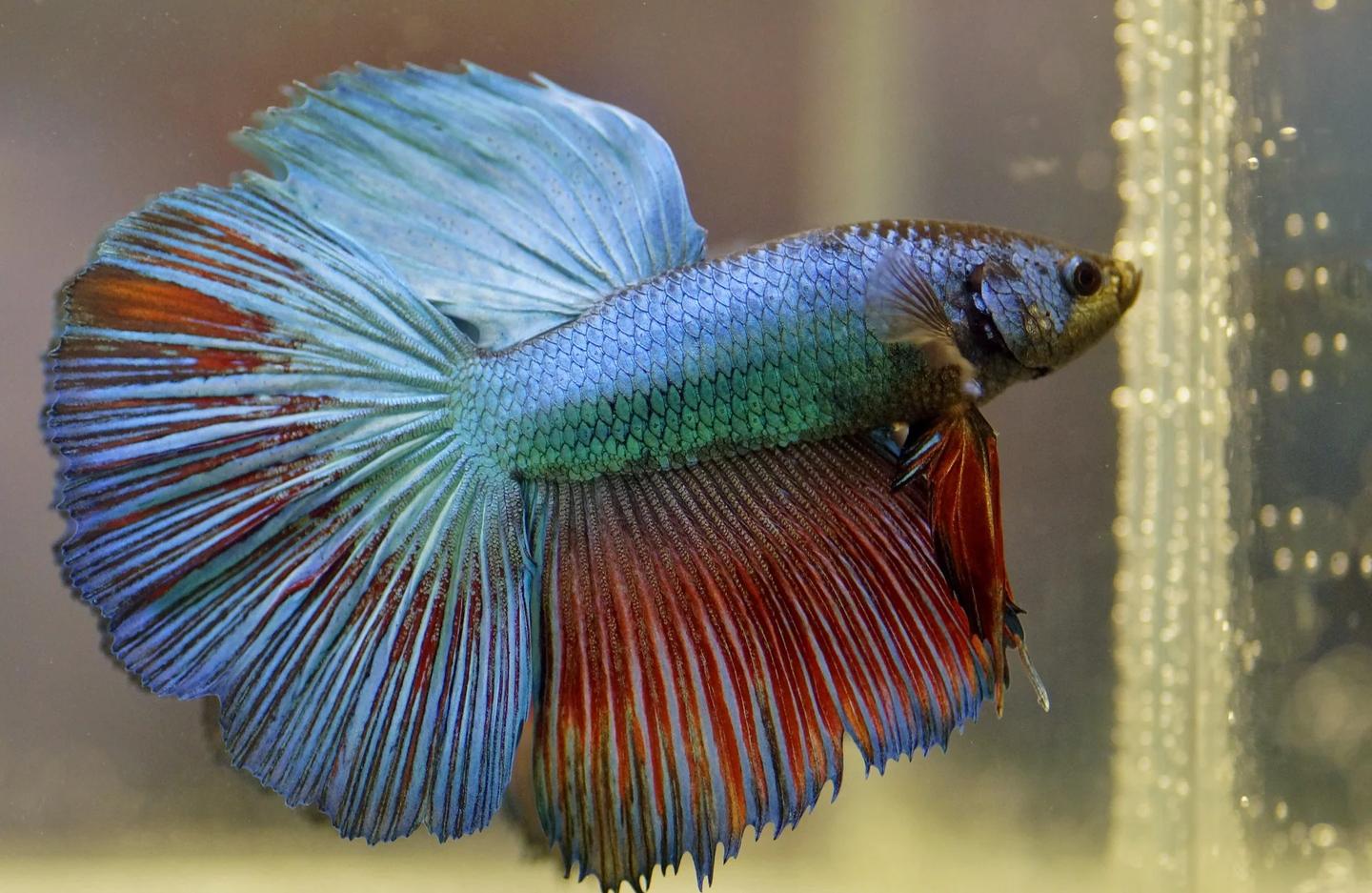
The gallery images are representative, based on reference photographs of this species, so colours can look slightly different from the live animal.
For other domestic forms, browse the Betta collection. Packing, acclimatisation and claim steps are set out in the current delivery and Live Arrival Guarantee policy.
This is a domestic Crowntail form of Betta splendens, the fish widely called a Betta or Siamese fighting fish. Crowntail identifies the named domestic form rather than a separate species. The NCBI taxonomy entry recognises Betta splendens, while FishBase places it in the family Osphronemidae.
FishBase records a maximum of 6.5 cm total length for male or unsexed fish. Use 6.5 cm as the adult planning figure throughout this page. Seriously Fish separately lists 7 cm standard length, so allow clear swimming and resting space rather than designing the layout tightly around the dispatch measurement.
Domestic colour, fin and body traits vary substantially. A genome-wide study of domestic Betta diversity describes complex variation in colour, fins, body size and behaviour. Use the fish’s own appetite, breathing, posture and swimming pattern as daily reference points instead of treating colour intensity or one fin shape as a welfare score.
The wild species occurs in Asia’s Mekong basin, but this offer is a domestic aquarium form. Do not use the wild distribution to infer the birthplace, age, pedigree or previous conditions of an individual fish.
Seriously Fish gives a 45 × 30 cm aquarium base, approximately 41 litres, as large enough for a single male or pair of Betta splendens. For this female, use that footprint and volume as the practical solitary plan. A longer, furnished footprint gives room for cover, open movement and a gentle flow gradient.
The same species profile gives 22–30°C, pH 6.0–8.0 and 1–15 dGH for aquarium care. Tropical Fish Co uses a stable 26–28°C routine target for a typical domestic Betta splendens. Measure that target with a separate thermometer rather than assuming the heater dial matches the water.
| Suits | Not suited to |
|---|---|
| A prepared keeper using one Betta per aquarium | Routine permanent housing with another Betta |
| A 45 × 30 cm base of about 41 litres | Tiny aquaria or small jars |
| A shaded, planted layout with refuges | A bare aquarium without meaningful cover |
| Mature biological filtration with gentle movement | Strong flow or an unfiltered aquarium |
| Stable 26–28°C routine care | An unheated setup without temperature monitoring |
| Careful compatibility screening and a separation plan | Boisterous or aggressive companions |
We class this domestic form as intermediate care. The aquarium must be cycled, heated, covered and routinely tested, while territorial behaviour requires more planning than a simple peaceful-community label suggests. Read the complete Betta fish care guide before finalising equipment.
A clear-looking aquarium is not automatically ready for a fish. The RSPCA explains that a working biological filter supports bacteria that process toxic ammonia into nitrite and then nitrate. Establish that biological function before the Betta arrives and confirm it with aquarium tests.
If ammonia or nitrite is detectable, delay the planned introduction and continue maturing the system. Adding a fish to make the cycle progress exposes the animal to toxic waste and gives the filter more waste than its bacterial population is ready to process.
The first tropical aquarium guide explains how to prepare and mature a new setup. Record dated test results, equipment adjustments and maintenance; a short written history makes it easier to distinguish a stable pattern from a sudden change.
Nominal capacity and usable water volume are not identical once substrate, wood, plants and an air gap are included. Confirm the internal footprint as well as the litre label. A 45 × 30 cm base with approximately 41 litres is the practical target here, and more space can make temperature and waste trends easier to manage.
Run a final readiness rehearsal before choosing the dispatch date. Feed the empty cycle according to the maturation method being used, confirm that ammonia and nitrite return to 0 mg/L, and check the heater at the coolest part of the day. Open the lid as you would during feeding, inspect every equipment gap, then restore it securely. This rehearsal tests the whole routine rather than one isolated water sample.
OATA’s Siamese fighting fish sheet gives 20–28°C, pH 6.0–8.0 and 4–12 dGH as broad group guidance, not a species-specific optimum. It also calls for ammonia and nitrite at 0 mg/L and nitrate no more than 20 mg/L above the normal tap-water level. For this domestic Betta splendens, use the Seriously Fish species-profile range of 22–30°C, pH 6.0–8.0 and 1–15 dGH, with 26–28°C as our stable routine temperature target.
| Measurement | Decision |
|---|---|
| Temperature | Set 26–28°C and check it separately |
| pH | Keep within 6.0–8.0 without rapid adjustment |
| General hardness | Keep within 1–15 dGH and monitor the actual supply |
| Ammonia | Maintain 0 mg/L |
| Nitrite | Maintain 0 mg/L |
| Nitrate | Keep within the OATA maintenance limit |
Test the aquarium itself because UK tap-water chemistry varies. Treat replacement tap water with a suitable conditioner for chlorine or chloramine, then match its temperature before a partial water change. Stability matters: do not alter pH or hardness merely to hit the middle of a range when the aquarium is already within it.
Use the aquarium water-chemistry guide to understand what each test measures. The water matcher can then compare measured aquarium values with the stated ranges.
If a result changes sharply, repeat the test correctly and review recent water changes, conditioners, feeding and equipment changes. Correct the cause gradually unless toxic ammonia or nitrite requires prompt water-quality action.
Use trends to guide decisions. For example, a pH reading within 6.0–8.0 does not need adjustment simply because it differs from last week by a small amount, but a sharp shift alongside altered behaviour deserves a repeat test and a review of recent work. When ammonia or nitrite appears, prioritise restoring safe water quality and checking biological filtration rather than trying to change several unrelated values at once.
Betta splendens naturally uses sluggish environments, so strong water movement should be avoided. Biological filtration still remains essential. Choose a filter that processes waste while allowing the fish to swim, feed and rest without continually resisting the outlet.
For an aquarium of approximately 41 litres, Seriously Fish suggests a filter rated around 80–125 litres per hour. Treat that as a starting equipment range, then judge the result in the furnished aquarium. Plants, outlet direction, media loading and the shape of the tank all change how the flow reaches the fish.
Bettas possess a labyrinth organ and can breathe atmospheric air. This ability does not replace filtration or clean water. Keep an unobstructed route to the surface and use a secure cover that reduces escape risk.
A shaded, well-planted aquarium with surface cover suits this species. Tall stems, floating plants and tropical lilies are examples in the species profile; driftwood and attached plants can add structure lower down. Small smooth refuges can also be used, provided every opening is large enough for safe entry and exit.
Leave part of the surface open for breathing and feeding. Check that furnishings do not have rough points, unstable gaps or positions that could pin the fish against equipment. The goal is a choice between shelter and open movement, not a packed layout that prevents observation or maintenance.
Assess flow in more than one place. Watch the feeding area, a sheltered resting point and the route to the surface. If one area is calm but the fish must cross a forceful outlet to breathe or feed, redirect the current. If reducing the outlet creates widespread debris accumulation, rebalance the layout and circulation instead of switching off filtration.
Seriously Fish describes wild Betta splendens as likely to prey on aquatic and terrestrial invertebrates. In the aquarium, dried foods are normally accepted once recognised as edible, while small live or frozen foods such as daphnia, Artemia and bloodworm can support variety and condition.
Use a suitably sized complete Betta pellet or quality aquarium flake as the nutritional base. OATA recommends feeding only what the fish can consume within a few minutes, once a day. Remove uneaten food so it does not decompose and add waste to the water.
| Food choice | How to use it |
|---|---|
| Complete pellet or flake | Measured everyday nutritional base |
| Daphnia | Small live or frozen variety |
| Artemia | Small live, frozen or freeze-dried variety |
| Bloodworm | Small live, frozen or freeze-dried variety |
| Small suitable insects | Occasional variety prepared as described in the species profile |
Food brands differ in particle size and energy density, so one fixed pellet count cannot suit every product. Begin with the manufacturer’s measured guidance, watch the fish eat and review body condition over time. Reduce the portion when food remains after a few minutes rather than relying on the filter to collect it.
If the fish repeatedly fails to take a food, check that the particle is appropriately sized and offer the recognised complete food. A persistent change in appetite should trigger checks of temperature, ammonia, nitrite and the fish’s wider behaviour rather than repeated feeding attempts.
Overfeeding affects both body condition and water quality. Pre-measure portions when several people care for the aquarium, and keep treats as variety rather than replacing the complete nutritional base.
A practical feeding review compares three observations: whether the fish recognises and swallows the food, whether any remains after a few minutes, and whether body condition stays steady over time. If food is swallowed promptly but leftovers remain, reduce the next measured portion. If appetite changes suddenly, test the aquarium before changing several foods, because the feeding response can be an early sign that the wider setup needs attention.
OATA strongly recommends changing 25% of the water at least once a week and testing the aquarium at least weekly. Use that as the starting routine, then keep dated results so the maintenance schedule responds to the aquarium’s real trend.
When filter media needs cleaning, rinse it lightly in aquarium water removed during the partial water change. Do not run it under the tap because chlorine or chloramine may kill the beneficial bacterial population established in the media.
During the first week, compare each day’s appetite and activity with the previous day and test immediately if behaviour changes. By the end of the first month, review the temperature record, nitrogen-cycle results, body condition and use of the layout. Adjust one feature at a time so its effect can be observed.
A larger water change is not a substitute for investigating persistent waste readings. Review feeding, hidden debris, stocking, filter condition and recent changes whenever ammonia, nitrite or nitrate moves away from its normal pattern.
Keep maintenance repeatable by using the same test method, recording readings before the water change and noting the volume replaced. If nitrate rises faster than usual while feeding is unchanged, inspect for trapped waste and reduced filter flow. If the trend remains stable and ammonia and nitrite stay at 0 mg/L, continue the routine rather than repeatedly dismantling a settled aquarium.
Prepare and test the aquarium before the fish arrives. Confirm 0 mg/L ammonia, 0 mg/L nitrite, a stable 26–28°C routine temperature and measured pH and hardness. Keep the aquarium quiet enough to observe breathing, posture and swimming after introduction.
| Checkpoint | Action |
|---|---|
| Temperature changes | Check the heater, thermometer and room conditions |
| Reduced feeding response | Test water and review food size |
| Changed breathing | Test water, inspect flow and compare with the fish’s normal pattern |
| Persistent hiding | Check water, disturbance, cover and any social pressure |
| Fin or skin change | Record the change and inspect the complete aquarium |
OATA advises watching for changes in swimming, colour, temperament, breathing, appearance, condition and feeding. One sign alone is not a diagnosis. Begin with measured water quality and a review of recent additions, maintenance, food and equipment.
The MSD Veterinary Manual’s aquarium-fish guidance emphasises aquarium history, water analysis and appropriate diagnostic work. Avoid combining medicines or changing temperature in response to a guessed condition. When a change is severe, persistent or unexplained, seek qualified aquatic help; OATA maintains a UK fish-vet directory.
Keep a short log of test results, appetite and visible changes. A dated pattern helps distinguish a stable individual trait from deterioration and gives an aquatic professional more useful context if assessment becomes necessary.
During the first day, prioritise quiet observation over repeated rearrangement. Confirm that the fish can reach the surface, find a sheltered resting place and move away from the filter outlet. Over the next several days, compare feeding response and swimming with the first settled observations. If a change appears, write down when it began and what happened beforehand; this creates a useful sequence for water testing and health assessment.
Seriously Fish describes ornamental Betta splendens as highly aggressive and advises that only one individual can be kept per aquarium in most cases. It recommends keeping the species alone because tolerance of other species is the exception rather than the expected result. Use one Crowntail Female Betta as the default social plan.
Female sex does not turn the fish into a guaranteed community animal. OATA discusses female groups in larger, densely planted aquariums, but a group formula does not override individual territorial behaviour. Do not buy multiple females on the assumption that their sex alone will make the arrangement stable.
The RSPCA’s guidance on keeping fish together notes that male Bettas may fight their own kind and that compatibility requires research into the animals being combined. More space does not make a known aggressive pairing automatically safe.
Keeping one fish does not mean keeping it in a bare container. Use the full 45 × 30 cm footprint, plants, shade, refuges, gentle flow and open surface access. This gives the fish environmental choices while making appetite, waste and health changes easier to monitor.
Any attempted community must begin with a separate, heated and cycled fallback aquarium. Without somewhere suitable to move an incompatible animal, observation alone cannot protect either fish once persistent chasing, exclusion or injury begins.
Use a simple decision test before adding any animal: if the plan depends on this female being unusually tolerant, it is not a reliable default. Solitary housing already meets the social plan recommended by the species profile. A community should therefore add no compromise to water quality, feeding access, resting space or surface access, and it must remain reversible from the first day.
No companion species is automatically safe with a Crowntail Female Betta. Individual temperament varies, and the other animal’s behaviour can be equally important. Screen the complete adult community rather than choosing from a universal tank-mate list.
| Screen | Question to answer |
|---|---|
| Adult space | Does the aquarium meet every animal’s mature footprint and group needs? |
| Water overlap | Can all animals share a stable temperature, pH and hardness range? |
| Activity | Will boisterous movement prevent the Betta from feeding or resting? |
| Fin interaction | Is there a fin-nipping or repeated-display risk? |
| Feeding | Can each animal receive suitable food without one taking everything? |
| Escape route | Can the fish reach cover and the surface without being blocked? |
| Separation | Is a heated, cycled alternative ready before the introduction? |
Seriously Fish notes that some small cyprinids and loaches from similar environments may sometimes be considered, but says careful research is essential and that keeping the Betta alone is best in most cases. Those broad groups are not promises for a particular species, aquarium or individual.
OATA identifies changes in aggression, hiding, feeding, colour, breathing and swimming as reasons to investigate. If one fish controls the feeding area, pursues the Betta repeatedly or prevents normal use of cover and surface access, separate them rather than waiting for visible injury.
Brief investigation of a new neighbour does not establish long-term compatibility. Continue checking appetite, body condition, fins, resting places and use of the whole aquarium through the following days and weeks. Territorial behaviour can change after a layout change or as individuals settle.
The honest limit is simple: a well-screened combination may still fail. Build the community around compatible adult requirements and maintain a practical separation plan throughout.
Work through the screen in order. First reject any animal whose adult water or space requirements conflict with the Betta setup. Next reject boisterous, aggressive or fin-nipping behaviour. Then check whether feeding zones and surface routes can remain open. Only after those gates pass should an introduction be considered, and the heated, cycled fallback must already be functioning rather than assembled after conflict begins.
A Crowntail Female Betta reaches the FishBase maximum recorded length of 6.5 cm. Plan the aquarium around that adult figure rather than the 2–3 cm or 3–4 cm dispatch size.
Use the Seriously Fish species-profile footprint of 45 × 30 cm, approximately 41 litres, with plants, shade, gentle mature filtration, a secure lid and open surface access.
Keep one fish by default. Seriously Fish advises that only one ornamental Betta splendens can be kept per aquarium in most cases, and routine housing with another Betta should be avoided.
It can suit a careful beginner with a fully matured aquarium, but Tropical Fish Co classes it as intermediate because it needs stable heat, tested water, gentle filtration and deliberate compatibility planning.
Feed a suitably sized complete Betta pellet or quality flake as the nutritional base. OATA’s Betta guidance says to feed once daily in an amount eaten within a few minutes, while Seriously Fish lists daphnia, Artemia and bloodworm as live or frozen variety.
Keep it within the Seriously Fish species-profile range of 22–30°C and pH 6.0–8.0, with 1–15 dGH hardness. Tropical Fish Co uses a stable 26–28°C routine target for a typical domestic Betta splendens.
It is territorial and should be kept alone by default. Avoid another Betta and avoid boisterous or aggressive fish; screen any proposed companion for fin-nipping risk and separate the animals if chasing, exclusion or injury occurs.
Seriously Fish says some small cyprinids and loaches from similar environments may sometimes be considered, but solitary care is best in most cases. Check adult space, water overlap, activity, feeding competition and fin interaction, with a heated, cycled separation aquarium ready.
Start filming every delivery continuously while the parcel is still sealed, then record it being opened with the fish still inside the sealed bag. Someone must be present to receive the parcel. Float the bag for 20–30 minutes before releasing the fish, and never pour the bag water into the aquarium.
No reviews for this item yet. Bought one? Honest reviews only, good or bad.
What customers say about ordering from us
I have a small group of long finned mountain minnows. So was delighted to be able to order ten of this variety to increase the genetics in my tank . The ones I recieved are healthy but it’s to early to give a verdict on wether they are of a long finned type since they are small currently.
Gordon Walker · 23 Sept 2026
100% success travel and "installation". Pleased with quality of purchase. The Siamese fighter a bit "shy" so have not yet seen him at his best yet but looking good. Happy customer. GG
George E Garratt · 21 Sept 2026
Reviews of our shop, collected by Judge.me, an independent third-party review collector. Newest first.