Moderate
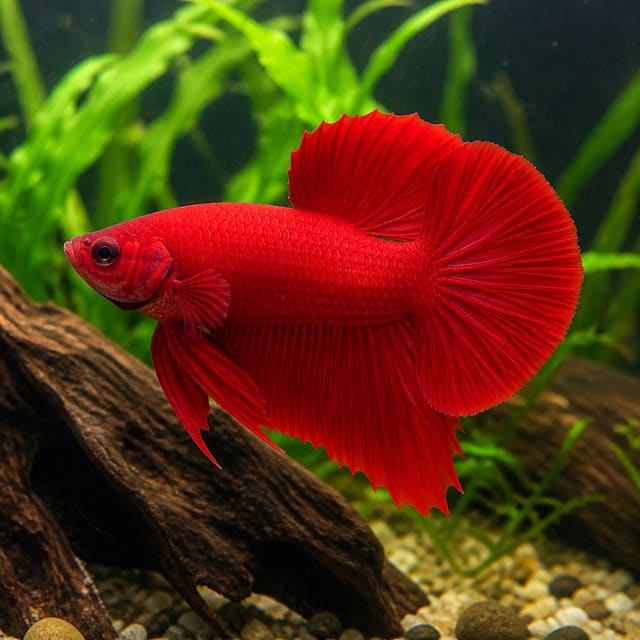
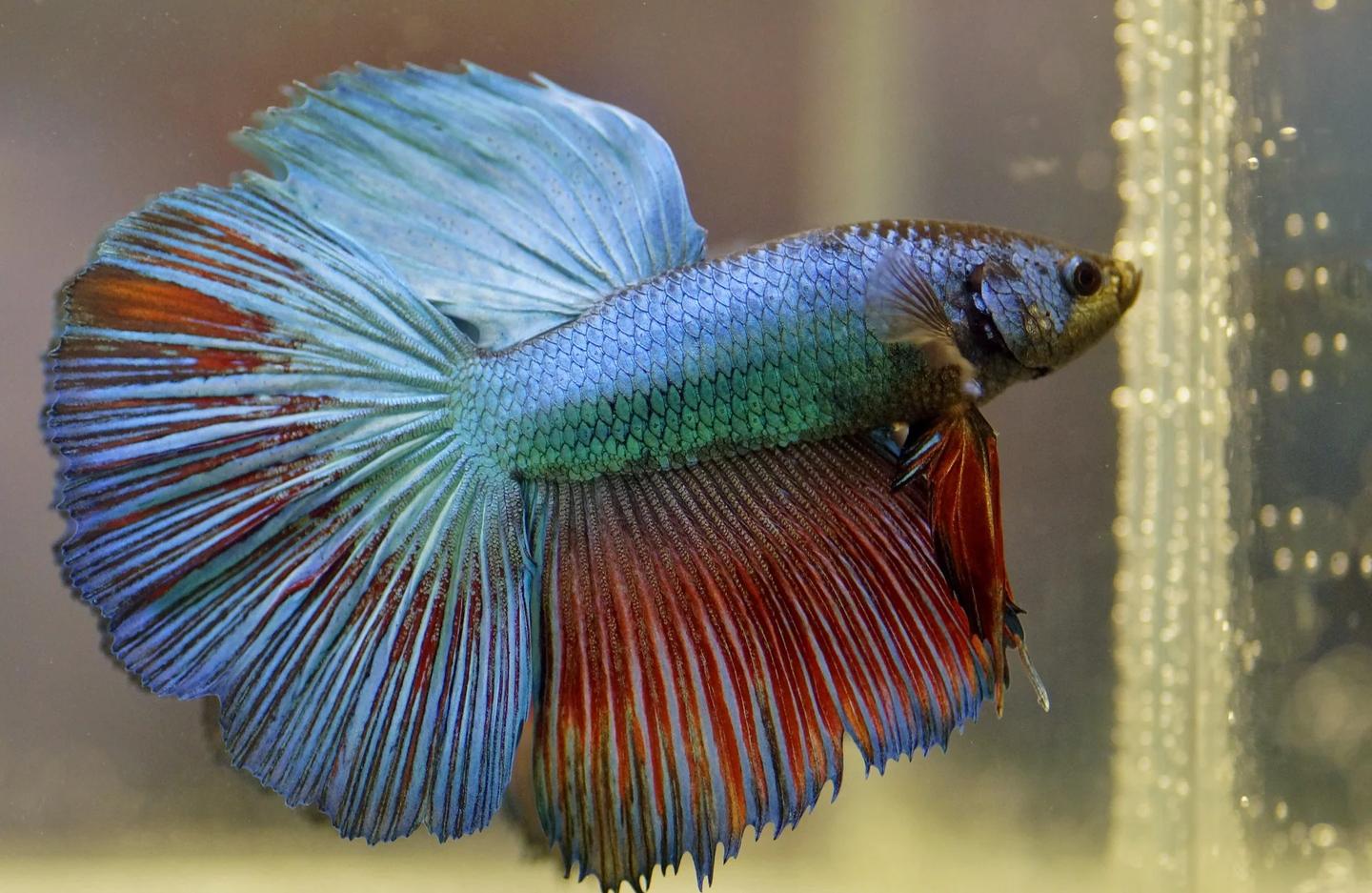
Samurai Double Tail Plakat Male Betta (Betta splendens)
26–28°C · pH 6–8
£38.99

Female Bettas (Betta splendens) are labyrinth fish from central Thailand and the lower Mekong; plan for an adult length of up to 6.5 cm. They need intermediate care: follow OATA’s guidance of at least four females and at least 60 litres, using Tropical Fish Co’s 26–28°C target and the pH 6.0–8.0 shared by FishBase, Seriously Fish and OATA. Sold as one pack of five female fish.
Adult size is the maximum length this species reaches at full maturity (scientific sources). The livestock you receive will be younger and smaller. Product-photo provenance and any image-specific limitations are stated on the listing.
Betta splendens
Female Bettas (Betta splendens) are labyrinth fish from central Thailand and the lower Mekong; plan for an adult length of up to 6.5 cm. They need intermediate care: follow OATA’s guidance of at least four females and at least 60 litres, using Tropical Fish Co’s 26–28°C target and the pH 6.0–8.0 shared by FishBase, Seriously Fish and OATA. Sold as one pack of five female fish.
Adult size is the maximum length this species reaches at full maturity (scientific sources). The livestock you receive will be younger and smaller. Product-photo provenance and any image-specific limitations are stated on the listing.
For one typical domestic Betta splendens, start with at least 20 litres, a mature filter, thermostatic heater, separate thermometer, gentle flow, a secure lid with surface access, and plants or refuges. Keep one male per aquarium.
Maintain these water conditions for optimal health and vibrant colors
Female Bettas (Betta splendens), also called Siamese fighting fish, are freshwater labyrinth fish in the family Osphronemidae. Wild B. splendens occurs in central Thailand and the lower Mekong, while FishBase records the Mekong basin and a maximum length of 6.5 cm. Plan the aquarium around that adult length. This pack suits a keeper prepared to manage a female group, observe each fish closely and maintain separate housing if group life stops working.
Keep the aquarium at a stable 26–28°C, the practical target used in our complete Betta fish care guide. Keep pH at 6.0–8.0, which FishBase, Seriously Fish and OATA share, and use 5–12 dGH as the overlap of their hardness ranges. These are targets for a heated, filtered aquarium rather than permission to move fish rapidly between different conditions.
| Suits | Not suited to |
|---|---|
| A keeper planning a closely monitored female group | A keeper without spare separation housing |
| A heated, filtered and furnished aquarium | A tiny jar, bowl or unfiltered container |
| A setup with gentle flow and surface access | An aquarium with strong water movement |
| Close observation of individual behaviour | A community plan that assumes every combination will work |
Tropical Fish Co rates Betta care as intermediate. Bettas breathe atmospheric air through a labyrinth organ, but they still need biological filtration, stable water quality and clear access to the surface. Wild Betta splendens occupy standing or sluggish waters such as floodplains, canals and rice paddies, which explains the need for gentle flow and useful cover rather than bare, turbulent housing.
One purchase supplies one pack containing five female Betta splendens. The five fish should be treated as a planned social and welfare commitment, not as interchangeable decoration. Their aquarium must be ready for the full group before they arrive, and the keeper must be able to identify changes in appetite, breathing, hiding, aggression and fin condition in each individual.
Sex is guaranteed only when the exact product or selected option explicitly states male or female. This 5 × Female Bettas listing is sold as female.
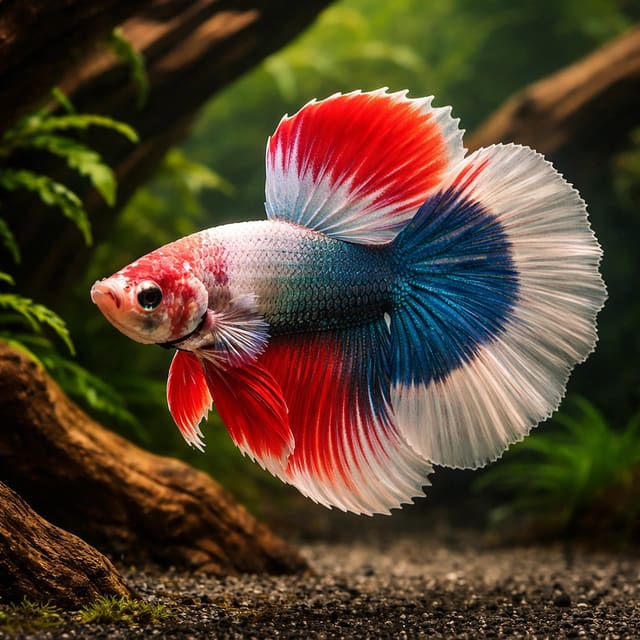
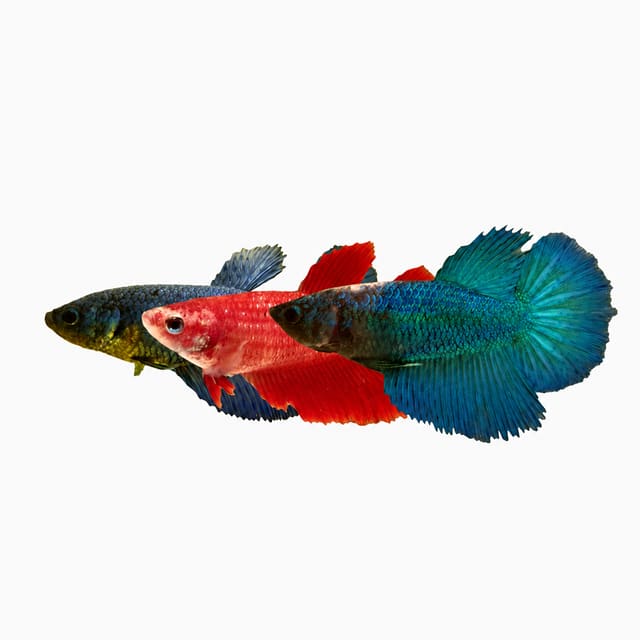
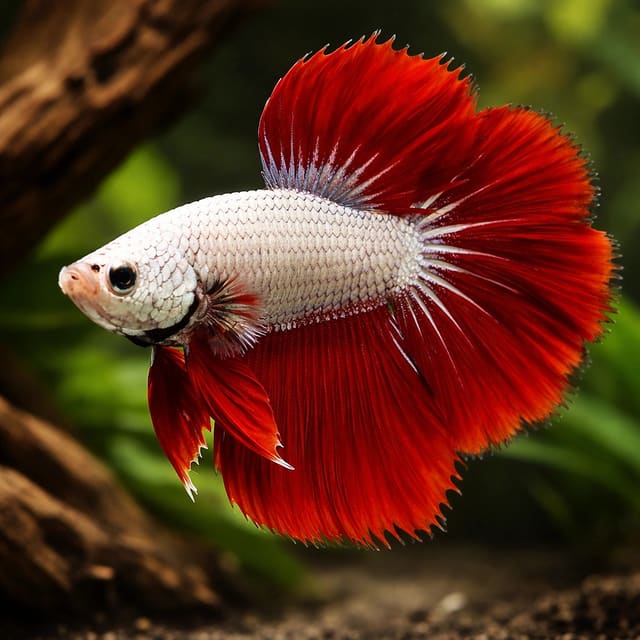
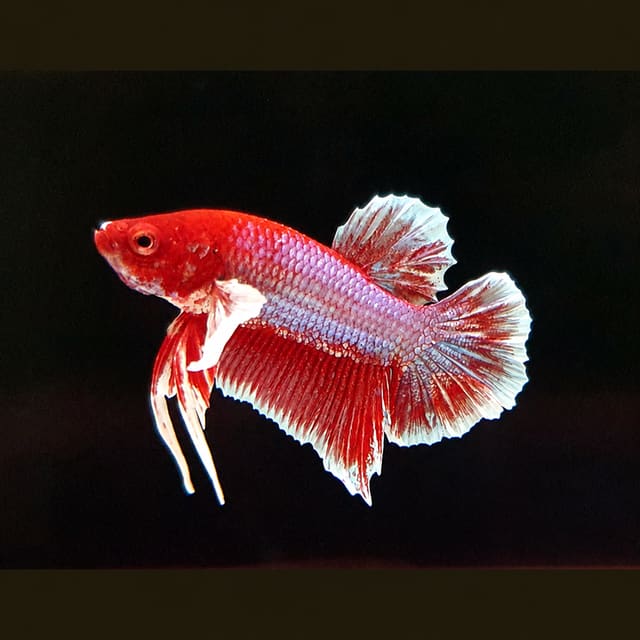
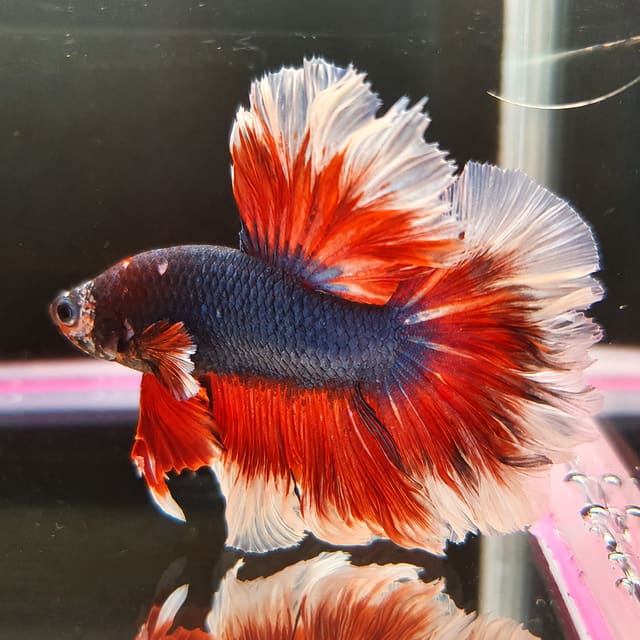
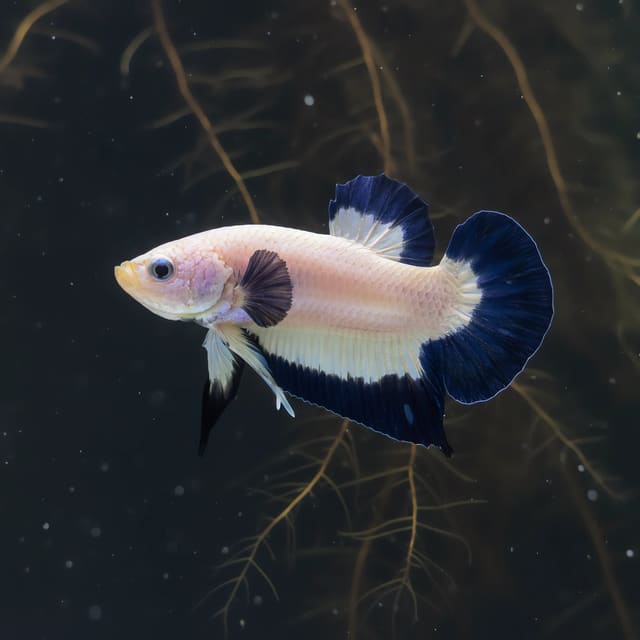
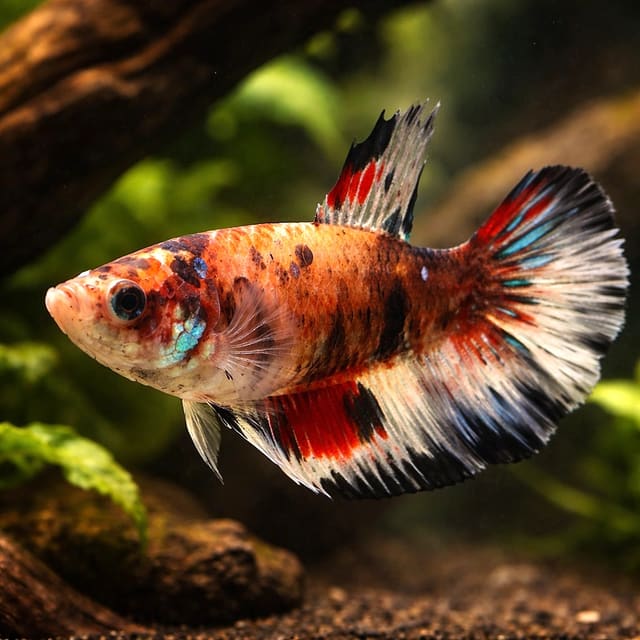
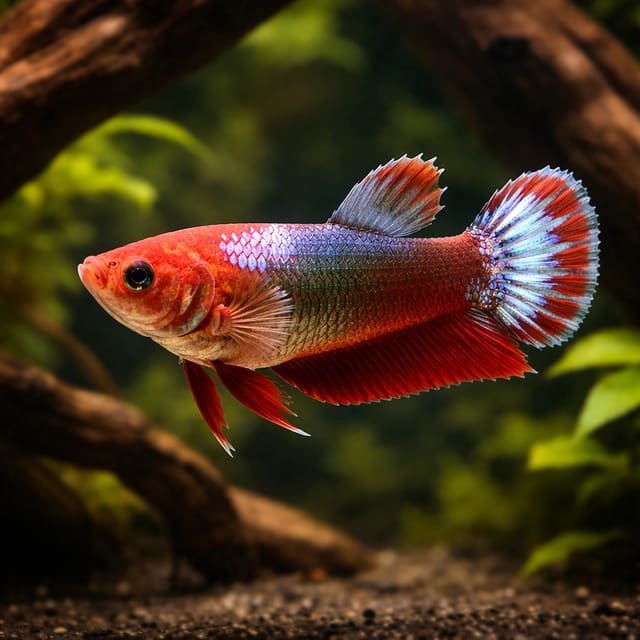
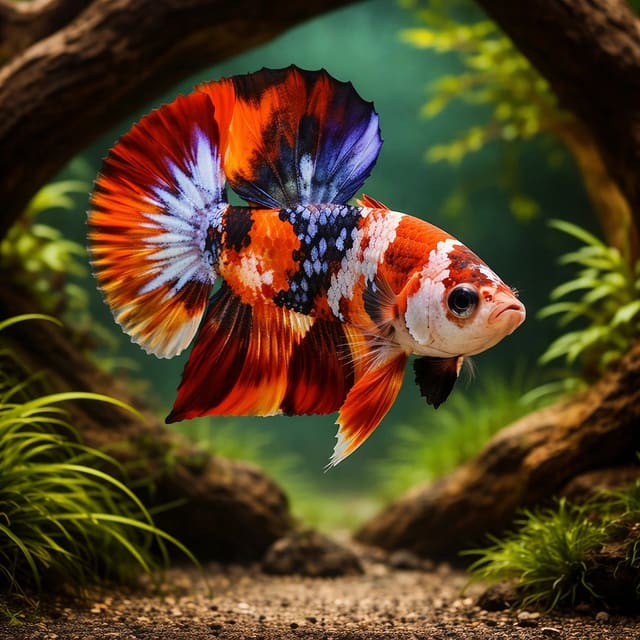
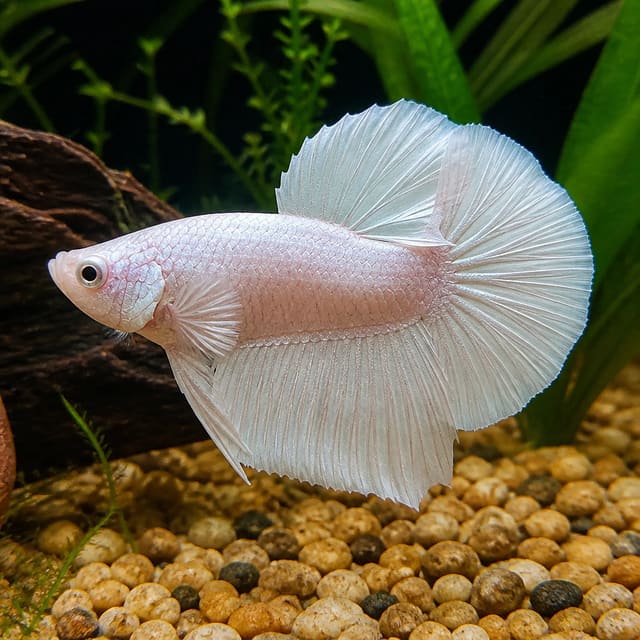
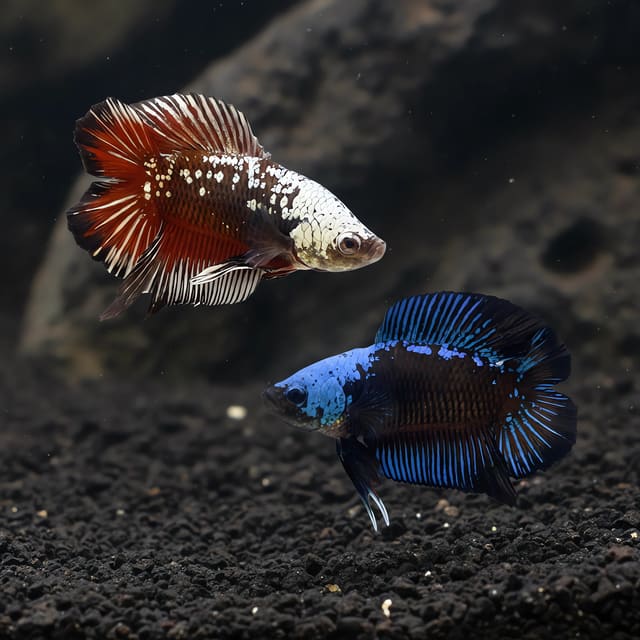
The gallery images are representative of this type of animal rather than photographs of the exact animal supplied, so colours can look slightly different from the live animal.
OATA’s Betta care sheet says females can be kept in groups of at least four and recommends at least a 60-litre aquarium for a group of females. A pack of five meets that numerical starting point, but the number alone does not settle compatibility. Seriously Fish takes a more cautious position, describing this species as best kept alone in most cases and individual tolerance of other species as the exception.
The pack format does not guarantee that all five individuals will continue to tolerate one another. Choose this offer only when you can monitor the group and act promptly if behaviour or condition changes.
Use at least 60 litres for this group of five females. OATA gives that volume as the starting recommendation for a female group, while Seriously Fish gives a 45 × 30 cm base and about 41 litres for a single male or pair. For this pack, use the group figure and choose more usable space where practical; decor, substrate and equipment reduce the water and swimming room inside a nominally sized aquarium.
Choose a layout that combines open routes with planted or sheltered areas. Seriously Fish says the species fares best in a well-planted, shady aquarium with plenty of surface cover, with driftwood and refuges adding shelter. Tall stems, floating plants and broad-leaved cover can create sheltered positions without sealing the surface. Smooth plant pots or aquarium-safe pipe can provide additional refuge where every opening is large enough to prevent trapping.
| Requirement | Practical decision |
|---|---|
| Water movement | Use gentle filtration and avoid a current that continually pushes fish away from resting positions. |
| Surface access | Leave an open route to the surface because Bettas breathe atmospheric air. |
| Cover | Fit a secure lid while maintaining safe surface access and an air space beneath it. |
| Furnishings | Use plants and smooth refuges without sharp edges, rough holes or blocked swimming routes. |
| Observation | Keep enough open space to see all five fish during feeding and routine checks. |
A labyrinth organ does not make stagnant or unfiltered housing acceptable. Strong water movement should also be avoided because this species naturally occupies sluggish environments. Adjust or diffuse the outlet if a fish is repeatedly displaced, struggles to hold position or cannot use a preferred resting area, but keep essential biological filtration running.
Check the completed aquarium from the fish’s perspective before filling it with livestock. Confirm that each refuge has a safe exit, no decoration obstructs the surface, the lid closes securely and equipment cannot trap a fish. The final layout must also leave enough access for siphoning waste, testing water and observing the group without dismantling the habitat every week.
Cycle and mature the biological filter before adding the five fish. Clear water is not proof that an aquarium can process waste. The RSPCA explains that a working biological filter supports bacteria that convert toxic ammonia to nitrite and then to safer nitrate. Both ammonia and nitrite must read zero before the planned introduction.
Use our guide to prepare and mature a first tropical aquarium, then record test results rather than judging readiness by appearance or elapsed time. Do not use a fixed number of weeks as a substitute for measured results. If ammonia or nitrite is detectable, continue preparing the aquarium and correct the cause before livestock enters it.
Fit a thermostatic heater and verify it with a separate thermometer. The thermostat controls the heater, while the thermometer shows what the water is actually doing. Position both according to their manufacturers’ instructions and check that warmed water circulates without producing a strong current.
Filter flow and filter maturity solve different problems. A mature filter may still push too hard, while a gentle filter may be biologically immature. Test both: watch whether the fish would be able to hold position in the flow, and use water tests to confirm that the biological system processes waste. Never turn off essential filtration merely to calm the current; diffuse or redirect the outlet instead.
Plan maintenance access now. You should be able to remove waste, reach the filter and read the thermometer without leaving the lid unsecured or removing all cover. A setup that is easy to maintain is more likely to remain stable for the lifetime of the fish.
Keep the aquarium at 26–28°C, pH 6.0–8.0 and 5–12 dGH. The temperature is Tropical Fish Co’s practical target for a typical domestic Betta splendens and lies within the FishBase, Seriously Fish and OATA ranges. The pH range is shared by all three, while 5–12 dGH is their overlap. Stability matters: do not make abrupt adjustments simply to reach the middle of a range.
| Check | Action |
|---|---|
| Temperature | Hold 26–28°C and verify it with a separate thermometer. |
| pH | Keep 6.0–8.0 and investigate unexpected movement rather than chasing a decimal. |
| General hardness | Keep 5–12 dGH and test the aquarium water itself. |
| Ammonia | Maintain zero mg/l; any detectable result requires prompt investigation. |
| Nitrite | Maintain zero mg/l; any detectable result requires prompt investigation. |
| Nitrate | Keep it from exceeding 20 mg/l above the normal tap-water level, following OATA’s guidance. |
Use the aquarium water-chemistry guide to understand each test, then use the water matcher to compare your measured aquarium values with these targets. UK tap water varies, so test it rather than assuming its pH or hardness from a postcode, appearance or another keeper’s aquarium.
Make a 25% partial water change at least once every week. Test ammonia and nitrite at least weekly, and record temperature, nitrate and pH so that gradual movement is visible before it becomes a larger problem. Treat replacement tap water with an appropriate conditioner to remove chlorine or chloramine before it enters the aquarium.
Siphon solid waste from accessible areas without stripping every refuge from the aquarium. Check the filter for blockages during maintenance. If the filter media needs cleaning, do not rinse it under the tap. Rinse it lightly in tank water removed during the partial water change, which reduces the loss of established beneficial bacteria.
Match replacement water closely enough to avoid a sudden temperature or chemistry change. A water change is intended to improve conditions, not create a rapid swing. Recheck the heater, filter flow and lid after maintenance, because moved equipment can affect circulation, temperature and surface access.
Use a suitably sized complete Betta pellet or quality aquarium flake as the measured nutritional base. FishBase records wild Betta splendens eating zooplankton, mosquito larvae and other insect larvae, while Seriously Fish describes likely predation on aquatic and terrestrial invertebrates. Choose a complete food made for small aquarium fish and supplement it regularly with animal foods that reflect that feeding biology.
OATA advises feeding only what the fish can consume within a few minutes, once a day. Watch the whole group during every meal so that you can see whether all five fish approach food and swallow it. A measured feed is more useful than a universal pellet count because foods differ in size and energy density.
Remove uneaten food before it breaks down. Excess food contributes waste that can raise ammonia and affect water quality, while Seriously Fish warns that Bettas seem particularly prone to obesity. Do not add a larger portion merely because one fish has not eaten; first check whether that individual is hiding, being displaced, breathing differently or showing reduced interest in food.
| Observation | Response |
|---|---|
| Food remains after a few minutes | Remove the remainder and reduce the next measured portion. |
| One fish repeatedly misses food | Observe group interactions and prepare separation if access is being prevented. |
| Interest in food falls | Check temperature, ammonia, nitrite and recent changes before altering the diet. |
| Body condition increases or decreases | Review portions, food type and access for that individual. |
Variety does not mean feeding every item at once. Rotate suitable foods while keeping the complete product as the consistent base. Avoid turning one treat into the entire diet, and do not use the fish’s eye as a portion formula. The goal is prompt consumption, steady body condition and minimal waste entering the aquarium.
Plan for an adult length of 6.5 cm. FishBase records that maximum as total length for male or unsexed Betta splendens. Give every fish room to turn, feed and reach the surface without colliding with equipment or rough decor.
Plan for full-grown fish rather than their length on arrival. Aquarium space, filtration capacity and furnishings must be selected for the full-grown group from the beginning rather than for a smaller temporary body size. Check gaps in hardscape, filter guards and refuge openings against the planned adult fish, not just the fish first seen in the aquarium.
Domestic Bettas vary extensively in colour, pattern, body form and fins. A genome-wide study of domestic Betta diversity describes complex variation in colour, fin and body traits. Colour alone cannot show a fish’s age, temperament, pedigree, fertility, health or wild locality. Judge welfare through behaviour, breathing, appetite, body condition, fins and water tests rather than the intensity of a colour pattern.
FishBase describes the species as a facultative air breather and bubble-nest builder. Keep the surface accessible at all times, but continue to provide effective filtration because atmospheric breathing does not remove dissolved and solid waste. A bubble nest is reproductive behaviour; its presence does not certify excellent welfare, and its absence does not diagnose a problem.
Wild fish occur in standing waters of floodplains, canals, rice paddies and rivers and feed on small animal prey. Use that biology to make practical aquarium decisions: gentle flow, sheltered positions, surface access and appropriately sized foods. Wild habitats such as rice paddies do not justify a bare bowl or tiny container; Seriously Fish explicitly discourages keeping this species in tiny aquaria or small jars.
Observe how each adult uses the furnished space. A fish should be able to leave cover, reach food, access the surface and rest without being continually swept by current or blocked by another individual. If an adult’s movement becomes restricted by the layout, alter the furnishings while preserving cover and a ready separation plan.
Prepare the heated, filtered aquarium before the parcel reaches you. The Tropical Fish Co delivery and Live Arrival Guarantee policy says live fish are hand-bagged in pure oxygen, placed in an insulated poly box and packed with a heat pack when the weather calls for it. Be present to receive the parcel because live fish cannot be left unattended.
For a Live Arrival Guarantee claim, contact us the same day with the order number and continuous unboxing video showing the sealed parcel, the opening and the fish still inside the bag.
Keep ammonia and nitrite at zero, following OATA’s water guidance. Recheck temperature and equipment after the group enters the aquarium, then observe swimming, breathing, colour, hiding and interest in food. The five fish represent a meaningful increase in biological load, so the filter must already be prepared for the full group.
While the group settles, compare each fish with its own developing normal pattern. Look for an individual remaining at the surface, sitting on the bottom, swimming erratically, hiding more than the others or losing interest in food. Test the water promptly when behaviour changes rather than assuming the move is the only cause.
Keep the room and aquarium routine steady while the group settles. Make changes only for a clear husbandry reason, such as unsafe water values, excessive flow or conflict. Avoid repeatedly rearranging every refuge, because you need a consistent layout in which behaviour can be compared from one observation to the next.
Start with temperature and water tests whenever appetite, breathing, swimming, colour, fins or body condition changes. OATA lists surface hanging, bottom sitting, erratic swimming, darker or paler colour, altered aggression, increased hiding, changed gill movement, white spots, fluffy growths, lost fins or scales and reduced feeding as signs that warrant attention. These observations identify a need to investigate; they do not identify one cause by themselves.
| What you see | First action |
|---|---|
| Rapid or slow gill movement | Confirm temperature and test ammonia, nitrite, nitrate and pH. |
| Surface hanging or bottom sitting | Check water values, flow, surface access and recent equipment changes. |
| Reduced appetite | Review temperature, water quality, feeding access and group interactions. |
| Fin or scale damage | Assess conflict and furnishings, then separate the fish if injury is continuing. |
| White marks or fluffy growth | Record the change and seek diagnosis before choosing medication. |
The MSD Veterinary Manual’s aquarium-fish guidance emphasises water analysis, aquarium history and appropriate diagnostic work. Review recent additions, maintenance, food, temperature movement and equipment changes. Avoid combining medicines or raising the temperature on the strength of a single visual sign.
Correct an immediate husbandry problem such as detectable ammonia, but do not treat that correction as a diagnosis. A torn fin, swollen abdomen or unusual swimming pattern can have more than one cause. When signs are severe, persistent or unexplained, use OATA’s UK fish-vet directory to seek qualified veterinary help.
Keep these five females together only while every individual remains able to feed, rest and move without continuing harm. OATA says females are calmer than males and can be kept in groups of at least four, but Seriously Fish advises that Betta splendens is best maintained alone in most cases. Treat group keeping as a monitored permission, not a guaranteed social outcome.
Start with at least 60 litres, stable water, gentle flow and useful cover. Aquarium size and furnishings support the group’s needs, but they do not guarantee compatibility. Do not rely on the number five to spread aggression or create a predictable rank; neither outcome should replace observation of the actual fish.
OATA advises watching for changes in aggression, increased hiding, altered swimming, damaged fins, colour changes and reduced food intake. These signs matter most as changes from an individual’s normal behaviour. A fish that repeatedly cannot reach food, remains hidden or develops continuing fin damage needs intervention even if the other four appear settled.
| Group observation | Decision |
|---|---|
| All five feed and use the aquarium | Continue monitoring without assuming the pattern is permanent. |
| One fish hides more and eats less | Check water and group interactions, then prepare removal. |
| Aggression increases or injury appears | Separate promptly and reassess the entire arrangement. |
| Behaviour changes after maintenance | Check temperature, water values, flow and the revised layout. |
Every fallback aquarium still needs heat, mature filtration, a secure lid, surface access and safe cover. A temporary unheated bowl is not a separation plan. Set up contingency housing before the group arrives so that removing a fish does not create a second welfare problem.
Continue evaluating the group as the fish grow. Adult body size, changing condition and altered behaviour can change how the aquarium is used. The keeper’s responsibility is to respond to the fish in front of them rather than preserve a group arrangement at any cost.
Do not treat these females as automatic community fish. Seriously Fish does not recommend Betta splendens for the standard community aquarium and says individual tolerance of other species is the exception rather than the expected result. OATA says females can be mixed more readily than males, but they must be kept without boisterous or aggressive fish.
Keep male and female Bettas separate in routine housing. FishBase advises keeping the sexes apart unless mating, while OATA warns that male Bettas are highly aggressive towards one another. A breeding exception is not a routine companion plan for this pack.
| Possible companion | Decision rule |
|---|---|
| Boisterous or aggressive fish | Avoid; OATA excludes them from female Betta community plans. |
| Male Betta splendens | Avoid in routine housing; keep the sexes separate. |
| Some small cyprinids | Consider only after checking adult size, water overlap, activity, feeding and space. |
| Some loaches | Consider only after the same species-by-species screening and with separation ready. |
| Shrimp or snails | Treat the result as uncertain; smaller animals may be investigated or hunted, while defensive invertebrates may injure fish. |
The RSPCA’s fish compatibility guidance supports researching the needs of every species before mixing them. Compare adult dimensions, temperature, pH, hardness, activity, feeding competition, fin-nipping risk and the space used by the whole community. A shared temperature range alone is not enough.
Do not add shrimp or snails as a cleaning strategy, and do not assume a bottom-dwelling fish will be ignored. Seriously Fish names only some small cyprinids and loaches as potentially suitable after proper research. The safest default is female-group housing with close monitoring and no additional species unless the full compatibility screen passes.
Plan for 6.5 cm adult length. FishBase records a maximum of 6.5 cm total length for male or unsexed Betta splendens; the aquarium must be planned for adult fish rather than their length on arrival.
Use at least 60 litres for the five-female group. OATA’s Betta care sheet recommends at least a 60-litre aquarium for a group of females, with more usable space helpful where practical.
OATA says females can be kept in groups of at least four. This 5 × Female Bettas pack meets that number, but compatibility is not guaranteed, so monitor each fish and keep heated, filtered separation housing ready.
Betta care is rated intermediate. Managing five territorial fish requires a mature aquarium, at least 60 litres, regular testing, close observation and a workable separation plan.
Feed a measured, suitably sized complete Betta pellet or quality aquarium flake once a day, offering only what is eaten within a few minutes. Add small live or frozen daphnia, Artemia or bloodworm regularly for variety.
Use Tropical Fish Co’s stable 26–28°C practical target and pH 6.0–8.0, which FishBase, Seriously Fish and OATA share. Keep hardness at their overlapping range of 5–12 dGH.
Female behaviour varies, and OATA says mixing Bettas with other fish can be difficult even though females are calmer than males. Avoid boisterous or aggressive fish, and treat increased aggression, hiding, reduced feeding or fin damage as reasons to separate.
Seriously Fish names some small cyprinids and loaches as potentially suitable after species-by-species screening, but says the Betta is generally best alone. Avoid male Bettas and boisterous or aggressive fish; treat shrimp and snails as uncertain.
Tropical Fish Co’s policy says the fish are hand-bagged in pure oxygen, placed in an insulated poly box and given a heat pack when the weather calls for it, then carried by a licensed live-animal courier. Be present to receive the parcel, film continuously from the sealed parcel and float the bag for 20–30 minutes before release.
No reviews for this item yet. Bought one? Honest reviews only, good or bad.
What customers say about ordering from us
I have a small group of long finned mountain minnows. So was delighted to be able to order ten of this variety to increase the genetics in my tank . The ones I recieved are healthy but it’s to early to give a verdict on wether they are of a long finned type since they are small currently.
Gordon Walker · 23 Sept 2026
100% success travel and "installation". Pleased with quality of purchase. The Siamese fighter a bit "shy" so have not yet seen him at his best yet but looking good. Happy customer. GG
George E Garratt · 21 Sept 2026
Reviews of our shop, collected by Judge.me, an independent third-party review collector. Newest first.