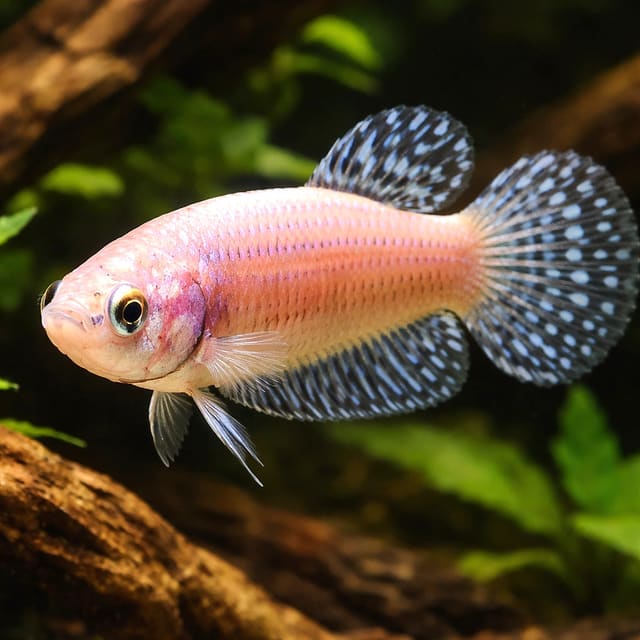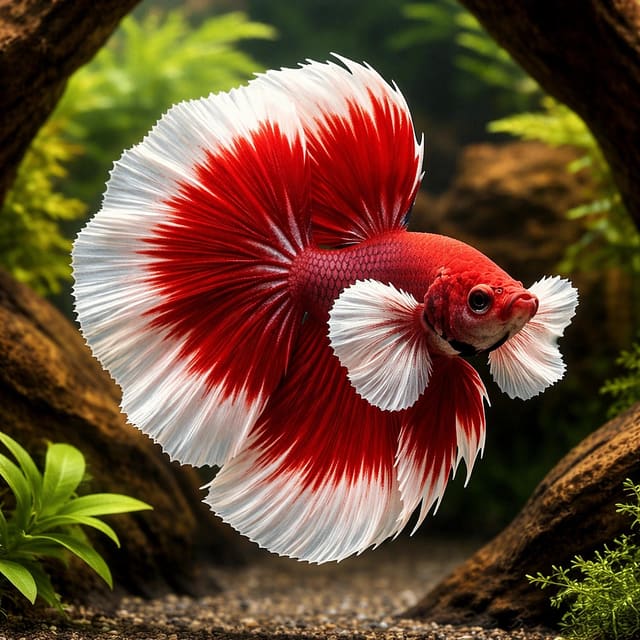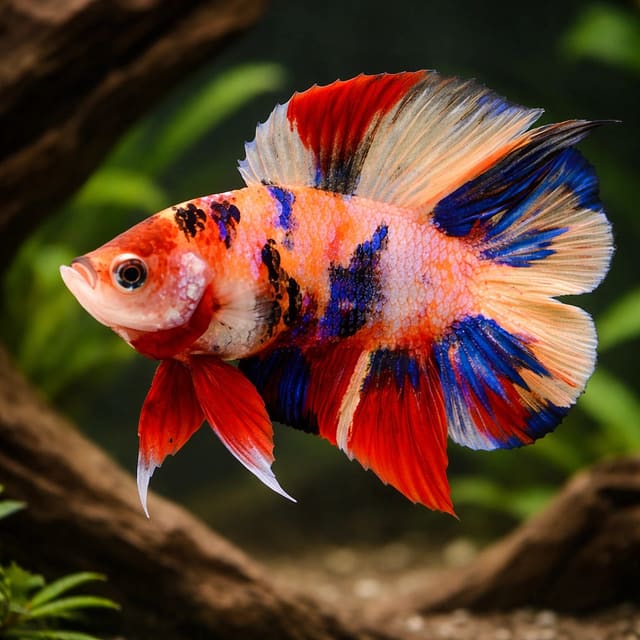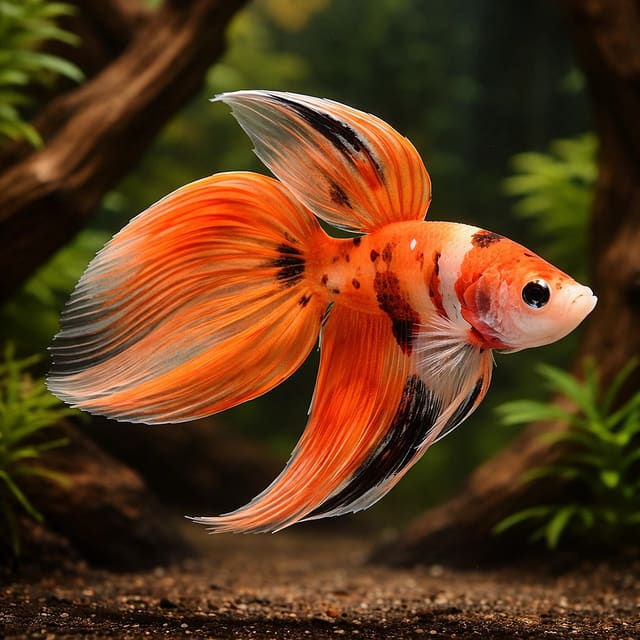
−13%
Moderate
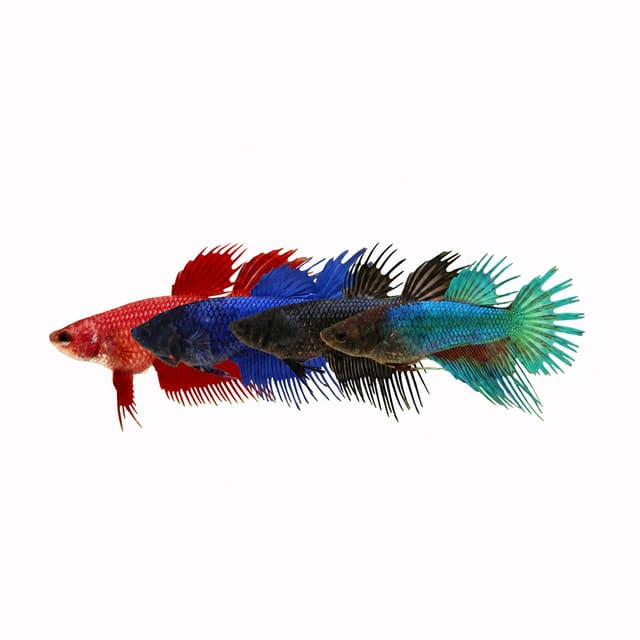
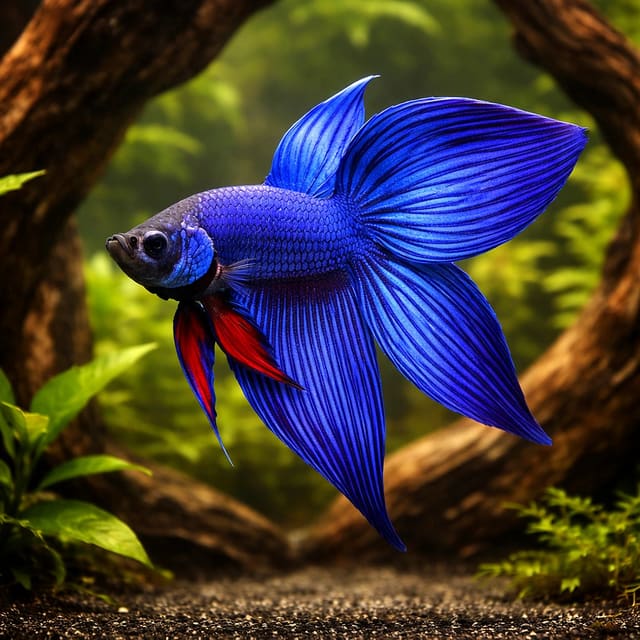
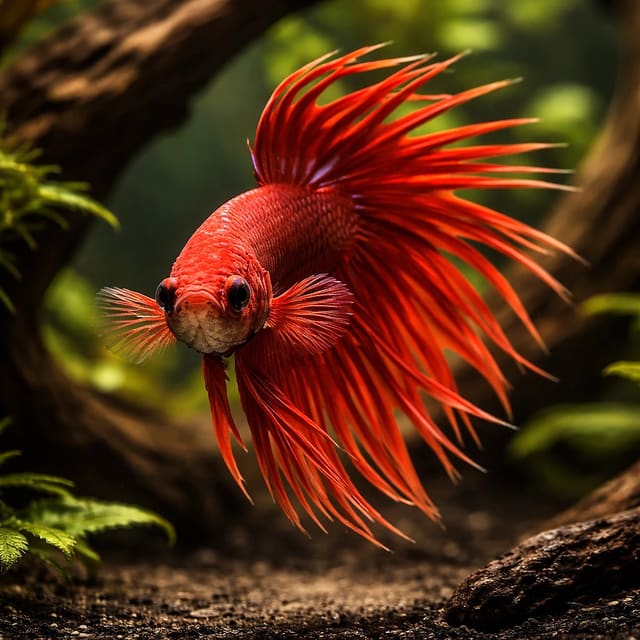
Crowntail Male Betta (Betta splendens)
26–28°C · pH 6–8 · 20L
£12.17£13.99

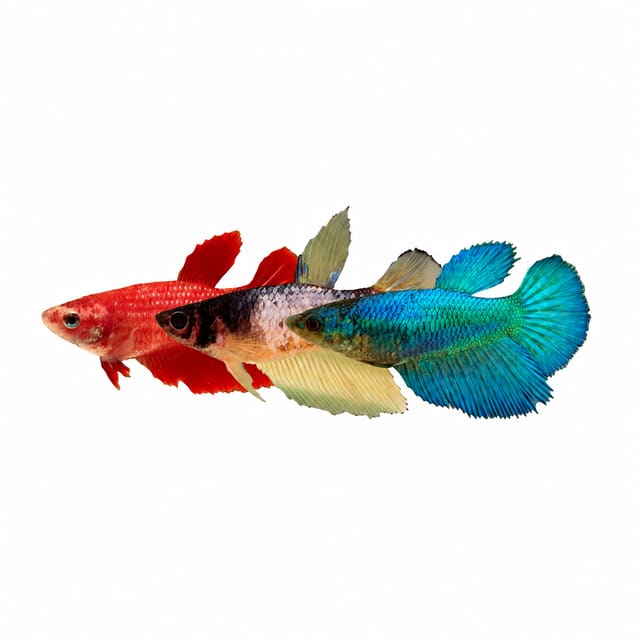
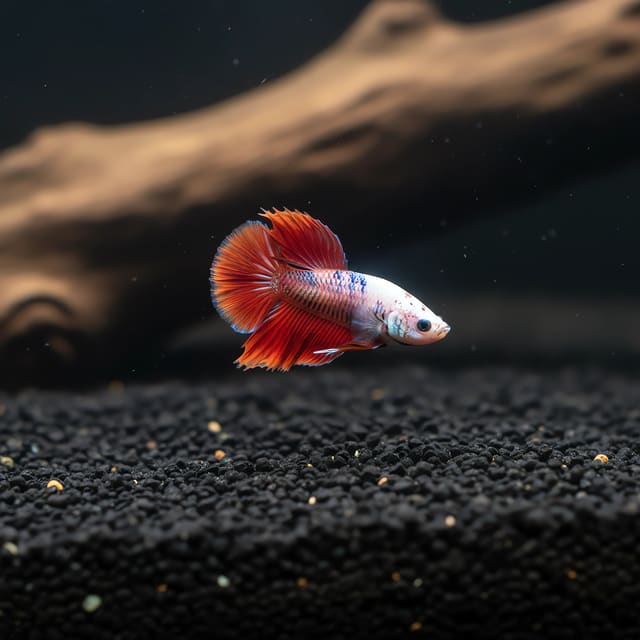
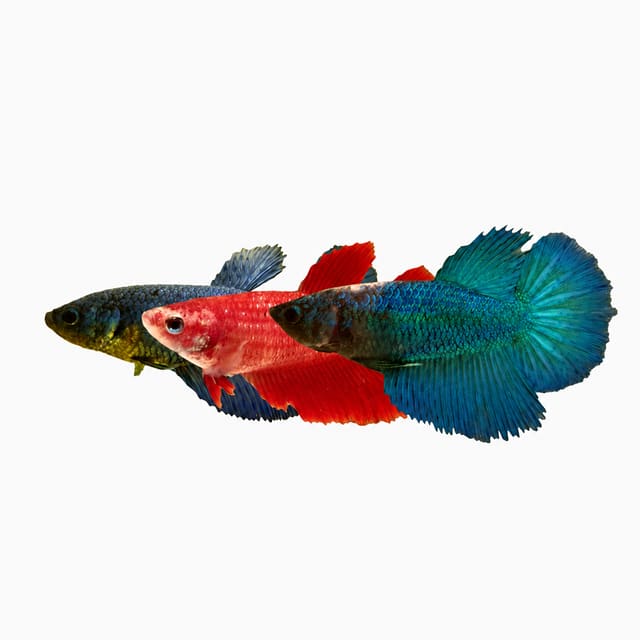
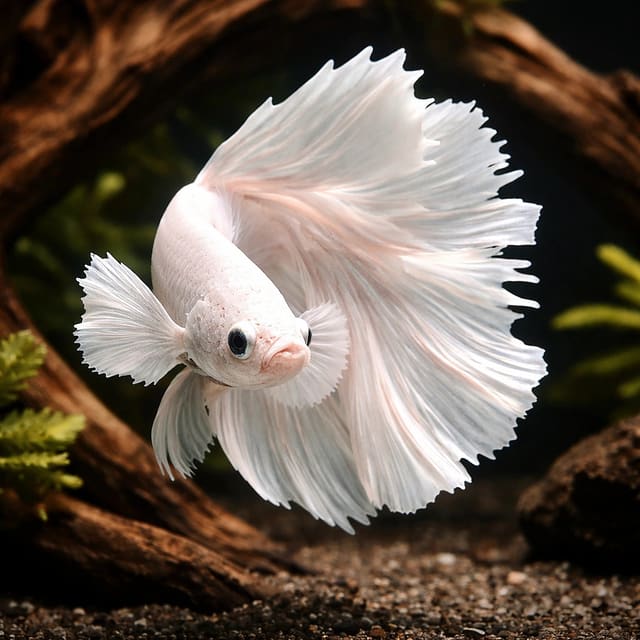
Female Plakat Betta Mix (Betta splendens) supplies one sexed female domestic Betta per purchase. Plan a planted, covered and gently filtered aquarium from a 45 × 30 cm base (about 41 litres), with stable 26–28°C water as Tropical Fish Co’s practical target. House one alone by default and assess any community plan cautiously.
Betta splendens
Female Plakat Betta Mix (Betta splendens) supplies one sexed female domestic Betta per purchase. Plan a planted, covered and gently filtered aquarium from a 45 × 30 cm base (about 41 litres), with stable 26–28°C water as Tropical Fish Co’s practical target. House one alone by default and assess any community plan cautiously.
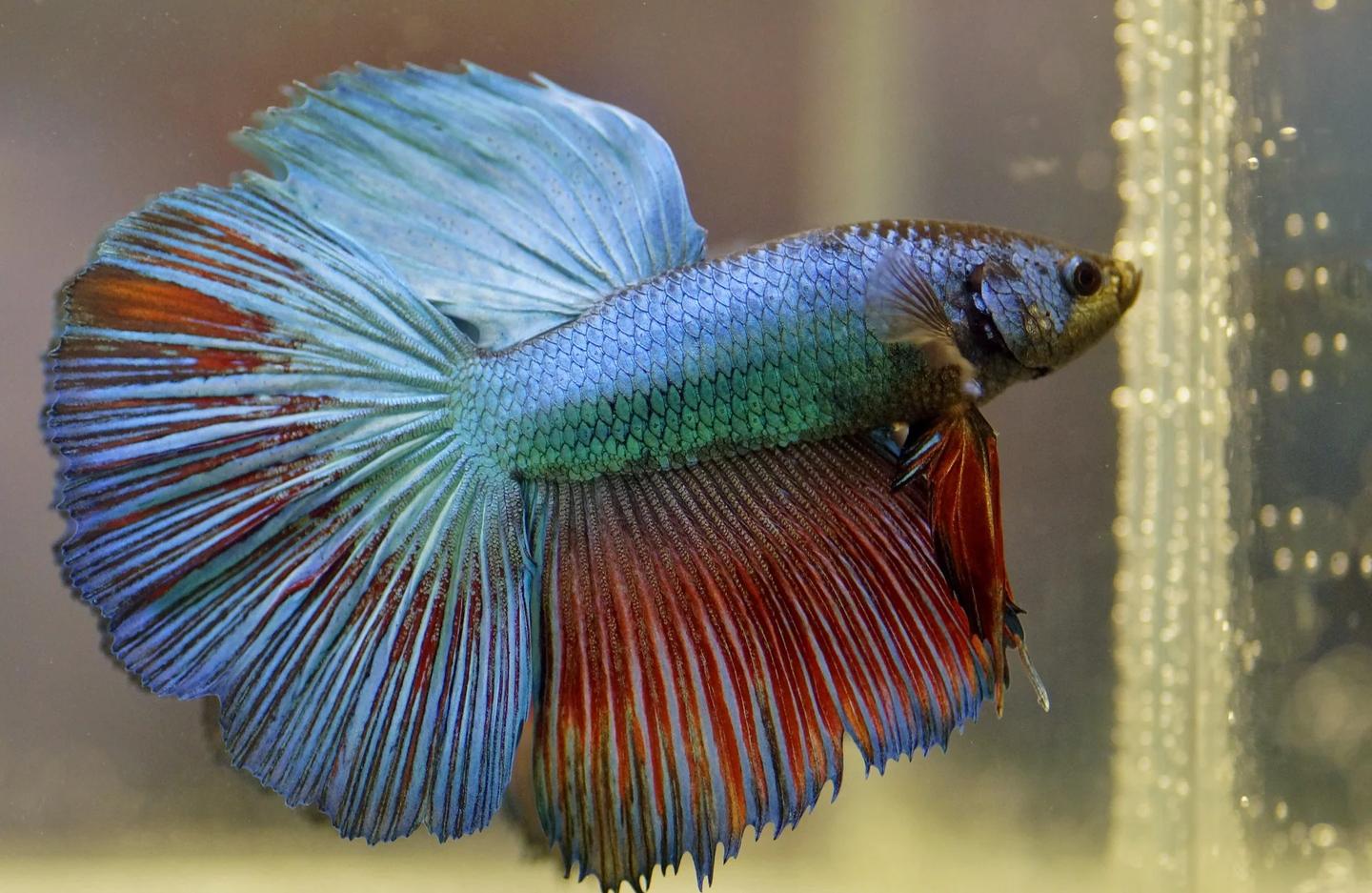
For one typical domestic Betta splendens, start with at least 20 litres, a mature filter, thermostatic heater, separate thermometer, gentle flow, a secure lid with surface access, and plants or refuges. Keep one male per aquarium.
Maintain these water conditions for optimal health and vibrant colors
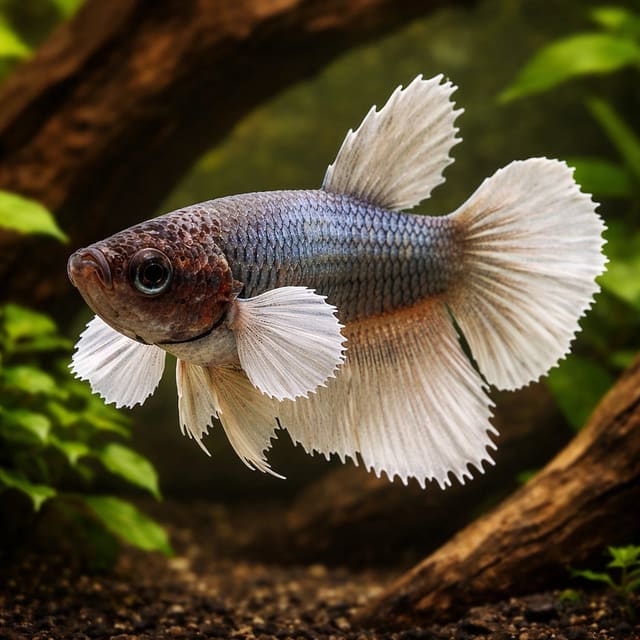
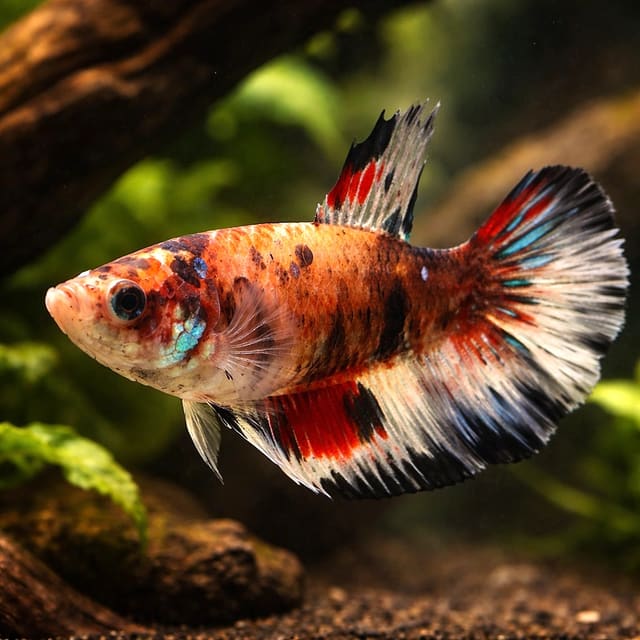
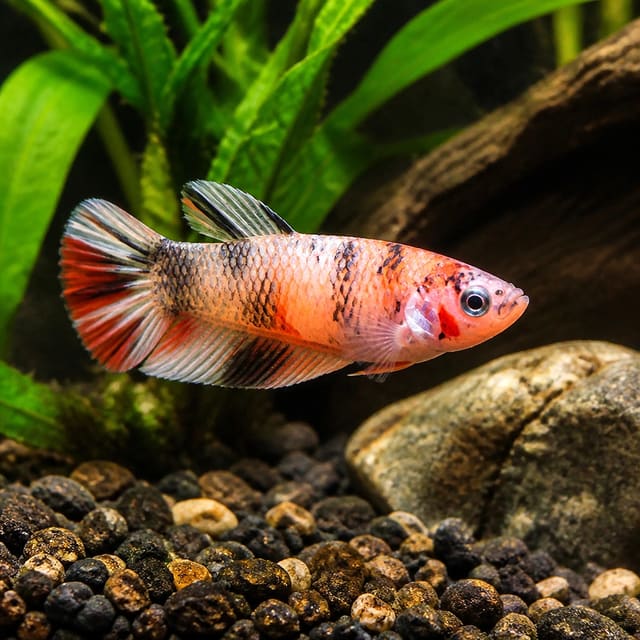
The Female Plakat Betta Mix is a domestic Betta splendens sold as one female fish per purchase. “Plakat mix” is the trade form attached to the offer, while Betta splendens is the accepted species identity. The word “mix” means the domestic colour and pattern are not promised as one fixed strain. Choose this fish because a female domestic Betta suits your aquarium plan, not because a particular shade is guaranteed.
This listing is explicitly sexed female. It is not a male listing and it does not turn every domestic Betta colour or fin shape into a sexing method. Sex is guaranteed only when the exact product or selected option explicitly states male or female. This Female Plakat Betta Mix listing is sold as female.
FishBase places Betta splendens in the family Osphronemidae and records the species from the Mekong basin. Domestic aquarium lines have a complex breeding history and wide variation in colour, body and fins. The wild distribution and conservation status describe the wild species; they are not provenance claims for this domestic fish.
Plan this animal as an individual, interactive labyrinth fish rather than a decoration for a bowl. Bettas can breathe atmospheric air using a labyrinth organ, but that ability does not replace a mature filter, stable heated water or an appropriately furnished aquarium. Clear surface access, gentle current and a secure cover all matter. The Betta fish care guide gives more detail on planning the aquarium, choosing equipment and keeping conditions stable.
One purchase supplies one fish. The offer carries no numeric dispatch measurement, so the published adult records must not be confused with a size guarantee on arrival. FishBase records 6.5 cm total length (TL), while Seriously Fish records 70 mm standard length (SL), which excludes the caudal fin. Those endpoints are not interchangeable and neither record supports a 7 cm total-length or universal adult maximum. For conservative practical planning, use the 45 × 30 cm base and about 41-litre species-profile recommendation, then choose more space where practical, rather than sizing the aquarium from one converted length.
A Female Plakat Betta Mix suits a keeper who will prepare the aquarium before buying, observe the individual and keep a separation plan for any attempted companions. It is not self-managing: the heater, mature filter, tests, cover and feeding routine all need regular attention.
| Suits | Not suited to |
|---|---|
| A covered, heated and biologically mature aquarium with gentle flow | An unfiltered bowl or new tank started on delivery day |
| A one-fish default social plan with careful screening of any companions | A purchase intended to complete an unplanned “sorority” or mixed Betta group |
| A keeper able to test water, control portions and observe behaviour | A setup relying on air breathing as a substitute for oxygenation and maintenance |
| A furnished aquarium with plants, shade, refuge and surface access | Sharp decor, strong current or an open top |
Use the live Betta collection to compare current forms and sexes. Product alternatives are comparisons, not animals to house together. Male and female listings should never be combined simply because their care figures overlap.
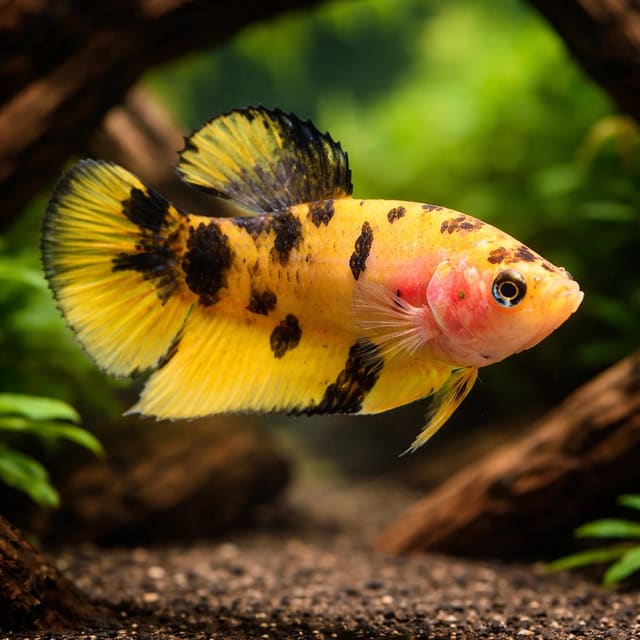
Gallery images have been digitally enhanced to improve image quality. Natural colour, pattern, size and maturity can vary between live animals.
Betta splendens is the common aquarium Betta or Siamese fighting fish. FishBase records it as a facultative air-breather and bubble-nest builder associated with standing and slow-water habitats in its native range. Domestic fish have been selectively bred into many colours and fin forms, so the appearance of one ornamental line should not be used to reconstruct a wild locality.
The term “plakat” belongs to the domestic trade form in this offer. Expect one female fish from a mixed domestic plakat offer, with natural individual variation rather than a guaranteed colour or pattern. Colour alone cannot diagnose welfare, age, temperament, fertility or pedigree.
Research on domestic Betta diversity shows that colour, fin, body-size and behavioural traits have a complex genetic history. That is useful when interpreting variation: two females can differ visibly while remaining the same species, and a bright or unusual pattern is not proof of better health. Judge the individual through appetite, posture, breathing, swimming and change over time.
Air breathing is sometimes used to justify tiny or stagnant containers. In reality, surface access and filtration solve different needs. The fish must reach air above the water, while the biological filter processes dissolved waste. A good setup provides both: an unobstructed surface with a small safe air gap beneath the lid, and a mature filter running continuously.
Seriously Fish gives a 45 × 30 cm aquarium base, about 41 litres, as large enough for a single male or pair. For this one female, that footprint is a practical conservative starting point because it provides swimming room, furnishing space and more stable water than a small jar. Treat it as a beginning, not a ceiling: decor reduces usable volume, and a community plan has to accommodate every adult animal.
A long, usable base matters more than a tall column of the same nominal volume. It lets the fish move between open water, cover and the surface without being trapped in filter flow. It also gives the keeper room to place a heater, protected intake, plants and refuges while keeping access for cleaning.
Set the aquarium up and cycle it before the fish arrives. The RSPCA explains that biological filtration converts toxic ammonia through nitrite to nitrate. Clear water alone cannot show that this cycle is ready for feeding and waste. Follow the first tropical tank guide, record test results and add livestock only after the system can keep ammonia and nitrite at zero.
Protect intakes and remove trapping gaps. Domestic Bettas explore the surface, edges and refuges, and a curious fish can enter spaces that look too small. Check that the lid closes around cables without leaving an escape route. Do not seal the water surface completely; the fish needs access to warm, humid air beneath the cover.
Run the complete setup for long enough to find practical faults before delivery. Confirm that temperature stays stable overnight, flow remains gentle after filter cleaning, the lid does not drip into electrical equipment and maintenance can be done without removing every refuge.
Tropical Fish Co uses 26–28°C as a practical target for a typical domestic Betta splendens. It sits within the wider published spans: OATA gives 20–28°C for tank-reared Bettas, FishBase records 24–30°C for the species, and Seriously Fish gives 22–30°C. These contexts differ, so the store target is a steady household care range rather than a claim that every value outside it is immediately harmful.
For pH and hardness, OATA group guidance gives pH 6.0–8.0 and 4–12 dGH, while Seriously Fish gives pH 6.0–8.0 and 1–15 dGH for ornamental strains. A stable aquarium within the overlap is more useful than repeatedly adjusting the water to hit a chosen midpoint. Measure your own supply and compare it with the fish’s established holding water before planning a transition.
Use the aquarium water-parameters guide to interpret tests and the water matcher to compare measured values. UK tap water varies by source and domestic treatment, so a neighbour’s pH or hardness cannot stand in for your aquarium result.
| Measure | Practical use |
|---|---|
| 26–28°C | Tropical Fish Co’s stable practical target for a typical domestic Betta |
| pH 6.0–8.0 | Overlap across OATA and Seriously Fish guidance; favour stability |
| 4–12 dGH | OATA’s soft-to-medium group range for tank-reared Bettas |
| Ammonia | Zero mg/L; investigate any detectable reading |
| Nitrite | Zero mg/L; investigate any detectable reading |
| Nitrate | Track the trend and control it with feeding, stocking and maintenance |
Use a conditioner suitable for the disinfectant in the supply, and match replacement-water temperature closely. Avoid rapid pH or hardness correction. A number inside a published range can still cause stress when reached through a sudden change.
Warm water holds less dissolved oxygen than cooler water. Maintain gentle surface movement and an open route to the surface. Labyrinth breathing is an extra respiratory route, not permission to let water quality or circulation deteriorate.
Seriously Fish recommends a well-planted, shady aquarium with surface cover, driftwood and additional shelter. OATA likewise calls for plants, refuges, gentle current and a secure cover with a small air gap. These features should work together: the fish needs calm resting places without losing access to clean moving water or the surface.
Diffuse the filter outlet if the fish is repeatedly pushed away from a preferred area or cannot rest comfortably. Do not turn off essential biological filtration to create calm water. Redirect flow against glass, use an appropriate spray bar or choose a gentle sponge-filter arrangement while still maintaining circulation and waste processing.
Use live plants or smooth aquarium-safe alternatives. Floating plants can provide shade, but leave open surface areas. Check artificial leaves, ornaments and holes by touch; sharp seams and tight openings can damage or trap a fish. The plakat trade form should not be used as an excuse for rough decor simply because the listing is not a long-finned male.
A secure lid reduces escape risk and helps retain warm humid air above the water. Make openings only as large as equipment requires. Recheck them whenever cables or pipework are moved.
Observe the individual after changes. Hovering, repeated wall interaction, hiding and unusual surface use can have several causes; check water, flow, furnishing and recent disturbances together. One behaviour by itself is not a welfare score or diagnosis.
FishBase describes wild Betta splendens feeding on zooplankton and insect larvae. Aquarium husbandry should translate that biology into a reliable domestic diet rather than an attempt to recreate an uncontrolled live-food menu. OATA recommends a good-quality aquarium flake or pellet, including specialised Betta pellets, with small live or frozen foods such as daphnia or bloodworm as variety.
Make a suitably sized complete pellet or flake the nutritional base. Different products have different pellet sizes and energy density, so a universal pellet count or eye-size portion rule is unreliable. Begin with the maker’s guidance, watch how promptly the food is eaten and adjust to the individual’s condition.
Overfeeding is both a nutrition and water-quality problem. Leftovers break down into waste, and a heavily fed small aquarium can lose stability quickly. If food remains, reduce the next portion and inspect filter flow, waste traps and test results.
Live and frozen foods also require sensible handling. Use reputable aquarium products, thaw or portion them as directed and avoid introducing outdoor organisms of uncertain origin. A diverse diet is useful only when each item is safe, appropriately sized and part of an overall balanced routine.
Changes in appetite deserve context. Check temperature, ammonia, nitrite, recent maintenance and social pressure before assuming a disease. Persistent refusal, swelling, weight loss, breathing change or abnormal posture merits experienced aquatic-health advice.
A weekly routine should combine water testing, partial water change, substrate cleaning and equipment inspection. OATA strongly recommends a partial water change of 25% at least once every week for Bettas, while the actual aquarium’s nitrate trend, stocking and feeding show whether more frequent attention is needed.
Treat replacement water for chlorine or chloramine before it reaches the fish. Match temperature and avoid sudden chemistry changes. Do not run filter media under the tap; rinse it lightly in removed aquarium water when flow needs restoring. Tap water can damage the organisms that process waste.
Healthy individuals vary, so learn this fish’s usual posture, feeding, breathing, colour and swimming. A change matters more than a generic internet photograph. White marks, fin damage, swelling, rapid breathing or unusual swimming can have several causes and should not trigger random medication.
The MSD Veterinary Manual emphasises aquarium history, water analysis and proper diagnosis. Medication chosen from one visible symptom can miss the cause and add stress. Record what changed, preserve photographs and test results, and seek qualified help when the situation exceeds routine husbandry.
Plan for a multi-year commitment without attaching a fixed lifespan to the sale. Domestic line, age at purchase, disease exposure, nutrition and water stability all affect outcome. Good care is a continuing process rather than a promised number of years.
Have the heated, filtered aquarium ready before dispatch. Someone must be present to receive live fish, and the current delivery and Live Arrival Guarantee policy should be read before the parcel arrives.
Keep the route to the surface open and the first refuge easy to reach. Dim, calm surroundings can reduce disturbance, but the heater and filter should continue running normally. Prevent established residents from crowding the new fish.
Do not use delivery day to complete cycling, alter pH or test an unfamiliar community combination. Preparation gives the fish the best chance to settle and protects the claim evidence if transport has caused a problem.
Seriously Fish describes Betta splendens as best maintained alone and not a routine standard-community choice. Some individuals tolerate carefully chosen companions, but that is the exception rather than an entitlement. Female sex does not automatically remove territorial behaviour or make a mixed Betta group safe.
The safest default for this offer is one female as the only Betta. If companions are considered, screen adult size, water overlap, swimming zone, fin-nipping risk, feeding competition and total aquarium capacity. Seriously Fish names some small cyprinids and loaches from similar environments as possible candidates, but each exact species still needs research and a ready separation plan.
Avoid other Bettas as a casual addition. Male-female housing is a breeding arrangement with injury risk, not a permanent community shortcut. Female groups require much more space and structure than one fish and can still break down when hierarchy or health changes. This listing should not be used to fill a group by colour.
Do not assume shrimp, snails or fry are safe companions. The fish may investigate or hunt small animals, while larger or defensive invertebrates can create their own injury risks. Any invertebrate plan needs refuge and its own compatible water and feeding conditions.
Individual temperament can change with maturity, health, rearranged decor or breeding condition. Continue observing after an apparently calm introduction. Persistent chasing, hiding, missed meals, torn fins or blocked surface access means the plan needs intervention, not more time to “settle”.
OATA discusses groups of females in at least 60 litres, while Seriously Fish favours keeping the species alone in most cases. Those positions reflect the uncertainty and experience involved in female group dynamics. For a product listing, the clearer welfare-first default is one female, with group housing treated as an advanced project rather than a standard feature of the fish.
More space and plants can provide escape routes and visual separation, but they cannot guarantee a stable hierarchy. A group can change after one fish matures, becomes ill or is removed. The keeper must be able to separate animals promptly without starting a new tank from scratch.
Single housing still needs enrichment and observation. Provide planting, shade, open swimming room and a predictable feeding routine. Interaction with the keeper, movement through a furnished aquarium and access to calm surface areas are more useful than adding another Betta for assumed companionship.
Crowntail male and female Bettas appear in the related-products field as alternative choices. They are not proposed companions for the Female Plakat Betta Mix. Compare their offers and choose the one fish that suits the prepared aquarium.
FishBase records 6.5 cm total length, while Seriously Fish records 70 mm standard length, which excludes the caudal fin. These are different measurement bases and do not support one 7 cm maximum. For practical planning, start from a 45 × 30 cm base, about 41 litres, and choose more space when practical.
Start from a 45 × 30 cm base, about 41 litres, for this individual female and choose more space when practical. Seriously Fish gives that footprint for a single male or pair; usable volume, furnishing, filtration and maintenance access still matter.
House one female alone by default. OATA discusses female groups in at least 60 litres, but Seriously Fish favours single housing in most cases. A group requires experienced observation, extensive structure and an immediately ready separation aquarium.
It can suit a careful beginner who has already cycled a heated, filtered and covered aquarium and can test the water. The care level is intermediate because compatibility, portions, gentle flow and stable warm water still require active decisions.
Use a suitably sized complete Betta pellet or quality flake as the main food, with small live or frozen foods such as daphnia, Artemia or bloodworm as variety. Measure portions, remove leftovers and judge intake by the individual’s body condition.
Tropical Fish Co uses a stable 26–28°C practical target for a typical domestic Betta. OATA’s group guidance gives pH 6.0–8.0 and 4–12 dGH. Test the aquarium and favour stable conditions over chasing a midpoint.
Individual temperament varies, and female sex does not guarantee community compatibility. Avoid casual mixing with other Bettas and screen companions for fin-nipping, chasing, food competition and surface access. Keep a separation plan ready.
No fish is automatic. Seriously Fish suggests that some small cyprinids and loaches from similar environments can work for tolerant individuals, but the exact species, aquarium size and behaviour must be assessed separately. Single housing remains the safest default.
Tropical Fish Co hand-packs live fish in an insulated box for a licensed live-animal courier. Be present and record a continuous unboxing video from the sealed parcel through opening to the fish in its sealed bag. Float the sealed bag for 20–30 minutes, and contact the shop the same day with the order number and video if anything is wrong.
Wild habitat and conservation facts do not describe where this domestic fish was bred. For routine care, keep a typical domestic Betta at a stable 26–28°C and plan to house this female alone by default. Female groups are an advanced setup and need generous space, close observation and an immediate separation plan.
No reviews for this item yet. Bought one? Honest reviews only, good or bad.
What customers say about ordering from us
I have a small group of long finned mountain minnows. So was delighted to be able to order ten of this variety to increase the genetics in my tank . The ones I recieved are healthy but it’s to early to give a verdict on wether they are of a long finned type since they are small currently.
Gordon Walker · 23 Sept 2026
100% success travel and "installation". Pleased with quality of purchase. The Siamese fighter a bit "shy" so have not yet seen him at his best yet but looking good. Happy customer. GG
George E Garratt · 21 Sept 2026
Reviews of our shop, collected by Judge.me, an independent third-party review collector. Newest first.