−13%
Moderate
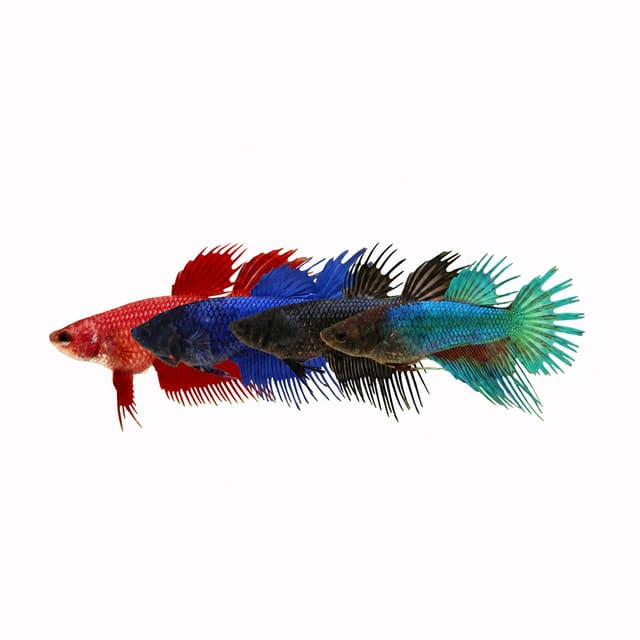
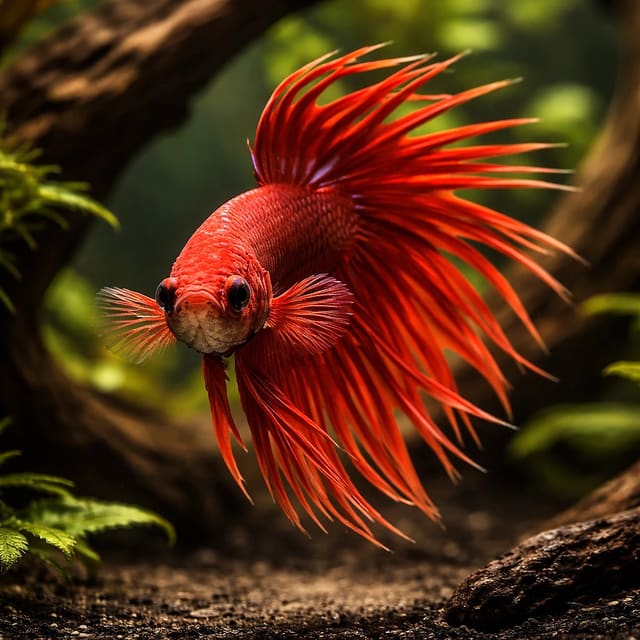
Crowntail Male Betta (Betta splendens)
26–28°C · pH 6–8 · 20L
£12.17£13.99

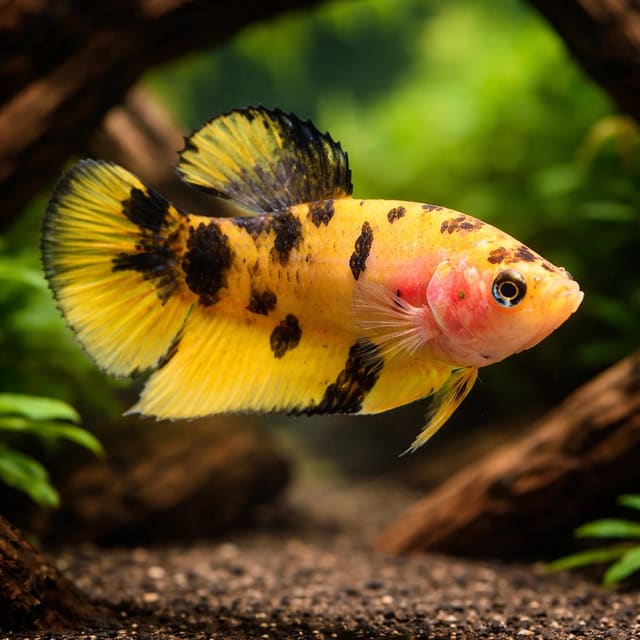
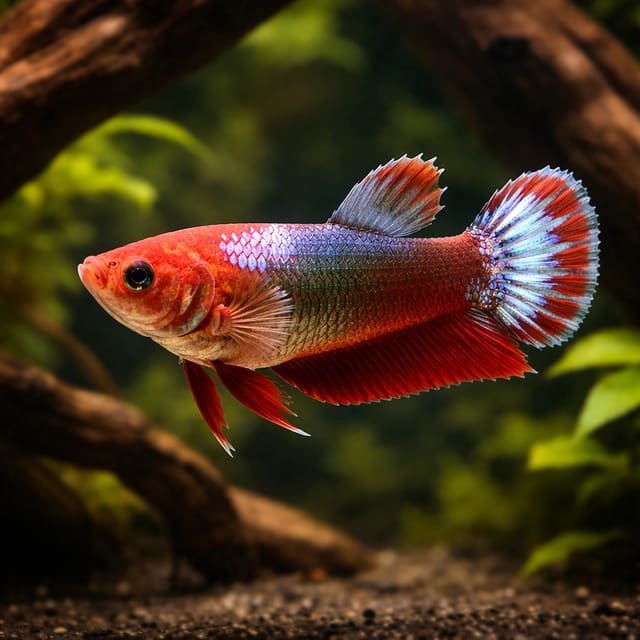
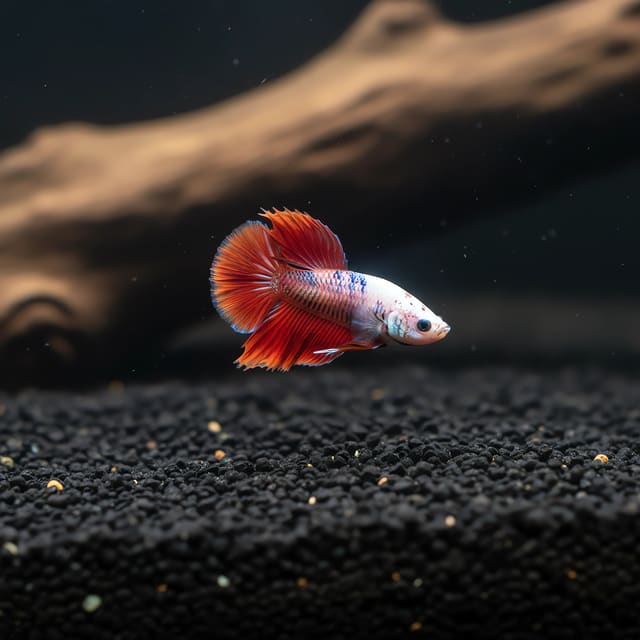
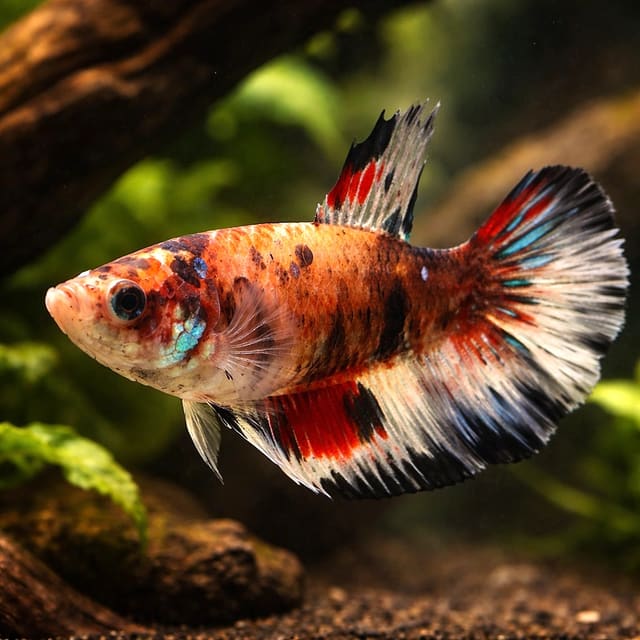
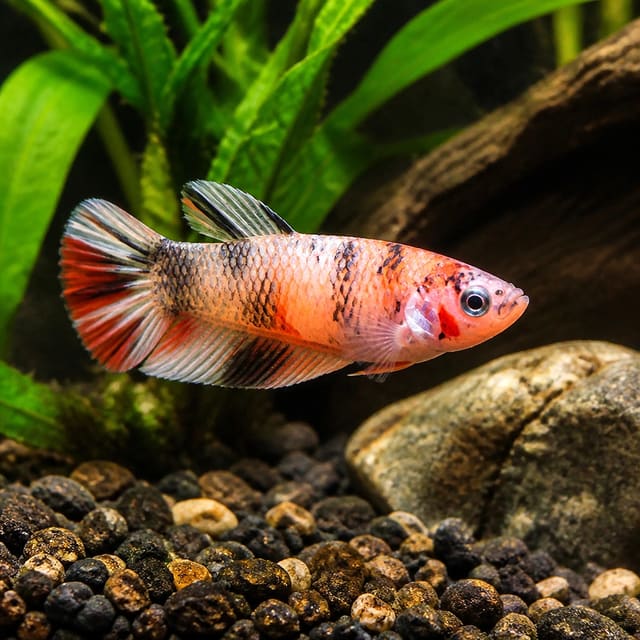
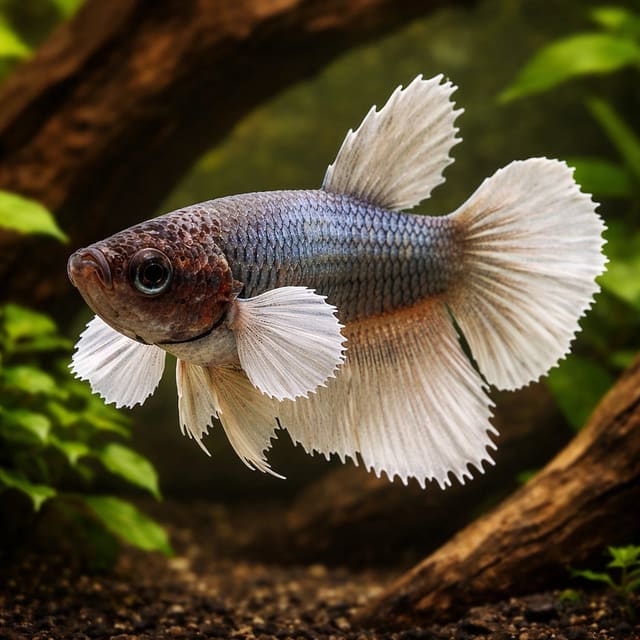
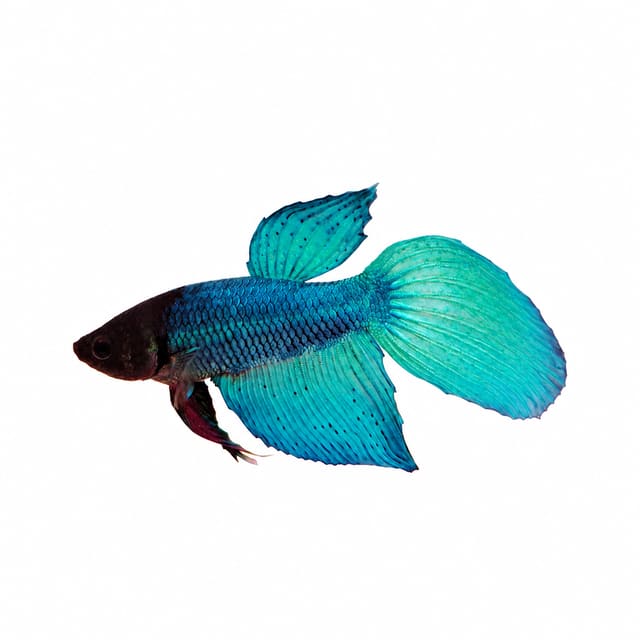
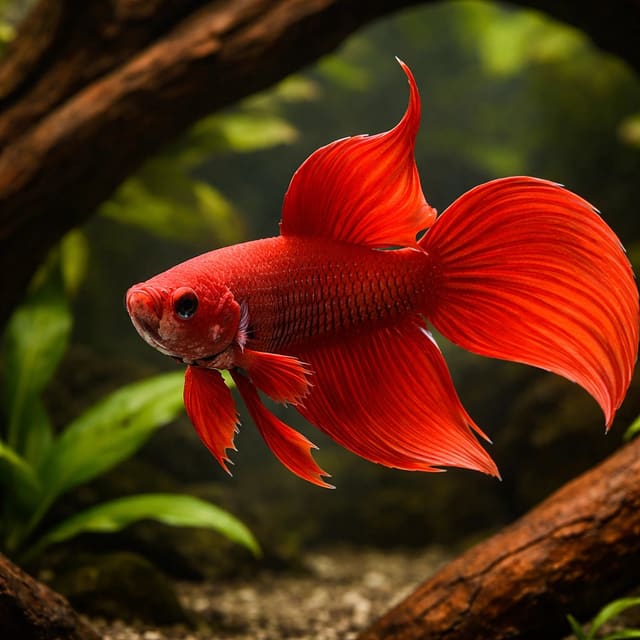
Halfmoon Female Betta Mix (Betta splendens) is supplied as one female fish in the listed XL grade. This territorial labyrinth fish suits a prepared keeper who can provide a mature, heated, covered and well-furnished aquarium, gentle flow, measured feeding and a separation plan for any attempted companions.
Betta splendens
Halfmoon Female Betta Mix (Betta splendens) is supplied as one female fish in the listed XL grade. This territorial labyrinth fish suits a prepared keeper who can provide a mature, heated, covered and well-furnished aquarium, gentle flow, measured feeding and a separation plan for any attempted companions.
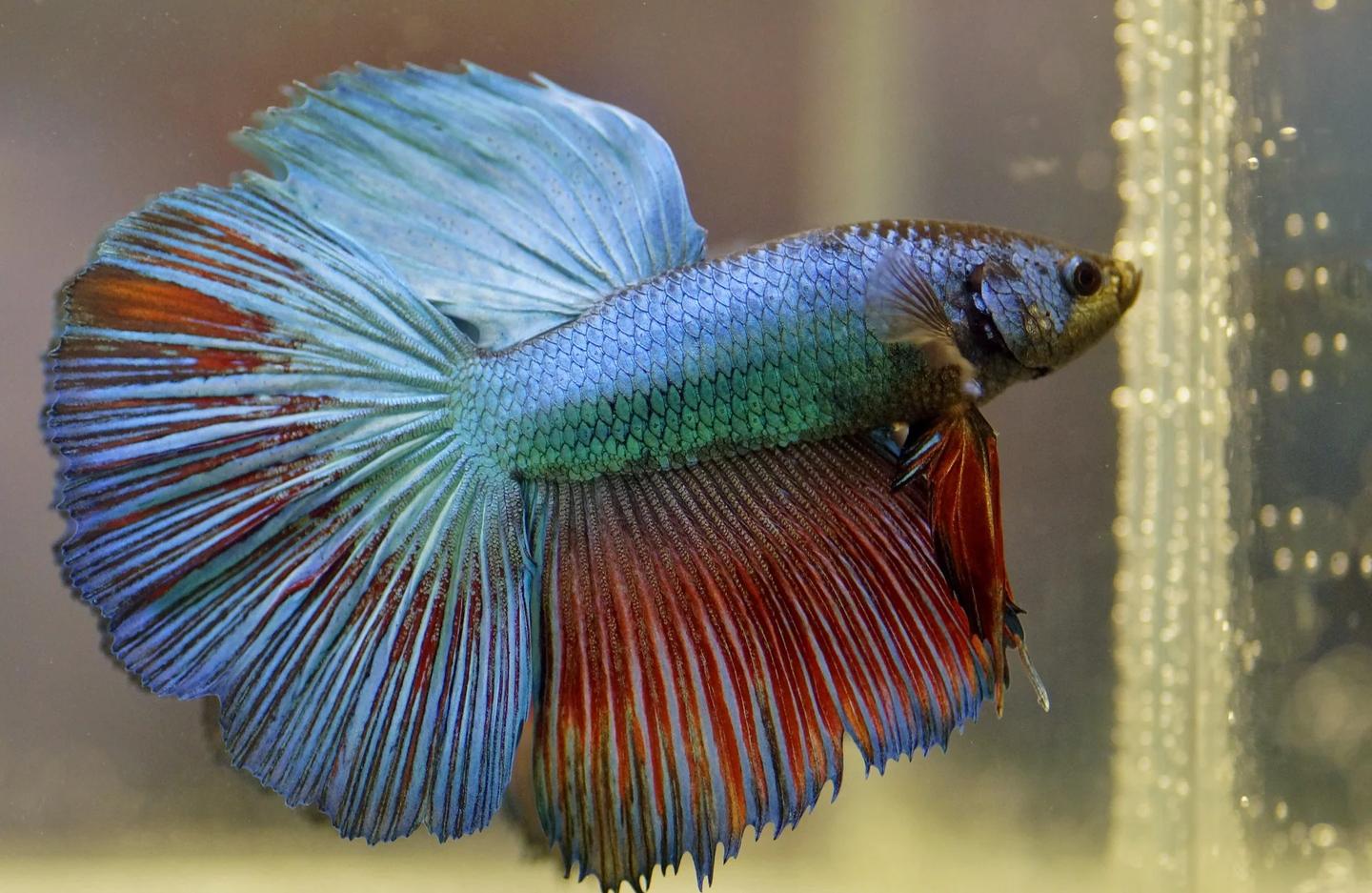
For one typical domestic Betta splendens, start with at least 20 litres, a mature filter, thermostatic heater, separate thermometer, gentle flow, a secure lid with surface access, and plants or refuges. Keep one male per aquarium.
Maintain these water conditions for optimal health and vibrant colors
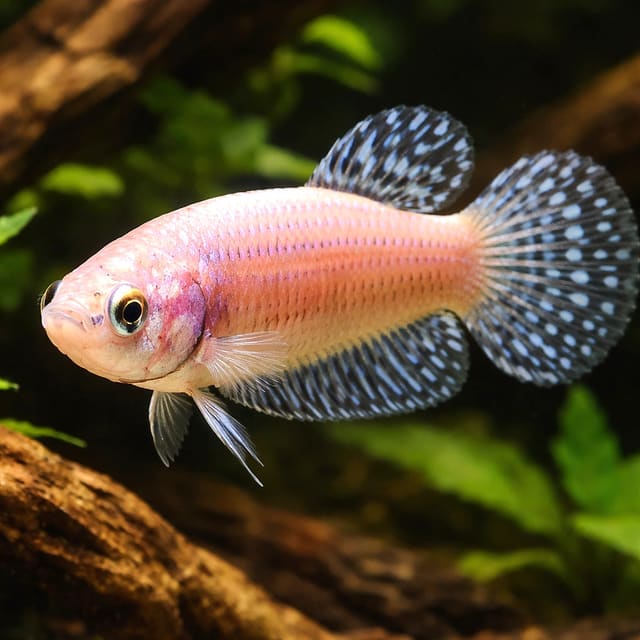
The Halfmoon Female Betta Mix (Betta splendens) is a domestic female labyrinth fish offered as one live fish per purchase. The exact offer is a mixed-colour Halfmoon female in the listed XL grade, so the reliable buying facts are the female sex, the form and the sold unit rather than a promised colour pattern. She is most useful to a keeper who wants an expressive single centrepiece and is willing to prepare stable warm water, gentle filtration and generous cover before the fish arrives.
This is not a bowl fish and not a decoration that can be fitted into any spare community. Betta splendens can take atmospheric air through its labyrinth organ, yet it still depends on a mature biological filter, zero ammonia and nitrite, safe temperature control and clear access to the surface. A planted, covered aquarium with subdued areas and calm flow lets the fish choose between exploring, feeding and resting without being pushed around the tank.
| Suits | Not suited to |
|---|---|
| A prepared keeper wanting one female Betta as the main fish | An uncycled bowl, vase or unheated temporary container |
| A mature, covered and well-furnished aquarium with gentle flow | A rushed community assembled without a separation plan |
| Someone happy to test water, measure food and observe behaviour | A buyer expecting a guaranteed shade, pedigree, temperament or exact photographed fish |
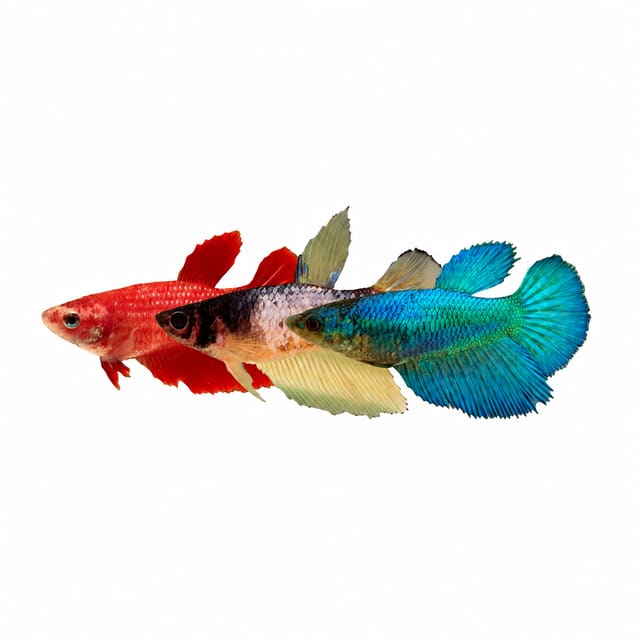
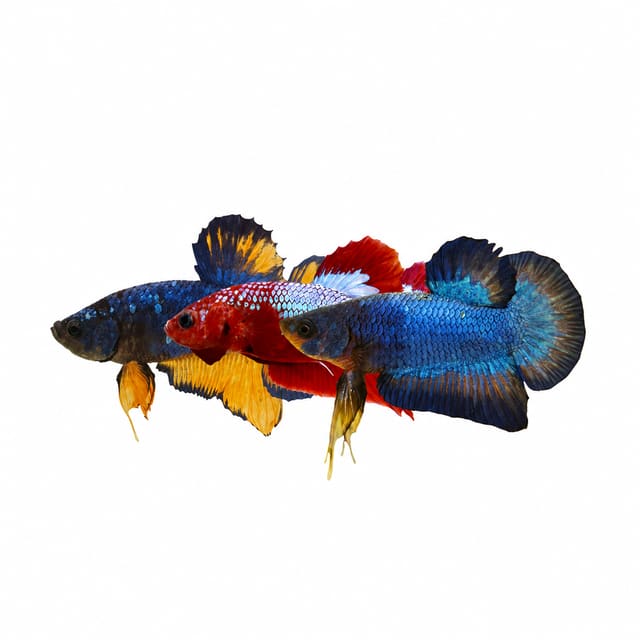
One purchase supplies one female fish in the listed XL grade. The word “mix” refers to the domestic colour assortment, not to a mixture of species, and the scientific identity remains Betta splendens. Sex is guaranteed only when the exact product or selected option explicitly states male or female. This Halfmoon Female Betta Mix listing is sold as female.
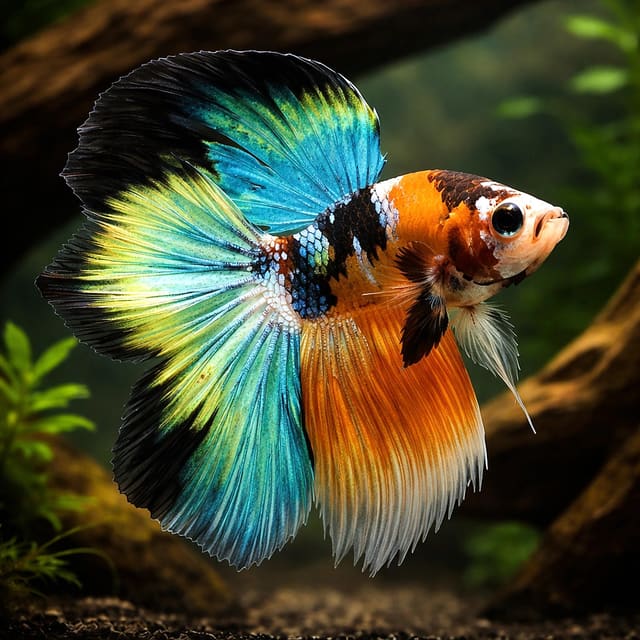
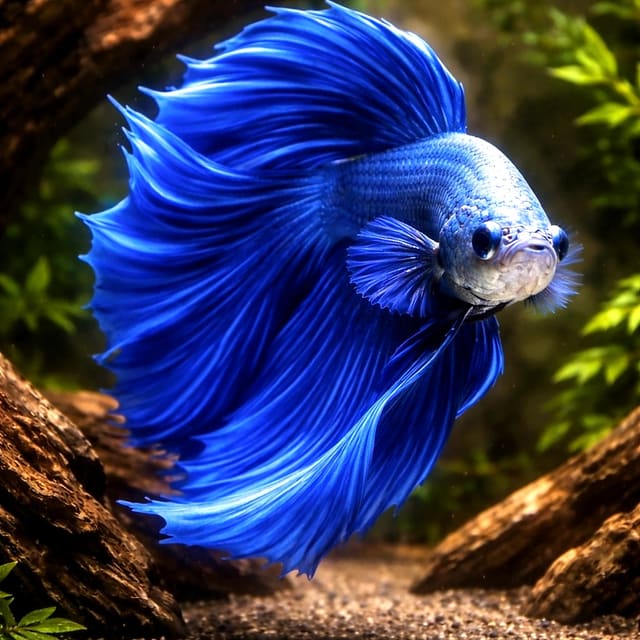
The name Halfmoon describes a domestic fin form. Selective breeding has produced substantial diversity in colour, fin outline and body appearance, so an individual can change in apparent intensity under different lamps and backgrounds. The genomic study of domestic Betta diversity is a useful reminder that appearance is complex; colour does not prove age, health, pedigree or temperament.
Betta splendens Regan, 1910 belongs to the family Osphronemidae. FishBase records 6.5 cm total length (TL), while the specialist aquarium profile records 70 mm standard length (SL). These measurements use different endpoints, so each remains tied to its source rather than selecting the larger number as one adult maximum.
At least 20 litres is Tropical Fish Co’s starting screen for one typical domestic Betta, and larger furnished aquaria are easier to keep stable. A specialist profile uses a 45 × 30 cm base, roughly 41 litres, as suitable for a single fish or pair. Think beyond the label on the tank: substrate and decor reduce usable water, while surface area, swimming room, maintenance access and filter behaviour determine how the aquarium functions.
Gallery images have been digitally enhanced to improve image quality. Natural colour, pattern, size and maturity can vary between live animals.
For deeper background after this offer overview, use the complete Betta care guide. To compare other domestic forms without turning them into companion recommendations, browse the current Betta collection.
Build the aquarium around stability and choice. A female Betta should be able to move between open water, shaded planting, a quiet resting area and the surface without crossing a strong jet. Prepare all of that before purchase; trying to correct heat, flow and water quality after a fish arrives makes the most vulnerable period harder.
Clear water is not proof that a new aquarium is biologically ready. Fish release ammonia, and a working biofilter supports organisms that convert it first to nitrite and then to less harmful nitrate. The RSPCA aquarium environment guidance explains why filtration is essential. Use the store’s first tropical tank guide to prepare and mature the system before livestock is introduced.
Test the aquarium rather than judging by appearance. OATA’s broad guidance for tank-reared Bettas calls for ammonia and nitrite at zero and nitrate no more than 20 mg/l above the normal tap-water level. Record results during cycling and after the fish is introduced. An unexpected reading is a reason to review feeding, filter function, stocking and maintenance, not to cover the symptom with an unplanned additive.
Tropical Fish Co uses at least 20 litres as a starting minimum for one typical domestic Betta. That value comes from UK care guidance and is a floor, not an ideal ceiling. The Seriously Fish species profile gives a 45 × 30 cm base, about 41 litres, for a single fish or pair and rejects tiny jars as normal housing. A longer footprint gives more room for plants, gentle circulation and distinct resting places.
Check the tank’s real internal dimensions and filled volume. A nominal 20-litre kit loses capacity to substrate, hardscape and an air gap, while an awkward tall shape may offer less useful horizontal room. More water generally changes temperature and chemistry more slowly, but capacity does not compensate for an immature filter, inaccessible surface or unsafe furnishings.
The species profile gives 22–30°C for ornamental Betta splendens. Tropical Fish Co uses 26–28°C as a practical target for a typical domestic Betta, comfortably inside that range. Use a thermostatic heater chosen to the manufacturer’s instructions and confirm the result with a separate thermometer. Measure at different times of day until you understand how the room, lid and equipment affect the aquarium.
Stability matters more than chasing a decimal. A sudden adjustment can be stressful even when the destination falls inside a published range. During a water change, prepare replacement water, treat chlorine or chloramine and bring it reasonably close to the aquarium temperature before adding it gradually. Heater wattage is not universal: room temperature, aquarium volume, cover and manufacturer limits all influence the correct choice.
The specialist species profile gives pH 6.0–8.0 and hardness 1–15 dGH for ornamental strains. OATA’s group guidance for tank-reared Bettas gives 20–28°C, pH 6.0–8.0 and 4–12 dGH. These are useful planning ranges from different contexts. Test the aquarium, learn the fish’s established holding water and make changes slowly rather than forcing the water to the middle of a chart.
UK tap water varies. Conditioner removes chlorine or chloramine when used correctly, but it does not make every supply chemically identical. The water chemistry guide explains the values to test, and the water matcher helps compare measured aquarium water with the stated guidance. Domestic softeners and drinking-water filters can alter mineral content, so test the water that actually reaches the tank.
Betta splendens comes from sluggish habitats and should not spend the day fighting a current. A sponge filter or diffused outlet is often useful. Watch the fish: repeated sweeping, difficulty holding position and inability to rest suggest that flow needs redirecting or reducing. Keep the biofilter operating while making the movement gentler; the labyrinth organ is extra respiratory equipment, not a substitute for clean filtered water.
Leave clear access to the surface, because the fish takes atmospheric air. Fit a secure lid while retaining a safe air space below it. Covers reduce escape risk and help keep the air immediately above the water warm and humid. Check that floating plants do not seal the whole surface and that decor cannot trap the fish on its route upwards.
Use live plants or smooth aquarium-safe alternatives, with shade, broad resting surfaces and refuges. Tall stems, floating plants, driftwood and carefully chosen pots or tunnels can create useful zones. Inspect every opening for trapping risk and run a finger over artificial decor for rough edges that could damage fins. Leave an open feeding area so food can be seen and removed.
Leaf litter can add cover where it is maintained appropriately, but it is not compulsory. The objective is a structured aquarium that remains easy to inspect and clean. Position the heater and filter so the fish cannot become trapped behind them. If the aquarium stands beside another Betta tank, block direct sight lines rather than relying on constant flaring as enrichment.
Wild Betta splendens feed on zooplankton and insect larvae. In the aquarium, use a suitably sized complete Betta pellet or quality aquarium flake as the nutritional base. The OATA care sheet also supports small live or frozen foods such as daphnia, bloodworm or tubifex as variety; the specialist profile mentions Daphnia, Artemia and chironomid larvae. A varied menu does not mean unlimited portions.
Offer only what the fish consumes promptly and remove leftovers before they decay. Product size and energy density differ, so one universal pellet count is unreliable. Observe body condition over time and follow the food maker’s guidance. If several people feed the aquarium, pre-measured portions prevent accidental doubling. Appetite changes are useful observations but not diagnoses by themselves.
OATA recommends a weekly partial water change of about 25% for Betta aquaria, alongside regular testing. Siphon settled waste without stripping every surface clean at once. Treat replacement tap water before it enters the aquarium. If filter media needs cleaning, rinse it lightly in removed aquarium water rather than under chlorinated tap water, which can harm the biological community the filter depends on.
Check the heater, thermometer, lid and filter at every maintenance session. Note temperature, ammonia, nitrite, nitrate and pH so gradual change is visible. Clean observation is more useful than a perfect-looking photograph: compare the fish with her own normal appetite, breathing, posture, swimming and colour.
A single test gives a snapshot. A dated sequence shows whether the aquarium is settling, drifting or reacting to a recent change. Use the same kit carefully, follow its timing instructions and record the result before deciding what to do. When an unexpected value appears, repeat the test if the instructions support that, check the equipment and consider what changed in feeding, maintenance or household water.
Do not respond to every difference by changing several things at once. Large water-quality problems need prompt action, but ordinary fine-tuning is easier to assess when each adjustment is measured and gradual. Keep the fish’s behaviour beside the numbers: surface access, steady breathing, confident feeding and normal rest all help form a fuller picture, while none of them cancels an unsafe ammonia or nitrite result.
Before travel, bad weather or a power interruption, decide who will check the aquarium and what that person needs to know. Pre-portion food rather than leaving an open container with vague instructions. Label the correct conditioner and keep the delivery policy, order details and aquarium notes accessible. A helper should know where the mains switches are, but should not dismantle equipment or make large water changes without a clear reason.
After an interruption, verify the thermometer and filter movement first, then test water if the filter stopped or the fish behaves differently. Avoid feeding extra to compensate for a missed meal. Resume the normal measured routine once temperature, circulation and water quality are stable. This practical continuity is one reason a mature, sensibly sized aquarium is preferable to the smallest possible container.
Have the aquarium ready, heated and tested before dispatch. Be present to receive the live parcel. Start a continuous unboxing video while the parcel is still sealed, keep the outer box visible, open and inspect it the same day, and keep the fish inside the sealed bag while its condition is recorded. Only after that should the sealed bag be floated for 20–30 minutes before release.
Keep bag water out of the aquarium. If there is a Live Arrival Guarantee problem, contact Tropical Fish Co the same day with the order number and continuous video so the team can assess a replacement or refund under the current delivery and Live Arrival Guarantee policy. The video is claim evidence; it is not an aquarium-care step to perform after the bag has already been opened.
Reduced appetite, altered breathing, clamped or damaged fins, unusual resting, erratic swimming, paler or darker colour and body-condition change all deserve attention. Begin with measured water: temperature, ammonia, nitrite, nitrate and pH. Review recent maintenance, new livestock, feeding and equipment changes. The MSD Veterinary Manual’s aquarium-fish guidance emphasises history and water analysis as part of proper investigation.
A visible mark or torn fin can have more than one cause. Avoid combining medicines or altering temperature from a casual online diagnosis. When signs are severe, persistent or unexplained, seek experienced aquatic help; OATA provides a UK fish-vet directory. Isolating a fish may protect the display aquarium, but the separate tank must also be heated, filtered and monitored.
Keep the established temperature, flow and lighting routine steady after release. Offer a small measured feed only when the fish is settled enough to respond, remove leftovers and avoid repeatedly moving decor to encourage activity. The useful question is whether the female can find cover, reach the surface, rest and feed without obvious pressure.
Test water on the schedule chosen for the newly stocked aquarium and compare the results with the pre-arrival record. If ammonia or nitrite appears, respond to the measured water-quality problem and review filter function and feeding. Do not add companions during this observation period. A calm first week gives the keeper a clearer baseline for the individual fish’s normal posture, breathing, appetite and use of the aquarium.
Lighting can be kept moderate while the fish explores. Check from a distance as well as during feeding, because constant close attention may change behaviour. Once the routine is established, continue with the same measured husbandry rather than treating the first week as a separate temporary setup.
The prepared permanent aquarium should remain the centre of the plan. Temporary cups and small holding containers do not provide the same stability, filtration, heat control or behavioural choice.
A female Betta is often less combative than a male, but “female” is not a promise of community behaviour. The individual may defend a resting place, chase another fish or hunt small invertebrates. The lowest-risk starting plan is one Halfmoon female in an aquarium designed around her needs. Treat every addition as a new decision about space, water, feeding and behaviour.
The specialist species profile says ornamental Betta splendens are usually best kept alone and that males and females are normally separated outside breeding. OATA describes female groups of at least four in aquaria of at least 60 litres, but also requires dense planting and acknowledges the management challenge. Two or three females do not automatically form a stable social unit, and adding more fish is not a cure for visible bullying.
If an experienced keeper attempts a female group, provide numerous visual barriers, distribute refuges, observe feeding access and keep a fully usable separation aquarium ready. Chasing that prevents feeding or rest, repeated hiding, fin damage and persistent exclusion are reasons to separate. A group that appears calm today still needs continued observation.
The species profile notes that some small cyprinids and loaches from similar environments may be suitable, but it still presents this as an exception requiring research. That is a category to investigate, not a guarantee for every rasbora, danio or loach. The RSPCA compatibility guidance likewise stresses checking the needs of the actual species being combined.
Shrimp, snails and fry should not be treated as universally safe cleaners. A Betta may investigate or hunt a small animal, while a large or defensive invertebrate can introduce a different injury risk. Dense planting may provide refuge, but it cannot guarantee the outcome. Choose companions because the full aquarium suits them, not because they perform a cleaning job.
Long or conspicuous fins attract some nippers, and a stressed Betta may also direct aggression towards fish with similar outlines or trailing finnage. Avoid species known for persistent nipping and highly active fish that repeatedly crowd the surface. During introductions, watch whether the Betta can rest, surface and eat normally. A backup tank is part of responsible community planning, not an admission of failure.
FishBase records 6.5 cm total length (TL), while the specialist profile records 70 mm standard length (SL). Those measurements use different endpoints and remain separate; neither is selected as one combined maximum.
Tropical Fish Co uses at least 20 litres as the starting screen for one typical domestic Betta, with more space preferred. The specialist species profile gives a 45 × 30 cm base, about 41 litres, as suitable for one fish or a pair; usable volume, filtration and furnishing still matter.
One female is the lower-risk plan. OATA describes groups of at least four females in an aquarium of at least 60 litres, but group dynamics can still change, so that approach needs dense cover, close observation and spare accommodation for separation.
It can suit a careful first-time keeper who prepares the aquarium before purchase, but we rate the care as intermediate because stable heat, a mature filter, gentle flow, safe furnishings and a realistic social plan all need active management.
Use a suitably sized complete Betta pellet or quality aquarium flake as the nutritional base. Add small frozen or live foods such as daphnia, Artemia or bloodworm as variety, measure each feed, observe body condition and remove anything left uneaten.
For a typical domestic Betta, Tropical Fish Co uses a stable 26–28°C practical target. OATA’s Betta-group guidance gives pH 6.0–8.0 and 4–12 dGH; keep ammonia and nitrite at zero and avoid abrupt changes.
A female Betta can be territorial and may chase another fish. She can also be harmed by fin-nipping or boisterous companions. Provide plants and sight breaks, watch interactions rather than relying on a label, and separate fish promptly if pressure persists.
The specialist profile notes that some small cyprinids and loaches from similar environments may work, but it still recommends keeping this species alone in most cases. Check adult size, water overlap, activity and feeding competition, and keep a ready separation plan.
Be present to receive the parcel. Start one continuous unboxing video while the parcel is still sealed, open and inspect it the same day, then float the sealed bag for 20–30 minutes before release. If there is a problem, contact Tropical Fish Co that day with the order number and video.
The care above separates the current retail offer from biological and husbandry guidance. The product options describe the fish supplied; the linked references support taxonomy, aquarium care and welfare context.
Published ranges describe different contexts and measurement systems. The aquarium should be run consistently for the individual fish, with test results and behaviour guiding careful adjustment rather than rapid pursuit of a single copied number.
No reviews for this item yet. Bought one? Honest reviews only, good or bad.
What customers say about ordering from us
I have a small group of long finned mountain minnows. So was delighted to be able to order ten of this variety to increase the genetics in my tank . The ones I recieved are healthy but it’s to early to give a verdict on wether they are of a long finned type since they are small currently.
Gordon Walker · 23 Sept 2026
100% success travel and "installation". Pleased with quality of purchase. The Siamese fighter a bit "shy" so have not yet seen him at his best yet but looking good. Happy customer. GG
George E Garratt · 21 Sept 2026
Reviews of our shop, collected by Judge.me, an independent third-party review collector. Newest first.