−13%
Moderate
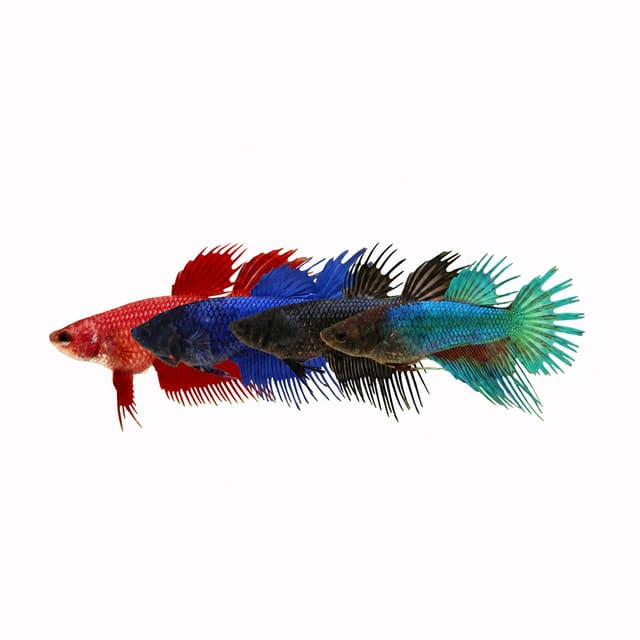
Crowntail Male Betta (Betta splendens)
26–28°C · pH 6–8 · 20L
£12.17£13.99

The Betta spl. female Giant Nemo (Betta splendens) is a female labyrinth fish in the betta group, which originates from Asia. It suits intermediate keepers; females can be kept in groups of at least four in at least 60 litres, with 20–28°C, pH 6.0–7.5 and 4–12 dGH. Sold individually as one female fish.
Betta splendens
The Betta spl. female Giant Nemo (Betta splendens) is a female labyrinth fish in the betta group, which originates from Asia. It suits intermediate keepers; females can be kept in groups of at least four in at least 60 litres, with 20–28°C, pH 6.0–7.5 and 4–12 dGH. Sold individually as one female fish.
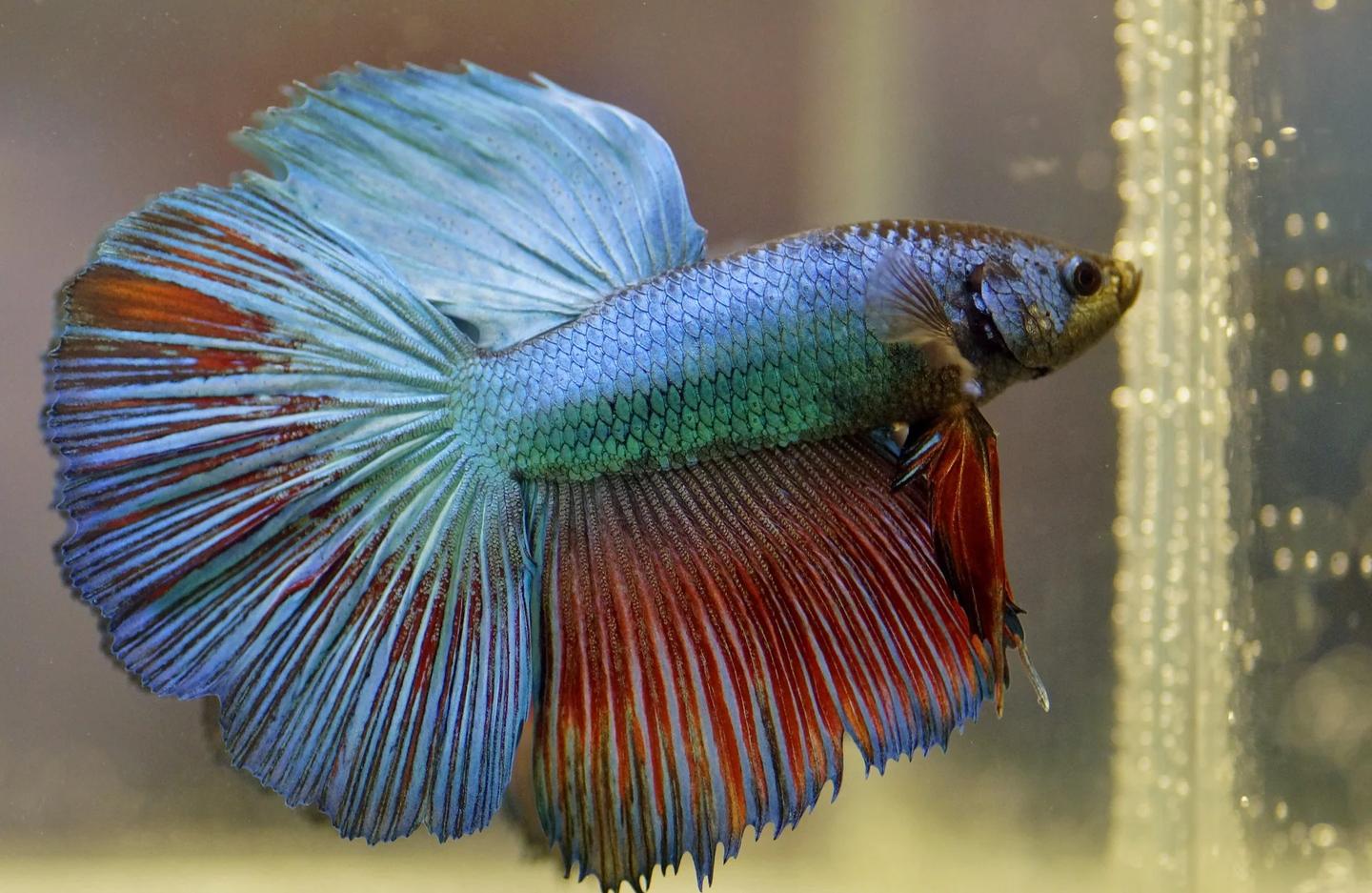
For one typical domestic Betta splendens, start with at least 20 litres, a mature filter, thermostatic heater, separate thermometer, gentle flow, a secure lid with surface access, and plants or refuges. Keep one male per aquarium.
Maintain these water conditions for optimal health and vibrant colors
Betta spl. female Giant Nemo (Betta splendens) is a female labyrinth fish in the family Osphronemidae. OATA’s betta guidance places the group in Asia and explains that these fish possess a specialised labyrinth organ that lets them breathe atmospheric air. It suits an intermediate keeper who can maintain a mature, filtered aquarium, plan a female group and watch behaviour closely.
Females can be kept in groups of at least four; use an aquarium of at least 60 litres for a female group. OATA gives those figures as broad group guidance for female bettas. Keep this fish at 20–28°C, pH 6.0–7.5 and 4–12 dGH. The temperature and hardness follow OATA’s betta values, while the narrower pH routine remains within its 6.0–8.0 range and is not a species-specific optimum.
Ammonia and nitrite must remain at zero mg per litre. Nitrate should not rise more than 20 mg per litre above the normal tap-water level. Treat these as connected conditions: suitable temperature and pH do not compensate for detectable ammonia or nitrite.
| Suits | Not suited to |
|---|---|
| An established group of at least four female bettas | A plan to keep several females in less than 60 litres |
| A mature, adequately filtered freshwater aquarium | An unfiltered or biologically immature aquarium |
| A keeper able to test water every week | Aquariums containing boisterous or aggressive fish |
| Stable water within the stated routine | A setup where ammonia or nitrite is detectable |
The labyrinth organ is not a substitute for filtration or maintenance. Waste still enters the water, biological filtration must process it, and routine testing is needed to catch a change before it affects the fish.
This fish is sold individually, so one purchase supplies one female fish. The purchase unit is separate from the social plan: if you choose a female group, OATA permits groups of at least four, so plan the complete group and aquarium capacity rather than treating the sold unit as the complete group.
Sex is guaranteed only when the exact product or selected option explicitly states male or female. This Betta spl. female Giant Nemo listing is sold as female.
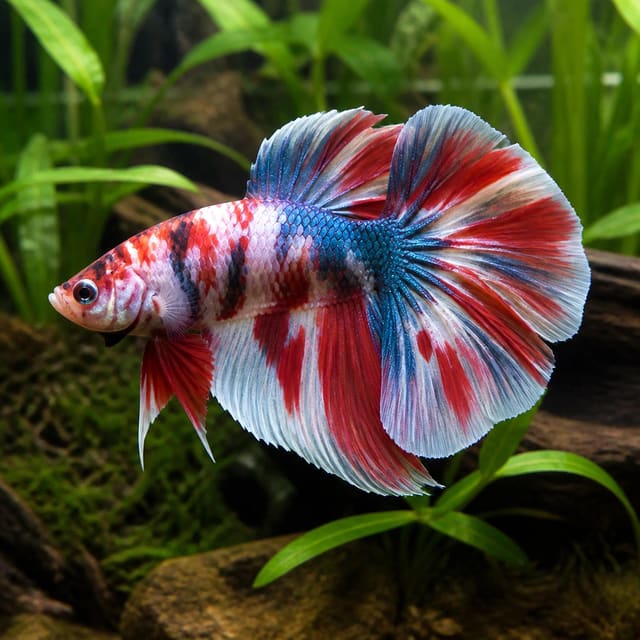
The Giant Nemo wording identifies the sold form. Base the aquarium decision on the water routine, group arrangement, filtration and compatibility rules rather than estimating care from the prominence of a colour or form name.
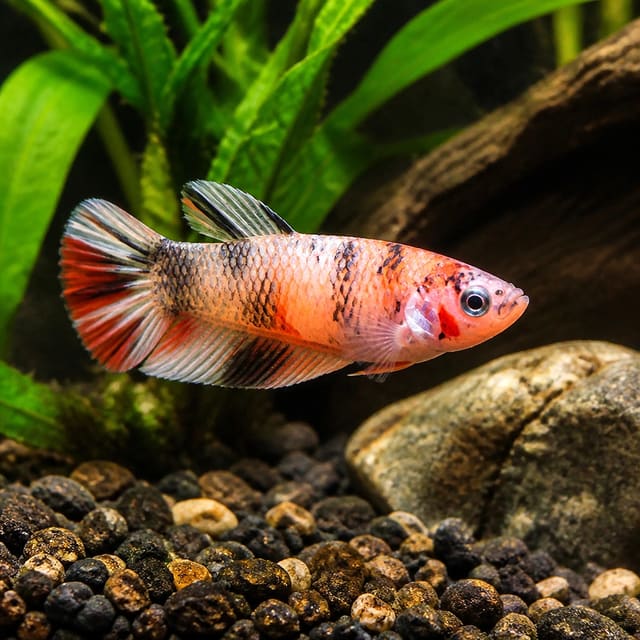
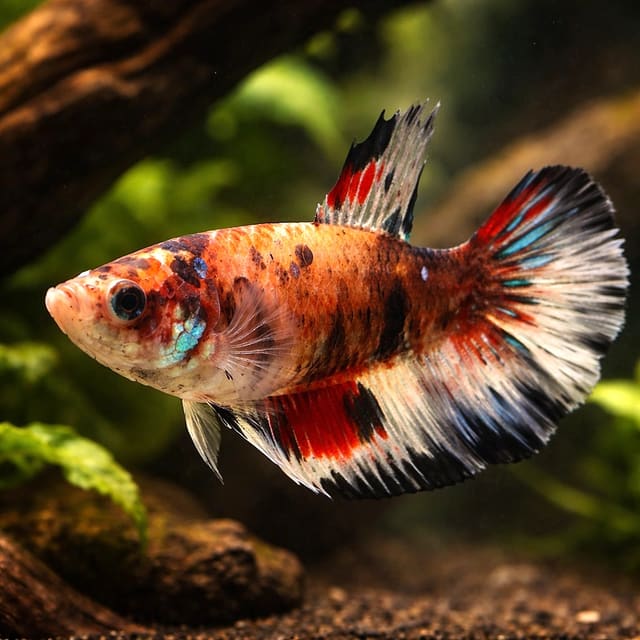
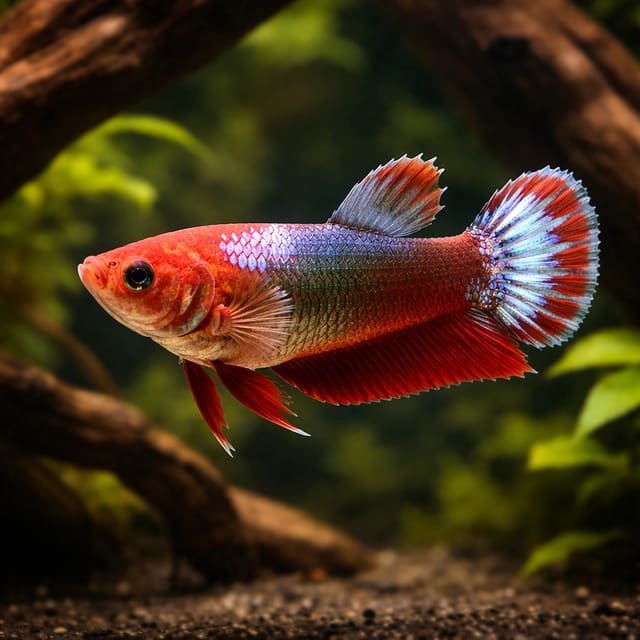
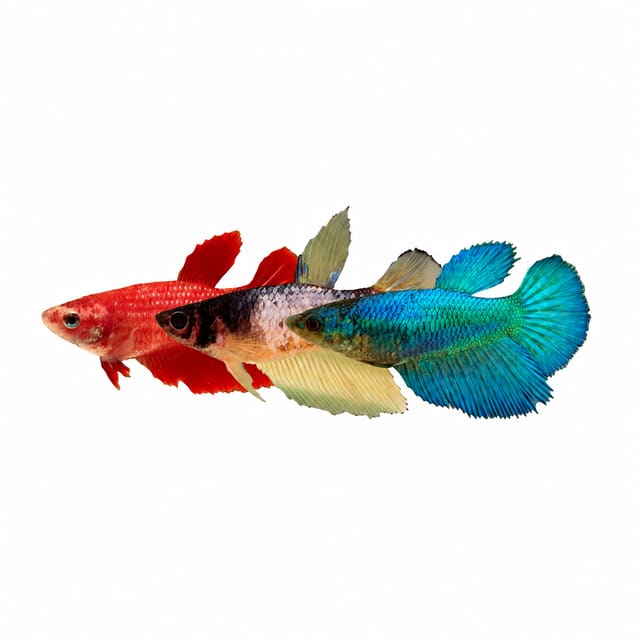
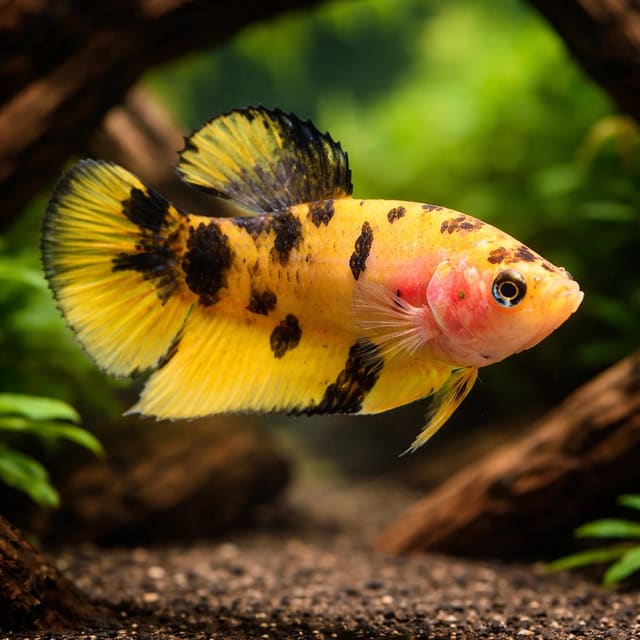
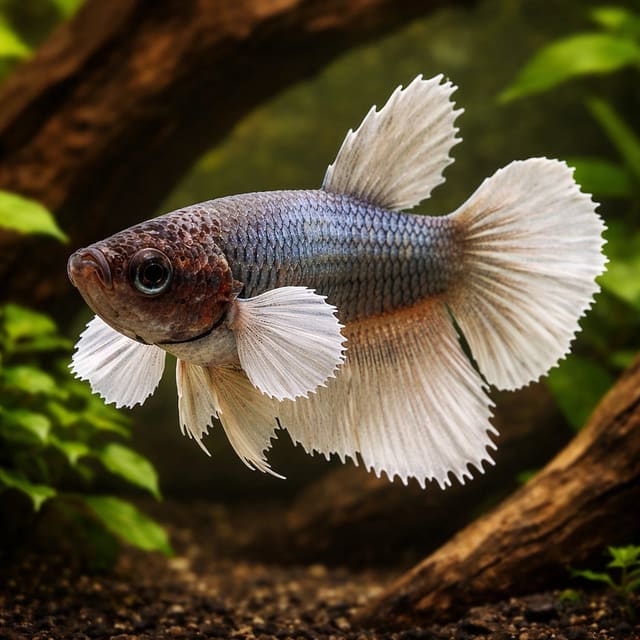
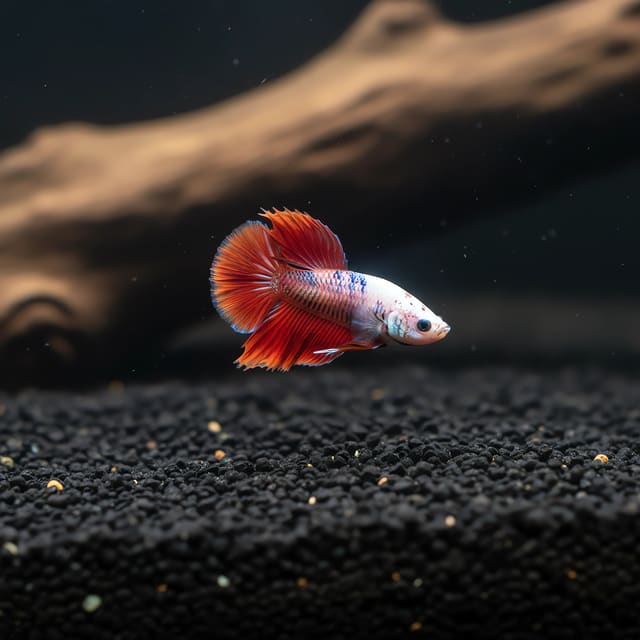
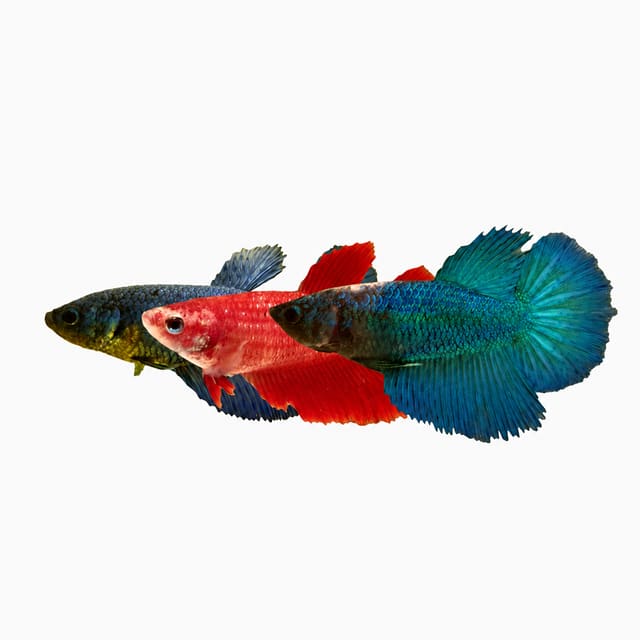
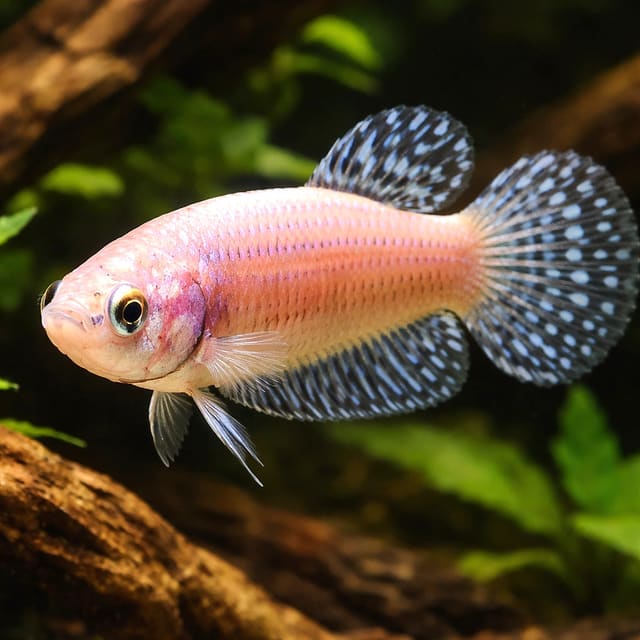
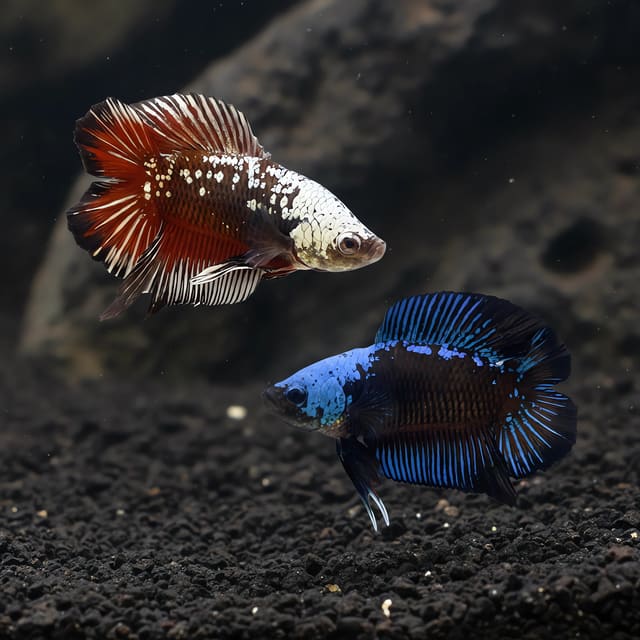
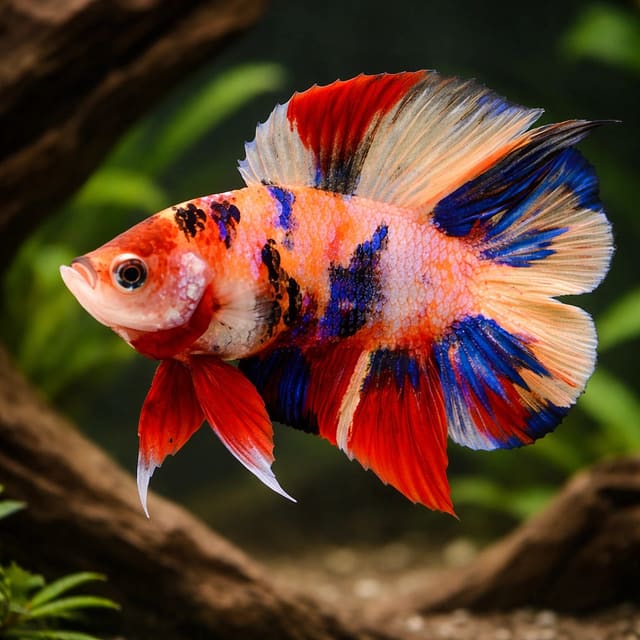
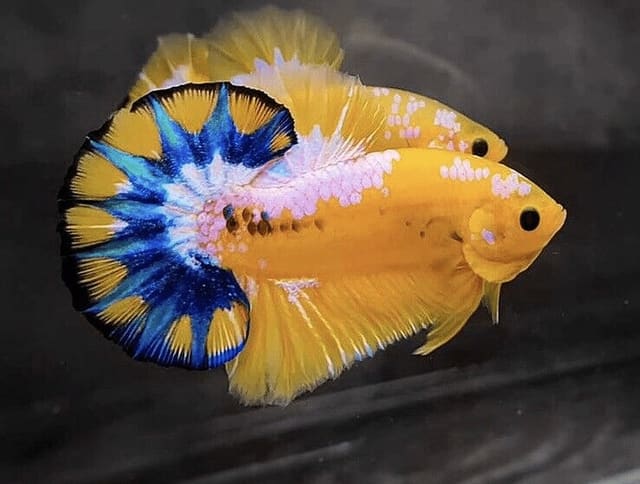
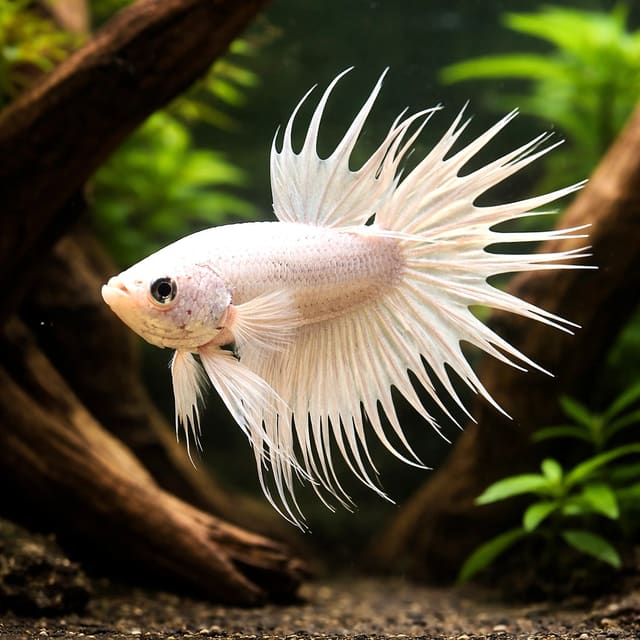
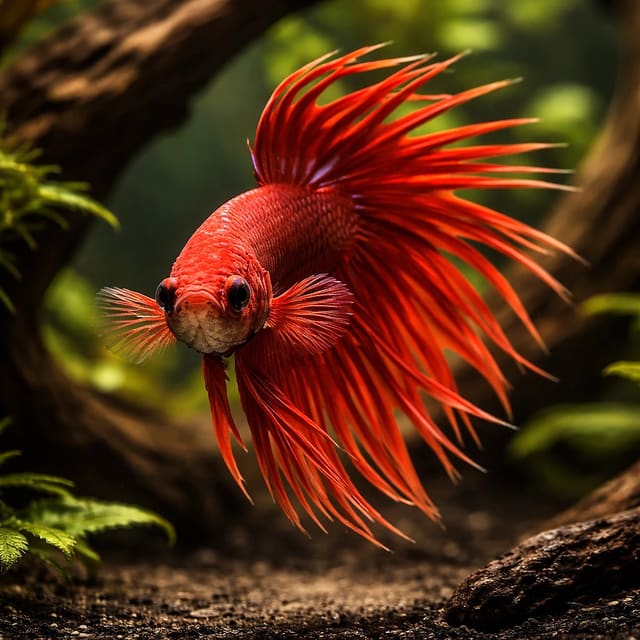
The gallery images are representative, based on reference photographs of this species, so colours can look slightly different from the live animal.
The gallery represents the form rather than one exact arrangement of colours or markings. One scene shows two fish facing each other, but the number visible in an illustration does not change the purchase unit. Each purchase still supplies one female fish.
Work out the final number of female bettas before purchase. Buying one fish at a time does not turn one female into a complete community group, and purchasing several fish does not make an undersized or immature aquarium suitable.
Start with the complete plan: if keeping a female group, allow at least four females in at least 60 litres. The aquarium must already be mature and filtered before the fish is introduced. A larger aquarium provides more stable temperature and water quality, but extra volume does not remove the need to test water, maintain the filter or screen companions.
For a new aquarium, prepare and mature it with our first tropical tank guide before introducing livestock. Biological maturation matters because the filter’s beneficial bacteria must be able to process the waste produced by the fish and their food.
Do not judge readiness by water clarity alone. Clear water may still contain ammonia or nitrite, so use test results to confirm that both remain at zero. Check the heater, thermometer and filter operation as separate parts of the same preparation.
If this form is not the right fit, use the betta collection to compare animals before committing to a social plan. Compare sex, group requirements, water conditions and compatibility separately; visual preference should come after those practical checks.
A 60-litre aquarium with four intended female bettas passes the initial group-number and volume checks. It is not ready if nitrite is detectable, the filter is immature or an aggressive fish is already present. Resolve every failed condition before introduction rather than allowing one suitable number to outweigh another problem.
The reverse is also true. A mature aquarium with zero ammonia and nitrite still needs enough volume for the intended female group and companions that pass the behaviour screen. Water quality, capacity and social conditions must all work together.
Keep the aquarium at 20–28°C, pH 6.0–7.5 and 4–12 dGH, and keep the readings steady from week to week. OATA’s broad betta guidance supplies the temperature and hardness values; the pH routine remains within its wider 6.0–8.0 range and is not a species-specific optimum.
Ammonia must be zero mg per litre and nitrite must be zero mg per litre. Nitrate should not exceed the normal tap-water level by more than 20 mg per litre. These waste values are operational limits, not targets to approach: any detectable ammonia or nitrite calls for immediate investigation of the aquarium, filter and recent husbandry.
| Measured result | Decision |
|---|---|
| 20–28°C and pH 6.0–7.5 | Continue checking stability rather than chasing a single point |
| Ammonia or nitrite above zero | Pause further additions and investigate waste processing |
| Nitrate more than 20 mg per litre above tap-water level | Review maintenance, feeding and aquarium load |
| Values outside the routine | Correct the cause gradually and avoid adding more fish |
Suppose the aquarium reads 25°C, pH 7.0, 8 dGH, zero ammonia and zero nitrite. Those measurements sit inside the routine, so record them and continue normal care rather than adjusting the water towards a different point. If the next weekly test shows the same temperature and pH but detectable nitrite, investigate the filter and recent changes immediately.
A second example is a reading of 29°C with otherwise suitable chemistry. That temperature is outside the 20–28°C routine, so check the heater setting and thermometer before introducing or adding fish. Make a controlled correction and confirm the result with another measurement instead of reacting to one unexplained reading.
At the lower end, 20°C remains inside the stated range, but an unexplained fall from the aquarium’s usual temperature still deserves attention. Check the heater and thermometer, record the reading and confirm that the temperature has stabilised before changing the population.
Use the same test methods from week to week so the results are comparable. Our water chemistry guide explains what the main measurements mean, while the water matcher helps compare measured aquarium water with the stated ranges.
Record the temperature and test results before introduction, after the group changes and during routine maintenance. A written pattern makes a slow deterioration easier to spot than a single isolated reading.
Use a well-established and maintained filter. The RSPCA’s aquarium filtration guidance explains that fish release toxic ammonia, which a working biological filter converts first to nitrite and then to the safer nitrate through its beneficial bacteria.
The labyrinth organ allows atmospheric breathing, but it does not process dissolved waste. A betta still needs adequate filtration, zero ammonia, zero nitrite and regular maintenance. Surface breathing must never be interpreted as permission to use an unfiltered container or neglect water quality.
OATA warns that stocking too quickly can cause new tank syndrome when there are too few nitrifying bacteria to process increased waste. The resulting ammonia and nitrite may make fish ill or cause death. A clear test before adding fish is therefore more useful than judging maturity by how long the aquarium has contained water.
Treat every added fish and every feeding increase as an extra demand on the biological filter. Test ammonia and nitrite after the group changes rather than assuming an established filter will absorb any increase automatically. A zero result shows that the filter was coping at the time of the test; it does not justify another immediate addition.
If either waste reading rises above zero, stop increasing the population. Check that the filter is operating and unobstructed, review how much food entered the aquarium and respond without replacing or aggressively washing established media. Removing too much bacterial media while investigating a waste rise can reduce the filter’s processing capacity further.
Check flow separately from biological performance. Water movement confirms that the filter is running, but ammonia and nitrite tests show whether waste is being processed adequately. Use both checks before deciding that the system has recovered.
| Observation | Action |
|---|---|
| Reduced flow | Check for a blockage |
| Dirty media with normal tests | Rinse lightly in removed aquarium water if needed |
| Detectable ammonia or nitrite | Stop additions and investigate filter capacity, feeding and recent changes |
After any increase in fish numbers or feeding, watch for a rising waste trend. Do not add another animal while ammonia or nitrite is detectable.
Female bettas can be kept in groups of at least four; use an aquarium of at least 60 litres for a female group. These are OATA’s broad planning figures for female bettas. Aquarium size must be assessed for the entire population rather than one purchase in isolation.
A worked group plan begins with both figures. Four females do not make a smaller aquarium meet the volume figure. If you choose the group arrangement, both the number and aquarium size must be suitable at the same time, and any additional community fish increase the demand on space and filtration.
The aquarium also needs adequate filtration for its lifetime population. Temporary shop housing is not a model for a permanent home: OATA explains that retail systems use temporary accommodation and high filtration capacity, whereas the home aquarium must remain suitable throughout the fish’s life.
More water can improve environmental stability, but volume alone cannot resolve unsuitable behaviour. A large aquarium containing aggressive or boisterous companions still fails the social screening rule.
A 55-litre aquarium does not meet the 60-litre group figure merely because it has strong filtration. Filtration addresses waste processing; it does not replace the stated aquarium volume. Review the group plan before purchasing several females.
A 60-litre aquarium also does not automatically pass. If it already contains other fish, assess the complete population, shared water conditions, filter capacity and behaviour. The minimum group figure is one condition within the decision, not a universal capacity promise.
A larger aquarium with stable water still requires observation after introduction. Watch whether all females feed and whether aggression, hiding, swimming or breathing changes. Space is part of compatibility, while behaviour and water quality show whether the arrangement continues to work.
Feed once a day and offer only what the fish can eat within a few minutes. OATA’s betta guidance describes the group as omnivorous and recommends a good-quality flake or pellet, including specialised betta pellets, with small live or frozen foods for variety.
Suitable named additions are daphnia, small bloodworm and tubifex. Use them as part of a varied routine rather than continually increasing the total portion. The Giant wording is not a reason to feed above the amount the fish can consume within a few minutes.
If the whole portion disappears promptly and every female feeds, keep the same quantity at the next daily feed. If pieces remain after a few minutes, reduce the following portion and check that uneaten food is not collecting in the aquarium. The aim is to provide a measured daily amount without creating avoidable waste.
In a group, watch individuals as well as the total food consumed. One fish taking most of the food does not show that every female has eaten. Observe the group throughout feeding, then use appetite changes alongside swimming, breathing and water-test results when deciding whether something needs attention.
Overfeeding creates two connected problems. The fish receives more food than the routine requires, and uneaten food breaks down, releasing toxic waste into the water. If ammonia, nitrite or nitrate begins to rise, review the quantity fed alongside aquarium load, filter performance and maintenance.
| What you see | What to do |
|---|---|
| Food eaten within a few minutes | Keep the measured daily portion |
| Food remains uneaten | Reduce the next portion and check for waste |
| One female takes most food | Watch every individual through the feeding period |
| Reduced interest in food | Test water and compare behaviour with normal |
Do not increase feeding simply because the fish is active at the surface or because another fish reaches the food first. Observe whether every female eats, but keep the total amount within the few-minutes rule.
Change 25% of the aquarium water at least once every week. OATA strongly recommends this partial weekly change for bettas and suggests using a siphon to remove solid waste from the gravel.
Test ammonia and nitrite at least weekly, and include temperature, pH and nitrate in the routine so trends are visible. Treat replacement tap water with a suitable conditioner before adding it to the aquarium to remove harmful chlorine or chloramine.
Do not run biological filter media under the tap. Chlorine or chloramine may kill the beneficial bacteria established in the media, potentially turning routine cleaning into a water-quality problem.
Keep the first four weekly records together. Each should show the pre-change test results, whether the filter needed attention and confirmation that the 25% water change was completed. If the results remain steady, continue the same repeatable routine. If nitrate rises week after week, compare feeding, waste removal and total aquarium population before changing several parts of the routine at once.
A missed maintenance day should be corrected promptly rather than folded into the next week. Complete the water tests and partial change, then return to a consistent weekly schedule. Consistency makes it easier to connect a water-quality change with a feeding increase, blocked filter or recent addition.
A weekly water change does not cancel the need to respond to an abnormal result. Detectable ammonia or nitrite requires attention when it appears rather than waiting for the next scheduled maintenance day. Repeated nitrate growth also calls for a review of feeding, population, waste removal and maintenance.
Use the record to compare one week with the next. A single result says what happened at one moment; a trend shows whether the aquarium remains stable after feeding changes, maintenance or a population increase.
Start filming every delivery before the parcel is opened. The Tropical Fish Co delivery and Live Arrival Guarantee policy requires a continuous short video for a claim, showing the parcel still sealed with the outer box visible, the parcel being opened and the fish still inside the sealed bag before anything is disturbed.
Before release, the aquarium itself must already meet the care conditions: 20–28°C, pH 6.0–7.5, 4–12 dGH, zero ammonia and zero nitrite, with a mature filter. These aquarium checks follow the betta care routine and should be completed before the parcel arrives.
After introduction, avoid adding further fish quickly. OATA advises increasing livestock numbers slowly because the beneficial bacteria in a mature filter need to adjust whenever fish numbers and feeding rise. Test after the population change and watch whether each female swims, breathes and feeds in its normal way.
If ammonia or nitrite becomes detectable during the first week, stop further additions and investigate the filter, feeding and recent population change. Do not wait for the scheduled maintenance day to respond to an abnormal result.
Keep arrival procedure, aquarium preparation and group planning as separate decisions. Safe transport does not make an immature aquarium ready, and suitable water does not make an undersized or socially unsuitable group acceptable.
Use normal behaviour and appearance as the baseline for daily observation. OATA recommends watching for changes in swimming, colour, temperament, breathing, physical condition and feeding because a shift may reveal a problem before it becomes more serious.
A change is a prompt to test water quality immediately. Compare ammonia, nitrite, nitrate, temperature and pH with the aquarium’s normal results, then check the filter, recent feeding, maintenance and population changes. Contact us for further guidance if you are concerned about the health of the fish.
Do not treat colour alone as a diagnosis. Use colour together with swimming, breathing, appetite, body condition and measured water quality. A clear set of observations gives a stronger basis for deciding what changed and how urgently the aquarium needs attention.
Surface position also needs context. The labyrinth organ allows atmospheric breathing, but persistent hanging at the surface remains one of the changes OATA tells keepers to watch. Check the complete behaviour pattern and water results rather than assuming atmospheric breathing makes the observation harmless.
Reduced feeding should be considered alongside the feeding routine. Confirm that the offered portion is appropriate, watch whether another female is taking most of the food and test the water. Appetite, social behaviour and water quality can be assessed together without increasing the portion automatically.
Female bettas can be kept in groups of at least four, with at least 60 litres for a female group. OATA describes females as much calmer than males and says that, in community aquariums, they must be kept in a group without boisterous or aggressive fish.
If you choose the group arrangement, the number and aquarium volume are minimum planning conditions rather than a complete compatibility test. Four females in 60 litres still need suitable water, mature filtration and close observation. Likewise, a much larger aquarium does not make an aggressive companion suitable.
Consider an aquarium of 60 litres containing four female bettas, with water at 25°C and pH 7.0. The group, volume and basic water figures pass their first checks, but a proposed aggressive or boisterous companion still fails the plan. Do not use suitable volume or chemistry to override the behaviour exclusion.
Now consider the same aquarium with one female betta and otherwise calm community fish. OATA’s community rule requires females to be kept in a group, so revise that social plan while also checking whether the complete population can be housed and filtered appropriately. Passing one condition never cancels another.
Keep females in a group when placing them in a community aquarium, exclude boisterous or aggressive fish and match the practical requirements of the complete community. Watch the group after introduction because compatibility depends on the arrangement continuing to work, not merely passing the initial plan.
OATA permits a male with at least five females only in a densely planted aquarium that breaks up lines of sight and provides hiding areas, and says inexperienced keepers should not attempt that arrangement. Treat this as a specialised caution, not the default way to organise the female group.
The permission to keep females in a group of at least four is not permission to place two males together. OATA says two males must never be mixed because they will fight until one is severely injured or killed. The specialised male-with-females arrangement also has its own number, planting and keeper-experience conditions.
Female bettas can be considered for a community aquarium when they remain in a group and no boisterous or aggressive fish are present. Assess the aquarium and every proposed companion before introduction rather than relying on a general community label.
| Screening result | Decision |
|---|---|
| At least four female bettas, at least 60 litres and matching water | Continue to the behaviour assessment |
| Boisterous or aggressive fish present | Avoid the combination |
| A female placed alone in a community aquarium | Revise the social plan before introduction |
| Ammonia or nitrite above zero | Delay any addition and restore water quality |
Reject boisterous or aggressive companions, then watch for changes in aggression, hiding, fin condition, swimming and feeding. A calm label alone is not enough; the proposed fish must also share the aquarium’s water conditions and fit its space and filtration capacity.
Do not treat snails, shrimp or a named fish species as universally suitable. The practical guidance names female bettas and community fish that are neither boisterous nor aggressive, so screen proposed companions by water, space, filtration and behaviour instead of promising a particular invertebrate or fish.
A behaviourally calm community can still fail if the filter cannot process the extra waste. Equally, zero ammonia and nitrite do not make an aggressive companion acceptable. Compatibility succeeds only when both behaviour and water quality remain suitable.
If an initial screen passes, increase the population slowly so the biological filter can respond to extra waste and feeding. Record the water results after the change and compare them with the aquarium’s earlier pattern rather than making another addition immediately.
If a proposed companion is aggressive, avoid the combination even when the aquarium is larger than 60 litres. If it is boisterous, avoid the combination even when its temperature and pH match. Conditions that pass do not weaken either exclusion.
Use an aquarium of at least 60 litres for a group of female bettas under OATA’s broad betta guidance. A larger aquarium provides more stable temperature and water quality, but it still needs mature filtration and weekly testing.
Female bettas can be kept in groups of at least four under OATA’s broad betta guidance. In a community aquarium, females must be kept in a group without boisterous or aggressive fish.
This fish suits an intermediate keeper. A beginner should choose it only after maturing a filtered aquarium, deciding on an appropriate social plan and becoming comfortable with weekly water tests, partial water changes and behaviour checks.
Feed once daily and give only what it can eat within a few minutes. OATA’s betta guidance recommends good-quality flake or pellets, including specialised betta pellets, with small live or frozen daphnia, small bloodworm or tubifex for variety.
Keep Betta spl. female Giant Nemo at 20–28°C, pH 6.0–7.5 and 4–12 dGH. OATA supplies the temperature and hardness as broad betta guidance and gives pH 6.0–8.0; the narrower pH routine remains inside that range.
OATA calls female bettas much calmer than males, but says that in community aquariums they must be kept in a group without boisterous or aggressive fish. Changes in aggression, hiding, swimming or fin condition are warning signs that the social arrangement needs prompt attention.
In a community aquarium, keep it with other female bettas as a group and consider community fish only when they are neither boisterous nor aggressive and share the same water requirements. Under OATA’s group guidance, use at least 60 litres for at least four females and assess the space and filtration needs of the complete community.
Start filming with the parcel still sealed and the outer box visible before opening or floating the bag. Tropical Fish Co hand-bags the fish in pure oxygen, uses an insulated poly box, adds a heat pack when the weather calls for it and sends it with a licensed live-animal courier; someone must receive it, inspect it the same day and float the bag for 20–30 minutes before release.
No reviews for this item yet. Bought one? Honest reviews only, good or bad.
What customers say about ordering from us
I have a small group of long finned mountain minnows. So was delighted to be able to order ten of this variety to increase the genetics in my tank . The ones I recieved are healthy but it’s to early to give a verdict on wether they are of a long finned type since they are small currently.
Gordon Walker · 23 Sept 2026
100% success travel and "installation". Pleased with quality of purchase. The Siamese fighter a bit "shy" so have not yet seen him at his best yet but looking good. Happy customer. GG
George E Garratt · 21 Sept 2026
Reviews of our shop, collected by Judge.me, an independent third-party review collector. Newest first.