By Tropical Fish Co Editorial Team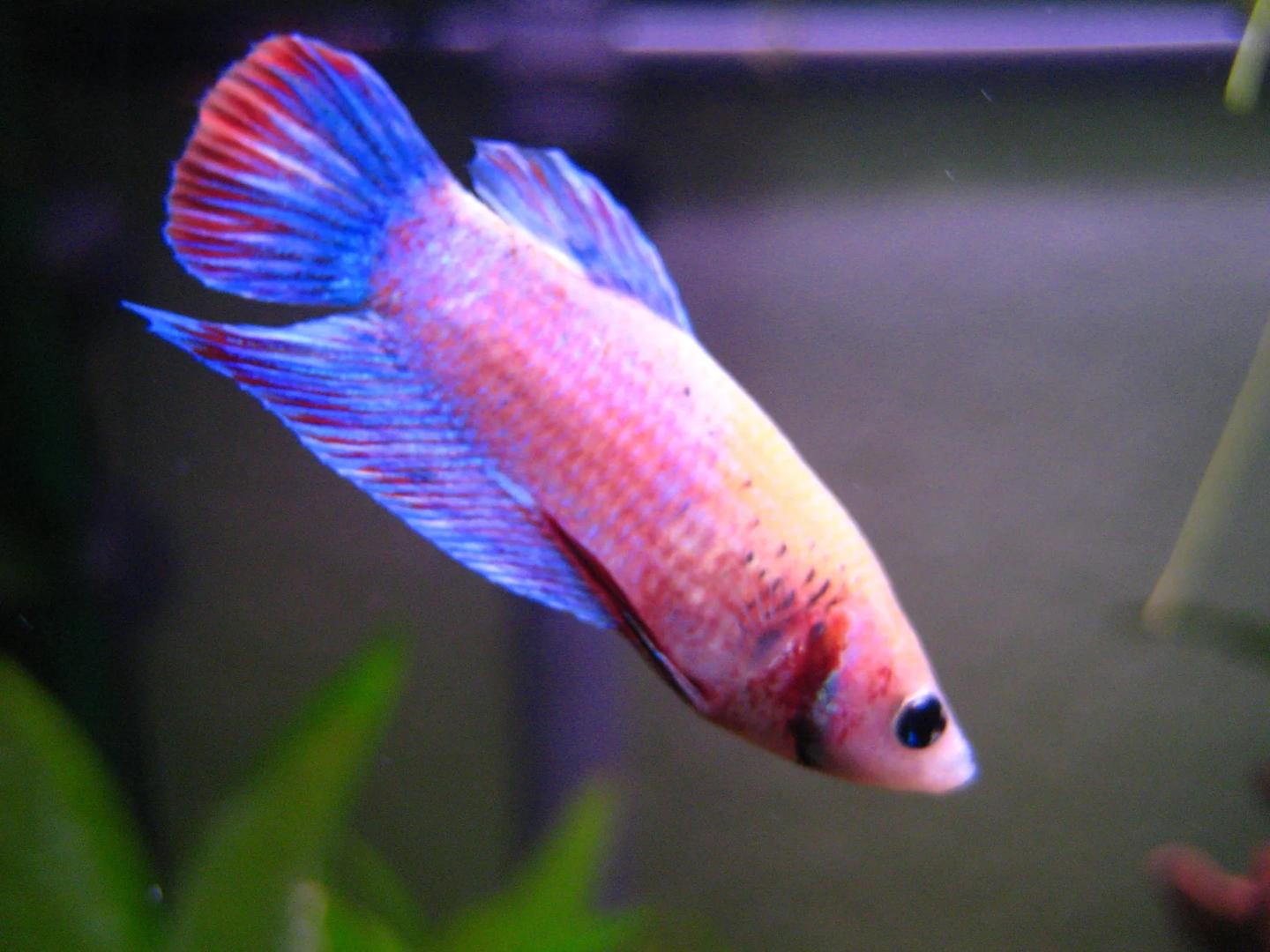
Female does not mean communal
The safest answer to “how many female bettas should I keep?” is one. A controlled choice study describes Betta splendens as largely nonsocial and cautions that its association preferences are not true shoaling [6]. A single female therefore does not require a sorority. Females can be colourful, active centrepiece fish in their own right, and short fins do not make them a lesser version of males.
The important correction is about temperament. Female bettas also show threats, chasing and fighting. A peer-reviewed review summarises experimental evidence that female fights can continue after one fish submits [5]. Sex may change average behaviour, but it does not turn a territorial species into a social one.
That is why this guide treats a sorority as an optional advanced setup—not the default purchase and never a guaranteed outcome.
Female betta fish for sale: read the live card
The cards below are the only stock-bearing part of this page. They appear only when the product record has current availability, a positive price and a usable image. A permanent guide cannot truthfully promise that a colour, tail form, pack or price will still be available when you visit.
Female bettas currently available
Confirm the stated sex, sale size, variety and whether each product image shows the exact fish or a representative example. Stock and price come from the live listing, not the guide copy.
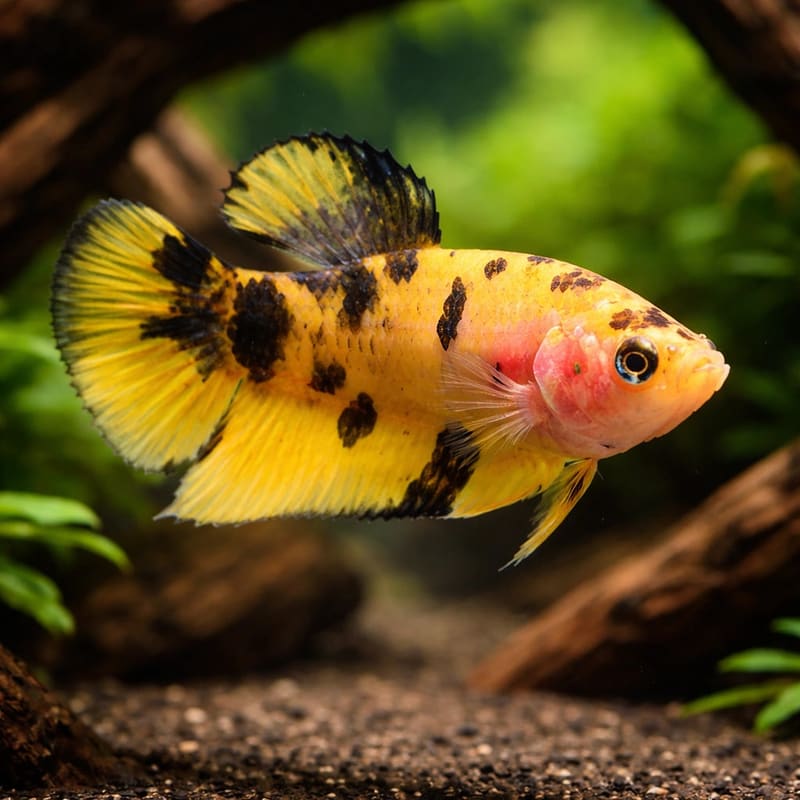
Female Betta Mix (Betta splendens)
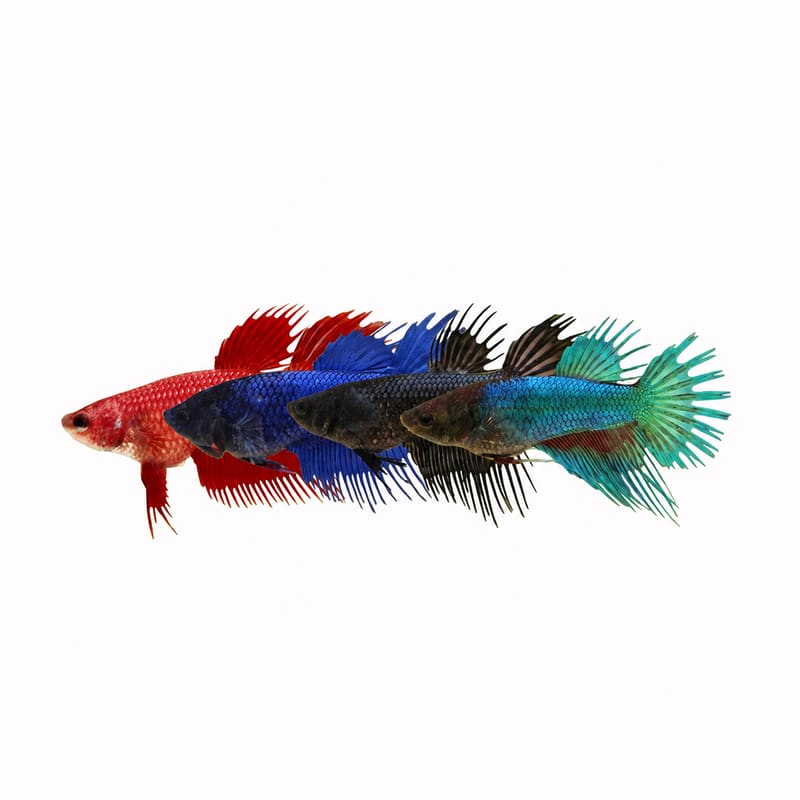
Crowntail Female Betta (Betta splendens)
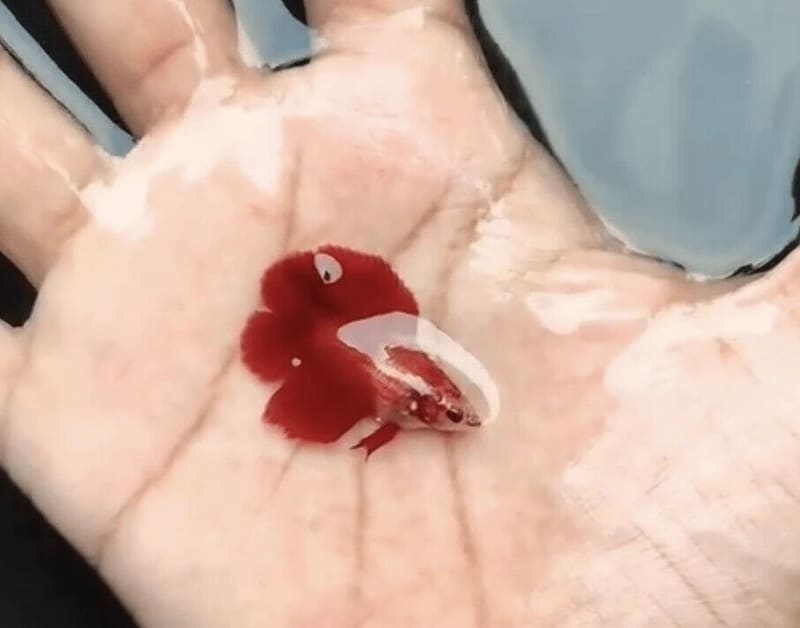
Double Tail Female Betta Mix (Betta splendens) – Single Female
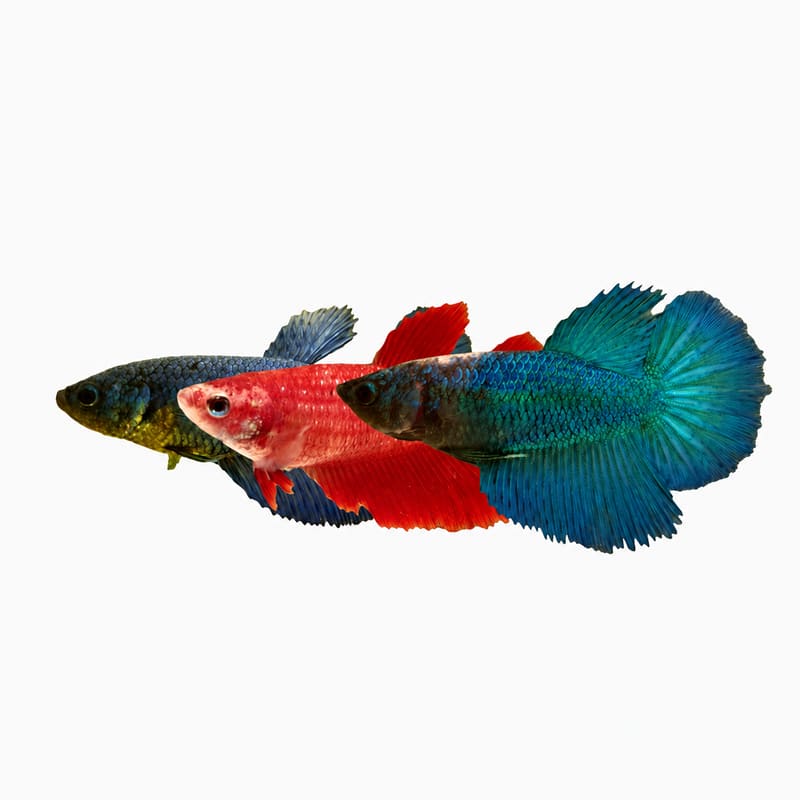
Halfmoon Female Betta Mix (Betta splendens)
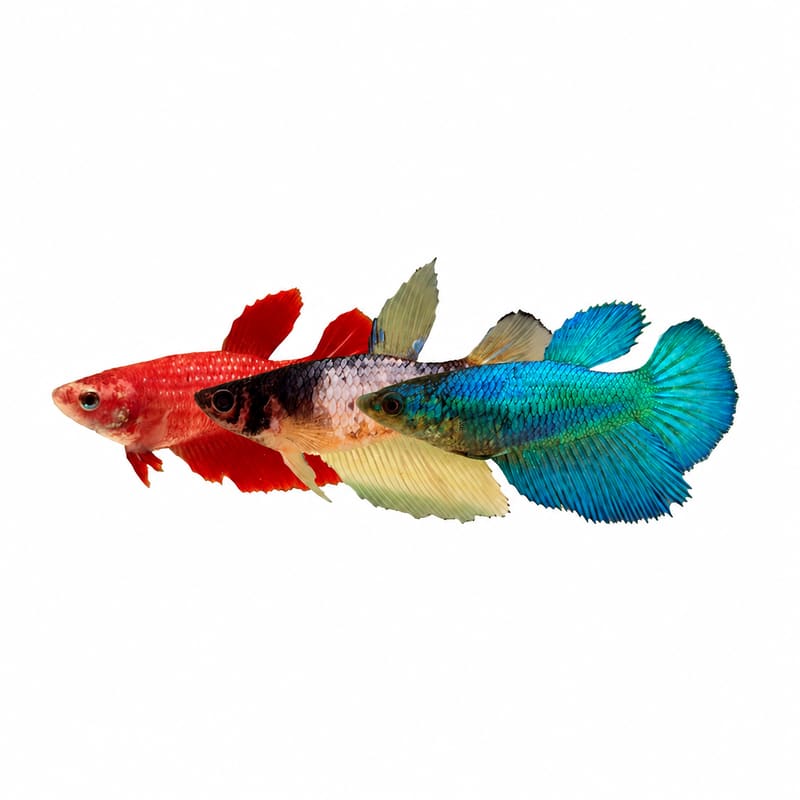
Super Delta Female Betta (Betta splendens) - Random Mix
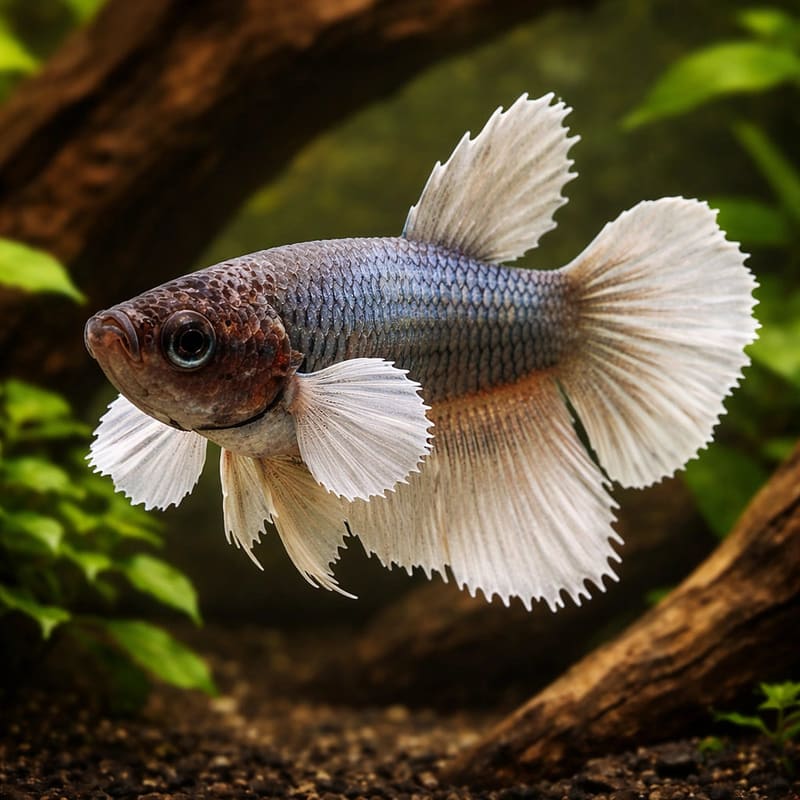
SuperDelta Big Ears Female Betta Mix (Betta splendens)
Before buying, check:
- the claimed scientific name and stated sex;
- the sale size and whether it is body length or total length;
- the colour or tail description without treating it as a pedigree certificate;
- whether the photograph is the exact individual, a batch example or a general category image;
- current price, availability, delivery area and live-arrival terms; and
- whether your mature aquarium meets the fish's needs before dispatch.
Genomic studies show that domestic betta colour, fin form, body size, sex determination and aggression have complex genetic foundations [7]. A shop name such as Halfmoon, Plakat, Crowntail or “mix” is useful visual language, but it does not predict personality or make visual sexing infallible.
One female or a sorority?
| Decision | One female | Female group / “sorority” |
|---|---|---|
| Social need | Complete setup; no same-species companion required | Optional group plan, not a welfare requirement |
| Aquarium floor used here | At least 20 L, applying OATA's single-betta minimum | At least 60 L for a female group in OATA guidance |
| Risk | Lowest same-species aggression risk | Chasing, exclusion and injury can occur |
| Furnishing | Cover, open surface, gentle flow, smooth decor | Dense cover, broken sight lines and multiple usable retreats |
| Backup housing | Sensible for emergencies | Essential: cycled, heated and ready before the group arrives |
| Best for a beginner? | Yes, after cycling and research | No; start with one fish |
OATA's UK care sheet says female bettas can be kept in groups of at least four and that more is better, with at least a 60-litre aquarium [1]. That is a trade-body starting recommendation. It is not evidence that four, five or any other number will always settle peacefully.
A laboratory study found lower aggression in bettas reared from hatching in enriched group conditions [4]. Its value is also its limit: controlled rearing history is not the same as combining unfamiliar adult fish from retail supply. Do not turn the study into the claim that adding plants makes any sorority safe.
Choose a group only if you can watch closely and separate immediately. Persistent chasing, a fish held in a corner, missed meals, clamped or torn fins, damaged scales, rapid breathing or loss of normal exploration are reasons to intervene—not a hierarchy that must be allowed to “work itself out”.
Tank size, shape and furnishings
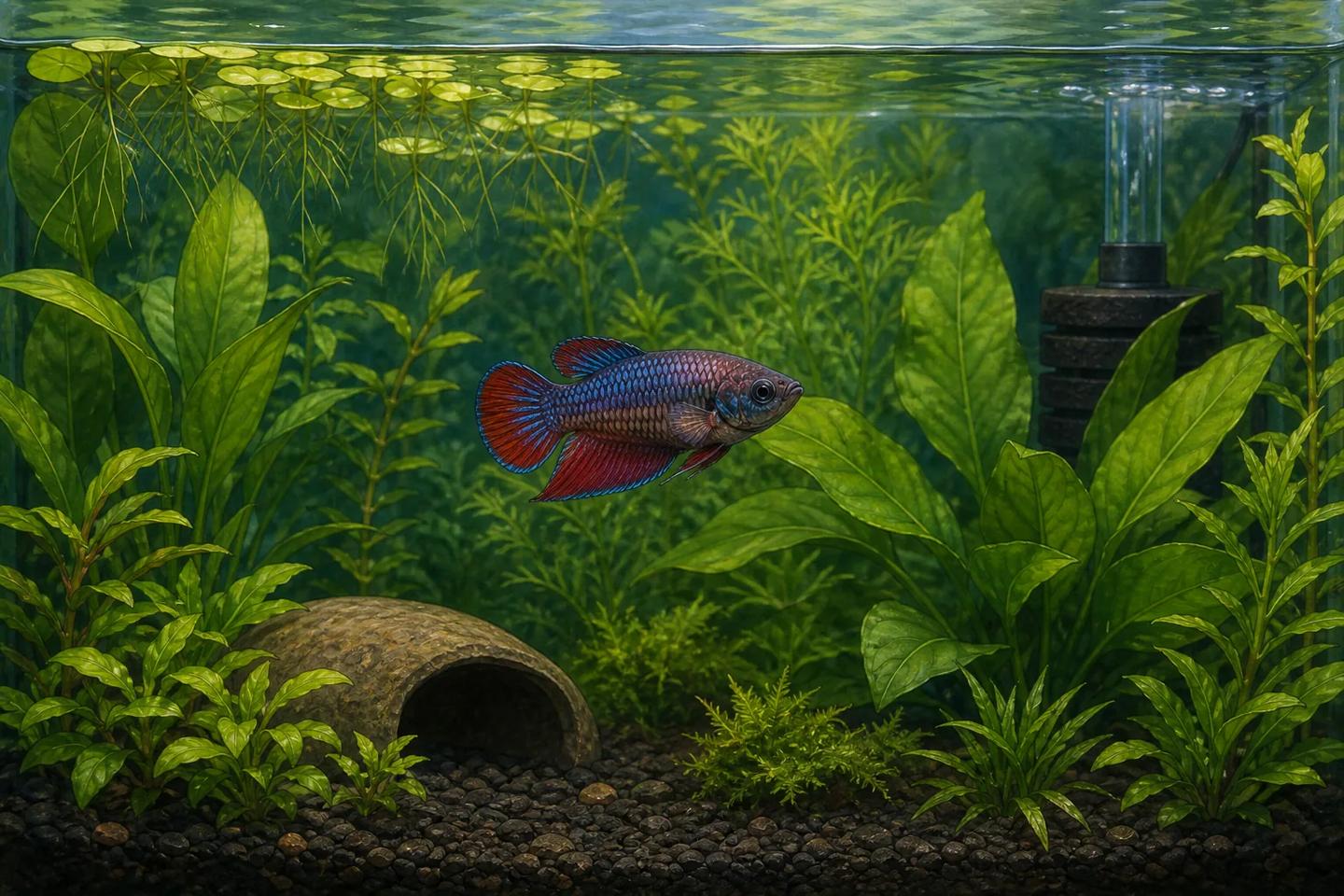
OATA recommends at least 20 litres for a single male betta and notes that larger aquariums provide more stable temperature and water quality [1]. We apply that same 20 L minimum screen to one female rather than giving her less space. Treat it as a starting floor, not a target to shrink. A long, usable swimming footprint is generally more helpful than a tall narrow shape with the same volume.
Every setup needs:
- a mature biological filter with a gentle current;
- a thermostatically controlled heater;
- a lid or secure cover, while preserving an air gap and easy surface access;
- smooth hides and plants with no sharp edges;
- shaded or broad-leaf resting places near the surface; and
- enough open water for normal movement.
The Animal Welfare Act frames the decision around a suitable environment, suitable diet, normal behaviour and appropriate housing with or apart from other animals [10]. A decorative bowl may hold water, but volume alone does not provide those needs.
Experimental work found that individual bettas in 0.5-litre bowls swam less than fish in larger aquariums and that environmental enrichment increased swimming [3]. That experiment focused mainly on males, so we use it to reject tiny bare housing—not to invent a female-specific optimum that the study did not test.
Water: test the aquarium, not the postcode
OATA gives a broad screen of 20–28 °C, pH 6.0–8.0, 4–12 dGH and 3–10 dKH for tank-reared bettas. It also specifies zero ammonia, zero nitrite and nitrate no more than 20 mg/L above the normal tap-water level [1]. Keep the selected temperature stable; do not chase the ends of a range from day to day.
“UK tap water works without modification” is too broad. The Drinking Water Inspectorate explains that hardness varies with local geology and recommends checking the water company's measurement [9]. Test source water and the aquarium, dechlorinate new water, and make gradual changes when the fish's previous conditions differ.
Finish a fishless cycle before ordering. Test ammonia and nitrite rather than assuming four elapsed weeks equals a completed cycle. After adding the fish, keep testing—especially during the first weeks, after filter maintenance and whenever feeding or stocking changes.
For temperature-specific detail, use the betta temperature guide. The broader betta care guide covers routine maintenance without turning every domestic form into a separate species.
What female bettas eat
FishBase records wild Betta splendens feeding on zooplankton, mosquito larvae and other insect larvae [2]. In the aquarium, use an appropriately sized complete food formulated for bettas or carnivorous/insect-eating tropical fish, then add suitable frozen or live foods for variety where appropriate.
Avoid rigid pellet counts: foods differ in size and energy density, and fish differ in size and condition. Offer a small portion that is eaten promptly, watch body condition and remove leftovers. A product being sold as “betta food” does not make unlimited feeding safe, and plant matter passing through a carnivorous fish is not proof that every non-animal ingredient is harmful.
Tank mates: individual behaviour decides
There is no guaranteed “safe tank-mate list”. A female may ignore a peaceful neighbour, chase it, be nipped by it or lose access to food. The same species combination can work in one aquarium and fail in another because footprint, cover, group size, age and individual behaviour differ.
Start with these filters:
- avoid another betta by default unless you are deliberately attempting the higher-risk female-group plan;
- avoid fin-nipping, territorial or very boisterous fish;
- avoid tank mates whose temperature, water or flow needs conflict;
- give each species enough space and usable territory; and
- keep a separation option ready before introduction.
Do not promise that shrimp are safe: some bettas hunt them. Do not promise that bottom-dwelling fish are automatically compatible: crowding and food competition still matter. The betta tank-mates guide provides a longer decision framework, but observation still outranks a list.
Identifying a female without overpromising
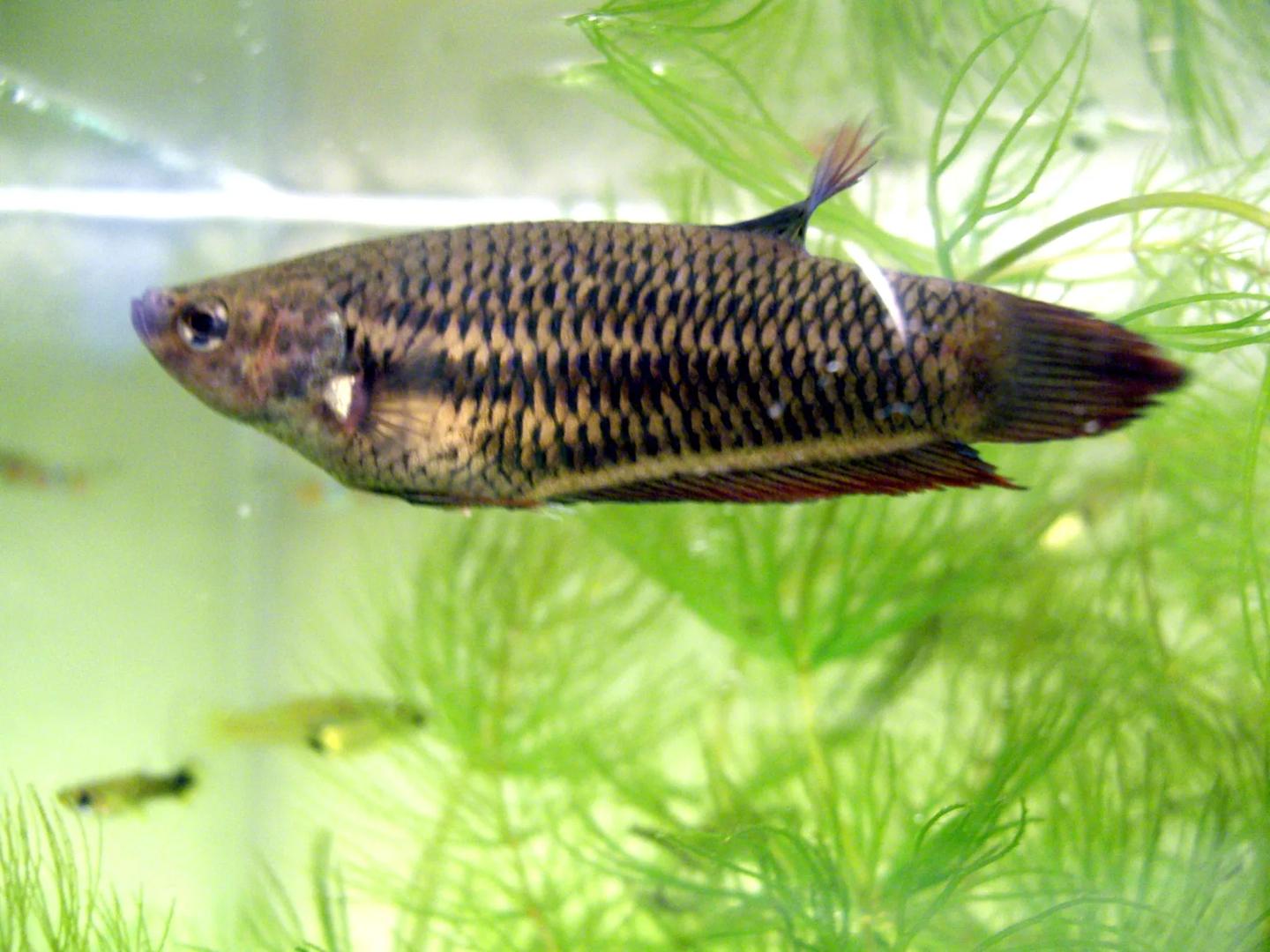
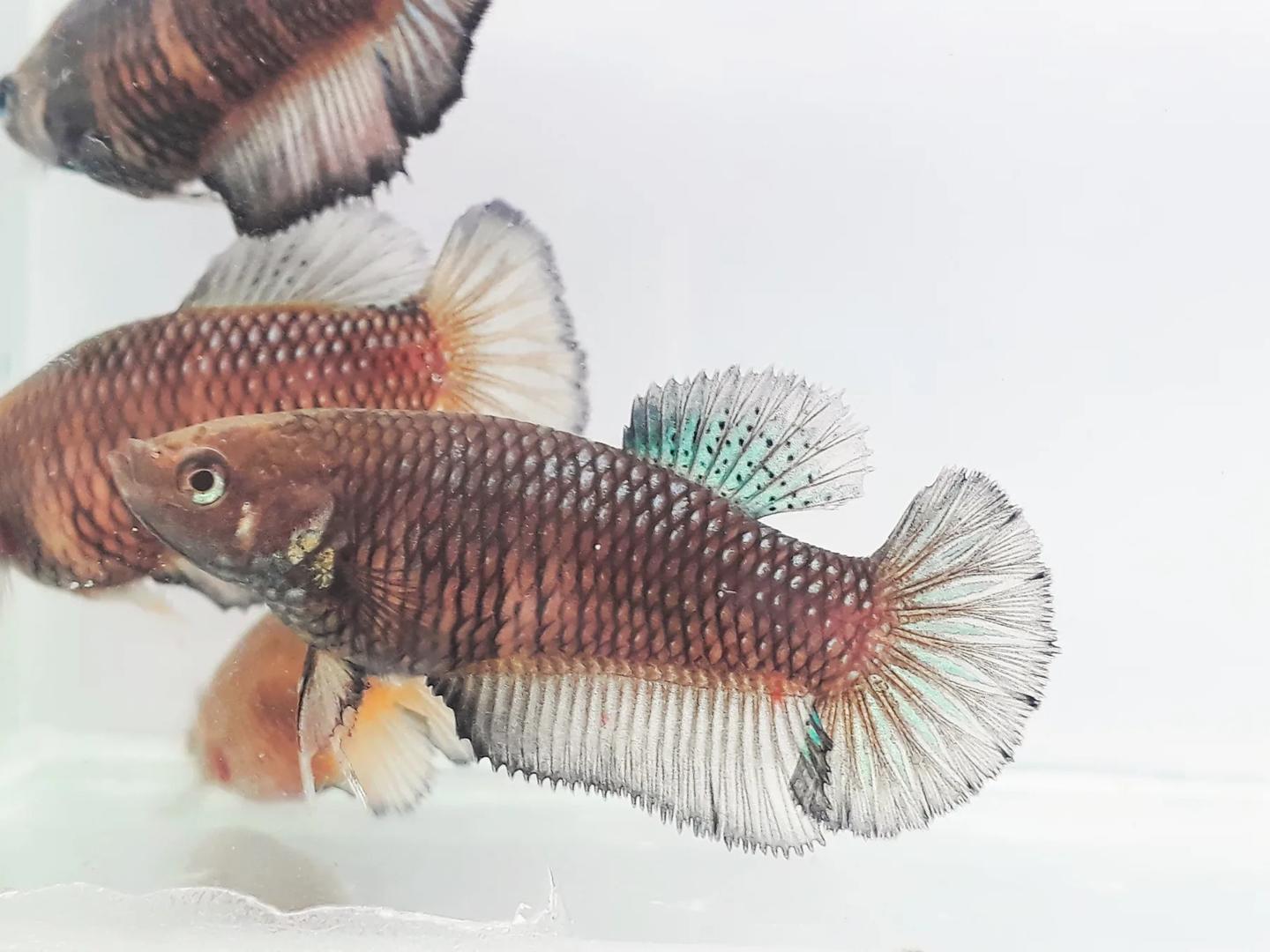
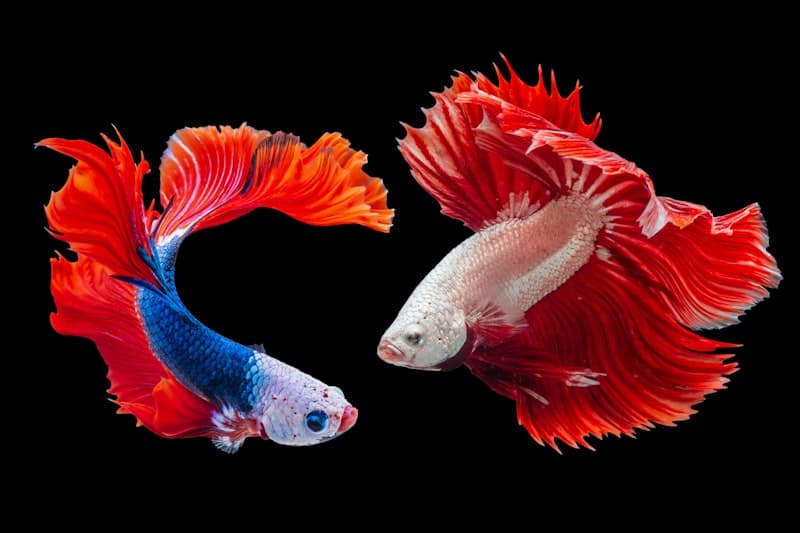
Females often have shorter finnage and a less exaggerated outline than long-fin males, but domestic Plakat males are also short-finned, juveniles change as they mature, and ornamental breeding produces wide variation. The source-labelled photographs in this page show genuine examples; they are not a universal sexing chart.
If sex matters to your plan, ask the seller what evidence supports the label and read the exact product description. Do not rely on colour, fin length or one small pale spot in isolation. A photograph also cannot prove age, fertility, temperament, genetic purity or health.
The diversity itself has a real scientific history. Genomic work indicates a complex domestication story with contributions from related Betta species [8]. That is interesting context, but it is not permission to attach a precise pedigree or medieval origin story to an undocumented retail fish.
Arrival and the first seven days
Follow the current instructions supplied with the shipment because bagging method, journey time and water chemistry affect the safe procedure. Do not copy a universal “drip for exactly 30 minutes” rule from a guide without knowing those conditions.
Prepare before opening the box:
- Finish cycling and test the receiving aquarium.
- Match the planned temperature and provide dim cover.
- Read the seller's unpacking and acclimation instructions fully.
- Transfer the fish with as little shipping water as practical under those instructions.
- Keep lighting subdued and observe breathing, balance and swimming.
- Check that the fish can reach the surface and is not being chased.
- Record water results and contact the seller promptly if the live-arrival process requires it.
For a group, the backup aquarium must already be cycled, heated and filtered. A divider or spare container found after an injury is not the same as prepared long-term housing.
How this guide was checked
The accepted name, maximum-length convention, habitat, air-breathing biology and natural foods were checked against FishBase [2]. The UK aquarium and water screen comes from OATA, while the claims about space, enrichment and female aggression are bounded to what the cited studies actually tested.
All four page images have separate subjects or roles, exact file hashes and rights records. Three are source-labelled photographs; one is an original explanatory illustration. None is described as a product photograph, a current-stock record, a universal sexing key or proof that a female group is compatible.
Current cards remain dynamic. Forms, correction emails and audio plays are useful editorial signals, but they are not ecommerce leads. Commerce is measured through add-to-cart, checkout, purchase and revenue, with purchase and revenue as the final outcomes.
Corrections are welcome through the edit link below. If a source or a fish label is wrong, include the exact passage and supporting reference so the page can be rechecked.