−13%
Moderate
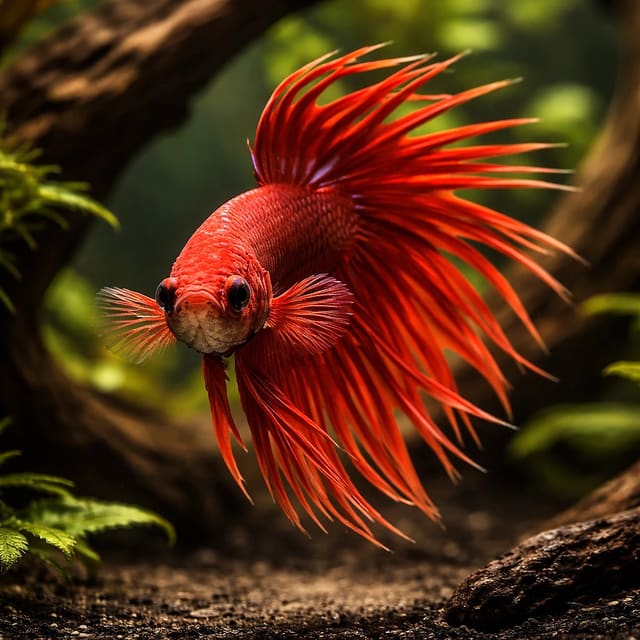
Crowntail Male Betta (Betta splendens)
26–28°C · pH 6–8 · 20L
£12.17£13.99

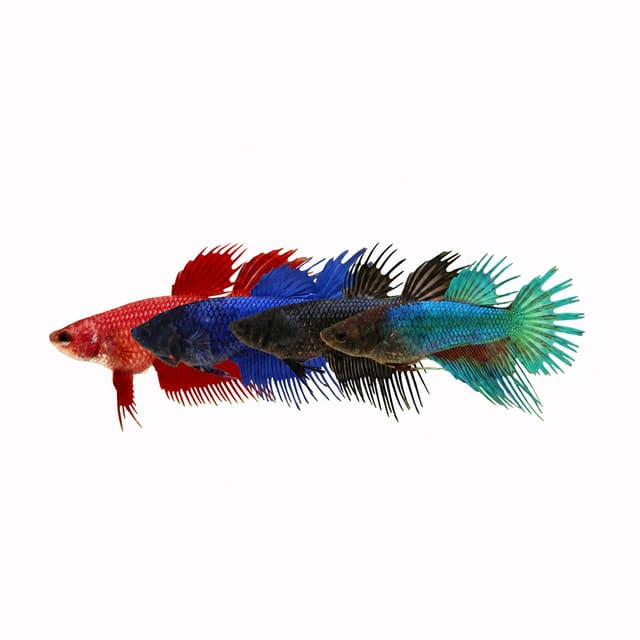
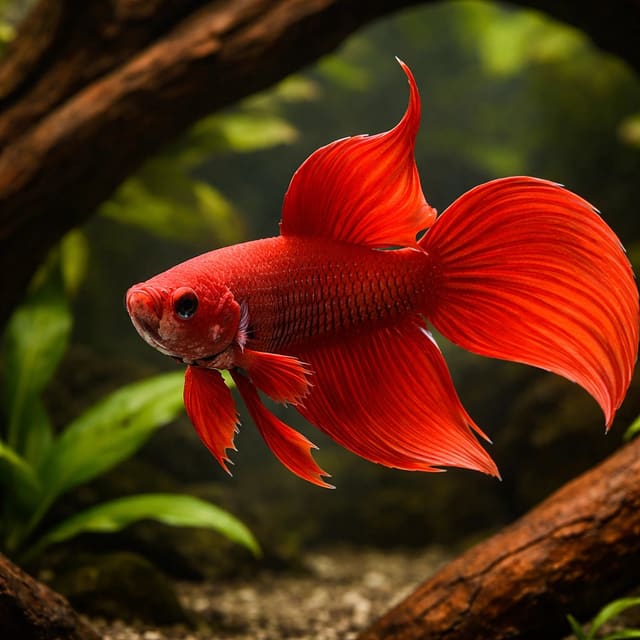
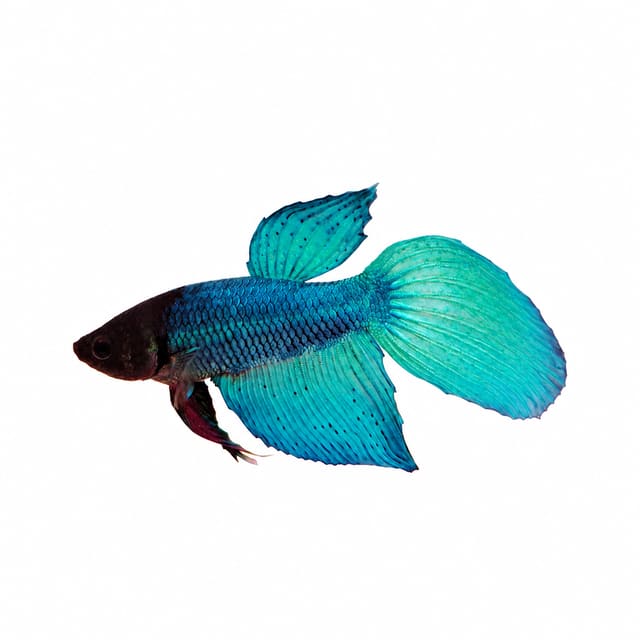
Veiltail Male Betta Mix (Betta splendens) is supplied as one male fish in 3–3.5 cm or XL dispatch sizes. Plan one male per mature, heated and covered aquarium, with gentle flow, smooth furnishings, measured feeding and separate accommodation ready before any carefully researched companion is attempted.
Betta splendens
Veiltail Male Betta Mix (Betta splendens) is supplied as one male fish in 3–3.5 cm or XL dispatch sizes. Plan one male per mature, heated and covered aquarium, with gentle flow, smooth furnishings, measured feeding and separate accommodation ready before any carefully researched companion is attempted.
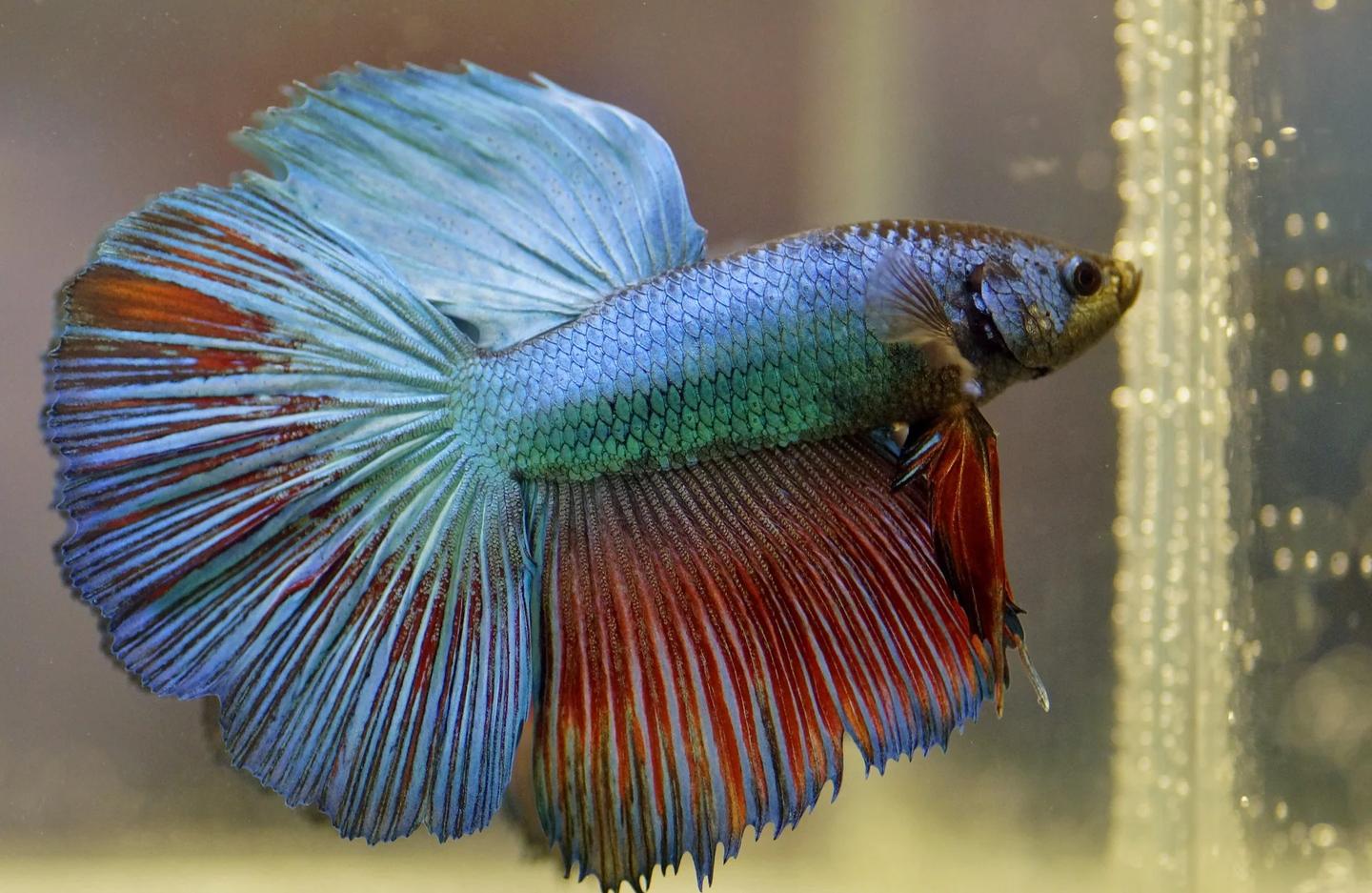
For one typical domestic Betta splendens, start with at least 20 litres, a mature filter, thermostatic heater, separate thermometer, gentle flow, a secure lid with surface access, and plants or refuges. Keep one male per aquarium.
Maintain these water conditions for optimal health and vibrant colors
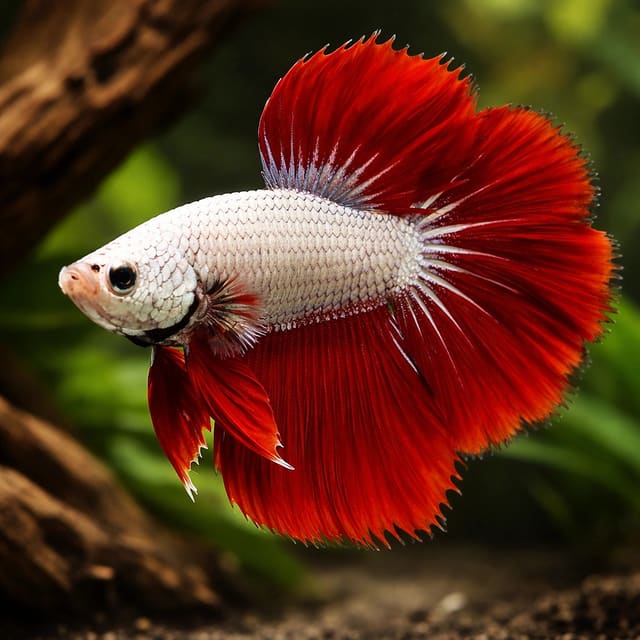
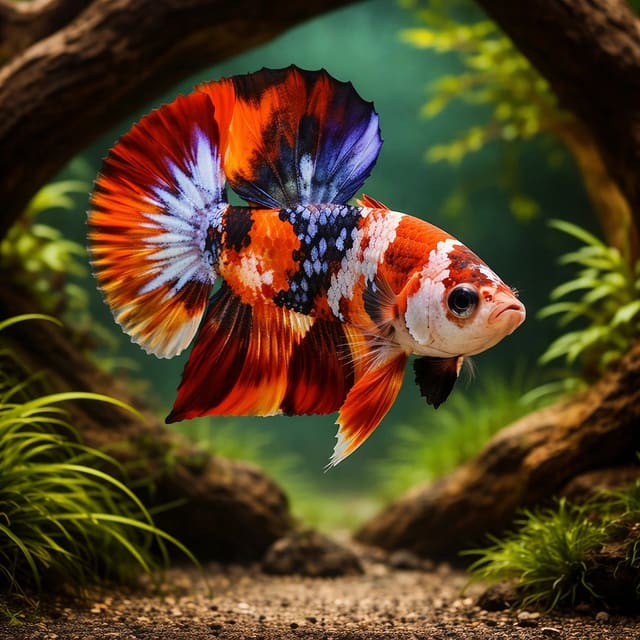
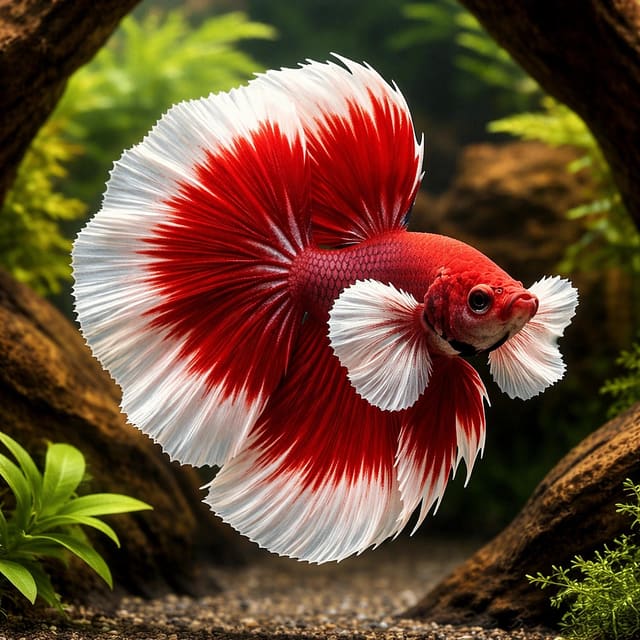
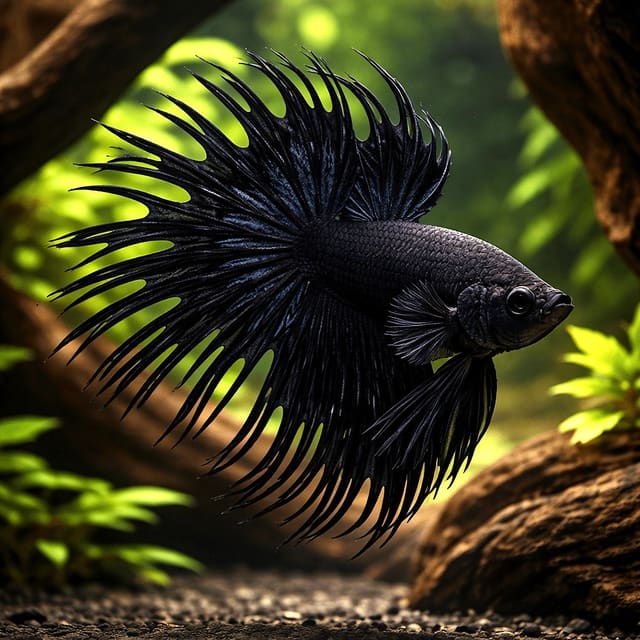
The Veiltail Male Betta Mix (Betta splendens) is offered as one live male fish per purchase, with 3–3.5 cm and XL dispatch sizes. The size chosen is the size sent; it is not an adult-size promise. This offer suits a keeper who wants a single male centrepiece and will give him a mature, warm and low-flow aquarium rather than trying to fit him into a busy community.
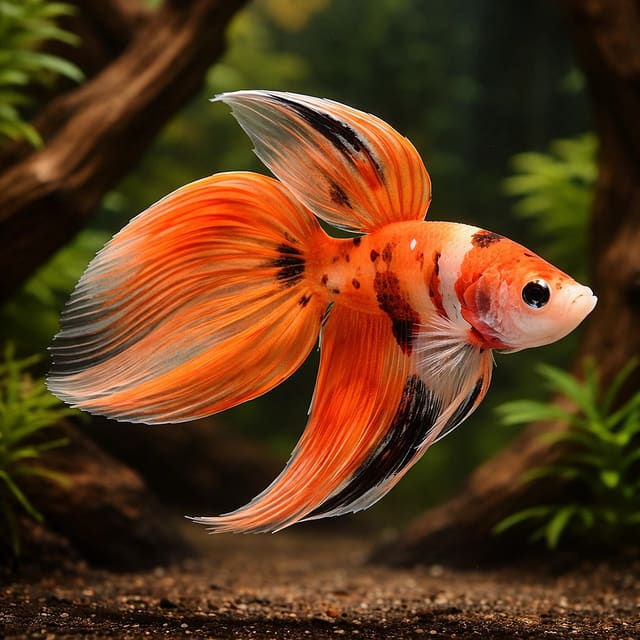
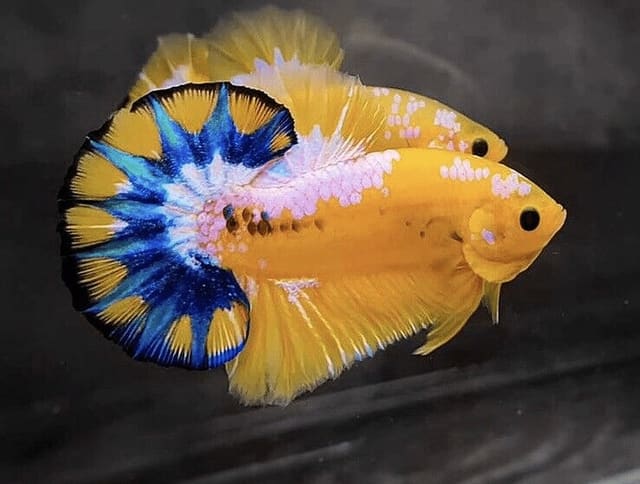
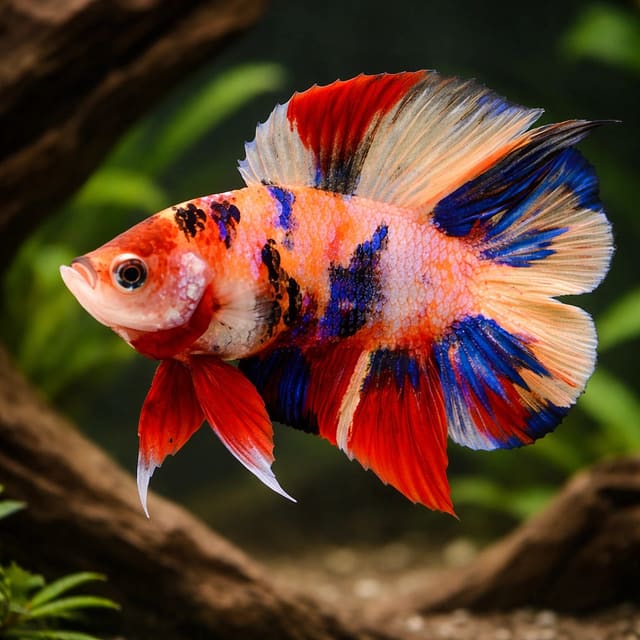
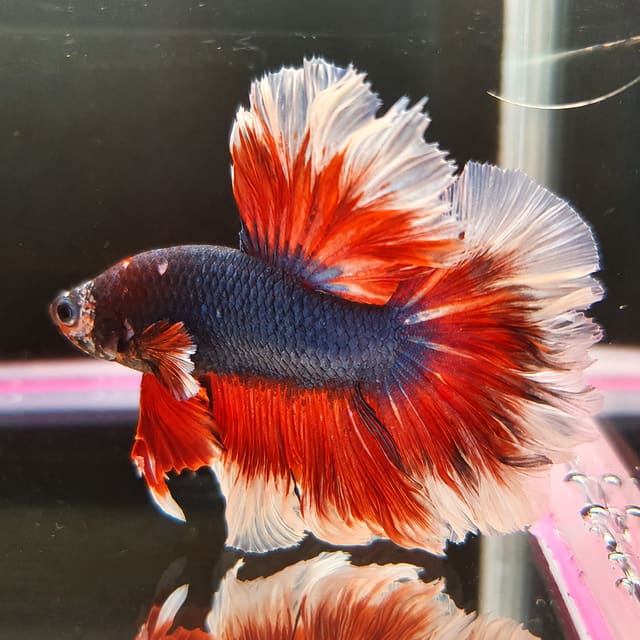
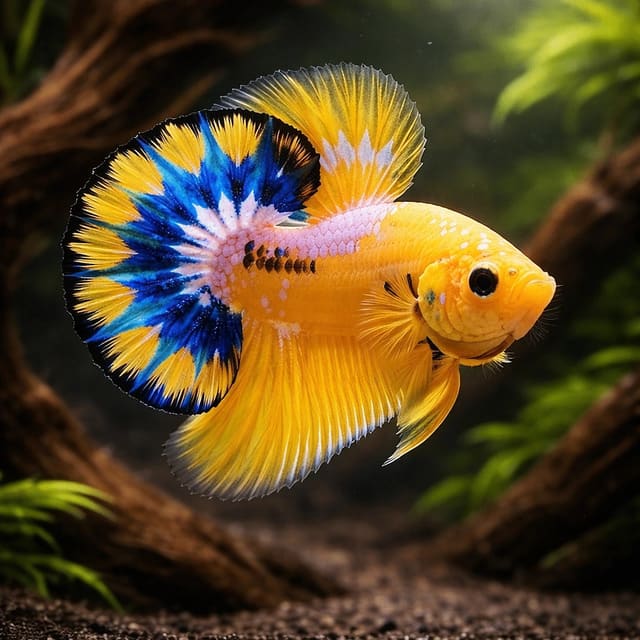
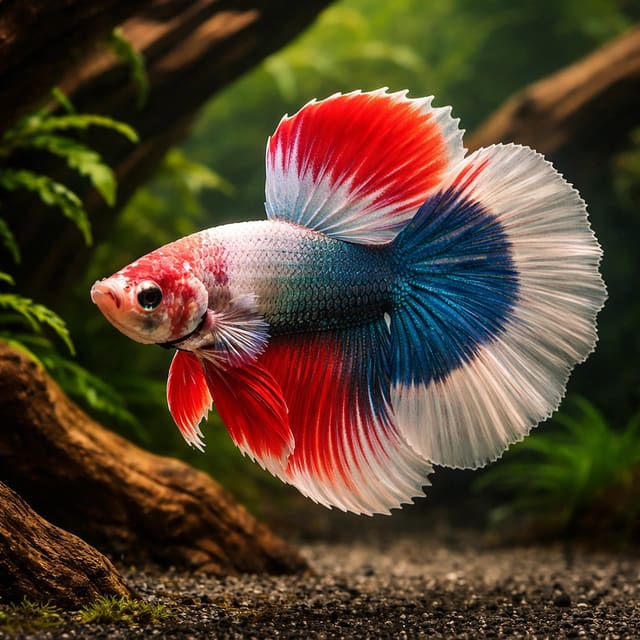
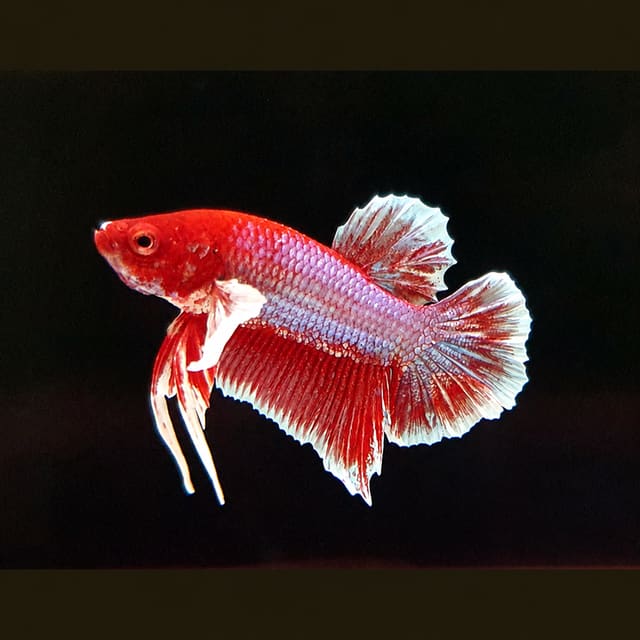
Veiltail describes the domestic fin outline, while “mix” means colours and patterns vary. The offer does not promise an exact shade or the individual shown in the gallery. A male is territorial enough that one per aquarium is the safe default, and his extended fins also make rough decor, strong flow and persistent fin-nippers poor choices.
| Suits | Not suited to |
|---|---|
| A keeper ready to make one male the focus of the aquarium | Housing two males together or relying on a divider with visual contact |
| A heated, filtered, covered aquarium with plants and gentle movement | An uncycled container, tiny jar or exposed high-flow layout |
| Someone who will measure food and watch the fish’s own behaviour | A buyer expecting a fixed colour, exact photographed specimen or guaranteed community outcome |
The size you select is the size supplied, not the adult size. The 3–3.5 cm figure is a dispatch measurement, while XL is a trade grade that does not state a centimetre size. For adult planning, keep both published records with their measurement bases: FishBase records 6.5 cm total length (TL), while Seriously Fish records 70 mm standard length (SL). TL and SL use different endpoints, so neither should be presented as one unqualified maximum or inferred from a dispatch grade.
Sex is guaranteed only when the exact product or selected option explicitly states male or female. This Veiltail Male Betta Mix listing is sold as male. The accepted identity is Betta splendens. Colour and pattern remain variable within the mix, and domestic appearance cannot establish lineage, age, fertility or temperament. Research on domestic Betta diversity shows how complex colour and fin variation can be.
The labyrinth organ lets Betta splendens take atmospheric air at the surface, but it does not replace oxygenated, filtered water. The tank needs a working biological filter, stable heat, a secure lid with surface access and furnishings that allow both cover and unobstructed movement. Plan those essentials before choosing the fish.
Both dispatch labels describe the fish at supply, not a different adult care category. Prepare the permanent aquarium for an adult Betta splendens whichever option is selected. The smaller label does not justify a smaller uncycled container, and XL does not remove the need for gentle flow or fin-safe furnishing. Choose between the available sizes only after confirming the same mature aquarium, equipment and one-male social plan are ready.
A numeric label can look more precise than a trade grade, but neither predicts the individual’s final colour, body condition or behaviour. Assess the arriving fish as an individual while keeping the species-level care plan constant. That distinction helps prevent a dispatch choice from being mistaken for a permanent housing rule.
Gallery images have been digitally enhanced to improve image quality. Natural colour, pattern, size and maturity can vary between live animals.
Use the Betta fish care guide for broader preparation and the Betta collection when comparing forms. Those other listings are alternatives, not automatic companions for this male.
A Veiltail male’s care is easiest when the whole aquarium is designed before he arrives. Extended fins increase drag, so calm circulation, uncluttered routes and resting cover matter as much as the water numbers. The goal is a stable system in which he can feed, rest and reach the surface without being pushed or trapped.
Biological maturity cannot be judged from clear water. Fish waste releases ammonia; filter organisms convert it to nitrite and then nitrate. The RSPCA’s aquarium guidance explains the central role of filtration. Prepare the system through a fishless cycle and verify that ammonia and nitrite rise and return to zero before the fish is introduced.
For a new setup, work through the first tropical aquarium guide. Record test results rather than guessing. After stocking, repeat tests regularly and whenever appetite, breathing or behaviour changes. A mature filter can still be disrupted by overfeeding, tap water added without conditioner, power loss, blocked flow or aggressive cleaning.
Tropical Fish Co uses at least 20 litres as the practical starting screen for one typical domestic Betta. OATA gives the same minimum for one male. The specialist species profile recommends a 45 × 30 cm base, about 41 litres, for a single male or pair. More horizontal room gives the fish a better choice of swimming and resting zones and usually makes equipment easier to arrange.
Nominal capacity is only the start. Substrate, hardscape and the air gap reduce filled volume; a tall narrow tank may offer less useful movement than a longer one. Check the actual footprint, maintenance access and position of the heater and filter. A larger aquarium changes more slowly, but it still needs to be cycled, heated and maintained.
The Seriously Fish species profile gives 22–30°C for ornamental Betta splendens. Tropical Fish Co uses 26–28°C as a stable practical target for a typical domestic Betta. Choose a thermostatic heater using the maker’s aquarium-volume and installation instructions, then verify the water with a separate thermometer.
Room warmth alone is unreliable in many UK homes, particularly overnight and in winter. A thermostat setting is also not a measurement; heater calibration, water movement and room conditions can all affect the result. Check the aquarium at different times until the daily pattern is understood. Correct drift gradually rather than adding hot or cold water suddenly.
The species profile gives pH 6.0–8.0 and 1–15 dGH for ornamental strains. FishBase records 24–30°C, pH 6.0–8.0 and 5–19 dH as species environment values; those wild records are context, while the aquarium profile is the more useful husbandry reference. Stable, clean water within a suitable range is more valuable than repeated chemical adjustment towards the middle.
Test the actual water used in the aquarium. UK supplies vary, and domestic softeners can alter mineral content. Treat chlorine or chloramine with an aquarium conditioner. Read the water chemistry guide before changing pH or hardness, then use the water matcher to compare measured values with the stated range.
Betta splendens naturally uses sluggish habitats, and a Veiltail male has extended fins that can make constant current tiring. Sponge filtration or a diffused outlet often works well. Watch how the fish holds position. If he is repeatedly swept aside or cannot rest near the surface, redirect or reduce the outlet while keeping biological filtration active.
Leave part of the surface open for air breathing. Fit a secure lid because Bettas can jump, and retain a safe air space under it. The cover also helps maintain warm humid air above the water. Floating plants can create shade, but thin them when they restrict access or trap debris.
Choose smooth driftwood, plants and refuges. Avoid sharp plastic, rough holes and tight gaps. A Veiltail’s fins can snag on edges that look harmless from outside the tank. Arrange cover along the sides and back while leaving an open route through the centre and to the surface. Broad leaves or safe platforms near the top can provide low-effort resting places.
Plants also break sight lines and soften bright light. Tall stems, floating species and shade-tolerant plants can all work if their own needs match the aquarium. A natural-looking layout is optional; safe structure and maintainability are the real objectives. Keep enough open area to see the fish, spot leftover food and siphon waste.
FishBase describes wild feeding on zooplankton, mosquito larvae and other insect larvae. Captive ornamental Bettas normally accept prepared foods. Use a suitably sized complete Betta pellet or quality aquarium flake as the base, with small frozen or live foods such as daphnia, Artemia or bloodworm for variety.
Feed measured amounts that are consumed promptly and remove leftovers. Pellet size and energy density vary, so a universal item count is misleading. Monitor body condition and the fish’s response, and follow the manufacturer’s directions. Overfeeding affects both the fish and the filter because uneaten food becomes additional waste.
OATA recommends a weekly partial water change of about 25% for Betta aquaria and regular testing. Prepare replacement water with conditioner and bring it reasonably close to tank temperature. Siphon waste from accessible areas. Regular smaller work is easier on the system than waiting for a visible problem and making a dramatic correction.
If filter media needs attention, rinse it lightly in the old water removed from the aquarium, never under the tap. Check the outlet for blockage, confirm the heater and thermometer agree, and inspect the lid and cables. Keep a simple log if more than one person looks after the fish.
Write down the date, water readings, maintenance completed and anything unusual in the fish’s behaviour. A short consistent record is more useful than an occasional long description because it shows what changed before a problem appeared. Note appetite, breathing, swimming, resting position and fin condition in plain language without trying to diagnose from one sign.
If several people care for the aquarium, the record also prevents duplicate feeding or conflicting adjustments. One person can see that water was already changed, food was already offered or a test was repeated. That helps preserve a stable routine and gives an aquatic professional a clearer history if advice is needed.
Before delivery, confirm the tank is heated, tested and ready. Be present at the address. Begin one continuous unboxing video while the parcel is still sealed, keep the outer box visible, open it and inspect the fish in the sealed bag on the day it arrives. The condition must be recorded before anything is disturbed.
Then float the sealed bag for 20–30 minutes before release and keep transport water out of the aquarium. If something has gone wrong, contact Tropical Fish Co the same day with the order number and video. The complete requirements sit on the delivery and Live Arrival Guarantee page; the licensed courier and claim process are store policy, not biological facts.
Learn the fish’s normal posture, breathing, feeding and rest pattern. Reduced appetite, rapid gill movement, hanging at the surface, prolonged bottom-sitting, erratic swimming, colour change, fin damage or body-condition loss are useful warnings. Begin by testing temperature, ammonia, nitrite, nitrate and pH, then review recent maintenance, food, additions and equipment changes.
The MSD Veterinary Manual supports a history-and-water-led approach to aquarium-fish investigation. One symptom does not identify a disease. Avoid combining treatments from guesswork. OATA’s fish-vet directory provides a route to qualified help when signs are serious or persistent.
A planned absence should not turn care into guesswork. Leave pre-measured portions for a responsible helper, identify the correct conditioner and explain how to confirm filter movement and temperature. Ask the helper to record what was done. Extra food before or after an absence does not make up for missed meals and creates unnecessary waste.
Keep the lid secure and the surface route open before leaving. If equipment stops, the first priorities on return are to confirm temperature and circulation, observe the fish and test water where the interruption may have affected filtration. Restore the normal routine once conditions are stable instead of making several large corrections together.
For the first days, keep the aquarium’s prepared temperature, filter and lighting routine consistent. Let the male locate cover and surface routes without repeatedly rearranging the layout. Offer a small measured feed when he is ready to respond and remove any remainder. Avoid interpreting a single quiet period or missed feed in isolation; compare posture, breathing, movement and appetite across the day.
Test the newly stocked aquarium according to the prepared plan and write the results beside the fish observations. If ammonia or nitrite is detected, treat that as a water-quality problem requiring prompt correction and a review of filter function, feeding and maintenance. Do not add another animal while the first fish is still establishing a baseline.
Veiltail fins make ordinary movement easy to observe. Check whether the male can hold position, turn without brushing rough objects and rest without being pushed away by the outlet. If he repeatedly avoids one area, inspect flow and furnishing before assuming the behaviour is a fixed personality trait. Small layout changes should have a clear purpose and be followed by observation.
Good care is regular rather than dramatic. Feed measured portions, test on a repeatable schedule, change water in partial amounts and inspect the equipment while the aquarium is open. Preserve established filter media instead of treating harmless staining as a reason for unnecessary disturbance; biological function matters more than a new appearance. Keep spare consumables on hand so conditioner or test reagents do not run out during maintenance.
When something changes, separate urgent risks from ordinary variation. A failed heater, stopped filter or unsafe water result needs action. A new resting place, slight colour shift under different lighting or changed route through the plants may only need careful observation. Making one well-supported adjustment at a time makes its effect easier to judge and preserves the stability the fish depends on.
The Veiltail male is a better solitary centrepiece than a default community fish. The species profile says ornamental Betta splendens are usually best maintained alone, and FishBase states that males fight one another. A second male is therefore outside a responsible social plan, regardless of aquarium size or decoration.
Another male Betta is the clearest avoid. Fish with trailing fins or a similar outline can also provoke display or aggression. Direct visual contact through clear dividers can keep fish in a state of repeated arousal, so use opaque barriers between neighbouring male tanks. A bubble nest or occasional flare is behaviour, not proof that the social environment is safe.
Long fins create a second compatibility problem: other fish may nip them. OATA recommends a male alone or with very placid companions because fin damage can lead to stress and further health problems. Avoid persistent fin-nippers and fast boisterous species that repeatedly crowd the upper water. Smooth furnishing cannot compensate for an unsuitable tank mate.
Seriously Fish notes that some small cyprinids and loaches from similar environments can be suitable, but proper research is required and solitary housing remains the usual recommendation. Compare adult size, water and temperature overlap, activity, swimming zone, feeding speed and the capacity of the full aquarium. “Small” or “peaceful” by itself is not enough.
The RSPCA’s fish compatibility guidance supports researching the exact animals being mixed. Observe whether every fish can feed and rest. Chasing, prolonged hiding, repeated display, damaged fins or exclusion from food means the plan needs intervention, usually separation rather than extra livestock.
Small shrimp or fry may be hunted. Snails and larger invertebrates have their own space, food and water needs and are not universally harmless. Provide refuge and assume uncertainty rather than adding an animal as a cleaner. The fish’s personality may differ from another male of the same form.
Compatibility can fail without a dramatic fight. One fish may reach every feed first, occupy the only sheltered surface rest or keep the Betta away from an open route. Watch the whole aquarium at quiet times as well as during feeding. A companion that shares the water range can still be unsuitable if its activity prevents the male from resting or if the layout cannot provide distinct usable areas.
More cover is useful only when it remains navigable and does not create traps or dead maintenance zones. Add plants and barriers to break sight lines, then confirm every animal can still reach food and appropriate water levels. If the remedy requires crowding the tank or constant intervention, the simpler decision is separate housing.
Assess a candidate at its adult size and normal social number, not as one small juvenile seen in a shop. A schooling fish may need several of its own kind and therefore much more space than one specimen suggests. A bottom-dwelling animal still contributes waste and may use the same shelters. These needs must fit after the male Betta’s own space, cover and calm feeding route are protected.
Quarantine and health screening are separate from behavioural compatibility. An animal that behaves peacefully can still introduce disease, while a healthy animal can still be a poor social match. Plan the introduction, observation and separation resources before buying. If those resources are not available, maintain the Veiltail male alone.
A successful community is an observed outcome, not a promise attached to a list of names. For many homes, one male Betta in a well-furnished aquarium is the simpler and more welfare-conscious choice.
FishBase records 6.5 cm total length (TL), while Seriously Fish records 70 mm standard length (SL). TL and SL use different endpoints, so keep both records labelled rather than choosing one unqualified adult maximum. Both are separate from the 3–3.5 cm and XL dispatch choices.
Start with at least 20 litres for one typical domestic Betta and choose more room where practical. The specialist profile gives a 45 × 30 cm base, about 41 litres, for one fish or a pair. Furnishing, usable water volume, filtration and surface access all matter.
Keep one male per aquarium. Both FishBase and UK welfare guidance warn that males fight their own kind, and extra space does not turn direct male cohabitation into a safe plan.
A careful beginner can keep one successfully once the aquarium is mature and fully equipped, but we rate the care as intermediate. Stable heating, a biological filter, a secure lid, gentle flow, safe furnishings and regular testing must already be in place.
Feed a suitably sized complete Betta pellet or quality aquarium flake as the base, with small live or frozen foods such as daphnia, Artemia or bloodworm for variety. Measure portions, follow the food maker’s guidance and remove leftovers.
Tropical Fish Co uses 26–28°C as a practical target for a typical domestic Betta. The specialist species profile gives pH 6.0–8.0 and 1–15 dGH; keep ammonia and nitrite at zero and make changes gradually.
A male can treat another Betta-shaped or long-finned fish as a rival, while his own extended fins can attract nippers. House him alone by default and avoid other male Bettas, persistent nippers and fast, boisterous companions.
No companion is guaranteed. The specialist profile says some small cyprinids and loaches from similar environments may be considered, but only after checking adult size, water overlap, activity, feeding competition and space, with separate accommodation ready.
Be home to receive the parcel and begin one continuous video while it is still sealed. Open and inspect it that day with the fish still in the bag, then float the sealed bag for 20–30 minutes before release. Report any problem the same day with the order number and video.
One purchase supplies one male fish, with 3–3.5 cm and XL dispatch choices. The references below provide further reading on identity, biology, aquarium care and welfare.
FishBase's 6.5 cm TL record and Seriously Fish's 70 mm SL record use different endpoints. Keep both measurement labels rather than selecting 7 cm as one unqualified adult maximum; both records are separate from the dispatch choices.
No reviews for this item yet. Bought one? Honest reviews only, good or bad.
What customers say about ordering from us
I have a small group of long finned mountain minnows. So was delighted to be able to order ten of this variety to increase the genetics in my tank . The ones I recieved are healthy but it’s to early to give a verdict on wether they are of a long finned type since they are small currently.
Gordon Walker · 23 Sept 2026
100% success travel and "installation". Pleased with quality of purchase. The Siamese fighter a bit "shy" so have not yet seen him at his best yet but looking good. Happy customer. GG
George E Garratt · 21 Sept 2026
Reviews of our shop, collected by Judge.me, an independent third-party review collector. Newest first.