By Tom Whitfield
Moderate
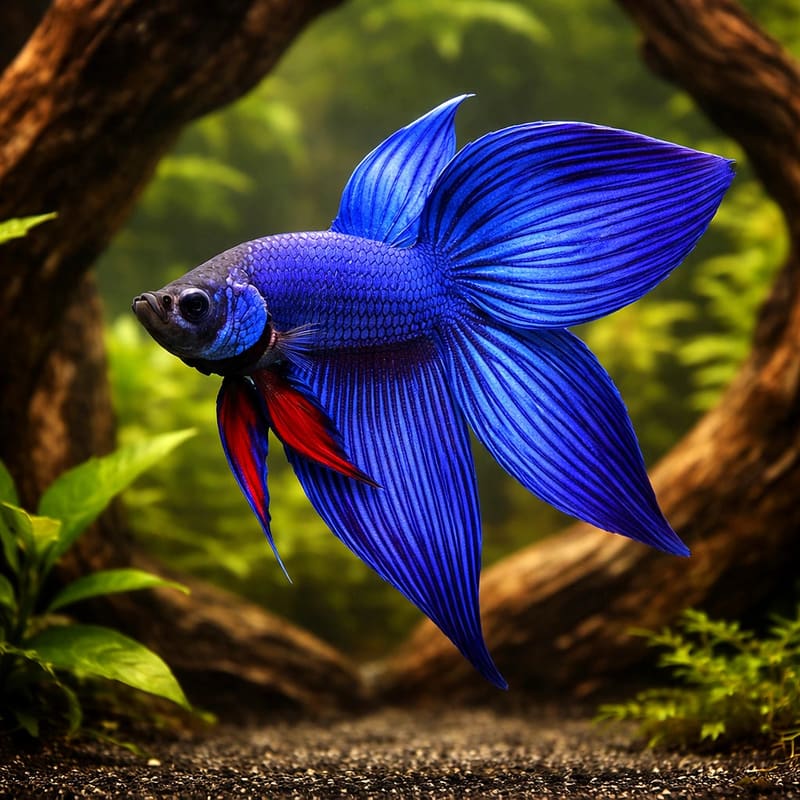
Veiltail Male Betta Mix (Betta splendens)
22–30°C · pH 6–8
£5.99
Betta Fish · Buying Guide
Buy betta fish in the UK with confidence — tail types, tank size, heater, tank mates and live Betta splendens we ship this week. Read or listen now.
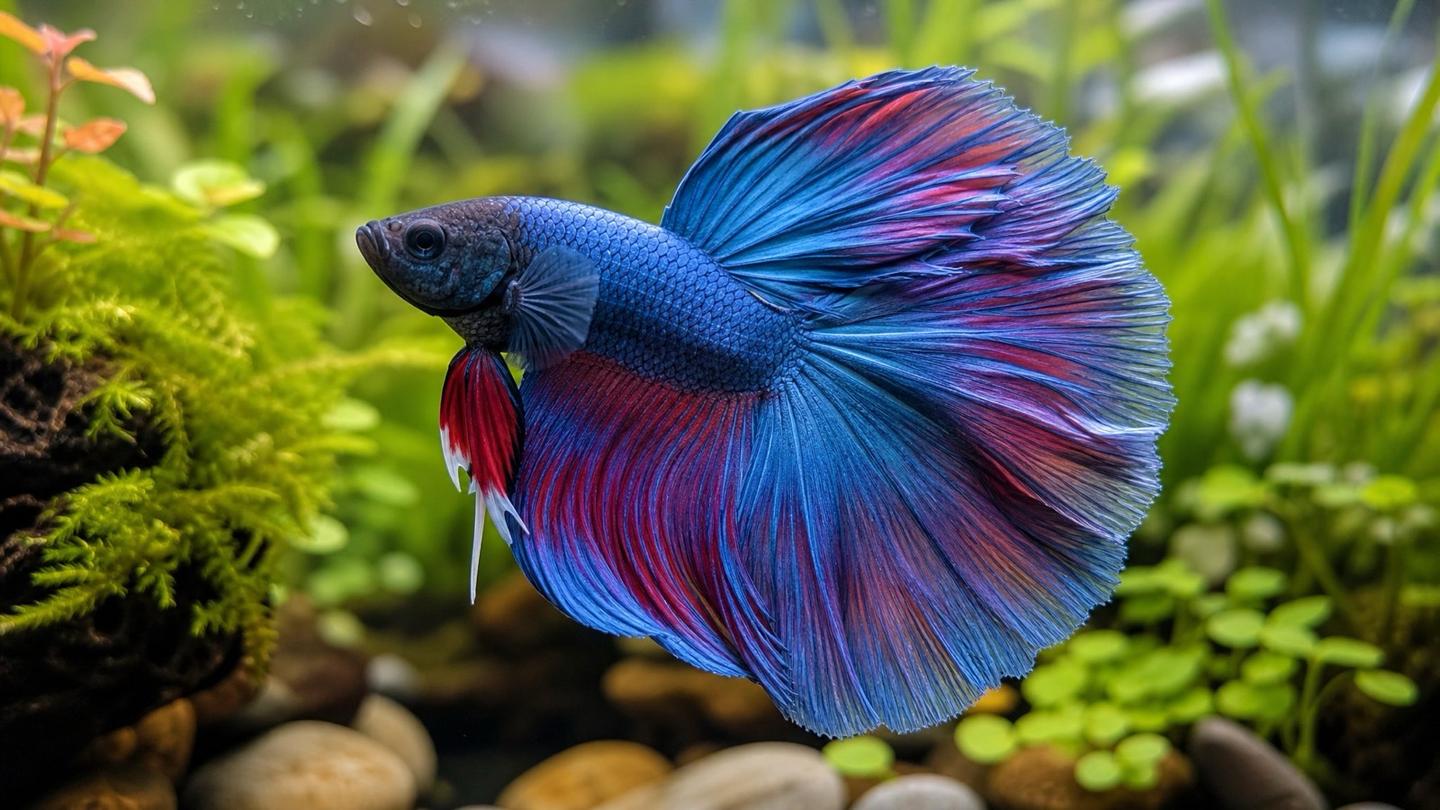
10 products in stock today
Live prices and stock. Every fish covered by our Live Arrival Guarantee.
22–30°C · pH 6–8
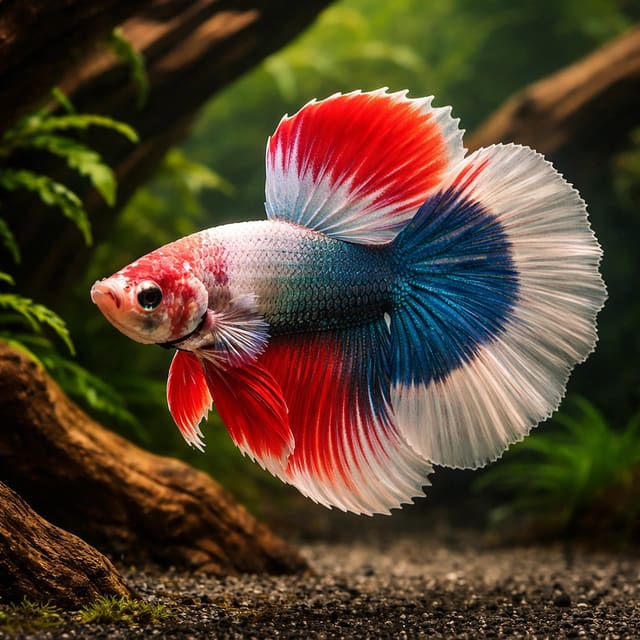
26–28°C · pH 6–8
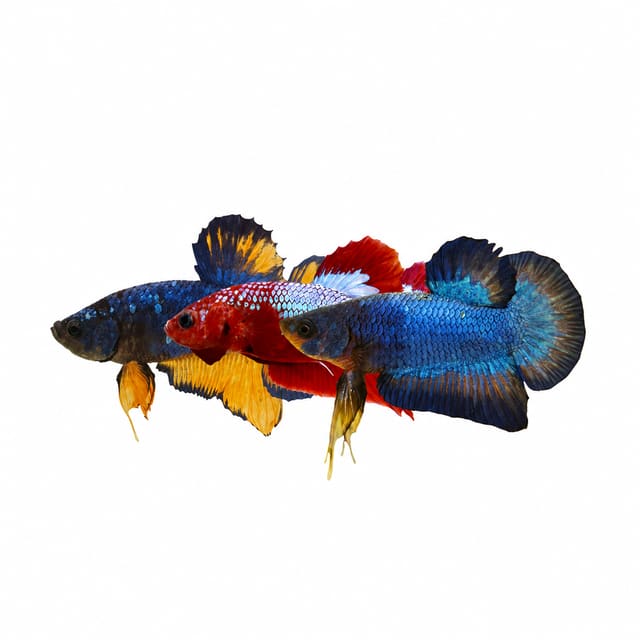
26–28°C · pH 6–8
26–28°C · pH 6–8 · 20L
24–27°C · pH 6–7.8 · 20L
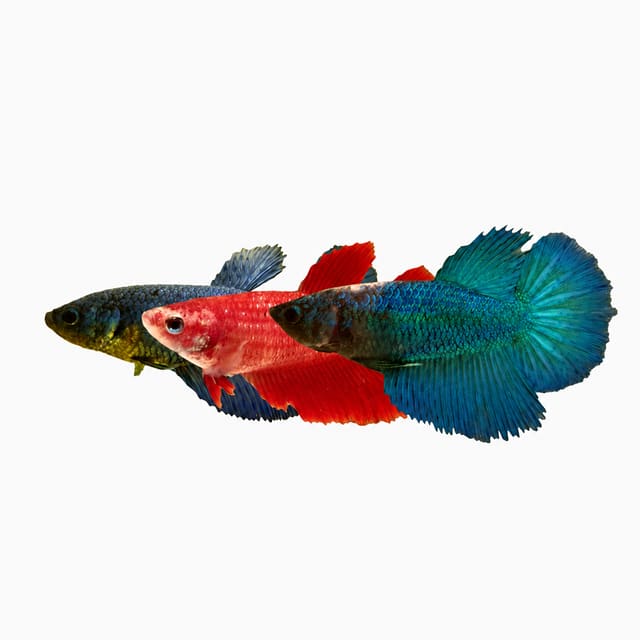
22–30°C · pH 6–8
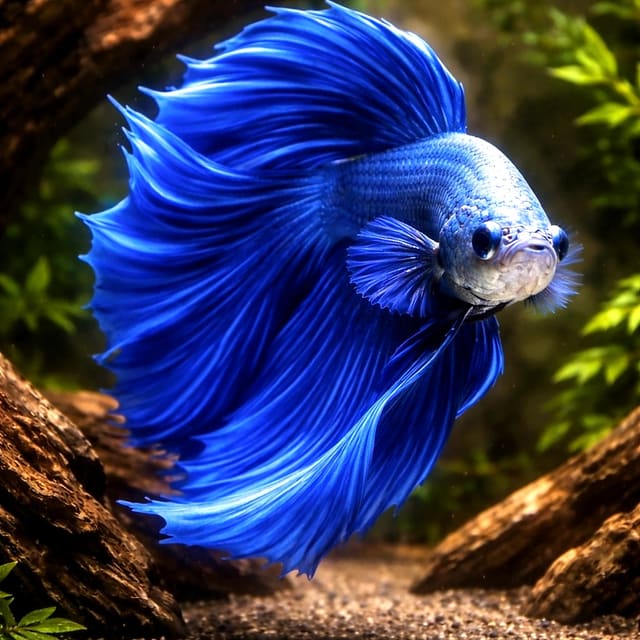
24–27°C · pH 6–8 · 20L
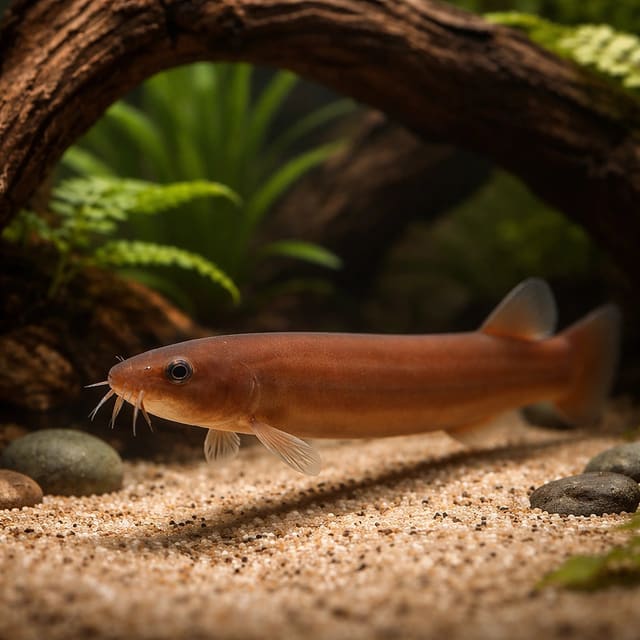
24–28°C · pH 5.5–7.5 · 60L
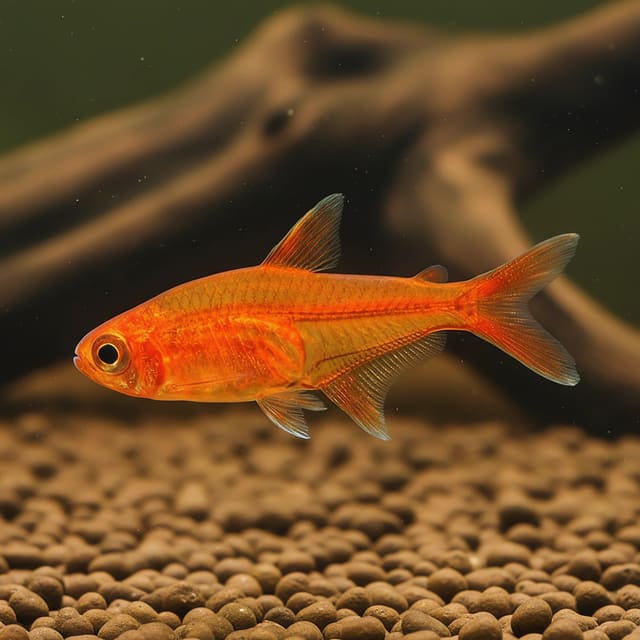
Our trained assistant knows this betta fish uk page inside out. Ask it anything — water parameters, tank mates, how many to buy — or have it read the guide aloud while you set up your tank.
You have seen a betta somewhere — a flash of colour in a shop, a stunning halfmoon on Instagram — and now you are trying to work out which one to buy and what it actually needs. The problem is that half of what is written about betta fish in the UK is recycled from the bad old days: the unheated bowl, the "they live in puddles so any jar will do" line, the idea that a betta is a low-effort desk ornament. Follow that advice and your fish dies young. Ignore it and you have one of the easiest, most characterful fish in the hobby.
I'm Tom, and I keep nano tanks — almost everything I run is under 60 litres — so the betta is squarely my patch. This is the broad, commercial answer to the question we get more than any other: "I want to buy a betta fish — which one, and what do I need?" It is the main hub for betta fish uk and siamese fighting fish for sale on this site; for the two specialist topics — exact heater and temperature setup, and keeping females in a group — I'll point you to our dedicated guides as we go rather than repeat them here.
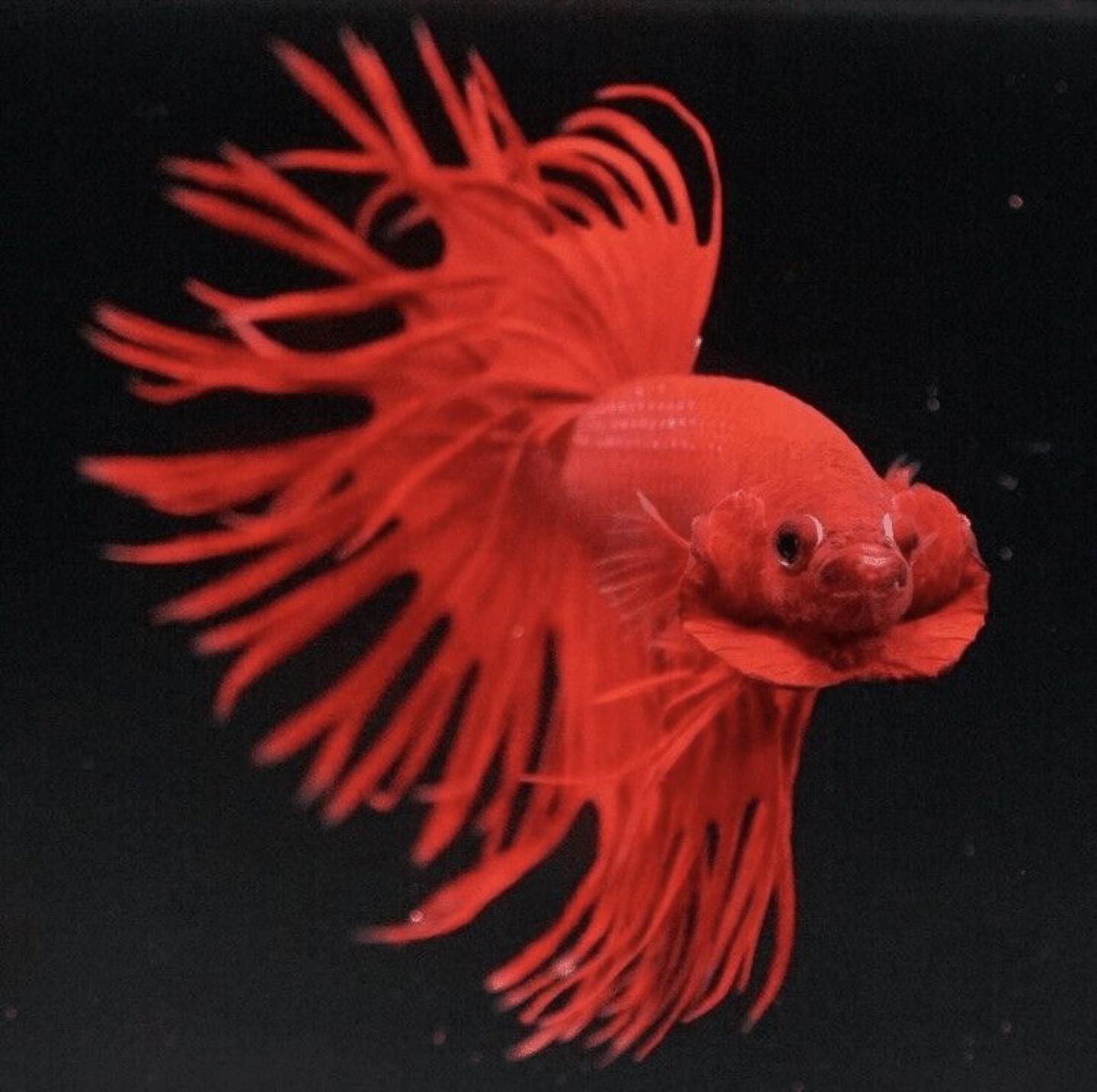
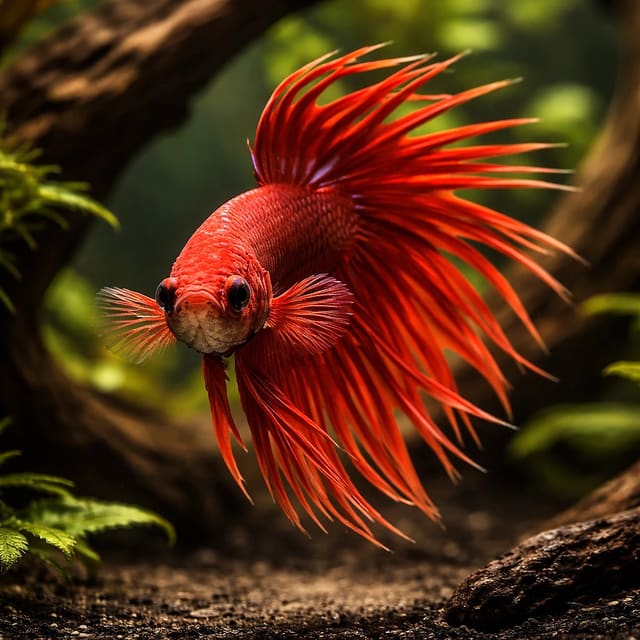
A crowntail male (Betta splendens). The "crown" is created by the webbing between fin rays being reduced, so the rays stick out like spikes. It's one of the most striking tail types we stock — and one of the more delicate. Photo: Tropical Fish Co.
Males are sold by tail type, and the choice affects price, how delicate the fins are, and how the fish swims. Here is how the types we regularly stock compare:
| Tail type | Finnage | Care notes | Typical price tier |
|---|---|---|---|
| Veiltail | Long, single tail that drapes downward | The classic betta; hardiest of the long-finned types; most affordable | £ (£5–£13) |
| Plakat | Short, rounded fins — closest to wild shape | Best swimmer, least fin damage, very forgiving for beginners | ££ (£11–£16) |
| Halfmoon | Tail opens to a full 180° fan | Spectacular but fin-heavy; needs gentle flow and snag-free décor | £££ (£18–£35) |
| Crowntail | Spiky, extended fin rays | Eye-catching; rays can curl or split if water quality slips | ££ (£9–£15) |
| Double-tail | Two distinct tail lobes | Often shorter-bodied; watch for swimming effort in fancy lines | ££ (£8–£21) |
New to bettas? Start in the left two columns — a veiltail or plakat is hardy, swims well and won't punish a small flow mistake while you find your feet. Save the show halfmoons and rare koi/dragon strains for once you've kept one a while.
This is the section that decides whether your fish thrives or fails. Get it right once and a betta is genuinely easy.
It isn't disease — it's the unheated bowl. A betta in a 1–3 litre unheated vessel sits well below feeding temperature for most of a British year, can't be filtered, and fouls within days. Every "my betta only lived a few months" story I'm sent traces back to a tank that was too small, too cold, or both. Buy the tank and heater before you buy the fish.
Here's the honest version. A single male betta can sometimes share a larger planted tank (40 litres-plus) with the right calm, non-nippy species — and sometimes can't, because every betta is an individual [2]. Two males together is never an option. If you want a guaranteed group, skip the male and keep females instead (see our female betta guide).
Good candidates for a single-male community tank, all of which we stock:
Avoid long-finned or flashy fish (the betta reads them as rivals), fin-nippers like tiger barbs, and male guppies, whose colour and tails are a classic betta trigger.
Compatibility candidates for a single-male community tank: Corydoras aeneus (KG65), Kuhli Loach (K751), Ember Tetra (2020), Harlequin Rasbora (S140), Mixed Nerite Snails (K811) and Amano Shrimp (K495). Check every species' water and space needs, add companions only after the betta settles, and keep a separation plan because individual behaviour is not predictable.
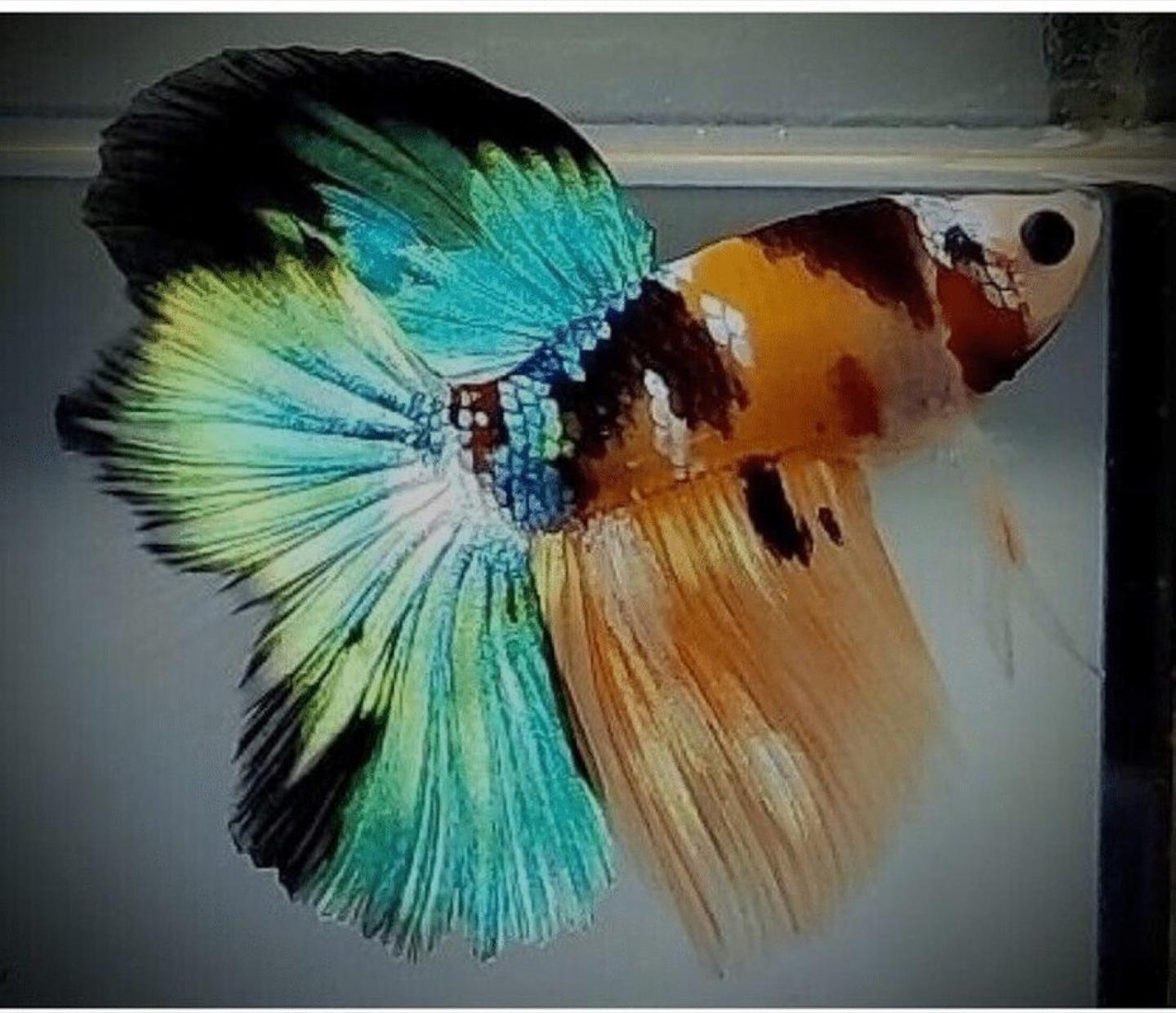
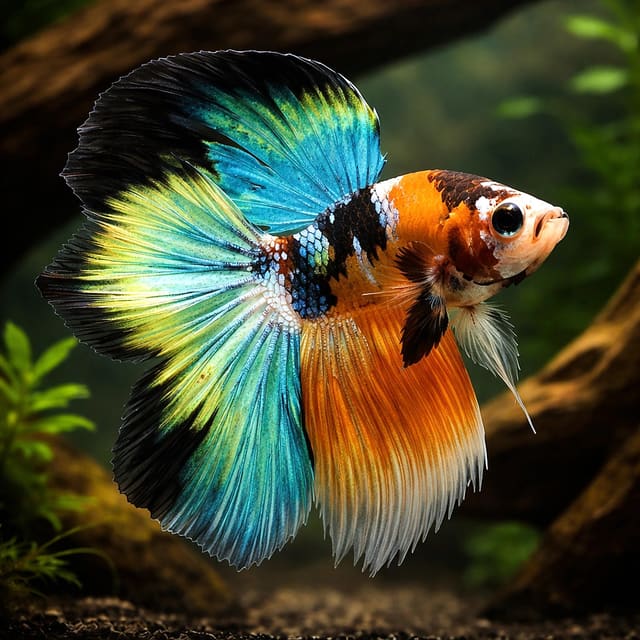
A double-tail male (Betta splendens). The genetics that split the tail into two lobes also tend to broaden the body and dorsal fin. Same care rules apply — one male, warm water, gentle flow. Photo: Tropical Fish Co.
If you've decided on a male and want to compare colours and finnage, or you're after a female for a planted group, here's a second spread — from a budget veiltail up to delta and big-ear strains.
Crowntail Red Male (7367), Delta Tail Male (7047), Veiltail Red XL (7041) and Blue XL (7042) males, plus Female Plakat (7359) and Female SuperDelta Big-Ear (7357). Females can be grouped in a planted sorority — males cannot.
Bettas ship as single fish — they've been individually housed, so they arrive a little stressed but don't carry the social tension that group-shipped fish do. The priority is warmth and calm [6].
Bettas are carnivores with tiny stomachs. Two to four small pellets, once or twice a day, with a frozen treat (bloodworm, brine shrimp) a couple of times a week is plenty [1]. Overfeeding — not underfeeding — is what causes the bloating and swim-bladder issues people blame on "weak" bettas. One fasting day a week does them good.
Whether you buy from us online or pick one out in person somewhere, the markers of a healthy betta are the same. Run through this before you commit to a fish — it applies to any retailer, anywhere:
The single biggest welfare red flag is a betta sitting in a tiny, unheated cup of cold water. A fish chilled below its feeding temperature for days is already stressed before you get it home [1]. We keep our bettas in heated, filtered, individually-divided systems and ship them warm — exactly the conditions the species needs.
The fish is the cheap part. Budget for the setup, because that's what keeps the betta alive. A realistic UK first-betta outlay:
| Item | One-off / ongoing | Rough cost |
|---|---|---|
| The betta (veiltail or plakat) | One-off | £5–£14 |
| Heated, filtered nano tank (~30 L) | One-off | £40–£80 |
| Small thermostatic heater | One-off | £12–£20 |
| Plants, leaf hammock, décor | One-off | £15–£30 |
| Betta pellets + frozen food | Ongoing | ~£3–£5 / month |
| Dechlorinator + test essentials | Ongoing | ~£2–£4 / month |
The takeaway: the tank, heater and filter cost several times more than the fish — and that's the right way round. Anyone selling you a betta as a "fits-on-your-desk, no-equipment" pet is selling you a fish that will die young. Spend on the setup once and the running cost is small.
For the full species deep-dive — bubble nests, breeding, fin-rot prevention and the long version of betta health — our betta fish care guide is the place to go. First tank of any kind? Start with the first tropical tank guide, which walks through cycling, heating and stocking from scratch.
Set on the exact heater and temperature setup for a UK home? That's a whole topic of its own — see betta fish temperature UK. And if you'd rather keep a group than a single showpiece, read female betta fish UK before you buy, because the rules for females are completely different.
Browsing the full range — every tail type, colour strain and rare import — is at the betta hub, and the wider tropical fish for sale collection has everything else you'd stock the tank with.
Visual route into the rest of our UK live-fish range.
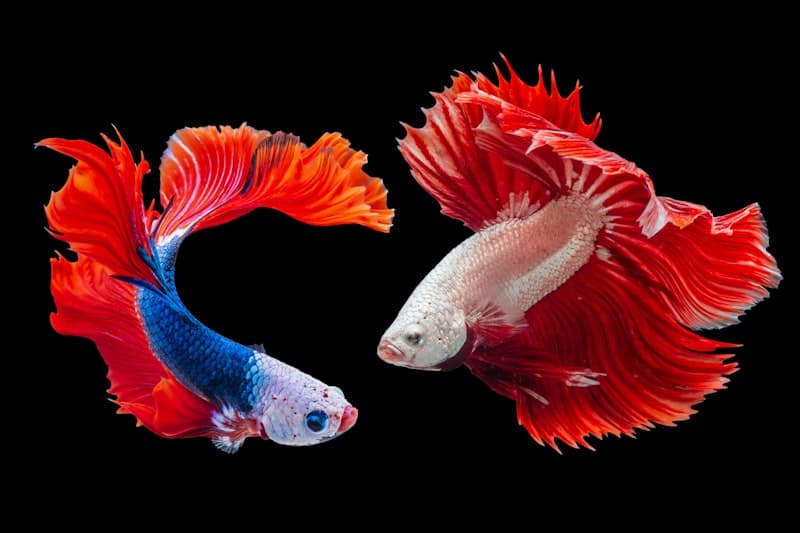
Explore bettas by species, fin form and stated sex. Compare current sizes and prices, then check the housing guide before choosing your fish.
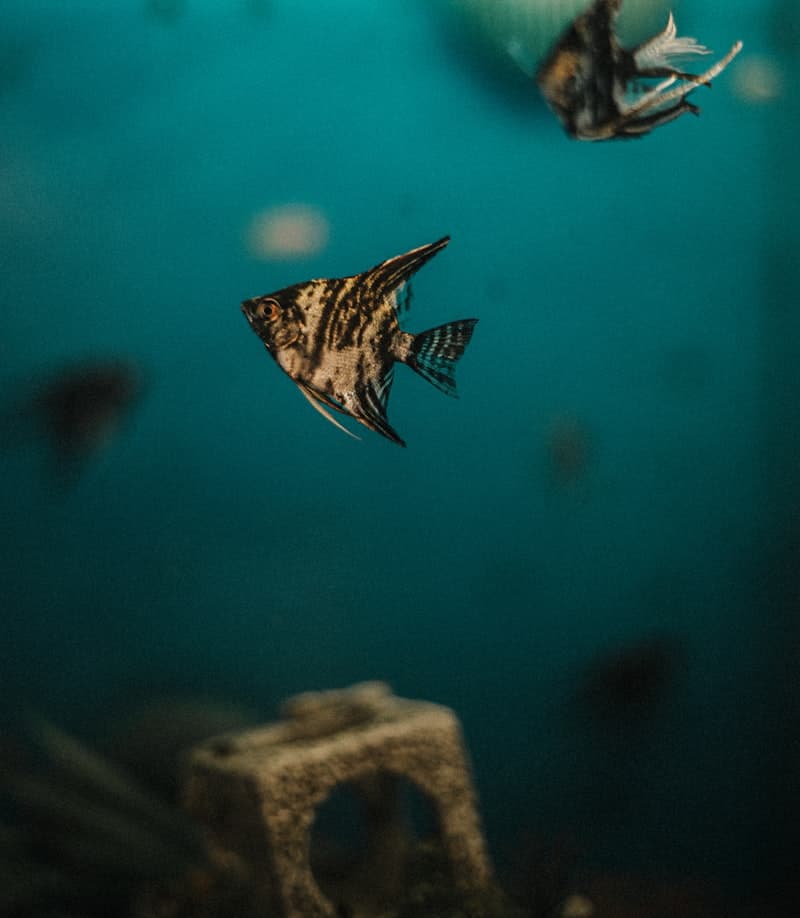
Tropical fish for sale UK — tetras, cichlids, bettas, guppies and corydoras. Specialist delivery backed by our Live Arrival Guarantee.
Material factual claims cite the sources below; store policy and cautious inference are labelled in the article. Sources are grouped by type so you can judge their weight at a glance.
Peer-reviewed study on how isolation timing shapes betta aggression — used for the fact that aggression is partly developmental, not purely innate.
Source for max size (6.5 cm), temperature 24–30 °C, pH 6.0–8.0, hardness 5–19 dGH, and species identification.
Independent species profile — referenced on the single-male rule and the unsuitability of ornamental strains for community tanks.
UK welfare guidance — referenced on the minimum heated/filtered tank and the 24–28 °C target.
Video tank-setup walkthrough — referenced in the equipment and acclimation sections.
UK tap-water reference — most of southern England is hard water, well inside the betta's tolerance.
Fishkeeping moves fast and we want every guide spot-on. If you think something here is wrong, out of date, or could be clearer, tell us — our team reads every message and updates the page.
Suggest an editExplore bettas by species, fin form and stated sex. Compare current sizes and prices, then check the housing guide before choosing your fish.
Tropical fish for sale UK — tetras, cichlids, bettas, guppies and corydoras. Specialist delivery backed by our Live Arrival Guarantee.
Betta fish care for UK homes: plan a 20-litre heated, filtered, furnished tank. Check water, feeding and Siamese fighting fish welfare before buying.
Set up a tropical fish tank in 10 evidence-led steps: choose the tank, install filter and heater, cycle safely, test the water and add fish carefully.
Nano-Tank & Beginner Specialist · 6+ years in the hobby
Tom runs a YouTube channel on nano-aquariums (12.3k subscribers) from his one-bedroom Edinburgh flat, where he keeps eight tanks between 10 L and 60 L. He writes every beginner guide on Tropical Fish Co — on the theory that someone six years into the hobby remembers what's confusing, where a twenty-year veteran has long since forgotten.