−13%
Moderate
Crowntail Male Betta (Betta splendens)
26–28°C · pH 6–8 · 20L
£12.17£13.99

The Plakat Male Betta Mix (Betta splendens) is an ornamental osphronemid fish from central Thailand and the lower Mekong that reaches 6.5 cm. It suits a careful beginner with a mature, heated aquarium; keep one male, using 26–28°C and pH 6.0–8.0 as the overlap of Tropical Fish Co, OATA, Seriously Fish and FishBase, with 5–12 dGH lying inside OATA's 4–12 dGH, Seriously Fish's 1–15 dGH and FishBase's 5–19 dH ranges. Sold individually as one male fish.
Adult size is the maximum length this species reaches at full maturity (scientific sources). The livestock you receive will be younger and smaller. Product-photo provenance and any image-specific limitations are stated on the listing.
Betta splendens
The Plakat Male Betta Mix (Betta splendens) is an ornamental osphronemid fish from central Thailand and the lower Mekong that reaches 6.5 cm. It suits a careful beginner with a mature, heated aquarium; keep one male, using 26–28°C and pH 6.0–8.0 as the overlap of Tropical Fish Co, OATA, Seriously Fish and FishBase, with 5–12 dGH lying inside OATA's 4–12 dGH, Seriously Fish's 1–15 dGH and FishBase's 5–19 dH ranges. Sold individually as one male fish.
Adult size is the maximum length this species reaches at full maturity (scientific sources). The livestock you receive will be younger and smaller. Product-photo provenance and any image-specific limitations are stated on the listing.
For one typical domestic Betta splendens, start with at least 20 litres, a mature filter, thermostatic heater, separate thermometer, gentle flow, a secure lid with surface access, and plants or refuges. Keep one male per aquarium.
Maintain these water conditions for optimal health and vibrant colors
The Plakat Male Betta Mix (Betta splendens) is an ornamental freshwater fish in the Osphronemidae family, native to central Thailand and the lower Mekong. FishBase records a maximum length of 6.5 cm, standing-water habitats and fighting between males. This fish suits a keeper who wants one characterful display fish and is prepared to provide a mature, heated, filtered aquarium rather than a bowl or an unplanned community.
Keep one male at 26–28°C, pH 6.0–8.0 and 5–12 dGH. The temperature and pH are the overlap of Tropical Fish Co, OATA's group-level Betta guidance, Seriously Fish and FishBase; the hardness range lies inside OATA's 4–12 dGH, Seriously Fish's 1–15 dGH and FishBase's 5–19 dH ranges. Use at least 20 litres for one male and choose more room where practical.
| Suits | Not suited to |
|---|---|
| A mature, heated and filtered aquarium | Unheated bowls or jars |
| A single-male display | Housing two males together |
| A careful beginner ready to test water | An uncycled first-day setup |
| Gentle flow, plants and surface access | Strong current or blocked surface access |
| A cautious, individual compatibility plan | An automatic standard community |
This is a facultative air-breathing fish with a labyrinth organ, so it must be able to reach the surface. Atmospheric breathing does not replace filtration or clean water. The NCBI taxonomy entry recognises Betta splendens, while the mixed ornamental appearance reflects domestic colour and fin variation rather than a separate species.
Sold individually, this offer supplies one Plakat Male Betta Mix. Sex is guaranteed only when the exact product or selected option explicitly states male or female. This Plakat Male Betta Mix listing is sold as male. Plan a separate aquarium for him rather than treating another male or a female as a routine companion.
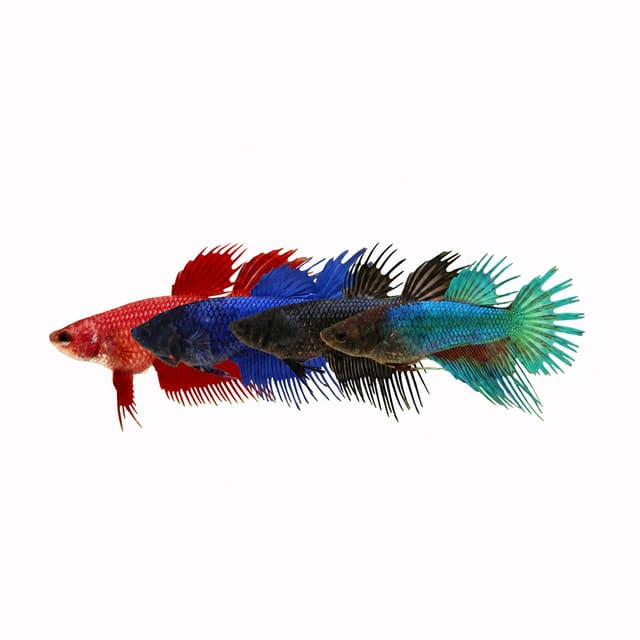
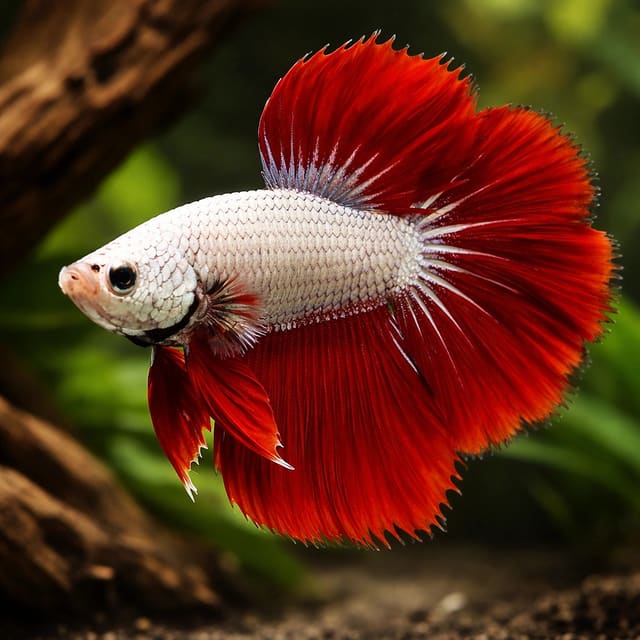
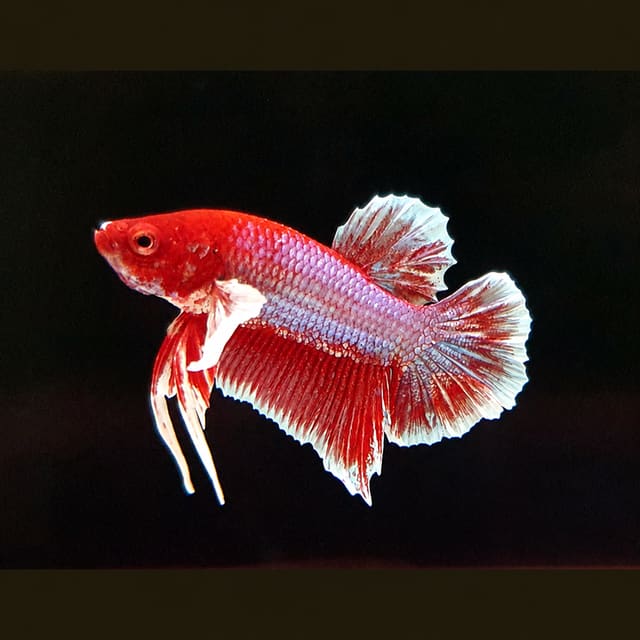
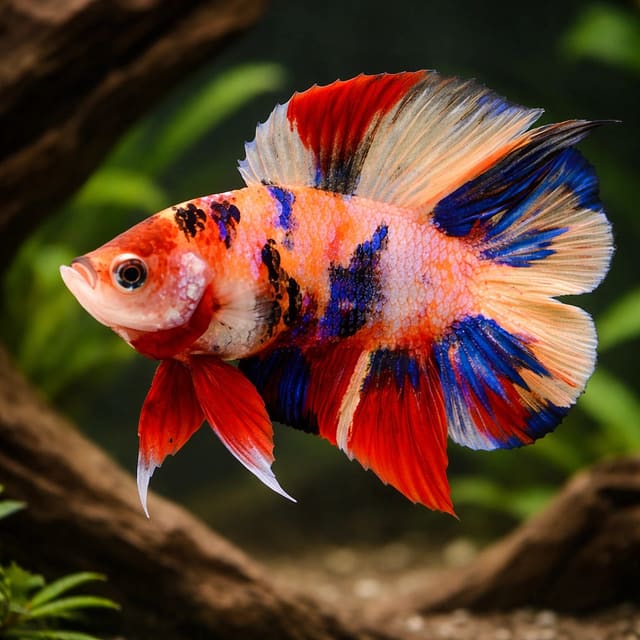
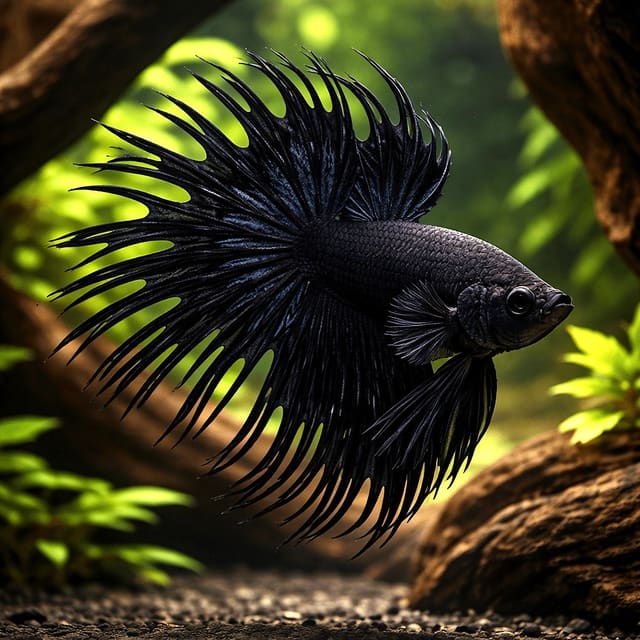
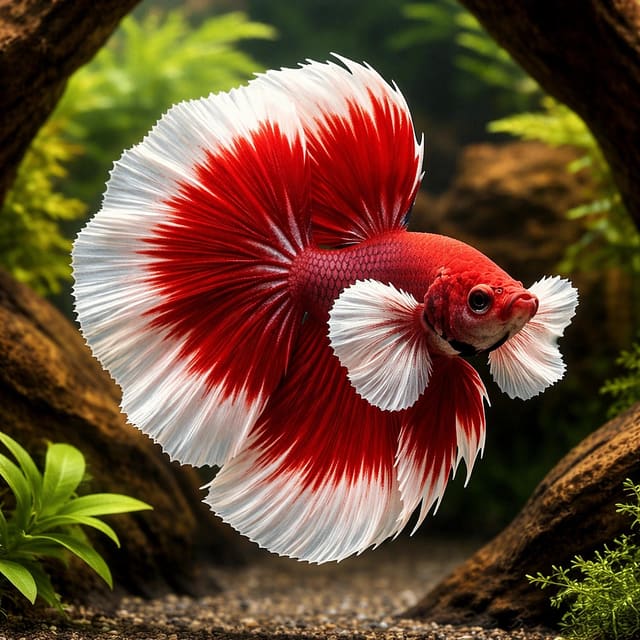
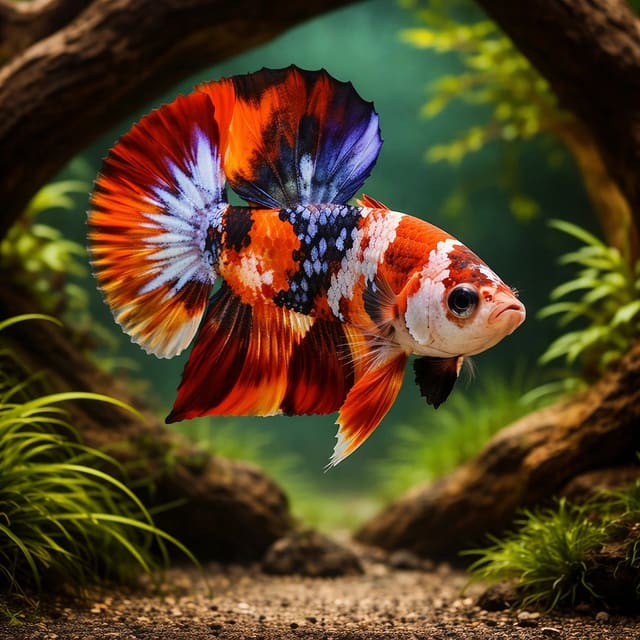
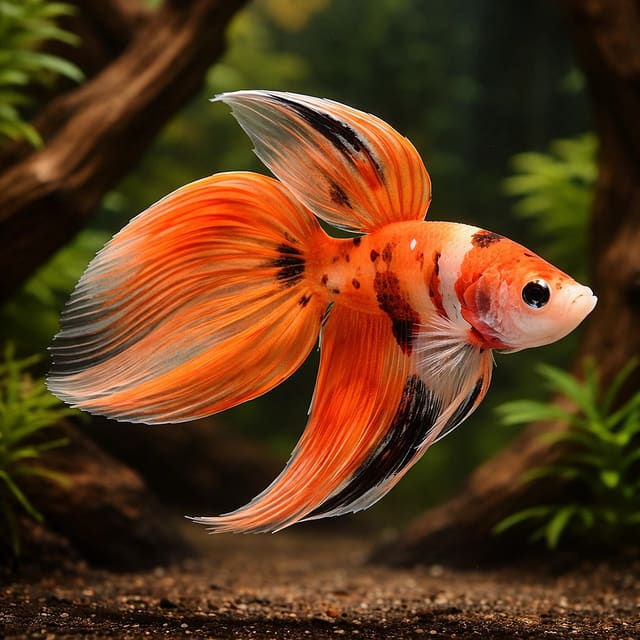
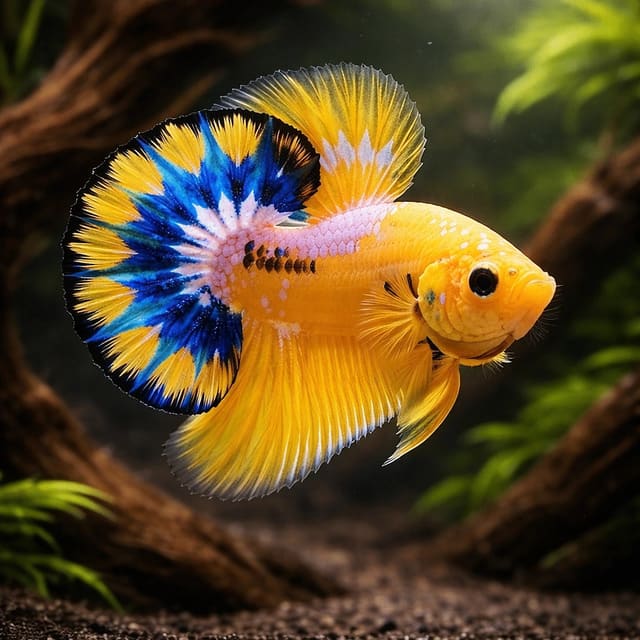
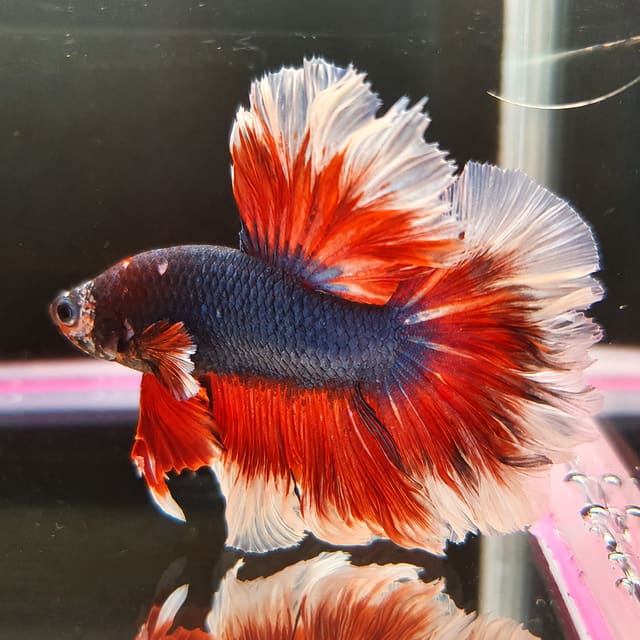
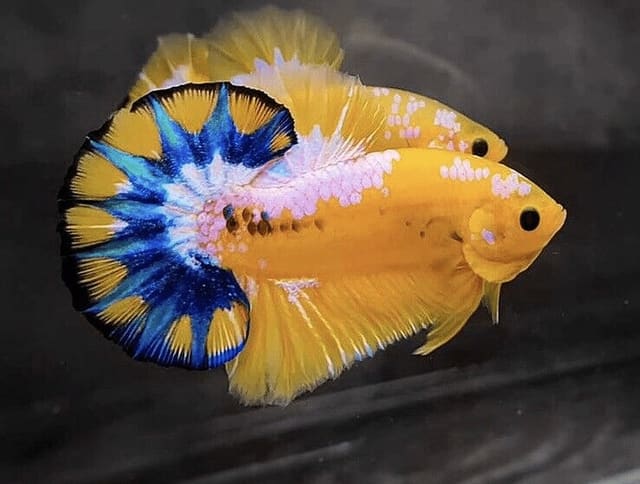
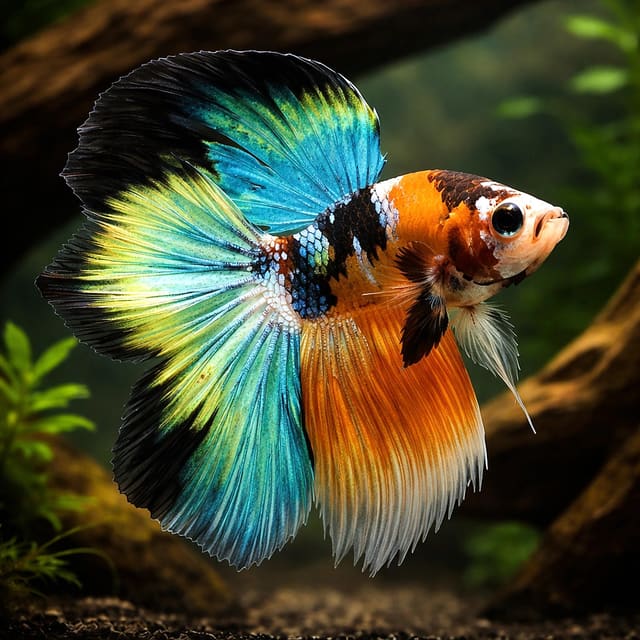
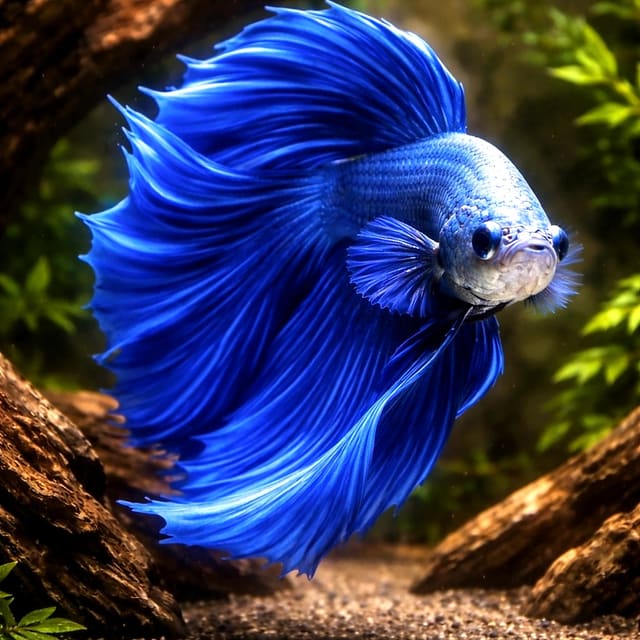
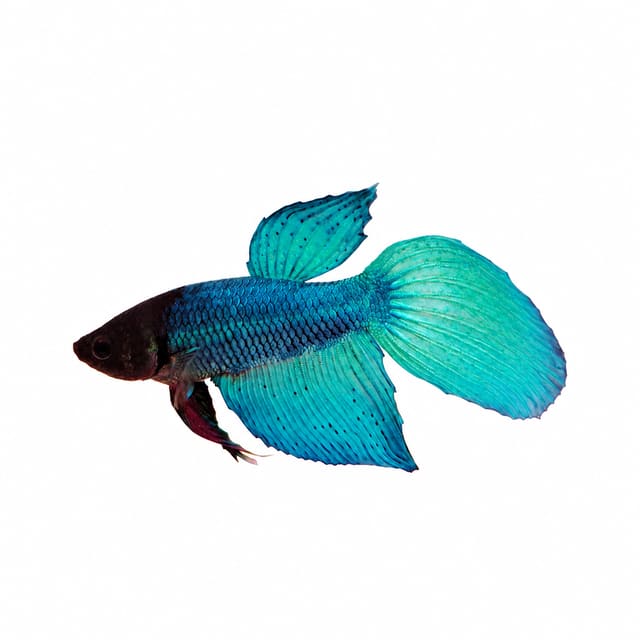
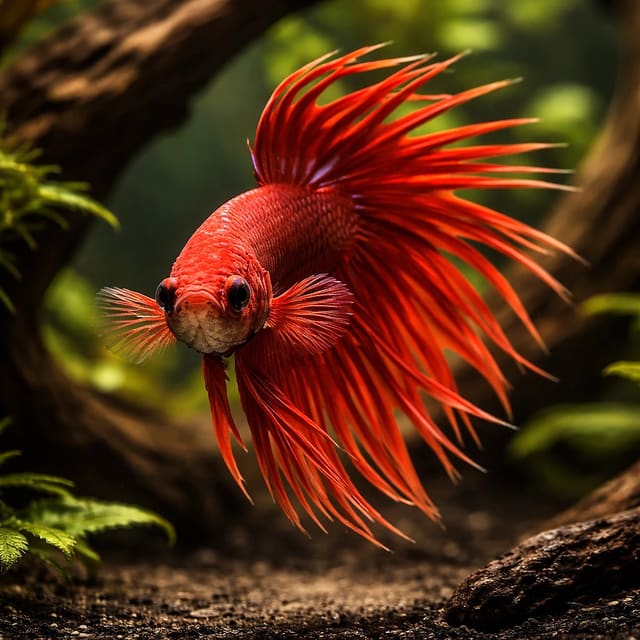
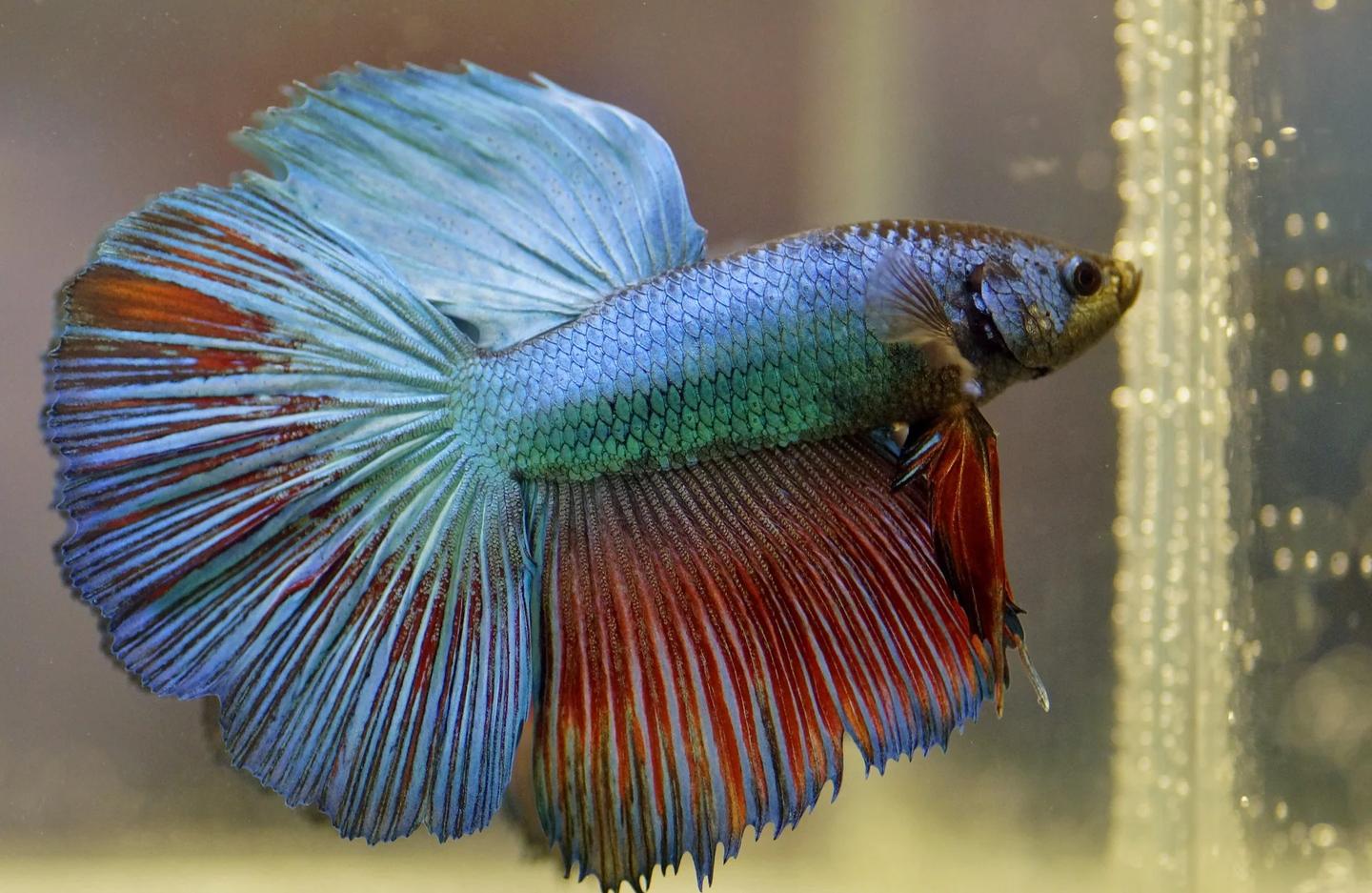
The word “mix” refers to ornamental variation, so colour and pattern can differ between individuals. The gallery images are representative, based on reference photographs of this species, so colours can look slightly different from the live animal. One gallery scene shows two fish, but the purchase unit remains one male fish.
Domestic Bettas vary greatly in colour, fin form and body traits. A genome-wide study of domestic Betta diversity documents this complex variation. Appearance cannot tell you an individual's temperament, age, health history or how it will cope with a particular aquarium, so build the setup around the species' needs and observe the fish you receive.
We classify this as intermediate care because a successful setup depends on several linked decisions: a mature biological filter, stable heat, gentle flow, a secure lid, clear surface access, measured feeding and solitary male housing. A careful beginner can meet those requirements by preparing the aquarium before the fish arrives and following the complete Betta fish care guide.
A tiny container is not made suitable by warm water alone. Temperature changes and waste become harder to control in a very small volume, while the fish still needs a filter, heater, cover, refuge and open swimming space. A properly furnished aquarium also gives you enough room to separate equipment from resting areas.
Before bringing livestock home, use the first tropical aquarium guide to prepare and mature the system. Do not add the fish simply because the water looks clear; biological readiness depends on the filter processing waste safely.
If another ornamental form would suit your planned display better, you can browse the Betta collection. Make that comparison by care requirements and aquarium suitability, not by assuming that a colour or fin label predicts behaviour.
Use 6.5 cm as the adult planning figure. That is FishBase's maximum total length for male or unsexed Betta splendens, not the size of a particular individual on arrival. Leave enough unobstructed swimming room around plants and refuges, and judge the aquarium by its filled volume and internal dimensions rather than the number printed on the box.
Start with at least 20 litres for one male. OATA gives that UK starting minimum, while Seriously Fish describes a 45 × 30 cm base, equivalent to about 41 litres, as large enough for a single male. More capacity is useful where furnishings reduce usable water or where easier environmental stability is a priority.
Fit a mature biological filter, thermostatic heater, separate thermometer and secure lid before the fish arrives. The filter processes waste, the heater controls temperature, and the separate thermometer lets you check the water rather than relying only on the heater setting. Position everything so the fish can reach the surface without crossing a forceful outlet.
The RSPCA explains that a working biological filter supports bacteria that convert toxic ammonia into nitrite and then safer nitrate. Clear-looking water can still contain ammonia or nitrite, so test results—not appearance—decide whether a new aquarium is biologically ready.
Use gentle circulation. Seriously Fish links this species with sluggish natural environments and advises against strong water movement. A sponge filter or a suitably diffused outlet can provide biological filtration without turning the whole aquarium into a fast current.
Use the heater manufacturer's aquarium-volume, installation and minimum-depth instructions. Check the separate thermometer at a consistent point in the aquarium and investigate an unexpected reading before changing the thermostat. A stable reading inside the target is more useful than repeatedly chasing a decimal.
The lid reduces escape risk, and a small air gap should remain below it. It must not block atmospheric breathing. Check that floating plants, condensation covers and equipment cables do not close every route to the surface.
Test the complete setup while empty of livestock. Confirm that the heater holds the intended range, the filter runs continuously, the lid fits securely and the flow remains gentle before the fish is introduced.
Keep the aquarium at 26–28°C, pH 6.0–8.0 and 5–12 dGH. The temperature and pH are the overlap of Tropical Fish Co, OATA, Seriously Fish and FishBase; the hardness range lies inside OATA's 4–12 dGH, Seriously Fish's 1–15 dGH and FishBase's 5–19 dH ranges. Stability and gradual matching matter; the endpoints are boundaries, not targets for repeated movement.
Ammonia and nitrite must remain at zero. OATA also says nitrate should not exceed 20 mg per litre above the normal level in the tap water used for the aquarium. Test at least weekly and after an unexplained change in behaviour, feeding, breathing or filter operation.
| Result | Action |
|---|---|
| Ammonia or nitrite above zero | Investigate waste, feeding and filter function, then take corrective husbandry action promptly. |
| Temperature outside 26–28°C | Check the thermometer, heater position and equipment operation before making a gradual adjustment. |
| pH changing between tests | Review replacement water, decor and maintenance rather than adding products blindly. |
| Hardness outside 5–12 dGH | Measure the source water and plan gradual, controlled matching. |
UK tap water varies. Treat replacement water with a suitable conditioner to neutralise chlorine or chloramine, then test the aquarium itself. The aquarium water chemistry guide explains what the main readings mean, and the water matcher helps compare measured aquarium values with the stated range.
Never use a rapid pH or hardness change simply to reach the middle of the range. Large, sudden changes can be more disruptive than a stable value near one end. When changing water, prepare it so temperature and chemistry do not shift abruptly.
Record test results. A short log makes gradual changes visible and helps distinguish a one-off test error from a developing filter, source-water or maintenance problem.
Create a planted, shaded aquarium with refuges and an open route to the surface. Seriously Fish recommends tall stem plants, floating cover, tropical lilies, Cryptocoryne, driftwood and plants that can be attached to wood. These are examples rather than a compulsory shopping list; every item must be aquarium-safe and manageable in the water conditions you maintain.
FishBase records wild Betta splendens in standing waters of floodplains, canals, rice paddies and medium to large rivers. That biology supports gentle flow and structured cover, but an aquarium still needs working filtration and routine maintenance. Do not use the fish's ability to breathe air as a reason to create stagnant water.
Observe how the individual uses the layout. A refuge that looks attractive but is ignored is less useful than a smooth, shaded area the fish regularly chooses. If the fish repeatedly struggles through a narrow opening or is pushed away from a preferred rest, alter that part of the setup.
Mixed ornamental Bettas can show wide variation in colour and finnage. Lighting, surroundings and the individual's pattern affect how those colours appear, but appearance is not a welfare test. Judge condition through feeding, breathing, posture, swimming, body condition and changes from the fish's normal behaviour.
Keep neighbouring male Bettas from direct visual contact. A secure visual barrier prevents constant exposure to a perceived rival and is more reliable than expecting the fish to stop responding to another male.
Use a suitably sized complete Betta pellet or quality aquarium flake as the measured nutritional base, with small live or frozen animal foods for variety. FishBase records zooplankton, mosquito larvae and other insect larvae in the wild diet, while Seriously Fish says it is likely to prey on aquatic and terrestrial invertebrates in nature and recommends foods such as daphnia, Artemia and chironomid larvae.
Feed once a day and offer only what the fish consumes within a few minutes, following OATA's portion and schedule guidance. Pellet size and energy density vary between products, so use the manufacturer's directions, observe body condition and adjust the measured portion rather than applying one fixed pellet count to every food.
| Food role | Decision |
|---|---|
| Daily nutritional base | Measure a complete Betta pellet or suitable quality flake. |
| Regular variety | Offer appropriately sized daphnia, Artemia or bloodworm regularly, keeping the day's feed to what is eaten within a few minutes. |
| Uneaten food | Remove it before decomposition adds avoidable waste. |
| Changing appetite | Check temperature, water quality, behaviour and recent changes before adding more food. |
Overfeeding affects both body condition and water quality. Seriously Fish notes that Bettas appear particularly prone to obesity, while OATA warns that uneaten food breaks down and releases toxic waste. A larger portion is therefore not a substitute for better variety or a complete food.
If several people care for the aquarium, pre-measure each feed and keep a simple record. This prevents duplicate meals and makes a reduced appetite easier to notice. Store frozen foods safely, thaw only the required amount and do not leave remnants in the aquarium.
Watch the fish eat. Prompt recognition and consumption of food is useful; repeated spitting, refusal, difficulty reaching food or a sudden appetite change should trigger checks of temperature, ammonia, nitrite and the fish's general condition.
Change about 25% of the water at least once a week, using conditioned replacement water and a siphon to remove solid waste. Test ammonia and nitrite at least weekly, check the filter for blockages and confirm that the heater and thermometer continue to agree.
When filter media needs cleaning, rinse it lightly in aquarium water removed during the water change. Do not rinse established media under the tap because chlorine or chloramine may damage the beneficial bacterial population. Rinsing established media in removed aquarium water, rather than replacing it, reduces the number of beneficial bacteria lost.
Compare the fish with its own usual pattern. OATA highlights changes in swimming, colour, temperament, breathing, appearance, body condition and feeding as reasons to investigate. Hanging at the surface, sitting on the bottom, erratic swimming, unusual hiding, changed gill movement, white spots, fluffy growths, fin loss, scale loss or reduced appetite can have more than one cause.
The MSD Veterinary Manual emphasises aquarium history, water analysis and diagnosis-led treatment. Do not combine medicines or raise temperature merely because one online picture resembles a mark on the fish.
If a health change is severe, persistent or unexplained, contact us and use OATA's fish-vet directory to find qualified help. Keep test results, photographs and a maintenance history ready because they give the adviser useful context.
Arrange for someone to receive the parcel so live fish are not left unattended. The fish is hand-bagged in pure oxygen and packed in an insulated box, with a heat pack when the weather calls for it. Tracking and the confirmed delivery date are sent by email.
When the parcel arrives, follow the current delivery and Live Arrival Guarantee policy.
If anything has gone wrong, open and inspect the parcel the same day it arrives and contact us that day with your order number and the unboxing video.
OATA's Betta guidance calls for an appropriate mature aquarium with zero ammonia and nitrite before the fish is introduced.
Observe feeding, breathing, posture, swimming and use of refuges each day. Test water if the fish behaves differently from its settling pattern, and remove uneaten food promptly. Do not add another animal simply because the Betta has begun exploring; compatibility requires a separate assessment of the complete aquarium.
Continue the weekly test and water-change routine. Record temperature, ammonia, nitrite and pH so you can see whether the mature filter remains stable after the new waste load was introduced. Check filter flow and plant growth so neither begins blocking surface access.
A bubble nest may appear, but it is reproductive behaviour rather than a complete health score. Its presence does not replace checks of water, appetite and breathing, and its absence is not by itself a diagnosis. Use several observations together and compare them with the fish's own normal pattern.
Keep this male by himself unless a carefully assessed community has enough space and a separation plan. FishBase records that males fight each other, OATA warns that two males will fight until one is severely injured or, more likely, killed, and Seriously Fish says only one individual can be kept per tank in most cases.
A larger aquarium does not make male cohabitation safe. Keep one male per aquarium and block direct visual contact between neighbouring male tanks. Do not use mirrors or another male as permanent stimulation.
This male may be territorial, but that does not mean he will attack every other species. OATA notes that male Bettas are often the subject of intense fin nipping, which can cause stress, disease and death, so it recommends keeping a male alone or only with very placid tank mates. Compatibility therefore has two directions: consider what the Betta may chase and what a companion may do to the Betta.
The RSPCA's fish compatibility guidance also recognises that male Bettas may fight their own kind and that mixing fish requires research into the animals involved. Introduce no companion merely to fill space or change the Betta's behaviour.
If aggression, persistent chasing, hiding, blocked feeding or fin damage appears, separate the animals. Waiting for the fish to “work it out” can turn a compatibility warning into an injury.
The safest default is a single-male display. Seriously Fish does not recommend Betta splendens for the standard community aquarium and says individual tolerance of other species is the exception rather than the expected result. Some small cyprinids and loaches from similar environments may be suitable, while OATA limits its suggestion to very placid companions.
Those categories are possibilities, not a ready-made stocking list. Every proposed animal must fit the aquarium's adult dimensions, water values, swimming zones and feeding plan. The whole stocking level must suit the mature filter and usable volume.
| Question | Pass condition |
|---|---|
| Do adult water needs overlap? | All animals can remain healthy at 26–28°C, pH 6.0–8.0 and the chosen hardness. |
| Is the aquarium large enough? | It meets every animal's adult space and social requirements, not only the Betta's minimum. |
| Will activity cause stress? | The companion is placid and does not constantly crowd or chase the Betta. |
| Is fin damage likely? | The companion is not a persistent fin nipper and does not resemble a clear rival. |
| Can every animal feed? | Food can be measured and delivered without one animal excluding another. |
| Can you separate them? | A mature alternative aquarium or secure division is ready before introduction. |
Do not treat snails, shrimp or other invertebrates as automatically safe. Screen adult size, defensive structures, refuge needs and the individual Betta's response, then maintain a separation plan. Never add a smaller animal as a cleaning tool or feeding experiment.
For a planned community, ask us for a stocking and compatibility assessment using the aquarium's filled dimensions, volume, water results, current residents and proposed species. An honest assessment may still favour keeping the male alone.
FishBase records a maximum of 6.5 cm total length for male or unsexed Betta splendens, so plan the aquarium and furnishings around a 6.5 cm adult fish.
OATA's Betta guidance recommends at least 20 litres for one male; Seriously Fish describes a 45 × 30 cm base, equivalent to about 41 litres, as large enough, so choose more room where practical.
Keep one male per aquarium. FishBase records fighting between males, and OATA warns that two males will fight until one is severely injured or, more likely, killed.
It can suit a careful beginner once a mature aquarium of at least 20 litres has a thermostatic heater, separate thermometer, gentle filter, secure lid, plants and zero ammonia and nitrite.
Feed a measured, suitably sized complete Betta pellet or quality aquarium flake once daily, offering only what is eaten within a few minutes; use small live or frozen daphnia, Artemia or bloodworm as regular variety.
Keep it at 26–28°C and pH 6.0–8.0, the overlap of Tropical Fish Co, OATA, Seriously Fish and FishBase; use 5–12 dGH, which lies inside OATA's 4–12 dGH, Seriously Fish's 1–15 dGH and FishBase's 5–19 dH ranges, and keep ammonia and nitrite at zero.
Betta splendens males are territorial and must not live with another male. A companion can also nip the Betta's fins, so choose only very placid tank mates, avoid species with trailing finnage or rival-like body shapes, and separate any animals if chasing, hiding or fin damage occurs.
The safest plan is to keep it alone. Seriously Fish says some small cyprinids and loaches may suit individual fish, while OATA suggests only very placid companions; check water, adult space, activity, fin-nipping risk and feeding competition first.
The Tropical Fish Co delivery policy says the fish is hand-bagged in pure oxygen and placed in an insulated box, with a heat pack when the weather calls for it. Someone must receive the parcel. Start filming before opening it, showing the sealed parcel, the continuous opening and the fish still inside the bag; then float the bag for 20–30 minutes before releasing the fish and never pour bag water into the aquarium.
No reviews for this item yet. Bought one? Honest reviews only, good or bad.
What customers say about ordering from us
I have a small group of long finned mountain minnows. So was delighted to be able to order ten of this variety to increase the genetics in my tank . The ones I recieved are healthy but it’s to early to give a verdict on wether they are of a long finned type since they are small currently.
Gordon Walker · 23 Sept 2026
100% success travel and "installation". Pleased with quality of purchase. The Siamese fighter a bit "shy" so have not yet seen him at his best yet but looking good. Happy customer. GG
George E Garratt · 21 Sept 2026
Reviews of our shop, collected by Judge.me, an independent third-party review collector. Newest first.