−13%
Moderate
Crowntail Male Betta (Betta splendens)
26–28°C · pH 6–8 · 20L
£12.17£13.99
The Hellboy Plakat Betta Male (Betta splendens) is an Osphronemidae fish from the Mekong basin that reaches 6.5 cm. It suits a careful keeper planning one male alone in about 41 litres at Tropical Fish Co’s 26–28°C target; the OATA and Seriously Fish overlap is pH 6.0–8.0 and 4–12 dGH. Sold individually as one live fish.
Adult size is the maximum length this species reaches at full maturity (scientific sources). The livestock you receive will be younger and smaller. Product-photo provenance and any image-specific limitations are stated on the listing.
Betta splendens
The Hellboy Plakat Betta Male (Betta splendens) is an Osphronemidae fish from the Mekong basin that reaches 6.5 cm. It suits a careful keeper planning one male alone in about 41 litres at Tropical Fish Co’s 26–28°C target; the OATA and Seriously Fish overlap is pH 6.0–8.0 and 4–12 dGH. Sold individually as one live fish.
Adult size is the maximum length this species reaches at full maturity (scientific sources). The livestock you receive will be younger and smaller. Product-photo provenance and any image-specific limitations are stated on the listing.
For one typical domestic Betta splendens, start with at least 20 litres, a mature filter, thermostatic heater, separate thermometer, gentle flow, a secure lid with surface access, and plants or refuges. Keep one male per aquarium.
Maintain these water conditions for optimal health and vibrant colors
The Hellboy Plakat Betta Male is a domestic form of Betta splendens, an air-breathing fish in the gourami family Osphronemidae. FishBase records the wild species from the Mekong basin and gives a maximum length of 6.5 cm for male or unsexed fish. This territorial male suits a careful keeper prepared to provide a mature, heated and filtered aquarium, gentle flow, surface access and solitary housing by default.
The wild species occurs in standing or slow waters including floodplains, canals, rice paddies and rivers. It feeds there on zooplankton, mosquitoes and other insect larvae. Treat the Hellboy and Plakat wording as a domestic aquarium-form description rather than a wild-locality claim. The NCBI taxonomy entry identifies the animal as Betta splendens.
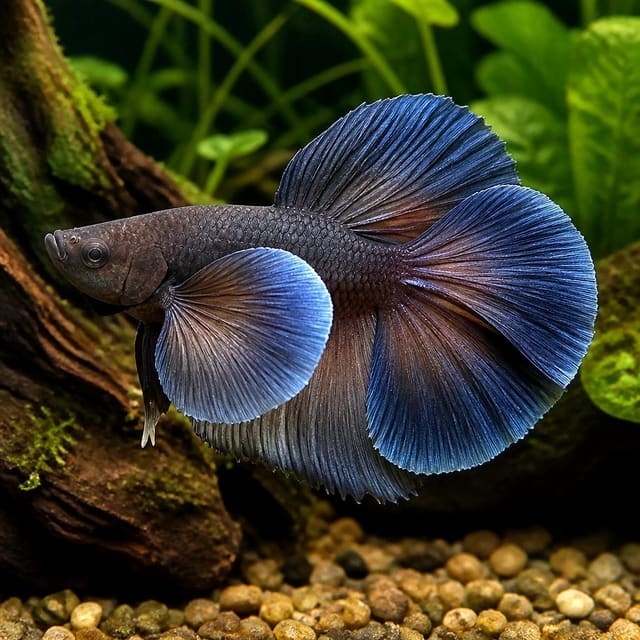
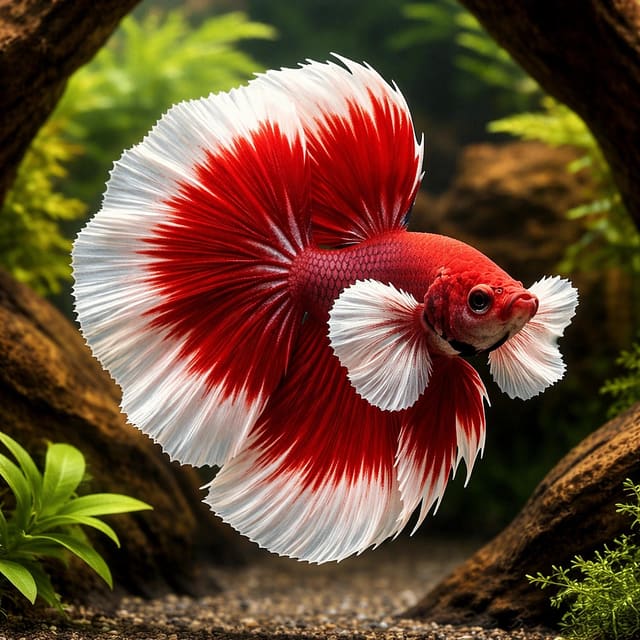
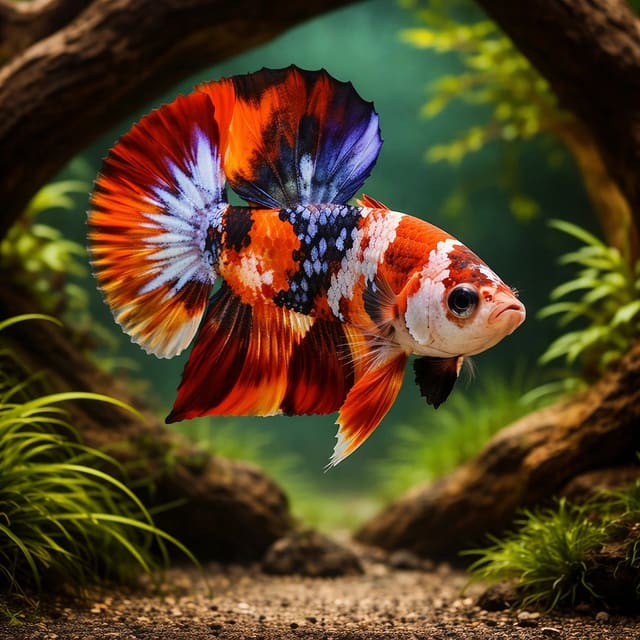
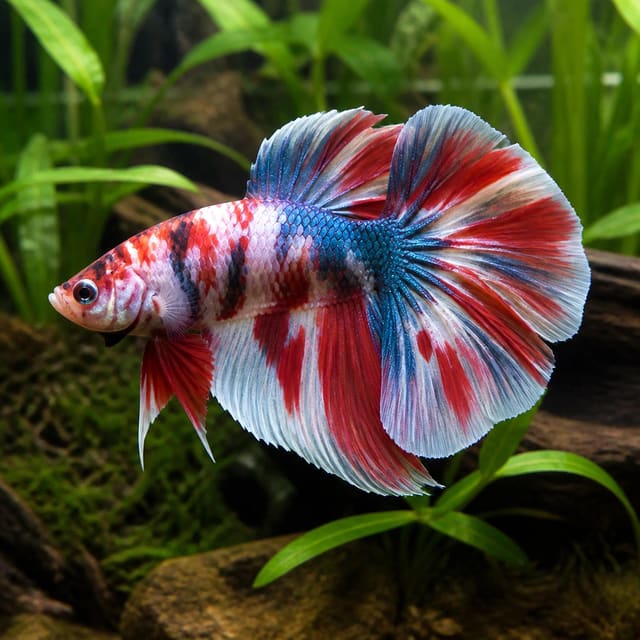
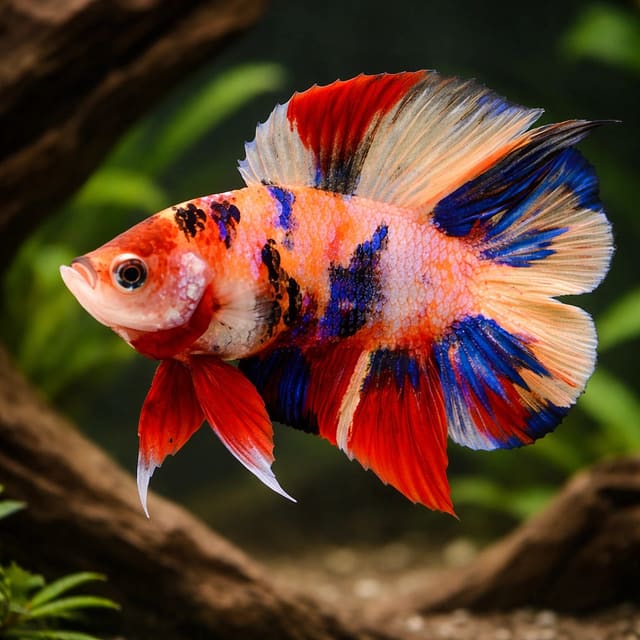
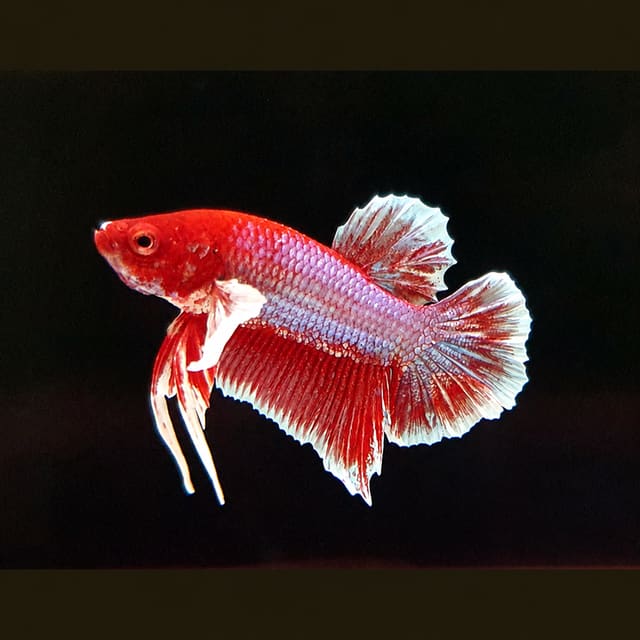
Domestic Bettas vary greatly in colour, scaling, body shape and finnage. A genome-wide study of domestic Betta diversity supports treating those visible traits as variable aquarium characteristics, not as proof of origin, temperament, age or welfare. The Hellboy red name identifies the offered colour line, while the live animal’s exact pattern and tone remain individual.
| Suits | Not suited to |
|---|---|
| A mature, heated and filtered aquarium with gentle flow | An unheated bowl or unfiltered container |
| A one-male display with plants, shade and refuges | Housing with another male Betta |
| A careful beginner prepared to cycle and test the aquarium | A keeper seeking an automatic community fish |
| Stable 26–28°C routine care | Strong current or blocked surface access |
One purchase supplies one animal. XL is the dispatch grade for this offer, not an adult-length promise; plan the aquarium around the adult references below.
Sex is guaranteed only when the exact product or selected option explicitly states male or female. This Hellboy Plakat Betta Male listing is sold as male.
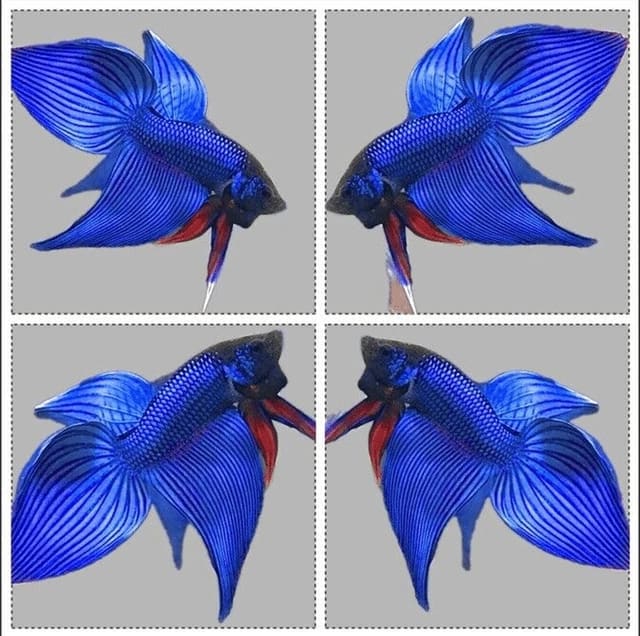
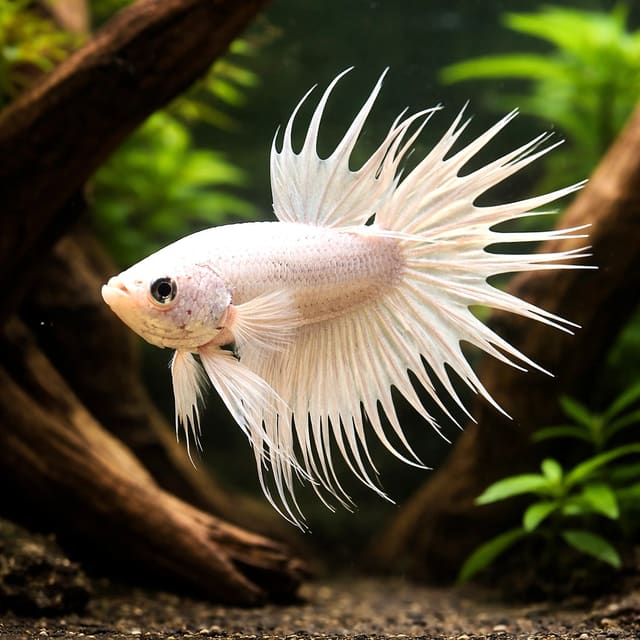
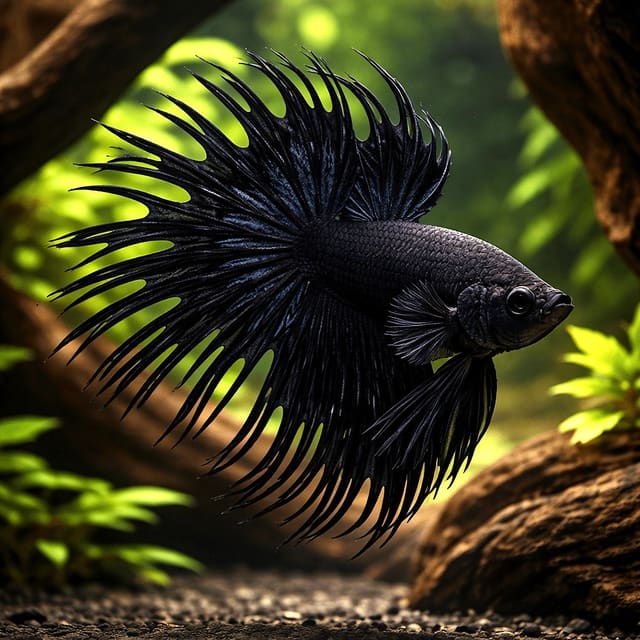
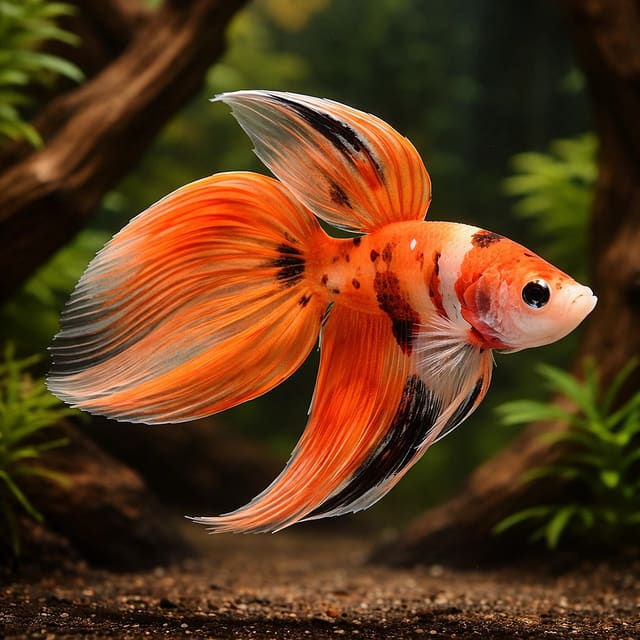
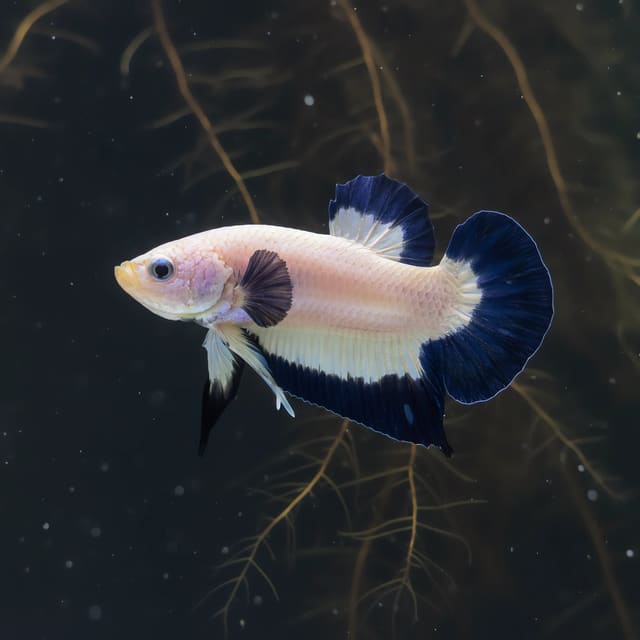
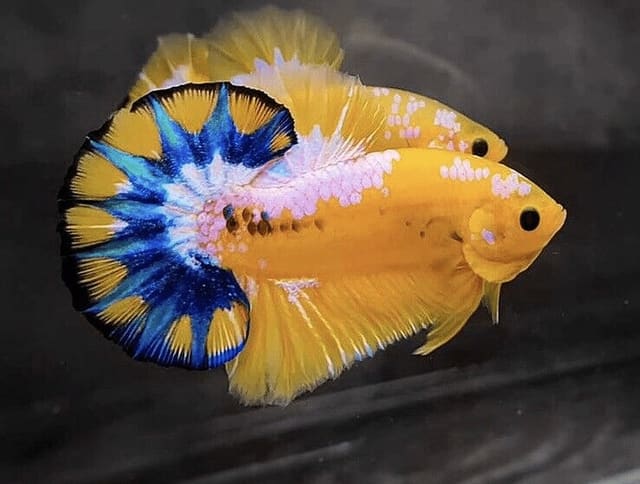
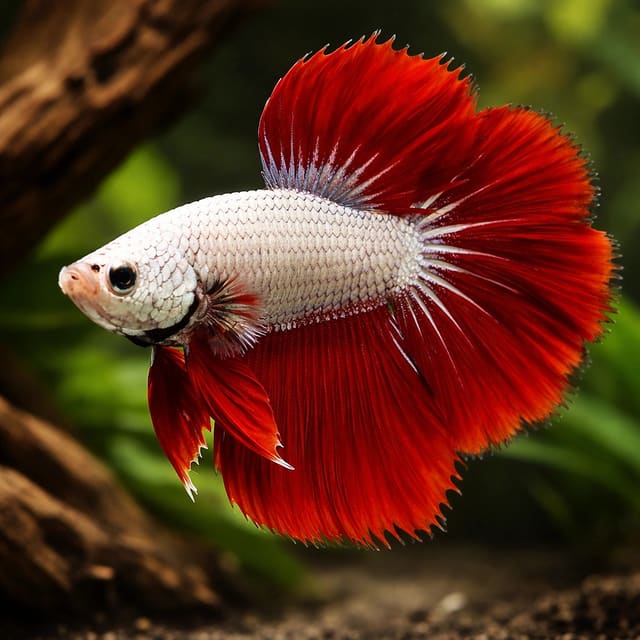
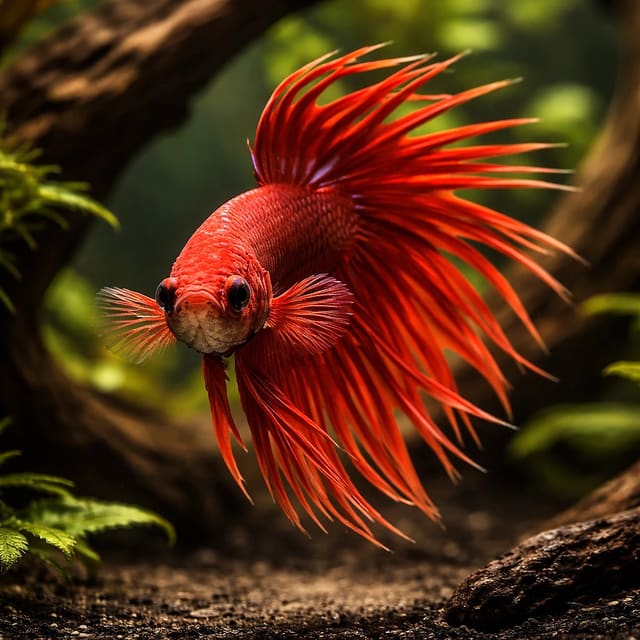
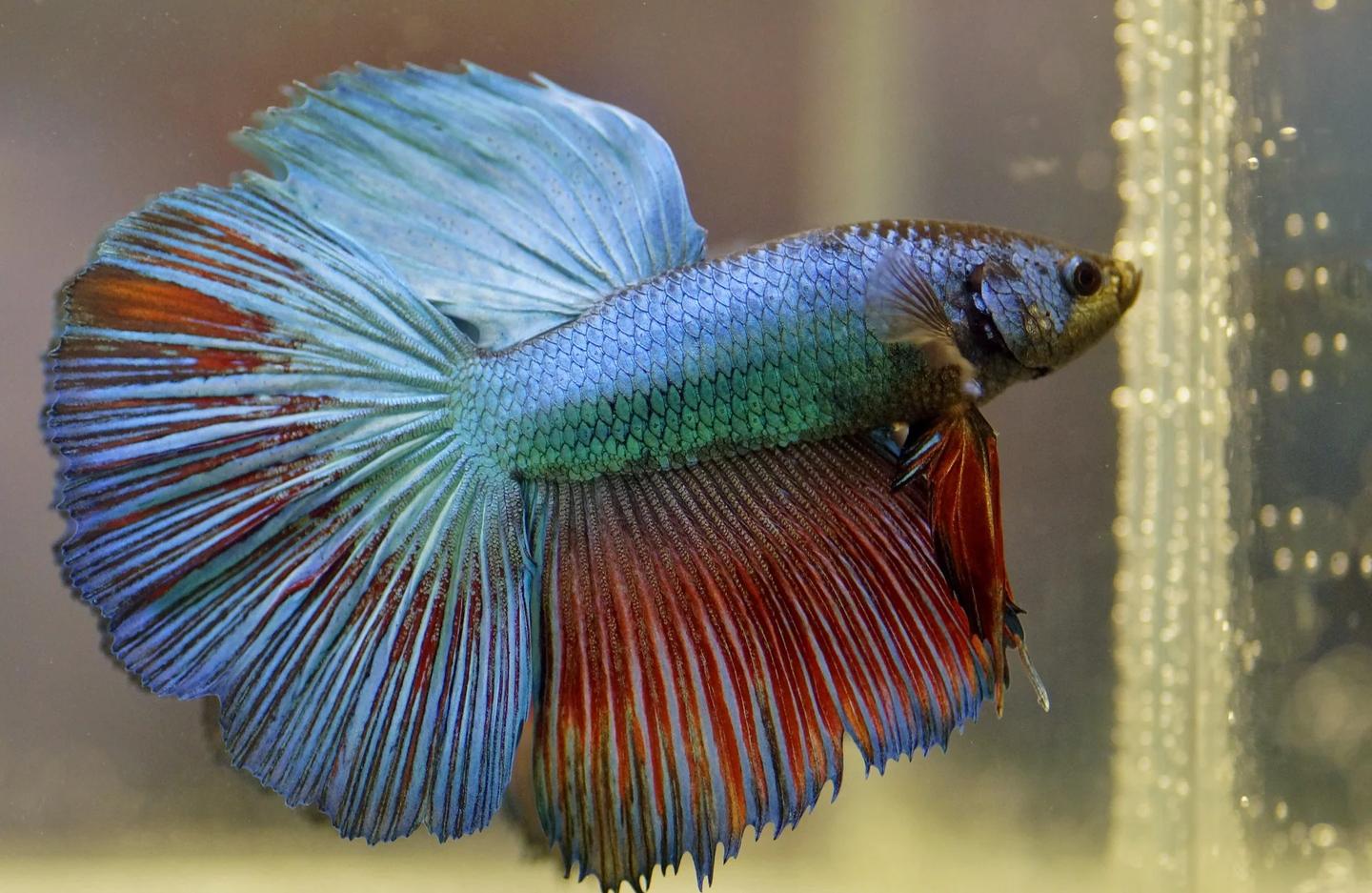
The gallery images are representative illustrations of this type of animal, not photographs of the animal supplied, so pattern and colours can differ from the live animal.
We class this setup as intermediate because success depends on preparing a mature filter, controlling temperature, keeping flow gentle, testing water and making a deliberate solitary or carefully screened compatibility plan. A careful first-time keeper can meet those needs by preparing the aquarium before ordering. You can also browse the Betta collection when comparing forms and identities.
FishBase records a maximum of 6.5 cm total length for male or unsexed Betta splendens. Seriously Fish uses 70 mm standard length as its aquarium planning reference. Total length and standard length are different measurements, so do not treat their numbers as interchangeable precision. Allow for an adult fish around this scale rather than using XL as a centimetre measurement.
Seriously Fish recommends a base of 45 × 30 cm or an equivalent aquarium of about 41 litres for a single male or pair. For this territorial male, use that footprint and approximate volume for a one-fish display. Real usable volume falls after substrate, wood and equipment are added, so check internal dimensions and filled capacity instead of relying only on the kit name.
OATA’s Betta sheet gives at least 20 litres, 20–28°C, pH 6.0–8.0 and 4–12 dGH as group guidance. These are broad Betta values rather than a species-specific optimum. The 45 × 30 cm, about 41-litre species-level recommendation gives this male a more useful planning target than a bare minimum container.
| Decision | Plan for this fish |
|---|---|
| Adult reference | FishBase maximum 6.5 cm total length |
| Aquarium footprint | 45 × 30 cm or equivalent |
| Approximate volume | About 41 litres for one male |
| Routine temperature | Stable 26–28°C |
| Water chemistry | pH 6.0–8.0; 4–12 dGH |
| Social plan | One male alone by default |
Our complete Betta care guide sets 26–28°C as the practical routine target for a typical domestic Betta splendens. Hold that temperature with a thermostatic heater and verify it with a separate thermometer. Space, stable water, gentle filtration, surface access and cover work together; litres alone never complete the setup.
Set up and mature the aquarium before introducing the fish. Clear water is not proof that a new filter can process waste. The RSPCA explains that a biological filter houses bacteria that convert toxic ammonia to nitrite and then to safer nitrate. Both ammonia and nitrite must read zero before a planned introduction.
Follow our guide to prepare and mature a first aquarium before livestock arrives. Run the filter and heater as they will operate with the fish present, use suitable aquarium tests and record the results rather than judging readiness by appearance or elapsed time alone.
A useful readiness check is to compare two days of readings while all equipment is running. If temperature moves outside 26–28°C, correct the cause and confirm stability before introducing the fish. If ammonia or nitrite is above zero, continue maturing or correct the biological filtration rather than using the animal to test the system.
Place equipment so routine maintenance does not require dismantling every refuge. Make sure the heater remains at its required depth, the filter intake cannot trap the fish and the lid closes safely around cables. Leave a clear route to the surface because the labyrinth organ makes surface access a daily need, not an optional decoration feature.
Finally, rehearse the weekly routine. Have conditioner, a siphon and a clean aquarium-only bucket ready. Knowing how to remove and replace 25% of the water at least once a week without exposing the heater or disturbing the filter reduces avoidable changes once the fish is present.
Run this aquarium at a stable 26–28°C. Keep pH within 6.0–8.0 and general hardness within 4–12 dGH, with ammonia and nitrite at zero. The temperature is Tropical Fish Co’s routine target, while the pH and hardness values are the overlap of OATA’s Betta guidance and the Seriously Fish aquarium ranges.
Use a separate thermometer to check the actual water. A thermostat responds to temperature, but its dial is not a substitute for measurement. Read the thermometer at a consistent time and check again after maintenance, unusually cold weather or any equipment change. A steady value inside the target is preferable to repeated adjustment towards a chosen decimal.
Test pH and hardness before changing either. UK tap water varies, and conditioner removes chlorine or chloramine but does not make every supply chemically identical. Our water-chemistry guide explains which values to test and why, while the water matcher compares measured aquarium values with the stated range.
| Reading | Action |
|---|---|
| 26–28°C | Keep the heater setting steady and continue daily observation. |
| Outside 26–28°C | Check the thermometer, heater position, room temperature and recent changes before adjusting. |
| Ammonia above zero | Treat it as a water-quality problem and investigate waste, feeding and filtration. |
| Nitrite above zero | Reduce exposure through corrective husbandry and inspect biological filtration. |
| pH 6.0–8.0 | Prioritise stability; do not chase the midpoint. |
| Hardness 4–12 dGH | Record the result and avoid abrupt alteration. |
Condition replacement tap water before it enters the aquarium. Match its temperature closely enough to prevent a sudden swing, then add it steadily. Do not run biological media under the tap because chlorine or chloramine may kill the beneficial bacterial population. Rinse it lightly in water removed from the aquarium when flow is reduced by debris.
Keep a simple log of temperature, ammonia, nitrite, nitrate, pH and maintenance. A sequence of readings makes gradual change visible before the fish’s behaviour is affected and helps distinguish a one-off testing error from a developing problem.
Betta splendens naturally uses sluggish water and breathes atmospheric air through its labyrinth organ. Keep filtration running, but diffuse or reduce the current if the fish is repeatedly swept away, struggles to hold position or cannot settle at a resting place. Gentle movement is the aim; stagnant, unfiltered water is not.
A secure lid reduces escape risk while helping retain a warm, humid air layer above the water. Leave an accessible gap between the surface and cover rather than filling the aquarium to a point that blocks air access. Check that floating plants do not form an unbroken mat.
Use tall stems, floating plants, broad cover, driftwood and smooth refuges to create shade and choices. Seriously Fish specifically mentions floating Salvinia or Riccia, tropical lilies, Cryptocoryne, driftwood and plants attached to wood. These are options rather than a compulsory planting list.
Run a fingertip or a piece of fine fabric over manufactured ornaments before use. If it catches, choose a smoother alternative. Check pipes, caves and gaps against the fish’s whole body rather than judging them only by fin length. A refuge should allow entry, turning and exit without pinching.
Observe the fish after each layout change. Repeated displacement points to excessive flow; persistent hiding can coincide with bright exposure, disturbance or poor water; difficulty reaching the surface requires immediate correction. Compare the behaviour with the fish’s own settled pattern instead of expecting constant display.
Keep filtration biological and continuous. If stronger circulation is needed elsewhere in the aquarium, use positioning, spray bars or baffling to create calmer zones rather than switching the filter off. The correct layout allows waste processing, oxygen exchange, surface breathing and rest to coexist.
Feed a suitably sized, complete Betta pellet or quality aquarium flake as the nutritional base. Offer only what the fish can finish within a few minutes, once a day. Pellet size and energy density differ between products, so follow the food maker’s guidance and adjust from observation rather than applying one fixed pellet count to every food.
Add small live or frozen foods such as daphnia or bloodworm as variety. Seriously Fish also lists Artemia and suitably prepared small insects. Variety can encourage natural feeding responses, but it should complement rather than replace a complete staple.
FishBase records zooplankton, mosquitoes and other insect larvae in the wild diet. That natural history explains the fish’s readiness to investigate small moving prey, but aquarium portions still need to be measured. Do not respond to eager feeding by continuing until interest stops.
| What you see | What to do |
|---|---|
| Food eaten promptly | Keep the measured portion and monitor body condition. |
| Food remains after a few minutes | Remove it and reduce the next comparable portion. |
| Food repeatedly ignored | Check temperature, water quality, behaviour and recent changes. |
| Body condition increasing | Review portion size and treat frequency before adding variety. |
| Several people feeding | Pre-measure portions and record when each feed is given. |
Uneaten food decomposes and adds waste that the filter must process. Removing it promptly protects both nutrition and water quality. Frozen food should be portioned for one feed rather than allowing a large block to disperse through the aquarium.
Do not schedule a routine fasting day as a substitute for measuring daily portions. Instead, watch the abdomen and overall condition over time, use consistent lighting for comparison and review the food label whenever the product changes. A new pellet may differ markedly in size and energy from the previous one.
If appetite changes, test the water before switching repeatedly between foods. Reduced intake can accompany unsuitable temperature, ammonia or nitrite, disturbance, illness or simple overfeeding. The safest first response is to check the complete setup and recent routine rather than trying to stimulate feeding with larger quantities.
Read the current delivery and Live Arrival Guarantee policy before the delivery date so the receiving and filming requirements are clear.
OATA’s Betta guidance calls for zero ammonia and zero nitrite. Before the parcel is expected, check that the heater and filter are running, the lid is ready and the aquarium still reads 26–28°C with both waste readings at zero.
After release, avoid rearranging the aquarium, adding companions or offering a large feed at the same time. Give the fish a clear route to the surface and make sure the filter flow does not force it across the tank.
Surface visits are normal for a labyrinth fish. Concern comes from a change in the whole pattern: persistent gasping, loss of balance, unusually rapid gill movement, inability to leave the bottom or repeated failure to reach a resting place. Check temperature, ammonia, nitrite and equipment immediately when those changes appear.
Keep foot traffic moderate while the fish learns the layout. Cover should remain accessible, but do not interpret hiding alone as a diagnosis. Watch whether the fish emerges, feeds, maintains balance and uses different parts of the aquarium over several observations.
Do not add a tank mate during this settling period. Establish the male’s normal behaviour and confirm stable water first. A later compatibility decision needs a separate assessment and a ready separation plan.
Change 25% of the water at least once a week. Use a siphon to remove settled waste, condition replacement tap water and match its temperature before adding it steadily. Test ammonia and nitrite at least weekly and keep both at zero; record nitrate and pH so gradual changes become visible.
Inspect the filter for reduced flow or blockages. Clean media only when needed, rinsing it lightly in removed aquarium water rather than running it under the tap. Do not replace all biological media at once, and never turn filtration off to create calm water; diffuse the output instead.
| Checkpoint | Decision |
|---|---|
| Every day | Check temperature, equipment, breathing, posture, appetite and surface access. |
| At least once a week | Test water, change 25%, siphon waste and inspect filter flow. |
| After one month | Review the log for trends in temperature, pH, nitrate, feeding and behaviour. |
| After equipment changes | Recheck temperature, current strength and water readings. |
Changes in appetite, breathing, posture, swimming, colour, aggression, hiding, fins or body condition deserve a complete system check. The MSD Veterinary Manual emphasises aquarium history, water analysis and diagnosis rather than selecting medication from one visible sign.
Do not combine medicines or raise temperature from an online symptom match. A white mark, torn fin, swollen abdomen or unusual swimming pattern can have several causes. Correct an immediate water-quality problem while preserving the information needed for diagnosis.
For severe, persistent or unexplained changes, contact us and use OATA’s fish-vet directory to locate appropriate veterinary help. Give the adviser your water log, equipment details, recent changes and a clear timeline.
Plan one male Betta splendens per aquarium. FishBase states that males fight each other, OATA warns that two males may fight until one is severely injured or killed, and the RSPCA advises researching social compatibility because male Bettas may fight their own kind. More space, plants or visual barriers do not turn direct male cohabitation into a safe plan.
Do not divide one aquarium in a way that allows physical access or persistent confrontation through the barrier. Neighbouring aquaria should also avoid constant direct visual contact if either fish spends prolonged periods displaying, striking the glass or patrolling the facing side.
Solitary housing does not mean a bare aquarium. Plants, shade, refuges, open swimming space and a manageable current create daily choices without adding social pressure. A well-furnished 45 × 30 cm aquarium of about 41 litres can be designed around the male’s behaviour rather than around a list of companions.
Observe normal territorial behaviour without deliberately provoking it. Occasional inspection of a reflection is different from sustained flaring, repeated charging or refusal to leave one boundary. If an external reflection or neighbouring fish causes persistent confrontation, change the lighting, background or line of sight.
This default also simplifies feeding and health observation. You can see whether the male takes its complete food, reaches the surface normally and changes behaviour without needing to separate the effects of competition, chasing or another animal’s waste.
Seriously Fish considers this species best maintained alone and says tolerance of other species is the exception rather than the expected result. If you are considering a community, assess the entire adult plan before introducing any animal. A companion that overlaps in temperature but fails on behaviour, space or feeding is not a suitable choice.
| Screen | Question to answer |
|---|---|
| Adult space | Does the aquarium provide enough usable room and refuge for every adult animal? |
| Water overlap | Can all animals remain within 26–28°C, pH 6.0–8.0 and 4–12 dGH without compromise? |
| Body and fins | Could the companion resemble a rival or be prone to fin-nipping? |
| Activity | Will its movement prevent the Betta from resting or reaching the surface? |
| Feeding | Can each animal receive the correct food without persistent competition? |
| Separation | Is another mature, heated and filtered space ready before the trial begins? |
Treat small fish and invertebrates cautiously. A Betta may investigate or hunt a smaller animal, while defensive or larger invertebrates can create an injury risk. Do not add shrimp, snails or fry as cleaners, enrichment or live food. Assess their own welfare requirements independently.
Dense planting and broken sightlines can reduce exposure, but they cannot guarantee acceptance. Make sure cover does not remove surface access or leave another animal trapped in the male’s territory. Introduce only after the main aquarium is stable, and watch feeding, chasing, hiding, fin condition and use of space.
Separate promptly if one animal is repeatedly pursued, cannot feed, remains pinned behind decor, shows damaged fins or loses access to its normal swimming area. Do not wait for visible injury when the behavioural pattern is already persistent.
No companion species is automatically safe. Ask us when you have the aquarium dimensions, mature volume, water readings and complete adult stock plan; those details allow a useful compatibility assessment. A passed screen means a cautious trial with a ready exit, never an assumption that every individual will behave alike.
FishBase records a maximum of 6.5 cm total length for male or unsexed Betta splendens; plan the aquarium around that adult size rather than the XL dispatch grade.
Use a mature aquarium with a 45 × 30 cm base or equivalent, about 41 litres, for this male; provide a heater, filter, secure lid, gentle flow, surface access and smooth cover.
Keep one male per aquarium. Never house two males together because males fight and may severely injure or kill one another.
A careful beginner can keep this intermediate-care fish after preparing a mature, heated and filtered aquarium, confirming zero ammonia and zero nitrite and learning the weekly testing and maintenance routine.
Feed a measured complete Betta pellet or quality aquarium flake once daily, limited to what it eats within a few minutes, with small live or frozen foods such as daphnia or bloodworm as variety.
Use Tropical Fish Co’s stable 26–28°C routine target; the OATA and Seriously Fish overlap is pH 6.0–8.0 and 4–12 dGH, with ammonia and nitrite at zero.
This male is territorial and must not live with another male. Avoid rival-like body shapes or trailing finnage and known fin-nippers; other fish may also nip a male Betta’s fins.
Solitary housing is the safest default. Seriously Fish names some small cyprinids and loaches as possible companions, but tolerance is exceptional; screen water overlap, adult space, activity, feeding competition and fin-nipping risk, with a mature separation aquarium ready.
Start filming the sealed parcel before opening it, with someone present to receive the animal; continue filming as the parcel is opened and while the fish remains in the sealed bag, float the bag for 20–30 minutes, then release the fish without pouring the bag water into the aquarium.
No reviews for this item yet. Bought one? Honest reviews only, good or bad.
What customers say about ordering from us
Easy website plenty of info on fish your buying great to pick a time slot
TRACEY DURRANT · 7 Oct 2026
Got some lovely fish thank you
Kevin Mackie · 7 Oct 2026
Reviews of our shop, collected by Judge.me, an independent third-party review collector. Newest first.