−13%
Moderate
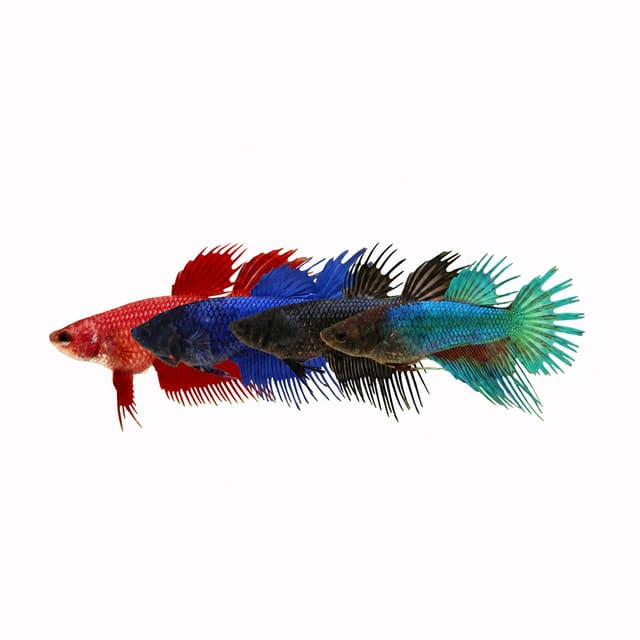
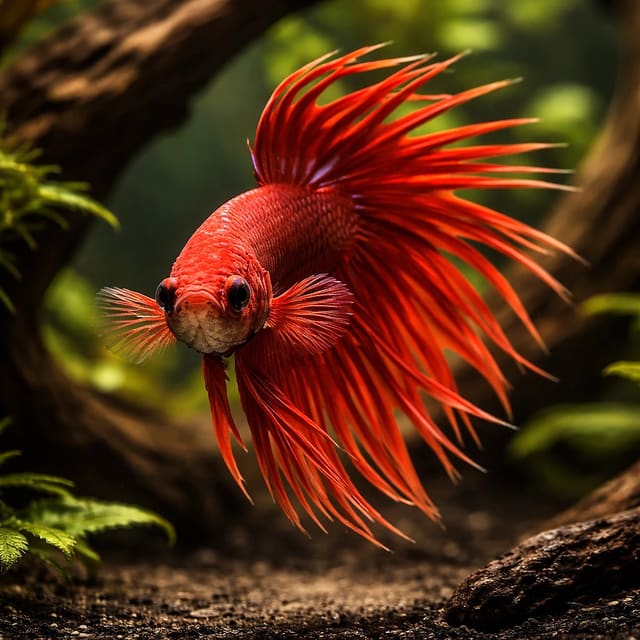
Crowntail Male Betta (Betta splendens)
26–28°C · pH 6–8 · 20L
£12.17£13.99

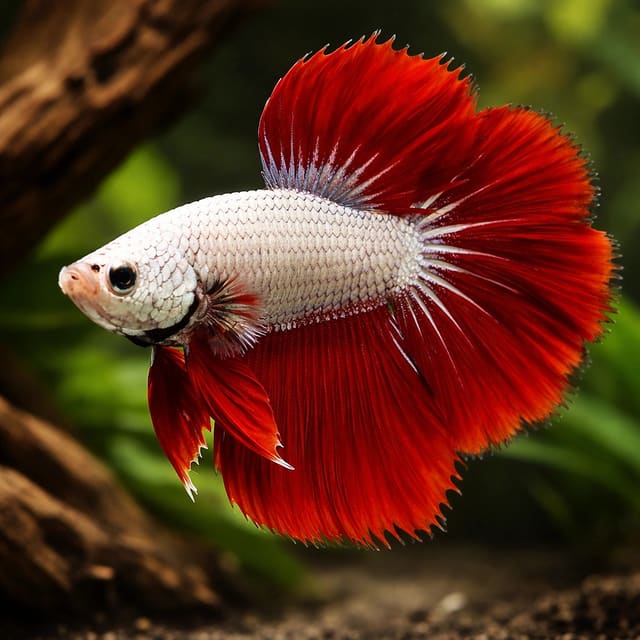
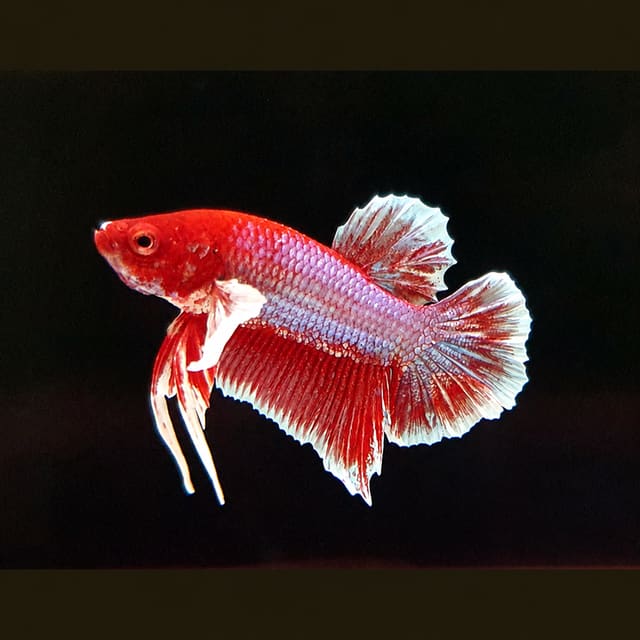
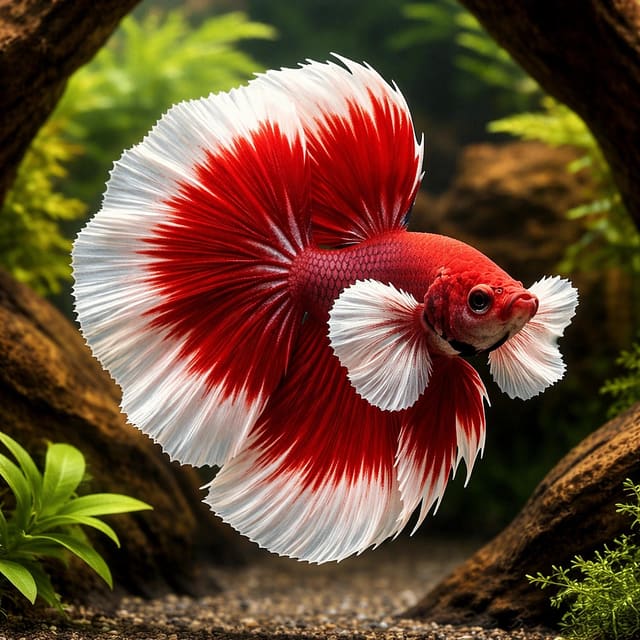
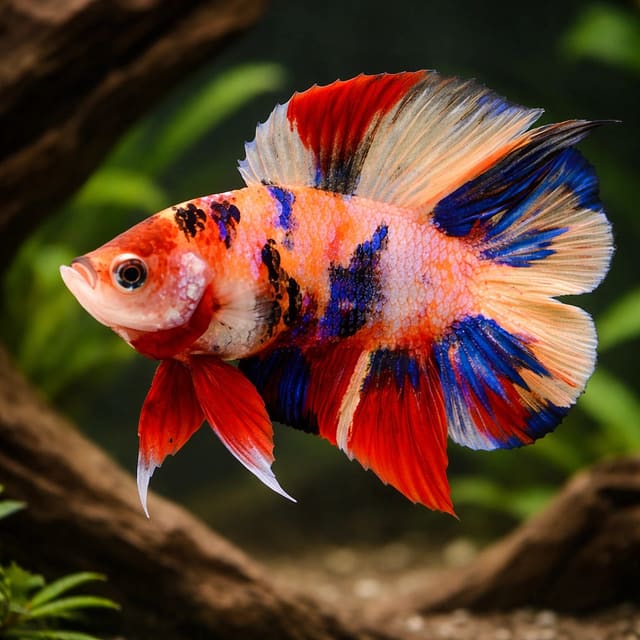
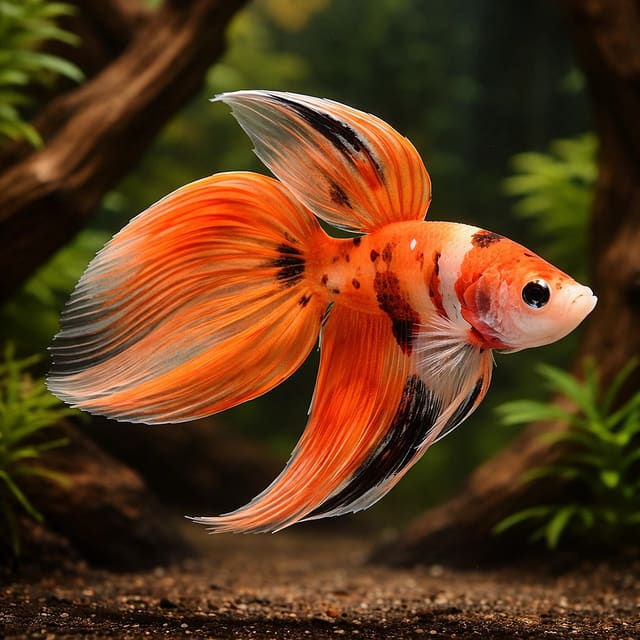
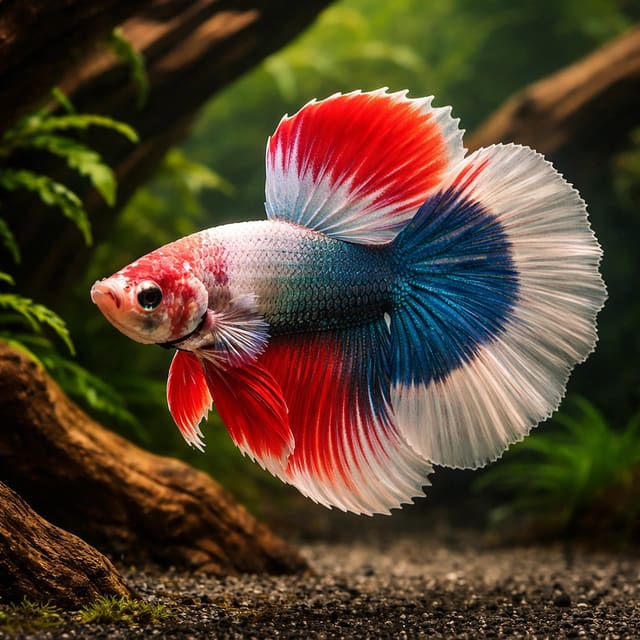
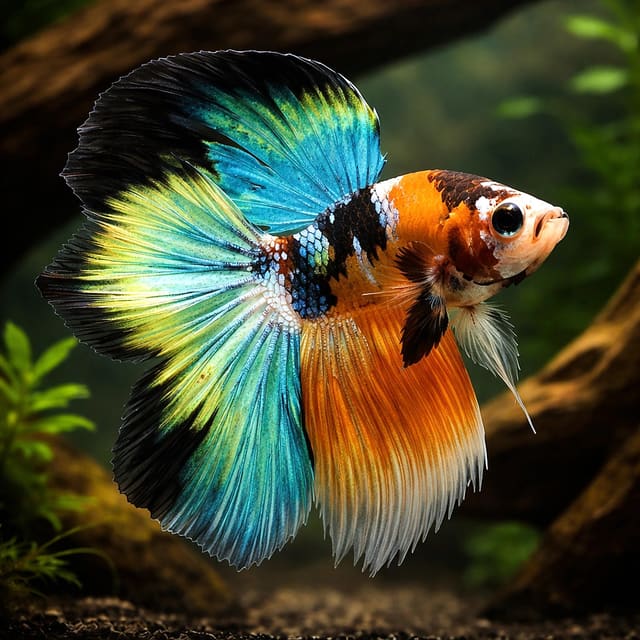
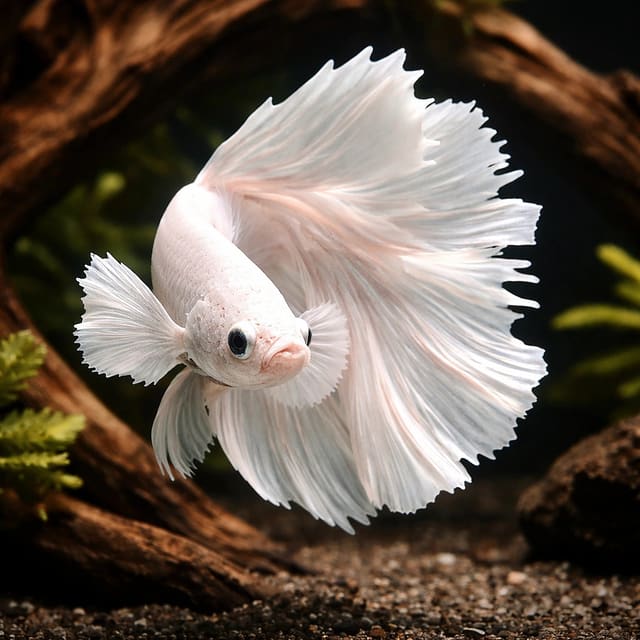
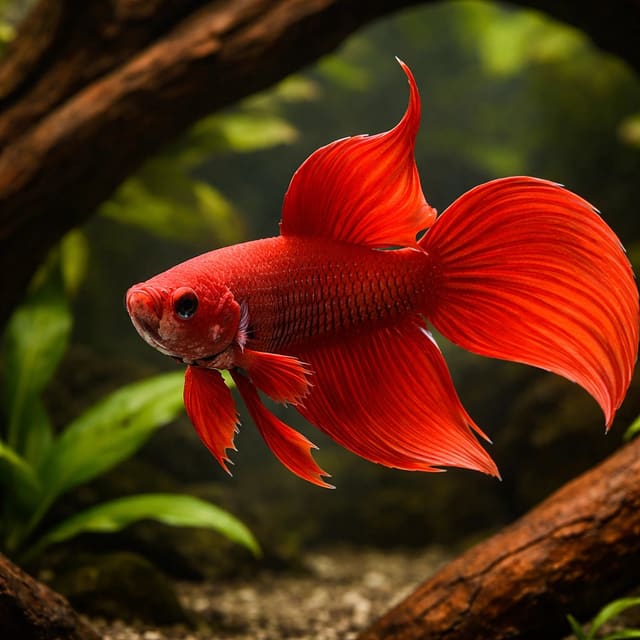
Plakat Koi Male Betta (Betta splendens) is a short-finned male labyrinth fish for a heated, covered and mature aquarium. Keep him as the only male Betta, provide gentle flow and surface access, and treat any community plan as conditional on the individual fish.
Betta splendens
Plakat Koi Male Betta (Betta splendens) is a short-finned male labyrinth fish for a heated, covered and mature aquarium. Keep him as the only male Betta, provide gentle flow and surface access, and treat any community plan as conditional on the individual fish.
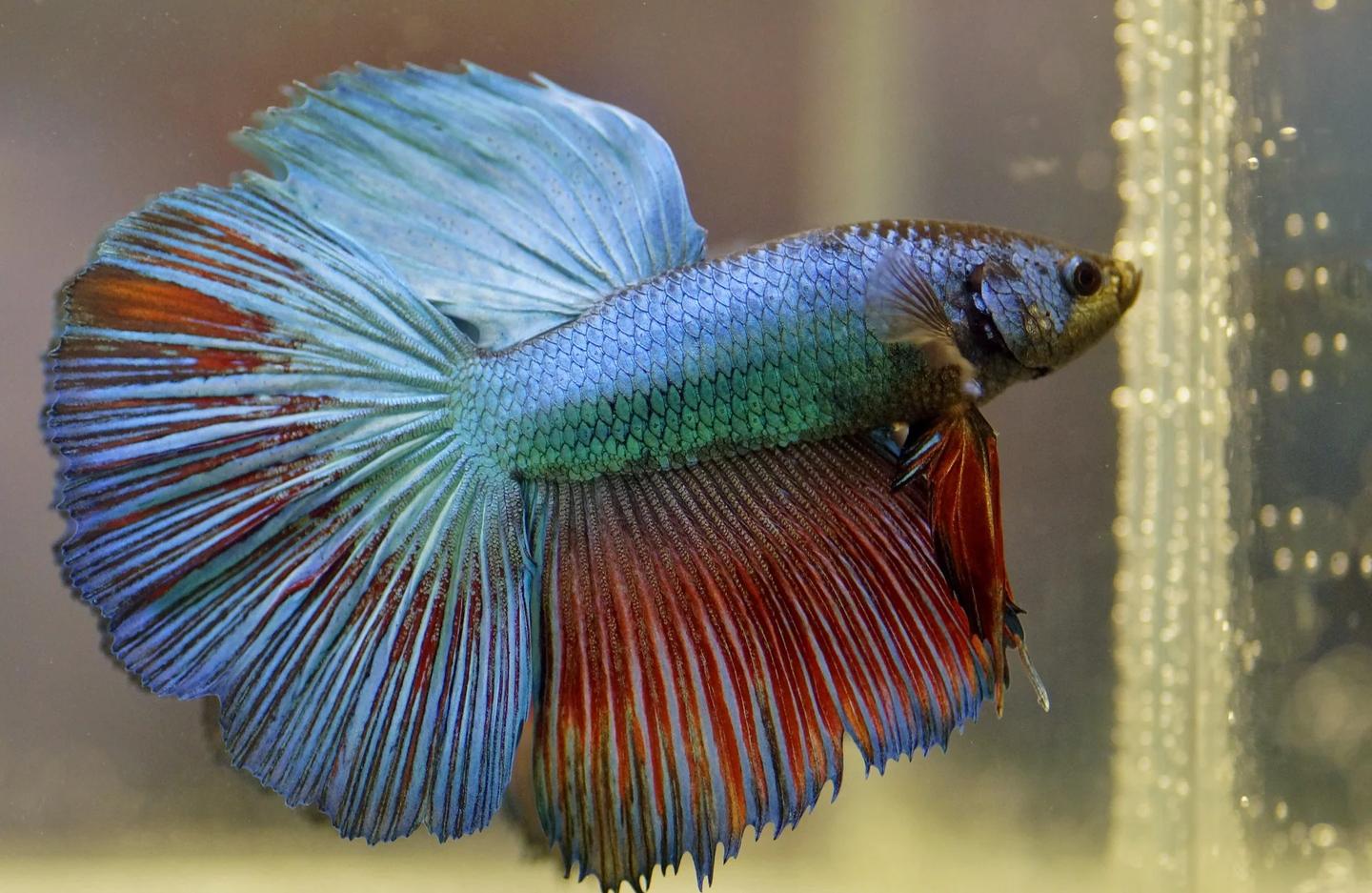
For one typical domestic Betta splendens, start with at least 20 litres, a mature filter, thermostatic heater, separate thermometer, gentle flow, a secure lid with surface access, and plants or refuges. Keep one male per aquarium.
Maintain these water conditions for optimal health and vibrant colors
Plakat Koi Male Betta is a domestic colour-and-fin form of Betta splendens. This listing supplies one live male fish per purchase. No dispatch length is promised, so prepare the aquarium for the adult fish and the species' longer-term needs rather than expecting a particular measurement on arrival. FishBase records a maximum of 6.5 cm total length, while the species aquarium profile reports 70 mm standard length; those measurements use different endpoints and should not be treated as competing retail sizes.
The short plakat fins distinguish the form from heavily extended show finnage, while the koi label describes a domestic marbled colour style. Neither label changes the species identity or guarantees a particular future pattern. Domestic Betta colour can change as pigment develops, and lighting, background and age can alter how the same fish appears. Treat the name as the sold form, not as a certificate of pedigree, locality, temperament or fertility.
| Suits | Think again when |
|---|---|
| A keeper with a mature heated aquarium, a secure lid, gentle filtration and time to observe one territorial feature fish | The plan is an unheated bowl, a strong-flow display or direct cohabitation with another male Betta |
| A 45 × 30 cm footprint, about 41 litres, or a larger furnished aquarium | The nominal volume leaves little usable swimming room after equipment and decor |
| A home prepared to feed measured complete food and test water routinely | The fish would be used to start an uncycled aquarium |
Sex is guaranteed only when the exact product or selected option explicitly states male or female. This Plakat Koi Male Betta listing is sold as male. Keep one male per aquarium. More space and visual structure can improve how a fish uses its environment, but they do not make two males safe together.
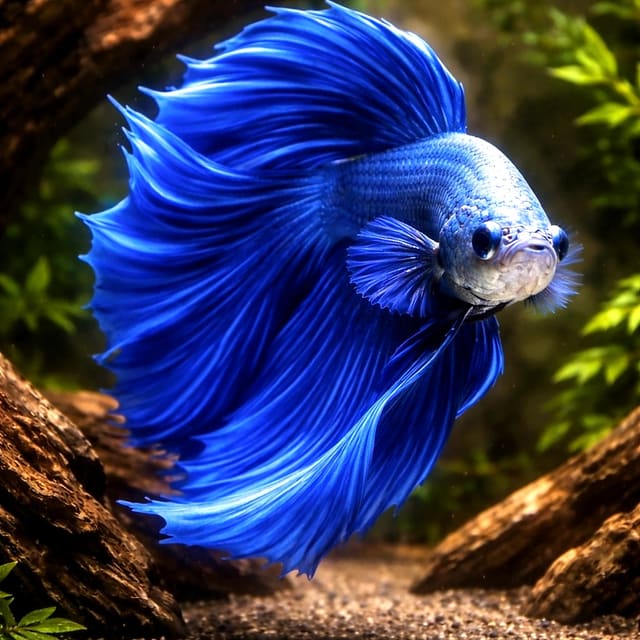
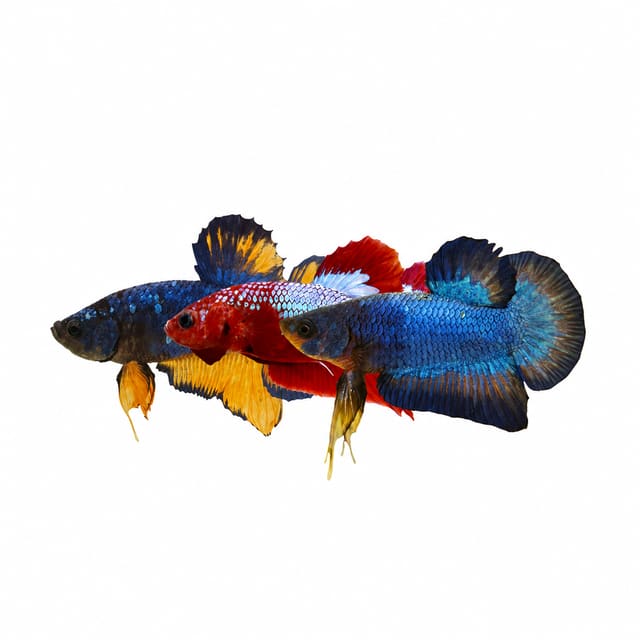
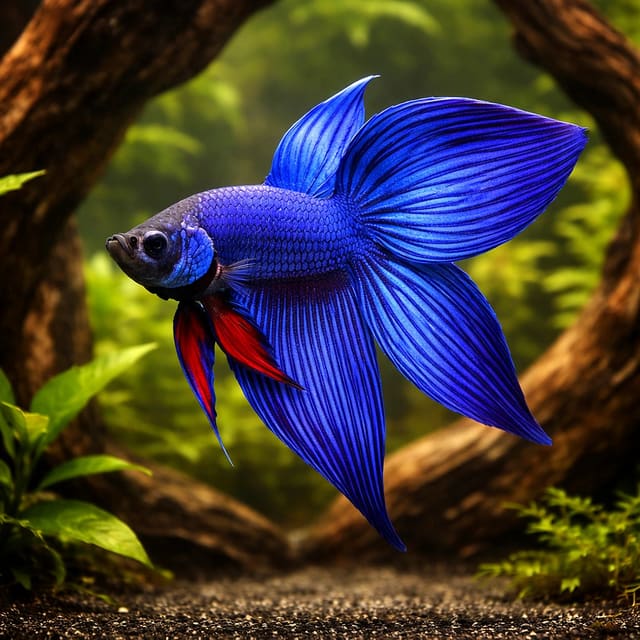
Gallery images have been digitally enhanced to improve image quality. Natural colour, pattern, size and maturity can vary between live animals.
A Plakat Koi Male Betta is often interactive and visually striking, but beginner-friendly does not mean equipment-free. The aquarium needs to be biologically mature before the fish arrives, with ammonia and nitrite at zero, a thermostatic heater verified by a separate thermometer, a working filter with gentle output, a secure lid and open access to the water surface. Plants or smooth refuges create resting places and break up reflections without crowding the swimming space.
Tropical Fish Co uses 20 litres as a lower pre-purchase screen for one typical domestic male. For this listing, the more useful planning recommendation comes from the species profile: a base of 45 × 30 cm, roughly 41 litres. The larger footprint gives a short-finned, active fish room to move and makes it easier to combine cover, calm water and maintenance access. Choose more space if any other animal is being considered, because the community must work for every adult occupant rather than merely fitting the Betta.
A stable 26–28 °C is the store's practical target for a typical domestic Betta splendens. It sits inside the wider ranges reported for the species and tank-reared Bettas. Aim for pH 6–8 and 4–12 dGH as a workable domestic range, then value stability and gradual matching over attempts to chase a fashionable decimal. UK tap water varies, so test the actual aquarium and compare it with the fish's established water.
For the complete store approach to housing, water and welfare, read the Betta fish care guide. If the setup is already suitable and you are comparing forms rather than seeking care advice, the current Betta collection separates the live choices from this evergreen husbandry guidance.
The label on a tank is not the whole decision. Check its internal footprint, actual filled volume, the room displaced by substrate and decor, and whether you can reach every area for maintenance. A 45 × 30 cm base, around 41 litres, is a sound planning point for a single male in the species profile. It gives more usable horizontal space than a tall narrow container and allows cover without reducing the fish to one open corridor.
Small shop compartments are temporary management systems and are not a home-care model. A labyrinth organ lets a Betta take atmospheric air, but it does not remove the need for clean, filtered water. The fish must reach the surface easily, so leave an unobstructed route through floating plants and an air space below a secure cover. A lid matters because Bettas can jump; it should protect the fish without sealing off the humid air layer above the water.
Clear water is not proof of biological readiness. Establish the filter before introducing the fish and confirm ammonia and nitrite at zero with suitable tests. If either is detectable, pause the livestock plan and correct the system. A first aquarium benefits from a written record of test results, temperature and maintenance rather than a guess based on appearance. The first tropical tank guide explains the preparation sequence in more detail.
Use live plants or smooth aquarium-safe alternatives, shaded areas and several resting positions close to the surface. Broad leaves, floating cover and smooth wood can make the aquarium feel sheltered. Inspect every opening and edge: a gap that traps the body, a rough ornament or rigid plastic leaf can damage skin and fins. Leave open water for an active plakat rather than filling every centimetre with decoration.
Gentle lighting and darker areas let the fish choose where to sit. A dark background may also reduce reflections that trigger repeated display. Flaring for a short period is normal behaviour, but continuous interaction with a reflection can become exhausting. Adjust sight lines and lighting before treating the behaviour as a personality problem.
A mature filter is essential, yet its current should not push the fish around or prevent comfortable resting. An air-powered sponge filter or a diffused outlet can provide biological filtration with modest flow. Watch the fish after installation: easy station-holding, normal exploration and relaxed resting matter more than a manufacturer's flow number alone. If output is excessive, diffuse it without switching off the biological system.
Set a thermostatic heater to hold 26–28 °C and verify the water with a separate thermometer. That practical domestic target sits within the broader 24–30 °C FishBase environmental record and 22–30 °C species aquarium profile, as well as the OATA range for tank-reared Bettas. The wider endpoints are context, not daily goals. Avoid rapid adjustments in pursuit of an exact middle value.
Room temperature is unreliable in many UK homes, particularly overnight and through winter. Size and install the heater according to its maker's guidance for aquarium volume, room temperature, water depth and placement. Check the thermometer at different times of day during setup. In hot weather, respond to an upward trend by reducing external heat and light and improving safe surface gas exchange; do not make an abrupt temperature swing.
A pH of 6–8 and general hardness of 4–12 dGH are useful domestic starting values in the store care guide. Stable water close to the fish's established conditions is generally preferable to repeated chemical correction. The aquarium water guide explains ammonia, nitrite, nitrate, pH and hardness, while the water matcher helps compare measured values with the intended range.
Treat chlorine or chloramine in new tap water with an aquarium conditioner. Domestic softeners and drinking-water filters can alter mineral content, so test after them rather than assuming that “filtered” means appropriate. Match replacement water for temperature and make changes gradually. Ammonia and nitrite should remain at zero; a detectable result calls for prompt investigation of feeding, filtration, stocking and recent maintenance.
Do not replace all established filter media at once. The point of maintenance is to preserve biological stability while exporting waste, not to sterilise the aquarium. When a reading changes, look for a cause—extra feeding, a blocked filter, dead plant matter, a missed water change or a recent addition—rather than simply adding a chemical correction.
Wild Betta splendens feed on zooplankton, mosquito larvae and other small animal prey. Domestic fish can accept prepared foods, so use a suitably sized complete Betta pellet or quality aquarium flake as the nutritional base. Add small live or frozen foods such as daphnia, Artemia or bloodworm as variety rather than making one treat the whole diet.
Follow the food maker's portion guidance and adjust by pellet size, body condition, temperature and what the fish consumes promptly. A fixed number of pellets cannot work for every brand because pellet dimensions and energy density differ. Remove leftovers before they break down. Overfeeding affects both body condition and water quality, so pre-measured portions are especially useful when several people share feeding duties.
A plakat's shorter fins often allow active swimming, but fin type does not guarantee health, temperament or tolerance of current. Learn this fish's normal feeding response, breathing, posture, route around the aquarium and preferred resting places. A bubble nest is reproductive behaviour: it can appear without a female, does not certify perfect welfare and is not required as proof that the fish is settled.
Domestic koi patterning may alter as pigment develops. Colour alone is therefore a poor health measure. Look instead for change from the individual's normal state, especially loss of appetite, rapid or laboured breathing, persistent clamped fins, repeated bottom sitting, erratic swimming, swelling, spots, growths or damaged tissue. One sign can have several causes.
The MSD Veterinary Manual overview emphasises history and water analysis before treatment. OATA's fish-vet directory provides a UK route to qualified help. Avoid combining medicines or changing temperature sharply on the strength of a visual guess.
Finish cycling, test the water, confirm the heater and lid, and clear a calm route to the aquarium before delivery day. Someone must be present to receive live fish. Tropical Fish Co uses insulated packing, pure oxygen and a heat pack when the weather calls for one, with a licensed live-animal courier and a confirmed delivery date.
The full conditions and current contact route are on the delivery and Live Arrival Guarantee page. Arrival handling protects both the fish and the claim process; it does not replace having a mature aquarium ready.
Male Betta splendens can fight severely. Do not place two males together or treat a larger aquarium as a solution to direct cohabitation. Prevent sustained visual contact between neighbouring male tanks as well, because repeated display can keep both fish under pressure. This listing is for one male and should be planned around his own aquarium.
The species profile says that some small cyprinids and loaches from similar environments may work, but it also describes solitary keeping as the expected norm. That is a category for further screening, not a universal tank-mate list. Check adult size, temperature, pH and hardness overlap, swimming level, feeding competition, fin-nipping risk and the footprint needed by the whole group.
| Decision | Practical rule |
|---|---|
| Avoid | Another male Betta; fish with trailing fins or a similar body shape that may be treated as rivals; boisterous fin-nippers |
| Use caution | Any community fish, because individual Betta temperament varies; small invertebrates, because they may be investigated or hunted |
| Consider only after full screening | Some calm small cyprinids or loaches named by the species profile, in a larger aquarium with cover and a ready separation tank |
Introduce no companion unless both animals' needs can be met and separation is immediately possible. Watch feeding access and resting behaviour, not merely the absence of chasing during the first hour. The RSPCA's fish compatibility guidance reinforces the need to research the species involved rather than relying on a generic community label.
A daily glance should answer simple questions: is the heater holding its target, is the filter running, is the fish breathing and swimming in its usual way, and has all offered food been eaten? This takes little time but makes a sudden change easier to recognise. A notebook or phone record of water tests and maintenance is useful when several people share care or when a problem develops gradually.
Observe the fish from more than one angle. A koi pattern can make pale and dark patches entirely normal, while reflections and background colours can alter their appearance. Look for change relative to this individual rather than diagnosing from colour alone. Check both sides of the body, the fin edges, the mouth and gill movement when the fish is calm. Persistent change deserves a water test and a review of recent events.
Plants, floating cover, smooth refuges and open swimming lanes let a Betta choose between shade, rest and exploration. A short-finned plakat may use more of the aquarium than a heavily finned form, but the layout should be judged by behaviour rather than the label. Keep at least one easy route to the surface and several resting positions in the upper water. Move or remove an item if it repeatedly traps food, catches fins or creates a current the fish avoids.
Occasional small layout changes can encourage exploration, but major rearrangement is not automatically beneficial. Preserve familiar refuges and change one thing at a time so the fish's response can be interpreted. Continuous mirror use or prolonged flaring is not necessary exercise. If the fish displays at its own reflection, adjust the light, background or sight line and allow it to settle.
A multi-day trip needs a responsible carer who understands the heater, filter and lid as well as feeding. Pre-measure food and write down the routine so kindness does not become overfeeding. The store care guide advises testing any automatic feeder well before travel rather than first relying on it after departure. Leave test equipment and an emergency contact accessible, and explain which changes in temperature, equipment noise, breathing or appetite need attention.
Do not use a guessed fasting number as a welfare promise. How long a fish can survive is not the same as a sound care plan. If the usual keeper will be away, arrange continuity for observation and equipment checks even when feeding is infrequent.
If another aquarium animal is introduced elsewhere in the home, a separate observation setup reduces the chance that a hidden problem reaches the Betta's aquarium. Dedicated nets, siphons and containers are easier to manage than trying to disinfect shared equipment in a hurry. Match heat and water gradually, watch appetite and breathing, and avoid moving an animal into the display merely because it looked well on the first day.
When illness is suspected, isolation may protect the fish or its companions, but a small unheated container is not a treatment tank. Any temporary setup still needs appropriate heat, water quality, cover and observation. Seek qualified help for persistent or severe signs rather than cycling through remedies that may interact.
“Plakat” describes the short-fin presentation of this male, while “koi” describes the marbled domestic colour style. These terms help a buyer compare appearance, but they do not create a separate species or prove a geographical strain. Genome research on domestic Bettas shows complex variation in colour, fin and body traits, so appearance alone cannot establish pedigree, age, fertility or future temperament.
Short fins may reduce some of the drag associated with extreme finnage, yet this remains an individual animal. Watch how he swims in the chosen flow and how readily he can reach the surface. Do not assume that a plakat tolerates strong current or rough decor. Equally, do not use a photograph to promise the exact balance of red, white, orange, black or metallic colour after the fish matures under different lighting.
The conservation status attached to wild Betta splendens populations should not be turned into a claim about the origin of a domestic aquarium form. Care for this fish according to the verified species identity and its observed needs, without presenting a colour label as a wild-locality record.
FishBase records Betta splendens at up to 6.5 cm total length. Seriously Fish gives 70 mm standard length, which excludes the tail and is a different measurement; plan the aquarium for the adult fish rather than a dispatch estimate.
Plan around a 45 × 30 cm base, about 41 litres, for one male. Tropical Fish Co uses 20 litres as a lower pre-purchase screen, but the larger species-profile footprint offers more usable space for cover, calm flow and maintenance.
Keep one male per aquarium. Two males can fight severely, and more space or added decor does not turn direct cohabitation into a safe plan.
It can suit a careful beginner who has already cycled a heated, covered and gently filtered aquarium, can test water and will keep one male alone. It is not suited to an unheated bowl or a same-day tank setup.
Use a suitably sized complete Betta pellet or quality aquarium flake as the base, with small frozen or live foods such as daphnia, Artemia or bloodworm as variety. Follow the food instructions, watch body condition and remove leftovers promptly.
Tropical Fish Co uses a stable 26–28 °C practical target for a typical domestic fish, with pH 6–8 and 4–12 dGH as the working domestic range. Test the aquarium and favour gradual matching and stability over rapid correction.
Male Betta splendens are territorial, particularly towards other males and fish that resemble rivals. Individual reactions vary; the bigger risk in some communities is also the Betta being targeted by boisterous fin-nippers.
Solitary housing is the safest default. The species profile says some small cyprinids and loaches may be considered, but only after checking water, adult size, activity and feeding competition, with more space and a ready separation plan.
Tropical Fish Co hand-packs live fish in pure oxygen and insulated packaging, adding a heat pack when weather calls for one, and uses a licensed live-animal courier. Be present, record continuous unboxing from the sealed parcel, inspect the fish in the bag and contact the store the same day with the video and order number if a claim is needed.
The identity, adult measurement, wild ecology and broad environmental record are documented by FishBase. The 45 × 30 cm aquarium footprint, species aquarium range, furnishing, diet and solitary-default guidance come from the Seriously Fish species profile.
UK group husbandry, including the 20-litre lower screen, regular testing and maintenance, is covered by the OATA Betta care sheet. General filtration welfare is described by the RSPCA aquarium environment guide. The accepted name is also listed by NCBI Taxonomy, while a peer-reviewed domestic Betta genetics study explains why colour and fin labels do not establish origin or welfare by themselves.
No reviews for this item yet. Bought one? Honest reviews only, good or bad.
What customers say about ordering from us
I have a small group of long finned mountain minnows. So was delighted to be able to order ten of this variety to increase the genetics in my tank . The ones I recieved are healthy but it’s to early to give a verdict on wether they are of a long finned type since they are small currently.
Gordon Walker · 23 Sept 2026
100% success travel and "installation". Pleased with quality of purchase. The Siamese fighter a bit "shy" so have not yet seen him at his best yet but looking good. Happy customer. GG
George E Garratt · 21 Sept 2026
Reviews of our shop, collected by Judge.me, an independent third-party review collector. Newest first.