Moderate
Female Betta Mix (Betta splendens)
26–28°C · pH 6–8
£5.99

One randomly selected XL male Double Tail Betta. The split-tail form, colour and pattern vary; gallery images are representative rather than WYSIWYG. Keep singly in a mature, heated, covered 20-litre-or-larger aquarium with gentle filtration.
Adult size is the maximum length this species reaches at full maturity (scientific sources). The livestock you receive will be younger and smaller. Product-photo provenance and any image-specific limitations are stated on the listing.
Betta splendens
One randomly selected XL male Double Tail Betta. The split-tail form, colour and pattern vary; gallery images are representative rather than WYSIWYG. Keep singly in a mature, heated, covered 20-litre-or-larger aquarium with gentle filtration.
Adult size is the maximum length this species reaches at full maturity (scientific sources). The livestock you receive will be younger and smaller. Product-photo provenance and any image-specific limitations are stated on the listing.
For one typical domestic Betta splendens, start with at least 20 litres, a mature filter, thermostatic heater, separate thermometer, gentle flow, a secure lid with surface access, and plants or refuges. Keep one male per aquarium.
Maintain these water conditions for optimal health and vibrant colors
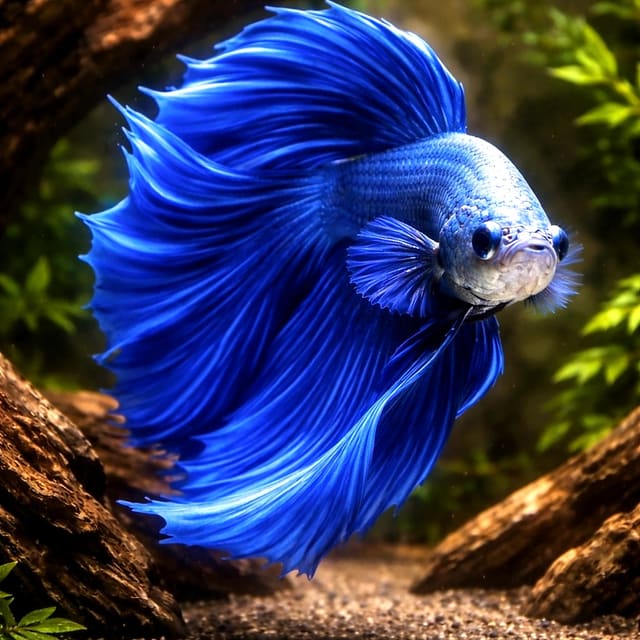
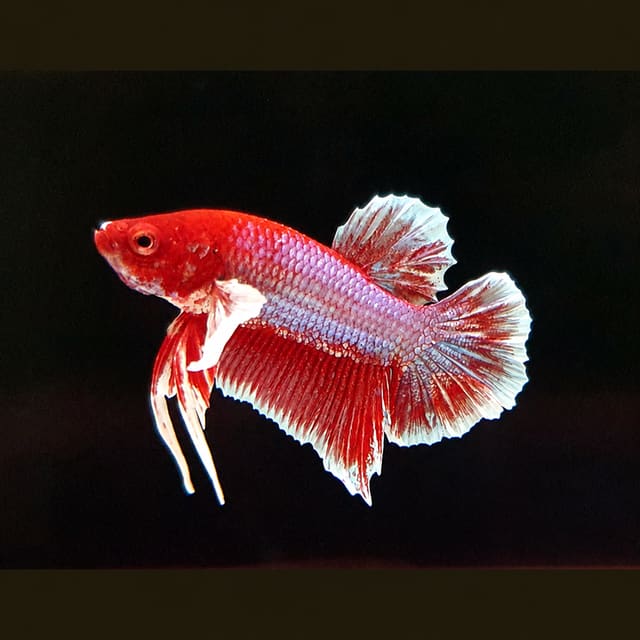
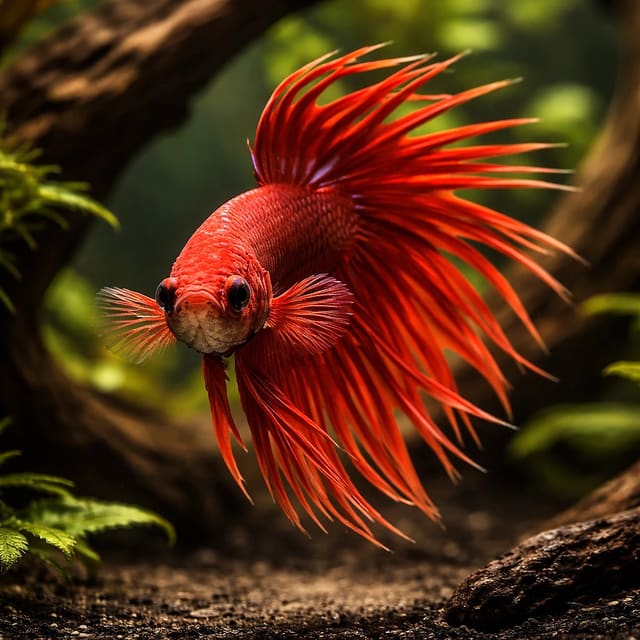
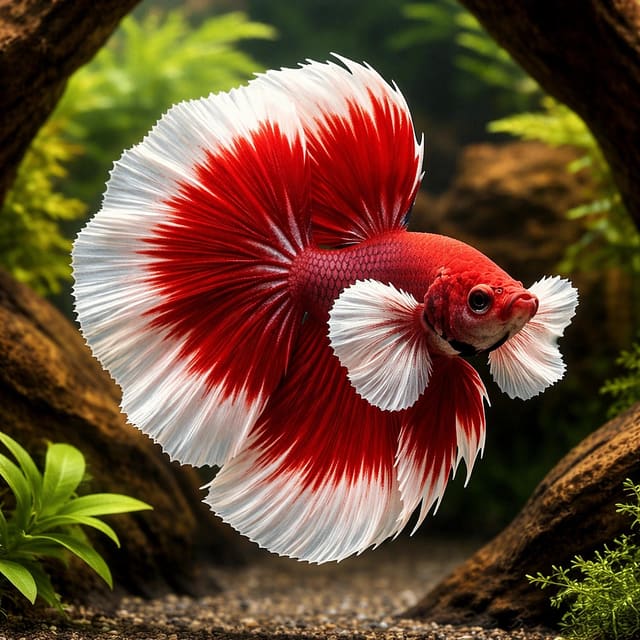
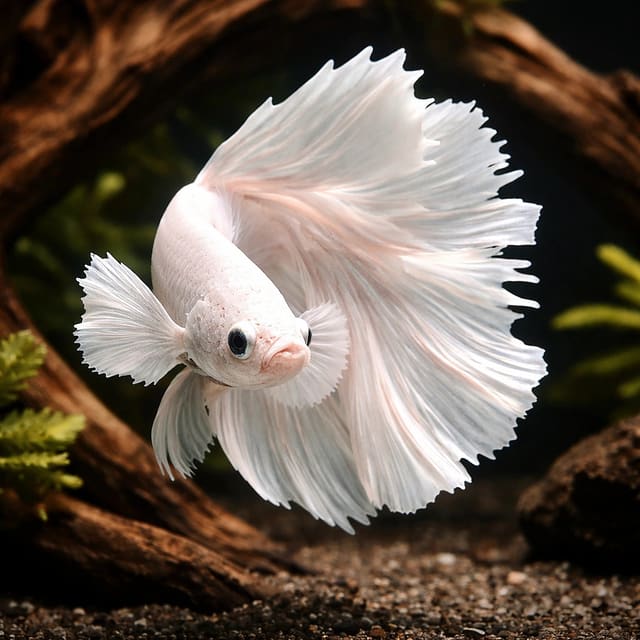
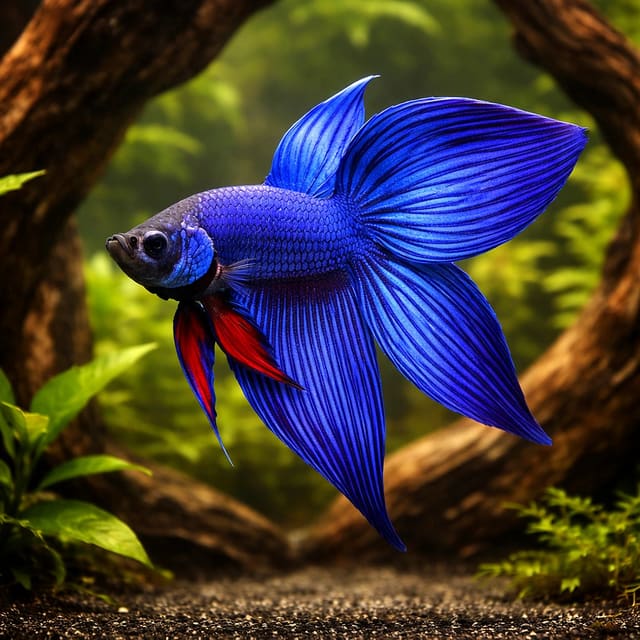
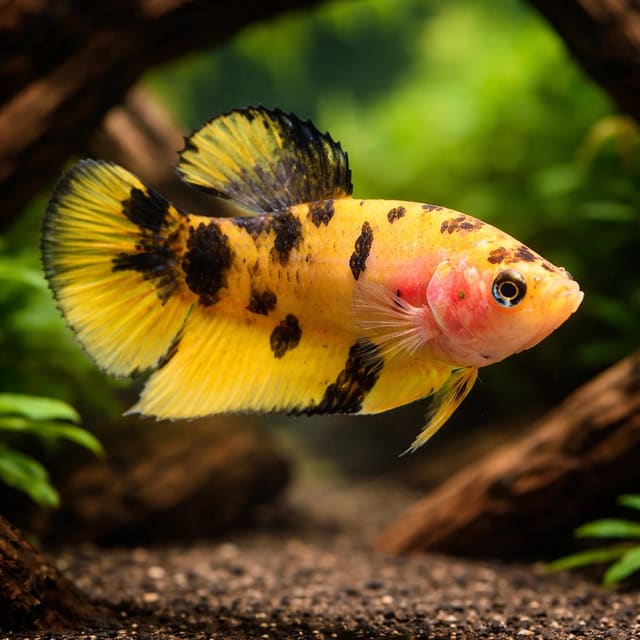
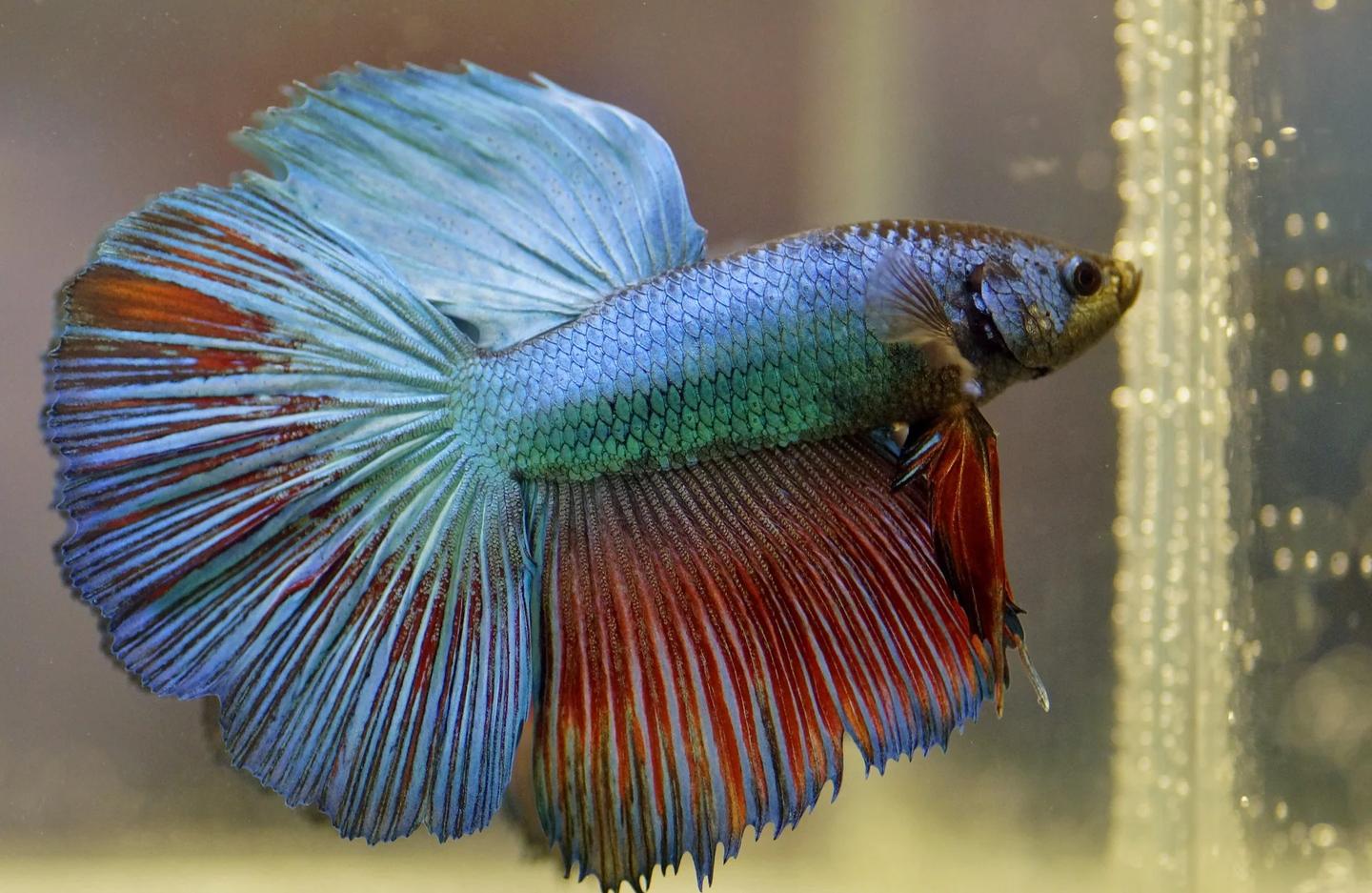
Double Tail Male Betta Mix XL is a domesticated ornamental form of Betta splendens with a caudal fin divided into two distinct lobes. A Double Tail Betta often also has a broader dorsal fin and a deeper-looking rear body, giving this variety a balanced, fan-shaped profile when the fins are open. Colour and pattern are not fixed in this mixed-colour product, so every fish has its own appearance.
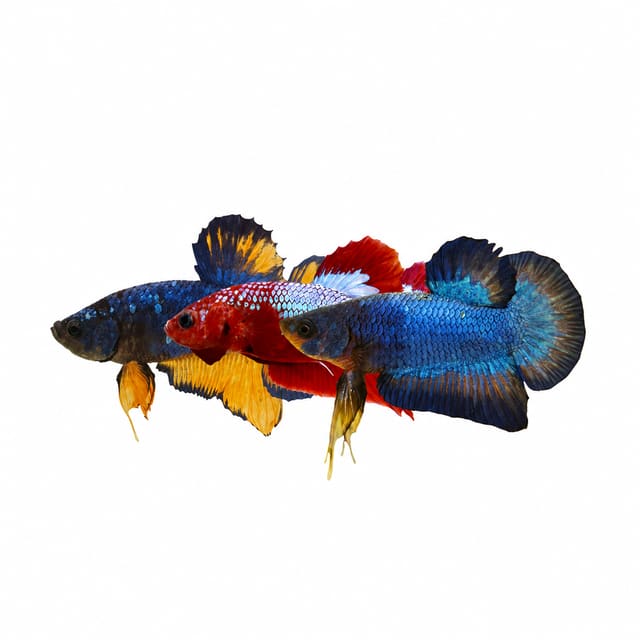
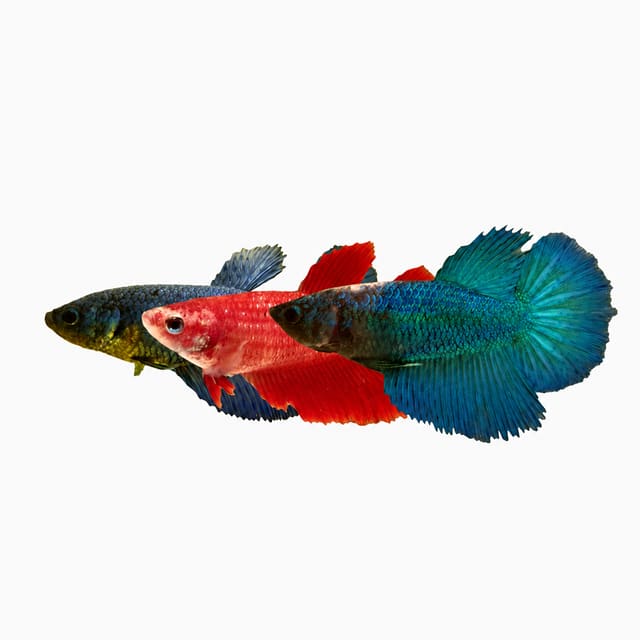
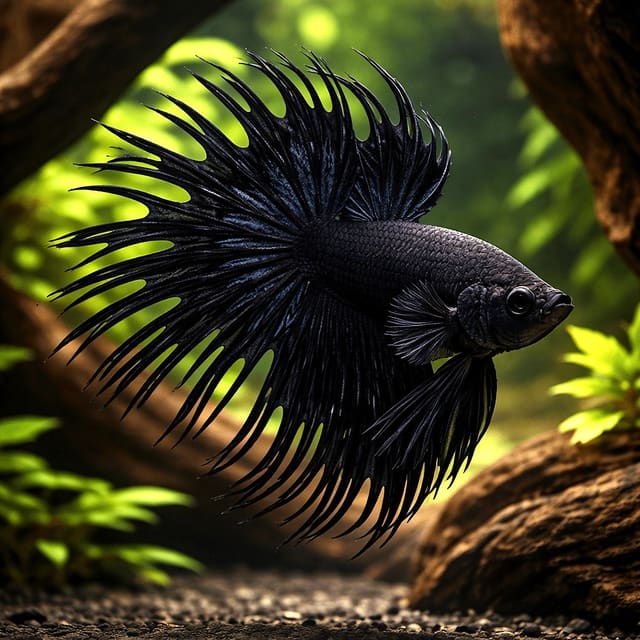
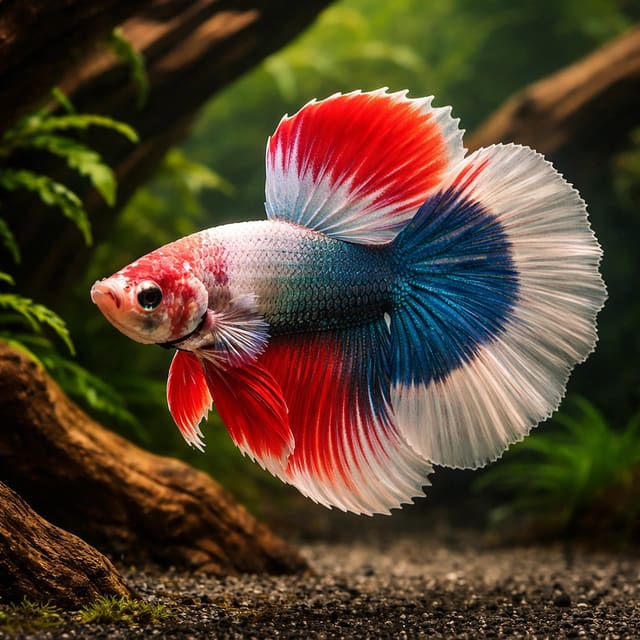
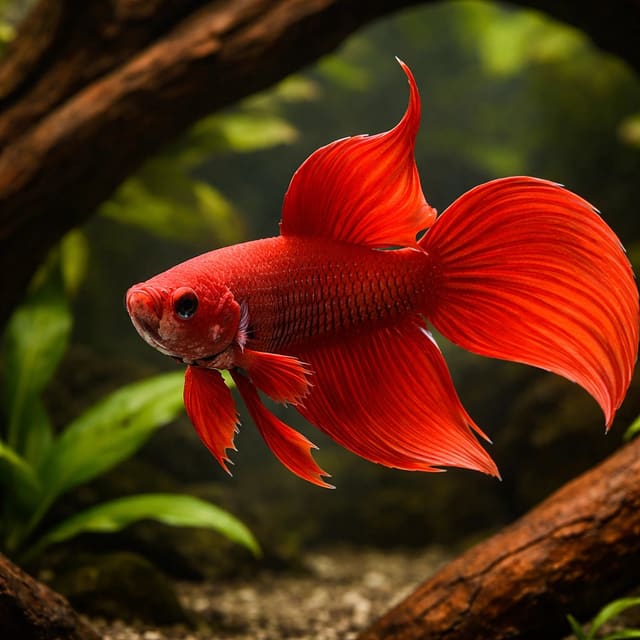
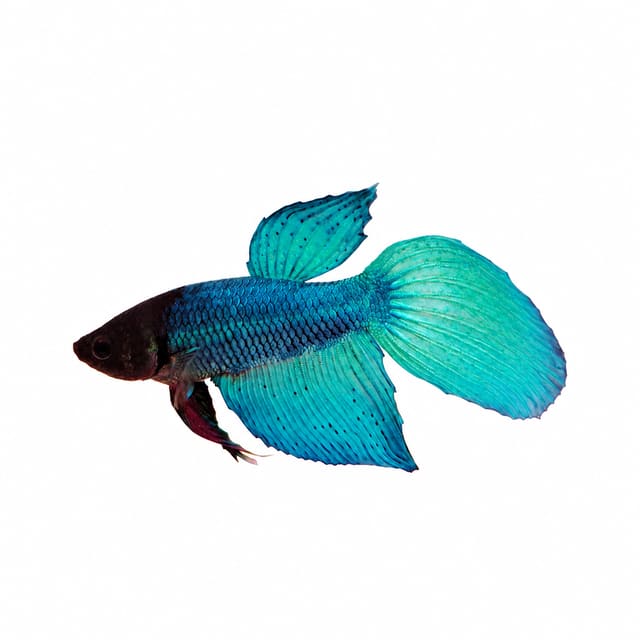
One quantity is one randomly selected male from the XL size class. It is not a pair, and the label XL is a size label rather than a guaranteed measurement in centimetres. The gallery is representative, not WYSIWYG: it shows the expected variety and tail concept, but the dispatched male may differ in colour, pattern, fin spread and exact body size. The image showing two fish is an illustrative comparison scene; two males must not be housed together.
This is a warm-water, surface-breathing fish for a mature, covered aquarium with gentle filtration. A single male needs at least 20 litres, and a larger 25-40 litre planted setup is usually easier to heat, filter and maintain steadily. The broad fins can make strong current tiring, while sharp decor can split delicate fin edges. Good care therefore depends on stable heat, clean cycled water, a secure lid, smooth shelter and calm swimming space rather than a tiny bowl.
For the wider range, visit the Betta collection. Keep reading for a transparent explanation of the retail unit, tail form, water parameters, feeding, compatibility, health checks and the limits of representative imagery.
The product is one male from a mixed-colour Double Tail group. Staff select a suitable available fish; the basket quantity does not represent a matched pair, breeding pair or colour choice. A request for a particular colour can be noted, but this page does not promise that the requested colour will be available or supplied. The animal's welfare and fitness for dispatch take priority over matching a photograph.
XL identifies this listing's size category, but it does not define a narrow centimetre band. Live fish do not arrive as identical manufactured items: body length, fin length, posture and maturity vary. The useful planning fact is that Betta splendens reaches about 7 cm in body length, while long fins make an adult male look larger.
| Listing element | What it means | What it does not promise |
|---|---|---|
| One male | One individually bagged male fish | Not a pair, trio or community group |
| Double Tail | A divided caudal-fin form | Not two fish and not two separate tails attached to the body |
| Mix | Colour and pattern vary with current stock | No exact colour, marking or photo match |
| XL | The XL size class | No exact dispatch length or adult maturity guarantee |
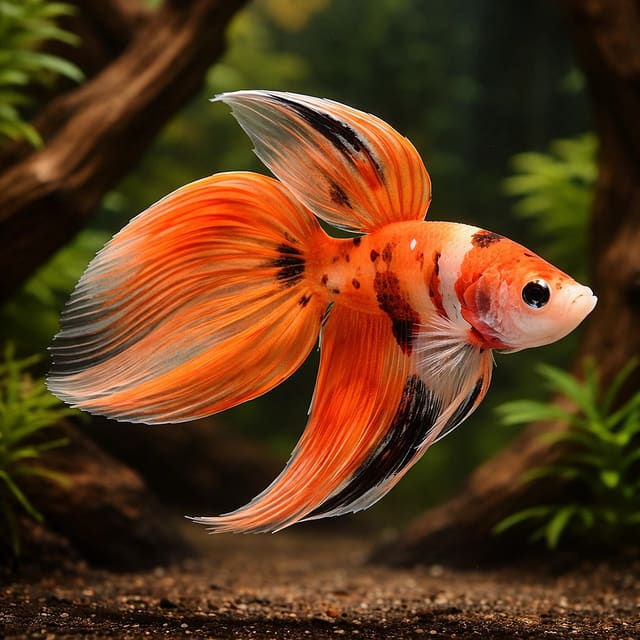
| Representative gallery | Illustrates form, colour possibilities and aquarium presentation | Not a photograph of the exact fish that will be packed |
Check the fish on arrival rather than comparing every scale with the hero image. A healthy newly transported male may hold his fins closer to the body, look paler or rest more than a settled display fish. Colour and fin spread usually become easier to judge after quiet acclimation, stable heat and recovery from transport. Report any genuine arrival problem through the stated livestock process with clear photographs and timing information.
One gallery scene contains two illustrative males so the tail shape can be compared. The listing still supplies one male. Never place two male Betta splendens together; visual similarity in an image does not override their territorial behaviour.
Double Tail is an ornamental tail form within the domesticated Betta splendens complex, not a separate wild species. The scientific name should therefore be written as Betta splendens, with Double Tail Betta used to describe the selected fin phenotype.
Modern ornamental bettas have a long and genetically complex domestication history. Genomic studies show intensive selection for fin shape, colour, body size and behaviour, with ancestry from closely related wild bettas in some domesticated lines. That history is why a mixed ornamental male should not be presented as a wild-locality fish from one named river or rice field. It is a captive-bred display form whose care is based on the biology of B. splendens and the welfare needs created by its selected finnage.
The split-tail phenotype is biologically real rather than a marketing drawing. Research in Molecular Biology and Evolution linked the double-tail form to a regulatory change near the zic1/zic4 region. A broader genomic study of hundreds of bettas also documented extensive domesticated variation in fin and colour traits. These sources support the identity of the form without implying that every mixed-colour male will have identical lobe symmetry or fin spread.
| Term | Accurate use | Common misunderstanding |
|---|---|---|
| Betta splendens | The species identity used for care and classification | It does not describe one guaranteed colour |
| Double Tail | A selected caudal-fin phenotype with two lobes | It is not a separate species |
| Male | The sex supplied by this product | It does not make the fish suitable with another male |
| Mix | Variable colour and pattern | It is not a named fixed strain or WYSIWYG choice |
| XL | the listing's size category | It is not the scientific adult-size definition |
A well-formed Double Tail has an obvious division through the caudal fin, producing upper and lower lobes. The dorsal fin may appear broader than on many single-tail males, and the rear half of the fish can look compact or deep-bodied. Symmetry varies. One lobe may sit slightly higher, spread more fully or carry a different colour boundary from the other. Minor asymmetry is normal in a mixed commercial group and should not be confused with an injury.
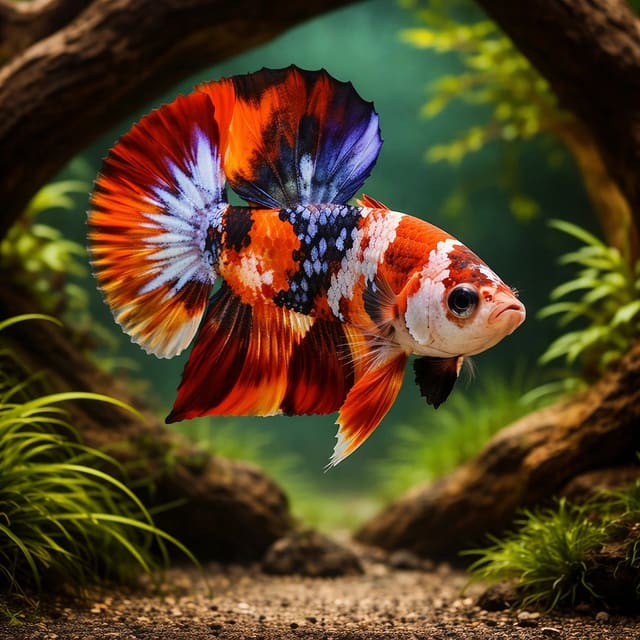
Colour can include red, blue, turquoise, black, white, orange, yellow, metallic or marble-patterned areas in many combinations. Marble and multicolour lines may change visibly as the fish matures. Lighting, background, diet, stress and camera processing also alter how colour appears. The orange, blue and black fish shown in the gallery demonstrates one possible presentation, not the only fish this product can supply.
Look for body condition rather than demanding a permanently flared display. A settled male should be alert, able to swim level, interested in food and able to open his fins without obvious effort. Fins should not be continuously clamped; the skin should be free from raised lesions, cotton-like growth or spreading red edges. A short rest on a broad leaf or decor near the surface is normal, especially for a male carrying broad finnage.
Fin length contributes to the fish's visual size but not to the body-length figure used in many biological references. Plan the aquarium for movement, turning room and resting sites rather than treating a 7 cm guide as permission to use a container only slightly longer than the fish. A larger water volume is also more forgiving when temperature or water chemistry would otherwise change rapidly.
Both OATA's UK care sheet and the RSPCA welfare guidance recommend an aquarium of at least 20 litres for a single male. That is a minimum starting point, not a maximum. A 25-40 litre aquarium gives more stable heat, more biological filter capacity and more room to create distinct open, shaded and resting areas. Very tall tanks are less useful than a sensible footprint because this species regularly visits the surface.
Cycle the aquarium before purchase. A cycled filter contains bacteria that convert toxic ammonia to nitrite and then to nitrate. Ammonia and nitrite should remain at zero on a reliable test, and nitrate should be controlled through planting, sensible feeding and partial water changes. A clear-looking new aquarium is not necessarily biologically ready. If the keeper cannot verify the nitrogen cycle, the fish should not be used to test it.
Use smooth sand or fine gravel, live or soft artificial plants, and rounded shelter without rough edges. Broad leaves and gentle resting ledges a few centimetres below the surface help a long-finned male pause without sinking to the bottom. Avoid hard plastic points, narrow holes that can trap the body, and decorations whose paint or metal can deteriorate in water. Run a hand or a piece of fine fabric over decor before it enters the tank; anything that snags fabric can catch a fin.
| Feature | Recommended approach | Reason |
|---|---|---|
| Volume | 20 litres minimum; 25-40 litres preferred for one male | Larger volumes stabilise heat and waste concentration |
| Shape | Moderate depth with easy surface access | The fish uses atmospheric air as well as dissolved oxygen |
| Cover | Secure lid with a small warm air gap | Bettas jump and need access to humid air above the water |
| Filter | Mature biological filtration with adjustable gentle flow | Protects water quality without exhausting broad fins |
| Decor | Smooth plants, shelter and near-surface rests | Provides security while reducing snag and tear risk |
| Light | Regular day-night cycle with shaded areas | Supports predictable behaviour and retreat from glare |
Position the tank away from radiators, cold draughts, direct midday sun, loud vibration and aerosol sprays. Leave access for maintenance and make sure electrical equipment has drip loops. A small aquarium can still be heavy once filled; use a level stand designed for the load rather than a lightweight shelf.
FishBase gives a broader species range of 24-30°C, pH 6.0-8.0 and 5-19 dH, while welfare care sheets commonly recommend maintaining domestic males around 24-26°C. For ordinary home care, a stable working target of 24-27°C is more useful than moving repeatedly across every published extreme.
Use an adjustable submersible heater with a separate thermometer. Check the thermometer daily and after water changes, seasonal weather shifts or equipment movement. Room temperature is not a reliable substitute in most UK homes because the water can cool overnight and fluctuate around heating schedules. A lamp is also not a thermostatic heater; it can stop warming at night or overheat a small volume during the day.
Do not chase a single "perfect" pH by adding chemicals after every test. Stable dechlorinated water within the practical range is safer than repeated rapid correction. If tap water is unusual, test pH, hardness and alkalinity before the aquarium is stocked. Any long-term adjustment should be measured, repeatable and applied to replacement water before it enters the tank.
| Measurement | Practical target | Action trigger |
|---|---|---|
| Temperature | Stable 24-27°C | Investigate drift, rapid swings or heater failure |
| pH | Stable within roughly 6.0-7.8 | Check source water and alkalinity before correcting |
| Ammonia | 0 | Stop feeding, test again and protect the fish immediately |
| Nitrite | 0 | Treat as a filtration emergency |
| Nitrate | Low and controlled | Review feeding, stocking, plants and water-change routine |
| Hardness | Low to moderately hard, kept consistent | Avoid abrupt transfer between very different waters |
The dedicated temperature and heater guide explains seasonal monitoring in more detail. On this product page, the important message is simple: provide stable tropical warmth and verify it with instruments rather than guessing from how the room feels.
A betta's labyrinth organ allows it to breathe atmospheric air, but that does not remove the need for clean, oxygenated water or biological filtration. The organ is an adaptation, not permission to keep the fish in stagnant waste. Choose a filter that can process the aquarium's volume while allowing the outflow to be softened or directed away from the main swimming and resting area.
Watch the fish rather than relying only on the filter's printed rating. If the male is pushed sideways, avoids half the tank or cannot hold position while feeding, the current is too strong. A sponge filter, spray bar or baffle can reduce the force while maintaining water movement. Keep the intake protected so long fins cannot be pulled against narrow slots.
Leave a small gap between the water surface and the lid so the fish can take warm, humid air. The lid must still be secure because males can jump through surprisingly small openings. Cover cable gaps where practical without sealing the aquarium so tightly that normal gas exchange is prevented. Check condensation and equipment regularly rather than placing food or objects across ventilation areas.
Rinse reusable filter media gently in removed aquarium water when flow drops. Do not replace all biological media or wash it under chlorinated tap water at once. A filter can look mechanically clean while losing the bacterial population that makes it safe, so maintenance should preserve biology as well as water movement.
Planting gives visual cover, resting surfaces and a more interesting environment. Anubias, Java fern, Cryptocoryne and floating plants can work where their individual light and water needs are met. Floating cover should never seal the whole surface; leave open breathing and feeding areas. Secure plants so the fish cannot become trapped between a pot, rock and the glass.
Create a gradient from open swimming space to shaded shelter. A male may patrol the front when confident, then retreat under leaves after feeding or during bright light. That movement between zones is useful behaviour. A bare aquarium offers nowhere to withdraw, while a completely packed layout makes observation and cleaning difficult.
Mirrors should not be left in the aquarium as permanent entertainment. A brief controlled flare may be used by experienced keepers for observation, but continuous reflection can maintain territorial arousal and exhaustion. The same applies to placing two male tanks directly beside one another with unrestricted sight lines. Use opaque visual barriers where neighbouring males display constantly.
Keep a predictable light cycle, ideally controlled by a timer, and provide darkness at night. Avoid sudden switching from complete darkness to intense light. Room light first, then aquarium light, gives the fish time to orient. Enrichment should make the environment more usable, not force constant activity.
Betta splendens is adapted to take small animal prey, including aquatic and terrestrial invertebrates. Use a high-quality betta pellet or granule as the measured staple, then rotate appropriate frozen or live foods such as daphnia, brine shrimp, mosquito larvae or bloodworm in modest amounts. Variety can support feeding behaviour, but rich foods should not replace portion control.
Feed one or two small meals per day and watch each portion being swallowed. The stomach is small, and dry food can expand after it is eaten. The exact number of pellets depends on their size and density, so a universal pellet count is less useful than observing the fish and following the food maker's guidance. Remove persistent uneaten food before it decays.
Body condition should remain smooth rather than pinched or permanently swollen. A rounded abdomen immediately after a meal is not a reason to add more food. Repeated bloating, loss of appetite, stringy waste or difficulty staying level needs investigation of water, portion size, food type and health; it should not be treated with random medication based on one symptom.
| Food role | Examples | How to use it |
|---|---|---|
| Measured staple | Quality betta pellets or small carnivore granules | Use most regularly in small observed portions |
| Frozen variety | Daphnia, brine shrimp, mosquito larvae, occasional bloodworm | Thaw a suitable portion and avoid adding packing liquid |
| Live enrichment | Clean cultured invertebrate foods | Use only from a trusted source and at an appropriate size |
| Food to avoid as a routine | Large chunks, mammal meat, stale or damp feed | Poor fit, excess fat or contamination can harm health and water |
A weekly feeding record is useful during the first month. Note appetite, the food offered and any leftovers. The record helps separate a real decline from a single missed meal and makes it easier to identify which food or portion preceded a recurring problem.
Male Siamese fighting fish are territorial. This listing is designed around one male because two males can escalate from display to biting and serious injury. A large tank does not make an unseparated pair of males safe. The illustrative two-fish gallery scene must never be copied as a stocking plan.
A single male can still show a wide behavioural range: patrolling, investigating plants, building a bubble nest, resting near the surface, flaring briefly at a reflection and approaching the keeper at feeding time. Solitary housing does not mean an empty environment. Plants, calm exploration space, varied feeding and predictable care provide opportunities without exposing the fish to a rival.
Do not place a female with the male as permanent companionship. Courtship can include chasing and biting, and breeding requires a prepared separate setup, experienced observation and a plan for many fry. A female is not a social treatment for a male that appears inactive. First check temperature, water quality, flow, body condition and environmental cover.
Individual temperament varies. Some males ignore nearby peaceful fish; others chase or are stressed by them. This variation is why compatibility lists should be treated as risk guidance rather than a guarantee. The safest baseline remains a planted single-male aquarium.
Tank mates are optional. If a community is attempted, use a larger mature aquarium with enough floor area and cover for every species. Select peaceful, short-finned fish that do not occupy the surface aggressively, do not nip fins and share the required warm-water range. Additions should be quarantined and observed, with a second safe aquarium or divider ready if the combination fails.
Small snails are often the lowest-conflict option, although a curious male may still peck at feelers. Shrimp can be hunted, especially small or newly moulted individuals. Corydoras or kuhli loaches are sometimes kept with calm males in suitably sized tanks, but each has its own group-size, floor-space, substrate and feeding requirements. They must not be added as cleaners for a small tank.
Avoid tiger barbs and other fin nippers, aggressive gouramis, cold-water species, brightly finned guppies that may provoke display, and any second male betta. Strongly competitive surface feeders can also make the male miss meals. Review the tank-mate planning guide before building a mixed setup.
| Potential companion | Risk level | Planning note |
|---|---|---|
| Snails | Lower, not zero | Provide suitable water and watch for persistent pecking |
| Shrimp | Moderate to high | They may be treated as prey; dense cover does not guarantee safety |
| Peaceful bottom fish | Possible in a larger tank | Meet their own group and footprint needs independently |
| Fin nippers or aggressive surface fish | High | Avoid because stress and fin damage are likely |
| Another male betta | Unacceptable | House separately with an opaque visual barrier if needed |
For comparisons within the range, see the Super Delta Blue male, Veiltail Nemo male and Butterfly Halfmoon male. These are alternative tail or colour choices, not companions for this male.
Observe before feeding. Check posture, balance, breathing, colour, interest in the surroundings and whether both tail lobes can open. Then watch the fish take food and return to normal swimming. A consistent routine makes small changes visible sooner than an occasional close inspection after a problem is advanced.
Broad fins can split on rough decor, filter intakes or during conflict. A clean straight tear without inflammation may heal under excellent water conditions, but ragged edges that continue to recede, redness, swelling or fuzzy growth need prompt assessment. Do not assume every uneven edge is fin rot; compare photographs over time and investigate the physical environment as well as infection.
Temperature stress can present as lethargy, poor appetite or unusual surface behaviour, but those signs are not specific. Test the water and thermometer before diagnosing by appearance. Ammonia, nitrite, low oxygen, excessive current, overfeeding and disease can produce overlapping signs. Treating blindly can delay the real correction and damage the biological filter.
| Observation | First checks | When to escalate |
|---|---|---|
| Clamped fins or hiding | Temperature, ammonia, nitrite, flow and recent disturbance | If persistent, worsening or combined with appetite loss |
| Torn fin edge | Sharp decor, intake, tank mates and water quality | If redness, tissue loss or growth spreads |
| Rapid breathing | Temperature, oxygen, toxins and gill appearance | Immediately if severe or water tests are abnormal |
| Floating or sinking difficulty | Food amount, constipation, injury and water conditions | If the fish cannot feed, rest or maintain position |
| White spots or raised lesions | Photograph, isolate equipment and review recent additions | Seek diagnosis before selecting medication |
Quarantine new fish and avoid sharing wet nets, siphons or containers between systems without proper disinfection. If medication is needed, follow a diagnosis and product instructions; some treatments affect invertebrates, plants or filter bacteria. A hospital tank is useful only when it is heated, covered, monitored and appropriately filtered.
Set up and cycle the aquarium before ordering. On delivery day, confirm the heater and filter are working, test ammonia and nitrite, dim the lights and keep the room quiet. Do not wait for the livestock box to arrive before discovering that the tank is cold or uncycled.
Follow the current livestock acclimation instructions supplied with the order. Temperature equalisation and careful transfer should avoid exposing the fish to sudden change, but an opened transport bag should not be left standing for a prolonged improvised drip routine. Transport-water chemistry changes after opening, so use the stated procedure and keep transport water out of the display where practical.
Once released, provide darkness or subdued light and do not force a meal immediately. A male may rest, breathe at the surface or show pale transport colour. Observe breathing and balance without tapping the glass. Keep photographs of the unopened bag and the fish if an arrival issue is suspected, then contact support within the published reporting window.
During the first week, record temperature and water tests daily, offer small foods and check the fins from the same side of the aquarium. Avoid adding further livestock while the new male is settling. Stability is more useful than repeatedly rearranging the tank to encourage display.
Daily care takes only a few focused minutes: check temperature and equipment, count the fish, observe breathing and posture, feed a measured amount and remove obvious leftovers. Weekly care should include water testing, a partial water change appropriate to the measured nitrate and waste load, light substrate cleaning and inspection of the filter flow.
Match replacement water for temperature, treat it for chlorine and chloramine, and add it gently. Do not deep-clean the filter and substrate on the same day unless an emergency requires it. Preserve beneficial bacteria by cleaning reusable media in removed aquarium water and replacing only media that is genuinely exhausted or damaged.
| Frequency | Task | Record |
|---|---|---|
| Daily | Temperature, equipment, behaviour, appetite and fin check | Any departure from the fish's normal pattern |
| Weekly | Ammonia, nitrite, nitrate and pH testing | Results before maintenance |
| Weekly or as tests indicate | Partial water change and accessible waste removal | Volume changed and replacement-water temperature |
| As flow declines | Gentle mechanical filter cleaning | Any damaged media or intake hazard |
| Monthly | Review heater accuracy, lid gaps, decor and electrical safety | Repairs or replacements needed |
A log turns care into evidence. If appetite falls or fins deteriorate, the keeper can compare the change with temperature, water chemistry, maintenance and food rather than guessing. It also helps distinguish a one-day response to disturbance from a trend that needs action.
Male Betta splendens builds a bubble nest and guards eggs, but breeding should not be attempted simply because the fish is male or because a female product exists. The pair needs conditioning, a separate controlled spawning aquarium, close supervision, a safe method of removing the female, suitable fry foods and substantial grow-out capacity.
Courtship can become dangerous. A female must not be left with the male if she cannot retreat or if aggression continues. After spawning, the female is normally removed, and the male later needs removal when free-swimming fry no longer require nest care. Hundreds of young fish can create serious housing and welfare obligations, especially when juvenile males begin to become territorial.
Double-tail inheritance is also more complicated than choosing two visually attractive adults. The phenotype is linked with developmental changes in the fin and body axis, and poor pair selection can compound structural weakness. Breeders should study genetics, use unrelated healthy stock where possible, keep detailed parentage records and select for function and welfare rather than maximum finnage alone.
A bubble nest in a display aquarium is normal behaviour and does not mean the male needs a mate. It can appear without a female and may be rebuilt or abandoned. Leave it alone unless maintenance requires removal; the fish's health is judged by the whole behavioural and physical picture, not by the nest.
Tail labels describe selected appearance, not separate care species. All domestic male B. splendens need warm cycled water, surface access, a lid and protection from conflict. The practical differences are how much fin area the fish carries, how it moves in current and whether the product promises a fixed colour or a mixed selection.
| Form | Outline | Care emphasis |
|---|---|---|
| Double Tail | Caudal fin divided into upper and lower lobes | Gentle flow, smooth decor and observation of lobe condition |
| Super Delta | Broad single caudal spread below a full halfmoon angle | Protect the wide fin from current and snagging |
| Halfmoon | Single caudal fin capable of a wide semicircular display | Large fin area benefits from calm resting zones |
| Veiltail | Asymmetrical flowing tail that drapes downward | Fin length still requires smooth decor and clean water |
| Plakat | Shorter, more compact finnage | Often a stronger swimmer, but still territorial and warm-water |
The male Plakat mix is the useful short-fin comparison. The female Double Tail mix shows the related tail form in a separate female product. These links help compare alternatives; they are not recommendations to combine the fish in one aquarium.
Care ranges come from different contexts. FishBase provides a broader species-level environmental range. OATA's Betta care sheet and the RSPCA care guidance focus more directly on domestic aquarium welfare, including a 20-litre minimum, reliable heating and gentle filtration.
For the ornamental identity, the open scientific review The genetic architecture of phenotypic diversity in the Betta fish documents the complexity of domesticated forms. The open paper Genomic Basis of Striking Fin Shapes and Colors in the Fighting Fish discusses the developmental genetics associated with the double-tail phenotype.
No source can promise the personality, exact colour or exact fin symmetry of an individual randomly selected fish. This page therefore separates supported species care, stock facts and product-specific limits. When ranges disagree, use a stable conservative working target and observe the actual fish rather than repeatedly moving water between published extremes.
One quantity is one randomly selected male. It is not a pair, and no female is included.
Not necessarily. The gallery is representative rather than WYSIWYG. Colour, pattern, fin spread and exact size vary with available mixed stock.
XL is the XL size label. It does not guarantee a narrow centimetre measurement, age or full adult maturity.
The caudal fin is divided into upper and lower lobes. It is an ornamental fin phenotype within domesticated Betta splendens, not a separate species.
An adult body-size guide is about 7 cm. Broad fins increase the fish's visual span, so provide room to turn and rest comfortably.
Twenty litres is the welfare minimum cited by OATA and RSPCA guidance for one male. A larger 25-40 litre setup is generally easier to keep stable and enrich well.
Yes in normal UK home conditions. Use a thermostatic aquarium heater and separate thermometer to maintain a stable 24-27°C working range.
Room temperature fluctuates and is commonly too cool, especially overnight. Measure the water rather than relying on the air temperature.
Use mature biological filtration with gentle adjustable flow. Protect the intake and ensure the male can feed, rest and reach the surface without fighting the current.
Males can jump. A secure lid prevents escape, while a small air gap above the water gives access to warm humid air for the labyrinth organ.
No. Two male Betta splendens can fight and seriously injure one another even where the aquarium looks spacious. House them separately.
Do not keep a female with the male as routine companionship. Breeding introductions are temporary specialist work and require a separate plan, supervision and safe removal.
The safest plan is one male alone. In a larger mature aquarium, carefully selected peaceful non-nipping species or snails may work, but compatibility is never guaranteed.
Use a measured high-quality betta pellet or small carnivore granule, with suitable frozen or live invertebrate foods for variety. Avoid large portions and remove leftovers.
Transport can temporarily reduce colour and fin spread. Keep the tank quiet and warm, then check breathing, balance and water quality. Report persistent or severe signs promptly.
Use smooth decor, a guarded filter intake, gentle current and clean water. Investigate tears, redness or progressive tissue loss rather than assuming every uneven edge is disease.
Order only after the aquarium is heated, covered, cycled and tested. Current livestock delivery availability depends on postcode, dispatch schedule, weather, courier conditions and checkout. The Live Arrival Guarantee applies under the published livestock terms and reporting process; it is not a promise that an uncycled or unsuitable aquarium can be made safe after delivery.
Choose the fish because its welfare needs fit the aquarium. This product remains one randomly selected XL male with representative imagery and variable colour.
No reviews for this item yet. Bought one? Honest reviews only, good or bad.
What customers say about ordering from us
I have a small group of long finned mountain minnows. So was delighted to be able to order ten of this variety to increase the genetics in my tank . The ones I recieved are healthy but it’s to early to give a verdict on wether they are of a long finned type since they are small currently.
Gordon Walker · 23 Sept 2026
100% success travel and "installation". Pleased with quality of purchase. The Siamese fighter a bit "shy" so have not yet seen him at his best yet but looking good. Happy customer. GG
George E Garratt · 21 Sept 2026
Reviews of our shop, collected by Judge.me, an independent third-party review collector. Newest first.