−13%
Moderate
Crowntail Male Betta (Betta splendens)
26–28°C · pH 6–8 · 20L
£12.17£13.99
The Elephant Ear Male Betta (Betta splendens) is an Osphronemidae freshwater fish from central Thailand and the lower Mekong that reaches 7 cm. It suits a careful beginner with a mature aquarium; keep one male alone at 26–28°C, pH 6.0–8.0 and 5–12 dGH, the routine overlap of FishBase, Seriously Fish and OATA guidance. Sold individually as one male fish.
Adult size is the maximum length this species reaches at full maturity (scientific sources). The livestock you receive will be younger and smaller. Product-photo provenance and any image-specific limitations are stated on the listing.
Betta splendens
The Elephant Ear Male Betta (Betta splendens) is an Osphronemidae freshwater fish from central Thailand and the lower Mekong that reaches 7 cm. It suits a careful beginner with a mature aquarium; keep one male alone at 26–28°C, pH 6.0–8.0 and 5–12 dGH, the routine overlap of FishBase, Seriously Fish and OATA guidance. Sold individually as one male fish.
Adult size is the maximum length this species reaches at full maturity (scientific sources). The livestock you receive will be younger and smaller. Product-photo provenance and any image-specific limitations are stated on the listing.
For one typical domestic Betta splendens, start with at least 20 litres, a mature filter, thermostatic heater, separate thermometer, gentle flow, a secure lid with surface access, and plants or refuges. Keep one male per aquarium.
Maintain these water conditions for optimal health and vibrant colors
The Elephant Ear Male Betta (Betta splendens) is a freshwater member of the Osphronemidae family from central Thailand and the lower Mekong. This ornamental form is distinguished by enlarged, rounded pectoral fins. FishBase records a maximum length of 6.5 cm for male or unsexed Betta splendens and describes the wild species in the Mekong basin. It suits a careful beginner who will prepare a mature, heated and filtered aquarium, but the store rates its overall care as intermediate because water quality, flow, furnishings and solitary housing all require deliberate management.
Wild Betta splendens occupy standing or sluggish waters including floodplains, canals, rice paddies and rivers. They breathe atmospheric air through a specialised labyrinth organ as well as using their gills. That ability makes unobstructed surface access essential; it does not replace biological filtration or routine water care. The NCBI taxonomy record also recognises the scientific name Betta splendens.
Plan around one territorial male in his own aquarium. Use at least 20 litres as the UK starting minimum and choose more space where practical. Seriously Fish gives a species planning reference of a 45 × 30 cm base or equivalent, approximately 41 litres. Keep the aquarium at a stable 26–28°C, pH 6.0–8.0 and 5–12 dGH. Those routine values sit within the ranges reported by FishBase, Seriously Fish and OATA.
| Suits | Not suited to |
|---|---|
| A careful beginner with a mature aquarium | An unfiltered bowl or jar |
| A keeper planning one male per aquarium | Housing with another male Betta |
| A heated, covered and planted setup with gentle flow | Strong current or blocked surface access |
| A measured feeding and weekly maintenance routine | An aquarium relying on irregular testing or large food portions |
One purchase supplies one Elephant Ear Male Betta. Sex is guaranteed only when the exact product or selected option explicitly states male or female. This Elephant Ear Male Betta listing is sold as male.
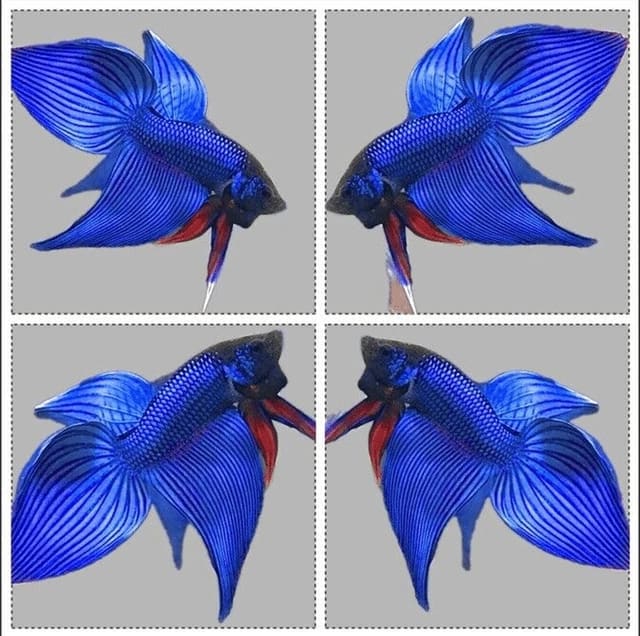
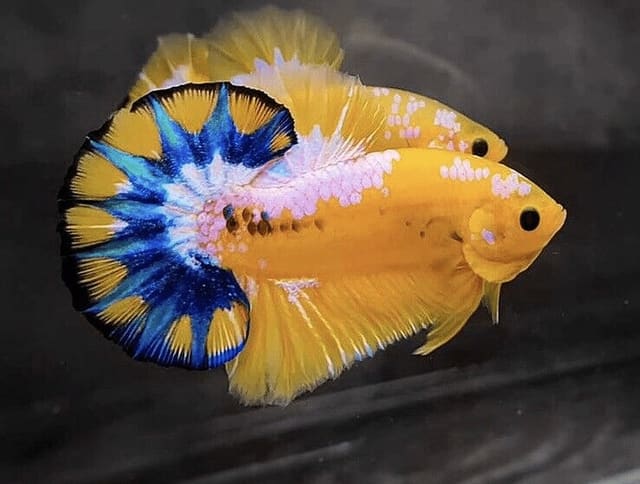
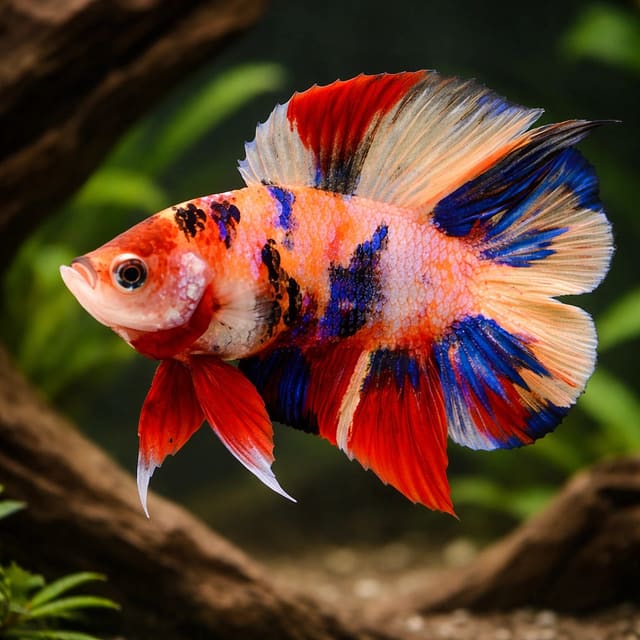
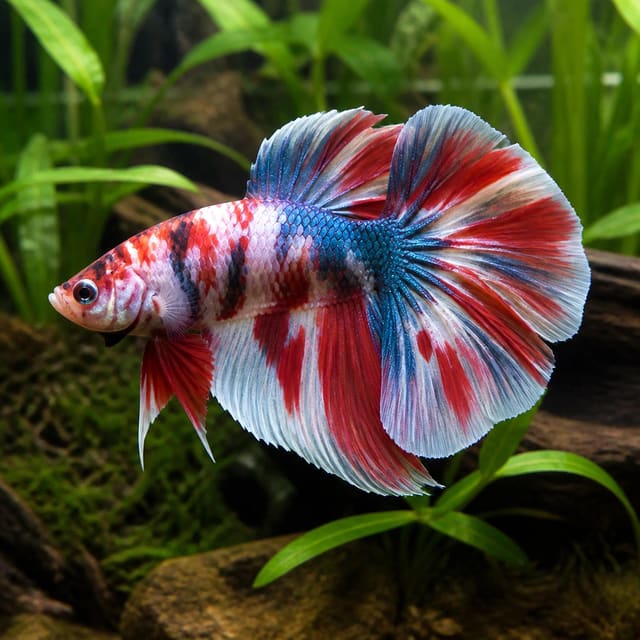
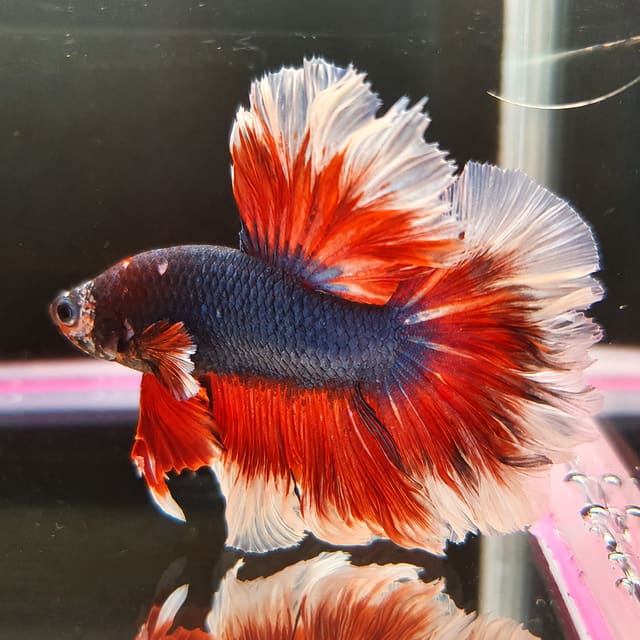
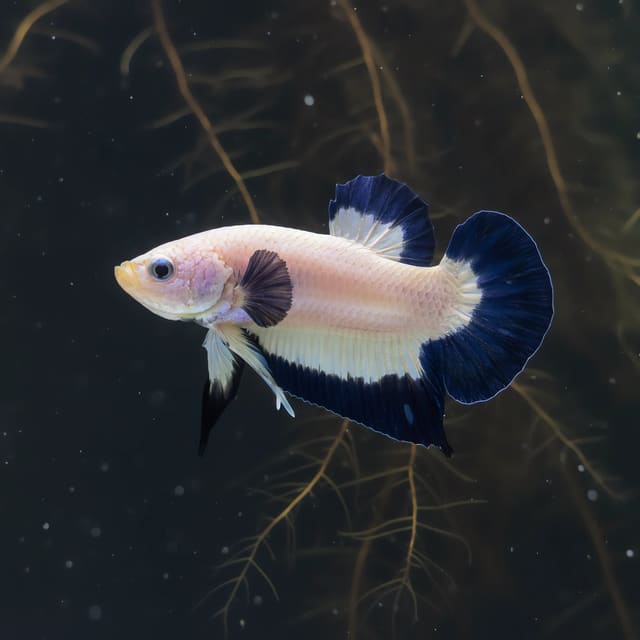
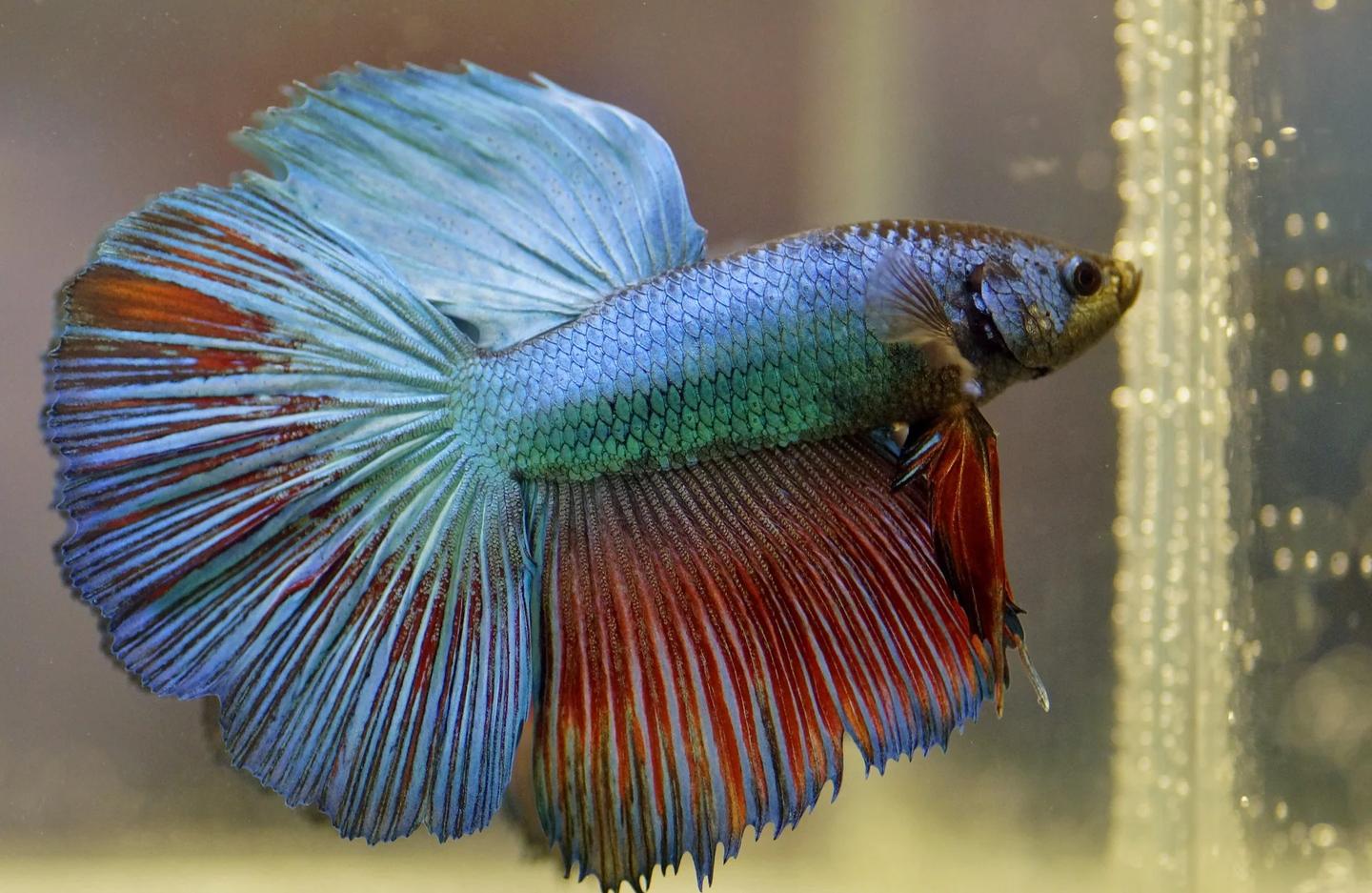
The Elephant Ear or Big Ear name refers to the conspicuously enlarged pectoral fins associated with this ornamental form. Domestic Bettas vary widely in colour, fin shape and body traits. Research into domestic Betta diversity describes a complex breeding history, so a form name or photograph should not be used to infer age, pedigree, fertility, temperament or wild locality.
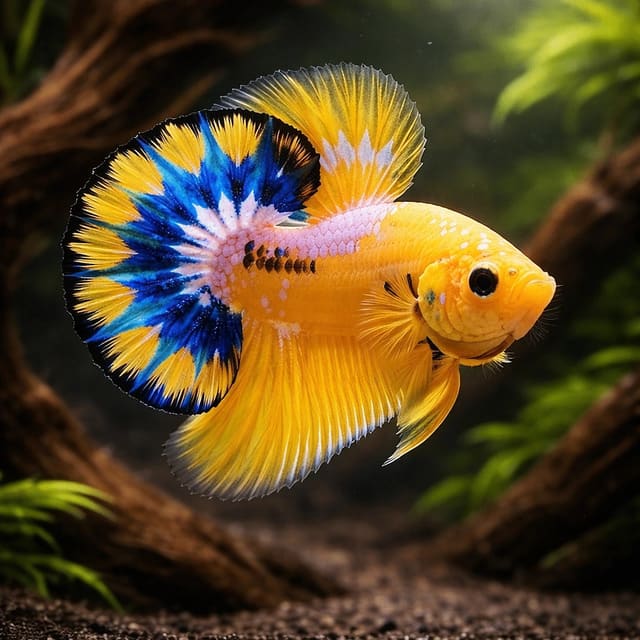
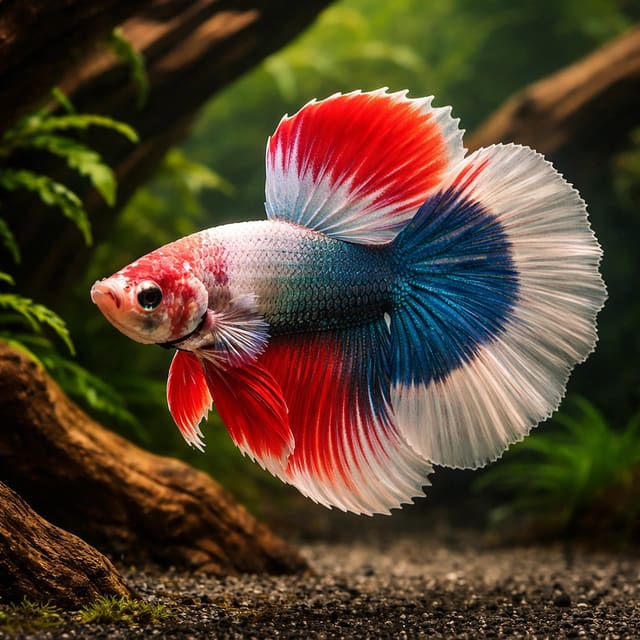
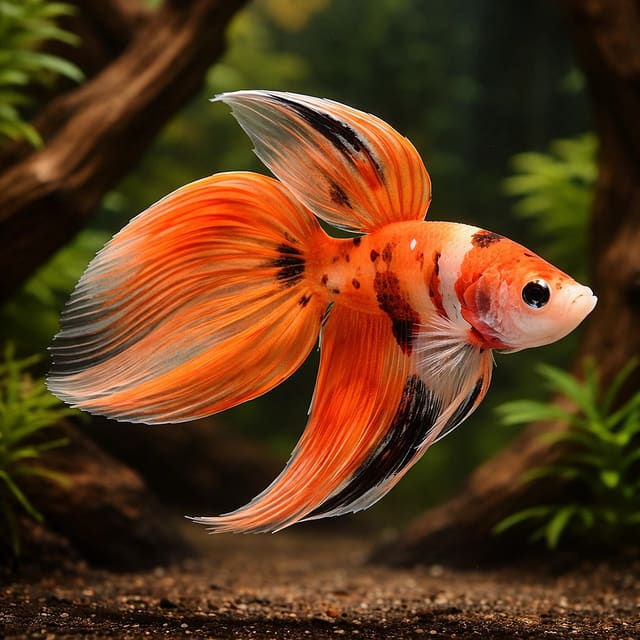
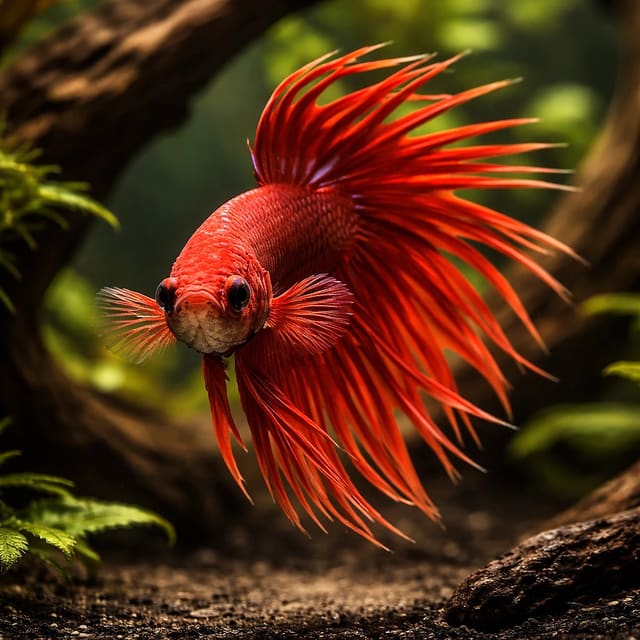
The gallery images are representative of this type of animal rather than photographs of the exact animal supplied, so colours can look slightly different from the live animal. Use the photograph to understand the characteristic form and general appearance, then assess the delivered fish by its own condition, breathing, posture and behaviour.
Adult size and the supplied animal's present size are separate planning questions. Build the aquarium for the recorded adult length of 6.5 cm and the swimming space, surface access and water stability the fish will require throughout its life. Do not treat an ornamental fin label as a reason to reduce the aquarium footprint.
If you are comparing a different identity or ornamental form, browse the Betta collection. Compare the scientific name, sex, adult requirements and social plan rather than choosing by colour alone.
Prepare the full aquarium before the fish arrives. The complete Betta Fish Care Guide sets out the store's starting plan: at least 20 litres for one male, a mature filter, thermostatic heater, separate thermometer, gentle flow, secure lid, clear surface access and plants or refuges. More capacity is useful where practical because furnishings reduce usable water and a larger volume is generally easier to keep stable.
A single Betta can suit a careful beginner after every point passes. Intermediate care reflects the need to combine those tasks consistently, not a need for complicated equipment. Clear water alone does not show that a new filter can process ammonia, and the fish's ability to breathe air does not make an immature aquarium safe.
Plan for an adult length of 6.5 cm. FishBase records that maximum total length for male or unsexed Betta splendens. Seriously Fish records 7 cm standard length; this is a different recorded figure and should not be treated as a promise that every domestic male will reach it.
Use at least 20 litres for one male as the UK starting minimum. OATA recommends that minimum for a single male, while the Tropical Fish Co policy adopts it as the first screening threshold. Seriously Fish recommends a 45 × 30 cm aquarium base or equivalent, approximately 41 litres, as large enough for a single male or pair. For this male listing, use that larger footprint as the stronger species planning reference where space permits; it allows more room for planting, refuges and gentle circulation.
Do not use a small temporary container as the home aquarium. FishBase discourages holding males in very small containers, and Seriously Fish does not support tiny aquaria or small jars. The starting volume still needs a mature filter, heat, suitable furnishings and regular care; litres cannot compensate for an uncycled filter or dangerous decor.
Keep this Betta at 26–28°C, pH 6.0–8.0 and 5–12 dGH. This is the routine overlap of FishBase, Seriously Fish and OATA guidance, with the Tropical Fish Co practical temperature target for a typical domestic Betta splendens. OATA's figures cover tank-reared Bettas as group-level guidance rather than a species-specific optimum.
| Measurement | Working instruction |
|---|---|
| Temperature | Hold 26–28°C and confirm it with a separate thermometer. |
| pH | Keep 6.0–8.0 and avoid chasing a fashionable decimal. |
| General hardness | Keep 5–12 dGH and measure the aquarium rather than assuming the tap value. |
| Ammonia | Maintain 0 mg/L. |
| Nitrite | Maintain 0 mg/L. |
| Nitrate | Keep it no more than 20 mg/L above the normal tap-water level. |
Stability matters alongside the numbers. A reading inside the range is not permission for rapid adjustment. Test the aquarium, record the result and make gradual, measured corrections. Treat replacement tap water with an appropriate conditioner before adding it because chlorine or chloramine can harm fish and filter bacteria.
Use the aquarium water-chemistry guide to understand each test, then use the water matcher to compare measured aquarium values with these ranges. If pH or hardness differs, identify the cause before adding chemicals. Domestic water can vary by location, geology, household softeners and other treatment.
Check temperature at different times until the setup proves stable. Follow the heater manufacturer's installation, water-depth, room-temperature and aquarium-volume instructions rather than relying on a universal watts-per-litre shortcut.
Cycle the aquarium before the fish arrives and add the Betta only when ammonia and nitrite both test at zero. A biological filter supports bacteria that process toxic ammonia into nitrite and then into the safer end product nitrate. Clear water does not demonstrate that this biological process is ready.
The RSPCA explains why a well-established and maintained filter is vital. Prepare the aquarium with an ammonia source, test through the cycle and record the results. The first tropical aquarium guide gives a step-by-step route for maturing the setup before livestock is added.
Test at least weekly after the aquarium is established and test again whenever feeding, behaviour, breathing or equipment operation changes. Any ammonia or nitrite result above zero needs prompt investigation. Review recent feeding, filter cleaning, power interruptions, new animals and decaying food or plants. Water testing identifies an urgent husbandry problem, but it does not diagnose a disease from one outward sign.
Use a well-planted, shaded aquarium with gentle water movement and clear access to the surface. Seriously Fish recommends tall stem plants, floating plants, tropical lilies, Cryptocoryne, driftwood and plants such as Microsorum or Taxiphyllum attached to wood. These are useful examples rather than a compulsory planting list.
Arrange the aquarium so the fish can move between open water, shade and sheltered resting places. Smooth plant pots or suitable lengths of aquarium-safe piping can create additional refuge. Inspect every opening against the fish's body and fins, remove rough edges and keep equipment gaps secure.
| Design choice | Decision |
|---|---|
| Floating plants | Use them for shade while leaving open routes to atmospheric air. |
| Driftwood | Choose smooth pieces and check all contact points before use. |
| Filter outlet | Diffuse or redirect strong movement if the fish is repeatedly swept away. |
| Refuges | Provide more than one resting choice without creating body traps. |
| Cover | Fit a secure lid with safe air space above the water. |
Watch how this individual uses the finished layout. Repeated difficulty holding position, reaching the surface or resting indicates that the flow or arrangement needs adjustment. Reduce or diffuse the current without stopping essential filtration.
Dried leaf litter may add cover and support microbe colonies as it decomposes, but it must be managed as part of the aquarium's biological load. Continue testing rather than assuming a natural-looking layout is automatically stable. Remove decomposing matter if it contributes to deteriorating water quality.
Use a suitably sized complete Betta pellet or quality aquarium flake as the measured nutritional base, with small live or frozen invertebrate foods for regular variety. FishBase records wild Betta splendens feeding on zooplankton, mosquito larvae and other insect larvae, while Seriously Fish describes predation on aquatic and terrestrial invertebrates. Suitable varied foods named for aquarium use include daphnia, Artemia and bloodworm.
Feed only what the fish can consume within a few minutes once a day. That schedule comes from OATA's Betta guidance. Remove uneaten food promptly because it decomposes and adds waste that the filter must process. Bettas are prone to obesity, so judge portions by the food manufacturer's directions, prompt consumption and changes in body condition rather than using one pellet count for every brand.
A reduced appetite can accompany water-quality trouble, stress or illness. Check temperature, ammonia and nitrite before changing foods repeatedly. If several people care for the aquarium, pre-measure each feed and leave one written schedule so the fish is not fed twice.
Do not turn an arbitrary fasting routine into a universal rule. When care is needed during travel, arrange a competent person with pre-measured feeds and instructions for checking the fish and equipment.
Carry out at least once every week a 25% partial water change. Use a siphon to remove solid waste from the substrate, condition replacement tap water before adding it and check that the new water will not cause a sudden temperature or chemistry change.
Test ammonia and nitrite at least weekly and keep both at zero. Record nitrate, pH, hardness and temperature often enough to recognise a trend before the fish shows distress. Check filter output, heater operation, thermometer readings, lid security and clear surface access during the same routine.
Respond to changes in swimming, colour, aggression, hiding, breathing, appetite, body condition, scales or fins by testing the water first and reviewing recent maintenance, feeding, additions and equipment changes. The MSD Veterinary Manual supports a water-analysis and aquarium-history approach rather than choosing medication from one symptom.
A white mark, swollen abdomen, damaged fin or unusual posture can have more than one cause. Avoid combining medicines or raising the temperature on the basis of an online picture. Correct urgent water-quality problems, preserve your test results and seek qualified help for severe, persistent or unexplained signs. OATA maintains a fish-vet directory for locating specialist help.
Have the mature aquarium holding 26–28°C ready before the parcel reaches you. The arrival procedure itself follows the Tropical Fish Co delivery and Live Arrival Guarantee policy.
Keep the order number and continuous video. The policy requires the parcel to be received, opened and inspected on the day it arrives, with the sealed parcel and fish inside the sealed bag shown clearly.
After release, use OATA's settling-in checks separately from the delivery steps: confirm ammonia and nitrite remain at zero, keep the current gentle and watch breathing, posture and swimming. A newly added fish increases the waste processed by the filter, so continue testing rather than assuming a previously mature aquarium cannot change.
Keep one Elephant Ear Male Betta per aquarium. FishBase records that males fight each other, OATA warns that two males may fight until one is severely injured or killed, and Seriously Fish says only a single individual can be kept per tank in most cases. More space, planting or broken lines of sight do not make two males a safe combination.
Maintain males and females separately unless undertaking a controlled breeding process. This is a male display listing, not a breeding setup, so do not add a female as company. A bubble nest is reproductive behaviour and may occur without a female; its presence is not a reason to change the social plan.
The RSPCA's fish compatibility guidance also recognises that male Bettas may fight their own kind and that compatibility must be researched for the animals concerned. Never use the Betta's enlarged fins, colour or behaviour through glass to infer that direct cohabitation will be safe.
The safest plan is to keep this male alone. Seriously Fish does not recommend Betta splendens for a standard community aquarium and describes tolerance of other species as an exception rather than the expected result. It names some small cyprinids and loaches from similar environments as possible companions, but only after proper research.
| Screen | Decision |
|---|---|
| Water overlap | Every animal must be suited to 26–28°C, pH 6.0–8.0 and 5–12 dGH. |
| Adult space | The aquarium must accommodate every adult animal after furnishings and equipment reduce usable volume. |
| Disposition | Reject boisterous, aggressive or known fin-nipping animals. |
| Appearance | Avoid similar body shapes and trailing finnage that may be treated as a rival. |
| Feeding | Check that every animal can eat without persistent competition. |
| Separation | Have a mature alternative aquarium ready before trying an exceptional combination. |
Small cyprinids and loaches are categories for further assessment, not universal tank mates. Match the exact species' adult size, water needs, social requirements and activity before proceeding. Watch the entire aquarium for chasing, hiding, damaged fins, missed meals or difficulty resting, and separate animals promptly if conflict appears.
Do not treat shrimp, snails or fish fry as automatically safe companions. Their safety with this male is uncertain, and they should not be added as cleaners, entertainment or live food. The Betta's own response can vary, while an invertebrate's size and defences may introduce a different injury risk.
A planted layout can provide refuge, but it cannot turn an unsuitable combination into a suitable one. Make the compatibility decision before purchase, not after signs of stress appear.
An Elephant Ear Male Betta reaches a recorded maximum of 6.5 cm total length according to FishBase. Plan the aquarium for that adult length rather than the fish's size when supplied.
Use at least 20 litres for one Elephant Ear Male Betta as the OATA and Tropical Fish Co starting minimum. Seriously Fish recommends a 45 × 30 cm base or equivalent, approximately 41 litres, as a species planning reference; choose that larger footprint where practical and include a mature filter, heater and cover.
Keep one Elephant Ear Male Betta per aquarium. FishBase, Seriously Fish and OATA agree that males fight, and planting or extra space does not make two males a safe combination.
An Elephant Ear Male Betta can suit a careful beginner once a proper aquarium is mature and ready, although Tropical Fish Co rates the complete care routine as intermediate. Prepare at least 20 litres, a mature filter, heater, thermometer, gentle flow, secure lid, plants and water tests before the fish arrives.
Feed a measured, suitably sized complete Betta pellet or quality aquarium flake once a day, offering only what it eats within a few minutes. Add small live or frozen foods such as daphnia, Artemia or bloodworm for variety, and remove uneaten food promptly.
Keep an Elephant Ear Male Betta at 26–28°C, pH 6.0–8.0 and 5–12 dGH. These routine values are the overlap of FishBase, Seriously Fish and OATA guidance, with Tropical Fish Co's practical temperature target; maintain ammonia and nitrite at 0 mg/L.
Treat this fish as territorial and keep it alone by default. Male Bettas fight each other, while individual behaviour towards other species varies; avoid similar body shapes, trailing finnage and known fin-nippers, and do not rely on planting to make an unsuitable combination safe.
This fish is best kept alone. Seriously Fish names some small cyprinids and loaches from similar environments as possible exceptions after exact species screening, but no companion is automatically safe; match water, adult space, disposition and feeding, then prepare a mature separation aquarium.
Start filming while the parcel is still sealed, before opening it or floating the bag; keep one continuous take through opening and show the fish inside the sealed bag. Receive the parcel in person, inspect it the same day, then float the bag for 20–30 minutes before releasing the fish. Tropical Fish Co's delivery policy says fish are hand-bagged in pure oxygen, placed in an insulated box with a heat pack when weather calls for it, and carried by a licensed live-animal courier.
No reviews for this item yet. Bought one? Honest reviews only, good or bad.
What customers say about ordering from us
Easy website plenty of info on fish your buying great to pick a time slot
TRACEY DURRANT · 7 Oct 2026
Got some lovely fish thank you
Kevin Mackie · 7 Oct 2026
Reviews of our shop, collected by Judge.me, an independent third-party review collector. Newest first.