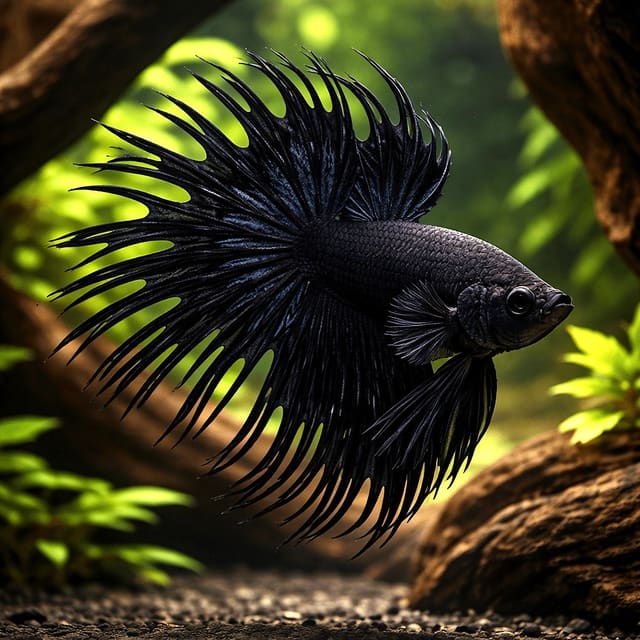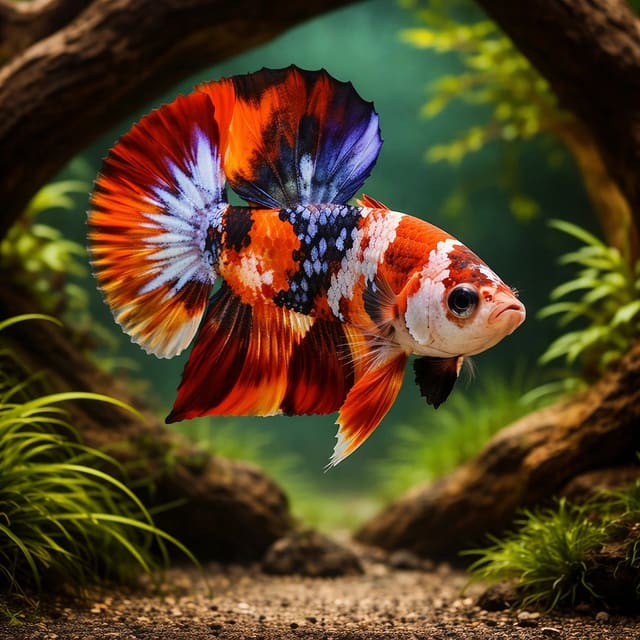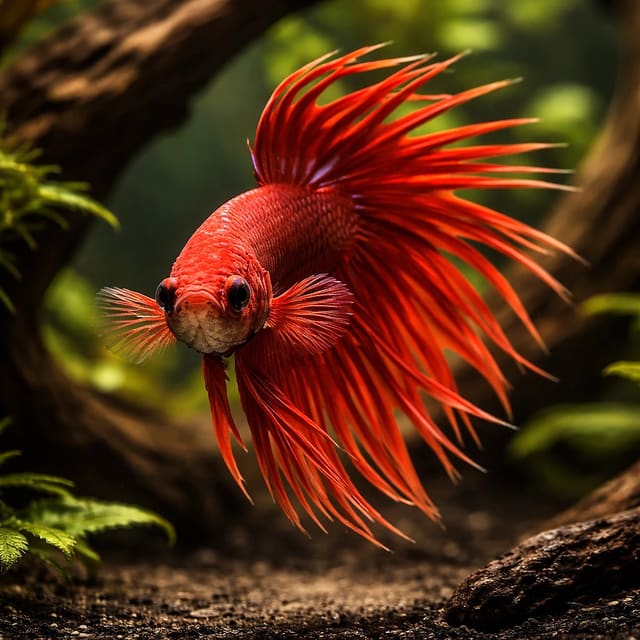
−13%
Moderate
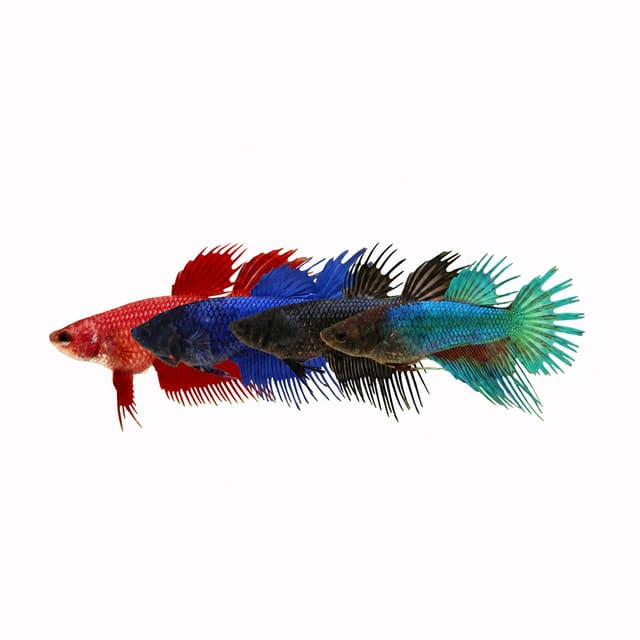
Crowntail Male Betta (Betta splendens)
26–28°C · pH 6–8 · 20L
£12.17£13.99

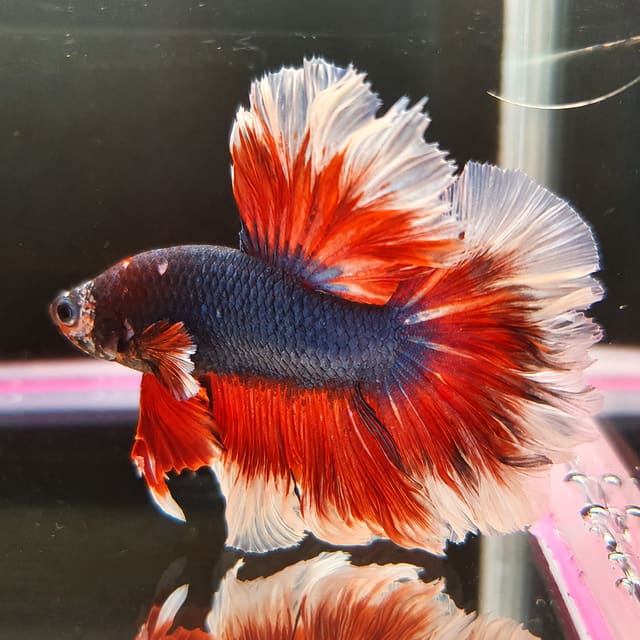
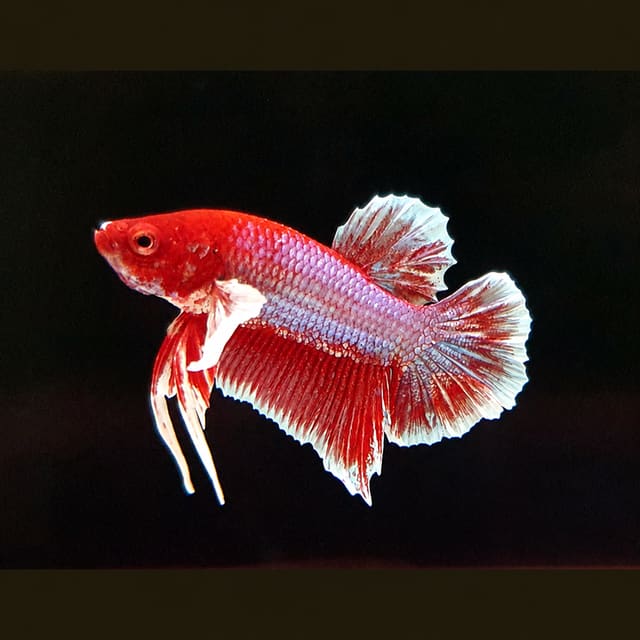
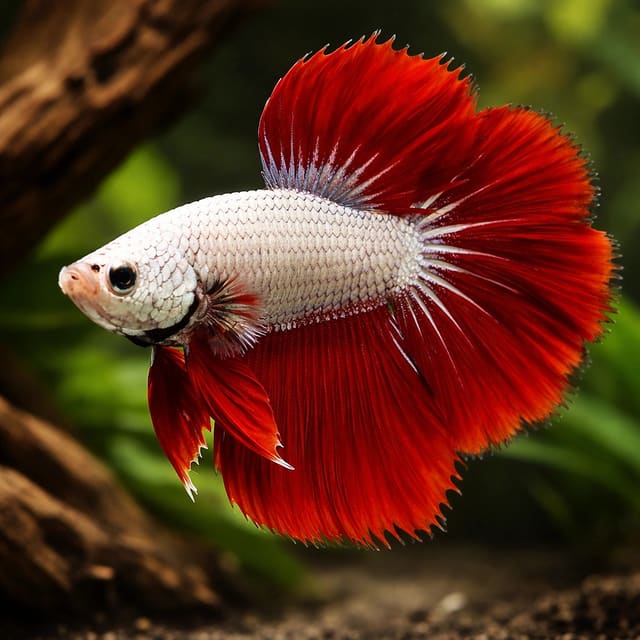
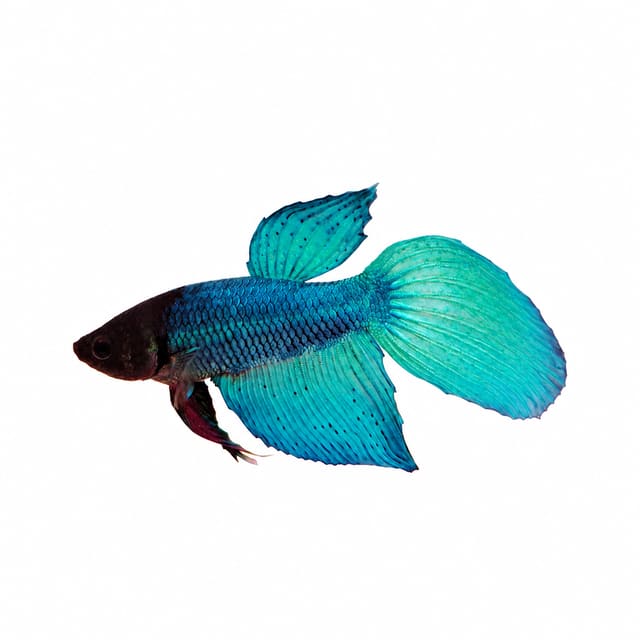
The Yellow Hellboy HMPK Male Betta (Betta splendens) is a domestic ornamental gourami-family fish whose species is native to Asia’s Mekong basin and reaches 6.5 cm. It suits a careful beginner who will keep one male alone; OATA’s group guidance says at least 20 litres, FishBase, Seriously Fish and OATA overlap at pH 6.0–8.0 and 5–12 dGH, and Tropical Fish Co targets 26–28°C. Sold individually as one male fish.
Adult size is the maximum length this species reaches at full maturity (scientific sources). The livestock you receive will be younger and smaller. Product-photo provenance and any image-specific limitations are stated on the listing.
Betta splendens
The Yellow Hellboy HMPK Male Betta (Betta splendens) is a domestic ornamental gourami-family fish whose species is native to Asia’s Mekong basin and reaches 6.5 cm. It suits a careful beginner who will keep one male alone; OATA’s group guidance says at least 20 litres, FishBase, Seriously Fish and OATA overlap at pH 6.0–8.0 and 5–12 dGH, and Tropical Fish Co targets 26–28°C. Sold individually as one male fish.
Adult size is the maximum length this species reaches at full maturity (scientific sources). The livestock you receive will be younger and smaller. Product-photo provenance and any image-specific limitations are stated on the listing.
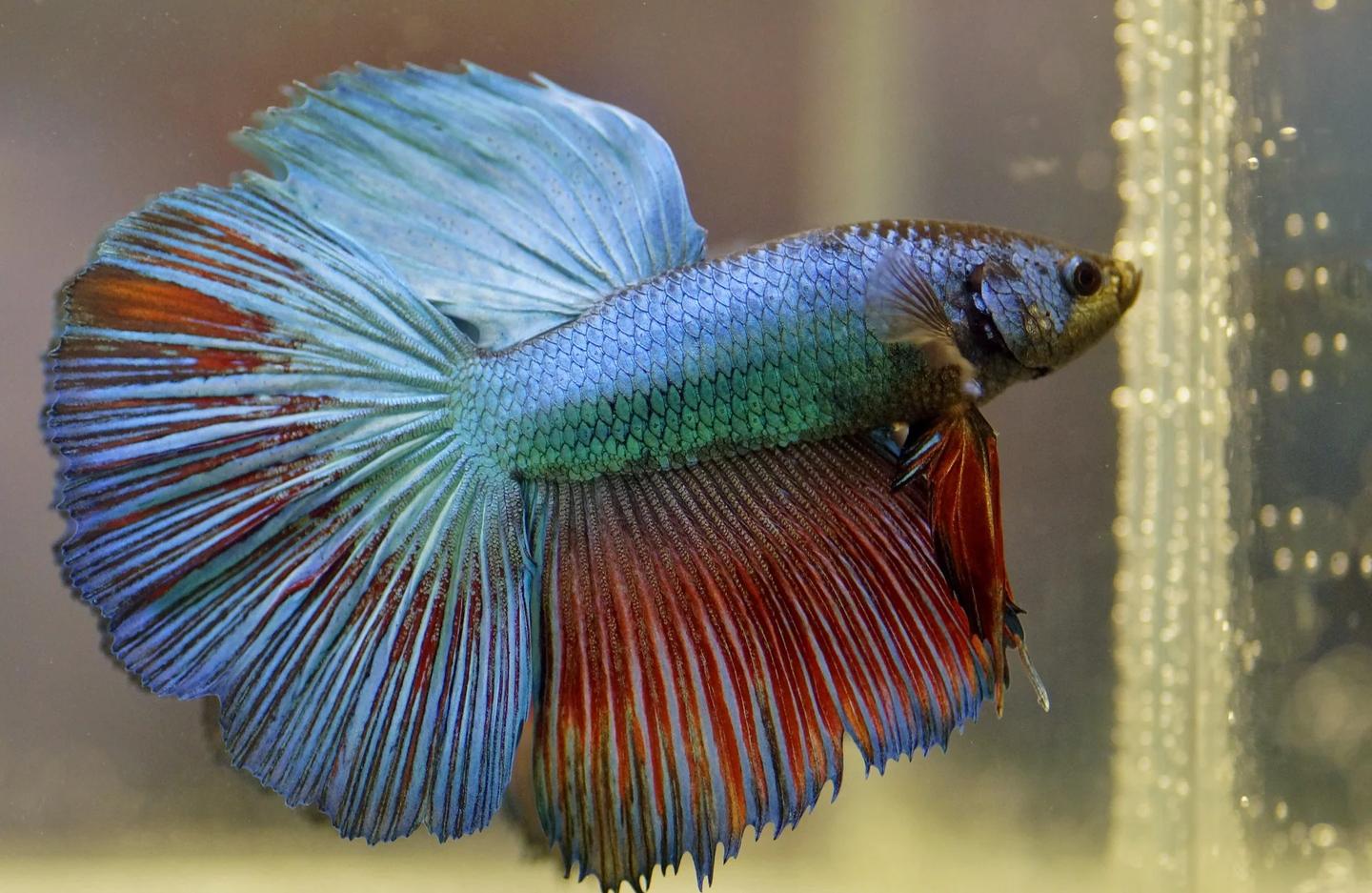
For one typical domestic Betta splendens, start with at least 20 litres, a mature filter, thermostatic heater, separate thermometer, gentle flow, a secure lid with surface access, and plants or refuges. Keep one male per aquarium.
Maintain these water conditions for optimal health and vibrant colors
The Yellow Hellboy HMPK Male Betta XL is a domestic ornamental form of Betta splendens, the Siamese fighting fish, in the gourami family Osphronemidae. The species is native to Asia’s Mekong basin and reaches a recorded maximum of 6.5 cm total length. This fish suits a careful beginner ready to maintain stable heat, mature biological filtration and a calm aquarium for one territorial male. Yellow Hellboy and HMPK identify the ornamental line and plakat form, while the scientific identity determines the aquarium plan. The NCBI taxonomy entry identifies Betta splendens.
Domestic Bettas have been bred into highly varied colours, bodies and fins. A genome-wide study of domestic Betta diversity supports treating visible appearance as variable rather than using a colour or fin label to infer origin, behaviour or welfare. Choose this fish because you want this named ornamental form, then prepare for the needs of a territorial male Betta splendens.
One purchase supplies one animal. XL is the catalogue size class used for dispatch, not an adult length or a promise of a particular measurement. Plan the permanent aquarium around adult size rather than the dispatch label.
Sex is guaranteed only when the exact product or selected option explicitly states male or female. This Yellow Hellboy HMPK Male Betta listing is sold as male.
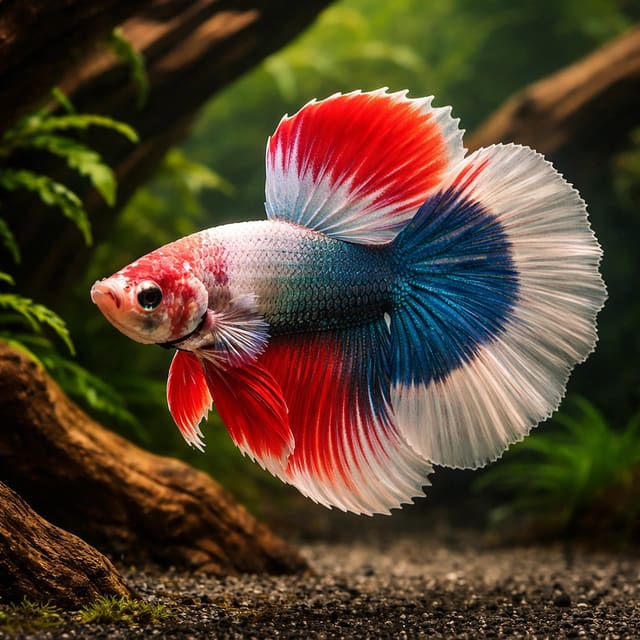
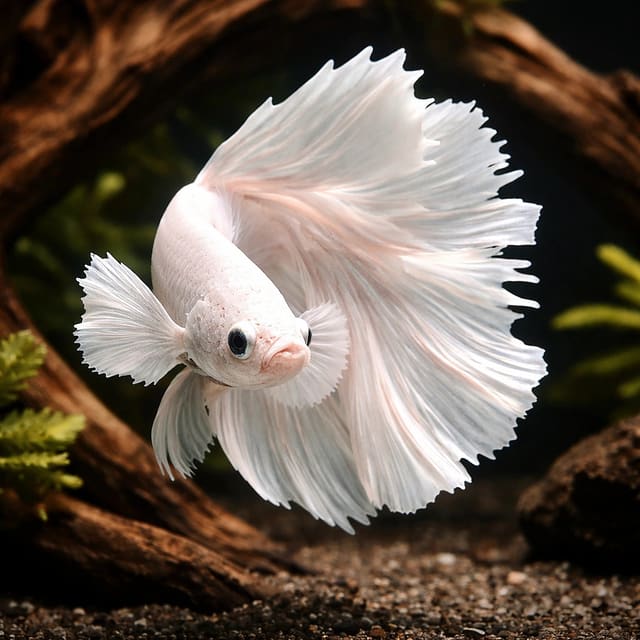
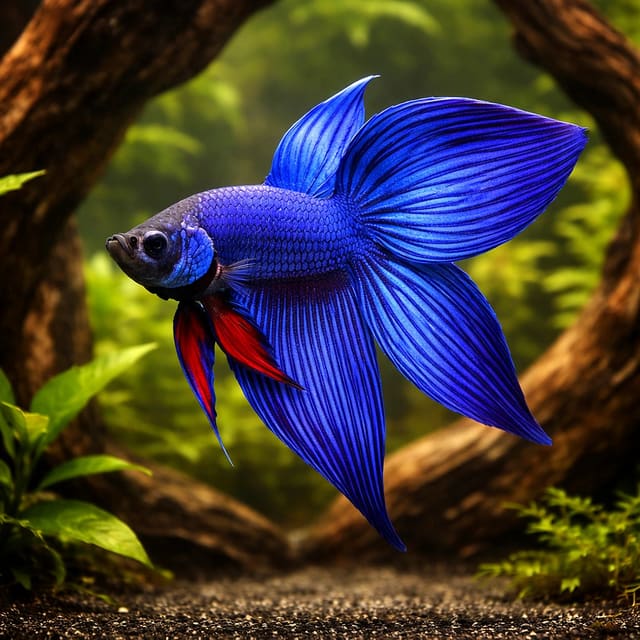
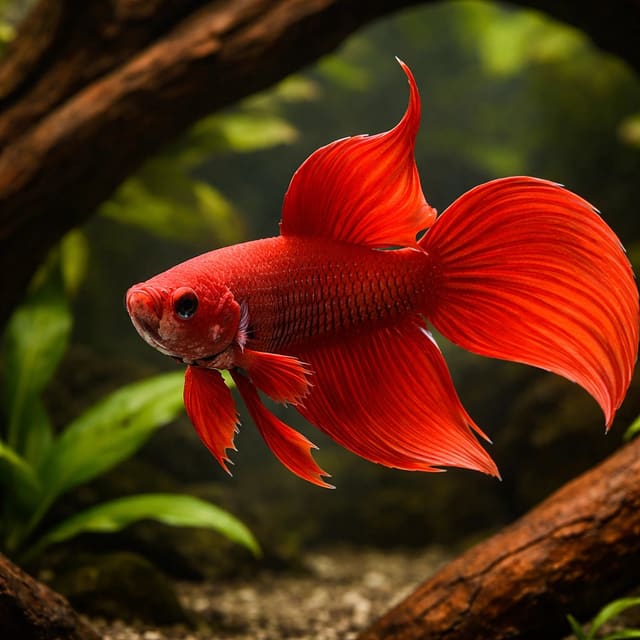
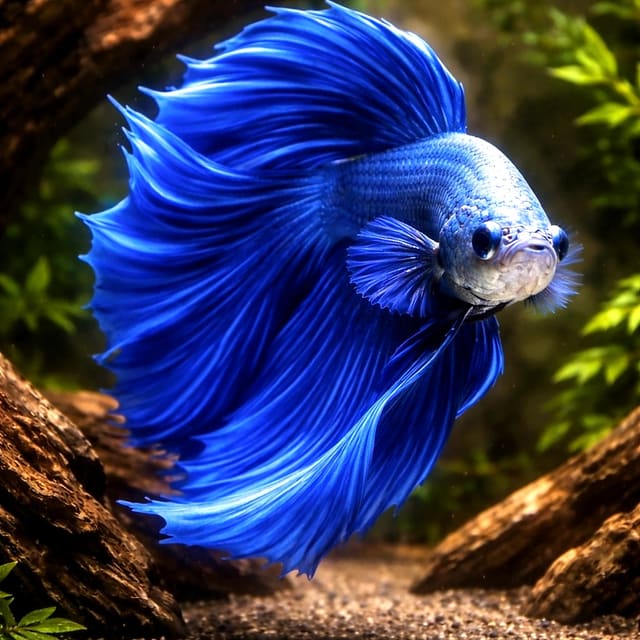
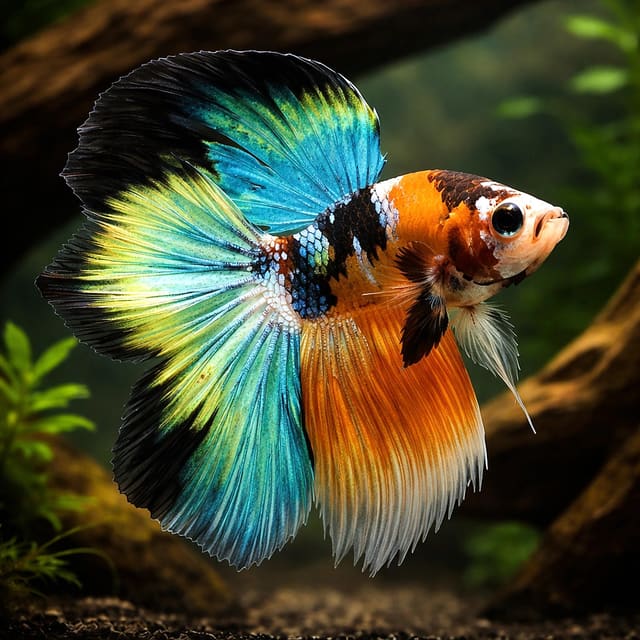
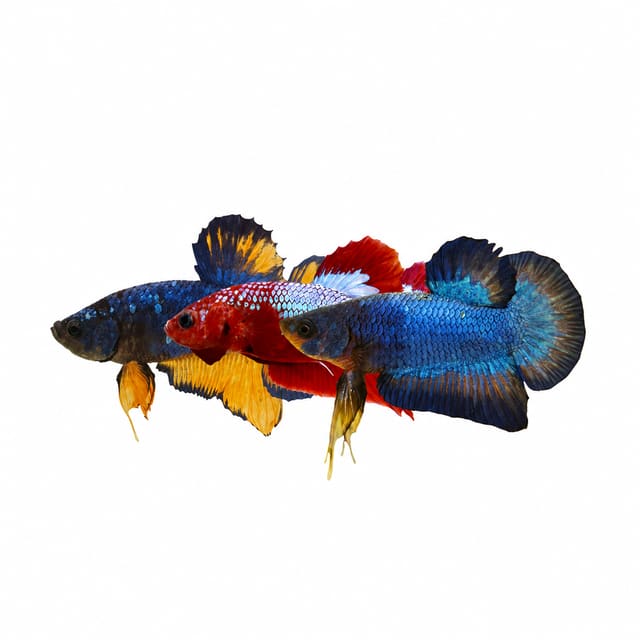
The gallery images are representative, based on reference photographs of this species, so colours can look slightly different from the live animal.
| Suits | Not suited to |
|---|---|
| A careful beginner with a mature, heated and gently filtered aquarium | An unfiltered container or aquarium without stable heat |
| A keeper planning one territorial male per aquarium | Housing with another male Betta |
| A covered, furnished setup with clear surface access | A tiny jar or aquarium with strong current |
Our store care assessment is intermediate. The aquarium must hold stable heat and water quality while giving this male a calm territory. For other domestic forms, browse the Betta collection; each male still needs its own housing decision.
FishBase records a maximum of 6.5 cm total length for male or unsexed Betta splendens. This is a species maximum rather than a promised length for one domestic fish. OATA describes Bettas as growing to about 7 cm, so allow for an adult fish around that scale without converting the XL dispatch grade into centimetres.
Seriously Fish gives a 45 × 30 cm aquarium base, or an equivalent volume of approximately 41 litres, as large enough for a single male or pair. Because this male is best kept alone, use that footprint and approximate volume as the stronger species-profile plan for his permanent home.
OATA’s Betta sheet gives broad group guidance: at least 20 litres for one male, 20–28°C, pH 6.0–8.0 and 4–12 dGH. Treat 20 litres as the lower planning floor, not the ideal ceiling. Furnishings and equipment reduce usable swimming space, while the 45 × 30 cm plan gives more room for cover and calm movement.
| Decision | Planning value |
|---|---|
| Adult-size reference | FishBase maximum 6.5 cm total length |
| Preferred single-male plan | 45 × 30 cm base or equivalent, approximately 41 litres |
| Lower volume floor | At least 20 litres for one male |
| Aquarium water range | 22–30°C, pH 6.0–8.0 and 1–15 dGH |
| Routine temperature target | A stable 26–28°C for a typical domestic Betta |
| Toxic waste | Ammonia 0 mg/l and nitrite 0 mg/l |
Use a mature biological filter, thermostatic heater and separate thermometer. Keep the current gentle, leave access to atmospheric air and close the aquarium with a secure lid. The labyrinth organ allows surface breathing, but it does not reduce the need for filtration or clean water.
The store’s complete Betta fish care guide explains why at least 20 litres is the starting floor and why larger, furnished housing is preferable. Select the aquarium by usable dimensions, filtration and layout rather than the number printed on the box alone.
A clear new aquarium is not automatically ready for a fish. The RSPCA explains that a working biological filter houses beneficial bacteria that process toxic ammonia into toxic nitrite and then into safer nitrate. Give that biological system time to mature before this Betta enters the aquarium.
Use the first tropical aquarium guide to prepare and mature the system. Test the water itself rather than judging it by clarity. Before introduction, ammonia must read 0 mg/l and nitrite must read 0 mg/l. OATA also advises keeping nitrate no more than 20 mg/l above the normal level in the tap water used for the aquarium.
| Check | Decision |
|---|---|
| Ammonia | Proceed only at 0 mg/l |
| Nitrite | Proceed only at 0 mg/l |
| Heater | Confirm stable operation with a separate thermometer |
| Filter | Confirm continuous, gentle flow without blockages |
| Lid and surface | Secure the lid while leaving clear surface access |
| Cover | Add plants or refuges before the fish arrives |
If ammonia or nitrite is detectable, postpone the introduction and continue maturing the filter. Adding the fish while either value is above zero places it into toxic water and gives the biological filter an immediate waste load it is not ready to process.
Keep the filter working continuously once the aquarium is occupied. If its flow weakens, inspect it for blockages. If the filter needs cleaning, do not run it under the tap. Rinse reusable media lightly in aquarium water removed during maintenance, because this reduces the number of beneficial bacteria lost from the media.
Preserve the working bacterial bed while removing only the waste that restricts flow. When feeding, remove leftovers promptly so they do not decompose and increase the load on the filter.
A mature filter remains necessary even though this fish can breathe atmospheric air. Surface breathing is an anatomical adaptation; it is not a substitute for biological waste processing, regular testing or partial water changes.
Seriously Fish gives 22–30°C, pH 6.0–8.0 and 1–15 dGH as aquarium guidance for Betta splendens. FishBase, Seriously Fish and OATA overlap at pH 6.0–8.0 and 5–12 dGH. Tropical Fish Co uses a stable 26–28°C as the practical routine target for a typical domestic Betta. That narrower target sits inside the published aquarium ranges and gives a clear setting for everyday care.
Use a thermostatic aquarium heater and check the result with a separate thermometer. Select and install the heater according to its manufacturer’s aquarium-volume, immersion and room-temperature directions. The thermostat controls the appliance; the thermometer shows whether the aquarium is actually holding the intended temperature.
UK tap water varies. Condition replacement tap water to deal with chlorine or chloramine, then measure the aquarium rather than assuming every local supply has the same pH and hardness. The aquarium water chemistry guide explains what the main readings mean and why toxic nitrogen compounds take priority.
Use the water matcher with measured aquarium values when comparing them with the care range. A value inside the range is not permission for rapid movement between its endpoints. Stability and gradual preparation remain important.
Match replacement water closely enough to avoid an abrupt temperature change during maintenance. Prepare it with conditioner before it reaches the fish, and use the same dependable method each time. A repeatable routine is safer than reacting to each test with a different chemical adjustment.
Record the thermometer and test results. A simple log reveals gradual movement that a single reading can hide, including a heater drifting from its setting or waste accumulating faster than the normal maintenance routine removes it.
Betta splendens is adapted to sluggish environments, so avoid strong water movement. Use an air-powered sponge filter or another filter that can produce gentle circulation. The fish should be able to swim, turn, feed and rest without being pushed across the aquarium.
If the outlet creates a forceful jet, reduce it with the filter’s own control or diffuse the movement across the aquarium. Keep biological filtration operating while creating at least one calm resting zone. The aim is gentle circulation, not stagnant and unfiltered water.
| Feature | What it should achieve |
|---|---|
| Tall or floating plants | Shade and cover near the upper water |
| Open surface patches | Unobstructed access for atmospheric breathing |
| Wood or smooth shelter | A retreat from open views |
| Open swimming route | Room to move without squeezing through decor |
| Secure lid | Reduced escape risk with safe surface access below it |
Seriously Fish recommends a well-planted, shady aquarium with surface cover. It lists floating plants such as Salvinia or Riccia, tropical lilies, Cryptocoryne, driftwood and plants attached to wood as suitable ways to add shelter. Choose only plants that match the aquarium’s light, substrate and maintenance plan.
Leave gaps between floating plants so the fish can reach the surface and feed without pushing through a solid mat. Maintain a small air space beneath the cover, as advised in UK Betta guidance, while keeping the lid secure. Check cable and equipment openings after every maintenance session.
Use smooth furnishings without rough edges, traps or narrow gaps. The fish needs cover, but it must also be able to turn and leave each refuge easily. Position the heater and filter so the animal cannot become wedged behind them while moving towards the surface.
Observe the fish after every layout or flow change. Repeatedly being swept from a resting position means the current needs adjustment. Easy movement between open water, cover and the surface indicates that the main zones are usable.
FishBase records wild Betta splendens feeding on zooplankton, mosquito larvae and other insect larvae, while Seriously Fish describes likely predation on aquatic and terrestrial invertebrates. In the aquarium, use a suitably sized complete Betta pellet or quality aquarium flake as the nutritional base. Once the fish recognises the prepared food, add small live or frozen foods for variety rather than replacing the complete diet with one treat.
OATA recommends feeding only what the fish can eat within a few minutes, once a day. Watch the whole feeding rather than relying on a universal pellet count. Pellet dimensions and nutritional density differ between products, so use the manufacturer’s directions, the fish’s response and its body condition to set the measured portion.
| Food | Role in the routine |
|---|---|
| Complete Betta pellet | Measured nutritional base |
| Quality aquarium flake | Alternative complete base when suitably sized |
| Frozen or live daphnia | Small-item variety |
| Small bloodworm | Occasional live or frozen variety |
| Frozen or live tubifex | Variety when safely sourced and suitably sized |
Seriously Fish also lists Artemia, chironomid larvae, pinhead crickets and fruit flies as possible small foods. Match every item to the fish’s mouth and obtain live food from a controlled source. Remove anything left uneaten before it breaks down in the aquarium.
Take particular care not to overfeed. Seriously Fish notes that Bettas appear prone to obesity, while OATA warns that uneaten food decomposes and releases toxic waste. A portion that leaves food drifting around the aquarium is too large even if the fish continues to show interest.
If several people care for the aquarium, prepare labelled portions so the fish is not fed repeatedly by mistake. Store dry, frozen and live foods according to their product directions. Keep the complete food as the foundation and rotate suitable variety without letting one rich item dominate the diet.
Reduced interest in food is a reason to observe the full system. Check temperature, ammonia, nitrite, breathing and swimming before changing the diet or increasing the portion. A persistent change in appetite belongs in the health-response plan rather than being treated as ordinary fussiness.
OATA strongly recommends a 25% partial water change at least once every week for Bettas. Use a siphon to remove settled waste while keeping the fish away from the intake. Prepare the replacement water with conditioner and bring it close to the aquarium temperature before adding it.
Test ammonia and nitrite at least weekly, and test again whenever behaviour changes or equipment has failed. Both toxic compounds should remain at 0 mg/l. Monitor nitrate against OATA’s limit of no more than 20 mg/l above the normal tap-water level.
If the filter needs cleaning, do not run it under the tap. Rinse reusable media lightly in the aquarium water removed during the change, as this reduces the amount of beneficial bacteria lost. Preserve established biological media.
Check the aquarium daily between maintenance sessions. A short look at the fish, heater, thermometer, filter and lid can reveal a problem before the weekly change. The animal should retain easy access to the surface, and floating growth should not close every opening.
Use the recorded results to judge whether the routine is controlling waste. Rising nitrate, recurring ammonia or recurring nitrite means the cause needs investigation. Review feeding, decaying material, filter condition and recent changes rather than simply waiting for the next scheduled water change.
A larger aquarium does not remove the need for maintenance, but its extra water and space can make conditions easier to manage. Keep the routine tied to measured water quality and the fish’s behaviour even when the system appears visually clean.
Learn the fish’s normal pattern of swimming, feeding, breathing, hiding and resting. OATA advises watching for changes in swimming position, colour, temperament, breathing rate, body condition and food intake. White spots, fluffy growths, damaged fins or scales, ulcers and unusual bumps also require attention.
One change rarely identifies one cause. The MSD Veterinary Manual’s aquarium-fish guidance places water analysis, aquarium history and appropriate diagnosis ahead of choosing treatment from a single visible sign.
Do not combine medicines or raise temperature simply because one online picture resembles the fish. Similar outward changes may have different causes, while inappropriate treatment may affect the animal or biological filter. Keep the water-quality results and recent aquarium history ready for anyone assessing the problem.
Surface breathing by itself is part of Betta biology. A change such as frantic surface hanging, unusually rapid or slow gill movement, loss of balance, persistent bottom sitting or erratic swimming needs the full checks above. Judge the change against the individual fish rather than treating every visit to the surface as illness.
A bubble nest is reproductive behaviour, not a health certificate. A male may build one without a female, and its absence does not diagnose a problem. Use water tests, appetite, breathing, posture and changes over time to assess welfare.
For serious or unresolved signs, OATA maintains a UK fish-vet directory. Professional assessment is particularly important when the fish is deteriorating, struggling to breathe, unable to maintain balance or failing to respond after an identified environmental fault has been corrected.
Complete the aquarium readiness gate before the fish arrives: a mature filter, ammonia and nitrite at 0 mg/l, a stable 26–28°C routine target, gentle flow, cover, open surface access and a secure lid. Have conditioner, water tests, a thermometer and suitable food ready rather than adding equipment after the animal enters the tank.
Read the current delivery and Live Arrival Guarantee policy before the journey. Keep the aquarium parameters stable and do not add other fish at the same time; the safest social plan for this male is a single-specimen aquarium.
Observe the fish daily and test ammonia and nitrite at least weekly, with an immediate extra test if appetite, breathing or swimming changes. Keep both values at 0 mg/l. Remove uneaten food, maintain the open surface route and adjust flow if the fish is repeatedly displaced.
Continue a 25% partial water change at least once every week, using conditioned replacement water at a closely matched temperature. Record the temperature and test results so gradual movement is visible. Check whether planting and refuges still create both cover and an open swimming route as the aquarium settles.
Additions increase feeding, waste and demands on the biological filter. OATA warns that stocking too quickly can contribute to new tank syndrome when the bacterial population cannot process the increased waste. For this territorial male, leaving the aquarium as a single-fish home avoids both that immediate increase and an unnecessary compatibility risk.
By the end of the month, the routine should be predictable: measured food once daily, daily observation, weekly tests, a 25% water change at least once every week and gentle filter care. Continue using the same checkpoints rather than relaxing them because the aquarium looks clear.
Plan this fish’s home around one male. Seriously Fish states that ornamental Betta splendens are particularly aggressive and that only a single individual can be kept per tank in most cases. It describes solitary housing as the expected plan rather than an exceptional precaution.
OATA warns that two males may fight until one is severely injured or killed. More space does not turn direct male cohabitation into a safe arrangement. A second aquarium is required for a second male, with no route for either fish to cross into the other’s water space.
The RSPCA’s guidance on keeping fish together also recognises that male Bettas may fight their own kind and recommends researching compatibility rather than assuming fish can share because they are sold for tropical aquariums.
Do not add a female because this male builds a bubble nest. Nest building may occur without a female and does not mean he needs companionship. Breeding requires a separate managed plan and is not a routine community arrangement.
A single-male aquarium is a complete social plan. Plants, refuges, calm swimming routes and consistent care give the animal a usable territory without introducing another Betta as company.
Seriously Fish does not recommend Betta splendens for the standard community aquarium. An individual may tolerate other species, but that is the exception rather than the expected result. Start from solitary housing and consider a community only when the aquarium can meet every animal’s adult needs.
No companion species is universally safe. Individual Betta temperament, adult aquarium size, shared temperature and chemistry, water movement, feeding competition and fin-nipping risk all affect the result. Keep a mature alternative aquarium ready before testing any combination.
| Check | Decision rule |
|---|---|
| Adult space | Meet the full adult space needs of every animal, not just the Betta |
| Water overlap | Use a stable range suitable for all inhabitants |
| Current | Reject a combination that requires flow too strong for the Betta |
| Appearance | Avoid trailing fins or rival-like body shapes |
| Behaviour | Reject persistent fin-nipping or aggressive animals |
| Feeding | Ensure the Betta can eat its measured portion without being displaced |
| Separation | Prepare another mature aquarium before the trial |
Seriously Fish identifies some small cyprinids and loaches from similar environments as possible companions after careful research, but says keeping this species alone is best in most cases. This permission is not a universal tank-mate guarantee.
Reserve an aquarium near the 20-litre lower floor for the male alone. Adding schooling or group-living fish means meeting their own group and space requirements, so the Betta’s minimum cannot be treated as spare community capacity. The approximately 41-litre species-profile plan is still not an automatic approval for companions.
Watch the interaction rather than waiting for visible injury. Persistent chasing, hiding, repeated display, blocked feeding, fin damage or a major change in normal behaviour means separation is required. A combination that works briefly can still change as animals settle or mature.
Choose the single-specimen plan when any part of the screen fails. Solitary housing removes competition and direct territorial conflict while allowing the aquarium to be arranged around gentle flow, measured feeding and accessible surface cover.
FishBase records a maximum of 6.5 cm total length for male or unsexed Betta splendens. XL is the dispatch grade and is not an adult centimetre measurement.
OATA’s group guidance says at least 20 litres for one male. Seriously Fish gives a 45 × 30 cm base or equivalent volume of approximately 41 litres as large enough, making that the stronger permanent plan.
Keep one male per aquarium. OATA warns that two males may fight until one is severely injured or killed, and usual practice is to keep males and females separately unless breeding is being managed.
A careful beginner can keep this fish when the aquarium is already mature, heated, covered and gently filtered. Tropical Fish Co rates the care level as intermediate because stable heat, water testing and territorial management are essential.
Feed a suitably sized complete Betta pellet or quality aquarium flake once daily, offering only what is eaten within a few minutes. Add small live or frozen foods such as daphnia or bloodworm for variety.
Keep a typical domestic fish at Tropical Fish Co’s stable 26–28°C target. FishBase, Seriously Fish and OATA overlap at pH 6.0–8.0 and 5–12 dGH, with ammonia and nitrite at 0 mg/l.
Male Betta splendens are territorial and must not share with another male. OATA says males are often subjected to intense fin nipping, while Seriously Fish says to avoid fish with trailing finnage or rival-like body shapes.
Plan to keep it alone. Seriously Fish identifies some small cyprinids and loaches from similar environments as possible after careful research, but individual tolerance is the exception and a mature separation aquarium must be ready.
Start filming every delivery while the parcel is still sealed, then open it in one continuous take with the fish still inside the sealed bag. Someone must be present to receive it. Float the bag for 20–30 minutes before releasing the fish, and never pour the bag water into the aquarium.
No reviews for this item yet. Bought one? Honest reviews only, good or bad.
What customers say about ordering from us
I have a small group of long finned mountain minnows. So was delighted to be able to order ten of this variety to increase the genetics in my tank . The ones I recieved are healthy but it’s to early to give a verdict on wether they are of a long finned type since they are small currently.
Gordon Walker · 23 Sept 2026
100% success travel and "installation". Pleased with quality of purchase. The Siamese fighter a bit "shy" so have not yet seen him at his best yet but looking good. Happy customer. GG
George E Garratt · 21 Sept 2026
Reviews of our shop, collected by Judge.me, an independent third-party review collector. Newest first.