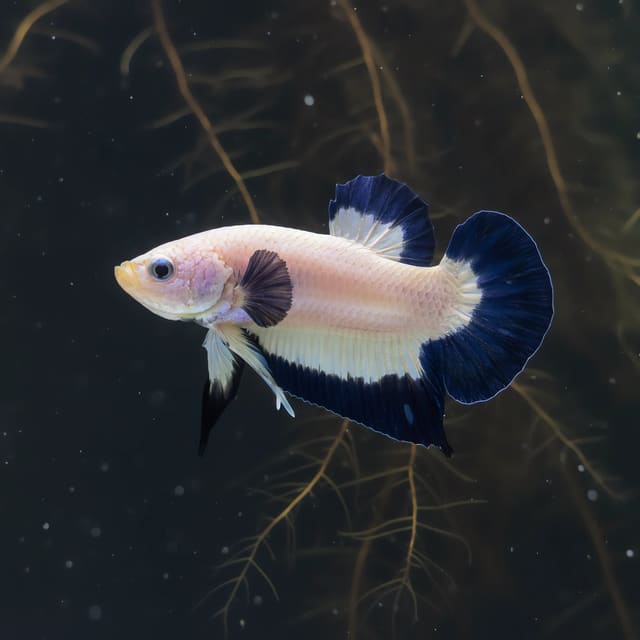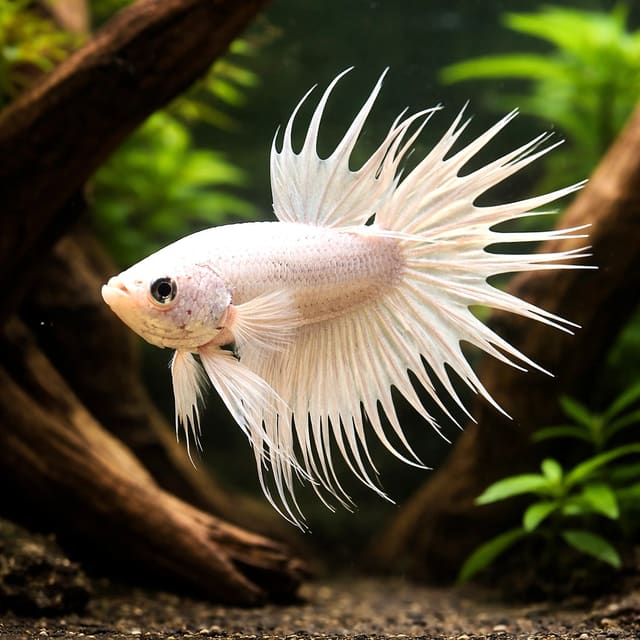
Moderate
Crowntail White Male Betta (Betta splendens)
22–30°C · pH 6–8 · 41L
£22.99

A striking yellow crowntail betta with dramatic fins and vivid color, ideal for a warm, calm, species-appropriate aquarium. Moderate care, semi-aggressive. 24-30C, pH 6.0-7.5.
Adult size is the maximum length this species reaches at full maturity (scientific sources). The livestock you receive will be younger and smaller — pick a size above for the actual shipping size. Product-photo provenance and any image-specific limitations are stated on the listing.
Betta splendens
Confirm your email, then we’ll send an availability message for this exact item if it returns within 180 days.
This request is only for this product—no newsletter or other promotions. A mail-provider retry may very rarely duplicate the same availability message. Unconfirmed addresses are removed after 48 hours. See our privacy policy.
A striking yellow crowntail betta with dramatic fins and vivid color, ideal for a warm, calm, species-appropriate aquarium. Moderate care, semi-aggressive. 24-30C, pH 6.0-7.5.
Adult size is the maximum length this species reaches at full maturity (scientific sources). The livestock you receive will be younger and smaller — pick a size above for the actual shipping size. Product-photo provenance and any image-specific limitations are stated on the listing.
For one typical domestic Betta splendens, start with at least 20 litres, a mature filter, thermostatic heater, separate thermometer, gentle flow, a secure lid with surface access, and plants or refuges. Keep one male per aquarium.
Maintain these water conditions for optimal health and vibrant colors
Yellow brings out something different in a crowntail. The strain's reduced webbing turns each fin into a fan of separate spiked rays, and in this colourway every ray glows yellow — a warm, high-visibility look that reads clearly even from across a room. These males reach about 6.5 cm and carry the crown across caudal, dorsal and anal fins alike.
Compared with some of our other crowntails, this line is recorded as semi-aggressive rather than fully aggressive — a useful distinction, though not a licence for a community tank. Small peaceful snails remain the safest companions, and peaceful shrimp may work in heavily planted tanks while accepting they may be eaten. The exclusions are non-negotiable: no other male bettas, no fin-nippers such as tiger barbs, no aggressive or territorial species, no large predators, and no long-finned fish that trigger rivalry displays. He needs a 38-litre aquarium or larger, water at 24–30 °C, pH between 6.0 and 7.5 and hardness from 1 to 15 dGH, and he will spend his time in the upper region of the tank where the yellow shows best. Moderate care overall — stable warmth and clean water are the whole job.
Yellow fish fade when stressed, which conveniently turns his colour into a daily wellbeing report. Strong, even yellow from body to ray tips signals all is well; washed-out patches say check the water before anything else. Keep that water at 24–30 °C, pH 6.0–7.5, hardness 1–15 dGH, and the maintenance habit becomes a five-minute glance. His semi-aggressive grading is the gentler of the crowntail temperaments we list, but the strain's delicate rays still rule out boisterous company regardless of disposition — the 38-litre minimum is best spent on him alone plus a snail clean-up crew. A carnivore menu with some variety keeps the yellow dense across his expected three years.
Strong yellows are scarcer than reds and blues in crowntail form, so this listing tends to move quickly when in stock. Your fish is despatched with a licensed live-animal courier, insulated for UK weather, and covered by our live arrival guarantee.
No reviews for this item yet. Bought one? Honest reviews only, good or bad.
What customers say about ordering from us
I have a small group of long finned mountain minnows. So was delighted to be able to order ten of this variety to increase the genetics in my tank . The ones I recieved are healthy but it’s to early to give a verdict on wether they are of a long finned type since they are small currently.
Gordon Walker · 23 Sept 2026
100% success travel and "installation". Pleased with quality of purchase. The Siamese fighter a bit "shy" so have not yet seen him at his best yet but looking good. Happy customer. GG
George E Garratt · 21 Sept 2026
Reviews of our shop, collected by Judge.me, an independent third-party review collector. Newest first.