−13%
Moderate
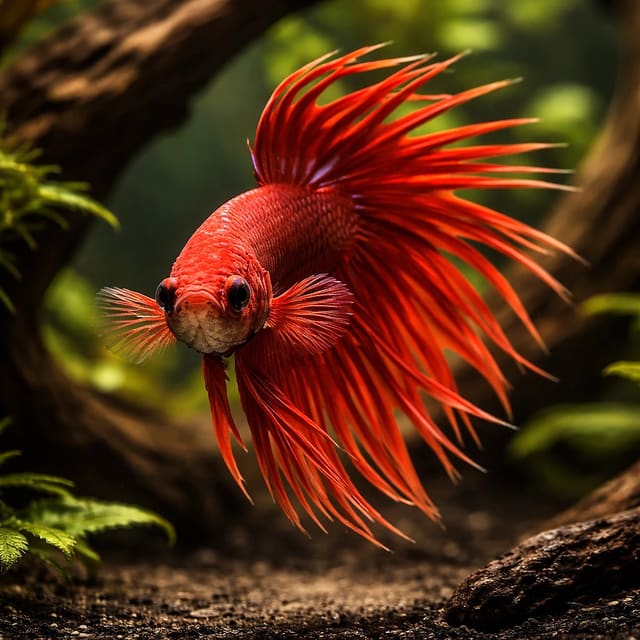
Crowntail Male Betta (Betta splendens)
26–28°C · pH 6–8 · 20L
£12.17£13.99

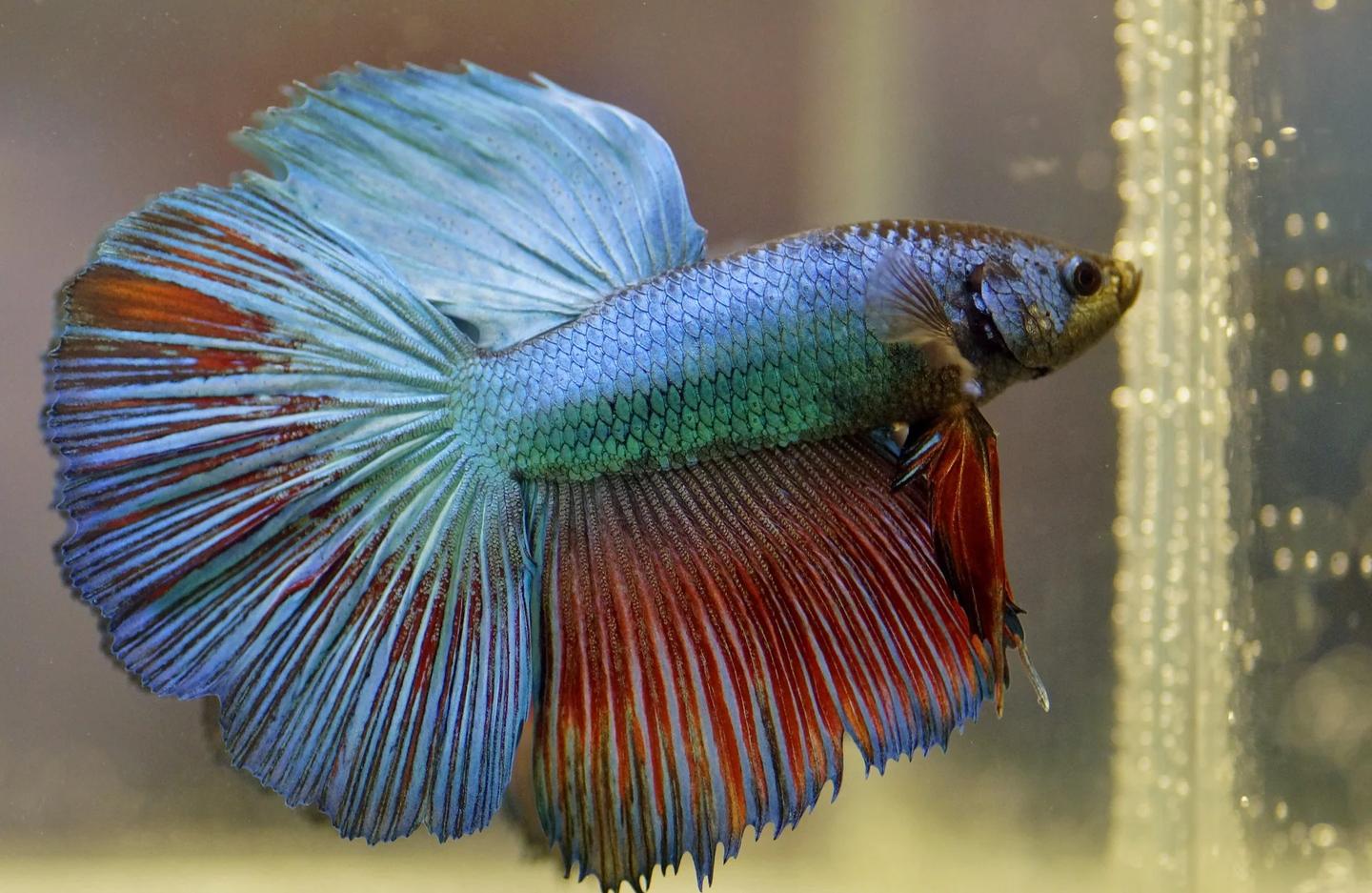
The Halfmoon Mustard Male Betta (Betta splendens) is an Osphronemidae freshwater fish from central Thailand and the lower Mekong that reaches 7 cm. It suits a careful keeper prepared to house one male alone in about 41 litres, with 26–28°C, pH 6.0–8.0 and 5–12 dGH as the overlap of FishBase, Seriously Fish and OATA guidance. Sold individually as one live male fish.
Adult size is the maximum length this species reaches at full maturity (scientific sources). The livestock you receive will be younger and smaller. Product-photo provenance and any image-specific limitations are stated on the listing.
Betta splendens
The Halfmoon Mustard Male Betta (Betta splendens) is an Osphronemidae freshwater fish from central Thailand and the lower Mekong that reaches 7 cm. It suits a careful keeper prepared to house one male alone in about 41 litres, with 26–28°C, pH 6.0–8.0 and 5–12 dGH as the overlap of FishBase, Seriously Fish and OATA guidance. Sold individually as one live male fish.
Adult size is the maximum length this species reaches at full maturity (scientific sources). The livestock you receive will be younger and smaller. Product-photo provenance and any image-specific limitations are stated on the listing.
For one typical domestic Betta splendens, start with at least 20 litres, a mature filter, thermostatic heater, separate thermometer, gentle flow, a secure lid with surface access, and plants or refuges. Keep one male per aquarium.
Maintain these water conditions for optimal health and vibrant colors
The Halfmoon Mustard Male Betta (Betta splendens) is a freshwater labyrinth fish in the Osphronemidae family. The wild species occurs in central Thailand and the lower Mekong, with FishBase recording the Mekong basin and a maximum length of 6.5 cm. This ornamental male suits a careful keeper who can provide a heated, mature aquarium and house one male by himself. Our store assessment is intermediate because success depends on stable warmth, gentle filtration, measured feeding and a firm solitary-housing plan.
The accepted scientific name is Betta splendens, also used by the NCBI taxonomy database. Betta and Siamese Fighting Fish are established common names for the species. Halfmoon and Mustard identify the ornamental fin and colour form in this offer; they do not create a separate species or change the core housing requirements.
A labyrinth organ allows this fish to take atmospheric air at the surface. That ability does not make an unfiltered bowl suitable. Keep the surface accessible, fit a secure lid with an air space below it and use a mature biological filter. The filter processes ammonia produced by the fish, while surface access supports its normal air-breathing behaviour.
Wild Betta splendens occupy standing or sluggish waters including floodplains, canals and rice paddies, as well as medium to large rivers. Translate that biology into gentle current, cover and resting opportunities rather than stagnant water. A long-finned ornamental male must be able to swim, feed and reach the surface without repeatedly being swept across the aquarium.
Read our complete Betta Fish Care Guide when planning equipment and routine care. The decisive starting points are one male per aquarium, stable heat, a mature filter, safe cover and enough space for normal movement.
One purchase supplies one live Halfmoon Mustard Male Betta. Sex is guaranteed only when the exact product or selected option explicitly states male or female. This Halfmoon Mustard Male Betta listing is sold as male. Plan one prepared aquarium for that one fish rather than treating the purchase as a pair or social group.
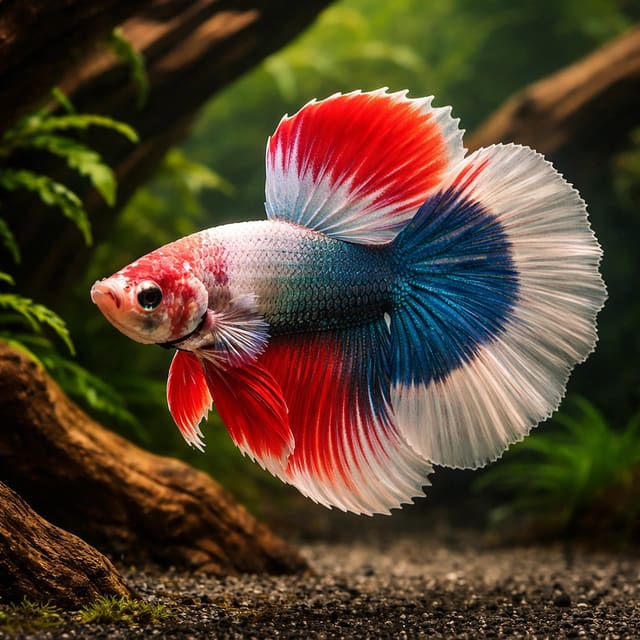
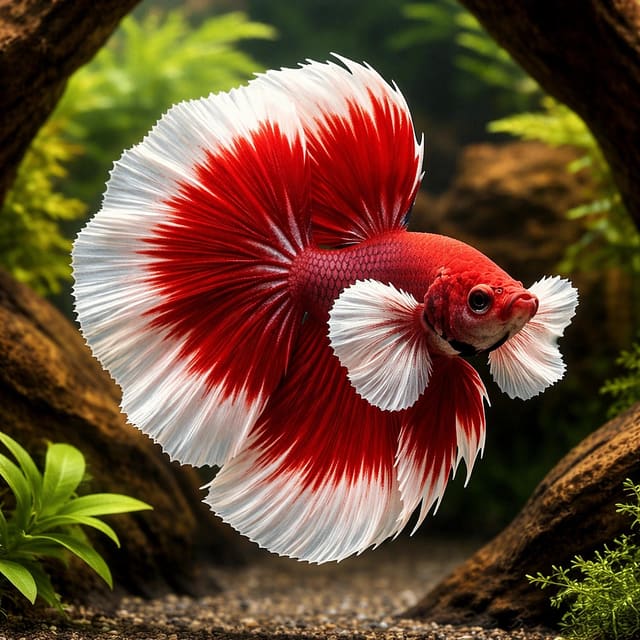
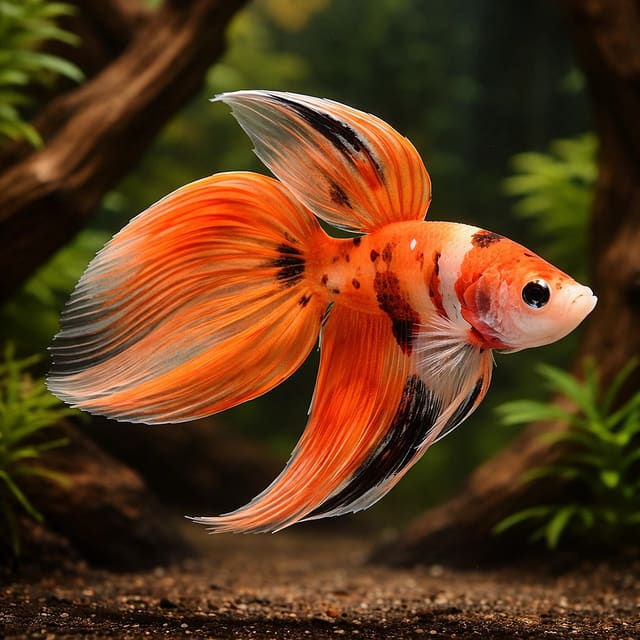
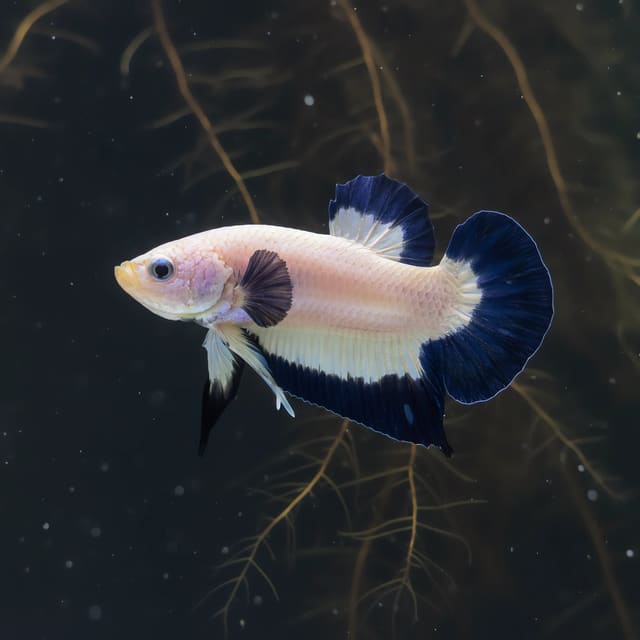
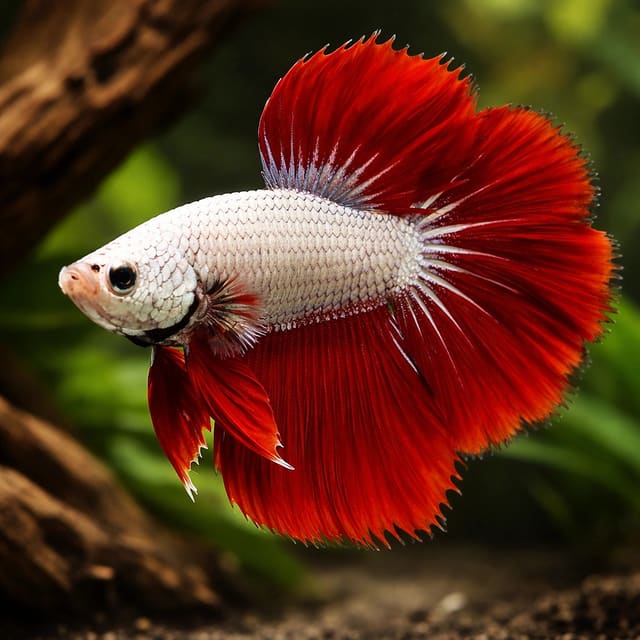
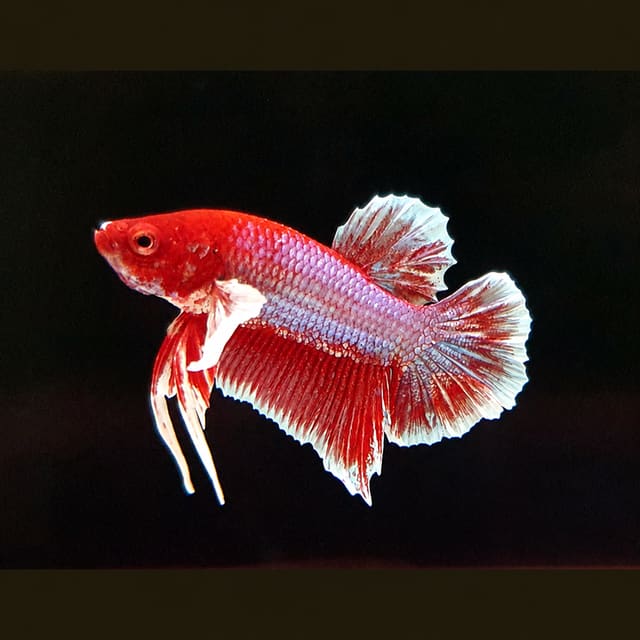
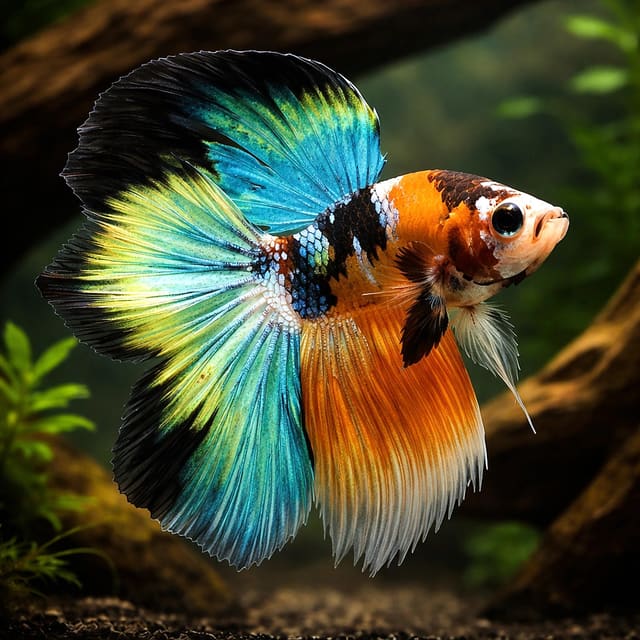
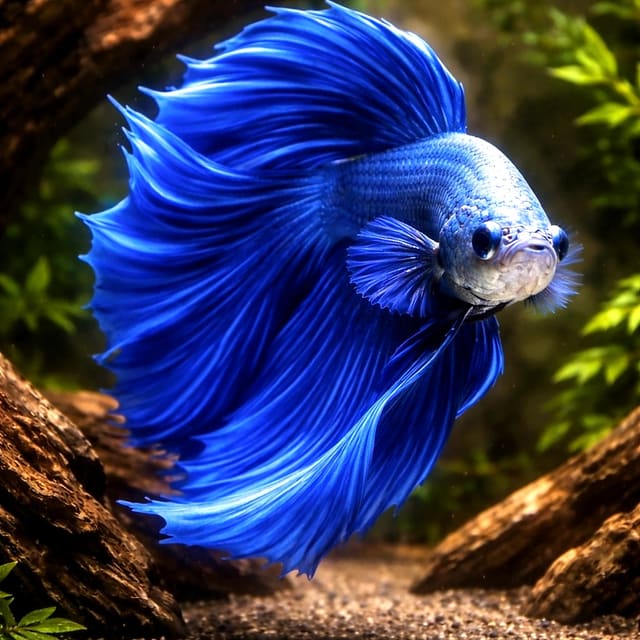
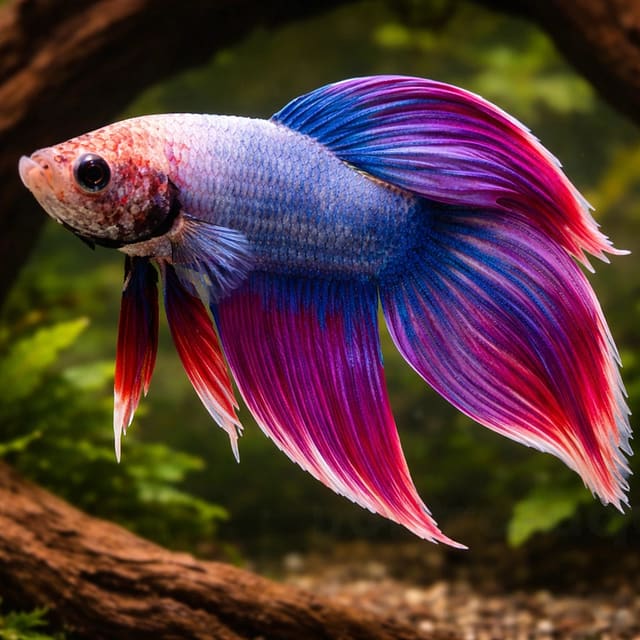
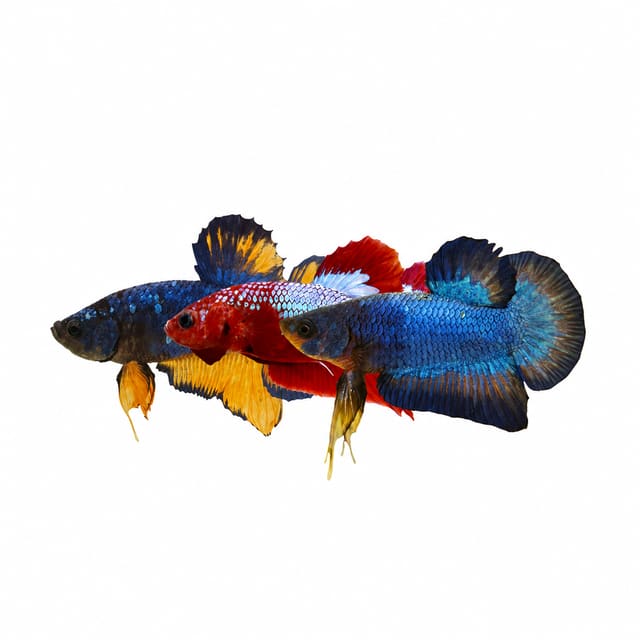
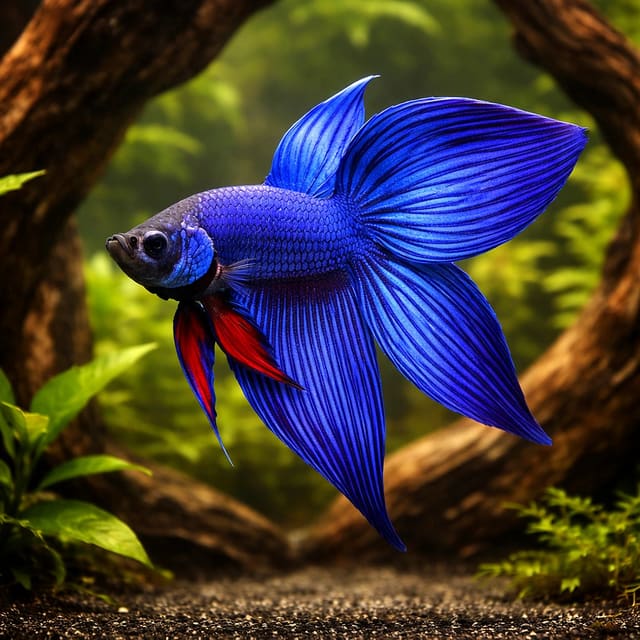
Some gallery images have been digitally enhanced to improve image quality. They show the listed type of animal rather than guaranteeing the exact markings of the individual supplied, so natural colour and pattern can vary. A gallery scene containing two fish illustrates the named ornamental form; it is not a recommendation to keep two males together. Use the written solitary-housing rule when planning the aquarium.
To compare other scientifically named forms, browse the Betta collection.
Plan around an adult length of 6.5 cm, the FishBase maximum for male or unsexed Betta splendens. Seriously Fish records 70 mm standard length, so adult size figures differ between these references. The 6.5 cm figure is used consistently in the care fields, summary and buyer questions for this animal.
Adult length is only one part of the space decision. The broad fins of ornamental forms, the need for plants and refuges, filter placement, heater guards where required and clear surface access all affect usable swimming room. Choose the aquarium for the adult fish and complete layout rather than judging space from how the fish appears in a gallery scene.
Domestic Bettas vary greatly in colour, body and fin traits. A genome-wide study of domestic Betta diversity describes the complexity behind those visible traits. Colour intensity cannot establish age, health, temperament or how the fish will appear under a particular aquarium light.
Assess welfare through behaviour, appetite, breathing, posture, fin condition and water tests. A richly coloured fish can still be stressed, while a temporary colour change can accompany a change in condition or environment. Compare the individual with its own normal pattern after it settles.
Keep the aquarium at 26–28°C, pH 6.0–8.0 and 5–12 dGH. These routine values are the overlap of FishBase, Seriously Fish and OATA Betta guidance; the OATA component is group guidance, not a species-specific optimum. The temperature also follows Tropical Fish Co's practical target for a typical domestic Betta splendens.
Use a footprint of 45 × 30 cm or equivalent, approximately 41 litres, as the species-profile plan for a single male. The UK starting floor is at least 20 litres for one male, but extra capacity makes room for furnishings and usually gives more stable temperature and water quality. Tiny jars and bowls do not provide the swimming space, filtration or stability required here.
| Suits | Not suited to |
|---|---|
| A careful beginner or experienced keeper with a cycled aquarium | An unheated or unfiltered bowl |
| One male housed by himself | Two male Bettas in one aquarium |
| Stable 26–28°C water with gentle flow | Strong current or rapid water changes |
| A planted, covered aquarium with surface access | Bare housing without refuge |
| Measured feeding and weekly maintenance | Unmeasured feeding or neglected water tests |
Complete all six checks before the fish arrives. A clear-looking new aquarium is not biologically mature merely because it has been filled and heated.
Choose a 45 × 30 cm base or an equivalent aquarium of approximately 41 litres for this male. Seriously Fish uses that footprint and volume for Betta splendens. OATA and the Tropical Fish Co house policy set at least 20 litres as the starting floor for one male, but the larger species-profile footprint gives more room for planting, refuge and unobstructed swimming.
Check actual filled volume rather than relying only on the number printed on a kit. Substrate, wood, stones, internal filters and a gap below the lid all reduce usable water. The layout must still let the fish turn comfortably, reach food and travel to the surface without squeezing through rough gaps.
For an aquarium around 41 litres, Seriously Fish suggests filtration rated around 80–125 litres per hour. It also gives roughly 50–100 W of heating for that tank size when the room is around 20°C. Treat those figures as equipment-selection starting points, then follow the manufacturer's limits and verify the result in the aquarium.
Prepare and cycle the aquarium before adding the Betta. Our first tropical aquarium guide explains how to establish the filter before livestock arrives. Ammonia and nitrite must have risen and returned to zero during preparation; clear water alone cannot show that the waste-processing bacteria are ready.
Do not switch the filter off to create calmer water. Diffuse or redirect the outlet while preserving filtration. If the fish is repeatedly pushed away from a resting place or struggles to hold position, reduce the current without stopping the biological system.
Maintain 26–28°C, pH 6.0–8.0 and 5–12 dGH. This is the practical overlap of FishBase, Seriously Fish and OATA guidance, with the narrower temperature following Tropical Fish Co's domestic Betta target. Use the ranges as stable operating boundaries rather than reasons to chase a particular decimal or make abrupt adjustments.
Test the aquarium itself. Source water can change after treatment, mixing, heating or contact with substrate and decor. Use our water chemistry guide to understand each reading, then use the water matcher to compare measured results with the planned range.
Ammonia and nitrite must remain at zero mg per litre. OATA also advises that nitrate should not exceed 20 mg per litre above the normal tap-water level. Any ammonia or nitrite reading needs prompt investigation of the filter, feeding, stocking and maintenance routine.
The RSPCA explains that a working biological filter supports bacteria that convert toxic ammonia to nitrite and then to the safer nitrate. A labyrinth organ does not replace this process. Surface air helps the fish breathe, while filtration protects it from dissolved waste.
Check the filter for blockages during routine maintenance. If its media needs cleaning, do not run it under the tap because chlorine or chloramine may kill the beneficial bacterial population. Rinse it lightly in aquarium water removed during a partial water change.
Keep the heater operating throughout the year and confirm its result with the separate thermometer. Room warmth alone can fluctuate between day and night, while the aquarium requires stable tropical conditions.
Build a planted, shaded aquarium with gentle water movement and clear access to the surface. Seriously Fish recommends surface cover from tall stem plants, floating plants or tropical lilies, alongside rooted plants and wood. The purpose is to create refuge and visual structure while preserving swimming routes.
Driftwood can support plants such as Microsorum or Taxiphyllum. Dried leaf litter may add cover and support microbe growth as it decomposes, but it also becomes part of the maintenance load. Add only aquarium-suitable material and watch how it affects water colour, cleanliness and movement.
Avoid strong current. Position the filter outlet so water circulates without forcing the fish to swim continuously. Broad fins can make station-holding harder for an ornamental male, so observe the individual rather than setting flow by surface appearance alone.
Fit a secure lid because Bettas can jump, but retain a small air space beneath it. Do not seal the water surface with decor or dense plant growth. The fish must be able to rise, breathe and return to a resting place without pushing through a barrier.
Check every furnishing for sharp edges, abrasive openings and unstable placement. Smooth planting and refuge reduce avoidable contact damage, while a stable arrangement prevents wood or stones from shifting during cleaning.
Shade should not prevent routine inspection. Leave a clear viewing area where changes in breathing, posture, appetite, scales and fins can be seen. Welfare depends on both refuge and the keeper's ability to observe the fish.
Use a suitably sized complete Betta pellet or quality aquarium flake as the measured nutritional base. Offer small live or frozen foods such as Daphnia, Artemia or bloodworm as regular variety. FishBase records wild Betta splendens feeding on zooplankton, mosquito larvae and other insect larvae, while Seriously Fish also describes aquatic and terrestrial invertebrate prey.
Feed once a day and offer only what the fish can consume within a few minutes, following OATA's schedule. Remove uneaten food before it breaks down. A portion that lingers in the aquarium is both excess nutrition and an avoidable water-quality load.
Do not use a universal pellet count because pellet size and energy density vary between products. The fish's eye is not a reliable measuring cup, and one fixed portion cannot account for food composition or body condition.
Seriously Fish warns that Bettas can be prone to obesity. Look for gradual changes in body condition rather than responding to begging behaviour with extra feeds. If several people care for the aquarium, pre-measure each portion to prevent duplicate feeding.
A reduced appetite can accompany stress, water-quality trouble or illness. Check temperature, ammonia, nitrite, nitrate and pH before changing foods repeatedly or adding medication. Review whether the portion or food size changed and whether uneaten food has accumulated.
Live and frozen foods add variety, but they do not remove the need for a balanced staple. Store and prepare each food according to its instructions, offer pieces the fish can take readily and keep feeding tools clean.
At least once every week, change 25% of the aquarium water. Use a siphon to remove solid waste from accessible substrate, condition the replacement water and match its temperature closely before adding it. This frequency keeps the task regular without turning one large intervention into the normal routine.
Test ammonia and nitrite at least once per week and keep both at zero mg per litre. Record nitrate, pH and temperature at the same time so changes become visible before they are severe. Hardness changes more slowly in many aquariums, but recheck it when the source water, substrate or water-treatment method changes.
Avoid replacing all biological media at the same time. The established bacterial population is part of the aquarium's waste-processing capacity. Follow the filter maker's replacement guidance while preserving mature media whenever the design permits.
During the first week, observe the fish at its daily feed and compare appetite, breathing, swimming and posture with the previous day. Keep the normal weekly water test even when the fish looks settled. A behavioural change should trigger a water check rather than an immediate diagnosis.
During the first month, keep a simple weekly record of temperature, ammonia, nitrite, nitrate and pH. Check that the chosen food is eaten promptly, the current does not displace the fish and plants still leave open routes to the surface. Adjust the layout when the fish repeatedly struggles with a particular route or resting place.
Do not respond to one unusual reading by rapidly changing several conditions at once. Confirm the test, identify the likely cause and make measured corrections that preserve temperature and chemistry stability.
Prepare the aquarium before the parcel arrives. Someone must be present to receive the live fish, and the parcel must be opened and inspected on the day it arrives. Follow the current delivery and Live Arrival Guarantee policy for the complete terms.
The fish is hand-bagged in pure oxygen and placed in an insulated box, with a heat pack when the weather calls for it. These packing measures support transport, but the aquarium must already be heated, filtered and biologically mature when the fish reaches you.
OATA advises checking water quality before adding a fish. Confirm ammonia and nitrite are zero, temperature is 26–28°C and the planned pH and hardness are stable. These aquarium checks sit alongside the arrival sequence rather than replacing any policy step.
Keep the solitary-housing plan from the first release. Do not place the male temporarily with another Betta while rearranging the intended aquarium. A secure, heated holding plan must follow the same rule of one male per aquarium.
After release, observe breathing, posture and swimming without interpreting every short-term change as disease. Transport and a new environment can alter behaviour, but persistent or severe signs require water testing and a structured health assessment.
Act when appetite, breathing, posture, swimming, colour, fins or body condition changes from the fish's normal pattern. OATA highlights hanging at the surface, sitting on the bottom, erratic swimming, unusual aggression or hiding, altered gill movement, white spots, fluffy growths, damaged fins and reduced feeding as signs worth investigating.
The MSD Veterinary Manual supports using aquarium history, water analysis and appropriate diagnosis rather than selecting treatment from one symptom. A torn fin, pale colour, swollen abdomen or unusual swimming pattern can have more than one cause.
Correct an identified water-quality problem promptly, but do not assume that correction names a pathogen. Avoid combining medicines or raising temperature on the basis of a visual guess. Treatments can interact with fish, plants, invertebrates and biological filtration.
Use OATA's fish-vet directory to locate veterinary help when the fish shows severe breathing difficulty, major injury, rapid deterioration or persistent unexplained signs. Bring water-test results, recent maintenance details and a clear timeline of changes.
A bubble nest is reproductive behaviour, not a health certificate. A male may build one without a female, while the absence of a nest does not diagnose a problem. Judge welfare from water quality, feeding, breathing, posture, movement and changes over time.
Keep records concise but useful: note the date, measured values, observed sign and any action taken. This makes patterns easier to recognise and gives an adviser or vet a clearer aquarium history.
House this Halfmoon Mustard male by himself as the default plan. FishBase records that male Betta splendens fight each other, and OATA warns that two males may continue until one is severely injured or killed. More space, plants or hiding places do not turn male cohabitation into a safe arrangement.
Avoid direct visual contact between neighbouring male Betta aquariums. A fish that repeatedly sees another male may spend excessive time displaying instead of resting and feeding normally. Use an opaque barrier or arrange tanks so their sight lines do not meet.
The RSPCA's fish compatibility guidance also recognises that male Bettas may fight their own kind and recommends researching social needs before mixing fish. The correct social number for this offer is one male in its aquarium.
Flaring is part of Betta communication, but repeated provocation is not required for health. Judge the aquarium by whether the fish can feed, swim, rest and breathe normally, not by how often it spreads its fins for a reflection or neighbouring fish.
If an accidental encounter occurs, separate the fish rather than waiting to see whether they establish a stable rank. Check both animals for fin damage, altered breathing and loss of normal swimming, then test the water in each aquarium.
Best results are expected when this male is kept alone. Seriously Fish does not recommend Betta splendens for the standard community aquarium and describes tolerance of other species as the exception rather than the expected result. Some small cyprinids and loaches from similar natural environments may sometimes be suitable, but each candidate needs careful assessment before mixing.
| Screen | Decision |
|---|---|
| Water requirements | Use only animals whose stable range overlaps 26–28°C, pH 6.0–8.0 and 5–12 dGH. |
| Adult space | Plan for every adult animal, not just the Betta. |
| Fin behaviour | Avoid known fin nippers and trailing-finned rivals. |
| Activity and flow | Reject combinations needing strong current or boisterous conditions. |
| Feeding | Ensure the Betta can take its measured food without persistent competition. |
| Backup housing | Keep a heated, mature separation option ready before mixing. |
Very placid companions still require individual assessment. Temperament varies between Bettas, and behaviour can change after settling or as the aquarium layout changes. Space alone cannot guarantee a peaceful combination.
Do not assume shrimp, snails or fish fry are safe companions. A Betta may investigate or hunt smaller animals, while larger or defensive invertebrates can introduce injury risk. Never add an animal as a cleaning solution or live-food strategy.
If a community attempt produces chasing, repeated display, hiding, missed feeds, torn fins or displacement from resting areas, separate the animals. Do not wait for visible injury when one animal is persistently prevented from behaving normally.
The screening rule is simple: start from solitary housing, consider only placid animals with matching water and flow requirements, avoid known rivals and fin nippers, and maintain a ready separation plan. No named companion is universally safe with every male Betta.
A Halfmoon Mustard Male Betta reaches 6.5 cm using the FishBase maximum for male or unsexed Betta splendens. Plan the completed aquarium and furnishings around that adult length.
Use a 45 × 30 cm base or equivalent, approximately 41 litres, following the Seriously Fish species profile. Tropical Fish Co and OATA set at least 20 litres as the starting floor for one male, but more space helps accommodate cover and stable conditions.
Keep one Halfmoon Mustard Male Betta per aquarium. FishBase and OATA warn that males fight each other, with a risk of severe injury or death, so plants and extra space do not make two-male housing safe.
This Betta can suit a careful beginner once a heated, filtered and cycled aquarium is ready; the store care assessment is intermediate. Ammonia and nitrite must be zero, flow must be gentle and one male needs his own aquarium.
Feed this fish a measured complete Betta pellet or quality aquarium flake once daily, offering only what it eats within a few minutes. Add small live or frozen foods such as Daphnia, Artemia or bloodworm as variety and remove uneaten food.
Keep a Halfmoon Mustard Male Betta at 26–28°C, pH 6.0–8.0 and 5–12 dGH as the routine overlap of FishBase, Seriously Fish and OATA guidance; OATA is group guidance, not a species-specific optimum.
A Halfmoon Mustard Male Betta is territorial: males fight other males and may view fish with similar body shapes or trailing fins as rivals. It can also be targeted by fin-nipping fish, so solitary housing is the safest default.
This Betta is best kept alone. Seriously Fish says some small cyprinids and loaches from similar environments may sometimes work after careful research, but avoid other male Bettas, trailing-finned rivals and known fin nippers; treat shrimp, snails and fry as uncertain.
Start filming while the parcel is still sealed, before opening or floating the bag. The fish is bagged in pure oxygen and packed in an insulated box, with a heat pack when weather calls for it; receive it in person, open the parcel in one continuous take, show the sealed fish bag, then float the bag for 20–30 minutes before releasing.
No reviews for this item yet. Bought one? Honest reviews only, good or bad.
What customers say about ordering from us
I have a small group of long finned mountain minnows. So was delighted to be able to order ten of this variety to increase the genetics in my tank . The ones I recieved are healthy but it’s to early to give a verdict on wether they are of a long finned type since they are small currently.
Gordon Walker · 23 Sept 2026
100% success travel and "installation". Pleased with quality of purchase. The Siamese fighter a bit "shy" so have not yet seen him at his best yet but looking good. Happy customer. GG
George E Garratt · 21 Sept 2026
Reviews of our shop, collected by Judge.me, an independent third-party review collector. Newest first.