−13%
Moderate
Crowntail Male Betta (Betta splendens)
26–28°C · pH 6–8 · 20L
£12.17£13.99

The Veiltail Green Male Betta (Betta splendens) is an Osphronemidae fish from Asia’s Mekong basin that reaches 6.5 cm. It suits a prepared intermediate keeper: keep one male alone, use at least 20 litres under OATA’s broad Betta guidance, and follow Tropical Fish Co’s stable 26–28°C target with pH 6.0–8.0. Sold individually as one male fish.
Adult size is the maximum length this species reaches at full maturity (scientific sources). The livestock you receive will be younger and smaller. Product-photo provenance and any image-specific limitations are stated on the listing.
The Veiltail Green Male Betta (Betta splendens) is an Osphronemidae fish from Asia’s Mekong basin that reaches 6.5 cm. It suits a prepared intermediate keeper: keep one male alone, use at least 20 litres under OATA’s broad Betta guidance, and follow Tropical Fish Co’s stable 26–28°C target with pH 6.0–8.0. Sold individually as one male fish.
Adult size is the maximum length this species reaches at full maturity (scientific sources). The livestock you receive will be younger and smaller. Product-photo provenance and any image-specific limitations are stated on the listing.
For one typical domestic Betta splendens, start with at least 20 litres, a mature filter, thermostatic heater, separate thermometer, gentle flow, a secure lid with surface access, and plants or refuges. Keep one male per aquarium.
Maintain these water conditions for optimal health and vibrant colors
The Veiltail Green Male Betta is an ornamental male form of Betta splendens, the familiar Betta or Siamese fighting fish. NCBI lists the accepted scientific name as Betta splendens, while FishBase places the species in the gourami family Osphronemidae, records it from Asia’s Mekong basin and gives a maximum length of 6.5 cm. “Veiltail” and “green” describe the offered domestic form; they do not change the species identity or the fundamental housing decisions.
This fish suits a keeper who will prepare one mature, heated and covered aquarium for one male. The essential choices are straightforward but important: provide at least 20 litres, keep the biological filter working, maintain gentle water movement, leave clear surface access and use 26–28°C as our routine target for a typical domestic fish. We class the care level as intermediate because success depends on cycling, testing, temperature control, measured feeding and careful social planning rather than simply filling a container with warm water.
| Suits | Not suited to |
|---|---|
| A prepared intermediate keeper | An uncycled or unfiltered aquarium |
| One mature, heated aquarium for one male | Housing with another male Betta |
| Gentle flow, shade and clear surface access | Strong current or blocked surface access |
| A solitary, well-furnished setup | A standard community plan by default |
A labyrinth organ allows the fish to take atmospheric air at the surface, but it does not replace filtration, stable heat or adequate swimming space. Tiny jars and barren containers make temperature, waste and furnishings harder to manage. Start with the complete aquarium and its maintenance routine, then choose the fish.
The safest social plan is one male by himself. Some individuals may tolerate carefully screened companions, but this is the exception rather than the expected outcome. A standard community aquarium should therefore not be the default destination for this territorial male.
Our complete Betta fish care guide explains the wider setup decisions behind these requirements. Use this page for the exact offer and the guide when planning equipment, routine care and long-term welfare.
One purchase supplies one animal. XL is the dispatch grade attached to this offer; it is not a promised centimetre measurement, an age or a mature length. Plan the aquarium around the adult figures below rather than treating the dispatch grade as a permanent size description.
Sex is guaranteed only when the exact product or selected option explicitly states male or female. This Veiltail Green Male Betta listing is sold as male.
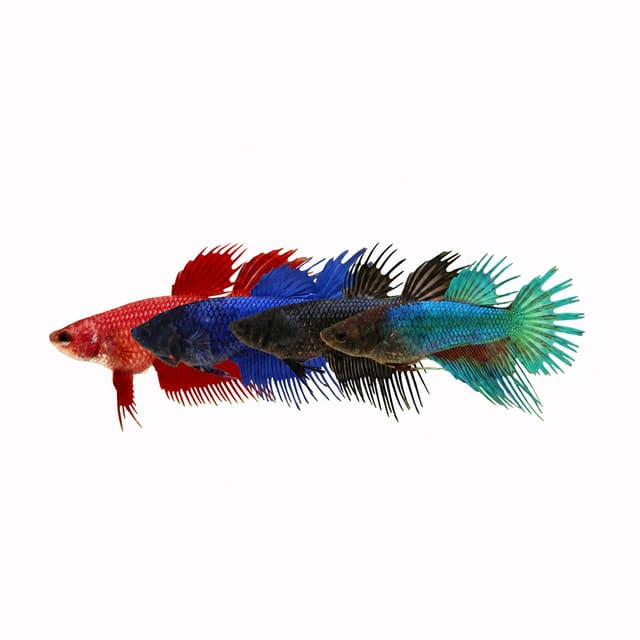
One purchase means one fish, even where a gallery scene shows more than one animal.
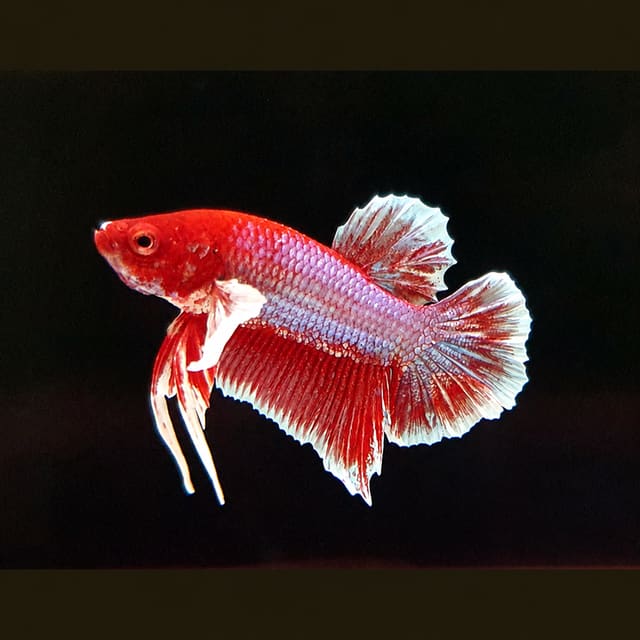
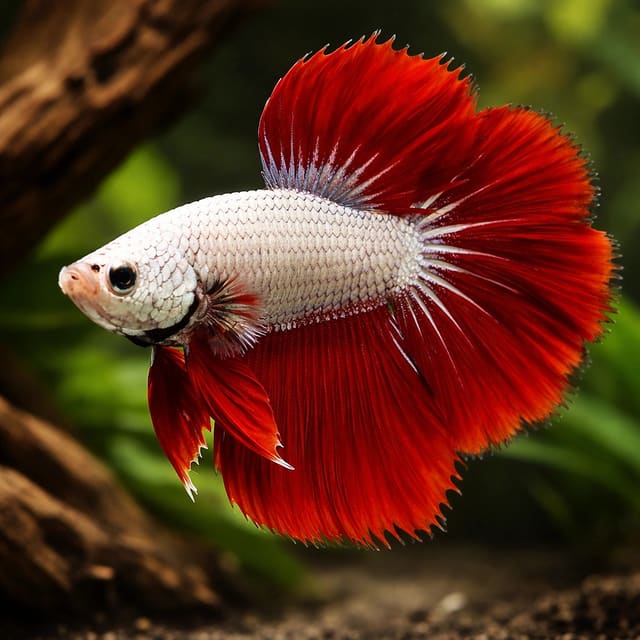
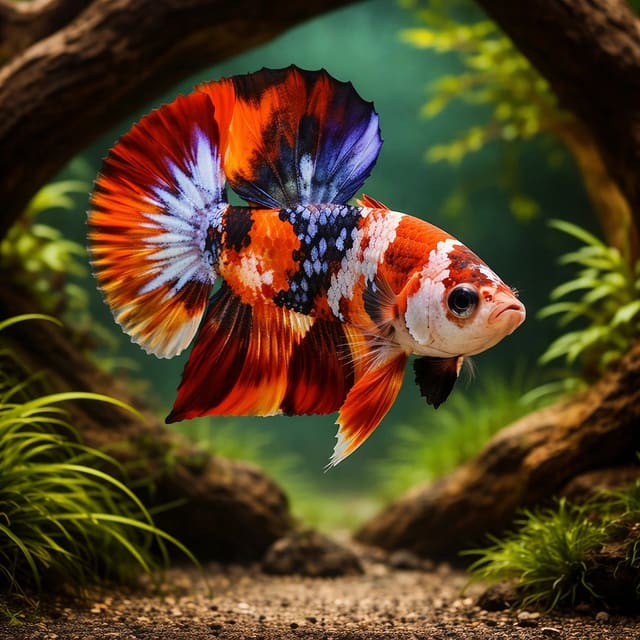
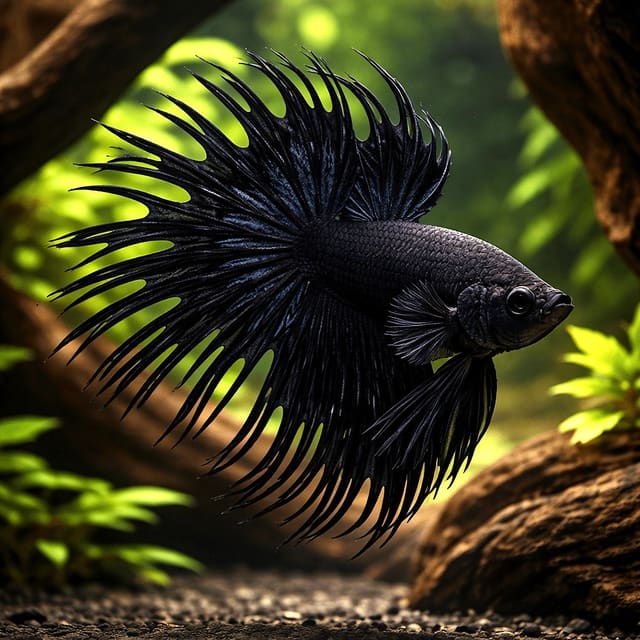
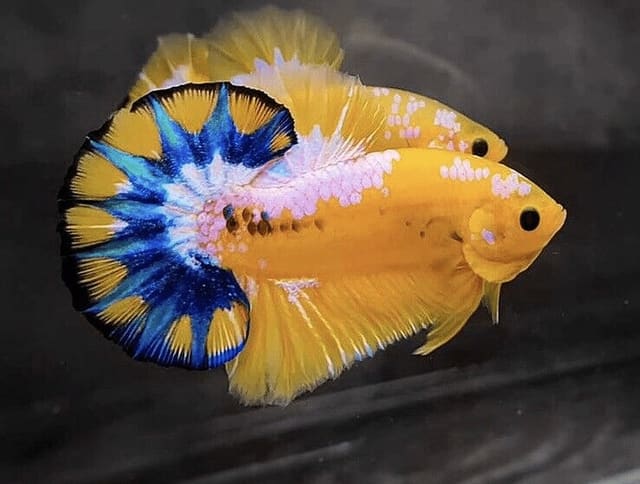
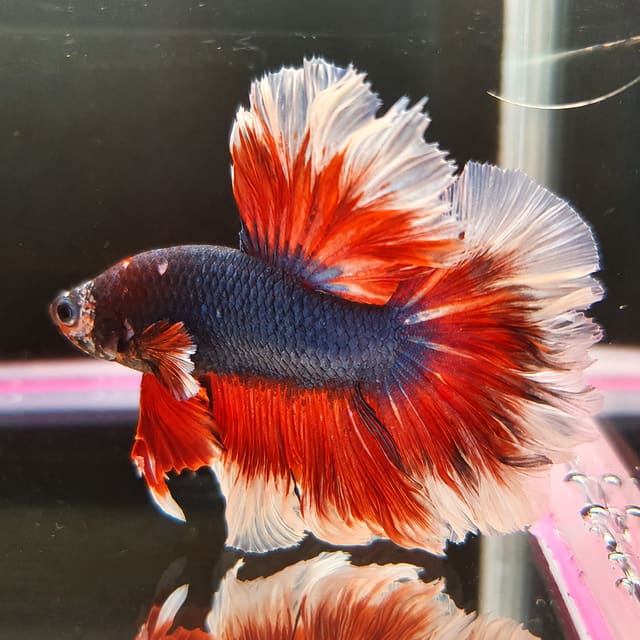
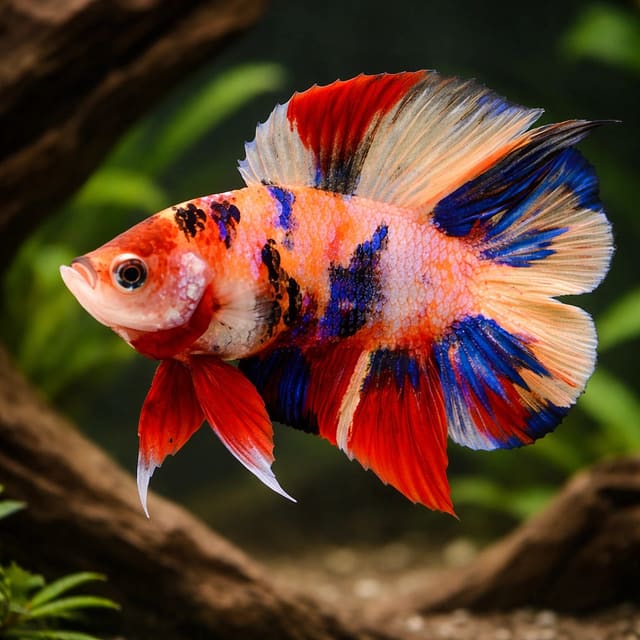
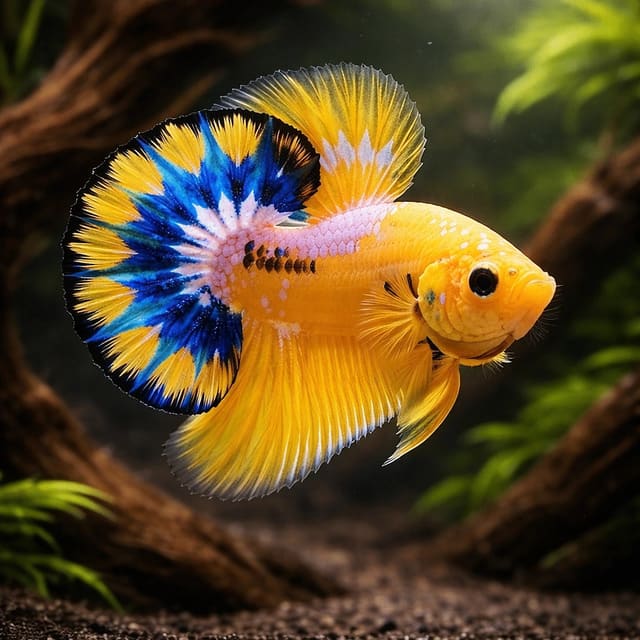
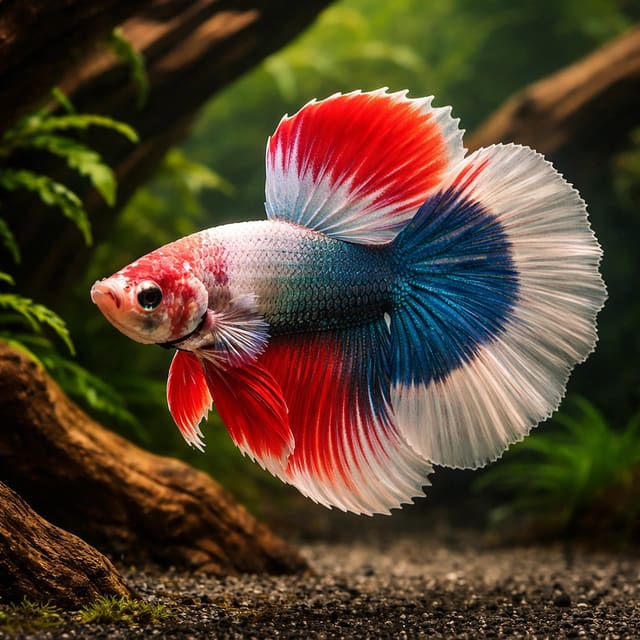
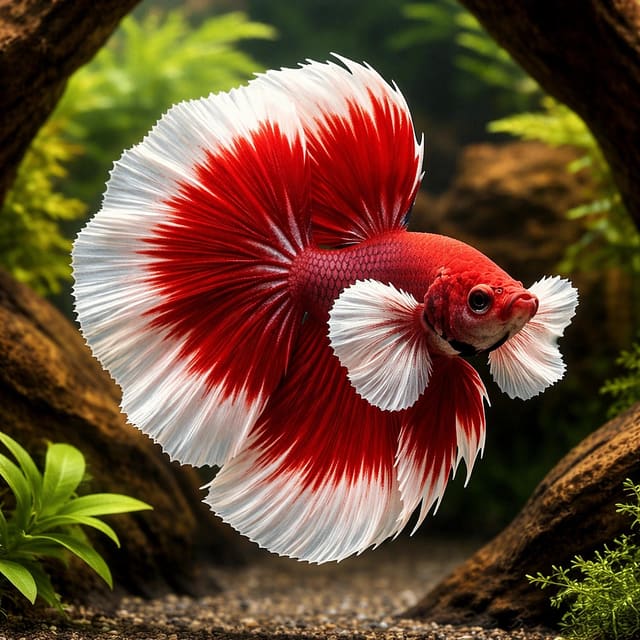
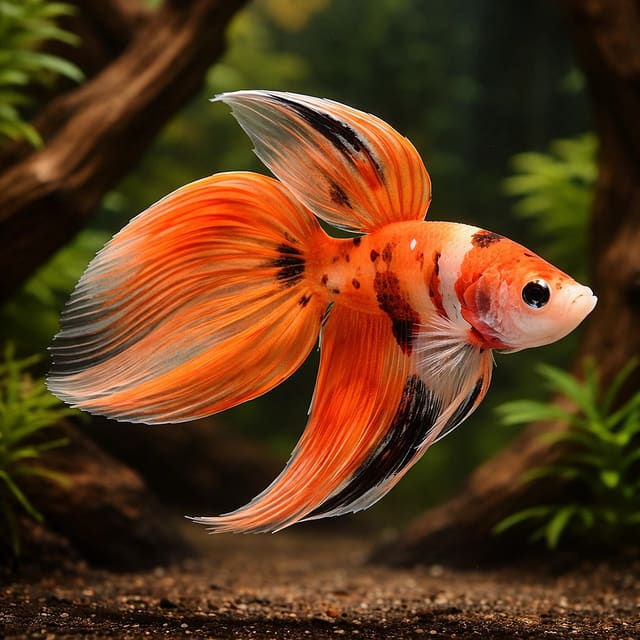
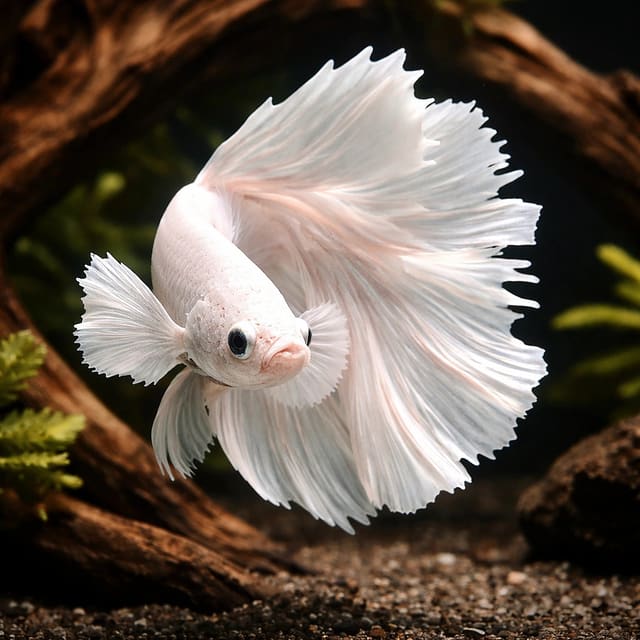
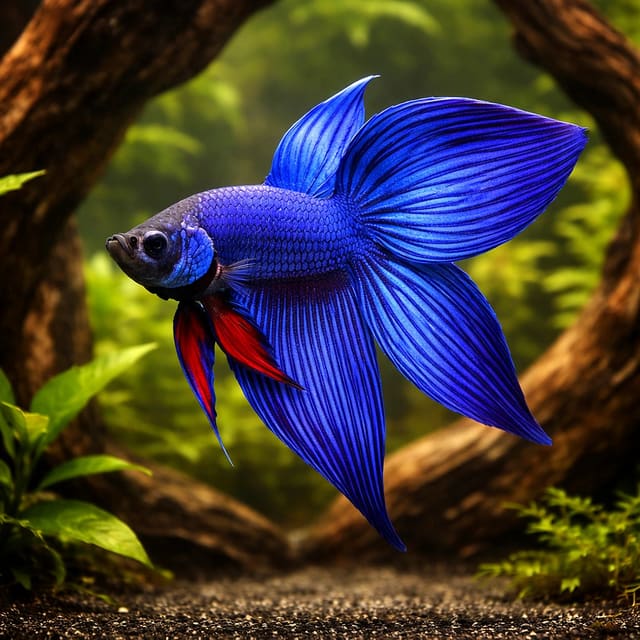
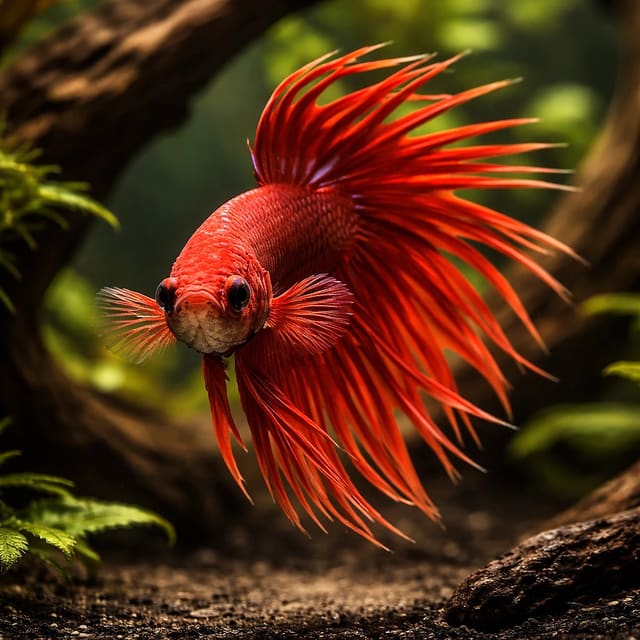
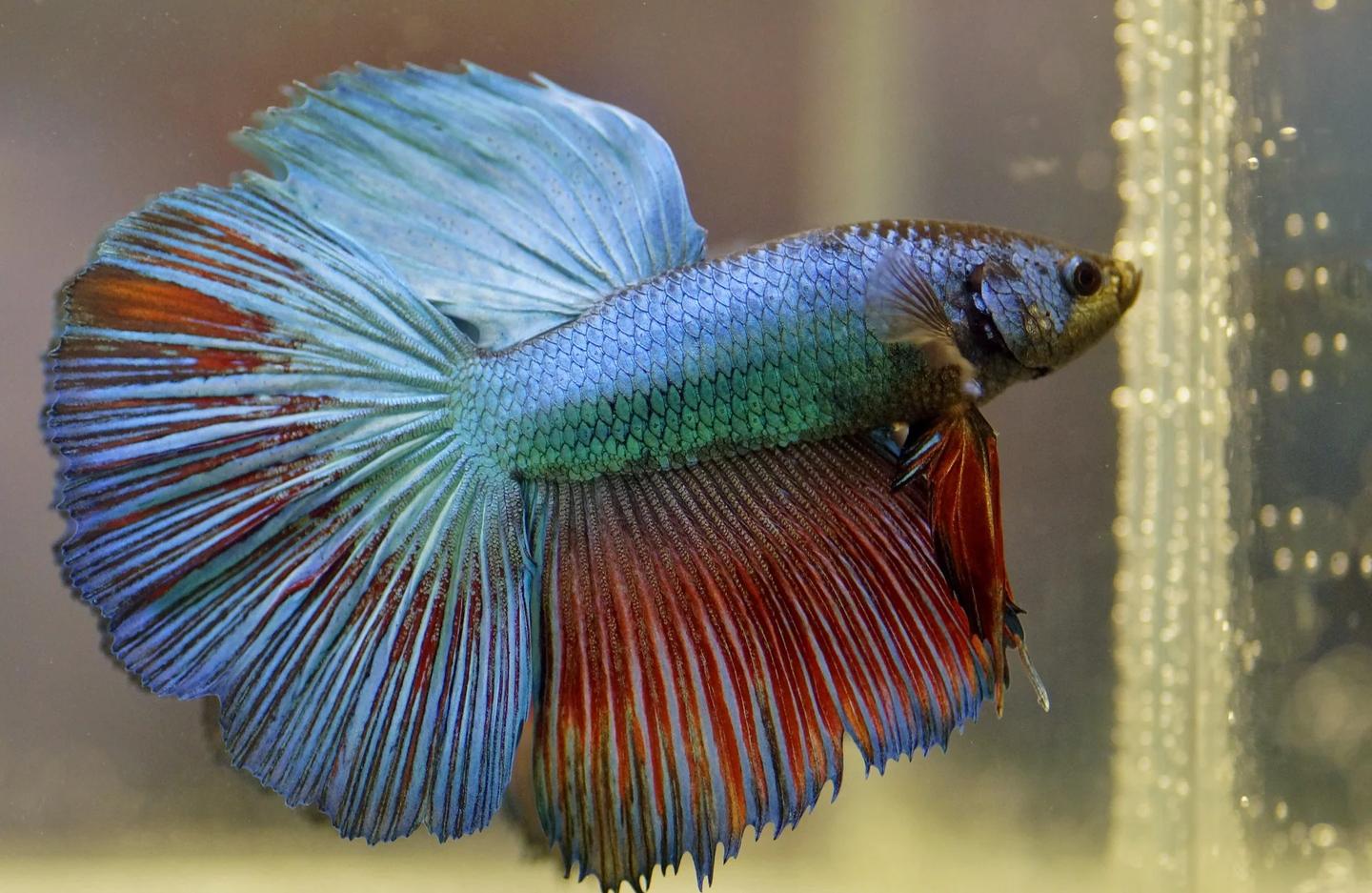
The gallery images are representative, based on reference photographs of this species, so colours can look slightly different from the live animal.
Domestic Bettas vary in colour pattern, fin shape and body traits. Aquarium lighting, background, planting and viewing angle can also change how a reflective colour appears. Treat the form name as the identity of the offer rather than a promise that every scale, fin edge or shade will match an image exactly.
Use the Betta collection to compare different Betta forms without treating them as community companions. Packing, dispatch days and the claim process are covered on our delivery and Live Arrival Guarantee policy.
FishBase records a maximum of 6.5 cm total length for male or unsexed Betta splendens. Seriously Fish gives a different figure of 70 mm standard length. Use 6.5 cm as the adult planning figure throughout this page rather than trying to convert XL into an adult measurement.
OATA’s Betta sheet gives broad group guidance: at least 20 litres for one male, 20–28°C, pH 6.0–8.0 and 4–12 dGH; these are not a species-specific optimum. Tropical Fish Co uses 26–28°C as the routine target for a typical domestic Betta splendens. Seriously Fish takes a more spacious species-level approach, describing a 45 × 30 cm base and approximately 41 litres as large enough for a single male or pair.
| Planning decision | Working figure |
|---|---|
| Adult length | Plan around 6.5 cm |
| Starting volume | At least 20 litres for one male |
| More spacious footprint | 45 × 30 cm base, approximately 41 litres |
| Routine temperature | Stable 26–28°C |
| Water waste | Ammonia 0 mg/L; nitrite 0 mg/L |
| Social plan | One male per aquarium by default |
A nominal tank volume is only the first check. Substrate, decor and an air gap reduce actual water volume, while footprint controls usable swimming room. Check internal dimensions, filled volume, lid, heater, filter, refuges and maintenance access together.
Choose more space where practical. Extra capacity gives you more room to provide cover and helps reduce the speed of temperature or waste-concentration changes, but it never makes two males safe together.
Set up the aquarium, heater, filter, lid and furnishings before arranging the fish’s arrival. Clear water is not proof that a new filter can process waste. A biological filter needs an established population of beneficial organisms that convert toxic ammonia to nitrite and then to the safer nitrate.
The RSPCA explains why a well-set-up and maintained aquarium filter is vital. Prepare the system through a fishless maturation process and test the water rather than judging readiness by appearance or by the number of days since filling.
If ammonia or nitrite is above zero, pause the planned introduction and continue maturing or correcting the system. Adding livestock increases the waste load, so a partially prepared filter should not be expected to finish maturing around the fish.
Use our first tropical aquarium guide to prepare and mature the setup before livestock arrives. Keep a written record of test results so a stable pattern is visible and equipment changes are easier to trace.
Use a thermostatic aquarium heater throughout the year and verify the result with a separate thermometer. Our routine target for a typical domestic Betta splendens is 26–28°C. Seriously Fish gives 22–30°C for ornamental aquarium care, while FishBase records 24–30°C as an environmental range; those wider figures are useful context, not a reason to let the aquarium swing between endpoints.
For tank-reared Bettas, work within pH 6.0–8.0 and test rather than assuming all UK tap water is alike. OATA’s general-hardness range is 4–12 dGH, while the species profile gives 1–15 dGH for ornamental strains. Stability and gradual matching matter more than repeatedly adding chemicals to force the water towards the middle of a range.
| Test | Decision |
|---|---|
| Temperature | Use 26–28°C as the routine target |
| pH | Keep within 6.0–8.0 and avoid abrupt shifts |
| General hardness | Measure the aquarium and plan within the stated ranges |
| Ammonia | Keep at 0 mg/L |
| Nitrite | Keep at 0 mg/L |
| Nitrate | Do not exceed 20 mg/L above the normal tap-water level |
Treat replacement tap water with an aquarium conditioner that addresses chlorine or chloramine before it enters the aquarium. Match replacement water sensibly for temperature and avoid large, sudden chemistry changes during routine maintenance.
Read our aquarium water-chemistry guide to understand what each test means, then use the water matcher to compare measured aquarium values with the stated guidance. Measure first, change only what needs changing and re-test after any adjustment.
Choose equipment for the real aquarium volume and the room in which it will run. Follow the heater maker’s volume, installation, minimum-depth and ambient-temperature instructions rather than relying on a universal watts-per-litre formula. Place the separate thermometer where it reflects the fish’s occupied water rather than directly beside the heating element.
A thermostat switches the heater; the thermometer checks what the aquarium is actually doing. Compare the reading at consistent times and investigate a persistent movement away from 26–28°C. Check heater placement, room temperature, lid position and water circulation before changing the setting repeatedly.
Betta splendens naturally uses sluggish environments, and strong water movement should be avoided. Aim for enough circulation to support filtration without sweeping the fish across the aquarium. If it repeatedly struggles to hold position, is pushed away from resting areas or cannot approach food comfortably, diffuse or redirect the outlet while keeping essential filtration running.
The labyrinth organ allows atmospheric breathing, so leave a clear route to the surface. A secure lid reduces escape risk, but it must not press against or seal off the water surface. Maintain a small air space beneath the cover and keep floating growth from forming a complete barrier.
Check the arrangement after plants grow or furnishings move. A calm corner is useful only if the fish can reach it, and surface access must remain open from more than one route. Clean a blocked intake or outlet promptly, but do not compensate for poor flow by turning the biological filter off.
Create a planted, shaded setting with useful cover at different heights. Seriously Fish recommends surface cover from tall stems, floating plants or tropical lilies and also identifies Cryptocoryne as suitable planting. Driftwood can support attached plants such as Microsorum or Taxiphyllum. These are options rather than a compulsory shopping list.
Shelters should be large enough for the fish to enter, turn and leave without scraping extended fins or becoming wedged. Smooth clay pots or aquarium-safe pipe can provide refuge when openings are appropriate. Inspect every ornament by touch, remove rough edges and reject narrow gaps that could trap the body.
| Purpose | Practical choice |
|---|---|
| Shade | Tall or floating plants with open surface routes |
| Refuge | Smooth shelters with safe entrances and exits |
| Rest from flow | Calm planted areas away from the outlet |
| Swimming | Clear routes through the aquarium |
| Maintenance | Decor that can be inspected and cleaned |
Dried leaf litter may add cover and encourage microbe growth as it decomposes, but it also becomes part of the maintenance plan. Use aquarium-suitable material and remove or replace it in a controlled way rather than allowing waste to accumulate unseen.
Research into domestic Betta diversity shows that colour, fin and body traits have a complex breeding history. Observe how this individual swims around the chosen furnishings instead of assuming a tail label determines a fixed level of hardiness or flow tolerance.
Use a suitably sized complete Betta pellet or quality aquarium flake as the nutritional base. OATA describes Bettas as omnivorous, while the species profile says Betta splendens is likely to prey on aquatic and terrestrial invertebrates in nature. A complete prepared food and carefully chosen variety describe the captive diet more accurately than a simple “carnivore” label.
Offer small live or frozen foods such as daphnia or bloodworm as variety. Seriously Fish also lists Artemia and small insects, with gut-loading advised for feeder insects. These additions should complement the complete base rather than replace it as the entire routine.
Pellet sizes and energy density vary, so one fixed pellet count cannot suit every product. Avoid using the size of the fish’s eye as a portion formula. Pre-measure feeds when several people share care duties so the fish is not fed repeatedly by accident.
Overfeeding affects both body condition and water quality. Bettas are particularly prone to obesity, and uneaten food breaks down into waste. If food remains after a few minutes, remove it and reduce the next measured portion rather than adding a second food to tempt the fish.
At least once every week, carry out a partial water change of 25%. Siphon settled waste, condition replacement tap water and match it sensibly for temperature. Test ammonia and nitrite at least weekly, record the results and include nitrate and pH so gradual changes become visible.
Check the filter for restricted flow or blockages during maintenance. When media needs cleaning, do not run it under the tap because chlorine or chloramine may damage the beneficial organisms. Rinse it lightly in water removed from the aquarium instead. Do not replace all established media at once merely because it looks stained.
Hanging at the surface, sitting on the bottom, erratic swimming, altered breathing, reduced appetite, unusual hiding, white spots, fluffy growths or loss of fins or scales all deserve prompt attention. A single sign may have several causes, so begin with measured water and equipment checks rather than naming a disease from appearance.
The MSD Veterinary Manual’s aquarium-fish guidance emphasises system history, water analysis and appropriate diagnosis. For severe, persistent or unexplained signs, seek qualified aquatic veterinary help; OATA provides a UK fish-vet directory.
Before introduction, confirm that ammonia and nitrite are both 0 mg/L, the separate thermometer shows the planned temperature and the filter is producing gentle circulation. Compare the aquarium’s pH and hardness with the fish’s established water where that value is known, then make any necessary matching gradual rather than abrupt.
Use the once-daily feed as a consistent observation point. Note whether the fish approaches food, swallows it and maintains normal position in the water. Remove leftovers, check temperature and test ammonia and nitrite whenever behaviour changes; continue the planned weekly tests even when the fish looks settled.
New livestock increases the work handled by the biological filter. If ammonia or nitrite appears, reduce additional waste, check that filtration is operating and take corrective husbandry action. Do not respond by washing established media under the tap or switching the filter off.
Review the written test record, body condition, appetite, fins, breathing and use of the aquarium. Confirm that plants have not blocked the surface, decor has not shifted into a trap and growing cover has not removed all open routes. Adjust flow direction or furnishing position only when an observed problem calls for it.
Keep the aquarium socially simple throughout this settling period. Learning this male’s normal behaviour gives you a baseline for later health decisions, but it does not turn a future community combination into a guarantee.
The lowest-risk arrangement is one male Betta splendens in his own mature aquarium. Seriously Fish says the species is best kept alone and that only one individual can be maintained per tank in most cases. OATA warns that two males may fight until one is severely injured or killed.
More water and additional furnishings do not make male cohabitation safe. Do not place two males together, and prevent direct access between neighbouring aquariums. A divider must function as a secure physical barrier rather than merely breaking the view occasionally.
Species with trailing finnage or rival-like body shapes should be avoided because a male may interpret them as competitors. Avoid boisterous or aggressive fish and persistent fin-nippers. Do not rely on the label “peaceful” without considering how the other animal actually swims, feeds and interacts.
RSPCA compatibility guidance recognises that male Bettas may fight their own kind and that species must be researched before mixing. For this offer, use a solitary aquarium as the baseline and treat any social addition as a separate welfare decision.
| Combination | Decision |
|---|---|
| Another male Betta | Avoid |
| Trailing-finned or rival-like fish | Avoid |
| Boisterous, aggressive or fin-nipping fish | Avoid |
| Standard community plan | Do not use as the default |
| Solitary mature aquarium | Preferred starting arrangement |
Some individual males may tolerate other species, but this is the exception rather than the expected outcome. There is no universally safe companion. A name on a compatibility chart cannot account for the temperament of this individual, the adult space available or the behaviour of the other animals.
OATA recommends either keeping males alone or only considering very placid companions. Seriously Fish is more cautious and says solitary care is best, although some small cyprinids and loaches from similar environments may sometimes work after proper research. Use the cautious interpretation: compatibility remains individual and must be judged through behaviour as well as a paper comparison.
Do not treat shrimp, snails or other invertebrates as automatically safe cleaners. A Betta may investigate or hunt smaller animals, while defensive or larger invertebrates can introduce injury risk. Any such combination needs suitable refuge, adequate space and immediate separation if chasing, nipping, injury, hiding, feeding failure or altered breathing appears.
If the proposed community cannot pass every screen, keep this male alone. A solitary, well-furnished aquarium meets the social plan without requiring the fish to demonstrate tolerance.
Plan for an adult length of 6.5 cm. FishBase records 6.5 cm total length for male or unsexed Betta splendens.
Use at least 20 litres for one male and choose more space where practical. OATA’s broad Betta guidance gives the 20-litre minimum, which is not a species-specific optimum; Seriously Fish describes a 45 × 30 cm base and approximately 41 litres as large enough for a single male or pair.
Keep one male per aquarium. FishBase records that males fight each other, while Seriously Fish says only one individual can be kept per tank in most cases.
It can suit a careful beginner with a cycled aquarium, but Tropical Fish Co rates its care as intermediate because the heater, mature filter, testing, gentle flow, secure lid and solitary housing plan must be ready before the fish arrives.
Feed a suitably sized complete Betta pellet or quality aquarium flake once daily, offering only what is eaten within a few minutes. OATA’s Betta guidance supports that schedule, with small live or frozen daphnia or bloodworm as variety; Seriously Fish also lists Artemia.
Use Tropical Fish Co’s stable 26–28°C routine target. FishBase, Seriously Fish and OATA overlap at pH 6.0–8.0, while OATA’s broad Betta guidance gives 4–12 dGH; keep ammonia and nitrite at 0 mg/L.
This male is territorial and must not live with another male. Avoid trailing-finned or rival-like fish, boisterous or aggressive fish and persistent fin-nippers; the Betta’s own extended fins can also be targeted by other fish.
Solitary care is preferred. Seriously Fish says some small cyprinids and loaches from similar environments may sometimes be considered after careful screening, but shrimp, snails and other invertebrates are not automatically safe; prepare separation before attempting any combination.
Start filming every delivery continuously while the parcel is still sealed, then record it being opened with the fish still inside the sealed bag. Someone must be present to receive the parcel; float the bag for 20–30 minutes before releasing the fish, and never pour the bag water into the aquarium.
Independently collected by Judge.me from customers who bought this item. All reviews are shown.
Super vibrant colours. Looks like a very healthy happy fish. Highly recommend 👌
Absolutely stunning fish