Easy
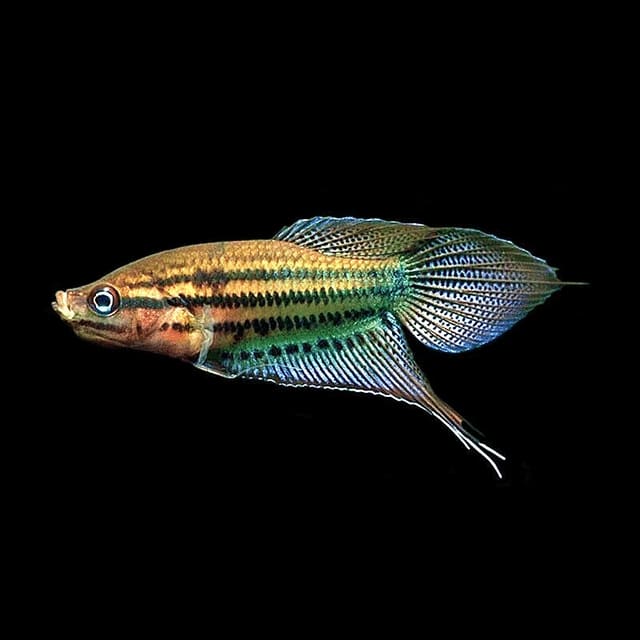
Croaking Gourami (Trichopsis vittata)
22–28°C · pH 6–7.5 · 60L
£5.99

A charming, peaceful pygmy labyrinth fish ideal for planted aquariums. Sparkling Gourami add character and subtle colour. Check the size selector for current availability.
Adult size is the maximum length this species reaches at full maturity (scientific sources). The livestock you receive will be younger and smaller — pick a size above for the actual shipping size. Product-photo provenance and any image-specific limitations are stated on the listing.
Trichopsis pumila
Save when buying multiple fish. Each quantity is one fish; sex and pair formation are not guaranteed unless the selected variant explicitly states them.
Minimum of 2 per order.
A charming, peaceful pygmy labyrinth fish ideal for planted aquariums. Sparkling Gourami add character and subtle colour. Check the size selector for current availability.
Adult size is the maximum length this species reaches at full maturity (scientific sources). The livestock you receive will be younger and smaller — pick a size above for the actual shipping size. Product-photo provenance and any image-specific limitations are stated on the listing.
Maintain these water conditions for optimal health and vibrant colors
The Sparkling Gourami, Trichopsis pumila, is one of the most charming nano labyrinth fish available for a peaceful tropical aquarium. Often called the Pygmy Gourami, this species stays small at around 4 cm, yet it offers far more personality than many larger fish. Aquarists love its iridescent blue-green speckling, bright eyes, gentle nature, and the famous sparkling gourami croaking sound that males can produce during displays. With a mature, planted aquarium and calm companions, this small species rewards close observation and may live around four years. Native to Southeast Asia, the sparkling gourami habitat consists of still or slow waters with dense vegetation, which is why a sparkling gourami in planted tank display works so well. It suits a quiet species aquarium or carefully chosen calm community.
Trichopsis pumila belongs to the labyrinth fish group, meaning it has a specialised organ that allows it to breathe atmospheric air at the surface. Within the hobby, trichopsis species are valued for their sound production, small size, and suitability for planted aquariums. The Sparkling Gourami is closely related to the larger Croaking Gourami - Trichopsis Vittata, and both are known for their audible vocal behaviour.
The sparkling gourami origin lies in Southeast Asia, especially Thailand, Cambodia, and Vietnam. The sparkling gourami native range includes lowland waters such as rice paddies, roadside ditches, floodplain pools, shallow ponds, and slow streams. In the wild, sparkling gourami native populations are usually found in warm, soft to moderately hard water with thick plant cover and a calm surface.
The natural environment is often described as a classic sparkling gourami biotope: shallow water, leaf litter, roots, floating plants, and plenty of insect life. The sparkling gourami natural habitat is not fast flowing. Instead, these fish prefer still or gently moving water where they can browse among stems and surface cover. Because they are labyrinth fish, they can tolerate low-oxygen conditions better than many nano species, though that should never be confused with poor aquarium care.
Looking at sparkling gourami in the wild helps explain their aquarium needs. They spend time near cover, pick at tiny live foods, and use visual barriers to avoid stress. Their diet in nature includes zooplankton, micro-crustaceans, insect larvae, and other tiny aquatic prey. This is why a heavily planted aquarium with gentle flow usually leads to better colour, calmer behaviour, and more confident feeding.
Mimicking the natural habitat with floating plants, dimmer lighting, leaf litter tones, and gentle filtration improves sparkling gourami health, reduces stress, and brings out more natural courtship and croaking behaviour.
Provide a mature, planted aquarium with gentle flow and a base of at least 45 × 30 cm for a pair or small group. More fish need more floor area, cover and stable water volume.
For a group of six, choose a larger footprint than the minimum and provide dense plants to break sightlines. A very small five-gallon tank is a poor choice for a social group; assess the aquarium's base area, water stability and individual behaviour rather than relying on a fixed fish-per-litre rule.
They are not true schooling fish in the same way as rasboras, so if you ask are sparkling gouramis schooling fish, the answer is not exactly. They are social and do best in groups, but each fish still wants cover and personal space.
The recommended sparkling gourami temperature is 22-28°C, with a preferred sparkling gourami temperature range of 24-27°C for most home aquariums. If you are searching what temp for sparkling gourami or sparkling gourami water temperature, aim for consistency rather than constant fluctuation. pH should sit between 6.0 and 7.5, and sparkling gourami water hardness is best around 2-12 dGH. Stable, slightly soft water with low nitrate is ideal.
Use a gentle sponge filter or a low-flow internal filter. Sparkling Gourami dislike being buffeted by strong current, and excessive flow can stop bubble nest building. A mature sponge filter is especially useful in breeding or shrimp-friendly tanks.
A dark sand or fine natural gravel substrate helps them feel secure and improves contrast, making the iridescent spots stand out. A botanically styled setup with leaf litter tones can also encourage more confident behaviour.
Plants for sparkling gourami are one of the biggest keys to success. Use dense stems, floating plants, and broad leaves. Good choices include Java fern, Cryptocoryne, water sprite, Limnobium, Salvinia, and fine-leaved mosses. A sparkling gourami in planted tank layout with shaded areas and broken sightlines reduces chasing and makes timid fish feed more boldly. Dense cover helps timid fish feed confidently; healthy aquarium plants are not normally damaged by this species.
Include wood, root tangles, small caves, and floating cover. Surface plants are especially helpful because labyrinth fish prefer calm, secure access to air. Choose any gourami companions by actual species, size and temperament rather than by a misleading product label.
Moderate lighting works best. Very bright lights without shade can make them hide. If you want stronger plant growth, balance it with floating plants to diffuse the light. A photoperiod of 7-9 hours is usually enough.
Always cycle the aquarium for 4-6 weeks before adding Sparkling Gourami. Mature biofilm, stable water chemistry, and established plant cover make a huge difference to early feeding response and long-term health.
The ideal sparkling gourami diet is varied, protein-rich, and sized for a very small mouth. If you are asking what do sparkling gouramis eat or what does sparkling gourami eat, think micro pellets, crushed flakes, frozen cyclops, baby brine shrimp, daphnia, and other tiny foods. In nature they hunt zooplankton and aquatic insects, so they do best when fed little and often.
Use a quality micro pellet or fine granule as the staple. Slow-sinking foods are often accepted best. A good sparkling gourami feeding guide starts with two small meals daily, only what they can finish in under two minutes.
Frozen cyclops, daphnia, and baby brine shrimp are excellent for body condition and breeding preparation. These foods also help shy fish settle in faster. If you are wondering what to feed sparkling gourami, variety matters more than quantity.
Live baby brine shrimp, microworms, and tiny live foods can trigger stronger courtship. For fry, the answer to what to feed sparkling gourami fry is infusoria first, then newly hatched brine shrimp once they are large enough. This is similar to advice often given for what to feed honey gourami fry.
Offer small meals once or twice daily, according to appetite and water quality. A regular routine helps timid fish learn when food is coming. If why sparkling gourami not eating is your concern, the usual causes are stress, bright lighting, bullying, oversized food, or a newly introduced fish still settling in.
| Time | Food | Amount |
|---|---|---|
| Morning | Micro pellet or crushed fine granule | Small pinch, fully eaten in 1-2 minutes |
| Evening | Frozen cyclops, daphnia, or baby brine shrimp | Very small portion |
Offer small, varied foods in a calm feeding area. Adult Sparkling Gourami may coexist with larger shrimp, but they can eat shrimplets, so do not promise a shrimp-safe breeding colony.
Overfeeding causes ammonia spikes, cloudy water, and hidden losses in nano tanks. Sparkling Gourami are tiny fish, so portions should be much smaller than most beginners expect.
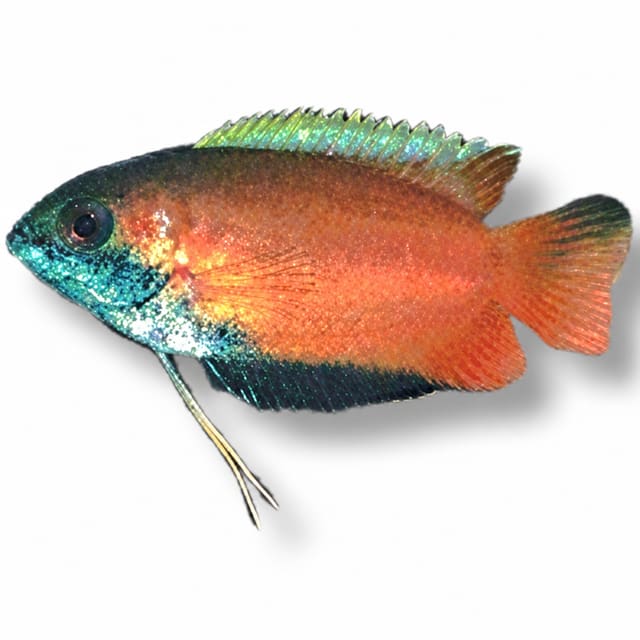
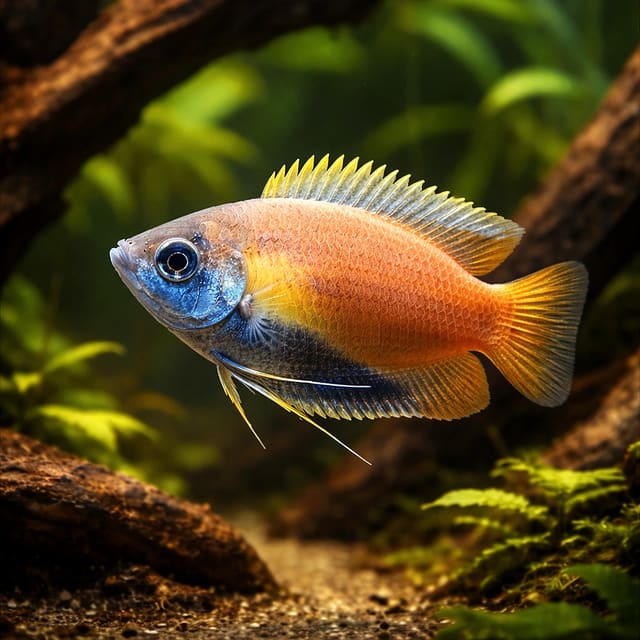
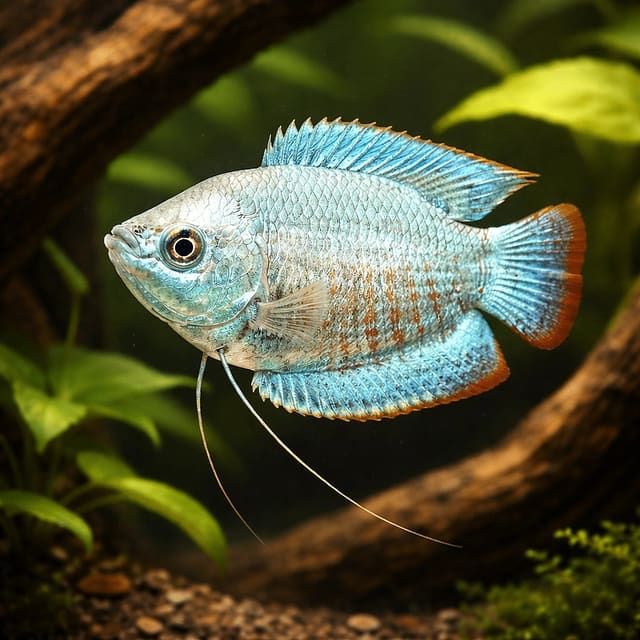
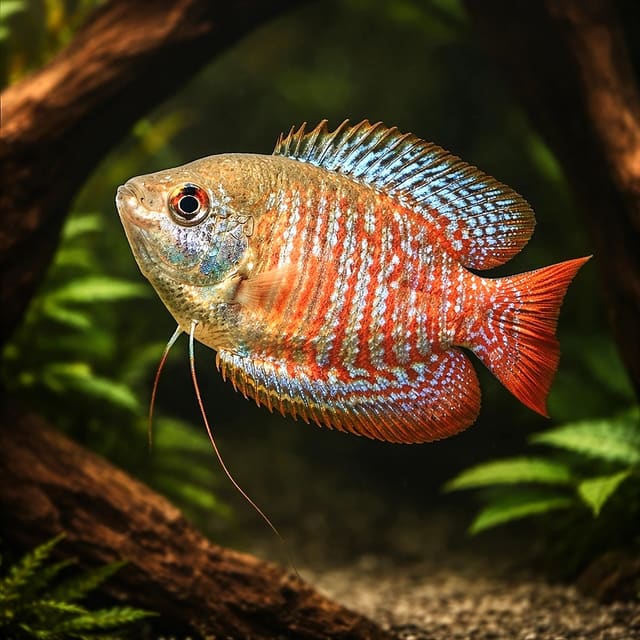
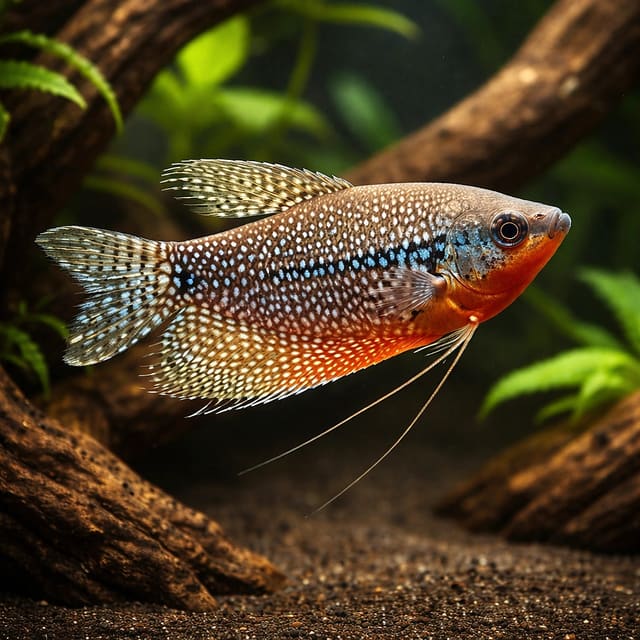
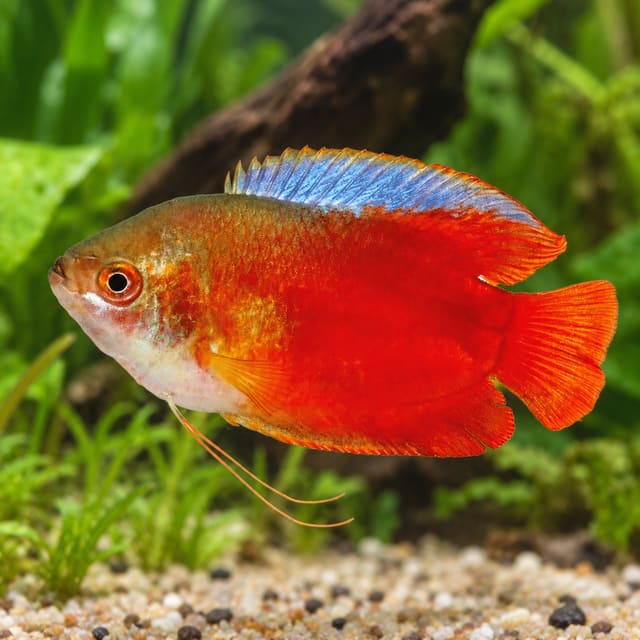
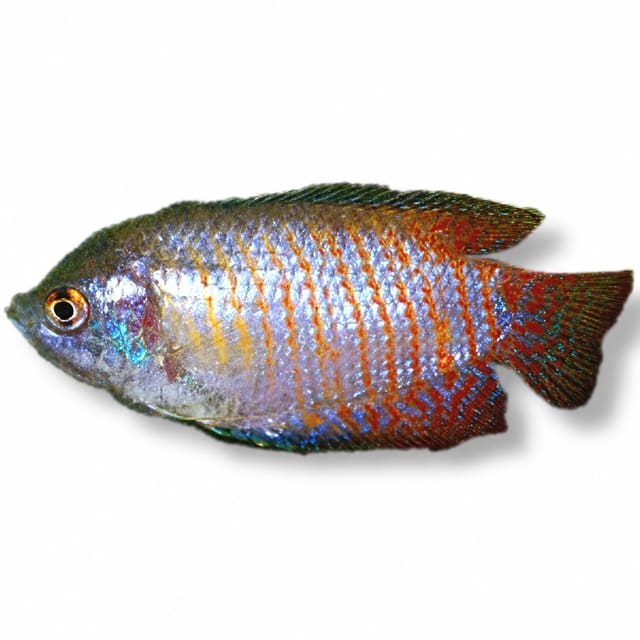
The sparkling gourami size tops out at roughly 4 cm, making this one of the smallest commonly kept gourami species. The body is slim and arrow-shaped, with a slightly upturned mouth suited to surface and midwater feeding. In good condition, the flanks shimmer with green, blue, and turquoise flecks over a warm brown base colour.
Under aquarium lighting, the fish can appear almost jewel-like. This is one reason they are so popular in nano displays. Their eyes often show a vivid blue sheen, which is why hobbyists sometimes compare the effect to species like blue eyed rainbowfish, even though they are completely different fish.
If you are researching sparkling gourami male vs female, males are usually slimmer, more intensely coloured, and may show stronger red or blue highlights in the fins and body spotting. Females tend to look rounder, especially when carrying eggs, and their patterning is often softer. In breeding condition, males also display more and croak more often.
If a Sparkling Gourami loses colour, check water quality, feeding and whether tank mates are intimidating it. Colour also varies with lighting and condition; gallery images should not be read as a promise of an individual fish's appearance.
One of the most common questions is what can live with sparkling gourami. The short answer: calm, small, non-aggressive fish that will not outcompete them for food. Good sparkling gourami tank mates include tiny rasboras, peaceful small tetras, pygmy Corydoras, and larger peaceful shrimp. Because they are shy, the wrong companions can make them vanish into cover.
Many people ask sparkling gourami with other fish or whether they are the best gourami for community tank use. They can be, but only in a quiet community. Avoid fast danios, fin-nippers, and larger cichlids.
Avoid large or assertive fish that may intimidate or prey on Sparkling Gourami. Bettas can compete for similar surface territory, so do not assume that combination is safe, especially in a small tank.
In a 60 litre planted aquarium, a good setup might be 6 Sparkling Gourami with a small group of micro rasboras and 6 pygmy Corydoras. In a species-focused 45 litre tank, 6-8 Sparkling Gourami can work well if planting is dense and filtration is gentle. If you are asking are sparkling gouramis schooling fish, remember they are social but not tightly schooling. Observe the group and provide enough space for individuals to retreat.
Adult Amano shrimp or larger Neocaridina may coexist in a densely planted tank, but tiny shrimplets are potential prey. Moss and cover improve survival; do not count on this fish as harmless to a breeding shrimp colony.
| Species | Compatible? | Notes |
|---|---|---|
| Honey Gourami | ⚠️ Caution | Possible in larger, very calm tanks, but watch for territorial stress and feeding competition. |
| Croaking Gourami - Trichopsis Vittata | ⚠️ Caution | Related species, but the larger fish may dominate smaller Sparkling Gourami. |
| Pearl Gourami | ❌ Avoid | Too large for most Sparkling Gourami setups. |
| Amano Shrimp | ✅ Yes | Usually safe with adults in planted tanks. |
| Betta splendens | ❌ Avoid | Too much overlap in territory and temperament. |
Always quarantine new arrivals for 2-4 weeks and rearrange décor before introducing them to an established Sparkling Gourami group. This reduces territorial disputes and helps shy fish settle faster.
Sparkling gourami breeding is very achievable for patient aquarists. They are not as easy as livebearers, but they are rewarding and fascinating. If you have kept a settled sparkling gourami pair or a small group in a quiet planted aquarium, you may eventually witness courtship, croaking, and bubble nest behaviour.
A separate 25-30 litre breeding tank works well. Keep water warm at 26-28°C, use very gentle filtration, and include floating plants or broad leaves. Lowering the water level can help. This is the sort of detail people often search for under sparkling gourami breeding behavior.
The male builds a small bubble nest, often under floating leaves or tucked among plants. During courtship he may intensify in colour and croak audibly. If you are comparing sparkling gourami male vs female, the male is usually more colourful and active in display. The pair embrace beneath the nest, and eggs are released and collected. Spawning depends on conditioning, temperature and pair compatibility; there is no fixed day.
Eggs usually hatch in 24-48 hours. The fry remain near the nest for another 2-3 days while absorbing their yolk sac. At this stage, many breeders remove the female and sometimes the male once fry are free swimming, depending on his behaviour.
The answer to what to feed sparkling gourami fry is infusoria or other microscopic foods first, followed by newly hatched brine shrimp. Clean water is critical, but changes must be small and gentle. Fry are tiny and easily damaged by strong current.
Common problems include fungus on eggs, poor nest stability, parents eating eggs, and fry starvation from oversized food. Sparkling Gourami fry are very small and need correspondingly tiny first foods.
Condition adults for 1-2 weeks on live and frozen micro foods before pairing. A slight rise in temperature, calm surface water, and floating cover often trigger much stronger nesting and improve hatch rates.
Choosing between small gourami species depends on tank size, temperament, and the type of display you want. Sparkling Gourami are ideal for calm nano aquariums where subtle behaviour matters more than bold size.
| Feature | Sparkling Gourami | Honey Gourami |
|---|---|---|
| Max Size | 4 cm | 5-6 cm |
| Care Level | Moderate | Easy to Moderate |
| Temperature | 22-28°C | 24-28°C |
| Best For | Quiet planted nano tanks | Peaceful community aquariums |
Sparkling Gourami reward close observation, dense planting and a quieter community than many larger gouramis tolerate.
| Feature | Sparkling Gourami | Croaking Gourami |
|---|---|---|
| Max Size | 4 cm | 6-7 cm |
| Behaviour | Shy, delicate, social | Bolder, more assertive |
| Sound Production | Soft croaking | More obvious croaking |
| Tank Size | 30L minimum | Larger preferred |
| Best For | Nano planted tanks | Species-focused gourami tanks |
Good sparkling gourami health starts with stable water, gentle tank mates, and a mature planted aquarium. Healthy fish show clear eyes, full finnage, steady feeding, and confident but unhurried movement through cover. Because they are small and somewhat shy, stress signs can be subtle at first.
Look for strong iridescence, regular surface breathing, interest in food, and relaxed interaction with tank mates. A healthy pygmy sparkling gourami trichopsis pumila should not gasp constantly, clamp fins, or hide all day.
Typical sparkling gourami diseases include bacterial infections linked to poor water quality, fin damage from bullying, external parasites such as ich, and wasting caused by chronic stress or internal parasites. Searches for sparkling gourami disease often come down to one issue: these fish decline quickly in cramped or overly busy tanks.
First correct water quality: test ammonia, nitrite, nitrate, and temperature. Increase water changes, reduce stress, and isolate affected fish if needed. Use medications carefully and only after identifying the problem. In planted shrimp tanks, always check medication safety.
Prevention starts with stable temperature, low nitrate, varied diet, quarantine, and suitable companions. Avoid sudden swings in sparkling gourami water temperature, and never place them with boisterous fish that prevent feeding.
NEVER use copper-based medications in tanks containing shrimp or other sensitive invertebrates. Copper can be lethal even at low levels.
Sparkling gourami behaviour is subtle, social, and highly rewarding for observant fishkeepers. They spend much of their time weaving through plants, inspecting leaves, and pausing beneath floating cover. They are not hyperactive display fish; instead, they reward a quiet tank with natural interactions and occasional croaking displays.
If you are wondering whether they are a sparkling gourami schooling fish, the best description is loosely social rather than truly schooling. Keep them in groups of 6 or more where possible, but make sure the tank has enough cover to break line of sight. Males may posture toward one another, especially when breeding, but serious damage is uncommon in a well-structured aquarium.
Their most famous trait is sound production. Sparkling gourami croaking is usually heard during courtship or mild territorial disputes. It is one of the reasons they are often compared with the larger croaking gourami species. Hobbyists researching trichopsis schalleri or other trichopsis species are often drawn to this unusual behaviour.
To encourage natural behaviour, keep lighting moderate, use floating plants, and avoid overcrowding. In the right setup, Sparkling Gourami are excellent display fish for aquarists who enjoy detail over drama.
Before ordering, check the current size option and prepare a mature, covered aquarium with gentle flow. Newly moved Sparkling Gourami can be shy while settling, so allow quiet cover and appropriately small food.
No reviews for this item yet. Bought one? Honest reviews only, good or bad.
What customers say about ordering from us
I have a small group of long finned mountain minnows. So was delighted to be able to order ten of this variety to increase the genetics in my tank . The ones I recieved are healthy but it’s to early to give a verdict on wether they are of a long finned type since they are small currently.
Gordon Walker · 23 Sept 2026
100% success travel and "installation". Pleased with quality of purchase. The Siamese fighter a bit "shy" so have not yet seen him at his best yet but looking good. Happy customer. GG
George E Garratt · 21 Sept 2026
Reviews of our shop, collected by Judge.me, an independent third-party review collector. Newest first.