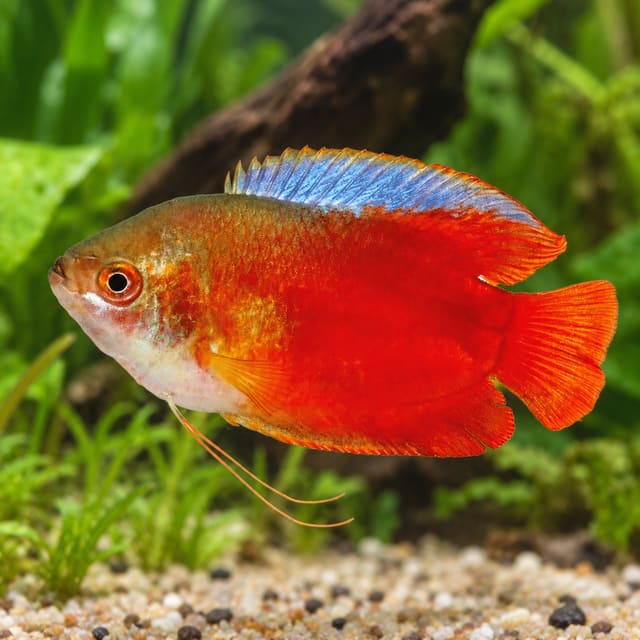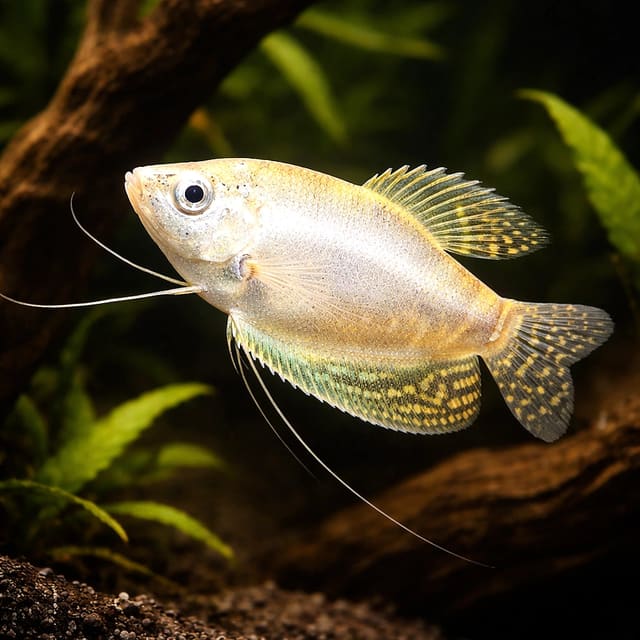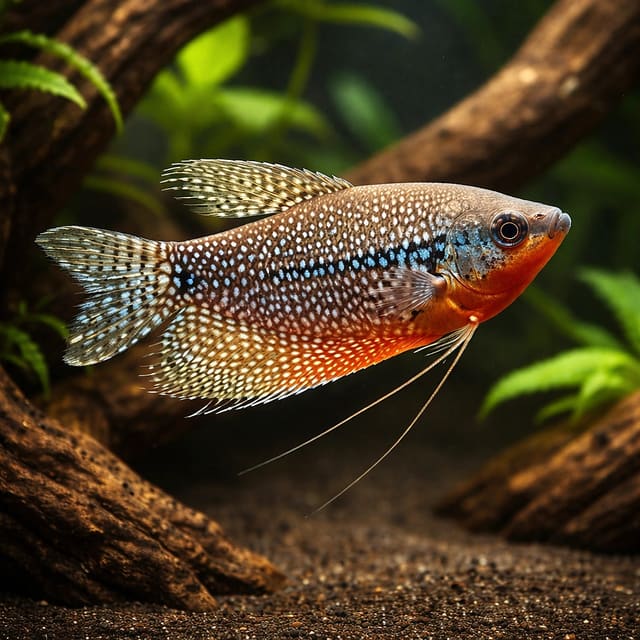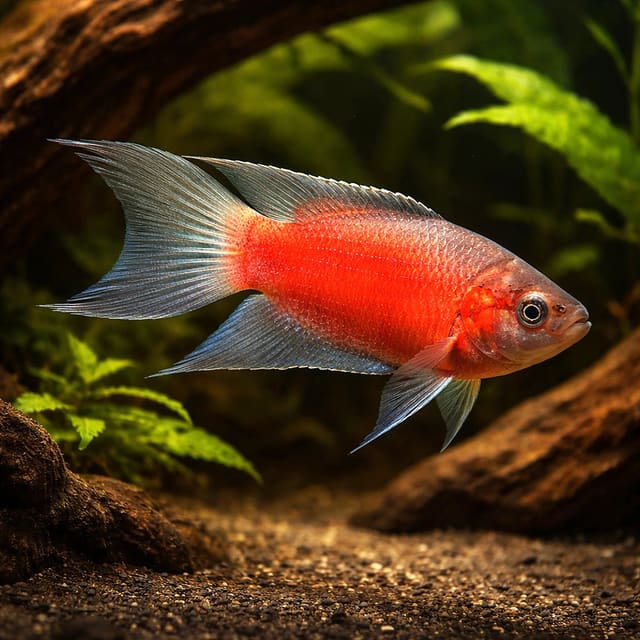
Cosby / Opaline Three-Spot Gourami (Trichopodus trichopterus) – 3–7cm & XL
24–28°C · pH 6–8 · 81L
From £4.99Some sizes on sale

The Gold Gourami (Trichopodus trichopterus) is a freshwater gourami from Southeast Asia that reaches 15 cm standard length. It suits prepared keepers who can provide a 90 × 30 cm planted base, monitor its variable temperament and maintain the FishBase, Seriously Fish and OATA overlap of 24–28°C, pH 6.0–8.0 and 5–12 dGH. Sold individually in dispatch sizes from 2–3 cm to XL.
Adult size is the maximum length this species reaches at full maturity (scientific sources). The livestock you receive will be younger and smaller — pick a size above for the actual shipping size. Product-photo provenance and any image-specific limitations are stated on the listing.
Save when buying multiple fish. Each quantity is one fish; sex and pair formation are not guaranteed unless the selected variant explicitly states them.
Minimum of 2 per order.
The Gold Gourami (Trichopodus trichopterus) is a freshwater gourami from Southeast Asia that reaches 15 cm standard length. It suits prepared keepers who can provide a 90 × 30 cm planted base, monitor its variable temperament and maintain the FishBase, Seriously Fish and OATA overlap of 24–28°C, pH 6.0–8.0 and 5–12 dGH. Sold individually in dispatch sizes from 2–3 cm to XL.
Adult size is the maximum length this species reaches at full maturity (scientific sources). The livestock you receive will be younger and smaller — pick a size above for the actual shipping size. Product-photo provenance and any image-specific limitations are stated on the listing.
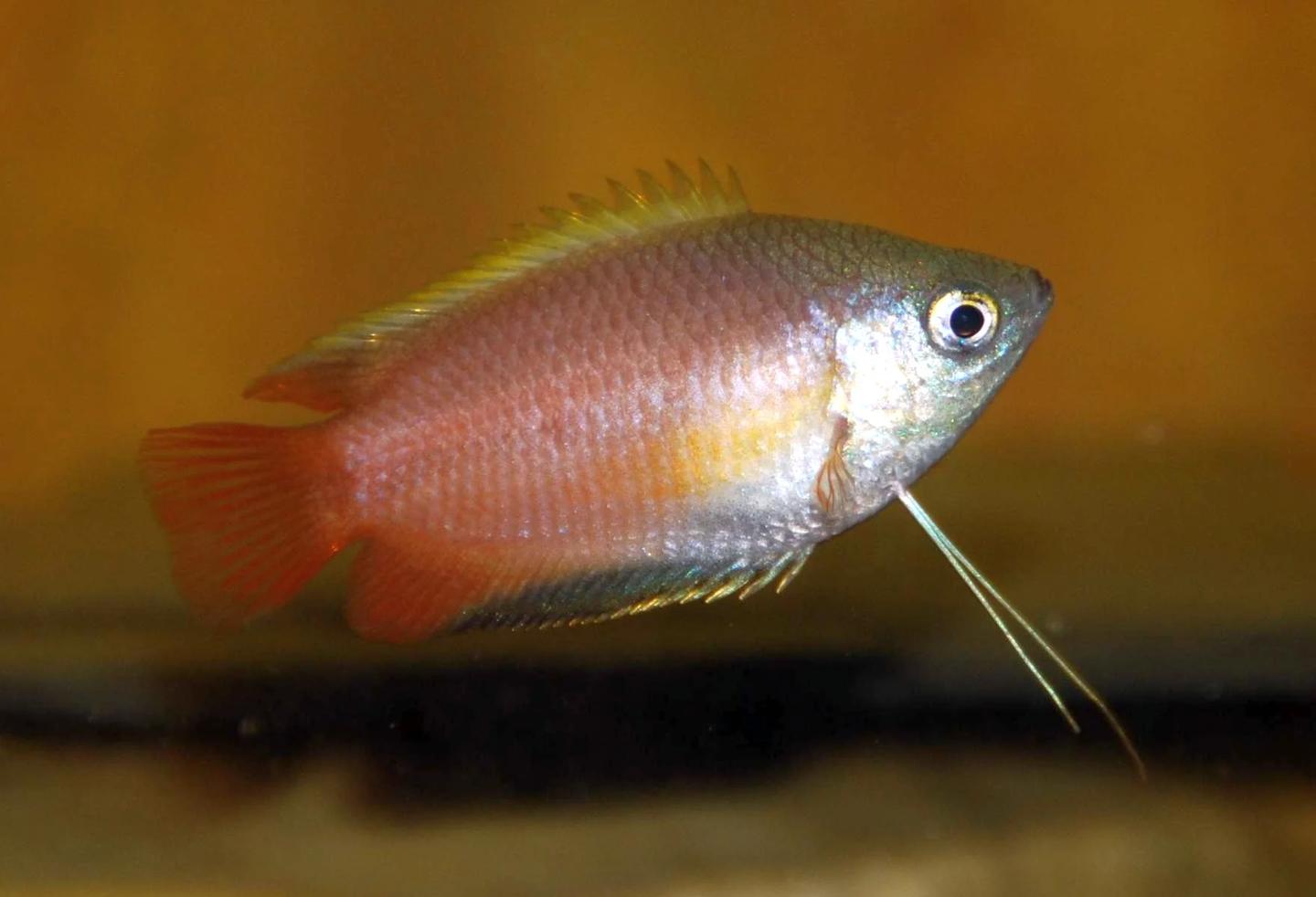
Start with a mature, filtered aquarium at least 60 cm long. Published size records disagree, and broad group guidance is not Honey-Gourami-specific, so verify Trichogaster chuna, the seller's adult-size advice and any claimed sexes before choosing one fish or a group.
Maintain these water conditions for optimal health and vibrant colors
The Gold Gourami (Trichopodus trichopterus) is a freshwater fish in the gourami family Osphronemidae. Its underlying species occurs across parts of Southeast Asia, including the Mekong basin in Laos, Yunnan, Thailand, Cambodia and Viet Nam. FishBase records a maximum length of 15 cm standard length. This fish suits a prepared keeper who can provide a planted aquarium with a 90 × 30 cm base, preserve surface access and respond if its temperament becomes assertive.
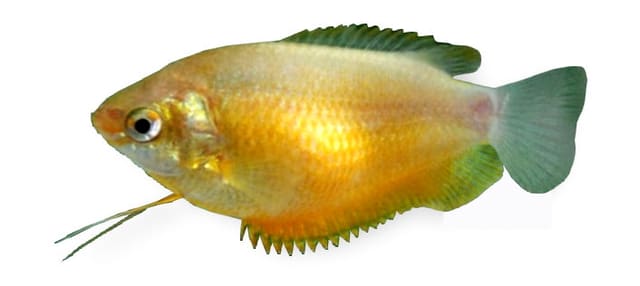
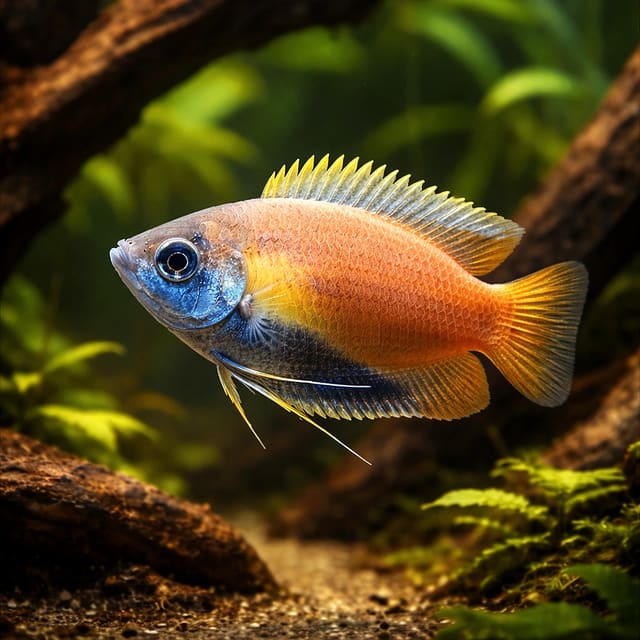
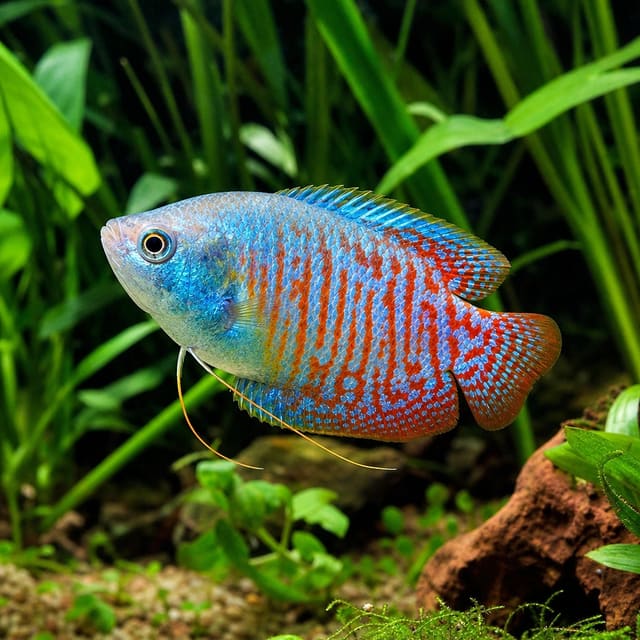
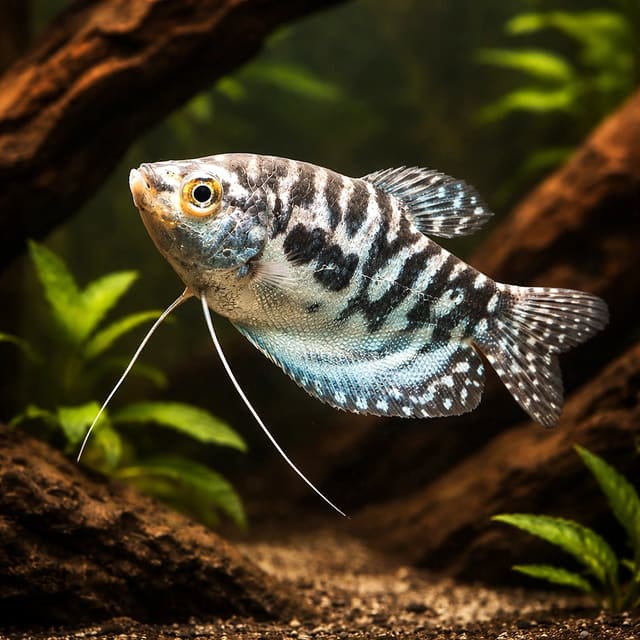
Gold is a selectively bred colour form of the Three-spot Gourami rather than a separate species. Seriously Fish also lists opaline, cosby, marbled and silver forms alongside the natural blue-grey form. Older aquarium labels may use Trichogaster trichopterus for the same fish; its scientific name is Trichopodus trichopterus.
This is an obligate air-breathing species with a labyrinth organ, so it must always have a clear route to the surface. Its elongated pelvic-fin rays also help it sense its surroundings. Those features do not reduce the need for clean water, biological filtration or sufficient swimming space.
| Suits | Not suited to |
|---|---|
| A planted aquarium with floating cover, open swimming areas and surface access | A small aquarium that cannot provide the 90 × 30 cm starting base |
| A keeper prepared to monitor variable adult temperament | A community that depends on every individual remaining peaceful |
| Robust, carefully screened companions | Timid fish, fish small enough to be eaten or fish that may nip fins |
| Stable tropical water shared by the whole community | An unfiltered or biologically immature aquarium |
One purchase supplies one Gold Gourami. The live size selector may show 2 - 3 cm, 3-4 cm, 4 - 5 cm, 5 - 6 cm, 6 - 7 cm and XL choices. Treat XL as its named dispatch grade and plan permanent space around the recorded 15 cm adult size.
The size you select is the size supplied, not the adult size. A 3-4 cm fish therefore still needs a permanent aquarium planned around the recorded 15 cm adult length. A smaller dispatch size does not make a shorter aquarium suitable, and litres alone do not replace the required base dimensions.
Sex is guaranteed only when the selected option explicitly states male or female. This Gold Gourami listing has no sex-guaranteed option.
Do not base a pair, trio or breeding plan on receiving a particular sex. Dispatch size, colour intensity and the gallery cannot determine the sex supplied. Temperament must also be observed directly because some individuals remain peaceful while others become assertive as they mature.
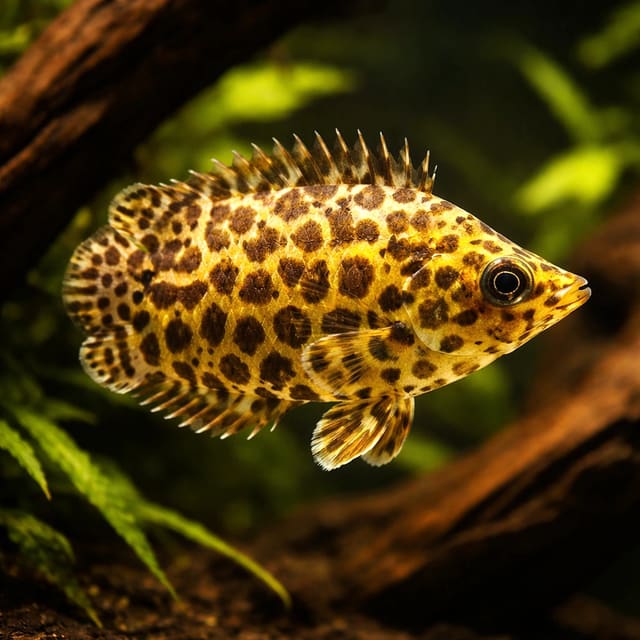
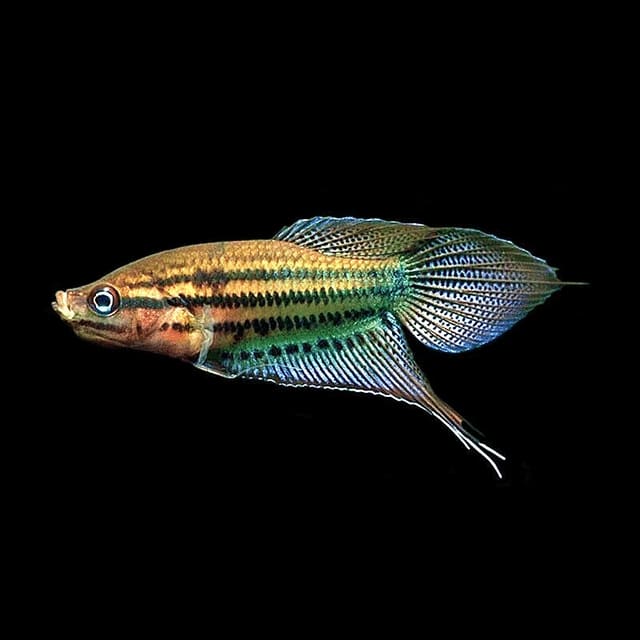
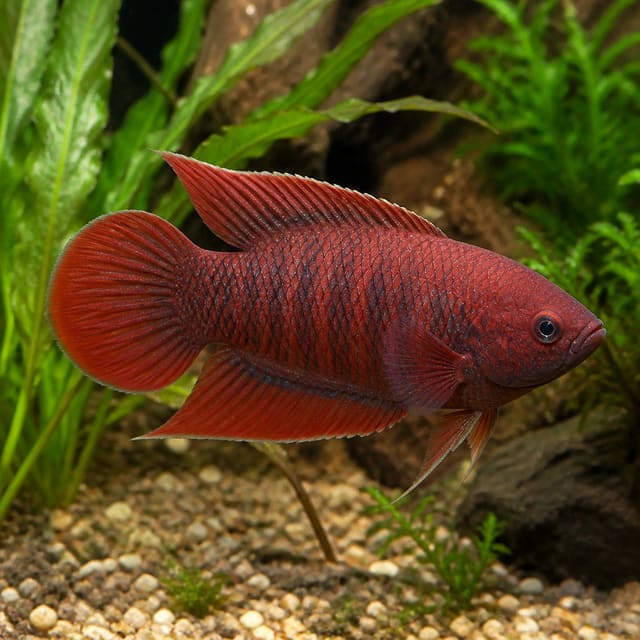
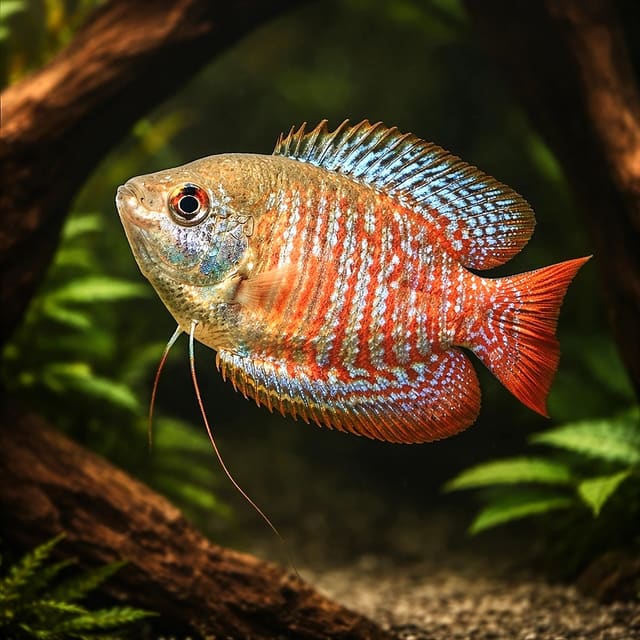
Some gallery images have been digitally enhanced to improve image quality. They show the listed type of animal rather than guaranteeing the exact markings of the individual supplied, so natural colour and pattern can vary.
Provide at least a 90 × 30 cm aquarium base for this fish. Seriously Fish pairs that footprint with an approximate volume of 81 litres for a 90 × 30 × 30 cm aquarium. Treat both base dimensions as the starting point: a taller aquarium with less length or width does not provide the same swimming and turning room.
| Planning value | How to use it |
|---|---|
| 15 cm standard length | Judge permanent space and companions by the adult record, not the dispatch size. |
| 90 × 30 cm base | Preserve both horizontal dimensions when comparing aquariums. |
| Approximately 81 litres | Keep this figure attached to the stated 90 × 30 × 30 cm dimensions. |
| Planted cover | Create sheltered areas without filling all of the swimming space. |
| Open surface route | Allow this labyrinth fish to reach atmospheric air freely. |
The starting footprint covers the Gold Gourami itself, not an unlimited community. Increase the available space when other adult fish, multiple territories or substantial decor reduce usable room. Count every companion at adult size and leave clear paths between cover, feeding areas and the surface.
A practical check is to view the aquarium from above before stocking. If wood, rocks and dense plants leave only narrow channels across a 30 cm width, the nominal dimensions overstate the usable base. Rearrange the layout until a full-grown, deep-bodied fish can turn, feed and move between sheltered and open areas without being funnelled past another fish.
Arrange the aquarium around cover, open swimming space and an unobstructed route to the surface. Seriously Fish recommends planting, floating cover and open areas for this species. Each feature has a separate purpose: planting provides shelter, open water provides movement and feeding room, and breaks in floating cover allow the fish to breathe atmospheric air.
Aquarium gravel or sand can form the base. Choose a layout that can be cleaned during routine water changes and does not collect large pockets of uneaten food. Keep passages broad and smooth around wood, stones and equipment so the gourami’s body and elongated pelvic-fin rays are not forced through tight gaps.
Floating plants should provide cover without sealing the surface. Thin them when the fish has to search for an opening, when food becomes trapped beyond reach or when the filter return can no longer circulate the surface effectively. Open water and cover should divide the same aquarium rather than compete for all of it.
Watch where the fish rests, feeds and surfaces. If it remains confined behind one object, is intercepted whenever it moves into the open or cannot reach food without being chased, change the layout or separate incompatible fish. More decor is not automatically better; the useful adjustment is the one that restores movement, feeding access and retreat choices.
Review the arrangement as the fish grows. A route that works for a recently dispatched fish may become too narrow for a 15 cm adult. Move or thin planting before the layout turns the aquarium into isolated pockets with no usable path between them.
Keep the Gold Gourami at 24–28°C, pH 6.0–8.0 and 5–12 dGH. These routine values are the overlap of FishBase’s recorded environmental range, Seriously Fish’s aquarium range and OATA’s gourami and paradise fish guidance. OATA’s figures are group guidance, not a species-specific optimum.
OATA also gives carbonate hardness of 3–10 dKH for the group, ammonia and nitrite at zero mg per litre, and nitrate at no more than 20 mg per litre above the normal tap-water level. Use these readings together: temperature, pH and hardness describe the water, while ammonia, nitrite and nitrate help show how effectively the aquarium is processing waste.
| Reading | Decision |
|---|---|
| 24–28°C | Choose a stable point shared by every animal and confirm it with a separate thermometer. |
| pH 6.0–8.0 | Measure aquarium and replacement water before attempting an adjustment. |
| 5–12 dGH | Use GH to assess mineral hardness rather than treating it as interchangeable with KH. |
| 3–10 dKH | Use KH to understand buffering and the likelihood of pH movement. |
| Ammonia or nitrite above zero | Pause further stocking and address waste and filtration immediately. |
| Rising nitrate | Review stocking, feeding and maintenance rather than relying on clear-looking water. |
Our water chemistry guide explains what pH, GH and KH measure. After testing, use the water matcher to compare your measured values with this range.
If temperature is outside the range, confirm the result with another thermometer before adjusting the heater. If pH differs between the aquarium and replacement water, identify the difference before a water change rather than adding products by guesswork. When GH or KH changes unexpectedly, test the source water and review any recently added rock, substrate or water treatment before making another change.
Do not chase the midpoint of a range when the aquarium is stable inside it. A steady 25°C and pH 7.2 shared by all inhabitants is a sound plan; repeatedly moving those values towards an arbitrary centre creates avoidable instability. Record results at the same point in the maintenance cycle so changes become easier to recognise.
A labyrinth organ does not replace filtration. Gold Gouramis release ammonia like other fish, and a biological filter must process that waste. The RSPCA explains that beneficial filter bacteria convert toxic ammonia into nitrite and then nitrate. Both ammonia and nitrite should read zero mg per litre before the fish is introduced.
Prepare and mature the aquarium before arrival. If this is a new system, follow our first tropical tank guide and use water tests to judge readiness. A tank that has merely been filled and heated does not yet have the established bacterial population needed to process livestock waste.
For the approximately 81-litre example associated with a 90 × 30 × 30 cm aquarium, Seriously Fish uses turnover of four to five times the volume each hour and identifies a filter rating of about 325–405 litres per hour. Use that calculation as a starting example because pipework, head height, debris and loaded media can reduce actual flow.
| Checkpoint | Action |
|---|---|
| Before stocking | Confirm zero ammonia and zero nitrite with the filter operating normally. |
| At least once a week | Test the water and complete a 25% partial water change. |
| Replacement water | Treat it with conditioner to remove chlorine or chloramine before adding it. |
| Reduced filter output | Check the intake, impeller and media for blockage. |
| Dirty filter media | Rinse it lightly in aquarium water removed during the partial water change; do not run it under the tap. |
| After adding livestock | Increase the population slowly so beneficial bacteria can adjust to greater waste and feeding. |
Direct the return so circulation and surface movement continue without turning the open swimming area into a forceful jet. The fish’s ability to breathe air is not a reason to stop useful circulation. Surface access, biological filtration and clean water perform different jobs and all remain necessary.
If ammonia or nitrite appears after stocking, stop adding animals, check the filter is running and remove uneaten food. Test again to track whether the reading is rising or falling. Review any recent filter cleaning, power interruption or sudden increase in feeding because each can affect waste processing.
Clear water is not proof that the biological filter is coping. Ammonia and nitrite are invisible, so weekly testing remains useful after the aquarium appears settled. Keep a simple written record; a gradual change across several tests often reveals a problem before the fish’s behaviour changes.
Feed a varied omnivorous diet. FishBase records wild feeding on zooplankton, crustaceans and insect larvae, while Seriously Fish describes a broader natural diet that also includes terrestrial and aquatic plants, algae, small invertebrates and detritus. Choose foods that cover both the animal and plant components of that diet.
OATA’s gourami guidance recommends feeding once a day and offering only what the fish can eat within a few minutes. Measure the portion by observing the whole feeding period rather than dropping in a habitual amount. Food left after that period adds waste and should lead to a smaller portion next time.
| What you see | What to do |
|---|---|
| Food remains after a few minutes | Reduce the next portion and remove recurring waste during maintenance. |
| Another fish takes everything | Spread the same measured total across more than one feeding point. |
| The gourami spits out large pieces | Use a smaller particle that it can swallow comfortably. |
| Interest in food falls suddenly | Check temperature, ammonia and nitrite, then compare its behaviour with its normal routine. |
| Body condition changes | Review portion size, food variety, competition and health together. |
Do not add more food simply because one fish is being excluded. That approach increases waste without ensuring the intended animal eats. Move feeding points apart, reassess the companion fish and separate an aggressor when the Gold Gourami cannot obtain its share safely.
A recently introduced fish may approach food differently from an established one, so watch whether it can see, reach and consume the staple. Once it has a predictable routine, compare appetite and body condition from week to week. A sudden change carries more meaning than one piece of food being ignored.
Live and frozen foods add variety but should not displace a complete staple. Keep the total meal within the few-minute limit. If frozen food releases excess liquid or fragments, offer a smaller amount and maintain the same water-quality checks used for any other meal.
Prepare the aquarium before the parcel arrives. Confirm 24–28°C, zero ammonia and zero nitrite, check that the filter is operating normally and make sure cover, open swimming room and surface routes are ready. Someone must be present to receive live fish.
Keep the order number and continuous video if a Live Arrival Guarantee claim is needed, and contact us the same day if anything has gone wrong. Read the current delivery and Live Arrival Guarantee policy for the complete claim terms.
After release, check that the fish can find cover and reach the surface without being intercepted. A surface visit is expected from a labyrinth fish and is not a problem by itself. Look instead for persistent exclusion, erratic swimming, altered breathing, loss of balance or repeated chasing.
At the first feeding, watch whether the fish approaches suitable food and whether another inhabitant prevents access. Keep the meal small enough to be consumed within a few minutes. Do not compensate for competition by scattering an excessive portion through the aquarium.
A calm first day does not guarantee long-term compatibility. Some Gold Gouramis become more assertive after settling or maturing. Keep the separation plan usable and continue observing the fish beyond the initial arrival period.
Learn the fish’s normal appetite, swimming pattern, colour, breathing and use of cover. OATA identifies warning signs including hanging at the surface, sitting on the bottom, erratic swimming, darker or paler colour, increased aggression, unusual hiding, altered gill movement, white spots, fluffy growths, damaged fins or scales, changing body condition and reduced interest in food.
Do not diagnose a condition from one surface visit, one missed meal or one colour change. The same sign can occur alongside poor water quality, social stress or a health problem. Record what changed, when it began and the measured water values so the pattern is clear.
| Situation | Next step |
|---|---|
| Several fish change at the same time | Prioritise shared water, filtration and temperature checks. |
| One fish is repeatedly chased | Restore safe separation before visible injury develops. |
| Food intake falls | Check water and competition, then compare body condition over time. |
| White spots or fluffy growths appear | Isolate safely where possible and seek diagnosis before choosing treatment. |
| Tests show ammonia or nitrite | Pause stocking, restore effective filtration and reduce uneaten waste. |
Watching for a pattern does not mean leaving a fish exposed to continuing aggression. Move it when it is being cornered, denied food or blocked from the surface. Likewise, a clear-looking aquarium should not delay testing because dissolved ammonia and nitrite cannot be judged by sight.
Avoid changing several water values and treatments simultaneously. Multiple interventions make the cause harder to identify and can create additional stress. Begin with measured water conditions, filter operation and immediate welfare risks, then use qualified guidance for persistent clinical signs.
Do not rely on a fixed social number to guarantee calm behaviour. Seriously Fish reports that some Gold Gouramis remain peaceful while others become spiteful as they mature. Males are territorial, will squabble amongst themselves and can become very aggressive during breeding behaviour.
Start with the complete adult aquarium plan rather than an assumed pair or trio. Include the 90 × 30 cm starting footprint, each companion at adult size, usable swimming room, feeding access, surface routes, visual separation and a safe place to move a fish if conflict continues.
| Choice | Decision screen |
|---|---|
| One Gold Gourami | Provide the full adult footprint, planting, surface access and compatible companions. |
| More than one | Increase usable space and make sure each fish can feed, retreat and reach the surface. |
| Multiple males | Males will squabble amongst themselves and defend territories, so keep a separation plan ready. |
| An assumed pair | The label is not a guarantee of peaceful behaviour. |
| A mixed community | Include every species’ adult size, water range, social needs and territory in the total plan. |
Plan social arrangements without assuming a particular sex. Individual temperament can still require separation.
Prepare the backup before adding multiple territorial fish. A mature, filtered alternative aquarium or a practical return or rehoming route allows action before injuries become severe. Observation is useful only when it is paired with a workable response.
Review the arrangement as the fish matures. A community that functions around smaller fish may change when the Gold Gourami approaches its 15 cm adult length and occupies more space. Reassess routes, feeding access and conflict rather than assuming an early peaceful period settles the question permanently.
Community compatibility is conditional. Seriously Fish identifies robust barbs, larger characins, loricariids, loaches and other medium or large gouramis as possible companions. Check each proposed fish against adult space, water and behaviour before mixing them.
| Question | Pass condition |
|---|---|
| Do the water needs overlap? | Every animal can remain stable at the chosen point within 24–28°C, pH 6.0–8.0 and 5–12 dGH. |
| Will the aquarium fit every adult? | All fish retain swimming, turning, feeding and retreat space at full size. |
| Can each animal feed? | No inhabitant repeatedly prevents another from taking its measured meal. |
| Are surface routes open? | The Gold Gourami can reach air without crossing a defended bottleneck. |
| Does the candidate nip fins? | It does not target fins or the gourami’s elongated pelvic-fin rays. |
| Can conflict be managed? | A safe separation plan is ready before introduction. |
Avoid timid species, fish small enough to be eaten and fish that may nip fins. These exclusions remain in place even when the aquarium is large. More space can improve retreat choices, but it does not turn an unsuitable feeding or predation relationship into a dependable one.
Use caution with multiple males and other territorial gouramis because mature behaviour may change after a calm introduction. Do not rely on similar body length as the only screen; feeding speed, swimming area, surface use and territorial behaviour can create conflict between fish of comparable size.
Small invertebrates face predation risk because this species eats small invertebrates in nature. Planting can provide refuge but cannot make a shrimp colony dependable. When preserving shrimp or their young is the priority, use a separate protected aquarium.
Individual behaviour can still vary after a proposed companion passes these checks. Separate fish when persistent chasing, exclusion or injury appears. To compare other labyrinth fish as separate candidates, browse the gouramis and labyrinth fish collection and assess each animal on its own adult requirements.
Gold Gourami reaches 15 cm standard length according to FishBase. Plan its permanent aquarium around that adult figure rather than the dispatch size.
Gold Gourami needs at least a 90 × 30 cm aquarium base; Seriously Fish pairs this with approximately 81 litres at 90 × 30 × 30 cm. Add planting, floating cover, open swimming room and clear surface access.
Do not rely on a fixed number to guarantee calm behaviour. Whether keeping one Gold Gourami or more, provide the full adult footprint and monitor feeding, chasing, hiding and surface access; males are territorial and will squabble amongst themselves.
Gold Gourami suits a beginner with reservations about its variable temperament. It is best treated as an intermediate choice for a keeper who can maintain 24–28°C, pH 6.0–8.0 and 5–12 dGH, monitor aggression and separate incompatible fish.
Gold Gourami is omnivorous. Feed a good-quality flake, granule or pellet as the complete staple, rotate small live or frozen foods such as daphnia, small bloodworm or tubifex, and offer only what it eats within a few minutes once daily.
Keep this fish at 24–28°C, pH 6.0–8.0 and 5–12 dGH. These values are the overlap of FishBase’s environmental range, Seriously Fish’s aquarium range and OATA’s group guidance; keep ammonia and nitrite at zero mg per litre.
Individual temperament varies: some remain peaceful, while others become spiteful as they mature, and males are territorial. Monitor chasing and exclusion, retain a separation plan, and avoid companions that may nip its fins.
Consider robust barbs, larger characins, loricariids and loaches only after checking adult space, shared 24–28°C water, feeding and temperament. Avoid timid fish, fish small enough to be eaten and fin-nipping species; small invertebrates face predation risk.
Film every delivery continuously from the sealed parcel as it is opened, with the fish still inside the sealed bag before anything is disturbed. Someone must be present to receive it; float the bag for 20–30 minutes, never pour the bag water into the aquarium, and follow Tropical Fish Co’s delivery and Live Arrival Guarantee policy.
Independently collected by Judge.me from customers who bought this item. All reviews are shown.
Very impressed with this fish. It is doing really well.
Reply from Tropical Fish Co
<p>Thanks Marianne, glad this one settled well. Gold Gouramis are a bit calmer than most of the family and they really come into their own with some cover at the surface - floating plants or tall stems will bring him out and deepen the colour. - Tropical Fish Co</p>
Healthy and doing well
Reply from Tropical Fish Co
<p>Thank you Tracey. One thing worth knowing with Gold Gouramis - they're labyrinth fish, so they'll come up and gulp air at the surface now and then. That's completely normal breathing, not a sign anything's wrong with your water. Glad this one's settled in. - Tropical Fish Co</p>