Easy
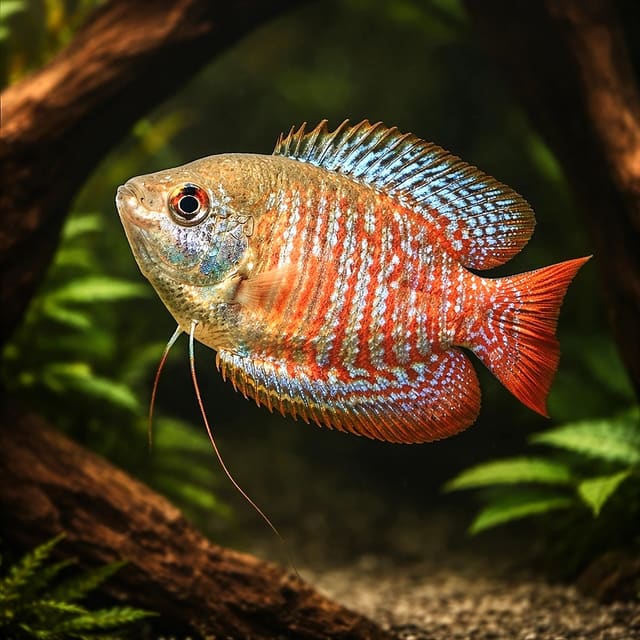
Orange Thick-Lipped Gourami (Trichogaster labiosa)
22–27°C · pH 6–7.5 · 80L
£6.99

The Pearl Gourami (Trichopodus leerii) is an air-breathing gourami from the Malay Peninsula, Thailand, Sumatra and Borneo that reaches 12 cm. It suits beginners with a planted, peaceful community aquarium kept at 24–28°C, pH 6.0–8.0 and 5–12 dGH, the overlap of FishBase, Seriously Fish and OATA guidance. Sold individually in 2.5–7 cm and XL dispatch grades.
Adult size is the maximum length this species reaches at full maturity (scientific sources). The livestock you receive will be younger and smaller — pick a size above for the actual shipping size. Product-photo provenance and any image-specific limitations are stated on the listing.
Trichopodus leerii
Save when buying multiple fish. Each quantity is one fish; sex and pair formation are not guaranteed unless the selected variant explicitly states them.
Minimum of 2 per order.
The Pearl Gourami (Trichopodus leerii) is an air-breathing gourami from the Malay Peninsula, Thailand, Sumatra and Borneo that reaches 12 cm. It suits beginners with a planted, peaceful community aquarium kept at 24–28°C, pH 6.0–8.0 and 5–12 dGH, the overlap of FishBase, Seriously Fish and OATA guidance. Sold individually in 2.5–7 cm and XL dispatch grades.
Adult size is the maximum length this species reaches at full maturity (scientific sources). The livestock you receive will be younger and smaller — pick a size above for the actual shipping size. Product-photo provenance and any image-specific limitations are stated on the listing.
Maintain these water conditions for optimal health and vibrant colors
The Pearl Gourami (Trichopodus leerii) is an obligate air-breathing freshwater gourami in the family Osphronemidae. It comes from the Malay Peninsula, Thailand, Sumatra and Borneo and reaches 12 cm. This peaceful community fish suits beginners who can provide a planted aquarium, dependable filtration, suitable water and enough room for adult territorial behaviour.
FishBase records swamps and streams, usually among dense vegetation, as its natural habitat. Its specialised labyrinth organ allows it to breathe atmospheric air, so the aquarium must leave the fish clear access to the surface. Air breathing does not reduce its need for good water quality or a properly maintained biological filter.
Seriously Fish describes it as one of the most peaceful gouramis, an excellent community fish and a hardy species recommended to beginners. That peaceful character still needs active planning: males are territorial with one another and may be hard on females during breeding behaviour.
| Suits | Not suited to |
|---|---|
| Beginners prepared to test and maintain the water | Unfiltered or newly filled aquariums |
| Planted community aquariums with open swimming room | Aquariums shorter than the 120 cm FishBase minimum |
| Peaceful companions screened for temperament and activity | Aggressive or very vigorous companions |
| Keepers able to provide hiding places for territorial encounters | Layouts without cover or clear surface access |
Plan for a 12 cm adult in an aquarium at least 120 cm long. FishBase gives 120 cm as the minimum aquarium size, while Seriously Fish lists a minimum base of 90 × 30 cm and an approximate volume of 81 litres. Using the longer FishBase figure for the final aquarium gives this active community fish the more generous long-term footprint.
Keep the aquarium at 24–28°C, pH 6.0–8.0 and 5–12 dGH. These routine values are the overlap of the FishBase environmental range, the Seriously Fish aquarium profile and OATA’s gourami guidance. OATA’s figures are group guidance, not a species-specific optimum.
| Decision | Working figure |
|---|---|
| Adult size | 12 cm |
| Final aquarium | At least 120 cm long |
| Temperature | 24–28°C |
| pH | 6.0–8.0 |
| General hardness | 5–12 dGH |
Check all three water values rather than selecting the fish from temperature alone. An aquarium at 26°C can still be unsuitable if its pH or hardness falls outside the working range. The same check applies to planned companions: their requirements must overlap across temperature, pH and hardness before temperament is considered.
One purchase supplies one Pearl Gourami in the size selected from the live size selector. The labelled choices are 2,5 - 3,5 cm, 4 - 5 cm, 5 - 6 cm, XL and 6 - 7 cm. The size you select is the size supplied, not the adult size. Treat XL as a grade label rather than a stated centimetre measurement, and plan every choice around the same 12 cm adult and final aquarium.
Sex is guaranteed only when the selected option explicitly states male or female. This Pearl Gourami listing has no sex-guaranteed option. Do not build a fixed male-to-female plan around colour, fin shape, an image or a dispatch size. If keeping several Pearl Gouramis, provide hiding places and plan for the territorial behaviour recorded between males.
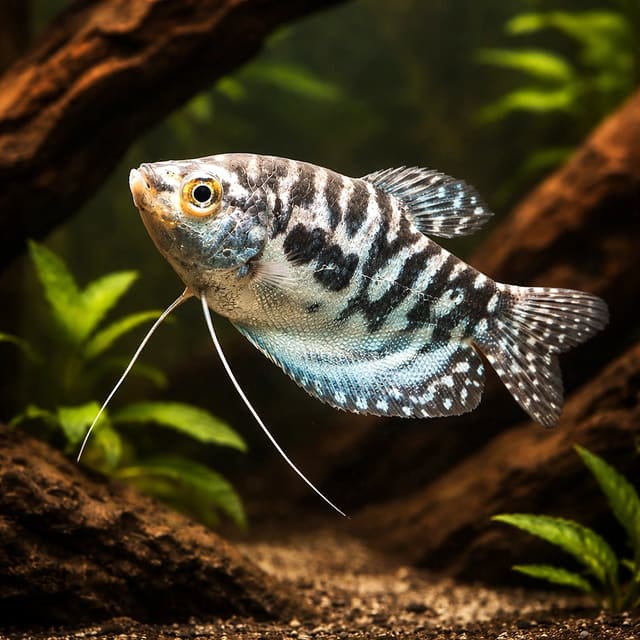
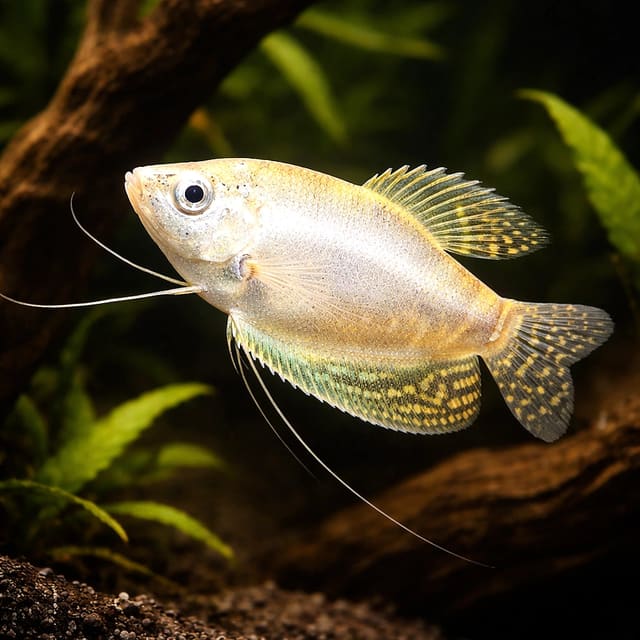
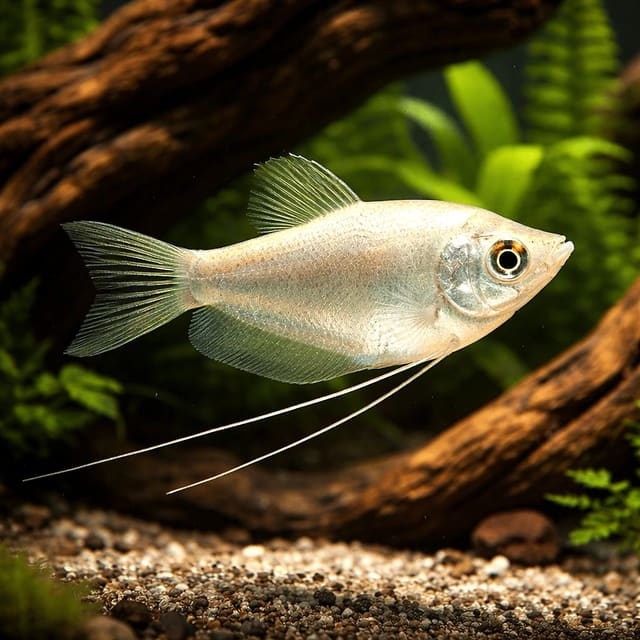
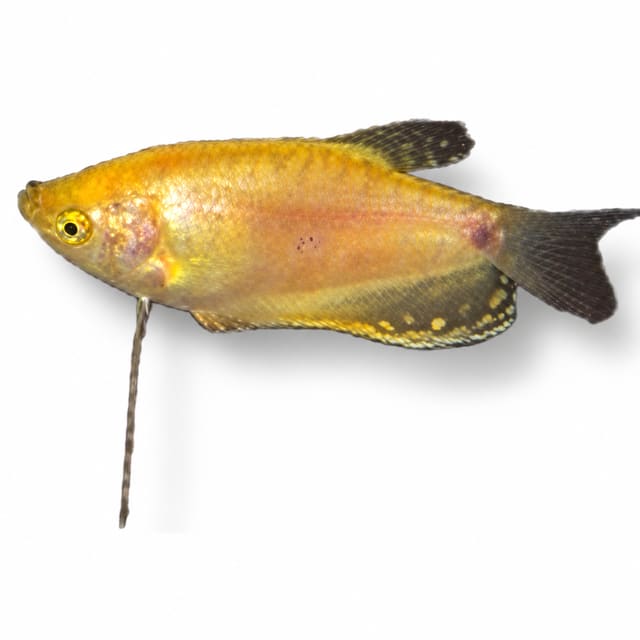
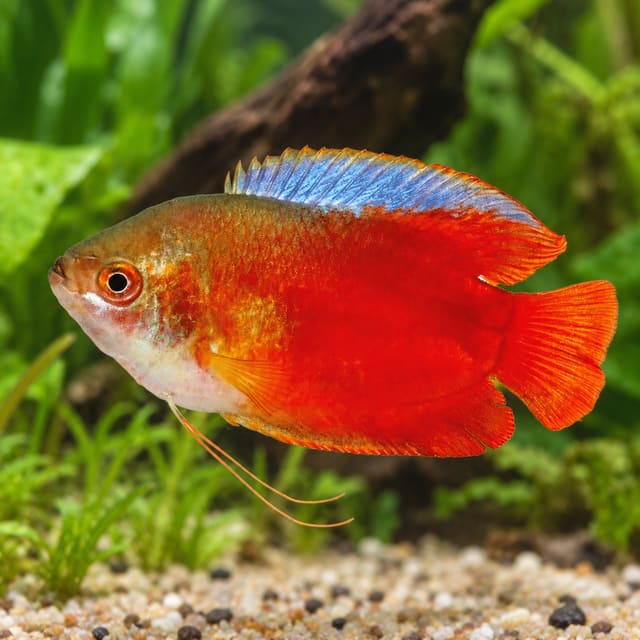
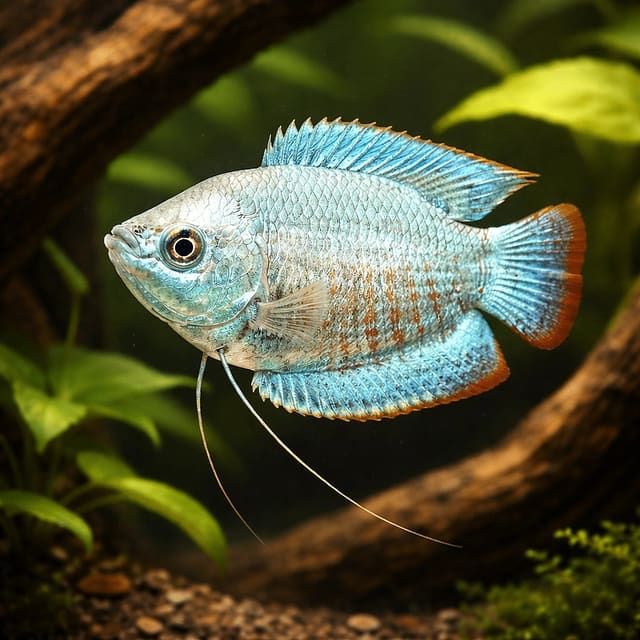
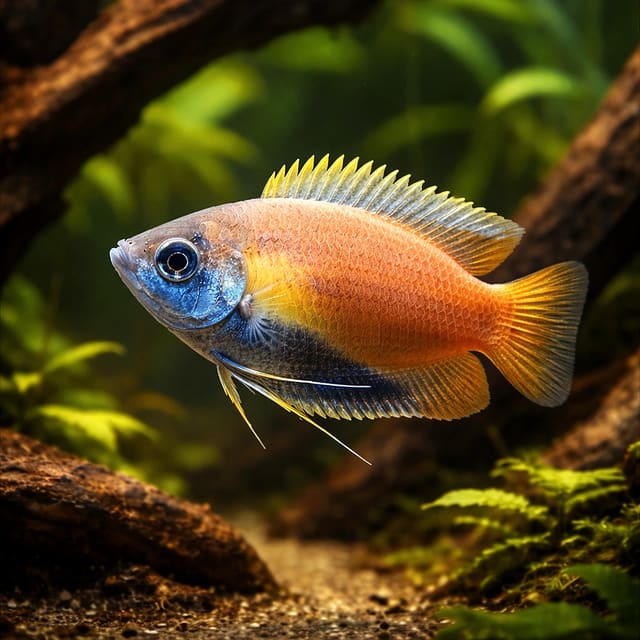
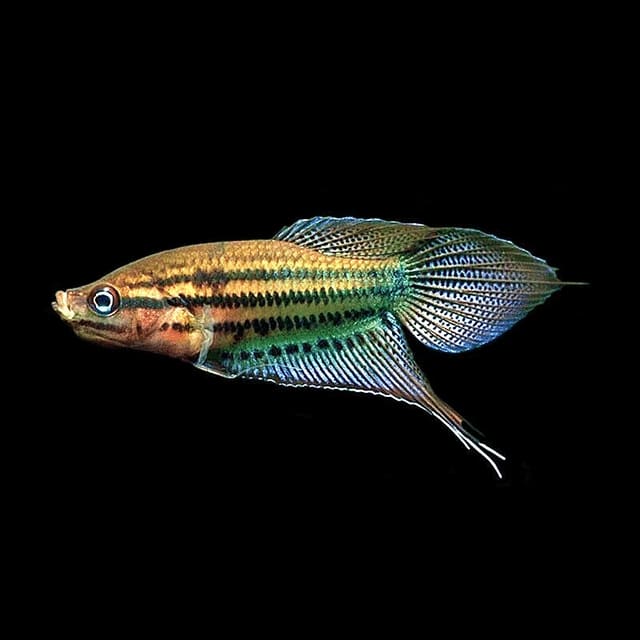
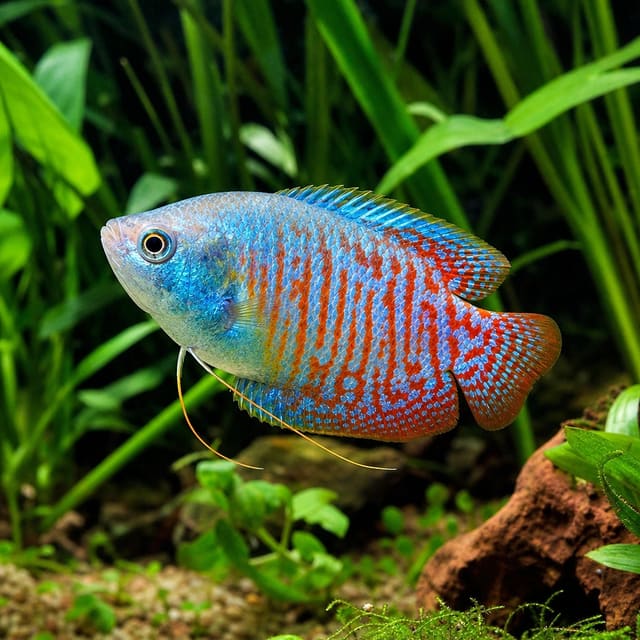
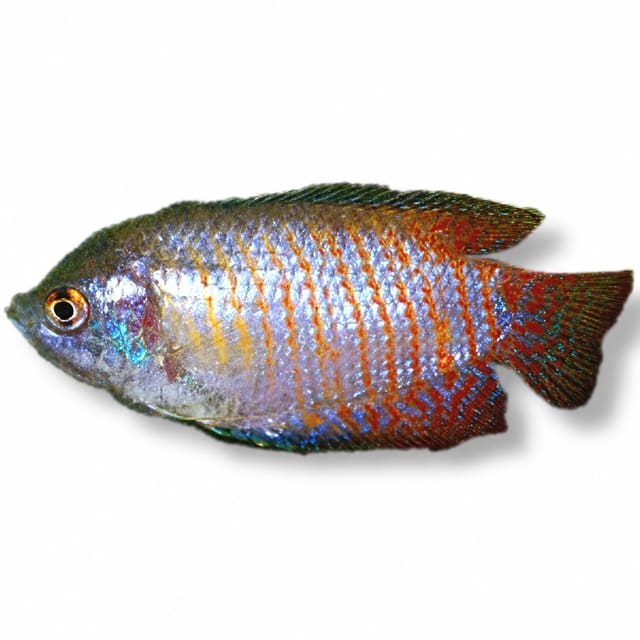
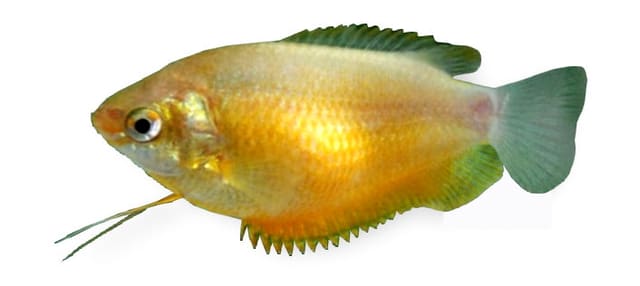
Some gallery images have been digitally enhanced to improve image quality. They show the listed type of animal rather than guaranteeing the exact markings of the individual supplied, so natural colour and pattern can vary. The scenes illustrate the species rather than the exact individual supplied; purchase quantity and sex are determined by the offer text and selected grade, not by the number or appearance of fish shown in an image.
For wider identity and care comparisons, browse our gouramis and labyrinth fish collection. Compare adult size, final footprint, water overlap and temperament before treating another gourami as an alternative.
Choose an aquarium at least 120 cm long for the adult fish. FishBase records a maximum of 12 cm total length and gives a minimum aquarium size of 120 cm. Seriously Fish also lists 12 cm standard length, together with a 90 × 30 cm base and an approximate volume of 81 litres. Use 12 cm as the single adult planning figure and the longer 120 cm footprint as the final minimum.
Length matters because litres alone do not describe the usable swimming footprint. An approximately 81-litre aquarium can meet the smaller 90 × 30 cm reference while still falling short of the 120 cm FishBase minimum. Check the actual external or manufacturer-stated aquarium length rather than assuming that a litre figure guarantees the required footprint.
Do not plan to move a smaller dispatch grade through a succession of undersized aquariums. Starting with the adult footprint avoids a later move, gives the biological filter time to establish around the permanent system and prevents temporary housing from becoming the long-term arrangement.
Where several fish or other community animals are planned, the 120 cm figure remains the starting point rather than a capacity promise. The final stocking decision must account for every animal’s adult size, territorial behaviour, waste production and need for cover.
Create a planted aquarium with floating vegetation, open swimming areas and clear access to the surface. Seriously Fish recommends a planted setup with some floating vegetation and open areas for swimming. This arrangement reflects the densely vegetated swamps and streams recorded by FishBase while leaving usable space for a 12 cm fish.
Divide the layout by function rather than filling every area with plants. Use planted sections as visual shelter, retain an open route along the aquarium for swimming, and leave breaks in floating growth so the Pearl Gourami can reach atmospheric air. Check those surface openings whenever floating plants spread.
| Area | Purpose |
|---|---|
| Planted edges or sections | Cover and visual separation |
| Open central or front area | Uninterrupted swimming room |
| Floating vegetation | Overhead cover without closing the whole surface |
| Open surface gaps | Direct access to atmospheric air |
Hiding places are especially important when more than one Pearl Gourami is kept. Males are territorial with one another, and breeding behaviour may put pressure on females. Planting that interrupts continuous lines of sight gives a retreating fish somewhere to move without removing the open area needed for normal swimming.
OATA recommends aquarium gravel or sand and ideally live plants for gouramis and paradise fish. Choose the substrate around the plants and maintenance method you intend to use, then keep accessible areas where solid waste can be removed during the weekly water change. The layout should support cleaning as well as appearance.
Inspect the usable space after equipment and planting are complete. A 120 cm aquarium crowded from end to end may offer less practical swimming room than its dimensions suggest, so trim spreading plants and preserve the planned open route.
Keep the Pearl Gourami at 24–28°C, pH 6.0–8.0 and 5–12 dGH. The aquarium should also read zero mg/l ammonia and zero mg/l nitrite. OATA advises that nitrate should not exceed 20 mg/l above the normal level in the tap water, giving you a reference that accounts for nitrate already present in the replacement supply.
Test the source water and aquarium separately before deciding whether a reading is suitable. Our water chemistry guide explains what the main measurements mean, while the water matcher helps compare measured values with the working range. Enter actual test results rather than estimates.
| Measurement | Instruction |
|---|---|
| Temperature | Keep between 24 and 28°C |
| pH | Keep between 6.0 and 8.0 |
| General hardness | Keep between 5 and 12 dGH |
| Carbonate hardness | Use OATA’s 3–10 dKH group range for planning |
| Ammonia | Maintain at zero mg/l |
| Nitrite | Maintain at zero mg/l |
| Nitrate | Keep within 20 mg/l above the tap-water level |
A worked check might read 26°C, pH 7.2 and 8 dGH. Each value falls inside the routine overlap, but the check is incomplete until ammonia, nitrite and nitrate have also been measured. A suitable pH never compensates for detectable ammonia or nitrite.
Use treated replacement water during maintenance. OATA instructs keepers to use a tap-water conditioner that removes harmful chlorine or chloramine before the water enters the aquarium. Record results in the same units each week so that changes are easy to recognise and compare.
Run a well set up and maintained biological filter before adding the Pearl Gourami. The RSPCA explains that fish release toxic ammonia, which filter bacteria convert first to toxic nitrite and then to the safer nitrate. The filter therefore needs an established bacterial population as well as enough mechanical flow to move waste-bearing water through its media.
Prepare and mature the permanent aquarium rather than adding the fish to newly filled water. Our first tropical tank guide sets out the setup sequence. Confirm zero mg/l ammonia and zero mg/l nitrite before livestock is introduced, then continue testing as the biological load changes.
Seriously Fish uses a turnover of four to five times aquarium volume per hour for its approximate 81-litre example. That produces a filter rating of about 325–405 litres per hour. Treat those figures as the worked example for that volume rather than assuming they describe every 120 cm aquarium.
For a different aquarium, begin by checking its actual water volume after substrate and equipment are considered, then assess the filter manufacturer’s stated flow and media capacity. A nominal flow rate alone does not show whether the unit has enough biological media or whether blockages have reduced its output.
OATA warns that stocking too quickly can cause new tank syndrome when there are too few nitrifying bacteria to process the extra waste. Clear water can still contain ammonia or nitrite, so use test results—not appearance—as the deciding measure.
Feed once a day and offer only what the Pearl Gourami can eat within a few minutes. OATA’s gourami and paradise fish guidance describes the group as omnivorous and recommends good-quality flake, granules or pellets, with small live or frozen foods such as daphnia, small bloodworm or tubifex. Seriously Fish also describes this species as unfussy and willing to accept most foods offered.
Use a complete prepared fish food as the regular foundation, then vary feeds with the named live or frozen items. Match each item to the fish’s ability to take and swallow it. A food that remains untouched or repeatedly reaches the substrate is not contributing to the meal and should prompt a smaller serving next time.
This method ties the portion to what the fish consumes rather than to a fixed pinch or scoop that may be too large for a smaller dispatch grade. The once-daily schedule stays the same; the quantity changes with the fish’s actual response.
Overfeeding creates a second water-quality problem because uneaten food breaks down and releases toxic waste. If ammonia, nitrite or nitrate rises, check the feeding amount alongside filter operation and maintenance. Do not try to solve poor water quality by withholding routine testing.
Observe feeding behaviour as part of the health check. OATA lists reduced intake or loss of interest in food as a change worth investigating. When appetite changes, test the water and review whether the fish is being pressured by tank mates before adding different foods.
At least once every week, change 25% of the aquarium water and test ammonia and nitrite. OATA strongly recommends this schedule, along with regular nitrate monitoring. Use a siphon to remove solid waste from accessible substrate areas and treat all replacement tap water with conditioner before adding it.
Check the filter for blockages during the same routine. If its media needs cleaning, do not run it under the tap. Rinse it lightly in aquarium water removed during the partial water change; this reduces the number of beneficial bacteria lost to chlorine or chloramine.
Watch the fish while carrying out the routine. OATA highlights changes in swimming, colour, temperament, breathing, appearance, body condition and feeding. Examples include hanging at the surface, sitting on the bottom, erratic swimming, hiding more than normal, unusually fast or slow gill movement, white spots, fluffy growths, damaged fins or scales, changing body condition and reduced appetite.
The Pearl Gourami normally visits the surface because it is an air-breathing fish, so assess a change against its usual pattern rather than treating every surface visit as illness. Repeated hanging at the surface combined with changed breathing, appetite or activity deserves an immediate water test.
If concerning changes appear, test water quality first and record the fish’s behaviour and appearance. Contact us for further guidance rather than adding an unselected treatment. The observed signs and current test results provide a clearer starting point for the next decision.
Prepare the mature aquarium before the parcel arrives. Confirm that ammonia and nitrite are zero mg/l and that temperature, pH and hardness are within the Pearl Gourami’s working range. This aquarium check follows OATA’s introduction guidance and sits separately from the delivery procedure.
Follow the steps in our delivery and Live Arrival Guarantee policy in order:
For a Live Arrival Guarantee claim, contact us on the same day with the order number and the continuous unboxing video. The video must begin with the sealed parcel, show it being opened and show the fish still in the sealed bag before anything is disturbed.
OATA advises increasing livestock numbers slowly because the beneficial bacteria in the filter must respond when waste and feeding increase. Add the Pearl Gourami only to the prepared system, then follow the established testing and feeding routines rather than making several stocking changes together.
Keep the bag-floating time within the stated 20–30 minutes. The purpose of the arrival sequence is to document the unopened parcel, preserve the condition of the bag until it is shown on video and complete the stated float before release. The aquarium itself should already have been tested and brought into range before delivery.
Do not keep the Pearl Gourami with aggressive or very vigorous fish. Seriously Fish warns that it will become withdrawn in that company. Its peaceful community temperament is a reason to screen companions carefully, not a reason to assume that every community-labelled animal will be suitable.
OATA’s broader gourami guidance also says to avoid timid species, small fish which could be eaten and fish which may nip gourami fins. Keep each of those exclusions unconditional when planning the community. A larger aquarium or extra planting does not turn an excluded behavioural match into a suitable one.
| Avoid | Use caution |
|---|---|
| Aggressive fish | More than one male Pearl Gourami |
| Very vigorous fish | Male and female breeding-related behaviour |
| Timid species | Layouts with too few hiding places |
| Small fish which could be eaten | Communities approaching the aquarium’s practical capacity |
| Fish which may nip gourami fins | New combinations that need close behavioural observation |
Males are territorial with one another, so treat multiple males as a caution requiring adequate hiding places, visual separation and enough overall room. If chasing leaves one fish unable to feed or use the aquarium normally, the arrangement is failing.
Males may also be hard on females when they want to breed. Hiding places are therefore necessary even when the intended group is not male-only. Do not rely on a preset sex ratio for this offer because sex is not guaranteed by its size grades.
Choose peaceful community fish that are neither aggressive nor very vigorous, then check the complete aquarium rather than assessing each proposed companion in isolation. The same fish can create a different outcome when the aquarium is crowded, hiding places are removed or several territorial animals need the same area.
A species name alone cannot settle every community decision. Screen the actual number of animals, their adult requirements and the usable layout, then observe feeding, hiding and aggression after introduction. Increased hiding, changed aggression or reduced feeding are reasons to reassess the mix and test the water.
Ask us to assess a proposed community with the aquarium dimensions, current inhabitants, measured temperature, pH and hardness, and the number of Pearl Gouramis planned. Those details allow the firm exclusions and territorial cautions to be applied to the real aquarium rather than to a generic list.
Do not treat the related gourami suggestions elsewhere on the page as approved companions. They are alternatives for comparison; compatibility requires a separate assessment using the same water, space and behaviour checks.
A Pearl Gourami reaches 12 cm. FishBase records 12 cm total length, while Seriously Fish lists 12 cm standard length; use 12 cm as the adult planning figure.
Give a Pearl Gourami an aquarium at least 120 cm long. Seriously Fish lists a 90 × 30 cm base and approximately 81 litres, but FishBase gives the longer 120 cm minimum, so use that length for the final plan.
OATA’s gourami guidance plans for at least a small group, but Pearl Gourami males are territorial with one another and may pressure females during breeding behaviour. Base the final number on a 120 cm or longer planted aquarium with adequate hiding places rather than a preset sex ratio.
Yes. Seriously Fish describes the Pearl Gourami as hardy and highly recommended to beginners, provided it receives a planted aquarium, established filtration, compatible companions and routine water care.
Feed a Pearl Gourami once daily with only what it can eat within a few minutes. OATA’s gourami guidance recommends good-quality flake, granules or pellets plus small live or frozen foods such as daphnia, small bloodworm or tubifex.
Keep this fish at 24–28°C, pH 6.0–8.0 and 5–12 dGH, the overlap of FishBase, Seriously Fish and OATA guidance. Maintain ammonia and nitrite at zero mg/l.
Treat it as a peaceful community fish; male-to-male territorial behaviour is the main aggression concern. Keep it away from aggressive or very vigorous fish, and follow OATA’s guidance to avoid fish that may nip gourami fins.
Choose screened peaceful community fish that are neither aggressive nor very vigorous. Avoid timid species, small fish which could be eaten and fish which may nip its fins, and ensure every companion shares the 24–28°C, pH 6.0–8.0 and 5–12 dGH range.
Start filming the sealed parcel before opening it, then open it in one continuous take and show the fish in the sealed bag. Float the bag for 20–30 minutes before release, do not pour bag water into the aquarium, and retain the video for any Live Arrival Guarantee claim.
No reviews for this item yet. Bought one? Honest reviews only, good or bad.
What customers say about ordering from us
I have a small group of long finned mountain minnows. So was delighted to be able to order ten of this variety to increase the genetics in my tank . The ones I recieved are healthy but it’s to early to give a verdict on wether they are of a long finned type since they are small currently.
Gordon Walker · 23 Sept 2026
100% success travel and "installation". Pleased with quality of purchase. The Siamese fighter a bit "shy" so have not yet seen him at his best yet but looking good. Happy customer. GG
George E Garratt · 21 Sept 2026
Reviews of our shop, collected by Judge.me, an independent third-party review collector. Newest first.