Easy
Orange Thick-Lipped Gourami (Trichogaster labiosa)
22–27°C · pH 6–7.5 · 80L
£6.99

Colourful Rainbow / Banded Gourami with source-checked planted-tank care, two size options, original reference photo, WELCOME10 and our Live Arrival Guarantee.
Adult size is the maximum length this species reaches at full maturity (scientific sources). The livestock you receive will be younger and smaller — pick a size above for the actual shipping size. Product-photo provenance and any image-specific limitations are stated on the listing.
Trichogaster fasciata
Save when buying multiple fish. Each quantity is one fish; sex and pair formation are not guaranteed unless the selected variant explicitly states them.
Confirm your email, then we’ll send an availability message for this exact item if it returns within 180 days.
This request is only for this product—no newsletter or other promotions. A mail-provider retry may very rarely duplicate the same availability message. Unconfirmed addresses are removed after 48 hours. See our privacy policy.
Colourful Rainbow / Banded Gourami with source-checked planted-tank care, two size options, original reference photo, WELCOME10 and our Live Arrival Guarantee.
Adult size is the maximum length this species reaches at full maturity (scientific sources). The livestock you receive will be younger and smaller — pick a size above for the actual shipping size. Product-photo provenance and any image-specific limitations are stated on the listing.
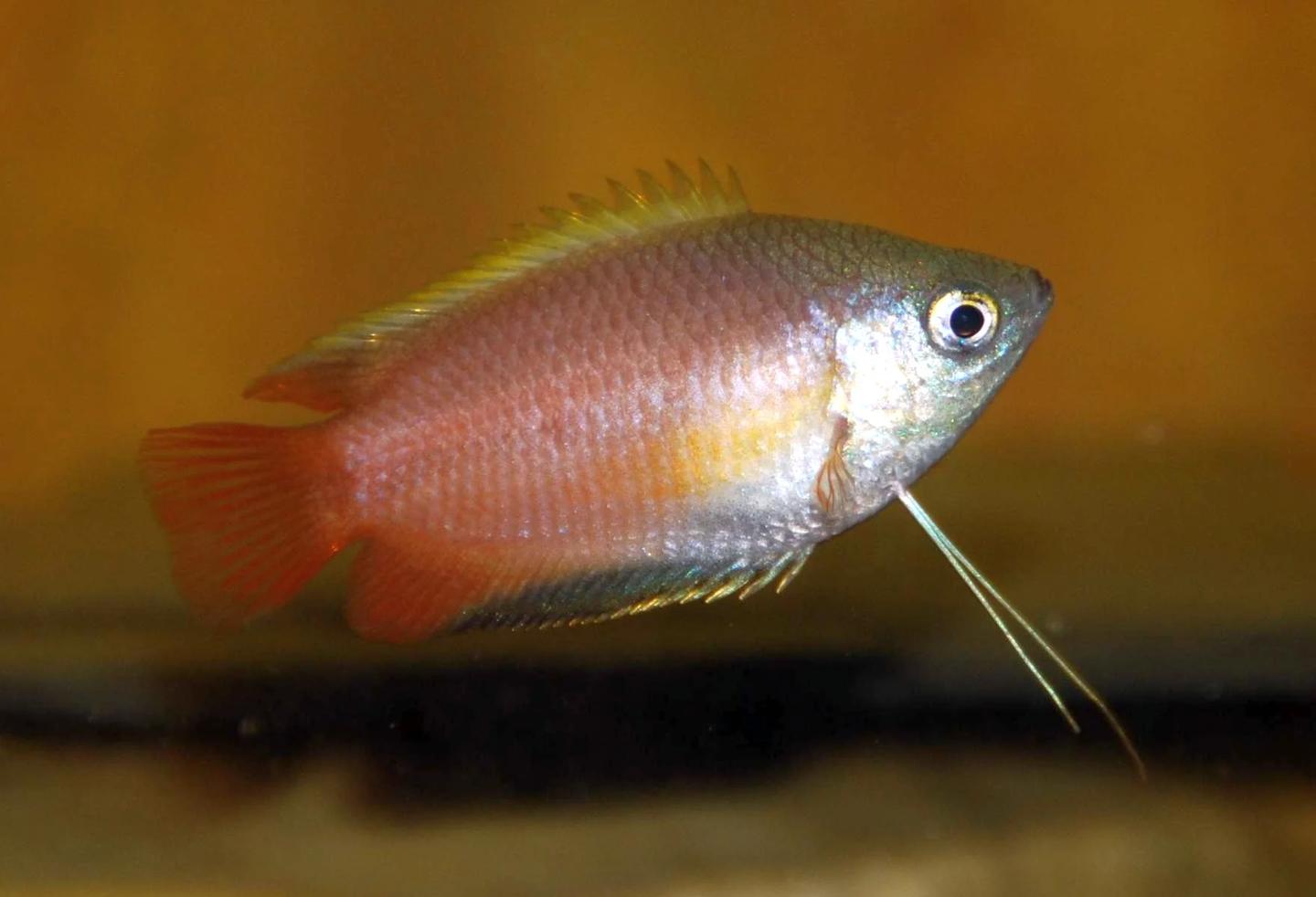
Start with a mature, filtered aquarium at least 60 cm long. Published size records disagree, and broad group guidance is not Honey-Gourami-specific, so verify Trichogaster chuna, the seller's adult-size advice and any claimed sexes before choosing one fish or a group.
Maintain these water conditions for optimal health and vibrant colors
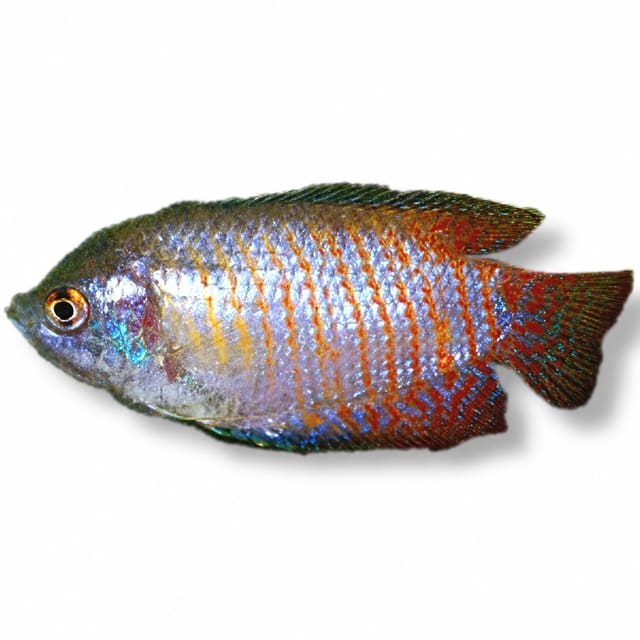
The Rainbow / Banded Gourami (Trichogaster fasciata) is a colourful South Asian labyrinth fish with warm orange banding, turquoise-blue sheen and long, feeler-like pelvic fins. It is also sold as the Indian Gourami, Striped Gourami and, in older trade lists, Colisa fasciata. Those names are kept here as useful identity bridges, but the page is written for real fishkeepers rather than repeating buyer keywords unnaturally.
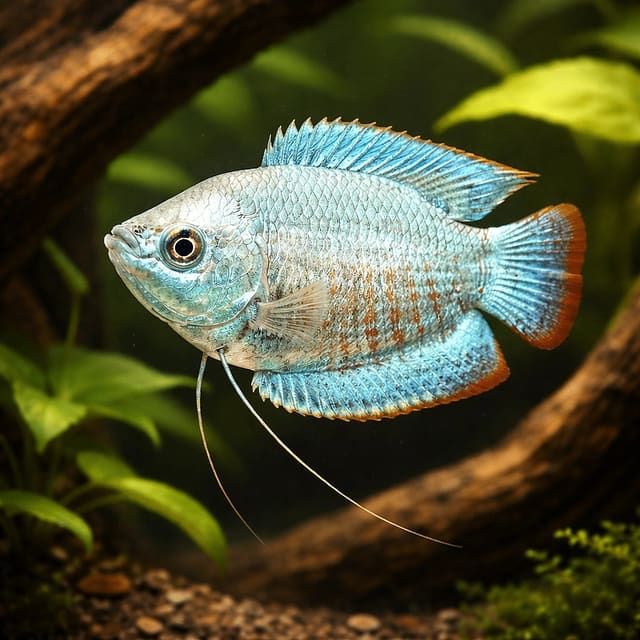
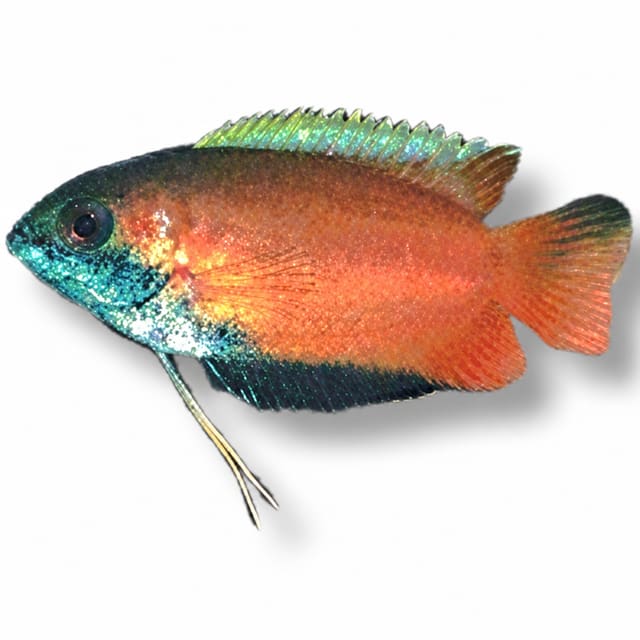
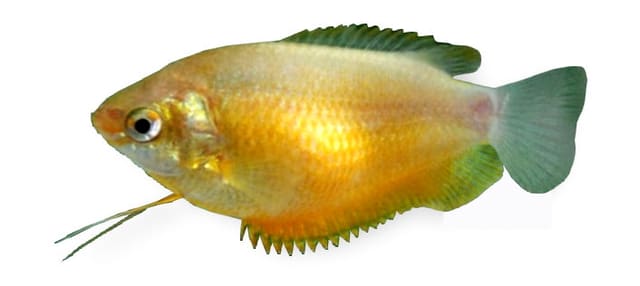
This listing covers our current two size options: 3-4 cm and 4.5-6 cm. The first gallery image is the original reference photo for this product family, and the additional planted-aquarium images are retained as visual context. Choose this fish if you want a medium gourami with more presence than a tiny dwarf gourami, while still planning for a calm, planted community aquarium.
| Customer name | Rainbow / Banded Gourami |
|---|---|
| Scientific name used on this listing | Trichogaster fasciata |
| Also searched as | Indian Gourami, Striped Gourami, Banded Gourami and older Colisa fasciata |
| Current size options | 3-4 cm and 4.5-6 cm on the same Shopify product |
| Adult planning size | Usually around 10-12 cm; FishBase/USGS-style records support a 12-12.5 cm planning size |
| Care level | Moderate; hardy when settled, but best in a mature planted aquarium |
| Temperament | Generally community-suitable, with males becoming territorial around space or bubble-nest behaviour |
| Temperature | 22-28C |
| pH / hardness | pH 6.0-7.5; soft to medium water around 4-15 dGH |
| Best tank zone | Middle and upper areas, with clear access to the surface for air-breathing |
Rainbow Gouramis have the classic labyrinth-fish shape: a laterally compressed body, a confident glide through the middle and upper water, and delicate thread-like pelvic fins used to explore their surroundings. Under settled conditions the body can show rich orange-red barring with blue-green highlights, giving the fish a warmer, more natural look than many heavily line-bred aquarium strains.
This is a good choice for a keeper who wants a visible, characterful fish without moving straight into large cichlid territory. It is not a background shoaler and it is not a tiny nano species. It is a centrepiece-style gourami for a planted aquarium where the layout gives it cover, quiet surface areas and space away from fin nippers or very pushy tankmates.
| Planting | Use tall stems, broad leaves and floating plants to soften the light and create secure surface cover. |
|---|---|
| Surface access | Leave open breathing gaps because this species uses a labyrinth organ and regularly takes air from the surface. |
| Flow | Gentle to moderate flow is preferred; avoid blasting the surface so hard that resting and bubble-nest behaviour become difficult. |
| Decor | Wood, roots, leaf litter where suitable, and planted corners help break lines of sight between males or nervous tankmates. |
| Lighting | Bright light is easier to manage when floating plants or shaded sections give the fish somewhere calmer to retreat. |
A mature, stable aquarium is the best choice. Aim for warm water, gentle movement and plenty of cover. Floating plants are especially useful because they soften the light, create quiet surface pockets and echo the weedy habitats associated with this species. Leave open swimming lanes at the front so the fish can be seen clearly, but avoid a stripped-down display tank with nowhere to retreat.
For substrate and decor, use smooth gravel or sand, planted areas, wood or roots that break up lines of sight, and calm surface space. The fish does not need blackwater conditions, but it appreciates stable water quality and a tank that is not constantly rearranged. Acclimate slowly and avoid adding it to an immature aquarium with unstable ammonia or nitrite.
| Temperature target | 22-28C; keep the tank stable rather than chasing daily changes. |
|---|---|
| pH target | 6.0-7.5 is the practical range used for this listing. |
| Hardness target | 4-15 dGH suits the soft-to-medium freshwater range recorded for the species. |
| Minimum aquarium | About 75 litres for a single fish or carefully planned pair/group; larger is safer with more than one male. |
| Water quality | Zero ammonia and nitrite, low nitrate, regular water changes and no sudden chemistry swings. |
| Delivery-day handling | Keep lights low, acclimate patiently, and do not feed heavily on the first day after arrival. |
This is not a tiny nano fish. It is best with peaceful to moderately robust community fish that will not nip its long fins or bully it at feeding time. Suitable tankmates can include many rasboras, peaceful barbs, larger tetras, Corydoras, loaches and other calm community species chosen for similar water temperatures.
Avoid fin nippers, aggressive cichlids, very boisterous barbs and cramped mixes with multiple territorial labyrinth fish. If you keep more than one male, use a larger aquarium with heavy planting and broken sight lines. During breeding behaviour, males can guard a bubble-nest area and become sharper with rivals. A single specimen in a peaceful planted tank is usually the easiest option for most home aquariums.
| Usually good fits | Peaceful rasboras, calm barbs, larger peaceful tetras, Corydoras, peaceful loaches and other planted-community fish. |
|---|---|
| Use caution | Other gouramis, slow long-finned fish, very small fish and anything that competes aggressively at the surface. |
| Avoid | Fin nippers, aggressive cichlids, cramped male gourami groups and very boisterous community fish. |
| Group planning | More than one male needs extra space, plants and broken sight lines; do not crowd them into a small bare tank. |
Feed a varied omnivorous diet. A good tropical flake or micro pellet can be the base, with frozen bloodworm, daphnia, brine shrimp, mosquito larvae or similar foods used several times a week. Small surface foods are appreciated, but make sure slower tankmates still get their share. Colour and body condition are usually best when the diet is varied rather than one dry food every day.
The Indian/Banded/Rainbow Gourami group has a confusing naming history. Older aquarium literature and supplier lists commonly use Colisa fasciata or Trichogaster fasciata, while some modern UK hobby pages discuss Indian Banded/Striped Gourami under Trichogaster bejeus.
Your fish is packed for live-animal transport and sent with tracked courier delivery. First-time customers can use WELCOME10 at checkout where eligible, and our Live Arrival Guarantee is there to give you confidence when ordering livestock online. Please make sure someone is available to receive the parcel, float and acclimate the fish carefully, and contact us quickly if there is any delivery concern.
It is usually suitable for a peaceful community aquarium, but it is not completely passive. Males may become territorial, especially in small tanks or during breeding behaviour, so give it space and cover.
Yes, but plan the group carefully. A larger planted tank with broken sight lines is strongly preferred, and multiple males need more space than a single fish.
Yes. Like other gouramis, it has a labyrinth organ and will breathe air from the surface, so do not block the surface completely.
Useful names include Rainbow Gourami, Banded Gourami, Indian Gourami, Striped Gourami, Trichogaster fasciata and the older Colisa fasciata.
No reviews for this item yet. Bought one? Honest reviews only, good or bad.
What customers say about ordering from us
I have a small group of long finned mountain minnows. So was delighted to be able to order ten of this variety to increase the genetics in my tank . The ones I recieved are healthy but it’s to early to give a verdict on wether they are of a long finned type since they are small currently.
Gordon Walker · 23 Sept 2026
100% success travel and "installation". Pleased with quality of purchase. The Siamese fighter a bit "shy" so have not yet seen him at his best yet but looking good. Happy customer. GG
George E Garratt · 21 Sept 2026
Reviews of our shop, collected by Judge.me, an independent third-party review collector. Newest first.