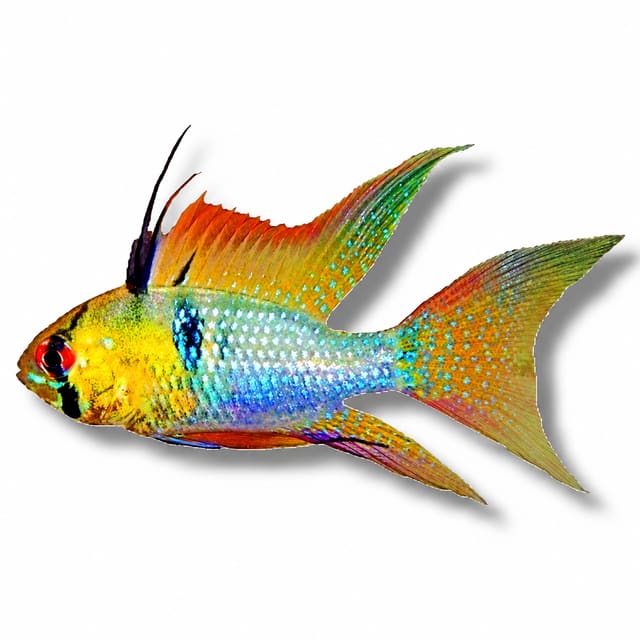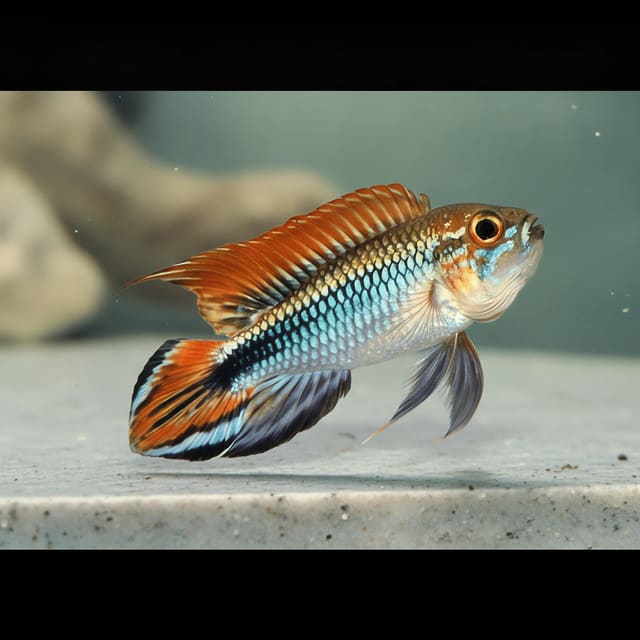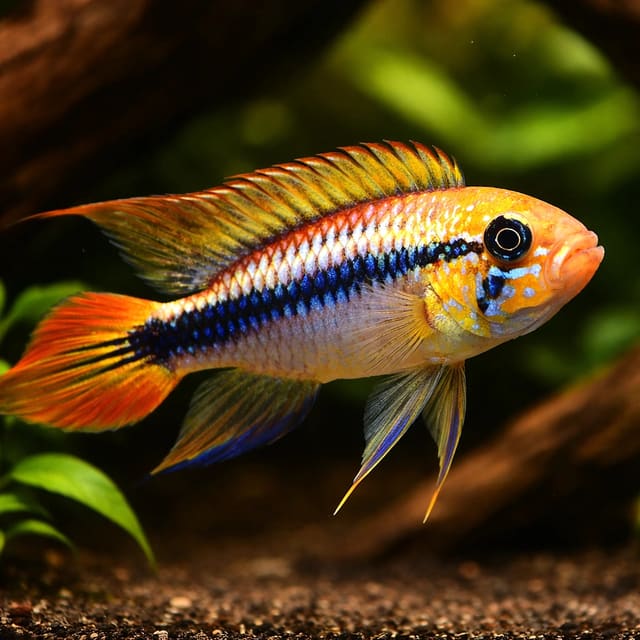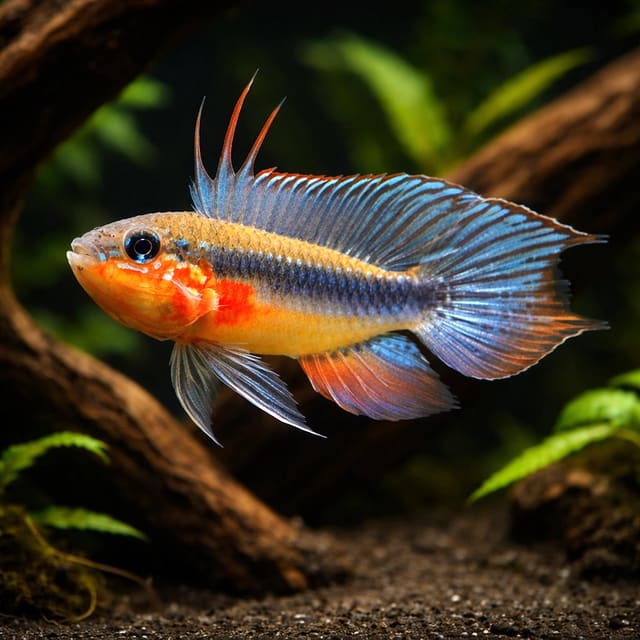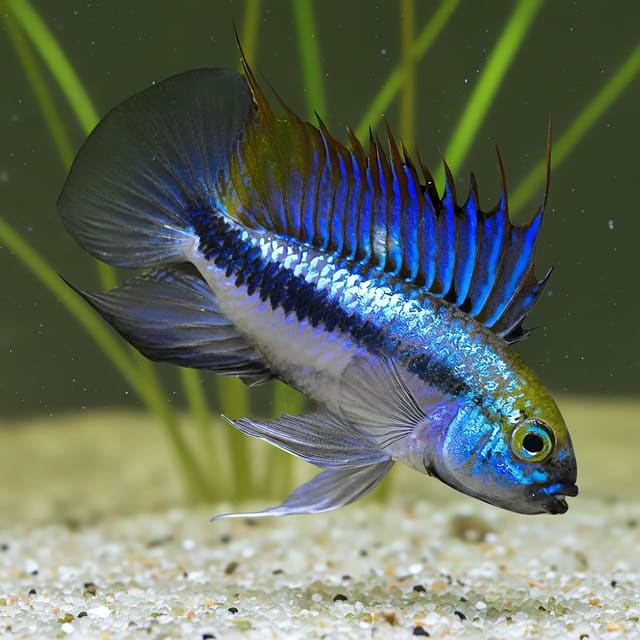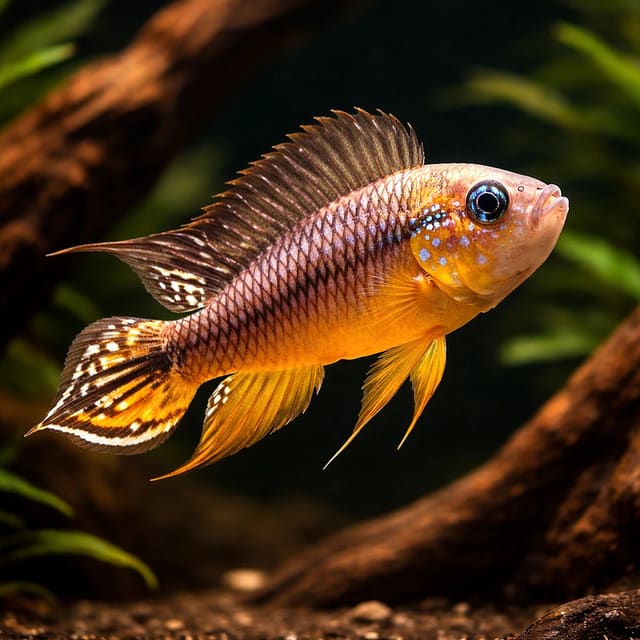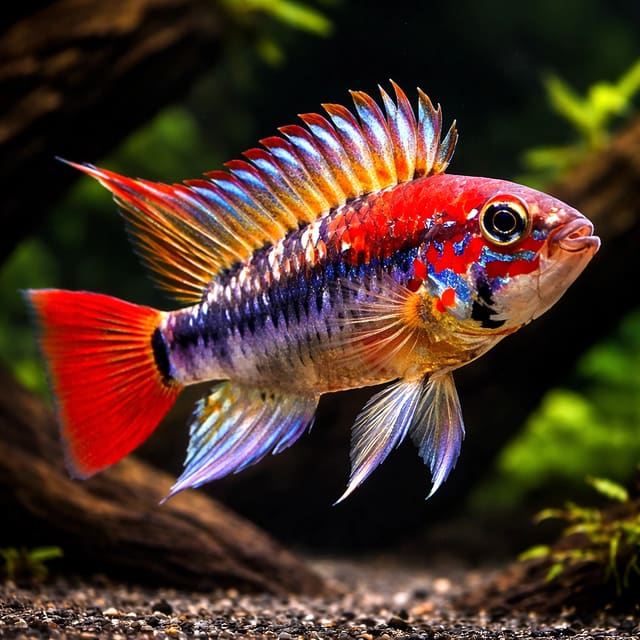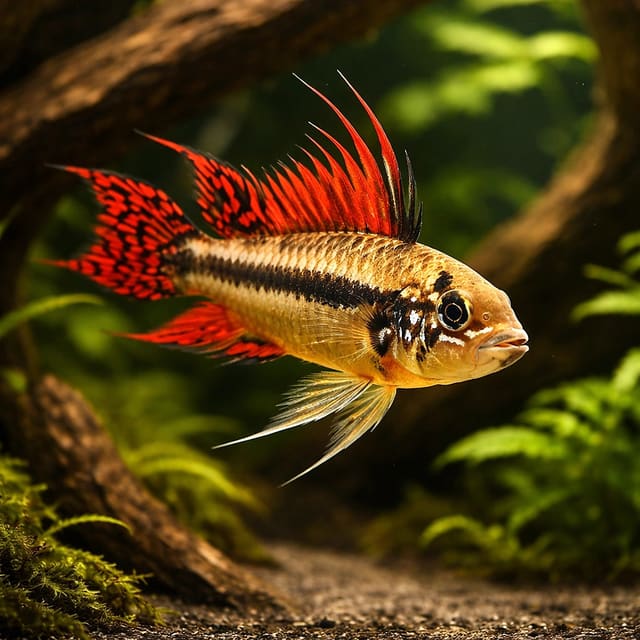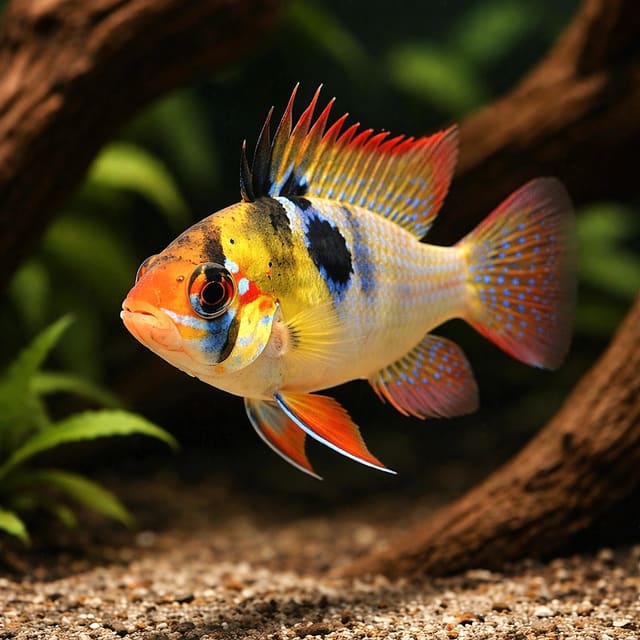
Asia Form Ram Cichlid (Mikrogeophagus ramirezi)
27–30°C · pH 4–7 · 54L
£5.99
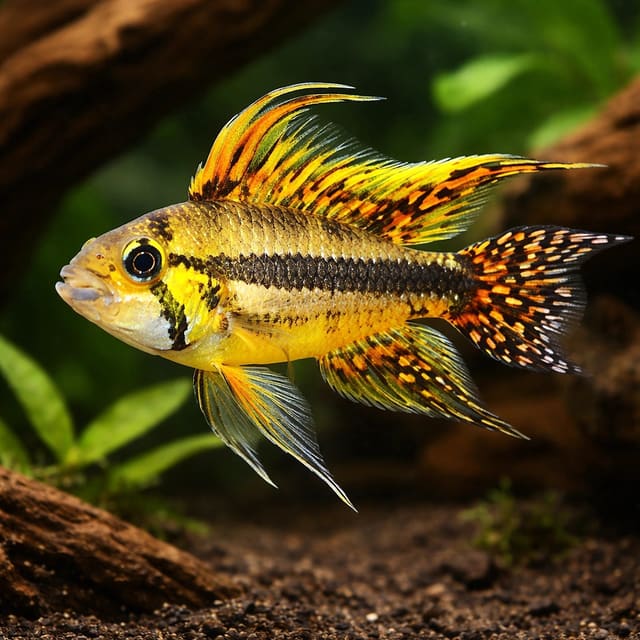
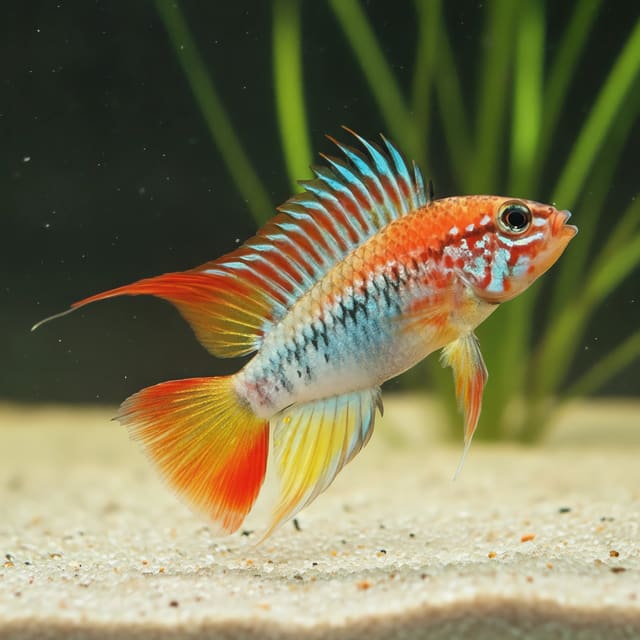
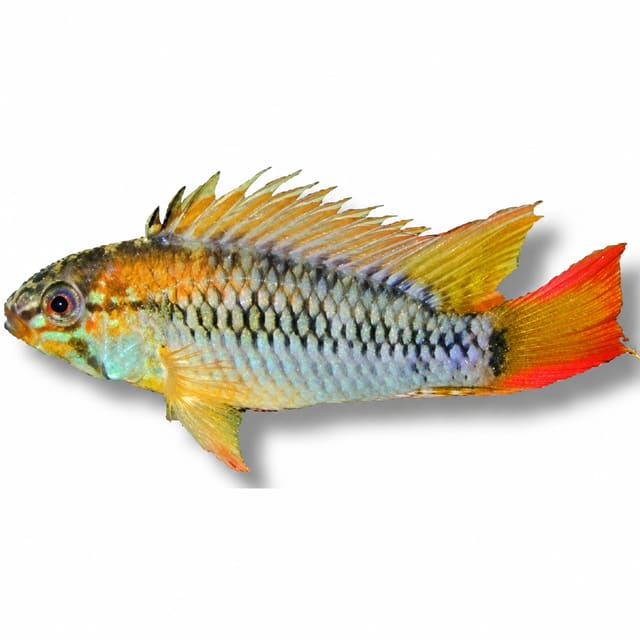
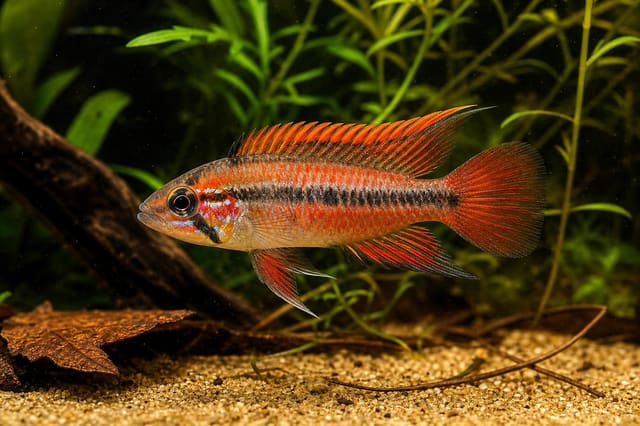
The Red Gold Hongsloi Dwarf Cichlid (Apistogramma hongsloi) is a South American cichlid from the Orinoco River basin that reaches 7 cm. It suits keepers who can provide a mature, structured aquarium at the FishBase, Seriously Fish and OATA temperature overlap of 23–27°C, the FishBase and Seriously Fish pH overlap of 5.5–6.0, and 5–12 dGH. Sold individually in 3–4 cm and 4–5 cm dispatch sizes.
Adult size is the maximum length this species reaches at full maturity (scientific sources). The livestock you receive will be younger and smaller — pick a size above for the actual shipping size. Product-photo provenance and any image-specific limitations are stated on the listing.
Apistogramma hongsloi
Save when buying multiple fish. Each quantity is one fish; sex and pair formation are not guaranteed unless the selected variant explicitly states them.
The Red Gold Hongsloi Dwarf Cichlid (Apistogramma hongsloi) is a South American cichlid from the Orinoco River basin that reaches 7 cm. It suits keepers who can provide a mature, structured aquarium at the FishBase, Seriously Fish and OATA temperature overlap of 23–27°C, the FishBase and Seriously Fish pH overlap of 5.5–6.0, and 5–12 dGH. Sold individually in 3–4 cm and 4–5 cm dispatch sizes.
Adult size is the maximum length this species reaches at full maturity (scientific sources). The livestock you receive will be younger and smaller — pick a size above for the actual shipping size. Product-photo provenance and any image-specific limitations are stated on the listing.

Cichlids are a family of roughly 1,800 accepted species, not one care type. Before buying, identify the exact species and source, then compare adult measurement, usable tank dimensions, social system, territory, tested water, diet and an exit plan. No family-wide minimum tank, water range or tank-mate list is safe.
Maintain these water conditions for optimal health and vibrant colors
The Red Gold Hongsloi Dwarf Cichlid (Apistogramma hongsloi) is a freshwater member of the cichlid family from South America’s Orinoco River basin. FishBase records it from the Vichada River drainage, middle Meta River drainage in Colombia and the middle Orinoco basin, and gives a maximum length of 7 cm total length. It suits a keeper prepared to maintain warm, acidic water, mature biological filtration and a structured lower level where this bottom-associated fish can shelter and hold territory.
Red Gold is the trade form represented by this offer. The species remains Apistogramma hongsloi, a compact cichlid whose behaviour matters as much as its body length. A small adult size does not make it suitable for an unstructured or newly set-up aquarium. Its floor space, caves, cover and relationships with nearby fish need deliberate planning.
Choose it for a calm display built around roots, branches, leaf litter, plants and shaded retreats. Territorial behaviour can become stronger around breeding, so the layout needs plenty of cover where a chased fish can shelter. This is different from simply filling a small aquarium with decorations: each retreat needs a usable entrance, nearby cover and a route away from another fish.
| Suits | Not suited to |
|---|---|
| A mature, filtered freshwater aquarium | An aquarium without established biological filtration |
| Warm, acidic water within the stated range | Water outside the stated species range |
| A structured base with caves and cover | A bare layout with nowhere to retreat |
| Calm companions with enough space | Very active or boisterous companions |
| A keeper ready to monitor territorial behaviour | A community where breeding territories cannot be managed |
One purchase supplies one animal. Use the live size selector to choose either the 3–4 cm or 4–5 cm size. These labels describe the fish’s dispatch measurement and do not change its identity, adult care or territorial needs. The size you select is the size supplied, not the adult size.
Plan the aquarium for a fish reaching 7 cm rather than treating the selected dispatch size as its final measurement. A larger dispatch fish is not a different form, guaranteed sex or different care category. Aquarium footprint, water range, filtration and companion screening stay the same for both sizes.
Sex is guaranteed only when the selected option explicitly states male or female. This Red Gold Hongsloi Dwarf Cichlid listing has no sex-guaranteed option.
The gallery images are representative of this type of animal rather than photographs of the exact animal supplied, so colours can look slightly different from the live animal.
Keep this fish at 23–27°C, pH 5.5–6.0 and 5–12 dGH. The temperature is the overlap of the ranges given by FishBase, Seriously Fish and OATA; the pH is the overlap of the FishBase and Seriously Fish species ranges, while 5–12 dGH uses FishBase’s recorded lower bound and OATA’s upper guide within the Seriously Fish range. Test the aquarium rather than judging suitability from labels such as tropical, soft or acidic.
Seriously Fish gives a base of about 45 × 30 cm and roughly 41 litres as acceptable for a single pair, with groups requiring larger quarters. OATA’s dwarf-cichlid guidance recommends at least 60 litres for a pair and says an aquarium of at least 80 litres will be needed to mix dwarf cichlids with other fish. These figures cover dwarf cichlids as a group, so a community aquarium needs both the 80-litre volume and a base with room for every territory.
Volume alone cannot describe a suitable dwarf-cichlid aquarium. A tall aquarium may hold the same litres as a longer one while giving far less usable base area. Start with the footprint, then check volume, cover, filtration and the number of territories the arrangement can support.
Keep the aquarium at 23–27°C, pH 5.5–6.0 and 5–12 dGH. FishBase records a wild environmental range of 23–30°C, pH 5.5–6.0 and hardness beginning at 5 dH. Seriously Fish gives aquarium values of 23–29°C, pH 5.5–7.0 and 1–15 dGH. The 23–27°C instruction is the overlap of FishBase, Seriously Fish and OATA; pH 5.5–6.0 is the FishBase and Seriously Fish overlap, and OATA’s guidance narrows the upper hardness to 12 dGH.
The pH instruction is deliberately acidic. A reading of 6.0 sits within all three references, while 5.5 remains within both species ranges. Do not push pH upward merely because a broad dwarf-cichlid range extends higher. Measure your source water and aquarium before choosing the fish, then use the water chemistry guide to understand what each test means.
| Value | Instruction |
|---|---|
| Temperature | Maintain 23–27°C and avoid movement outside that range. |
| pH | Keep between 5.5 and 6.0. |
| General hardness | Keep between 5 and 12 dGH. |
| Ammonia | Maintain 0 mg/l. |
| Nitrite | Maintain 0 mg/l. |
| Nitrate | Keep no more than 20 mg/l above the normal tap-water level. |
Test the aquarium at least weekly and record the results so gradual movement is visible. When comparing your readings with the target, the water matcher provides a direct way to check measured values against the stated range. If ammonia or nitrite appears, treat it as a filtration and waste problem immediately rather than adjusting pH to disguise poor water quality.
Stability comes from regular maintenance, controlled feeding and a functioning biological filter. It does not mean leaving the aquarium untouched. Make replacement water safe with conditioner before adding it, and avoid abrupt changes in temperature or chemistry during routine work.
Use a base of at least 45 × 30 cm for a single pair. Seriously Fish associates that footprint with roughly 41 litres and says groups require larger quarters. OATA recommends at least 60 litres for a pair and says at least 80 litres will be needed when dwarf cichlids share with other fish.
A pair kept alone and a community need different amounts of space. A base of about 45 × 30 cm, roughly 41 litres, is acceptable for a single pair kept on its own. The 60-litre figure is the broader UK trade-body recommendation for a pair of dwarf cichlids. When choosing a new aquarium, the larger planning margin is the more forgiving route, provided its footprint also works.
| Plan | Decision |
|---|---|
| Pair-only aquarium | Start with at least a 45 × 30 cm base; choosing 60 litres or more follows OATA’s roomier group recommendation. |
| Community aquarium | Use at least 80 litres and confirm that the base can hold caves, cover and routes around each territory. |
| Group plan | Move beyond the pair footprint and provide larger quarters; the number must follow the actual layout and companion assessment. |
| Tall, narrow aquarium | Do not accept litre capacity alone when the base is smaller than the stated footprint. |
Floor area matters because caves and defended spaces occupy the lower part of the aquarium. Draw the base as a simple rectangle before arranging it. Mark each cave, the cover around it and an open route by which another fish can move away. If every route crosses one cave entrance, the layout concentrates rather than separates territorial pressure.
Allow room for equipment without turning every corner into a dead end. The filter must provide the gentle movement described for the species, while caves and wood should remain stable and accessible for observation. The final arrangement should make it possible to see whether a fish is feeding, hiding continuously or being confined to one corner.
Lay a soft sandy substrate with wood roots and branches arranged to form shady places and caves. Seriously Fish also names ceramic flowerpots, lengths of plastic piping and other suitable artificial materials as useful shelter. OATA says a dwarf-cichlid aquarium should have gravel or sand and ideally live plants for cover, especially for shy species, with plant pots, model caves, wood and leaf litter as further shelter.
A natural-looking arrangement can include dried beech, oak or Ketapang almond leaves. As leaf litter decomposes, it can support microbial colonies that may provide a secondary food source for fry. The leaves may be left to break down or removed and replaced every few weeks. Use only aquarium-suitable materials and position them so maintenance remains possible.
Distribute shelters instead of clustering every cave in one attractive corner. A fish leaving one cave should be able to reach cover without crossing an exposed base directly in front of another retreat. Turn cave entrances in different directions and place wood between them. This arrangement does not remove territorial behaviour, but it gives a pursued fish more routes away.
Check structures whenever you maintain the aquarium. Ceramic shelters, pipe and wood should remain stable, while decomposing leaves should not prevent waste removal or observation. Replace or reposition an item when it collapses a retreat, blocks circulation or leaves one fish without a usable escape route.
If this is your first aquarium, prepare and mature it through the first tropical tank guide before livestock is introduced. Décor can create security, but it cannot replace an established biological filter.
Run a well established and maintained filter at all times. The RSPCA explains that fish release toxic ammonia, which filter bacteria convert first to toxic nitrite and then to safer nitrate. Décor, plants or acidic water do not perform that essential biological role.
For an aquarium of roughly 41 litres, give this species the gentle water movement it wants, with a filter rated around 80–125 litres per hour. Treat that flow figure as a worked reference for that aquarium size, then account for the actual filter, its media, the finished arrangement and the fish’s response. The aim is functioning filtration without forcing this lower-level fish against a strong current.
Clean the media only with that light rinse, never under the tap. Preserving the established bacterial population is the reason for rinsing gently in removed aquarium water. A heavily scrubbed or tap-rinsed filter can lose the bacteria needed to process waste, even when the aquarium itself looks clean.
Increase the biological load slowly. OATA warns that adding fish too quickly can leave too few nitrifying bacteria to handle the increased waste, causing ammonia or nitrite to rise. Test after any meaningful change in fish numbers or feeding and respond to the readings rather than waiting for visible illness.
Watch for surface hanging, prolonged bottom sitting, erratic swimming, unusual hiding, changed aggression, faster or slower gill movement, colour changes, reduced feeding, white spots, fluffy growths, damaged fins or a change in body condition. If something changes, test the water first and correct any ammonia or nitrite reading straight away with a partial water change and a filter check.
Make animal-based foods the core of the diet. Seriously Fish describes Apistogramma hongsloi as primarily carnivorous and records benthic invertebrates as its main natural food. In the aquarium, offer live or frozen Artemia, Daphnia and chironomid larvae such as bloodworm regularly. Most specimens will also learn to accept dried alternatives, with pelleted products generally preferred to flake.
Use a quality pelleted food as the practical dried staple, supported by the named live, frozen or freeze-dried foods for variety. Watch where the portion lands because this fish spends much of its time around the lower part of the aquarium. Food that remains inaccessible behind décor still contributes waste even if the fish never reaches it.
OATA’s dwarf-cichlid guidance says to feed once a day and offer only what the fish can eat within a few minutes. Start with a small portion, observe whether it is taken, and stop when feeding interest falls. Remove persistent leftovers where practical rather than adding more food to tempt a fish that has withdrawn.
| Food | Role |
|---|---|
| Quality pelleted product | Dried staple that the species commonly learns to accept. |
| Artemia | Regular live, frozen or freeze-dried variety. |
| Daphnia | Regular small live or frozen food. |
| Chironomid larvae | Regular live or frozen food, commonly sold as bloodworm. |
| Freeze-dried bloodworm | Dried invertebrate-based variety. |
Judge feeding success by access as well as appetite. In a community, faster fish may take the whole portion before it reaches the lower level. Spread the named foods where this cichlid can feed without entering another fish’s territory, then confirm that it actually eats.
Overfeeding threatens water quality by leaving organic material to break down. If ammonia, nitrite or excess waste appears, reduce the portion, remove leftovers and check the biological filter. Keep feeding the named foods in small portions and keep up the weekly maintenance, so feeding and filtration work together.
Plan for an adult maximum of 7 cm total length, as recorded by FishBase. Plan the aquarium and companions for that 7 cm adult rather than the size supplied. Treat the aquarium footprint and territorial arrangement as more decisive than length alone.
Males grow larger and more colourful than females and develop more extended fins. These differences show in adult fish, so look for them only once the fish have grown. Use behaviour and body condition to monitor welfare rather than assuming that one visible feature settles every question about the fish.
| What you observe | What to do |
|---|---|
| A fish using caves and shaded areas | Continue checking that it also emerges to feed and is not being confined by another fish. |
| Repeated pursuit around one cave | Check territorial pressure, escape routes and whether separation is needed. |
| Reduced food intake | Test water quality and confirm that companions are not taking the entire portion. |
| Damaged fins or scales | Inspect compatibility and water quality promptly, then protect the affected fish from further pressure. |
| Changed breathing or swimming | Test ammonia and nitrite immediately and assess the filter. |
FishBase notes that the species does not appear to practise harem spawning and describes both parents staying with and raising young. Seriously Fish describes cavity spawning, with the female caring for eggs and fry, and warns that she may become highly aggressive towards the male in a smaller aquarium. These observations make close monitoring more useful than assuming every pair will follow one fixed pattern.
Do not treat repeated chasing as harmless courtship merely because the fish are dwarf cichlids. A pursued fish must be able to leave the defended area, reach food and use cover. If it remains pinned in a corner, suffers damage or cannot feed, separate the fish and reassess the arrangement.
Have the mature aquarium running at the FishBase, Seriously Fish and OATA temperature overlap of 23–27°C, the FishBase and Seriously Fish pH overlap of 5.5–6.0, and 5–12 dGH before the fish arrives. OATA’s dwarf-cichlid guidance says ammonia and nitrite should both be 0 mg/l; confirm those readings, check that the filter is working and put caves and cover in their final positions before introduction. Rebuilding the lower level around a newly introduced territorial fish creates an avoidable second change.
The fish is hand-bagged in pure oxygen and placed in an insulated poly box, with a heat pack used when the weather calls for it. Transport is handled by a courier licensed to carry live animals. Read the current delivery and Live Arrival Guarantee policy before the planned journey so the receiving and claim steps are clear.
Observe swimming, breathing, colour, fin condition, scales, feeding interest and use of cover. OATA identifies surface hanging, prolonged bottom sitting, erratic swimming, marked colour change, changed aggression, unusual hiding, abnormal gill movement, white spots, fluffy growths, damaged fins or scales and reduced food intake as signs that deserve attention.
Use the aquarium tests whenever behaviour changes. A fish sitting low may be using its normal part of the aquarium, but a new pattern combined with faster breathing, erratic swimming or poor feeding requires a water-quality check. Compare the animal with its own behaviour over time instead of judging one posture in isolation.
During the first maintenance cycle, keep the normal weekly routine: test the water, change 25% when due and inspect the filter without tap-rinsing the media. Consistent care lets you distinguish settling behaviour from a developing water or compatibility problem.
Choose calm companions that do not crowd caves or overwhelm this relatively shy dwarf cichlid with constant activity. OATA says Apistogramma can be quite shy and will not do well with very active or boisterous tank mates; it recommends shoals of dither fish, which give dwarf cichlids a sense of security and are quick enough to swim away if territorial behaviour develops.
Seriously Fish gives a more conditional species recommendation. Captive-raised examples are preferred for a community, while known wild-origin fish are best kept alone or with small dither fish such as Nannostomus or Micropoecilia species. Known wild examples should ideally not be mixed with other Apistogramma. Apply that distinction only when origin is known rather than guessing from colour, size or appearance.
A companion is suitable only when its water range overlaps 23–27°C, pH 5.5–6.0 and 5–12 dGH, the aquarium gives every fish adequate space, and its activity does not prevent the cichlid from feeding or leaving a territory. No named companion is safe in every layout, so judge the complete aquarium rather than relying on a list.
| Companion type | Decision |
|---|---|
| Small dither fish | Potentially suitable when their own water needs match and the aquarium provides enough space. |
| Nannostomus or Micropoecilia species | Named by Seriously Fish for use as small dither fish with wild examples. |
| Very active or boisterous fish | Avoid, because shy Apistogramma will not do well with very active or boisterous tank mates. |
| Other Apistogramma | Avoid with known wild-origin examples; otherwise assess territory, aquarium size and behaviour carefully. |
| Fish likely to disturb spawning sites or eat fry | Avoid when breeding is intended. |
| Invertebrates | Plan with care, because this primarily carnivorous cichlid feeds mostly on benthic invertebrates in nature. |
Compatibility can change when reproduction begins. A combination that feeds calmly at first may face stronger defence around a cave later. Leave spare capacity for separation and check that no fish is permanently restricted to the surface, a corner or one side of the aquarium.
Expect territorial behaviour to intensify around spawning. OATA warns that some dwarf cichlids can be territorial, especially when breeding. Even well settled pairs will often chase each other so providing plenty of cover is essential. Provide several shelters, plants or other cover so a fish can leave the defended area rather than remaining exposed.
Apistogramma hongsloi is a substrate spawner that normally deposits eggs in a crevice or cavity. Seriously Fish reports that the female may become highly aggressive towards the male while guarding eggs and fry, particularly in smaller aquaria. FishBase also records parental care by both parents, so watch the actual pair instead of assuming either shared care or conflict.
Do not plan a harem or trio from the idea that all Apistogramma reproduce in the same way. FishBase specifically notes that this species does not appear to practise harem spawning. Start from the species’ pair-related observations and provide enough room to manage either cooperative care or conflict.
Breeding is not required for the fish to display territorial behaviour. Caves, cover and escape routes belong in every layout, including a community where reproduction is not intended. The practical threshold is simple: every fish must be able to feed, rest and move without repeated injury or confinement.
The Red Gold Hongsloi Dwarf Cichlid reaches a recorded maximum of 7 cm total length according to FishBase, so plan its aquarium and companions around 7 cm.
Seriously Fish gives a base of about 45 × 30 cm and roughly 41 litres as acceptable for a single pair; OATA recommends at least 60 litres for a dwarf-cichlid pair and says at least 80 litres will be needed to mix dwarf cichlids with other fish.
Seriously Fish describes a single pair, meaning two fish, for the 45 × 30 cm footprint and says groups need larger quarters; do not plan a harem because FishBase says this species does not appear to practise harem spawning.
The Red Gold Hongsloi Dwarf Cichlid suits a keeper comfortable maintaining a mature filter, the FishBase, Seriously Fish and OATA temperature overlap of 23–27°C, the FishBase and Seriously Fish pH overlap of 5.5–6.0, and 5–12 dGH while monitoring territorial behaviour and weekly water quality.
Apistogramma hongsloi is primarily carnivorous: use a quality pelleted food with regular Artemia, Daphnia and chironomid larvae such as bloodworm, feeding once daily only what is eaten within a few minutes.
Keep it at 23–27°C, the overlap of FishBase, Seriously Fish and OATA, and pH 5.5–6.0, the overlap of FishBase and Seriously Fish; keep general hardness at 5–12 dGH.
The Red Gold Hongsloi Dwarf Cichlid may become territorial, especially around breeding; watch for repeated chasing or damaged fins, provide caves and escape routes, and separate any fish that cannot feed or leave the defended area.
Choose calm small dither fish, such as the Nannostomus and Micropoecilia species Seriously Fish names for wild examples, and plan any invertebrate companions with care because this primarily carnivorous cichlid feeds mostly on benthic invertebrates in nature.
It is hand-bagged in pure oxygen, packed in an insulated poly box with a heat pack when weather calls for it, and carried by a licensed live-animal courier; be home to receive it, start a continuous unboxing video before opening the parcel, float the bag for 20–30 minutes and never pour bag water into the aquarium.
No reviews for this item yet. Bought one? Honest reviews only, good or bad.
What customers say about ordering from us
Easy website plenty of info on fish your buying great to pick a time slot
TRACEY DURRANT · 7 Oct 2026
Got some lovely fish thank you
Kevin Mackie · 7 Oct 2026
Reviews of our shop, collected by Judge.me, an independent third-party review collector. Newest first.