Moderate
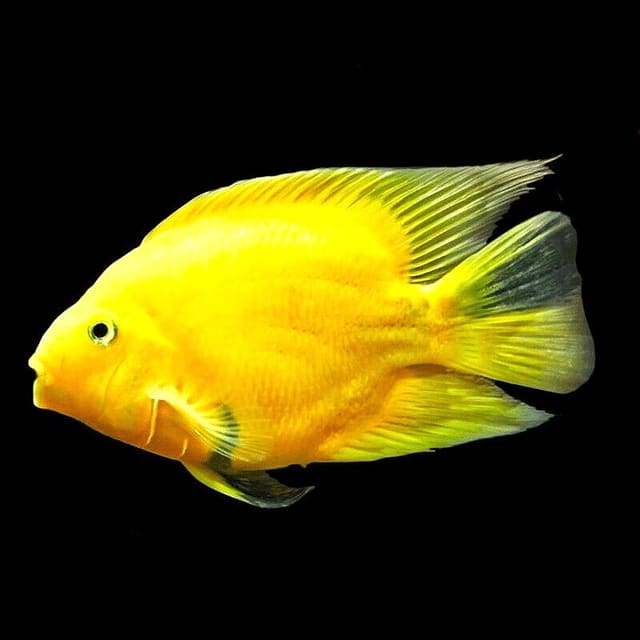
Yellow Parrot Cichlid (Hybrid Parrot Cichlid)
24–28°C · pH 6.5–8
£40.99

A bright, rounded captive-bred hybrid cichlid with strong personality, a short parrot-like mouth and moderate care needs. Best for spacious, well-filtered aquariums with robust tank mates.
Adult size is the maximum length this species reaches at full maturity (scientific sources). The livestock you receive will be younger and smaller — pick a size above for the actual shipping size. Product-photo provenance and any image-specific limitations are stated on the listing.
Hybrid cichlid (Blood Parrot Cichlid; no valid wild-species binomial)
Save when buying multiple fish. Each quantity is one fish; sex and pair formation are not guaranteed unless the selected variant explicitly states them.
A bright, rounded captive-bred hybrid cichlid with strong personality, a short parrot-like mouth and moderate care needs. Best for spacious, well-filtered aquariums with robust tank mates.
Adult size is the maximum length this species reaches at full maturity (scientific sources). The livestock you receive will be younger and smaller — pick a size above for the actual shipping size. Product-photo provenance and any image-specific limitations are stated on the listing.

Cichlids are a family of roughly 1,800 accepted species, not one care type. Before buying, identify the exact species and source, then compare adult measurement, usable tank dimensions, social system, territory, tested water, diet and an exit plan. No family-wide minimum tank, water range or tank-mate list is safe.
Maintain these water conditions for optimal health and vibrant colors
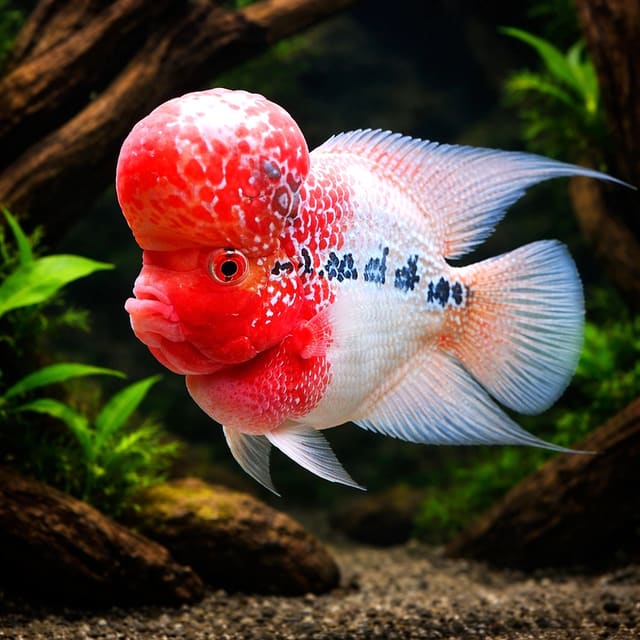
The Hybrid Blood Parrot Cichlid is a bright, rounded, personality-filled aquarium fish with the familiar parrot-like mouth and bold orange-red colour that make this hybrid cichlid instantly recognisable. It is best treated as a captive-bred hybrid rather than a wild species: there is no accepted scientific binomial, and care should be based on robust Central American cichlid-style husbandry with a little extra attention to feeding and mouth shape.
This page covers the full multi-size listing for SKU K744 and its size variants, from young 4-5 cm fish through larger adults. The smaller sizes suit aquarists who want to grow the fish on, while the larger options are better for established, spacious cichlid aquariums where tank mates have already been chosen carefully. Blood Parrot Cichlids are usually hardy and outgoing once settled, but they are still medium-to-large cichlids that need space, stable water quality and sensible companions.
| Common name | Hybrid Blood Parrot Cichlid, Blood Parrot Cichlid, Parrot Cichlid |
|---|---|
| Scientific status | Captive-bred hybrid; no valid wild-species binomial |
| Adult size | Usually around 15-20 cm depending on line, age and care |
| Temperament | Semi-aggressive, often less destructive than many similarly sized cichlids |
| Best for | Spacious community cichlid aquariums with sturdy, non-tiny tank mates |
One selected quantity supplies one unsexed fish, not a pair or group. Sizes are approximate and do not guarantee exact length, colour or maturity. This product can include several size options. Always check the live size selector and stock state before ordering, because individual batches change as stock moves. Juveniles are smaller, lighter on waste and easier to grow into a planned aquarium, while larger fish make a faster display impact but need more confident tank mates from day one.
| Variant size | Best use | Care note |
|---|---|---|
| 4-5 cm | Grow-on setups and planned cichlid communities | Feed smaller sinking foods and avoid boisterous adults |
| 5-7 cm | Young display fish with visible colour and shape | Good balance of adaptability and presence |
| 7-9 cm | Established medium cichlid aquariums | Introduce with similar-sized companions |
| 12 cm+ | Larger aquariums needing an instant centrepiece | Match only with robust fish and strong filtration |
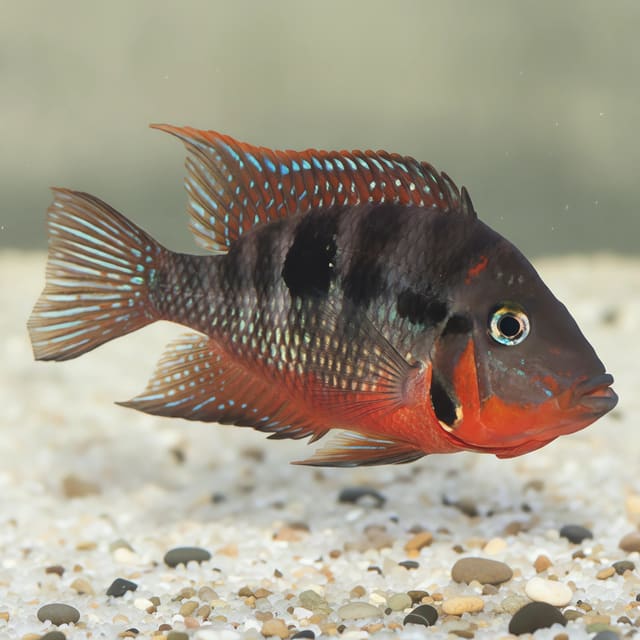
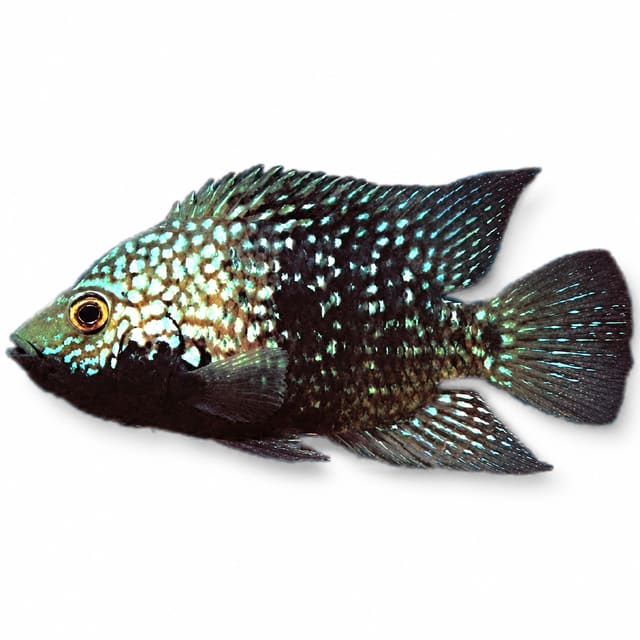
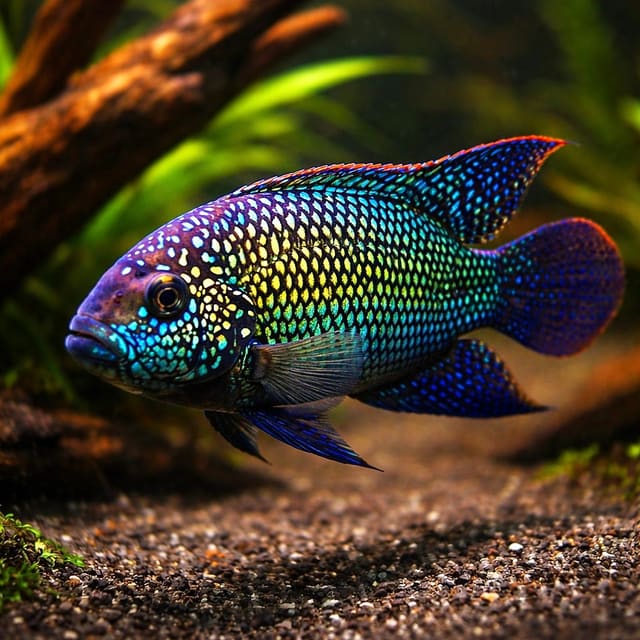
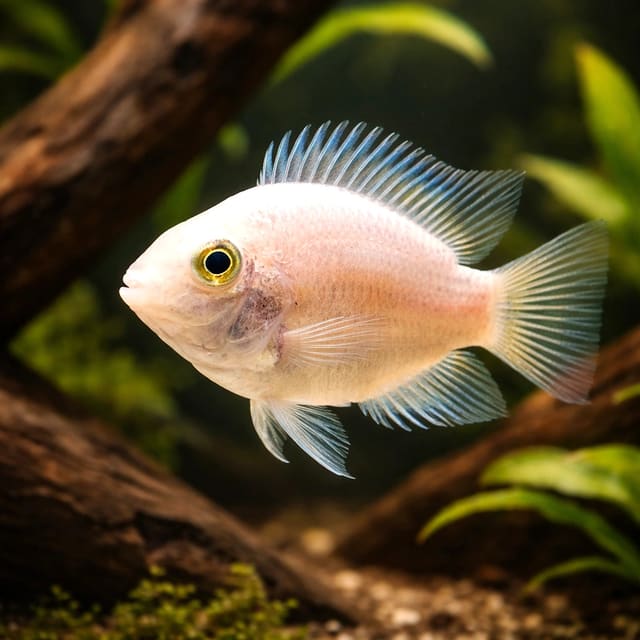
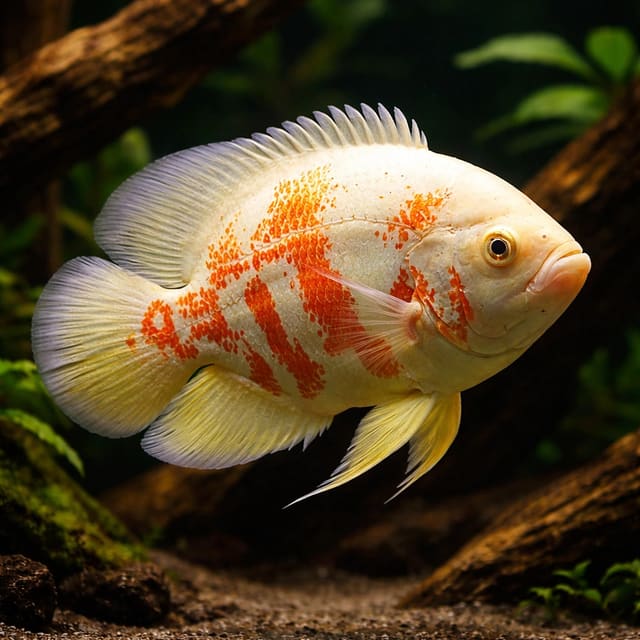
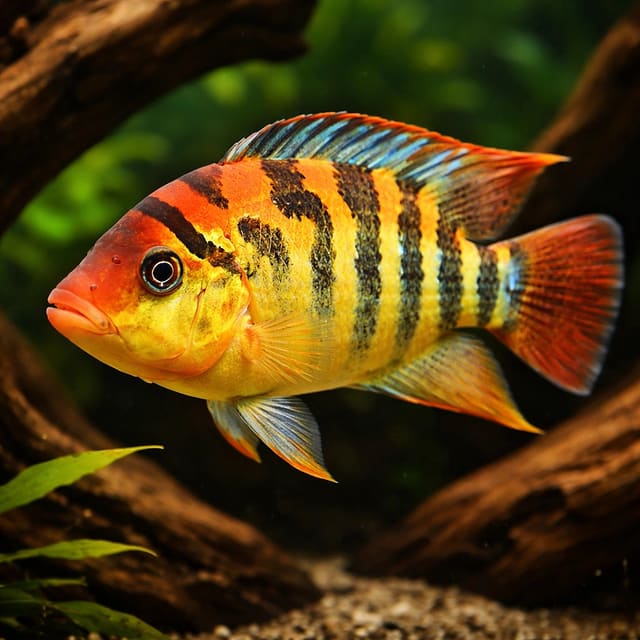
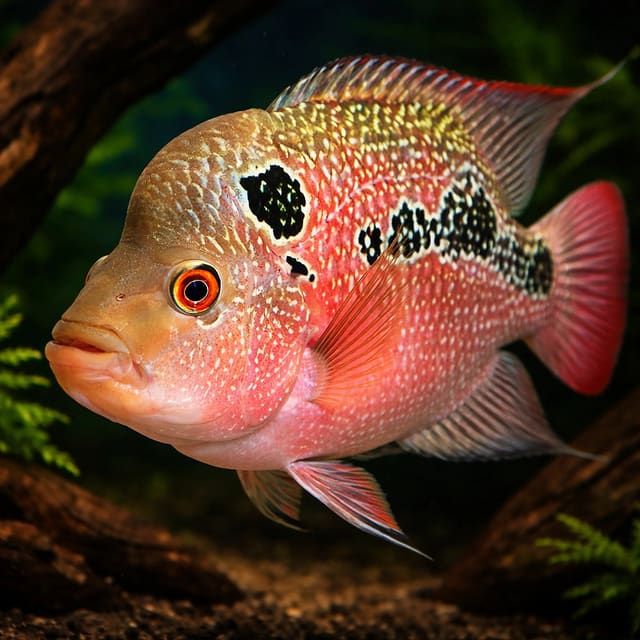
Blood Parrot Cichlids are known for a deep, compact body, rounded head, short mouth and bright warm colour. Most good aquarium specimens show orange, red or red-orange tones, with colour intensifying as the fish settles, matures and receives a varied diet. The mouth shape is part of the hybrid look, but it also means food size and texture matter more than they would for many standard cichlids.
Behaviour is one of the main reasons keepers enjoy them. A settled Blood Parrot will often recognise feeding routines, watch movement outside the aquarium and investigate new decor. Young fish may hide for the first few days or weeks, especially in bright, open aquariums. Caves, wood and shaded retreats help them settle without making the tank feel crowded.
Plan the aquarium around adult size, not the size on arrival. A single Blood Parrot Cichlid is best in a spacious aquarium with a broad footprint, and a pair or group needs more room again. As a practical rule, aim for at least 200 litres for one adult, and go larger for groups, mixed cichlid communities or larger size variants. Long tanks are more useful than tall narrow tanks because these fish need horizontal swimming room and territory boundaries.
| Setup area | Recommendation | Why it matters |
|---|---|---|
| Substrate | Sand or smooth rounded gravel | Protects the mouth and allows natural picking behaviour |
| Decor | Smooth rocks, caves, wood and open lanes | Creates cover without trapping the fish |
| Plants | Anubias, Java fern and other hardy attached plants | Less likely to be uprooted than delicate stems |
| Filtration | Oversized biological filtration with steady flow | Medium cichlids produce noticeable waste |
| Lighting | Moderate, with shaded areas | Helps shy fish settle and show better colour |
The working temperature and pH ranges below follow the published supplier care guidance, rather than a guarantee for every hybrid line. Blood Parrot Cichlids are adaptable when conditions are stable. Avoid chasing exact numbers every day; clean, oxygenated water and slow changes are more important than dramatic adjustment. Keep ammonia and nitrite at zero, keep nitrate controlled with water changes, and avoid sudden pH swings.
| Parameter | Good target range | Notes |
|---|---|---|
| Temperature | 23–26°C | Warm, stable tropical conditions suit most batches |
| pH | 6.5–7.5 | Stability matters more than forcing a precise value |
| Hardness | Soft to moderately hard | Acclimate slowly if your tap water is very different |
| Water changes | 25-40% weekly in stocked cichlid aquariums | Adjust to stocking level, feeding and nitrate readings |
The short mouth is the care detail that should never be ignored. Choose small sinking cichlid pellets, soft granules, frozen bloodworm, mysis, brine shrimp and occasional vegetable or spirulina-based foods. Some individuals struggle with large floating pellets, so watch feeding carefully and switch texture if food is being mouthed and dropped repeatedly.
Feed modest portions once or twice daily. A colourful cichlid pellet can form the staple diet, but variety improves condition and keeps the fish interested. Remove uneaten food quickly because Blood Parrots can be messy feeders, especially when young or newly introduced. Overfeeding causes water-quality problems faster than it improves growth.
Choose companions that are too large to be swallowed, not aggressive enough to bully the Blood Parrot, and not so delicate that they panic around cichlid behaviour. Good candidates often include sturdy rainbowfish, larger peaceful barbs, robust plecos, some Synodontis catfish, Severum-type cichlids, Blue Acara-type cichlids (a comparison to assess, not an automatic compatibility guarantee) and other similar-sized Blood Parrots. Every aquarium is different, so observe behaviour after introduction and be ready to separate fish if pairing is not working.
| Usually suitable | Use caution | Avoid |
|---|---|---|
| Similar-sized peaceful to semi-bold cichlids, robust catfish, larger rainbowfish | Angelfish, slow gourami, smaller community fish, very territorial cichlids | Neon-size fish, fin nippers, shrimp, tiny bottom dwellers, aggressive predators |
Blood Parrot Cichlids are controversial because they are man-made hybrids and some lines have exaggerated body or mouth shapes. We describe them honestly so customers can make a good decision. Choose healthy, active fish, avoid dyed or tattooed varieties, and keep them in a setup that supports feeding, swimming and normal social behaviour. The best aquarium care reduces the disadvantages of the hybrid shape: soft foods, smooth decor, excellent water quality and enough space.
Use the live stock selector to choose an available size, then acclimate slowly after arrival. Keep lights low for the first few hours, offer cover, and do not rush feeding immediately after transport. Once the fish is settled, start with a small sinking food and confirm it can eat comfortably. Tropical Fish Co orders are packed for live-animal transport, and the Live Arrival Guarantee and delivery guidance gives extra reassurance when the delivery guidance is followed.
This is not a nano fish and it should not be bought for a small community tank. It can suit aquarists who want a colourful cichlid and have the space and filtration for a fish with real body mass. It can still dig and uproot loose plants, so do not choose it on a promise of a plant-safe aquarium. If you want a gentle tiny community fish, compare smaller freshwater fish such as tetras or rasboras instead. If you want a personable centrepiece for a larger aquarium, this hybrid cichlid can be a rewarding choice.
No. It is a captive-bred hybrid cichlid, so it does not have a valid wild-species scientific name. That is why this listing uses the common trade name and explains the hybrid status clearly instead of pretending it is a naturally occurring species.
They are not suitable with tiny fish. Even if a Blood Parrot is not highly predatory, small tank mates can be stressed, chased or eaten as the cichlid grows. Pick robust companions of similar confidence and size.
Hiding is common during the first few days. Keep the aquarium calm, provide cover, avoid constant tapping or chasing, and let the fish learn the feeding routine. Confidence usually improves as the fish settles.
Small sinking cichlid pellets and soft frozen foods are usually easiest. If the fish repeatedly drops floating pellets, switch to a smaller or softer food rather than increasing the amount.
Yes, but choose hardy attached plants and protect roots. Blood Parrots are often less destructive than many large cichlids, but they can still move substrate and rearrange loose decor.
For independent husbandry context, compare guidance from Aquarium Co-Op, Practical Fishkeeping and The Spruce Pets. Their ranges differ slightly, which is normal for a hybrid aquarium fish; the consistent message is to provide space, clean warm water, suitable tank mates and food that the short mouth can manage.
Independently collected by Judge.me from customers who bought this item. All reviews are shown.
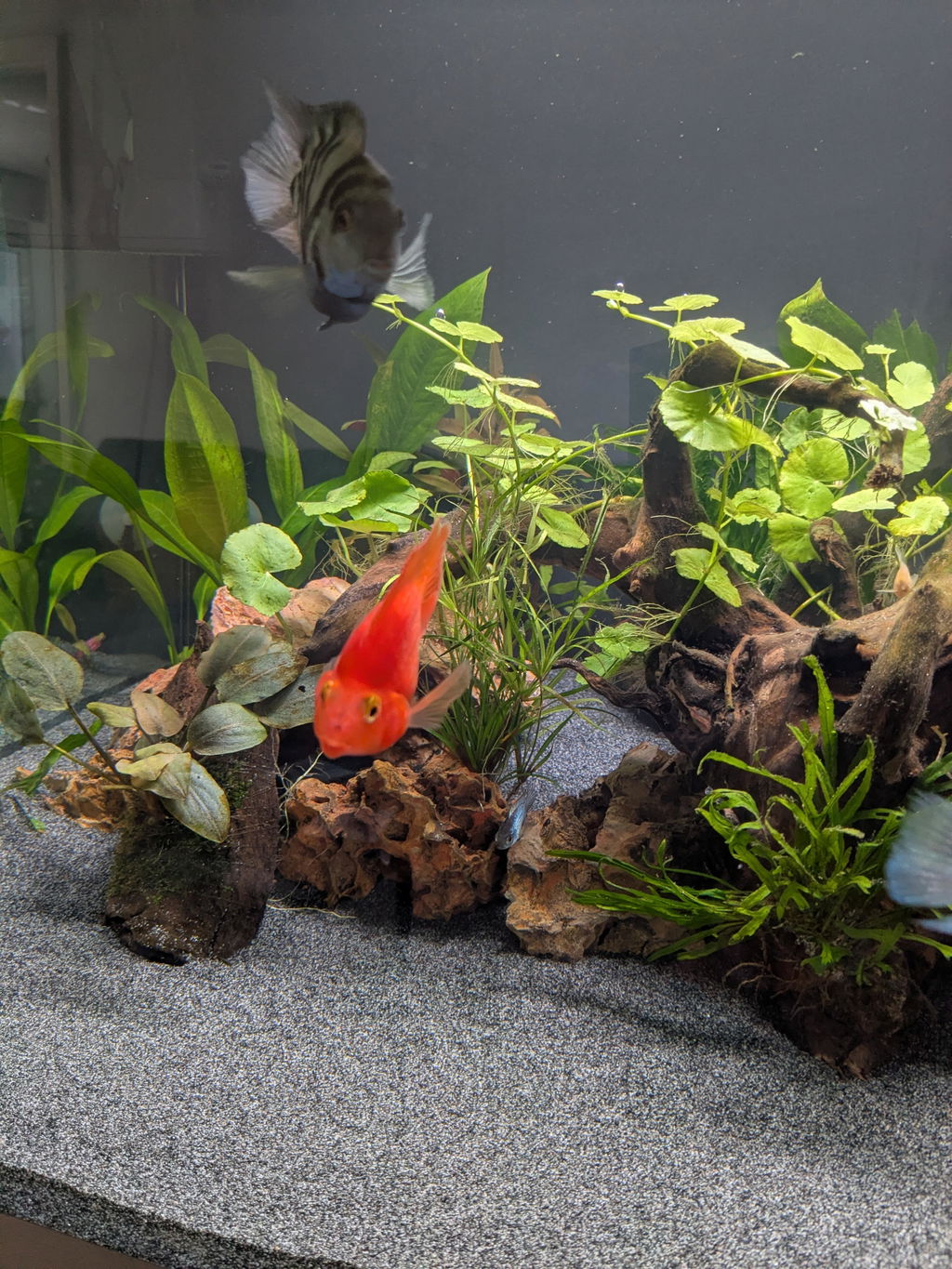
Health fish nicse colour was told that they wouldnt destroy my planted tank but they have
Reply from Tropical Fish Co
<p>Healthy and good colour is good to hear - the planted tank part isn't, and if we told you they'd leave it alone then we gave you the wrong steer. Blood Parrots dig, and they'll uproot anything that isn't anchored down; attached plants like anubias and java fern tied to wood or rock usually survive them, loose-rooted stems almost never do. Happy to go through what would actually work in your setup if that's useful - WhatsApp +44 7464 593131. - Reza, Tropical Fish Co</p>