−12%
Yellow Belly Hap (Haplochromis sp. yellow belly)
23–27°C · pH 8–8.6
£9.67£10.99

Pale Usisya Aulonocara is a Lake Malawi peacock cichlid for spacious hard-water aquariums, with blue and yellow-orange male colour, invertebrate-focused feeding and careful group planning.
Adult size is the maximum length this species reaches at full maturity (scientific sources). The livestock you receive will be younger and smaller — pick a size above for the actual shipping size. Product-photo provenance and any image-specific limitations are stated on the listing.
Aulonocara steveni
Save when buying multiple fish. Each quantity is one fish; sex and pair formation are not guaranteed unless the selected variant explicitly states them.
Confirm your email, then we’ll send an availability message for this exact item if it returns within 180 days.
This request is only for this product—no newsletter or other promotions. A mail-provider retry may very rarely duplicate the same availability message. Unconfirmed addresses are removed after 48 hours. See our privacy policy.
Pale Usisya Aulonocara is a Lake Malawi peacock cichlid for spacious hard-water aquariums, with blue and yellow-orange male colour, invertebrate-focused feeding and careful group planning.
Adult size is the maximum length this species reaches at full maturity (scientific sources). The livestock you receive will be younger and smaller — pick a size above for the actual shipping size. Product-photo provenance and any image-specific limitations are stated on the listing.
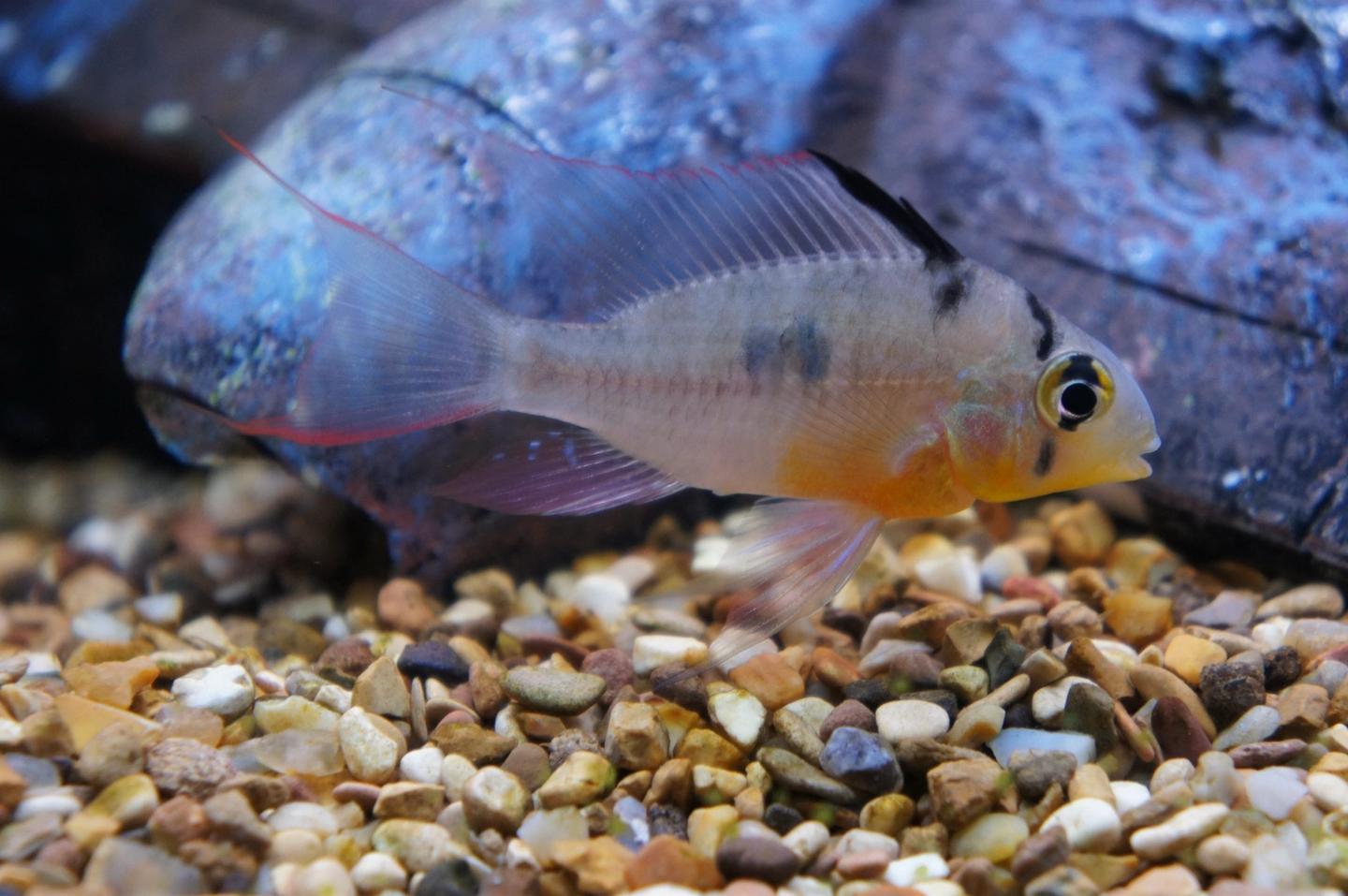
Cichlids are a family of roughly 1,800 accepted species, not one care type. Before buying, identify the exact species and source, then compare adult measurement, usable tank dimensions, social system, territory, tested water, diet and an exit plan. No family-wide minimum tank, water range or tank-mate list is safe.
Maintain these water conditions for optimal health and vibrant colors
Pale Usisya Aulonocara is best presented as Aulonocara steveni, a Lake Malawi peacock cichlid. The supplier name Haplochromis steveni is kept here as an older trade/source bridge, but the care information should be planned around the Aulonocara peacock identity.
The improved version keeps the helpful care themes, adds clearer visual and behaviour detail, and separates the 4-5 cm sale size from the adult aquarium the fish will need.
| Scientific name | Aulonocara steveni |
|---|---|
| Older supplier/trade name | Haplochromis steveni |
| Common names | Pale Usisya Aulonocara, Pale Usisya Peacock |
| Natural range | Lake Malawi, especially northern Malawi/Kande Island locality references |
| Habitat | Sediment-covered rocks and sand/rock transition zones |
| Adult size | Plan for about 9-12 cm, depending on sex and source line |
| Minimum aquarium | 300 litres or larger for a group or mixed peacock/hap setup |
| Temperature | 23-28C; supplier range 24-26C |
| pH | 7.5-8.5 |
| Hardness | 10-30 dGH; keep hard, alkaline and stable |
| Diet | Carnivorous/invertebrate-focused; quality cichlid foods plus frozen or live invertebrates |
Aulonocara steveni is the care anchor for this listing. FishBase treats Pale Usisya Aulonocara as a Lake Malawi species and notes it from the Kande Island area. Some taxonomy references and aquarium trade names treat related Usisya peacocks around the Aulonocara stuartgranti complex, so old supplier wording can vary. That is why the older Haplochromis steveni wording remains as historical/source context, not as the main scientific name.
For customers, the practical point is simple: this is a Lake Malawi peacock cichlid, not a soft-water community fish. It belongs in a hard, alkaline African cichlid aquarium with suitable space, filtration and companions.
FishBase describes Aulonocara steveni among sediment-covered rocks, feeding on soft-bodied invertebrates. That habitat sits between open sand and rocky shelter, which is typical of many peacock cichlids. In the aquarium, this translates into a sand or fine-gravel base, secure rock structures and open swimming space rather than a cramped wall of rocks.
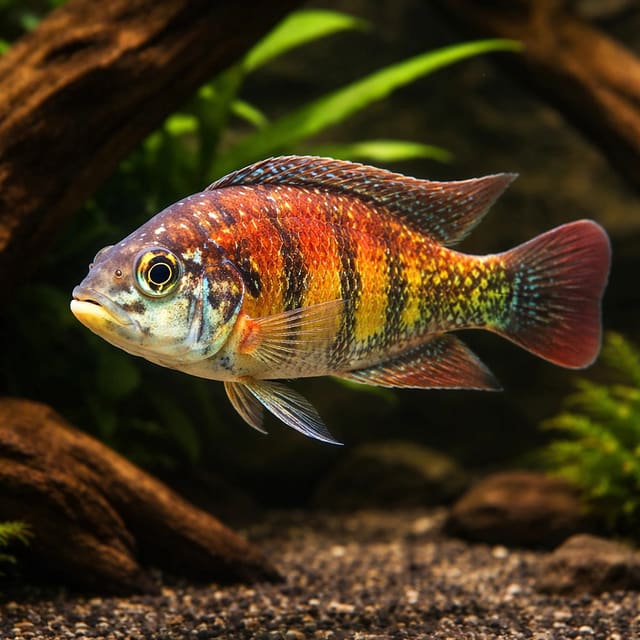
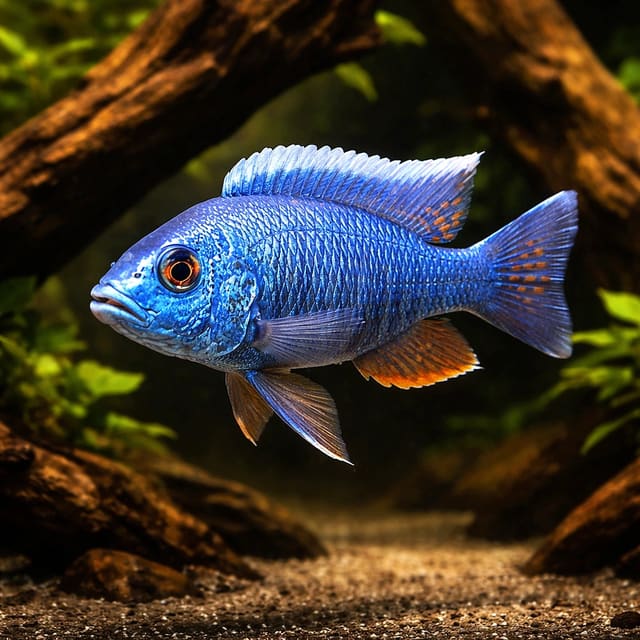
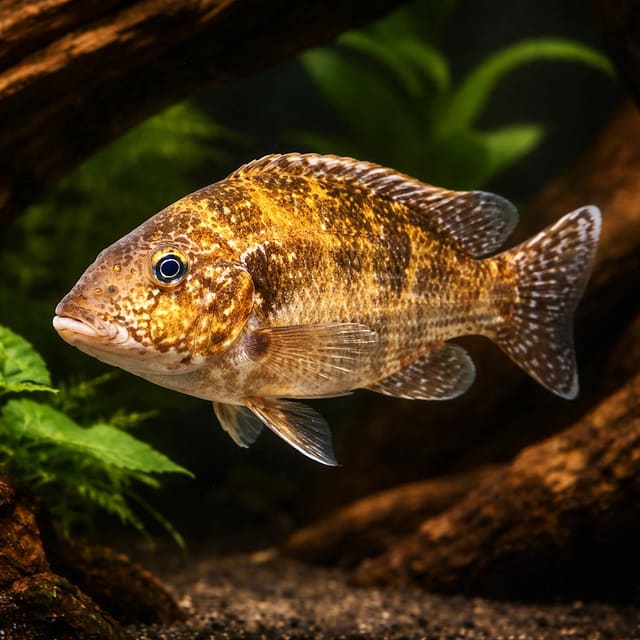
The Usisya-style visual appeal is part of the page's value. Males can show a strong blue head and warm yellow to orange body tones as they mature, while females and juveniles are more subtle. Good lighting, clean water and a calm hierarchy help the fish show its best colour.
The current sale size is a juvenile size. For long-term care, plan around a mature peacock cichlid. A 300 litre aquarium is a sensible minimum for a small group or a mixed peacock/hap arrangement, with a long footprint preferred over a tall narrow tank. More space gives males room to display without constantly pinning females or weaker tank mates into corners.
Use sand or smooth fine gravel, rock piles for territories, and open areas through the front and centre. Secure the rockwork before adding substrate if the layout is heavy. Strong filtration, steady oxygenation and regular water changes matter because Malawi cichlid aquariums are active, well-fed systems.
Keep the water hard, alkaline and stable. A practical target is 23-28C, pH 7.5-8.5 and 10-30 dGH. Our stock records give 24-26C, pH 7.5-8.5 and 10-30 dGH, so aiming for the middle of that range is sensible when possible.
Avoid sudden swings. If your tap water is soft or acidic, prepare the mineral strategy before the fish arrives. Aragonite, suitable Malawi buffers or remineralising salts can help, but stability is more important than chasing a perfect number every day.
FishBase notes feeding on soft-bodied invertebrates, and aquarium care should follow that pattern. Use a quality Malawi cichlid pellet as the base, then vary with frozen or live foods such as mysis, brine shrimp, daphnia, cyclops and insect larvae. A little vegetable or spirulina content is fine as part of a balanced cichlid diet, but the page should not frame this fish as a plant-grazer.
Feed modest portions that are eaten quickly. Overfeeding can dull colour, raise nitrate and create aggression around the feeding area. A settled fish should become confident at feeding time without needing heavy meals.
Pale Usisya Aulonocara is calmer than many mbuna, but it is still a cichlid with hierarchy and territory. Males can become pushy with similar-looking males or when breeding. Females and juveniles are usually less intense, but they still need shelter and room to move away from attention.
For the best display, keep one male with several females when space allows, or choose a carefully planned all-male Malawi display where colours and body shapes are not too similar. Avoid mixing several similar Aulonocara males in a small aquarium.
Good tank mates include other appropriately sized Malawi peacocks, calmer haps and suitable Synodontis catfish in a hard-water setup. Choose companions that share similar water needs and are robust enough for an African cichlid aquarium without being overly aggressive.
Avoid tiny community fish, shrimp, delicate long-finned species, soft-water fish, very aggressive mbuna in cramped tanks, and any fish that looks so similar that it invites constant male rivalry. Compatibility depends on tank size, aquascape and sex ratio as much as species name.
The exact source image shows the classic mature-male appeal: a vivid blue face and upper body with warmer yellow-orange tones through the flank. Juveniles and females are usually less bright, so the customer should expect colour to improve with maturity, diet, water quality and social confidence.
Use a darker background, pale sand and open swimming lanes to make the colour stand out. Clear glass and good white-balanced lighting help the blues read cleanly rather than muddy. This is one of those fish where husbandry and presentation genuinely affect how impressive the page and the aquarium feel.
Like other Malawi peacocks, this fish is best treated as a maternal mouthbrooder. Males display and hold territories, females carry eggs and fry in the mouth, and a calm group structure gives breeding behaviour a better chance of happening without excessive stress.
If breeding is the goal, avoid hybrid risk by keeping clear locality/line records and not mixing closely related or similar-looking Aulonocara forms. This matters for responsible cichlid keeping and for the long-term value of the fish.
This listing suits aquarists who already keep, or are ready to set up, a Lake Malawi aquarium. It is a good choice when you want a peacock cichlid with colour, manageable temperament and interesting natural foraging behaviour, provided the tank is large enough and the tank mates are chosen carefully.
It is not the right choice for a soft-water planted community, a small beginner tank, a shrimp aquarium or a peaceful nano setup. The best buyer is someone planning a proper hard-water cichlid system from the start.
Each live-fish order should be checked against the live stock and variant information shown on this page. The size options represent sale sizes, not final adult size. Use the care table above to plan the permanent aquarium before choosing a variant.
UK live-fish delivery terms, packing days and arrival support are handled by the current checkout and delivery policy rather than fixed promises inside this description. That keeps the page accurate when weather, stock status or courier timing changes.
Care notes were checked against FishBase for Aulonocara steveni, Fishipedia husbandry guidance, our stock records for the current SKU group, and general Lake Malawi peacock-cichlid aquarium practice. Where sources differ, this listing uses conservative long-term planning rather than the smallest possible juvenile setup.
No reviews for this item yet. Bought one? Honest reviews only, good or bad.
What customers say about ordering from us
I have a small group of long finned mountain minnows. So was delighted to be able to order ten of this variety to increase the genetics in my tank . The ones I recieved are healthy but it’s to early to give a verdict on wether they are of a long finned type since they are small currently.
Gordon Walker · 23 Sept 2026
100% success travel and "installation". Pleased with quality of purchase. The Siamese fighter a bit "shy" so have not yet seen him at his best yet but looking good. Happy customer. GG
George E Garratt · 21 Sept 2026
Reviews of our shop, collected by Judge.me, an independent third-party review collector. Newest first.