Moderate
Acei Cichlid (Pseudotropheus sp. “acei”)
24–26°C · pH 7.5–8.5 · 300L
£7.99

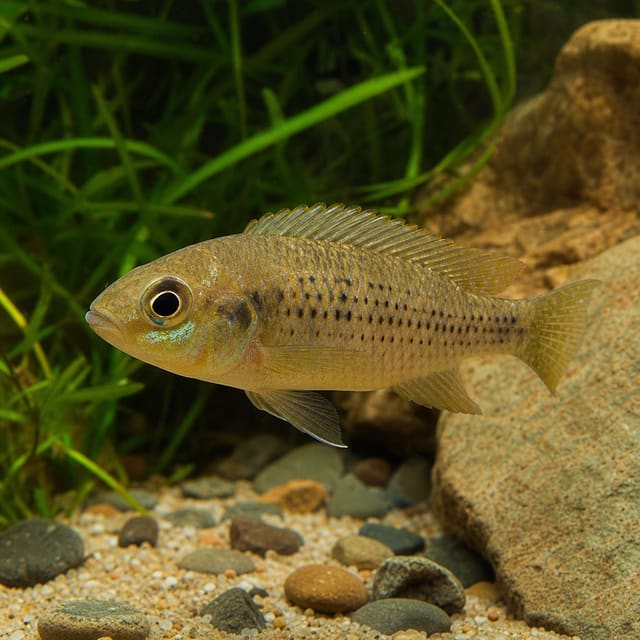
The Zebra Obliquidens Cichlid (Astatotilapia latifasciata) is an East African cichlid from Lake Kyoga that reaches 12.5 cm. It suits intermediate keepers who can provide around 108 litres with a 120 × 30 cm base and keep 23–27°C, pH 8.0–8.2 and 12–15 dGH, the overlap of Seriously Fish and OATA guidance. Sold individually in dispatch sizes from 4–5 cm to 7–9 cm.
Adult size is the maximum length this species reaches at full maturity (scientific sources). The livestock you receive will be younger and smaller — pick a size above for the actual shipping size. Product-photo provenance and any image-specific limitations are stated on the listing.
Astatotilapia latifasciata
Save when buying multiple fish. Each quantity is one fish; sex and pair formation are not guaranteed unless the selected variant explicitly states them.
The Zebra Obliquidens Cichlid (Astatotilapia latifasciata) is an East African cichlid from Lake Kyoga that reaches 12.5 cm. It suits intermediate keepers who can provide around 108 litres with a 120 × 30 cm base and keep 23–27°C, pH 8.0–8.2 and 12–15 dGH, the overlap of Seriously Fish and OATA guidance. Sold individually in dispatch sizes from 4–5 cm to 7–9 cm.
Adult size is the maximum length this species reaches at full maturity (scientific sources). The livestock you receive will be younger and smaller — pick a size above for the actual shipping size. Product-photo provenance and any image-specific limitations are stated on the listing.

Cichlids are a family of roughly 1,800 accepted species, not one care type. Before buying, identify the exact species and source, then compare adult measurement, usable tank dimensions, social system, territory, tested water, diet and an exit plan. No family-wide minimum tank, water range or tank-mate list is safe.
Maintain these water conditions for optimal health and vibrant colors
The Zebra Obliquidens Cichlid (Astatotilapia latifasciata) is a freshwater member of the cichlid family from Lake Kyoga in East Africa. FishBase records a maximum length of 11 cm. This is an intermediate choice for a keeper prepared to manage hard, alkaline water, territorial behaviour and carefully screened companions rather than a passive general community.
FishBase now lists it as Haplochromis latifasciatus. Zebra Obliquidens remains its familiar aquarium trade name, while the scientific label used here remains Astatotilapia latifasciata. The wild species is recorded from Lake Kyoga and assessed as Critically Endangered; that status does not identify the origin of an individual offered through the aquarium trade.
Keep it at 23–27°C, pH 8.0–8.2 and 12–15 dGH. This is the overlap between the Seriously Fish species profile and OATA’s Malawi-cichlid group guidance, with the OATA values used to narrow rather than widen the species range; they are not a species-specific optimum. Plan for a base measuring 120 × 30 cm and a volume around 108 litres.
| Suits | Not suited to |
|---|---|
| Intermediate cichlid keepers | A passive, unscreened community plan |
| A 120 × 30 cm base around 108 litres | An aquarium unable to hold the stated footprint |
| Hard, alkaline water within the stated range | Soft or acidic conditions outside that range |
| Rockwork, caves and open swimming water | A layout with no territorial structure |
| Carefully screened, similarly sized companions | Related Victorian Mbipi and other related species |
Use 11 cm as the adult planning length. That FishBase maximum is the figure used throughout this page and in the care details. Seriously Fish separately lists 125 mm standard length; this is a genuine difference between the published figures, so the aquarium should be selected from the stated footprint rather than by trying to turn either measurement into a promise for one individual.
Seriously Fish recommends a 120 × 30 cm aquarium base with a volume around 108 litres. The footprint matters because the layout must hold rock piles, caves and open water at the same time. A tall aquarium with less floor area does not reproduce that recommended base simply because its litre capacity is similar.
Adding more fish changes the social pressure and the amount of waste entering the filter. Reassess the whole stocking plan before adding a group or companions; the aquarium dimensions are a starting requirement for this species, not permission to fill every remaining space.
One purchase supplies one Zebra Obliquidens Cichlid in the size selected. The live size selector may show the labels 4–5 cm, 5–6 cm and 7–9 cm; use the selector on the product page to choose the dispatch size. The size you select is the size supplied, not the adult size.
A dispatch size describes the fish when prepared for the order. Continue to plan for the recorded 11 cm adult length, the 120 × 30 cm base and the full care requirements regardless of which dispatch size is chosen. Do not use a larger dispatch measurement as a substitute for checking compatibility, and do not treat a smaller measurement as permission to begin with a reduced aquarium.
Sex is guaranteed only when the selected option explicitly states male or female. This Zebra Obliquidens Cichlid listing has no sex-guaranteed option.
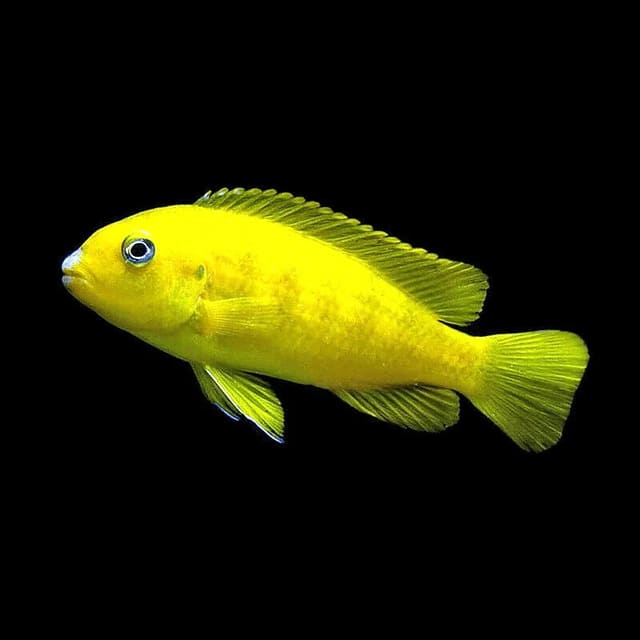
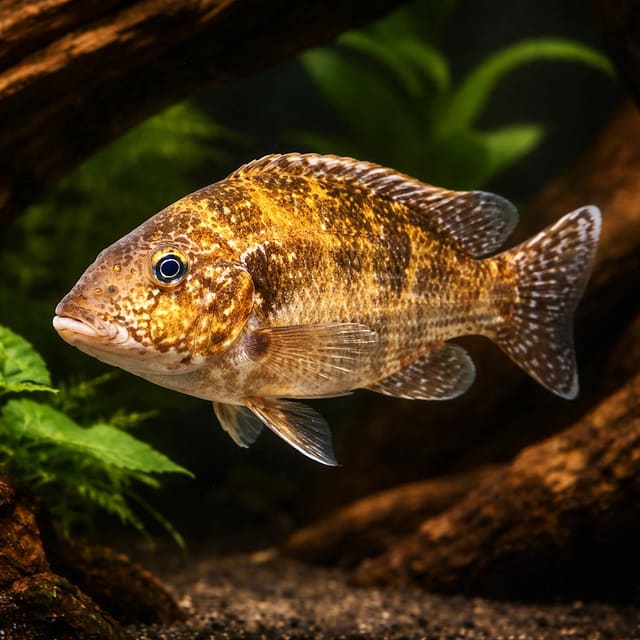
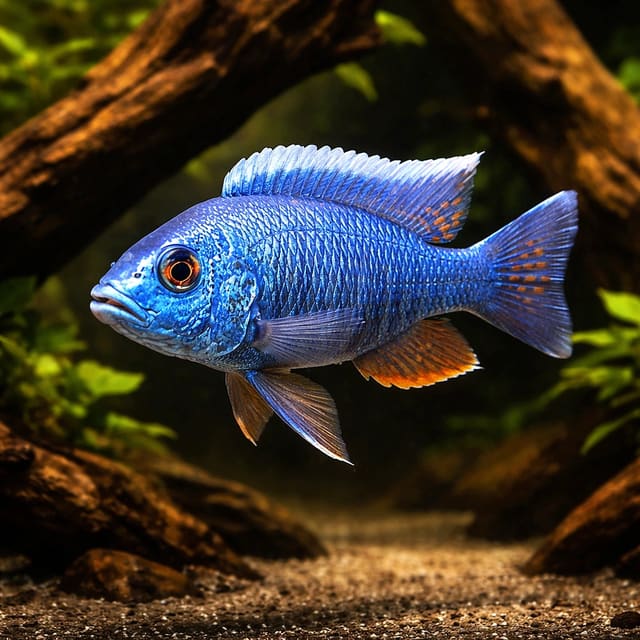
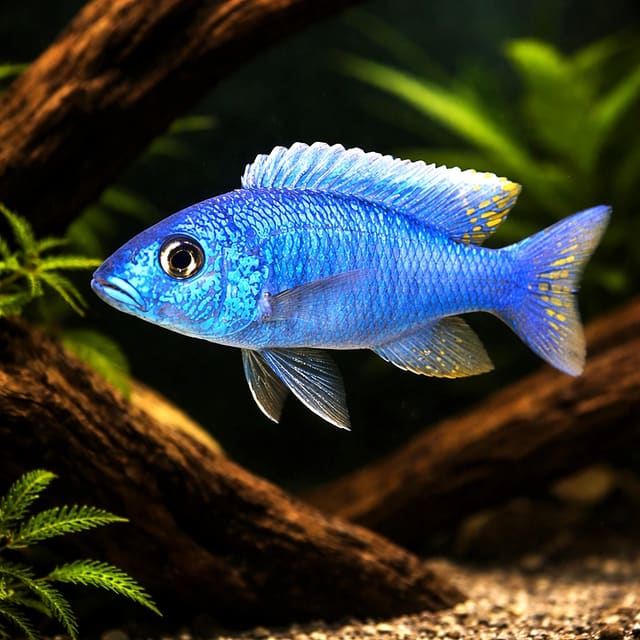
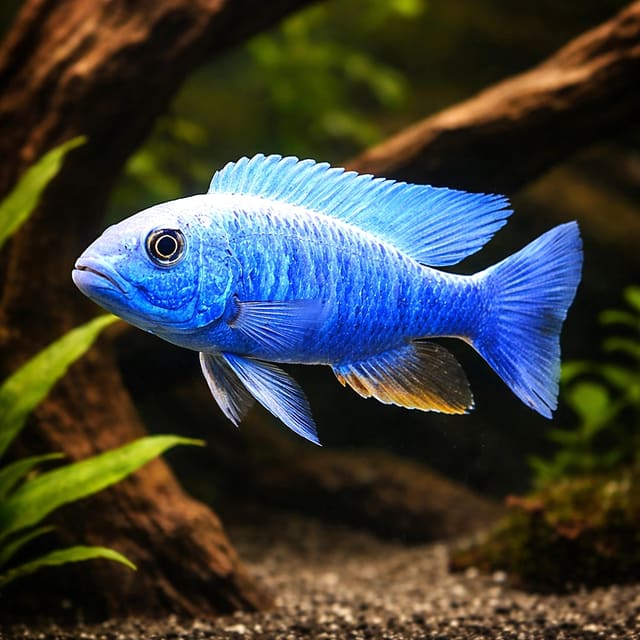
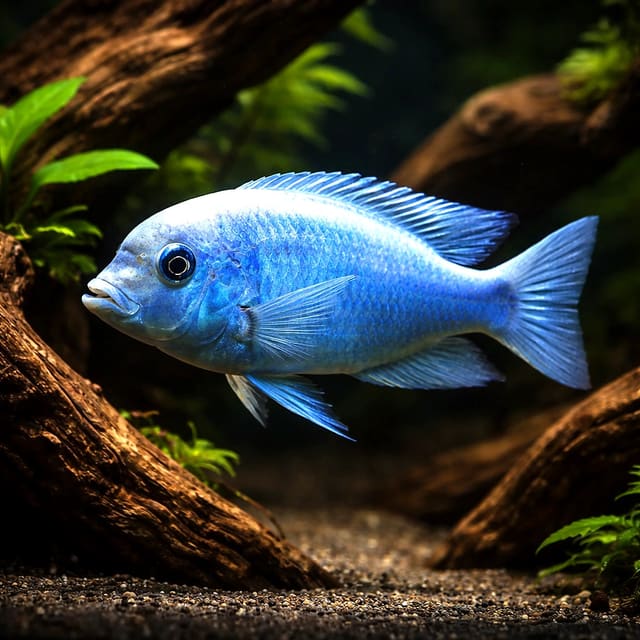
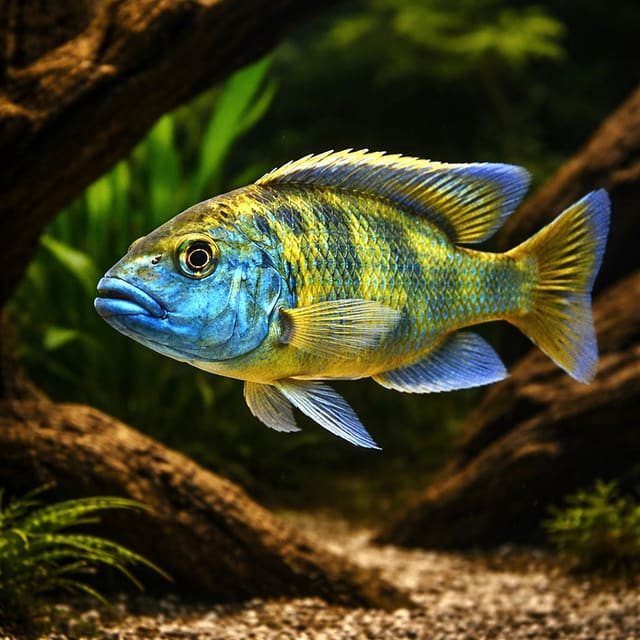
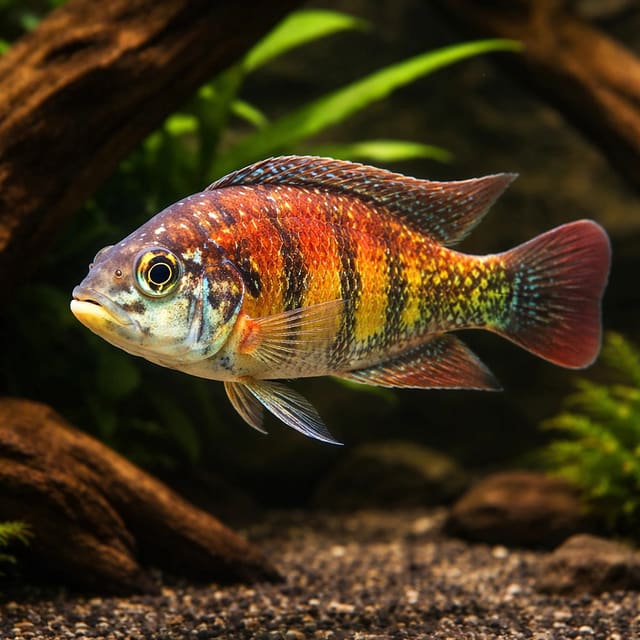
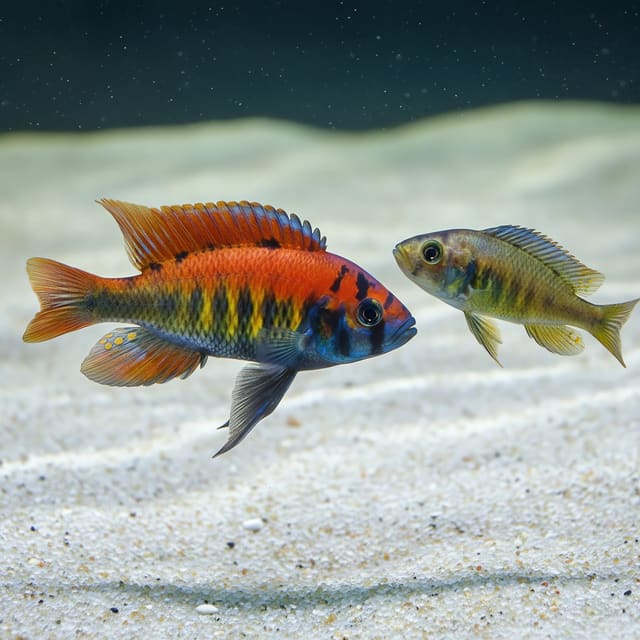
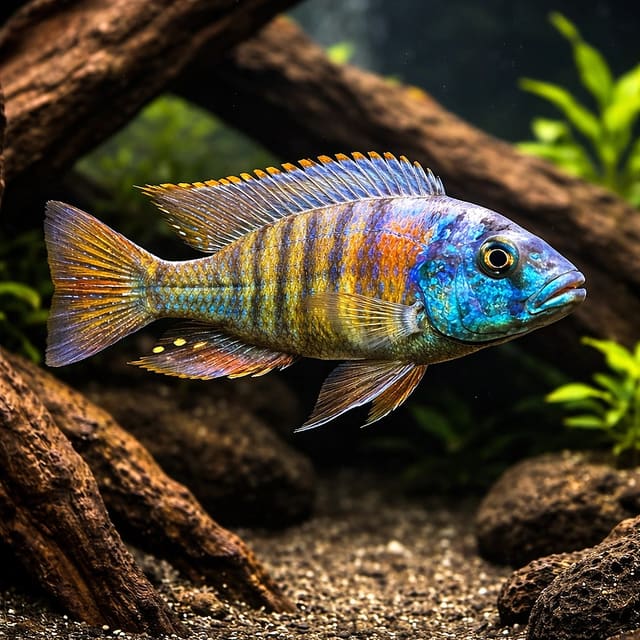
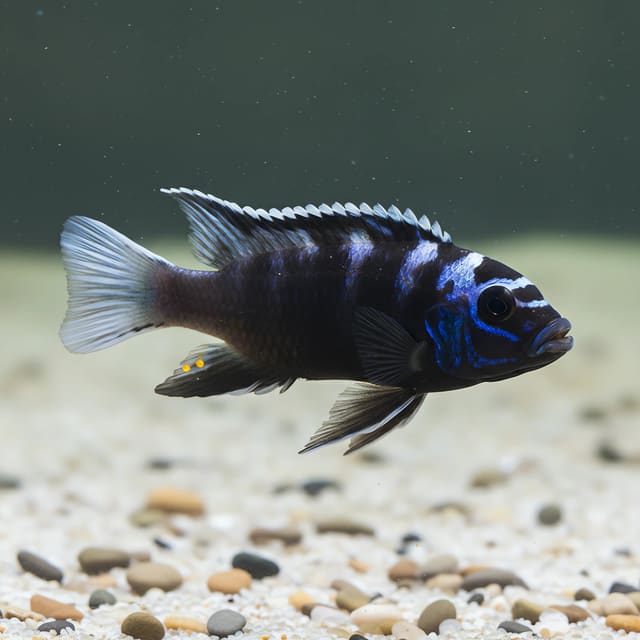
The gallery images are representative of this type of animal rather than photographs of the exact animal supplied, so colours can look slightly different from the live animal.
Use the identity and care requirements on this page when comparing the fish with the wider African cichlid collection. Similar trade categories do not make two fish automatic companions: compare adult size, named compatibility guidance, water requirements and territorial behaviour before forming a mixed aquarium.
Put this fish into a mature aquarium with a working biological filter. The RSPCA explains that fish release toxic ammonia, which a biological filter processes first into nitrite and then into the safer nitrate. Both ammonia and nitrite remain toxic, so a filter must be established and maintained rather than merely switched on when the fish arrives.
OATA advises checking that ammonia and nitrite are both zero before adding fish. Add livestock gradually because the beneficial bacterial population must grow as waste and feeding increase. Adding too many fish too quickly can leave the filter unable to process the extra waste, producing unhealthy ammonia or nitrite concentrations that can make fish ill or kill them.
If this is your first aquarium, follow the steps in our guide to preparing and maturing a first tropical tank before choosing an arrival date. Maturation is demonstrated by water testing and biological function, not by the aquarium simply containing water for a particular number of days.
Arrange much of the aquarium with piles of rocks that create caves, but leave areas of open water between them. This combination gives the fish structured areas while preserving room to swim. Secure every pile independently; the recommended sandy substrate should sit around stable structures rather than being relied upon to hold heavy rocks in place.
A sandy substrate is the preferred base in the Seriously Fish profile. The species is not described as damaging vegetation, so plants may be included, but they are not essential. Driftwood may also be used where it does not take away the required footprint, obstruct open water or destabilise the rockwork.
| Feature | Use it to |
|---|---|
| Rock piles | Create caves and separate structured areas |
| Open water | Preserve swimming space between rocks |
| Sand | Provide the preferred substrate |
| Plants | Add optional cover without replacing caves |
| Driftwood | Add optional structure while retaining open space |
If plants are wanted, the profile names hard-water-tolerant Anubias and Vallisneria, along with floating varieties such as water hyacinth. Match any plant to the hard, alkaline conditions required by the fish. Do not redesign the water chemistry around a plant that prefers a conflicting range.
Look across the aquarium from both ends before adding the fish. A useful layout has more than one cave entrance, clear passages around the rocks and uninterrupted open water. If one pile fills nearly the entire 30 cm front-to-back measurement, reduce or reposition it so the recommended footprint remains usable rather than becoming a nominal measurement around solid décor.
Keep the aquarium at 23–27°C, pH 8.0–8.2 and 12–15 dGH. Seriously Fish lists 23–28°C, pH 7.2–8.2 and 8–15 dGH for the species. OATA lists 23–27°C, pH 8.0–8.6 and 12–18 dGH for Malawi cichlids. The working values are the overlap of those two ranges, so none sits outside the species profile.
Measure the aquarium instead of assuming that tap water, substrate or décor has produced the intended chemistry. Our water chemistry guide explains the values to test, while the water matcher can compare measured results with this care range.
Consistency matters because every water change exposes the fish to the replacement water. Test the source water as well as the aquarium when readings move unexpectedly. That comparison helps distinguish a change entering with the tap water from one developing inside the tank.
Use effective filtration with a turnover suited to the species-profile aquarium. For a tank around 108 litres, Seriously Fish recommends four to five times the aquarium volume each hour and a filter rated at approximately 430–540 litres per hour. Treat the manufacturer’s rating as the selection figure, then check the filter regularly for blockages that reduce practical flow.
For the same aquarium size, the profile estimates roughly 100–175 W of heating when the room is around 20°C. Choose and operate the heater to hold 23–27°C, and confirm the result with a thermometer rather than relying on wattage alone.
This sequence protects water quality and the biological filter at the same time. Replacing all filter media together would discard much of the bacterial population that processes waste. Clean only as required for flow and preserve established media wherever practical.
Record the test results before and after maintenance during the first month. A rising ammonia or nitrite result calls for immediate attention to the filter and stocking load. A nitrate trend shows whether the weekly 25% change is keeping accumulated waste within OATA’s stated limit relative to the tap water.
Use suitable live and frozen varieties for the bulk of the Zebra Obliquidens Cichlid’s diet. Seriously Fish reports that the species accepts most foods offered but specifically places live and frozen varieties at the centre of the feeding plan. Rotate appropriate foods within those categories rather than relying on one item at every meal.
For portion size and frequency, OATA’s Malawi-cichlid guidance says to feed twice a day and offer only what the fish can eat within a few minutes. This schedule is group guidance rather than a separate claim about the species’ natural diet. The species profile decides the main food type; the OATA advice sets a practical portion and frequency.
Overfeeding leaves food to break down and release waste into the water. That increases the demand on the biological filter and can contribute to ammonia, nitrite or nitrate problems. A clean feeding response is therefore both a nutrition decision and a water-quality safeguard.
Watch every fish during feeding because the species can become territorial when spawning. The aim is not to use extra food to distract aggression; it is to confirm that each animal can reach an appropriate portion while the social and layout decisions are handled separately.
Prepare the mature aquarium, stable water and final rock layout before the parcel arrives. Once it is received, follow the Tropical Fish Co delivery and Live Arrival Guarantee policy in this order:
The fish is hand-bagged in pure oxygen and placed in an insulated poly box, with a heat pack when the weather calls for it. A licensed live-animal courier carries the parcel. These packing measures do not replace the need for someone to receive it and begin the arrival process promptly.
Assess the fish while it remains in the sealed bag as the policy requires. The uninterrupted video should retain the sealed parcel, opening and fish-in-bag condition in one sequence. After the 20–30 minute float, release the fish into the already prepared aquarium and keep the bag water out of the tank.
If anything has gone wrong, contact us the same day with the order number and continuous unboxing video. The Live Arrival Guarantee claim requires the sealed parcel, opening and fish inside the sealed bag to be shown before release.
Learn the fish’s usual swimming, colour, breathing, feeding response and use of cover, then act when these change. OATA identifies altered swimming, colour, temperament, breathing, appearance, body condition and feeding as useful early warning signs. A single observation should prompt a check of the animal and its environment rather than an improvised treatment.
| Change | First response |
|---|---|
| Hanging at the surface, sitting on the bottom or erratic swimming | Test water quality and check aeration and filtration |
| Faster or slower gill movement | Check water values and observe whether other fish show the same change |
| Darker or paler colour than normal | Review water results, aggression and access to cover |
| More aggression or hiding | Check the social plan and whether one fish controls a cave or route |
| White spots, fluffy growths, damaged fins or missing scales | Record the change clearly and test the water |
| Reduced feeding or changed body condition | Review the feeding response and water results together |
Ammonia and nitrite should remain at zero mg per litre. If either appears, investigate the biological filter, recent additions, feeding and maintenance immediately. Do not respond by washing established filter media under the tap, because that may kill the bacteria needed to process the waste.
Contact us for further guidance when a health change persists or the fish shows a marked decline. Share the observed signs and current temperature, pH, hardness, ammonia, nitrite and nitrate results so the next decision begins with the aquarium conditions as well as the fish’s appearance.
Treat the Zebra Obliquidens Cichlid as quite aggressive, though Seriously Fish describes its aggression as less pronounced than in many Victorian cichlids. It may be housed with similarly sized Mbuna. The profile also names similarly sized peaceful Aulonocara and Neolamprologus as possible companions. These are conditional examples, not universal tank mates.
Avoid other related species such as Victorian Mbipi because they may hybridise. Keep that exclusion unconditional in a display or breeding plan. Similar appearance, a shared regional label or placement in the same retail collection is not a reason to relax it.
| Compatibility decision | Guidance |
|---|---|
| Similarly sized Mbuna | Named as a possible match; monitor aggression |
| Similarly sized peaceful Aulonocara | Named as a possible match; screen the complete setup |
| Similarly sized peaceful Neolamprologus | Named as a possible match; screen the complete setup |
| Victorian Mbipi | Avoid because related fish may hybridise |
| Other related species | Avoid because related fish may hybridise |
This species can be maintained in groups, but it becomes territorial when spawning. Males may pursue mates vigorously, so Seriously Fish advises keeping several females for each male in a sexed group. Use that composition rule when the sexes are known rather than treating a random set of fish as a planned harem.
The species profile’s breeding arrangement uses one male with at least three females in a dedicated spawning context. Do not turn that breeding ratio into a universal minimum group size for every display aquarium. A general group still needs enough correctly identified females per male, adequate space and continuous observation of access to food and shelter.
Rock caves help define structured areas, while open water keeps movement routes available. Both features must remain usable after every fish and decoration is included. Adding more rocks is not automatically an improvement if the result removes the open water specified in the species profile.
Compatibility is an ongoing observation rather than a one-time label. Review the group after an introduction, when spawning behaviour begins and whenever feeding access, hiding or aggression changes. A companion type named in the profile can still require a different arrangement if an individual persistently excludes another fish.
FishBase records the Zebra Obliquidens Cichlid at a maximum of 11 cm total length. Plan the aquarium, rockwork and companions around that adult figure rather than the dispatch size.
Use an aquarium with a 120 × 30 cm base and a volume around 108 litres. Seriously Fish gives both measurements, so do not replace the footprint with a taller tank of similar volume.
The Zebra Obliquidens Cichlid can be maintained in a group. When planning a sexed group, keep several females to each male and expect territorial behaviour during spawning.
The Zebra Obliquidens Cichlid is an intermediate choice because it is quite aggressive and needs a structured aquarium with stable hard, alkaline water and carefully screened companions.
Make suitable live and frozen varieties the bulk of its diet. OATA’s Malawi-cichlid guidance sets the schedule at twice a day, with only as much as it can eat within a few minutes.
Keep it at 23–27°C, pH 8.0–8.2 and 12–15 dGH. These values are the overlap of the Seriously Fish species profile and OATA’s Malawi-cichlid group guidance.
It is quite aggressive and becomes territorial when spawning. Plan for chasing, territory defence and vigorous pursuit of mates rather than treating it as a passive community fish.
Similarly sized Mbuna may work, as may similarly sized peaceful Aulonocara or Neolamprologus. Avoid other related species such as Victorian Mbipi because they may hybridise.
Start filming while the parcel is still sealed, before floating the bag. It is packed in pure oxygen inside an insulated poly box, with a heat pack when the weather calls for it; receive it in person, show the sealed bag on video and float the bag for 20–30 minutes before release.
No reviews for this item yet. Bought one? Honest reviews only, good or bad.
What customers say about ordering from us
I have a small group of long finned mountain minnows. So was delighted to be able to order ten of this variety to increase the genetics in my tank . The ones I recieved are healthy but it’s to early to give a verdict on wether they are of a long finned type since they are small currently.
Gordon Walker · 23 Sept 2026
100% success travel and "installation". Pleased with quality of purchase. The Siamese fighter a bit "shy" so have not yet seen him at his best yet but looking good. Happy customer. GG
George E Garratt · 21 Sept 2026
Reviews of our shop, collected by Judge.me, an independent third-party review collector. Newest first.